My first winter paddling 2026

It may not look like the ideal conditions for kayaking: -10 °C, snowfall and winds of 7–10 m/s, according to SMHI. Anyway, I wanted to open this year’s kayak season today, though not for a long trip.

It all start with dressing properly: stay warm, stay dry. Then I dragged my kayak to the small bay. I was lucky, the ice was thick enough to cross, so I was in the water within minutes.

I followed the coastline southwards. I would have loved to come closer to the photo scenes, but there are a lot of underwater rocks there and the waves were breaking on the shore. So I had to keep my distance.

Paddling became much easier with every metre away from shore. Most rocks were covered with ice, a result of the cold, windy weather over the past few days. The sea was open but some long bands of wet ice floes were drifting on the open Baltic Sea.

I turned right and headed to Vitskärsudden, our nearest sandy beach.

I turned my kayak and paddled the same way back. First to the south, then south-east, and finally east

And then home again, which lies to the north-northeast – that’s where the cold wind and snow come from. I can feel the cold air behind my face mask. Time to put on the ski goggles. (Nice side effect of being bundled up like this: you do not have to smile on your selfies ;-) )

I tried to take some more photos but was blown back by winds with around 1 m/s. Time to reach the ice edge – from there it’s less than 100 metres home.

The 3.8 km took me an hour. Partly because of the wind, partly because my neoprene survival suit is pretty stiff but mostly because of the photos I took. Even though my iPhone, in its waterproof case, hangs around my neck, it always takes time to put off the warm mittens and put the paddle aside.

Despite the forecast, it has been snowing all day and the kayak lying on the terrace is covered with snow. The survival suit is still drying in the shower. Sleeves and legs were encrusted with ice when I hung it up.


Low water level in Obbola

On the evening of 23 December, it got colder and frost patterns formed on the windows of the unheated winter garden.

It takes some effort to cross the new layer of ice in the bay when my wife Annika and I go kayaking on the morning of Christmas Eve, but we manage and most of the sea is free of ice.

Two days later – on 26 December – the situation has changed. It has become much warmer – up to +7 °C – and the ice is gone.

Yesterday – on 29 December – the water is gone as well, maybe caused by the storm Johannes that crossed Sweden two days before.

Today I have a day off and used the sunny weather to take a long stroll by the coast. The water level is even lower at –66 cm, so I walk part of my route in the Baltic Sea. Air temperature is around -8 °C and so you can see ice on the sea and on land, as well as huge fields of boulders that normally are underwater. Some photos from this morning:

Larger parts of the shallow bay Nagelhamnsviken by the camping ground Fläse have completely fallen dry. That looks pretty strange, when you know how it normally looks like.

The only thing we do not have at all in Obbola is any snow, but it seems to be a matter of days before it snows. And Tromsø – I’ll travel there at the end of the week – has 60 cm of snow right now.

Scotland NC500 – day 8 – a hidden pass, palm trees, and a famous castle

This article is part of the series “2025-10: Northern Scotland”.

October 20

Today is the eighth day of our road trip in Northern Scotland, which my wife and I are taking together. Last night we slept in a hostel near Applecross. Now we want to take the road over Bealach na Bà pass, that is known for its hairpin bends and scenic views. Unfortunately it is still raining and the clouds are low. The beginning of the road is marked with several warning signs, but Annika can drive single track roads and we do not have wintry conditions, so we can take the road. But clouds we have. Soon we are in the middle of them. It is raining and the visibility is pretty bad. And so is the view of the hairpin turns from the top of the pass. Well, you cannot have everything.

We descend and slowly visibility improves. When we look back we can see the colourful mountain scenery with the summits in the clouds. In front of us we see the other clouds floating down to the sea loch Loch Kishorn, where they start hiding the coastal islands.

Two hours later we arrive in Plockton, a beautiful village by the sea. The climate is particularly mild, so that palm trees can grow here. An older chap I meet in the street tells me that he has different sorts of palms, a eucalyptus tree and other trees I never heard of in his garden.

It is low tide. Some fisher boats lie in the mud and it is possible to go to an island nearby. From the sandy tidal flat you can see the long row of houses by the seaside – sea view for everyone. We spend an hour and a half here to visit the craft fair, to go to the island, to pet a cat, to take photos and to find a geocache. A charming place with views of the sea, an island called Sgeir Bhuidhe, Duncraig Castle, hills, and steep mountains.

Finally we continue our tour. Next stop: Eilean Donan Castle. This castle is regarded one of the most photographed landmarks in Scotland, and it’s very popular with tourists. Visiting the interior costs money, and there’s even a charge to cross the bridge, so I take photos from the outside. It is not easy to take photos without too many tourists in the shot.

From Eilean Donan Castle it is not far to the An Spiris Accommodation at Dundreggan Rewilding Centre, our last overnight stay on our road trip. My highlight of the evening is the toddler in the large common room singing “Do-Re-Mi” from the Sound of Music.


Scotland NC500 – day 4 – the highlands, a beach, a cave and back to the highlands

This article is part of the series “2025-10: Northern Scotland”.

16 October

My wife Annika and I have just left the comfortable Altnaharra Hotel. As on the whole road trip Annika is driving while I am trying to guide as well as I can. We cross the River Mudale and turn left onto one of the many, many single track roads.

A single track road is a road so narrow that two cars cannot pass. Therefore there are passing places marked with signs at more or less regular intervals. As a driver you have to be constantly alert, especially when the road is bending or the terrain is hilly. And especially if you have a rental car without a rear-view camera ;-). For obvious reasons it is prohibited to park in any passing places.

Luckily there are spots where you can stop, so that I can take photos of the moorlands in the Scottish Highlands. I wonder whether they always have such intense red-brown colours. I’ve been in Scotland three times, but always in October.

We stop at a broch. I learned this word just a couple of days ago and I cite from Wikipedia to explain it:

In archaeology, a broch /brɒx/ is an Iron Age drystone hollow-walled structure found in Scotland. […]

This tower-like ruin is Dun Dornaigil Broch. It dates back at least 2,300 years. It is impressive that parts of it still stand.

Actually we chose this street to see Ben Hope, Scotland’s northernmost Munro (that’s the Scottish name for mountains higher than 3000 feet). But it is too cloudy and we can only guess where the top might be. Following the road however is an attraction itself. The views on the moorlands, the patches of grass in the middle on the road, the stubborn sheep that refuse to move, often it is the small experiences that form one’s memories.

But eventually even the most stubborn sheep step aside and the longest single track road comes to an end. We are on the A838, drive round the sea loch Loch Eriboll and park our car at the Ceannabeinne Beach. Time for a walk. And photos. But still I haven’t bathed in the sea even once, the weather is just not very inviting.

Our next stop is the car park of the Smoo Cave. We go down the stairs, cross the river that emerges from the cave on the wooden bridge and stand in the vast opening. Here there is another bridge leading into darkness.

Following this bridge leads to a jetty. At the end of the jetty, there is a ladder. Below, a dinghy is moored. But straight ahead a waterfall is visible, illuminated from above, where there is a hole in the cave ceiling.

To our delight, tours into the caves are still available and we add our names to the list. I run upstairs to the car to fetch my waterproof mobile phone case and down again. Soon after we enter the jetty again. We are eight “cave explorers” including us and a guide, all wearing helmets. We climb down the ladder, enter the boat and are rowed over the underground pond. More than once we have to duck, when the ceiling gets low. Then we exit the boat and continue exploring by foot. We reach a water-filled hole in the bottom and the guide shows a video of a diver going down there. Diving down small and deep holes, digging oneself through the narrowest cracks – the stories we are told about the still ongoing exploration of this cave are not for people with claustrophobia!

The guided tour is not long but I enjoyed it very much. If you want to participate, take cash with you. There is no internet in the cave.

Near the cave is Durness, the north-western tip of the scenic road NC500. Here we do not stay long. After buying provisions at the shop and filling up the car we continue a bit further west to Balnakeil. We visit the cemetery and then have lunch on the grass looking over the beach and the sea.

Then we head back to Durness and drive southwards. Annika has to drive us another 90 km to Lairg where we managed to find affordable accommodation – not an easy task off-season in Scotland. But the road leads to the highlands again and so the day ends as it began: with impressive views over the red-brown moorlands and a grey sky.

Scotland NC500 – day 2 – standing stones and a castle on a cliff

This article is part of the series “2025-10: Northern Scotland”.

14 October

When I wake up in Helmsdale on the Scottish east coast it is still twilight. It is quiet. Only some fisher boats are leaving the harbour and two bird watchers are standing on the pier. I like especially the sign “No net working” which has a completely different meaning here. Context matters!
Back at our guesthouse “Song of the Sea, Selkie House”, Lorna, our host is inviting my wife Annika and me to her big kitchen where she prepares our breakfast. And what a breakfast: Cereals with fresh strawberries, eggs, bacon, mushrooms, toast with home-made jam and more was put on the table while we had a long and cheerful chat with plenty of laughter. I feel so welcome to be here and we only left reluctantly. I think: “If you do not like Lorna’s place you do not know anything about travelling.” If only my English was better and my ability to understand all kinds of Scottish accents.

Round half past ten we continue our road trip, heading straight north. Some attractions we find in our guidebook, while others are on using Google Maps. So we have found Achavanich, a megalithic structure literally in the middle of nowhere. We use the tiny parking area und wander around between the lichen-covered stones that are arranged in a horseshoe-shaped pattern. A bit further down – a lake called Loch Stemster.

Exercise for lichenologists: how many different species can you count on the second photo?

The next attraction is in the book: The Castle Sinclair Girnigoe 5 miles north of the town Wick. This castle – or better said its ruins – is located at the very edge of the coastal cliff. There are educational displays that explain the history, but for me the most impressive detail is the exposed location by the sea. More than an hour Annika and I are strolling round the castle despite of the drizzle. A real highlight on our trip!

This is one of the displays showing how the castle looked centuries ago.

Back in the car we drive back to the A)), follow it north and then take the road to the Duncansby Head Lighthouse which marks the most northeasterly point of the Scottish mainland. Photo. Check!

The next stop is only a very short one. I take some photos of the John o’ Groats Signpost, a famous but surprisingly boring signpost. It has four arms pointing to Orkney and Shetland, to Edinburgh, Lands End and New York. That’s it. While I take these photos Annika is slowly driving around because parking is expensive in this commercially focussed place and we are happy to leave it behind.

But the signpost is true: The Orkney islands are pretty near and we see the cliffs from different places, such as our next stop Dunnet Head. This is the northernmost point of the UK. Here take a photo of the partially sunlit cliffs of the Orkney islands in the distance.

So Annika, next time Orkney and Shetland? … and Faroe islands? … Iceland again? … Greenland? … Vinland? Sorry, I got slightly distracted. Back to our road trip.

From Dunnet Head it is just about twenty kilometres to Thurso, a surprisingly big town by the north coast of Scotland. Here we stay in a quite shabby hostel, but we can cook, we can sleep and that’s all you really need. Parking the car in town however was adventurous because the rules are pretty cryptic and time-dependent. Anyhow, there is a big car park by the River Thurso, where Annika parked our rental car over night. (Thanks again, Google Maps for the tip.)

The next day we will leave the NC500. We thought, travelling in October would make it easier to find accommodation, but it gets harder, because many guesthouses have been closed for the season.

Steindalsbreen 2025

It is the third year, that I hiked to the glacier Steindalsbreen in the Lyngen Alps. This time I had the pleasure to do the tour with my wife Annika. To make it a holiday we have decided to try to book the cabin Steindalshytta over the weekend. This cabin lies some kilometres from the parking place on the way to the glacier.

Saturday morning we manage to book two beds but we have to hurry to fetch the key in Steindalen, which is 100 km away. There we meet H. that gives us the keys and some info. She tells us we can use the gas driven hotplates to cook. We also learn that there’s hardly any firewood left, but it’s not cold and we have sleeping bags, so no worries. We pay using Vipps, the leading mobile payment system in Norway, then we take the car to Lyngseidet – 25 km away – to buy food.

When we pack our backpacks to start the tour it is already afternoon, but the cabin is not far away.

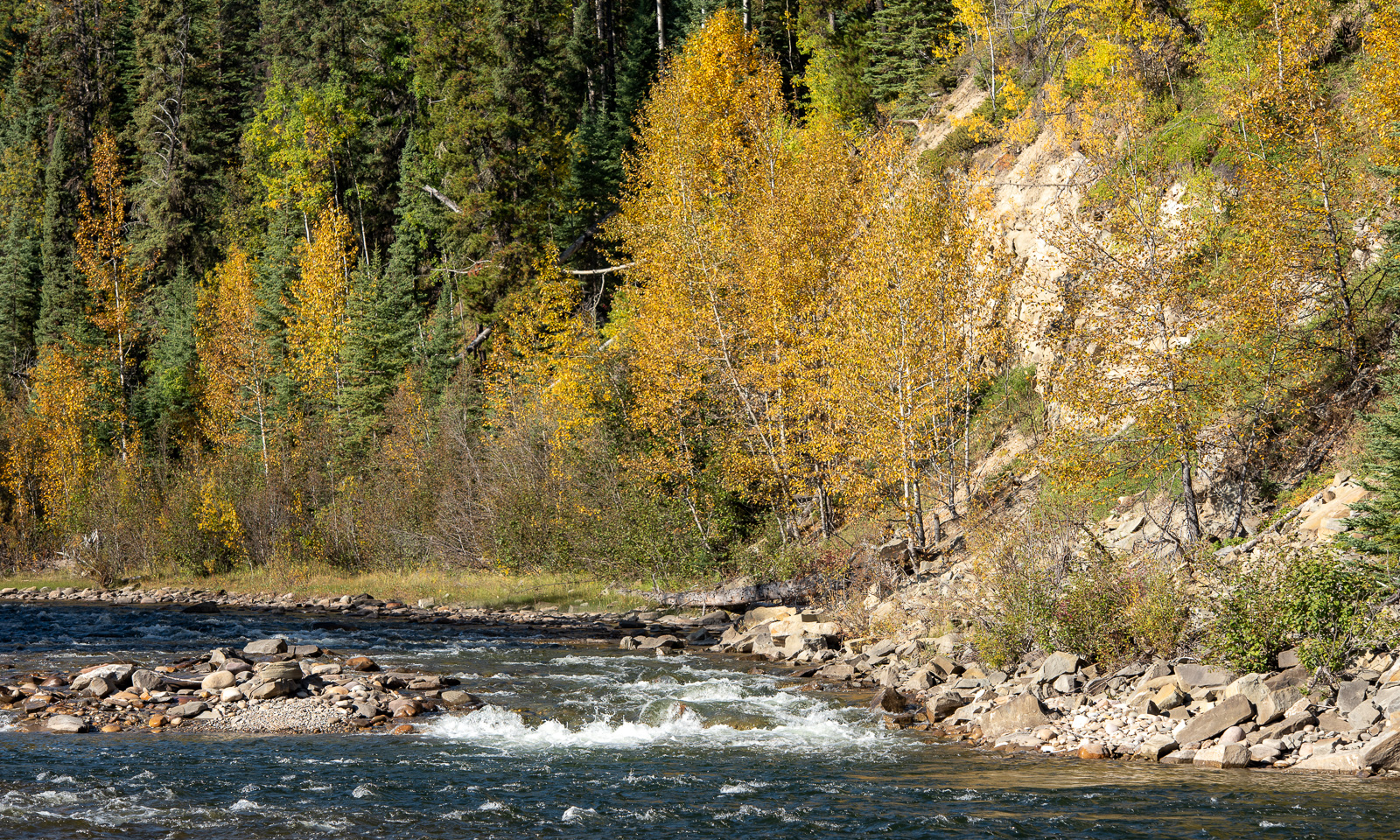
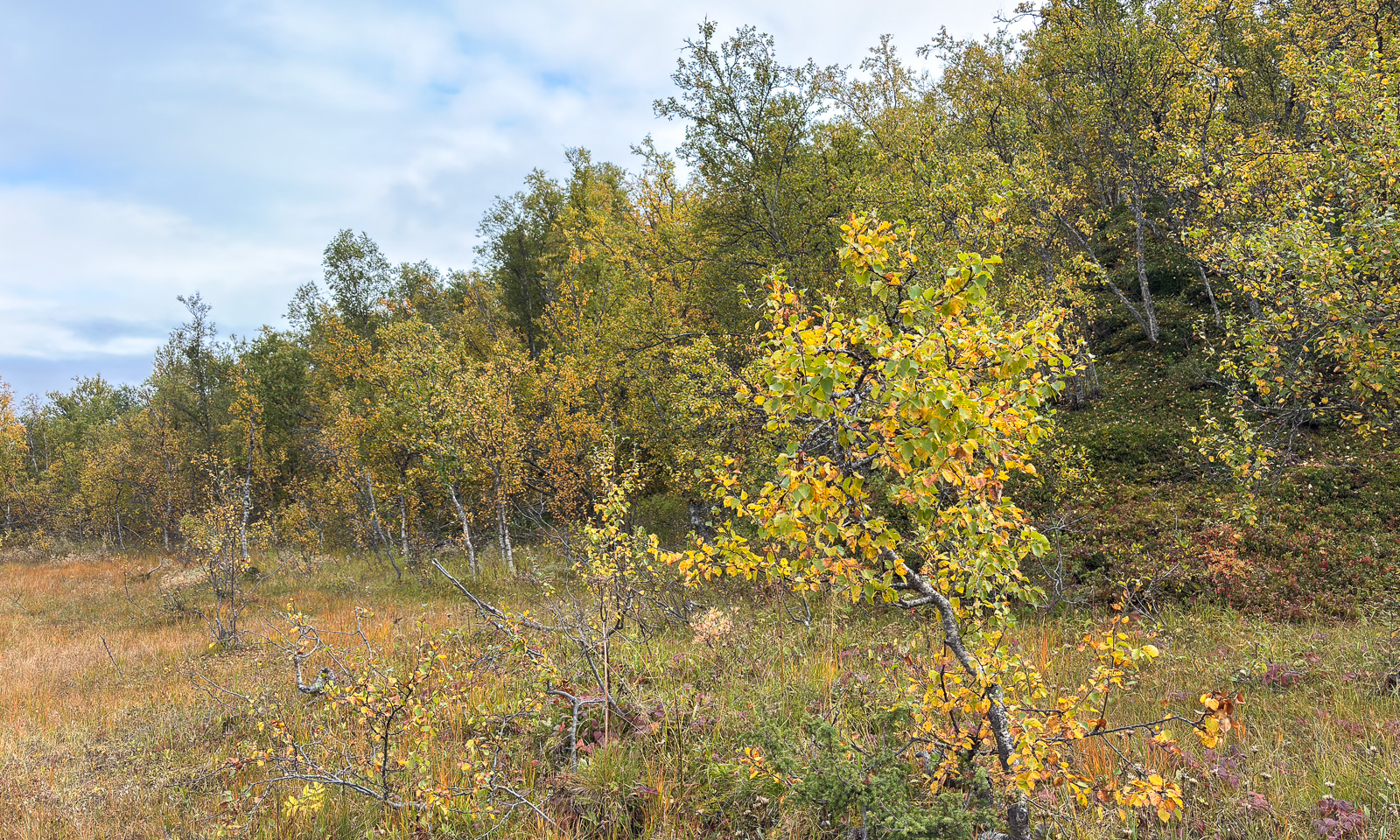
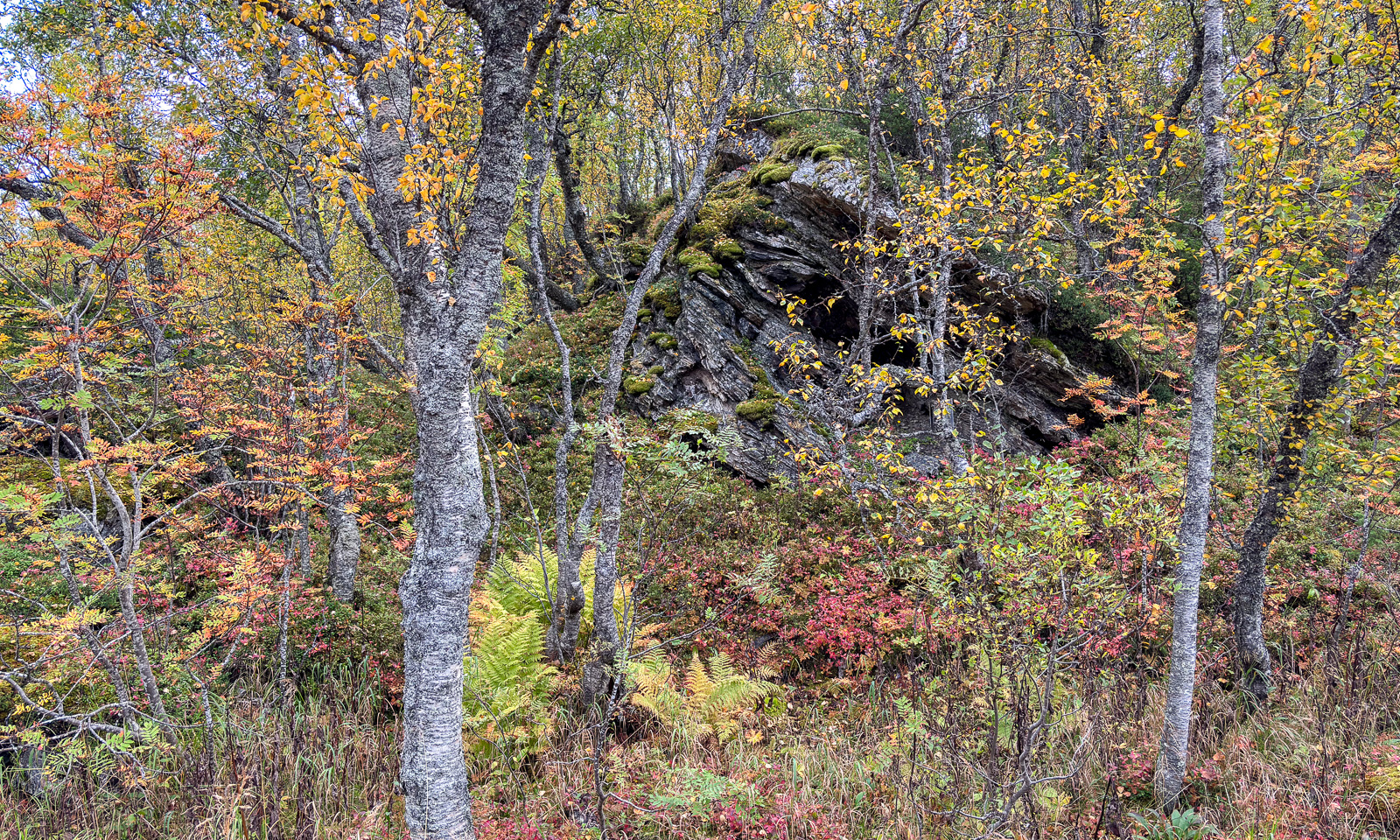
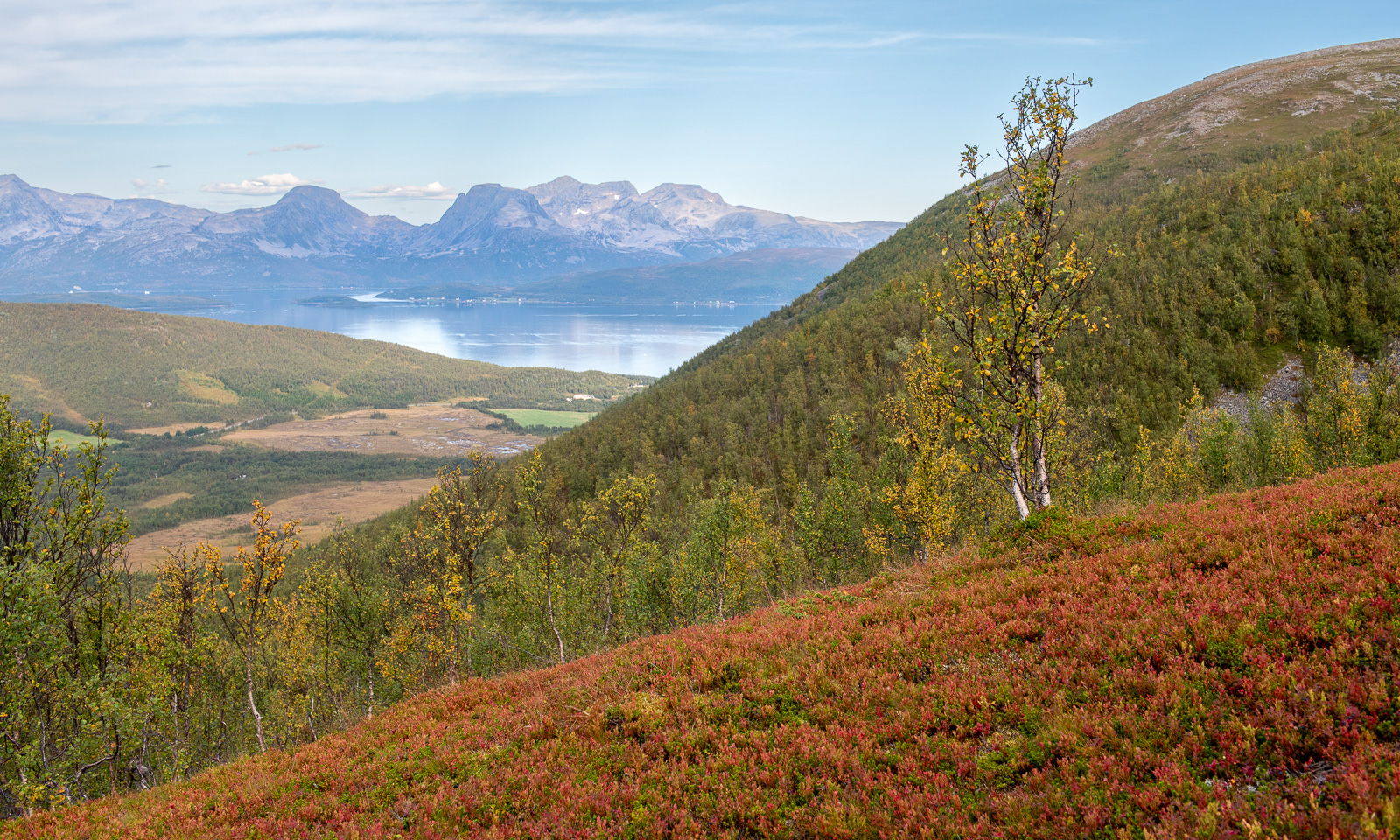
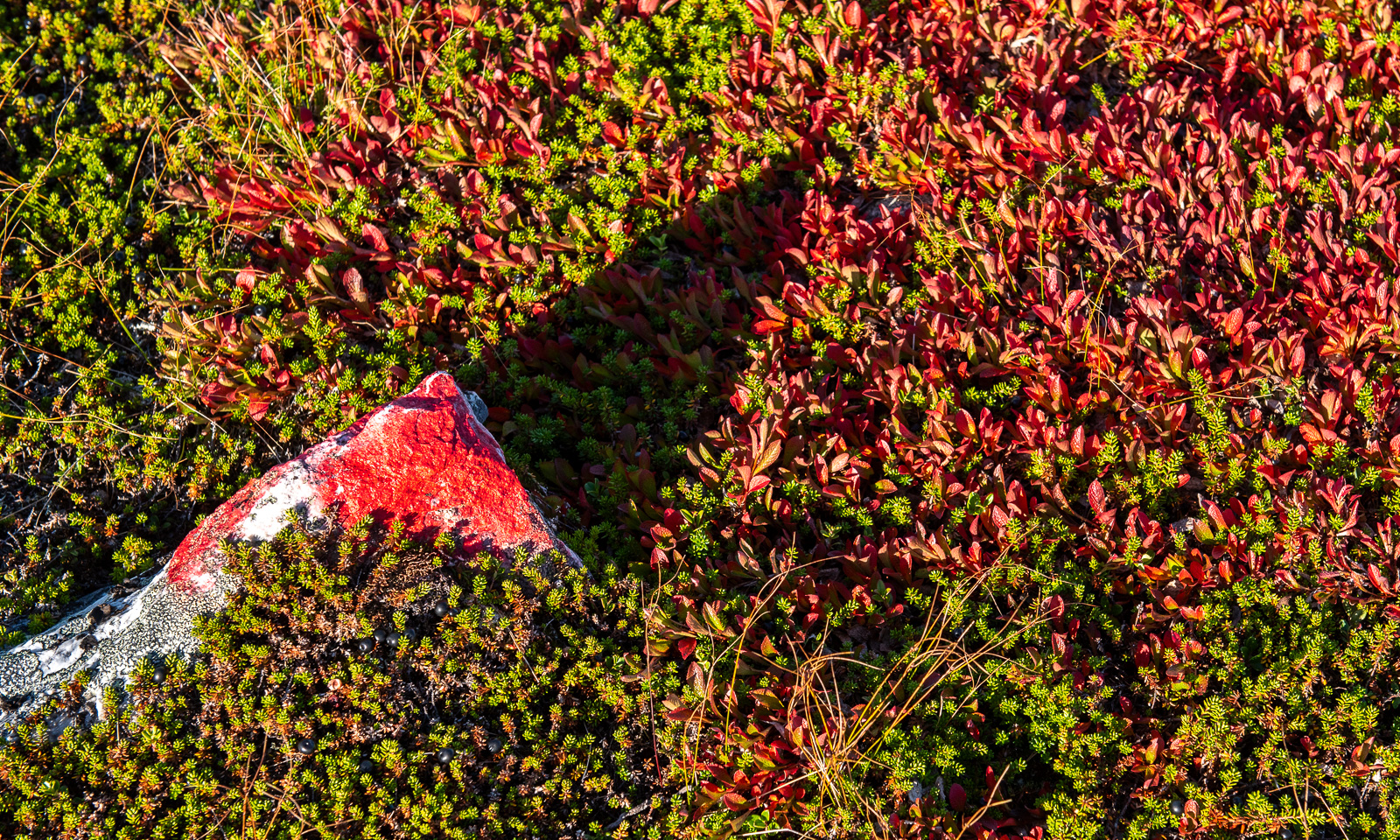
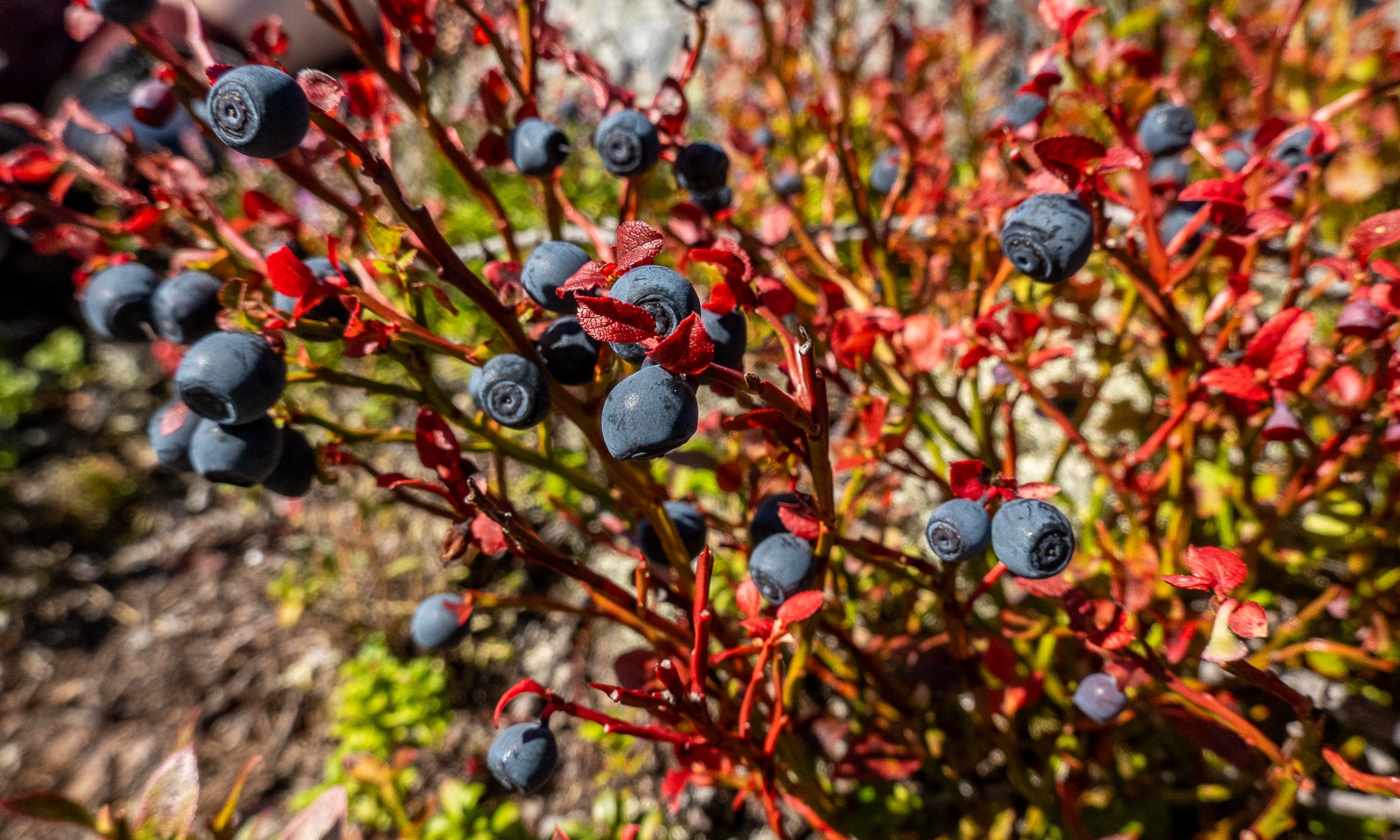
In the beginning a forest path winds up through a narrow valley. The colours are autumnal – yellow the birches, red the cornel and the blueberries. To the left down from the bottom of a ravine we can hear the river Gievdanjohka.

The path is rising and so is the river. After two kilometres we are almost level.

From there it is not far to the cabin. We go round a moraine and there it is: Steindalshytta. I unlock the door and we peek inside. Looks cosy!

Now we want to cook. This will take the rest for the evening because the gas canister is empty. No cooking on the hotplates, we have to use the wood-burning stove. We gather all the leftover wood from inside and outside of the cabin. There is no axe. Luckily Annika has a knife that is sturdy enough to make some smaller peaces of firewood. The wind is calm, the oven isn’t drawing and it takes almost three hours until the water for the spaghetti is boiling. At least we get a starter: warm shrimps with parmesan that we eat from the huge plastic plates we found in the kitchen. And I found chocolate cookies in the kitchen.

Meanwhile it has become dark outside and soon we get to sleep. We don’t have to freeze. After having powered the stove for hours we have 24 °C in the living room and hardly less in our sleeping room. Good night!

When I wake up the next morning it is raining, but it stops soon and the sun starts to light the mountains in the east.

After breakfast we pack our backpacks and start our hike to the glacier Steindalsbreen. Many things like our sleeping bags we leave behind, because we will go the same way back.

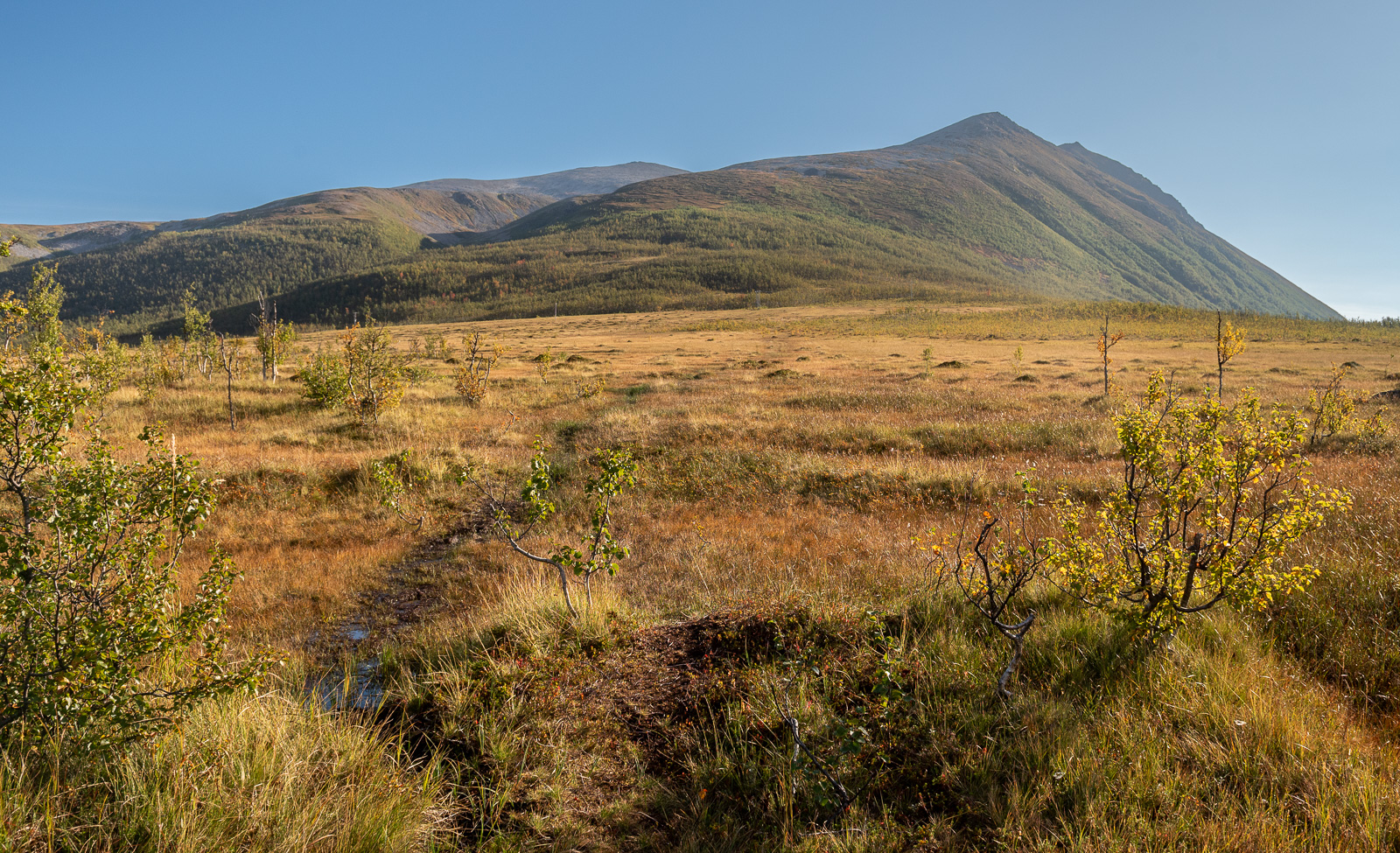
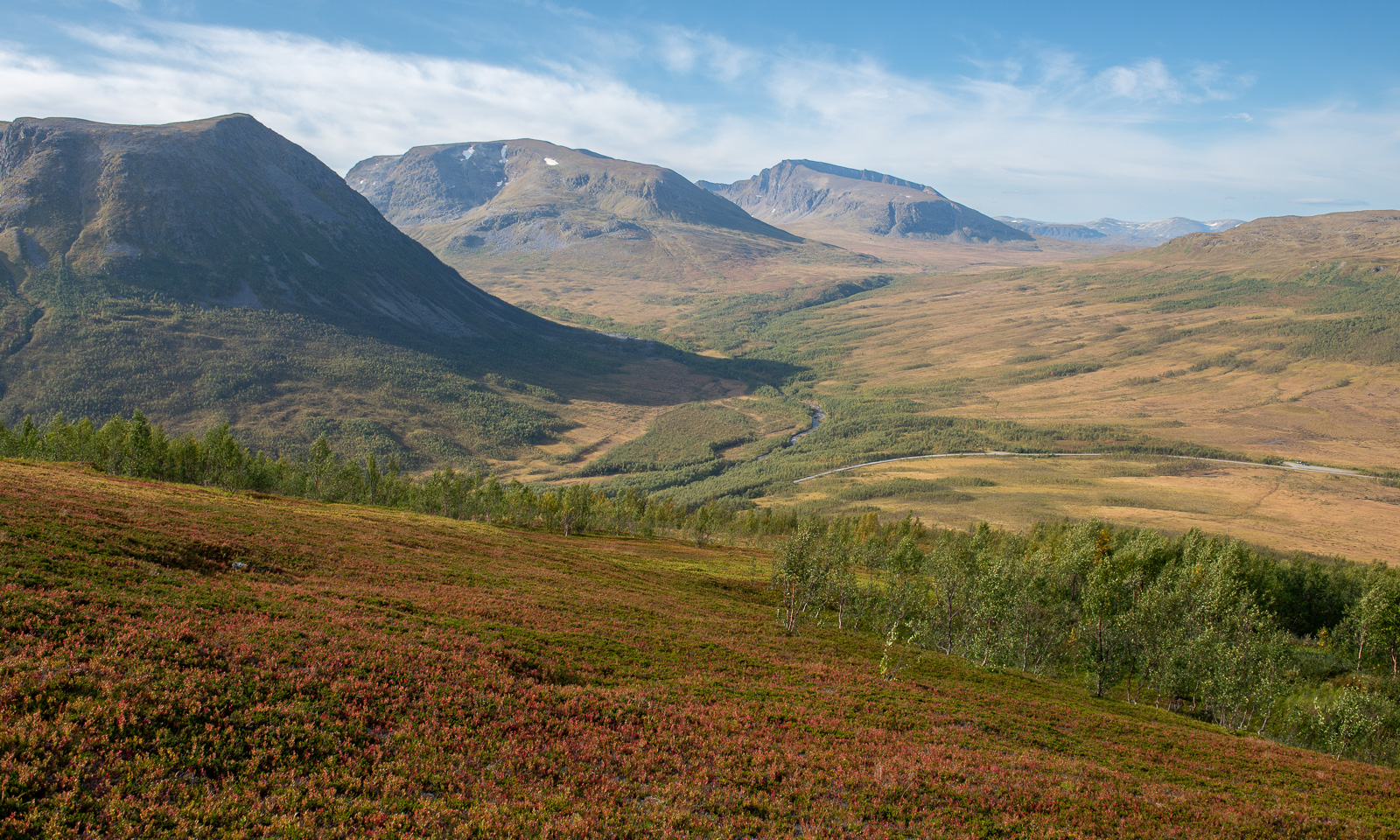
Again we follow the river to the east, then the landscape opens to a broader U-shaped valley. The terrain flattens and hiking is easy.

But we can already see the ascent we have to take. After two steeper passages we stand between two landscapes. In our back lies the mellow valley with its gentle slopes, everything in autumnal colours. Ahead lies a rough and rugged mountain landscape, where grey rocks and stones are the predominant element.

And there it is. The glacier. (Photo Annika Kramer.)

We continue the gravel path. Soon we pass the first of the signs that marks the glacier front some decennials ago. Due to global warming the glacier is melting and retreating every year. It is fantastic to see the glacier and we feel excited, but sad at the same time. First we hike to the glacial lake in front. Will we manage to go round the lake the glacier itself? Yes – and it is quite easy this year.

I have my big camera backpack with me and the Nikon with three lenses. That was made possible by Annika who took all the food. Although the weather is a bit dull it is photo time!

As often I’m not content with my photos and yes, I should have carried my tripod with me. But I’m happy about being there together with Annika. (Next photo: Annika Kramer.)

It is time to go back. This time we follow the river and pass two fields with scientific instruments, part of the project iC3. I have to ask a colleague from the Norwegian Polar Institute what is measured there.

Now the trail leads mostly downwards. We descend the hill, cross the broad valley, enter the forest and then reach the bridge by the cabin again. Here we take a rest and then fetch the rest of our stuff from inside the cabin.

I take a tiny detour that leads on a hill. Here I can see everything together: The huge mountains with their snow fields, the river Gievdanjohka, the autumnal birch forests. Only the glacier is hidden from view.

What a terrific tour we had! The glacier Steindalsbreen is worth a visit, especially in autumn. We drive back to Tromsø and I copy the photos to my computer. Then I check the tracker I used on the tour. As I was afraid I have walked on rock, sand, and mud this year, where last year the glacier covered the ground.

Just a pick-up at the station… – part II

< to part 1

Tuesday, 22 July

When I wake up early, the mountains and the sea have vanished. Thick fog surrounds our overnight stay Marmelkroken on the island Andøya. I take a walk through the wet grass to the bird observation place but beside of some seagulls and a lonely curlew that flies around there is nothing to see.

One hour later Annika and I sit inside enjoying our gorgeous breakfast. We get a table-side presentation of the dishes. More or less everything has been produced locally and we eat it all.

Then we head of. We want to catch the one o’clock ferry in Andenes that will bring us to the next island Senja, second largest in Norway (again, when we ignore Svalbard). The weather soon gets fair again, but around the mountains still some clouds are hanging.

Yesterday we took the western road, today we cross the boggy island to take the eastern one. On the way there we pass the village Å. There are several Norwegian places called Å, the most famous one is on the Lofoten. The next stop is the octagonal church in Dverberg.

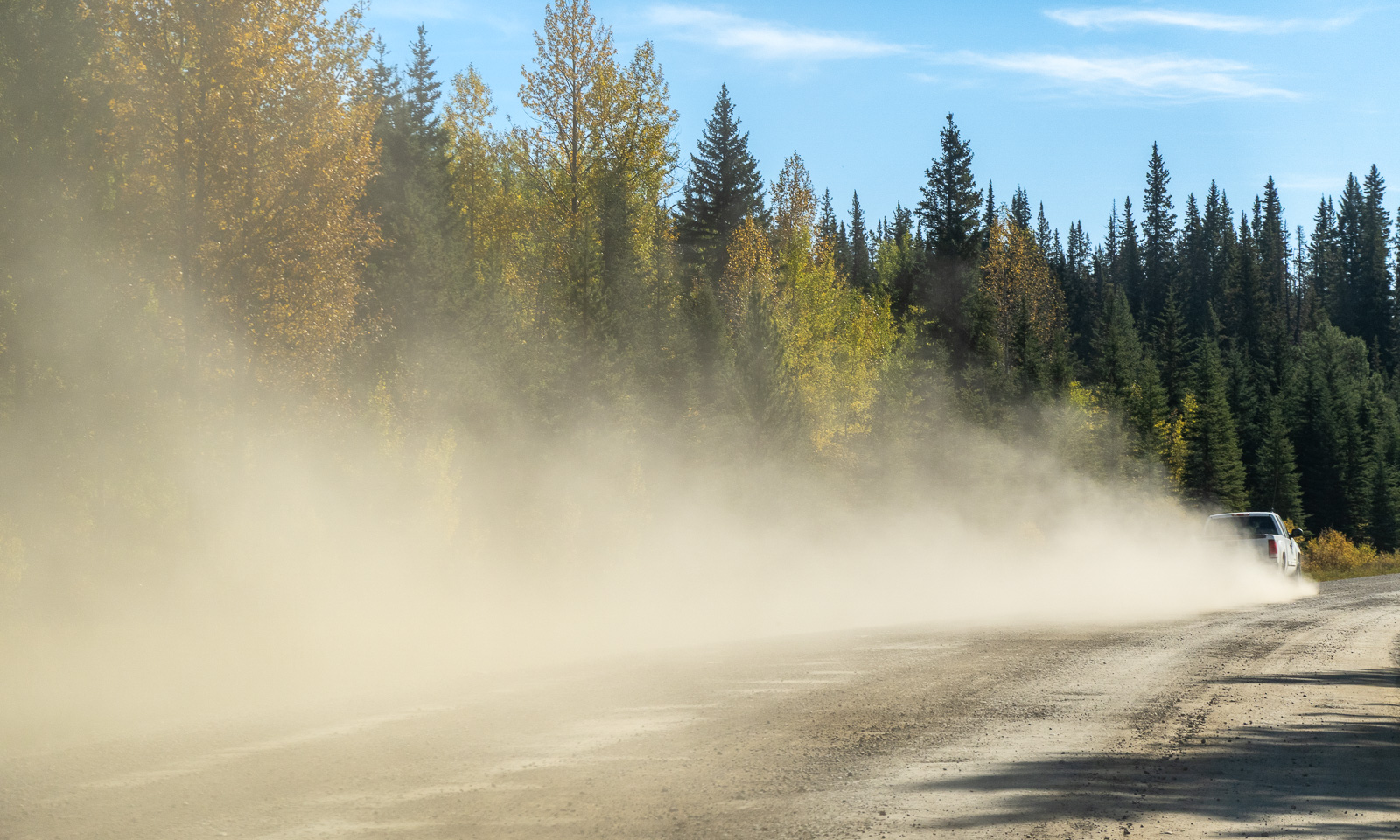
A bit north near Myrset there is a huge area of peat mining. Andøya has large areas of peat bogs and parts of it has been drained to extract the peat. I climb on a hill of peat – it bounces like a water bed – to take some photos of this moonscape. Then I protect my camera lens, because each step emits a cloud of brown dust. But that’s nothing compared to the huge double-wheeled tractors anyhow that produce huge clouds of peat dust while driving. My car is brown now.

We take it easy, we have time – that’s what I thought. When we however arrive at the ferry terminal it becomes quite obvious that we would not join the next ferry. Too many cars are ahead of us waiting. So the one o’clock the ferry departs without us, leaving us behind but in a much better start position. Now we have to wait for four hours. Time to explore Andenes a bit.
As hoped and expected we find place on the next ferry. Now we are on the way north to Senja. Soon we are in open water, accompanied only by some sea birds.

The ferry trip takes one hour and forty minutes. Then we arrive in Gryllefjord on Senja.

Unfortunately we won’t catch the last ferry to Kvaløya today, they are not coordinated. We have to drive via the mainland – a large detour. Although it is another detour we decide to take the coastal route. 289 more kilometres to go which means a five hour drive in Norway. It is evening and we will make less breaks now.

Stop one – Tungeneset, a scenic rest area.

Stop two – another one of the many beautiful views on a fjord and the mountains on the other side. Here we see something special: a cloud waterfall. Clouds fall down a steep mountain range where they vanish in thin air. New clouds come from behind. The cloud waterfall is several kilometres broad and looks like a huge waterfall in slow motion. An impressive view.

(Note to the meteorologists: is this a orographic cloud spillover?)

We take the bridge from Silsand to Finnsnes. After two days we are on the Norwegian mainland again. Although it is still midnight sun season – the sun won’t set, it just moves lower and lower until it is hidden behind the mountain. I took the next photo at eleven o’clock in the evening.

At half past twelve we arrive home in Tromsø, my “work home”. Although it was only one evening and two days of travelling together it felt like real holidays.

We think about doing the same in half a year. I have to check the ferries, but it would be interesting to visit the same places in wintertime.

Just a pick-up at the station…

When Annika travelled to me last weekend, her train from Boden to Narvik was cancelled and the next and last train was heavily delayed. Unfortunately train problems have become common in Northern Sweden over the years. I had to use the airplane several times because trains didn’t run at all for days or it was impossible to buy tickets.

To keep Annika from being stranded, I drive to Narvik to fetch her. From Tromsø it takes me about three and a half hours plus some breaks.

Meanwhile Annika has booked a hostel in Bogen where we stay overnight. Our plan is not to drive back the direct route, but to visit the islands Andøya and Senja.
Monday, 21 July

The next morning starts sunny.

However it soon gets foggy. After crossing the Tjeldsund we are on Hinnøya, the largest Norwegian island (when we ignore Svalbard). We decide against a swim in the sea due to the fog and continue to Refsnes. From here go ferries cross the Gullesfjorden to Flesnes. On my trip to Narvik yesterday it was often 28 °C, now in the fog it is hardly 15 °C.

We have missed the 10 o’clock ferry, but they run hourly and we don’t have to wait for long. The journey itself takes only 20 minutes.

From Flesnes we continue to Risøyhamn. Hurtigruten travellers may know this place not only because it is one of the stops but also because of Risøyrenna – a man-made underwater channel that allows larger vessels to pass between Andøya and Hinnøya. The Hurtigruten ships has to go quite slow there.

We take the bridge over the Risøysundet and drive through Risøyhamn. Twice. Because I didn’t know that it is so small. Only round 200 people live there.

The weather is sunny again and we become more beach focussed. The first beach is for having lunch. We share it with a flock of sheep.

The second beach is for bathing. 16 °C in the water – surprisingly warm for the region.

We continue north. To the west the Norwegian Sea. Next shore westwards is Greenland, more than 1500 kilometres away. Our next stop is much closer: a public toilet at Bukkekjerka. But what a one! It is a designed block of concrete and mirrored glass. From the outside you cannot look in, but from the inside you can switch the huge glass windows between being transparent or opaque.

Around this place – a lighthouse on a peninsula, interesting looking rocks, a baaing sheep and of course the sea.

We follow the coastal road further north to Bleik. Here you can find beaches and turquoise water as well as ridiculously looking rock needles.

After refuelling my car in Andenes we drive south again to Marmelkroken, where we will stay overnight. With an additional photo stop.
To part 2 >

Midnight sun on the Stor-Kjølen – part II

To part I >

I slept better than expected in the shelter on top of the mountain Stor–Kjølen (790 masl) that I hiked up the previous day. At 7 o’clock I get up and enjoy strolling around the plateau under a deep blue sky. Thank you, DNT, for maintaining this shelter.

At half past seven I start my way back. The sun is high in the sky.

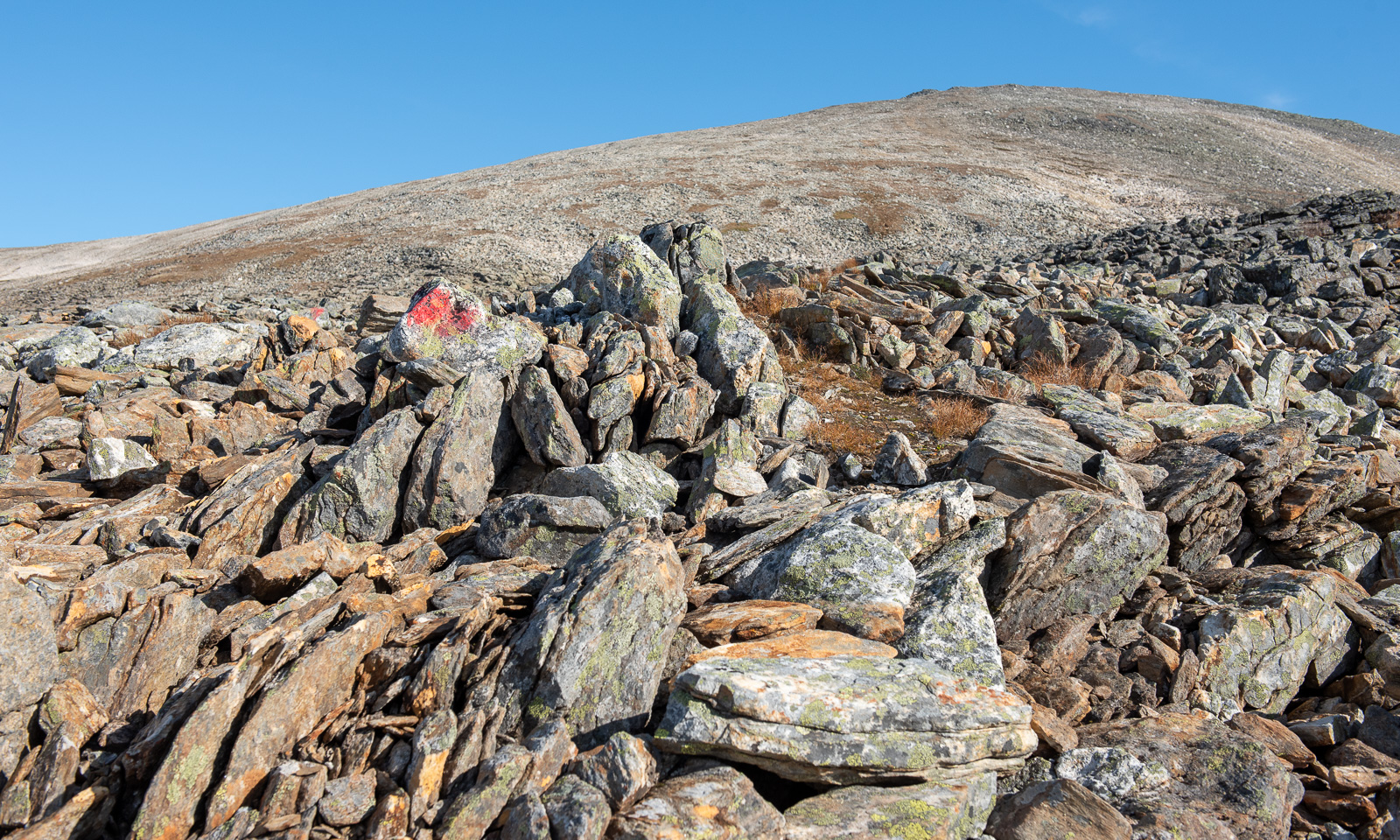
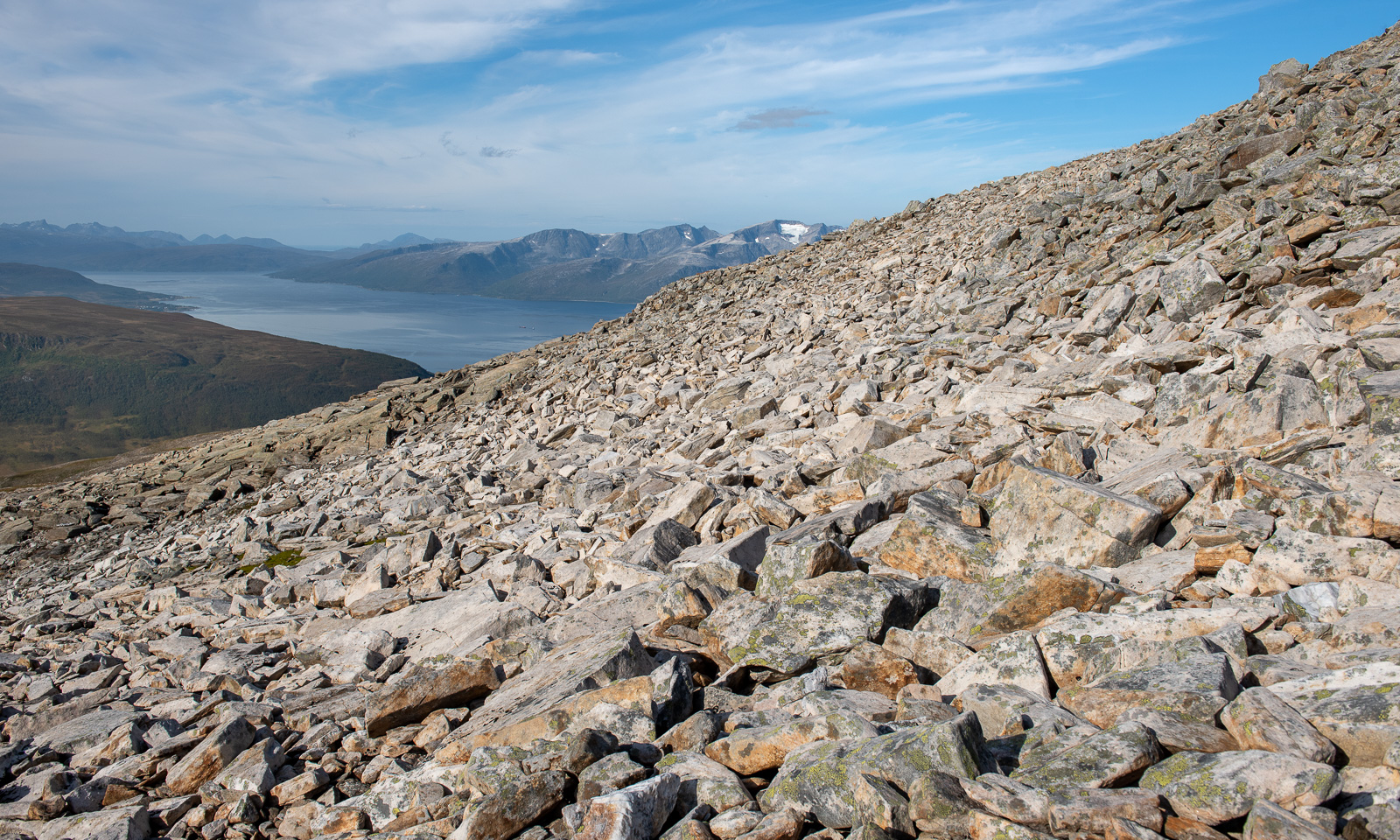
The plateau summit resembles a desert of stones with hardly any plant beside of lichens and some tufts of grass. The first plant that catches my eye when descending the summit is a flowering ground cover. If the AI is correct, it is silene acaulis, also known as moss campion or cushion pink.

Again I cross the huge snow field. I see footprints but no ski tracks. Skiing season seams finally to be over.

Navigation is easy. Sometimes I go astray, since there are so many parallel paths – this hike is quite popular. But with the help of the painted red dots it is easy to find back to the main track. The cairns – Scottish  Gaelic for a man-made pile of stones – can be used for navigation as well. Great in fog! However, use them with caution. Tourists love to build these all over the mountains on random places.

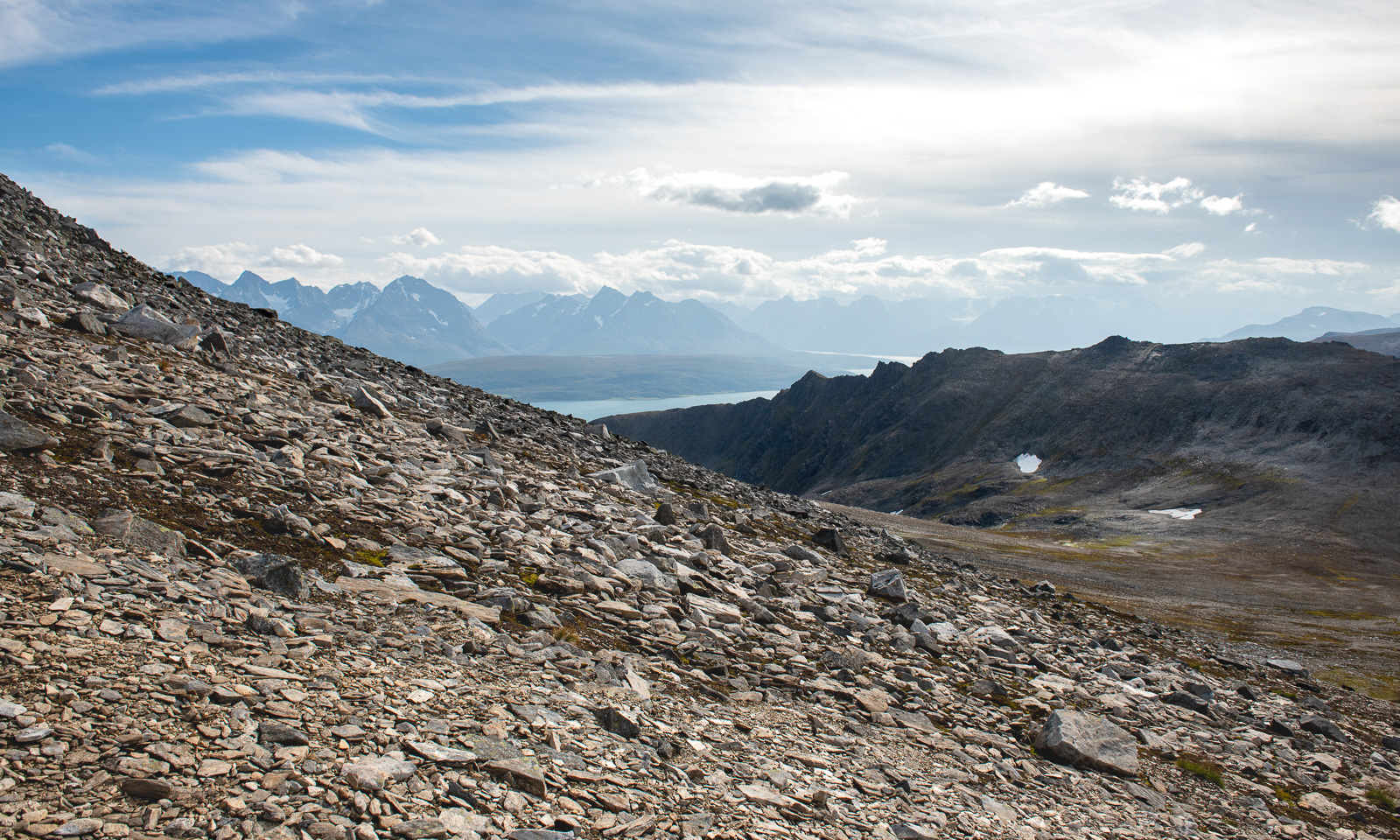
While coming down the mountain the landscape slowly changes. The ground is more and more overgrown and to the right there are several lakes.

As the day before I pass a small valley. Now it lies in the sun. It looks very idyllic with its lakes, streams and its birch trees. One day I have to check how to go there.

Another stream to cross, another lake to view …

… and I’m on the home stretch. Soon I can see the gravel car park. One of the grey cars is mine. But still the terrain is hilly and in no time the car park disappears from view again.

By 9:45 I am back at the car. I was incredibly slow — a luxury you can afford when you’re hiking alone and stopping to take photos.

Later that day I stand on my balcony. The view is mostly blocked by large trees. Birches, willows, rowans. Through the gaps I can spot the mountains. And if you look carefully on the next photo, you may spot a tiny white dot on the top of a snowy mountain. That’s the radar station of Stor-Kjølen. I’ve been there last night.

Midnight sun on the Stor-Kjølen

Yes, I was tired Saturday evening after travelling back from Obbola to Tromsø. But the weather was so nice and I already had started thinking about going up the mountain Stor-Kjølen for experiencing the midnight sun up there. Finally I made a decision. Let’s go. I packed water, a camping mat, a sleeping back, but most of all my camera equipment and went off. It is only a twenty minute drive to the lake Finnvikvatnet on the island Kvaløya where I parked my car. From there it is round 5½ km to the top and a good 500 metres of elevation gain.

When I start my tour at around 10 o’clock the sun is low. The sun is low, but it won’t set tonight – and not for the next twenty days either. The landscape glows in warm colours. The ground is dry, but soon I cross the first tiny snowfield.

The path winds its way through grassy terrain scattered with stones and rocks. Stray snowfields lie on both sides of the path and the radar station on top of Stor-Kjølen has come into view.

The first lake flanks the trail. Slowly, the terrain is becoming rockier.

I look back and already now the hiking tour was a success. Lakes, hills – some grassy, some rocky – and at the horizon a mountain range. So beautiful in the warm light of the low sun.

For a while, grassy patches and rocky ground alternate …

… then the altitude takes command. Only snow and rocks are present and the vegetation is reduced mostly to mosses and lichens. I have to cross a large snow field but the ground is not slippery.

But then I arrive on the stone-covered plateau of Stor-Kjølen, where I can see a small cairn in front of me, a tall cairn marking the summit and the radar station. And if you look closely you can see a small cabin in front of the station. It’s a shelter for hikers. I’m alone, so I can use it for the night.

I want to take photos of the midnight sun, so I start experimenting with some sun-facing shots. These photos are much darker than reality. While the light is warm, it is still bright daylight.
The mountains and the sea all glow in hazy orange hues when I look against the sun.

But I have a mission – taking a photo of the midnight sun. Here it is. Unfortunately there is a small, transparent cloud in front of the sun that makes it look like a white splotch instead of a circle. Bad luck!

Bad luck? Not really. We have summer time, so the lowest position of the sun is one hour later – or a bit more accurate 0:48 due to local solar time. So I had some spare time to take more photo from the stone-covered flat top.

Then it was time: The sun as its lowest position. Ok – I was three minutes late, but the solar path is so flat that it doesn’t matter when taking photos. The light is the same. And eventually the little cloud was vanished.

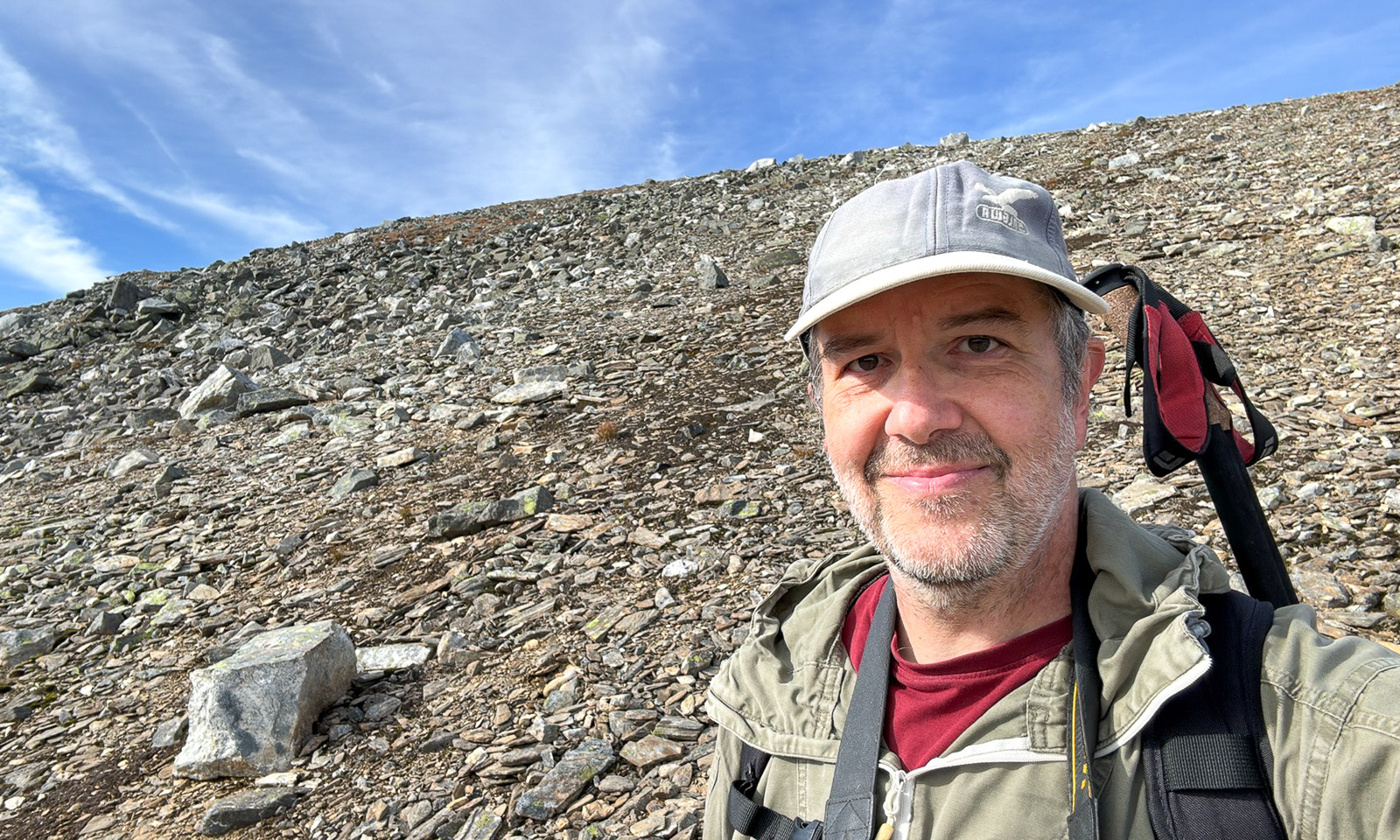
Just a selfie with my mobile phone, then it is time for bed, at last. (A down hoodie? Yes – it is windy and only +5 °C.)
I enter the shelter, roll out my sleeping mat on the floor and lie down, using my sleeping bag as a blanket. Cluck-cluck, cackle-cackle! What’s that? I peek out of the door and see that the hour of the ptarmigans has started. All around, these galliforms dart about, filling the air with their typical clucking. I am too tired to start another photo hunt so I just take some snapshots. (These photos are heavily cropped.)
But then it is finally time to sleep. The shelter is filled with light, the camping mats (I found another one in the shelter) are thin and the ground is hard. But then I doze off and …

… sleep. At least for a couple of hours.

To part II >