Scotland NC500 – day 6 – a long breakfast and palm trees in the evening

This article is part of the series “2025-10: Northern Scotland”.

October 18

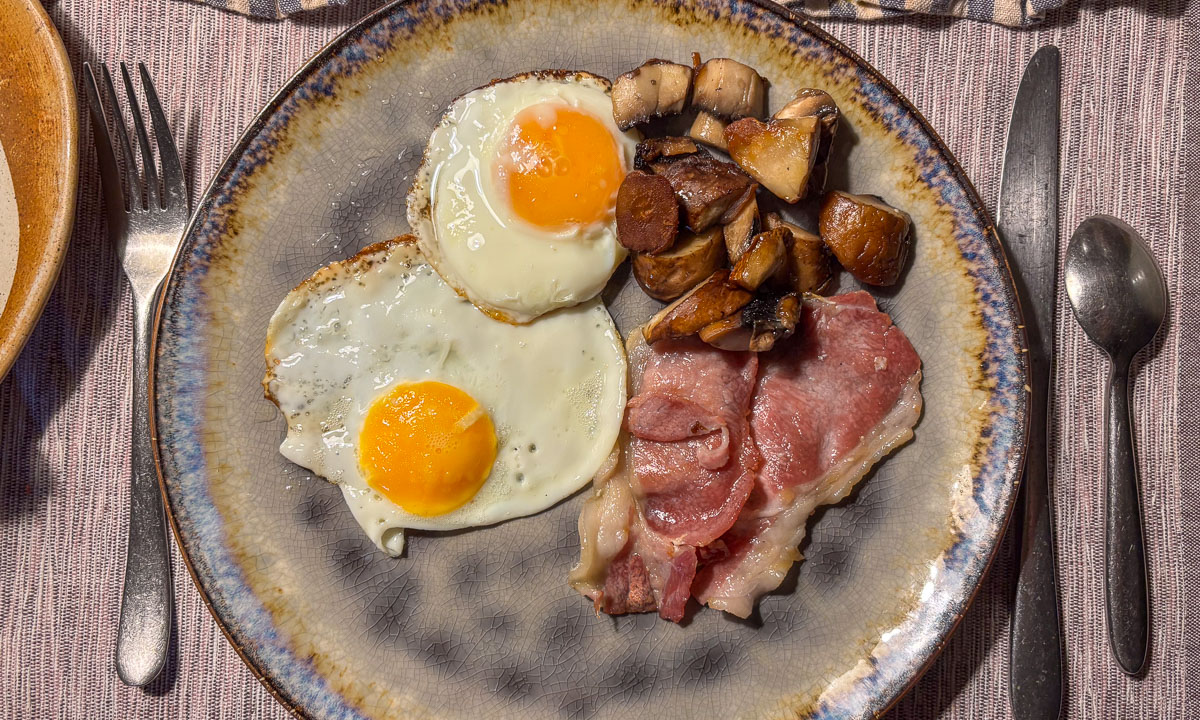
Annika and I are sitting in the comfortable kitchen of our hosts in Badrallach having breakfast. Cereals – bacon – fried eggs – mushrooms – toast – homemade jam – homemade ketchup – tea. The breakfast is very delicious, but it’s not the main reason we’ve been sitting here for hours. It is the wonderful conversation about life, us, and the wider world that we have with our hosts. Breakfast had long turned into brunch when we finally prepare ourselves to leave.

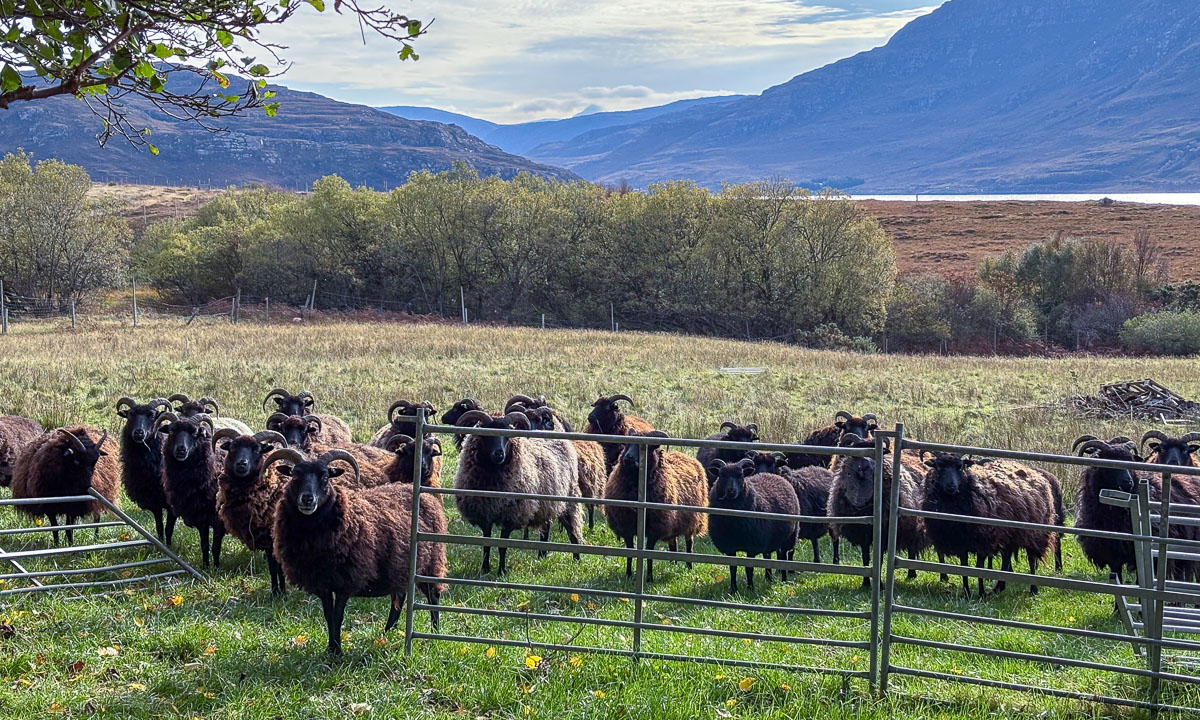
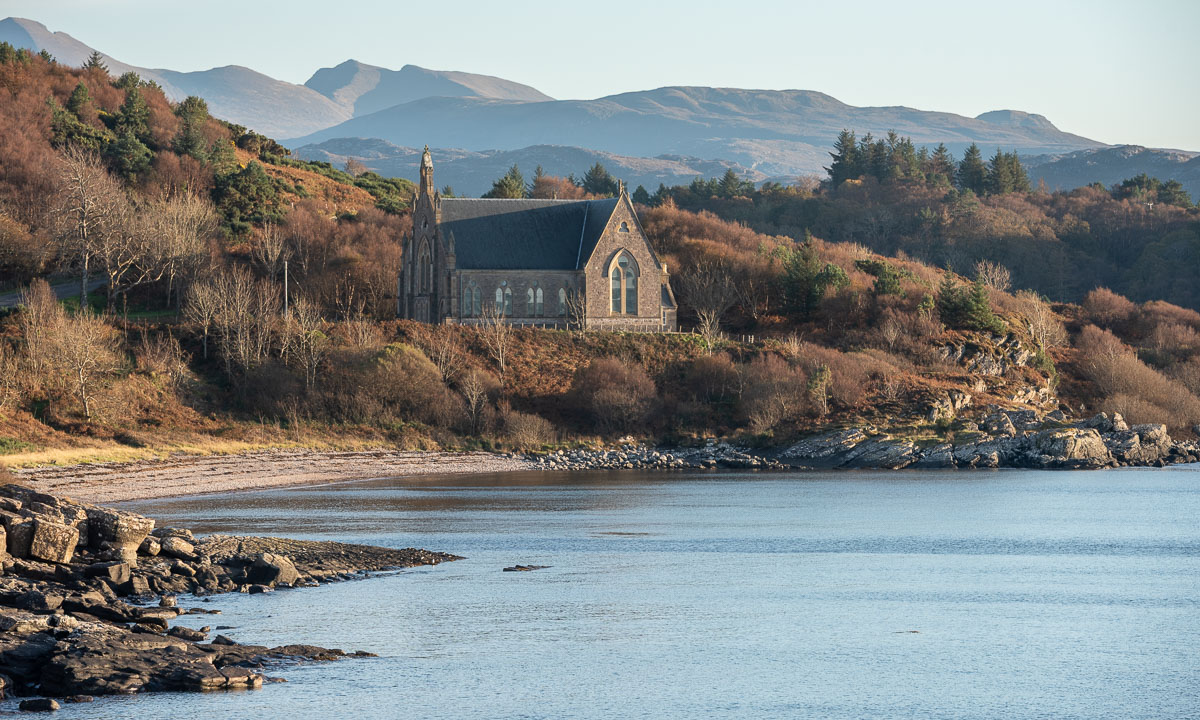
Behind the house is a pasture with dark, horned sheep. They are curious and all of them are looking at us. In the background lie the mountains and in front of them a narrow strip of blue – the sea loch Little Loch Broom.

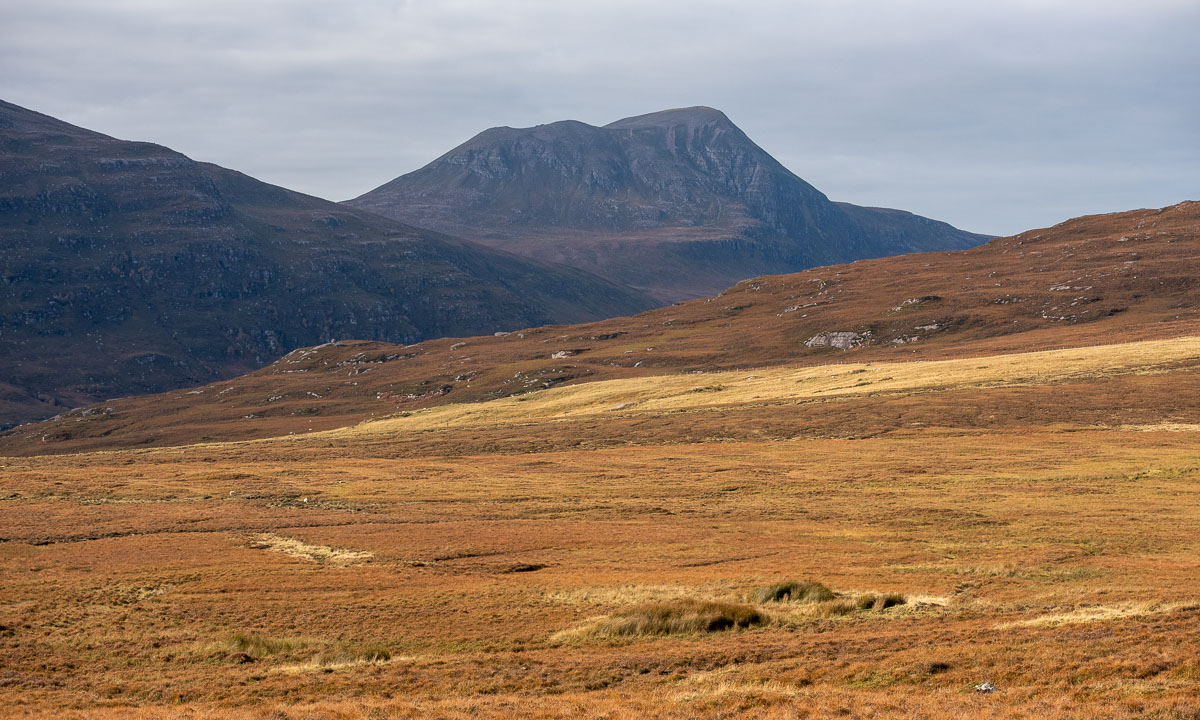
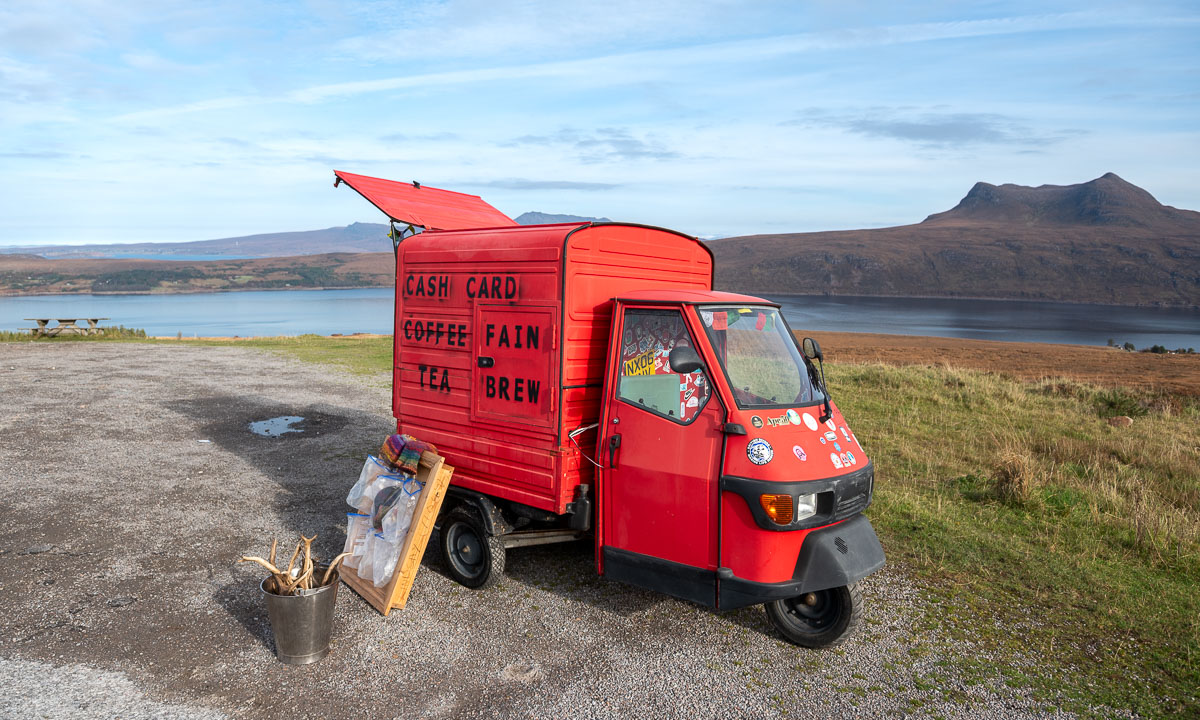
Soon we drive over the moorlands of the Scottish Highlands with their intense colours. We haven’t gone far when we make a spontaneous stop at a car park by the sea. It is the small, bright red three-wheeled vehicle with labels such as “coffee” that catches our eyes. The owner is a local and he seems to know all the other customers. The two old ladies just leaving and the man with moustache, who – so he tells me – has worked in the Arctic and Antarctica. While Annika enjoys her hot chocolate I get perhaps the best coffee I’ve ever had. I’m not a big coffee consumer but this stuff is addictive.

As the weather is fine today, we stop at another beach – Mellon Udrigle Beach – where we meet another local playing with his border collie. I take the first and only bath on our Scotland holidays. The water is crystal clear and warmer than expected.  It’s a shame I only bathed once.

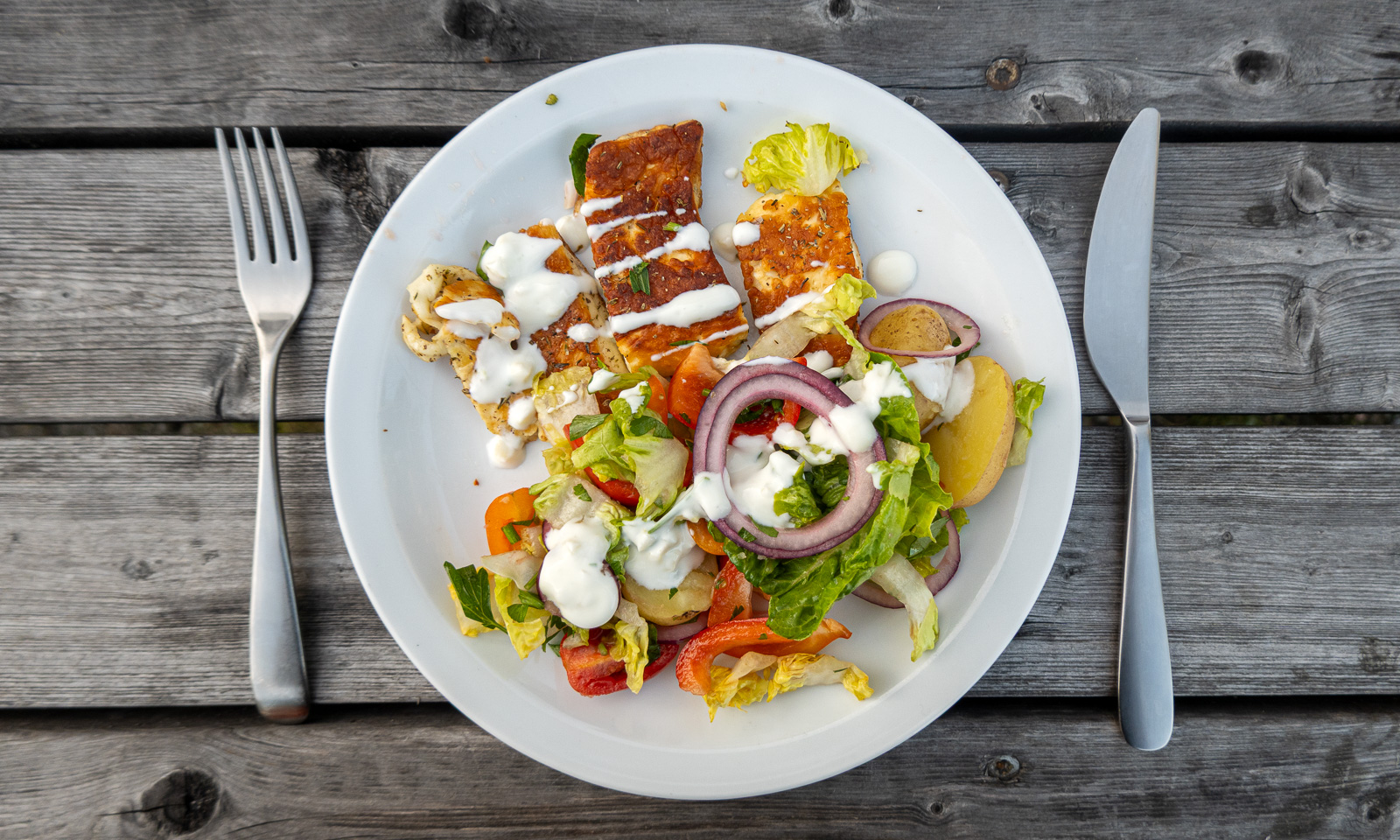
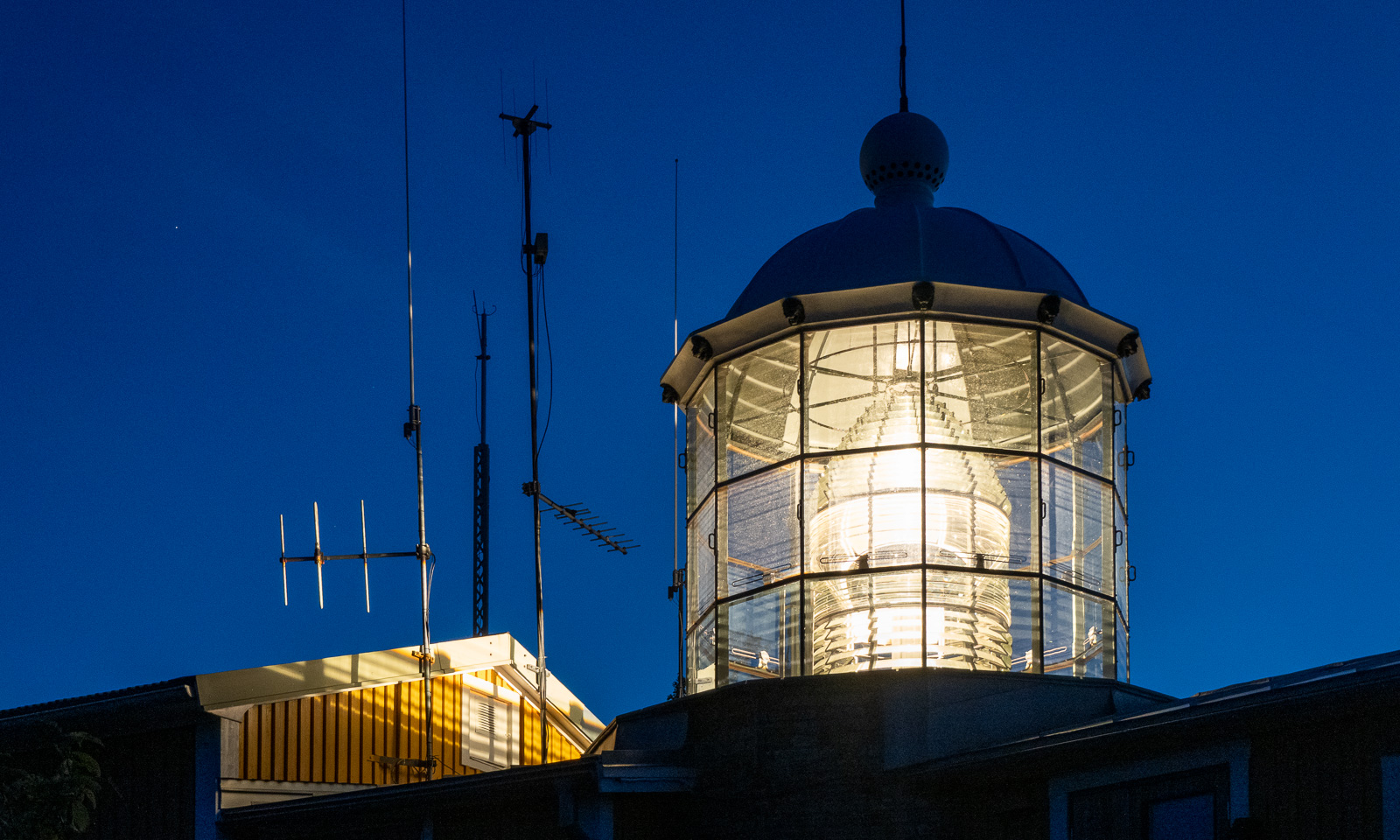
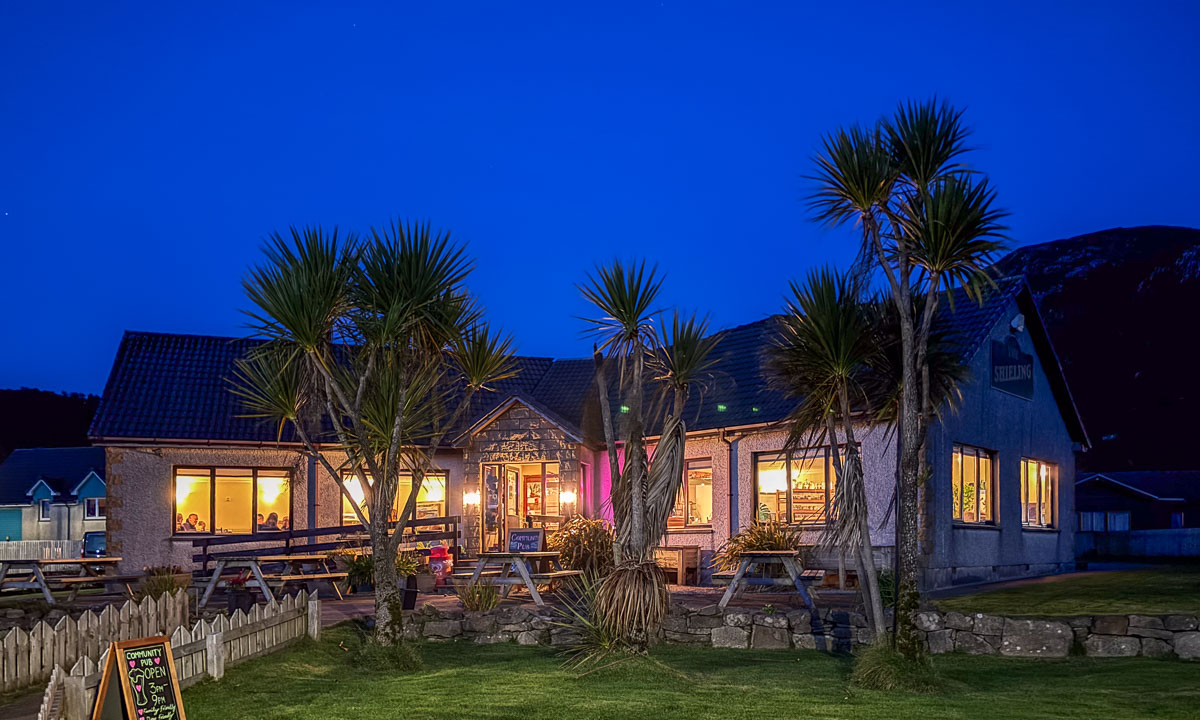
This day is about the people we meet and it is the only day where we haven’t booked any accommodation. We make a stop in Gairloch, a village that I quickly fall in love with. It is not just the location by the sea or the beautiful houses. Many Scottish villages have that as well. It is the alternative book shop, the community-driven pub, the restaurant with Caribbean food that makes Gairloch special. After we have bought some books we continue our road trip, but we have hardly left the village when we decide to stay there overnight. Annika turns the car, we enter the Gairloch Hotel and the receptionist gives us a big room with a sea view. Later we go to the pub first and then have Caribbean food for dinner. That kind of food matches perfectly the palm trees that grow outside the pub.

Scotland NC500 – day 1 – the road trip starts

This article is part of the series “2025-10: Northern Scotland”.

13 October

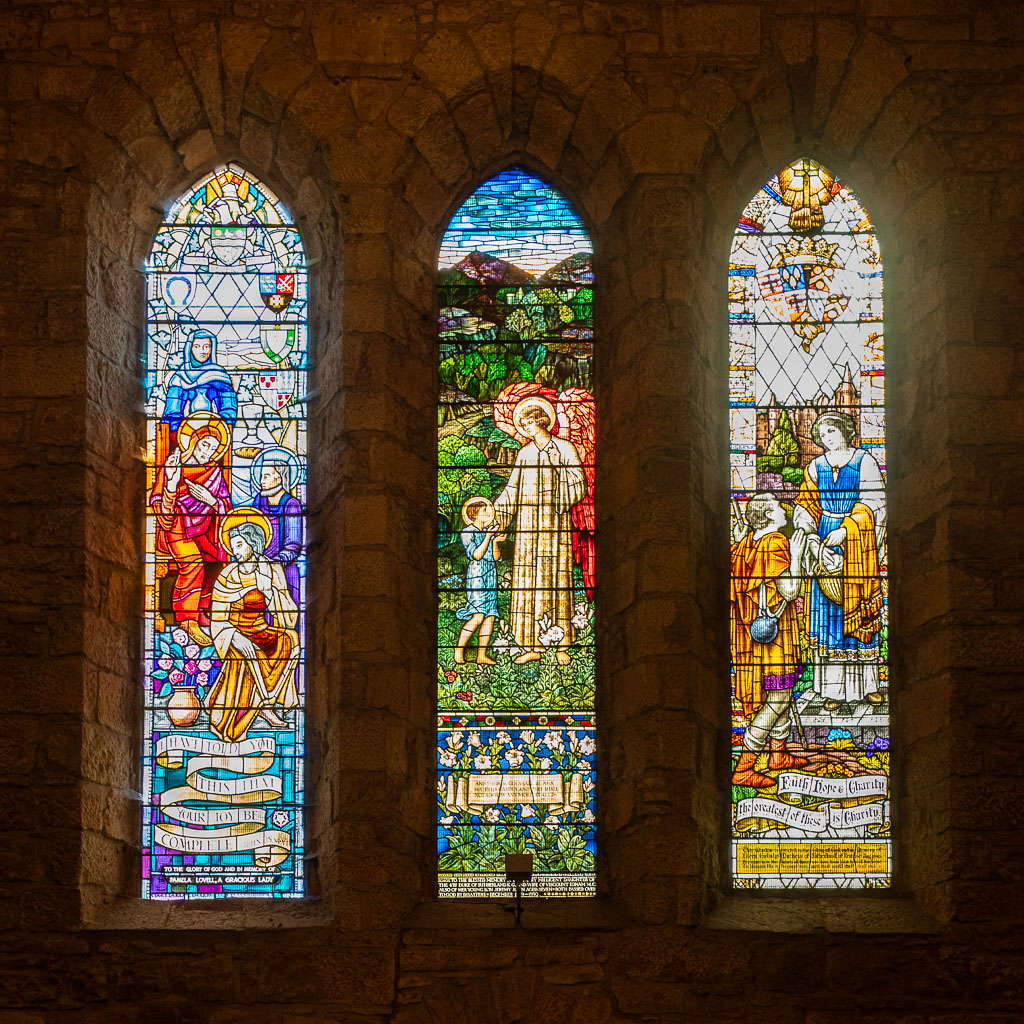
It is one o’clock. Annika has driven the first 70 kilometres in our rental car, and we’ve arrived in Dornoch. We already visited the cathedral with its beautiful stained-glass windows. Now we are sitting at the only table outside the SandStone cafe enjoying the sun. I also enjoy something else: An Irn-Bru, this legendary Scottish soft drink with its bright orange colour. It won’t be the last one the next days.

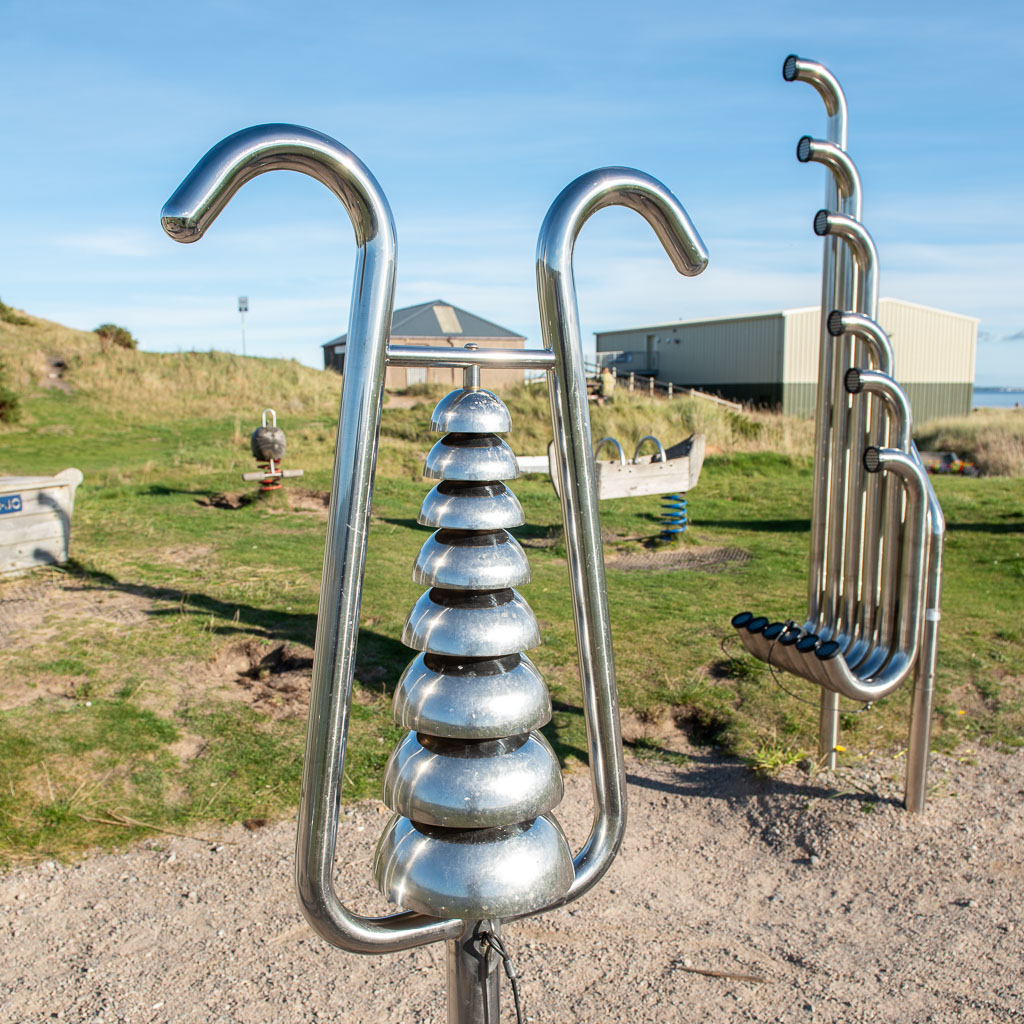
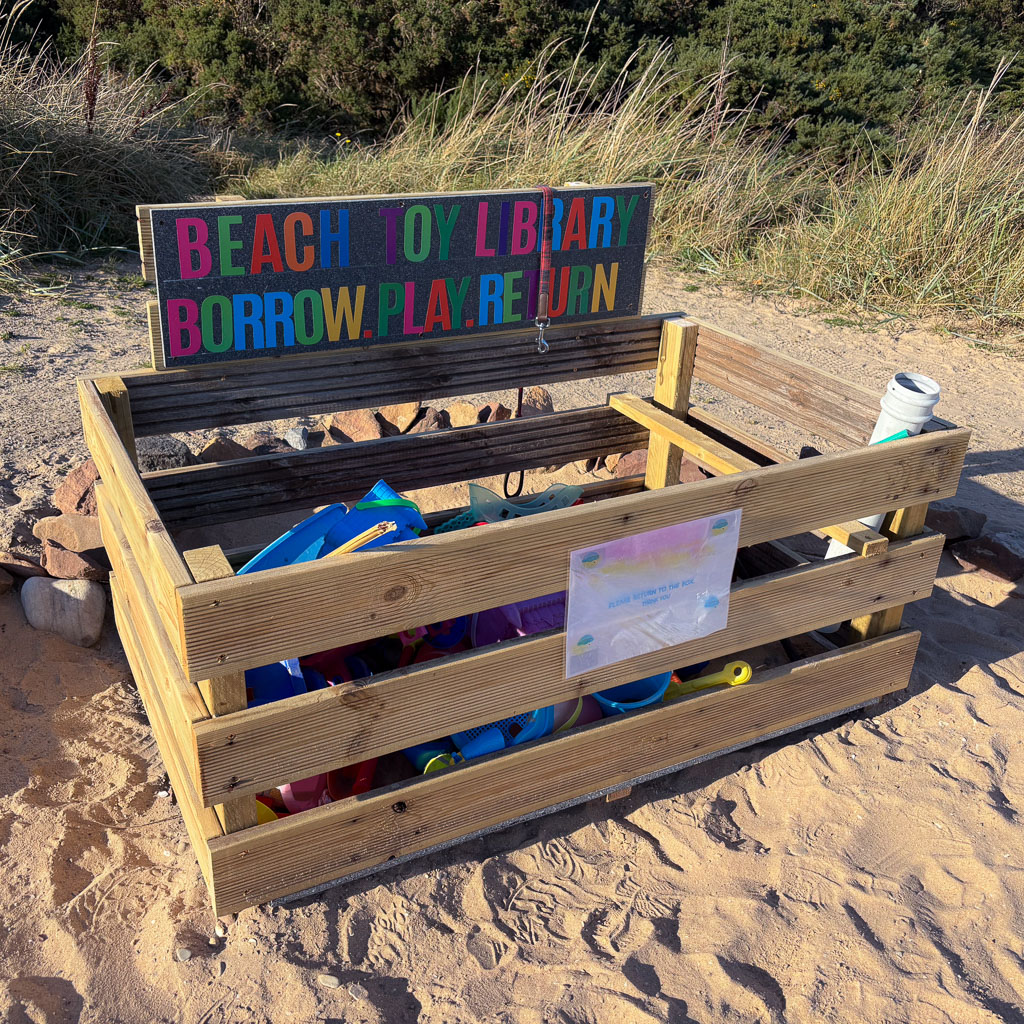
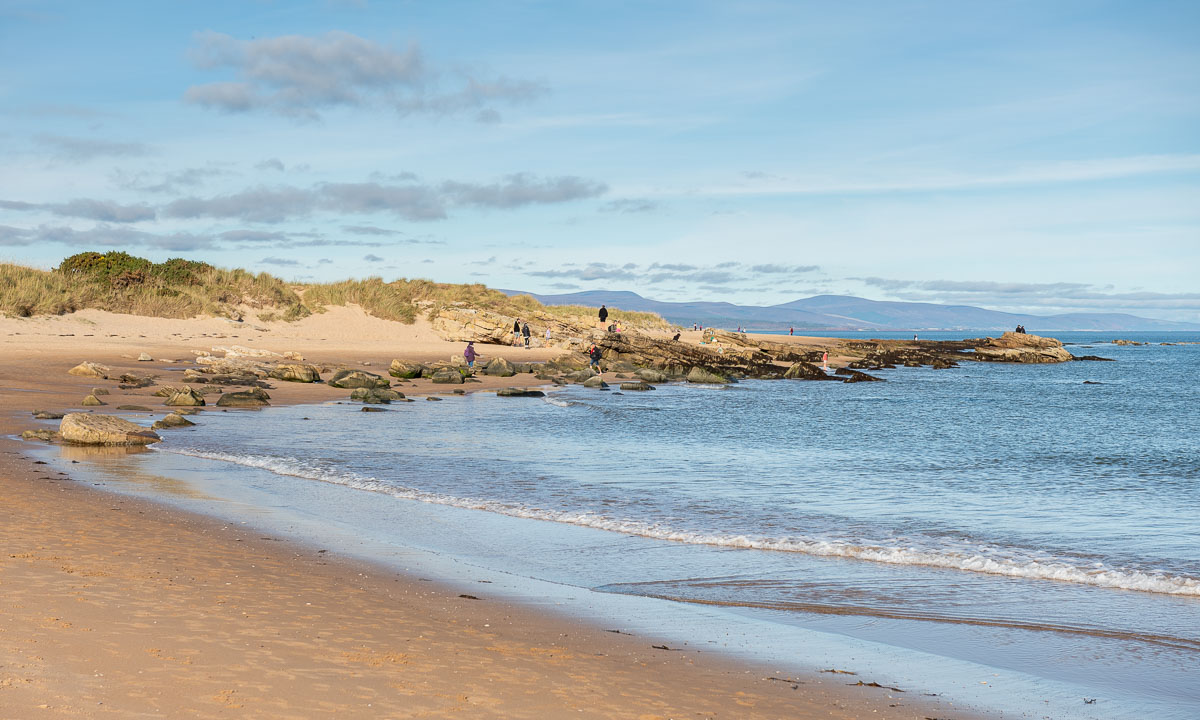
From there it is not far away to our first beach: Durness beach with its beautiful sandy shoreline. It has some features beyond the usual such as a park with outdoor metal musical instruments or the box where you can lend beach toys.

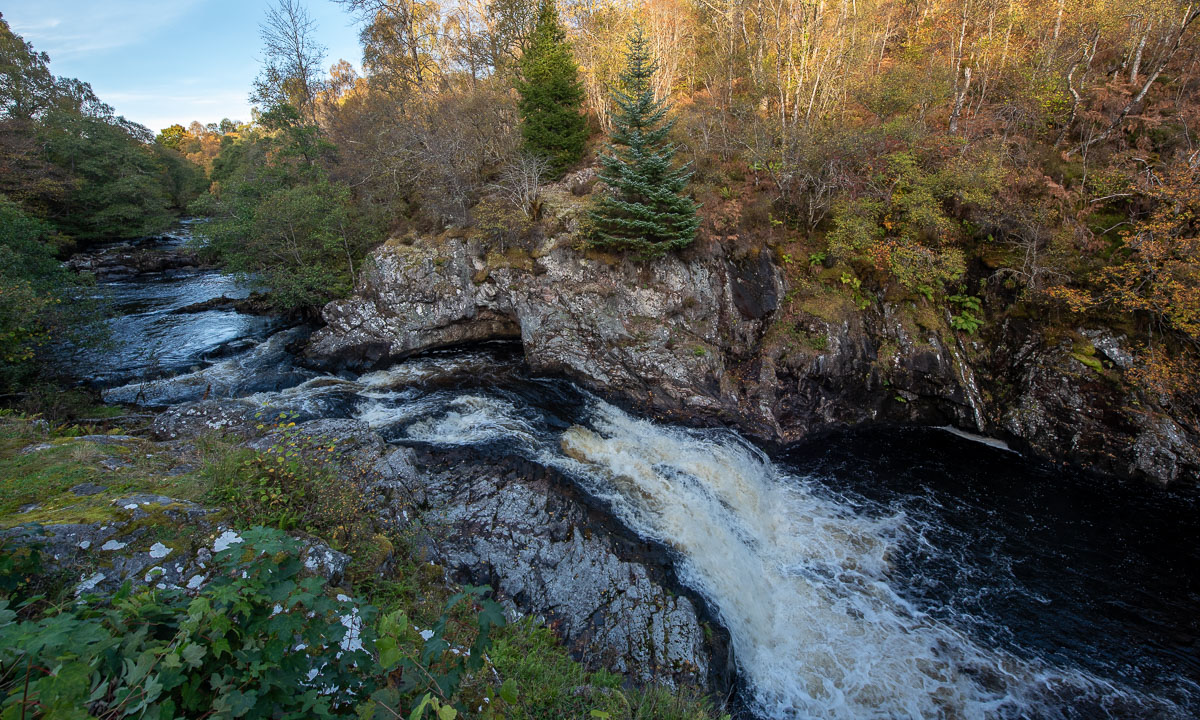
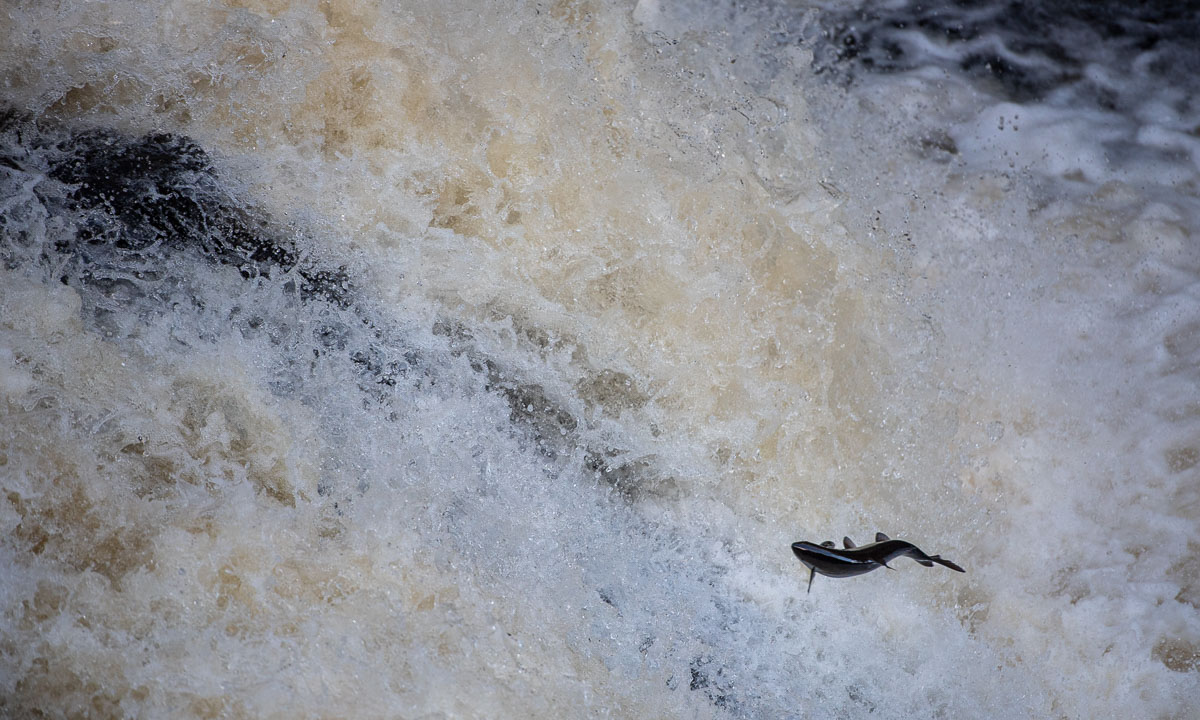
We continue our road trip, but instead of following the main route we take a detour to the Falls of Shin. It is said that in summer and early autumn the salmons swim up the River Shin to spawn. When they pass the Falls of Shin they have to jump up the rapids. I thought, October was already off-season, but we do not only spot the waterfall but also some jumping salmons. And another species: salmon watchers with their binoculars and cameras with huuuge telephoto lenses. With my smaller telephoto lens I manage to take some photos of a lot of water with a tiny fish. I wonder how the salmons master this waterfall? We have not seen any salmon succeed.

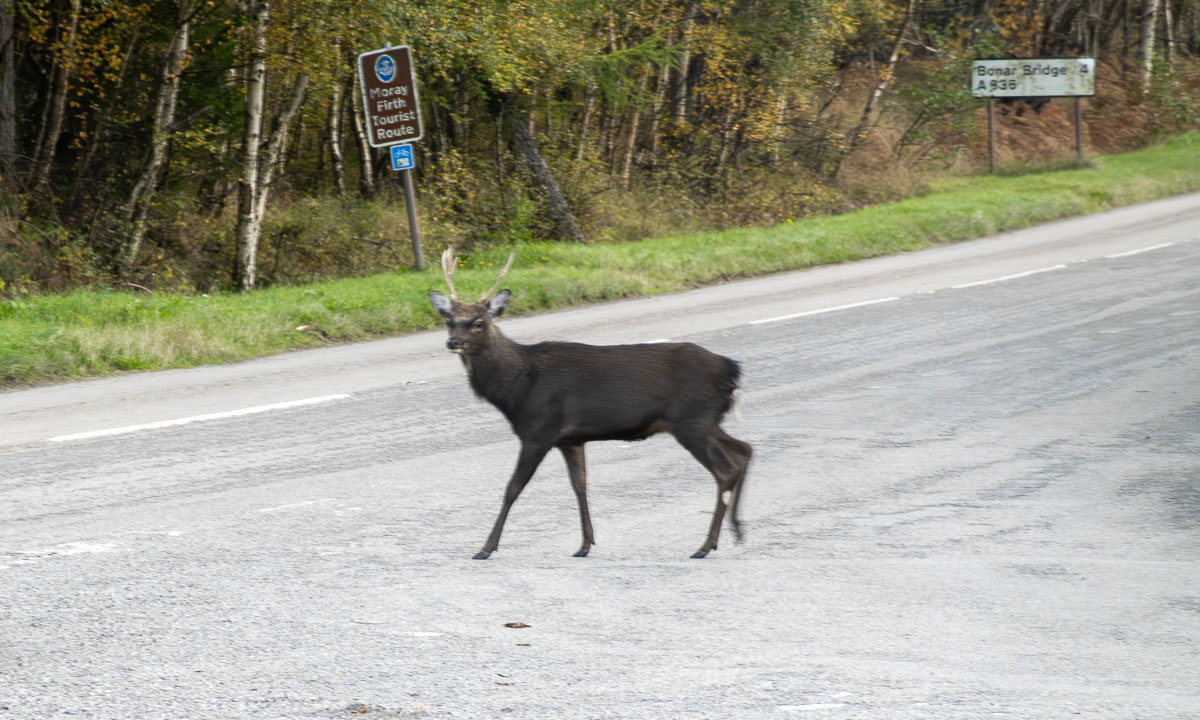
Back in the car we take the road north and pass Lairg. Then we pick minor roads that lead east again. A deer is crossing one of the roads, taking its time.

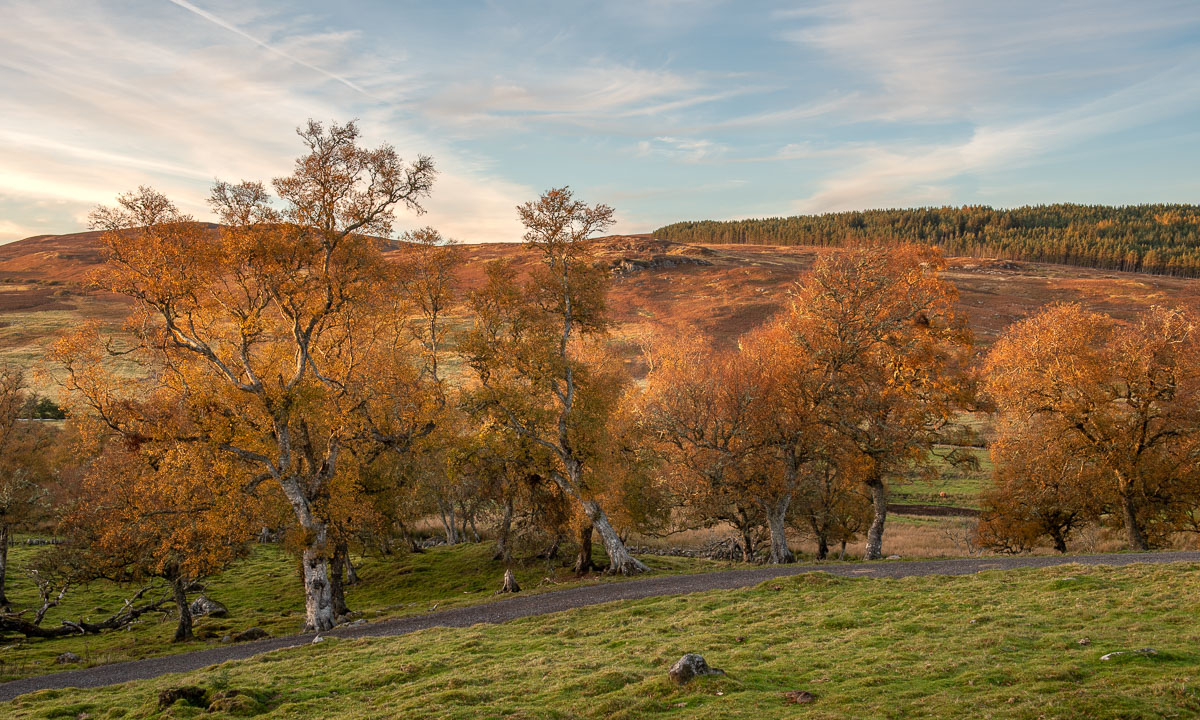
The sun is setting much faster than in Northern Europe and soon the colours of the scenery become warm. Photographers call this the golden hour and in my humble opinion it is especially beautiful in autumn.

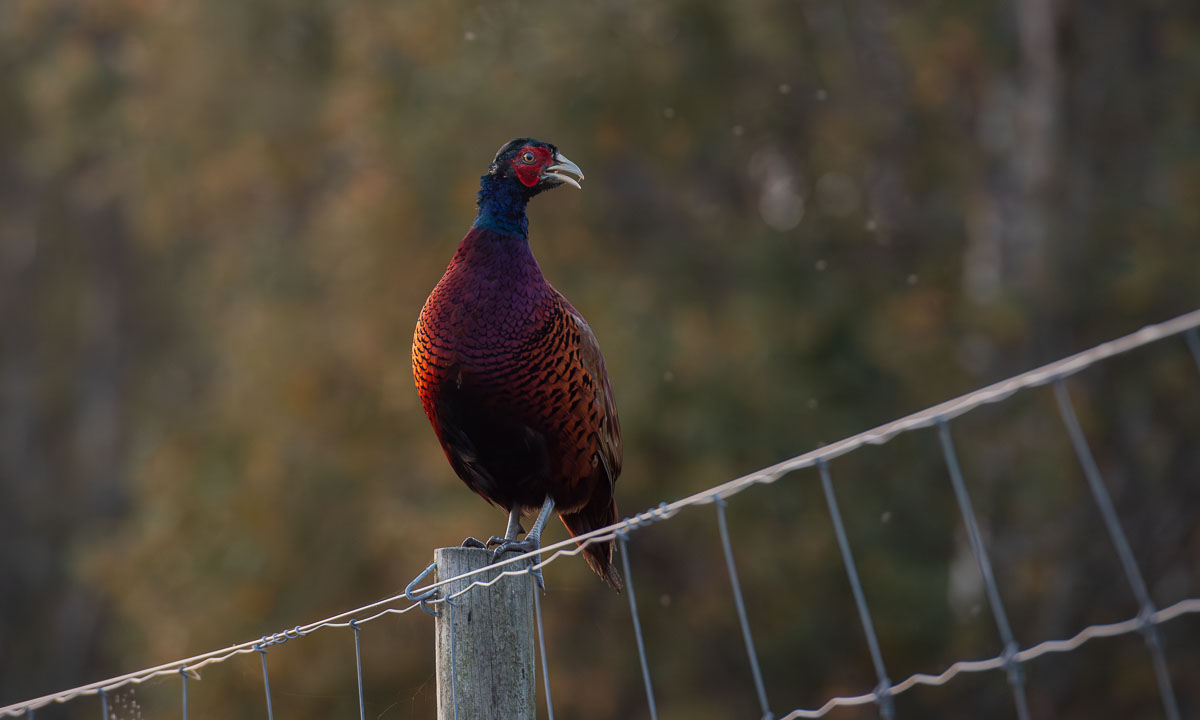
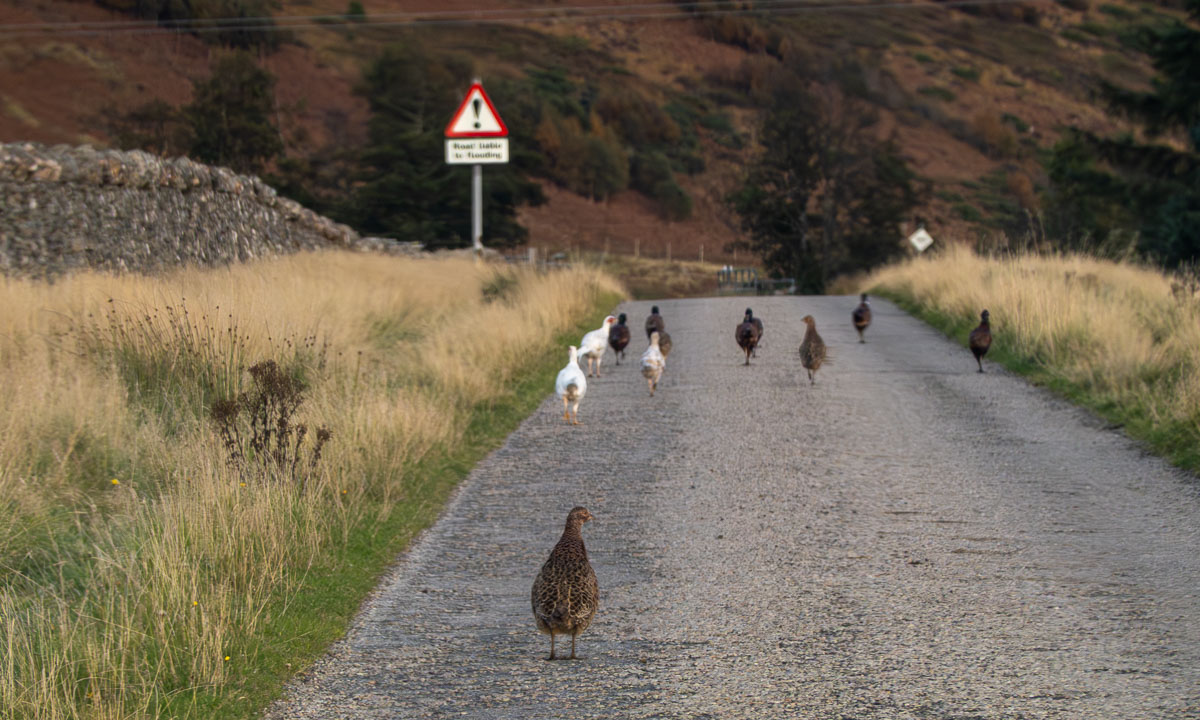
It is not only the golden hour, it is the hour of the pheasants. First we see one here and two there, then some are on the road and all of a sudden a whole flock is blocking the narrow road. completely. They totally ignore our car and I have to exit, running towards them, waving my arms like a madman to shoo them away. Never have I seen so many pheasants in my life.

Near Brora we come back to the main road A9. Another eighteen kilometres and we arrive at the “Song of the Sea, Selkie House” in Helmsdale, our first stay for the night. Just half a day’s drive, and we’ve seen so much already. Now we’re heading to a pub for some food, and before long we’re lying in the huge double bed in our cosy room.

Tomorrow we will continue north.

Scotland NC500 – prelude

This article is part of the series “2025-10: Northern Scotland”.

Oh my, was is really less than two weeks ago, that my wife Annika and I were on holidays in Scotland? It feels like ages ago! Time to start blogging about our trip that is south from were we live, but still kind of way up north, at least from a British perspective.

11 October – arrival

Half past twelve. I have just landed in Aberdeen, Scotland’s 3rd largest town. Annika will arrive late afternoon, my luggage the next day … . I check in at the Station Hotel and realise that I have reached a rainy realm. At the entrance door you can rent umbrellas. 3 £ for 48 hours. Card payment.

I take a stroll through town and start to take photos.

Soon I realise that in Aberdeen it completely makes sense to take photos in upright format.

Later the day I head eastwards to the Aberdeen beach front. I would have taken my bathing gear if my luggage had arrived in time.

When Annika arrives it has become dark. We eat dinner at the Indian restaurant Namaste Delhi where we have great Indian food. I ordered a salty lassi and got a custom one—off the menu! I however didn’t dare to play the grand piano. A rare view nowadays.

12 October – Aberdeen

After having breakfast in our hotel –cereals,  toast, bacon and eggs, beans, haggis, you name it – we take the bus to the Old Town. But before that I try to take a photo of the Marischal College in the center. No, it is not curved like on the photo but even with my 14 mm wide angle lens I had to stitch together six photos to get this colossal building on a single image.

But now: Old town. First the botanical garden, where the Autumn Crocus flowers were in full bloom. Very beautiful and very toxic!

Next stop: St Machar’s cathedral with its Heraldic Roof. Just impressive!

Equally impressive are the huge and ancient trees. We don’t have such trees at home, neither in Umeå, Sweden, nor in Tromsø, Norway. These beech roots I photographed in Seaton Park that lies beside St Machar’s by the river Don.

Next stop: King’s College, founded in 1495 and still part of the university. The wood carvings in the chapel are amazing and the whole place breathes centuries of history.

After a small lunch we take the bus back to the center of Aberdeen, where old and modern architecture live side by side.

We are back at the hotel, but not my luggage. Just minutes after we have entered our room I get a call from the reception. The luggage finally has arrived. Wideroe had failed completely in giving any updates on any communication channel about the luggage’s whereabouts. Now I’m really relieved. We can take the train to Inverness the next day as planned! Now it is time for a nap.

After the nap we want to have a snack for dinner, preferably something that is new to us. We find it in a tiny Georgian restaurant called Oki Doki, where we eat Khinkali for the first time in our lives. Strongly recommended to try it out when you are in Aberdeen!

13 October – Car rental

It is ten o’clock and Leakey’s Bookshop – Scotland’s 2nd largest second-hand bookshop – has just opened. It is a beauty! At least in the eyes of book lovers. It is also overwhelming with its over 100,000 books (including an own section for polar exploration!) and we didn’t buy anything.

We are not in Aberdeen anymore. As planned we took the the train to Inverness in the morning, where Leakey’s Bookshop is located. Here in Inverness we will hire a car and drive the “North Coast 500” (short NC500), a scenic 516-mile (or 830 km) long road trip along the north coast of Scotland. We have eight days.

We have to walk a bit to Arnold Clark, our car rental. Here we receive our SEAT Ibiza – a perfect car for the many narrow single track roads. It is Annika, who is driving. She has already left-hand driving experiences from three years ago and an additional driver (me) would have costed us £ 120.

And off we go – heading north.

Stay tuned for the next chapter …

Steindalsbreen 2025

It is the third year, that I hiked to the glacier Steindalsbreen in the Lyngen Alps. This time I had the pleasure to do the tour with my wife Annika. To make it a holiday we have decided to try to book the cabin Steindalshytta over the weekend. This cabin lies some kilometres from the parking place on the way to the glacier.

Saturday morning we manage to book two beds but we have to hurry to fetch the key in Steindalen, which is 100 km away. There we meet H. that gives us the keys and some info. She tells us we can use the gas driven hotplates to cook. We also learn that there’s hardly any firewood left, but it’s not cold and we have sleeping bags, so no worries. We pay using Vipps, the leading mobile payment system in Norway, then we take the car to Lyngseidet – 25 km away – to buy food.

When we pack our backpacks to start the tour it is already afternoon, but the cabin is not far away.

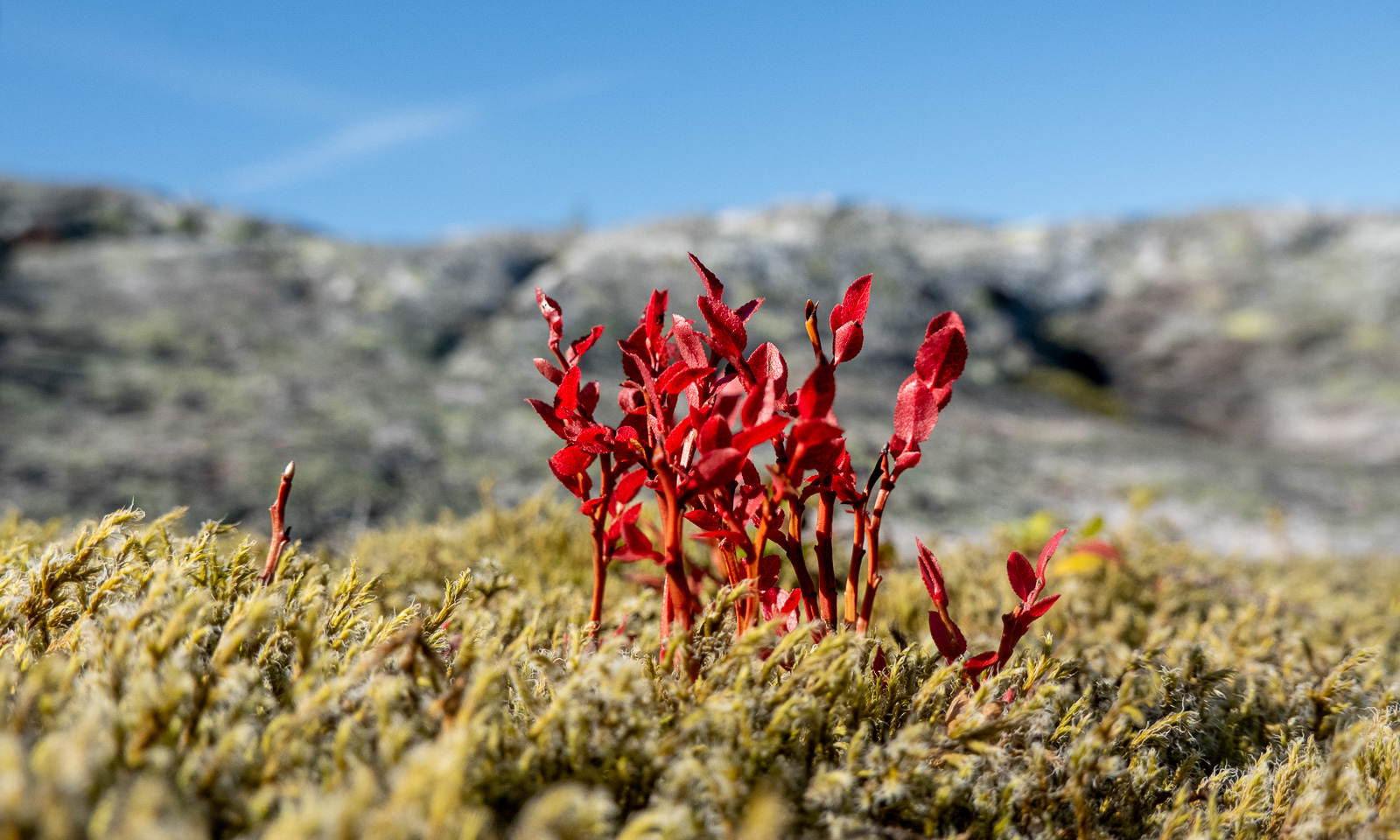
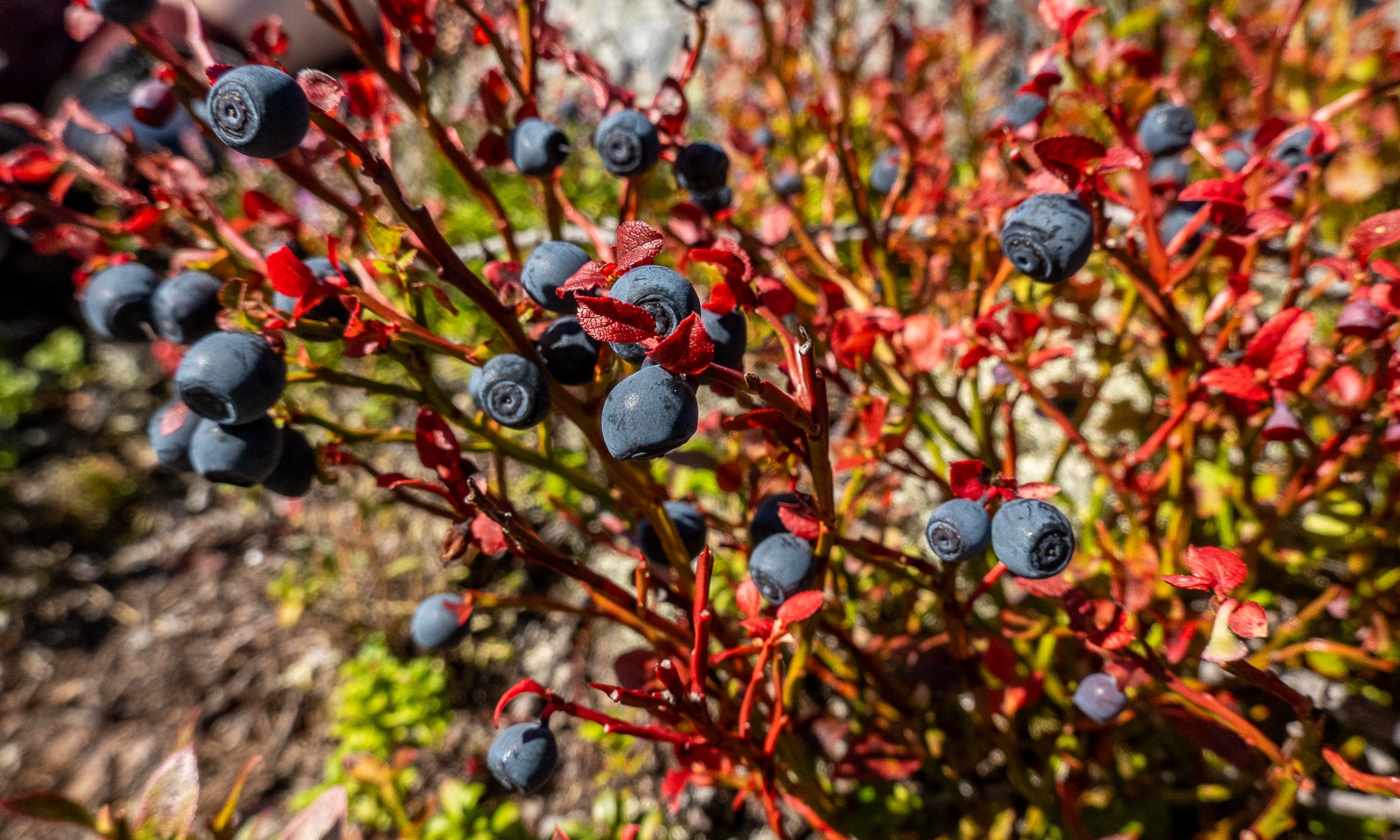
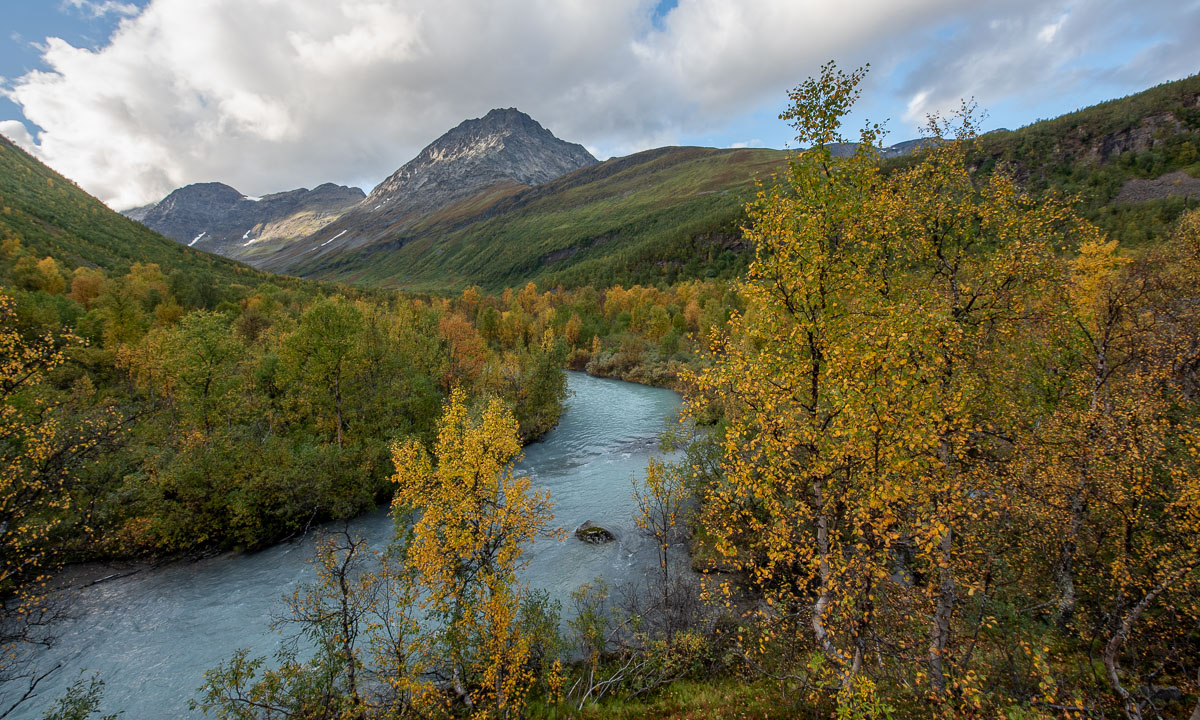
In the beginning a forest path winds up through a narrow valley. The colours are autumnal – yellow the birches, red the cornel and the blueberries. To the left down from the bottom of a ravine we can hear the river Gievdanjohka.

The path is rising and so is the river. After two kilometres we are almost level.

From there it is not far to the cabin. We go round a moraine and there it is: Steindalshytta. I unlock the door and we peek inside. Looks cosy!

Now we want to cook. This will take the rest for the evening because the gas canister is empty. No cooking on the hotplates, we have to use the wood-burning stove. We gather all the leftover wood from inside and outside of the cabin. There is no axe. Luckily Annika has a knife that is sturdy enough to make some smaller peaces of firewood. The wind is calm, the oven isn’t drawing and it takes almost three hours until the water for the spaghetti is boiling. At least we get a starter: warm shrimps with parmesan that we eat from the huge plastic plates we found in the kitchen. And I found chocolate cookies in the kitchen.

Meanwhile it has become dark outside and soon we get to sleep. We don’t have to freeze. After having powered the stove for hours we have 24 °C in the living room and hardly less in our sleeping room. Good night!

When I wake up the next morning it is raining, but it stops soon and the sun starts to light the mountains in the east.

After breakfast we pack our backpacks and start our hike to the glacier Steindalsbreen. Many things like our sleeping bags we leave behind, because we will go the same way back.

Again we follow the river to the east, then the landscape opens to a broader U-shaped valley. The terrain flattens and hiking is easy.

But we can already see the ascent we have to take. After two steeper passages we stand between two landscapes. In our back lies the mellow valley with its gentle slopes, everything in autumnal colours. Ahead lies a rough and rugged mountain landscape, where grey rocks and stones are the predominant element.

And there it is. The glacier. (Photo Annika Kramer.)

We continue the gravel path. Soon we pass the first of the signs that marks the glacier front some decennials ago. Due to global warming the glacier is melting and retreating every year. It is fantastic to see the glacier and we feel excited, but sad at the same time. First we hike to the glacial lake in front. Will we manage to go round the lake the glacier itself? Yes – and it is quite easy this year.

I have my big camera backpack with me and the Nikon with three lenses. That was made possible by Annika who took all the food. Although the weather is a bit dull it is photo time!

As often I’m not content with my photos and yes, I should have carried my tripod with me. But I’m happy about being there together with Annika. (Next photo: Annika Kramer.)

It is time to go back. This time we follow the river and pass two fields with scientific instruments, part of the project iC3. I have to ask a colleague from the Norwegian Polar Institute what is measured there.

Now the trail leads mostly downwards. We descend the hill, cross the broad valley, enter the forest and then reach the bridge by the cabin again. Here we take a rest and then fetch the rest of our stuff from inside the cabin.

I take a tiny detour that leads on a hill. Here I can see everything together: The huge mountains with their snow fields, the river Gievdanjohka, the autumnal birch forests. Only the glacier is hidden from view.

What a terrific tour we had! The glacier Steindalsbreen is worth a visit, especially in autumn. We drive back to Tromsø and I copy the photos to my computer. Then I check the tracker I used on the tour. As I was afraid I have walked on rock, sand, and mud this year, where last year the glacier covered the ground.

Just a pick-up at the station… – part II

< to part 1

Tuesday, 22 July

When I wake up early, the mountains and the sea have vanished. Thick fog surrounds our overnight stay Marmelkroken on the island Andøya. I take a walk through the wet grass to the bird observation place but beside of some seagulls and a lonely curlew that flies around there is nothing to see.

One hour later Annika and I sit inside enjoying our gorgeous breakfast. We get a table-side presentation of the dishes. More or less everything has been produced locally and we eat it all.

Then we head of. We want to catch the one o’clock ferry in Andenes that will bring us to the next island Senja, second largest in Norway (again, when we ignore Svalbard). The weather soon gets fair again, but around the mountains still some clouds are hanging.

Yesterday we took the western road, today we cross the boggy island to take the eastern one. On the way there we pass the village Å. There are several Norwegian places called Å, the most famous one is on the Lofoten. The next stop is the octagonal church in Dverberg.

A bit north near Myrset there is a huge area of peat mining. Andøya has large areas of peat bogs and parts of it has been drained to extract the peat. I climb on a hill of peat – it bounces like a water bed – to take some photos of this moonscape. Then I protect my camera lens, because each step emits a cloud of brown dust. But that’s nothing compared to the huge double-wheeled tractors anyhow that produce huge clouds of peat dust while driving. My car is brown now.

We take it easy, we have time – that’s what I thought. When we however arrive at the ferry terminal it becomes quite obvious that we would not join the next ferry. Too many cars are ahead of us waiting. So the one o’clock the ferry departs without us, leaving us behind but in a much better start position. Now we have to wait for four hours. Time to explore Andenes a bit.

As hoped and expected we find place on the next ferry. Now we are on the way north to Senja. Soon we are in open water, accompanied only by some sea birds.

The ferry trip takes one hour and forty minutes. Then we arrive in Gryllefjord on Senja.

Unfortunately we won’t catch the last ferry to Kvaløya today, they are not coordinated. We have to drive via the mainland – a large detour. Although it is another detour we decide to take the coastal route. 289 more kilometres to go which means a five hour drive in Norway. It is evening and we will make less breaks now.

Stop one – Tungeneset, a scenic rest area.

Stop two – another one of the many beautiful views on a fjord and the mountains on the other side. Here we see something special: a cloud waterfall. Clouds fall down a steep mountain range where they vanish in thin air. New clouds come from behind. The cloud waterfall is several kilometres broad and looks like a huge waterfall in slow motion. An impressive view.

(Note to the meteorologists: is this a orographic cloud spillover?)

We take the bridge from Silsand to Finnsnes. After two days we are on the Norwegian mainland again. Although it is still midnight sun season – the sun won’t set, it just moves lower and lower until it is hidden behind the mountain. I took the next photo at eleven o’clock in the evening.

At half past twelve we arrive home in Tromsø, my “work home”. Although it was only one evening and two days of travelling together it felt like real holidays.

We think about doing the same in half a year. I have to check the ferries, but it would be interesting to visit the same places in wintertime.

Just a pick-up at the station…

When Annika travelled to me last weekend, her train from Boden to Narvik was cancelled and the next and last train was heavily delayed. Unfortunately train problems have become common in Northern Sweden over the years. I had to use the airplane several times because trains didn’t run at all for days or it was impossible to buy tickets.

To keep Annika from being stranded, I drive to Narvik to fetch her. From Tromsø it takes me about three and a half hours plus some breaks.

Meanwhile Annika has booked a hostel in Bogen where we stay overnight. Our plan is not to drive back the direct route, but to visit the islands Andøya and Senja.

Monday, 21 July

The next morning starts sunny.

However it soon gets foggy. After crossing the Tjeldsund we are on Hinnøya, the largest Norwegian island (when we ignore Svalbard). We decide against a swim in the sea due to the fog and continue to Refsnes. From here go ferries cross the Gullesfjorden to Flesnes. On my trip to Narvik yesterday it was often 28 °C, now in the fog it is hardly 15 °C.

We have missed the 10 o’clock ferry, but they run hourly and we don’t have to wait for long. The journey itself takes only 20 minutes.

From Flesnes we continue to Risøyhamn. Hurtigruten travellers may know this place not only because it is one of the stops but also because of Risøyrenna – a man-made underwater channel that allows larger vessels to pass between Andøya and Hinnøya. The Hurtigruten ships has to go quite slow there.

We take the bridge over the Risøysundet and drive through Risøyhamn. Twice. Because I didn’t know that it is so small. Only round 200 people live there.

The weather is sunny again and we become more beach focussed. The first beach is for having lunch. We share it with a flock of sheep.

The second beach is for bathing. 16 °C in the water – surprisingly warm for the region.

We continue north. To the west the Norwegian Sea. Next shore westwards is Greenland, more than 1500 kilometres away. Our next stop is much closer: a public toilet at Bukkekjerka. But what a one! It is a designed block of concrete and mirrored glass. From the outside you cannot look in, but from the inside you can switch the huge glass windows between being transparent or opaque.

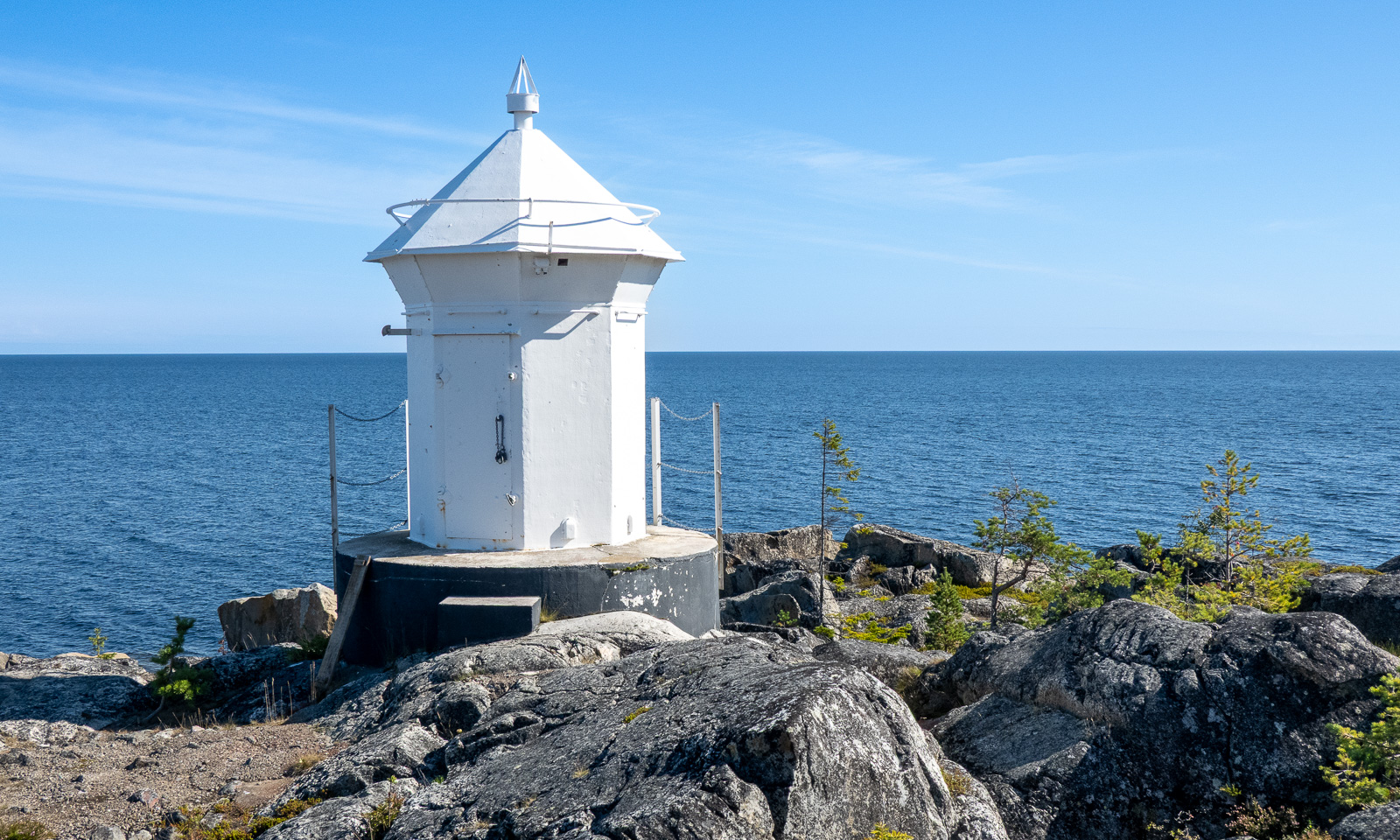
Around this place – a lighthouse on a peninsula, interesting looking rocks, a baaing sheep and of course the sea.

We follow the coastal road further north to Bleik. Here you can find beaches and turquoise water as well as ridiculously looking rock needles.

After refuelling my car in Andenes we drive south again to Marmelkroken, where we will stay overnight. With an additional photo stop.

To part 2 >

Four days hiking in Tromsø – part one

Prologue

I am sitting in the bus number 24, the bus that usually brings me to work.

But not today. It is Saturday, my wife Annika is with me and we will not leave the bus in the center but at the last stop „Kroken“. We have backpacks with us and are about to start a four-day hiking trip through the mountains on Tromsø’s mainland. We leave the bus stop behind, follow the street to the parking place above, pass the graffitis on the “trykkbassenget” and then …

Day 1 – Kroken—Skarvassbu

… we are on the hiking trail. Between the following two photos lie six minutes.

We are following the broad trail slowly gaining altitude and it doesn’t take long till we reach the tree line, which is between 300 and 400 metres in Tromsø. When we look back we can see the northern tipp of the island Tromsøya, but soon the city disappears behind the mountains.

At the lake Krokvatnet the path gets steeper and rockier. We celebrate every cloud because it is a warm summer day with temperatures above 20 °C.

With every hundred metres of altitude the landscape is changing. Soon rocks dominate the landscape, being a perfect habitat for the lichens growing on them.Here we are at an altitude of 700 metres – the highest of our whole trip.

Now we are descending again. Larger lakes have come into view: Čazajávrrit (or Storskarvatnan) and Storskarvatnet. Yes, the Norwegian names are almost alike.+

Between the lakes the cabin Skarvassbu is supposed to be – and there it is. A couple of black-roofed buildings, perhaps a kilometre away. We cross some more boulder fields and then arrive at the cabin. We have a DNT-key with us. That key fits to all but a few cabins of the DNT (the Norwegian Trekking Association), We unlock the door and enter the “hytte”. As many in Norway it is very cozy.

We have pre-booked two beds – probably quite unnecessary, since we will be alone in the night. Since it has been a dry summer the river usually being used to fetch water is dried up completely.

Luckily the small lake nearby has clear water and I fill one of the cabin’s buckets. A bit later I return to the lake to take photos from the cottongrass.

One of the things I love being out in the mountains for several days is watching the changes of light. It still does not get dark but still the sky shows evening colours.

Day 2 – Skarvassbu—Blåkollkoia

When I wake up at 5 o’clock it is broad daylight. It is Sunday, the 4th of August and sunrise was already at 2:45. No reasons for a photo session, I continue sleeping. At 8 o’clock I take some photos with my drone. It’s the first time I have it with me while hiking. Some aerial photos can be pretty boring but the extent of the landscape is often impressive. The mountain in the background is Tromsdalstinden (1238 m).

We have Müsli for breakfast. For milk we mix our milk powder with water. Perhaps not our favourite meal, bit it easy to carry and provides energy for our long trip. Wait, did I write “long”? Today it is only 5–6 km to go.

The first part takes a bit of time because the hiking trail crosses a large boulder field. The marks of red paint – sometimes a dot, sometimes a “T” – are guiding us.

We have left the worst rock fields behind and are looking at a lovely, grassy mountain valley from the escarpment we are standing on. That looks nice! But first we have to follow the winding path that leads down. We pass one of the rare and small snow fields. It has been a warm year and even many higher mountains are free of snow.

And then we reach the alpine meadows that present us a treasure: Blueberries!

According to some tour description Annika found in the net there are rivers to cross. Wading however was not required, all rivers and brooks had very low water levels and were easy to cross and so was the river Goahtevuomieatnu (or Norwegian: Tønsvikelva). We are walking along the river and soon the small cabin Blåkollkoia comes into view where we arrive round noon.

In the afternoon Annika and I go to the river again. We want to check how to cross it the next day, we want to fetch water, we want to clean some clothes and we want to bath. Four times success: There is a bridge, there are nice places to refill our water bottles and to do some cleaning and most important: there is a deeper spot perfect for taking a refreshing bath on an even warmer day. We dry ourselves in the sun and then are sitting by the river for an eternity. This is definitely a highlight of the tour that I will remember for a long time!

And we still have plenty of time. For reading, for taking photos of birds …

… for flying my drone again …

… for preparing dinner (Pancakes with blueberries), for enjoying sun and seeking shadow and for enjoying life.

Note to ourselves: if you want to make pancakes, bring butter or oil …

The next day we will continue to Trollvassbu, with 13+ km it will be the longest day of our four day hiking trip which on the one hand is far, far away from everything and on the other part of the neighbourhood of my work town Tromsø. What a special place in many ways!


Polarsyssel in Tromsø (and ice cream)

While I was sitting at my computer in my apartment in Tromsø I looked out of the window. A blue ship was sailing on the Sandnessundet, the strait between Tromsøya and Kvaløya. It looked somehow familiar. I checked, first with my spotting scope, then with an app. It was the Polarsyssel, the ship of the Governor of Svalbard. I managed to take a photo between the trees.

Last time when I saw this ship it was on 16 March 2023, the week I was working in Longyearbyen/Svalbard.

What does the ship do here so far south as in Tromsø? Chasing polar bears? I checked the news but couldn’t find anything. While I was watching the ship  my thoughts wandered north. In August I’ll be in the Arctic once more. Will I stand on the sea ice again? Will I see polar bears again?

Then I heard a melody outside:

This is a famous melody in Norway! It is called “Norge rundt” and is the signal of the Isbilen ice-cream vans. Today I was one of the customers. So I got my ice. And the brand of the ice cream? Isbjørn is – Polar bear ice.


Ski tour in Sweden – Tjäktja—Alesjaure—Vistas

This article is part of the series “2024-02: Ski tour Sweden”.

Day 7 – 4 March – Tjäktja—Alesjaure

I may repeat myself but again we have sunny weather and blue sky at -6 °C. The only difference, it is windy today. It started last night when we were out to watch the Northern Lights and now the wind is blowing snow over the mountains and through the valley. While we are starting our tour we are having an impressive parhelion and a piece of halo right of the sun. I’m pretty sure that it isn’t created by stratospheric clouds but by the blowing snow.

We descend into the valley Alisvággi and leave the blowing wind behind us. Now sun feels warm but on the ice of the river system Aliseatnu the cold air still wins.

It takes some time until we can spot some of the cabins of Alesjaure. I can see them behind the rocky hill. No, they are on the rocky hill. I remember having tried to climb this turtle shell-like hill with skis and pulka years ago. I have learned my lesson, we walk up. And then we are welcomed by the warden with a hot and very sweet juice. We chat for a while (we have met once years before) and then Annika and I sit on the reindeer skin lying on the bench by the table and take an outdoor picnic. We may choose a room because we are first. We enjoy the weather, inside and outside. Later, after dinner we will head for the sauna.

I thought it would be extremely crowded here but we arrived on the right day. Yesterday: 40 guests. Tomorrow: 50 pre-booked guests. Today: 11 :-)

Day 8 – 5 March – Alesjaure—Vistas

Today is a special day. We do not take a break day, we continue to Vistas where our friend Dirk is currently warden. With 18 kilometres it is the longest distance on our ski tour this year and I was a bit afraid that it could get tough. Is there a track? How is the snow? Therefore I have urged Annika into raising up ridiculously early. We have the large kitchen for us while ptarmigans are hopping and clucking outside of the windows.

The sun starts to illuminate the highest mountain peaks, soon we will have sun as well. 7:05 (sic!) we start our tour.

… and get a little lost. We navigate by eye and sync the stones marked in red with the summer trail on our map. Anyhow it doesn’t fit. The GPS helps and now we know where we are. While finding a good route to get more north were we assume the correct route to be we realise that the summer markers are all over the place. Not helpful! Our assumption was correct, there is the unmarked winter trail. It is obvious, because now we see snow mobile tracks, ski tracks, pulka tracks, boot tracks, snowshoe tracks. I guess we won’t have any navigation challenges anymore today.

We cross the first lake Bajip Čazajávri and the second lake Vuolip Čazajávri, then we stand at the “abyss”. The steepest part of this declining slope falls 50 metres on 200 metres and we both decide to unmount the skis. Beside of a patch of soft snow the snow is good to walk on.

Now we are in the beginning of the valley Visttasvággi which will gently descend for the rest of today’s tour. And since it descend we leave the barren kalfjäll and meet the first birch trees, the first ones since a week.

The next hours we will ski in the sun. The hot sun. First I take off my jacket, then cap and gloves, then I roll up my sleeves. Finally I put on the shirt’s hood again, not for cold but for sun protection. Some photos from the tour:

Moose droppings are not the only animal tracks we see. There are the typical deep moose tracks, the smaller reindeer tracks, countless ptarmigan tracks (both feet and feathers) and a special track – like a fox on snow shoes. This was the description of the Sami on Sälka when he described wolverine tracks. The wolverine track follows the trail for a long time and watching it is pretty exciting.

The wolverine tracks are special, since these animals are rare. Only round about a thousand wolverines live in Scandinavia. But I love the ptarmigan prints as well. They often seem to tell stories.

My titles: 1. Zen garden / 2. Hieroglyphs / 3. Salsa party

After some hours of sun we finally come into the shadow. Almost a relief. Now it is not far anymore to the Vistas cabin, which is not part of the famous Kungsleden trail since it lies in a side valley. Skiing there was much easier then I expected and we had a faster pace then on the preceding shorter distances.

Dirk has seen us already and welcomes us outside with two cups of hot juice. Later we get an incredible five star afternoon snack. It consists of two surprises. First surprise: We found cookies in the leftover food in the kitchen cupboard! Two sorts, one of them with chocolate. That has never ever happened to me before and I hardly can imagine why people should leave cookies behind. I won’t! Anyhow I’m grateful. Second surprise: Dirk does not only invites us to coffee but also to Christmas stollen, a traditional German Christmas cake. It is never too late to eat stollen. Thanks, Dirk, for sharing it with us!

After dinner – Dirk invited us again – I just walk around to take photos. A faint polar light can be seen but it is nothing compared with the last days, especially the night in Tjäktja.

Day 9 – 6 March – Vistas

Today is the fourth and last break day we take on this tour. Are we lazy? Yes and no. Annika is sawing logs, I am chopping the wood (not my best day though). I fetch water from the river by lowering a bucket from the bridge into a patch of open water. The ice on the river is not save. But we also sit outside reading and I am using the short period where the sun shines on the cabins (yes, another fine day) to take some photos.

Tomorrow we will ski to Nallo and stay there over night, then we will come back to Vistas.

Ski tour in Sweden – Kebnekaise—Singi

This article is part of the series “2024-02: Ski tour Sweden”.

Tour day 1 + 2: 27 February – 28 February

It has been four years since Annika and I went on a ski tour. In winter 2021 we didn’t travel because of Covid, in winter 2022 I joined an arctic expedition and in winter 2023 I worked on Svalbard and we went on vacation there. But now it is 2024 and finally we have the opportunity to go on a winter tour.

Prologue

On Sunday, 25. February I take the car from Tromsø to Kiruna. In the back of the car: My skis, all stuff for a two-week winter tour and a pulka. It has been a good choice to take the car because an ore train has derailed between Narvik and Abisko the day before and the railway line is closed (and will be until end of May).

On Monday Annika arrives by train. We buy some extra provisions for the tour such as salami, crisp bread and chocolate and then went to the hotel where we stay over night

On Tuesday we pack the car, take an early breakfast and then go off to Nikkaluokta, a Sami Village and our starting point for the tour. We would have skied the 19 km to the Kebnekaise Mountain Station but it is still closed. Luckily there is another way to get there …

Day 1 – 27 Feb – Nikkaluokta—Kebnekaise—Singi

The family business Sarri AB offers snowmobile transport to Kebnekaise. You can pre-book it. Soon we sit in the surprisingly comfortable trailer and are dragged to the start of the trail to Singi, our first tour destination. Our thick down jackets keep the frost outside.

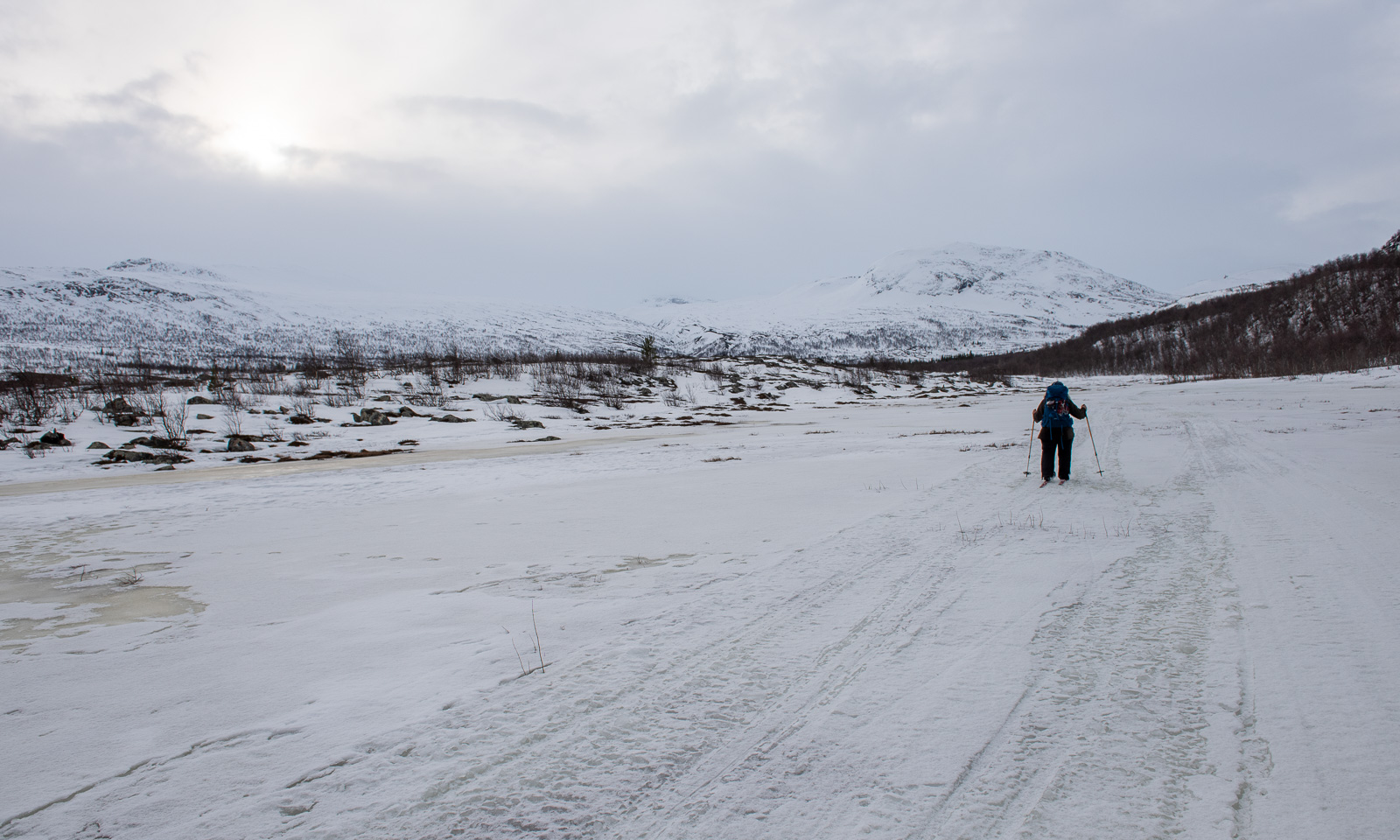
From there it is 14 km to Singi. The weather is more than fair: blue sky, hardly any wind, frosty but not too cold. Annika is carrying a backpack, I am pulling a pulka.

We are skiing westwards. Beside of a moose and some crows we are alone. Clouds have gathered and the dull light made the mountains look sublime, unreachable and a bit hostile.

Head wind has come up and the sight has worsened a bit. Still we can see far, but the snow is harder to read. Is it hard? Or soft? Does it go up? Or down? It just looks white.

I’ve been here before in winter and I am waiting the cabins of Singi to come into view but it takes longer than expected. Anyhow we finally pass some ice fields …

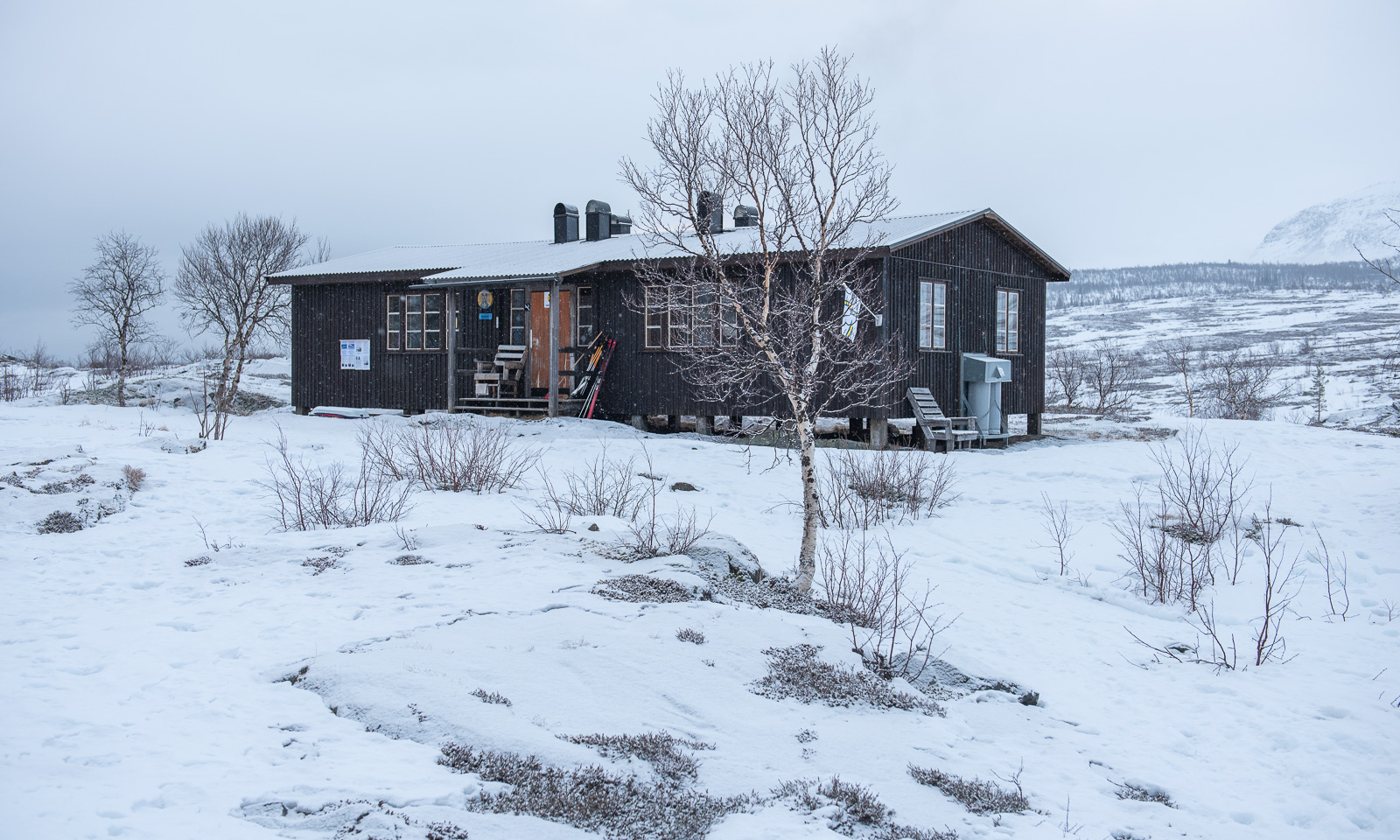
… and then we can see Singi! After a while we arrive there and are greeted by one of the stugvärder – the wardens. We get hot juice and may choose a room, since there are only two other guests. The rest of the day is mostly eating and sleeping.

Day 2 – 28 Feb – Singi

We have tvelwe days in the Swedish mountains but only eight planned tour days. That leaves four break days, one of them being today.

The morning looks quite promising. Parts of the sky is clear again, parts are cloudy. Some of the clouds move through the valleys which can look quite dramatic.

After breakfast Annika and I take a small tour to the Sami village Goržževuolli (or Kårtjevuolle). On the way there we find an interesting paw print:

It is a paw print of a reindeer, but raised. When it went there it compacted the snow under its foot. Then wind came up and blew away the loose powder snow round the print but not the compacted one.

We pass Singi’s water hole. If you do not want to melt snow (tastes awful) you have to fetch water there. Singi is famous for having the water hole quite far away. If I remember correctly it is 800 metres away (and ca. 25 metres down). We are lucky, the other guests have already fetched a lot of water.

We continue to the village which is only inhabited occasionally. There are a lot of wooden cabins and sheds but there are also some traditional goahtis. Goahtis can be built from different materials, this one is probably built of peat moss and timber:

We look around, enjoy the sun and made a large turn to head back to “our” cabin. Later I am out again to take some photos.

In the evening Annika prepares dinner. While a lot of other people we will meet the next days use to eat “outdoor meals”, which is more or less quite expensive powder we have the luxury of having other food with us. It’s potatoes, feta cheese, onions and sweet peppers. Now fresh – too heavy, too bulky – but home-dried by Annika within the last weeks. Then with the help of fresh garlic, butter and vegan egg-powder (all in our provisions) Annika cooks a tasty frittata for dinner. I understand the point of light-weighted food but this stuff is so much better! Delicious! Tack för maten – Annika. Thanks for the food. Anyhow we can eat this kind of food only on our break days because the dried ingredients have to be covered with water for hours to rehydrate before being used.

After lunch Annika is reading, I am writing my travel diary then we head to our beds and fall fast asleep. Next day we will continue to Sälka, our next cabin.