Scotland NC500 – day 8 – a hidden pass, palm trees, and a famous castle

This article is part of the series “2025-10: Northern Scotland”.

October 20

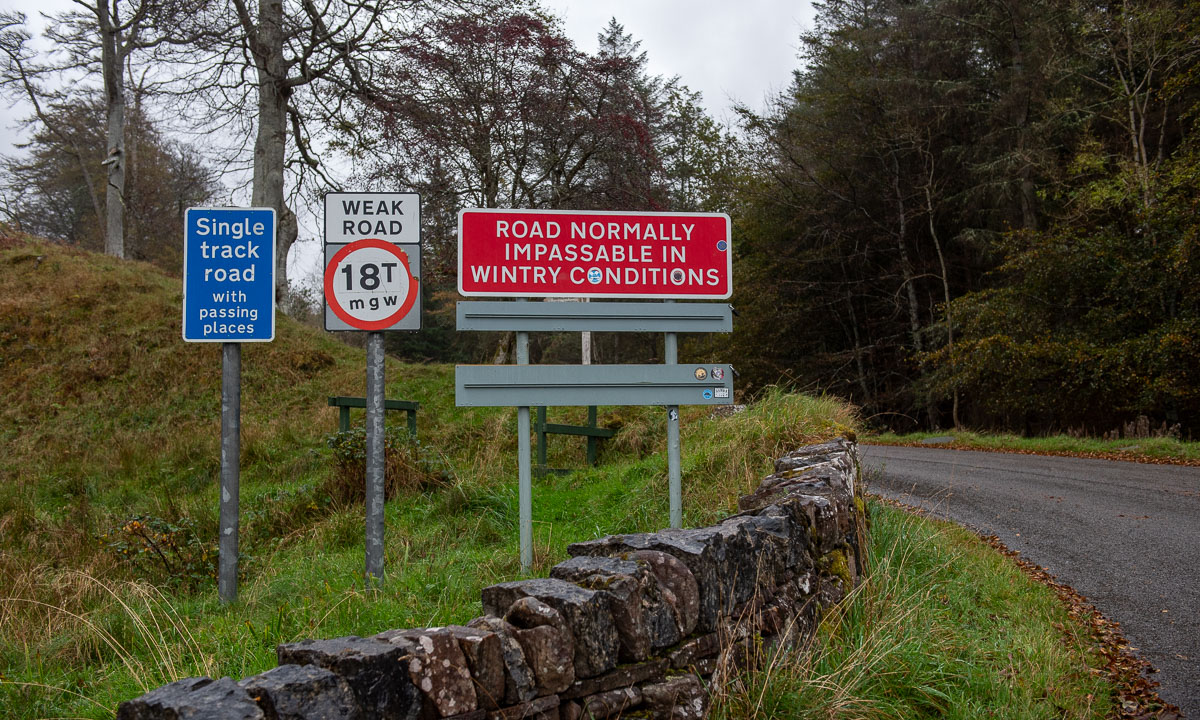
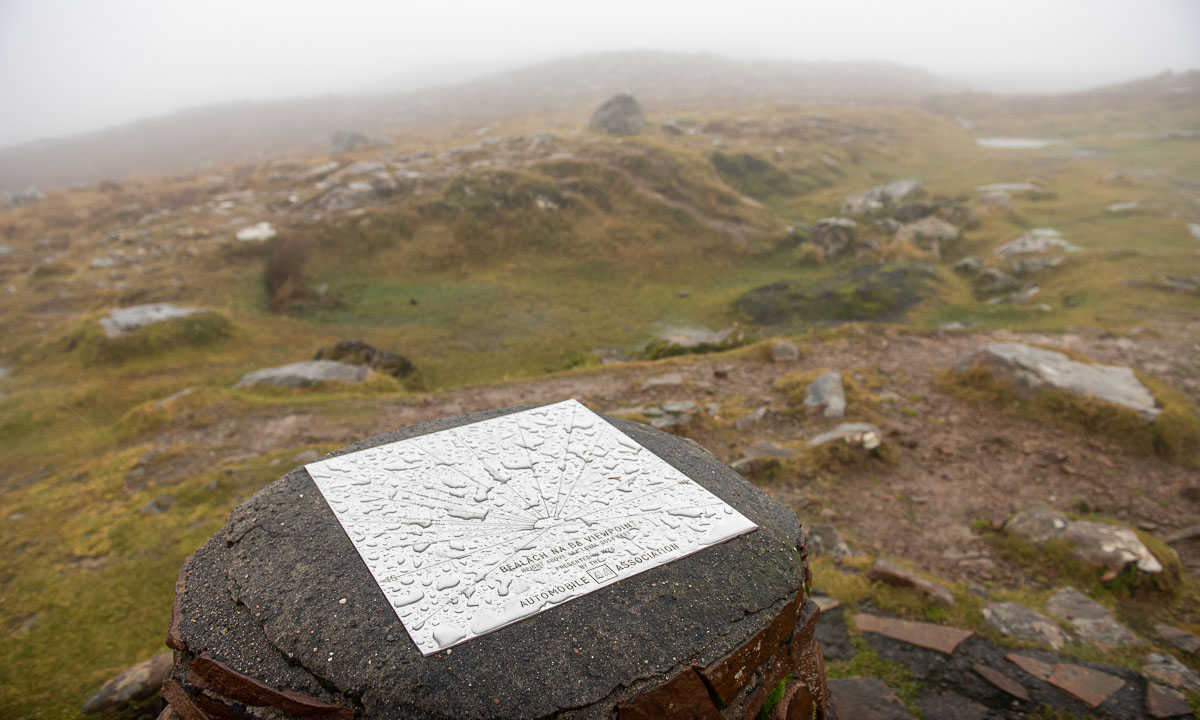
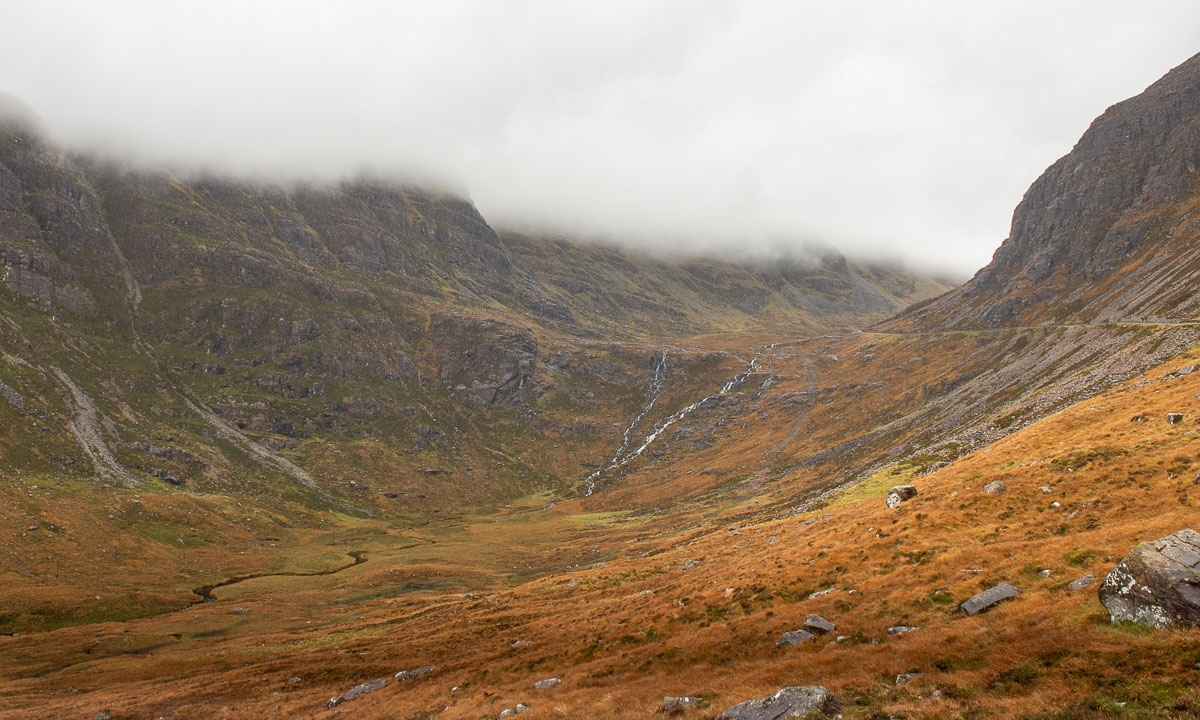
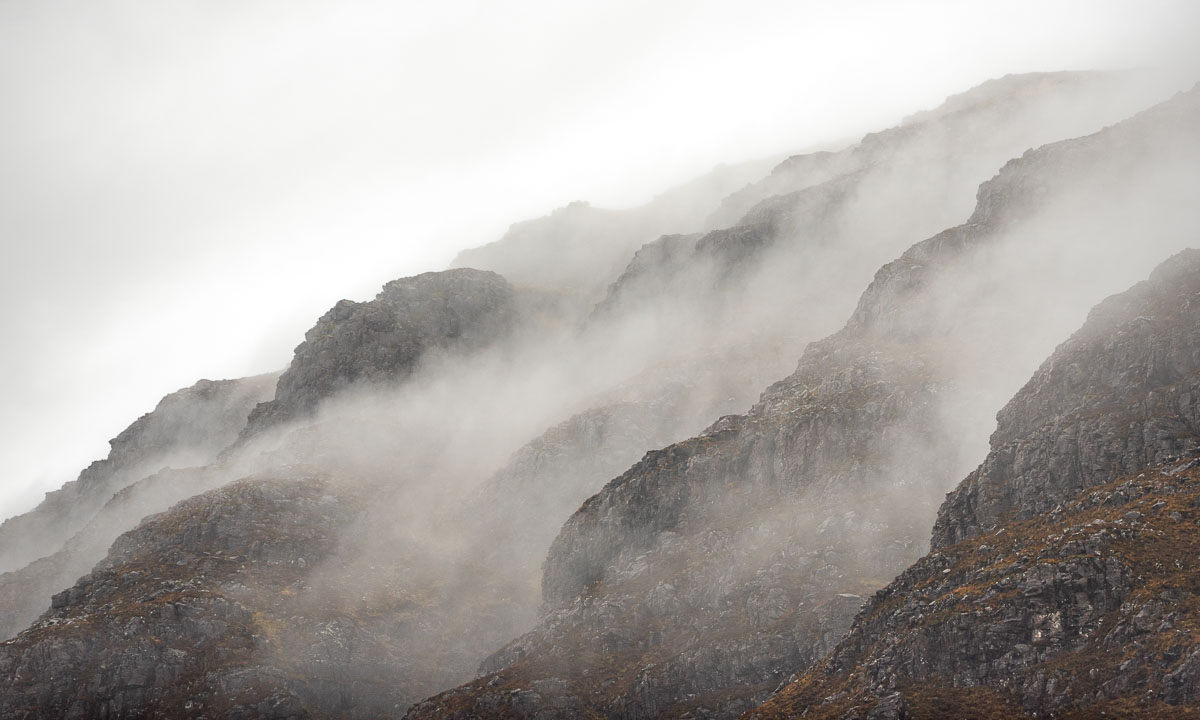
Today is the eighth day of our road trip in Northern Scotland, which my wife and I are taking together. Last night we slept in a hostel near Applecross. Now we want to take the road over Bealach na Bà pass, that is known for its hairpin bends and scenic views. Unfortunately it is still raining and the clouds are low. The beginning of the road is marked with several warning signs, but Annika can drive single track roads and we do not have wintry conditions, so we can take the road. But clouds we have. Soon we are in the middle of them. It is raining and the visibility is pretty bad. And so is the view of the hairpin turns from the top of the pass. Well, you cannot have everything.

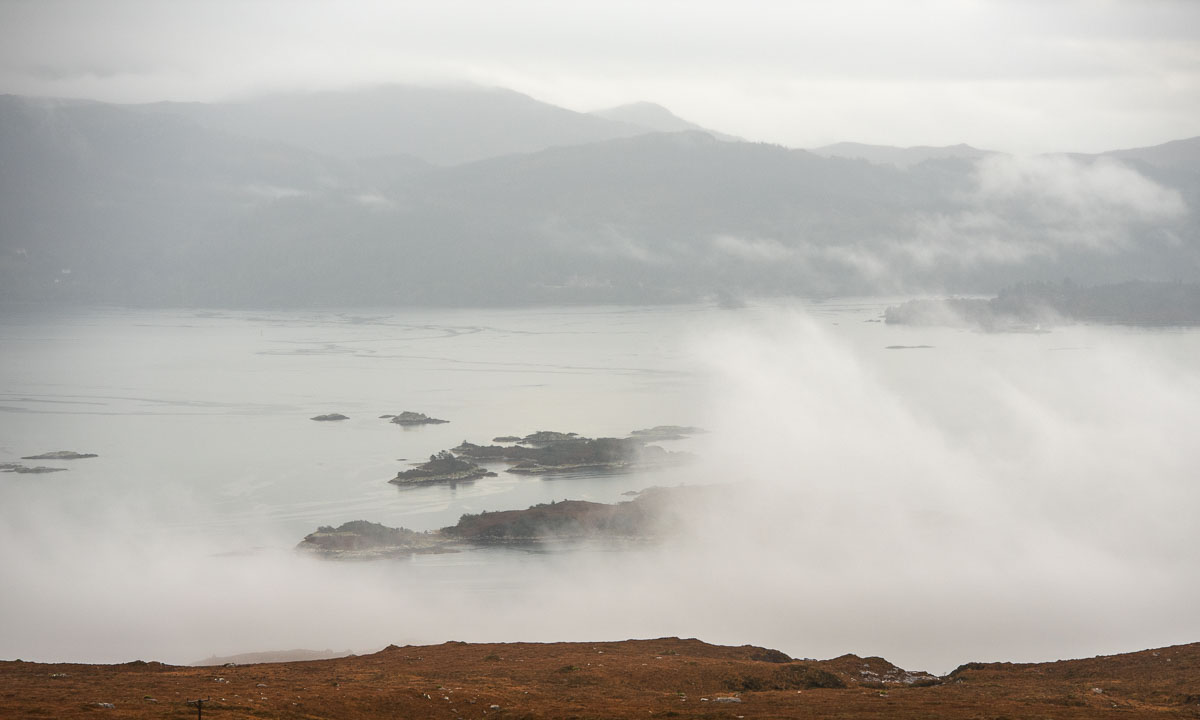
We descend and slowly visibility improves. When we look back we can see the colourful mountain scenery with the summits in the clouds. In front of us we see the other clouds floating down to the sea loch Loch Kishorn, where they start hiding the coastal islands.
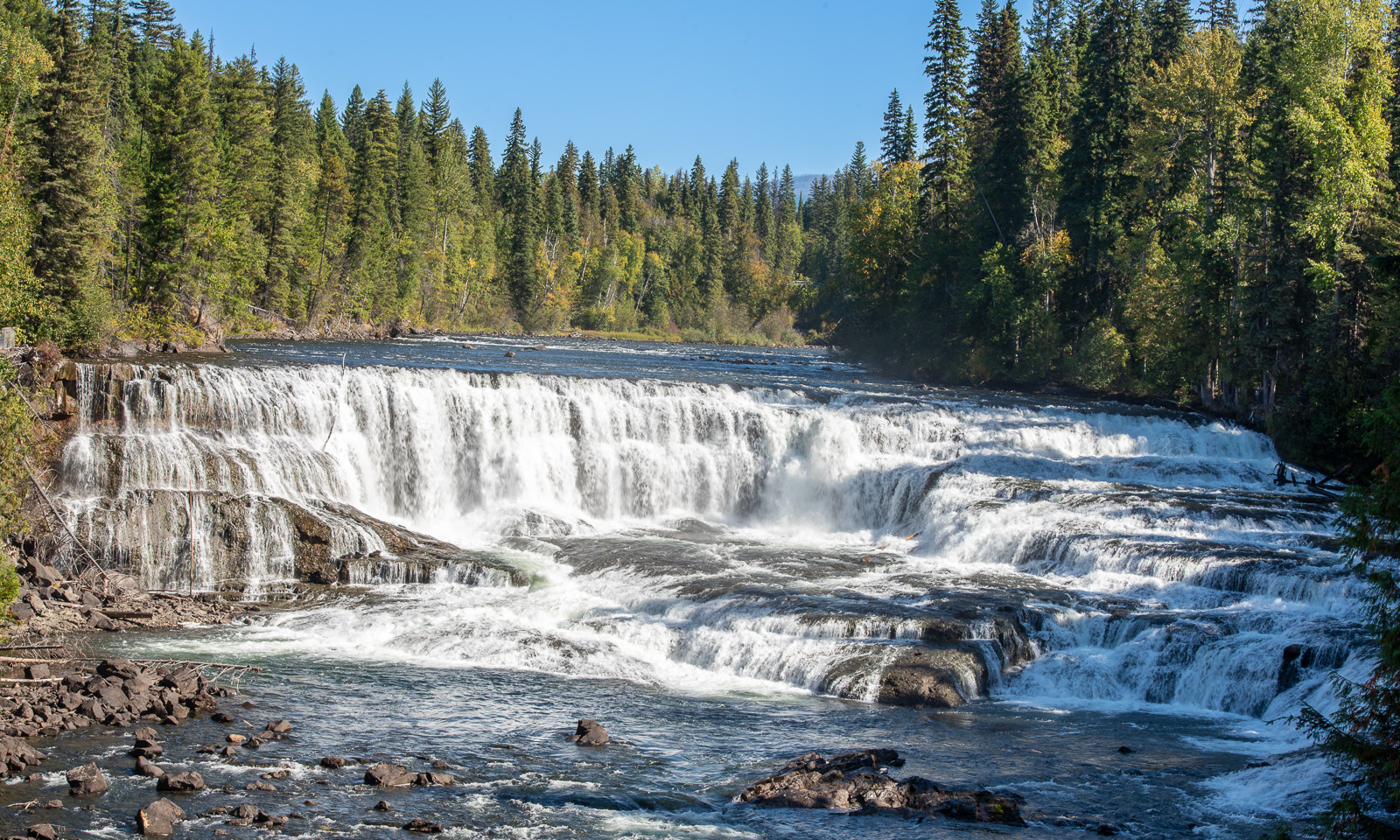
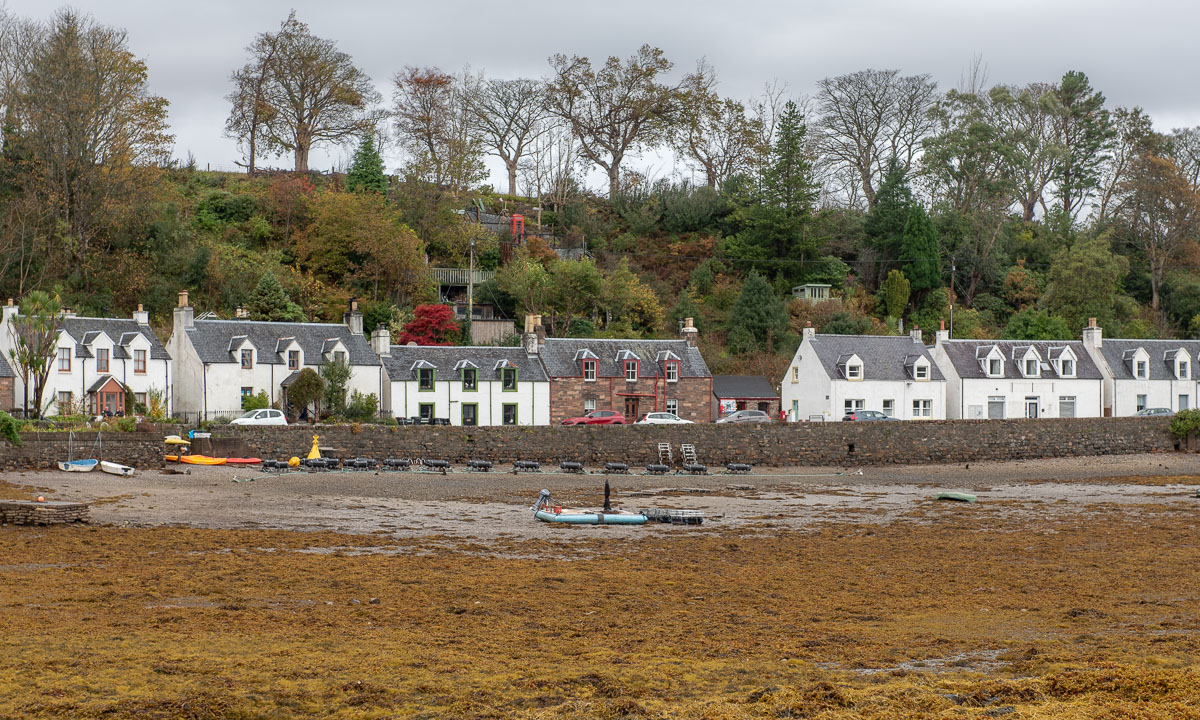
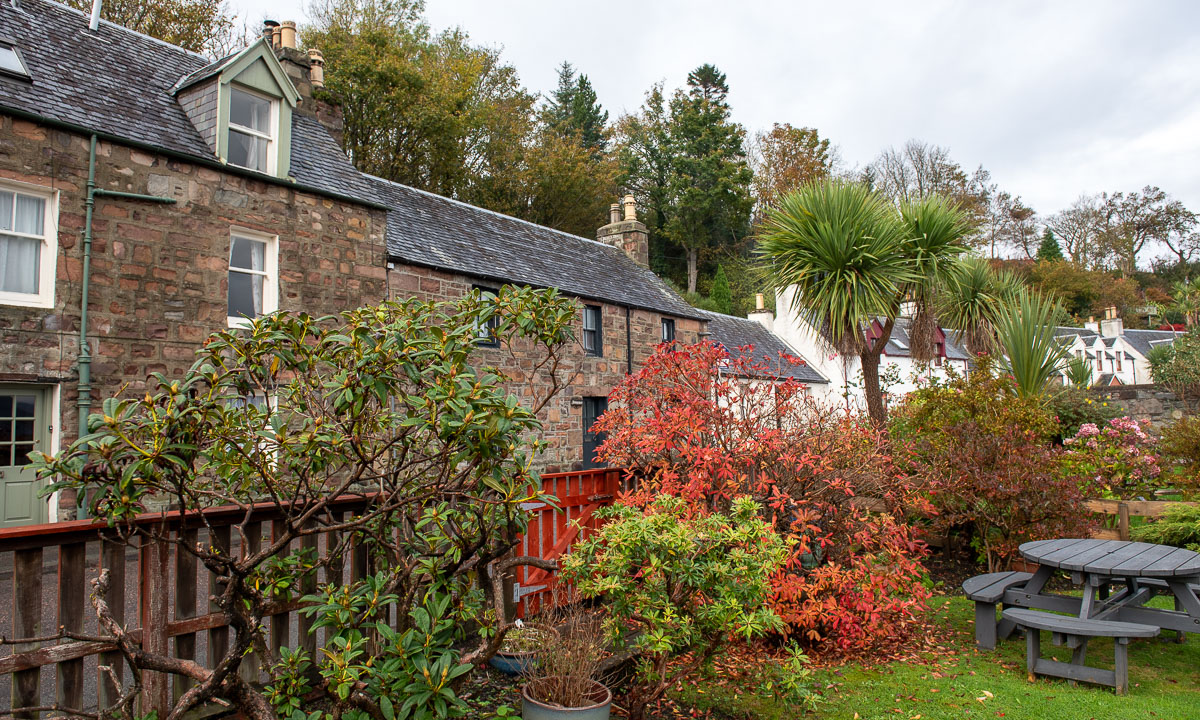
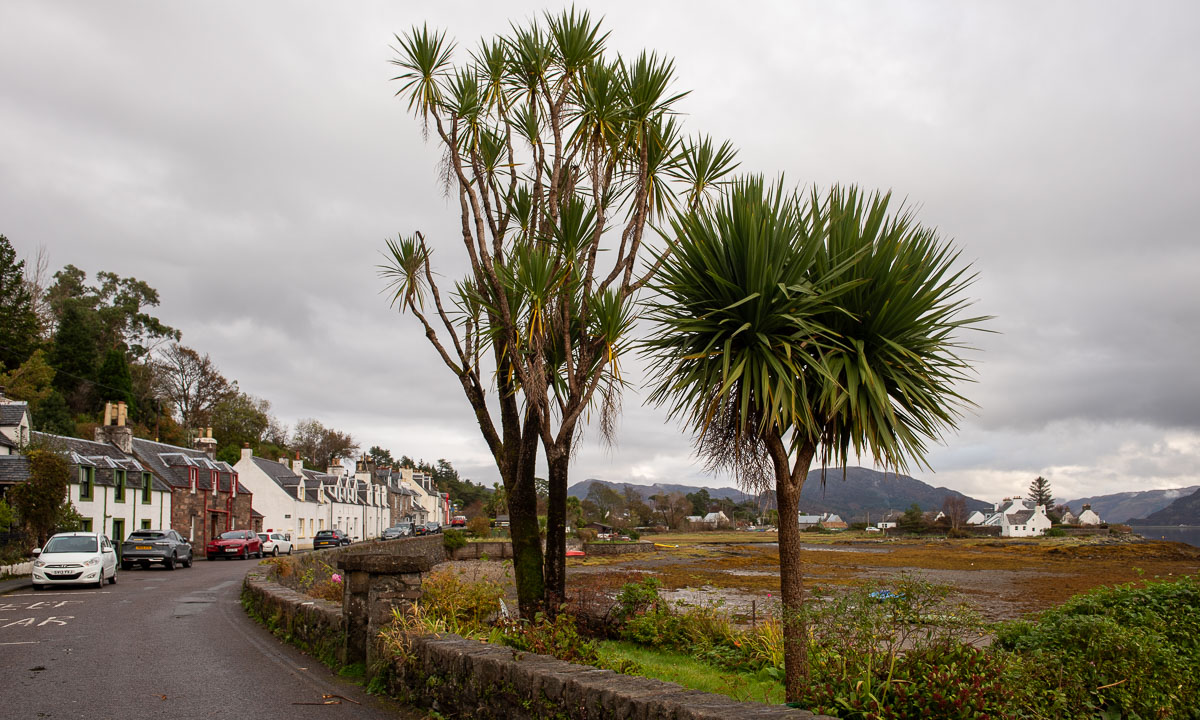
Two hours later we arrive in Plockton, a beautiful village by the sea. The climate is particularly mild, so that palm trees can grow here. An older chap I meet in the street tells me that he has different sorts of palms, a eucalyptus tree and other trees I never heard of in his garden.

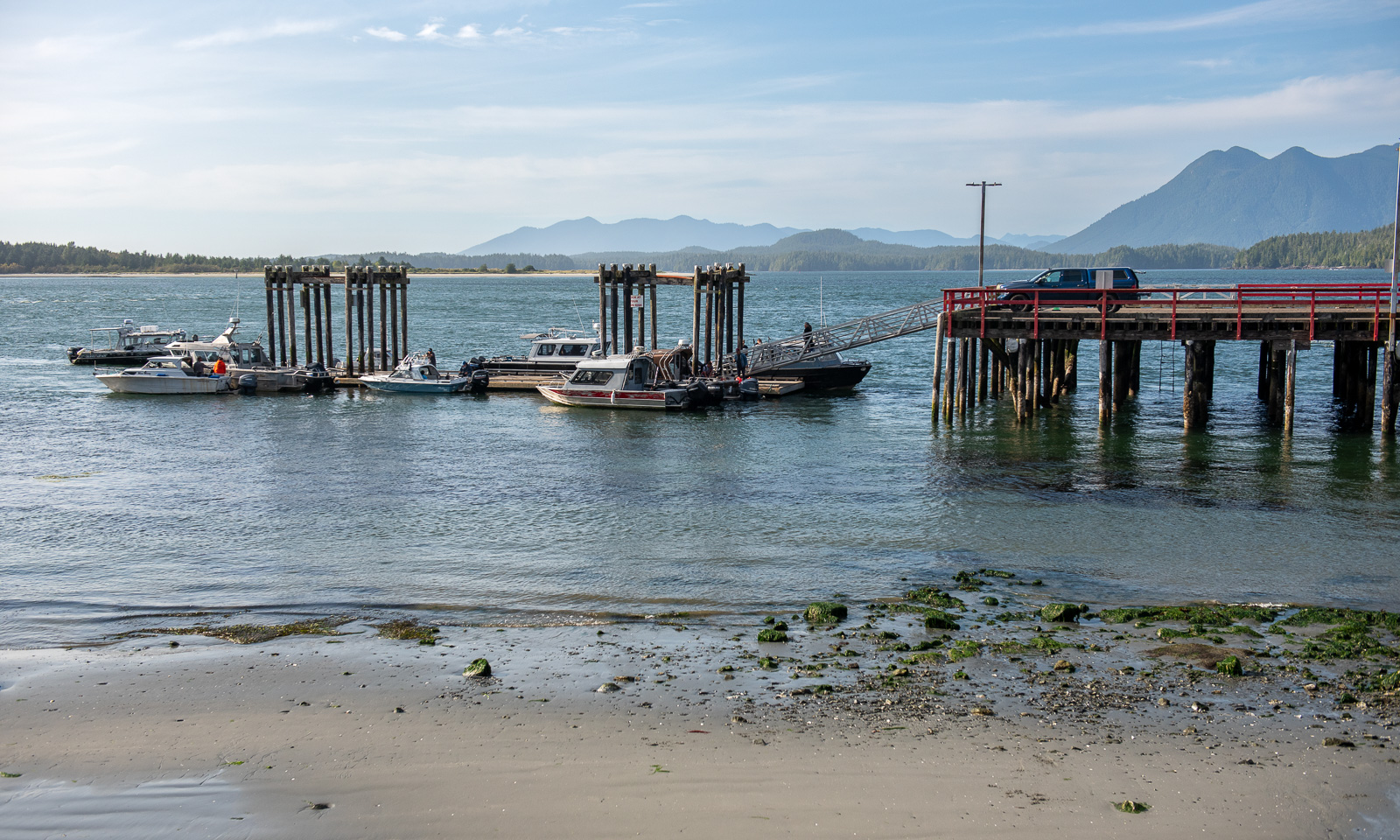
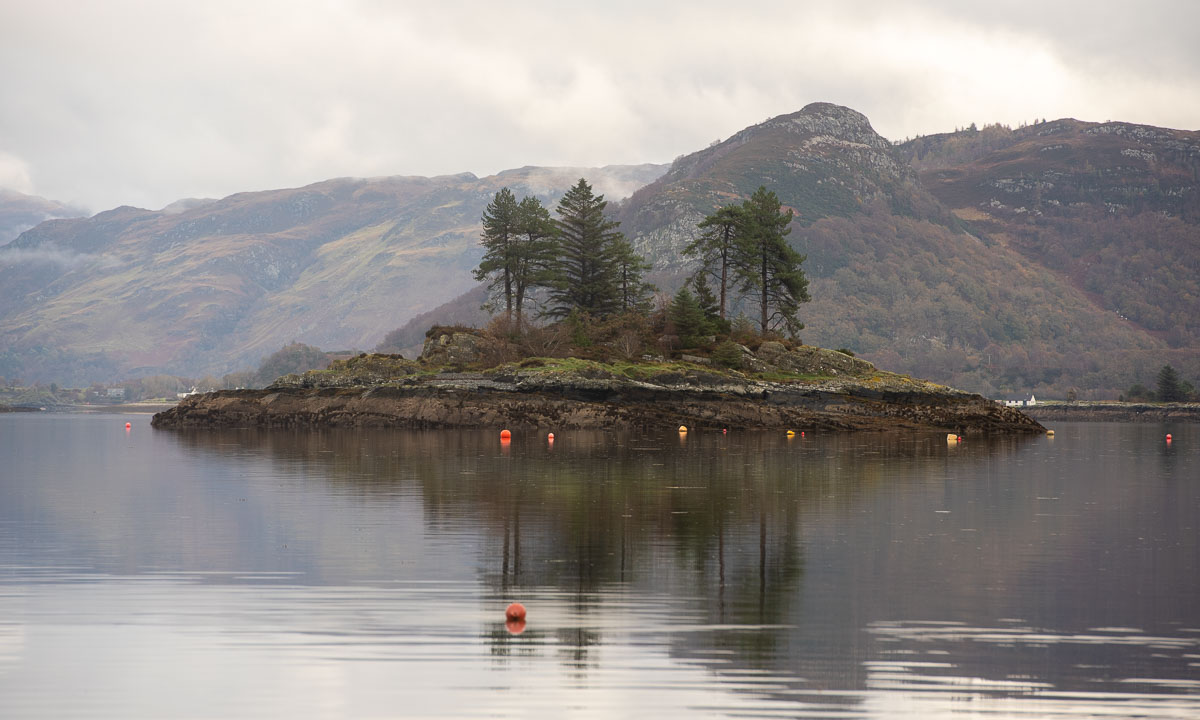
It is low tide. Some fisher boats lie in the mud and it is possible to go to an island nearby. From the sandy tidal flat you can see the long row of houses by the seaside – sea view for everyone. We spend an hour and a half here to visit the craft fair, to go to the island, to pet a cat, to take photos and to find a geocache. A charming place with views of the sea, an island called Sgeir Bhuidhe, Duncraig Castle, hills, and steep mountains.
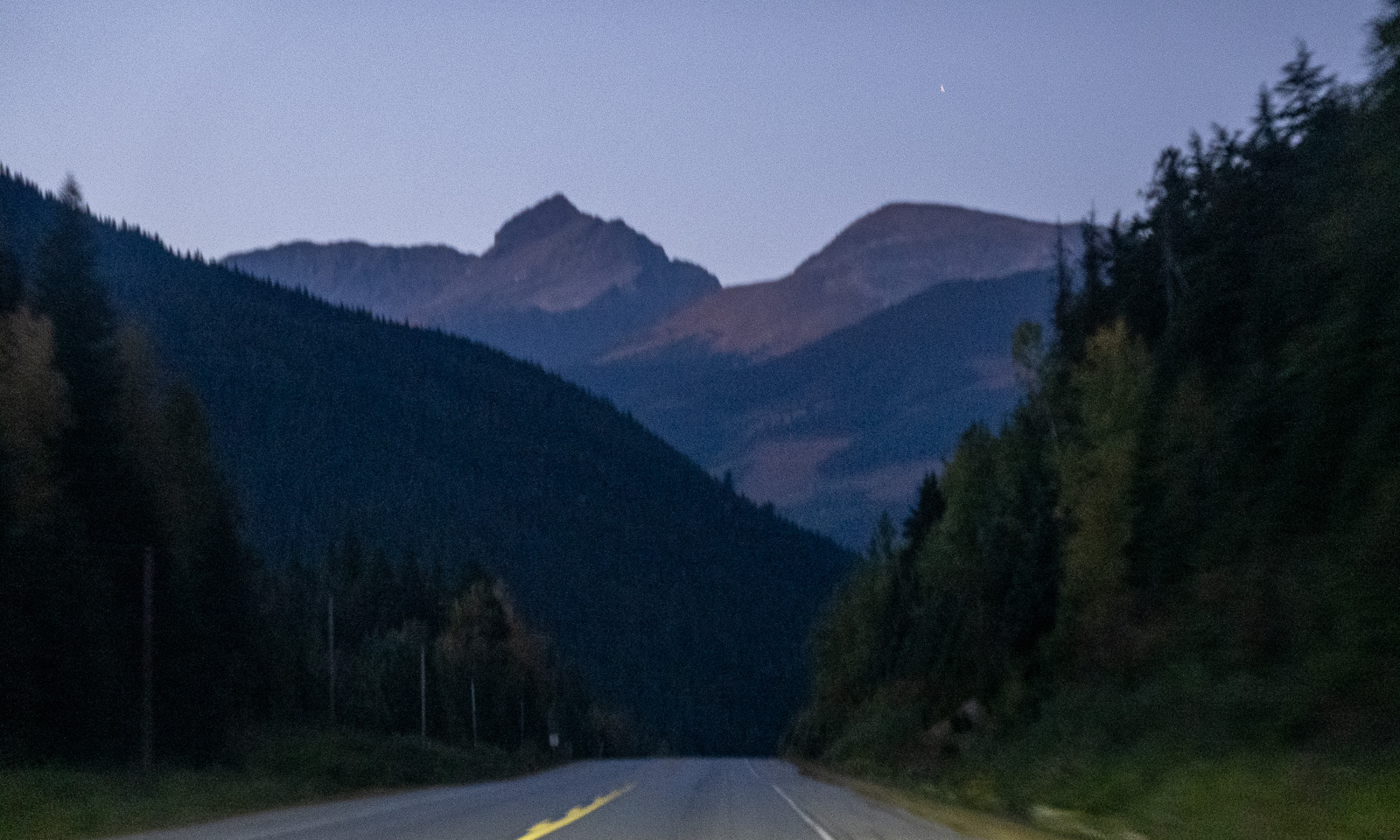
Finally we continue our tour. Next stop: Eilean Donan Castle. This castle is regarded one of the most photographed landmarks in Scotland, and it’s very popular with tourists. Visiting the interior costs money, and there’s even a charge to cross the bridge, so I take photos from the outside. It is not easy to take photos without too many tourists in the shot.
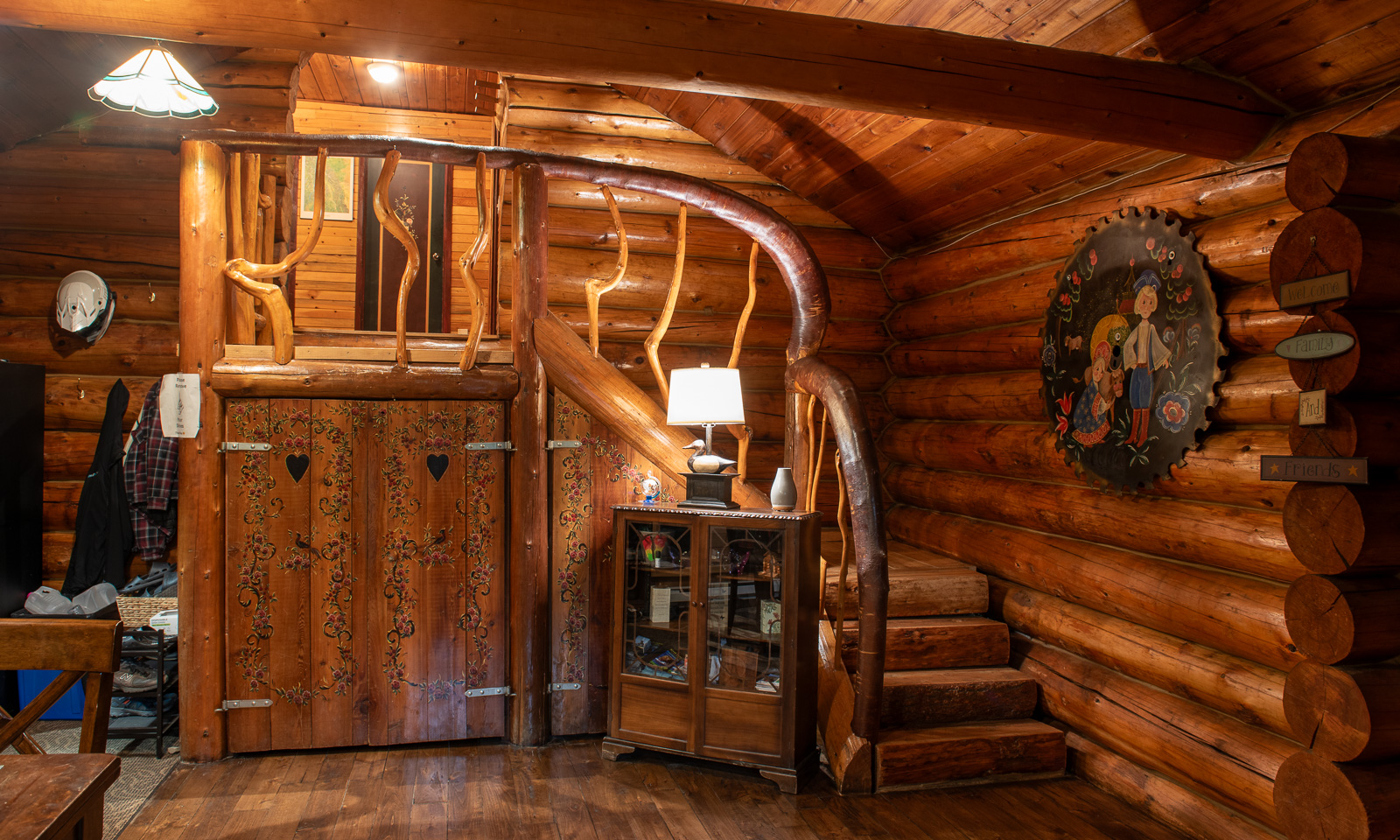
From Eilean Donan Castle it is not far to the An Spiris Accommodation at Dundreggan Rewilding Centre, our last overnight stay on our road trip. My highlight of the evening is the toddler in the large common room singing “Do-Re-Mi” from the Sound of Music.


Scotland NC500 – day 2 – standing stones and a castle on a cliff

This article is part of the series “2025-10: Northern Scotland”.

14 October

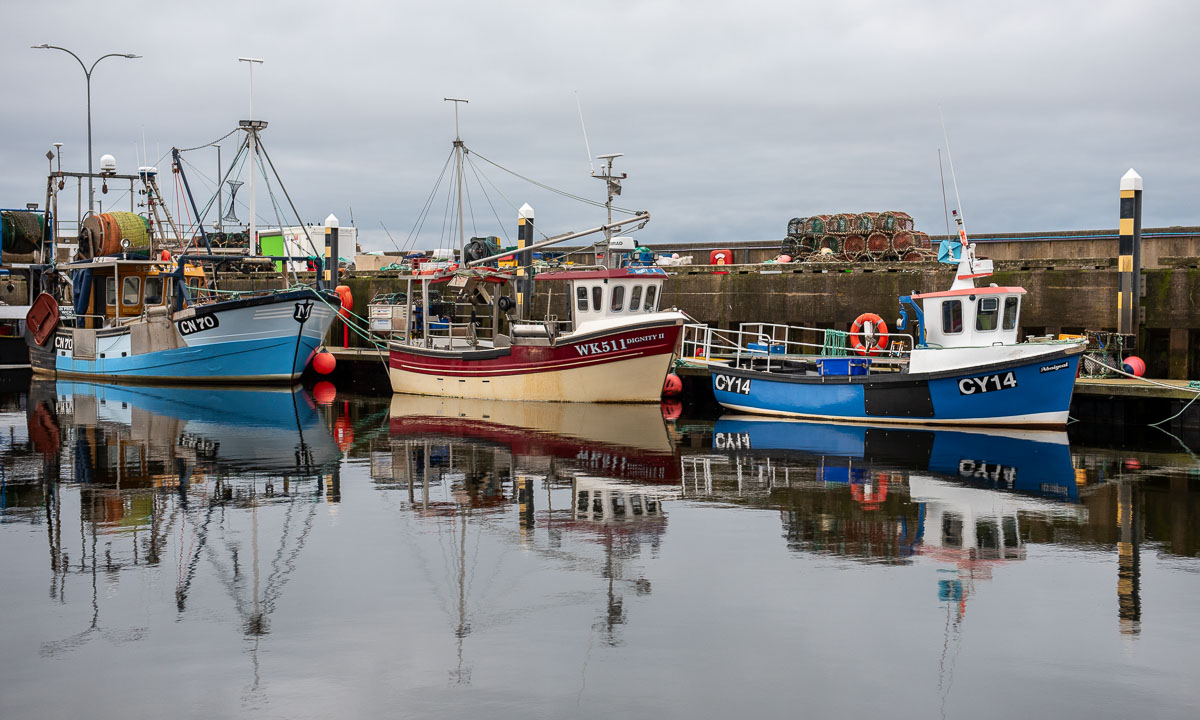
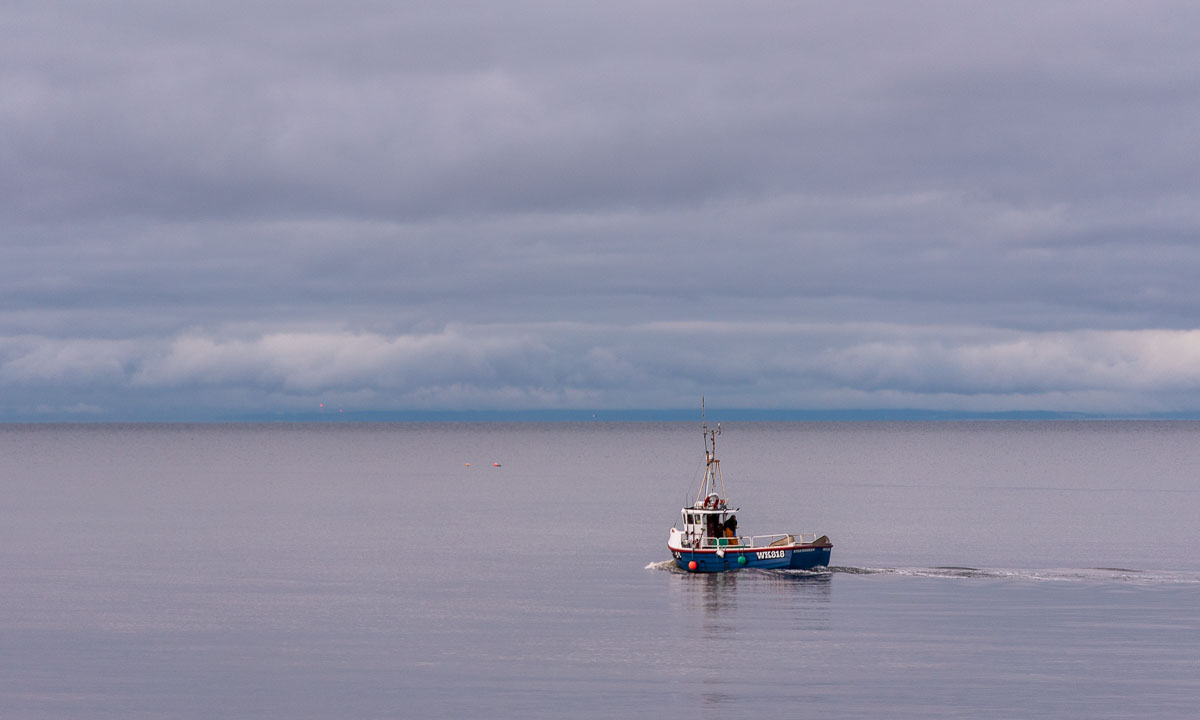
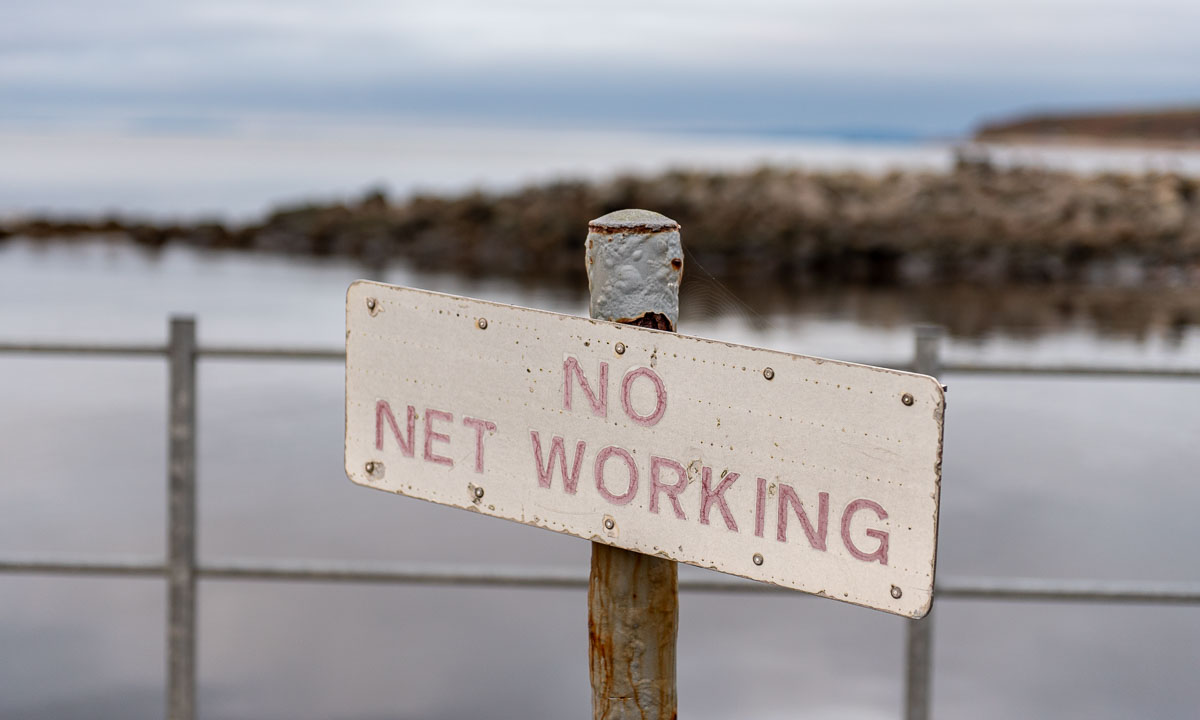
When I wake up in Helmsdale on the Scottish east coast it is still twilight. It is quiet. Only some fisher boats are leaving the harbour and two bird watchers are standing on the pier. I like especially the sign “No net working” which has a completely different meaning here. Context matters!

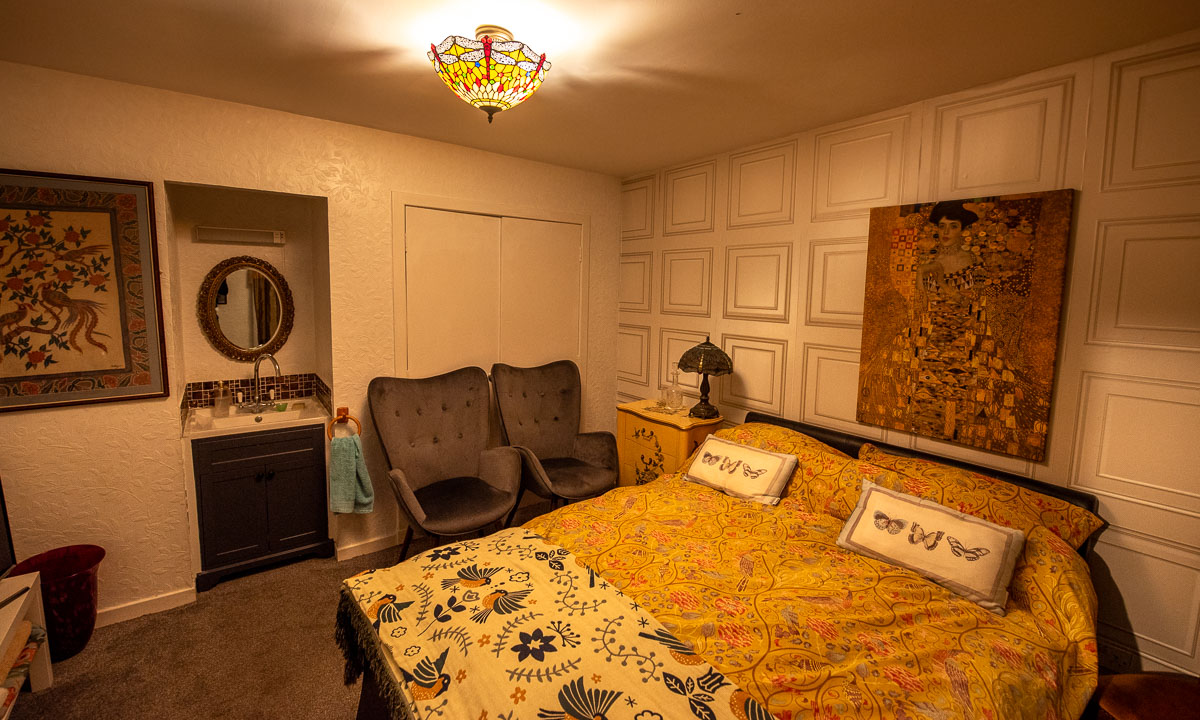
Back at our guesthouse “Song of the Sea, Selkie House”, Lorna, our host is inviting my wife Annika and me to her big kitchen where she prepares our breakfast. And what a breakfast: Cereals with fresh strawberries, eggs, bacon, mushrooms, toast with home-made jam and more was put on the table while we had a long and cheerful chat with plenty of laughter. I feel so welcome to be here and we only left reluctantly. I think: “If you do not like Lorna’s place you do not know anything about travelling.” If only my English was better and my ability to understand all kinds of Scottish accents.

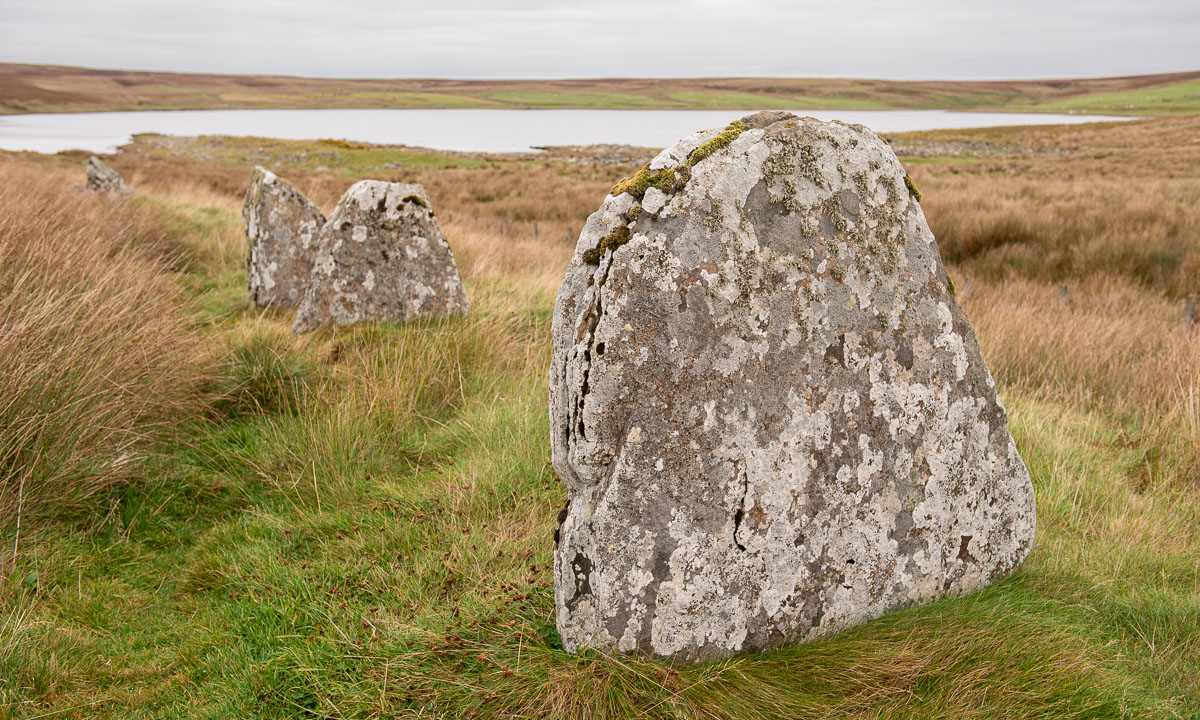
Round half past ten we continue our road trip, heading straight north. Some attractions we find in our guidebook, while others are on using Google Maps. So we have found Achavanich, a megalithic structure literally in the middle of nowhere. We use the tiny parking area und wander around between the lichen-covered stones that are arranged in a horseshoe-shaped pattern. A bit further down – a lake called Loch Stemster.

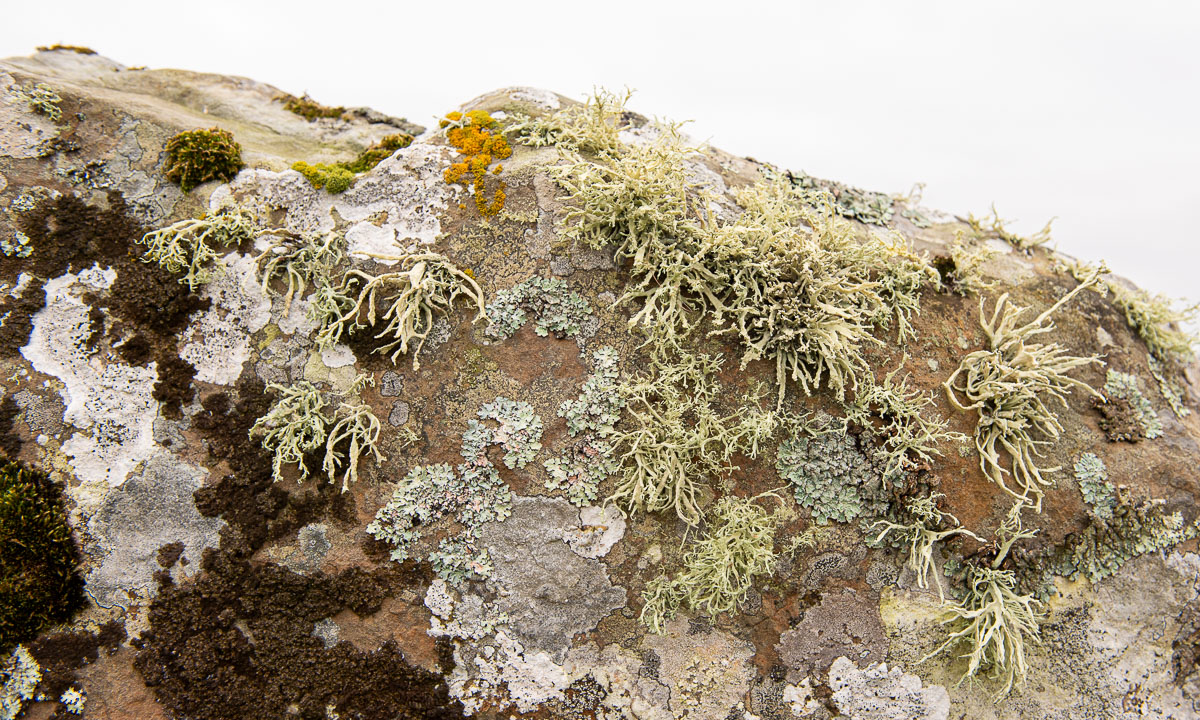
Exercise for lichenologists: how many different species can you count on the second photo?

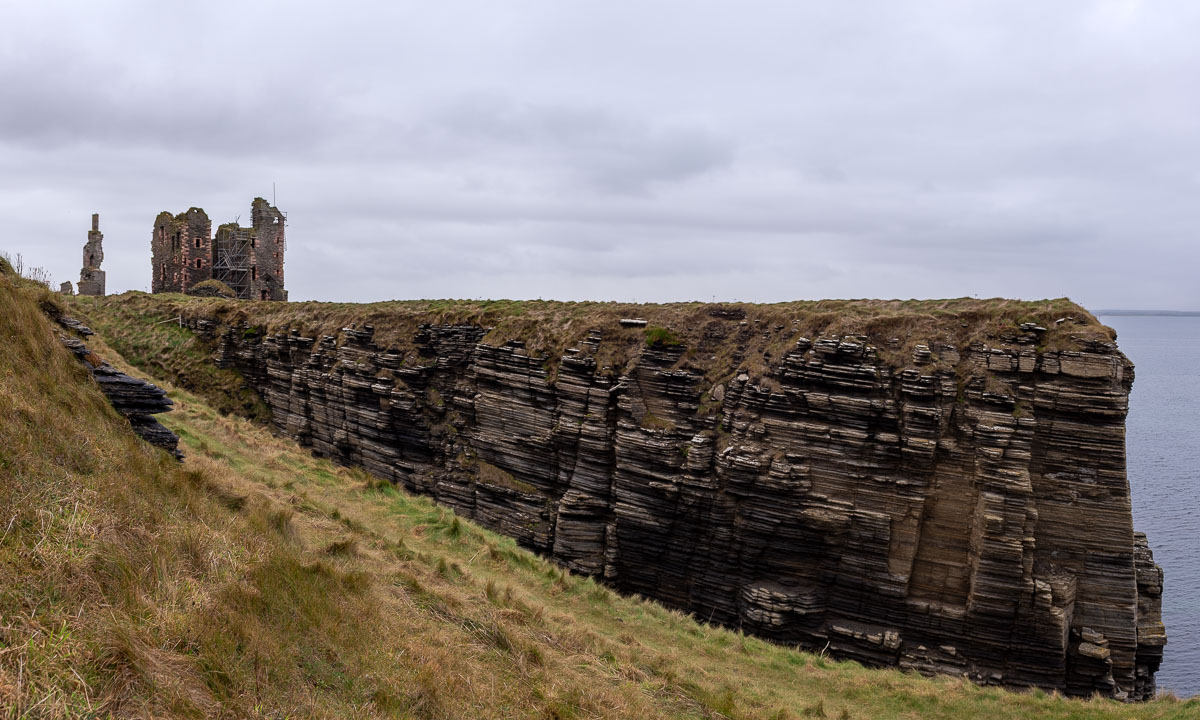
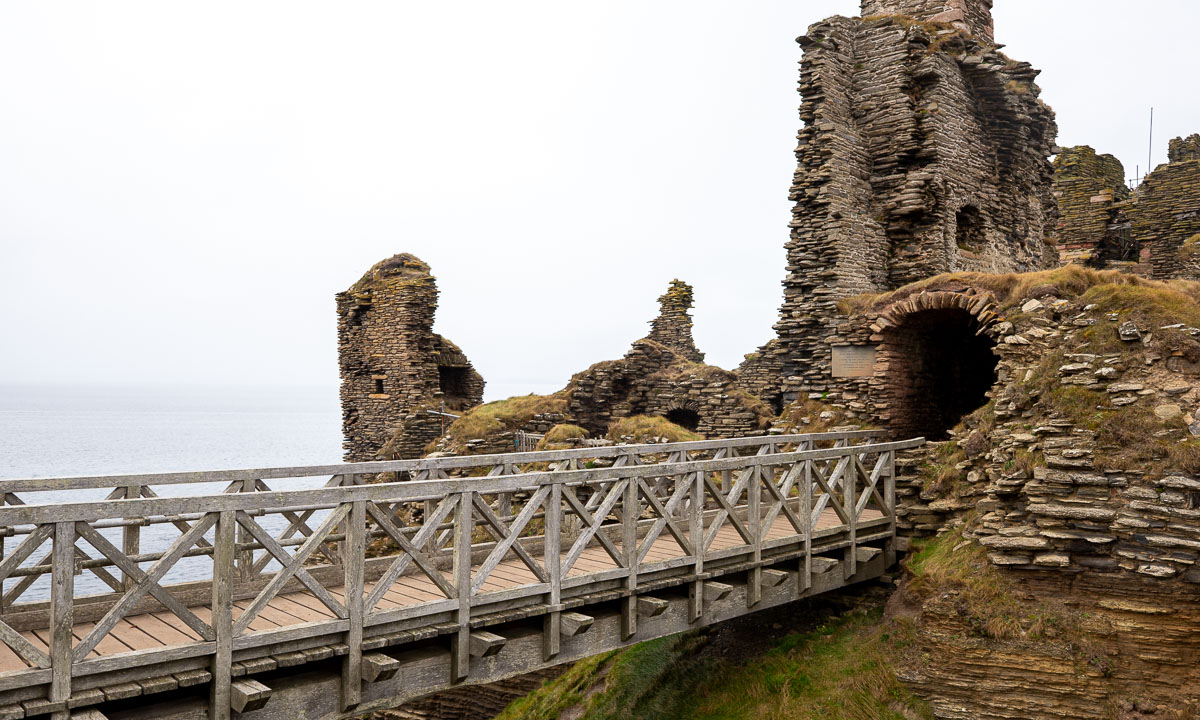
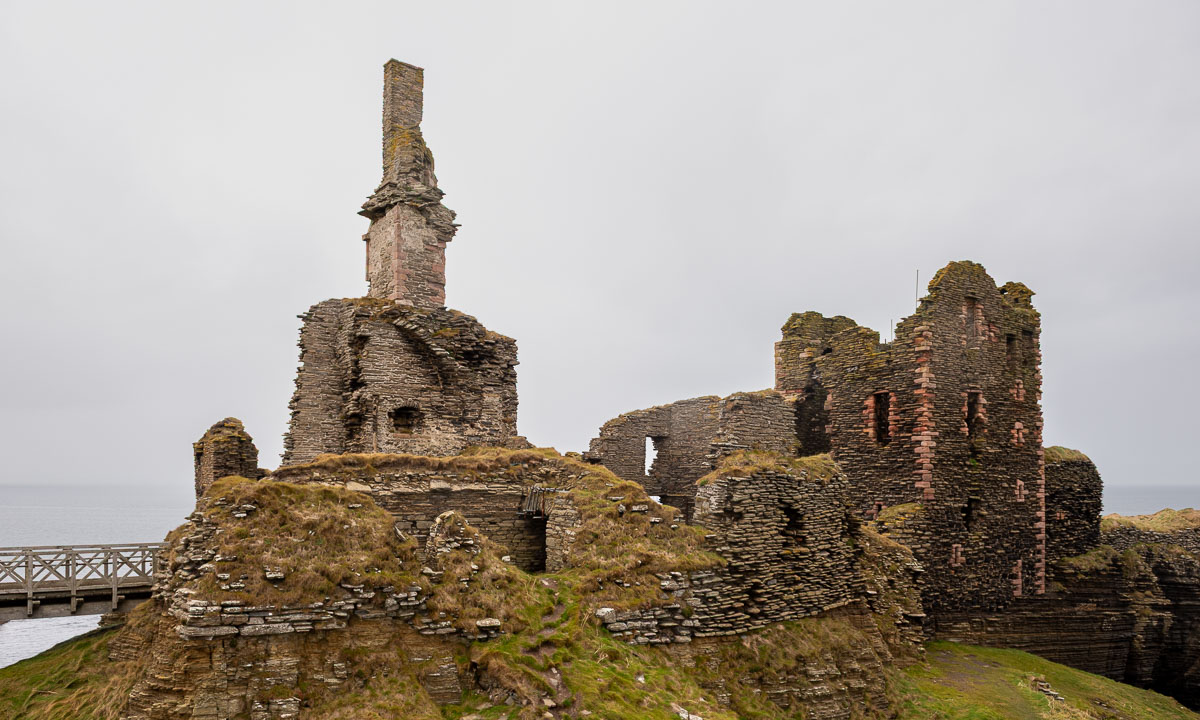
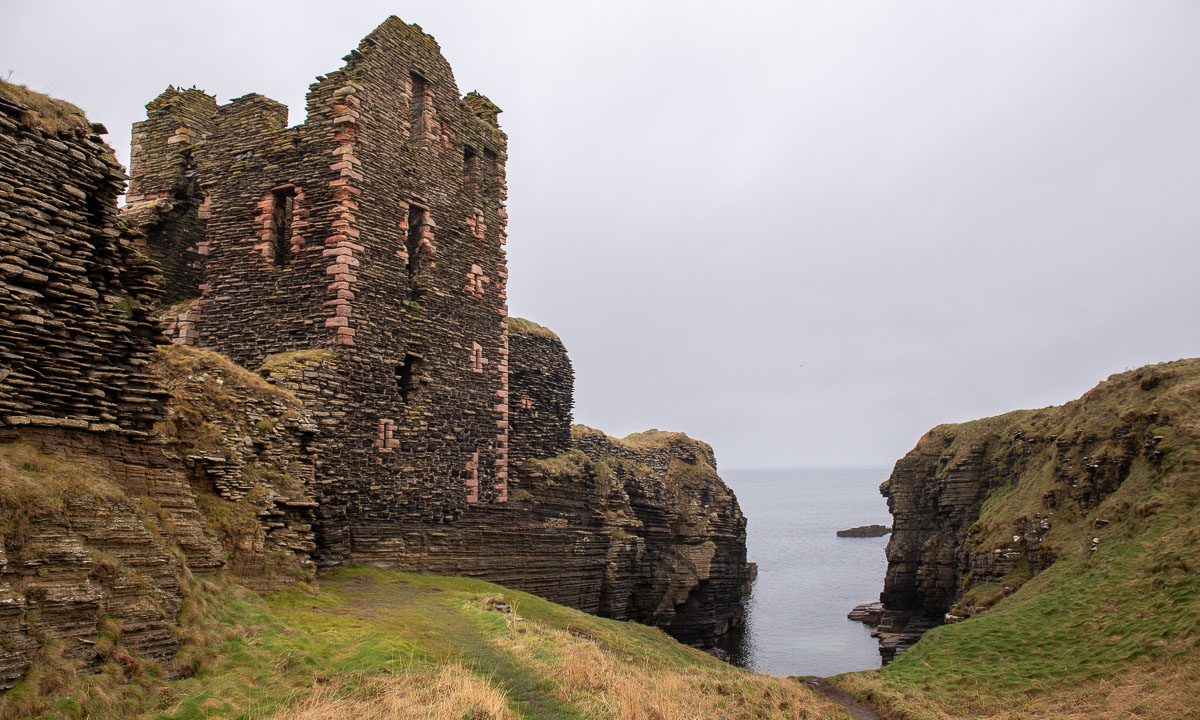
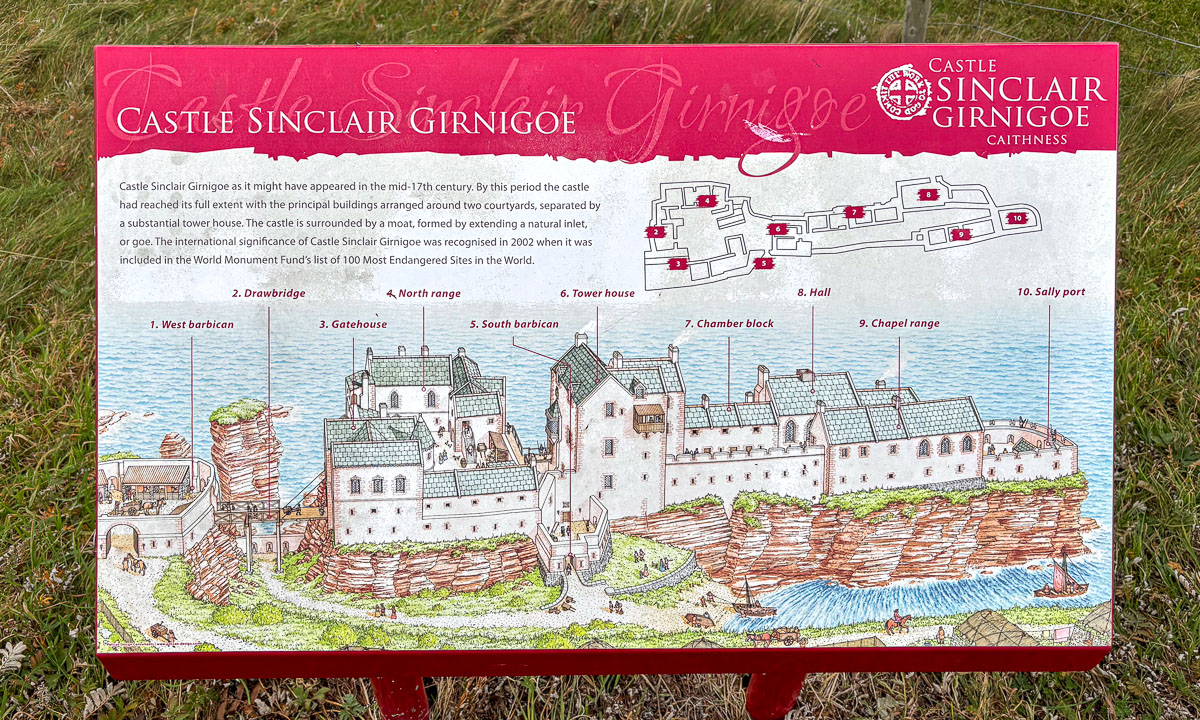
The next attraction is in the book: The Castle Sinclair Girnigoe 5 miles north of the town Wick. This castle – or better said its ruins – is located at the very edge of the coastal cliff. There are educational displays that explain the history, but for me the most impressive detail is the exposed location by the sea. More than an hour Annika and I are strolling round the castle despite of the drizzle. A real highlight on our trip!

This is one of the displays showing how the castle looked centuries ago.

Back in the car we drive back to the A)), follow it north and then take the road to the Duncansby Head Lighthouse which marks the most northeasterly point of the Scottish mainland. Photo. Check!

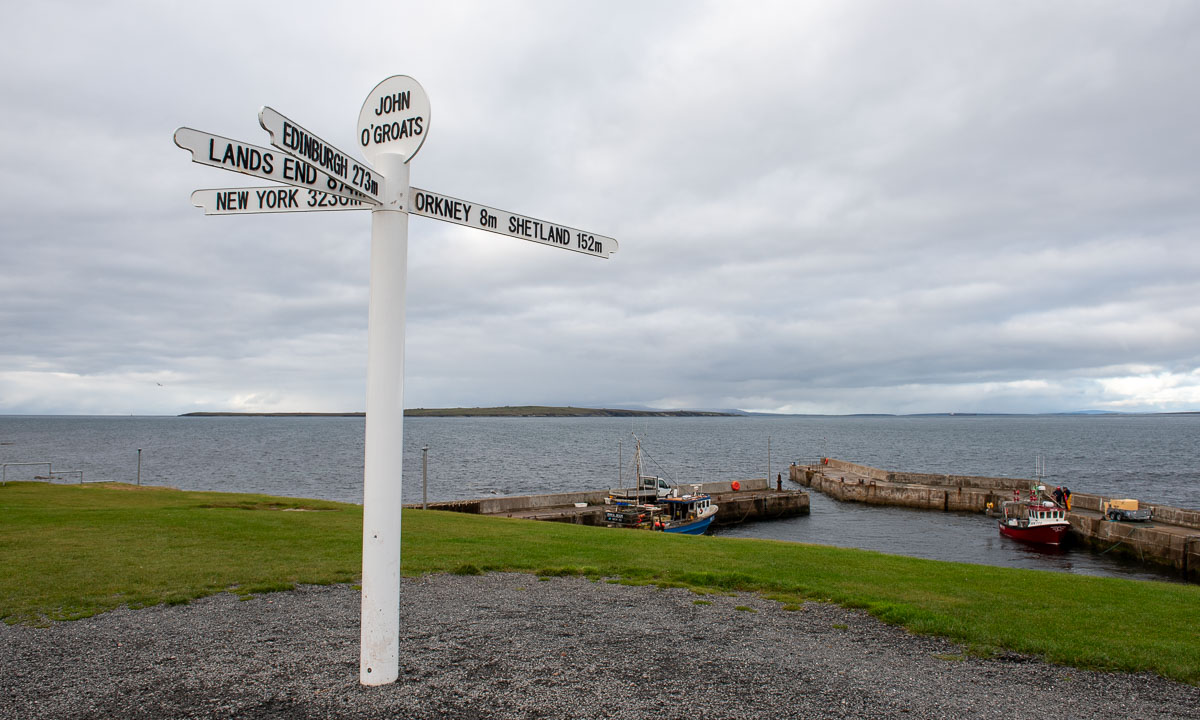
The next stop is only a very short one. I take some photos of the John o’ Groats Signpost, a famous but surprisingly boring signpost. It has four arms pointing to Orkney and Shetland, to Edinburgh, Lands End and New York. That’s it. While I take these photos Annika is slowly driving around because parking is expensive in this commercially focussed place and we are happy to leave it behind.

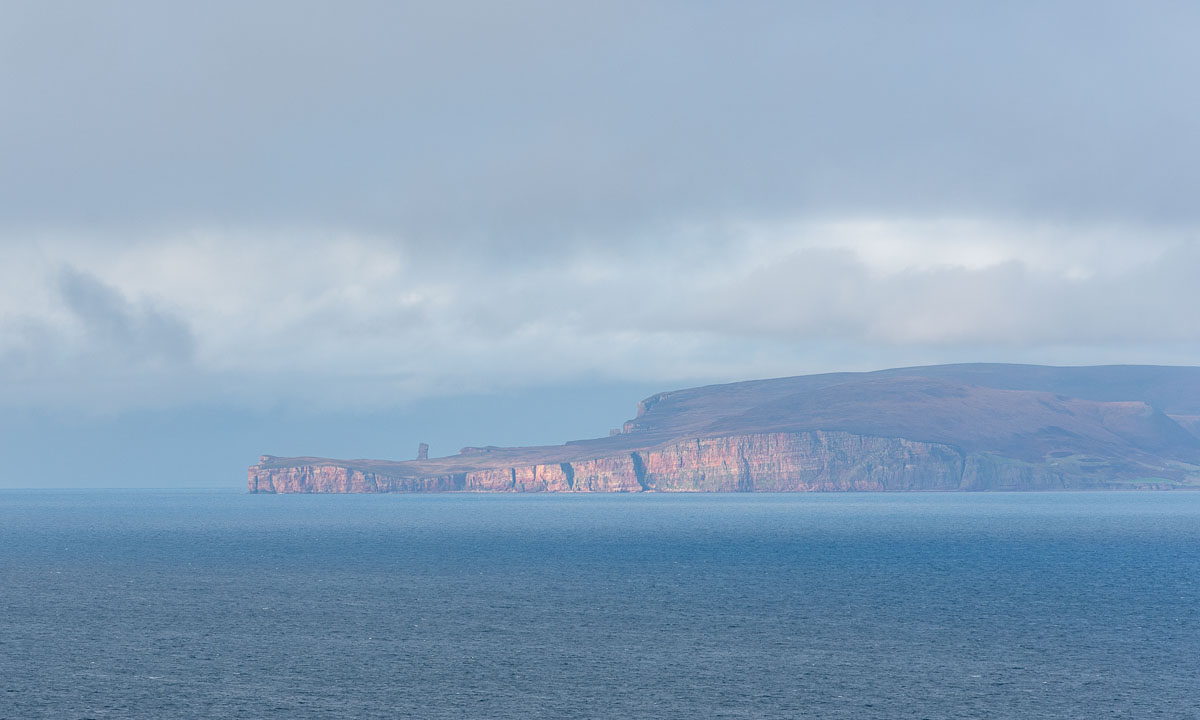
But the signpost is true: The Orkney islands are pretty near and we see the cliffs from different places, such as our next stop Dunnet Head. This is the northernmost point of the UK. Here take a photo of the partially sunlit cliffs of the Orkney islands in the distance.

So Annika, next time Orkney and Shetland? … and Faroe islands? … Iceland again? … Greenland? … Vinland? Sorry, I got slightly distracted. Back to our road trip.

From Dunnet Head it is just about twenty kilometres to Thurso, a surprisingly big town by the north coast of Scotland. Here we stay in a quite shabby hostel, but we can cook, we can sleep and that’s all you really need. Parking the car in town however was adventurous because the rules are pretty cryptic and time-dependent. Anyhow, there is a big car park by the River Thurso, where Annika parked our rental car over night. (Thanks again, Google Maps for the tip.)

The next day we will leave the NC500. We thought, travelling in October would make it easier to find accommodation, but it gets harder, because many guesthouses have been closed for the season.

Scotland NC500 – day 1 – the road trip starts

This article is part of the series “2025-10: Northern Scotland”.

13 October

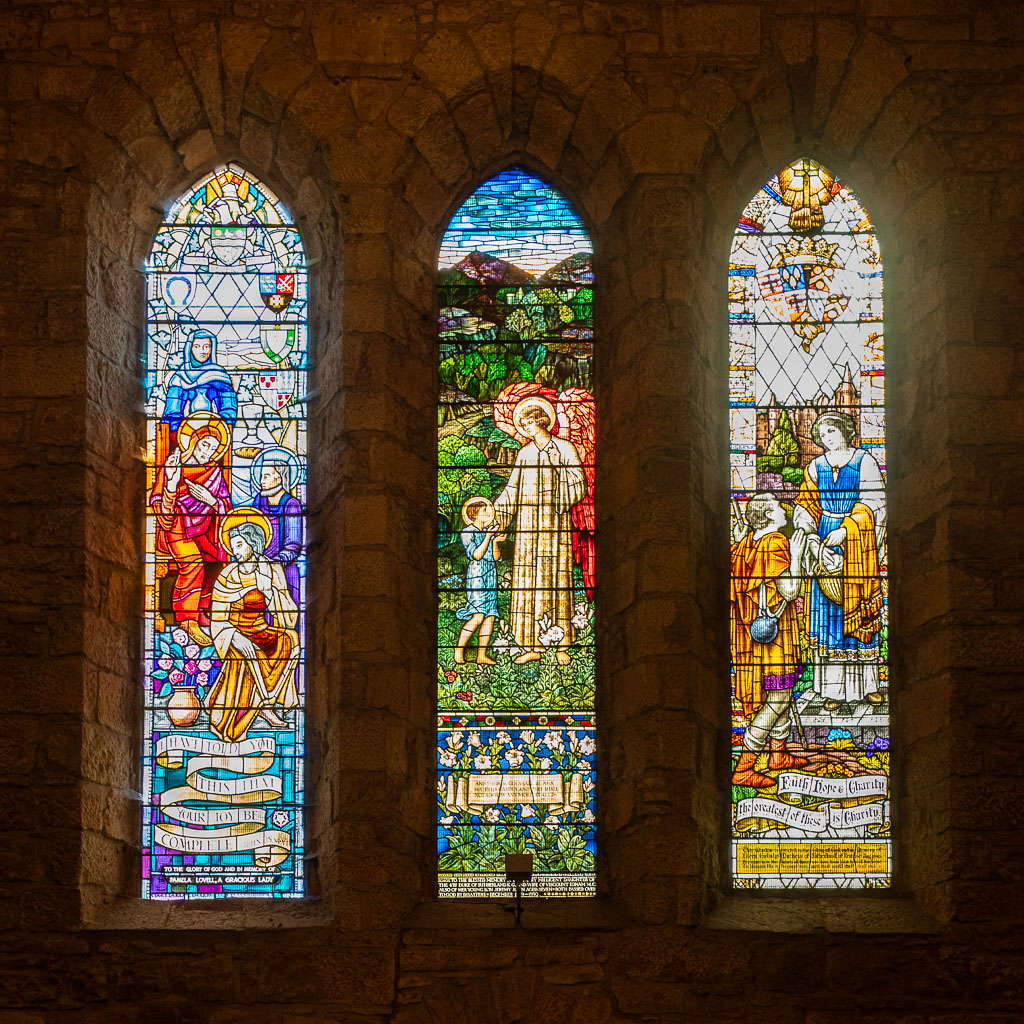
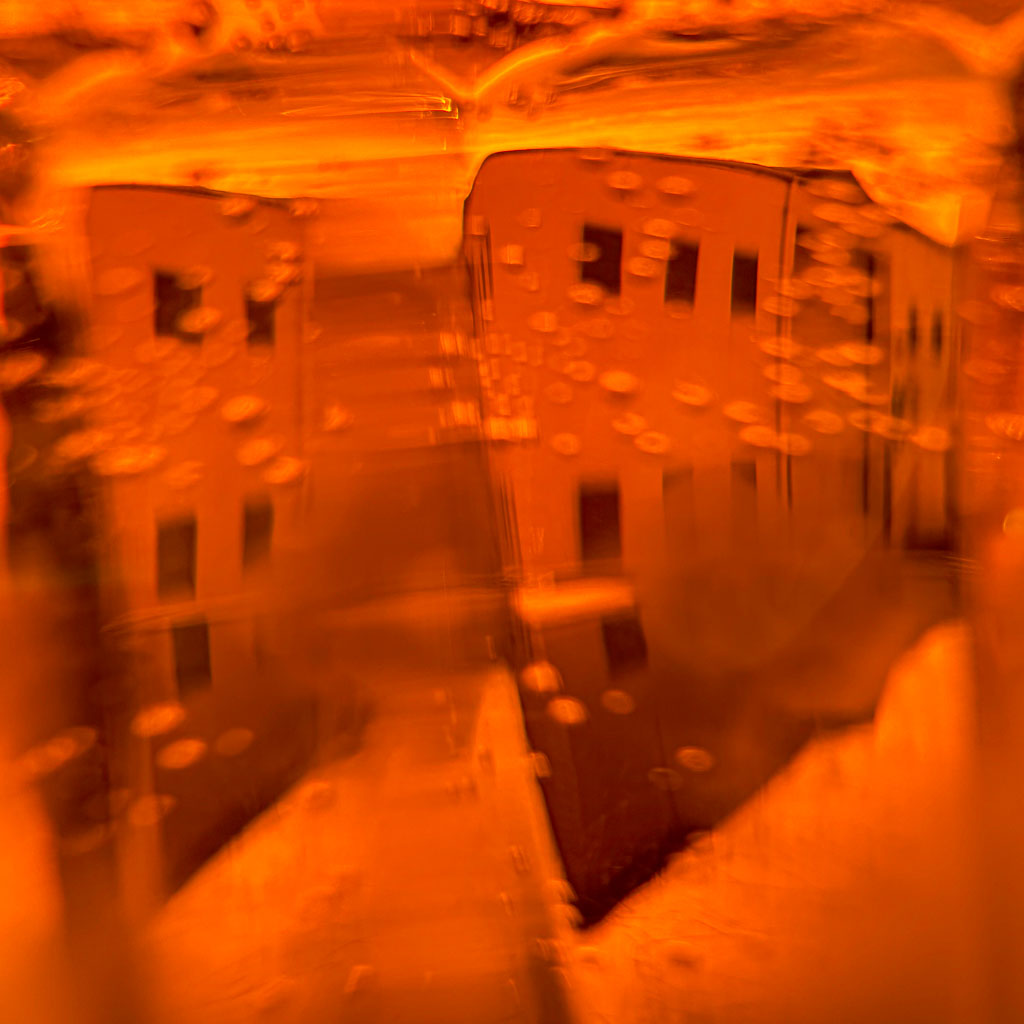
It is one o’clock. Annika has driven the first 70 kilometres in our rental car, and we’ve arrived in Dornoch. We already visited the cathedral with its beautiful stained-glass windows. Now we are sitting at the only table outside the SandStone cafe enjoying the sun. I also enjoy something else: An Irn-Bru, this legendary Scottish soft drink with its bright orange colour. It won’t be the last one the next days.

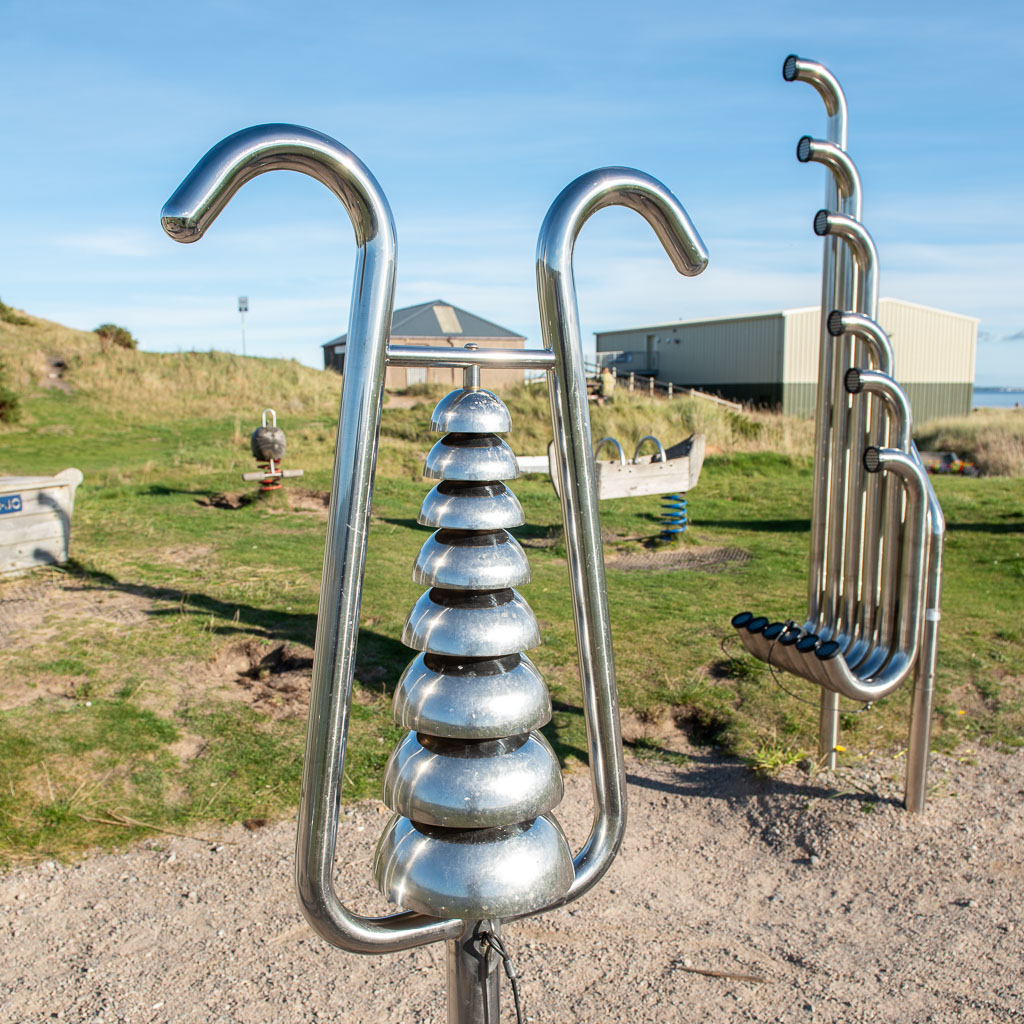
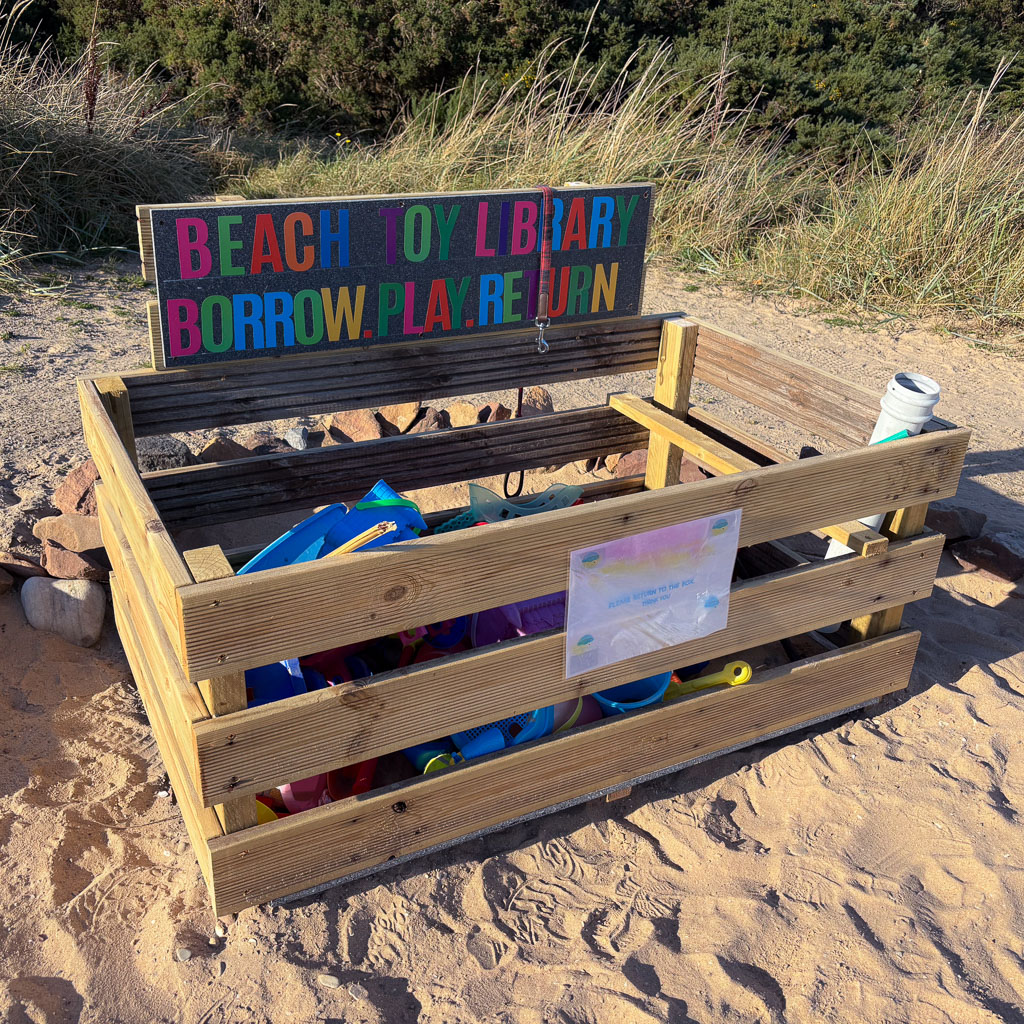
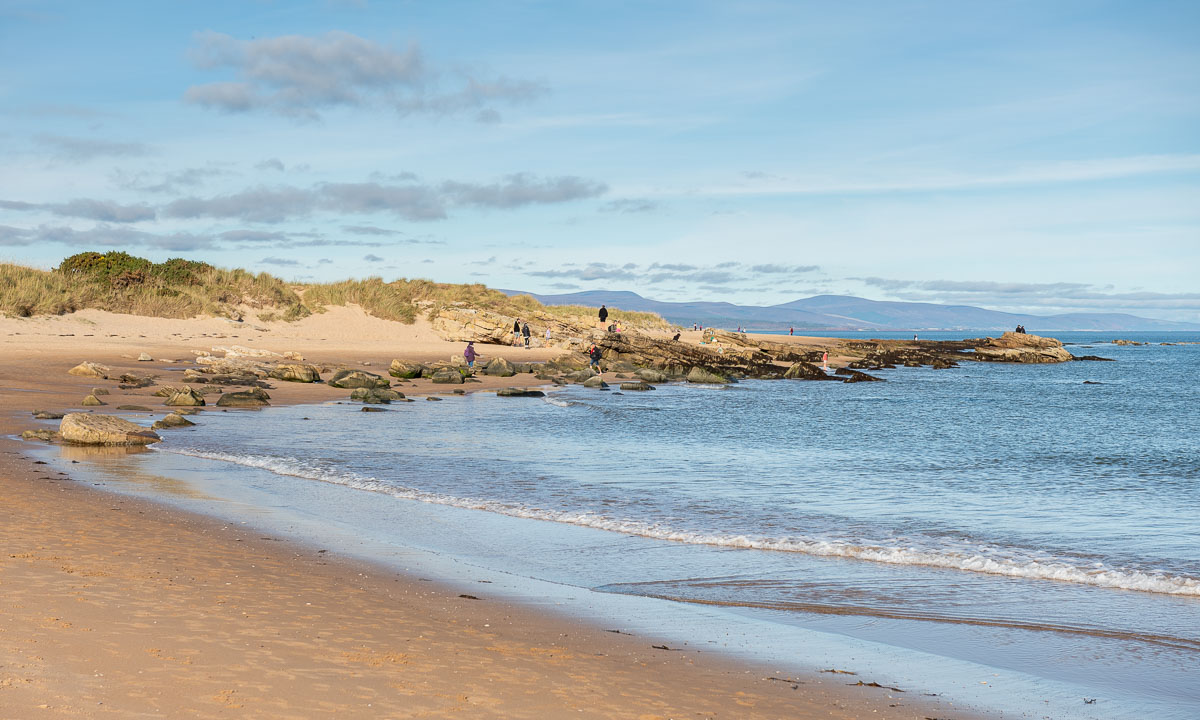
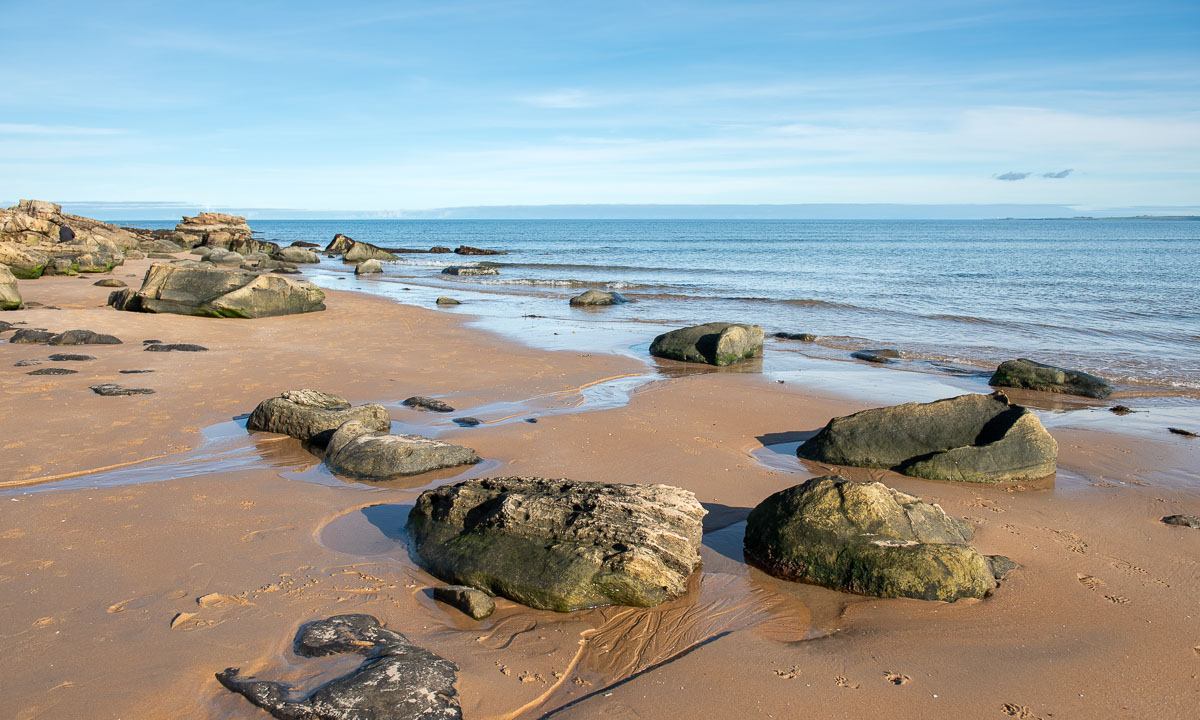
From there it is not far away to our first beach: Durness beach with its beautiful sandy shoreline. It has some features beyond the usual such as a park with outdoor metal musical instruments or the box where you can lend beach toys.

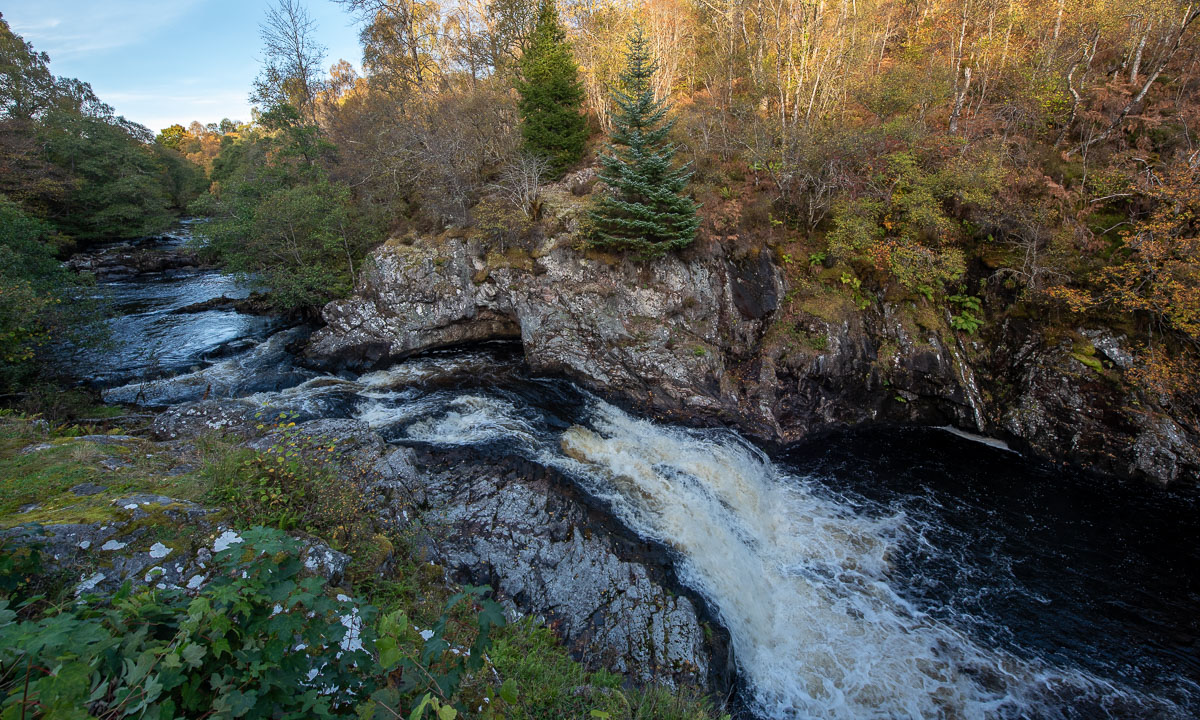
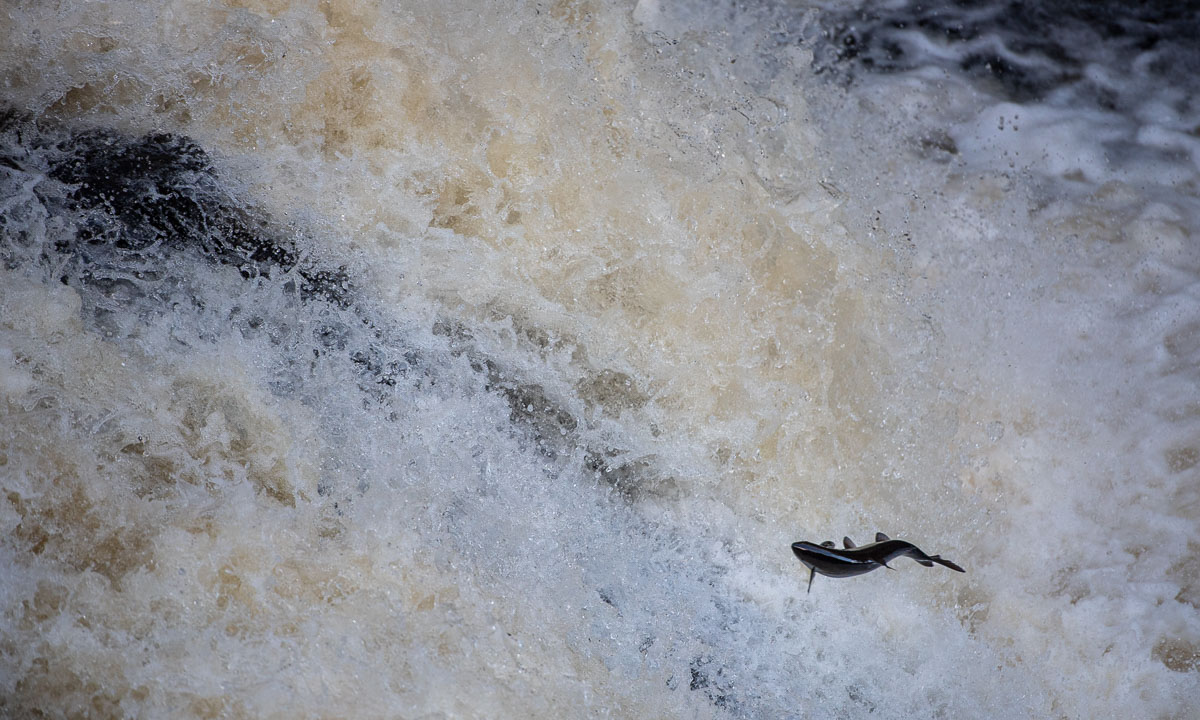
We continue our road trip, but instead of following the main route we take a detour to the Falls of Shin. It is said that in summer and early autumn the salmons swim up the River Shin to spawn. When they pass the Falls of Shin they have to jump up the rapids. I thought, October was already off-season, but we do not only spot the waterfall but also some jumping salmons. And another species: salmon watchers with their binoculars and cameras with huuuge telephoto lenses. With my smaller telephoto lens I manage to take some photos of a lot of water with a tiny fish. I wonder how the salmons master this waterfall? We have not seen any salmon succeed.
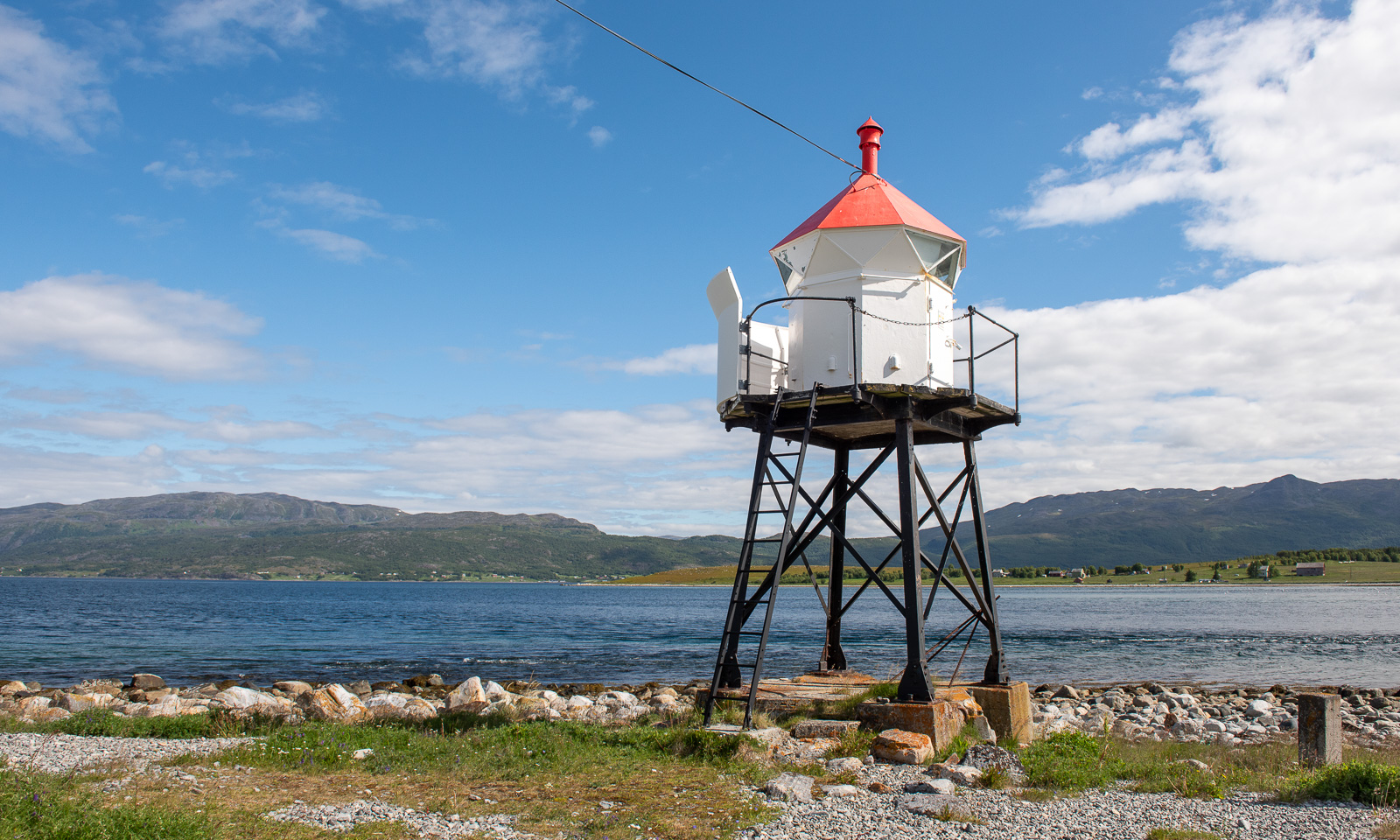
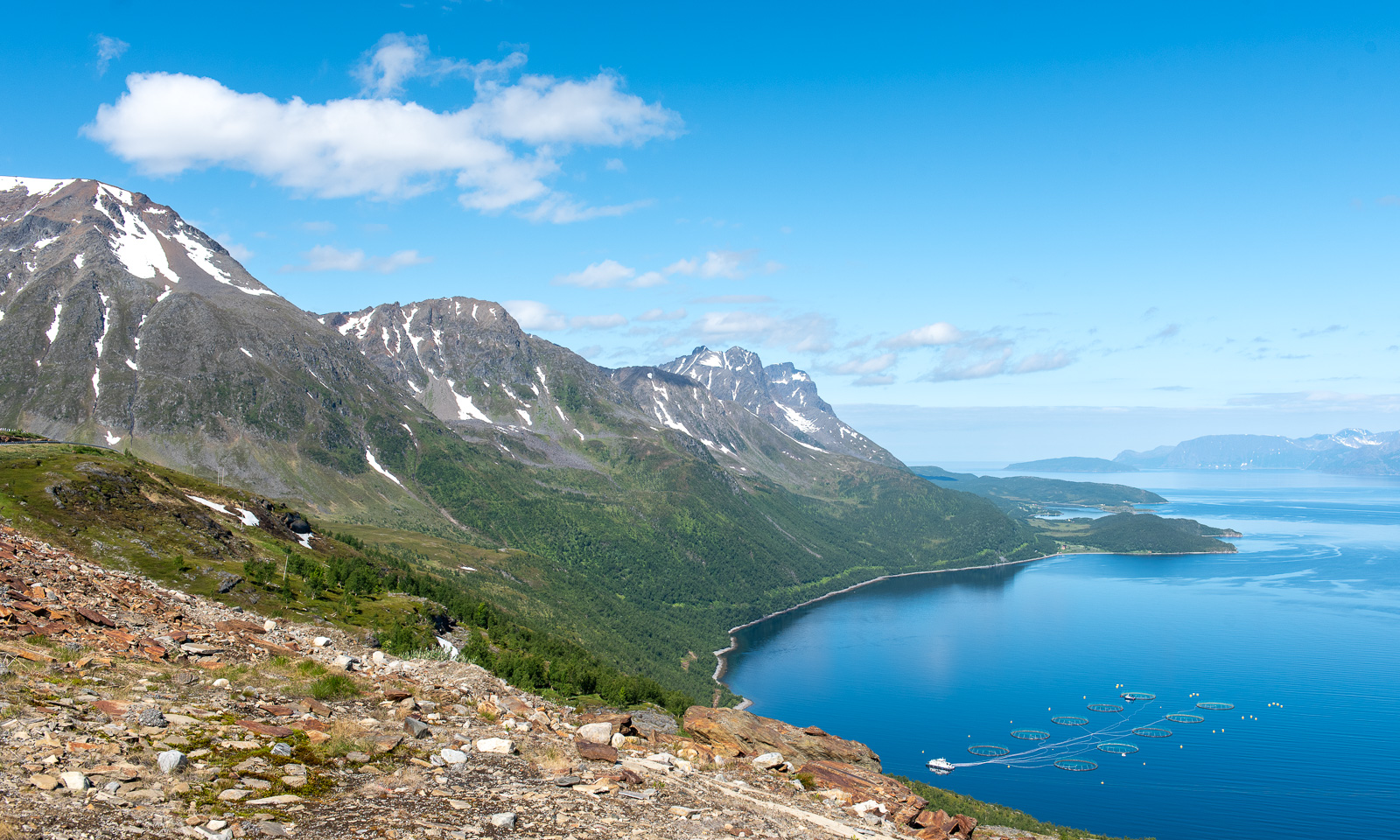
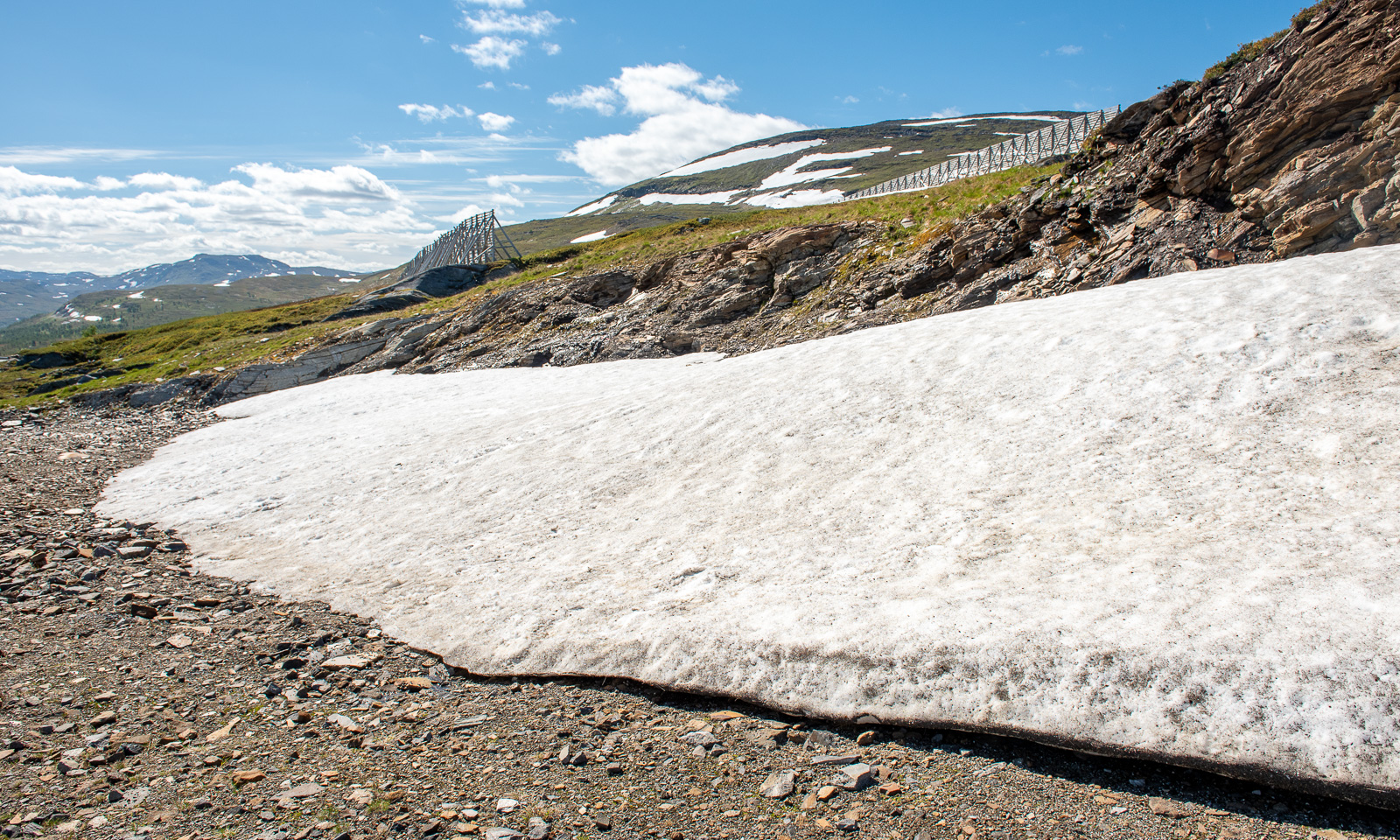
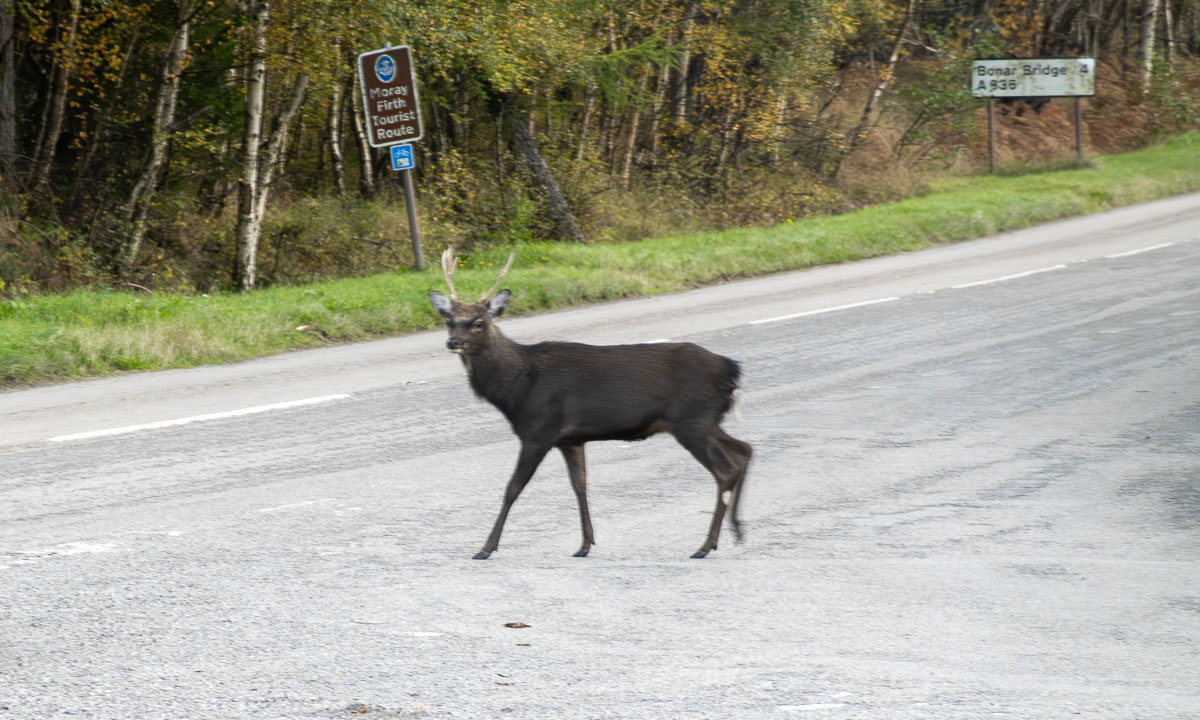
Back in the car we take the road north and pass Lairg. Then we pick minor roads that lead east again. A deer is crossing one of the roads, taking its time.

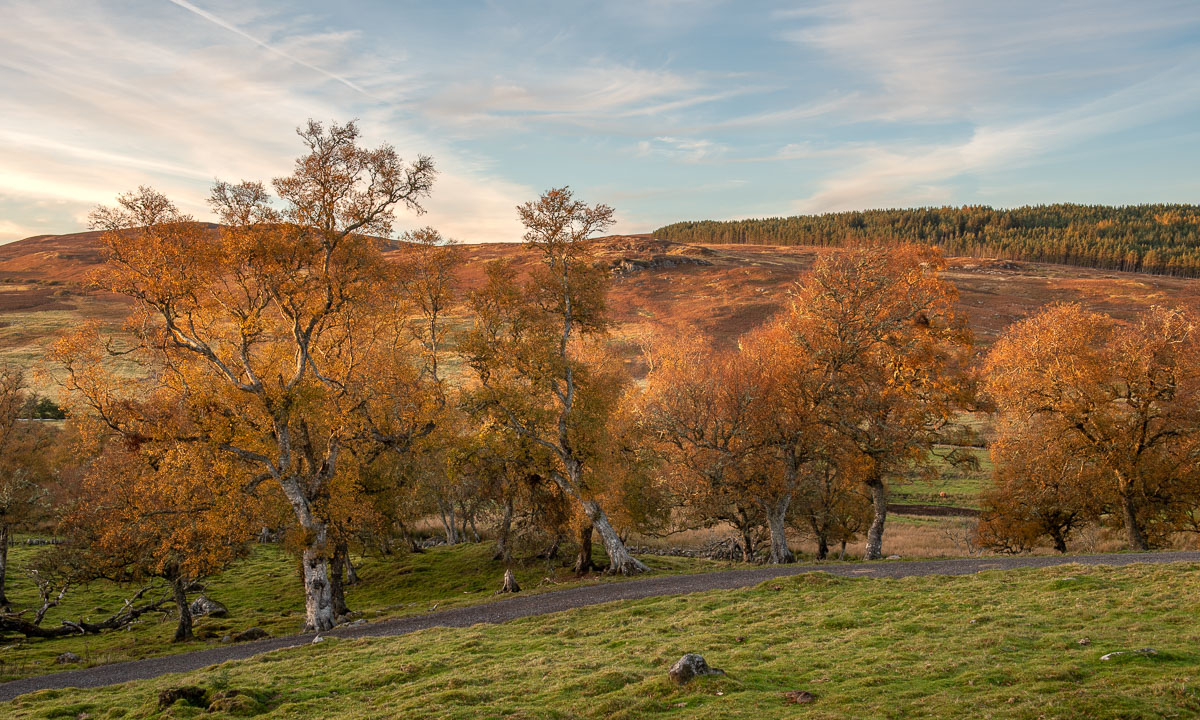
The sun is setting much faster than in Northern Europe and soon the colours of the scenery become warm. Photographers call this the golden hour and in my humble opinion it is especially beautiful in autumn.

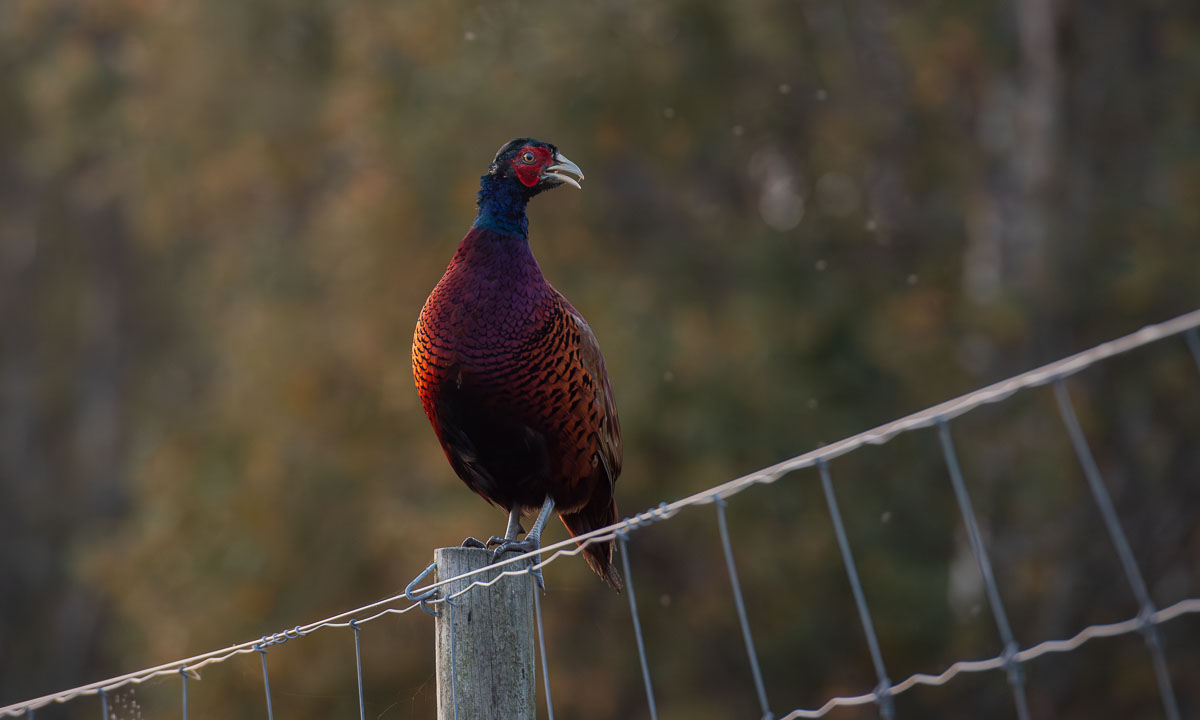
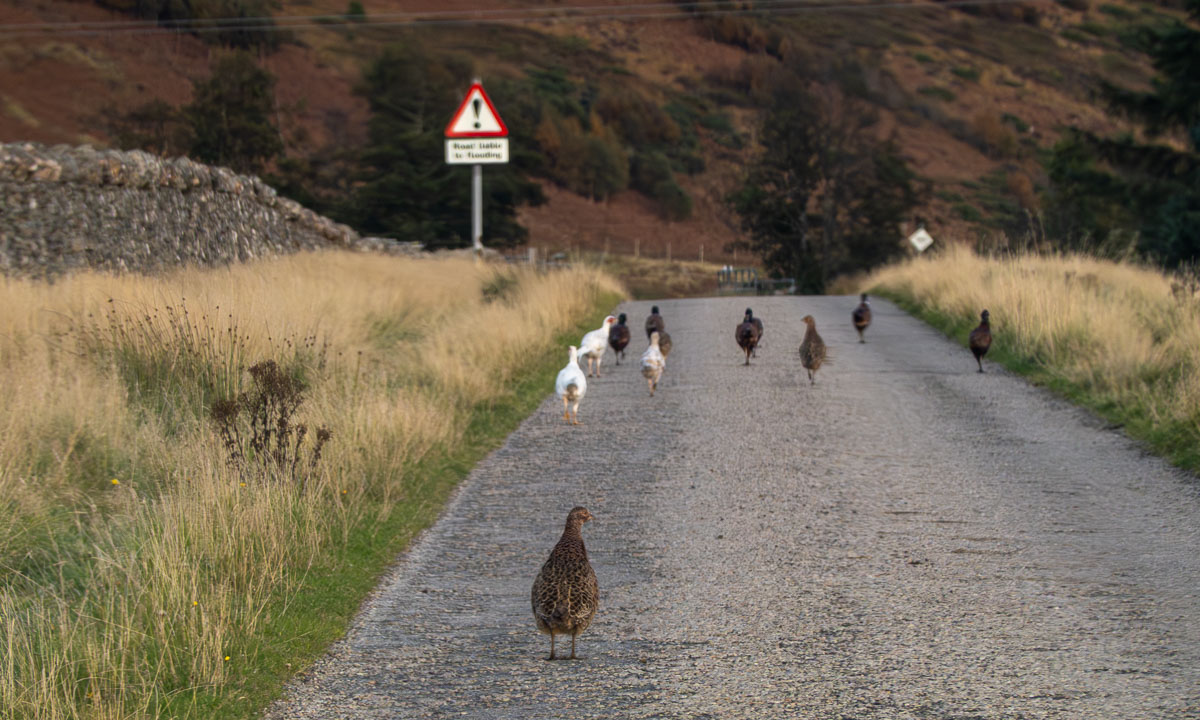
It is not only the golden hour, it is the hour of the pheasants. First we see one here and two there, then some are on the road and all of a sudden a whole flock is blocking the narrow road. completely. They totally ignore our car and I have to exit, running towards them, waving my arms like a madman to shoo them away. Never have I seen so many pheasants in my life.

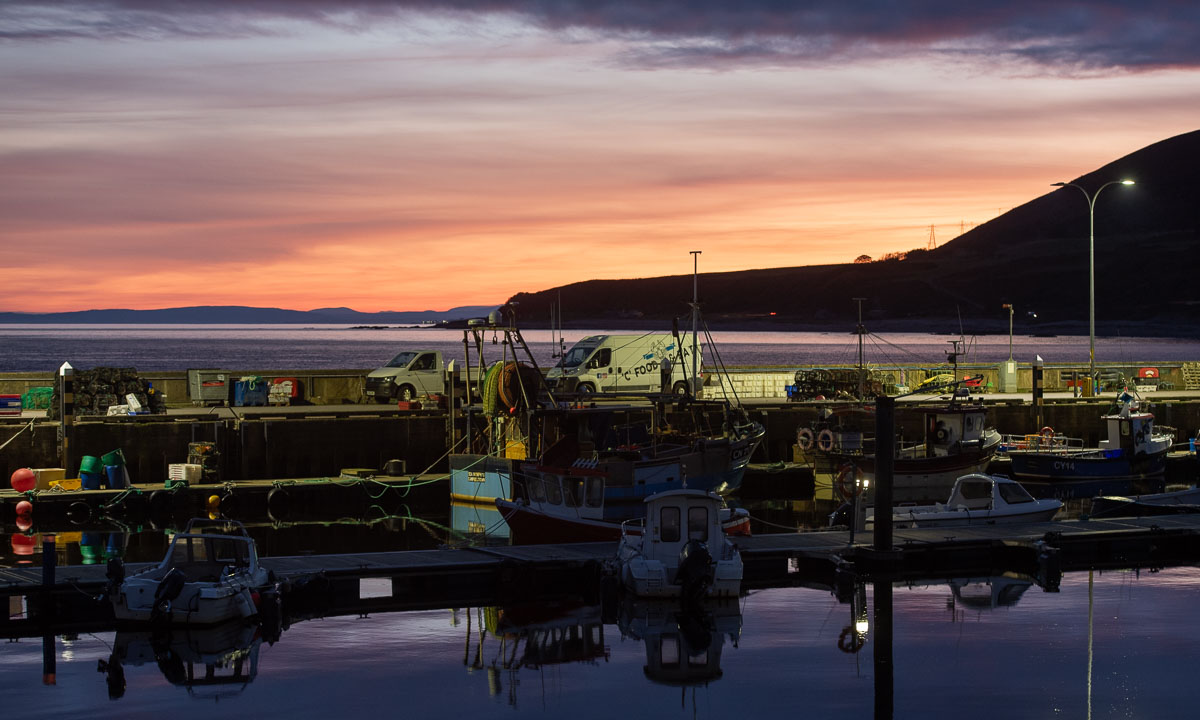
Near Brora we come back to the main road A9. Another eighteen kilometres and we arrive at the “Song of the Sea, Selkie House” in Helmsdale, our first stay for the night. Just half a day’s drive, and we’ve seen so much already. Now we’re heading to a pub for some food, and before long we’re lying in the huge double bed in our cosy room.

Tomorrow we will continue north.

Just a pick-up at the station…

When Annika travelled to me last weekend, her train from Boden to Narvik was cancelled and the next and last train was heavily delayed. Unfortunately train problems have become common in Northern Sweden over the years. I had to use the airplane several times because trains didn’t run at all for days or it was impossible to buy tickets.

To keep Annika from being stranded, I drive to Narvik to fetch her. From Tromsø it takes me about three and a half hours plus some breaks.

Meanwhile Annika has booked a hostel in Bogen where we stay overnight. Our plan is not to drive back the direct route, but to visit the islands Andøya and Senja.

Monday, 21 July

The next morning starts sunny.

However it soon gets foggy. After crossing the Tjeldsund we are on Hinnøya, the largest Norwegian island (when we ignore Svalbard). We decide against a swim in the sea due to the fog and continue to Refsnes. From here go ferries cross the Gullesfjorden to Flesnes. On my trip to Narvik yesterday it was often 28 °C, now in the fog it is hardly 15 °C.

We have missed the 10 o’clock ferry, but they run hourly and we don’t have to wait for long. The journey itself takes only 20 minutes.

From Flesnes we continue to Risøyhamn. Hurtigruten travellers may know this place not only because it is one of the stops but also because of Risøyrenna – a man-made underwater channel that allows larger vessels to pass between Andøya and Hinnøya. The Hurtigruten ships has to go quite slow there.

We take the bridge over the Risøysundet and drive through Risøyhamn. Twice. Because I didn’t know that it is so small. Only round 200 people live there.

The weather is sunny again and we become more beach focussed. The first beach is for having lunch. We share it with a flock of sheep.

The second beach is for bathing. 16 °C in the water – surprisingly warm for the region.

We continue north. To the west the Norwegian Sea. Next shore westwards is Greenland, more than 1500 kilometres away. Our next stop is much closer: a public toilet at Bukkekjerka. But what a one! It is a designed block of concrete and mirrored glass. From the outside you cannot look in, but from the inside you can switch the huge glass windows between being transparent or opaque.

Around this place – a lighthouse on a peninsula, interesting looking rocks, a baaing sheep and of course the sea.

We follow the coastal road further north to Bleik. Here you can find beaches and turquoise water as well as ridiculously looking rock needles.

After refuelling my car in Andenes we drive south again to Marmelkroken, where we will stay overnight. With an additional photo stop.

To part 2 >

Two promenades on Tromsøya

Easter Monday – from Sydspissen to home

On Easter Monday we got surprisingly fine weather in Tromsø. The sun was shining and the sky was blue. I took the bus to Sydspissen – the southern tip of Tromsøya – because it has been ages since I’ve been there. A lot of snow has melted away and tussilago was blooming everywhere. I passed the beach at Telegrafbukta and the pier at Folkeparken came into view. I know the this area well, because I lived nearby for quite some time.

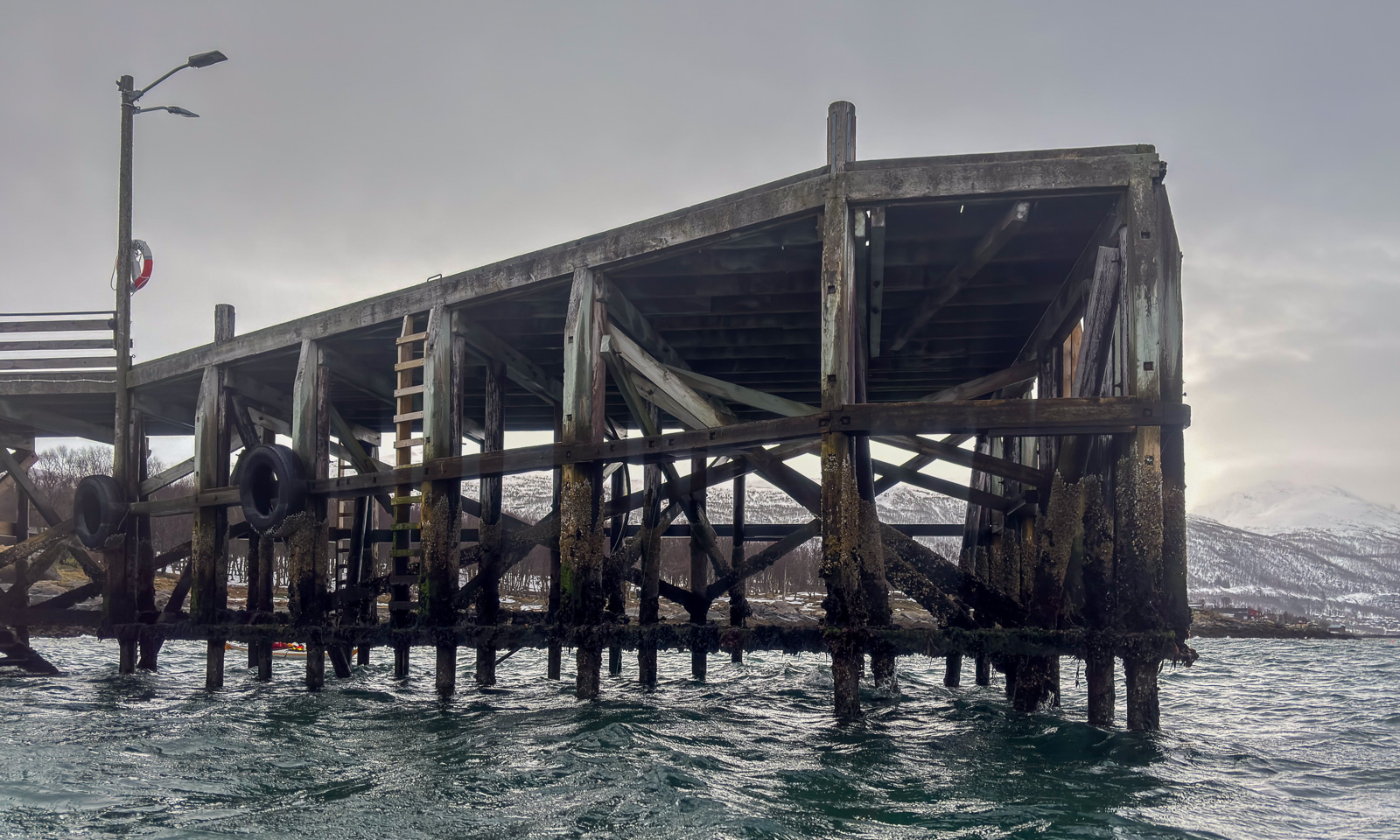
I went on, enjoying the sun and ignoring the chilly wind. Don’t let your eyes fool you, the max temperature was about +2 °C. I passed the old boat house Engenesnaustet, saw a lonely winter kayaker and passed the small lighthouse.

I was not alone. A lot of other people took the holiday to take a promenade, sit side by side or do some barbecuing. I took the liberty to remove some people from the photos.

I wondered if the old, abandoned boathouse was still open? It was. A bit away from the shore there was some leftover snow. The tussilago flowers didn’t care, they were blooming anyhow.

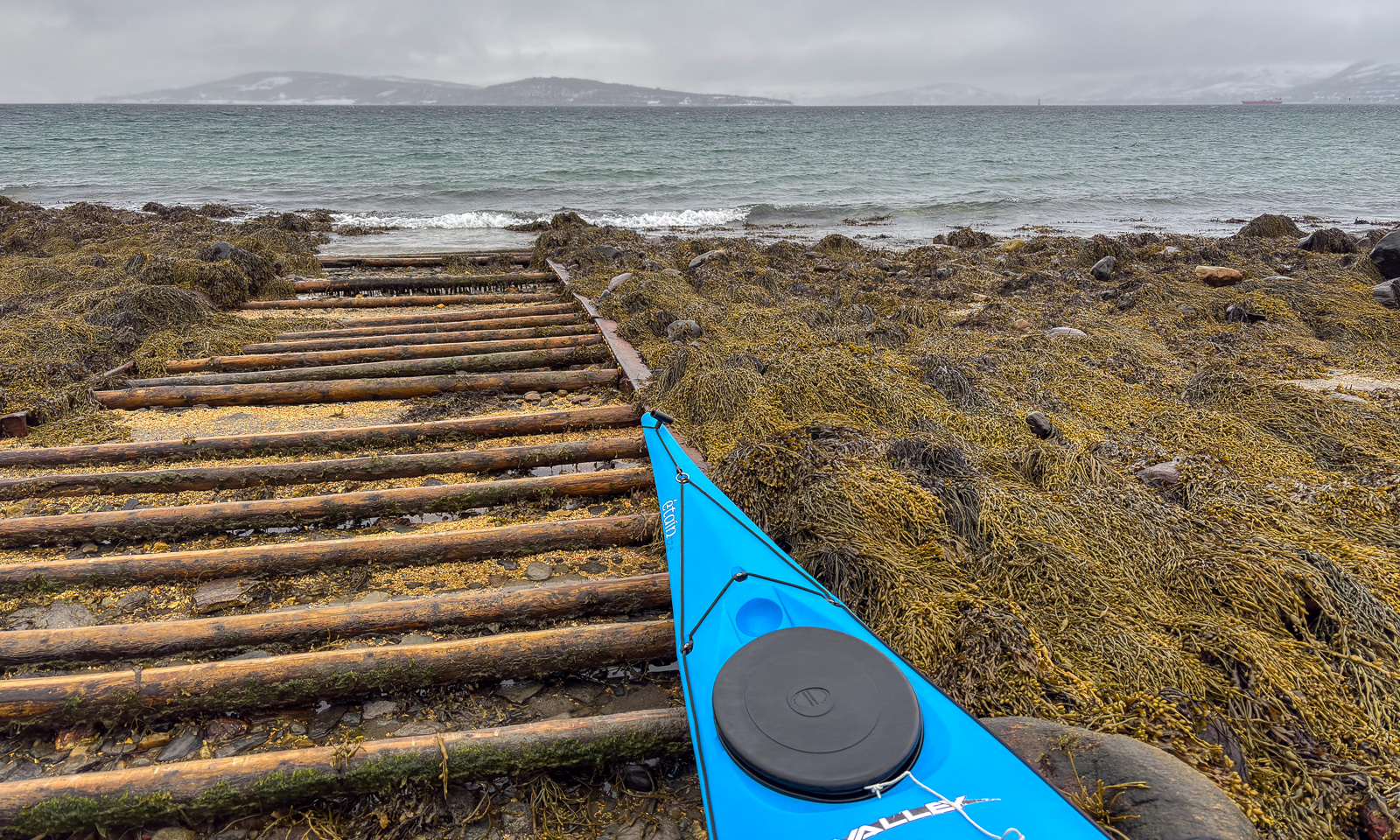
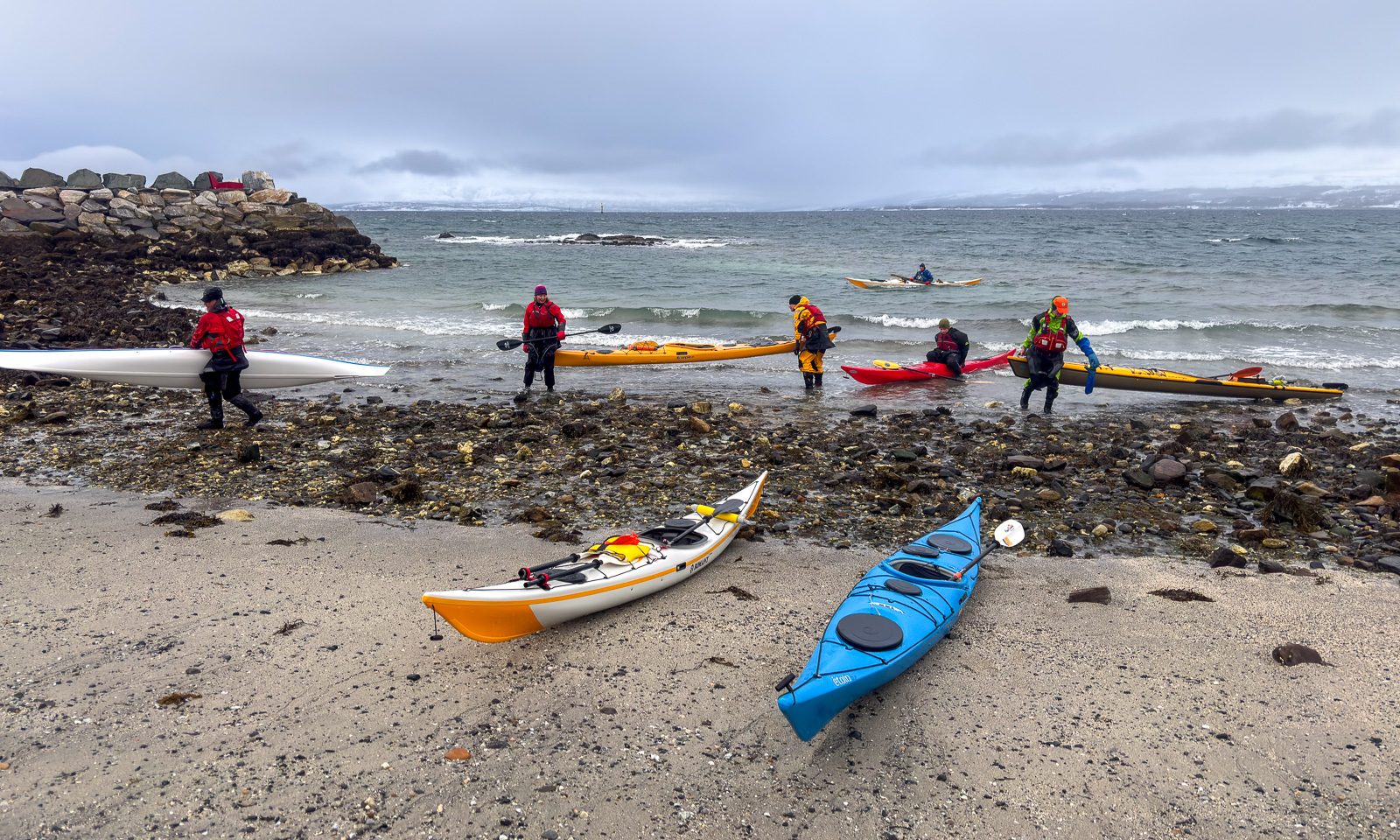
Now it was not far away to the boat houses of the two kayak clubs in Tromsø. TSI Trulle and Tromsø Havpadleklubb. Here I start all my kayak tours in Tromsø, because my own kayak is in Obbola in Swede, so I use to hire one here. Season has just started and I want to paddle a lot this year!

At the bus stop Giæverbukta I missed my bus. 28 minutes of waiting or two kilometres of walking? Easy decision: I walked.

It was fascinating that the coast was mostly free of snow, while MET, the meteorological institute inside the island measured a snow depth of about 80 cm that day. At an elevation of 100 metres. And so the walk became snowy in the end. But spring showed up here as well: some willows had started to bloom.

Intermezzo – more snow

Yesterday afternoon it started snowing. Some snow showers were pretty dense. And sometimes I got one of my favourite weathers: snow flurry and sun at the same time. So beautiful. I tried to take pictures but the result became quite ugly, because the snow against the camera looks dark.

This morning ten more centimetres of snow have fallen, even in the lowland areas. All Scilla flowers in the centre were covered in snow and for the photo I had to look to find some flowers not being completely buried.

Friday (today) – from Prestvannet to home

I use to walk home twice a week after work. Then I take the bus to the lake Prestvannet to skip the boring (and steep) parts. Today I do the same. Additional snow showers have increased the snow depth to 92 cm, but it has started clearing up, when I begin my way home at 15:00. The fresh snow gives the lake an untouched appearance and the first lifebuoy is snowed over almost completely. Could it be January? No, the light is different.

I follow the ski trail a bit then I follow the smaller paths. They have hardly been used today, mostly by a single skier or pedestrian.

But then I come to an area where the snowy paths are completely untouched. No one has used them today. Imagine that: You are on a island with 43000 inhabitants. Many of them are enthusiastic skiers and outdoor maniacs. It is Friday afternoon and the sun is shining. And I trudge through 15 cm of untouched fresh snow. This is absolutely brilliant; I’ve never experienced anything like this before!


Fram Strait 2024 – returning to Svalbard

This article is part of the series “2024-08: Fram Strait cruise KPH”.

26 August 2024

It is the 14th day of our Fram Strait cruise. We are on our way back to Longyearbyen on Svalbard. After many grey and foggy days we finally have got nicer weather since yesterday and so I am standing on the “heli deck” looking for animals to take pictures of. I cannot see any whales and the few puffins that I spot are too fast and too far away. So I take photos of the seagulls that effortlessly accompany the ship.

Since today it is possible to see land again in the distance. Not Greenland like a week ago but Prins Karls Forland, an elongated island which is the westernmost island of  the Svalbard archipelago.

I have gone inside again until I see a message popping on our WhatsApp group:

Dolphins just in front of the ship now

I grab my photo bag, hurry to the heli deck again and see a school of dolphins on the starboard side. Most of them swim underwater but again and again a group of these beautiful sea mammals come out of the water. With my big telephoto lens I try to take pictures of the dolphins. The result: a lot of pictures of sea water. They are just too fast for me and my lens. But I’m lucky. Once I manage to guess correctly and get a photo of two dolphins (and a third one immersed).

27 August 2024

Originally we wanted to reach Svalbard one day later but a lot of things have been done faster without the presence of sea ice. Mooring recoveries are simpler, CTD casts are easier and so is the ship’s navigation – no search for leads needed. Therefore we will arrive one day earlier, which is today. While I’m having breakfast we are already in the fjord Isfjorden. At 9 o’clock we have arrived in the city port of Longyearbyen.

After lunch I leave the ship and stand on land again. I walk into town and go to Svalbardbutikken, the local supermarket. We still live on board and get our meals there, but I want to have chocolate! And I get it.

28 August 2024

We all have stayed on board overnight as well. The cabins are free (and paid) and so there is no need to find some expensive last-minute accommodation in Longyearbyen.

My plane to Tromsø will depart at 14:40. I interrupt my work and leave the ship once more to take some pictures. It is sunny again but Svalbard looks pretty brown and dirty in summer.

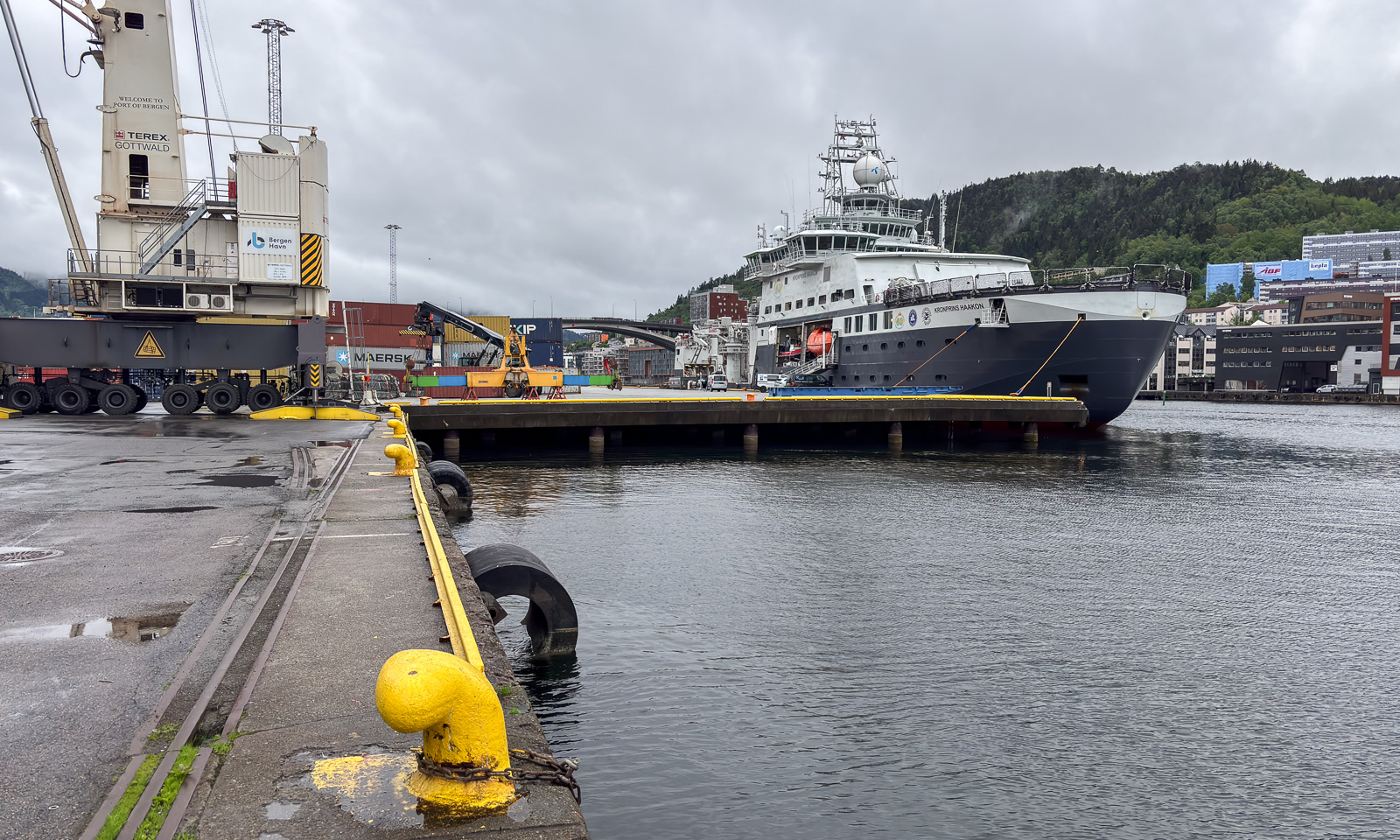
Then it was time to say good bye to the crew and the other participants. Car to the airport – checking in the baggage – security. And some hours later I sat in the airplane to Tromsø now leaving also Svalbard and the research ice breaker Kronprins Haakon behind.

When shall we three meet again?
In thunder, lightning, or in rain?
When the data work is done,
When the budget’s lost or won …

Before the cruise – Longyearbyen, Svalbard

This article is part of the series “2024-08: Fram Strait cruise KPH”.

Sunday, 11. August

I am sitting in a plane heading north. Tromsø lies behind, the plane goes to Longyearbyen, the largest settlement on Svalbard. If everything goes according to plan I’ll be on board of the Norwegian research icebreaker Kronprins Haakon two days from now to join a scientific cruise to the Fram Strait between Svalbard and Greenland.

Eight other participants are in the same plane, there are not so many flights to Longyearbyen. The rest will arrive tomorrow or has been joining already the previous cruise. We wait for the luggage and then for the “Maxitaxi“ that brings us to our different accommodations. I check in at Gjestehuset 102 and start a photo tour back to the center.

In August the town looks brown. It’s brown water, brown mountains and brown dust everywhere. As a photographer I prefer winter. Longyearbyen lies by the fjord Adventfjorden and there lies the German research icebreaker Polarstern that I visited in Tromsø three days ago.

It is windy but surprisingly warm with temperatures round 19 °C. Later I learn that the maximum was 20.3 °Con this day, the warmest August temperature measurement ever. I stroll around and go to the huge supermarket to buy some goodies. Then I head to the beach again to take some more photos. At 18:30: dinner time with nine of the cruise participants. After that I walk the 2.3 km back to the guesthouse. And take some more photos in the evening light.

Monday, 12. August

Before the cruise many things are on hold. When will the ship arrive? When are the first scientists allowed on board? Is my help needed? When is the flare gun training for the ice people? And so on. Let’s wait and see.

KPH has arrived in the morning but only a few selected scientists were supposed to go on board to get a handover. So I have time to stroll around again – it is still warm and sunny – and take some more photos while constantly checking our WhatsApp group for plans being updated. And I meet some of my colleagues that joined the previous cruise.

In the evening we have another dinner, this time with all 19 participants. That is quite a small team this time, there are 35 berths on the vessel. We have pizza and the first opportunity to get to know each other. What a nice and interesting team I am allowed to work with for the next two and a half weeks :-) !

Tuesday, 13. August

Today is the day. I was already in town and bought a woollen sweater that I wanted to buy for years. Then at 13:00 the first group of people gets a ride to our swimming research platform – Kronprins Haakon. Welcome back. At 13:15 I have boarded, at 15:00 I have checked in. I have got the very same room as on the first cruise two years ago. It’s on deck 3 in the bow and when there is ice, it is shaky, loud and noisy. I love it! Arctic lullabies. This time I have it eben for me alone. That’s luxury!

At 16:00 we get a safety briefing. After that I fetch my safety boots and my survival suit. Will I ever wear it on the ice on this cruise? At 17:00 we have our first dinner. Salmon and rice – delicious. Ice cream as dessert. And at 18:19 I realise that we have left port. Now we will be on our way west.

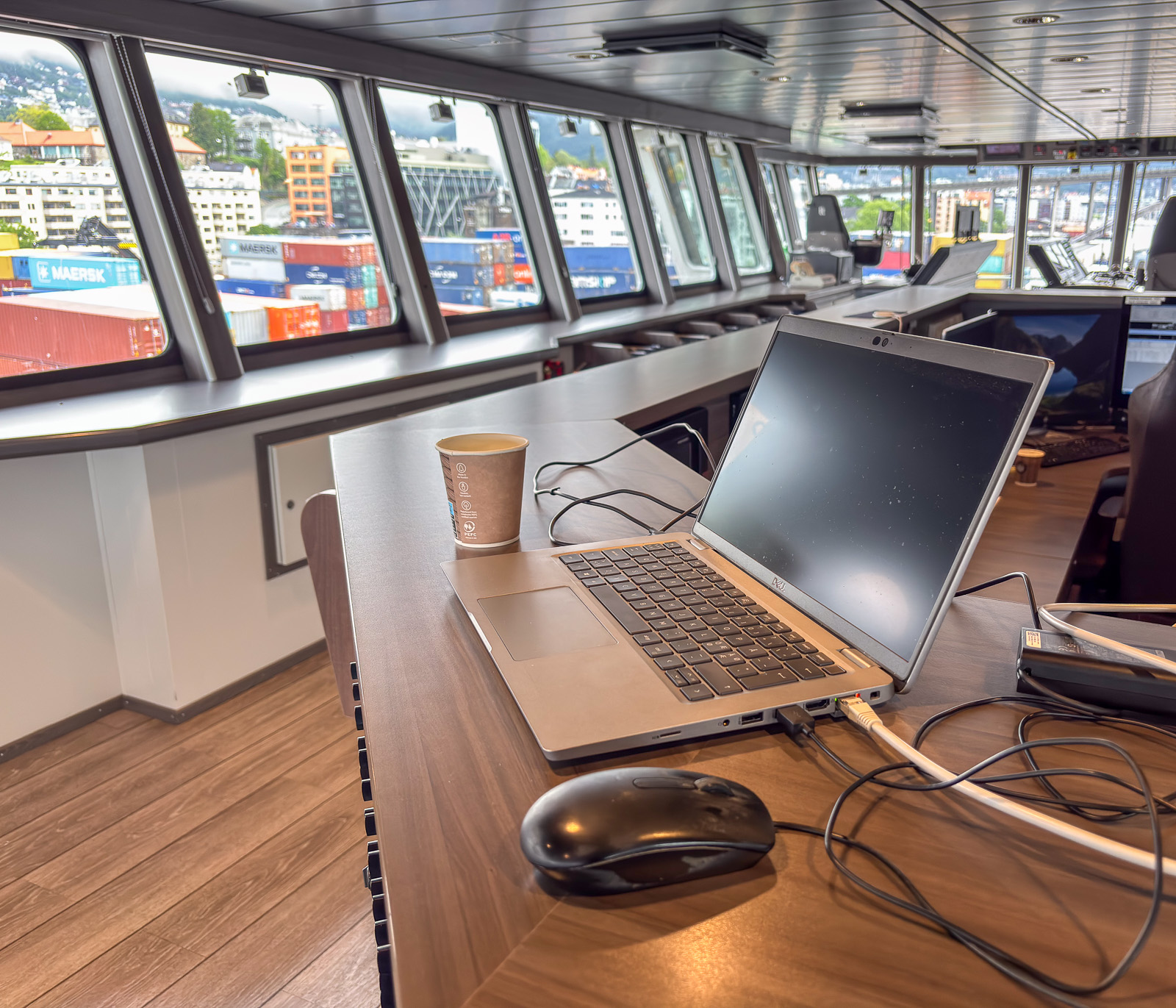
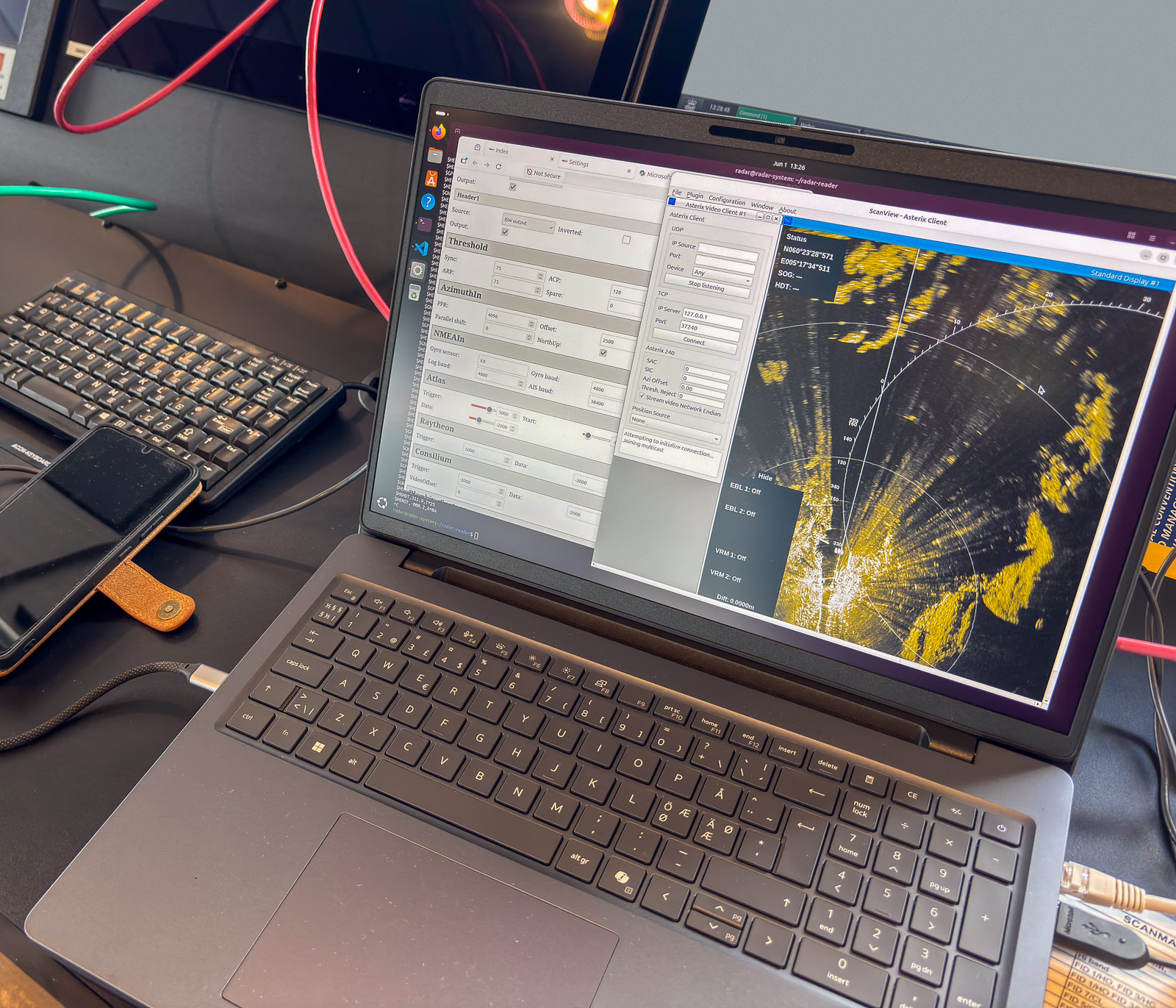
I will work with a software project and I want to join the sea ice team. The ice situation however is doubtful. Last year there was so much ice, that navigation was a real issue, not its the absence of ice that can lead to problems for the ice people. But as on each cruise – let’s wait and see.

Anyhow I’m lucky and happy to be on tokt – on cruise – again!

I decided not to blog regularly while being on the cruise. There is just too much going on and too much work to do. Anyhow I may show some photos in a few days. Let’s wait and see.

Visiting the Polarstern

Two days ago the German research icebreaker Polarstern has arrived in Tromsø after a three and a half week cruise in the Fram Strait between Greenland and Svalbard. Today I met the data manager of the Polarstern to learn more about how data is handled on board. Well – I’m deeply impressed! This however is a private blog and no place to talk data.

However I was lucky that the data manager had time to give me a guided tour through the ship. Beside things of professional interest I got to see the mess, the helicopter hangar, a bunk, the operating room, some of the labs, the recreation area with a small swimming pool and much, much more. I took some snapshots that I am allowed to share.

Tomorrow the scientists will arrive and then the next cruise PS144 starts. It is a nine week cruise to the Arctic Ocean crossing the North Pole. (Sounds tempting!)

Today I left the ship after two hours but I’m lucky. On Sunday I will fly to Longyearbyen and next Tuesday I’ll go on board the Norwegian icebreaker Kronprins Haakon to join the two week Fram Strait cruise of the Norwegian Polar Institute. It will be my third cruise and I’m happy and grateful that I’ve got this opportunity.

Today’s thanks go to the data manager – for your time, your explanations and for the “private guided tour”. Vielen Dank!

Bjuröklubb over night

Annika and I have been in Bjuröklubb a lot, especially when I lived in Skelleftehamn, but never we stayed overnight. Anyhow, there is a cabin called Spanarstugan and that we booked for a night last weekend. The cabin is modern and quite large but still cosy. It has electricity, and running water as well as toilet are not far away.

After a short lunch in the shadow of the large yellow lighthouse building we took a promenade to the beacon Bjuroklubb NÖ. The way there involved some climbing over rock fields but the view was worth it.

At 7 o’clock in the evening we went down the gravel road to the small marina where we sat for a while and watched the sky, the sea and a lonely sea bird.

Then we went up again – the ways are short – to the lighthouse building. The sun was partially hidden behind clouds and the light was warm and beautiful.

Round 11 o’clock in the evening I took another stroll up to the wooden view platform. I wanted to watch the sunset. First the sun was round and red then it resembled more and more a huge glowing jellyfish until it morphed into a small dash and disappeared behind the horizon.

Annika and I were in doubt if the lighthouse would be active in summer, when it doesn’t get dark. But round sunset I could see the light go on, blinking in a steady rhythm.

I sat there for a moment but then I became tired. So I walked down and went to bed where after slaughtering some mosquitoes I fast fell asleep.

In the night it rained, in the morning it was foggy but after breakfast and cleaning up the cabin the weather was sunny again. We enjoyed our stay there very much and started wondering, if this place is accessible in wintertime as well.


Summer weather in Tromsø

10:30. I am sitting in my car on my way to Sommarøya – “The summer island”. The sun is shining and it is warm already. Today it is supposed to be 19 °C, much warmer than the last weeks (or months). The first photo stop, a parking place by the sea. Tussilago is blooming everywhere.

The road leaves the sea and leads through the valley Kattfjordeidet. The lake Kattfjordvatnet lies on 149 metres of altitude. Does not sound much, nevertheless it is high enough that most parts of it are still covered with ice. I like the open areas – small waterfalls and beautiful reflections.

The valley is 12 km long. I leave it behind and meet the sea again. And two locals – reindeer that know the traffic rules and walk on the other side of the street (or better said in the ditch).

Just before the tunnel Oterviktunnelen there is a parking place and shortly after a beautiful sandy beach. It looks so warm, but I didn’t measure the water temperature …

I am lucky, I find a nice shell, a “pelican’s foot”. Then I continue my ride and enter the tunnel. It is not long, just 607 m.

Almost wherever you stop there are nice places to explore, for example this tiny beach, less than ten metres wide. It is not far away from the bridge to Sommarøya.

From the bridge you can see a lot of small islands, many of them with sandy beaches. A kayakers paradise, although the weather can be pretty rough. But if you like challenges, take your boat, head west and after 1600 km you are in Greenland. ;-)

The last weeks I have seen three kinds of wild flowers blooming in and around Tromsø. (1) Tussilago – 17 April (always the first). (2) Dandelion – 26 April. (3) Oxlip (or another primula) – 8 May. Today I discovered two others. According to Pl@ntNet, which I use for identification a Goldilocks buttercup (91.2%) and a Purple mountain saxifrage (94.6%).

Would I find one of my favourites flowers as well – the Marsh marigold, which loves wet places and has an incredibly beautiful hue of yellow. Yes? I found some of them beside a small pond.

On Sommarøya I hardly took any picture, on the outer island Hillesøya I took a photo of one of the boat harbours. In my back an open door, a dark room and in there a man cleaning fish.

After taking lunch in the snack restaurant Havfrua (“The mermaid”) it was time to drive back. I chose the way round the south of the island Kvaløya and made some small stops. One at the ponds and puddles in a boggy area, which now are free of ice. Another by the church Hillesøy kirke, which is by the way not on the island Hillesøya.

And then the time came: 20 °C according to the car thermometer! Last time it was so warm here was last August.

I took another stop to take a photo of one of the mighty mountains on the other side of the strait Straumsfjorden. When I looked down into the deep water I spotted a shoal of fish. It was hundreds, probably thousands of fish resting in the shadow. The photo is heavily edited to make the fish more visible.

After a while I came back to more known areas – less than 30 minutes away from my “work flat” in Tromsø. I stopped at a small grave yard. Most tomb stones were free of snow, but those located in the snow drifts will have to wait a bit longer. Anyhow snow in the lowlands has become the exception. Even the bogs that tend to be cold are hardly frozen any more. And so I had to be quite cautious to avoid wet feet, when I looked for a good place to take a picture of that beautiful pine tree other there – the last photo for today.

Those of you that are not so familiar with Norway as a country may ask yourselves: Why did Olaf make an excursion on a Friday? That’s because today it is Constitution Day. On 17 May 1814 the Constitution of Norway was signed and this is the most important day of the year. Even through our street a marching band walked by and all people have their best clothes on – many of them the traditional bunad which shows, from which part of Norway they come from.

And so I shout out: “Gratulerer med dagen, Norge!” – Happy birthday, Norway!

Here is an article from 10 years ago: Syttende mai (German text).