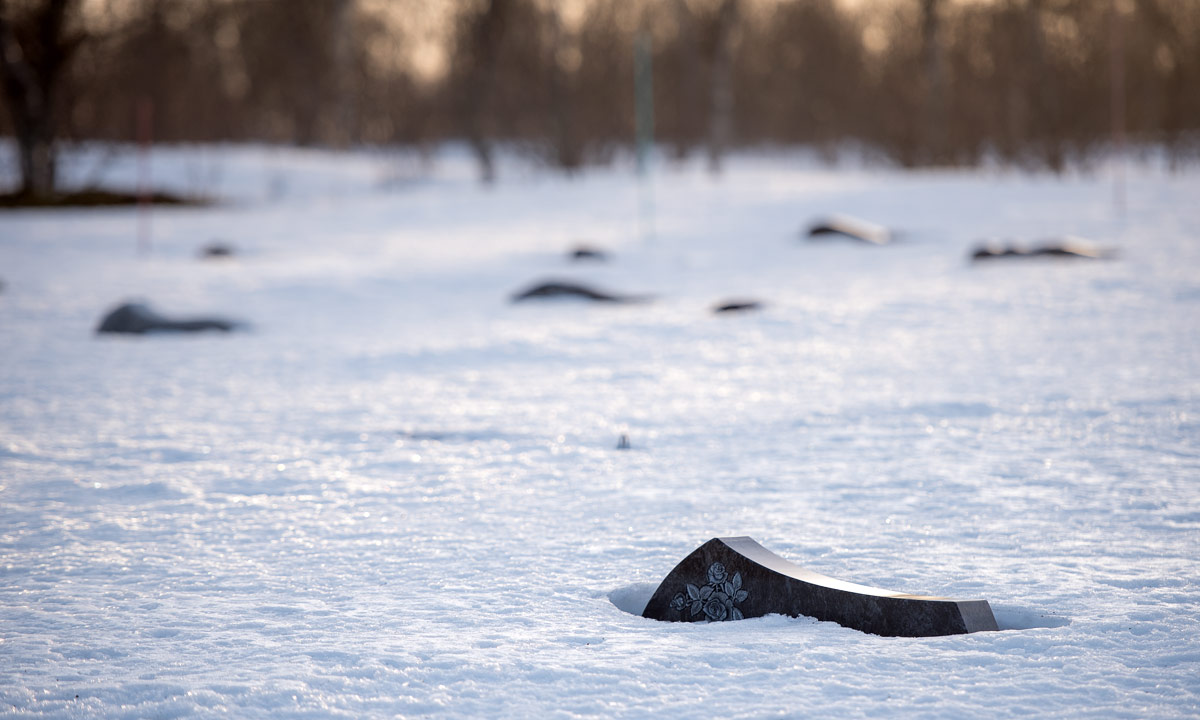
Night promenade at Telegrafbukta

Clear sky, almost full moon, no wind. The snow is crisp and glitters in the moonshine. -10 °C. I take a promenade and enjoy the calmness of the night. The aurora is weak, more a bonus than the main act. Snow and moon win tonight.

Sea ice field work training on the Sørbotn

Peacefully I wake up this morning. It is already light outside. WHAT? LIGHT? WHY? AND WHEN?

I check my mobile phone – the clock shows 8:01. SH**!!! At 7:45 we were supposed to meet at the Norwegian Polar Institute, at 8:00 we were supposed to leave there for a field work training on the sea ice. But not me. I have overslept!

We – that’s 5 instructors and round 20 participants of the Sea ice field work training arranged by the Norwegian Polar Institute and the Arctic University of Norway in Tromsø. I realise that my colleague M. already tried to reach me and ring back. I tell her that I will take my own car and hopefully make it to our destination with only a small delay.

Our destination – that’s Sørbotn, the southern tipp of the fjord Ramfjorden where the training will take place on the sea ice of the frozen fjord.

I manage to dress, make tea and pack in 20 minutes thanks to previous day’s preparation and a fondness for packing lists. Although I take it easy while driving (safety first!) I arrive less than 10 minutes late while the preparations are still in progress.

We are split in two groups. Our group will do measurements of ice and snow depths first and take ice core samples after lunch break. I won’t go here into details too much, because I’m a newbie to all this and I do not want to write half-understood nonsense. I’ll have to look up some details of today’s stuff later.

Although I drill holes in the ice, help calibrating the GEM2 device, measure temperatures in a freshly taken ice core and use a MagnaProbe to measure a transect of snow depths I have a lot of time to take photos, too. So, let’s just start with this.

Being on the ice with a bunch of nice people is not only a lot of fun but it will help me in doing my job at the polar institute. Part of it is to manage scientific data. The deeper my understanding on collecting data the better I can do my work. The most interesting thing today was observing the coexistence of advanced sensor technology paired with GPS tracking and the usage of rulers, pencils and paper as in the early days of polar research.


There was one thing I wasn’t involved in: The usage of a remote-controlled underwater drone. We clearly could see some fishes and jellyfish (do you spot it on the 1st image below?) on the live display. I know that it’s used for research, but I would love to have it just as a toy.

Hopefully this was not the last time that I was involved in field work this year. And perhaps we’ll be lucky with the weather again next time. For while we had calm conditions and even sunshine, wind drove heavy snow squalls over Tromsø just some hours after we called it a day.

Oh, what a beautiful sunrise!

Mountains on Kvaløya photographed from Sydspissen, Tromsøya.

While the first images are made with a strong (though non-professional) telephoto lens (500–600 mm, ƒ/6.3), this gives a bit more impression of the mountains this morning:

My first “topptur“

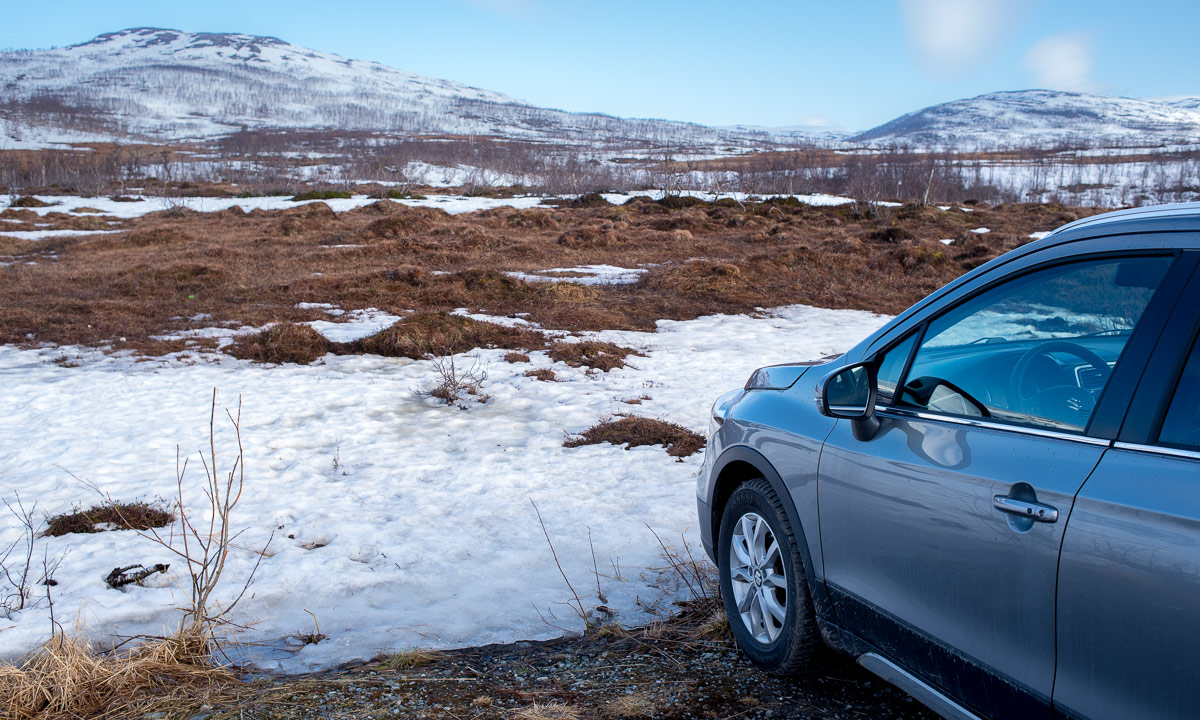
Just 14 km by car to the parking place on Kvaløya and I’m at the southern end of the two valleys Finnvikdalen and Krabbelvdalen. I put on the skis, put on the backpack, up with the hood and I’m ready to ski. -14 °C, hardly any wind.

First I follow an old track, perhaps two skiers and two with snowshoes went there. But soon I leave it to follow the Krabbelvdalen. Further plans: none yet.

Slowly the terrain rises. I do not have climbing skins with me but mostly I can ski just straight ahead. I’m alone and leave a track in yesterday’s freshly fallen snow.

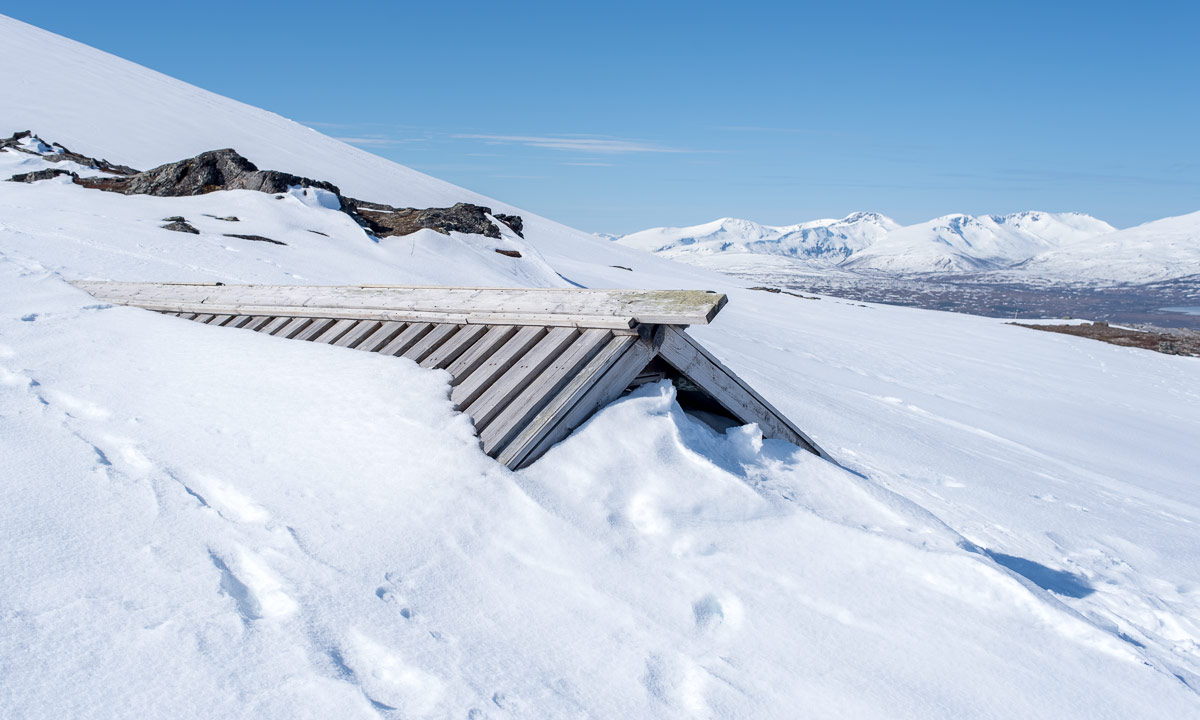
I spot a cabin by a mountain slope and realise that the mountains may be not as steep as they looked first. Could it be possible for me to ski over the saddle between the two summits of the Mellaskarfjellet (301 m and 325 m) to make a round trip? Well, at least I can try. To gain height I have to go zigzag a lot and some of the snow is hard and icy. I’m a lousy skier and wonder if I ever will be able to ski downhills and leave this place. Well, I reach the saddle and it’s only 40 more metres in altitude to the southern top. Let’s go and make the round trip a topptur – a summit tour.

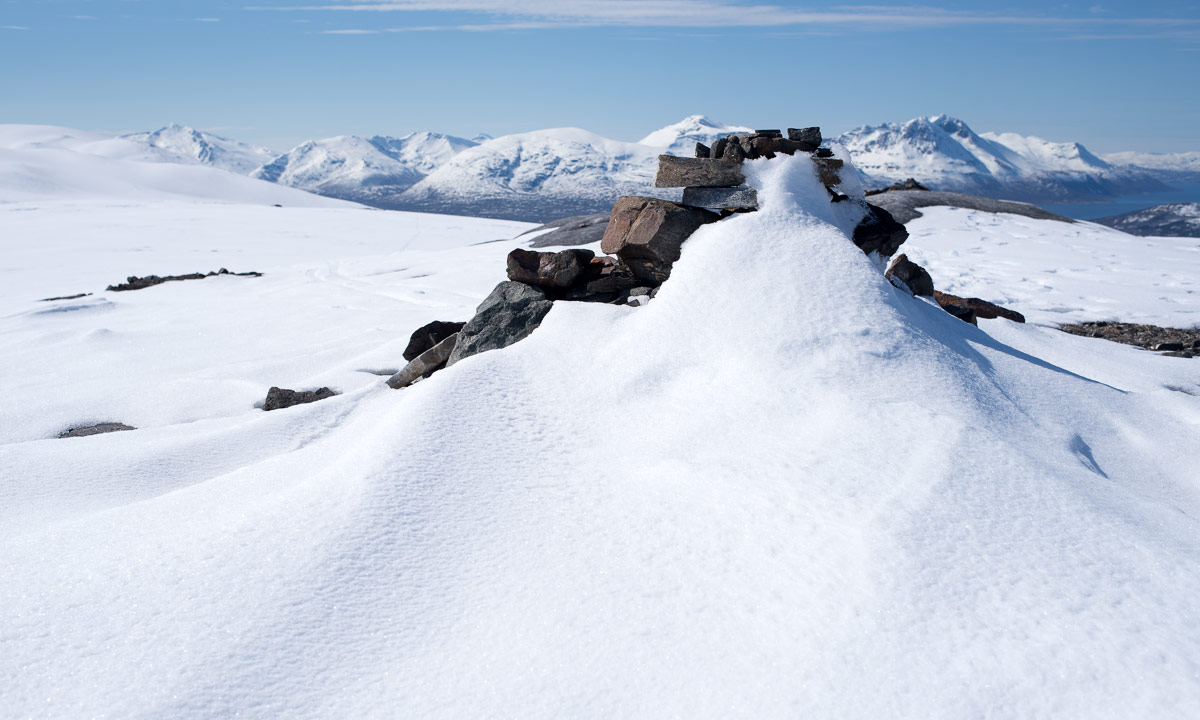
To make a long zig-zag story short: I reach it! I put on my down jacket and take a rest with a bit of chocolate and half frozen water.

The descent to the Finnvikdalen takes some time. I do not dare to ski straight downhills because parts of the snow are icy and other parts is crusted powder snow where you break though. So I take it slow and easy.

I see two other skiers with a dog approaching. While I slowly ski downhills they catch up and thank me for the track I made while passing.

Two reindeer nibble at the birch trees, I’ll never will understand how they can survive cold winters with this nutrition. The dog is quite interested. “Will is run? Is it fun?”. But alas it is on a leash and the reindeer calmly trots through the snow to find another birch to nibble at.

Now it is me who is the lucky one. The dog owners leave a fresh ski track on which I at least double my tempo. They head to something that looks like a broader ski track and so it it. It leads to a mountain hut.

Tracking map from my iPhone appA lot of skiers are on this trail. After I have passed the hut I’m on a broad trail prepared by a snow mobile. Now I can ski even faster (still slow ;-) ) but I’m unsure where this trail leads me. I continue following it constantly checking my map app until it signals that I’m on my old track again. What? Where? Here? I do not recognise this place!

Some hours ago I was alone, now a broad track cuts through the landscape. I pass the very same tree that I photographed this morning.  Ok, the app is right. The parking place comes into sight, it is full of cars. Just a bit more to go and I arrive at my car. While I stop my tracking app and change my clothes other people pass me on both sides.

I guess many Norwegians would just laugh about me calling my today’s tour a topptur, since the summit is a hill, not a serious mountain. Many Norwegians are excellent skiers and topptur is used for alpine style tour skiing often in steep terrain, not necessarily for cross-country skiing . Anyhow I liked this tour and give it the name I think it deserves from my perspective.

On the map you can both see my zigzagging near the summit and that I was significantly faster on the trail back ( slow | fast).

To my big surprise it has become colder. -16 °C the car thermometer shows now. At home it is only -7 °C. I wonder why because both places are located quite near the sea.

Cabin days in Christmas time

Christmas eve – Sommarøya and Hillesøy

It’s only 15 km to Sommarøya, a beautiful island reachable by car via a curved bridge. Even in snow fall and twilight you can see the turquoise colour of the sea. Everything is closed, even the hotel.

From there it’s not far to the church Hillesøy kirke, that by the way does not lie on the island Hillesøya but on the mainland. We tried to prebook one of the limited seats for the Christmas service but they where all taken. We are there very early and allowed to have a look in. Eye catcher: the tall wood-burning stove.

We drive back to the cabin – time for lunch while it gets dark outside.

Christmas day – Skitour along the lake Kattfjordvatnet

This day was supposed to be crisp and clear and it was. No clouds, hardly any wind, -10 °C. Perfect conditions for a small ski tour along the lake Kattfjordvatnet. In coastal Sweden we just would have started the tour, in the Norwegian mountains you must check the avalanche risk first. We got round 30 cm of powder snow the last days and the risk was level 3 which is quite high. So a real mountain tour would have been too risky but the terrain by the lake is too flat for avalanches.

And in the early evening we are lucky and get some polar lights. We just have to step outside the door and avoid the motion sensor for the outdoor lighting.

Everything would have been accessible from my apartment in Tromsø as well. Anyhow it feels more like a real holiday to be on a Norwegian mountain cabin over Christmas, just Annika and I. Perhaps we are allowed to use it again sometime.

A cabin named Fredly

Let me take you to my favorite place
Just a five hour drive from the city
Just follow the road until it stops
And then keep walking for another forty minutes
Then – out of nowhere – there it is
My cabin!

(Ylvis, “My cabin”)

I was lucky to get the my employer’s cabin for the Christmas week this year. The cabin of the Norwegian Polar Institute lies on a mountain slope by the fjord Kattfjorden. Two days ago Annika and I packed my car with a a lot of food and winter equipment and drove to the cabin, which is 40 km away from where I live in Tromsø. It lies by the road to Sommarøya (the summer island) which is a funny name when you drive through intense snow fall.

We did not have an address, but a small map and a description and so we found the parking place where the cabin supposed to be. And there it was, up on the hill in seemingly pathless terrain.

But under the snow there was a path up the hill and we found it. It took some efforts to bear everything up.

A Norwegian cabin can be everything from a wooden box to a luxury retreat. Our cabin has running water (cold and hot), electricity, underfloor heating, a kitchen, a bathroom with shower, a wood-burning stove, a sauna, internet and more.

We followed the manual and turned the underfloor heating to the maximum, but even after some hours the cabin was as chilly as before. We failed to fire the wood-burning stove because there were only large logs of wood and no axe.

At one o’clock in the night we woke up. Whether it was because of the gusty and stormy wind or of the cold I cannot say. 8 °C in the cabin, the same as hours before.

I put on clothes and went down the hill to look for an axe in the woodshed by the road. I didn’t find one but I found bags with smaller pieces of wood. I hefted one up (exhausting!) and finally was able to make a fire. We were awake for an hour, sitting by the oven, gladly watching the thermometer showing the rising temperature.

Right now it’s icy cold
But in sixteen hours, it’s gonna be hot!

(Ylvis, “My cabin”)

The next day I slept until 10 o’clock. It was still dark and Annika and I took breakfast. One hour later it was bright enough to see the falling snow. We put on our clothes and went to the fjord Kattfjorden, which is less than 100 metres away from the cabin – and 20 metres in altitude.

We looked at the rocky coast and the seaweed covered stones and decided not to winter bath here today. Soon we trudged uphills through the snow back to the cabin and took it easy for the rest of the day. I can say, that the short days in the time of the polar night can be really relaxing.

At 13:00 the sky started to clear up and the snowy mountain ranges glowed colourfully. Polar night does not mean that it is pitch black 24 hours a day.

How lucky we are, we who may be here and stay for Christmas. In the cabin named Fredly (peaceful shelter).

The middle of the polar night

Today it’s the darkest day of the year, which means, that half of the polar night in Tromsø is over. With the risk of repeating myself, even the darkest day is not dark, especially when it’s a crisp, clear day with a lot of – well no sun – but cloudless sky and warm, colourful light.

No, you couldn’t see the sun, but the direction where it was, because a light pillar created by reflections of ice crystals in the air marked its position.

People where outdoors, not only on land but seaside, too. Two people clad in neoprene doing a long-distance winter swim. Three women paddling and taking a rest at Telegrafbukta. And finally me who after some hesitation took a winter bath. Air temperature -8 °C, water temperature +4 °C, alas no wind. Perfect conditions!

How long it will take until you can see the sun again? Well in Tromsø probably in a month but I’m cheating. In a week Annika and I head to our home in Sweden, where there’ll be at least four hours of sun every day. Beach holiday in the south ;-)


When a boat take photos

One month ago I joined two whale watching boat tours to the sea round Skjervøy, one on 21 November, one on 27 November. Most of the time I was outside on deck to take photos.

Days were short and it became darker and darker soon. There are some options what you can do on a moving boat if you want to take photos but light is low. One of them is to use high ISO values. Depending on your camera this can result in a photo with a lot of noise.

Another one is to take your tripod with you and integrate the boats movements while taking photos with a long exposure. That’s what I did on the return passage of these boat trips. The exposure times of these photos lie between 10 and 13 seconds.

Two movements are caught in these photos. The large ones are created by the rolling and pitching of the boat. The small ones are caused by the vibrations of the motor.

While I mostly focussed on taking pictures to the side I almost skipped an interesting motive: the stern wave of the boat.

Some tips:

  • Use a telephoto lens. It will magnify the movements of the lights.
  • In wintertime take your warmest clothes with you. It can be colder on the boat than you might expect.
  • Avoid the bow of the ship when waves get higher to avoid your camera equipment and yourself being soaked by breaking waves.

Here is a set of images I made on two Hurtigruten journeys some years before. You see less vibration, since the Hurtigruten ships are much larger.

To the photo series “bevegelse” >

Tromsøya crossing in winter

An almost true story to be read out loud with a deep and rough voice.

I survived one of mankind’s largest expeditions of our times – the crossing of the arctic island Tromsøya from south to north! Probably I’m the first one, who dared to face this extraordinary challenge.

The arctic ice breaker could not approach the harsh coastal line of Tromsøya’s southern tip. Too mighty the storm, too sharp the rocky cliffs, too high the enormous waves! I was forced to row the last mile in a wooden dinghy. When I approached land I realised that despite of months of planning I was without food! Would I survive? Well, the tour must start, with or without provisions. One has to go on in live.

The land was wild and it was hard to find the entry point of my expedition. Where is Sydspissen, the Southern tipp? With my extraordinary orientation skills I finally managed to find this unexplored promontory which would be the starting point for my crossing.

I followed the coastal line through a field of invincible rocks. The storm howled and the surge of waves covered everything in spray. I decided to leave the exposed coast and seek shelter in the inland. To my surprise I found some ancient dwellings.

It seemed that this hostile island had been inhabited earlier. What a discovery! I continued my way and realised that I was not alone. People still seemed to live here. While most of the indigenes hid inside some dared to be outside, guarded by their dogs. The houses were shocking. While the people seemed to have some basic skills in woodcraft, they still lacked the knowledge of constructing right angles.

I continued my way through the forbidding terrain. After a while it opened and gave view to an extent of ice. Could it be a lake? Probably it had been frozen for centuries. Here I spotted more locals. As the others before they ignored me. Didn’t they dare to seek contact? I do not know. First I though they would hunt seal or walrus but they just seemed to wander around without any goal.

Soon I was alone again in the rough mountain scape of this arctic island. Orientation was extremely difficult. Without my compass and sextant I probably would have been lost forever in this pathless country. I was completely on my own.

The terrain descended and gave view to a strange installation. Scaffoldings pointing up to the sky were erected randomly on that slope. Was is temples or other places of worship? Who build them? When? And why? Probably one never will find out.

Since I lost my food I was forced to continue my expedition. Time was precious. The land was bleak and barren. No trees, no bushes, nothing. Maybe some moss seeking shelter between the stone could survive under the eternal snow. For other plants this place is too hostile. 

The mountains became even higher and I got view on a small coastal village, probably abandoned ages ago. One wooden house lay nearby but it lacked a door and most of the walls.

I looked for walkable paths that would lead me further north. The more north I came the more glaciers covered the land.

It started to get dark but without food I did not dare to seek shelter. I was forced to go on and on without any rest. Amidst the mountains I spotted two indigenes. They sat on some kind of toboggan well clad in furs to keep them warm in the harsh sub-zero climate. I did not dare to disturb them and only managed to get a blurred photo as a proof of my observations.

According to my positional measurements the northern tipp of Tromsøya could not be far. I had survived until now. Would I make it to Nordspissen, the northern tip?

Alas – after more efforts and privations I managed to reach Nordspissen. I was grateful that fate allowed me to be the first human who reached this remote spot on foot. To my big surprise the legend was true: There is a mystic monument at Tromsøya’s northern tip and I can prove it:

But my efforts were in vain. I was too late! The last ship of the season just had passed by. Now I was forced to live here on this remote and solitary polar island for another year. But that’s daily routine for tough explorers like me.


Fjellheisen and Fløya

Today I was too lazy to hike up a mountain. So I packed warm clothes and camera equipment and the car to the mainland. There I took the cable car Fjellheisen. From the mountain station I walked up the nearest top Fløya. Not a lot of snow there but the temperature of -12 °C (and of course the wind) made it feel quite wintry.

Some photos: