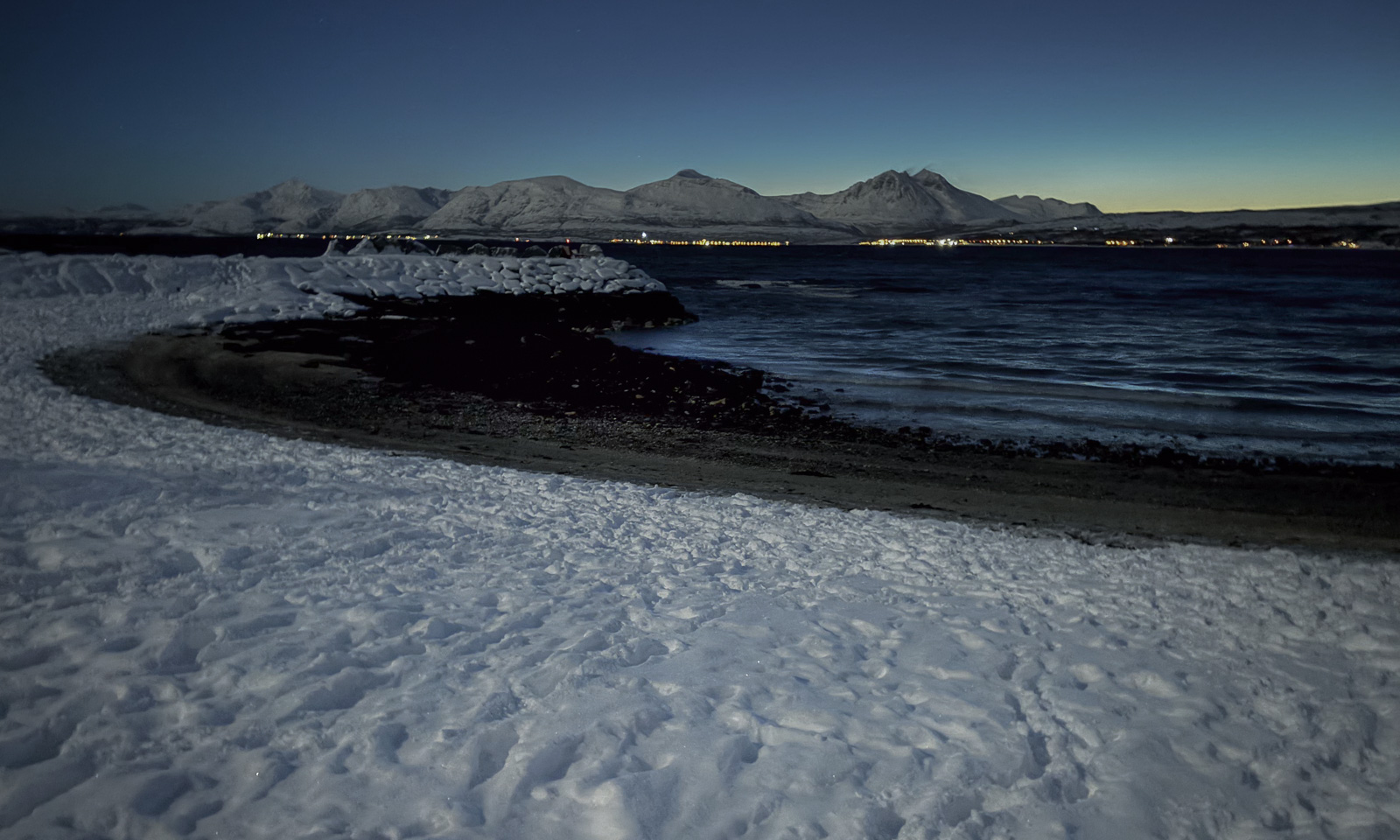
Sunrise winter paddling

Three days ago it thawed and stormy weather crushed all the sea ice. The day after, the temperature dropped below zero again. This morning the weather was clear and calm at -12 °C. Time for another morning kayak tour, just like four days ago.

At 7:50 I stood on the leftovers of the old ice that covered the small bay. In front of me – a fresh layer of new ice. How thick may it be? I have the feeling it will not hold my weight.

You see the photo above? The kayak is tilted sideways. That’s not because of the waves or because I’m edging, but because the kayak is lying on the ice. The ice is stable enough to bear us with me sitting in the kayak. I move forward by using ice safety picks that I drive into the ice in front of me and then pull the kayak and myself forward. It’s exhausting, but it works. I have done it many times before. The ice is approximately 3 cm thick.
But then the ice gets thinner and has exactly the thickness I loathe: between 1.5 cm and 2 cm. Then the kayak breaks through and is jammed in a narrow water channel, where it’s almost impossible to use your paddle – no open water reachable – or the ice picks – the ice will break when pulling. Luckily the water channels often tend to widen, so you can kayak back some metres, get some forward momentum using the paddle and break another two metres of ice. That takes a lot of time and extends the distance paddled by a factor of four or more.

But then – finally – I reach open water by the island Lillskär. It took me almost half an hour for less than 300 metres!

Anyhow I manage to reach the sunrise in time. Now the surface of the sea is multicoloured. The back of the waves are reflecting the orange horizon, the front of the waves the blue sky above.

Now I just paddle a short round, because it is a weekday and I have to work. Just some more photos with my mobile phone in its waterproof bag …

… before I return home. First it is easy, because the channel that I had broken through the ice is open and I can easily follow it. Then the ice gets thicker again. I’m tired and since the water is pretty shallow I exit the kayak and walk the kayak home. I learn that the ice does not bear me at all. So I break it with my knees or – when deeper – with my rear. I would not dare to do this with my kayaking drysuit, but today I wear my survival suit made of thick neoprene, which is very sturdy.

I reach the shallow part of the bay where I manage to grab a large piece of ice and put it upright. Time to play a bit with the translucent motif in front of the sun.

It is two o’clock in the afternoon when I decide to take another break from my desk to watch the sunset. To make a long story short – I got it. No kayaks involved this time.

Tromsø—Obbola by car

You may know that I have two places to live. My “work home” in Tromsø, where I work at the Norwegian Polar Institute and my “home home” in Obbola near Umeå, where my wife Annika works and we have a house together. Mostly we use the train and the bus to travel, sometimes the plane and occasionally even the car, although it’s a long way.

It is early Friday morning, I’m in Tromsø. My car is packed and I’ve cleared last night’s snow. It is mid-November and the conditions are wintry.

Norway

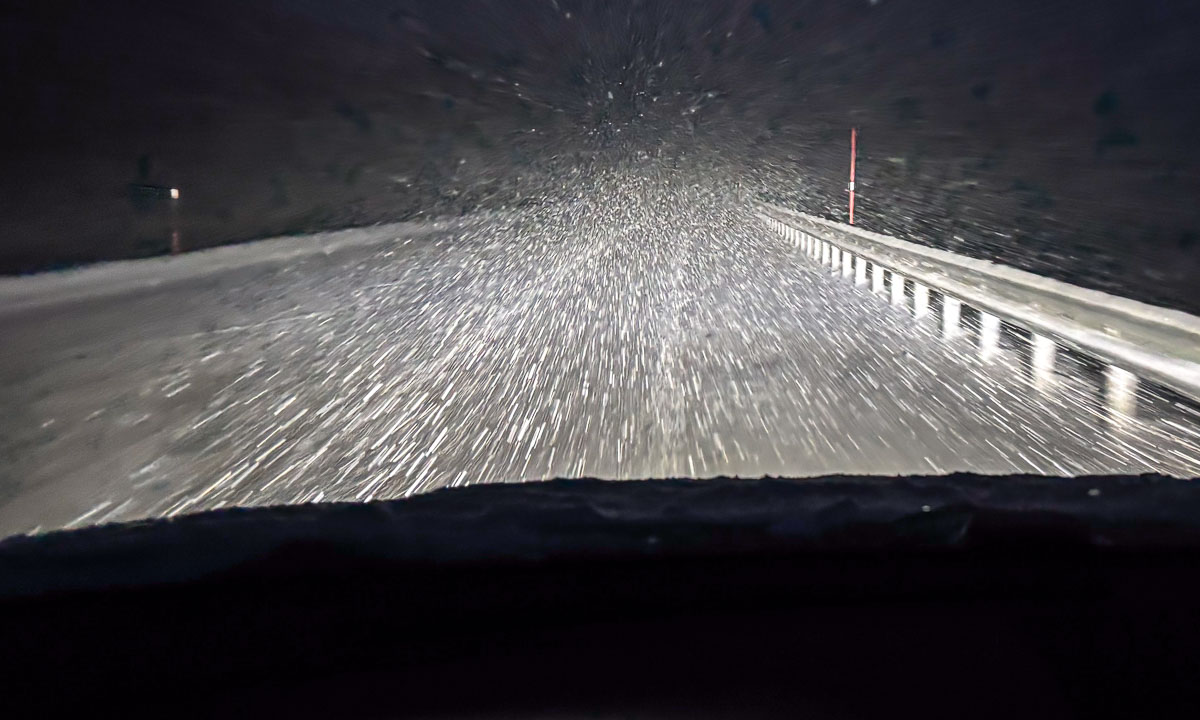
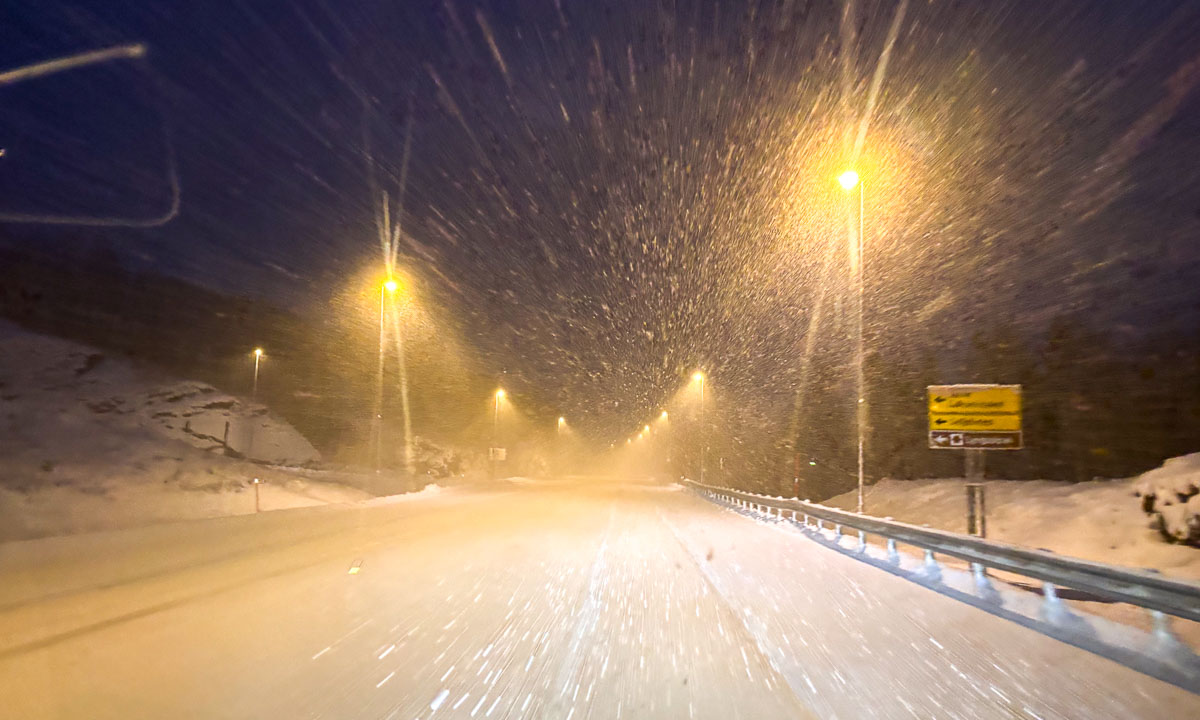
I start the trip at 6:50. In Tromsø the weather is fair, but then I experience some heavy snow showers. When it’s dark the snowflakes seem to form a tunnel that looks a bit as if a spaceship in a science fiction film were going to warp drive. Some short passages have streetlights. That makes seeing the road much easier.

Around half past eight it is bright enough outside to see the landscape, not only a fraction of the road. It is still snowing, but driving is easy. Around 9:20 I reach the border to …

Finland

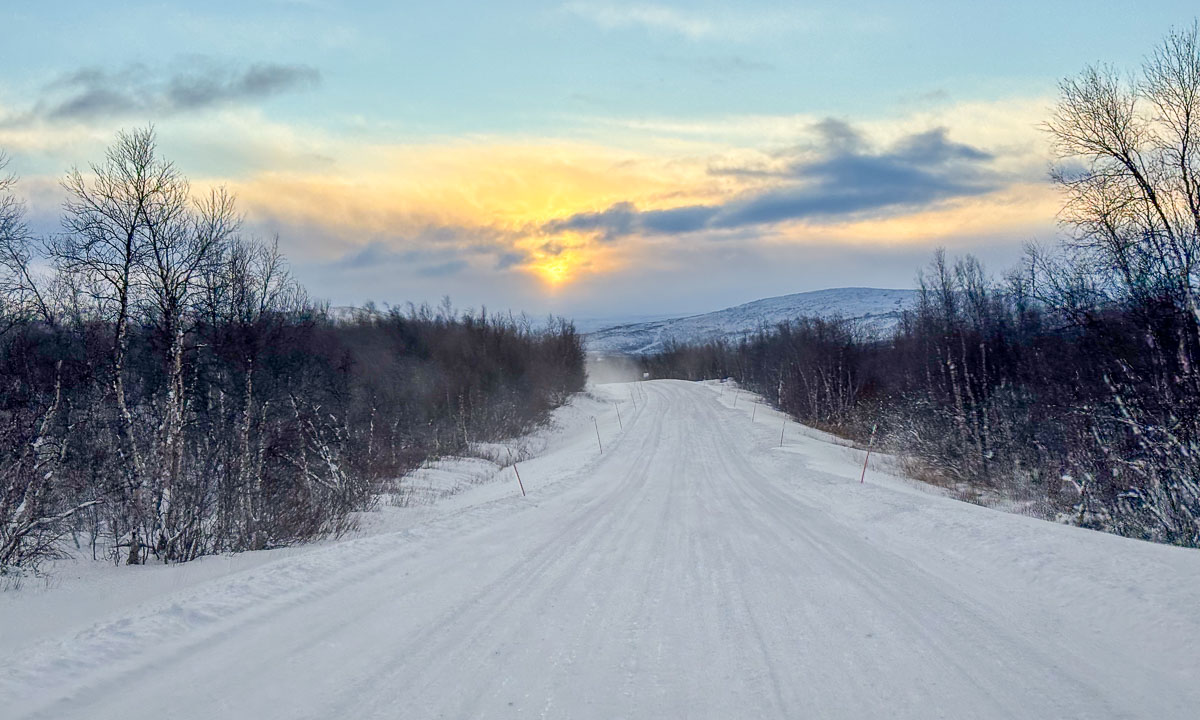
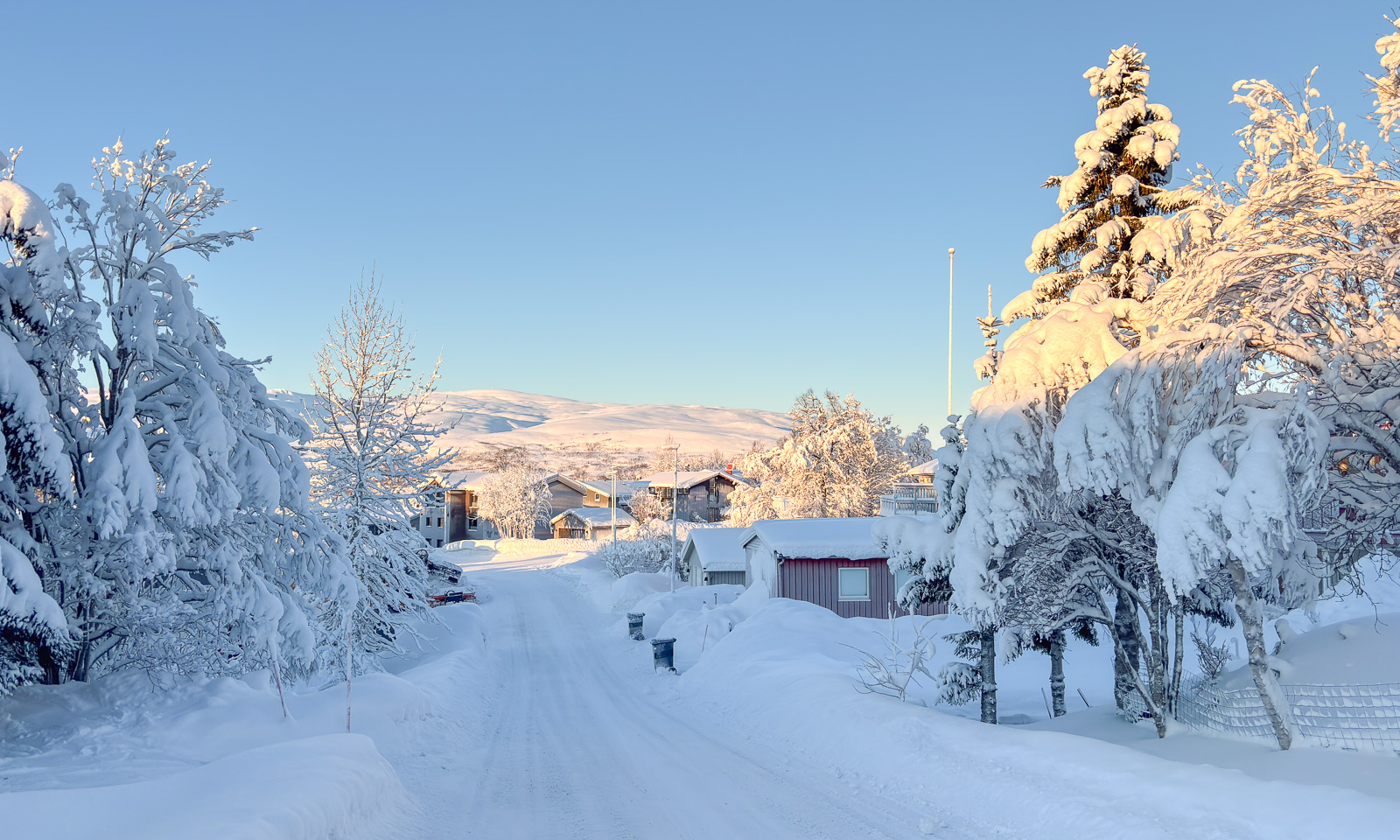
The snowfall has stopped but a lot of snow lies on the road. I guess up to 15 cm with some deep tracks of a few cars. After a while a snowplough approaches, but it is clearing the opposite lane. In Kilpisjärvi I make a stop at the supermarket and buy some breakfast. The rear of my car is plastered with snow.

I continue south and it is clearing up. Even the road is in much better shape now. Easy driving.

In the Finnish village Karesuvanto I turn right, cross the Muonio River and thus the border to …

Sweden

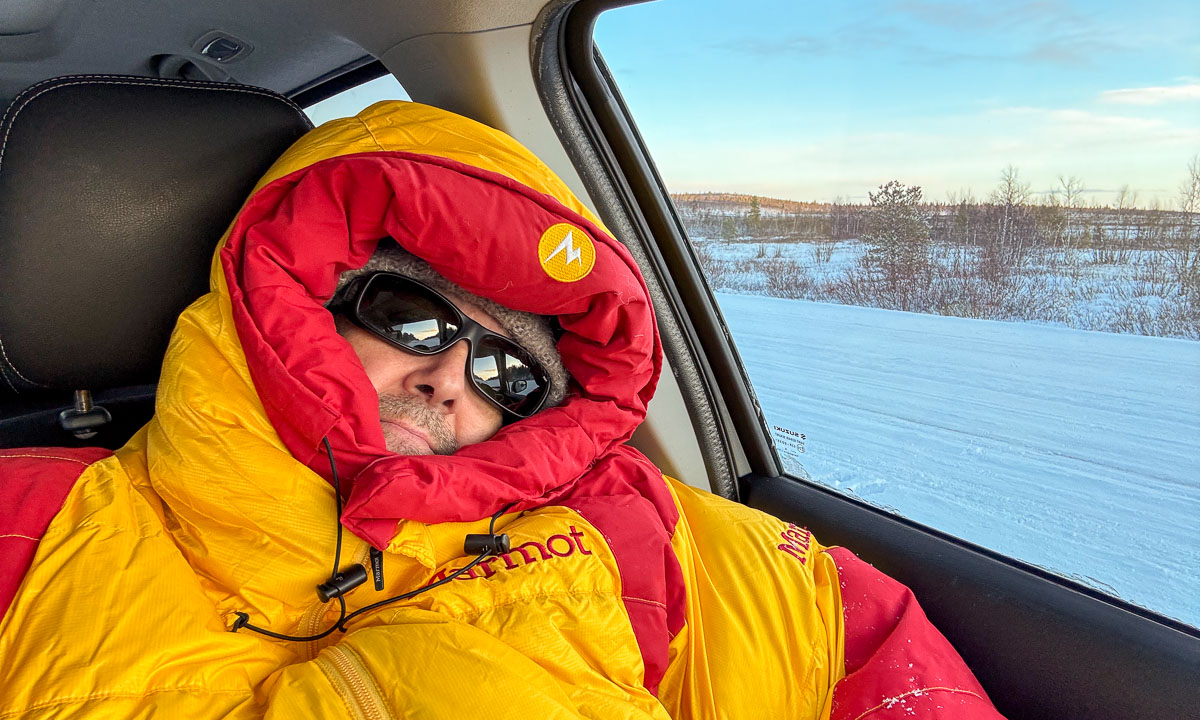
… where I arrive in Karesuando. I turn right again and join the E45 which ends in Gela, Italy. The sky is clear and the outside temperature dropped more and more. In Övre Soppero the display in the car shows -13 °C. It also shows a lot of warnings because the packed snow in front of the car is confusing the sensors for the cruise control. I feel tired and find a parking bay where I take a nap.

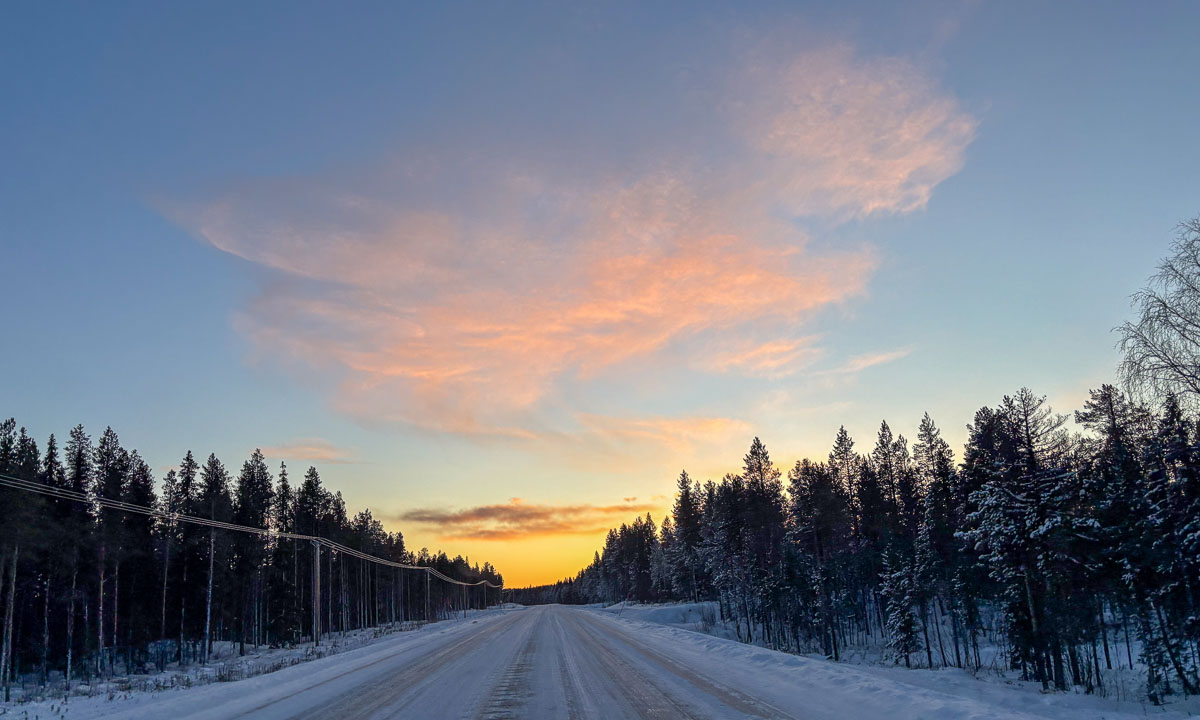
I sleep less than half an hour but I feel refreshed again. I continue my car trip to Vittangi and while I’m following the road see the slowest sunset I can remember. Perhaps, because I’m driving southwards?

In Töre, where I reach the E4 I fill up the car with fuel. From there it is not far to Råneå, where I visit friends and stay overnight. I’m asleep before 9 o’clock.

Still Sweden

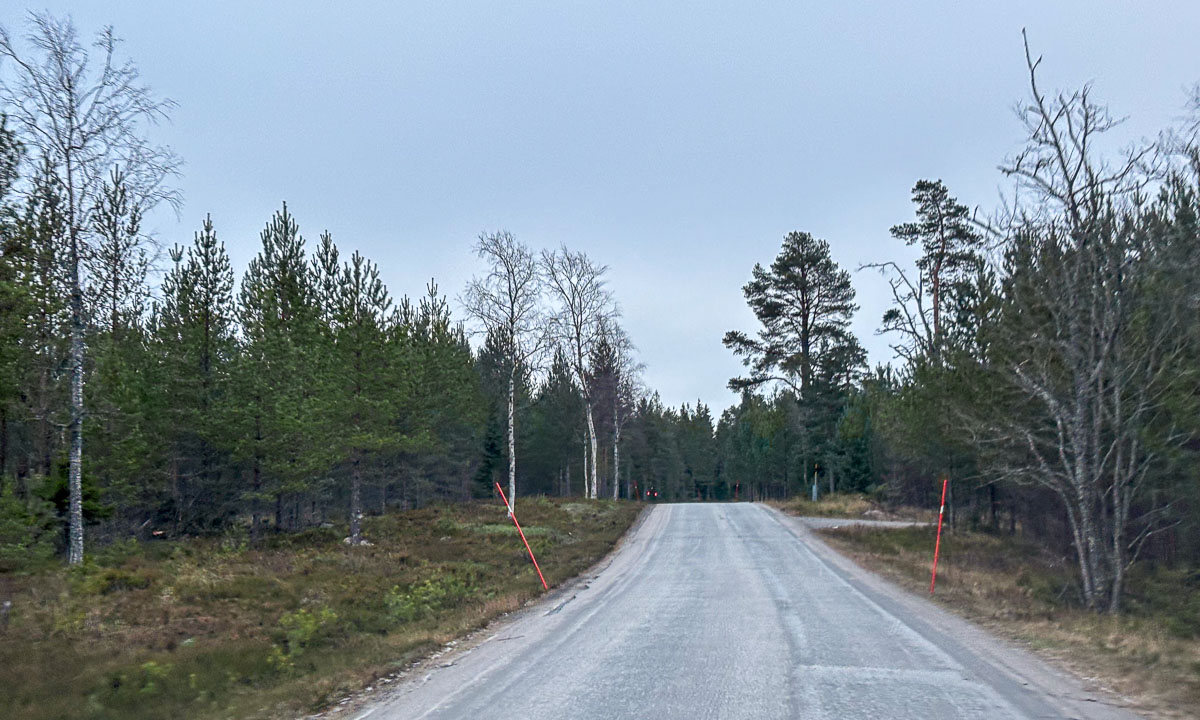
After ten hours of sleep and breakfast I feel fit again to continue my car trip. The day before I made already two thirds of the distance and today I’m more or less only on the E4, so driving will be easy. To be honest, it’s a bit boring. That’s also because I’m leaving winter behind. There is less and less snow and it gets warmer. The good thing – the snow on the car has melted and the cruise control is working again.

Around 14:15 I pass Obbola and drive southwards to “home home”. No snow.

And then, after driving 966.8 km I am finally home home again. Here I’ll stay for about three weeks, then Annika and I will make the return trip to Tromsø together.

The route

Tromsø—Nordkjosbotn—Kilpisjärvi—Karesuvanto—Karesuando—Övre Soppero—Nedre Soppero—Vittangi—Tärendö—Överkalix—Töre—Råneå—Skellefteå—Umeå—Obbola

Midnight sun on the Stor-Kjølen

Yes, I was tired Saturday evening after travelling back from Obbola to Tromsø. But the weather was so nice and I already had started thinking about going up the mountain Stor-Kjølen for experiencing the midnight sun up there. Finally I made a decision. Let’s go. I packed water, a camping mat, a sleeping back, but most of all my camera equipment and went off. It is only a twenty minute drive to the lake Finnvikvatnet on the island Kvaløya where I parked my car. From there it is round 5½ km to the top and a good 500 metres of elevation gain.

When I start my tour at around 10 o’clock the sun is low. The sun is low, but it won’t set tonight – and not for the next twenty days either. The landscape glows in warm colours. The ground is dry, but soon I cross the first tiny snowfield.

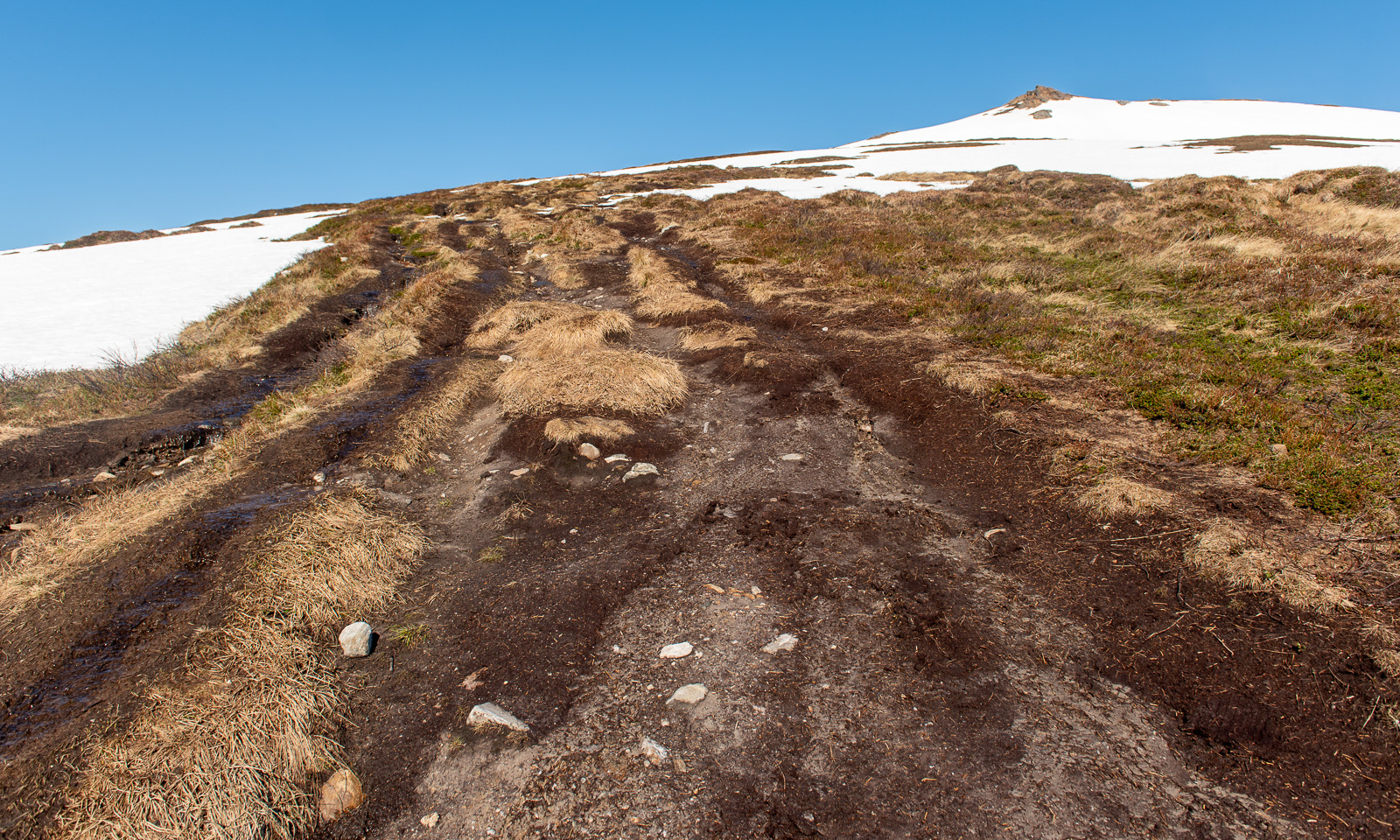
The path winds its way through grassy terrain scattered with stones and rocks. Stray snowfields lie on both sides of the path and the radar station on top of Stor-Kjølen has come into view.

The first lake flanks the trail. Slowly, the terrain is becoming rockier.

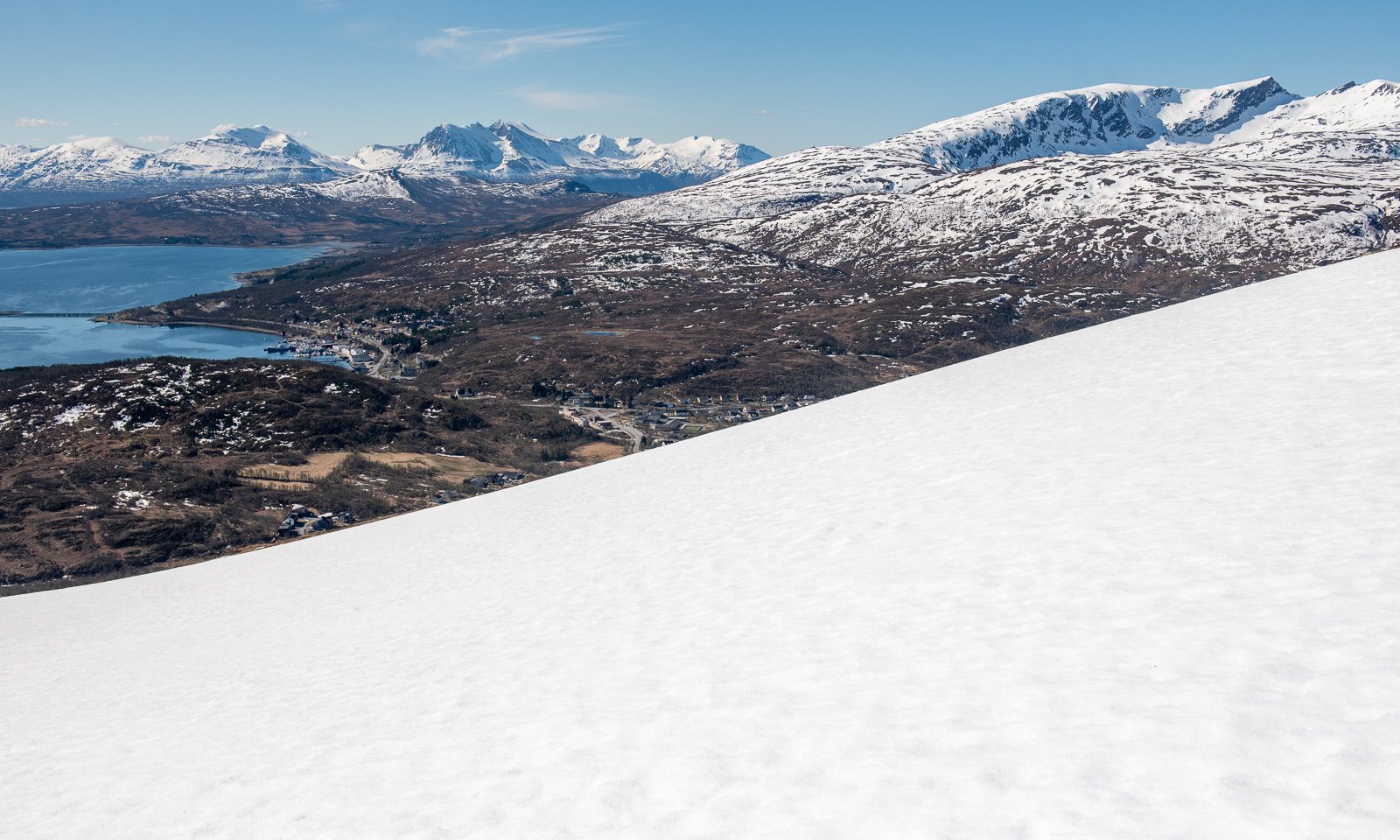
I look back and already now the hiking tour was a success. Lakes, hills – some grassy, some rocky – and at the horizon a mountain range. So beautiful in the warm light of the low sun.

For a while, grassy patches and rocky ground alternate …

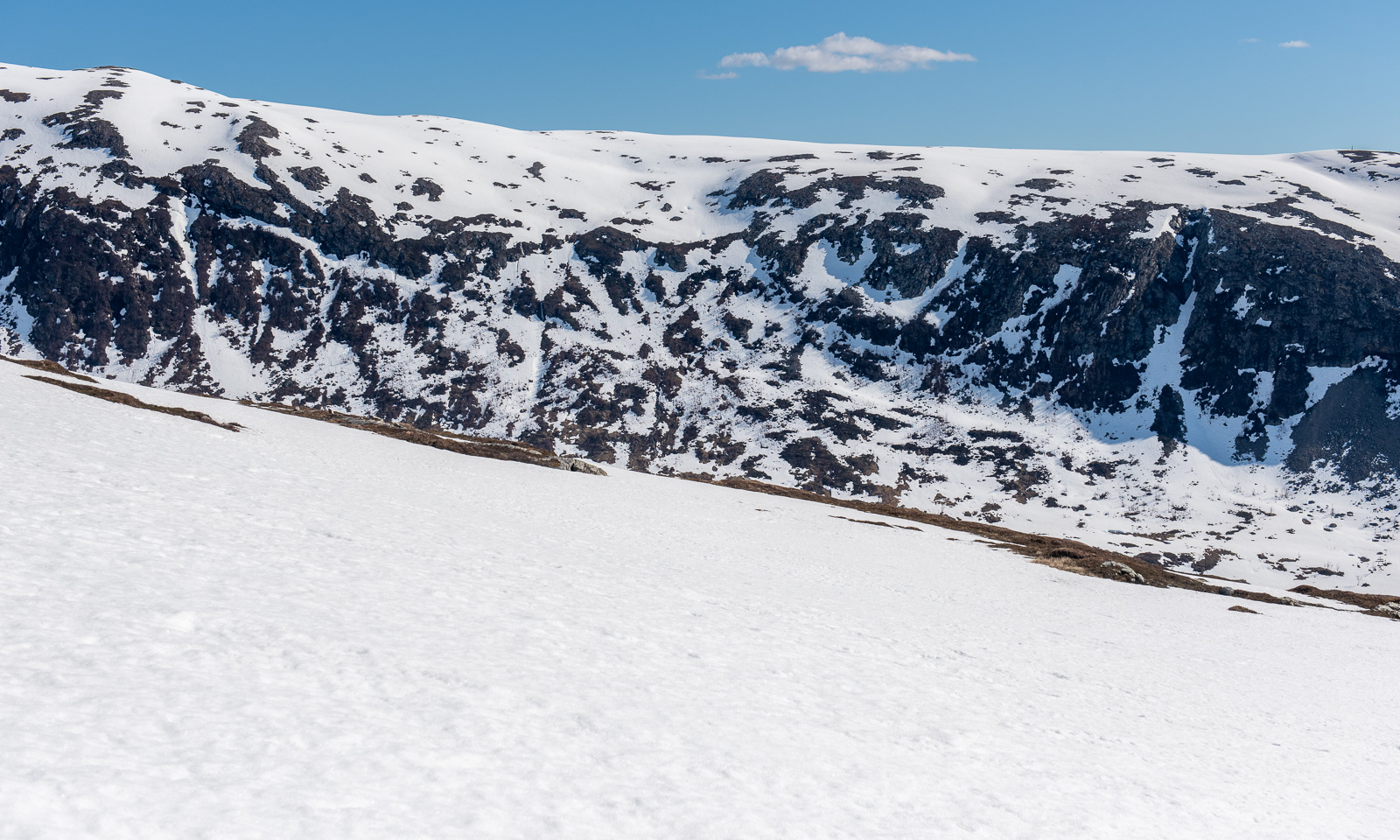
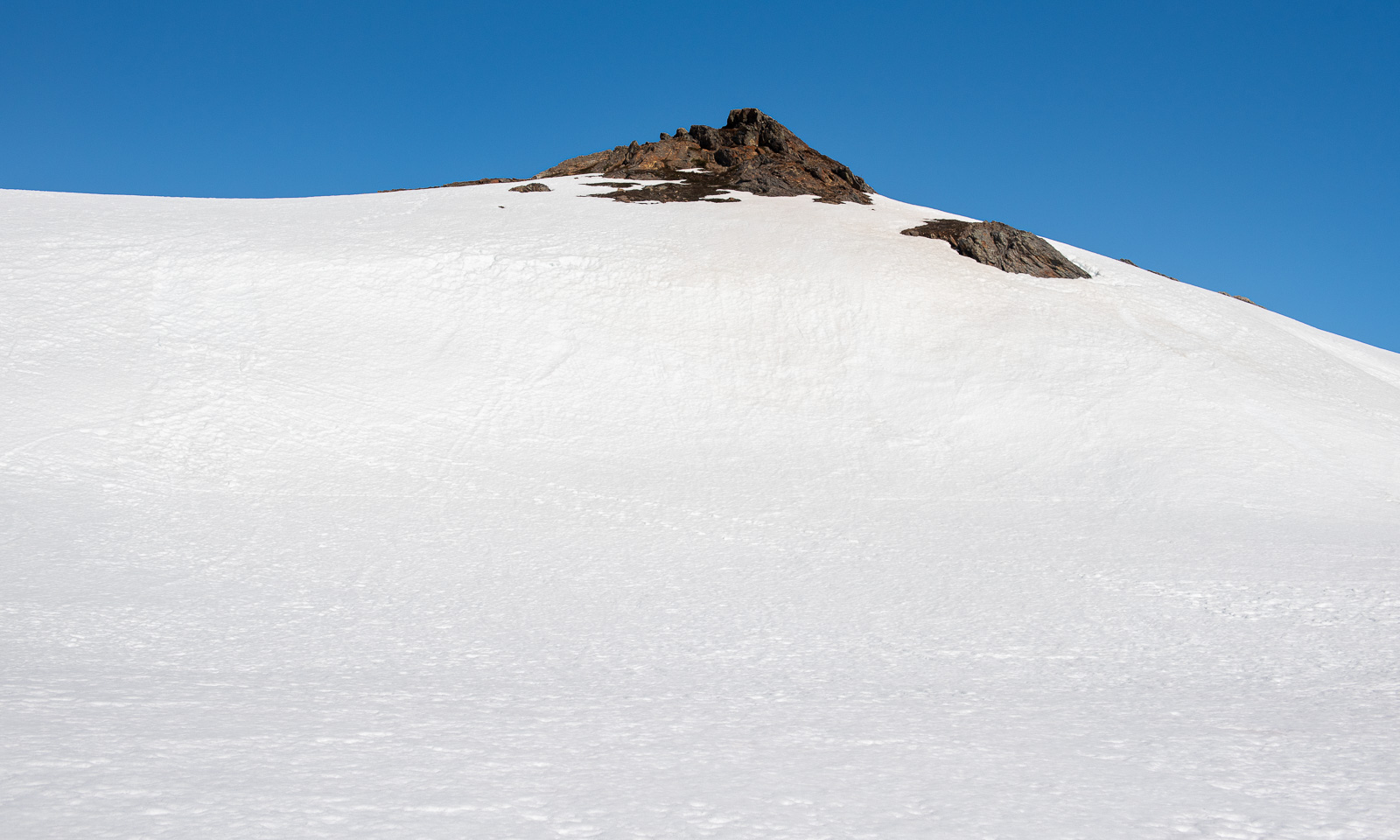
… then the altitude takes command. Only snow and rocks are present and the vegetation is reduced mostly to mosses and lichens. I have to cross a large snow field but the ground is not slippery.

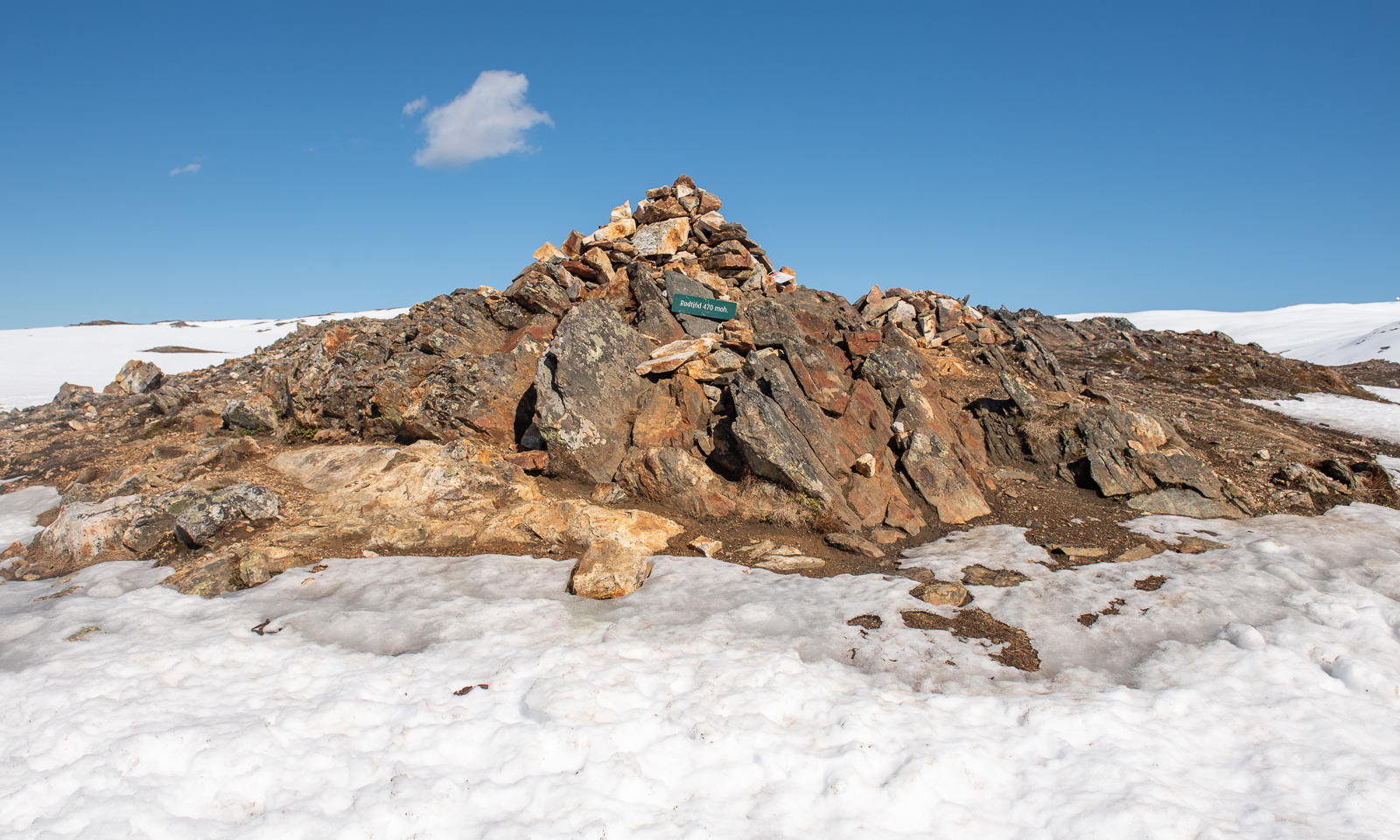
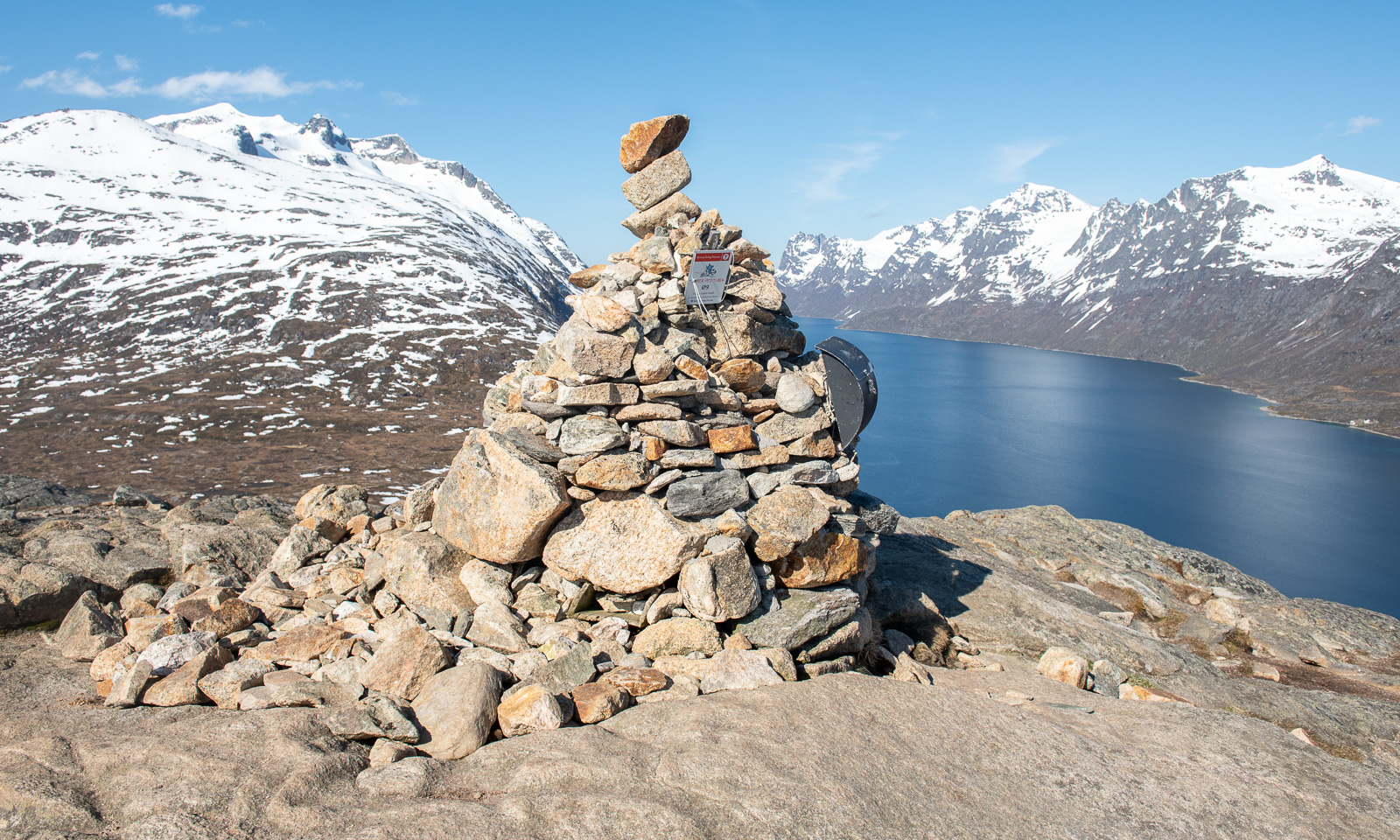
But then I arrive on the stone-covered plateau of Stor-Kjølen, where I can see a small cairn in front of me, a tall cairn marking the summit and the radar station. And if you look closely you can see a small cabin in front of the station. It’s a shelter for hikers. I’m alone, so I can use it for the night.

I want to take photos of the midnight sun, so I start experimenting with some sun-facing shots. These photos are much darker than reality. While the light is warm, it is still bright daylight.

The mountains and the sea all glow in hazy orange hues when I look against the sun.

But I have a mission – taking a photo of the midnight sun. Here it is. Unfortunately there is a small, transparent cloud in front of the sun that makes it look like a white splotch instead of a circle. Bad luck!

Bad luck? Not really. We have summer time, so the lowest position of the sun is one hour later – or a bit more accurate 0:48 due to local solar time. So I had some spare time to take more photo from the stone-covered flat top.

Then it was time: The sun as its lowest position. Ok – I was three minutes late, but the solar path is so flat that it doesn’t matter when taking photos. The light is the same. And eventually the little cloud was vanished.

Just a selfie with my mobile phone, then it is time for bed, at last. (A down hoodie? Yes – it is windy and only +5 °C.)

I enter the shelter, roll out my sleeping mat on the floor and lie down, using my sleeping bag as a blanket. Cluck-cluck, cackle-cackle! What’s that? I peek out of the door and see that the hour of the ptarmigans has started. All around, these galliforms dart about, filling the air with their typical clucking. I am too tired to start another photo hunt so I just take some snapshots. (These photos are heavily cropped.)

But then it is finally time to sleep. The shelter is filled with light, the camping mats (I found another one in the shelter) are thin and the ground is hard. But then I doze off and …

… sleep. At least for a couple of hours.

To part II >

End of April winter in Tromsø

When I woke up yesterday morning (28. April) and looked outside the window of my living room I was pretty surprised. I didn’t rain in the night, it had been snowing.

Round 15 cm of fresh snow had fallen within the last six hours and everything looked wintry again. In the centre of Tromsø however, 88 metres lower in elevation than my apartment only five cm of snow had fallen and the cars had smashed it to brown slush. What a difference!

Home again I watched a ptarmigan in the back yard. First it picked on a twig of a tree, then it dug itself into the snow and rested there for some hours. Couldn’t it see me behind the window pane or did it just ignore me? In the night it was gone.

Today I took my skis to work so that I could ski back home from the lake Prestvannet. This time the forecast was correct: we got a blue sky, the sun was shining at temperatures round +3 °C. At the harbour in the centre the view was quite spring-like.

Taking the bus from the center up to Prestvannet takes only 5 minutes, but there it is still winter season with snow depths round 90 cm. It’s astonishing what a difference in altitude of less than 100 metres can do.

Time to ski back, preferably not on the tracks but through the forests. After four kilometres on skis and 840 metres by foot I was home.

Two promenades on Tromsøya

Easter Monday – from Sydspissen to home

On Easter Monday we got surprisingly fine weather in Tromsø. The sun was shining and the sky was blue. I took the bus to Sydspissen – the southern tip of Tromsøya – because it has been ages since I’ve been there. A lot of snow has melted away and tussilago was blooming everywhere. I passed the beach at Telegrafbukta and the pier at Folkeparken came into view. I know the this area well, because I lived nearby for quite some time.

I went on, enjoying the sun and ignoring the chilly wind. Don’t let your eyes fool you, the max temperature was about +2 °C. I passed the old boat house Engenesnaustet, saw a lonely winter kayaker and passed the small lighthouse.

I was not alone. A lot of other people took the holiday to take a promenade, sit side by side or do some barbecuing. I took the liberty to remove some people from the photos.

I wondered if the old, abandoned boathouse was still open? It was. A bit away from the shore there was some leftover snow. The tussilago flowers didn’t care, they were blooming anyhow.

Now it was not far away to the boat houses of the two kayak clubs in Tromsø. TSI Trulle and Tromsø Havpadleklubb. Here I start all my kayak tours in Tromsø, because my own kayak is in Obbola in Swede, so I use to hire one here. Season has just started and I want to paddle a lot this year!

At the bus stop Giæverbukta I missed my bus. 28 minutes of waiting or two kilometres of walking? Easy decision: I walked.

It was fascinating that the coast was mostly free of snow, while MET, the meteorological institute inside the island measured a snow depth of about 80 cm that day. At an elevation of 100 metres. And so the walk became snowy in the end. But spring showed up here as well: some willows had started to bloom.

Intermezzo – more snow

Yesterday afternoon it started snowing. Some snow showers were pretty dense. And sometimes I got one of my favourite weathers: snow flurry and sun at the same time. So beautiful. I tried to take pictures but the result became quite ugly, because the snow against the camera looks dark.

This morning ten more centimetres of snow have fallen, even in the lowland areas. All Scilla flowers in the centre were covered in snow and for the photo I had to look to find some flowers not being completely buried.

Friday (today) – from Prestvannet to home

I use to walk home twice a week after work. Then I take the bus to the lake Prestvannet to skip the boring (and steep) parts. Today I do the same. Additional snow showers have increased the snow depth to 92 cm, but it has started clearing up, when I begin my way home at 15:00. The fresh snow gives the lake an untouched appearance and the first lifebuoy is snowed over almost completely. Could it be January? No, the light is different.

I follow the ski trail a bit then I follow the smaller paths. They have hardly been used today, mostly by a single skier or pedestrian.

But then I come to an area where the snowy paths are completely untouched. No one has used them today. Imagine that: You are on a island with 43000 inhabitants. Many of them are enthusiastic skiers and outdoor maniacs. It is Friday afternoon and the sun is shining. And I trudge through 15 cm of untouched fresh snow. This is absolutely brilliant; I’ve never experienced anything like this before!


Kayak – 3rd try and success

It’s less the temperature than the wind who makes the sea ice on the Baltic Sea vanish. Although we had -10 °C this morning the sea was more or less open. Time for a slightly longer kayak tour in the afternoon under a blue sky enjoying the calm weather.

But still there is some ice shield attached to the coast. As the days before I push myself forward using ice spikes.

First the ice holds then I crash through. It takes me 10 minutes to cross 100 metres of ice until I reach open water. Yay!

I decide to paddle round the islands Obbolstenarna. There is hardly any ice left on the way there but at the eastern shore it still looks pretty wintry.

The western part of  Obbolstenarna however looks like another season. Is winter over now? Anyhow, time to kayak home.

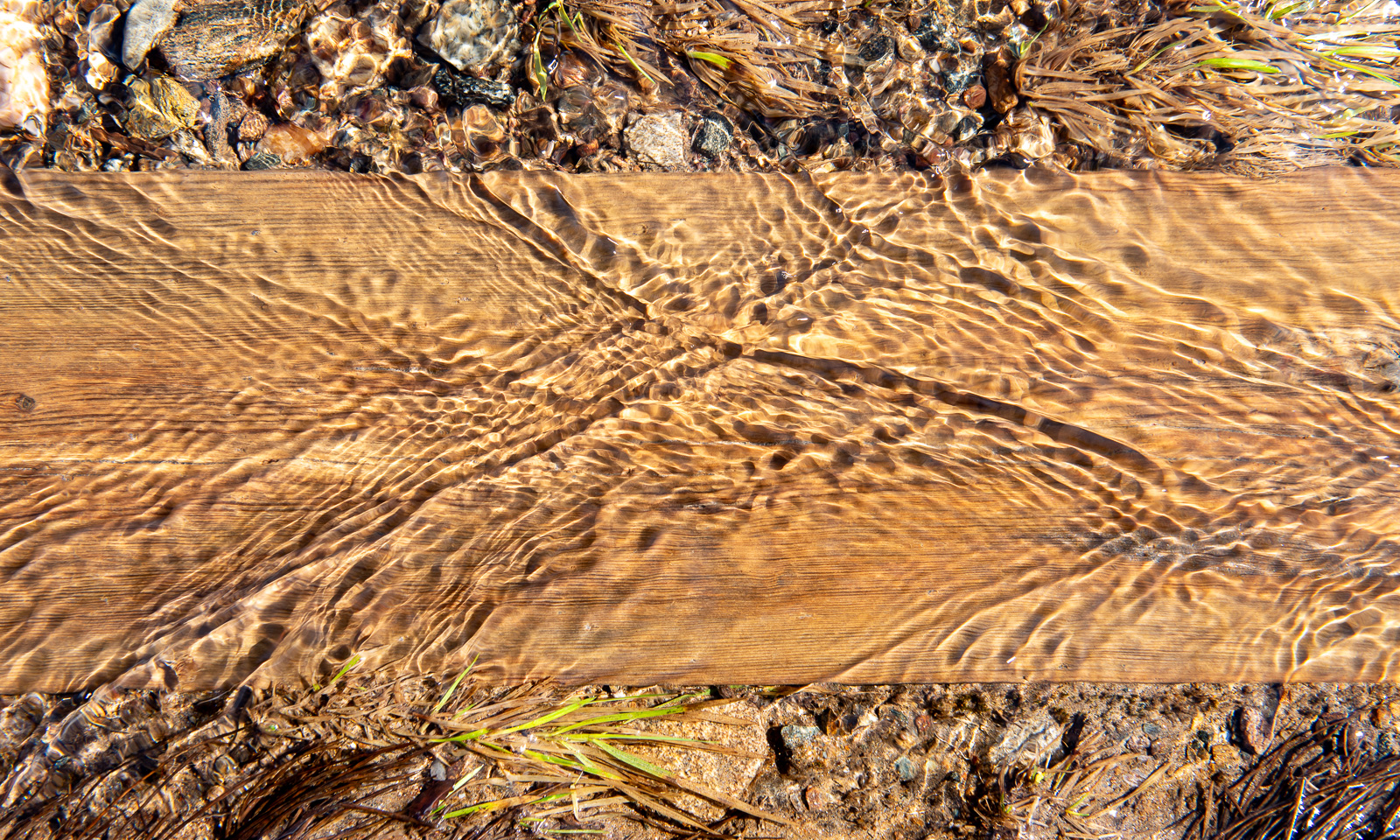
If you look carefully at the photo with the red bow of my kayak you see that the water is very smooth but with some crystal like structures. Let’s take a close look:

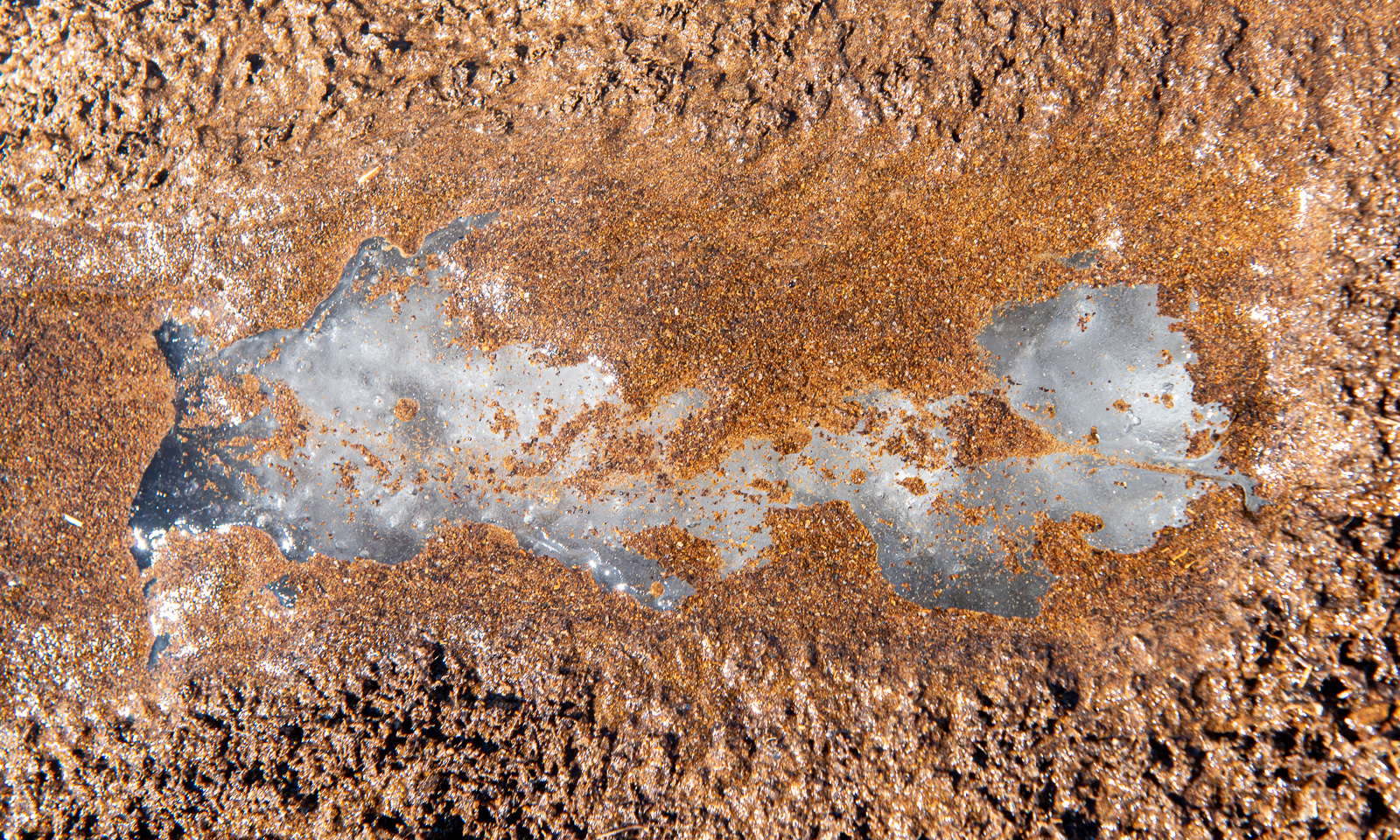
Despite of the sun air temperature is still below zero. Not only the sea water on the kayak freezes but new ice is also formed on the water surface. It is thin and fragile but so soft, that the smooth waves do not break it. An even closer photo (heavily edited):

Through this smooth though icy water I paddle back until I reach the ice edge again. I choose another place, take a run-up and paddle onto the ice. I’m lucky. This ice is more stable and I do not break through. I slide back to the shore. Meanwhile the sun is already low. I was slower than planned, because it took some time to take all these photos.


A gorgeous cross-country ski tour in Saariselkä

This article is part of the series “2025-02: Finnmark”.

After days of car driving through the Norwegian Finnmark we crossed borders to Finland two days ago. Yesterday we arrived in Saariselkä in the northernmost Finnish region “Lapland”. Saariselkä is a popular tourist destination, especially for cross-country skiers. So we decided to make a cross-country ski tour today despite of the grey and dull weather that the weather forecast showed us for the region.

After breakfast we took our skies, walked to the tent-like starting point and started skiing. Oh my – after using the broader “fjellski” a lot the thin cross-country skis felt like skiing on matches! I had some difficulties and blamed myself but then realised, that beside of my stiffness one of the skins – permanently glued to the ski – started to peel off. We abandoned the tour in hope to find someone that can fix this. So the first ski tour was just 1.17 km – yay!

We were extremely lucky. We soon found a ski rental and got the problem fixed within a minute. The employee even refused getting paid. Kiitos paljon! So – back to the starting point.

Meanwhile the weather that had been ignoring the forecast as usual started clearing up. Temperatures were around -8 to -9 °C and it was calm. Perfect skiing conditions, if you ask me. This time I felt a bit more comfortable.

We unmounted our skis at a short but uncomfortably steep passage, where the trail crossed a stream in a small valley. Last night’s fog had added rime to the snowy trees.

After this short obstacle the trail got easier and was extremely pleasant to ski on. Plus, the trail was perfectly prepared and the sky cleared up more and more. But let the photos speak for themselves:

Was it as empty as on the photos? Almost. There were a few other skiers, but not many.

After about 7 km we reached the first cabin – Rumakuru Päivätupa. We took just a short break and decided to continue to the next cabin – Luulampi, taking a break there. We passed Rumakuru Vanhatupa and after 4 km we arrived at the large cabin Luulampi.

My dreams of eating cake in the cabin were destroyed. The café was closed. So we skied to the small hut nearby were we took a lunch break. Annika grilled sausages in the fire, while I ate two Karelian pirogs. Then we shared some biscuits.

And then? Taking the more advanced ski trail that climbs at least 150 other metres, leading to the road and then hoping for a bus or a lift? Or just taking the same way back? We chose the latter.

As usual I took much less photos on the way back. One of the reasons: it had become cloudy and the sun had vanished. Now the landscape was more monochrome, but still very beautiful.

We passed the other cabins again, and again we unmounted our skis at the steep descend and ascend. And then, after some more descends we were back in town. Here there are a lot of people, that do not ski and you have to remind them, that ski tracks are – well – ski tracks and not open for pedestrians, cyclists or snowshoers. Mostly it helps …

I tracked today’s tour. The second and real tour was 21.95 km, which adds up to a total of a bit more than 23 km on cross-country skis. I guess, Annika and I will feel our muscles tomorrow. I feel them already now.

This was one of the finest cross-country ski tours I’ve made in the last years. Thank you, Annika for the tour!

Advent season home in Obbola

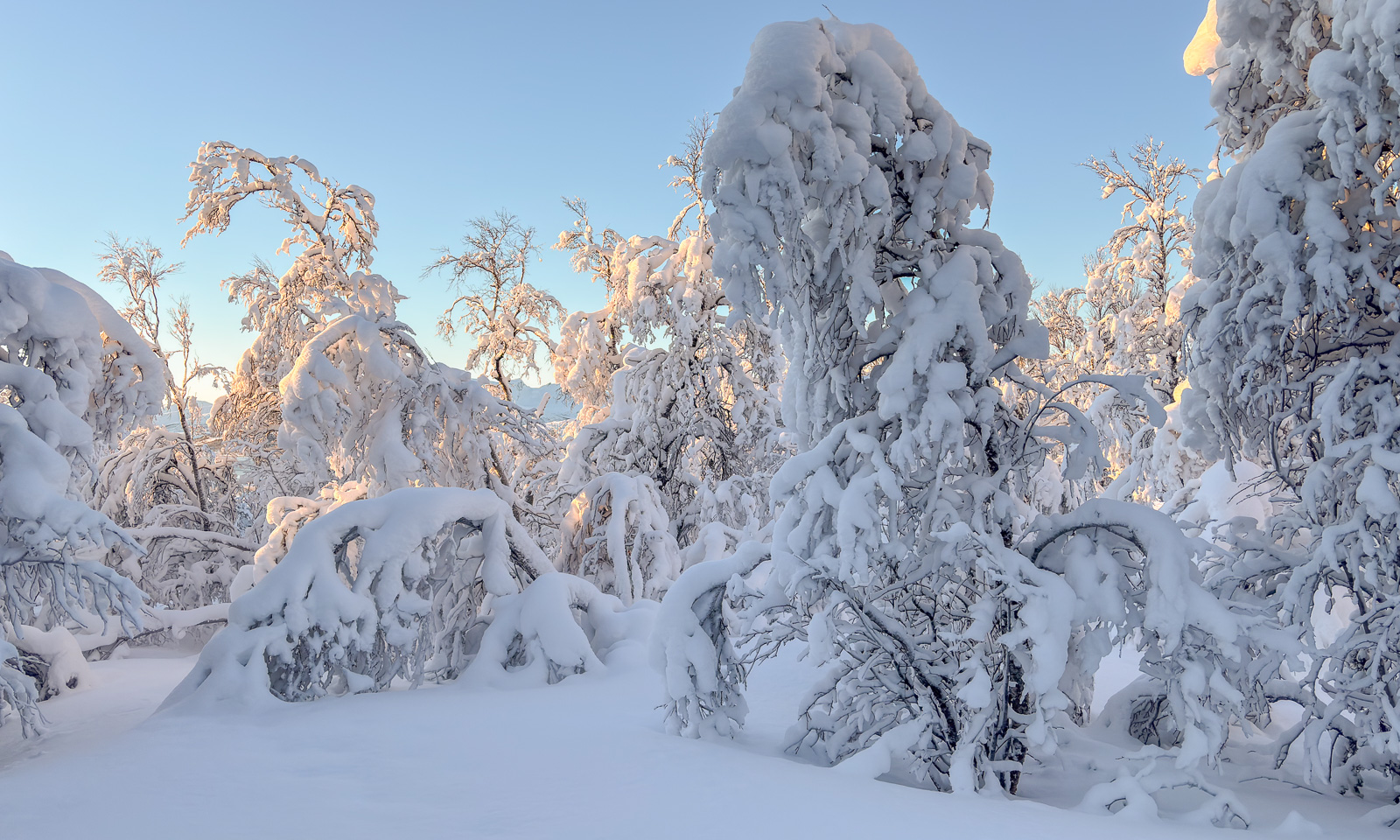
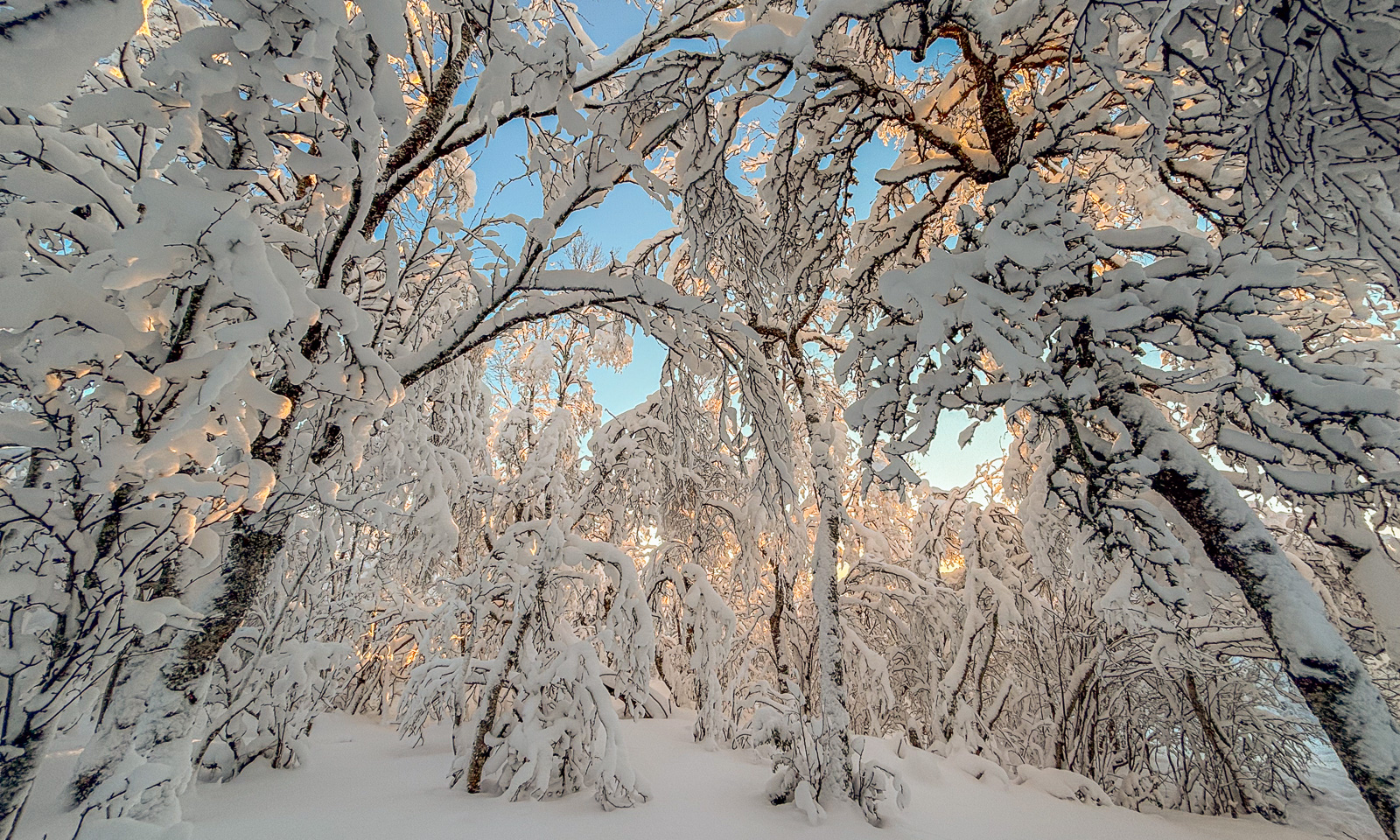
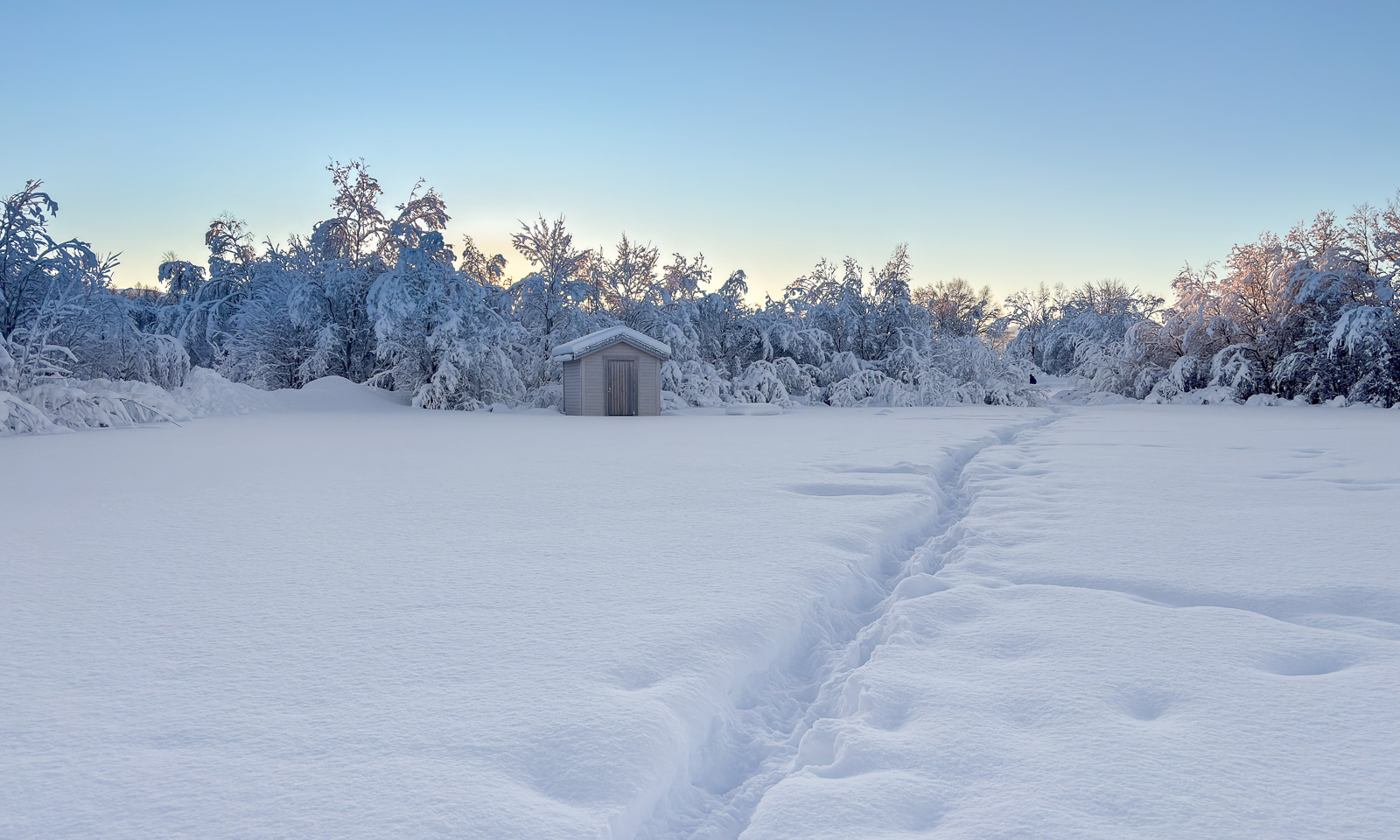
It was four days ago that I arrived in my “home home”, Annika’s and my house in Obbola. And we got some winter weather. First we got twenty centimetres of snow. We took a Saturday promenade to our favourite beach Vitskärsudden which looked like this:

It continued snowing and blowing the whole Saturday but then it cleared up in the night and Sunday morning the sky was clear at temperatures round -12 °C. I waited until 9:20 to watch the sun rise over the sea.

Later that day Annika and I took the very same promenade to Vitskärsudden again but it looked so differently in the sun.

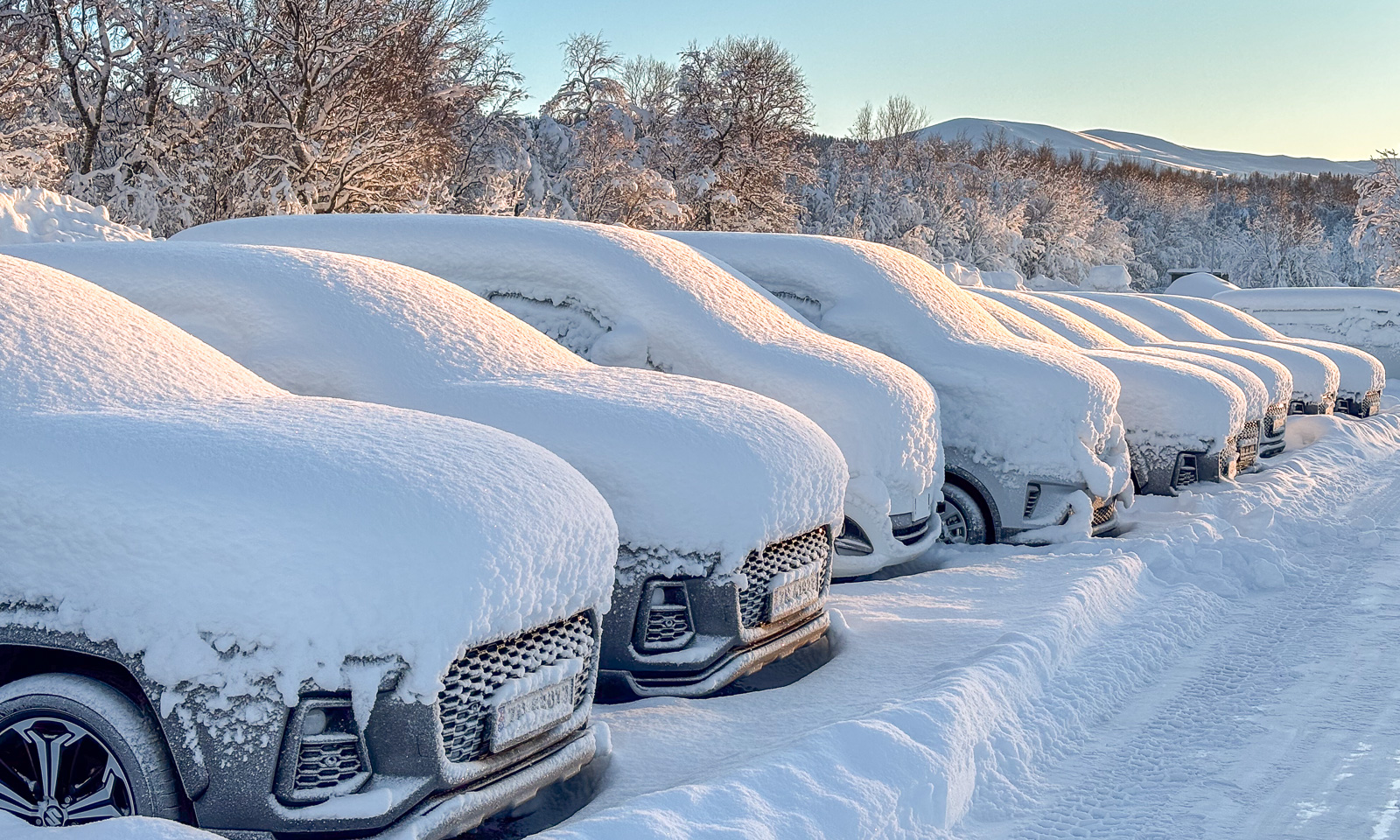
In the night it became stormy. We have experienced some storms here before, but this was the very first time that I couldn’t open the front door at all. It was completely blocked by snow. I had to climb out of the snow-plastered kitchen window and shovel away the compact snow drift that blocked the door.

And this is how our house looked like some hours ago. Now it is clear and calm weather and -14 °C.