Early September in Tromsø

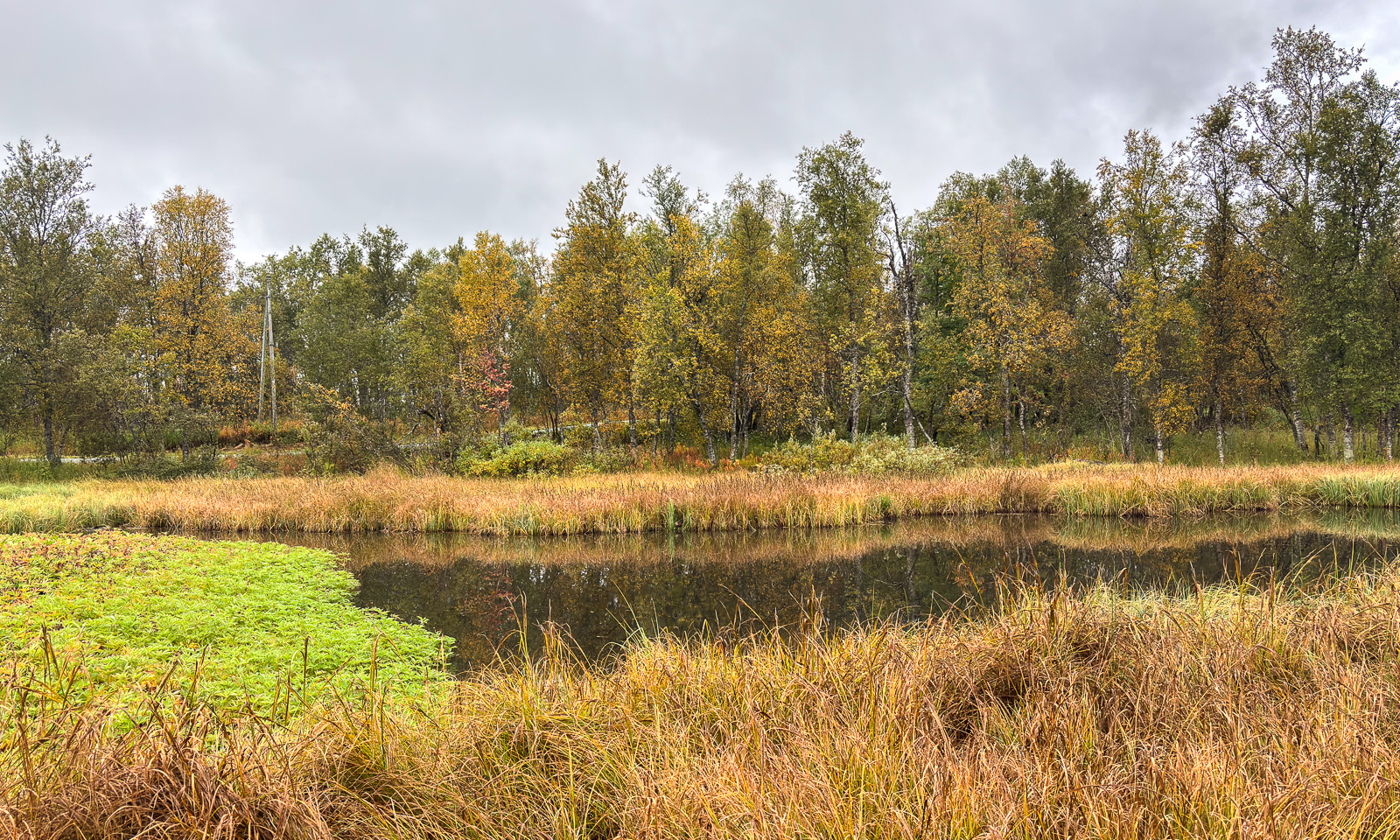
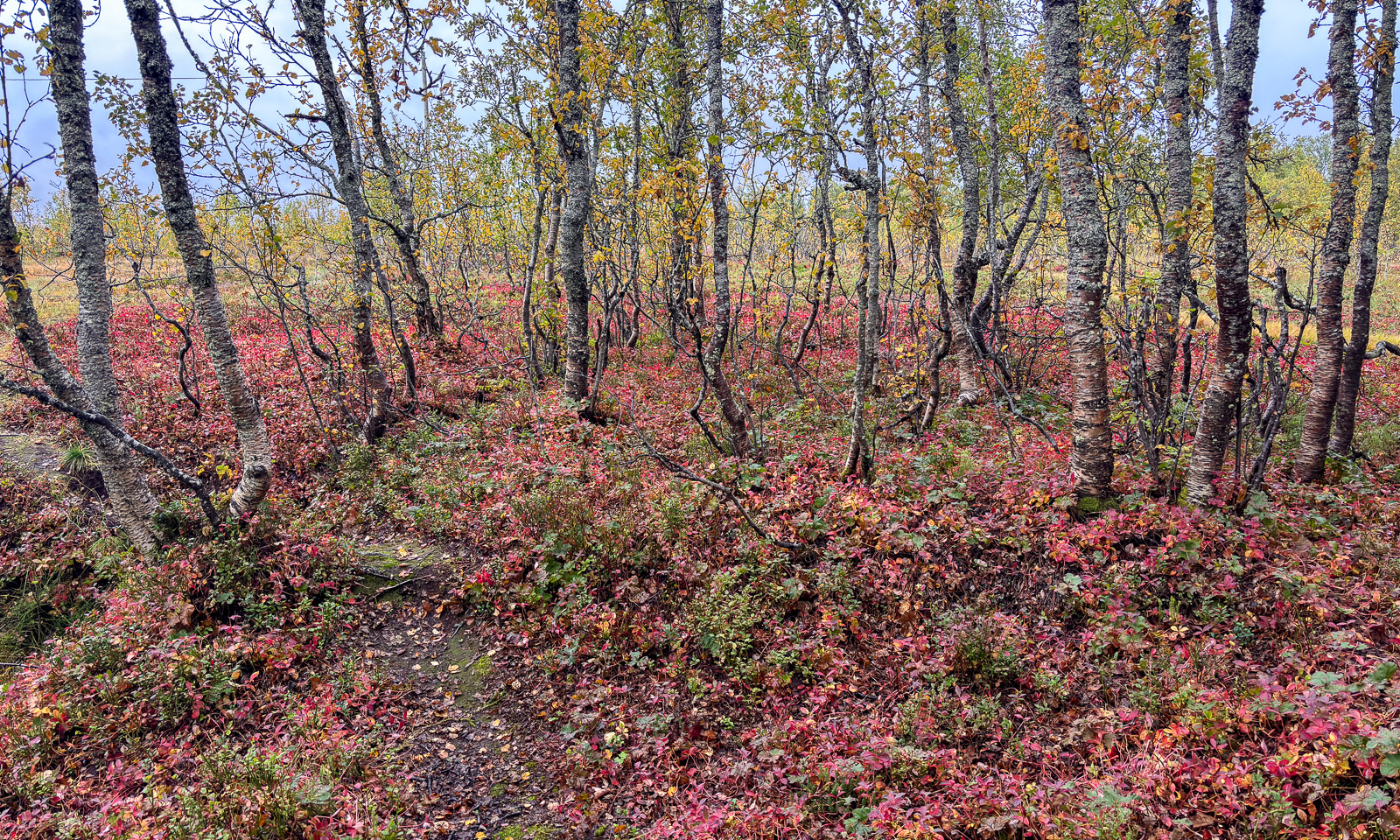
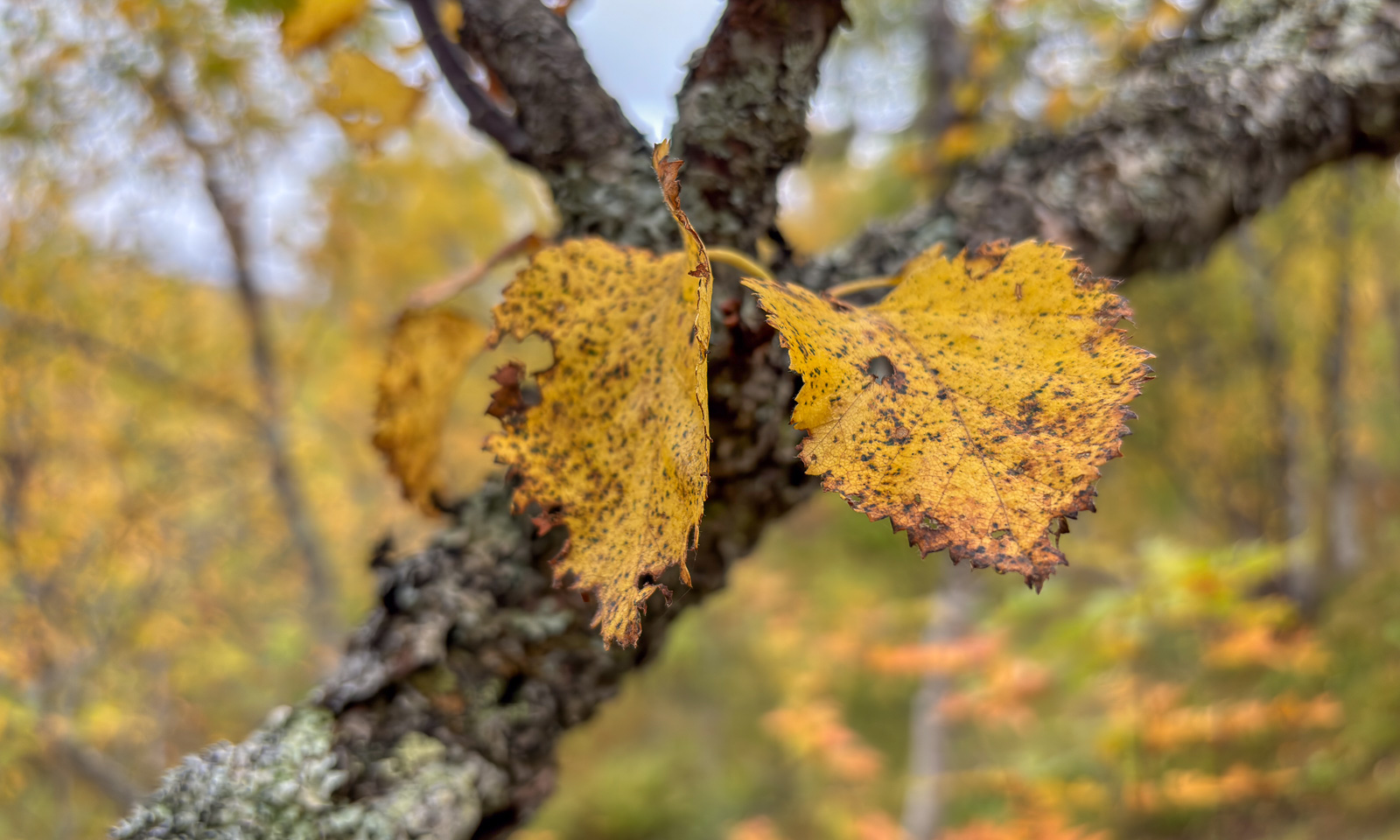
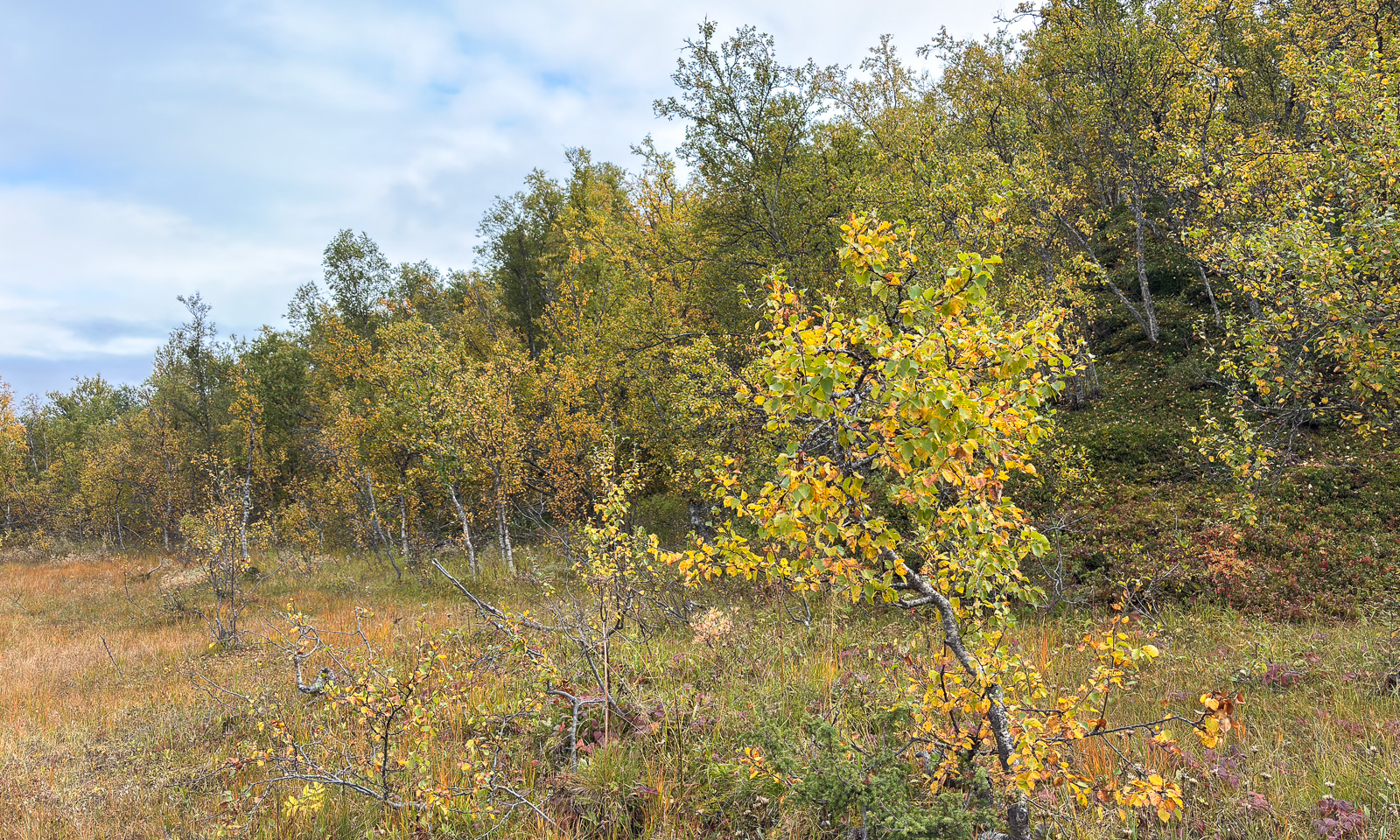
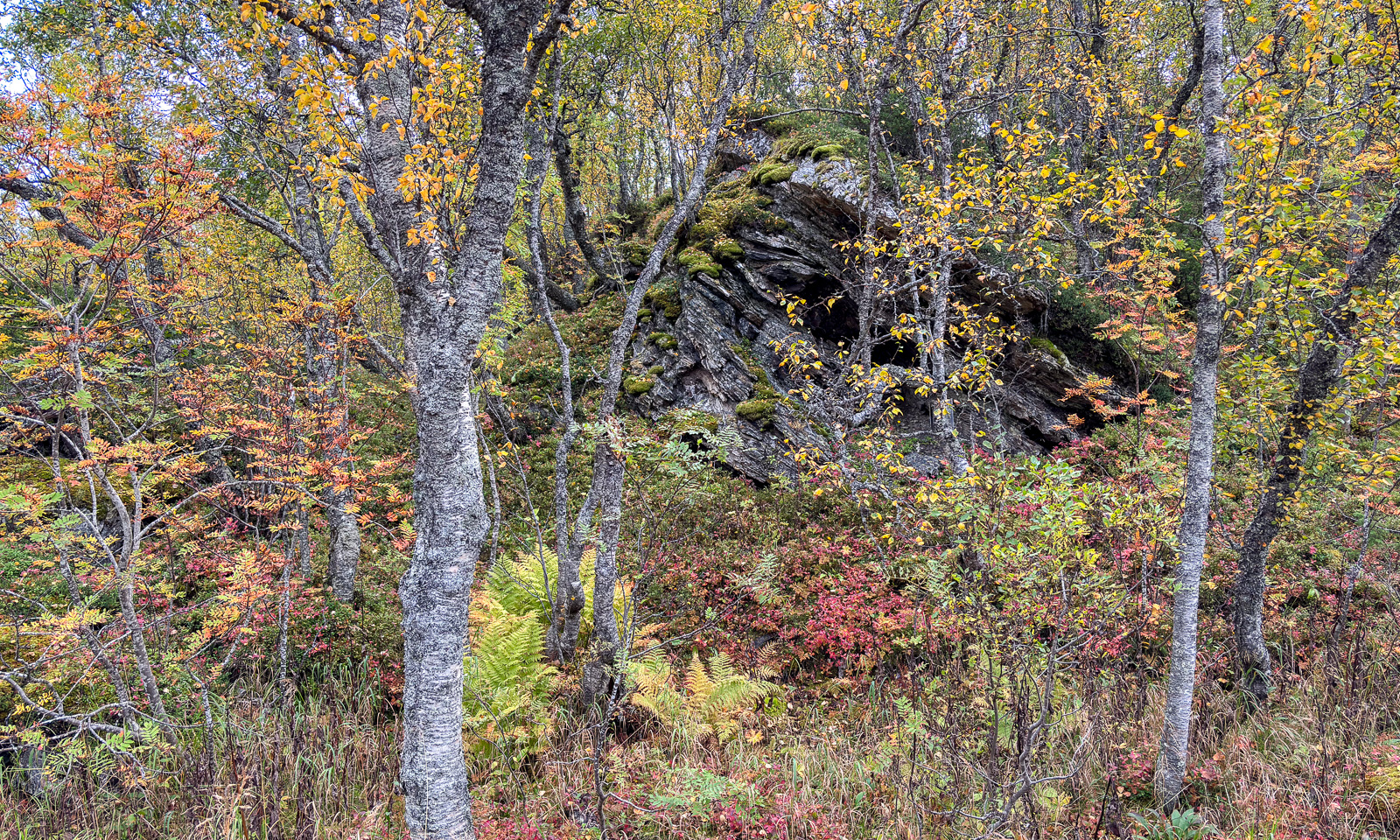
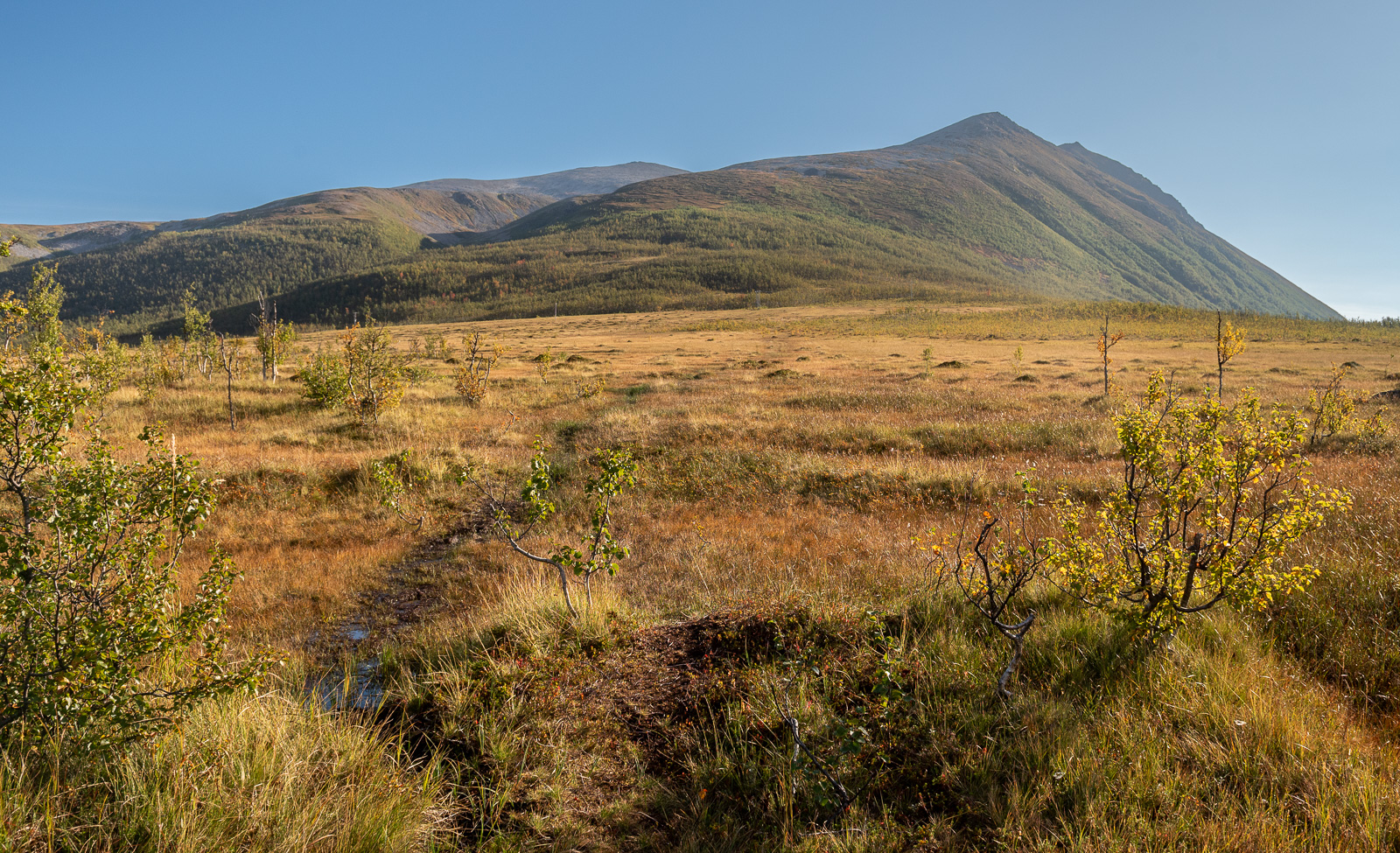
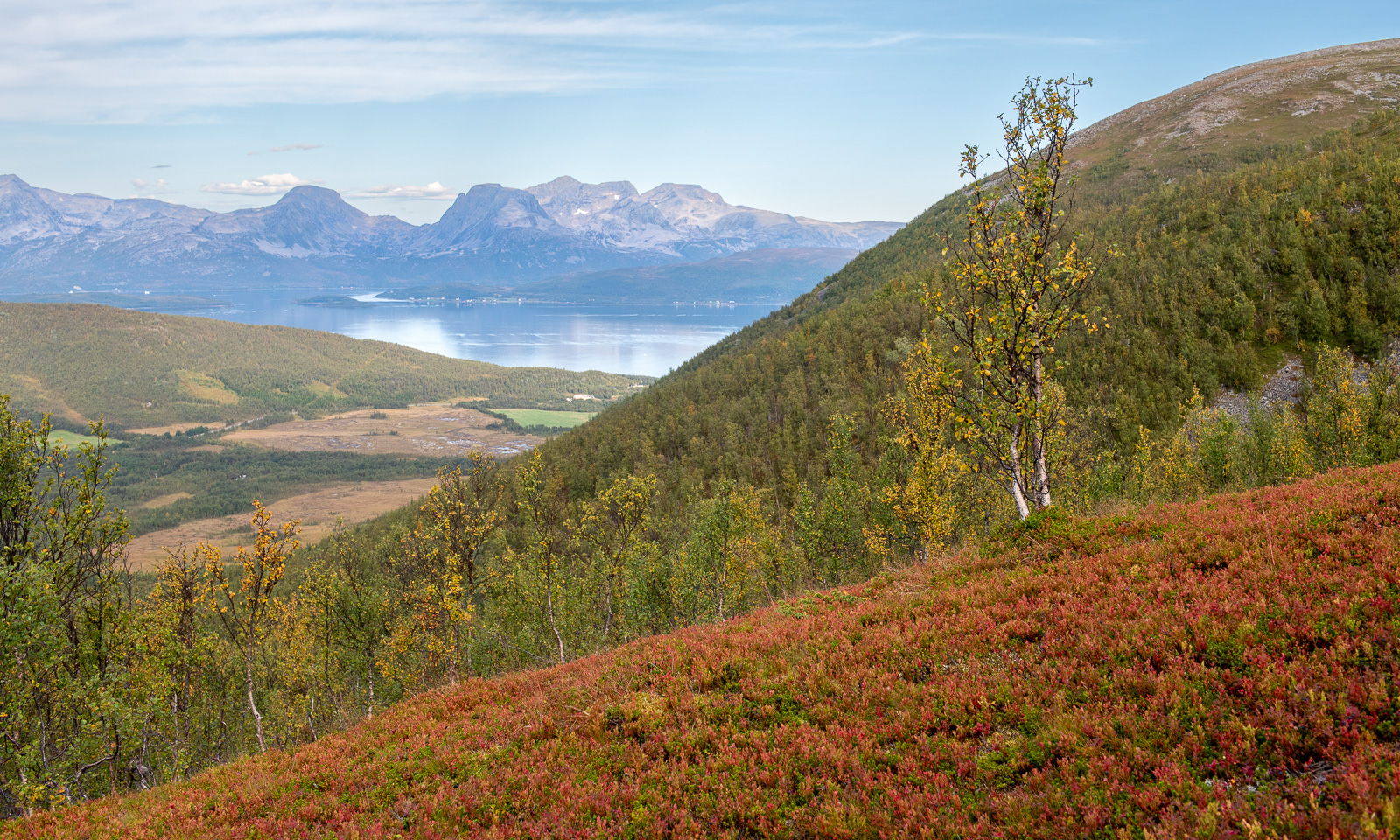
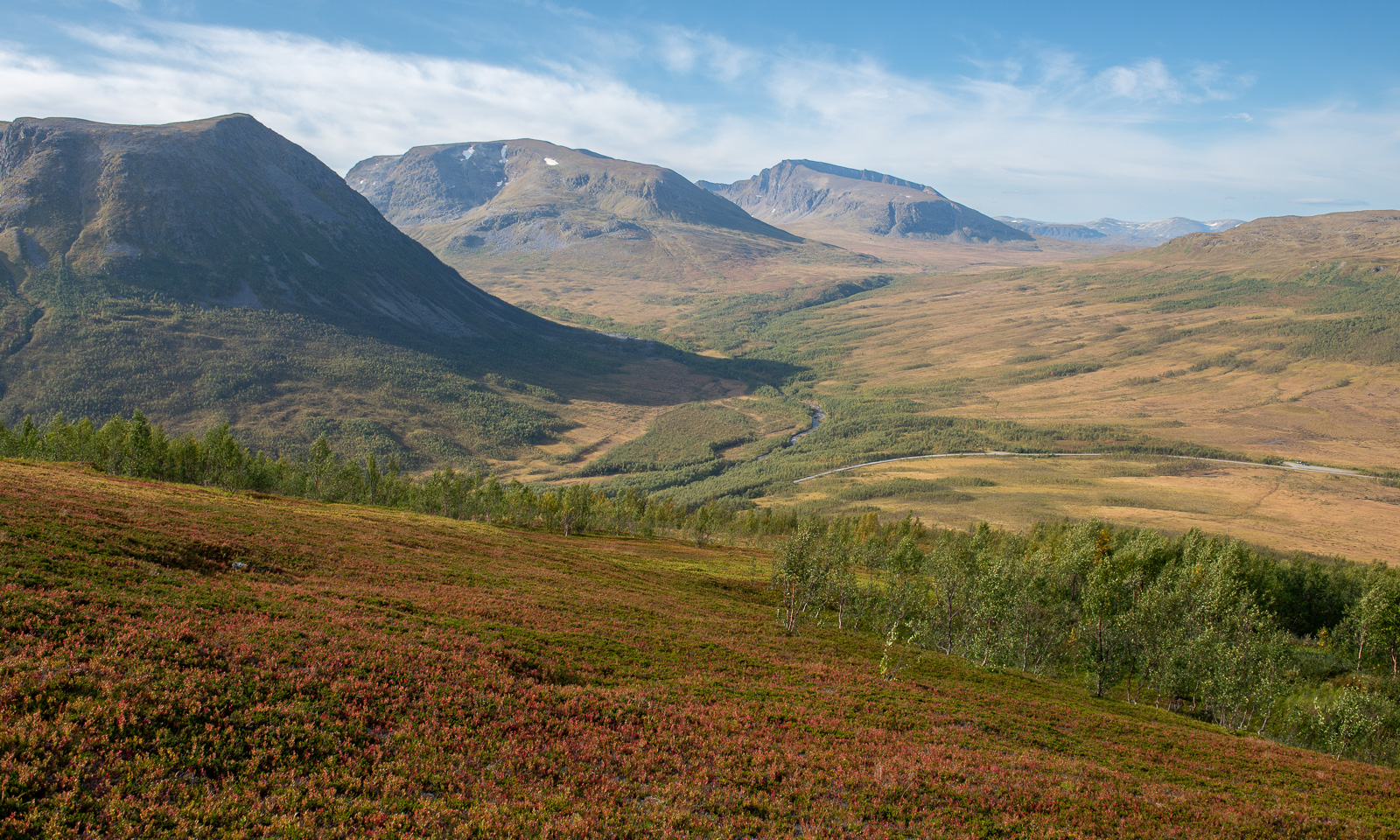
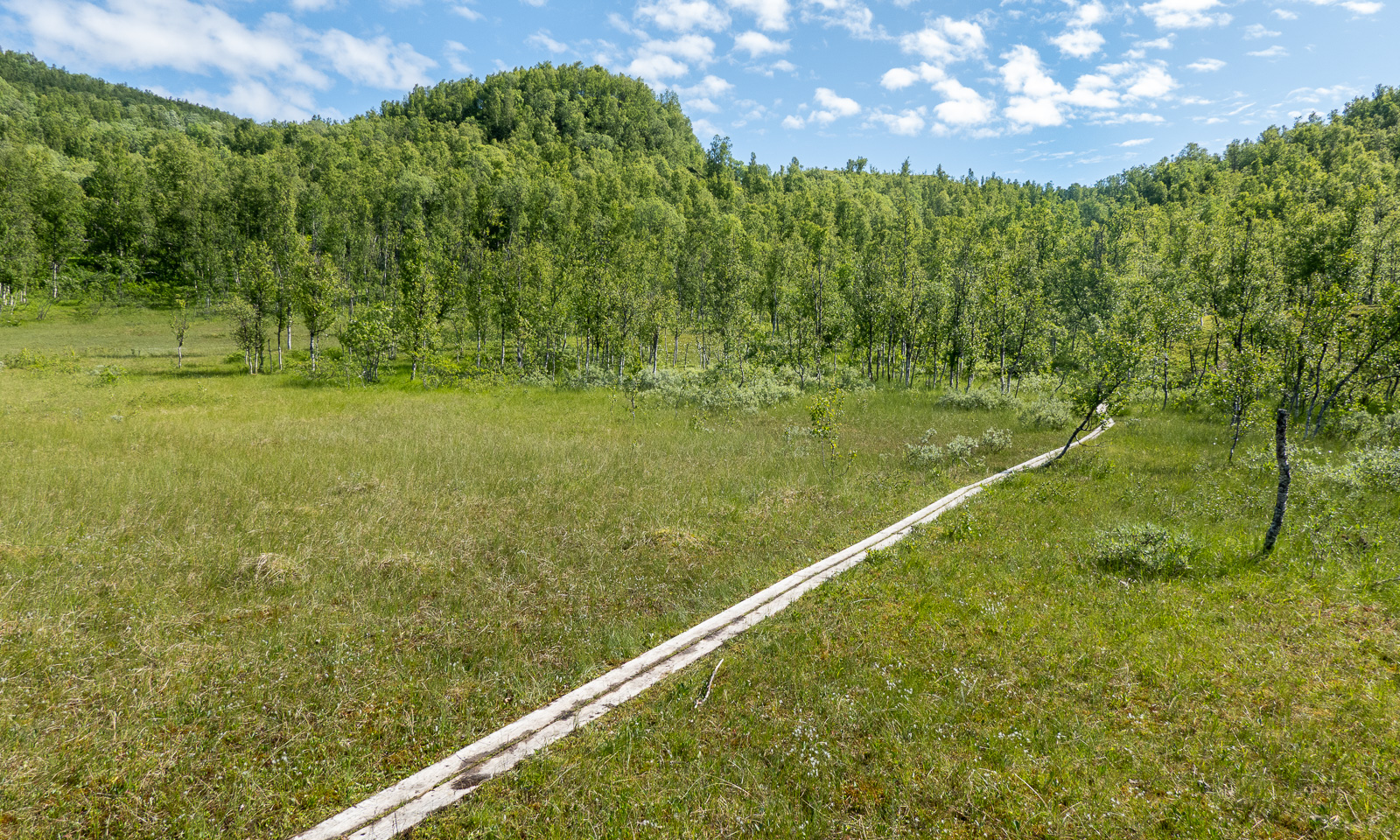
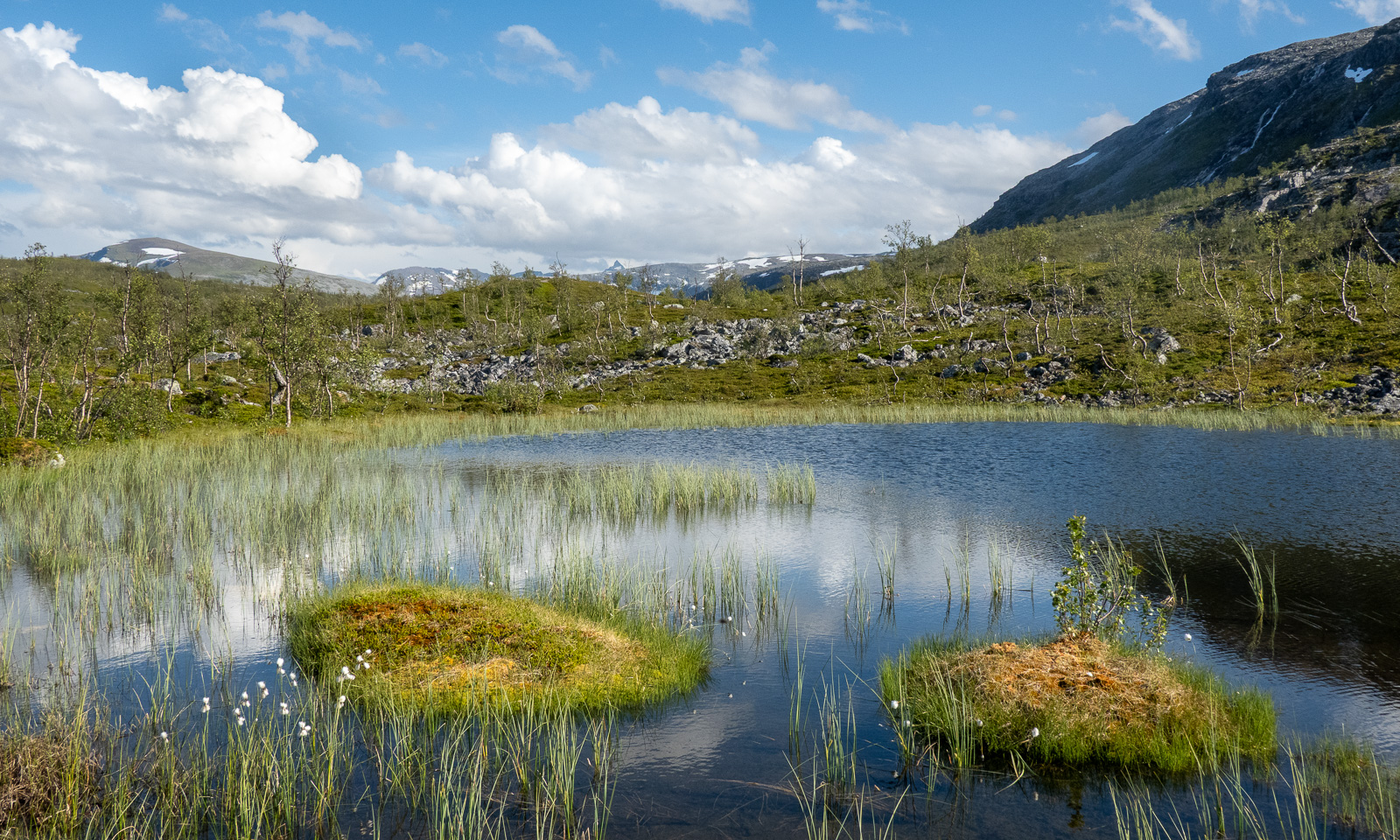
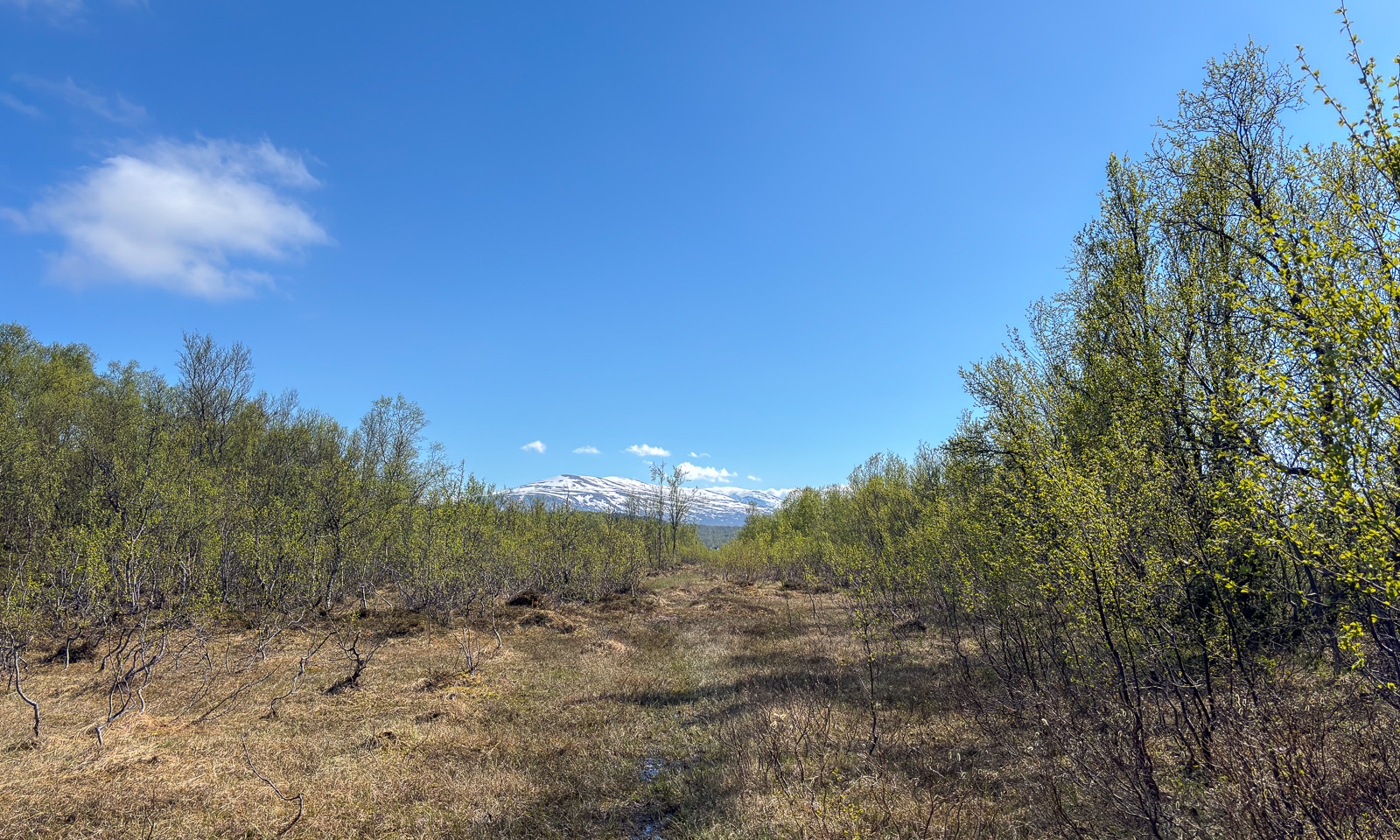
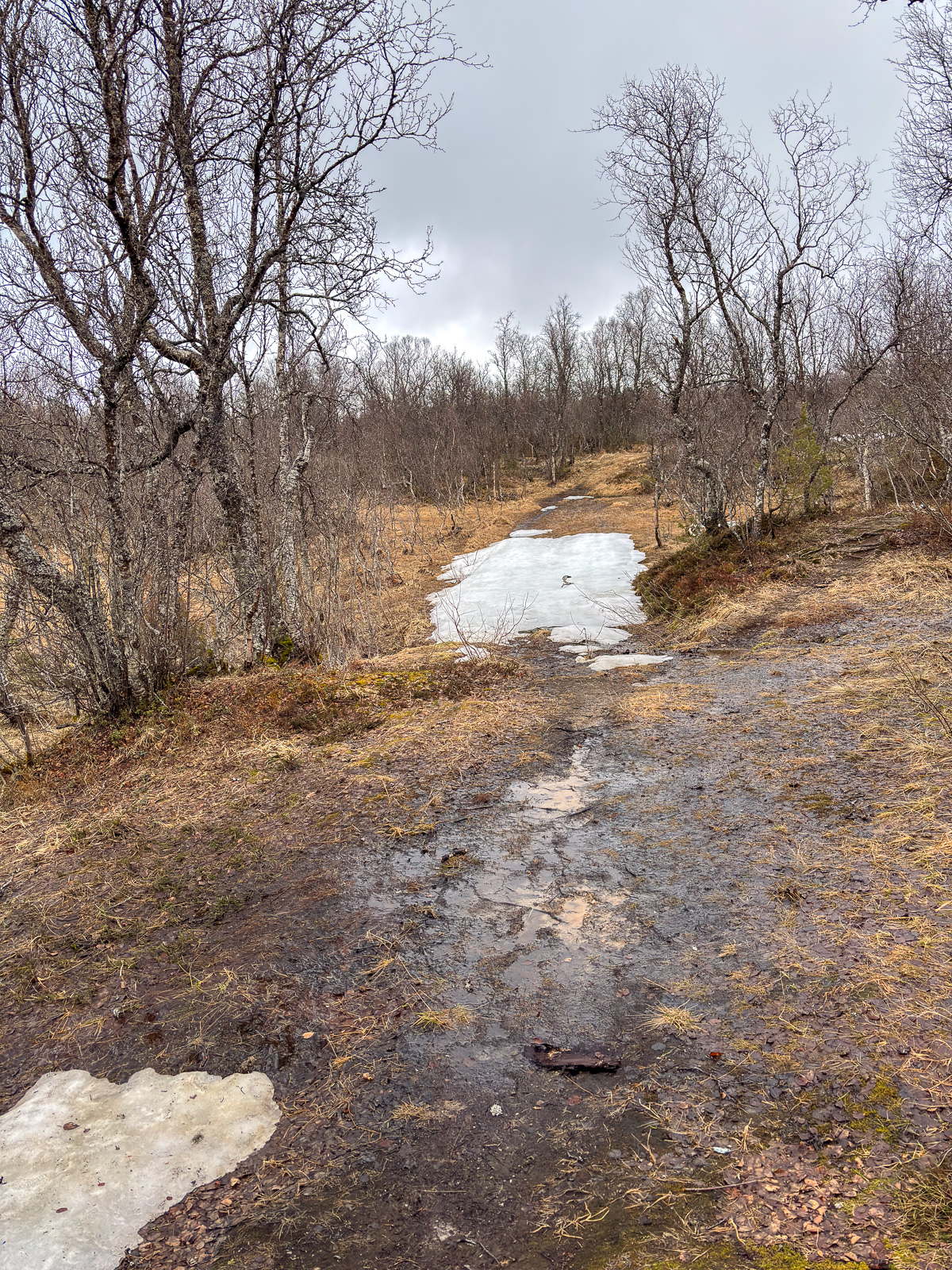
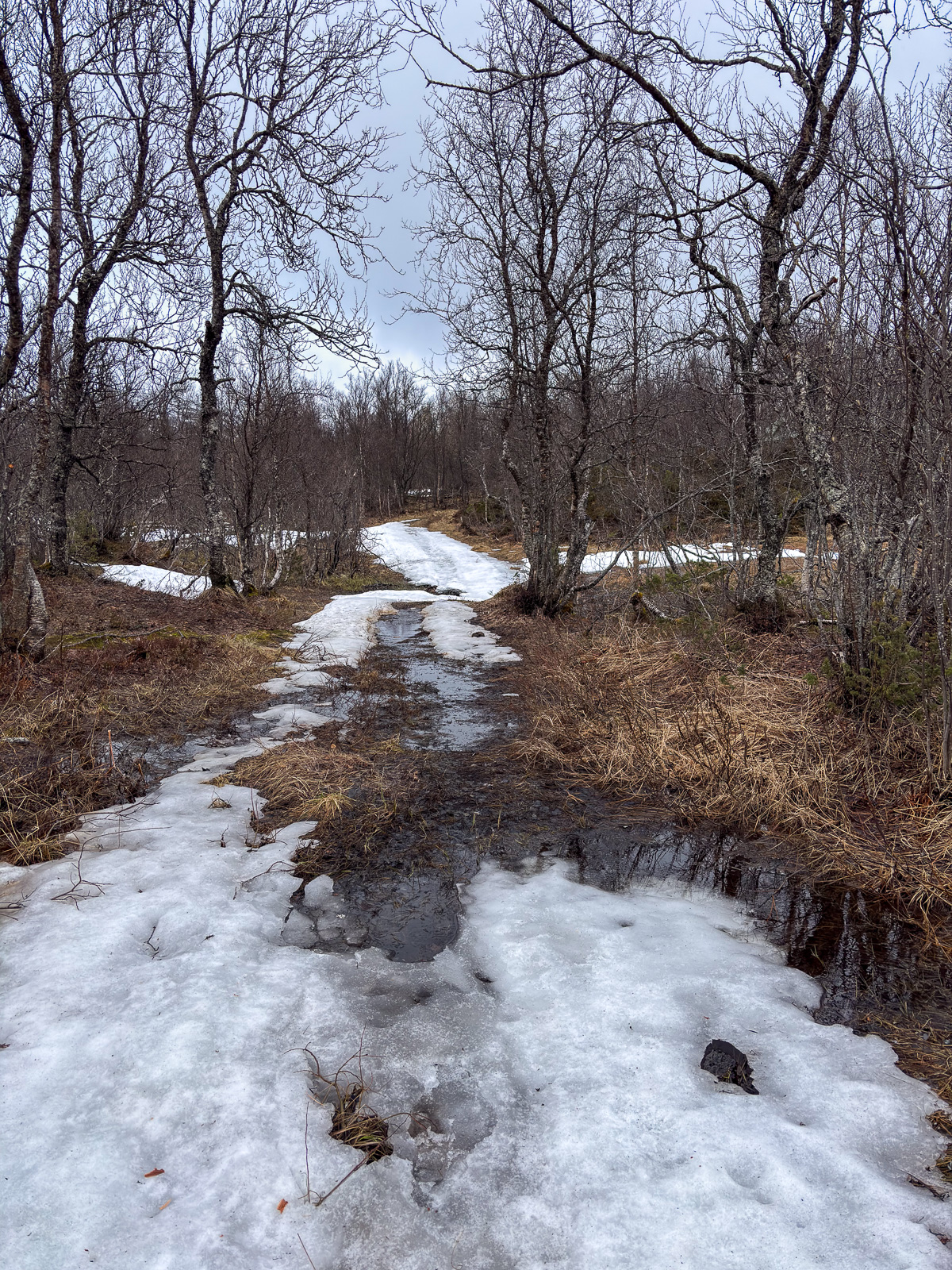
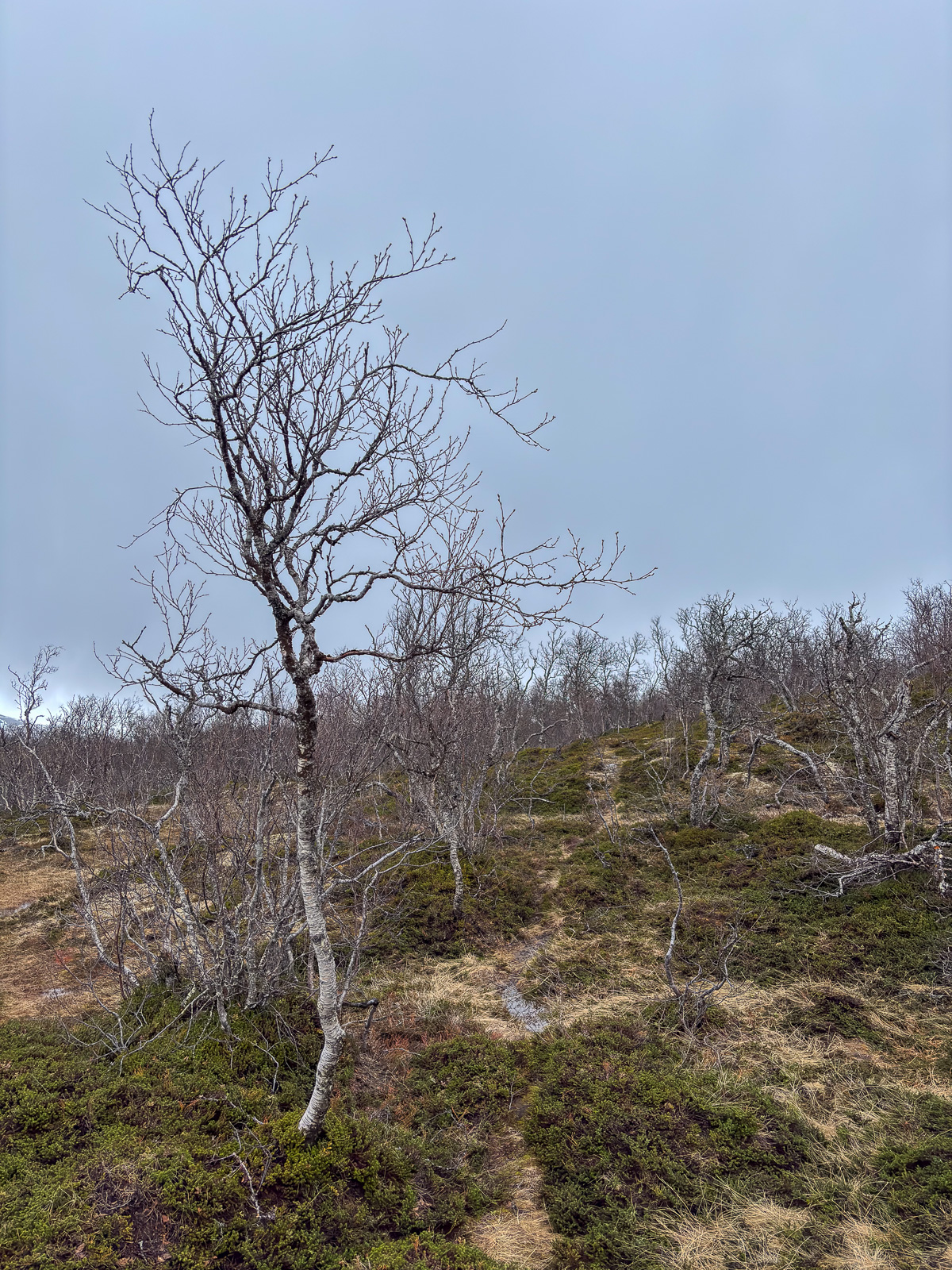
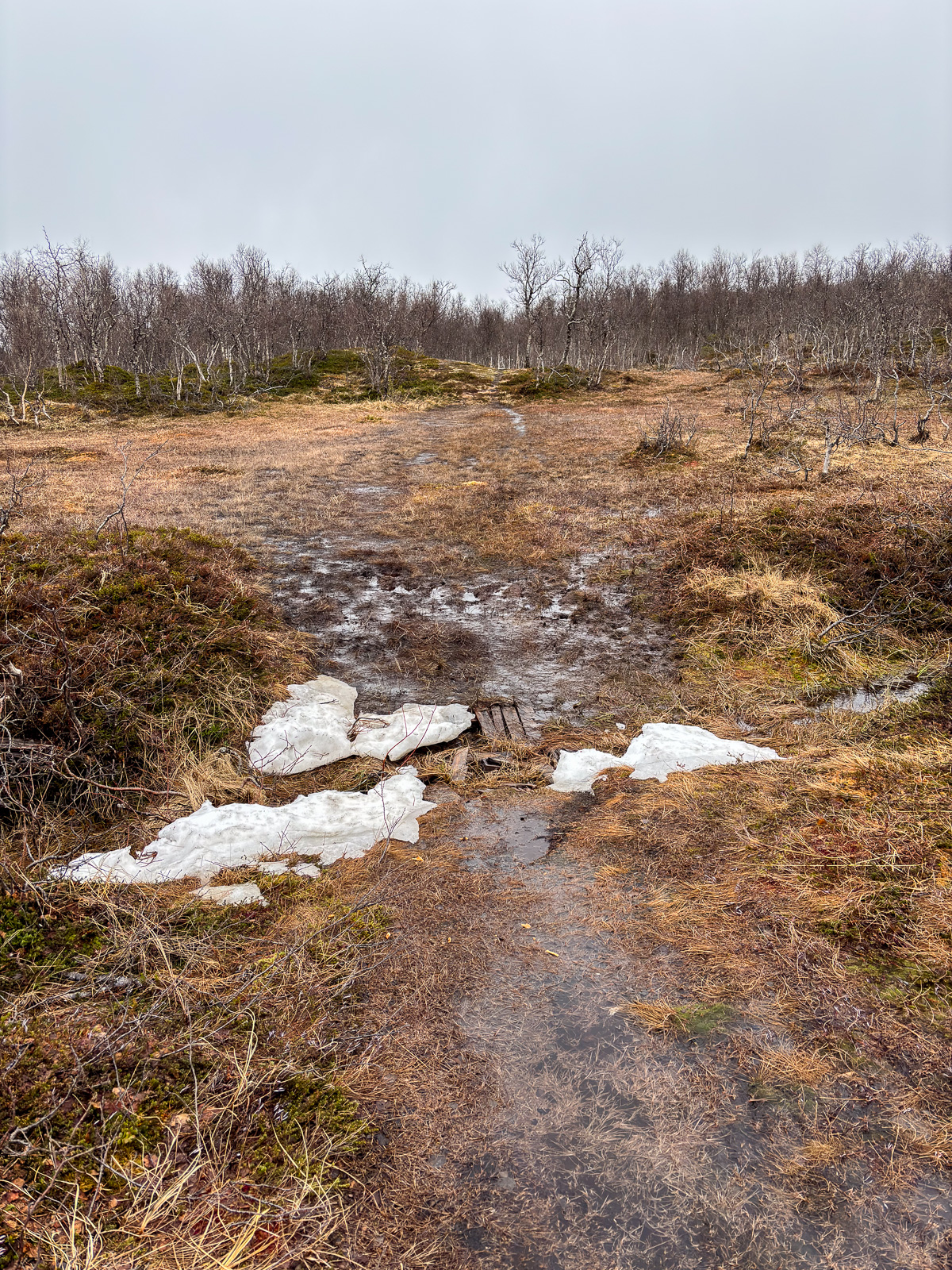
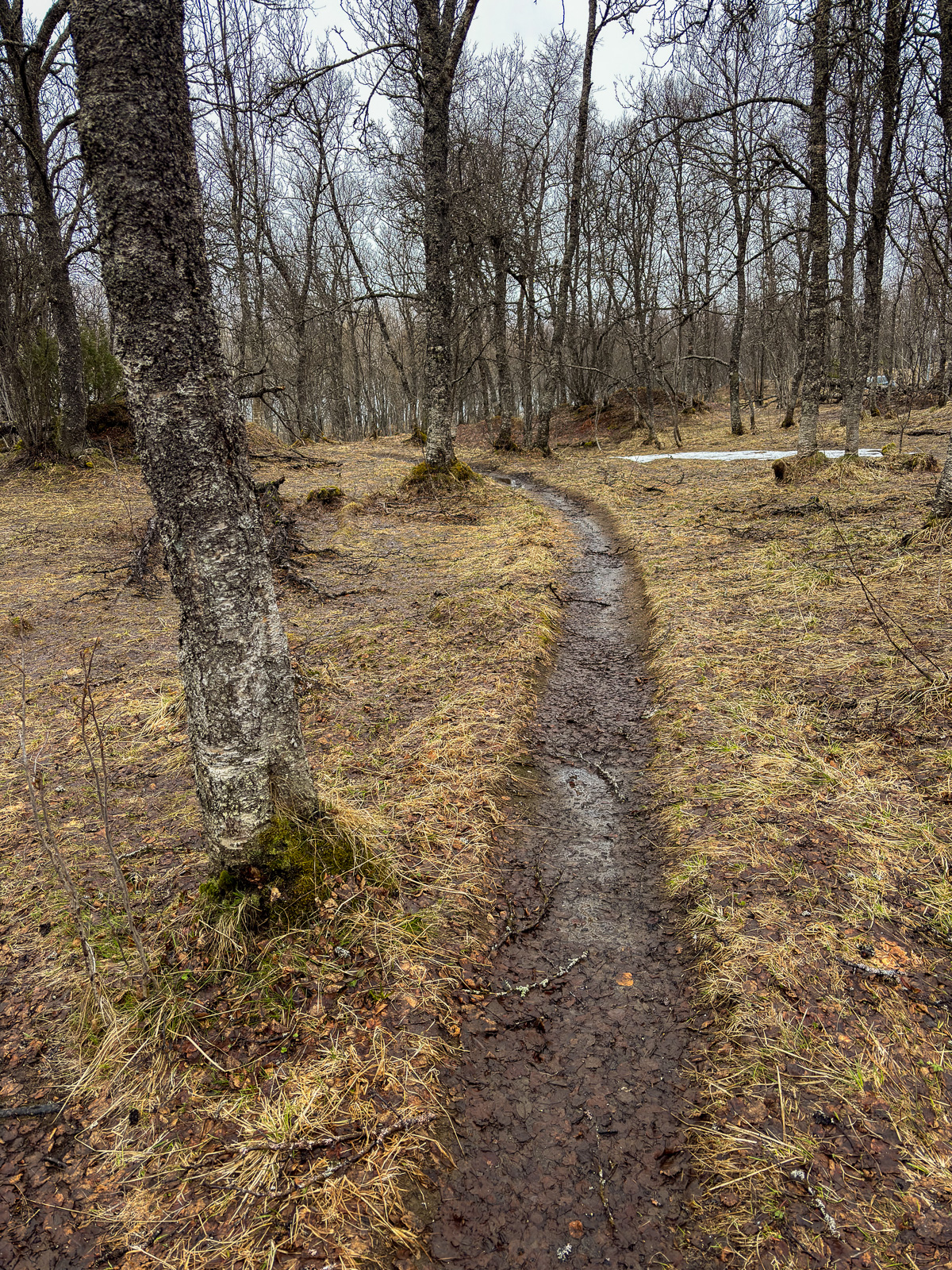
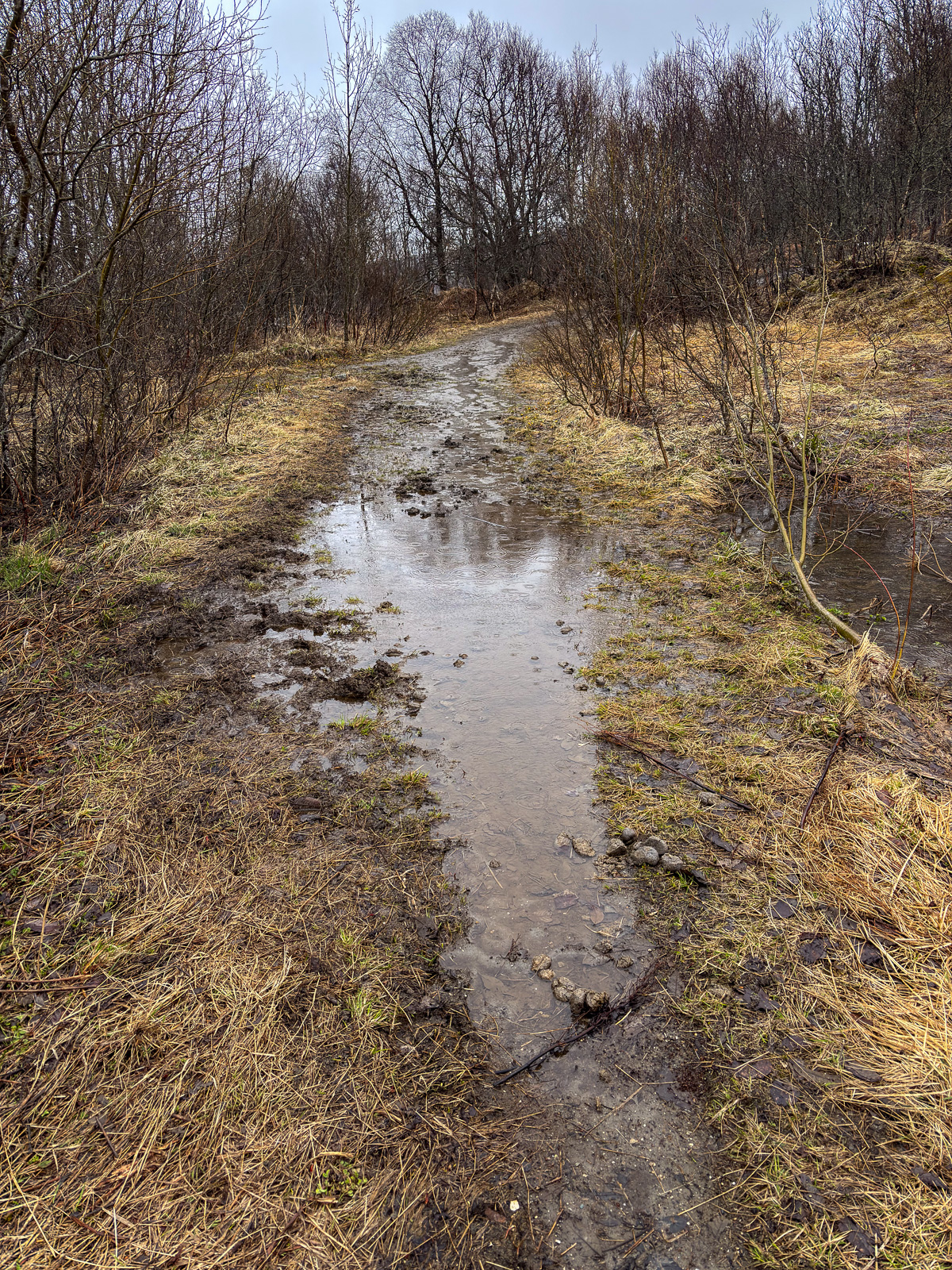
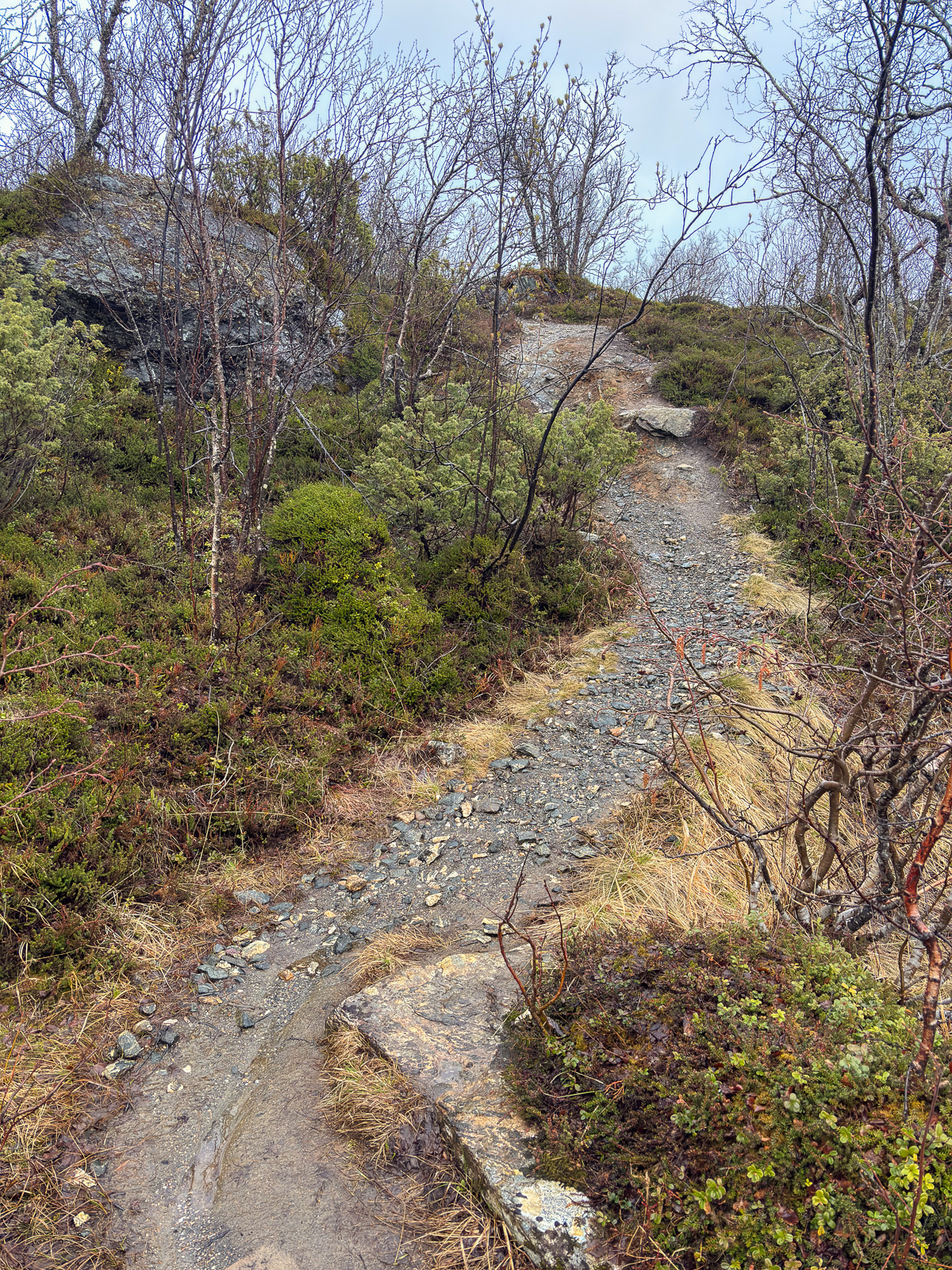
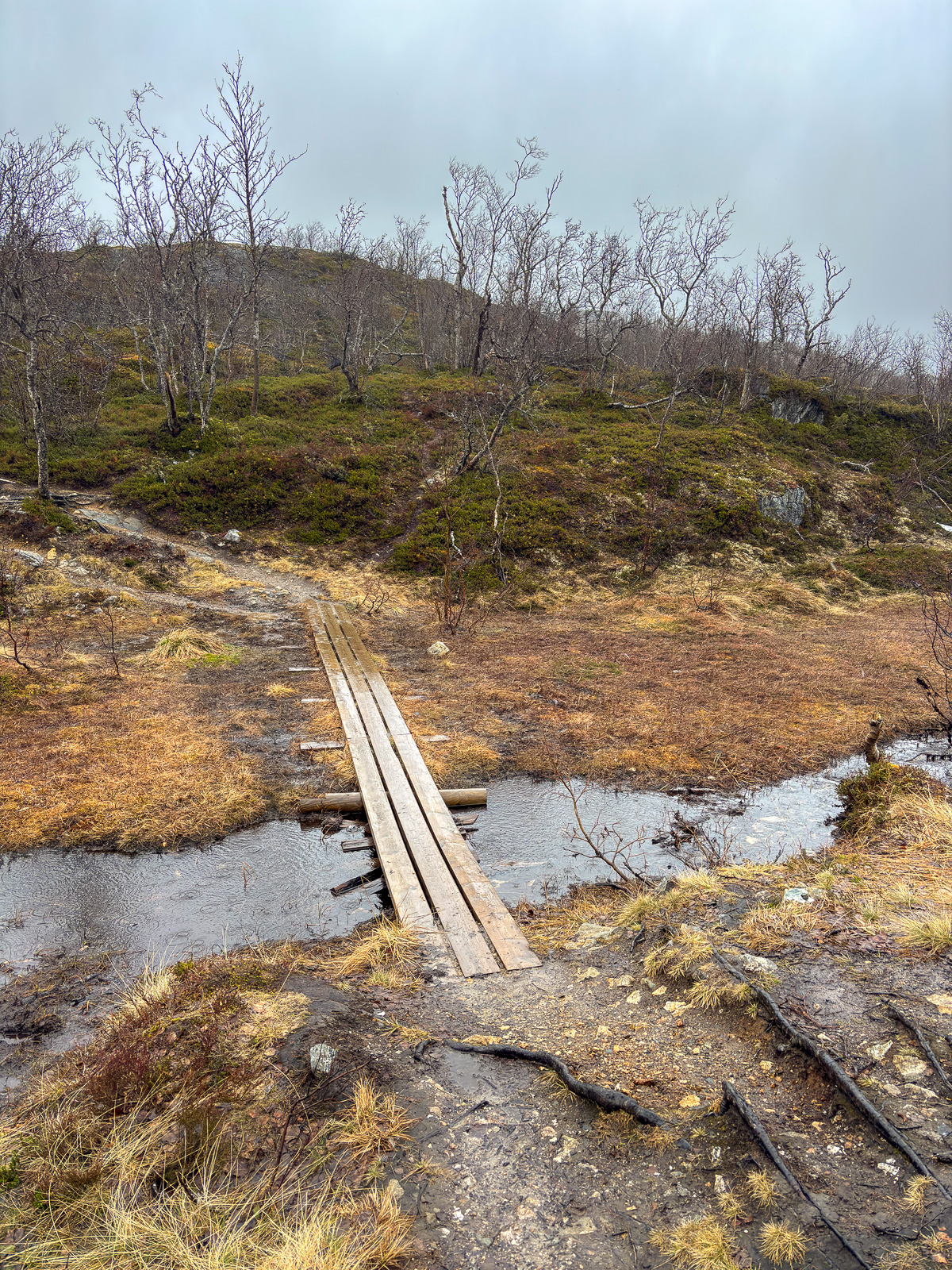
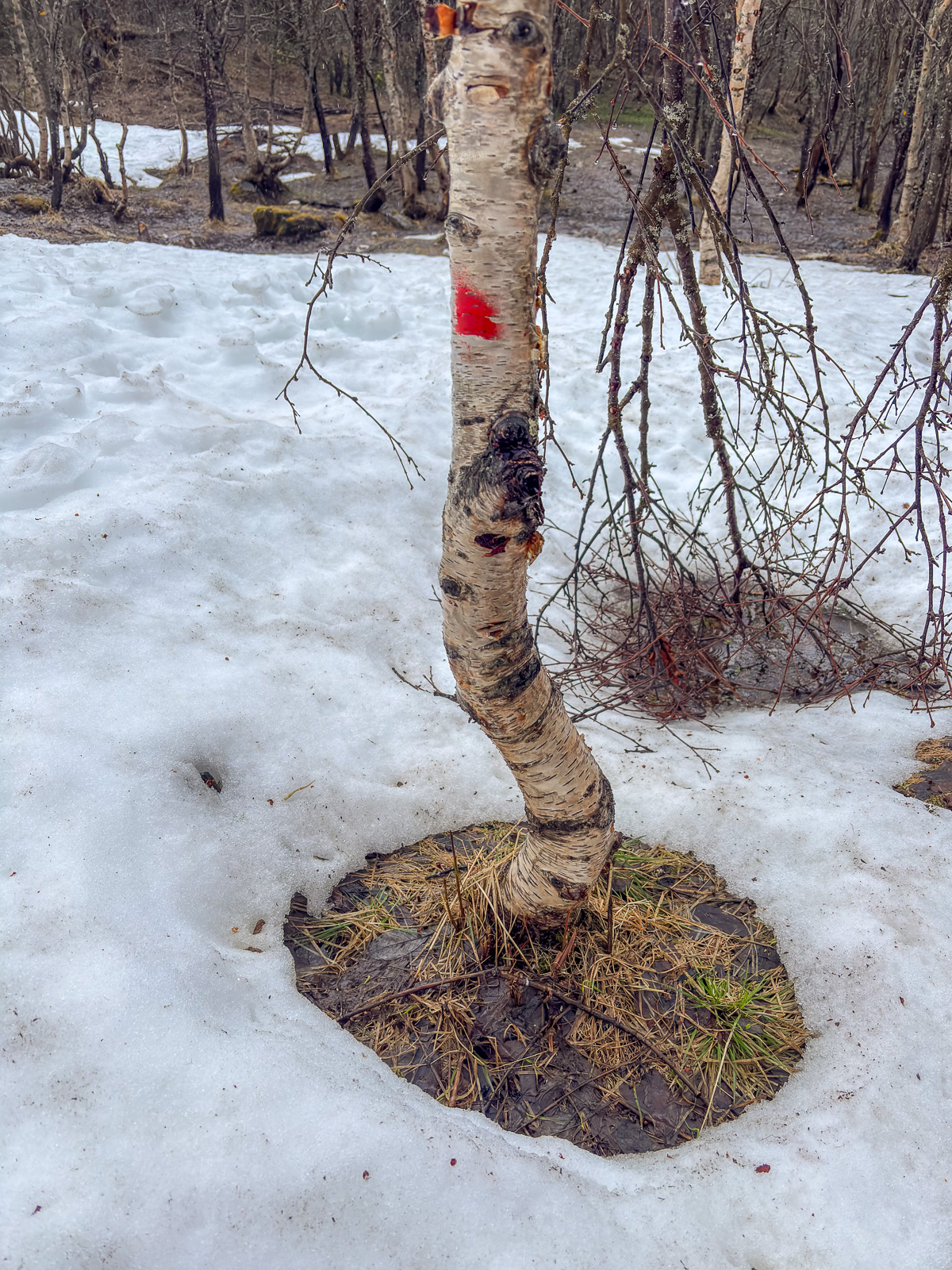
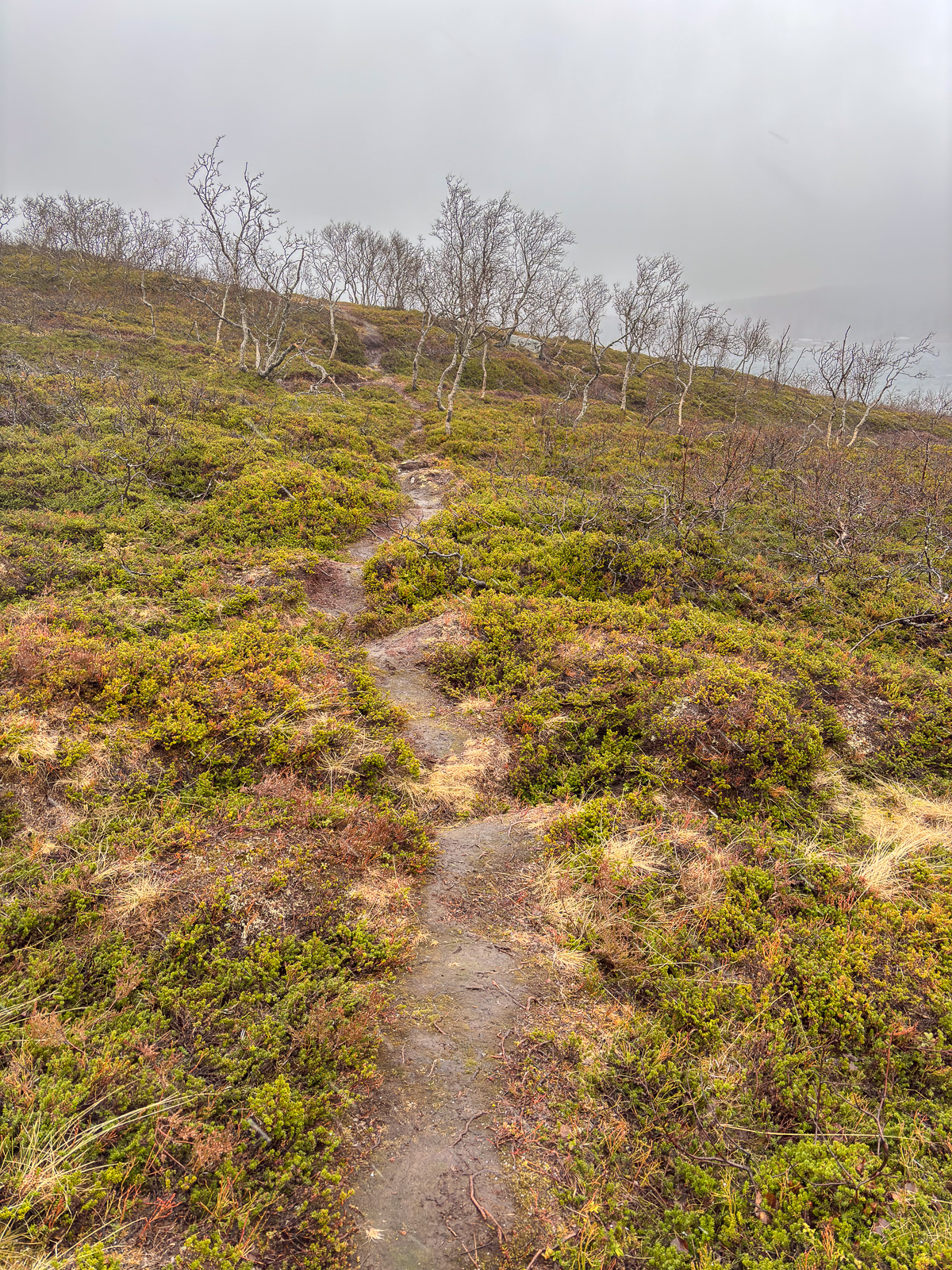
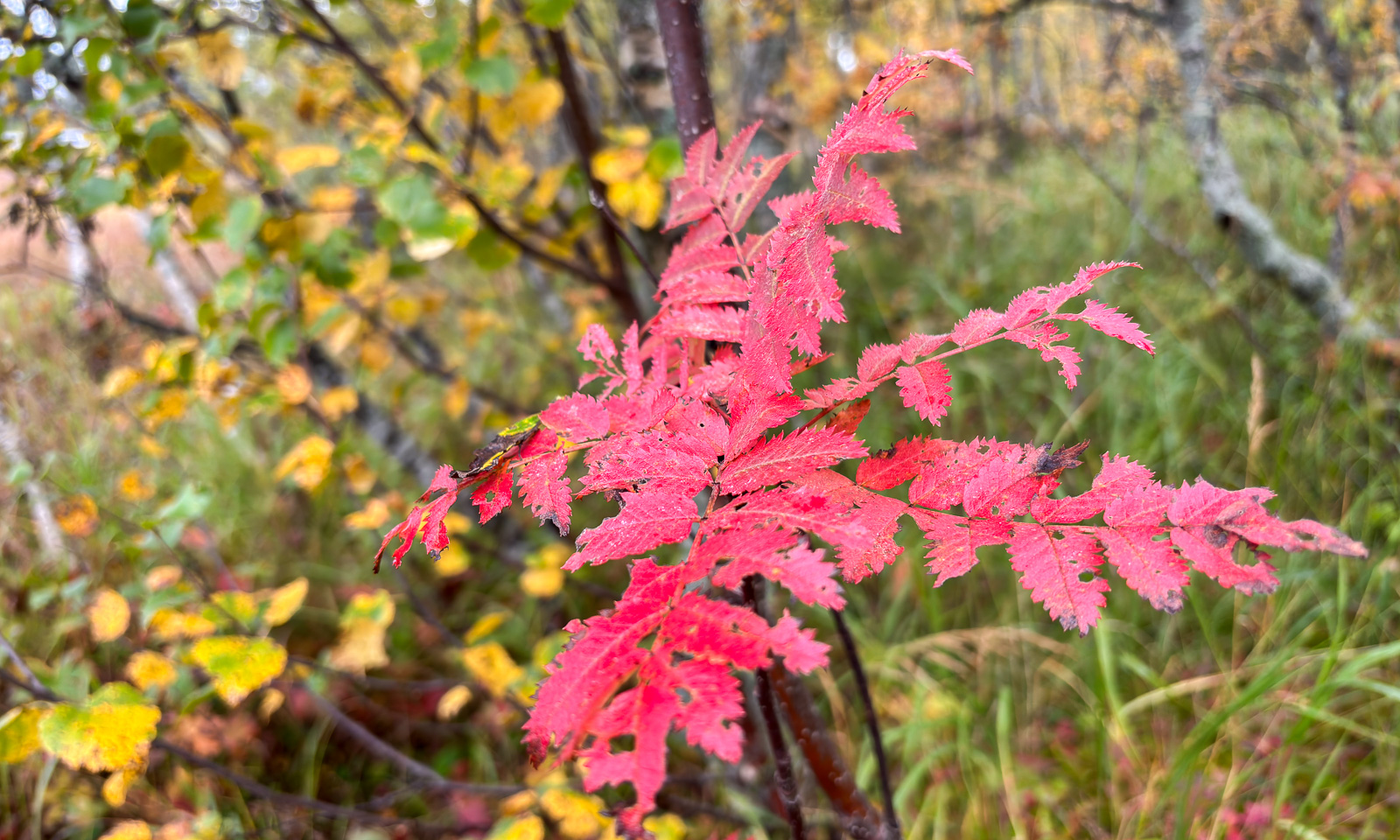
The first signs of autumn have arrived in Tromsø in recent days. I took some snapshots with my mobile while following the paths through the forest and the wet trods over the bogs. Still many birches are green but some are yellow and have starting shedding their leaves while parts of the undergrowth are bright red.

Today I left Tromsø behind for four weeks. I flew to Oslo and will spend the night in a hotel near the airport. Tomorrow I’ll fly to Amsterdam where I’ll meet my wife Annika and then we head for our furthest journey yet. Canada for four weeks! British Columbia and Alberta. I’m very excited, a bit nervous and pretty curious how it looks like.

Mountain tour on the Ullstinden

The weather forecast looked good for Saturday which was yesterday, so my friend Christine and I decided to do a mountain tour on Mount Ullstinden on Tromsø‘s mainland. We met at her place, had breakfast and drove to the car park, the very same where our tours to Trollvassbu start.

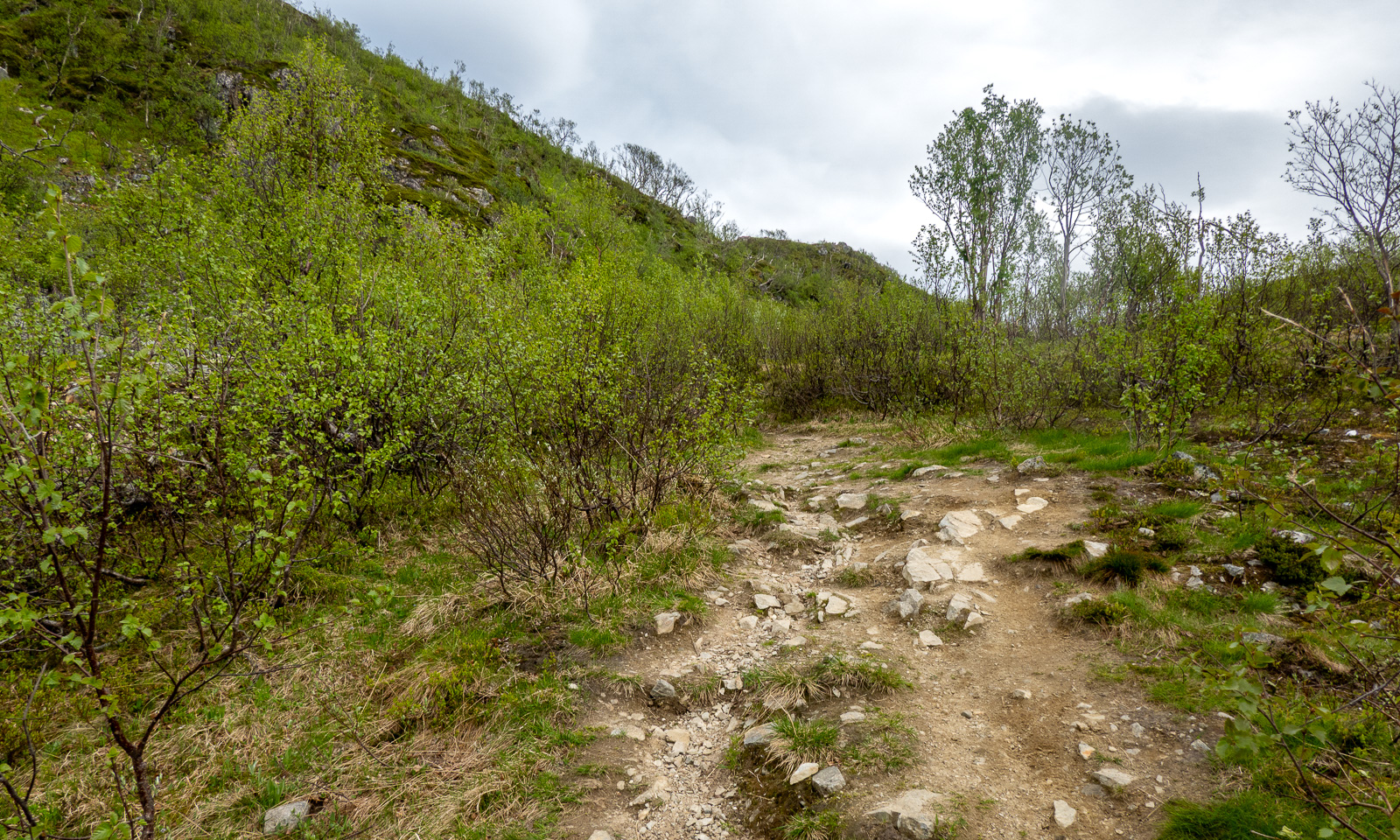
This time we head north-east. The unmarked path leads over several bogs and some parts are pretty wet and muddy.

We cross some stretches of birch forests and the ground gets drier. Even at this early stage, we have wide views of the mountains and valleys to the south and west.

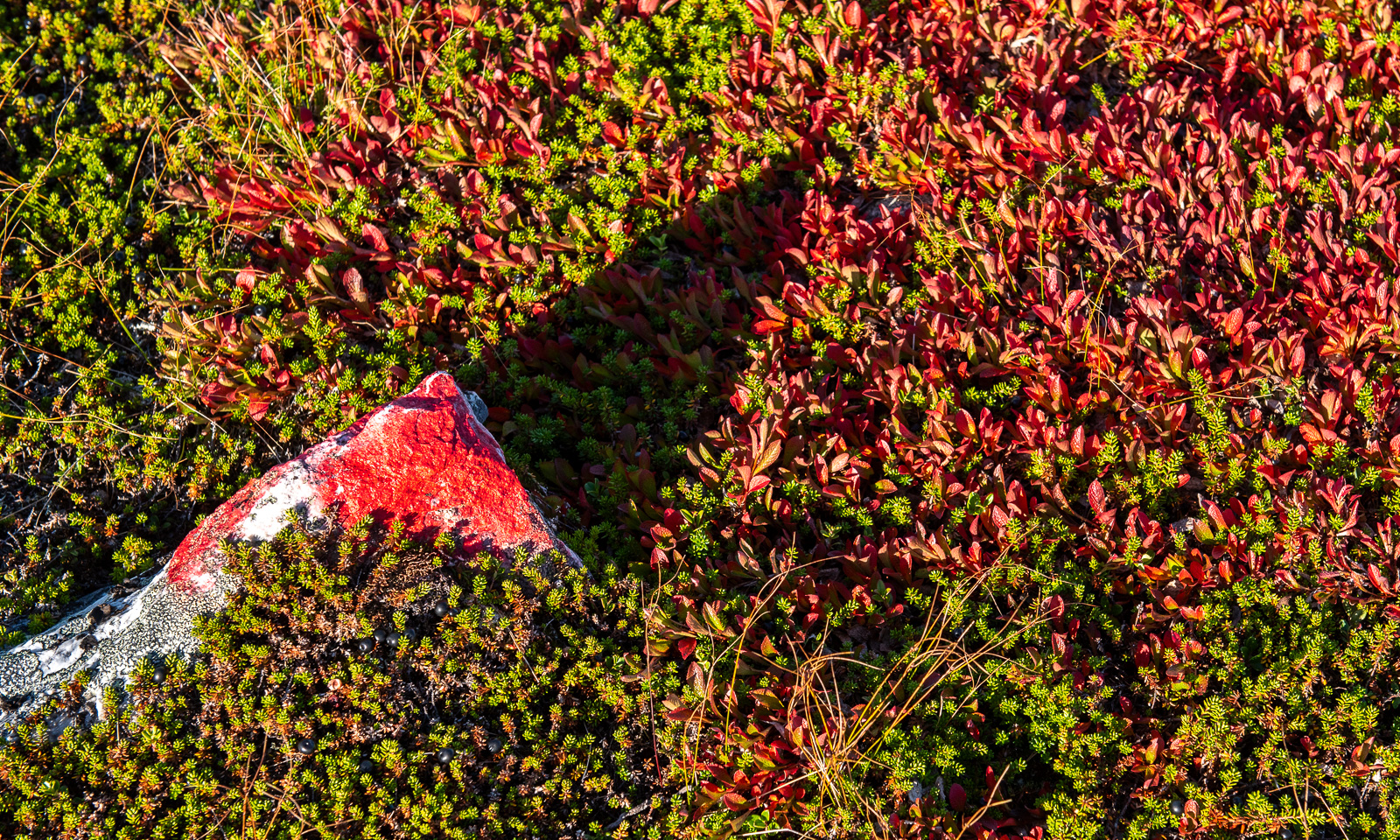
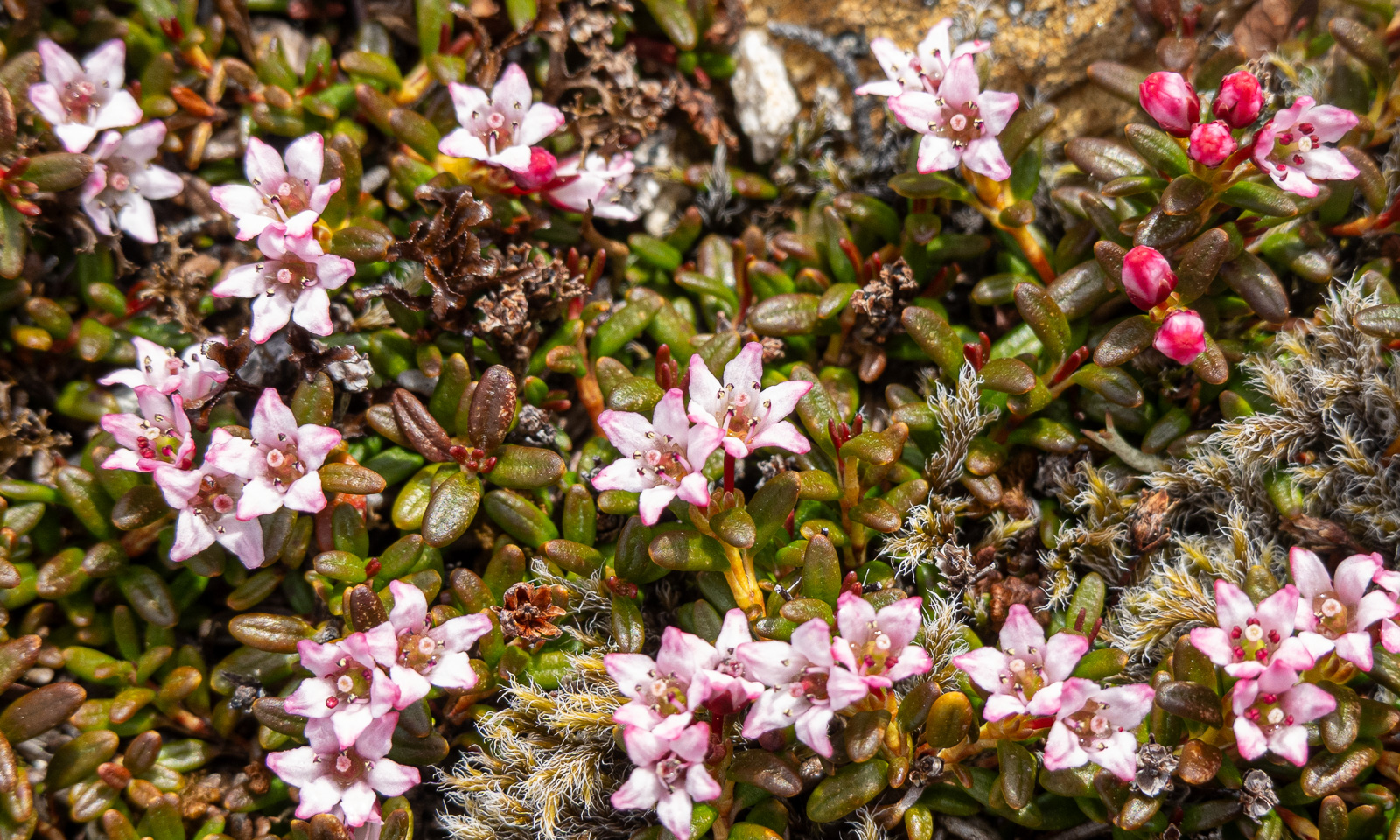
Some parts are covered with Arctous alpina whose leaves turn bright red in early autumn. The colour can be pretty intense and although the birches have hardly turned yellow they give the mountain landscapes an autumnal atmosphere.

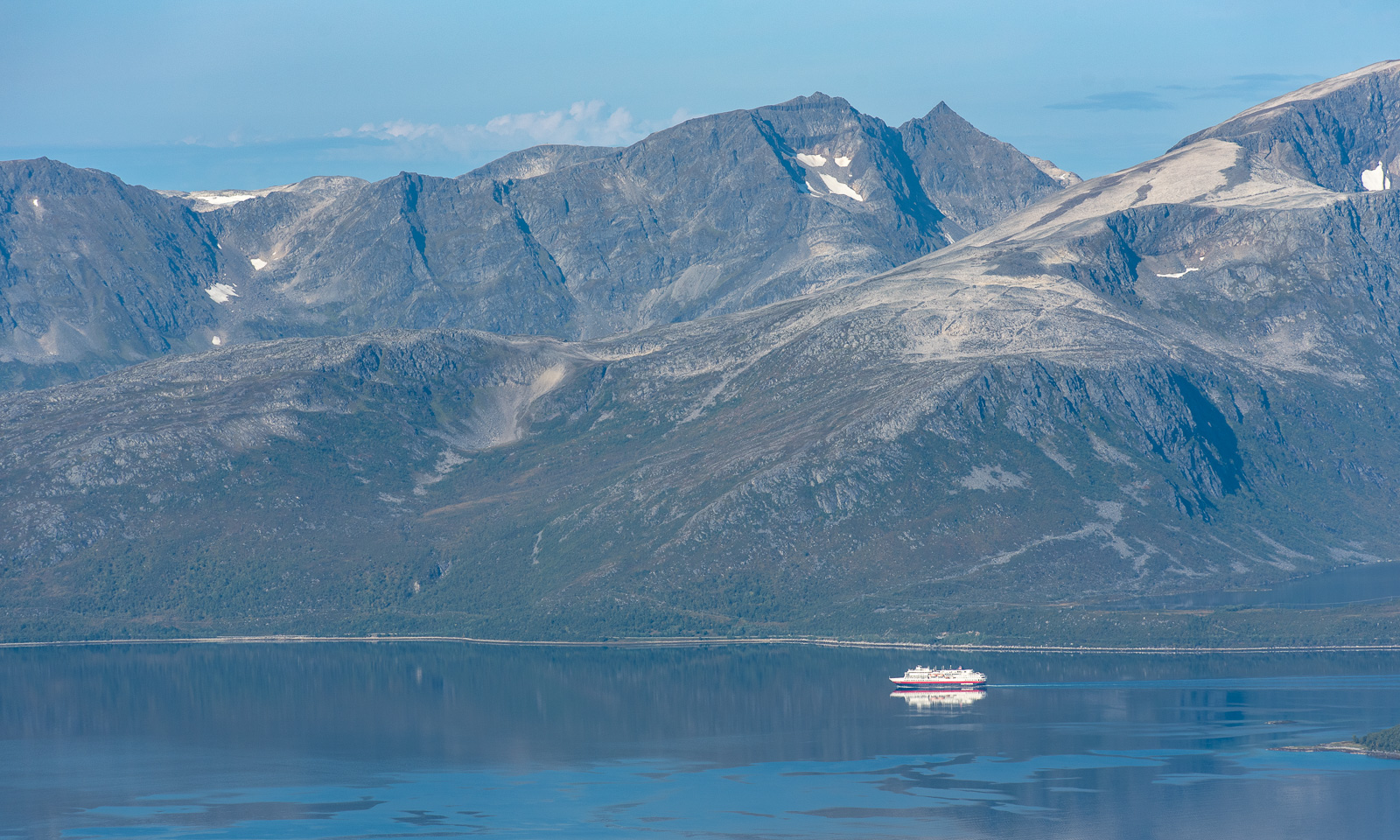
In the north we can see Grøtsundet, which connects Tromsøya to Ullfjorden and so to the open sea in the north. Here the Hurtigruten ships can continue to Skjervøy, the next Hurtigruten port in the north. The Hurtigruten ship we see however is probably an expedition cruise ship because the ships from the north arrive in the night.

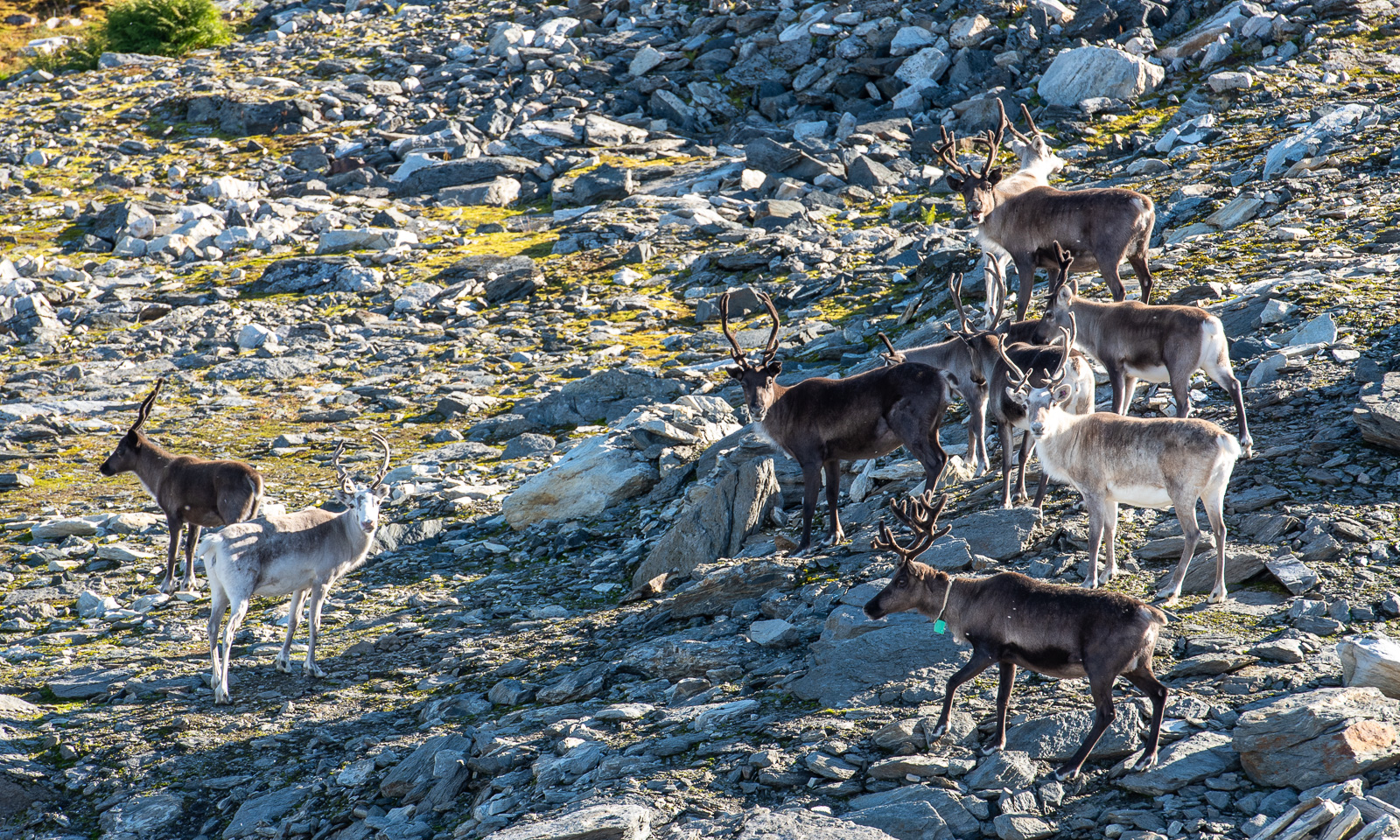
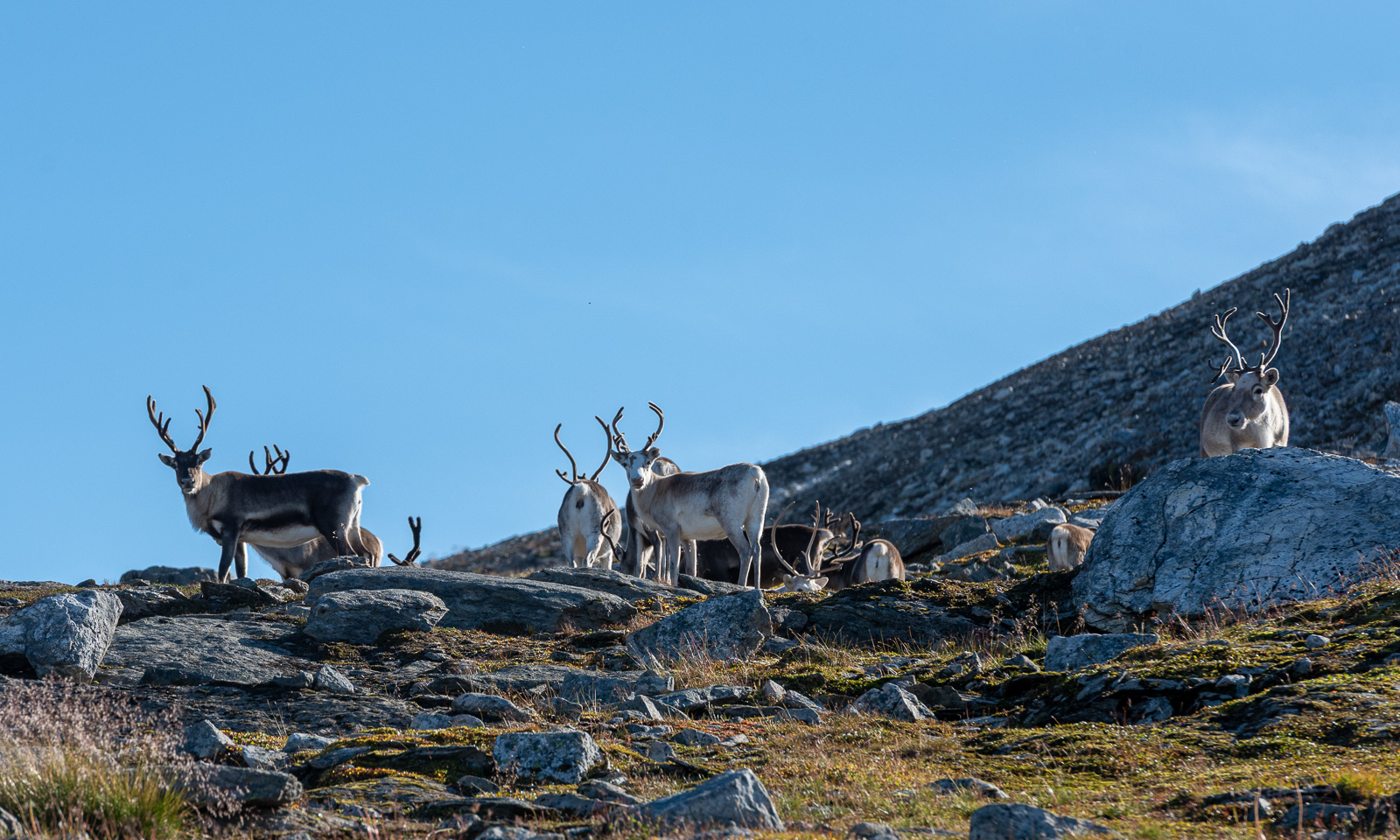
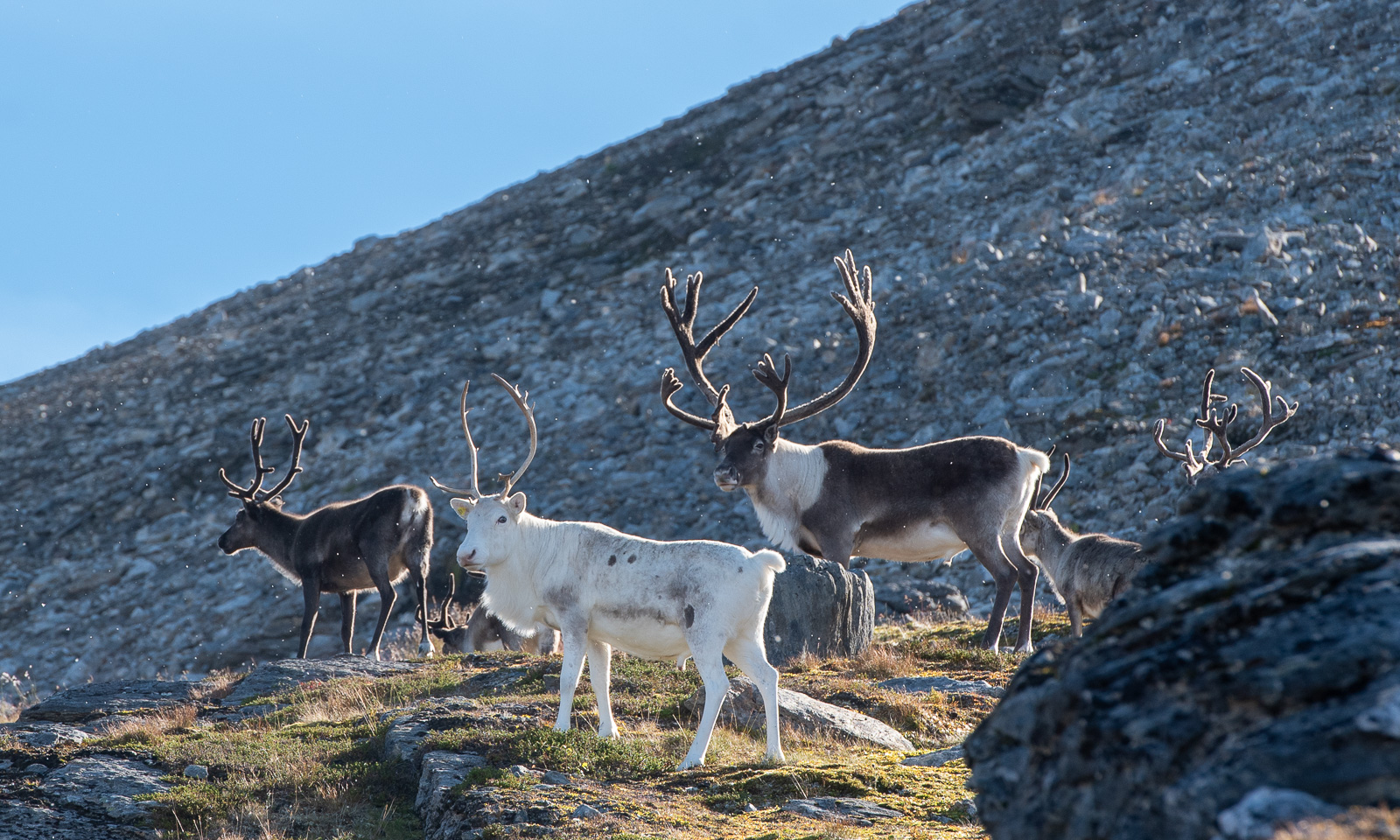
I am a bit confused. I thought Ullstinden was the mountain we already headed to on the bogs but I was wrong, our destination is more to the west. Here we see the first reindeer, first just a couple, then more groups – they are at least fifty. Since they stand more or less on our trail we slow down and give them a head start.

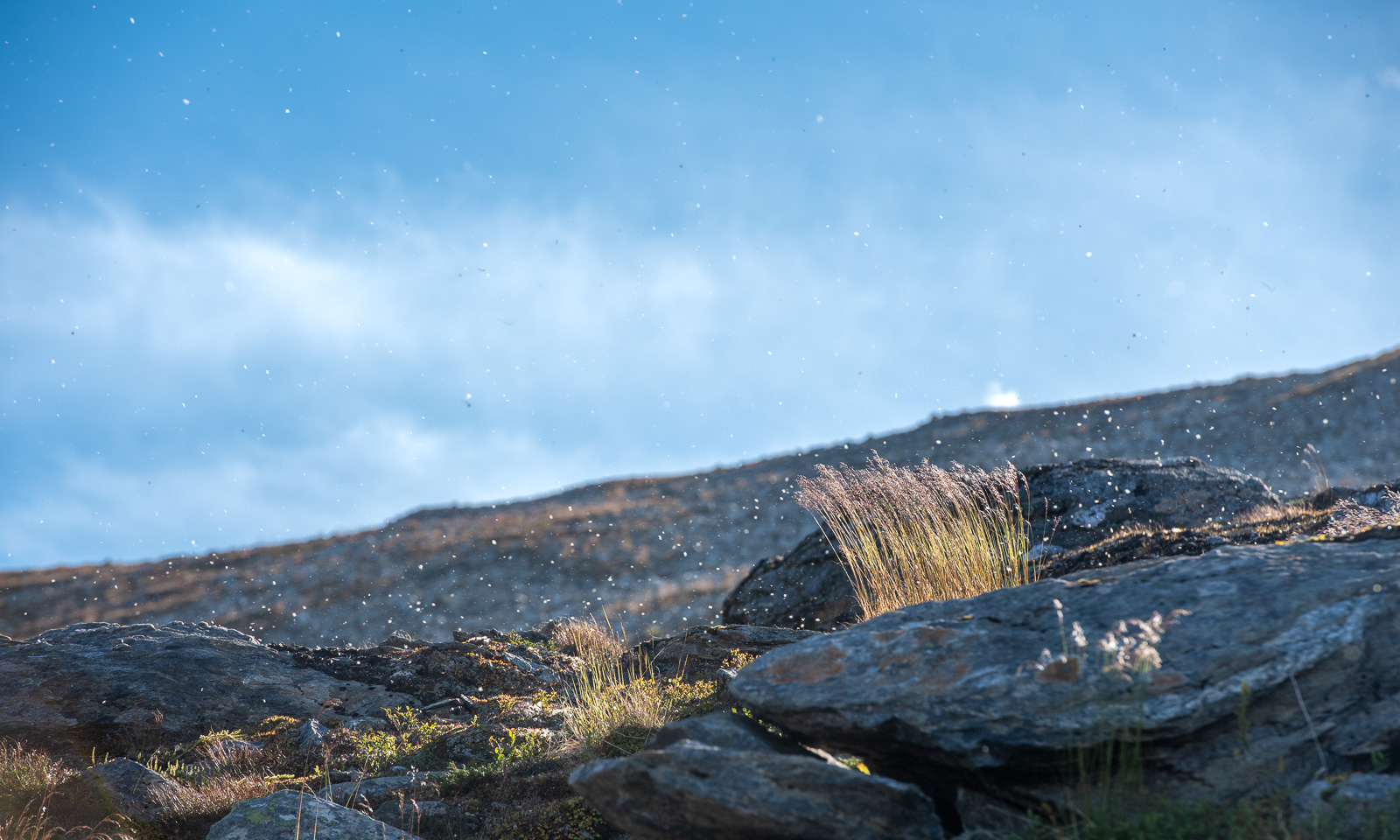
While we wait and watch, the wind picks up a little. It is carrying a lot of willow seed with it and against the sun it looks like a late-summer snow shower.

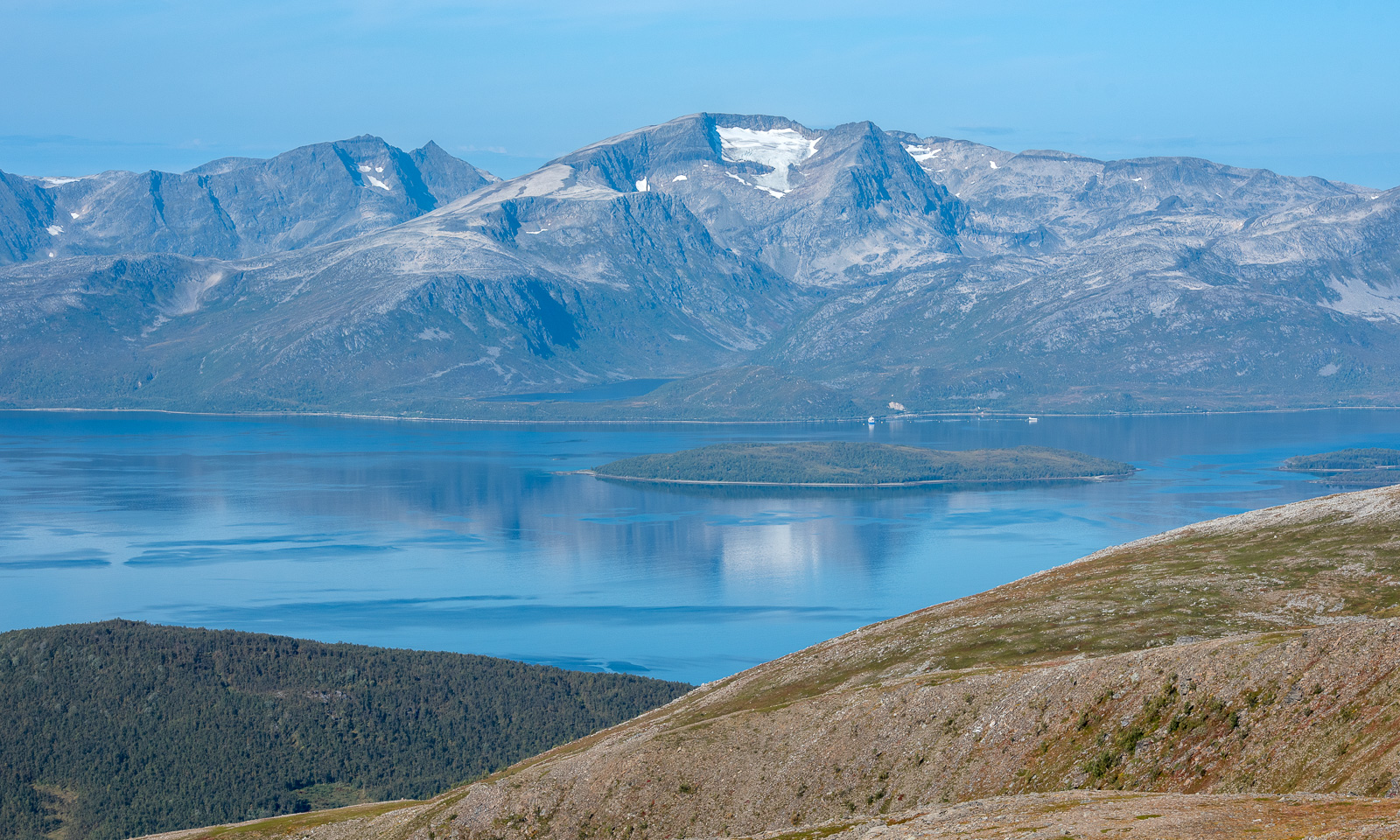
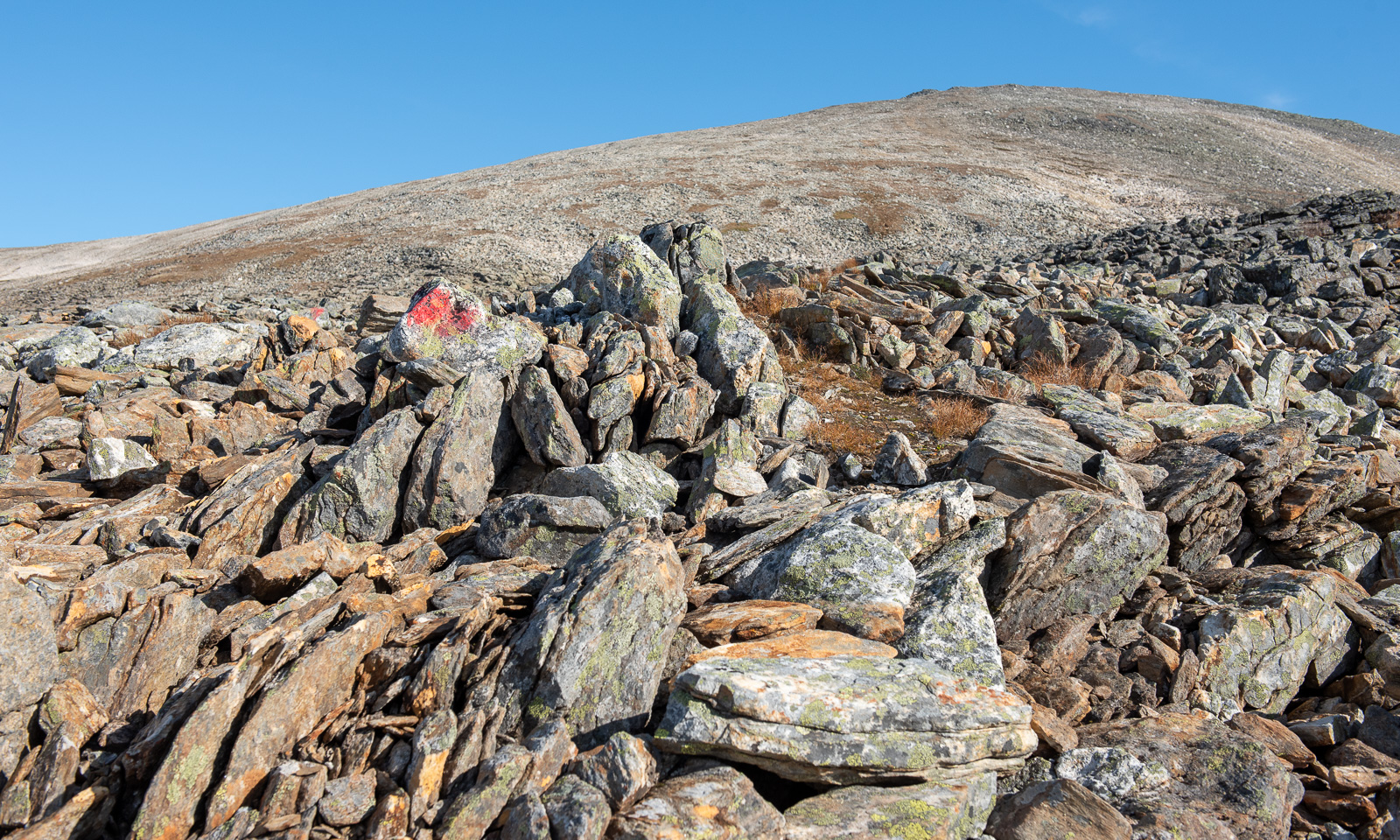
We turn left now following the red-painted rocks that mark the trail up. The Hurtigruten ship is out of sight but the view of Grøtsundet is still there, including the island Nipøya and the mountain Istinden with its glacier in the background.

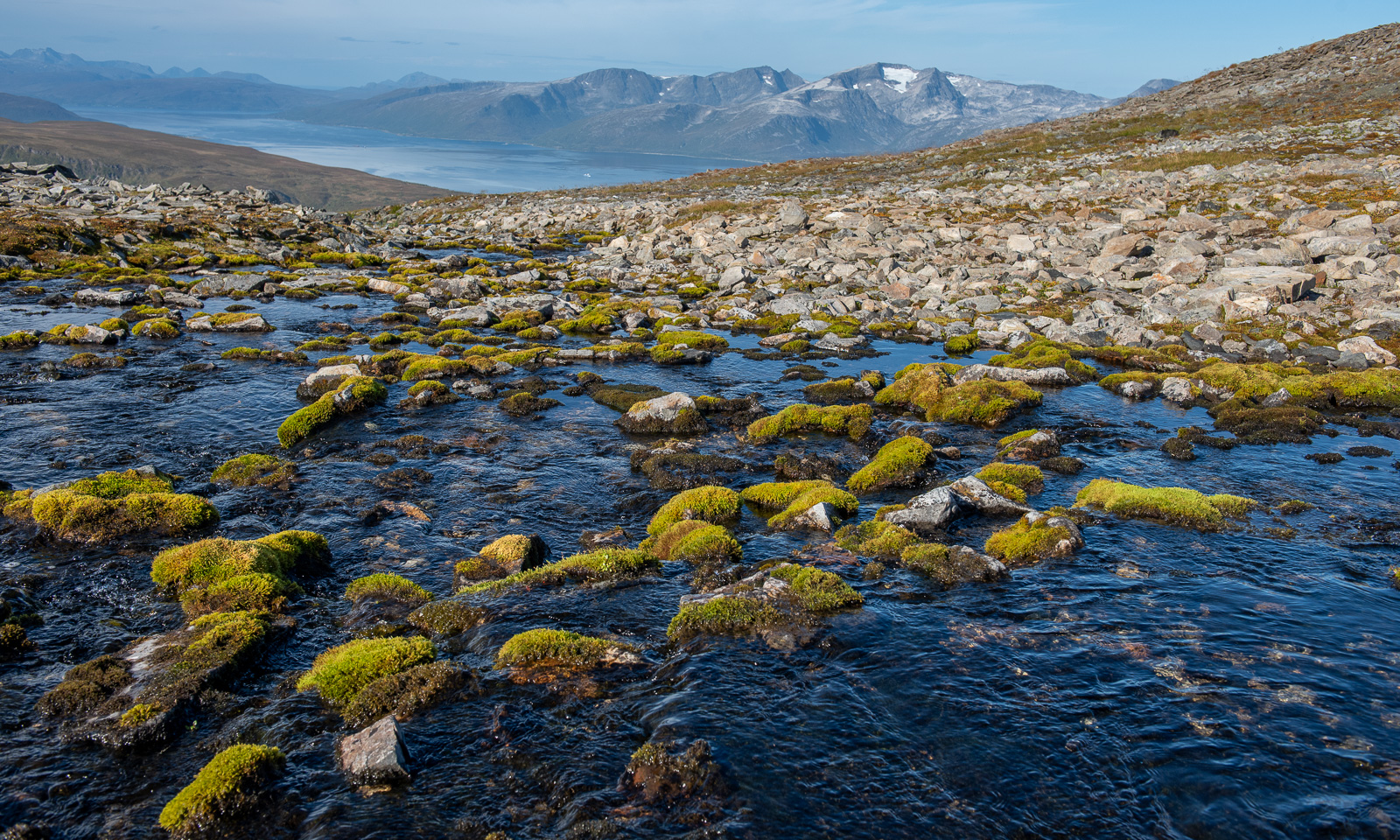
The terrain gets rocky. We cross a broad but shallow mountain stream with green patches of moss and the “high alpine” part of our mountain tour starts.

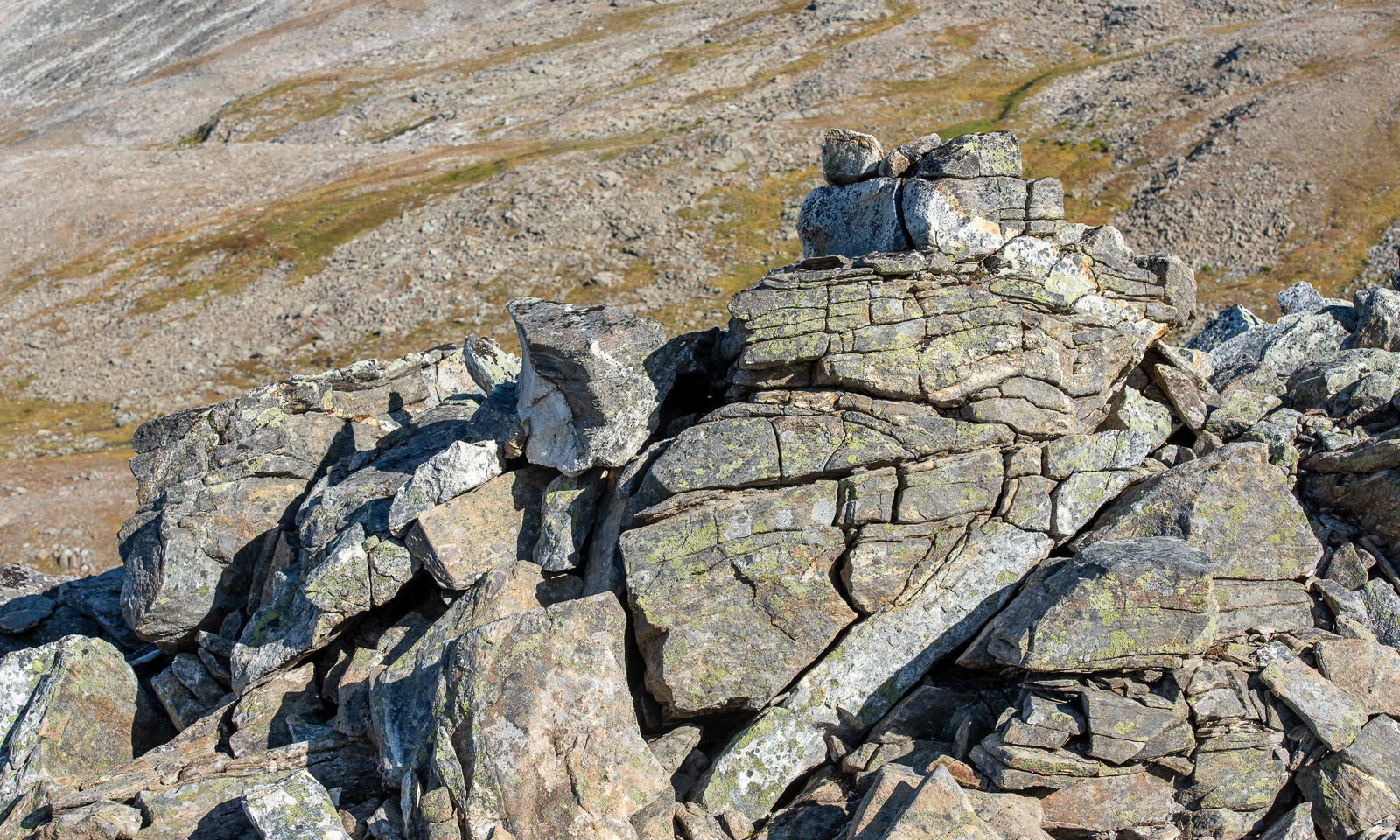
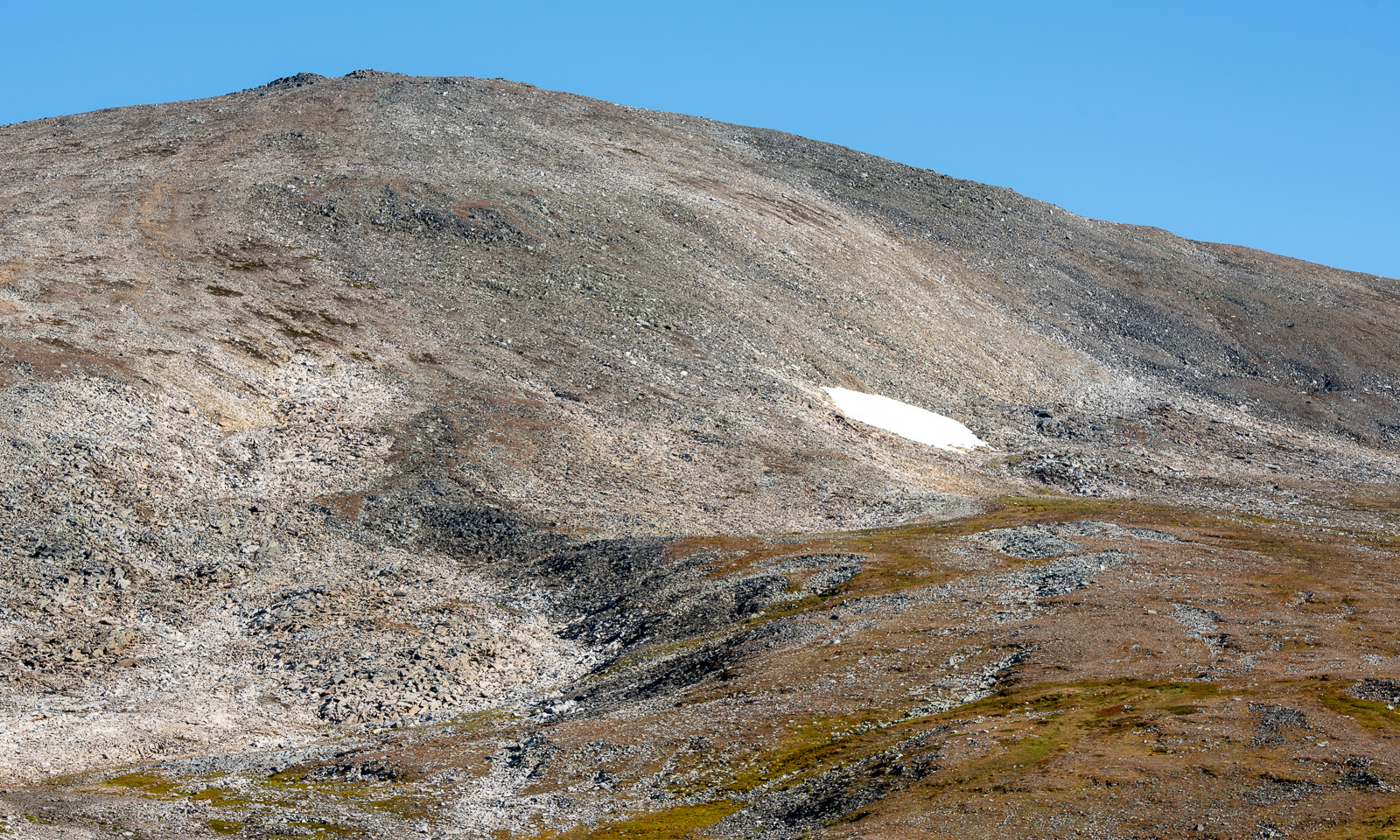
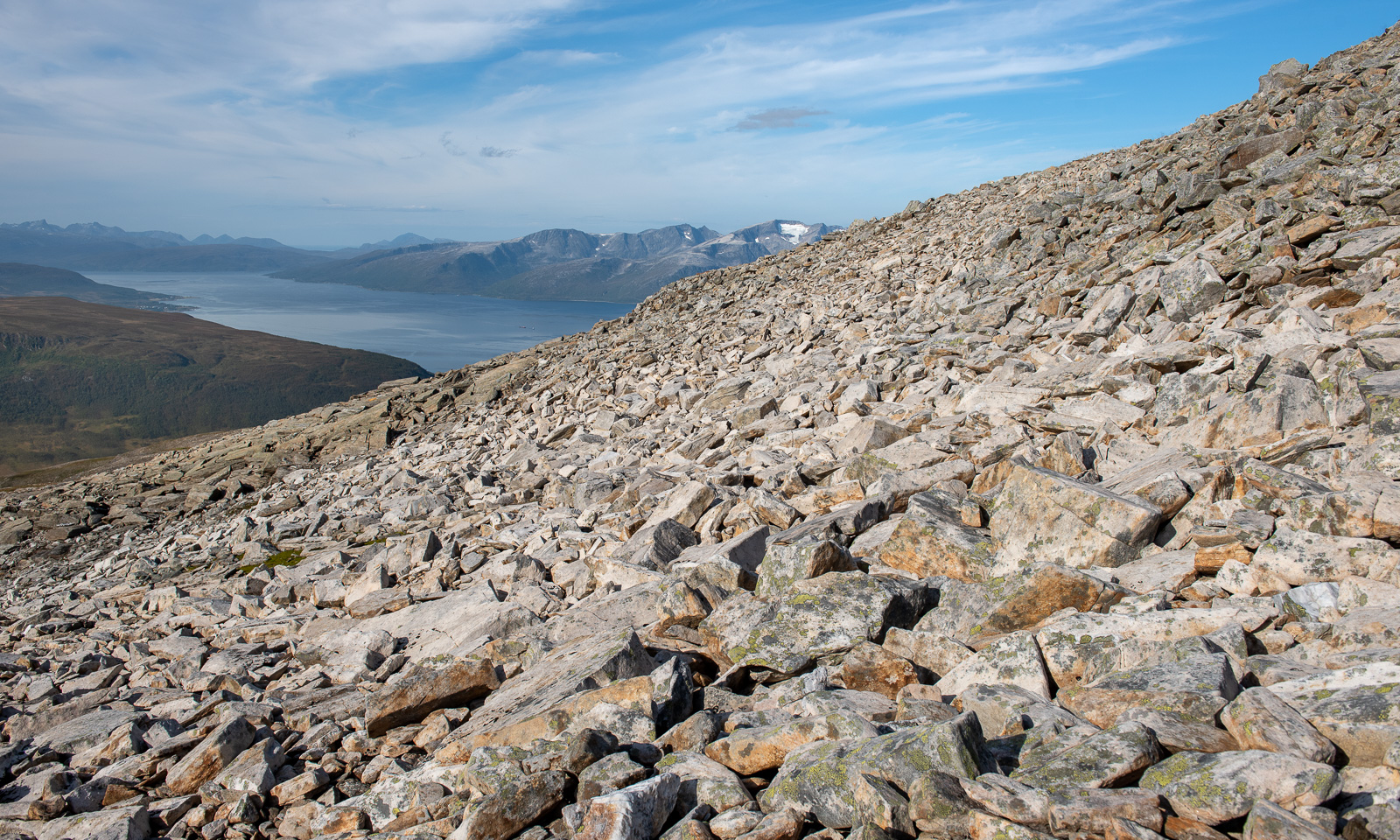
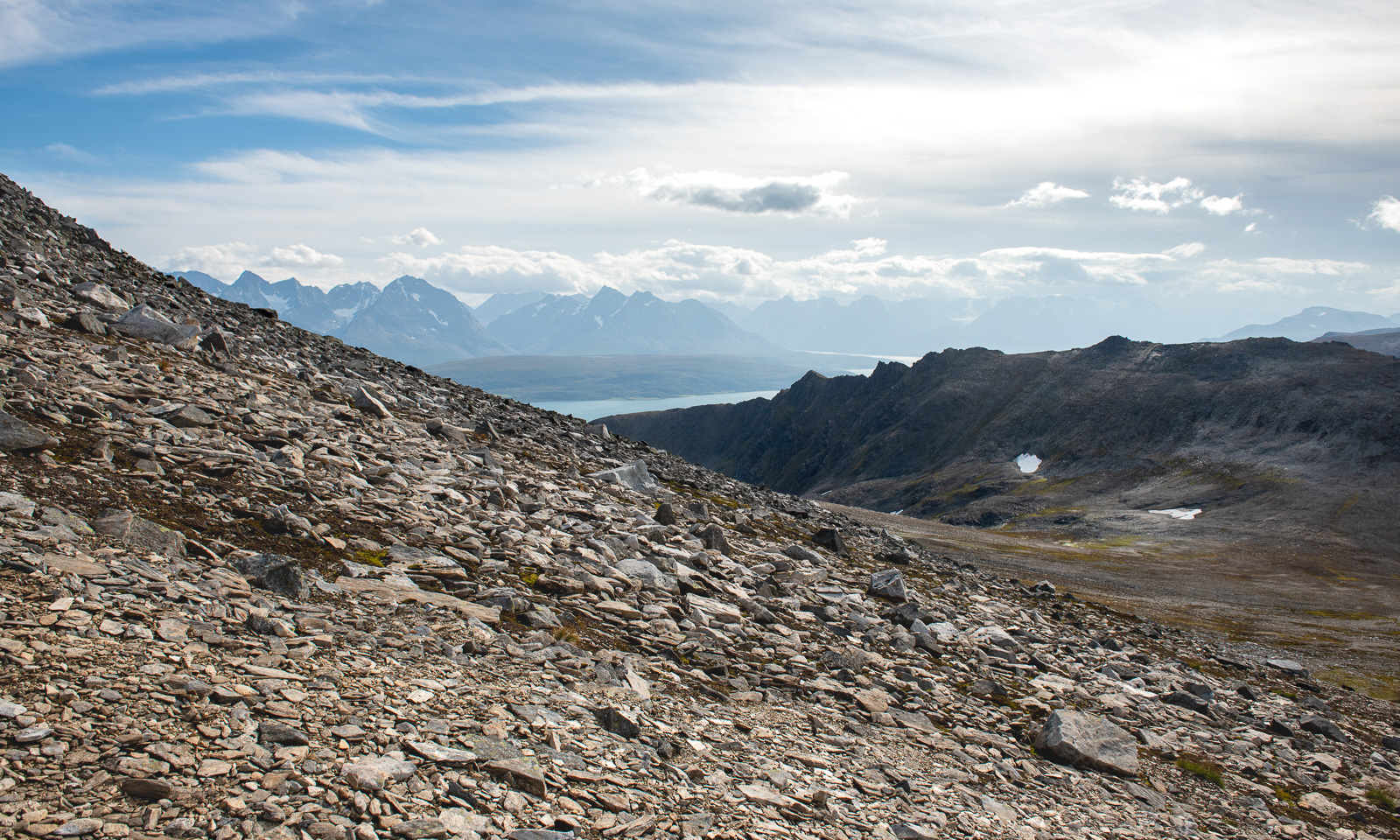
The slope is covered with rough, angular rocks. Sometimes there is a tuft of grass or a small ground-cover plant but moss and  crustose lichens dominate the sparse vegetation.

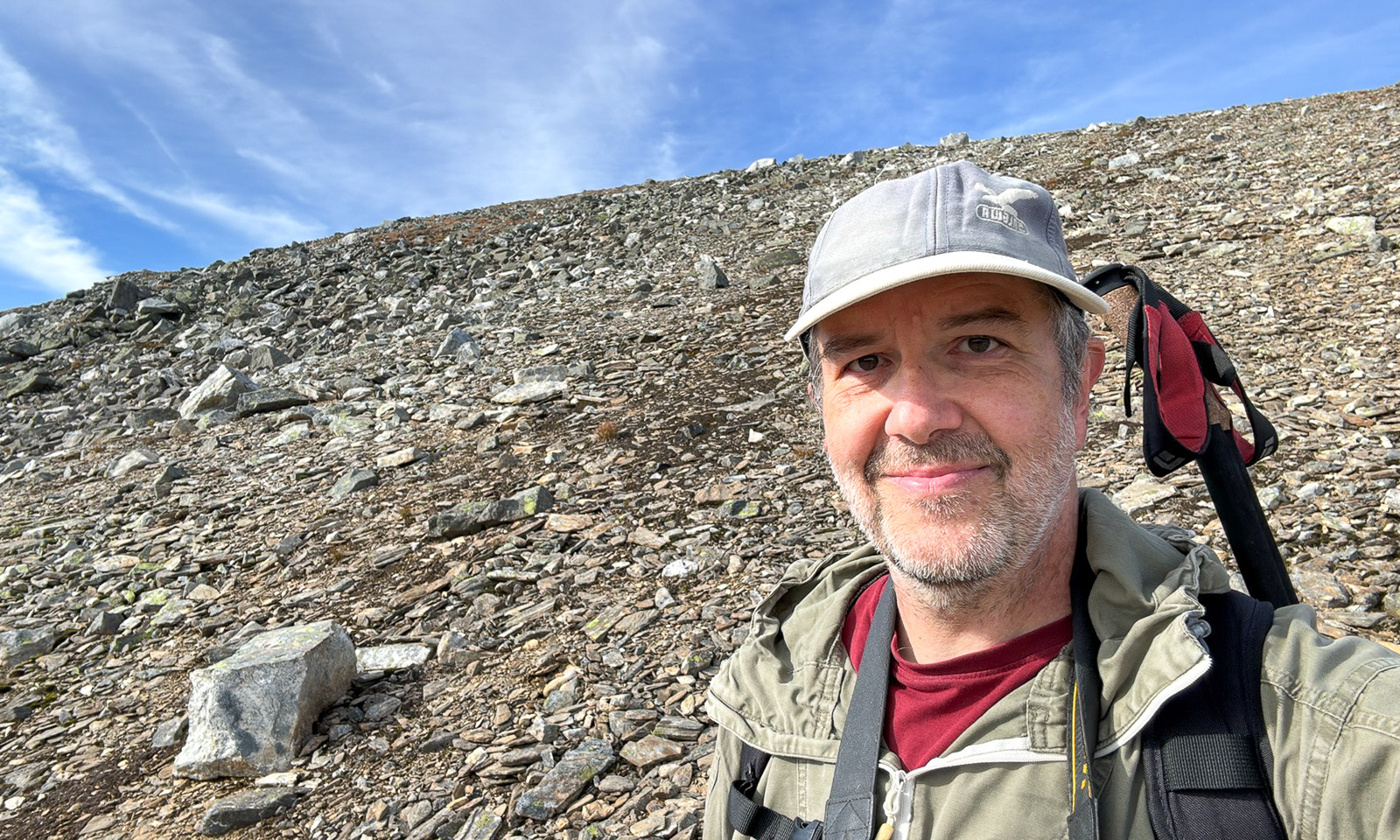
I took the selfie at an altitude of 800 metres. In Bavaria you have towns like Oberstdorf or Bayrischzell at those altitudes, here in Tromsø you are in desert-like Arctic alpine terrain.

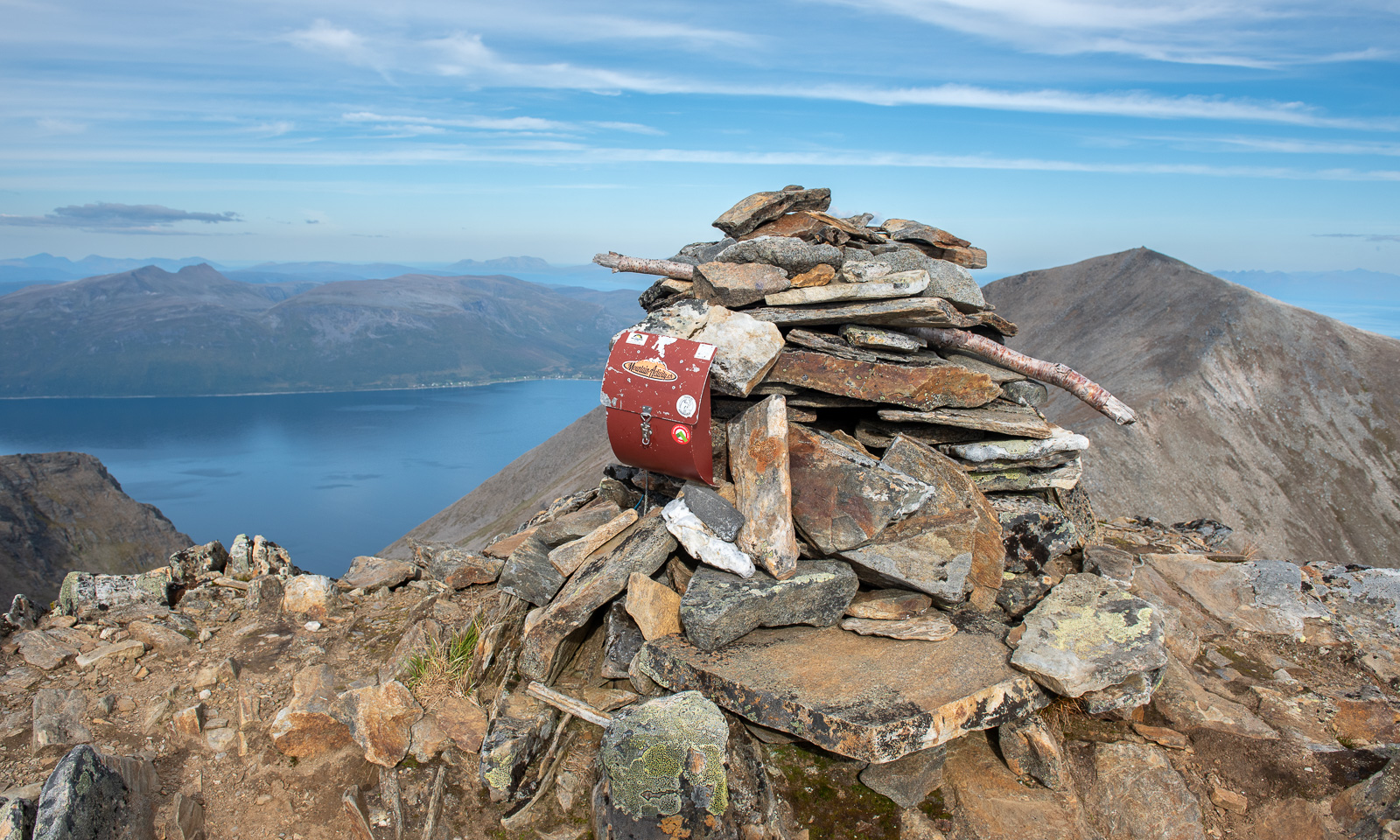
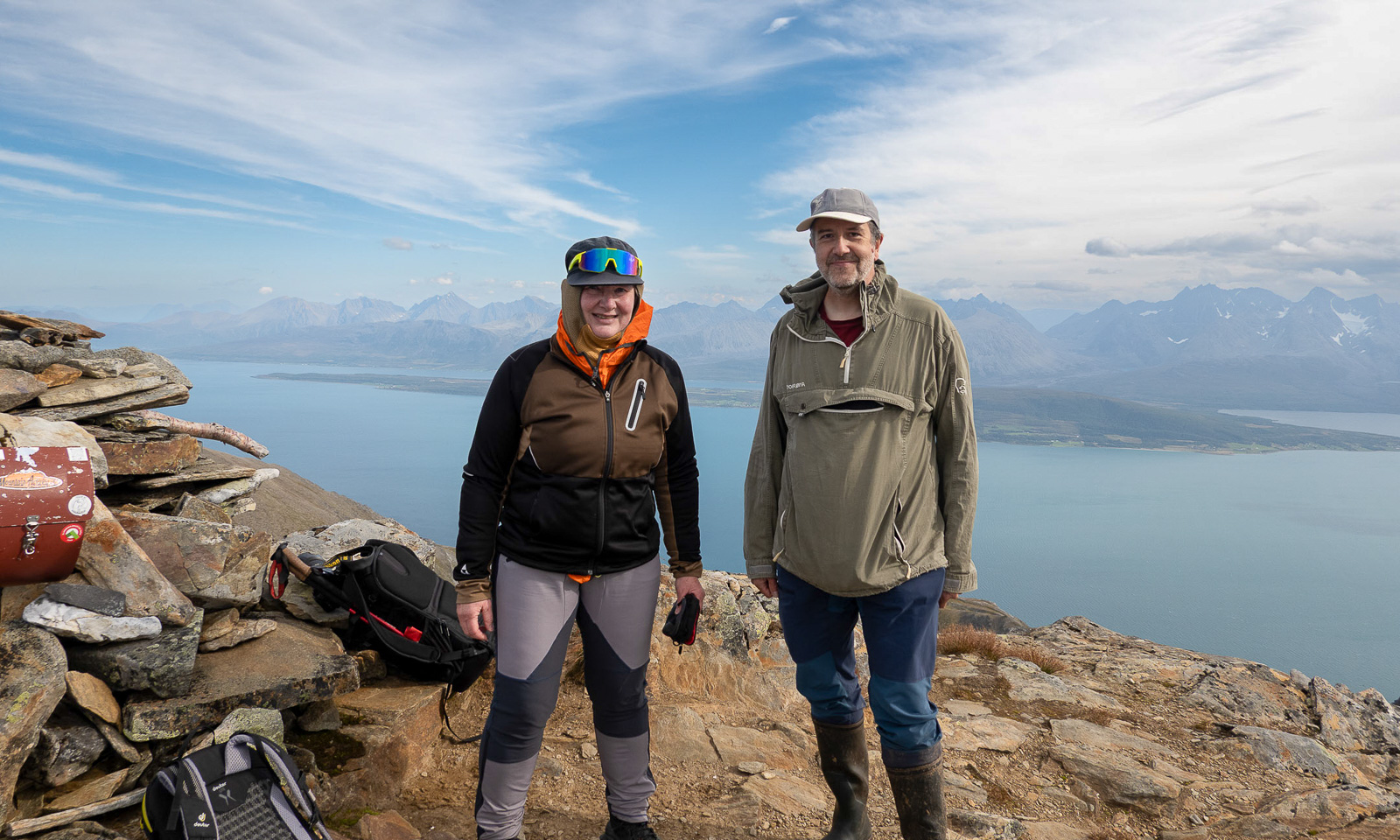
Finally we reach reach the summit of the south-western summit of Ullstinden (in some sources called Stortinden) at an altitude of 1078 metres. We drop our backpacks, drink some water and share some chocolate. We have been completely alone for the whole tour, but now a young woman is approaching. It is her taking the photo of us. Thank you, unknown hiker!

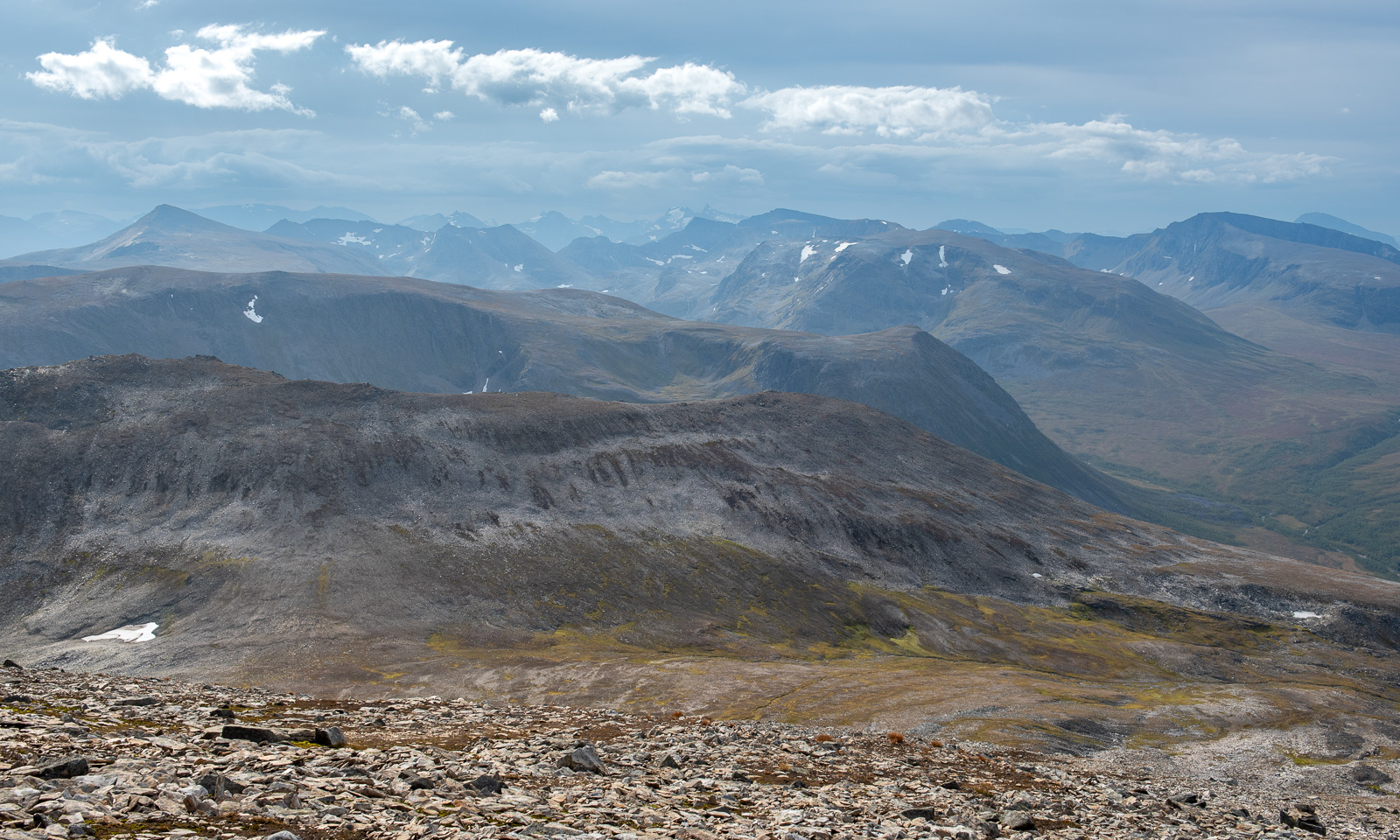
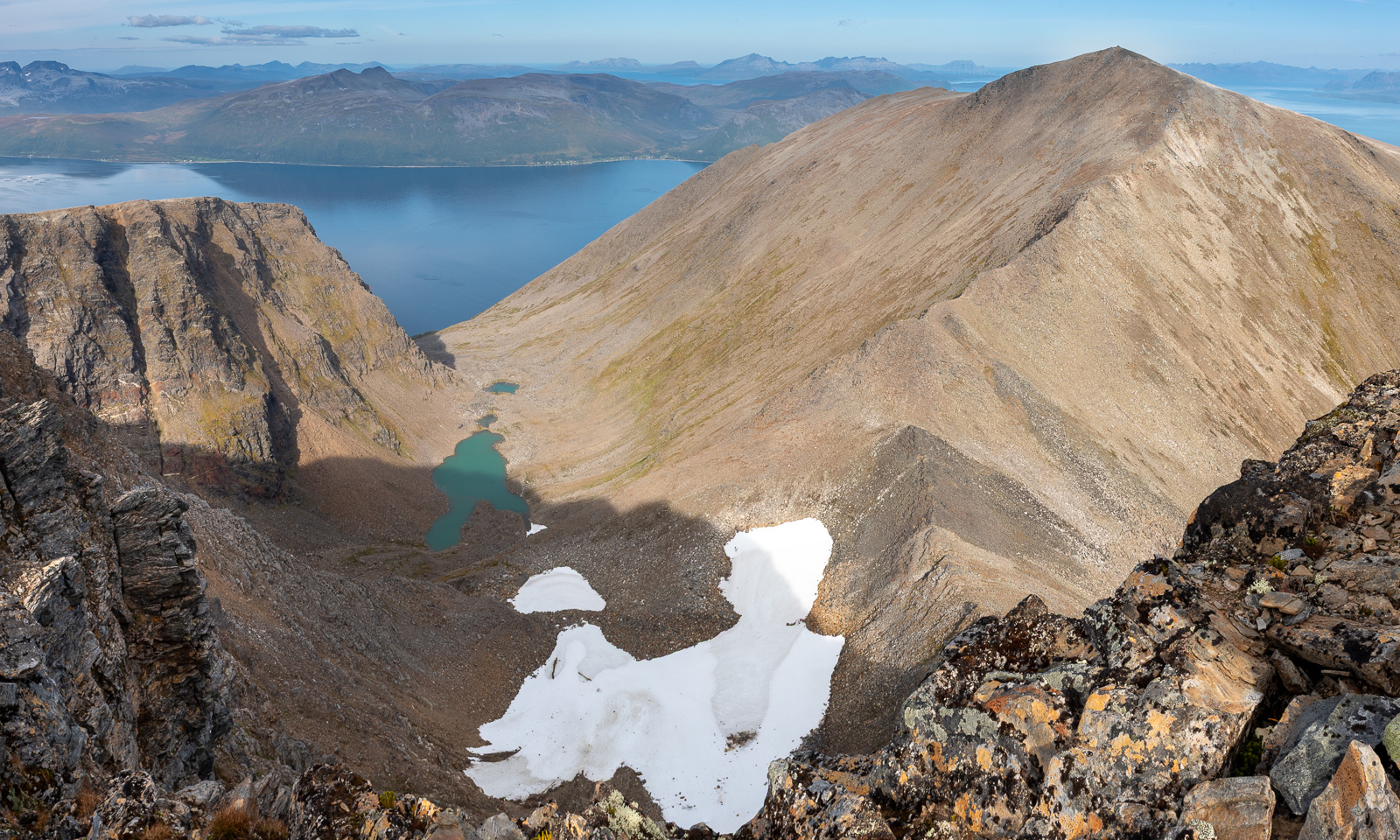
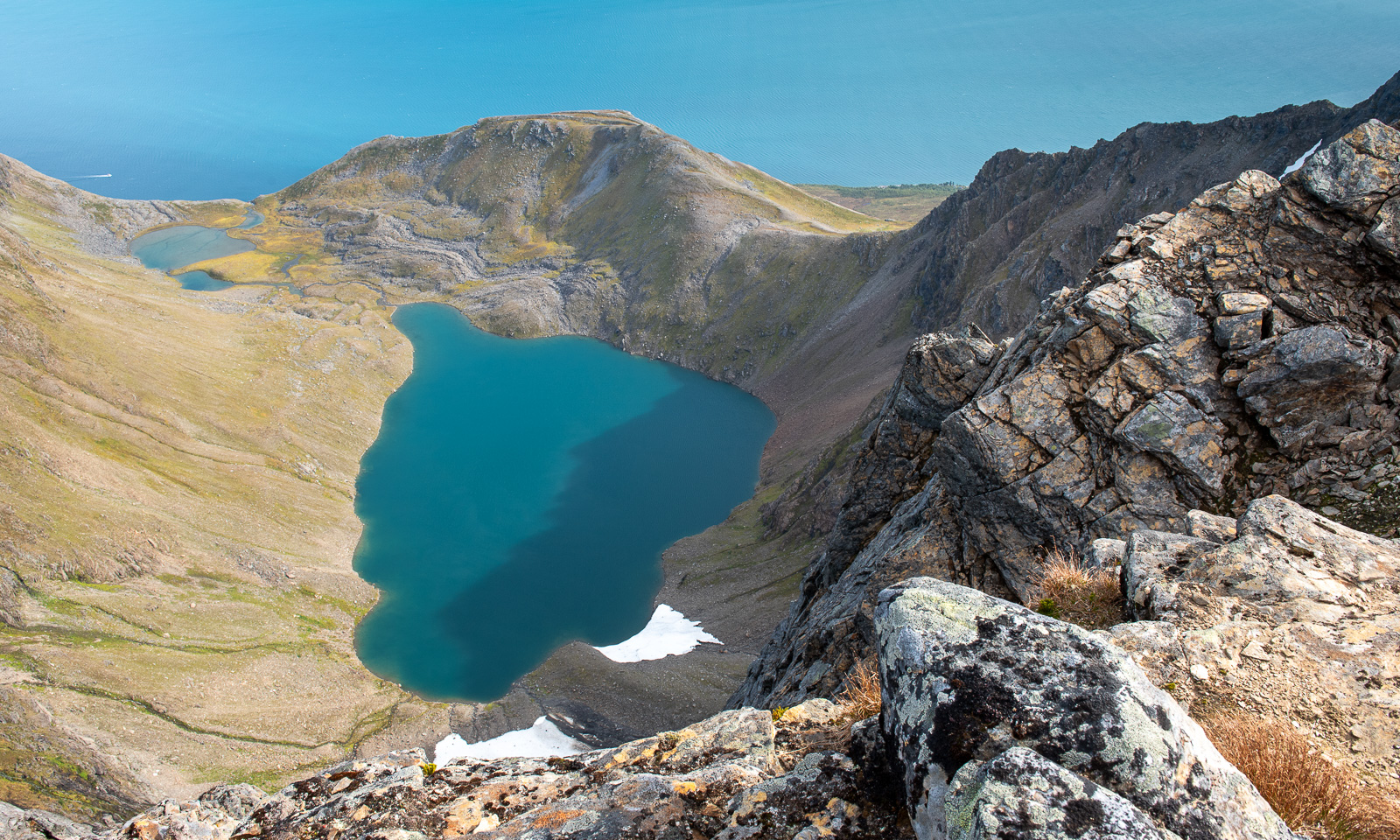
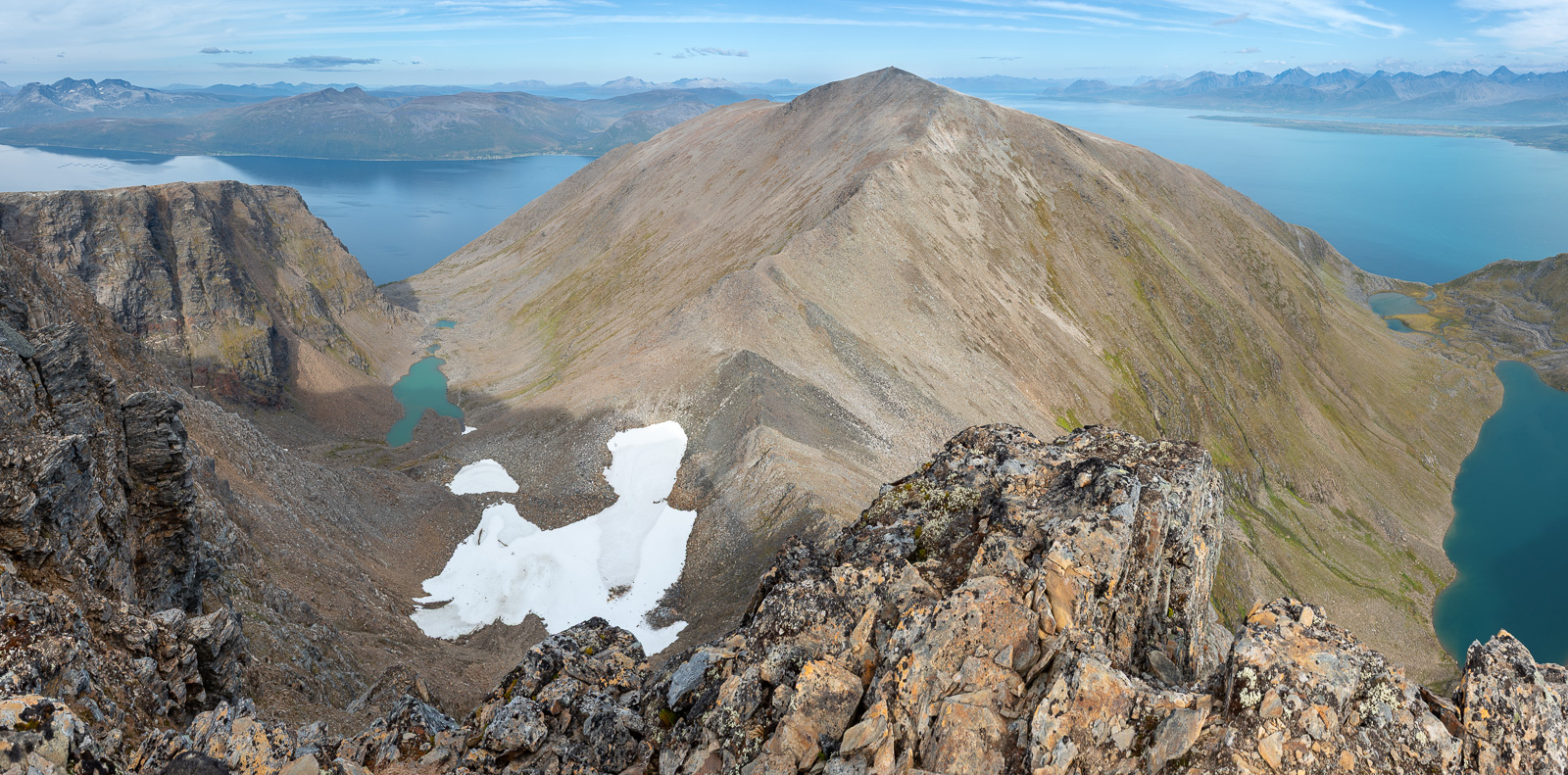
The view from the peak is absurdly spectacular, almost unreal. To the southwest we can see the slope we ascended. To the west, behind Ullsfjorden we can see the northern half of the Lyngen Alps. Also to the west, more than 600 metres below us – the lake Riehppejávri or Storelvvatnan with its intense turquoise water. To the north, the other summit of Ullstinden – 15 metres higher and there are other fjords and snow fields and mountain ranges and two eagles and … . I am speechless.

I take some photos. For the one with the lake I have to lie down, because there the terrain is much steeper than the comfort-zone part of me likes.

I even try to take a series of shots for a panoramic photo (thanks, Martin for your inspiration!) but I’m not content. I should have taken more time to find a better angle.

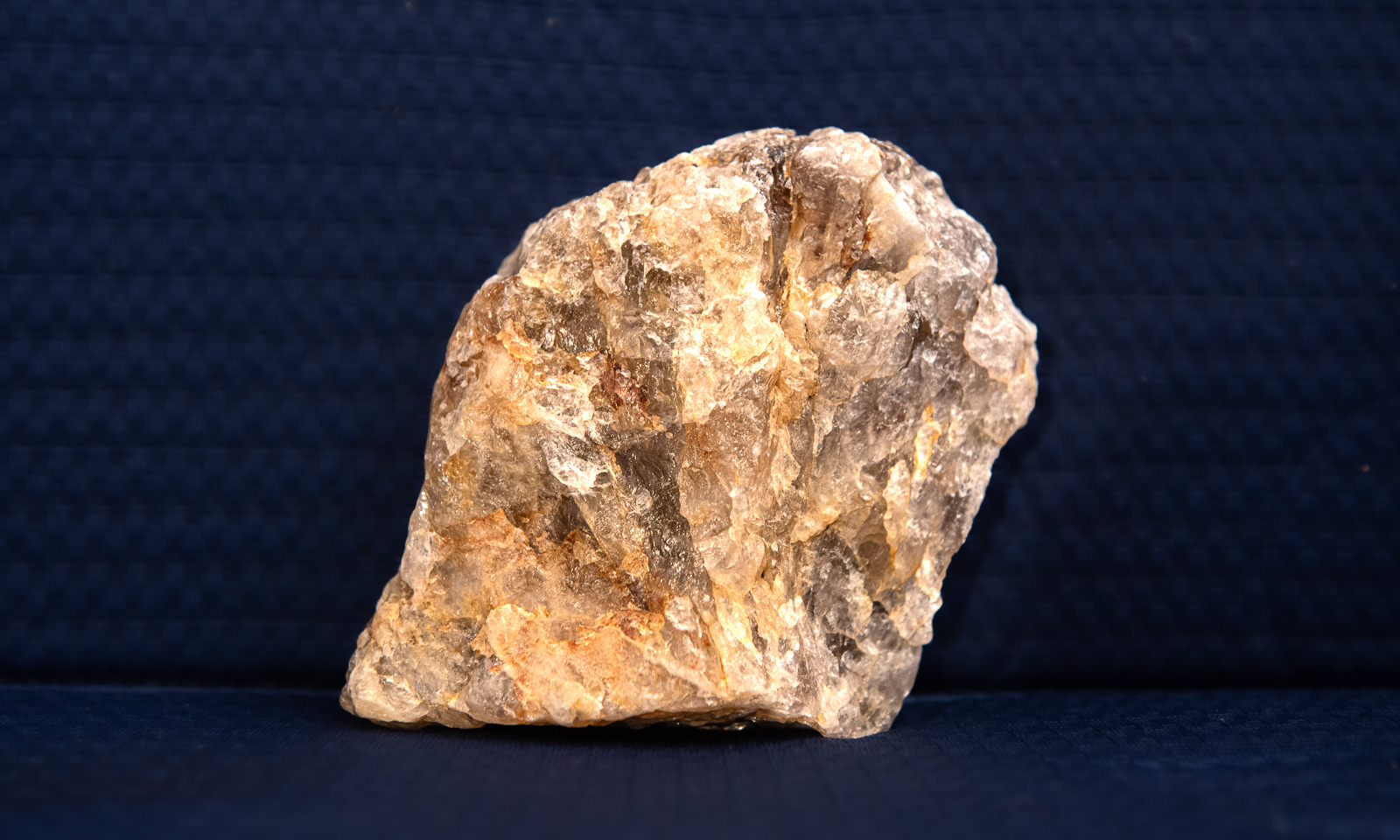
I was glad that I took my trekking poles with me. I hardly use them, but my knees appreciated it when I was descending about 950 metres in altitude. I have eaten the chocolate, I have drunk most of the water but now I had another weight to bear: A quartz rock of about one kilo that I found on the way up. Until it has found its final place in my apartment it stands on the coffee table and reminds me of this exhausting but pretty spectacular mountain tour.

Thanks for the great hike, Christine. Takk for turen!


A summer overnight stay at Blåkollkoia cabin

The weather in Tromsø for the weekend didn’t look promising, but for Friday it did. I leave work just after lunch so that Annika and I can hike up to Blåkollkoia cabin together. At half past one I park the car in Tønsvik. From there, it is an 8 km walk up to the cabin. The first 2½ km we follow a gravel road that leads to some private cabins.

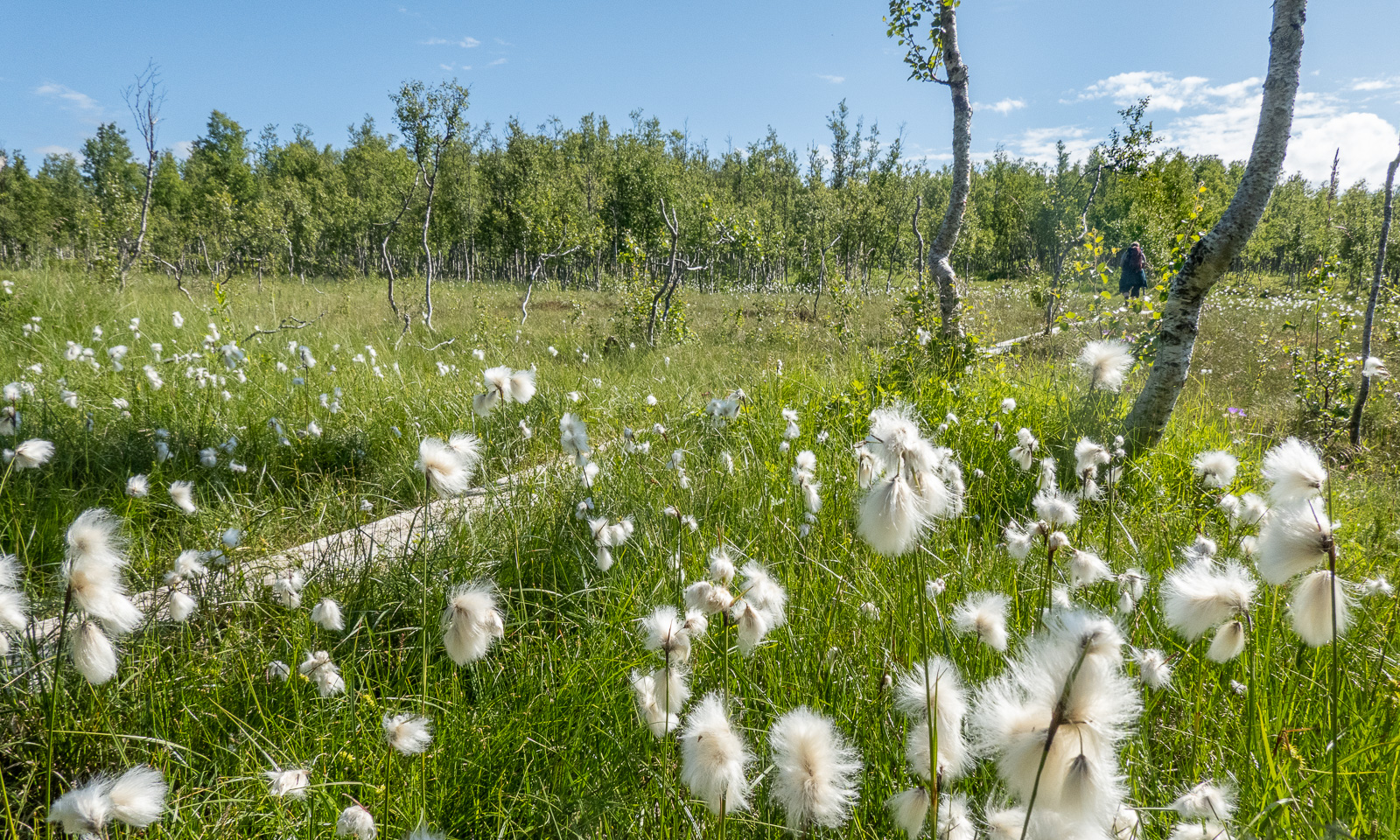
Then the road turns into a marked hiking trail. It leads through fern thickets and birch forests; it crosses grassy plateaus and bogs with cotton grass.

It is perfect hiking weather. The air is not too warm, but the sun is quite strong and we are glad about the occasional wind cooling us down. There are hardly any mosquitoes, but plenty of flies seem to fall in love with us and follow us everywhere.

Below the cabin we use the bridge to cross the river Goahtevuomieatnu/Tønsvikelva. We were here in August 2024 and took a bath; now the river carries a lot more water.

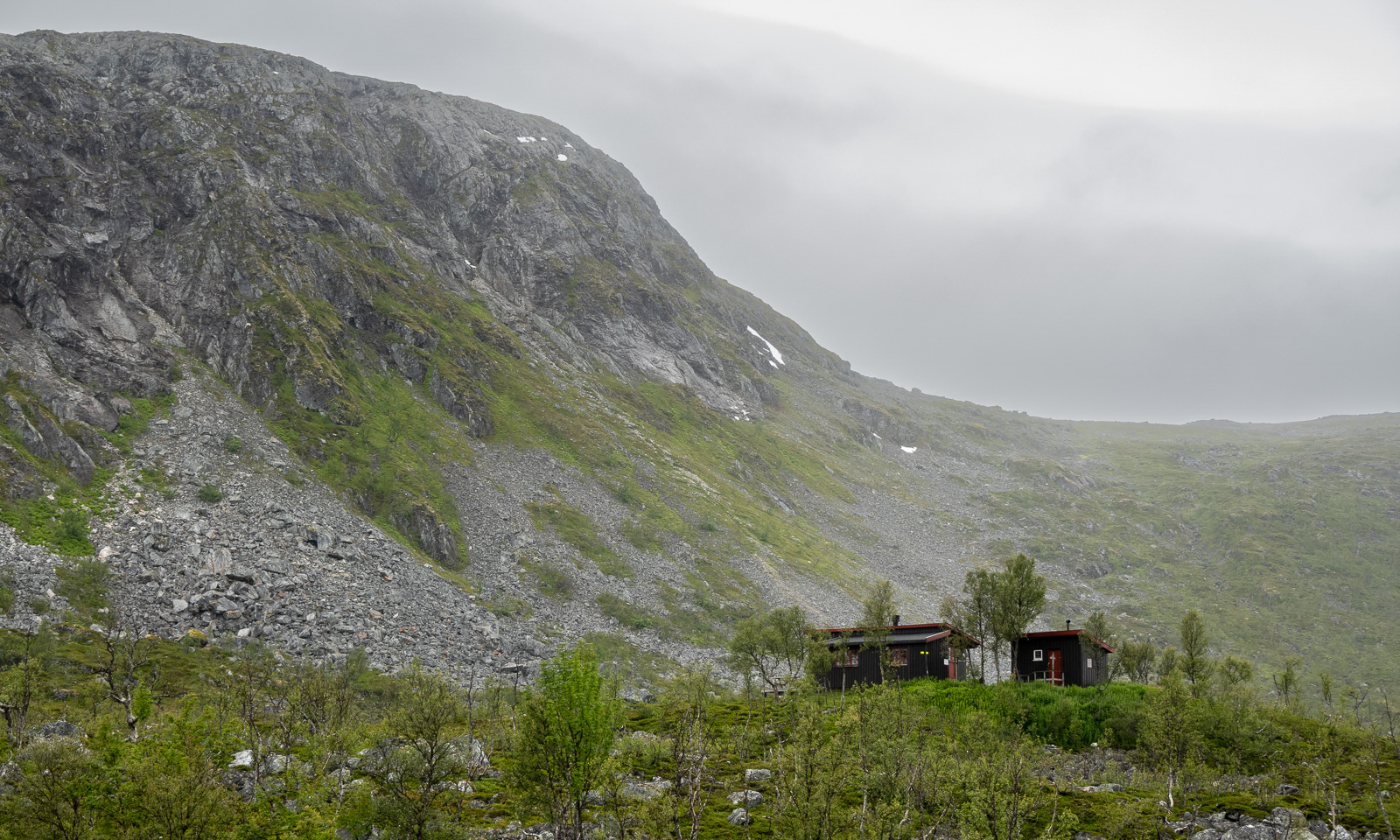
Then we arrive at the cabin. It is locked and we use the key provided by DNT (Den Norske Turistforening) to enter. We have booked two beds in Room 2.

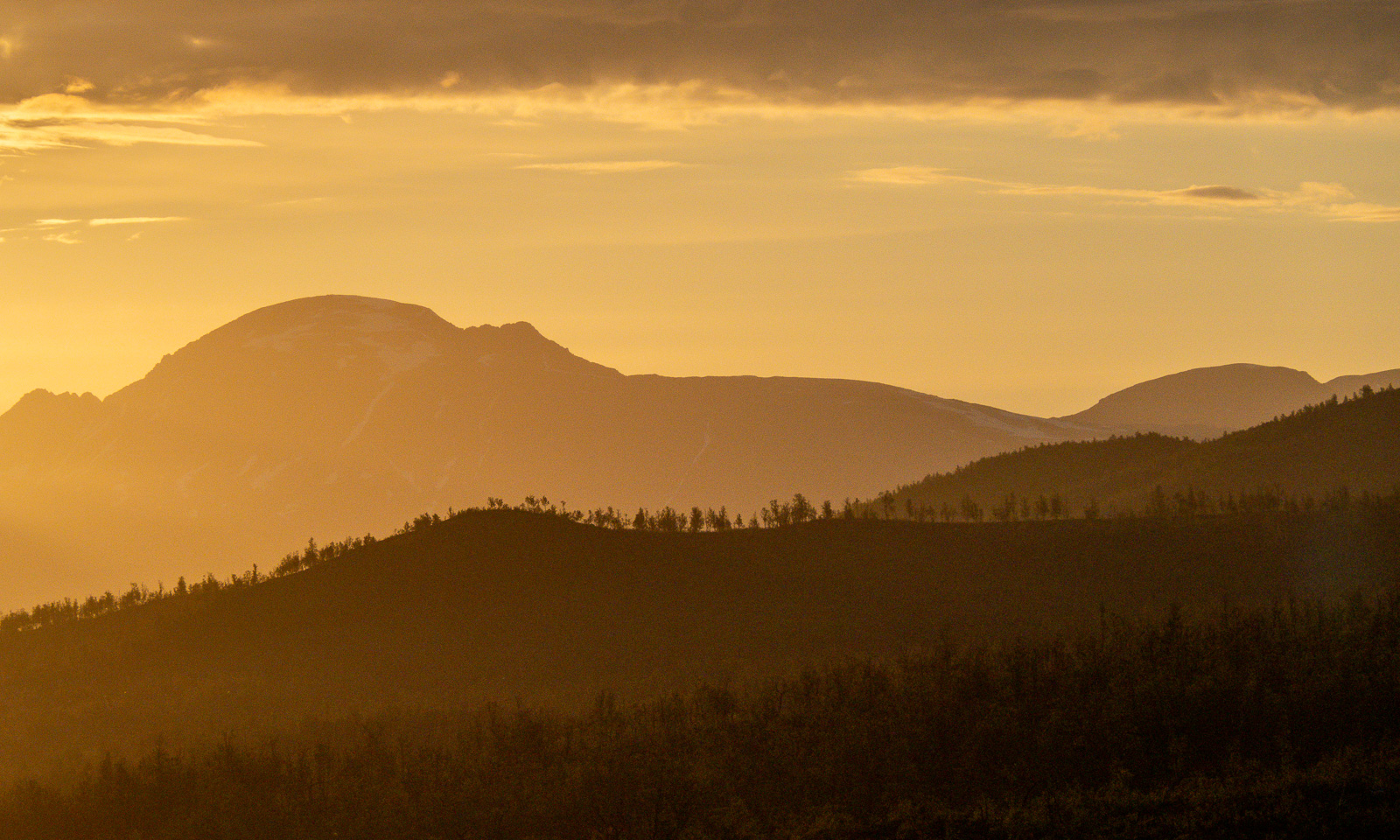
I go outside several times to take photos, while the sun is slowly sinking lower and lower. It is still polar day in Tromsø, so the sun won’t set. I sleep a bit but after midnight I am out again enjoying the beautiful scenery that is illuminated by the low sun in warm colours.

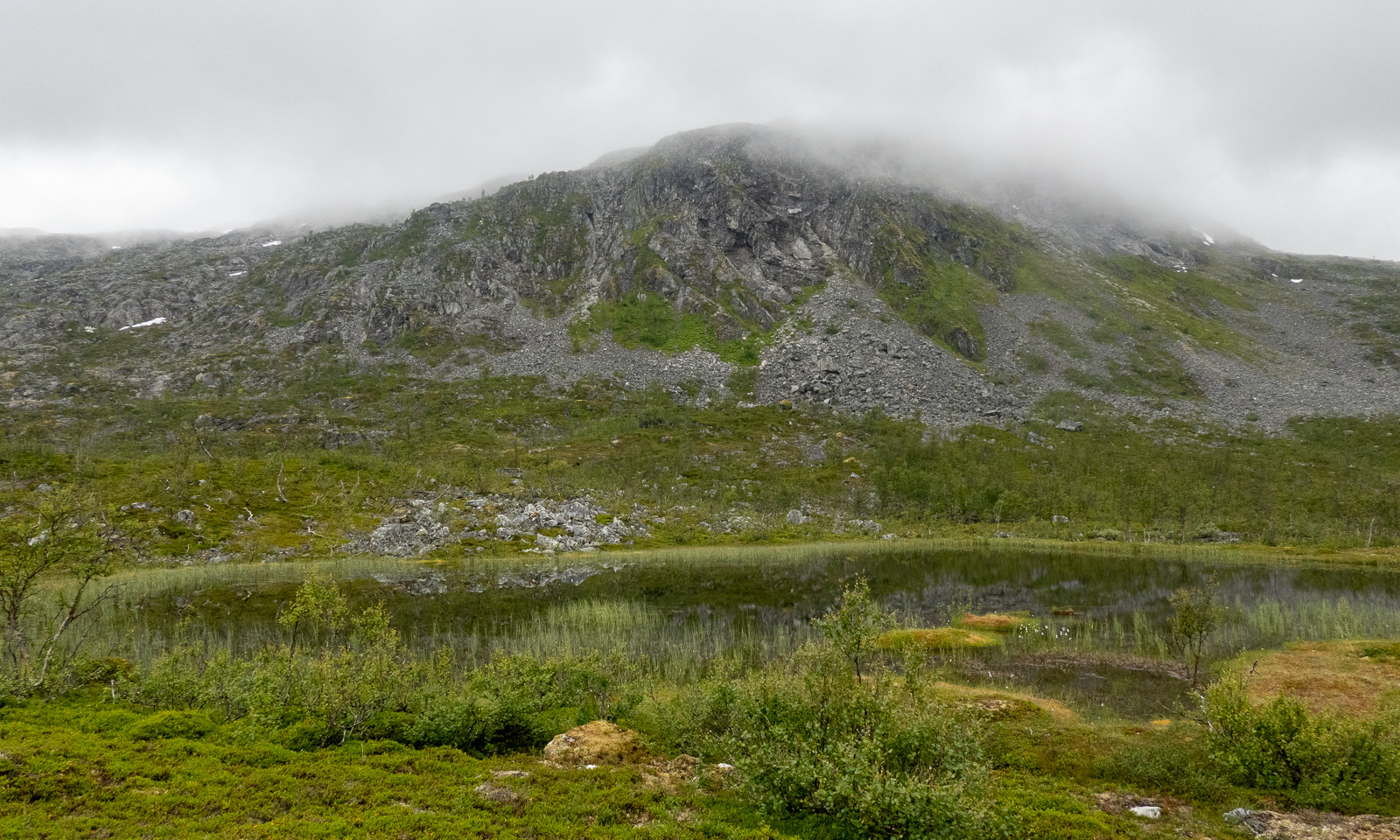
The next morning the scenery is quite different. The sky is overcast, some mountains hang in the clouds and it has started drizzling a bit.

After a two-course breakfast (fried spaghetti and muesli), Annika and I pack our things, clean the cabin with the other guests and start our tour back to the parked car.

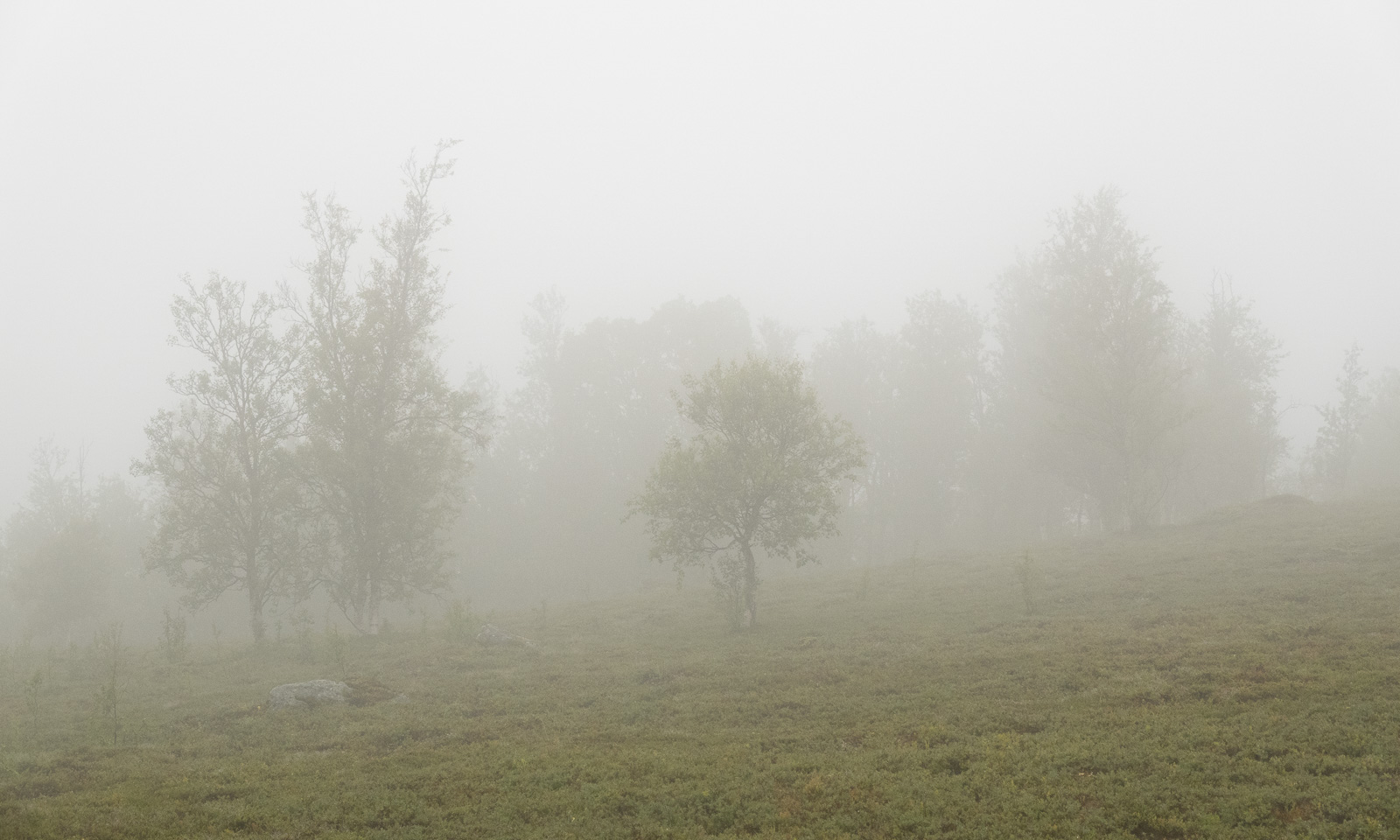
First it is just overcast, then it becomes foggy and in the end, when we are on the gravel road again, it starts to rain.

Luckily, a friend of ours lives nearby. Here we can change into dry clothes and we get hot soup and coffee. Thank you, C. for the food and good company! A perfect ending for a great hiking tour that took less than 24 hours.


The sea and the mountains

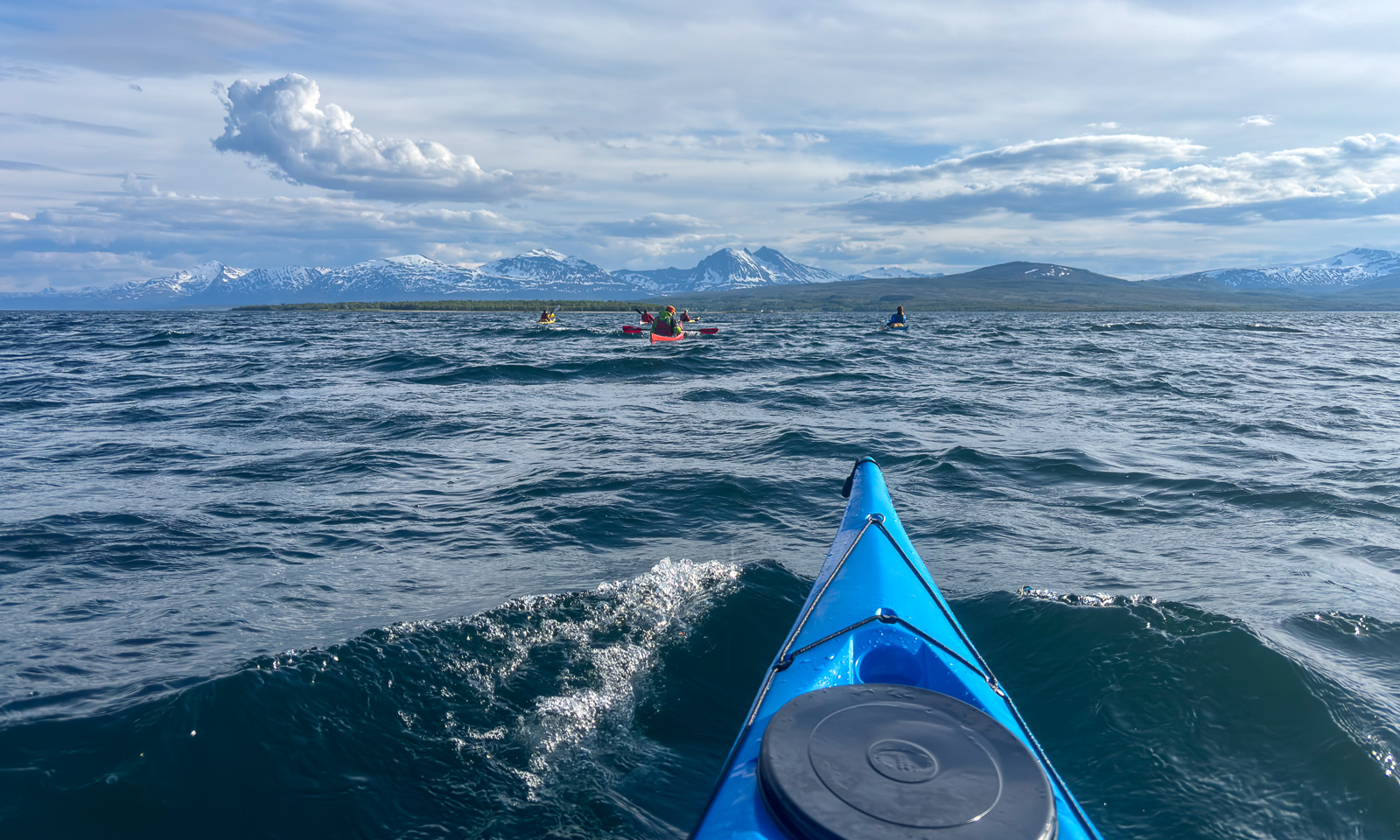
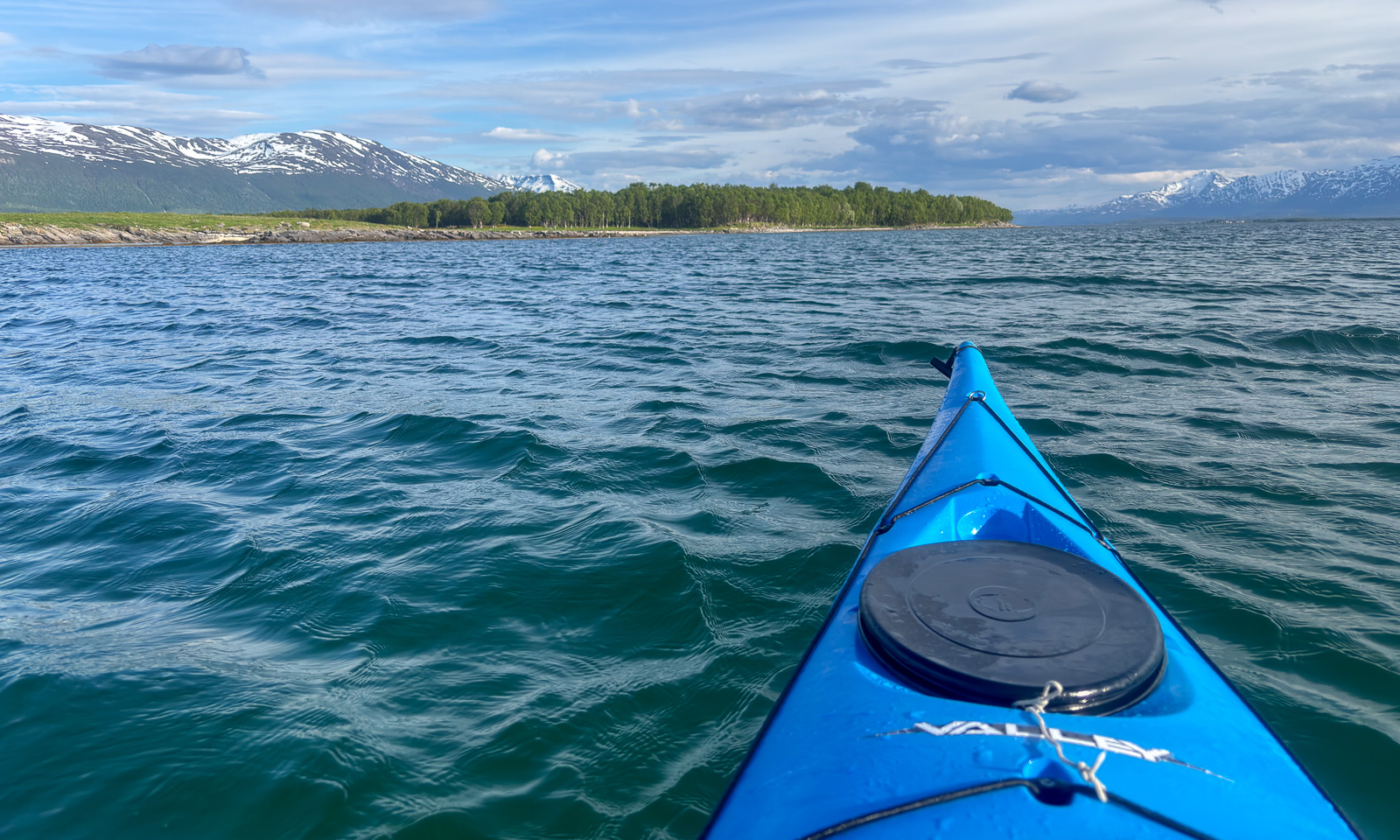
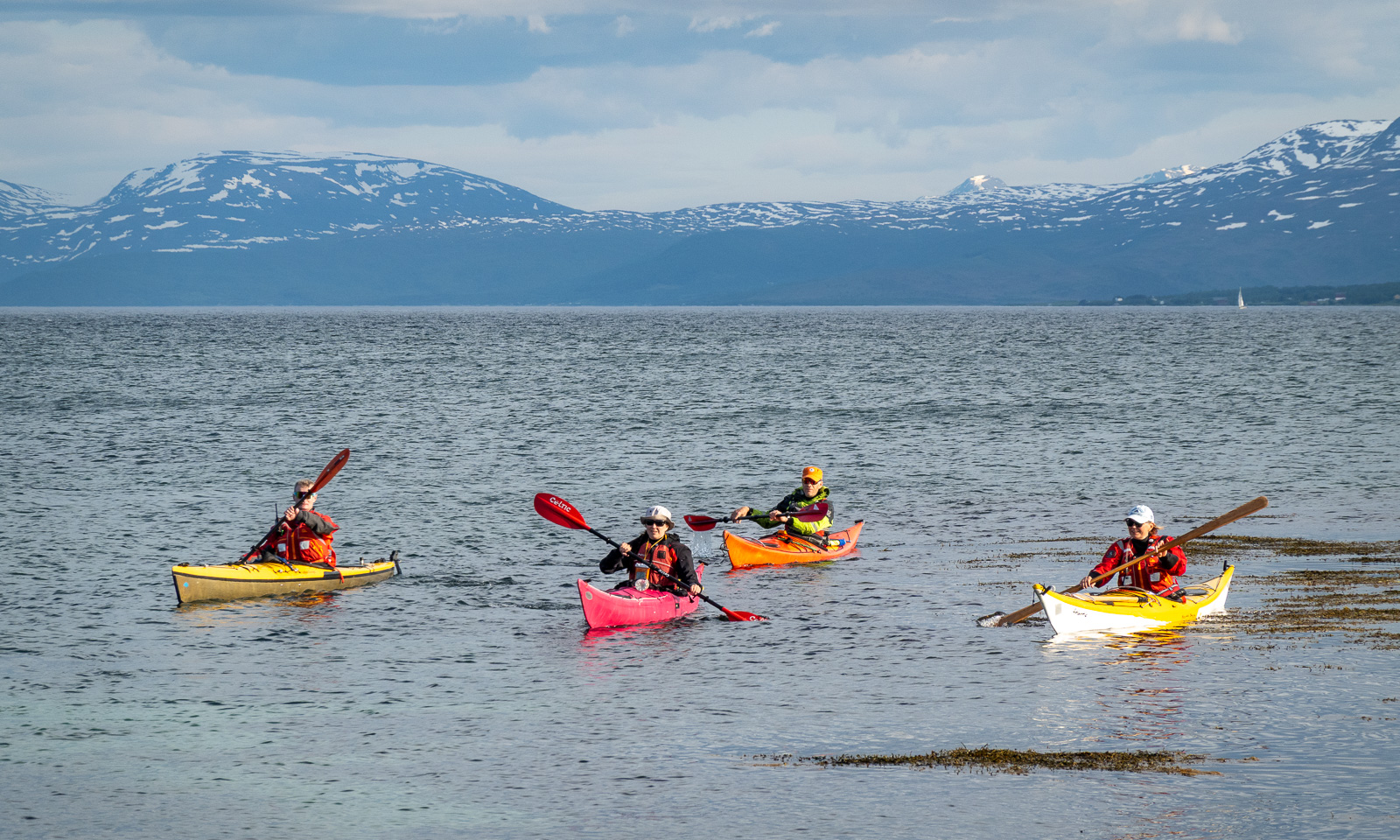
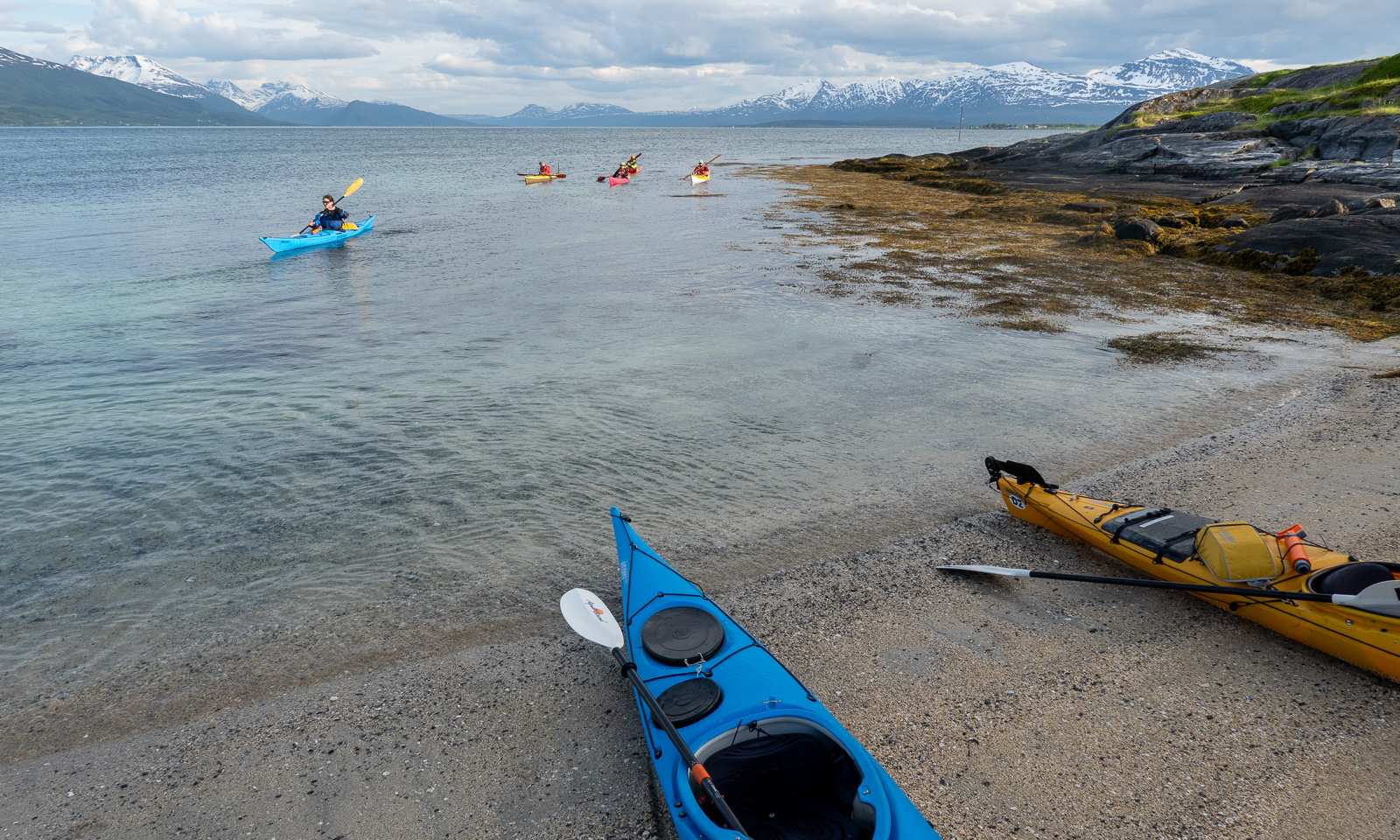
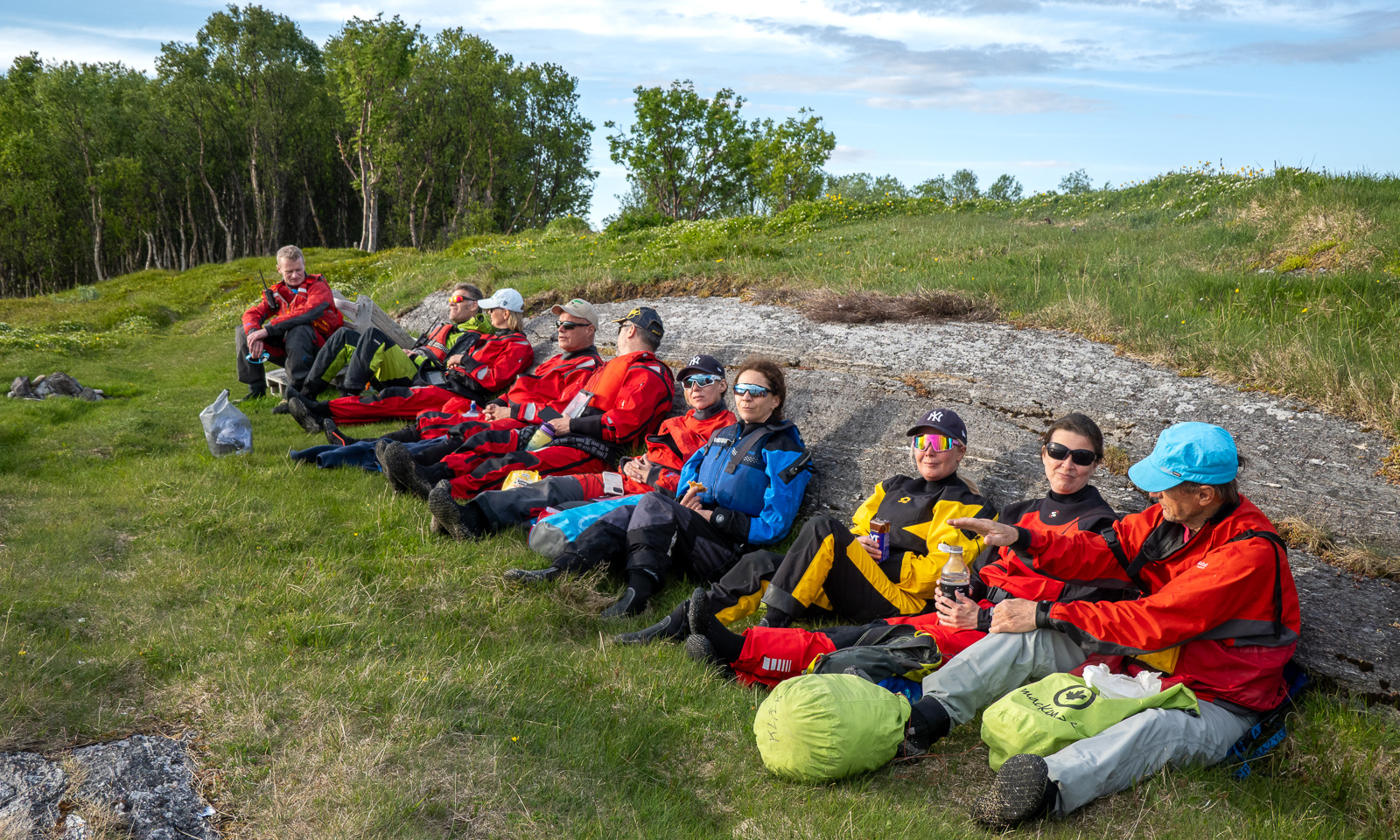
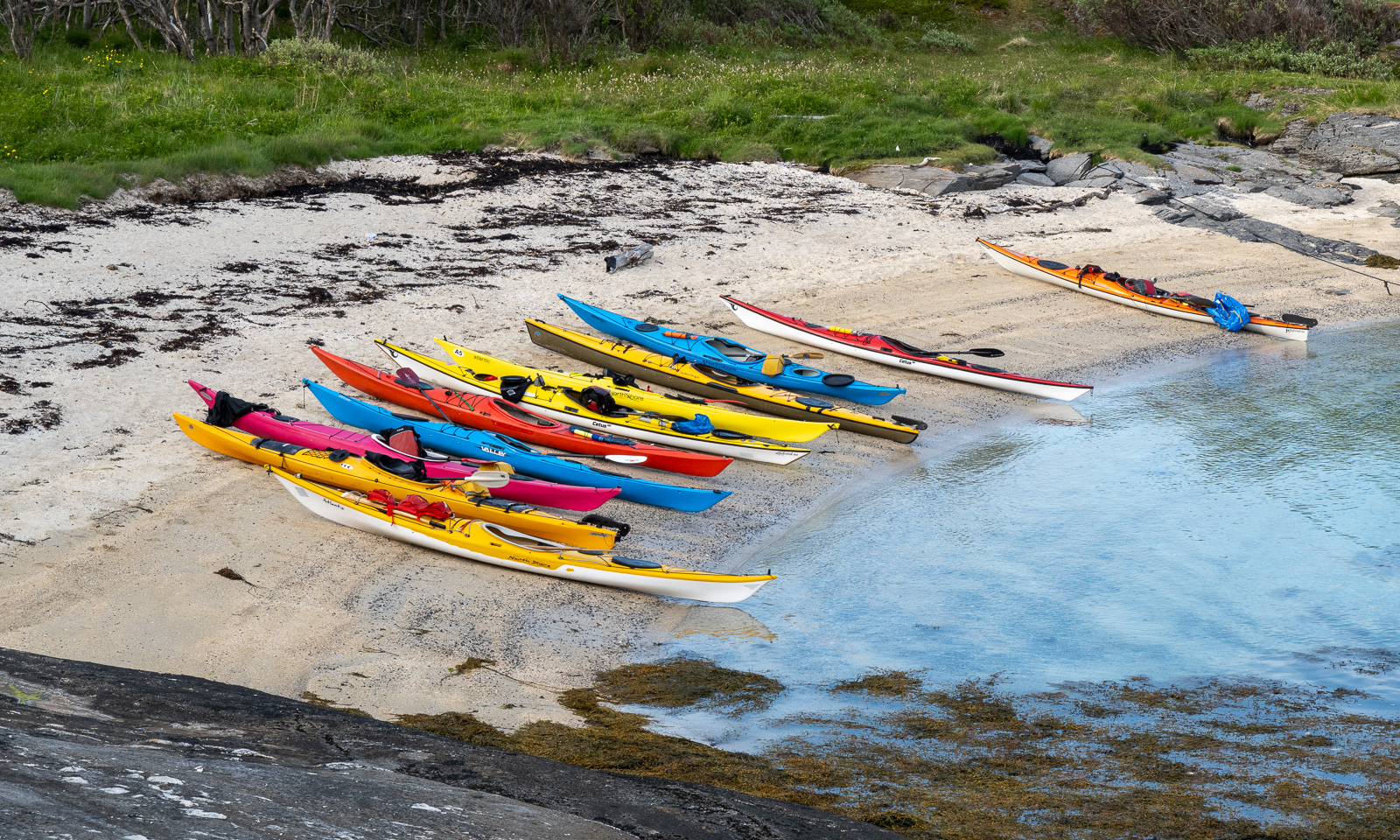
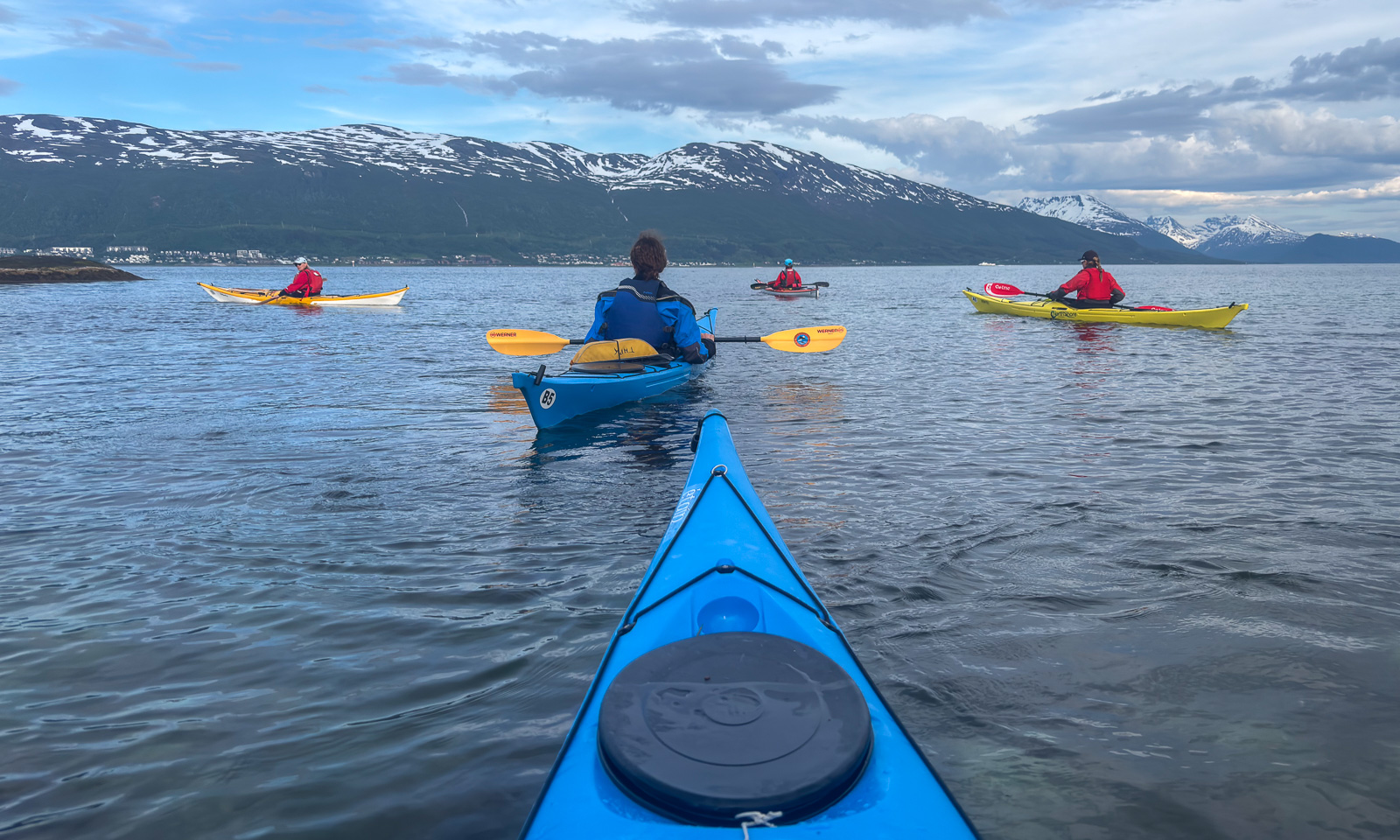
Back in Tromsø after some travelling I joined the “Thursday paddling” organised by the Tromsø Sea Kayakers Club. We were eleven kayakers and it was proposed and we decided to paddle to Grindøya, one of the common tours.

On Sálljnjárnuorri / Sandnessundet, the sound between Tromsøya and Kvaløya, it was windy and short waves came from the right. Here I preferred to hold my paddle and didn’t take any photos. In the lee of Grindøya, I started taking photos again.

We paddled alongside the island and took a break at the southern tip.

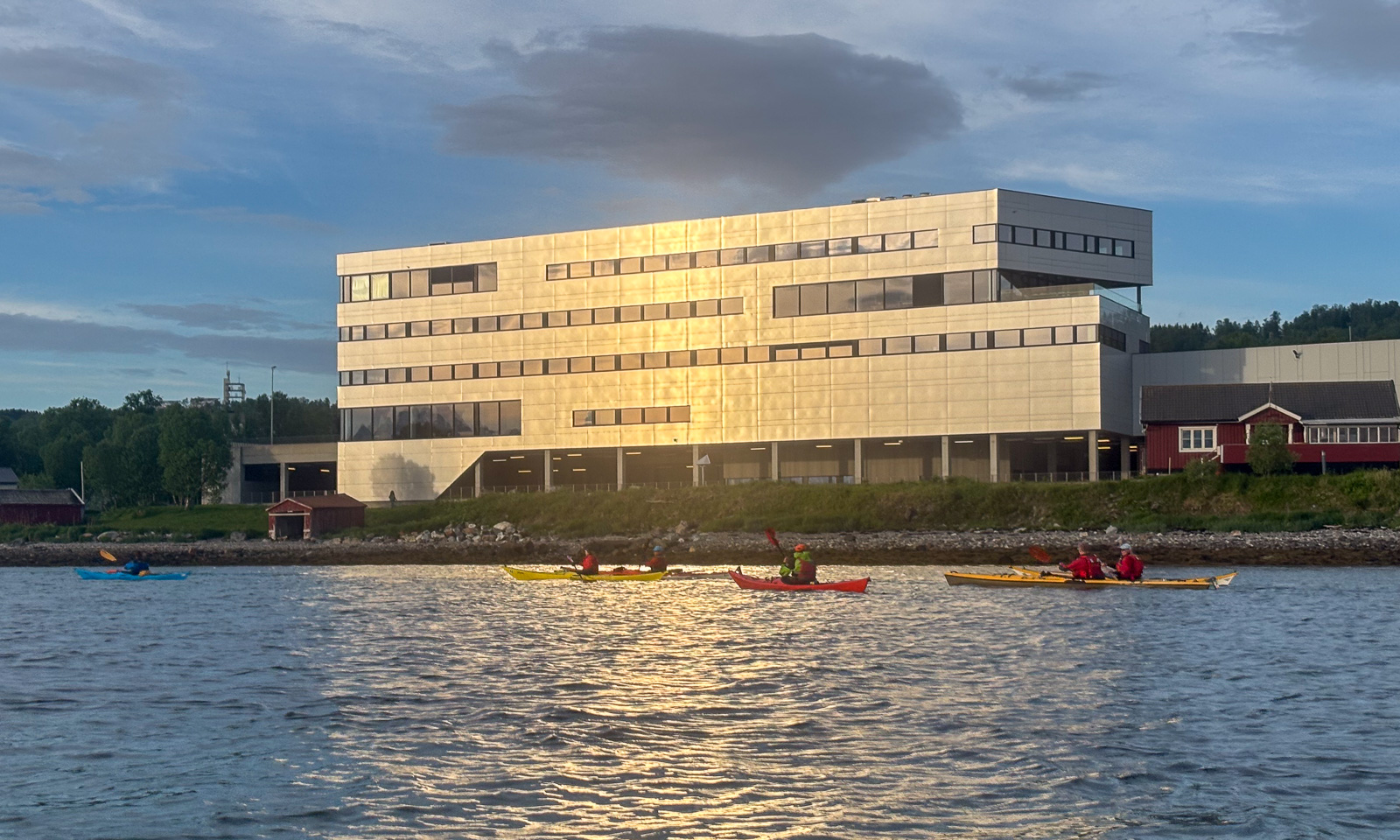
After half an hour, we continued our tour. The wind had calmed down and so did the waves. We paddled around the island and then headed to Monsterbygget (the monster building), a landmark on Tromsøya often used for kayaking navigation. After three hours, we were back at the boathouses.

Next day, another tour. I stopped working early to meet my friend Christine. We took my car to a parking area on Kvaløya and went up the Sørtinden. This is a short tour, about 4 km long with 250 metres of elevation gain., but you are immediately in the mountains.

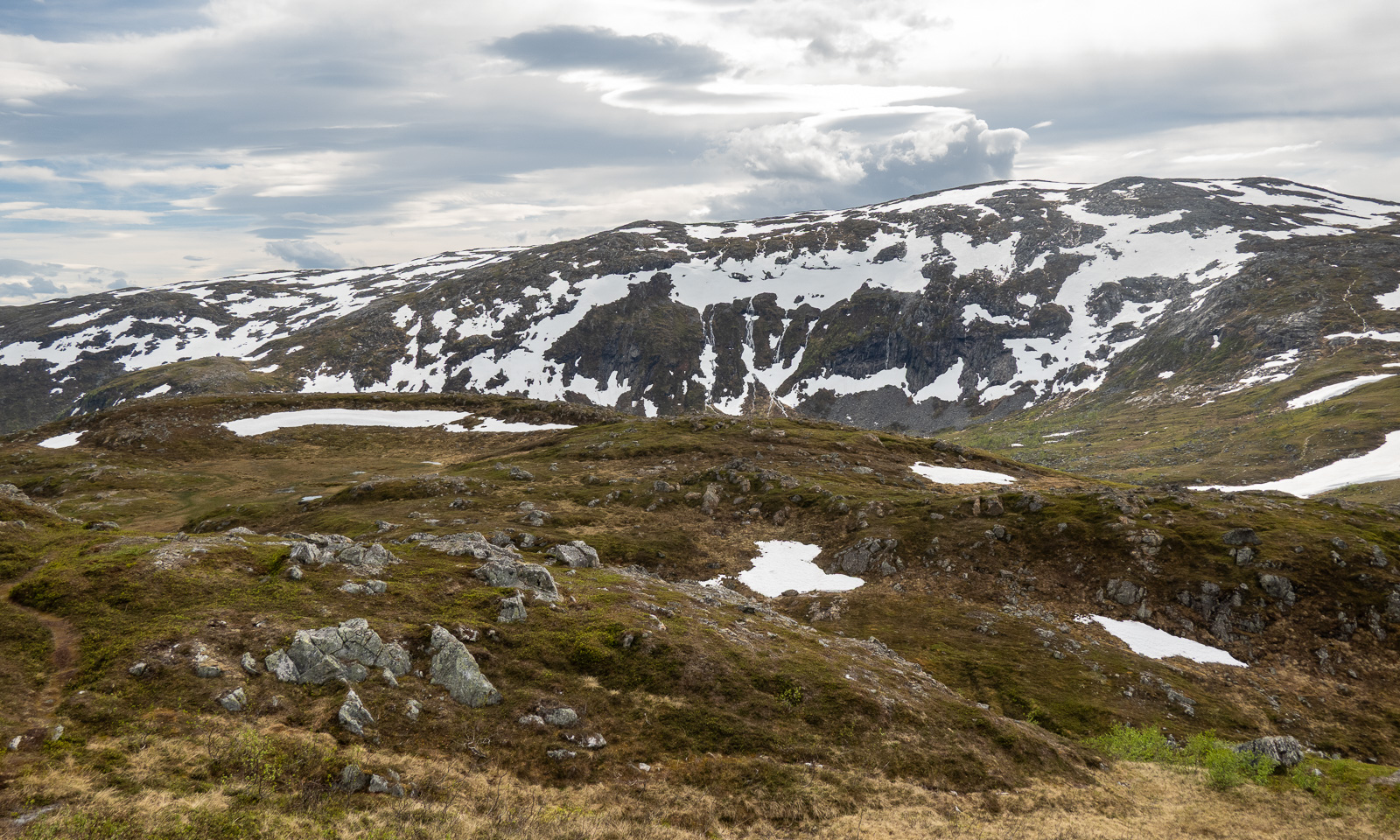
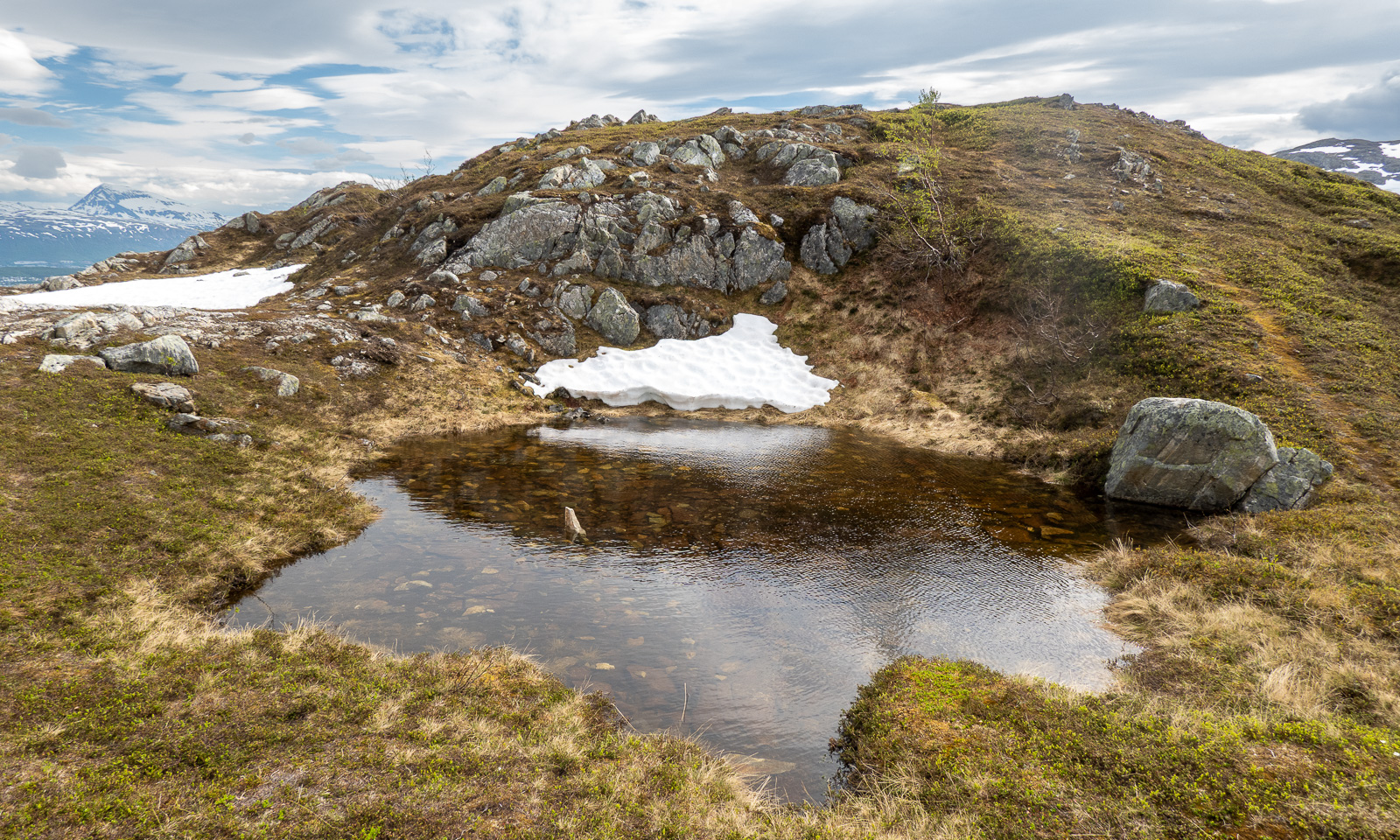
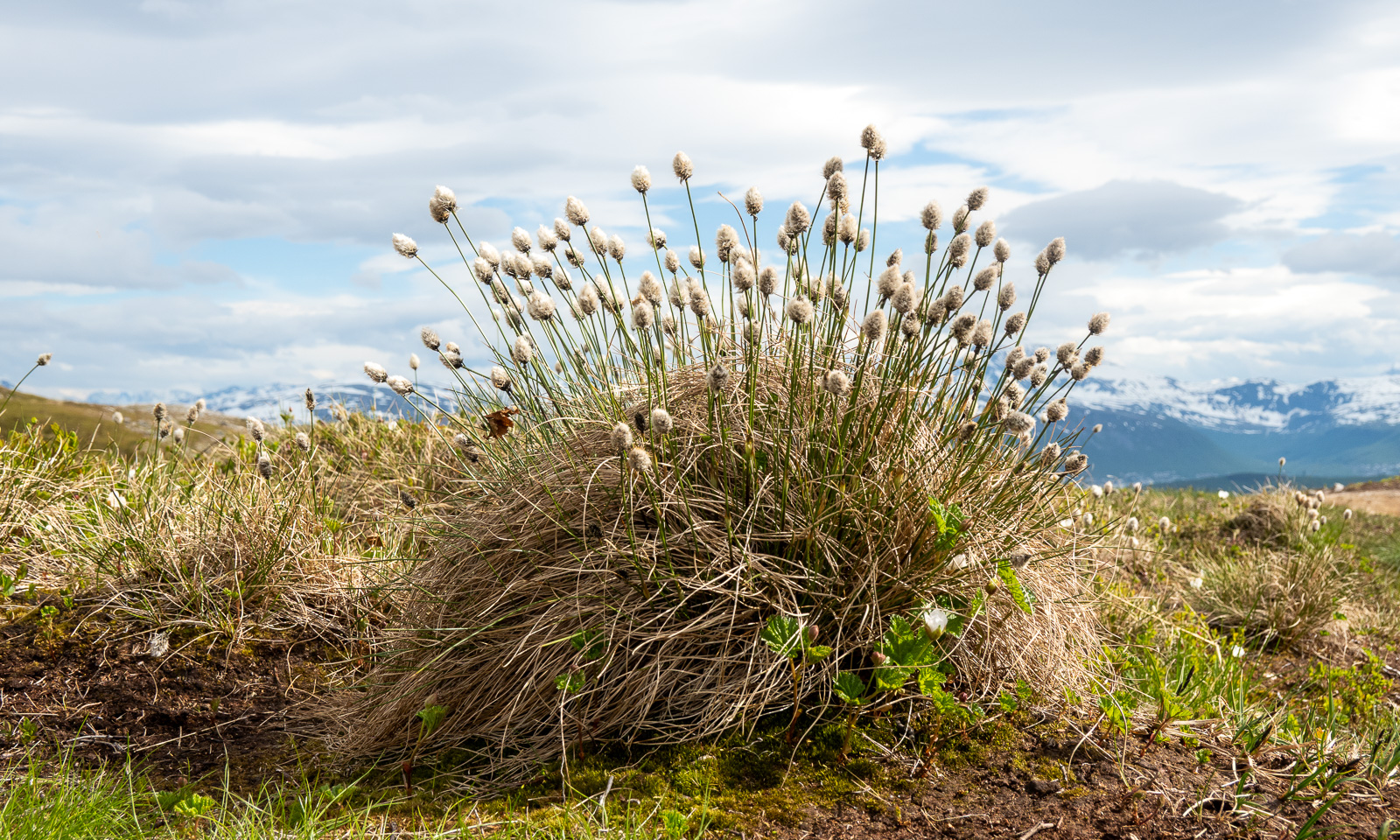
Some parts were still covered with snow while others were covered with carpets of flowers. Even the cottongrass was blooming.

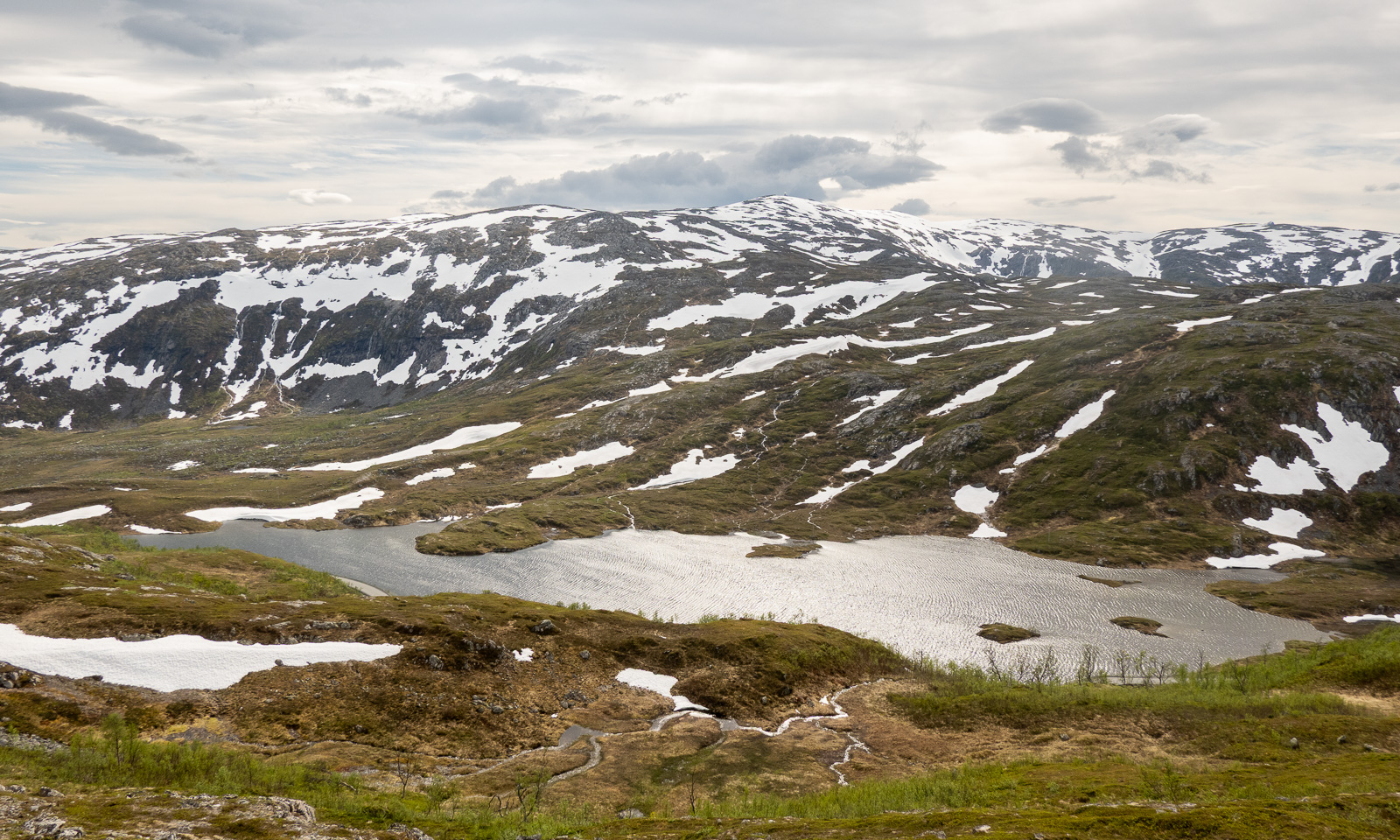
Gaining altitude, we had views of the lake Finnvikvatnet and the mountains behind, such as Kjølen.

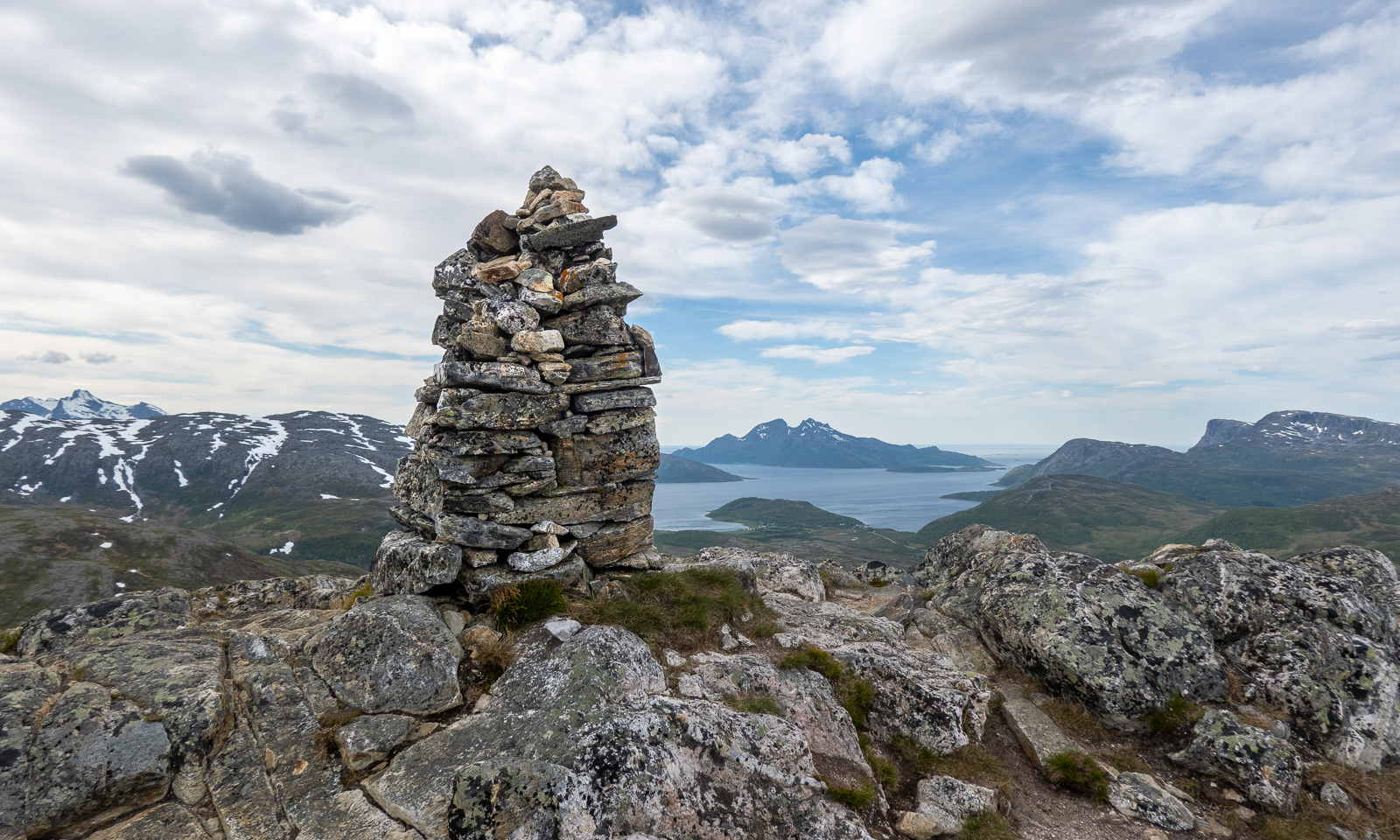
The top of Sørtinden is a bit like a cliff. Here, you also have a view of the sea and the island Vengsøya. After a rest on the windy summit, we went back the same way.

Tromsøya 21 May

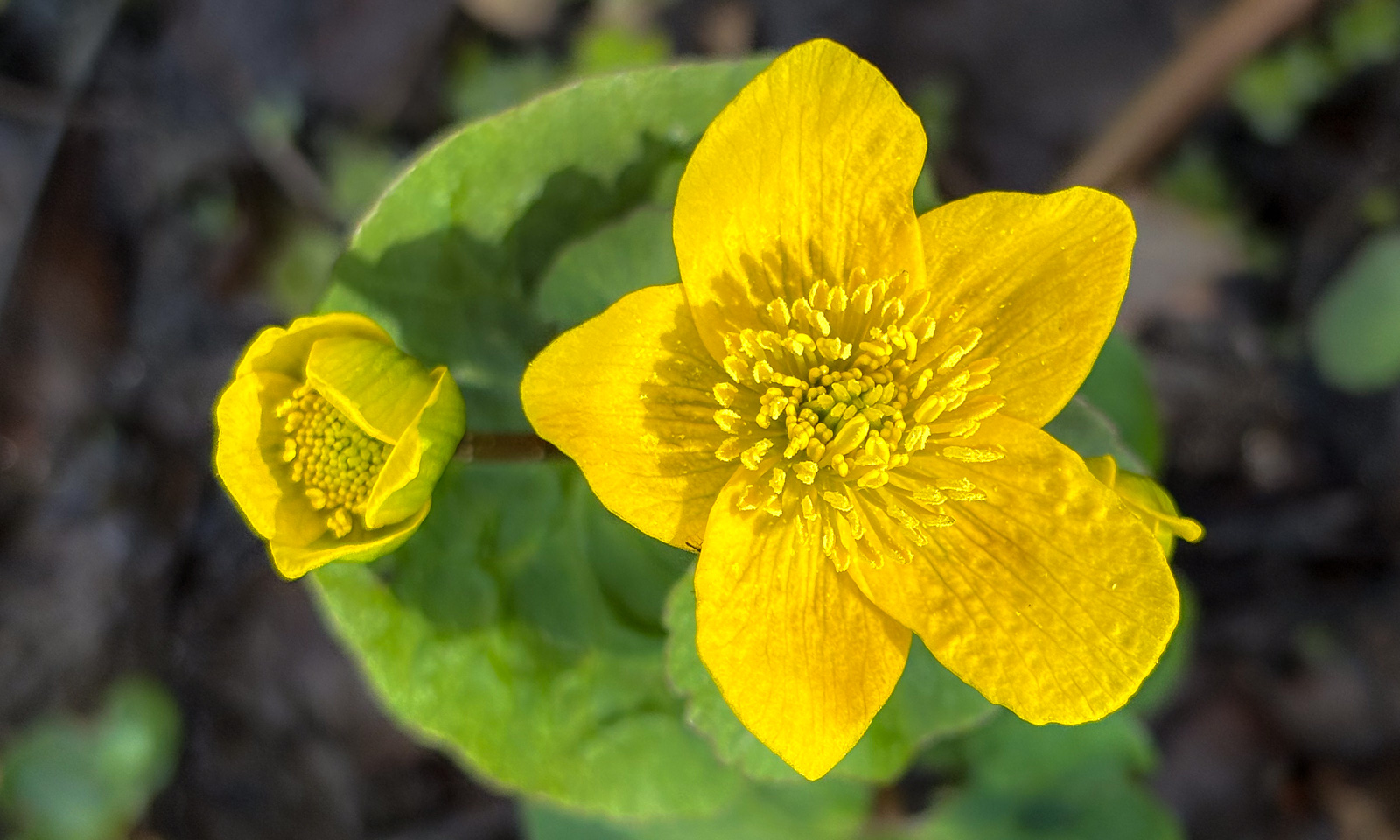
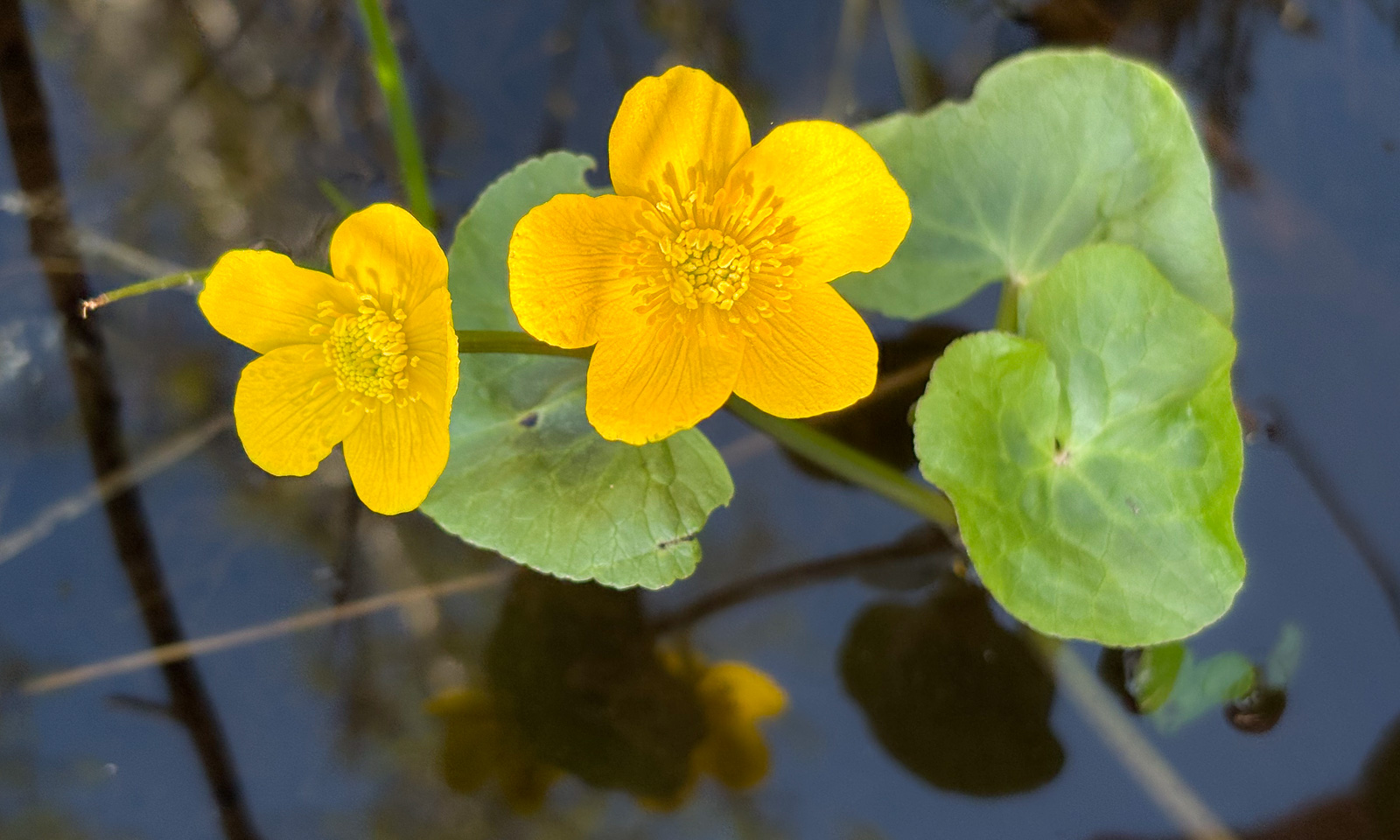
Yesterday, I took a walk in the sun on Tromsøya from my doorstep. Will the snow finally be gone? What I first found was marsh marigold in bloom. Of course I had to take some photos, as it is one of my favourite flowers.

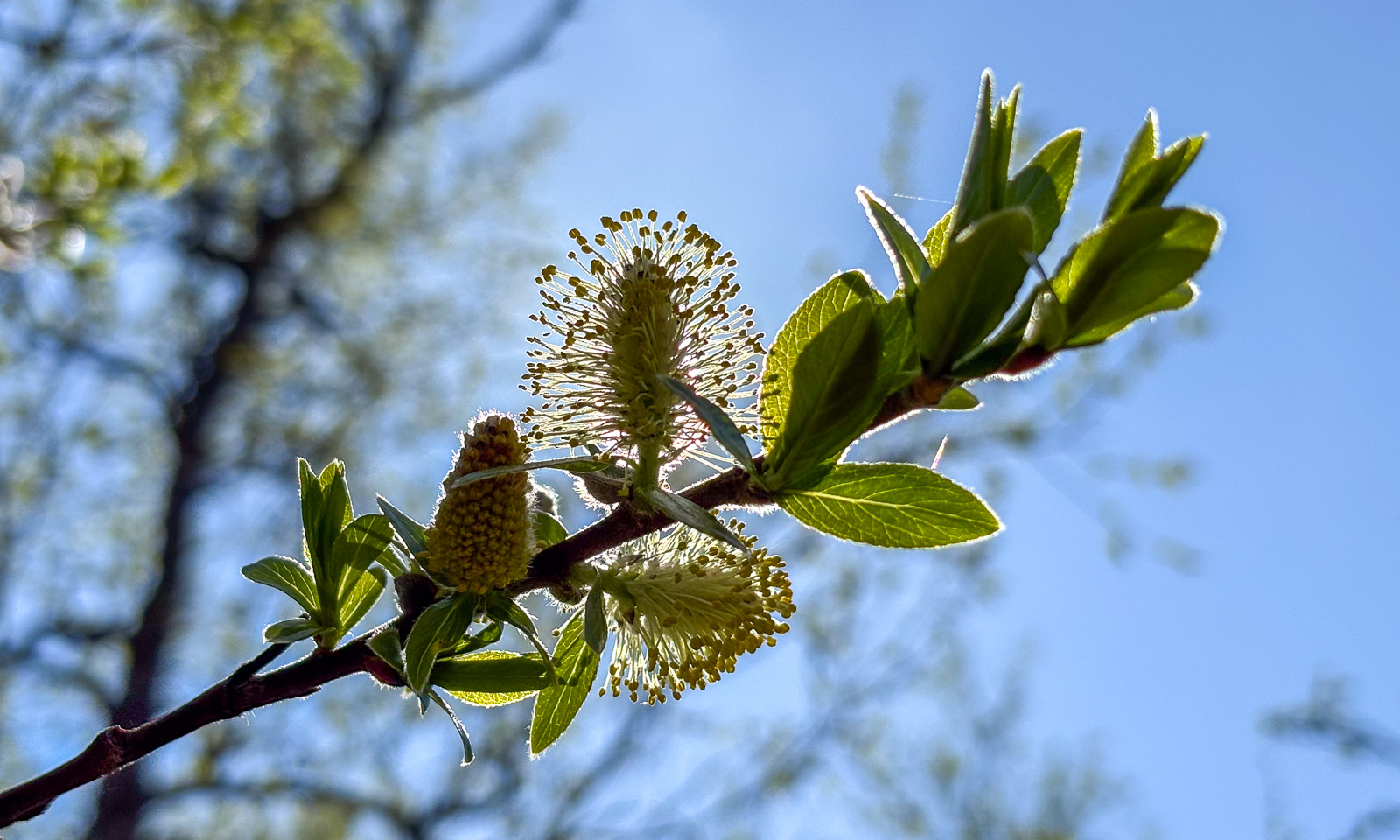
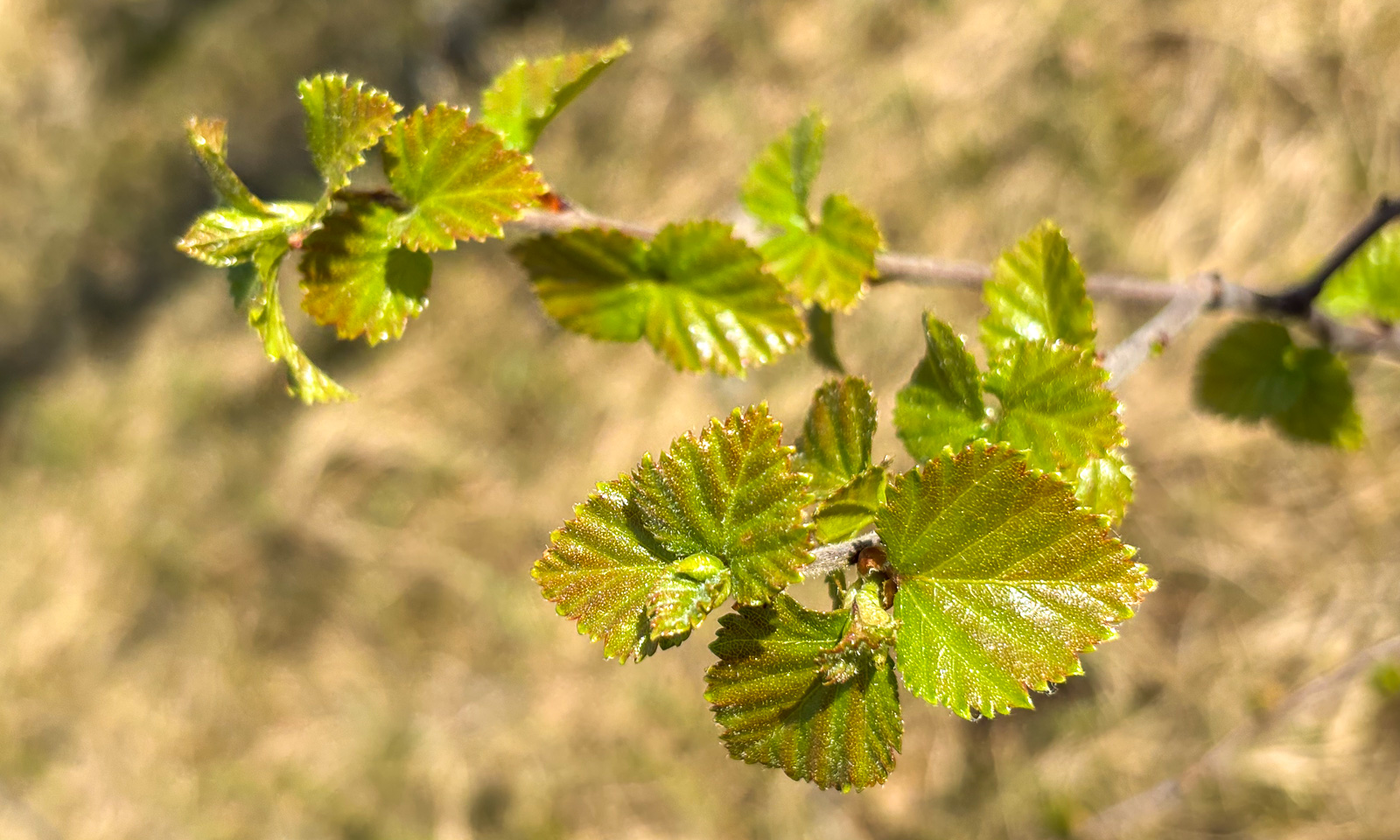
It is not the only change. The island is finally getting green. Finally, the birches have decided to open their leaf buds and the trees are clad in a fresh green. What a difference from the barren trees from my hike one week ago.

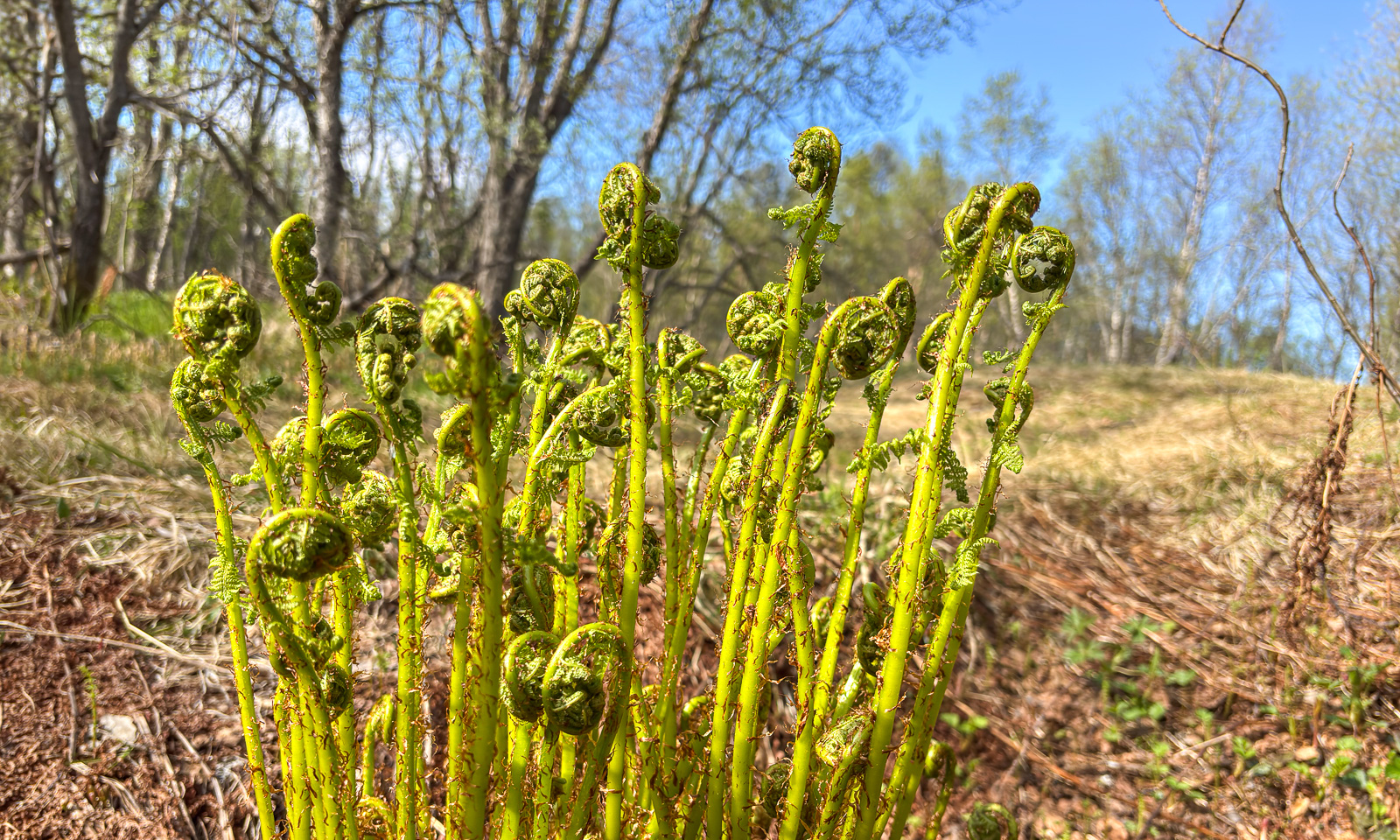
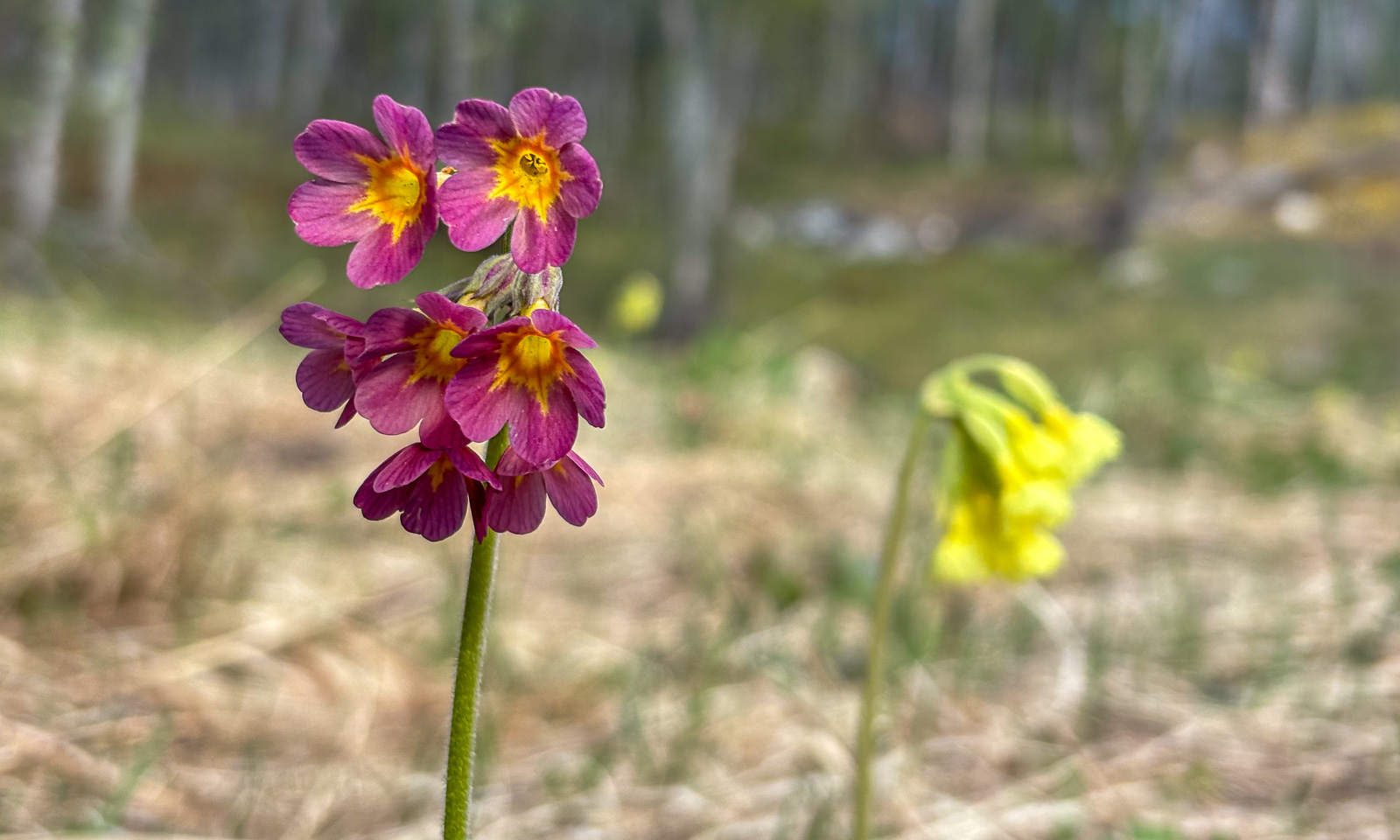
Other plants had started their spring activities as well. While the common cowslip had been blooming for weeks—sometimes you find a purplish one—the fern fiddleheads have not yet started to unfurl.

After 2.6 kilometres I found it. One of the very last patches of snow, located on a northern slope.

I am writing this blog article at the Frankfurt Airport while waiting for the connecting flight to my hometown Bremen. I guess, when I’m back in Tromsø in a couple of days, all this snow will be gone.

Ways, paths, tracks, and trails

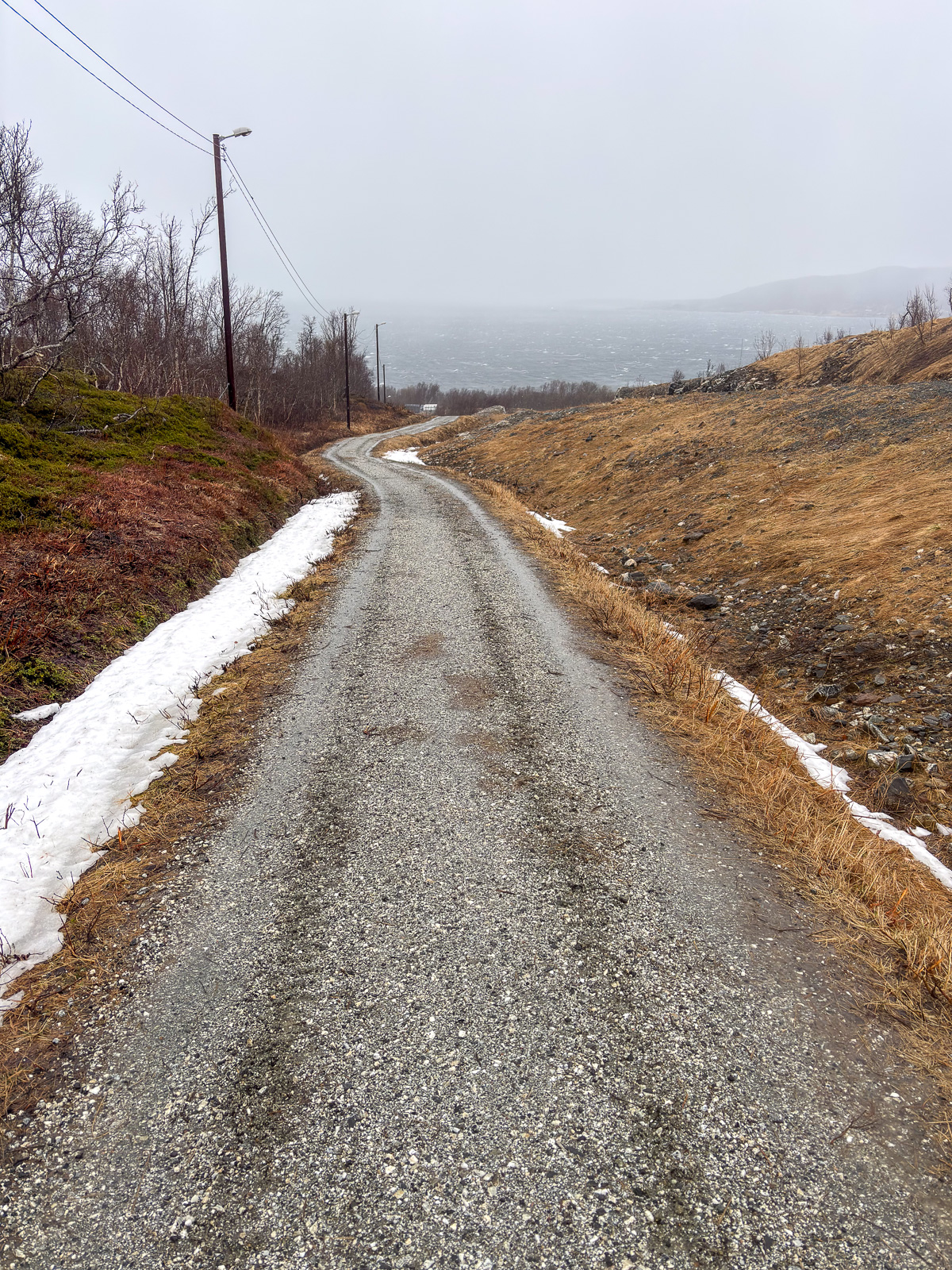
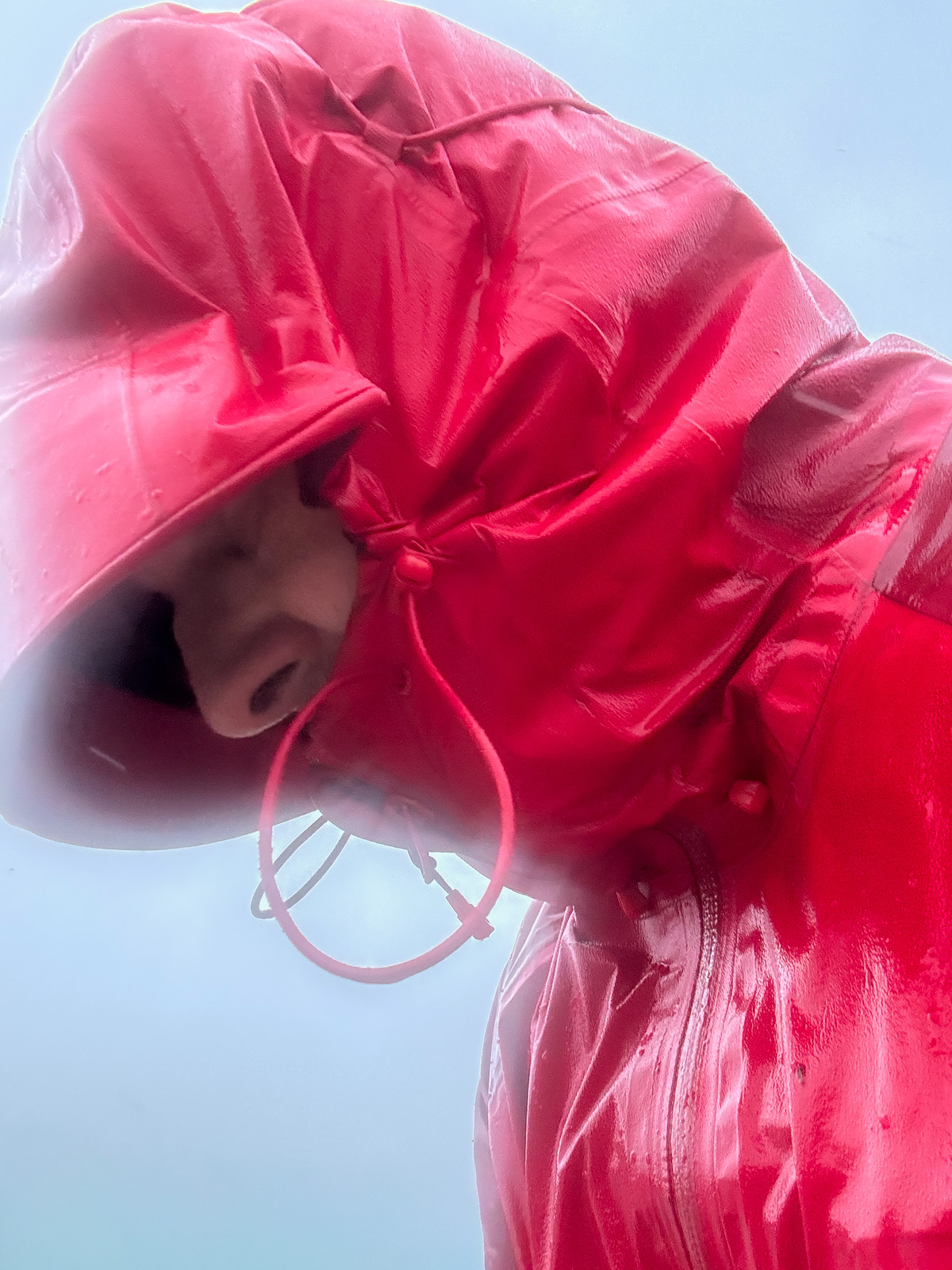
When I thought the weather had been bad on the kayak trip the day before yesterday, it was much worse today. It was colder, it was windier and the mix of precipitation was more varied: rain, snow, soft hail and sleet. At the northern tip of Tromsøya, storm gusts almost knocked me off balance and the graupel blowing straight into my face hurt. I wished I had brought a face mask and ski goggles and I bent my head low to avoid the heavy weather. That’s why I did not walk all the way home but took the bus, boarding it looking like a drowned rat.

At home the same procedure: a long, hot shower and a fire in the stove, which was drawing like mad in the storm.

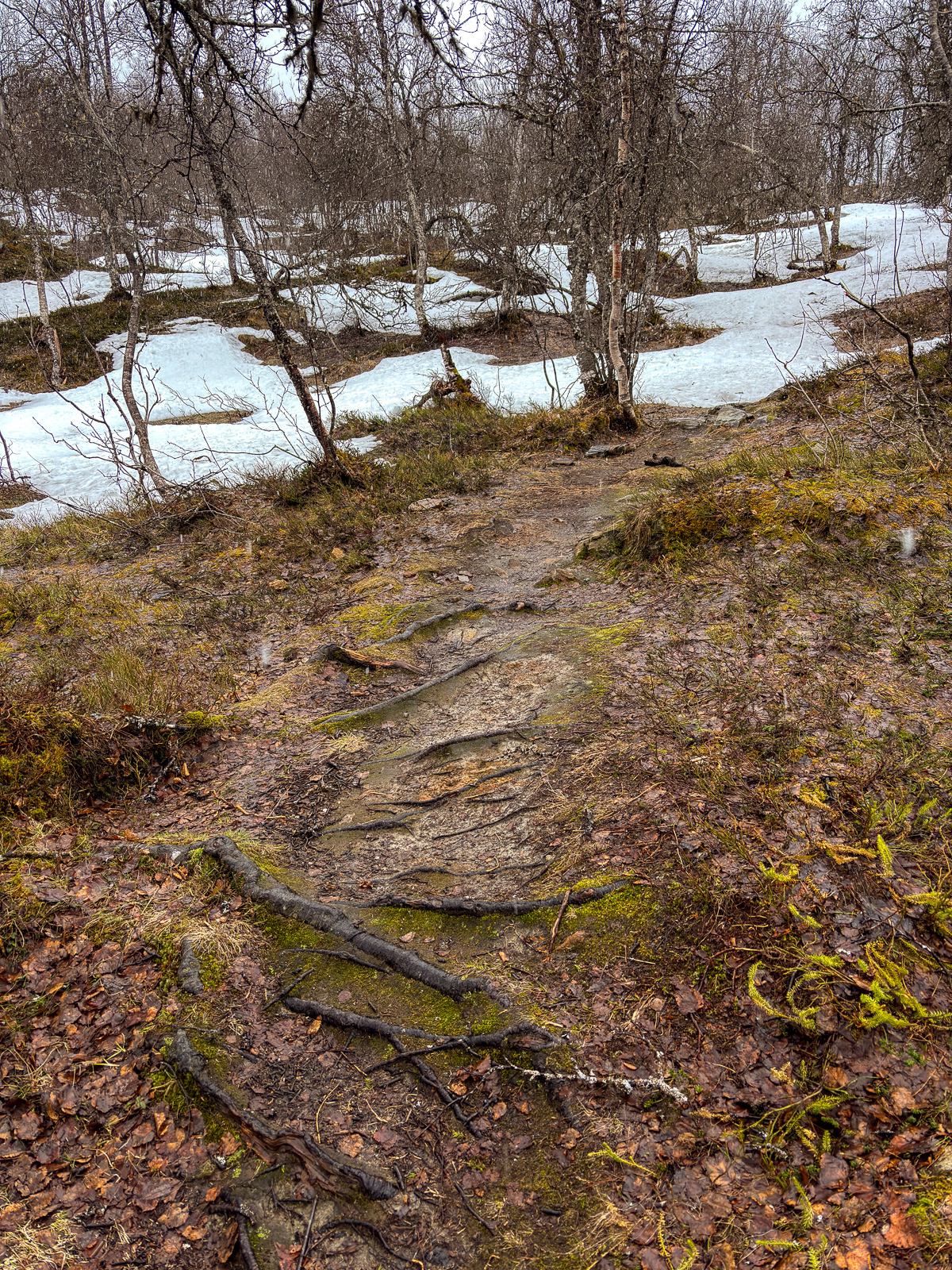
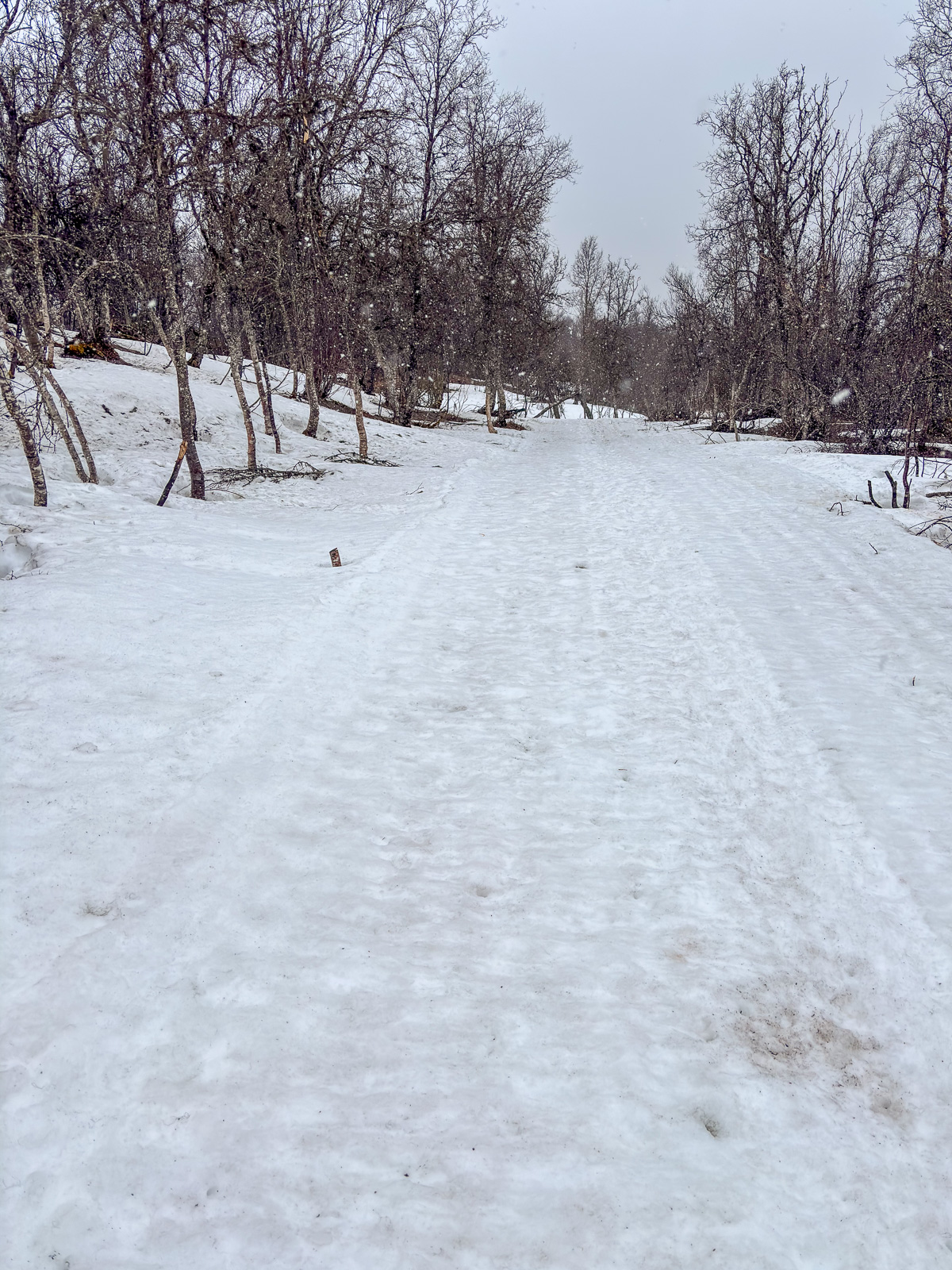
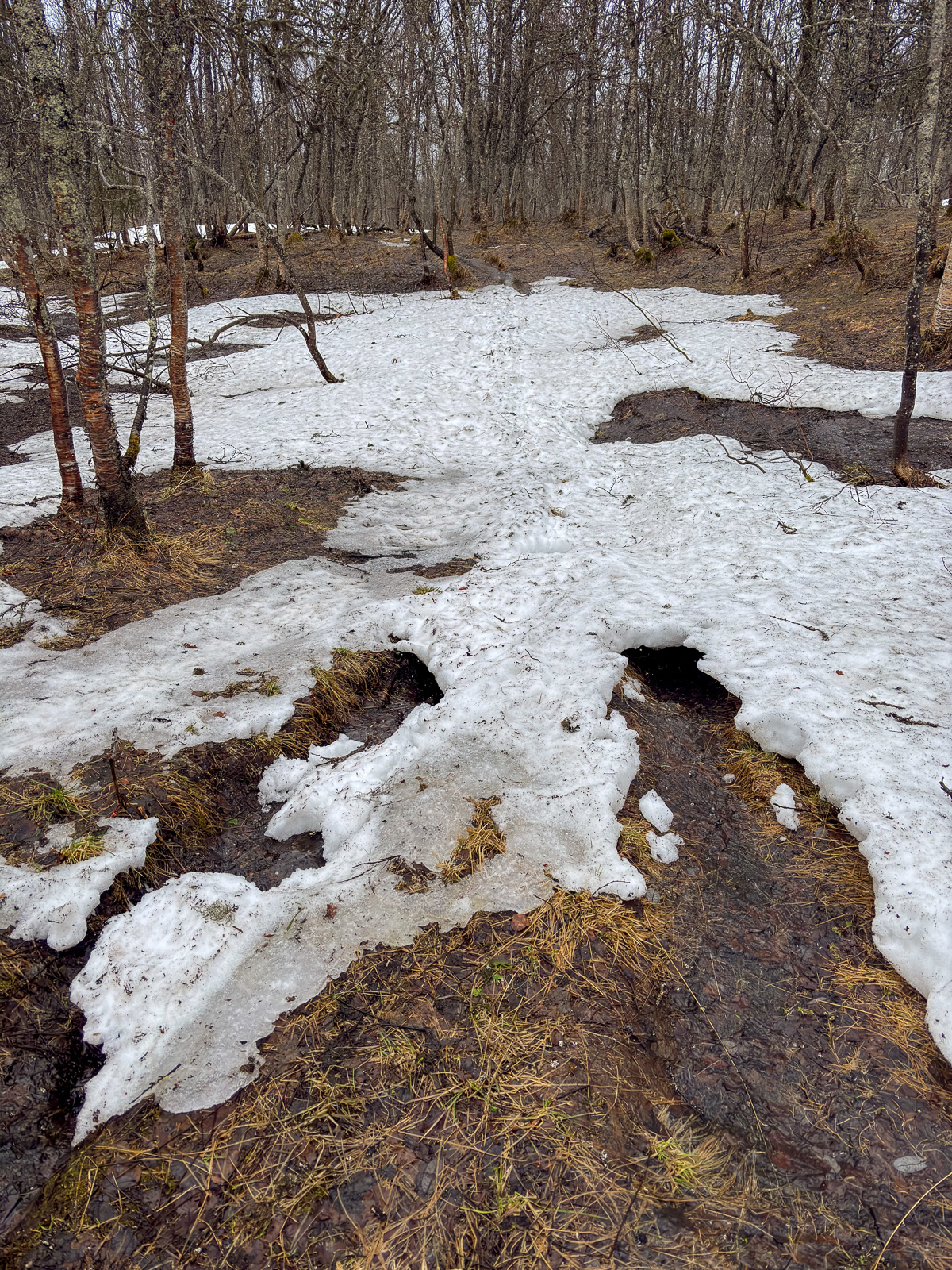
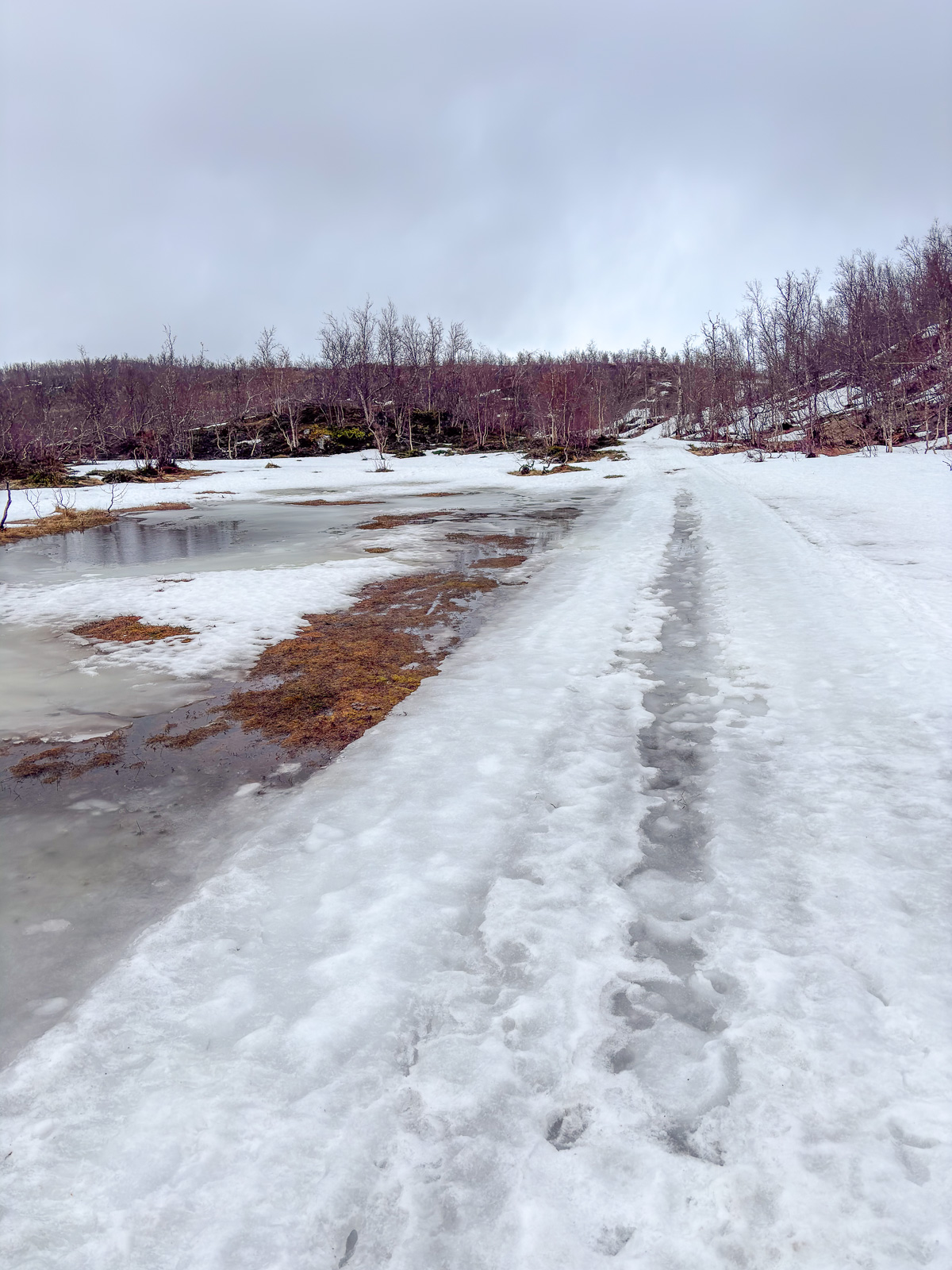
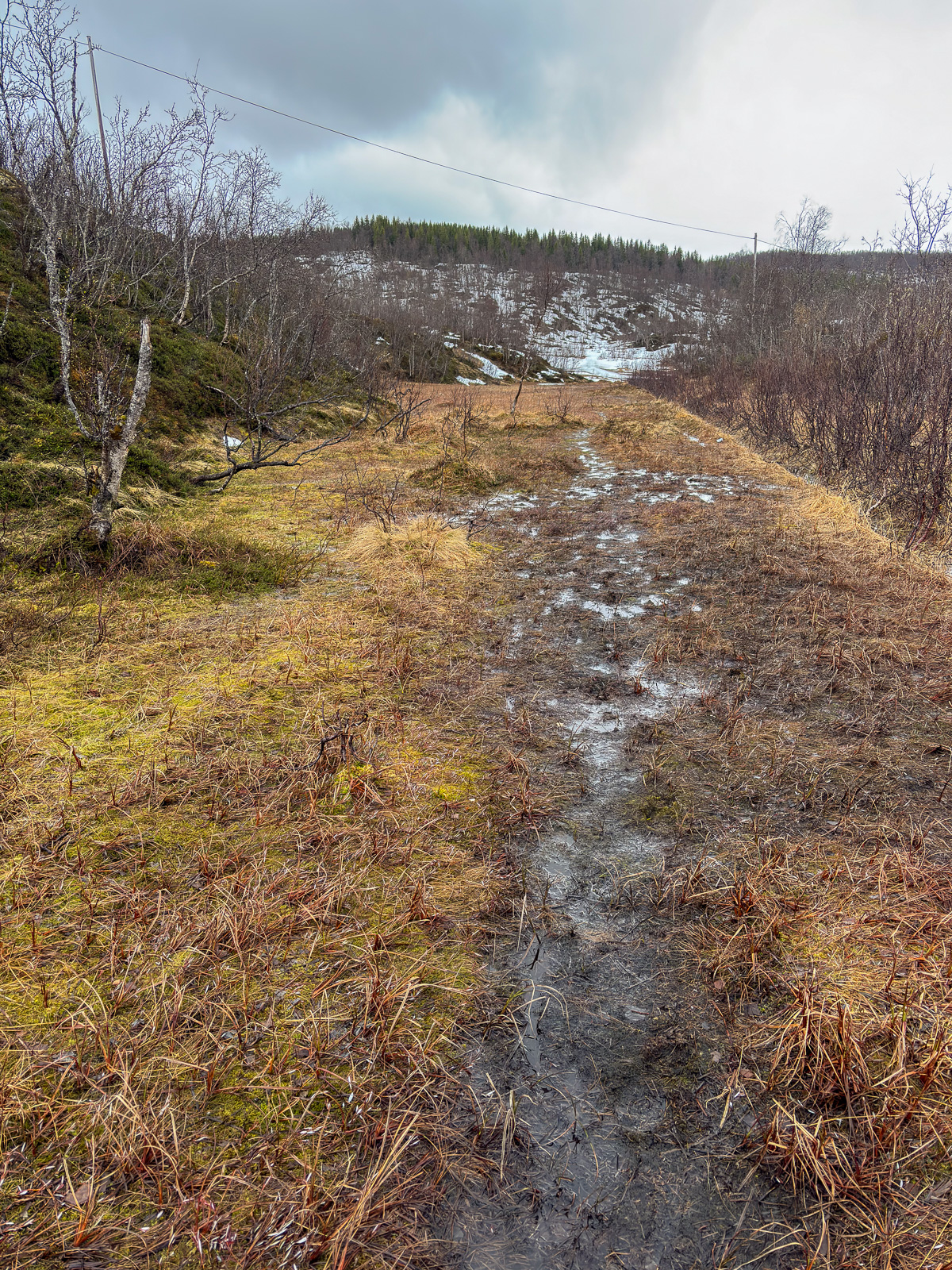
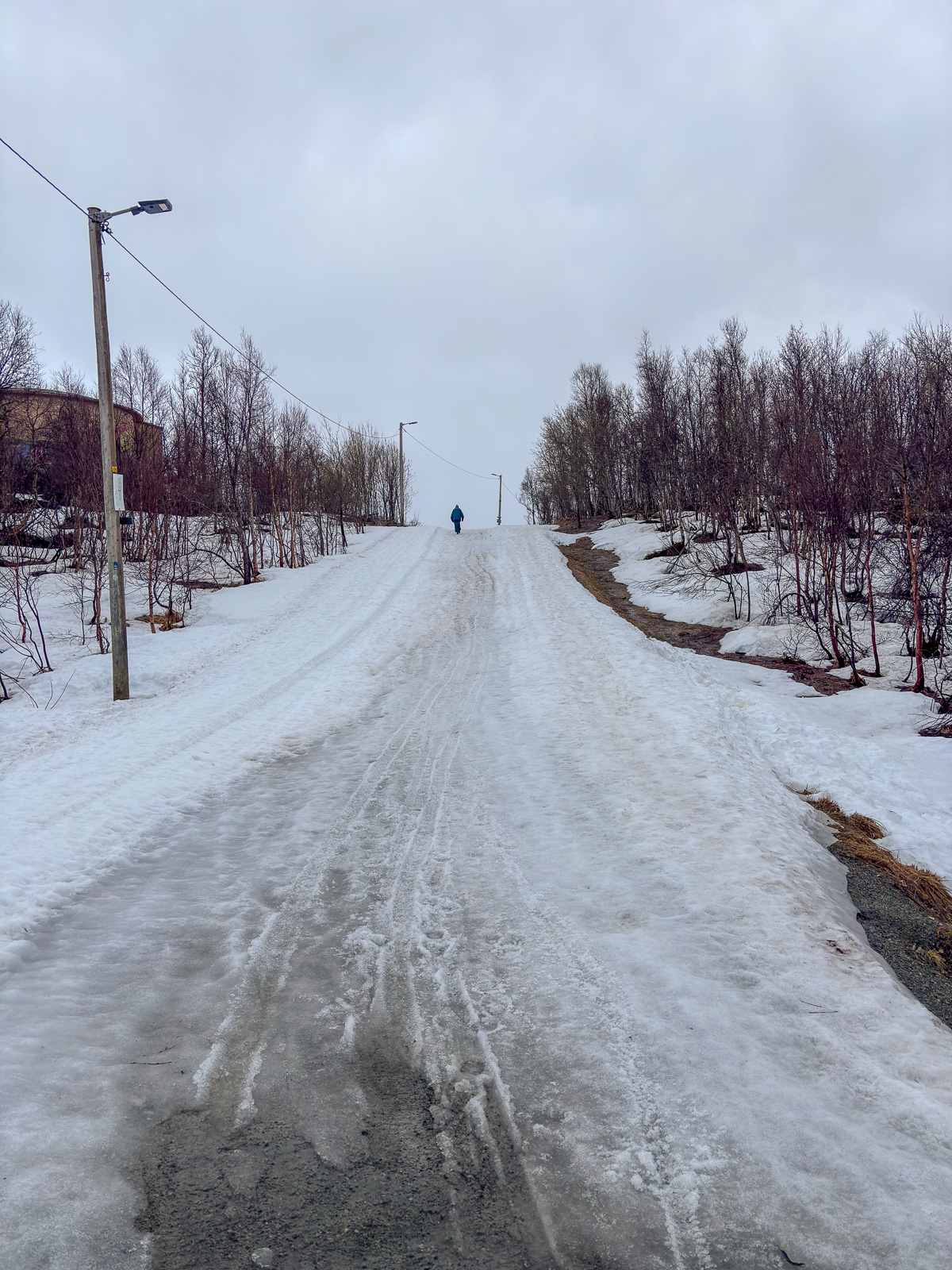
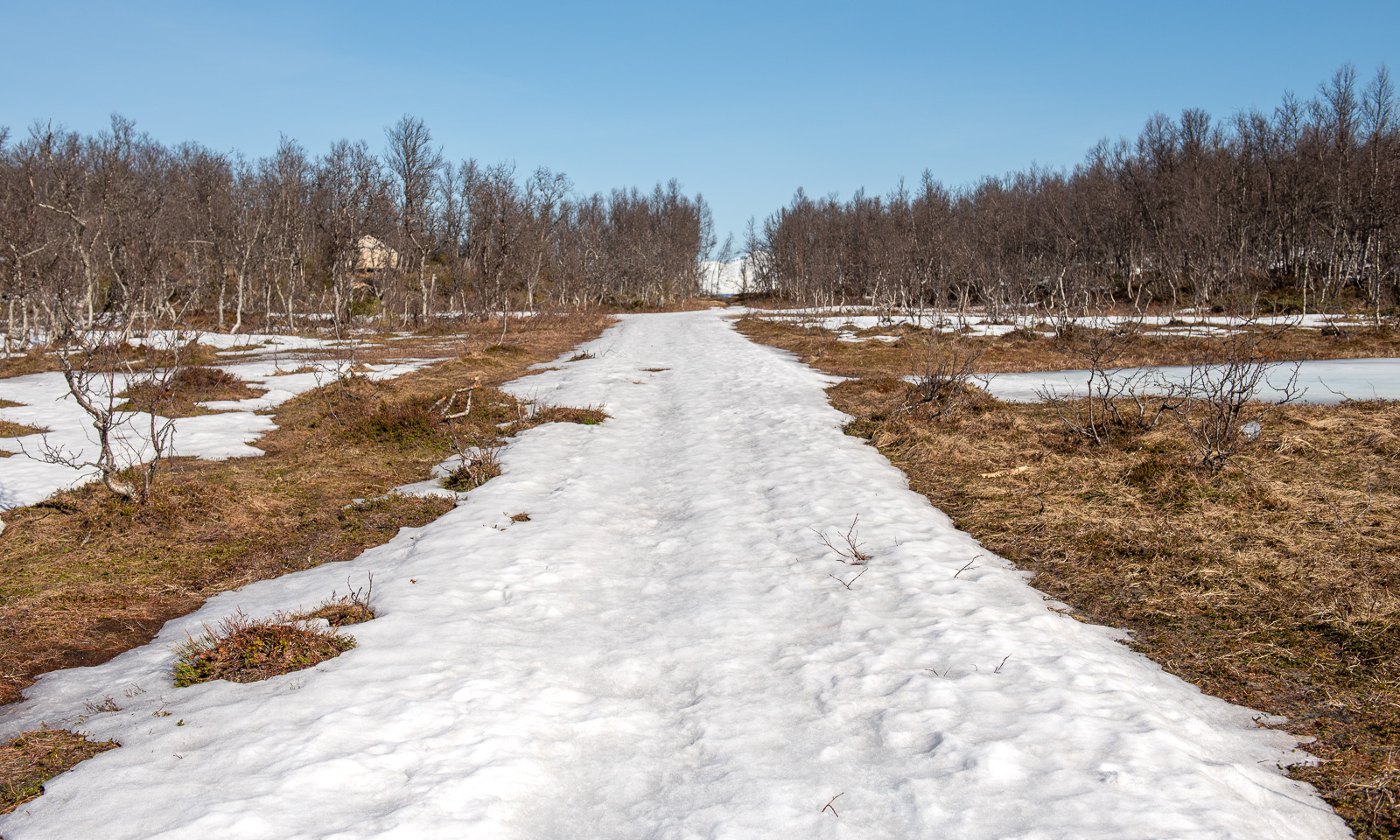
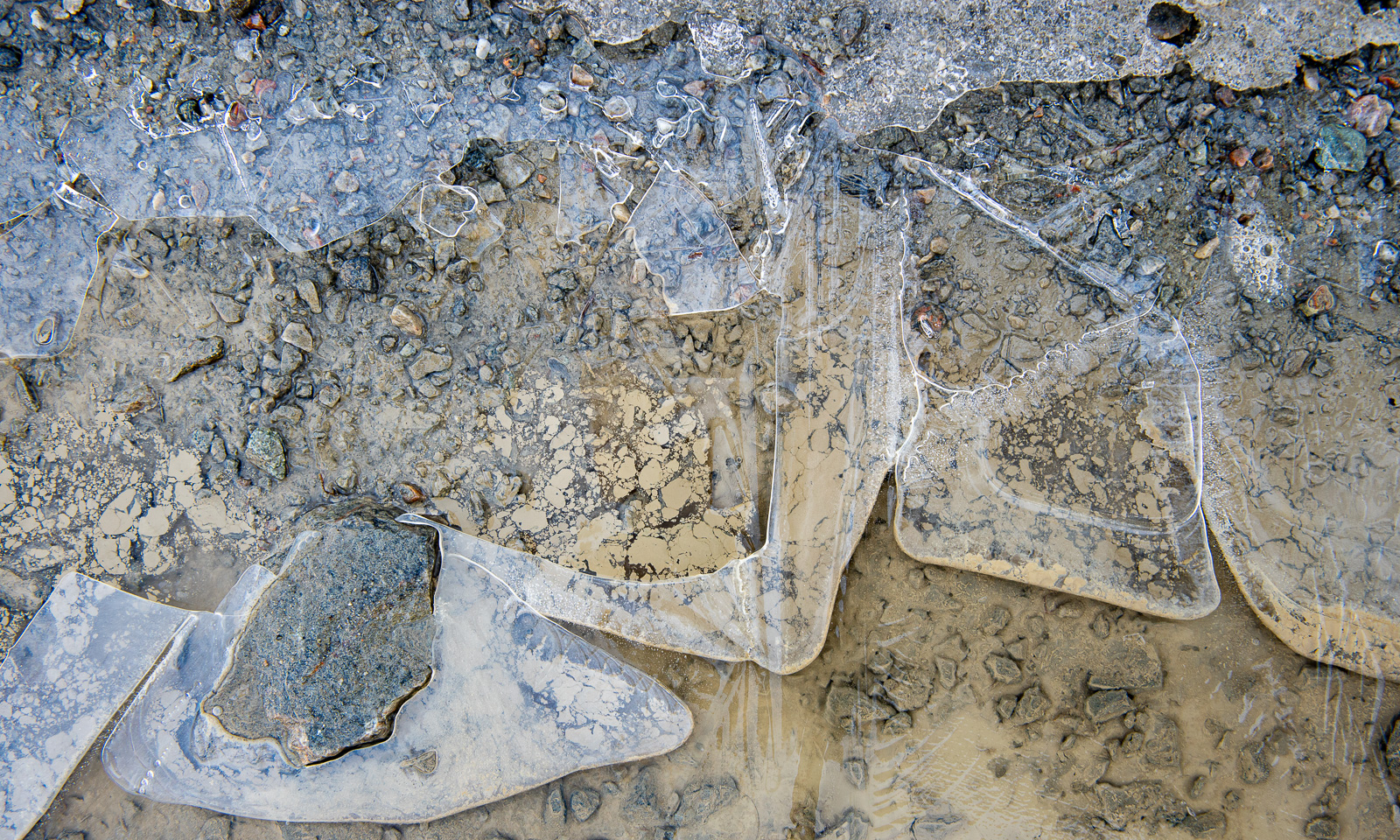
However the photos are not about weather, they are about the ways, paths, tracks and trails that I followed or crossed on my hike on Tromsøya today. Some are ski trails, most are summer and winter trails. Some still offer very wintry conditions; others look like early spring – or late autumn. My rubber boots splash through water, bog down in the mud and disappear into the snow. It will take some time until most of the ways, paths, tracks, and trails are dry – if it ever happens.

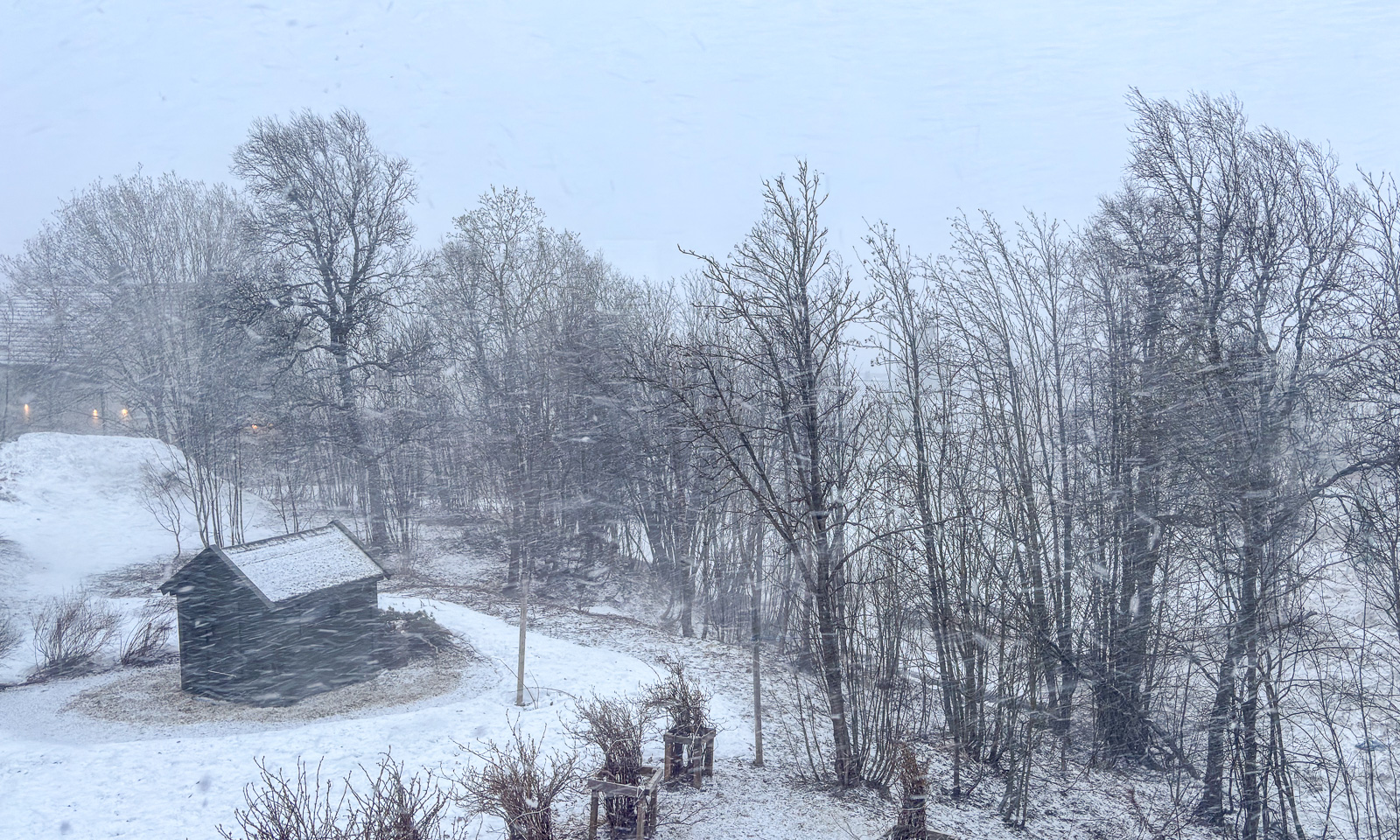
Tomorrow will be different, tomorrow it will snow.

The first torsdagspadling 2026

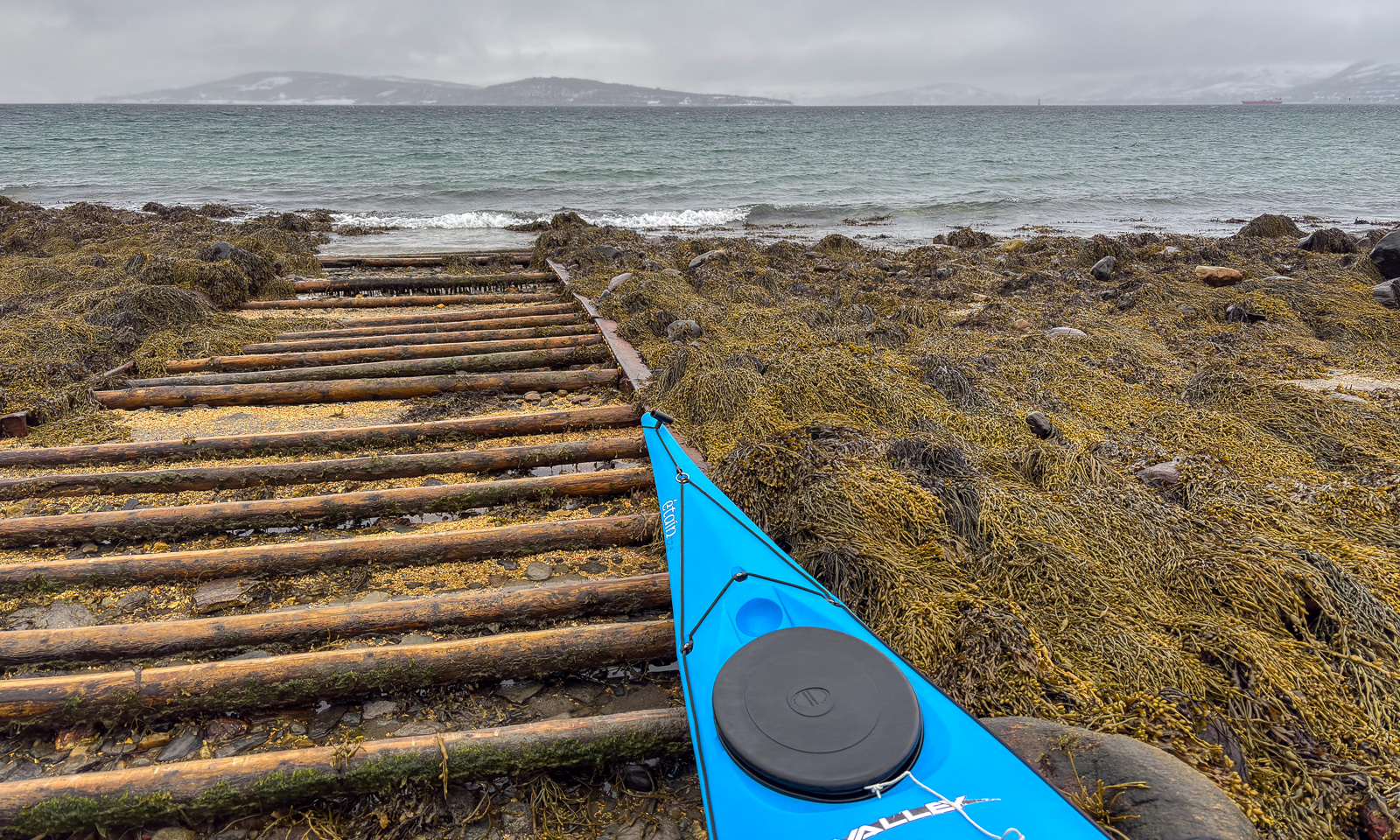
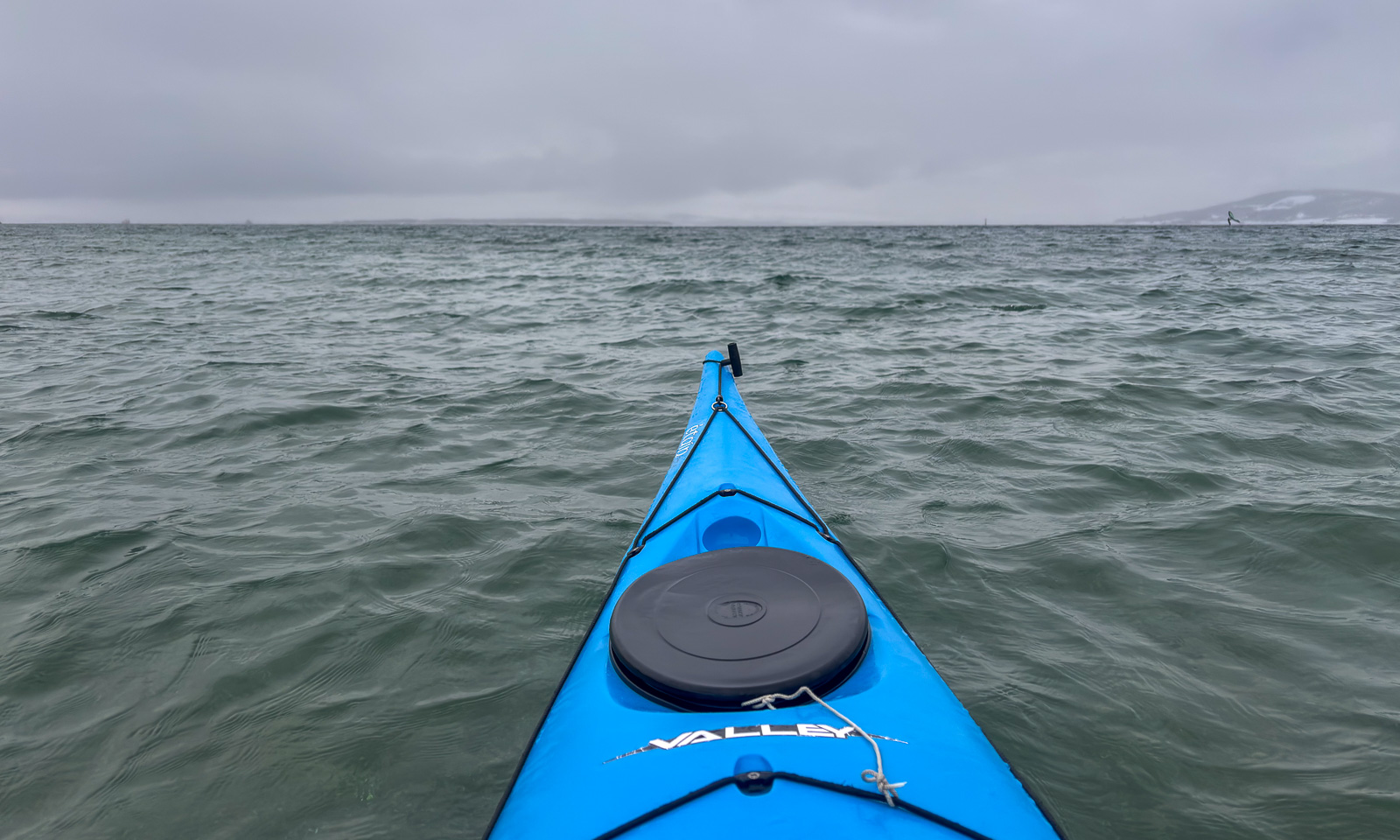
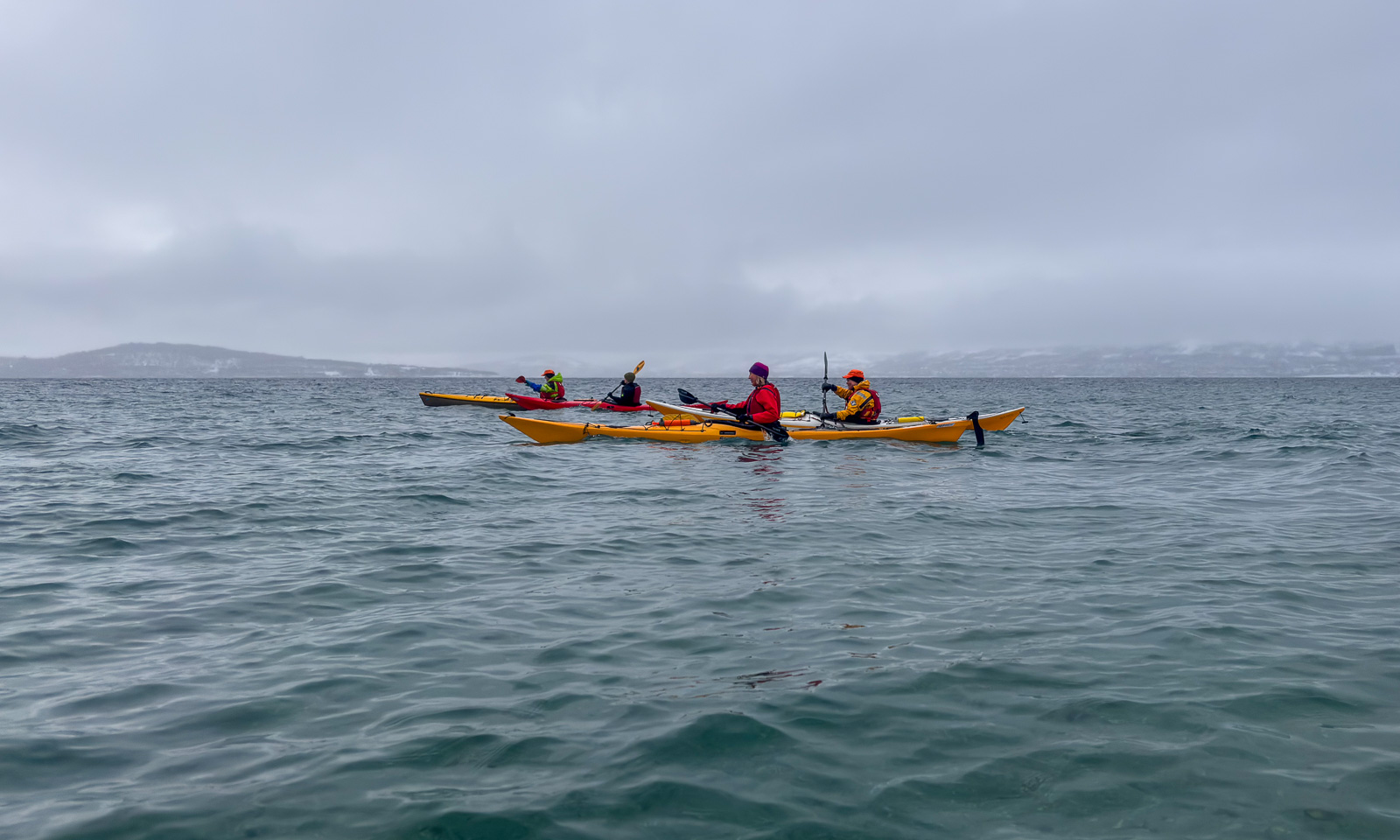
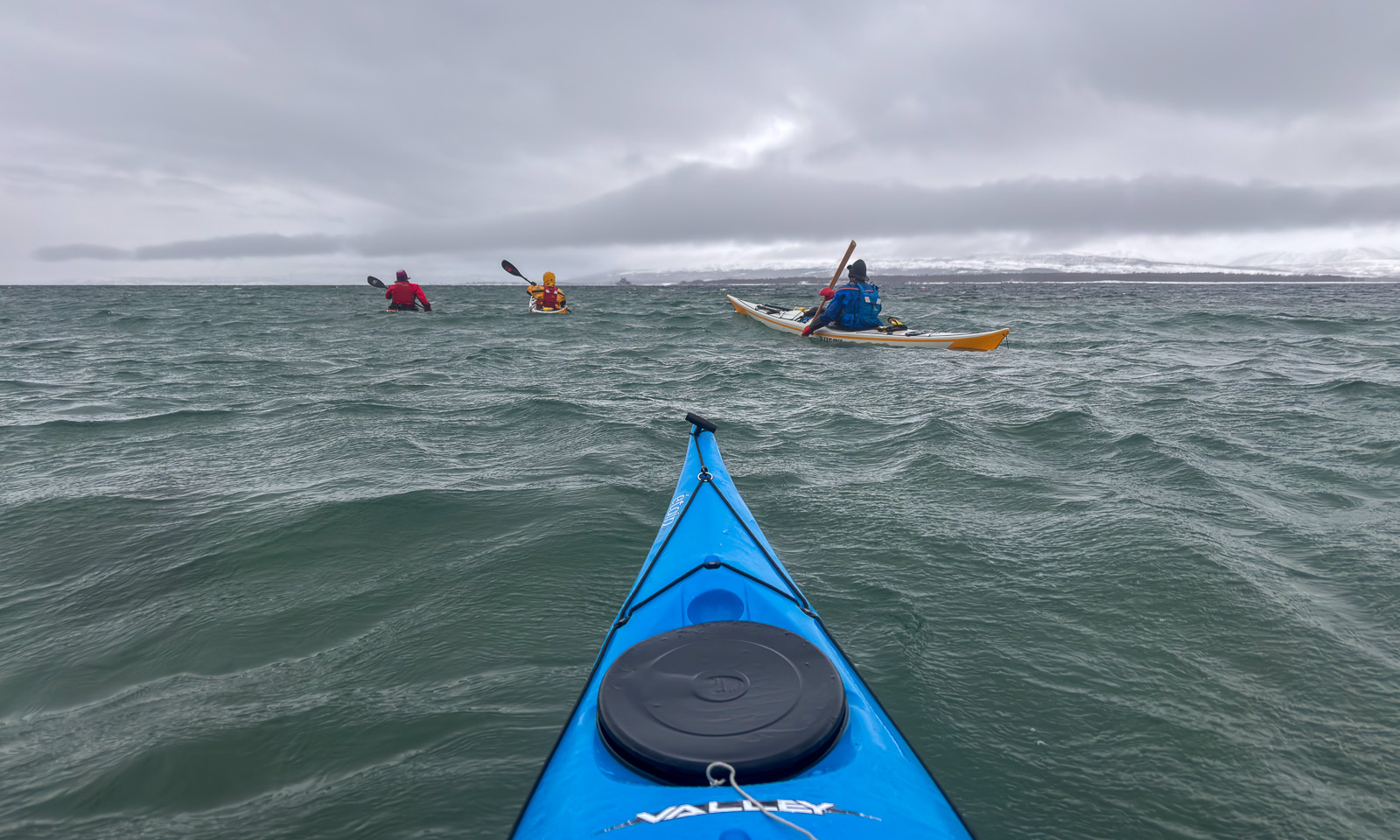
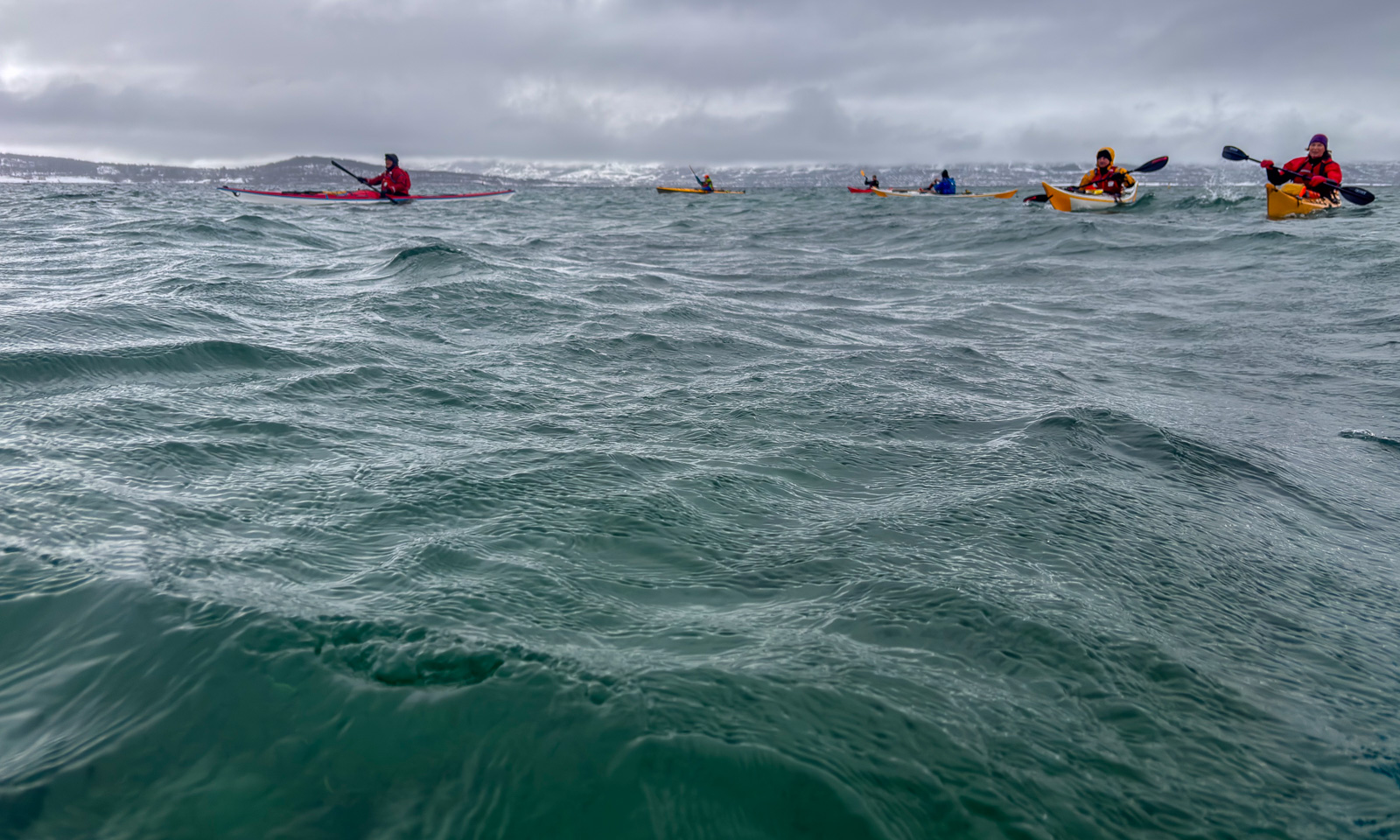
Yesterday I finally got back to paddling in Tromsø. I had already paddled once this year, on 2 January, more than three months ago. Because of the holiday the next day the traditional torsdagspadling (Thursday paddling) was moved to Wednesday. We were a group of seven, three of them tour guides. The weather was anything but friendly. It rained and it was pretty windy.

Shortly before 18:00, we started our tour to Telegrafbukta in the south.

On the way there we had strong headwinds that slowed us down a lot. Sometimes I felt like my kayak was anchored. I tried to push forward but when I looked at the shore I realized how slow we were. The distance of about 4 km took us 90 minutes, including seeking shelter twice to check on everyone.

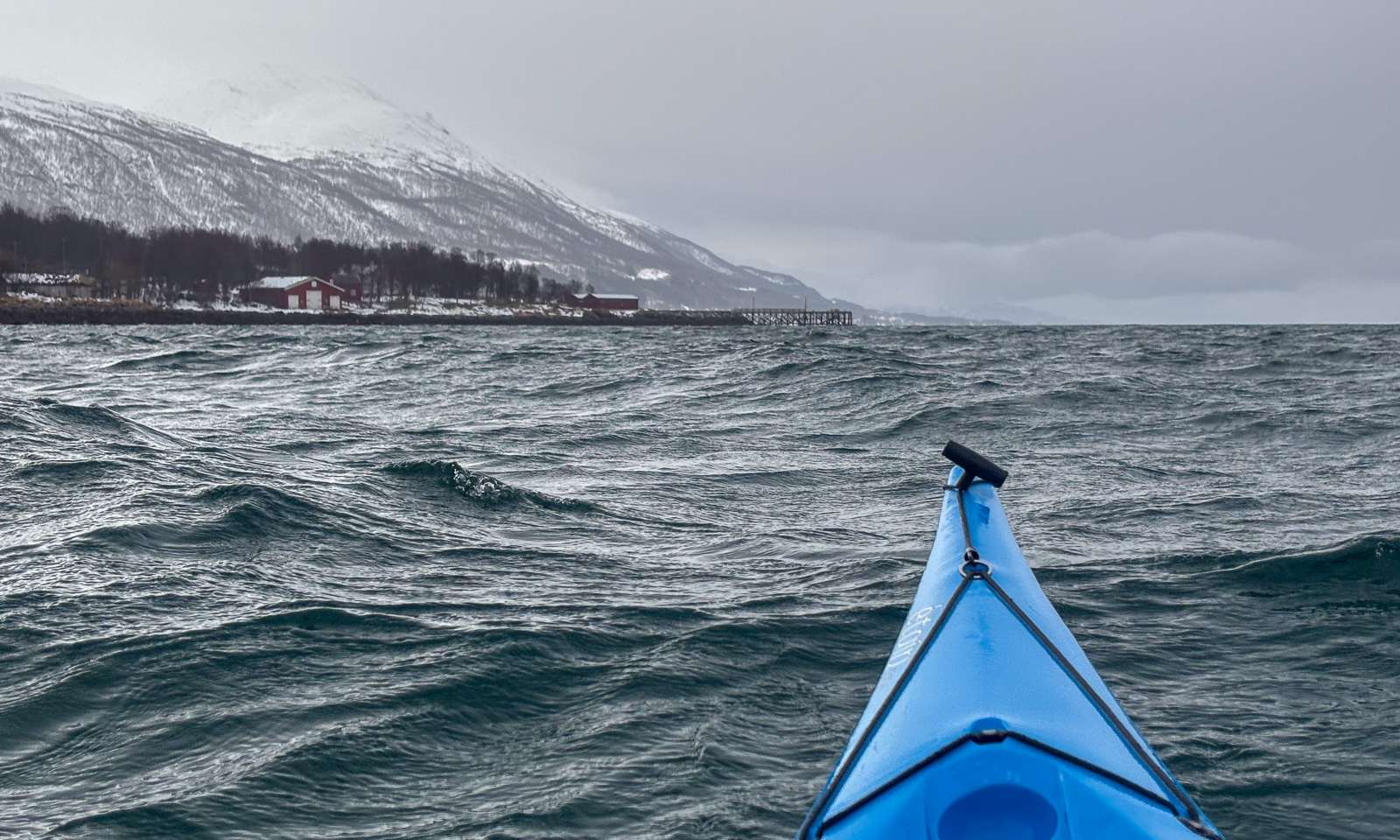
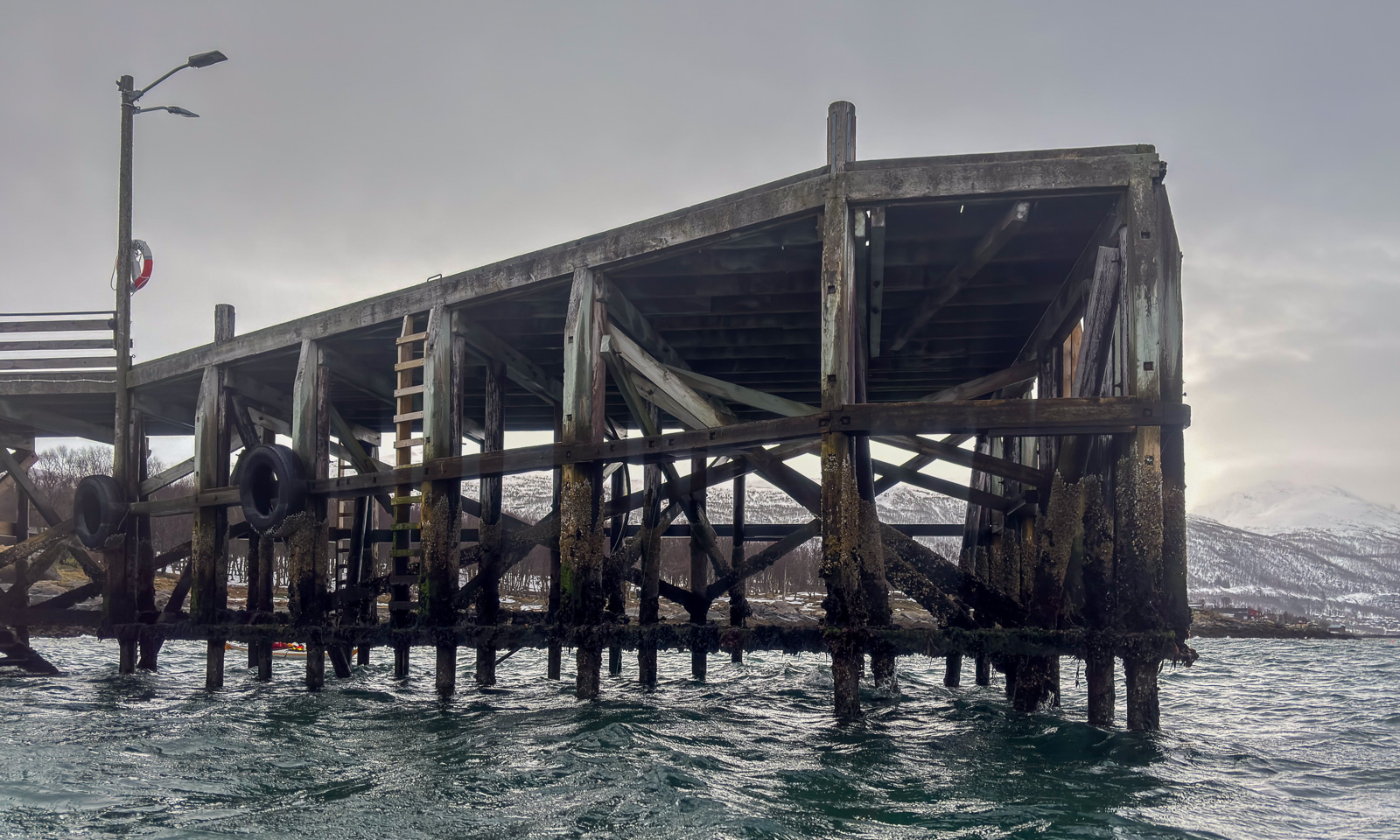
Finally, the wooden pier came into view. From there it is not far to Telegrafbukta, I know, but yesterday it seemed to take ages until I got there.

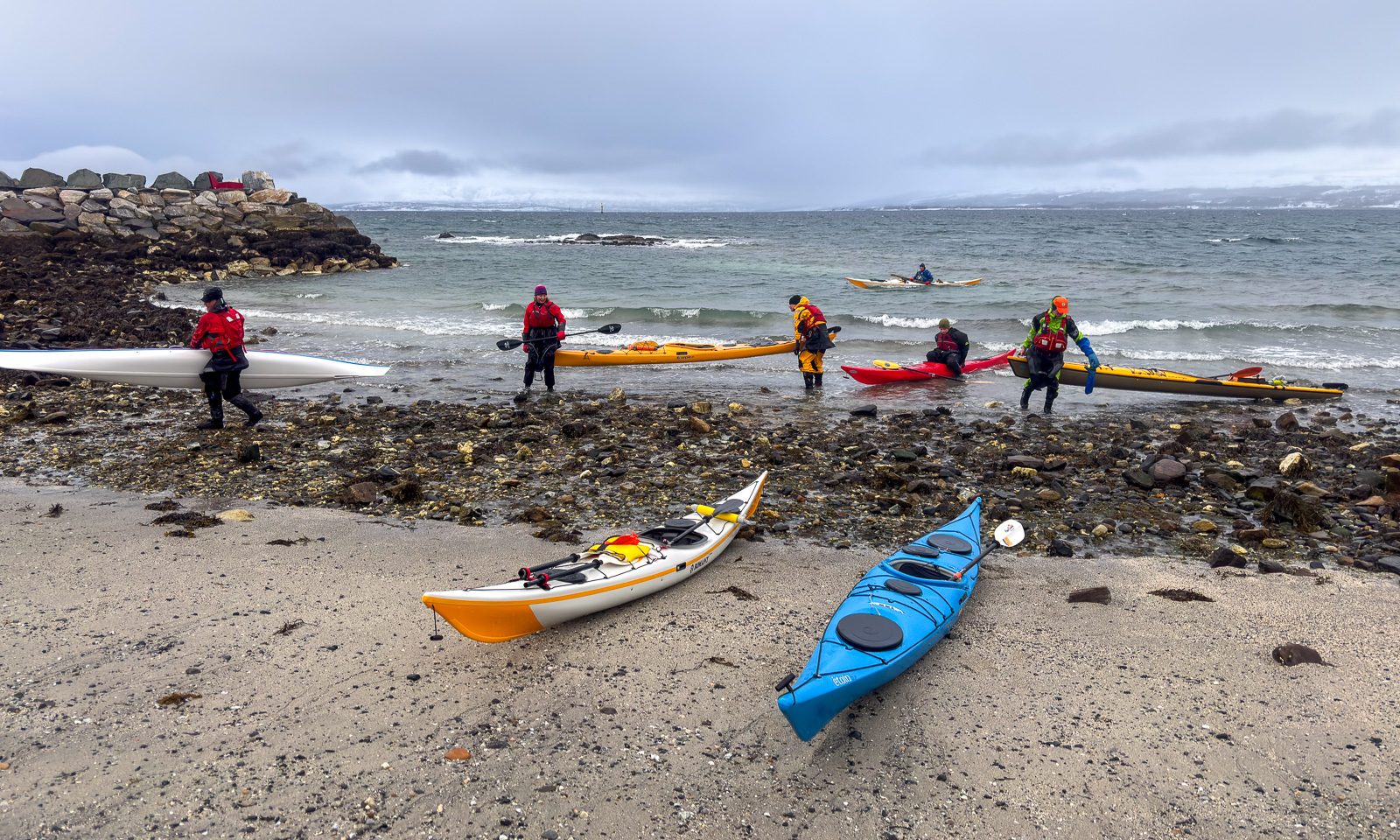
We all turned left into the bay where we landed at low tide. We pulled or carried the kayaks higher up and took a break. Time to drink something and share some chocolate.

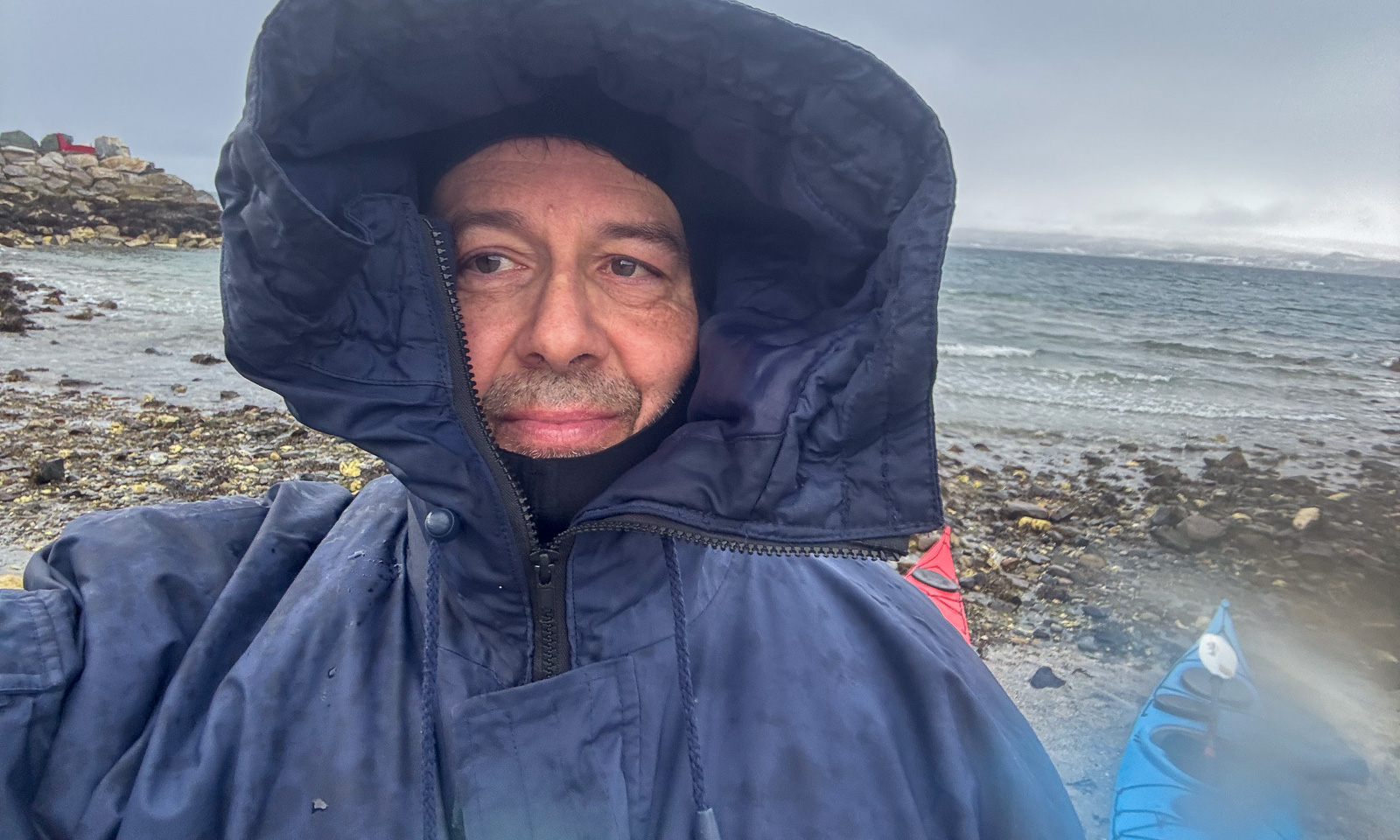
It wasn’t a long break because we were all wet and it was cold. A 3 °C air temperature and the wind resulted in a sub-zero wind chill. Even I, who had taken my insulated sailing parka with me, was cold.

The way back was completely different. Not only is it nice when the rain comes from behind, but also our kayaks were pushed back and we could paddle back quite effortlessly. I was nearer to land than the others, which gave me some nasty waves. One of them almost capsized me, because I reacted too slowly to take any countermeasure. I was lucky and could keep my balance.

Once we were back on land, we helped each other put the kayaks back into the boathouses, then I drove home, still wearing my dry suit and longing for a hot shower. I got it. After that I fired the wood stove in the living room that I rarely use, but which is a perfect thing to have after such an exhausting and soaking wet kayak tour.

As always, did I regret having been outdoors? Even with today’s aching muscles and stiffness I can answer: Not at all! I’m looking forward to the next time.
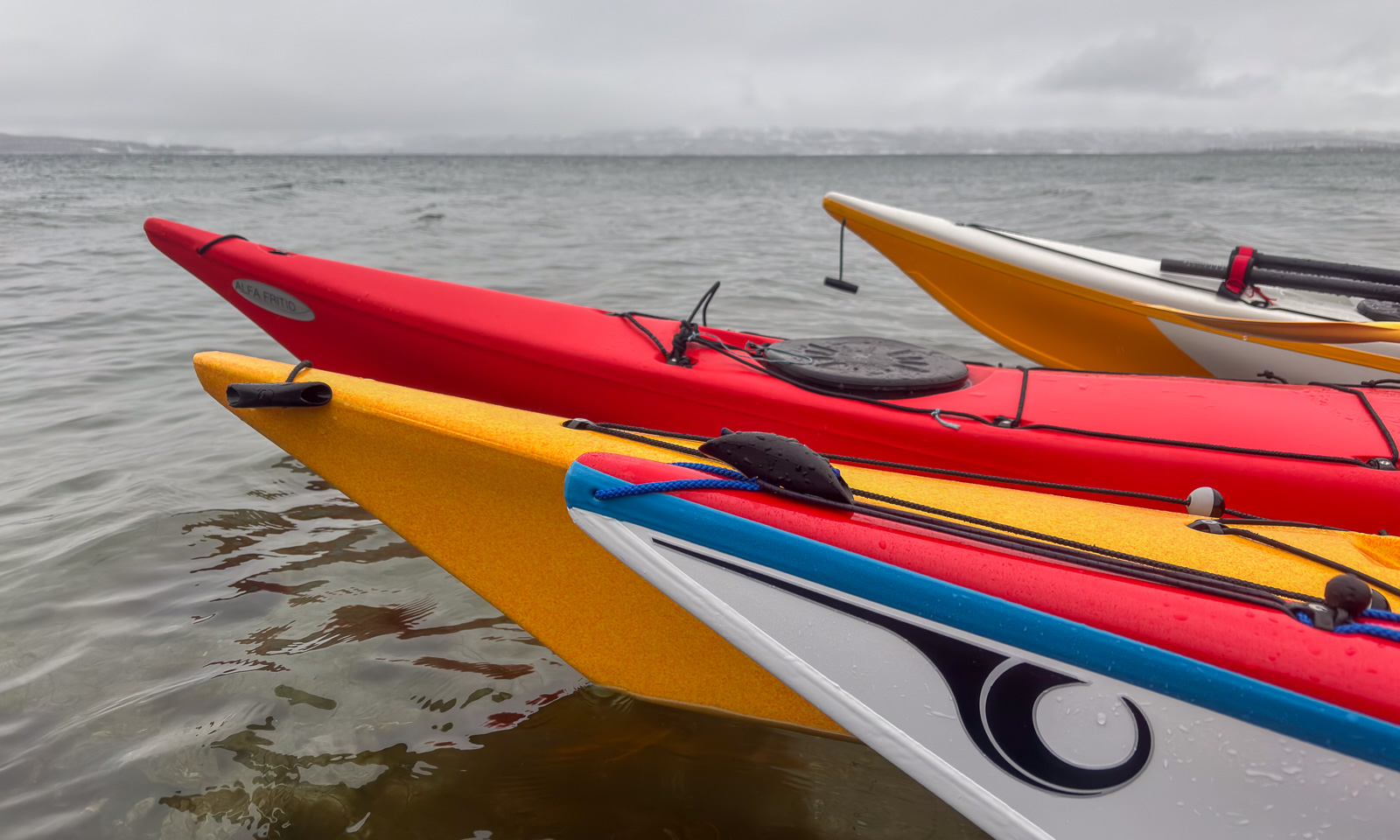
Takk for turen – thanks for the trip!

Winter intermezzo

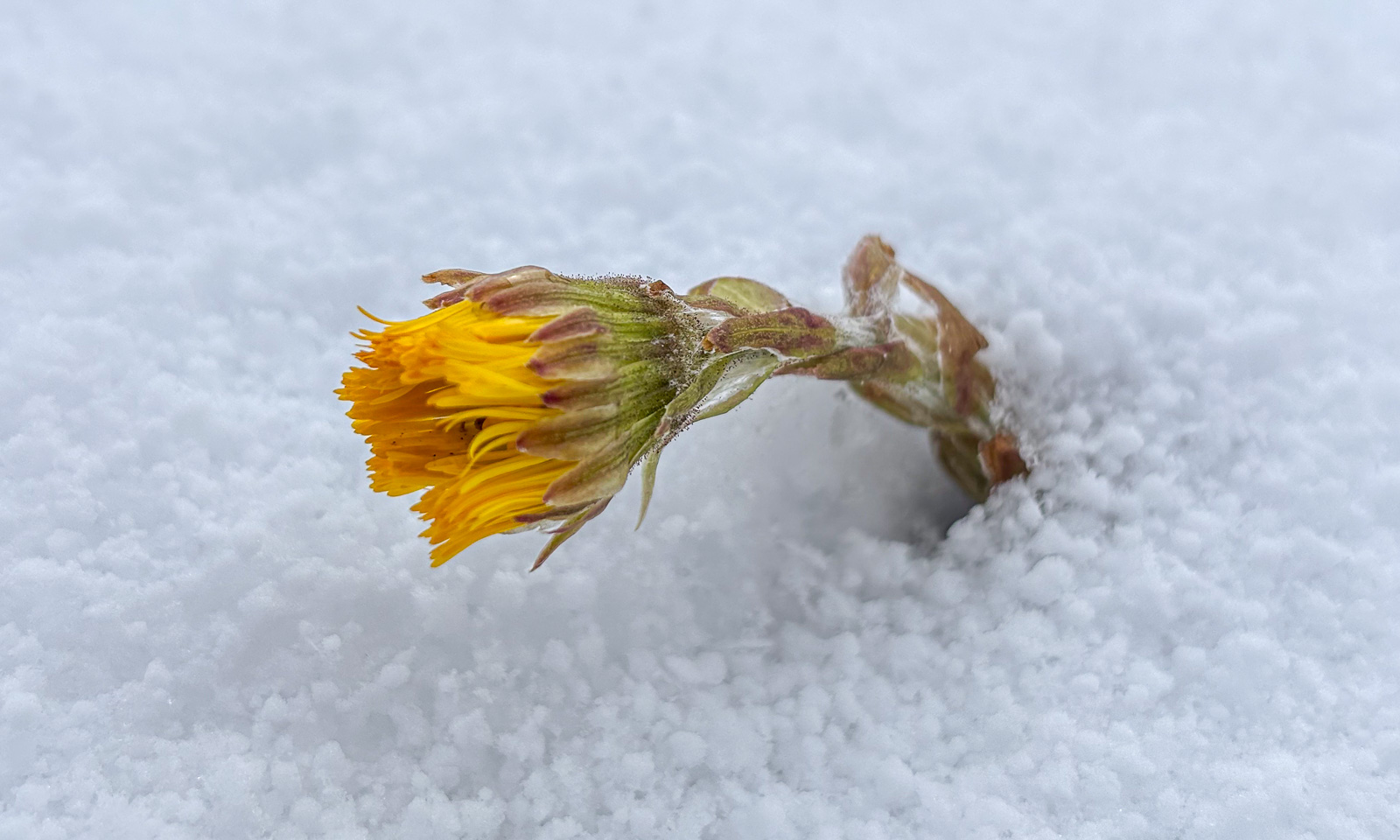
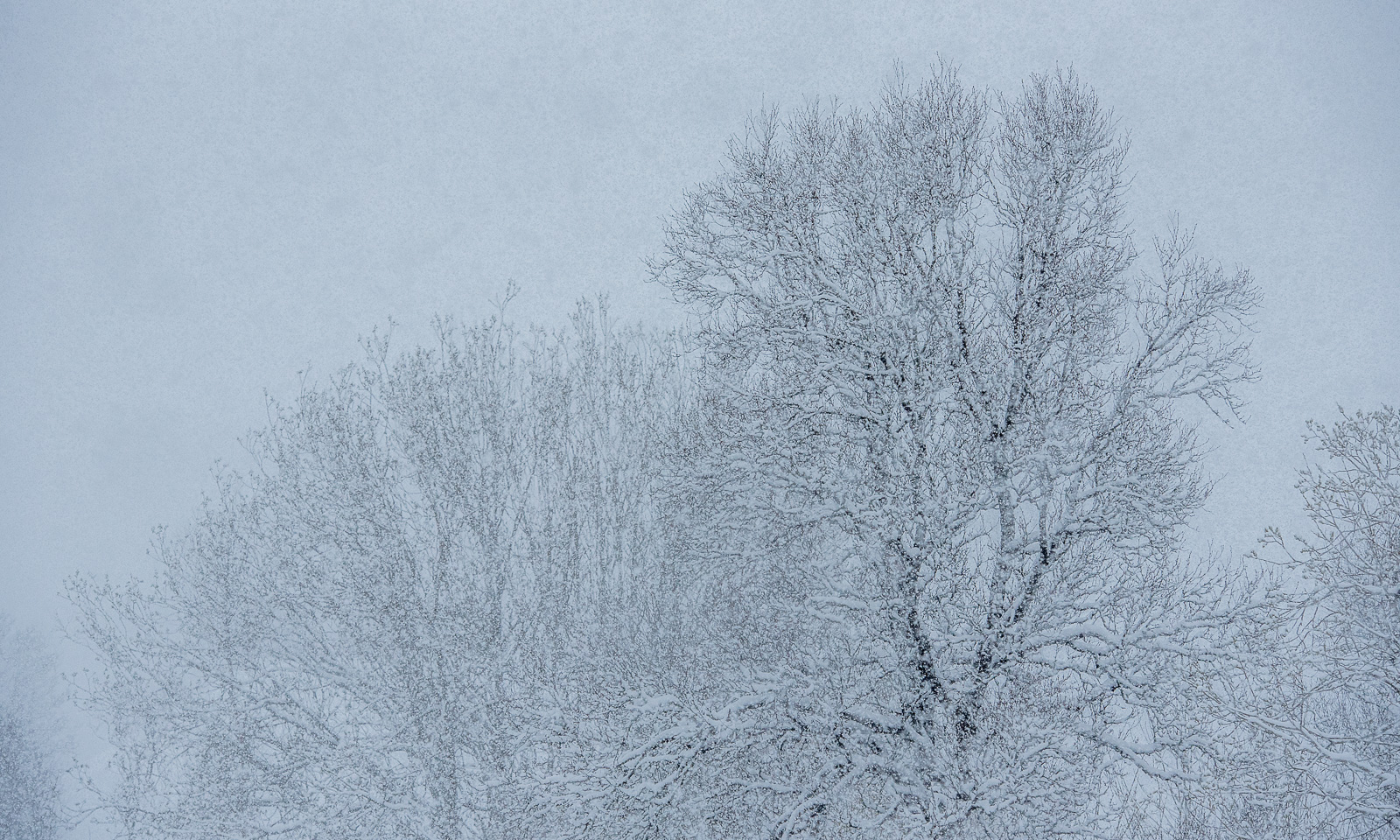
When I wrote about the unusually early snowmelt in Tromsø a week ago, I was almost sure that new snow might come soon. I guessed right. Already on Thursday evening, it starts to snow. The next morning, the roads are white and the tussilago flowers are stuck in the snow.

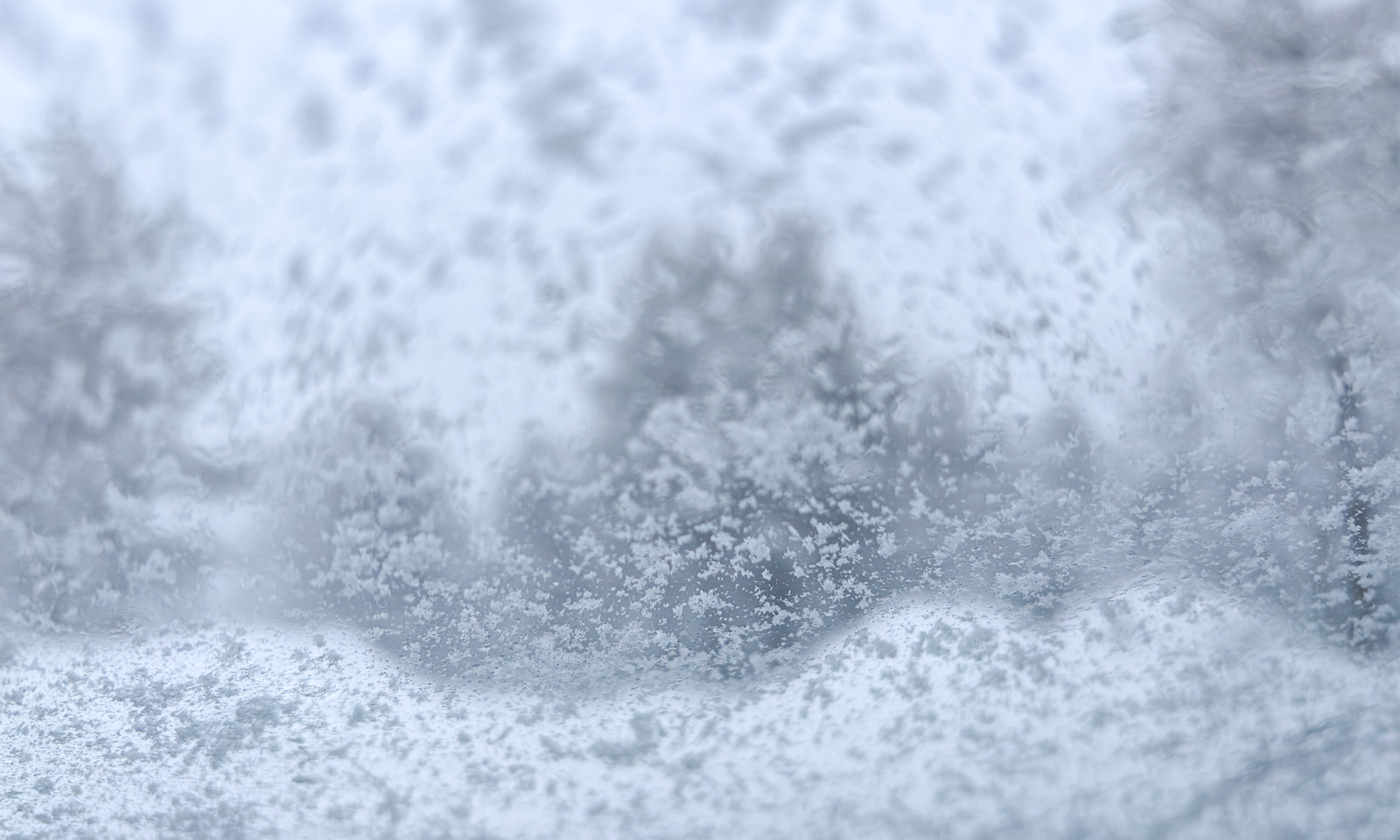
On Saturday morning it is winter again. About 15 cm of snow have fallen; it is -1 °C and it is still snowing heavily.

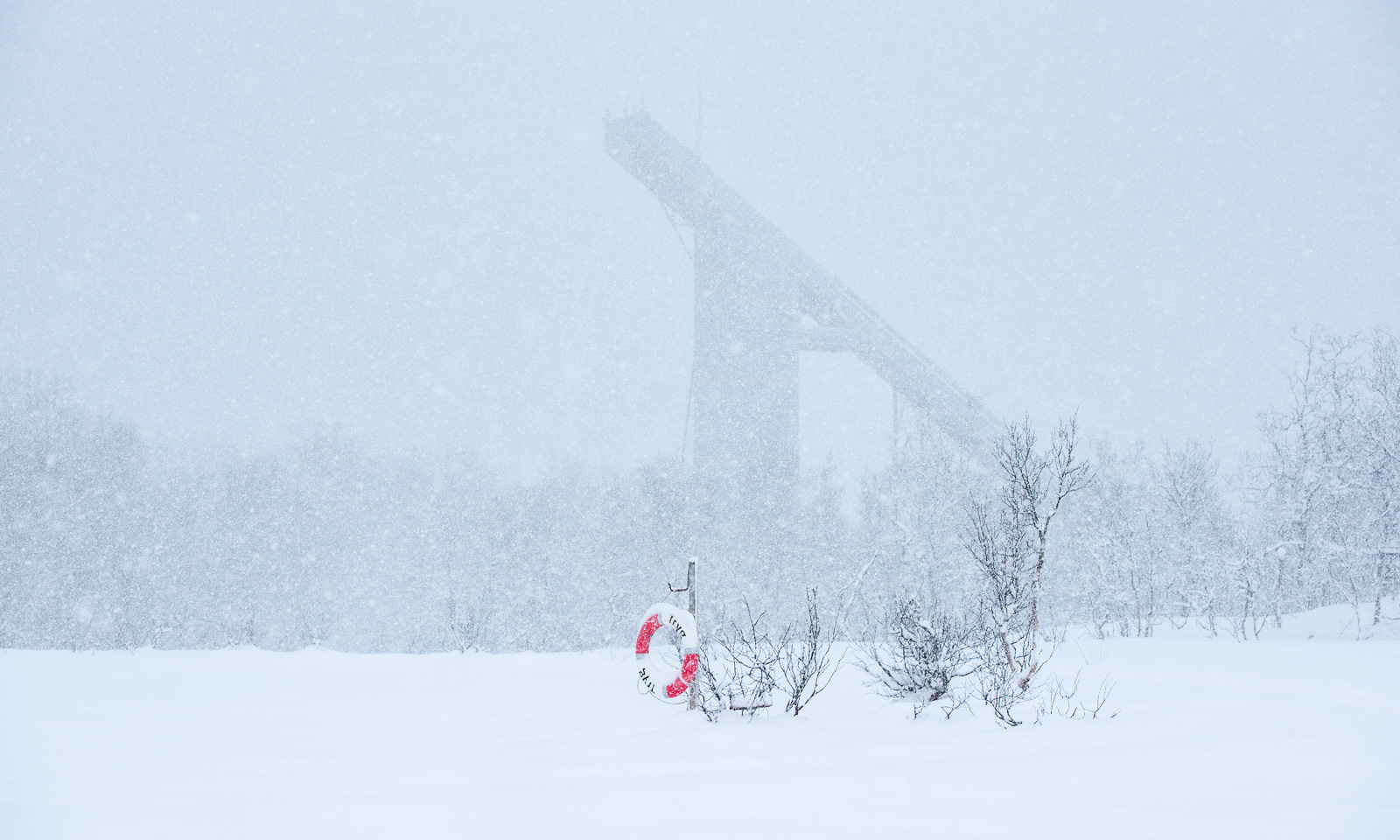
I take the car on the gravel road to the ski jump, which feels pretty adventurous although the iPhone photo below is exaggerating.

None of the thousands of tussilago flowers is visible anymore on the turning area, they are all under the snow. And the small pond with the ski jump in the background looks like winter has never been absent.

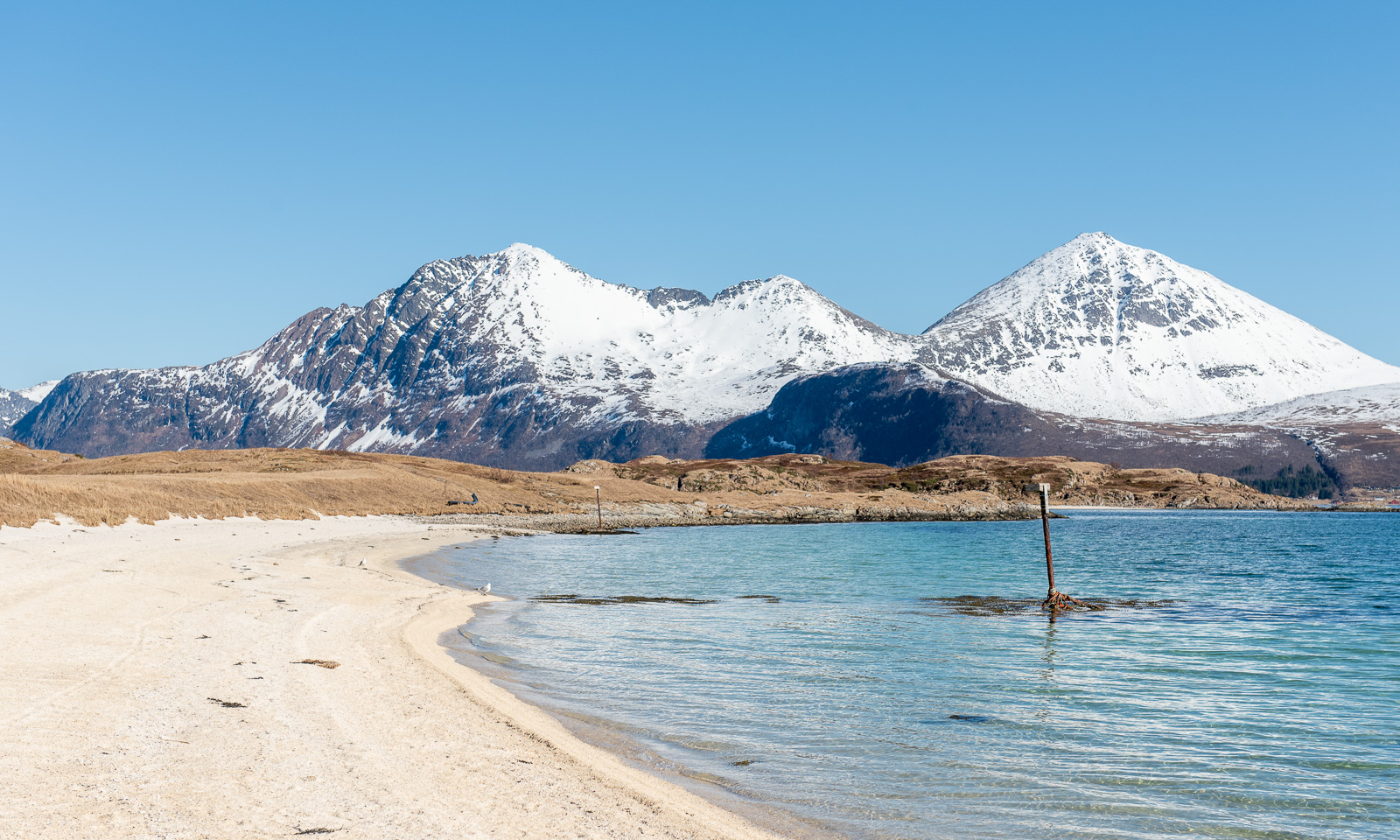
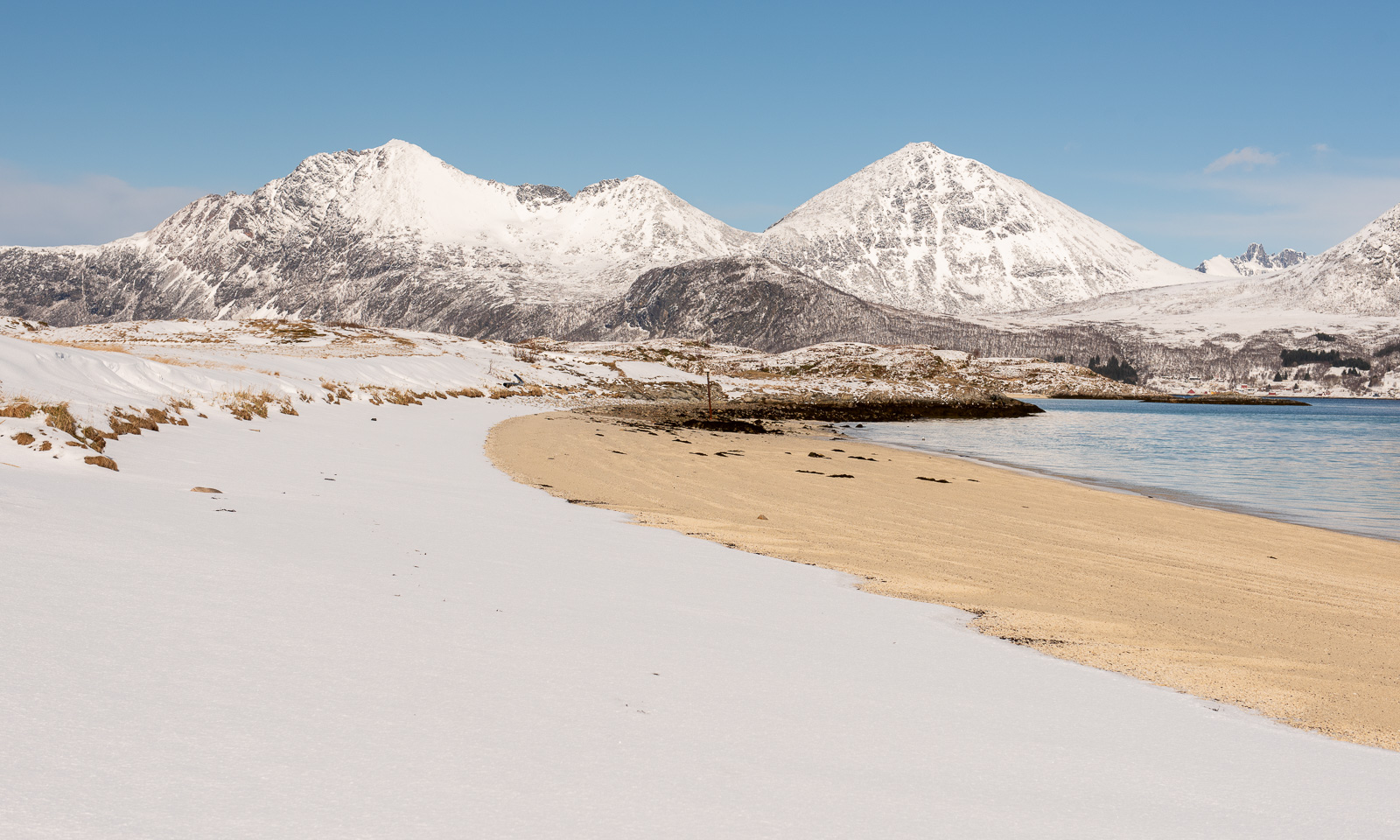
Later that day I make a car trip with a friend. We visit the same beach as my wife Annika and I did two weeks earlier. The first photo is from 12 April; the second from 25 April, which was yesterday.

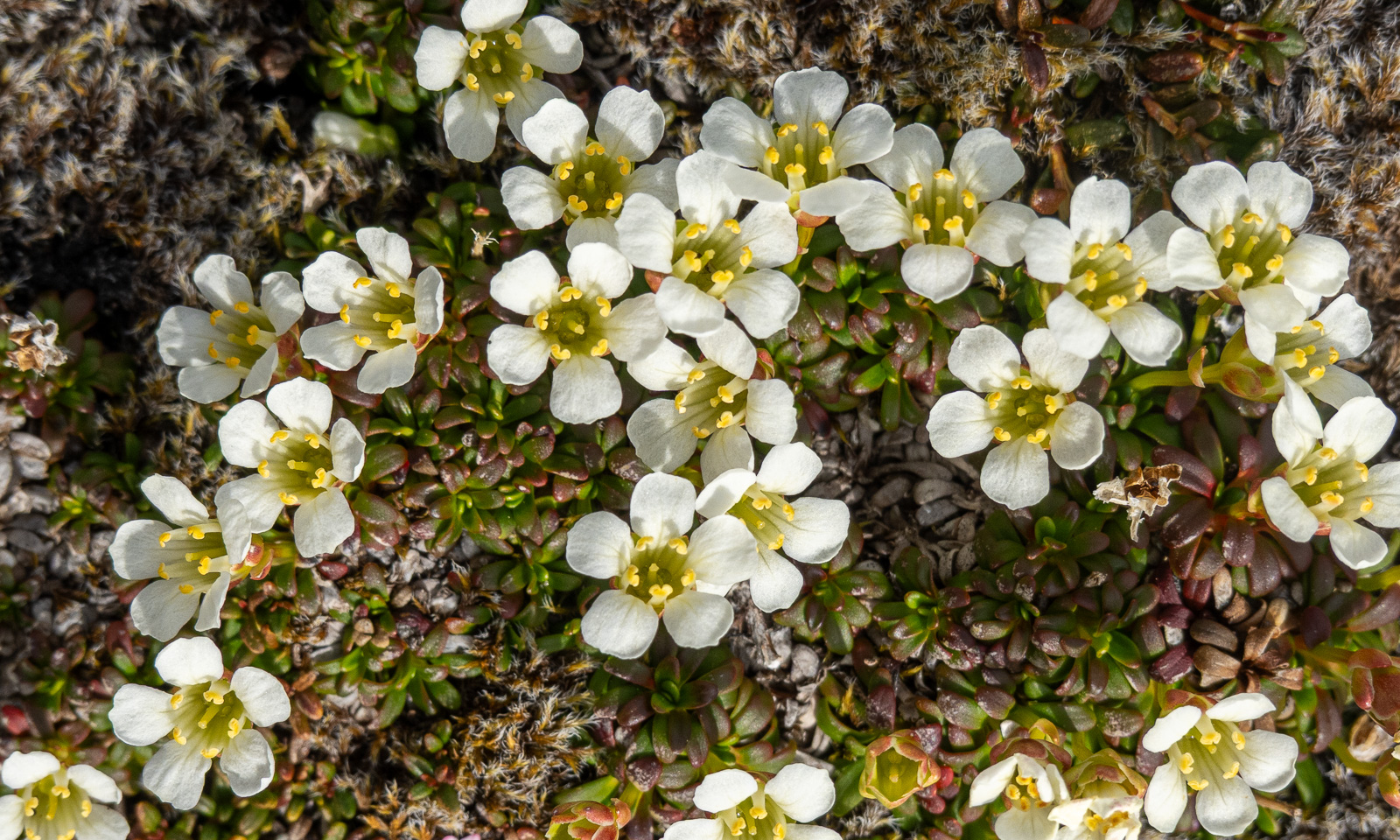
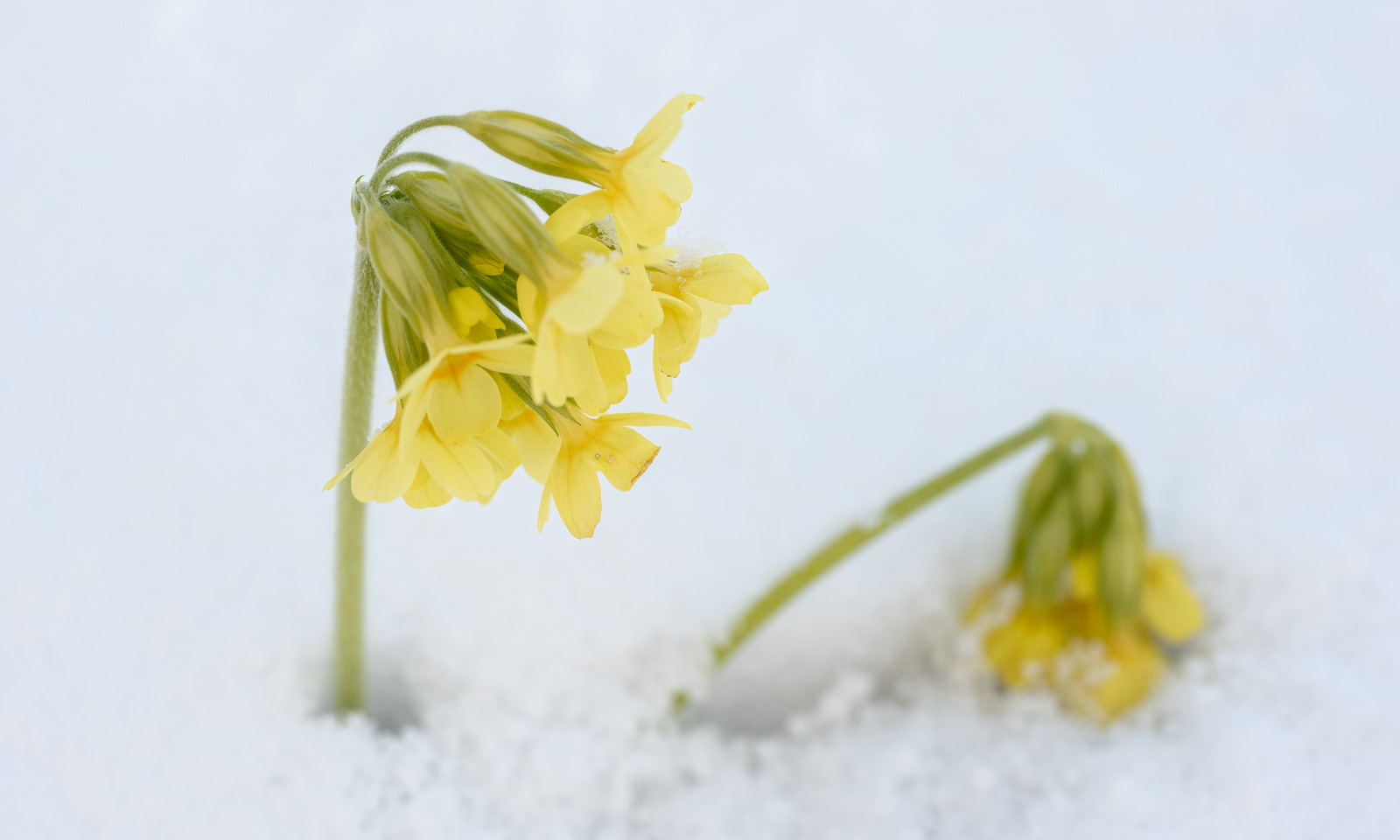
The common cowslip peeks out from the snow while the pillows of purple saxifrage that were in bloom two weeks ago are buried deeply under the fresh snow.

This snow, however, won’t live long. Parts already have melted away and even if it may snow again tomorrow, the rain expected later will melt it all away. And that’s more than ok, because I have put away my skis and now I’m looking forward to some hiking tours, first some hills, and later some mountains.

Snow depth = 0

The meteorological station Tromsø (Vervarslinga) measured the following snow depths yesterday:

Time Snow depth [cm]
2026-04-18 17:00 1.0
2026-04-18 18:00 0.0

Thus, yesterday was the last day with snow cover at Tromsø (Vervarslinga) this year. Let’s compare the values with previous years:

Year Snow depth 18 April 18:00 First day with 0 cm of snow at 18:00 Difference in days
2025 72.9 2025-05-18 30
2024 71.0 2024-05-10 22
2023 87.1 2023-05-15 27
2022 45.5 2022-05-18 30
2021 82.7 2021-05-20 32
2020 157.0 2020-06-01 44

Based on the median values from the data above, around 78 cm of snow should have covered the ground at Vervarslinga yesterday, and snow should have remained for another 30 days. I also checked older data and couldn’t find a single 18 April that was without snow at Vervarslinga within the last 50 years.

That doesn’t mean that all the snow on Tromsøya is gone. Tromsø Vervarslinga is just a single station, but it illustrates how unusually early the snow has melted this year.

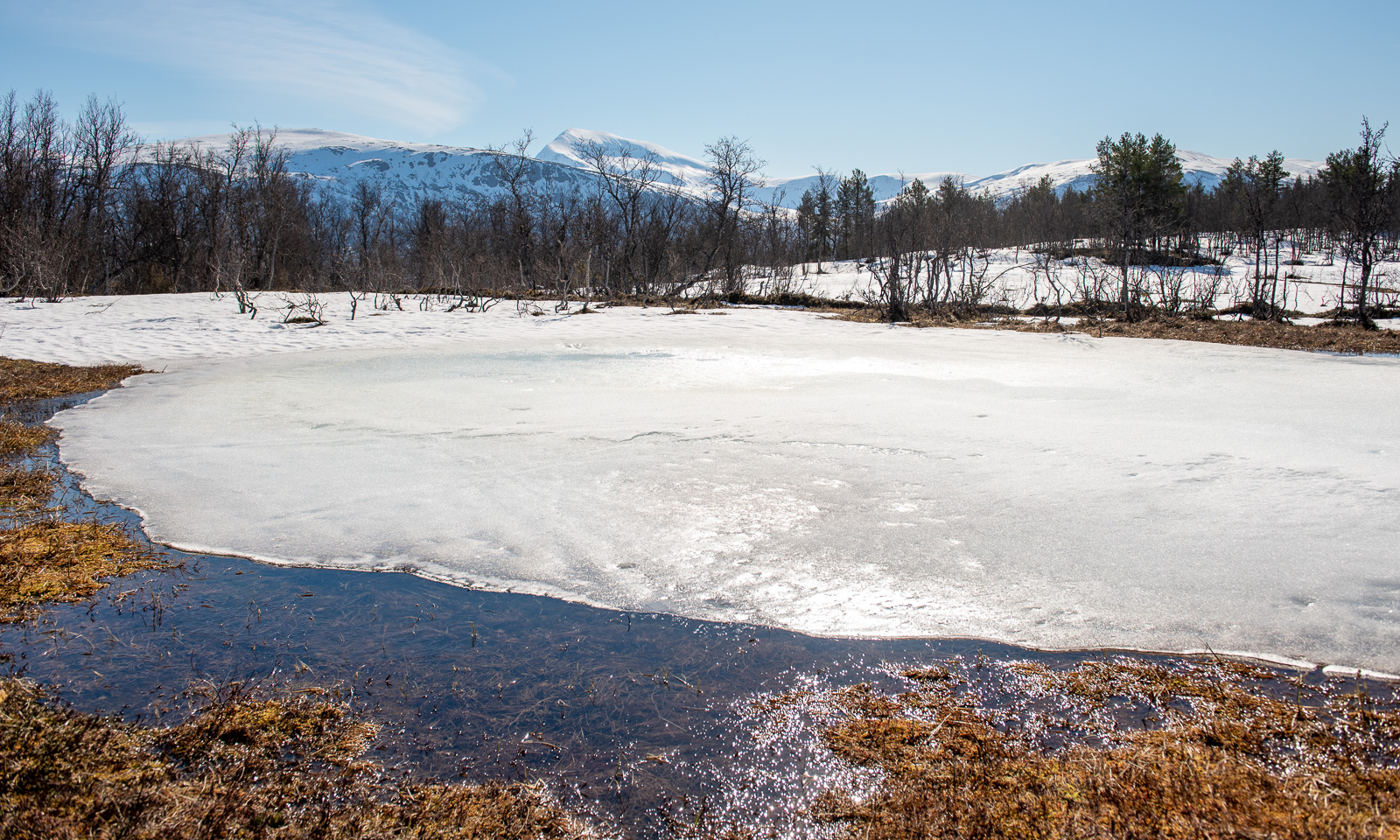
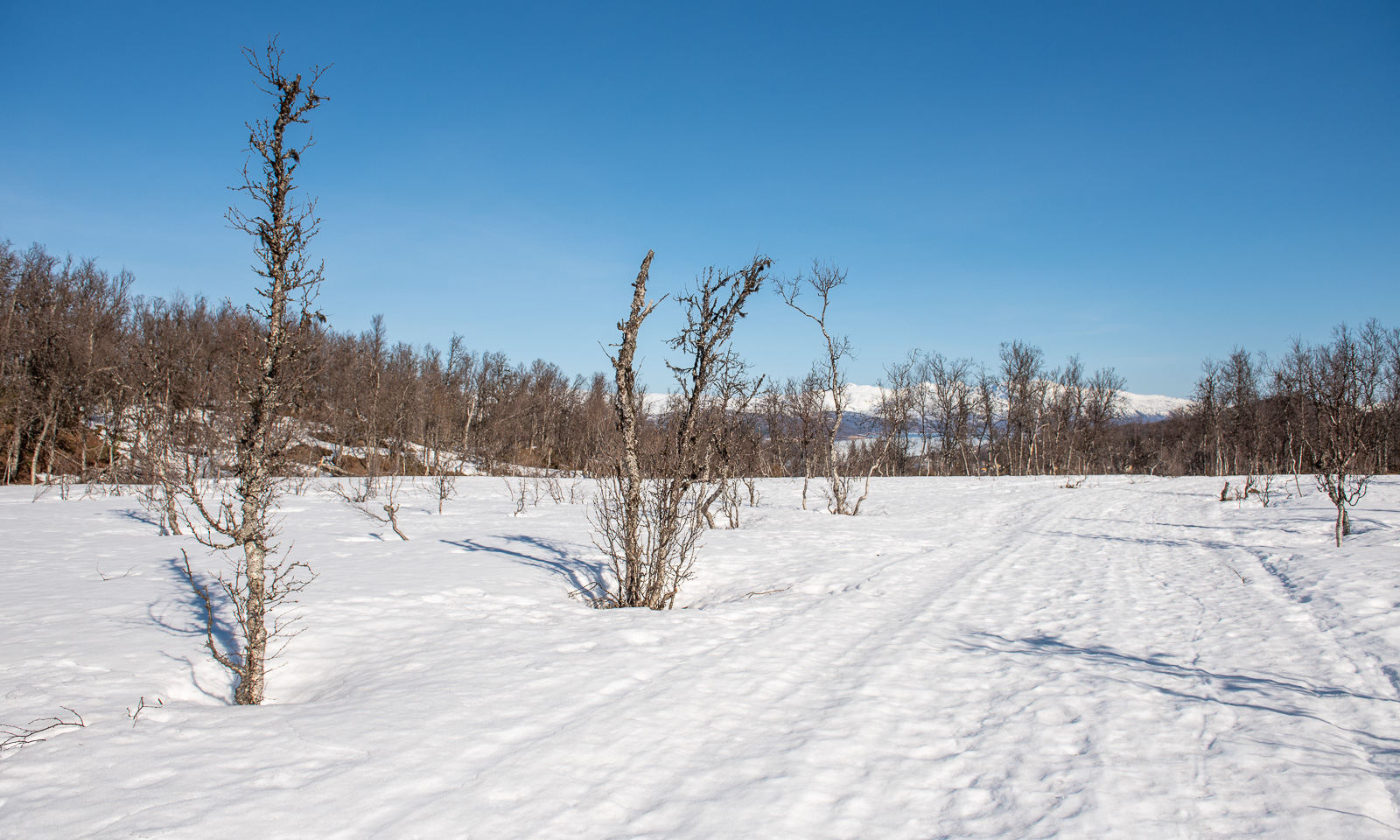
This morning I took a walk through the Tromsømarka on top of the island. As you can see, the snow varies. Some forested hills are completely bare of snow, while some boggy places still look wintry, and the lakes and ponds are covered with ice.

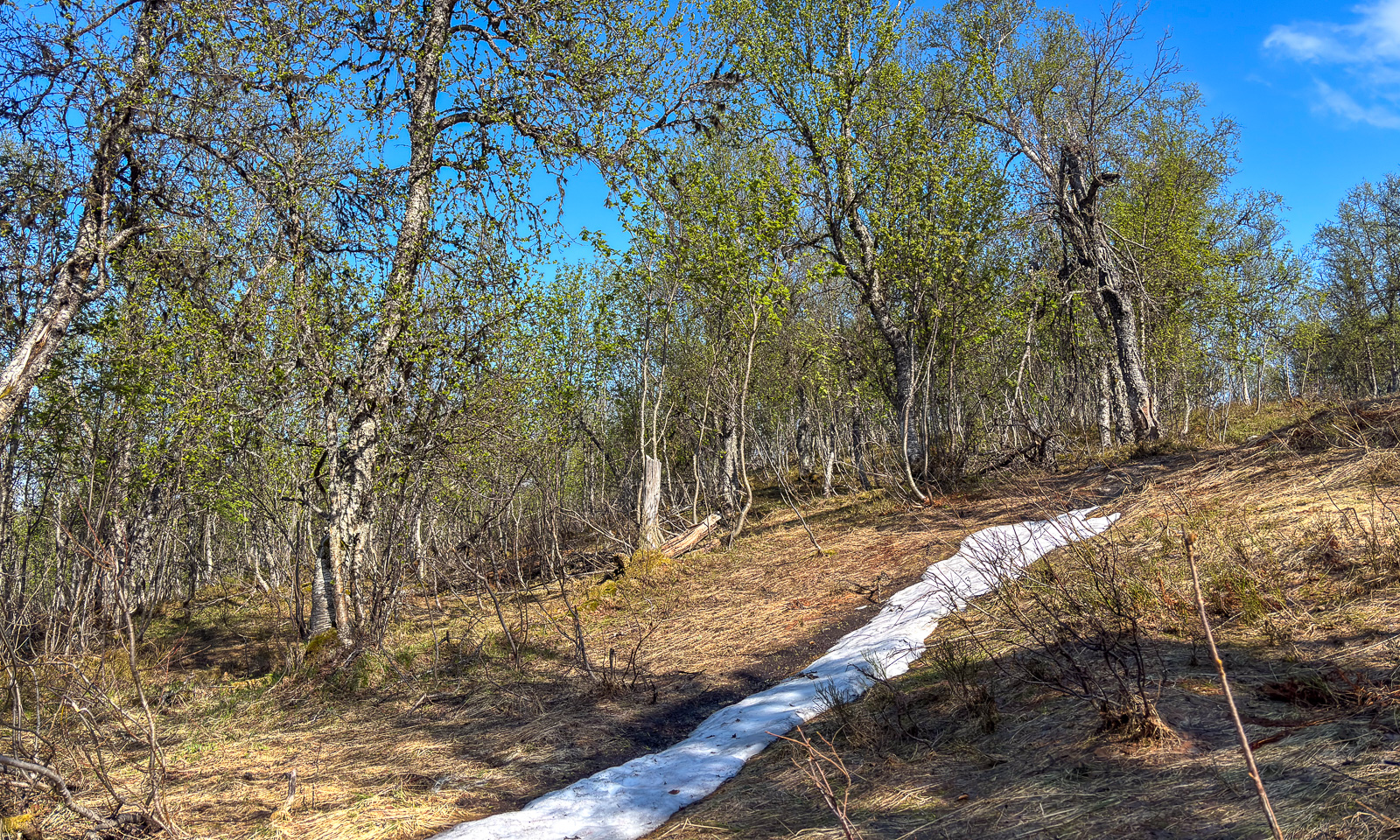
The second photo is typical. In winter, cross-country skiing is extremely popular. So popular that countless skiers compact the snow. As a result, it melts more slowly and so you can see “snow lanes” that cross the snow-free ground at this time of the year.

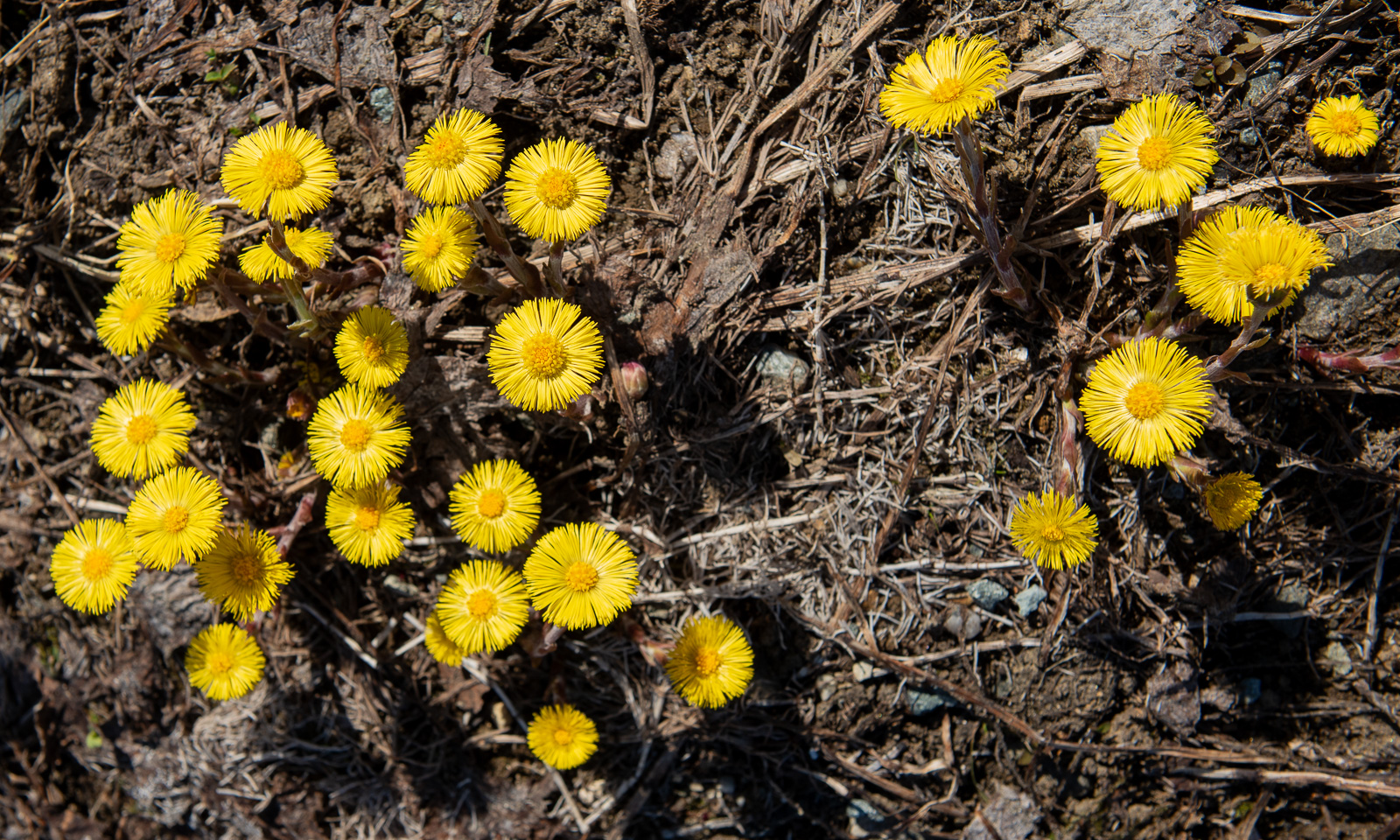
Another typical feature is the contrast: In one spot, thousands of tussilago are blooming while a hundred metres away in the shadow there is still ice on the water puddles.

What I am really curious about this year is the birch trees: will they get their leaves earlier or as usual?

Early spring in Tromsø

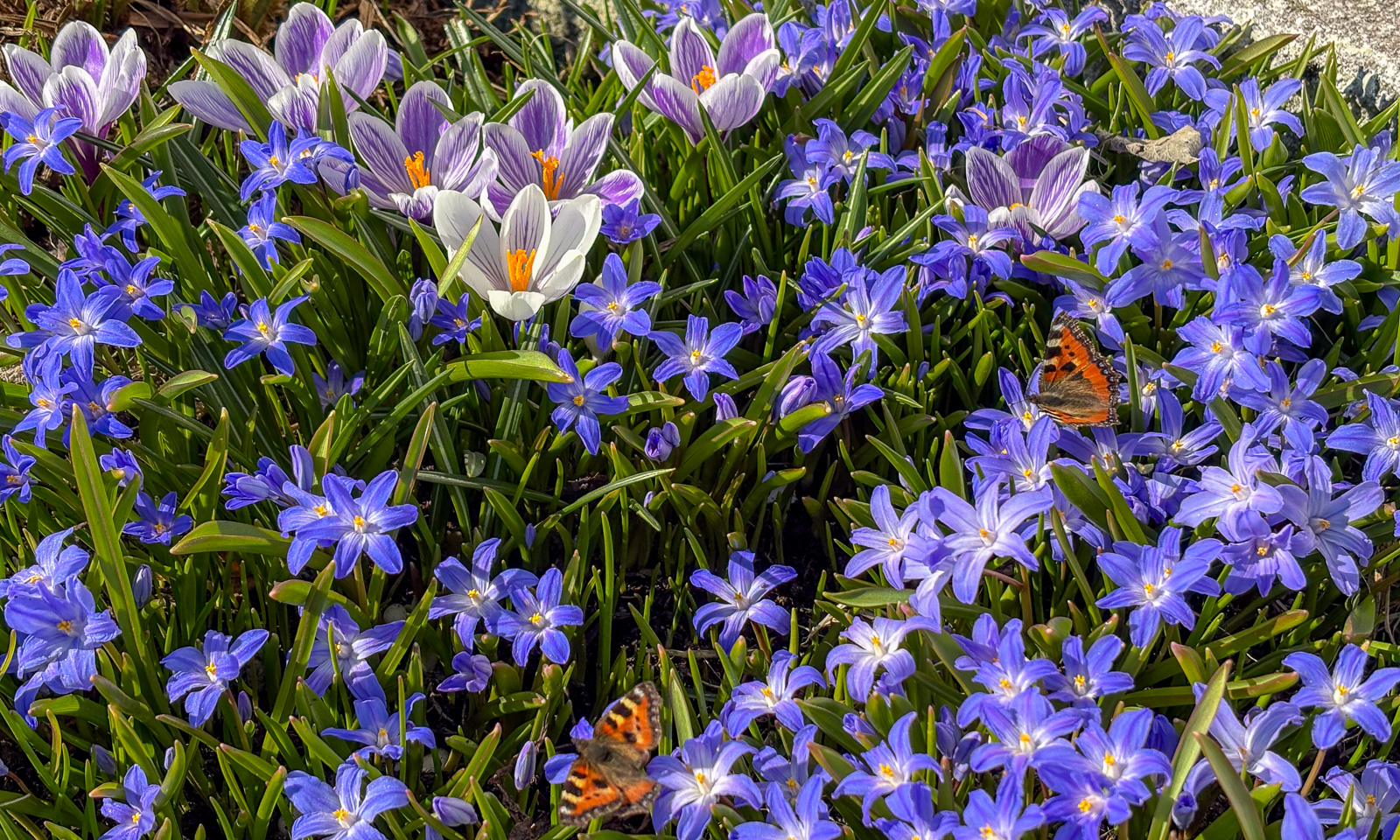
Saturday morning my car was covered with frost. But don’t be fooled by the photo, because winter in Tromsø is gone and in the lower parts of the city the wild flowers tussilago bloom everywhere together with planted flowers such as crocuses or scillas. The first butterflies and bumblebees fly from blossom to blossom and winter seems to be just a memory.

Yesterday my wife Annika and I went on a trip to Kvaløya.

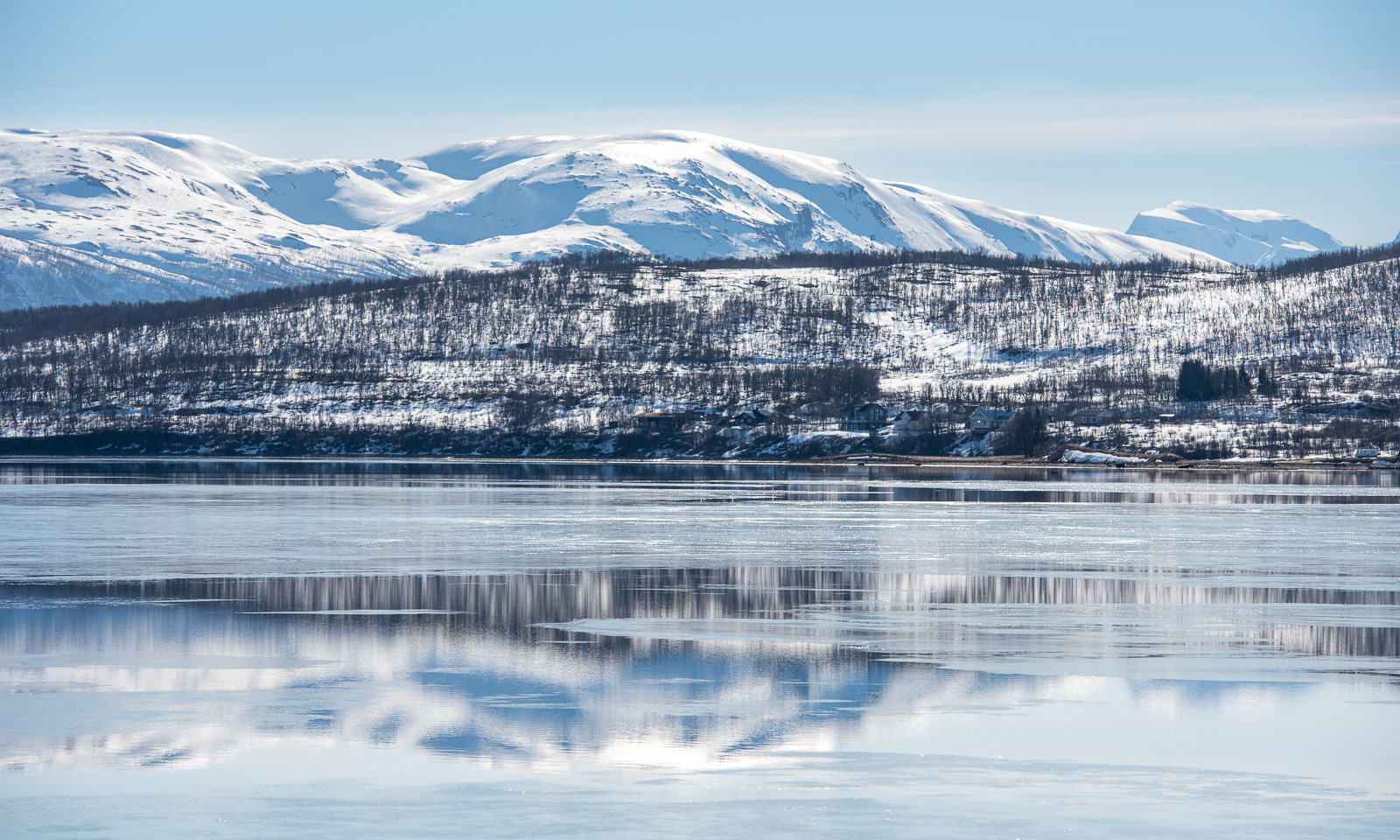
With the flowers in mind I am surprised to see a thin layer of ice on the sea at the bay at Eidkjosen.

We take the road 862 to Sommarøya through the valley Kattfjorddalen. Although the elevation is only 150 metres, it is still winter here although the edge of the lake Kattfjordvatnet starts to melt. We see many cars with kayaks passing by while most cars parking here belong to ski tourers.

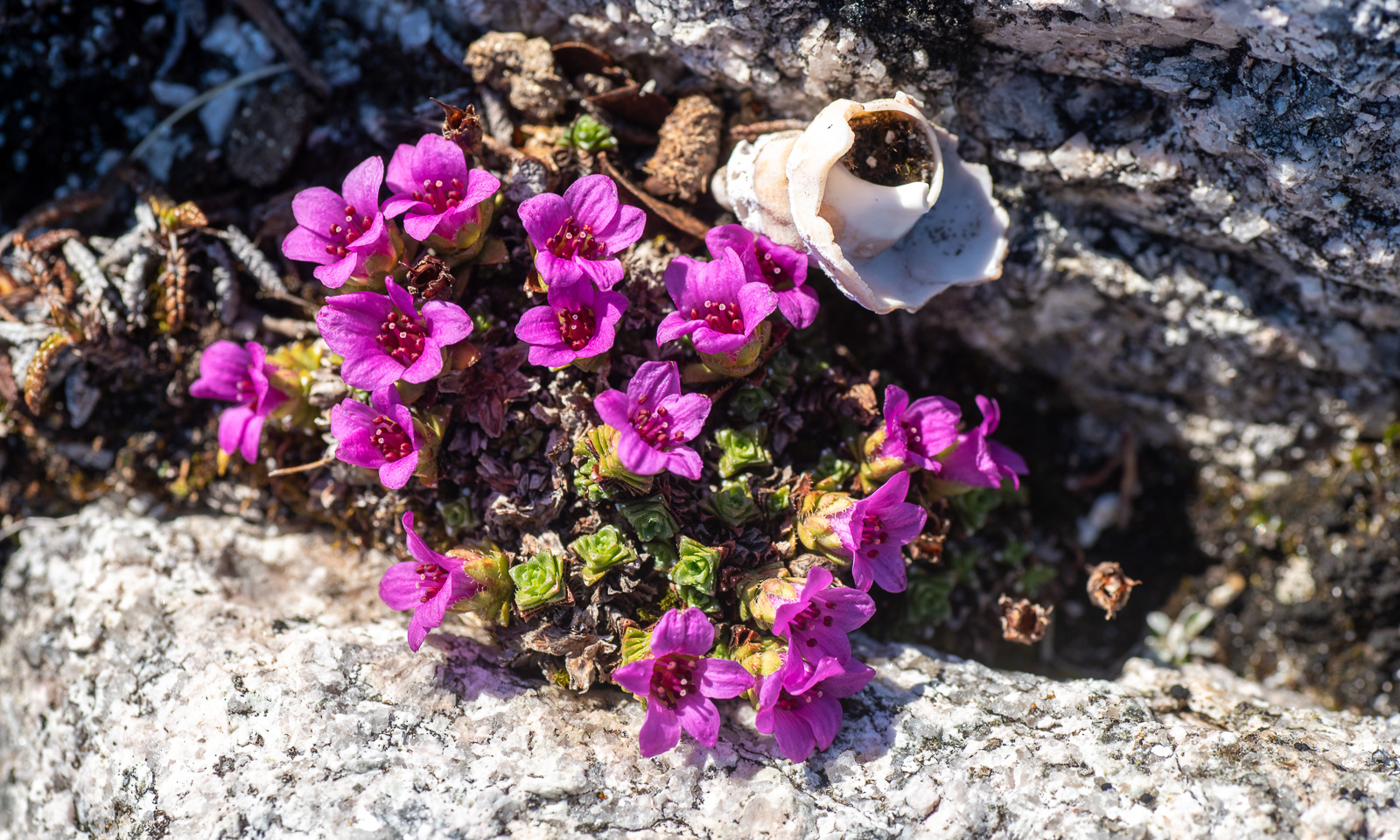
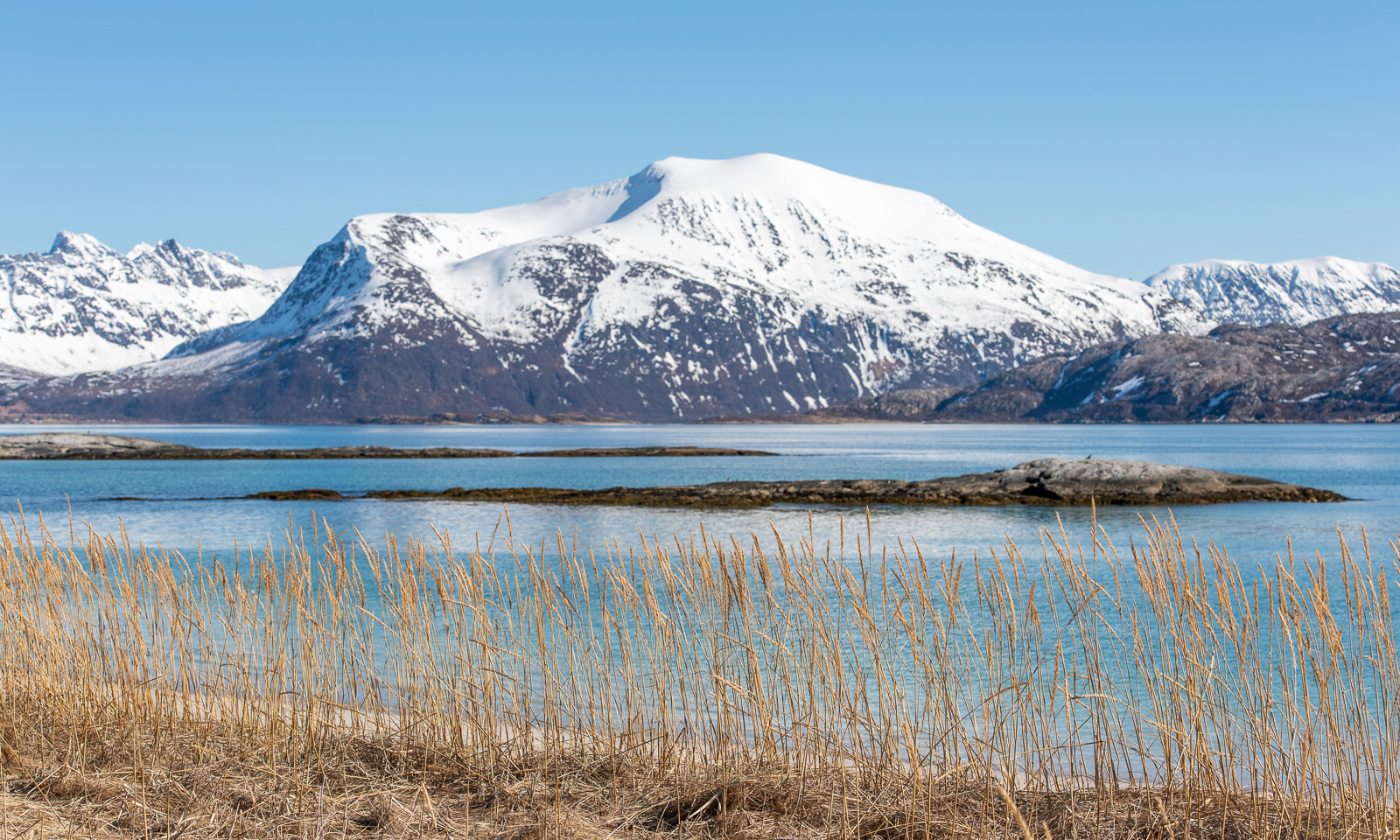
We park our car before the tunnel and walk along some sandy beaches. The sun is warm enough that we walk back in T-Shirts. On one of the hills I spot another flower that uses to bloom quite early – the purple saxifrage, one of the northernmost plants in the world.

Next stop is Sommarøya were we take a short circular tour. Beside of some patches all snow is gone. On the water there are large flocks of common eiders – you can hear them from everywhere.

Back again through Kattfjorddalen. Some skiers return, others just start their tour, while tourists are standing around enjoying the scenery which is probably very exotic to many of them.

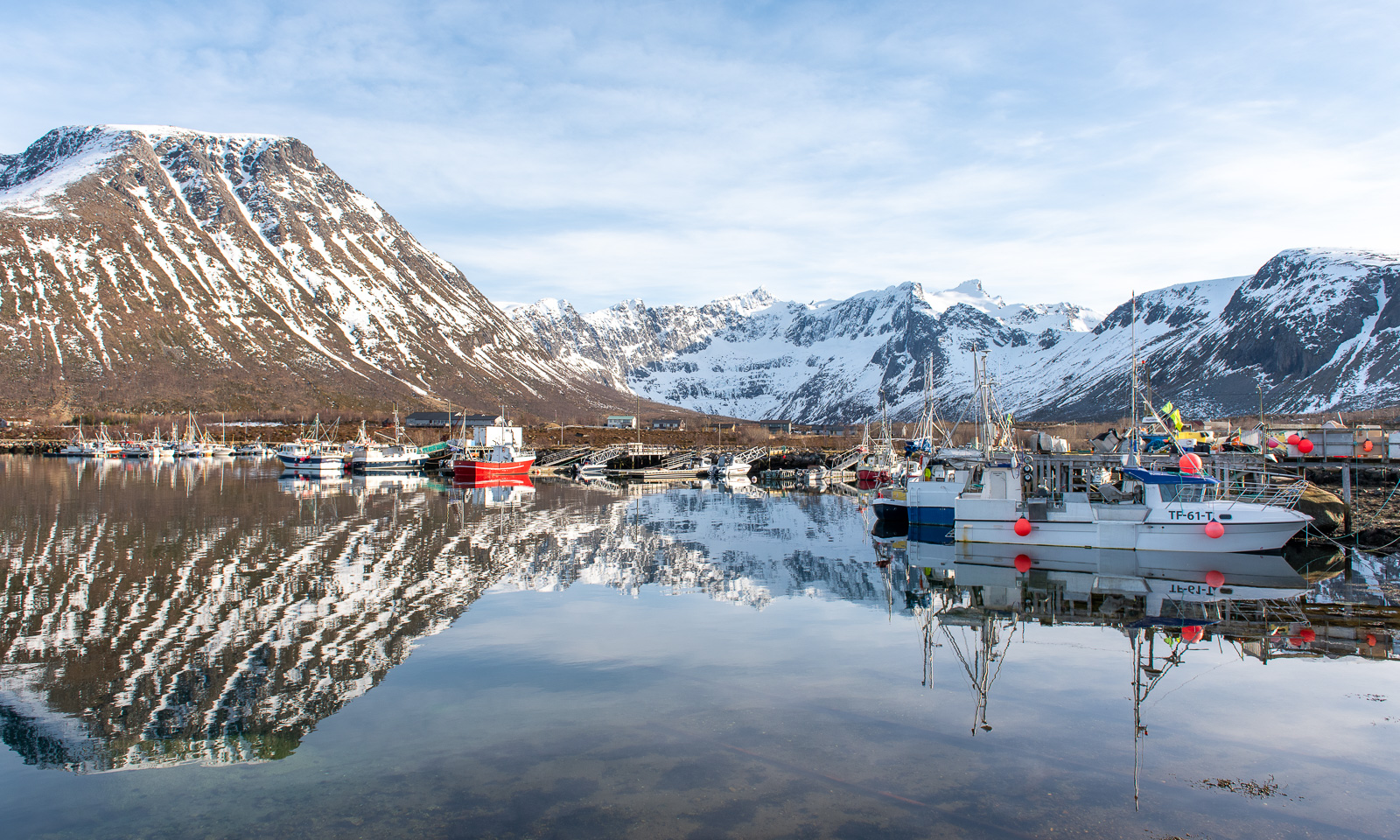
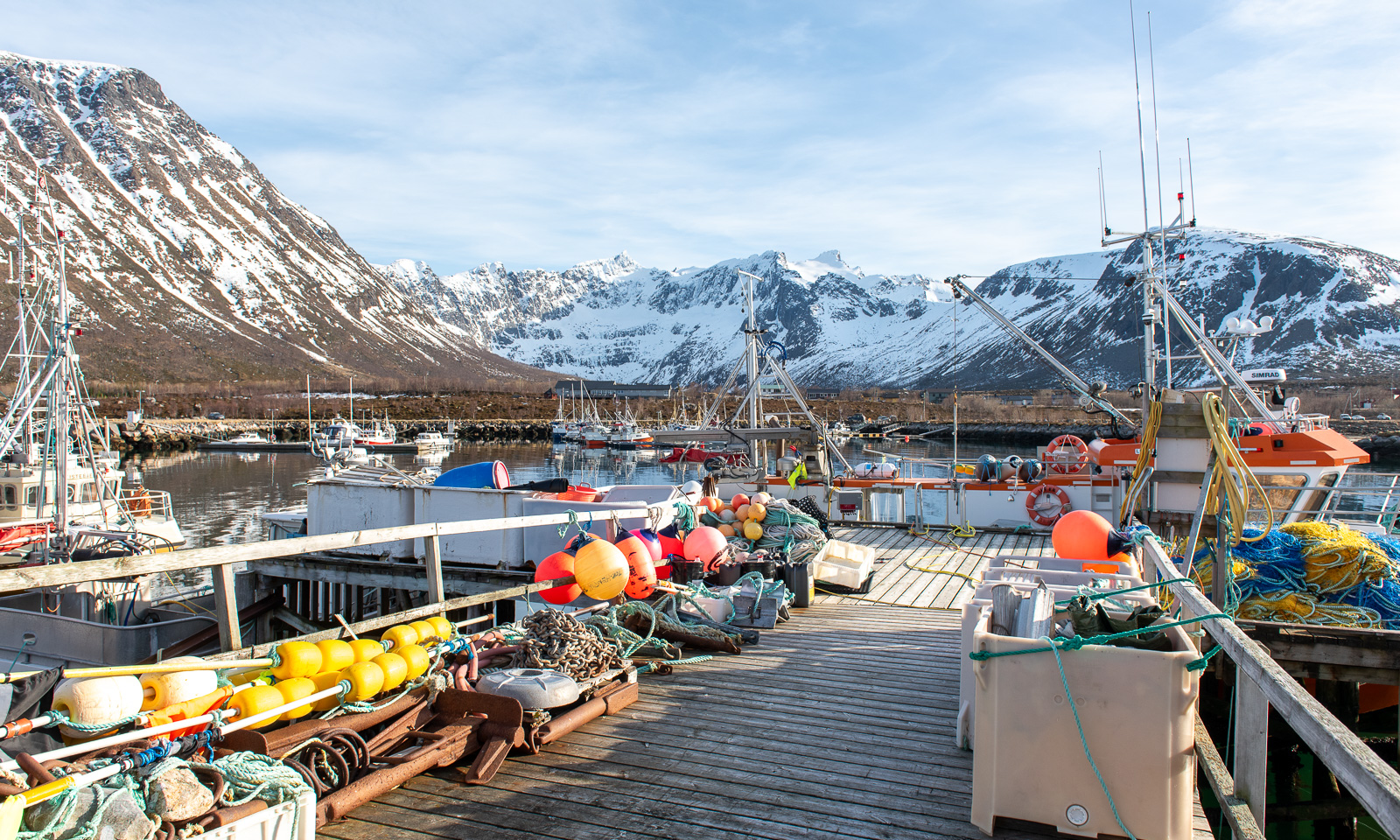
We turn left and head to Tromvik to visit the café Søstrene Kafè. It is quite a detour but it is worth it – both for the scenery and the café. And yes – I like the harbour, too.

Finally I take a detour by car to the village Rekvik. The road is pretty rough, but again the scenery is awesome.

From here it is 53 km home. I drive back without further stops. We have seen a lot and it is fair to call the tour “Norway in a nutshell”. Only the mammals were missing. No reindeer, no seals and no otters.

Note: the text is just a draft. I publish the article anyway and will polish it later.