Sunrise winter paddling

Three days ago it thawed and stormy weather crushed all the sea ice. The day after, the temperature dropped below zero again. This morning the weather was clear and calm at -12 °C. Time for another morning kayak tour, just like four days ago.

At 7:50 I stood on the leftovers of the old ice that covered the small bay. In front of me – a fresh layer of new ice. How thick may it be? I have the feeling it will not hold my weight.

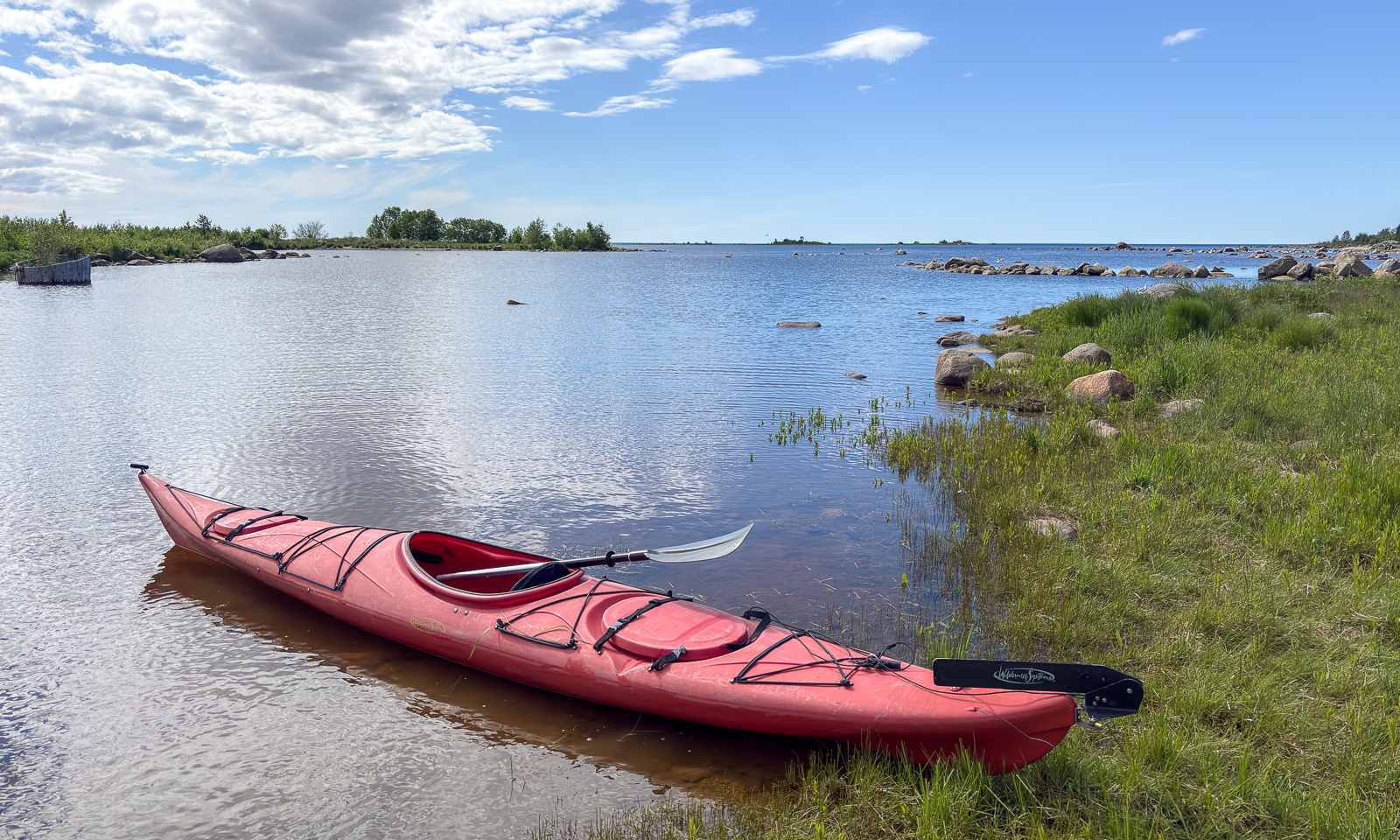
You see the photo above? The kayak is tilted sideways. That’s not because of the waves or because I’m edging, but because the kayak is lying on the ice. The ice is stable enough to bear us with me sitting in the kayak. I move forward by using ice safety picks that I drive into the ice in front of me and then pull the kayak and myself forward. It’s exhausting, but it works. I have done it many times before. The ice is approximately 3 cm thick.

But then the ice gets thinner and has exactly the thickness I loathe: between 1.5 cm and 2 cm. Then the kayak breaks through and is jammed in a narrow water channel, where it’s almost impossible to use your paddle – no open water reachable – or the ice picks – the ice will break when pulling. Luckily the water channels often tend to widen, so you can kayak back some metres, get some forward momentum using the paddle and break another two metres of ice. That takes a lot of time and extends the distance paddled by a factor of four or more.

But then – finally – I reach open water by the island Lillskär. It took me almost half an hour for less than 300 metres!

Anyhow I manage to reach the sunrise in time. Now the surface of the sea is multicoloured. The back of the waves are reflecting the orange horizon, the front of the waves the blue sky above.
Now I just paddle a short round, because it is a weekday and I have to work. Just some more photos with my mobile phone in its waterproof bag …

… before I return home. First it is easy, because the channel that I had broken through the ice is open and I can easily follow it. Then the ice gets thicker again. I’m tired and since the water is pretty shallow I exit the kayak and walk the kayak home. I learn that the ice does not bear me at all. So I break it with my knees or – when deeper – with my rear. I would not dare to do this with my kayaking drysuit, but today I wear my survival suit made of thick neoprene, which is very sturdy.

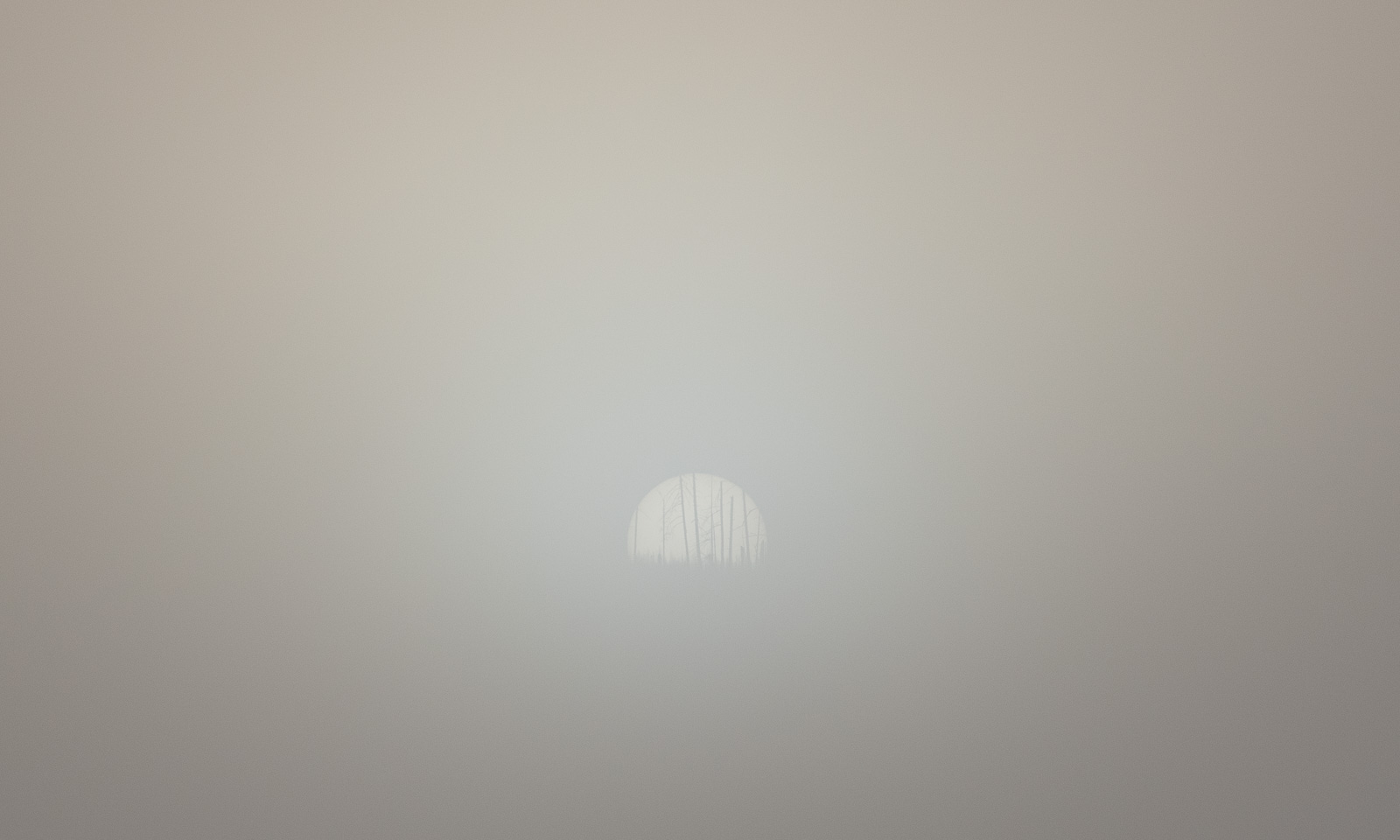
I reach the shallow part of the bay where I manage to grab a large piece of ice and put it upright. Time to play a bit with the translucent motif in front of the sun.

It is two o’clock in the afternoon when I decide to take another break from my desk to watch the sunset. To make a long story short – I got it. No kayaks involved this time.

Season’s first winter paddling in Northern Sweden

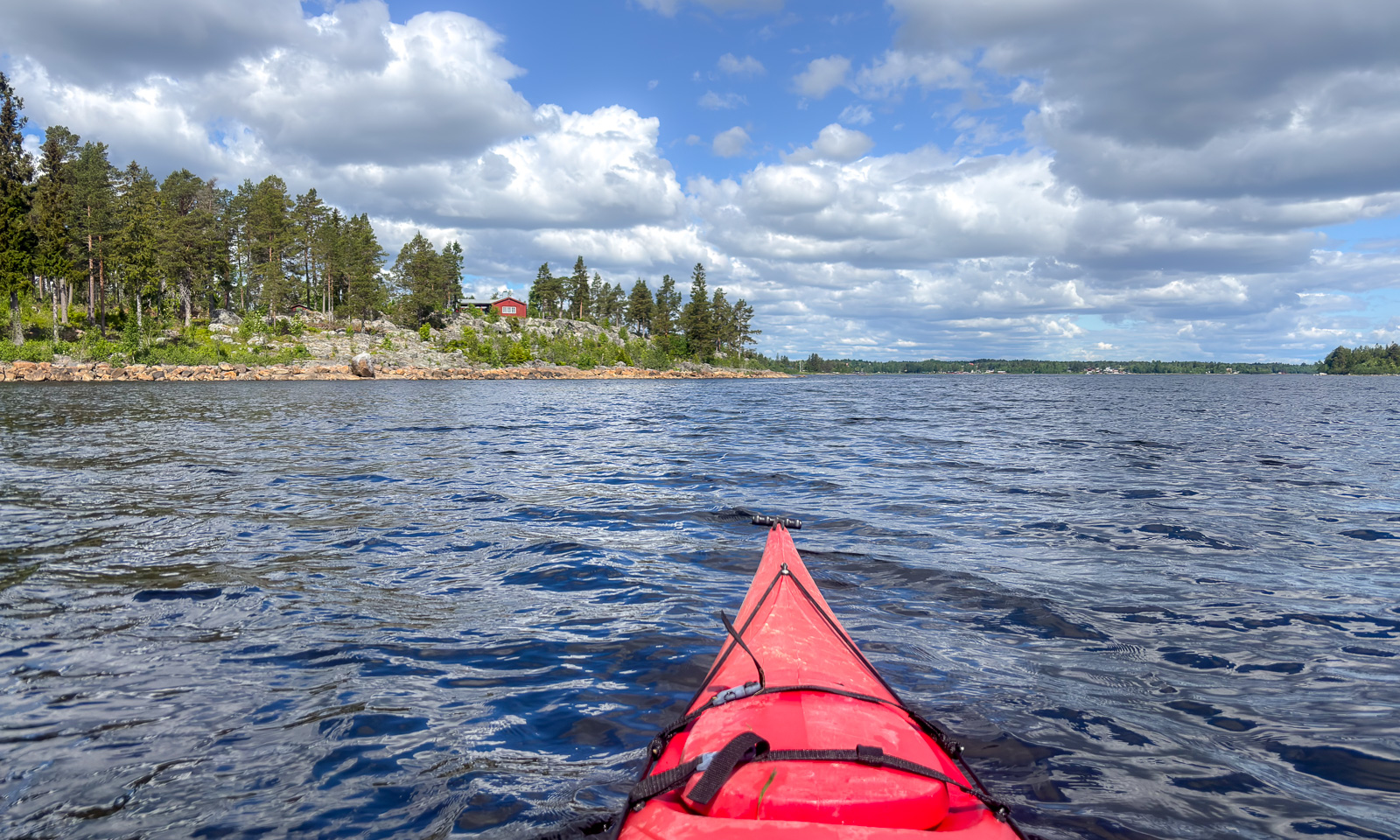
While there is a lot of snow in Tromsø, is is only round 2 cm here in Obbola in Northern Sweden. Here it is the coldness that defines the winter. Today I took my kayak and made a small tour on the Baltic Sea which is just outside the garden. With temperatures round -13 °C and a light wind it was pretty chilly. The small bay is frozen and you can walk on it and on the open sea thin layers of ice are building where the sea is calm. Here are some photos from today’s kayak tour.

Now the kayak is lying in the floor of the house. The kayak’s steering mechanism was frozen and is currently thawing.

Walking home between the seasons

After a three-week break, I did my usual after-work hike from Prestvannet to my flat today. Back then it was full autumn, now the weather bas become more wintry despite of the warmer temperatures the last days.

For those who wonder whether I’ll show photos from Scotland. Yes I’ll do but not before next weekend. See you then …
October on Tromsøya

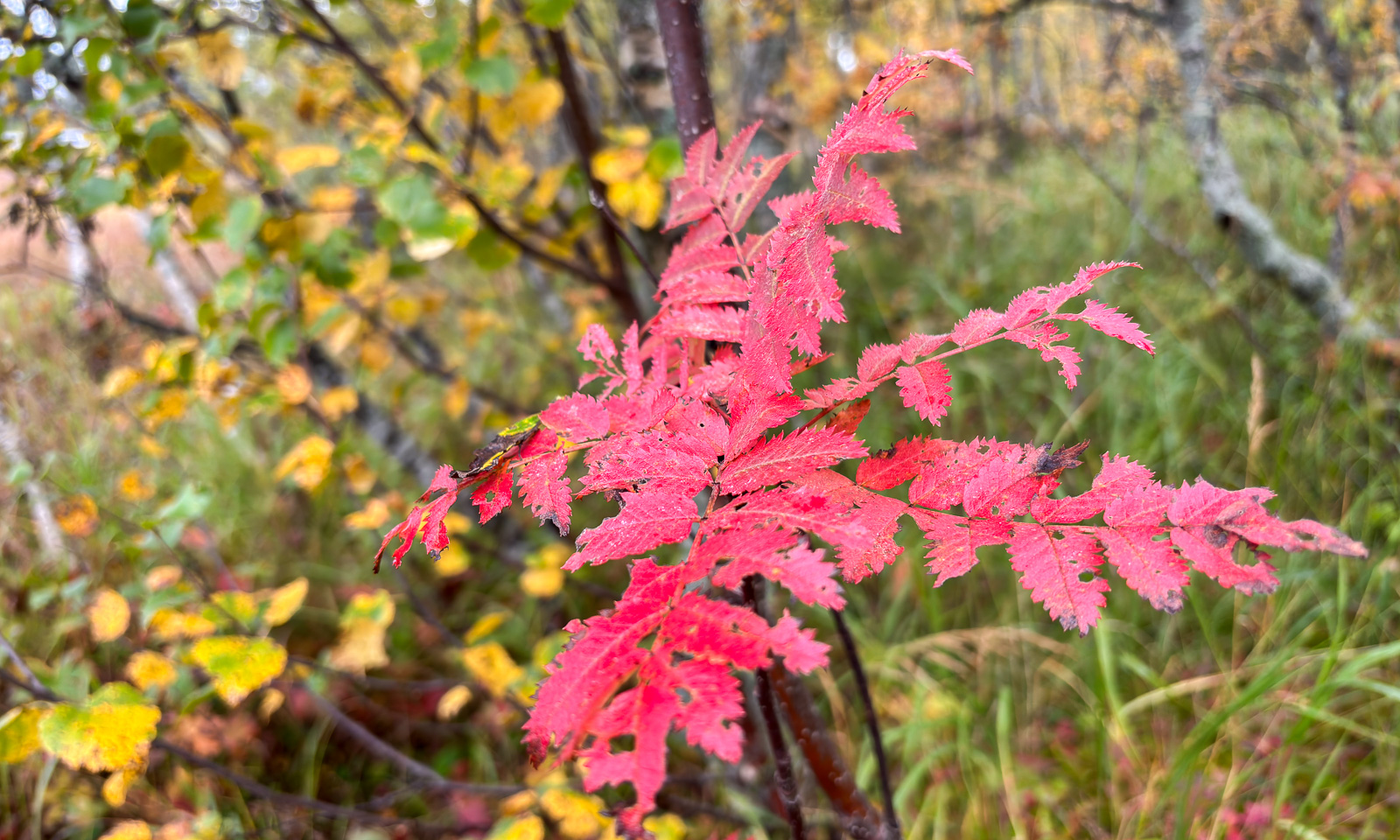
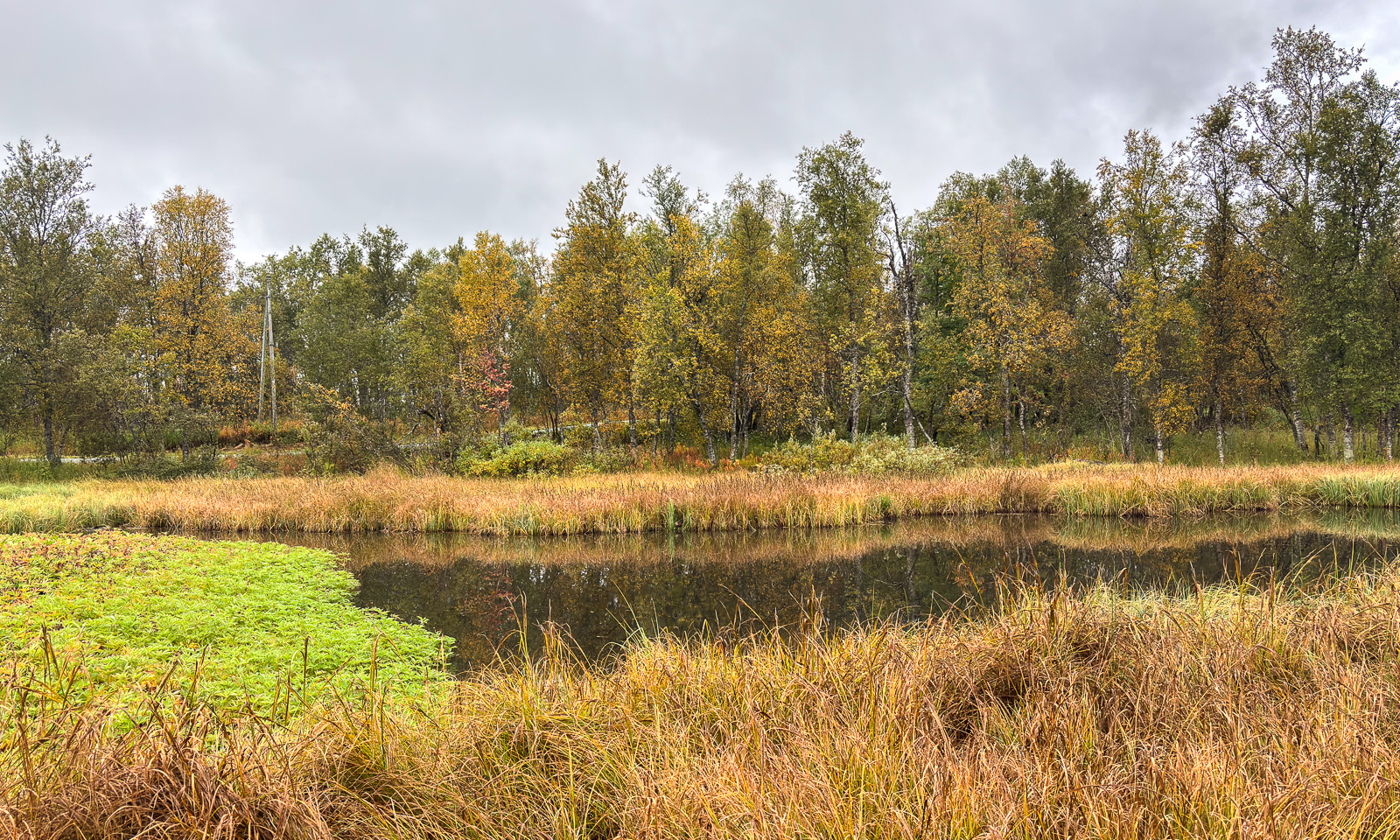
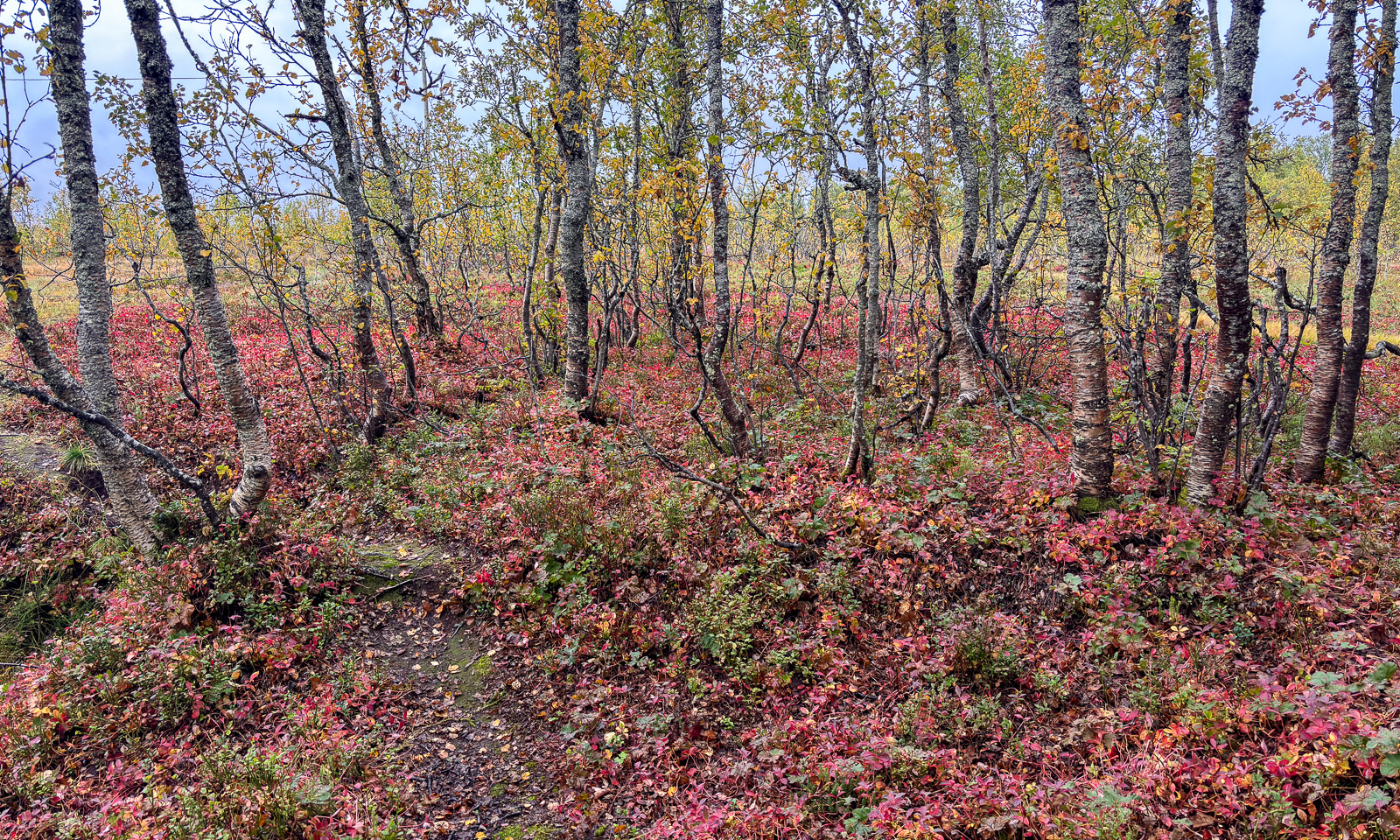
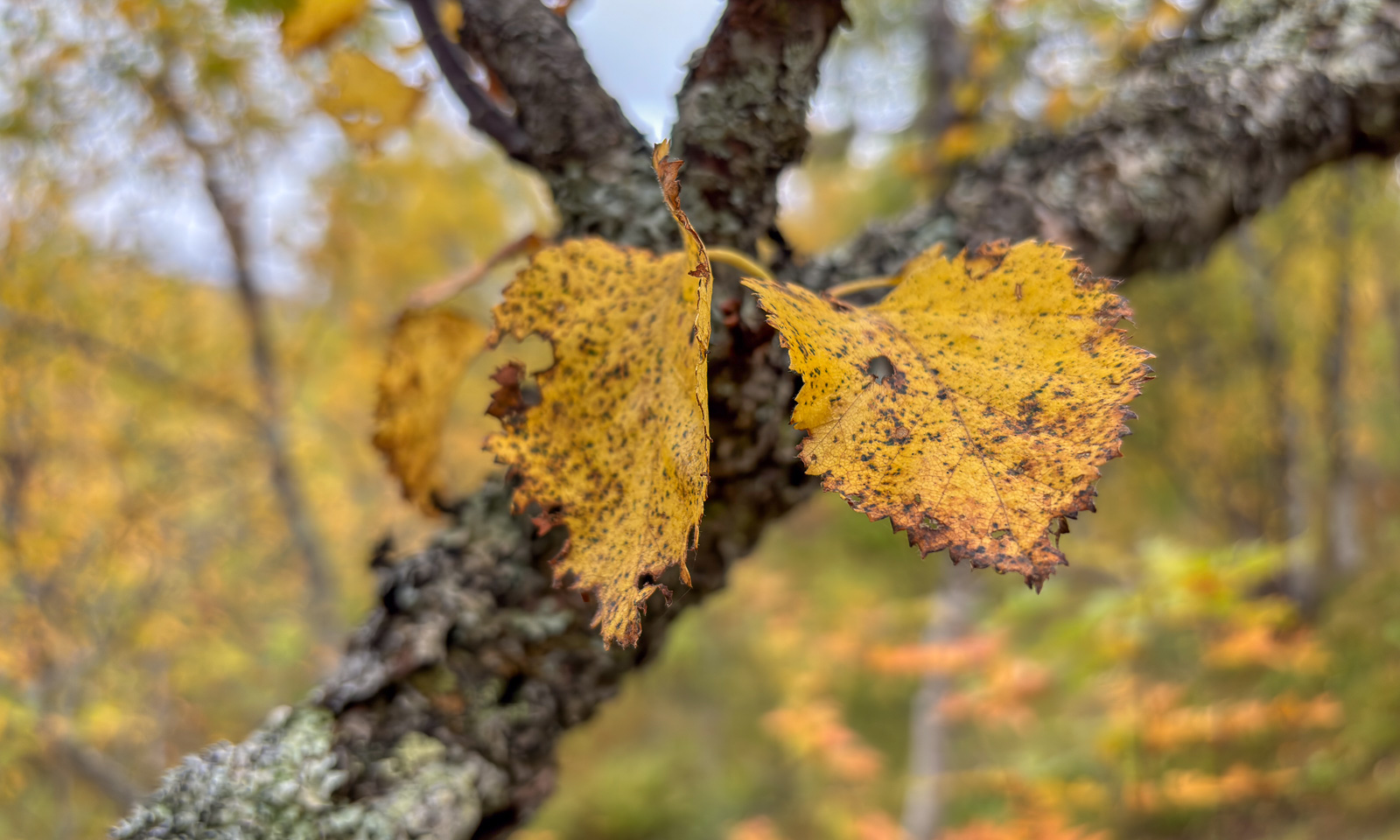
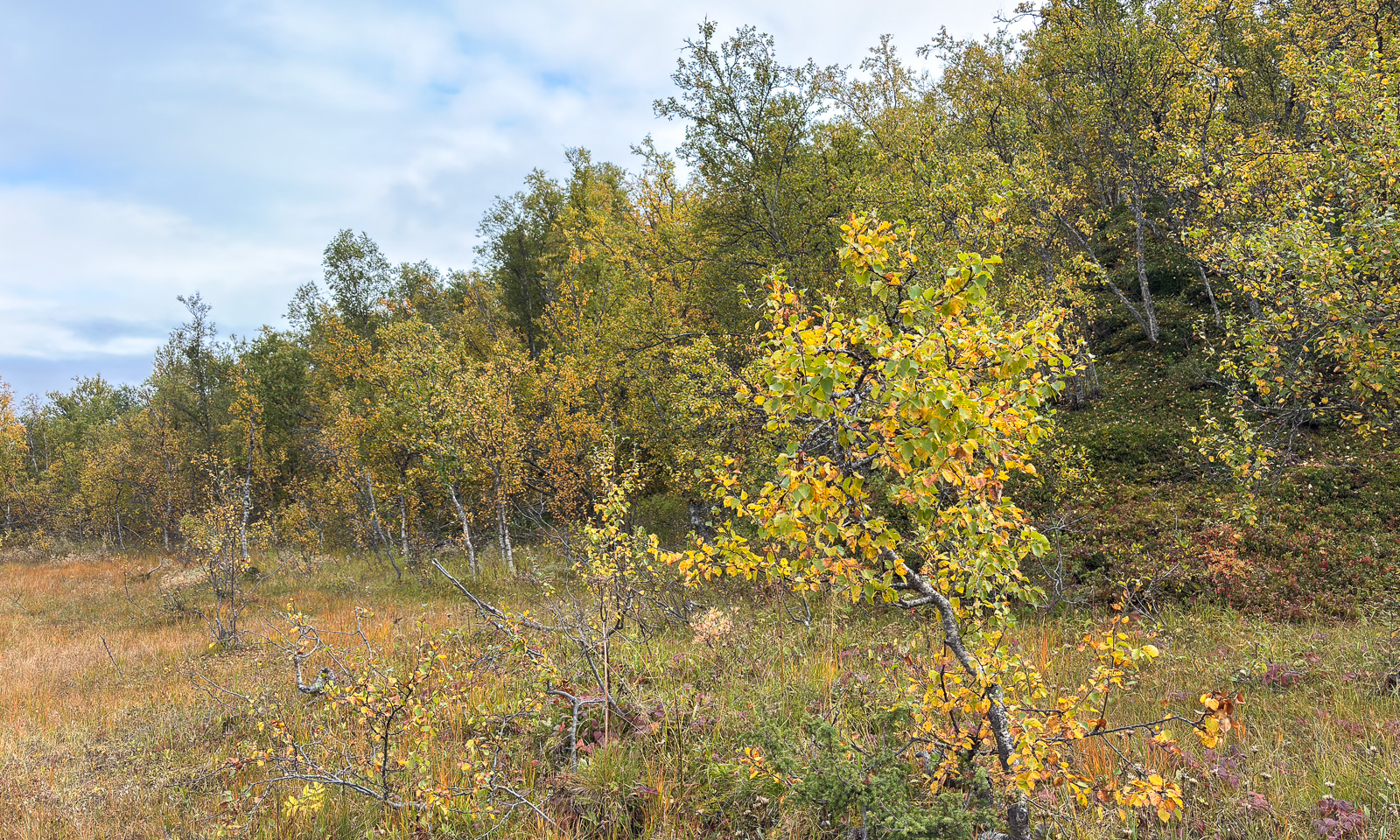
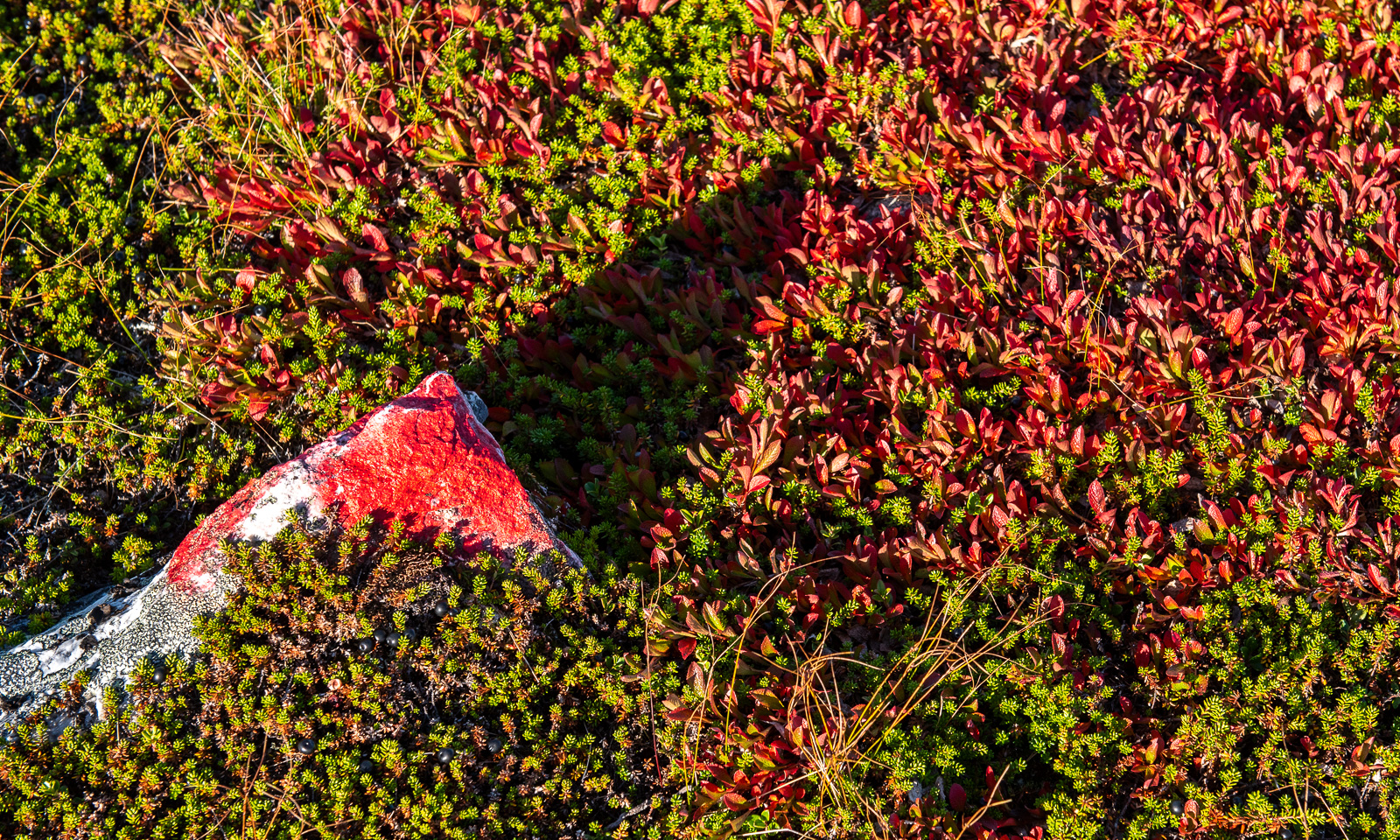
This is the season where the golden October starts to loose its colours. The first ground frosts occur and many birch trees have lost their leaves. Now it is the rowan and willow trees and the grass and moss that shows autumnal colours.

Four pics I took on an after-work hike two days ago and four I took today.

It won’t be long before the afternoons are so dark that the light posts make sense — and maybe I’ll be able to ski there as early as next month.

1st October

The 1st day of this year’s October delivers! First I got a clear, blue sky on my after-work hike through the autumnal forests on top of Tromsøya. Then I got beautiful Northern lights tonight, I just came in and developed the photos a bit.

What you don’t see here – as usual – is the movements of the Aurora. The live act is still better.

Steindalsbreen 2025

It is the third year, that I hiked to the glacier Steindalsbreen in the Lyngen Alps. This time I had the pleasure to do the tour with my wife Annika. To make it a holiday we have decided to try to book the cabin Steindalshytta over the weekend. This cabin lies some kilometres from the parking place on the way to the glacier.
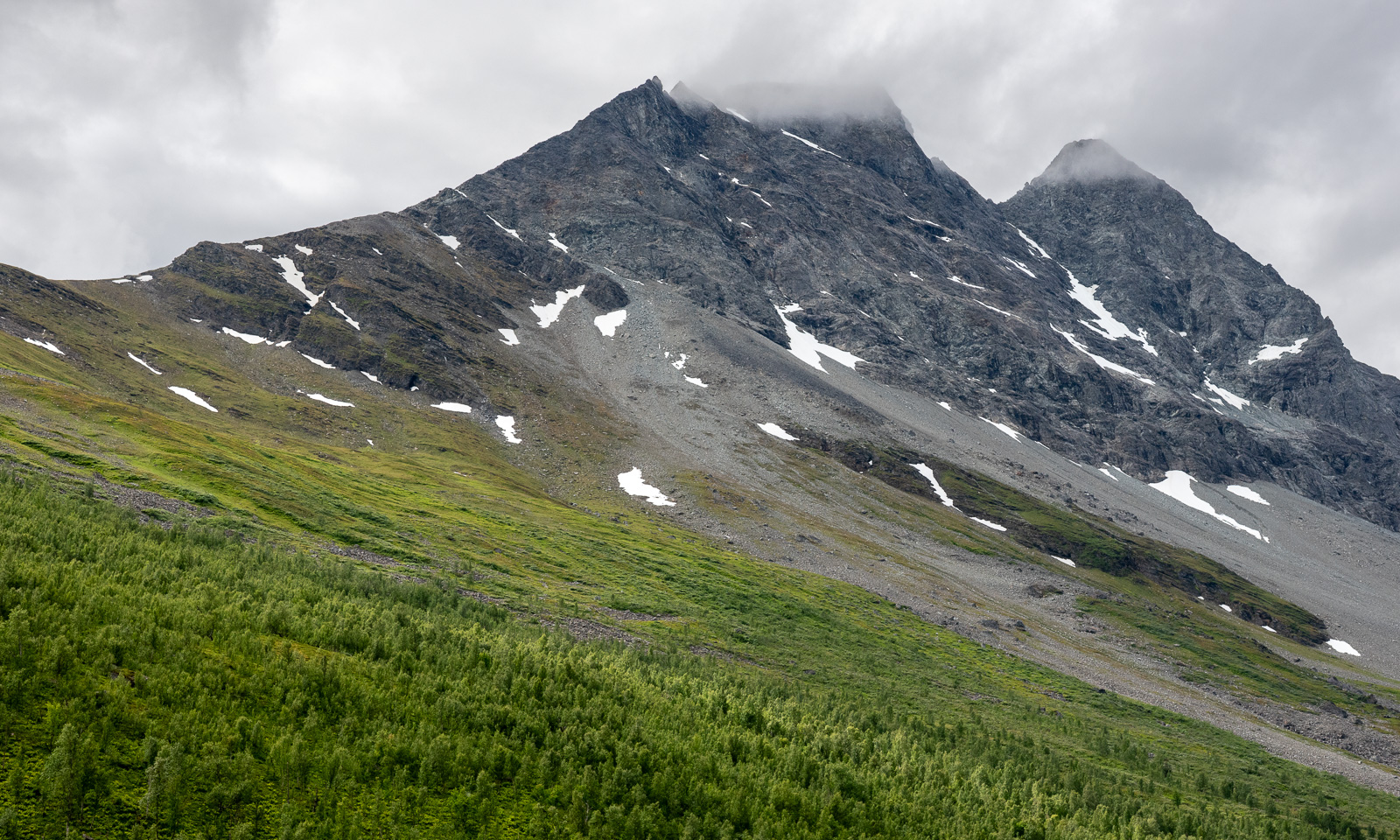
Saturday morning we manage to book two beds but we have to hurry to fetch the key in Steindalen, which is 100 km away. There we meet H. that gives us the keys and some info. She tells us we can use the gas driven hotplates to cook. We also learn that there’s hardly any firewood left, but it’s not cold and we have sleeping bags, so no worries. We pay using Vipps, the leading mobile payment system in Norway, then we take the car to Lyngseidet – 25 km away – to buy food.

When we pack our backpacks to start the tour it is already afternoon, but the cabin is not far away.

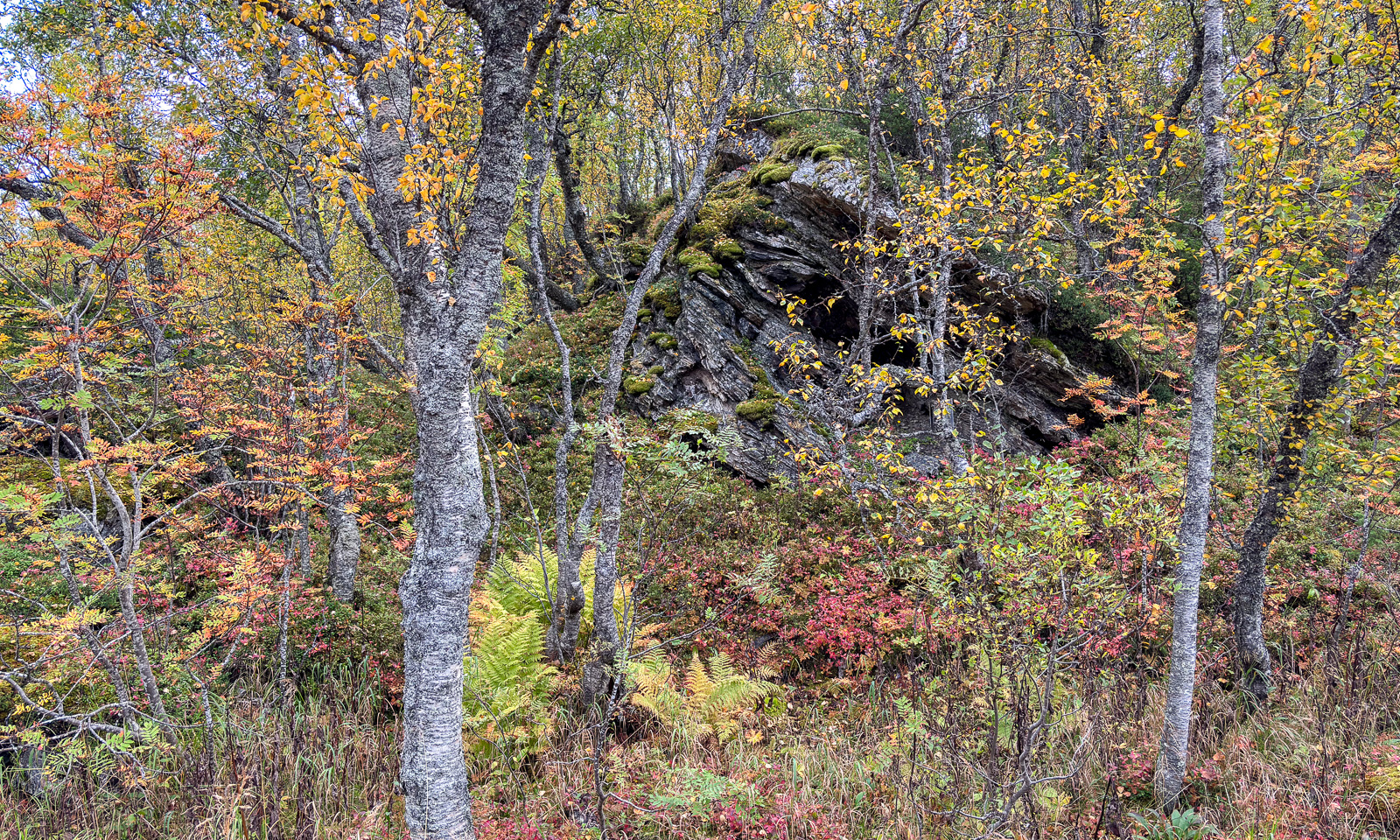
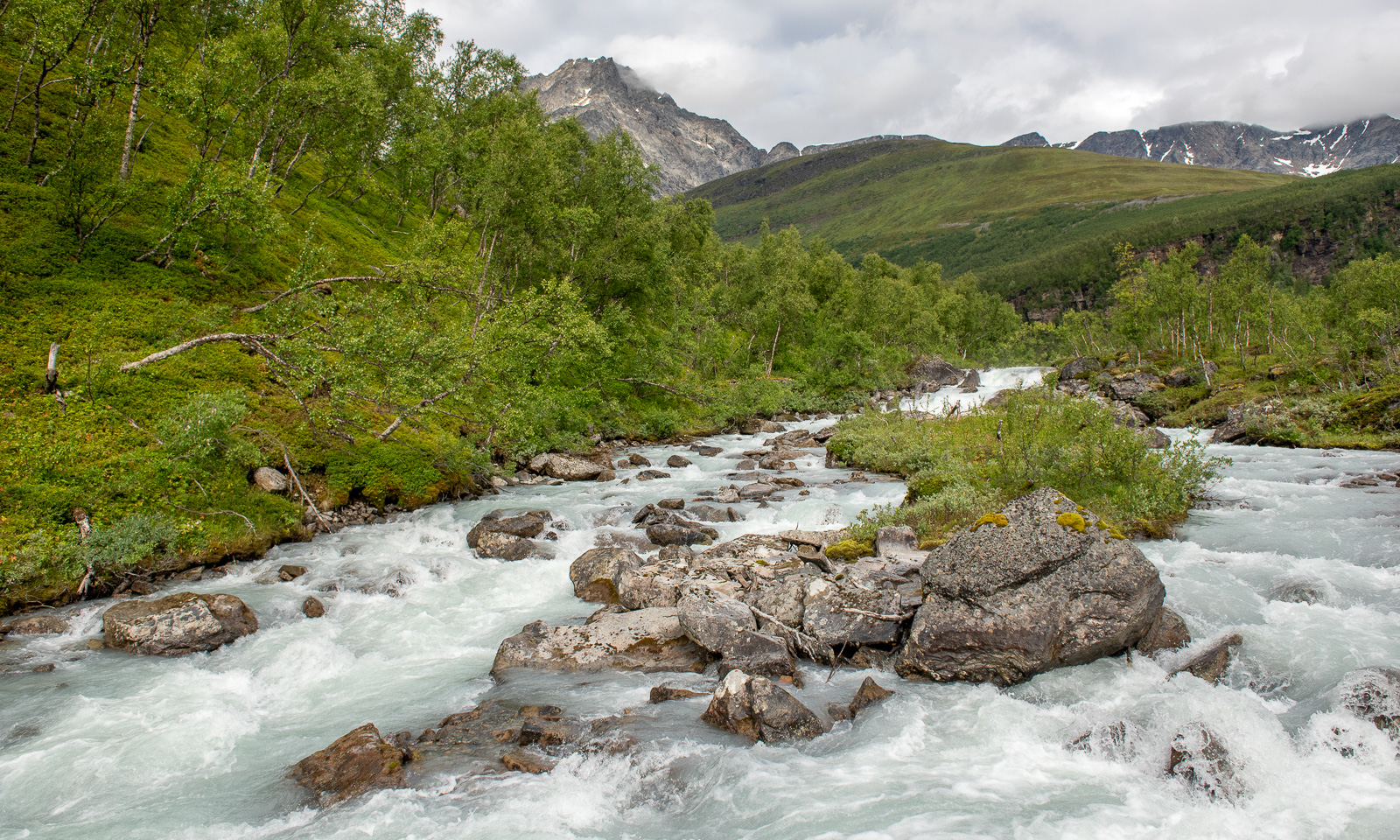
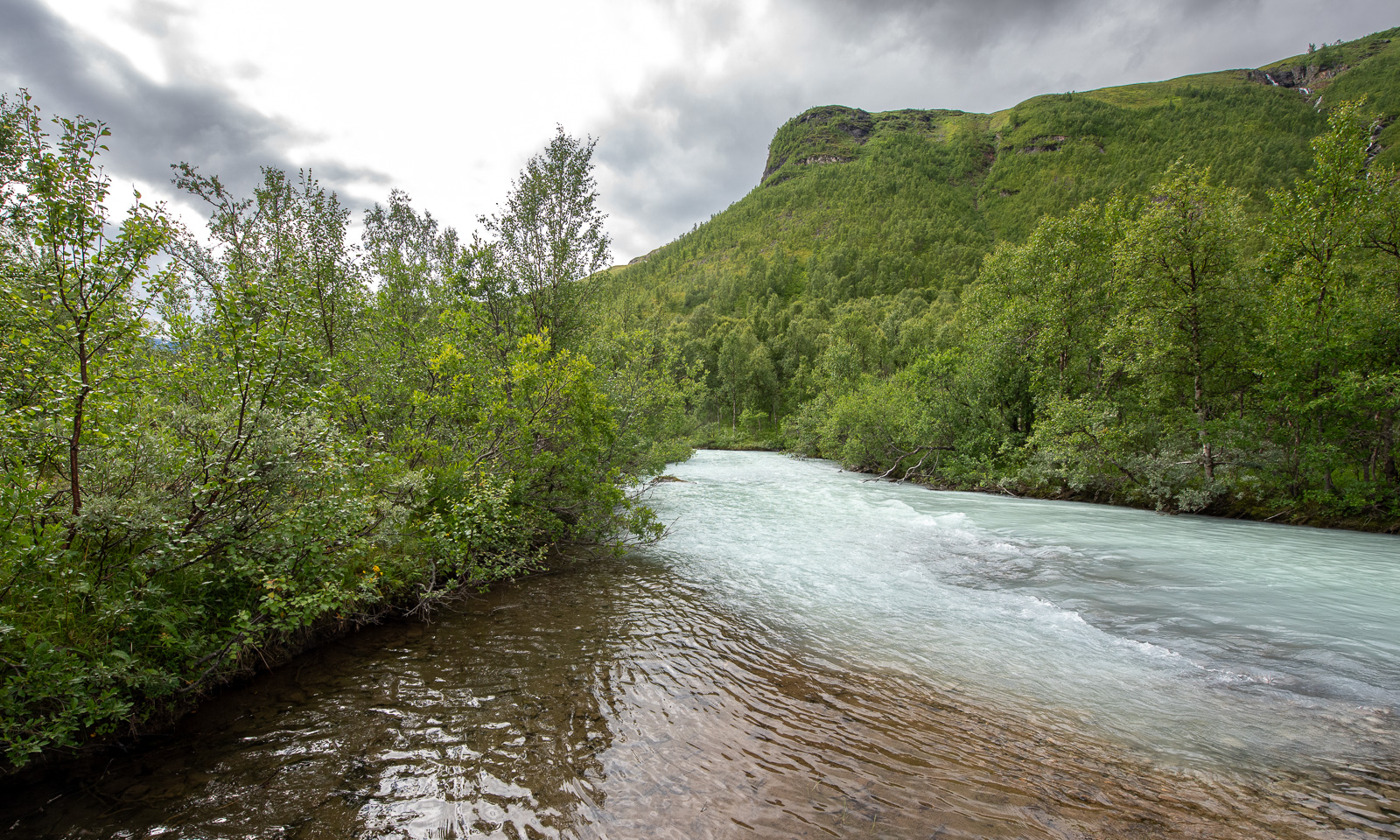
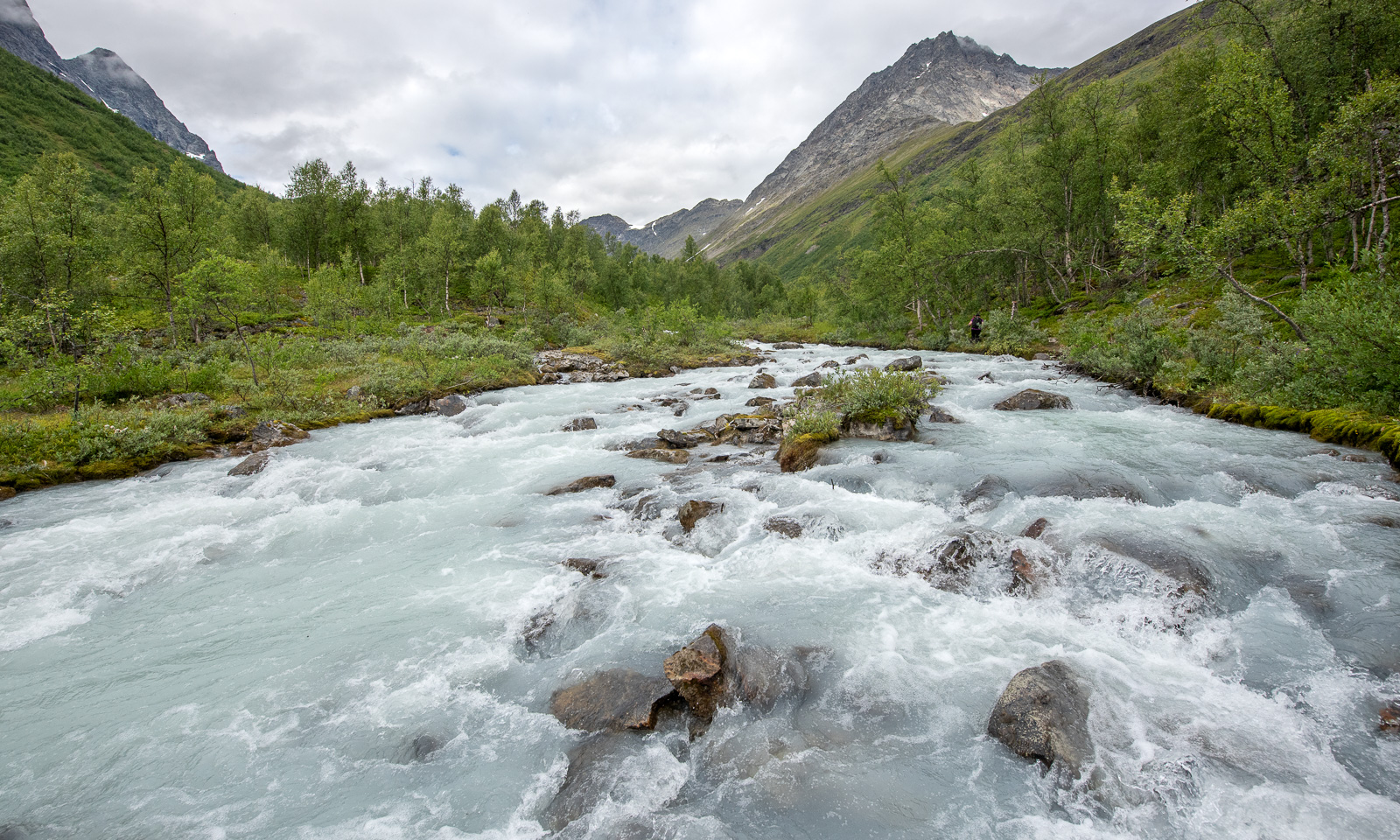
In the beginning a forest path winds up through a narrow valley. The colours are autumnal – yellow the birches, red the cornel and the blueberries. To the left down from the bottom of a ravine we can hear the river Gievdanjohka.

The path is rising and so is the river. After two kilometres we are almost level.

From there it is not far to the cabin. We go round a moraine and there it is: Steindalshytta. I unlock the door and we peek inside. Looks cosy!

Now we want to cook. This will take the rest for the evening because the gas canister is empty. No cooking on the hotplates, we have to use the wood-burning stove. We gather all the leftover wood from inside and outside of the cabin. There is no axe. Luckily Annika has a knife that is sturdy enough to make some smaller peaces of firewood. The wind is calm, the oven isn’t drawing and it takes almost three hours until the water for the spaghetti is boiling. At least we get a starter: warm shrimps with parmesan that we eat from the huge plastic plates we found in the kitchen. And I found chocolate cookies in the kitchen.

Meanwhile it has become dark outside and soon we get to sleep. We don’t have to freeze. After having powered the stove for hours we have 24 °C in the living room and hardly less in our sleeping room. Good night!

When I wake up the next morning it is raining, but it stops soon and the sun starts to light the mountains in the east.

After breakfast we pack our backpacks and start our hike to the glacier Steindalsbreen. Many things like our sleeping bags we leave behind, because we will go the same way back.

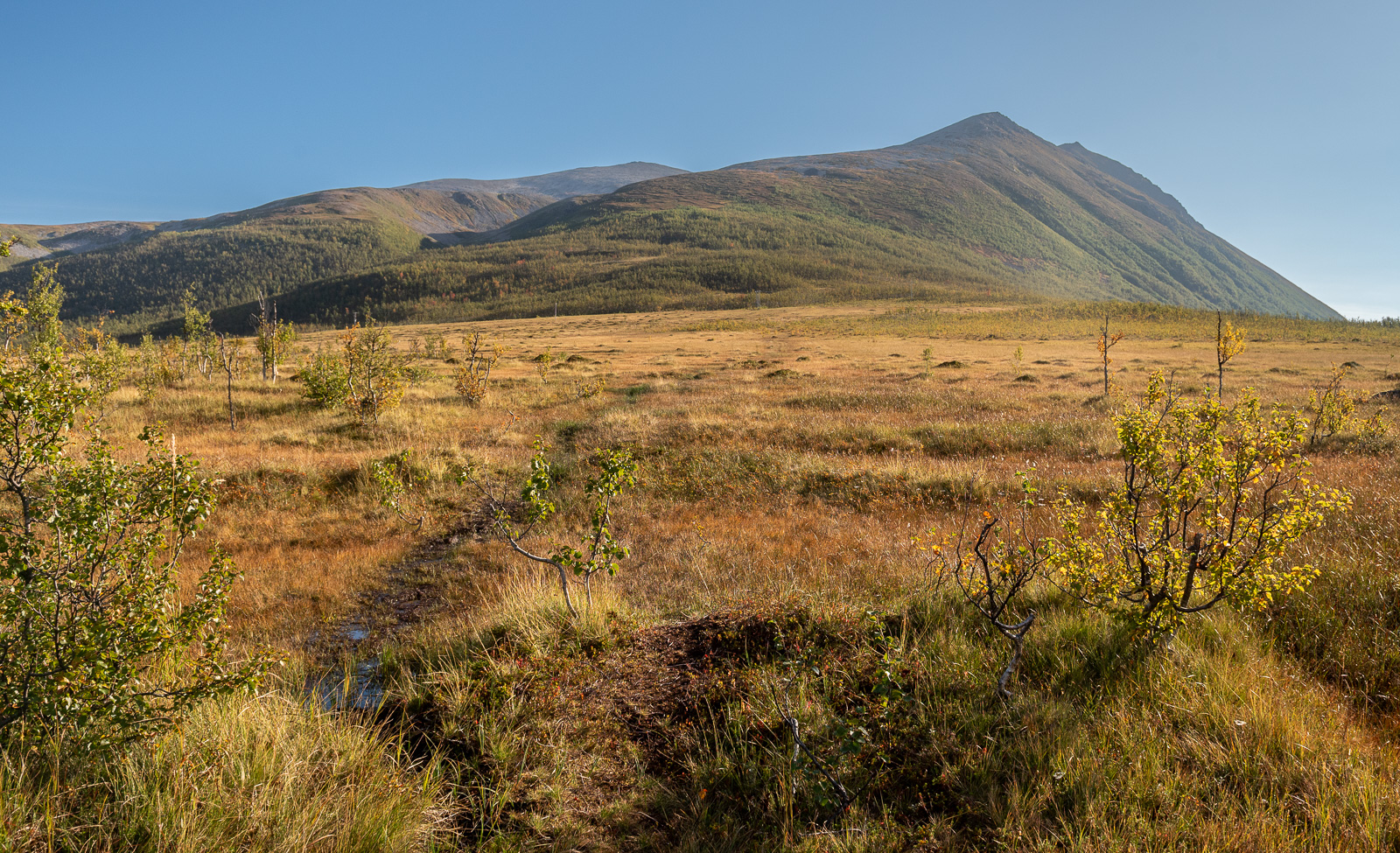
Again we follow the river to the east, then the landscape opens to a broader U-shaped valley. The terrain flattens and hiking is easy.

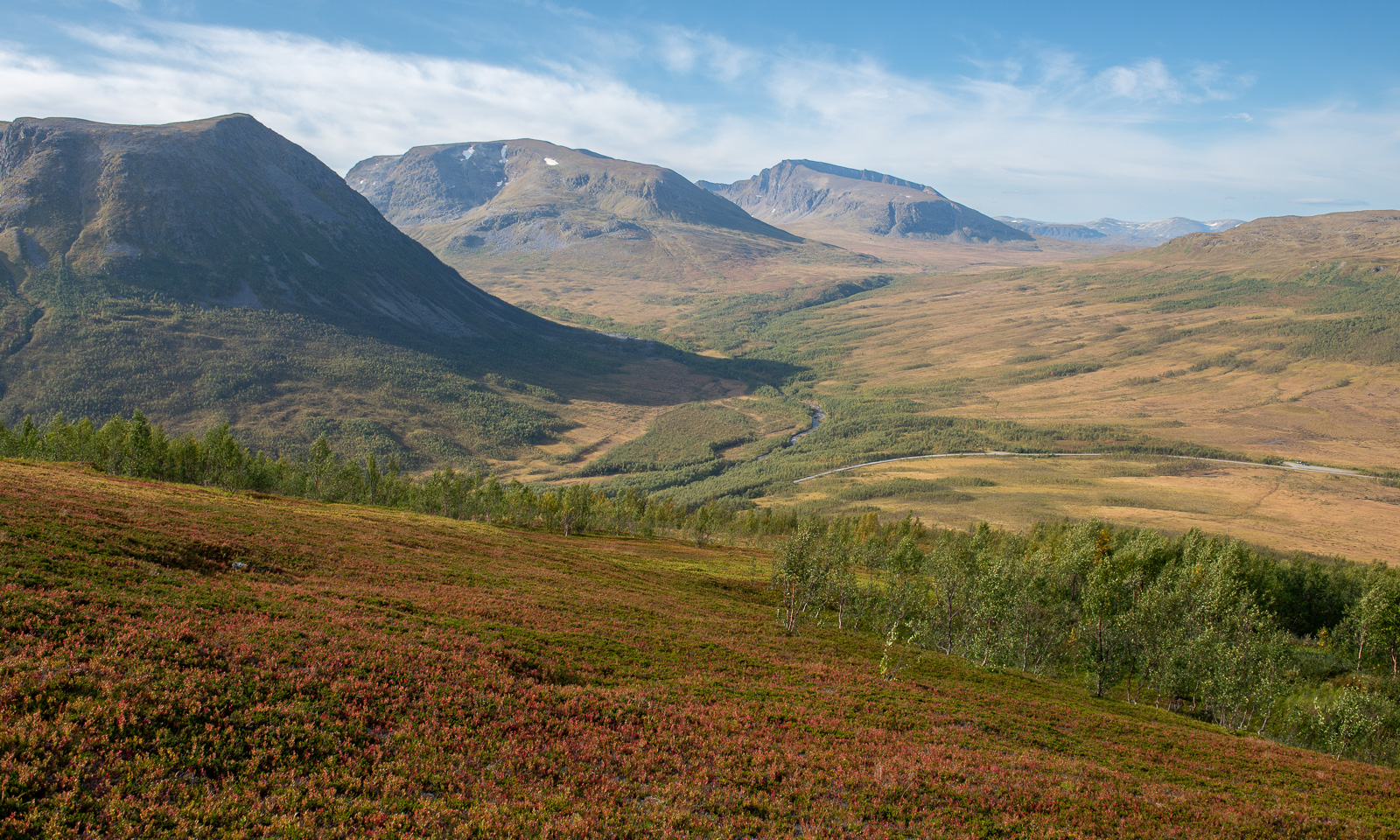
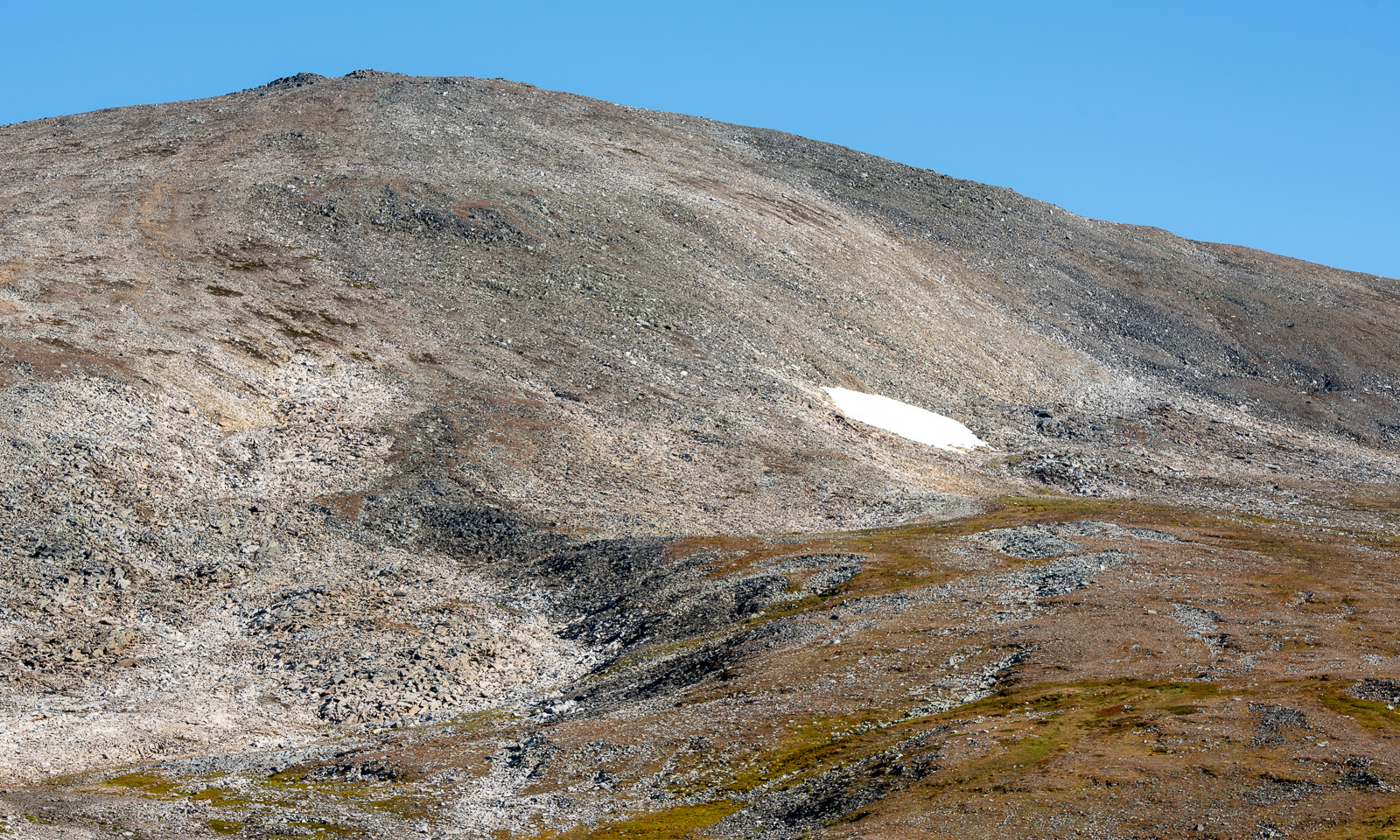
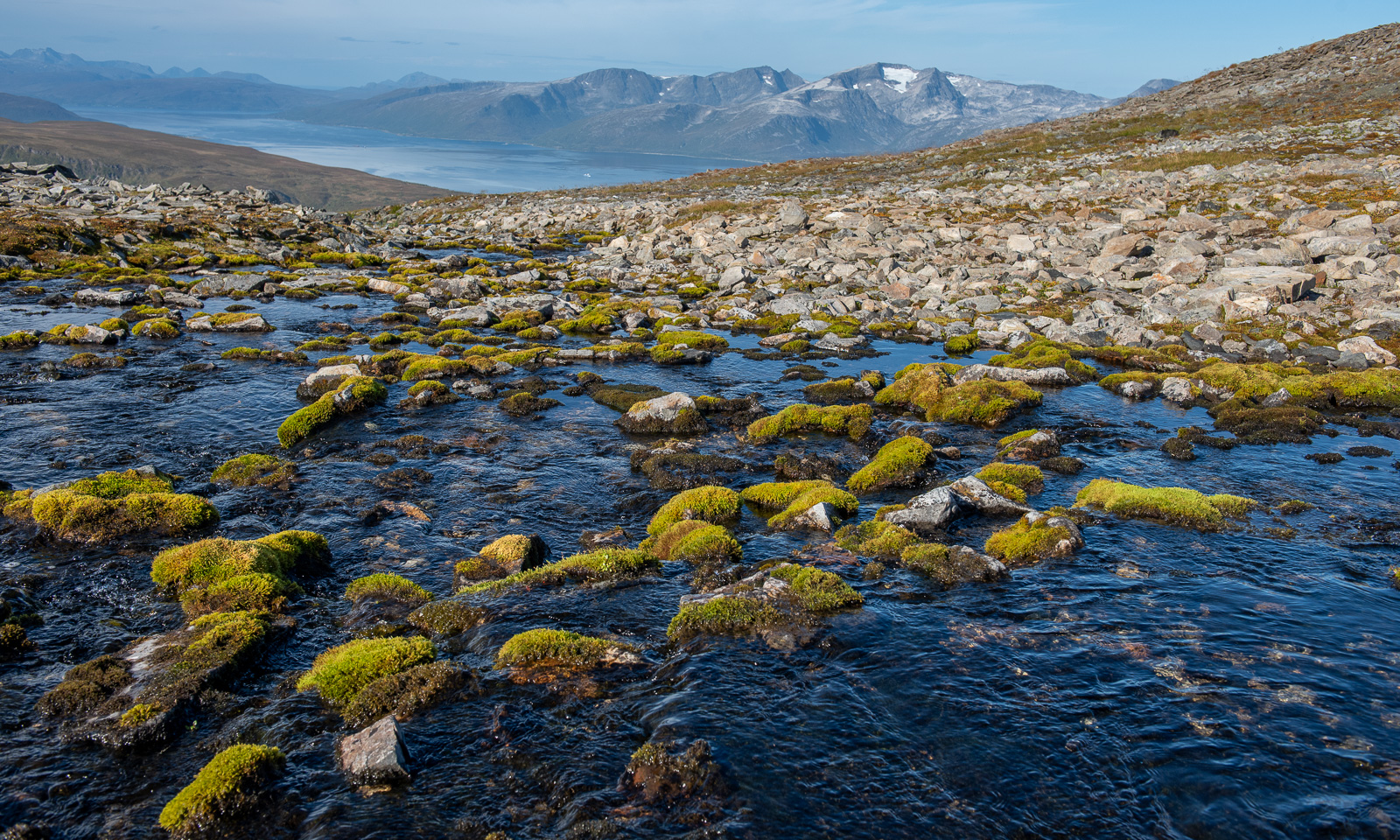
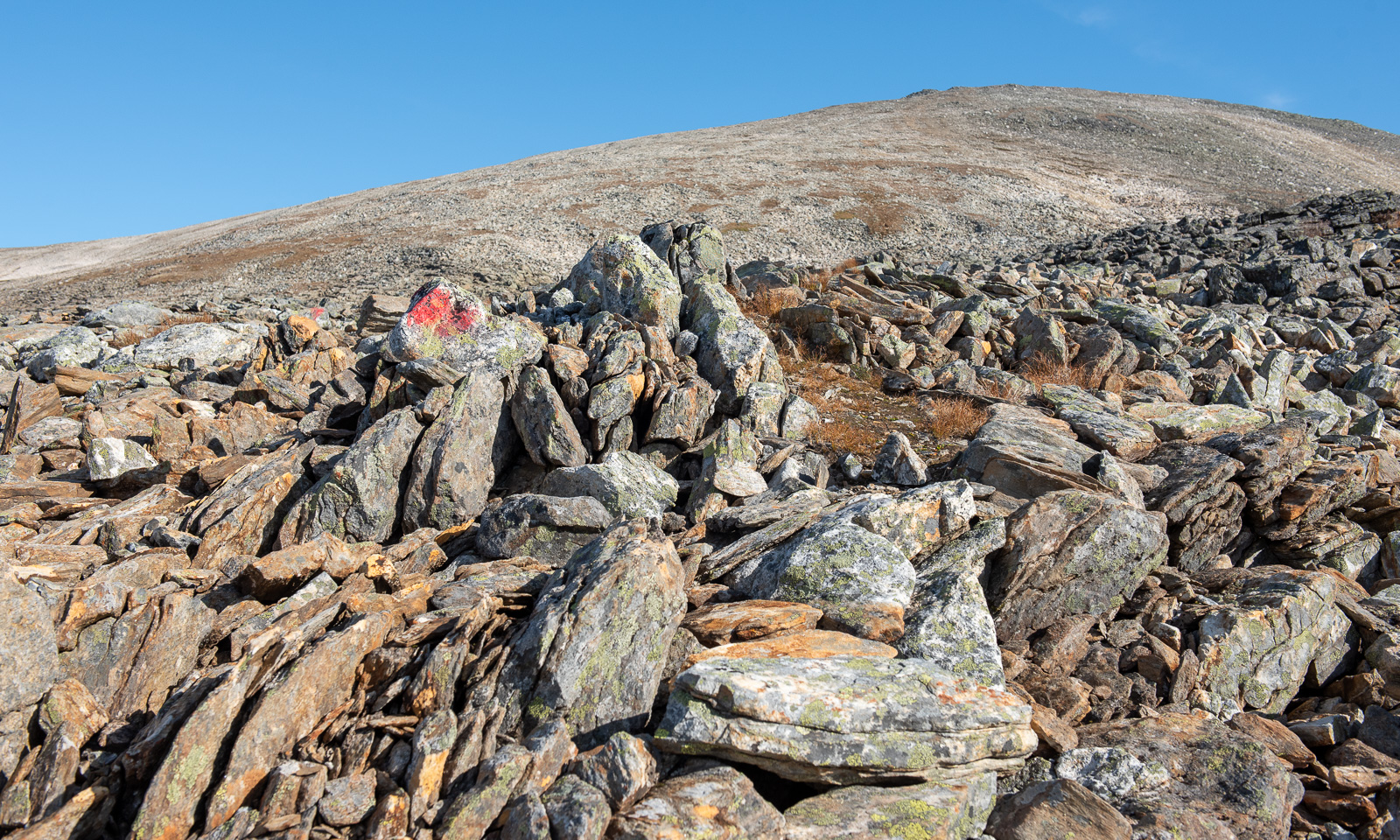
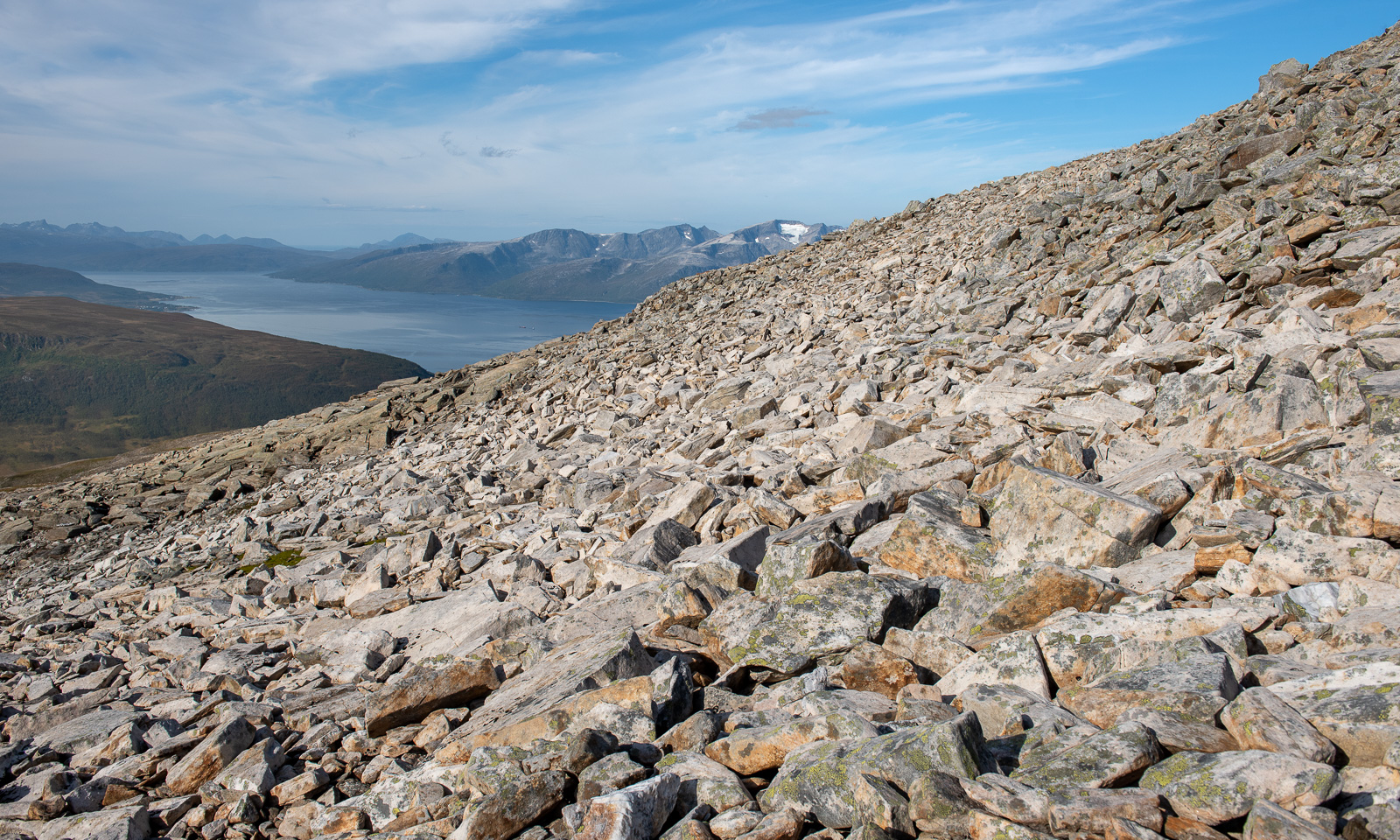
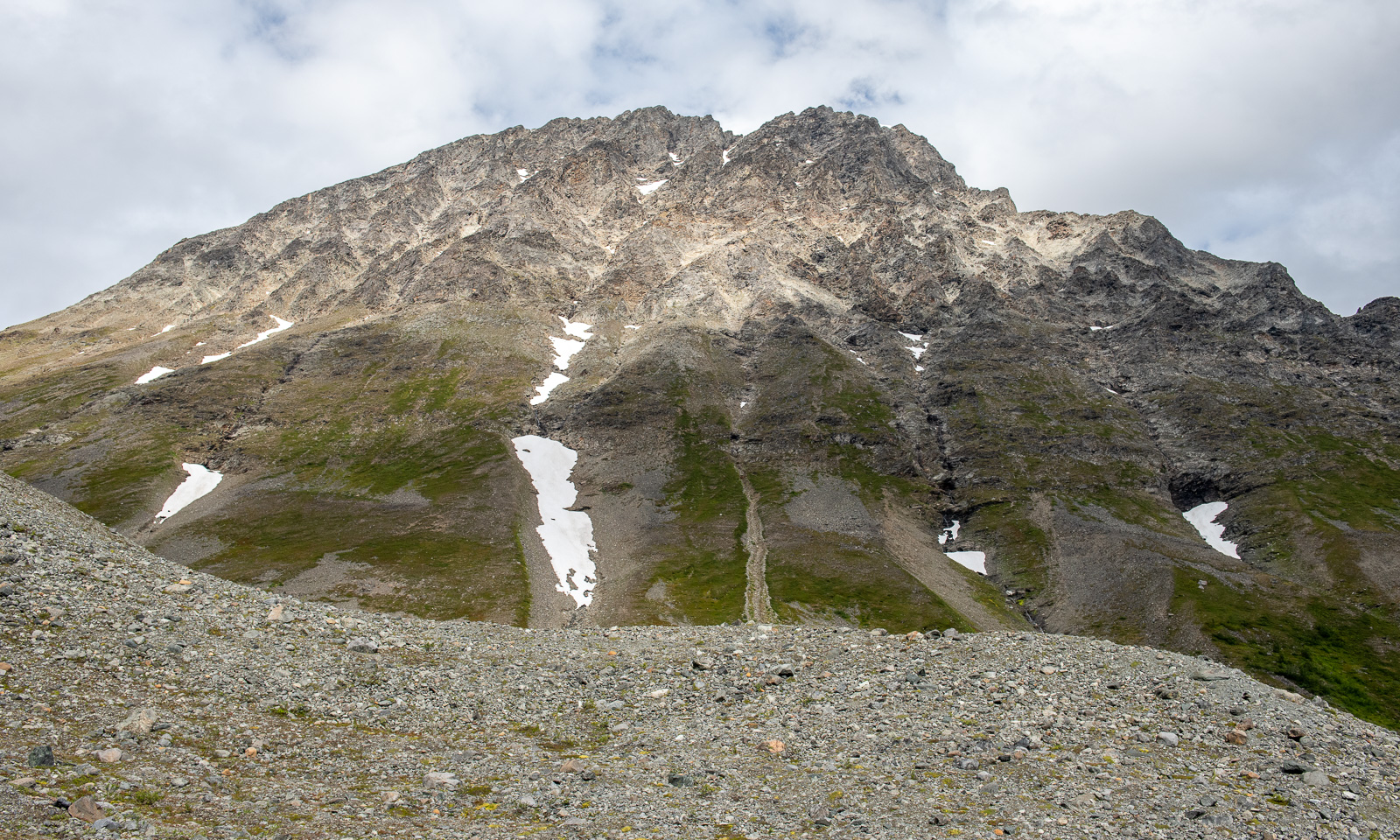
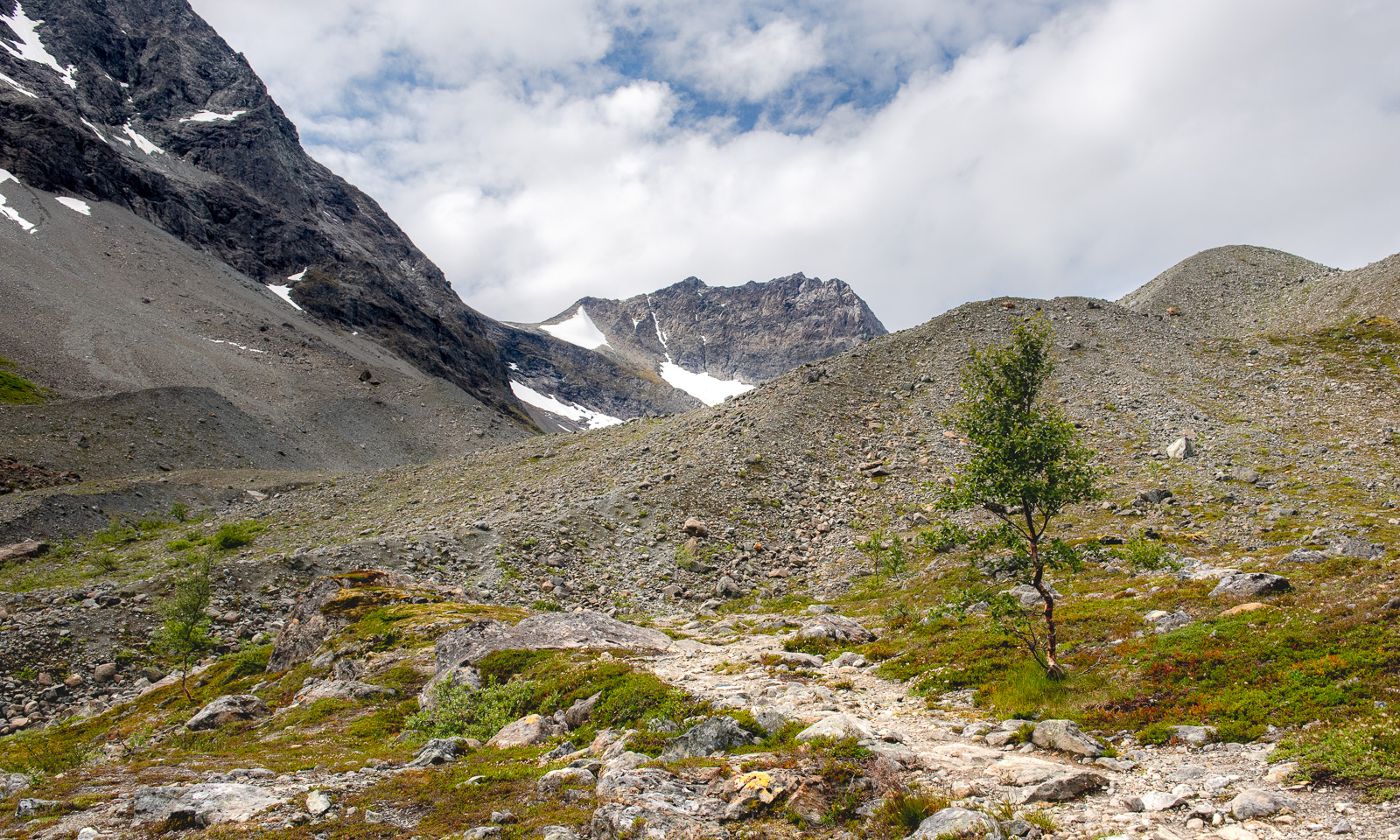
But we can already see the ascent we have to take. After two steeper passages we stand between two landscapes. In our back lies the mellow valley with its gentle slopes, everything in autumnal colours. Ahead lies a rough and rugged mountain landscape, where grey rocks and stones are the predominant element.

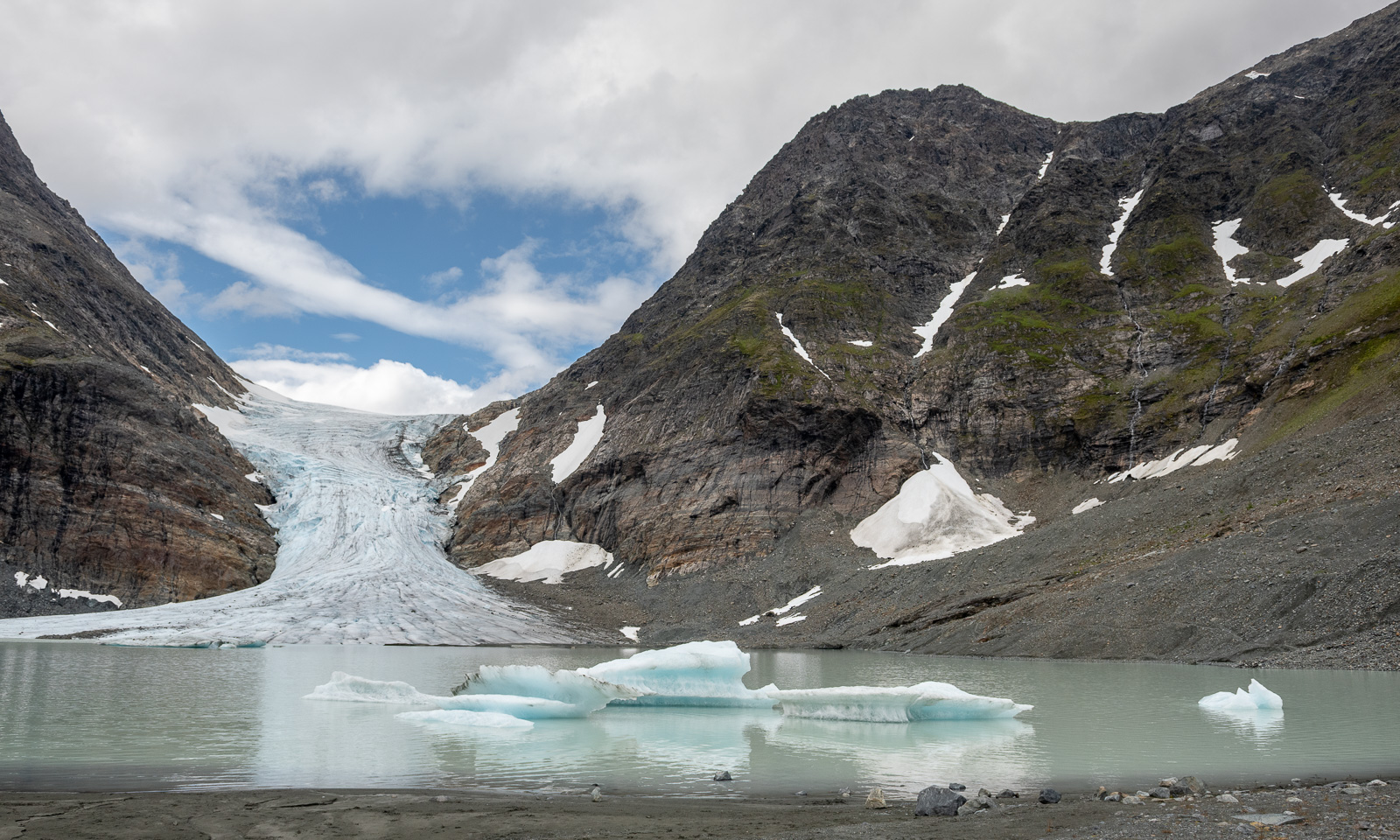
And there it is. The glacier. (Photo Annika Kramer.)

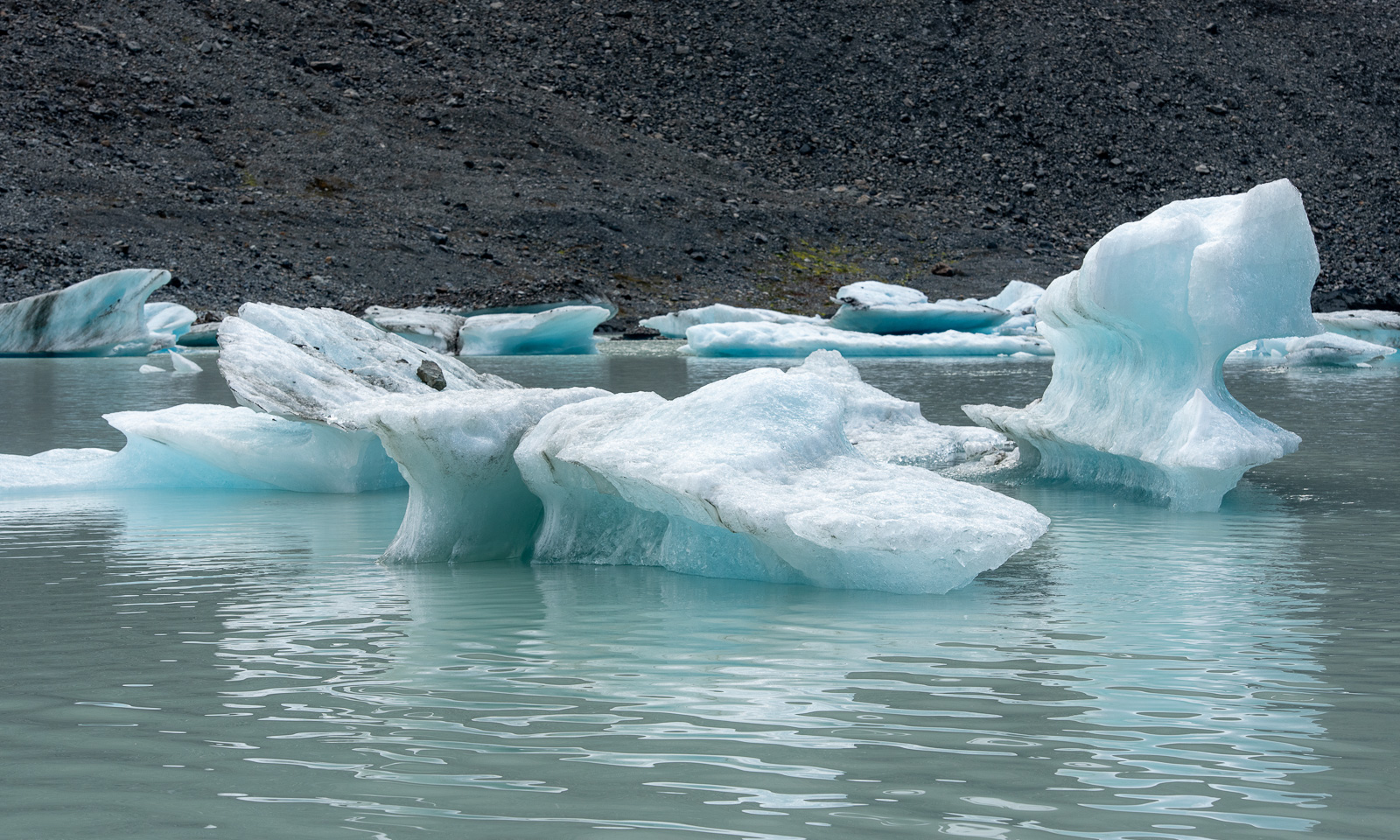
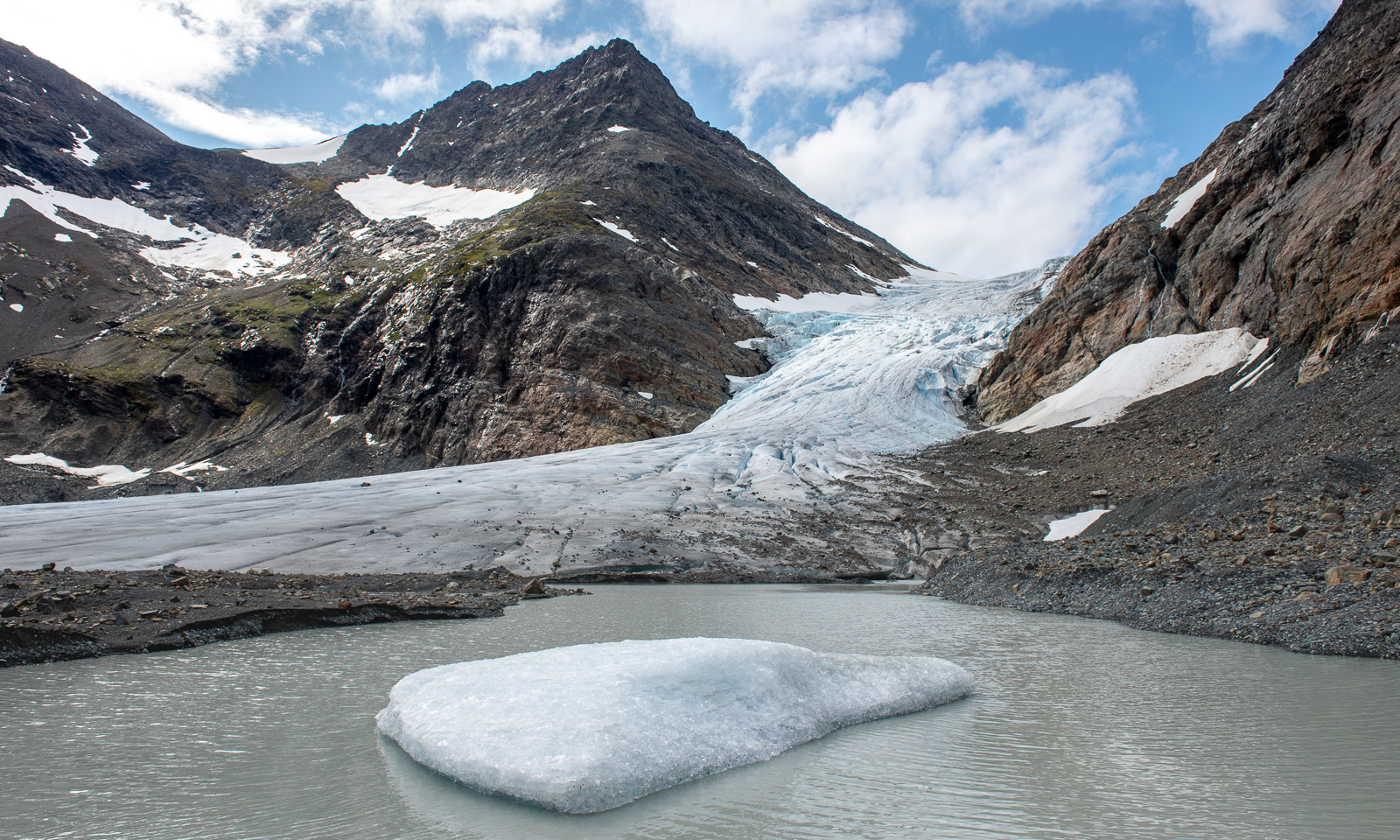
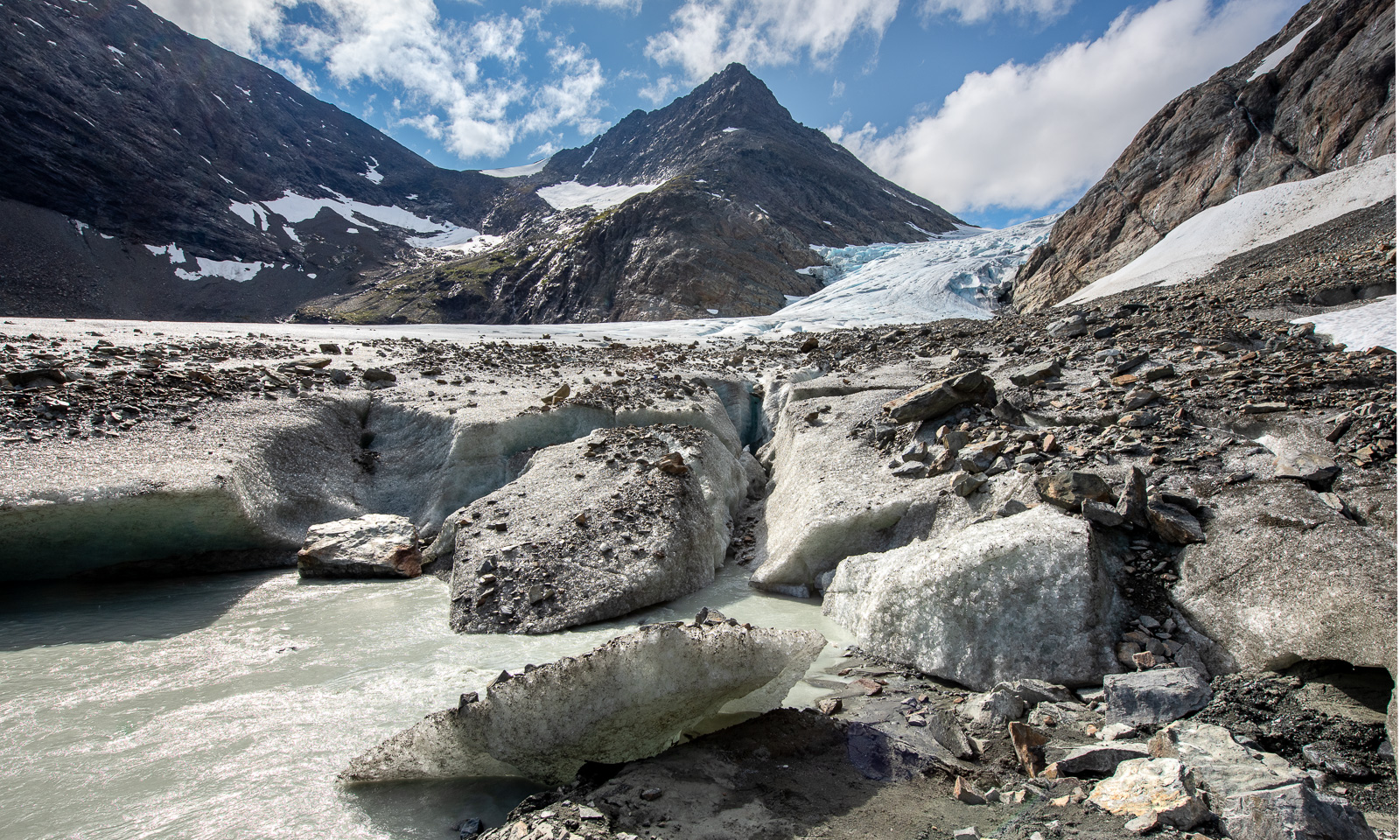
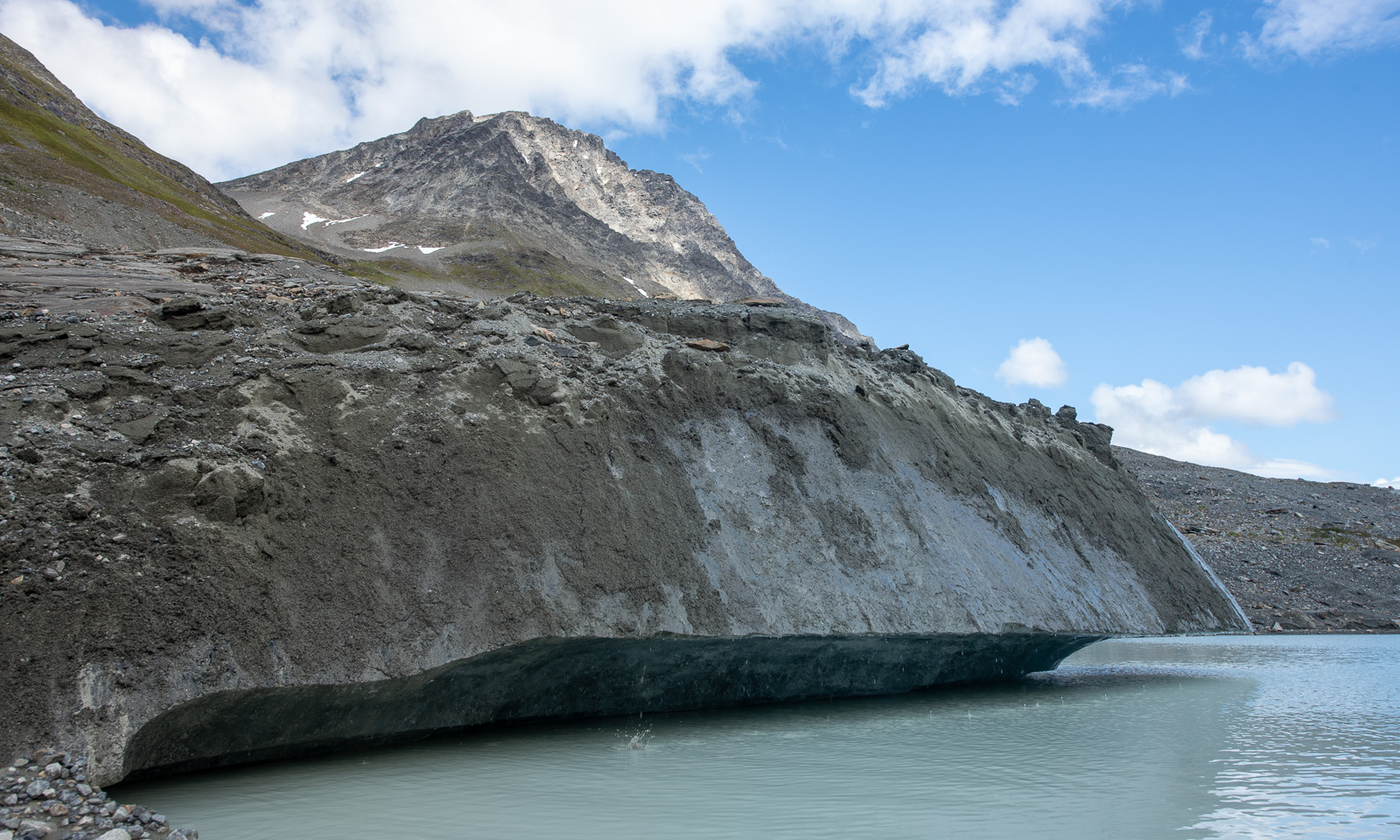
We continue the gravel path. Soon we pass the first of the signs that marks the glacier front some decennials ago. Due to global warming the glacier is melting and retreating every year. It is fantastic to see the glacier and we feel excited, but sad at the same time. First we hike to the glacial lake in front. Will we manage to go round the lake the glacier itself? Yes – and it is quite easy this year.

I have my big camera backpack with me and the Nikon with three lenses. That was made possible by Annika who took all the food. Although the weather is a bit dull it is photo time!

As often I’m not content with my photos and yes, I should have carried my tripod with me. But I’m happy about being there together with Annika. (Next photo: Annika Kramer.)

It is time to go back. This time we follow the river and pass two fields with scientific instruments, part of the project iC3. I have to ask a colleague from the Norwegian Polar Institute what is measured there.

Now the trail leads mostly downwards. We descend the hill, cross the broad valley, enter the forest and then reach the bridge by the cabin again. Here we take a rest and then fetch the rest of our stuff from inside the cabin.

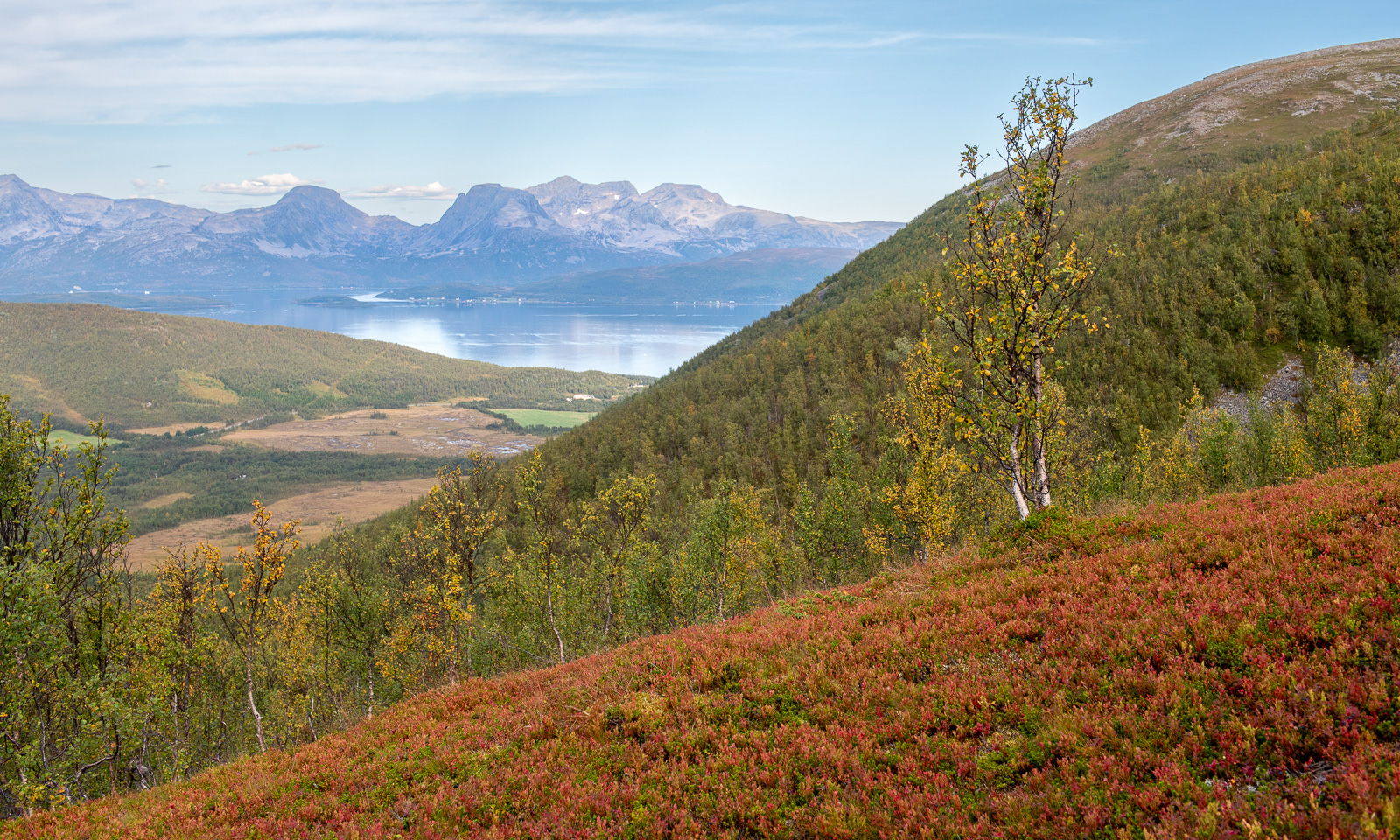
I take a tiny detour that leads on a hill. Here I can see everything together: The huge mountains with their snow fields, the river Gievdanjohka, the autumnal birch forests. Only the glacier is hidden from view.

What a terrific tour we had! The glacier Steindalsbreen is worth a visit, especially in autumn. We drive back to Tromsø and I copy the photos to my computer. Then I check the tracker I used on the tour. As I was afraid I have walked on rock, sand, and mud this year, where last year the glacier covered the ground.

Late summer mountain hike

The forecast was correct – the sky was blue the whole day today. At 9 o’clock I meet my friend Chris on a parking place and we start a mountain hike. The morning air is a bit chilly and some leaves even have frost on them.

After we have crossed the river Tromsdalselva we follow a path and some quiet residential streets and arrive at the way up to Sherpatrappa. That’s is a stone staircase of 1,203 steps leading up the mountain. Today is Sherpatrappa Opp – a competition where people run up the stairs. We however prefer walking and are lucky, that the competition will not start before eleven.

At the end of the stairs the terrain becomes less steep and you have a gorgeous view on the island Tromsøya and its beautiful surroundings. I see the island Håkøya that I circumvented by kayak two days ago. And today there is another competition: Tromsøya rundt, a 24 km long kayak tour round the island. From 400 metres up, we spot a group of kayakers passing below.

I assumed it was too late in the year for cotton grass – a clear sign for wet ground – but by a small and shallow pond we find a field of these candyfloss like flowers.

A lake always gives an awesome extra perspective in the mountainous landscapes, especially when it is as clear and blue as this one.

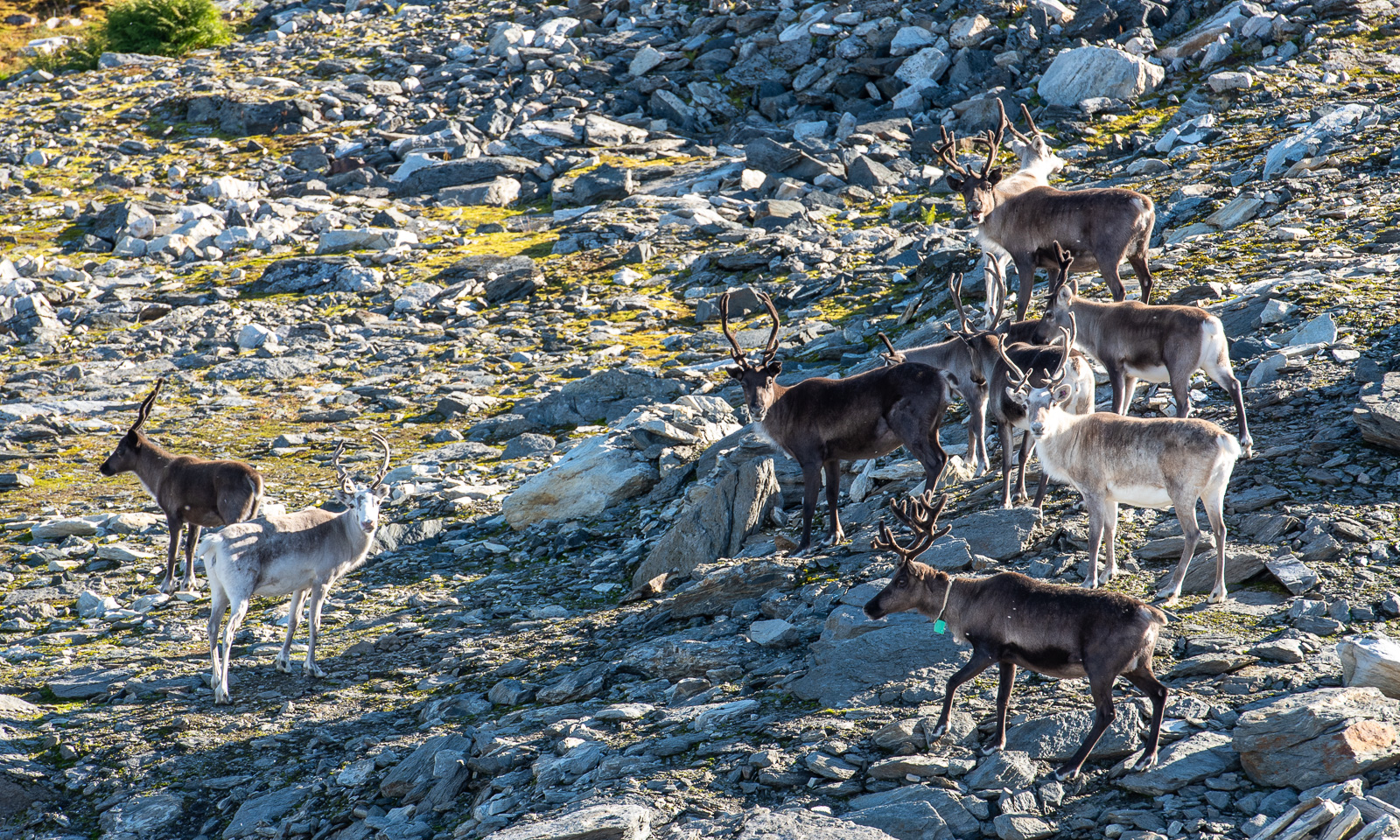
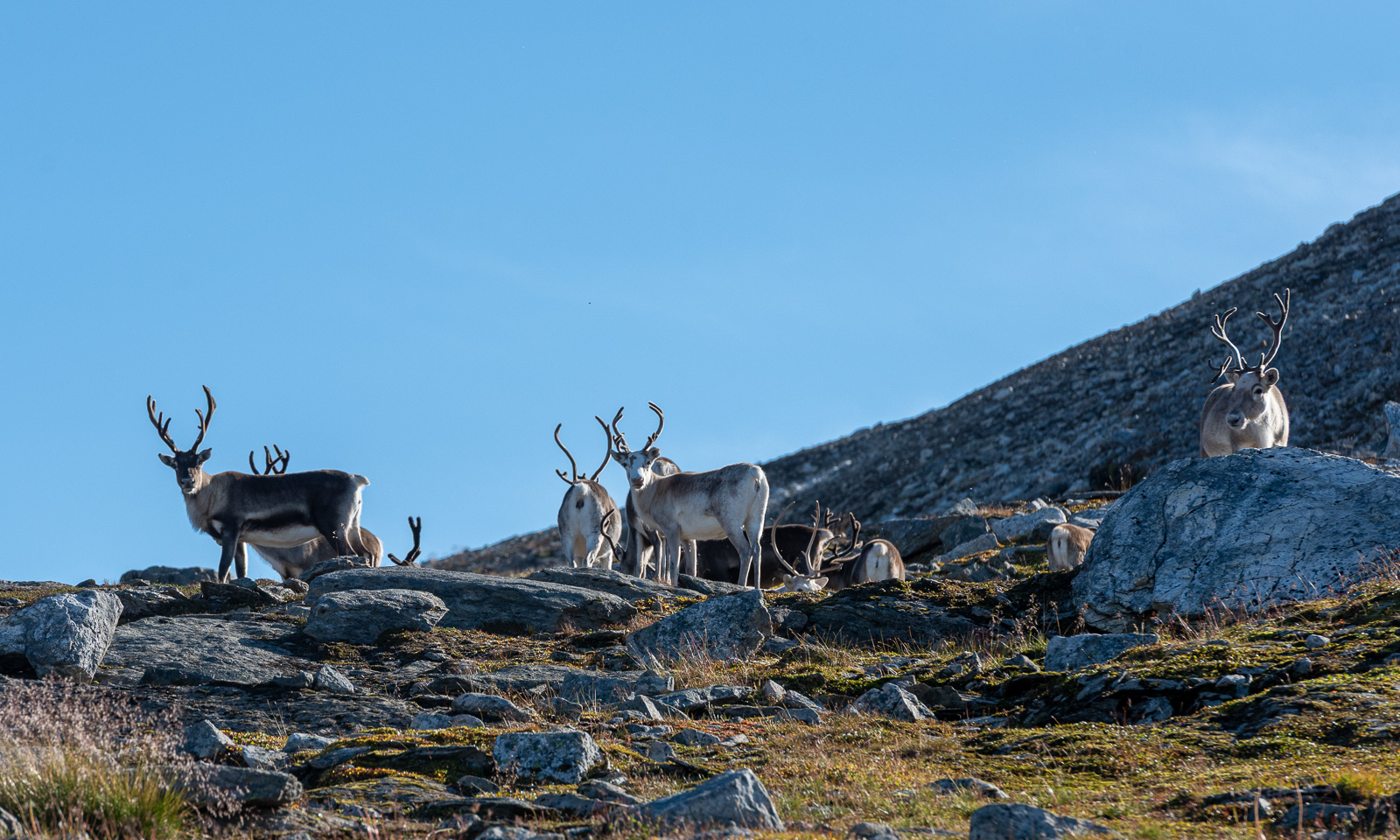
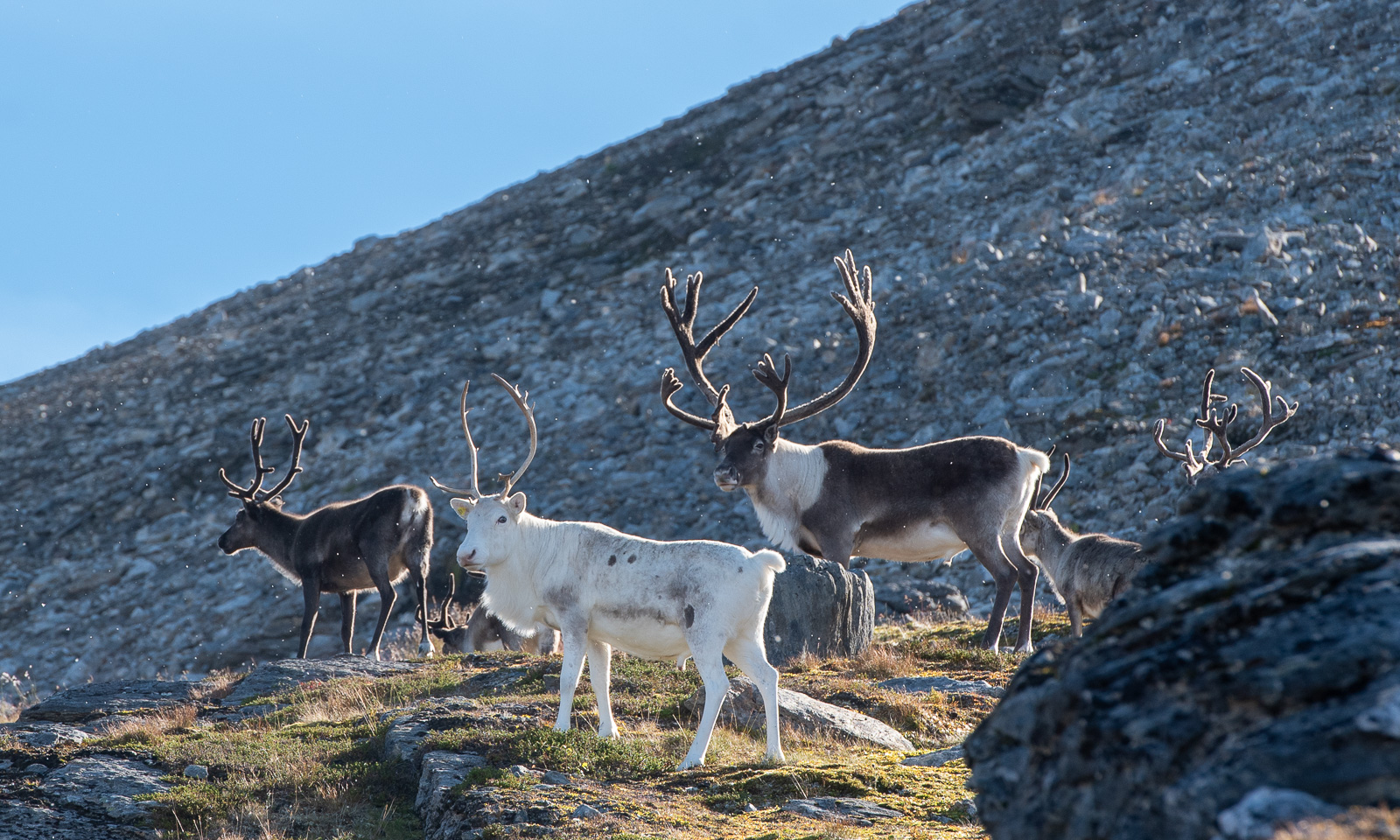
A white reindeer is grazing by the trail. It is not shy at all and ignores us while looking for food. On the way back we will meet it again.

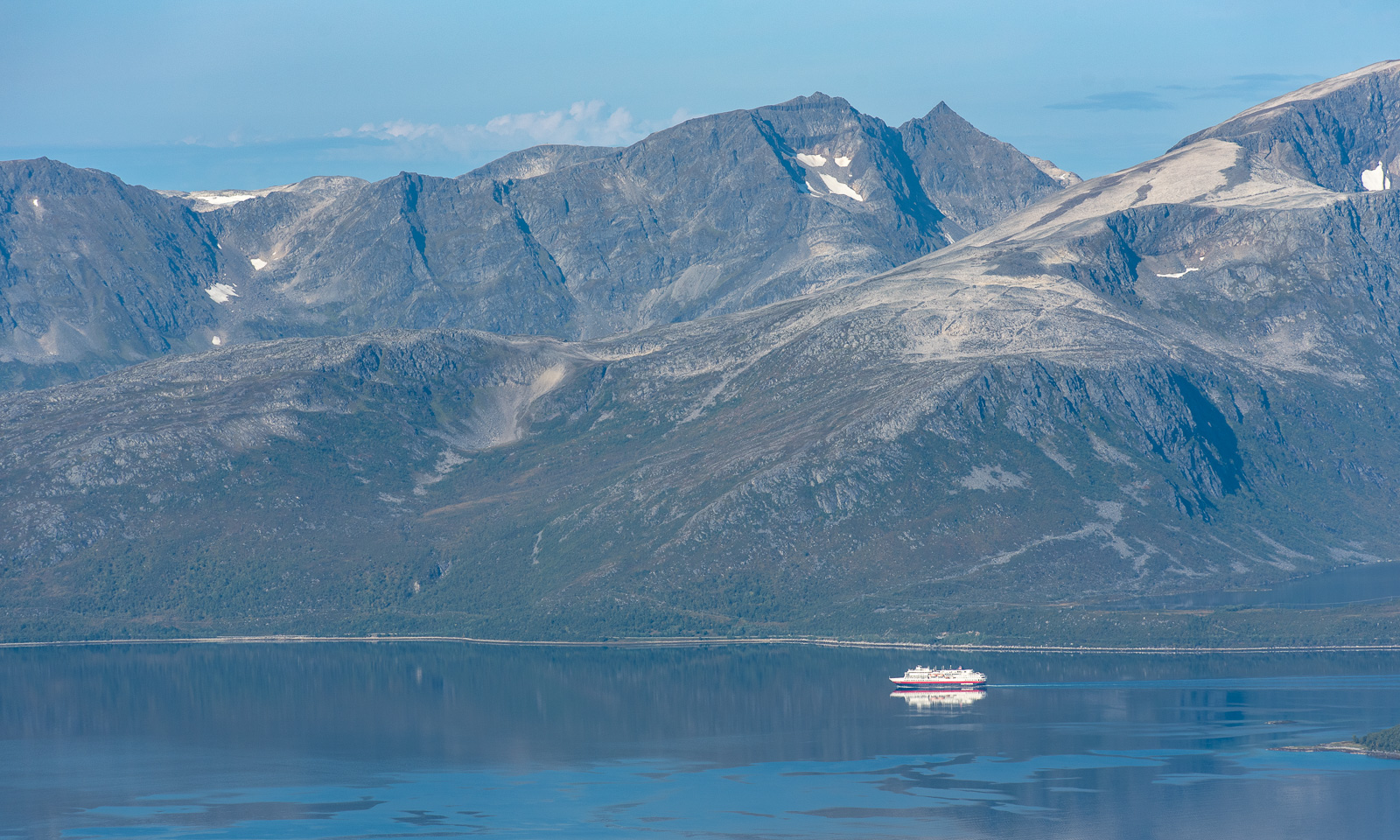
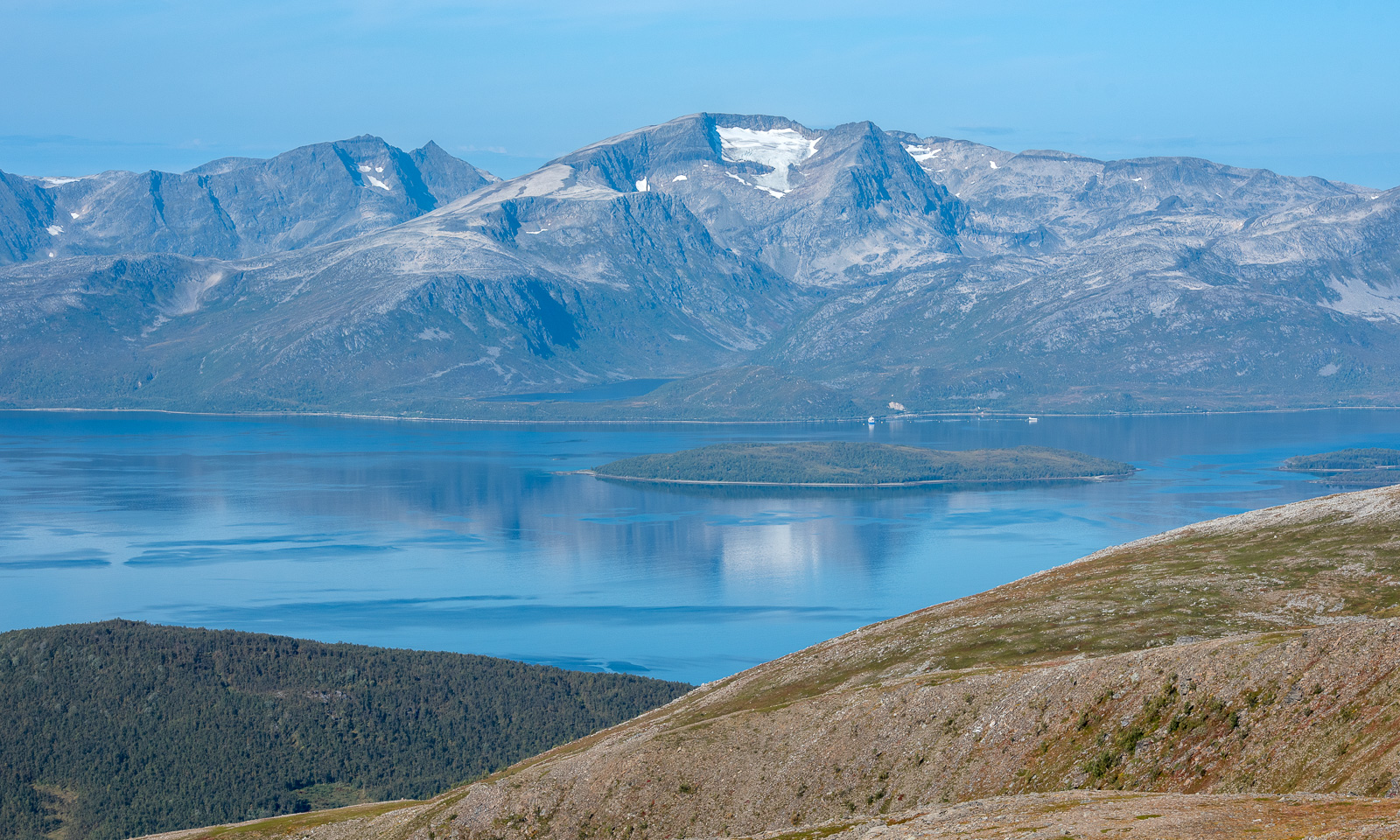
I will never loose the fascination for the Norwegian landscapes, where sea and summits meet. I paddled to Grindøya – the island in the middle – several times. In the back lies mountain range on the island Kvaløya. This island is more than 1200 times larger than Grindøya and mainland Norways 5th largest island.

The weather has become warm and summery. Anyhow you can see the signs that the summer comes to an end. The colours have started changing.

On our way back we use Sherpatrappa again and get an awesome view on the town. Tromsø in a nutshell: Two Hurtigruten ships – the bridge Tromsøbrua – the iconic church Ishavskatedralen. And in the background the mountain Kjølen, where I’ve seen the midnight sun seven weeks ago (I and II).

Takk for turen, Chris!

Kayaking around Håkøya

Yesterday I finally had time to join the Thursday paddling in Tromsø again. The weather was calm and the tour leaders suggested to take a tour to the island Håkøya. After the usual preparations I entered the club’s kayak that I’d reserved – a Valley Etain 17,5 – waited for the others to be ready and off we went. Fourteen paddlers we were, including the tour leaders.

First we head west over the sound Sandnessundet. After 3 km we reach the northern tip of the island Håkøya.

First I was a bit disappointed about the gathering clouds after the clear and sunny day. Then I realised again, what wonderful light the combination of clouds and the low sun can produce. The houses and farms on the island look extremely picturesque in this light.

We slow down a bit and go on land to take a break. While sitting, eating, chatting we decide to circumvent Håkøya. Great – a new tour for me!

We enter the kayaks and continue our counterclockwise circumvention. Since I’ve been on Håkøya before I’m looking forward to some of the attractions such as the red sail boat anchoring near the shore and especially the 330-metre-long bridge Håkøybrua, built 1961 with its prominent wooden construction.

What however comes completely unexpected are the three catamarans anchoring on the southern side of the bridge. Huge, modern and probably ridiculously expensive sailing catamarans. What a contrast to the other sailing boats and the wooden bridge.

It is half an hour to sunset. The clear sky in the southeast has turned red and the light on the mountains is spectacular. Alas, My only camera on the water is my iPhone, so no telephoto shots.

When we reach the east side of the island the sea is getting rougher and choppier. The next photo is probably my favourite shot from the tour showing the sea, the evening light and some of my kayaking mates.

With the waves comes the wind and of course it comes right from the front. Together with the waves I have to focus more on paddling than on taking pictures on the last 3½ kilometres. Just two snapshots. On the second one you may see the lights at the kayaks. We’re in navigable waters with commercial traffic and we have to be seen. I have a light on the kayak as well and a second one attached to my life vest. And by the way, the clouds are vanishing.

After 13.5 km we arrive at the boat houses of the Tromsø Sea Kayakers Club at half past nine and it is pretty dark. Soon the kayak season will be limited not by temperature but by available daylight. Until then I’ll hopefully can join some more “Thursday paddlings”.

Here is a map of our route (including some zigzagging when taking photos.

I want to thank my paddling mates for good company and our tour guides for guiding and guarding. Takk for turen!


The end of high summer in Tromsø

One month ago was the last polar day in Tromsø, where the sun did not set at all. Now it gets dark again in the night. Rain clouds may help as well to make it darker and I got a lot of help from them, when I made an evening stroll through the forests nearby yesterday evening.

It was still light when I set off and it was raining. The big leaves of the wood cranesbill (Geranium sylvaticum) beside the forest paths had started to turn yellow.

The small, grass-covered bogs always look like autumn. The vegetation is just yellower and browner. Because of the recent rain they were pretty wet and partly covered with water.

There were still flowers in bloom, like the pink fireweed and the thistle in the next photo, but more and more it was the leaves bringing the colour—like the wood cranesbill, whose leaves turn a vivid red in autumn.

Most of the forest paths were mostly dry but some of them had turned into deep water puddles. Rubber boots came in handy.

Half past nine – it was getting darker. Now and then I caught a glimpse of city lights through the trees, but most of the time I was away from town—sometimes going cross-country through the forest, sometimes staying on the paths.

Another sign of autumn was starting to show. Various mushrooms have popped up beside the path. I don’t pick them—I haven’t got a clue about mushrooms—but I do enjoy spotting them.

When I came home at 22:20 my rain clothes were so soaking wet, that I hung them into the shower. Today was the first day after months, where I put on the electrical heating in the living room.