Boarding the MS Lofoten

This article is part of the series “2019-02: Northern Norway”.

After some days in Bjørnevatn near Kirkenes I start my journey home today. But I’ll take a long, long detour!

Some hours ago I boarded the Hurtigruten ship MS Lofoten. It’s both the oldest and the smallest of the ships that serve the coastal route BergenKirkenes. It was built 1964 and is therefore older than me. It can accommodate 153 passengers.

I will travel four days and leave the MS Lofoten in Trondheim where I hope to catch the train back to Sweden. I already bought WiFi access for the next four days and found a nice place for blogging.

Here are the stopovers of the next four days:

Kirkenes – Vardø – Båtsfjord – Berlevåg – Mehamn – Kjøllefjord – Honningsvåg – Havøysund – Hammerfest – Øksfjord – Skjervøy – Tromsø – Finnsnes – Harstad – Risøyhamn – Sortland – Stokmarknes – Svolvær – Stamsund – Bodø – Ørnes – Nesna – Sandnessjøen – Brønnøysund – Rørvik – Trondheim

Inside the Snowhotel Kirkenes

This article is part of the series “2019-02: Northern Norway”.

After two great snowshoes tours I took it easy today. I went to the Snowhotel Kirkenes nearby, took some photos of the huskies, that didn’t have to work, visited an acquaintance who works in one of the restaurants and went inside the Snowhotel itself. I’ve been there before, but since the hotel is rebuild from scratch every year it looks always different.

Which photo of the lobby do you prefer? The first one, where the room is empty or the last one with the blurred people in it?

Going by snowcat

This article is part of the series “2019-02: Northern Norway”.

It’s dark outside. I’m in the cozy house, where Chris and Ørjan live and reading. But what’s that blinking orange light outside? I peek through the door and what I see is a snowcat.

Ørjan is about to start a tour to prepare trails, both for his employer, the Snowhotel Kirkenes and for the local skiers. Preparing trails for the latter is a dugnad, that means voluntary work. Dugnad is very popular in Norway.

I ask Ørjan if I could join him on the tour and I am allowed to. Time to take some handheld pictures.

It’s fun to go by snowcat through the dark. I looks quite easy to operate and I would like to have my own snowcat. But neither do I need one nor could I pay it.

Takk for turen, Ørjan!

MS Spitsbergen

This article is part of the series “2019-02: Northern Norway”.

Today it was cloudy and much warmer in Bjørnevatn than yesterday day and evening. Chris and I took breakfast at the Thon Hotel Kirkenes. This breakfast is just superb! There is a wide variety of food and the quality is excellent. While we had breakfast it started snowing. I looked out of the window and watched a small icebreaker. Two years ago the Elvenesfjorden was completely free of ice. This year however it had been so cold the last weeks that the whole fjord is frozen. Or would be, if the icebreaker wasn’t going back and forth and crushed the ice.

Kirkenes is the endpoint of the Hurtigruten line, that connects many Norwegian coastal towns as e.g. Bergen, Trondheim, Bodø, Tromsø, Hammerfest and Kirkenes. As long as the weather allows the ship arrives at 9:00 and departs at 12:30 every day. Many tourist go ashore to discover the city or to go dog sledding in the Snow Hotel.

Today it was the MS Spitsbergen that was in the harbour. It is possible to visit the ships and so Chris and I took a small tour to explore the ship.

The MS Spitsbergen both operates the Hurtigruten line Bergen—Kirkenes but also makes cruises to places like Iceland (from 4373 EUR), Svalbard (from 7058 EUR) or even Franz Josef Land in Russia (from 7696 EUR). Great destinations but much too expensive for me.

P.S.: Don’t ask me why there is dried fish on the top deck of the MS Spitsbergen.

Travelling to Bjørnevatn

This article is part of the series “2019-02: Northern Norway”.

After visiting me home in Skelleftehamn Chris and I continued to Jokkmokk on Thursday. We visited the winter market and then drove to Solberget, where we stayed overnight.

The next day we started a long drive with her car. Chris lives in Bjørnevatn near Kirkenes and we planned to arrive there the very same day. At 7:10 we started our journey that would lead us through Sweden, Finland and Norway.

First the sky was cloudy but the visibility was good. Then it started to get a bit foggy.

Normally that’s no problem. This icy fog however started to cover the windscreen more and more and we had to stop often to scrape of the ice.

In Gällivare we stopped at the gas station and had some breakfast. We also bought a bottle with de-icer for the windscreen and continued our trip.

The de-icer didn’t help, we had to stop many times to scrape away the ice from the freezing fog. We were not the only ones. The headlights and the number plate were covered with several millimetres of ice, too. I never had experiences something like this before.

Only the bottom 15 cm of the windscreen were free of ice. While Chris crouched into the seat to be able to see I gave up taking pictures from the road and photographed sideways.

We approached the Swedish town Karesuando. This small town is located directly on the Muonio älv, which also forms a natural border with Finland. On the other side the town is named Karesuvanto where we took another break.

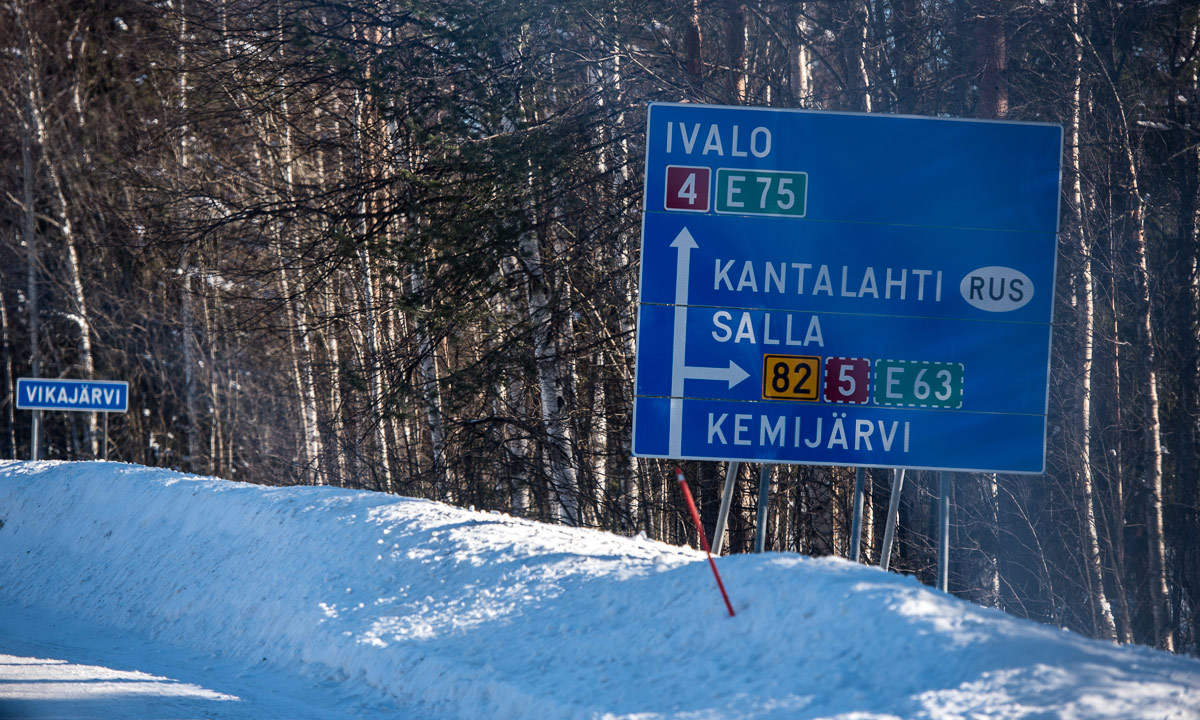
Strangely the ice problems stopped right after the Finnish border. We continued to Palojoensuu without any problems. There we turned left onto the road 93. An hour later we were at the Norwegian border.

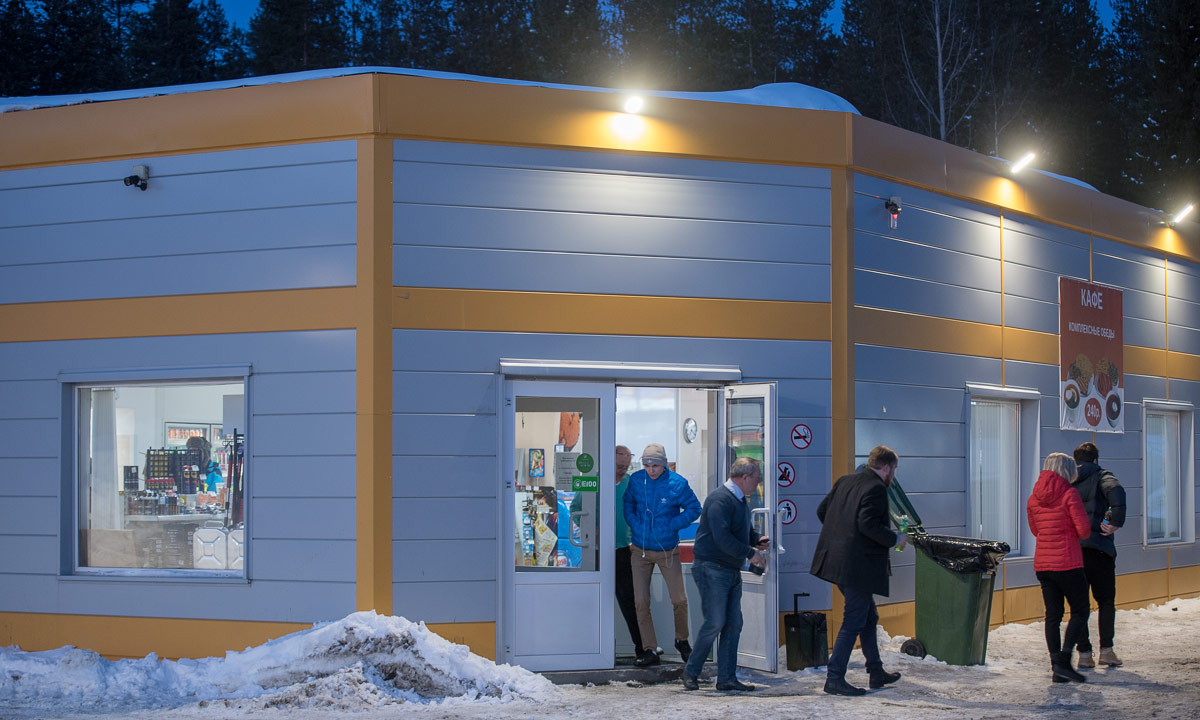
After being stopped by the customs and assuring them that we have neither alcohol nor cigarettes with us, we continued driving through the snowy plains. Next stop: Kautokeino, where most inhabitants are Sámi. Here we ate a hamburger with chips, a typical meal if you travel through Northern Norway.

Until now, Chris had driven a car. Now it was my turn to drive to give her at least a short rest. The first time I drove a diesel.

Round two hours later we arrived in Karasjok. What I already had suspected, confirmed here: It was cold outside: -30 °C.  Time for another break.

Back in the car, Chris was driving again. It was dark, it was cold, we were tired and still more than four hours to go.

I started to get bored and played around with my camera.

A pale green stripe appeared above the street. A northern light. The next hour we got quite nice northern lights, mostly directly in front of us. Though being tired we got at least entertainment. The photos are awful, northern lights are not made for being photographed free-handed from a car on a bumpy road.

Finally we came to Tana, where we crossed the river of the same name. A quarter hour later we arrived in the small town Varangerbotn, were we took the last stop of our long trip.

Now we drove along the fjord Varangerfjorden. Anyway, beside of some street lights and the weakened aurora it was pitch black and I couldn’t see the fjord. Beside of that I just longed for a bed.

But finally we arrived at Chris’ home in Berg near Bjørnevatn. Arrival time 23:40, 16½ hours after we started in Solberget.

Here I’ll spend the next days.

Link to the route on Google Maps


Stopover in Bjuröklubb

Standing on the wooden platform by Bjuröklubb’s lighthouse you have a wide view over the Baltic Sea. And as the ice report says, the sea is covered with ice and snow as far as the eye can see.

Just three photos from today.

A sunny ski tour on the Baltic Sea

What a beautiful day! It’s calm and sunny with temperatures round -20 °C. After breakfast Chris and I start another ski tour at the very same place as the day before. Between these photos lies a day:

As the day before we ski to the near island Storgrundet and cross it, but then we turn right. The Baltic Sea is covered with ice half to Finland but you hardly see the ice anymore. It is covered with snow.

The last two days have brought round 30 cm of fresh snow, but the Baltic Sea is not evenly covered. There are snowdrifts and patches with bare ice and the wind has created sharp snow patterns. They are called sastrugi. Sastrugis can make skiing very demanding when they are hard, but these were still soft and easy to ski on.

It is colder than the day before but it feels much more comfortable and warm because the absence of any wind. We ski along the islands, first Storgrundet, then Norrskär. Here we turn left because another island catches my eye. Northeast from Norrskär there’s a smaller island called Norrskärsgrundet. Here a lot of snow has accumulated.

Chris and I ski to the island and take a break. We both have about the same tempo and like to photograph – always a good reason to slow down.

We walk round and take pictures, then we mount our skis again and “climb” the island’s top. Some fresh animal tracks are visible. A fox, a hare, and a place where the snow tells a story. Here a fox apparently caught a bird. We see a deep track of the foxes jump in the snow and feathers everywhere.

We turn right and reach the esker that connects the islands Norrskär and Bredskär. It’s time for skiing back and also time for a break with hot cocoa and chocolate that we take on the ice by a tiny nameless island. We are glad about our puffy down jackets because we instantly feel the cold when we stop moving. After the break we continue our way back to the parked car. The sun is low and our shadows have grown long.

Soon the snowy surface we ski on lies in the shadow of the island Brambärsgrundet. Only the cottages on Storgrundet have still sun. We reach the car round sunset – good timing.

I love snow storms as well as sun and blue ski and I love especially the contrasts. Therefore this ski tour is strongly connected to the one we made the day before, the day that brought the snow we ski on.


Snowy night, snowy day

When I returned from Avan two days ago the Swedish weather institute SMHI had issued a snow warning: 20-30 cm snowfall and at the coast fresh winds from northeast. Yesterday the wind increased and in the afternoon it started to snow. Soon the snowfall increased, too and the wind made the snow whirl round the houses and through the streets. More and more snow came falling down and soon the street was snowed over completely.

“Beep! Beeep! Krrrr. BEEEP! KRRRRR!” – these sounds woke me up this morning at 5 o’clock. The sound of snowploughs and shovel loaders clearing the roads. They beep when they go backwards and the shovels make loud scraping noises.

While the shovel loaders take the snow and move it to other places the snowploughs just push the deep snow aside. Both are important but the latter create work for the locals. They create a so-called plogkant – compact walls of snow – along the street and so right in front of your driveway.

This plogkanten was 60 cm high and the loose snow behind was of almost the same height. Before I could use the car I had to shovel snow. A lot of snow, at least 2½ m³. Fortunately the temperatures where round -10 °C and the snow was loose and fluffy. A good workout anyway. Finally I could get camera and tripod and took the car to two places by the sea.

The garage at the pilot station was surrounded by meter-high snowdrifts. The snowdrifts in the lee of the house were even higher. The gaps in the fence created a nice stripe pattern on the snowdrift outside. It was still quite dark and there was not much to see otherwise.

At the “beach” of Storgrundet the stormy gusts of wind blew the snow horizontally from left and right and in the dawn the scenery looked very harsh.

Great weather for a ski tour on the sea ice, isn’t it?

Two and a half hours later: Chris – a friend of mine from Kirkenes who arrived yesterday – and I had just come to the very same place to start a ski tour. We mounted the skies, put our hoods on and slipped into the gloves. It still was snowing and quite windy.

And when it’s windy at the mainland you can bet that it’s much more windy on the sea ice which is completely exposed to the elements. And so it was. The island Storgrundet was in the back and we could see the pale schemes of some other islands in the northwest. The northeast however looked like the Arctic Zone.

Chris was following my ski tracks. She looked like an arctic explorer with the white void in the background.

Here’s one of of the rare photos of me, that is no selfie. If you look closer you see that my ski tracks go zig-zag. That’s because even on the sea ice of the Baltic Sea there were many snowdrifts with sharp edges and I could hardly see whether it went up or down. Skiing was not exhausting but we were slow due to the wind and the bad sight. (… and taking pictures.)

We skied to a headland which had been in sight for a while.

As soon as we reached the lee of the headland it was almost windless. What a huge difference to the exposed parts of the sea where weather was quite rough. In the shelter of the headland we took a break. (We forget the tea in my kitchen but at least we had a bit of chocolate.) On the headland were summer cottages, now snowbound in meter-high snowdrifts.

The way back was easier. The gusty wind had started calm down a bit and the snowfall lessened. The view to the west however was still extremely arctic.

We were however no arctic explorers but had the luxury of a parked car and a heated house just some minutes away. The ski tour was short in distance but rich in experience and that’s what counts!

Takk for turen, Chris!

It continued snowing until dark. The fence in my backyard had been buried in snow almost completely. The fence is 85 cm high.

Later in the afternoon I continued clearing snow. Not with a front loader but with a wide snow shovel. Chris has parked her car on the street and both the snowfall and the snowplough had buried it up to the top of the wheels. I pushed all snow into the front yard where the snow pile got higher and higher.

I’m a quite curious person when it comes to snow depths. I made a step on the top of the snow pile and as I guessed the snow was quite loose:

If the forecast is right we get calm, sunny and colder winter weather tomorrow. We consider to start the very same ski tour again just to see the difference.