From Reykjavík to Hveravellir – 10 + 1 photos
This article is part of the series “2018-08: Iceland”.
Wednesday, 29 August
Ten plus one photos from today’s six hour bus tour from Reykjavík to Hveravellir in the Highlands of Iceland.




This article is part of the series “2018-08: Iceland”.
Wednesday, 29 August
Ten plus one photos from today’s six hour bus tour from Reykjavík to Hveravellir in the Highlands of Iceland.
This article is part of the series “2018-08: Iceland”.
Sunday, 26 August – Monday, 27 August
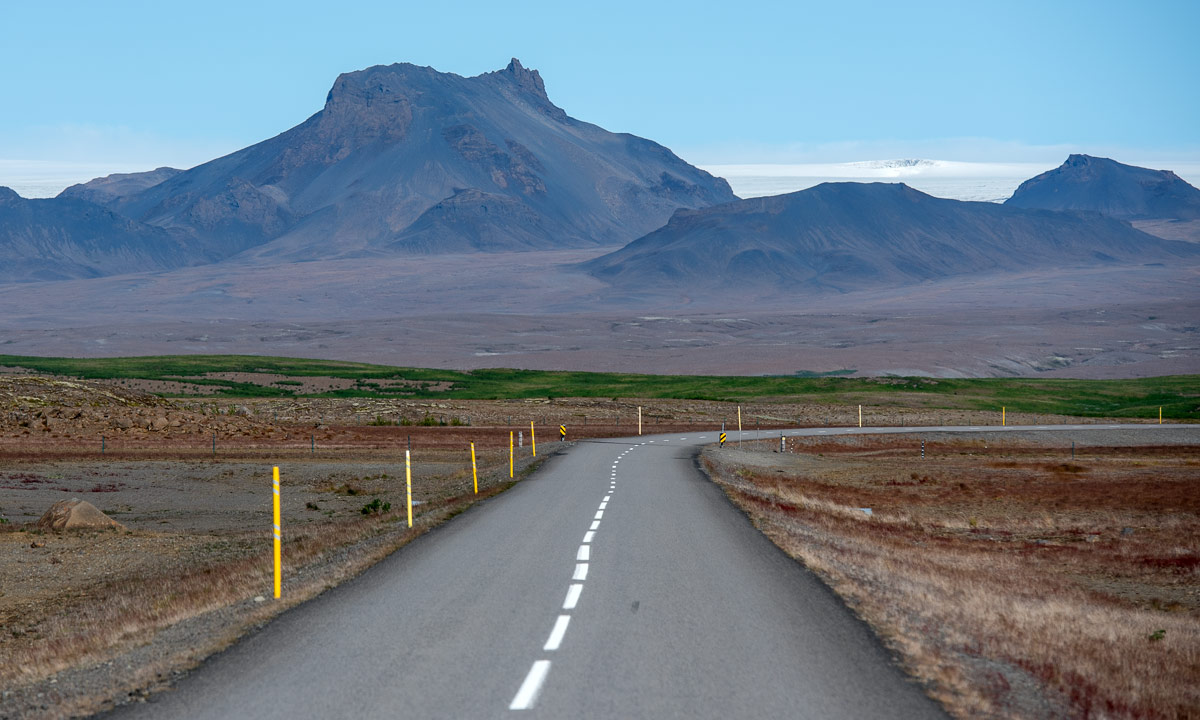
There are only a few roads leading across the Highlands of Iceland. Most of them are only open for cars with four-wheel drive because it is necessary to ford rivers. Even though the road to the Landmannalaugar, our destination for Sunday, is not the toughest, we decided not to hire such a car. They are expensive, we don’t have any experience in fording and there are busses making such trips as well.
Sunday morning we entered the bus to the Landmannalaugar. The whole trip takes round about four hours and goes mostly on normal asphalt roads: through Reykjavík, along the Ring Road that runs around the island, then along a minor road. Finally we reached the junction where the gravel road starts and the bus ride became a bit jumpy. We met some other cars, some of them huge jeeps, some of them small SUVs. After a while we approached the first ford, where a small Dacia Duster crossed the water, followed by our bus.


The other two fords are within sight of the Landmannalaugar mountain hut. There were deeper and many of the drivers with smaller cars decided to use the parking place nearby instead of fording. The bus however splashed through the water and brought us to the mountain hut, where we had booked two places to sleep.
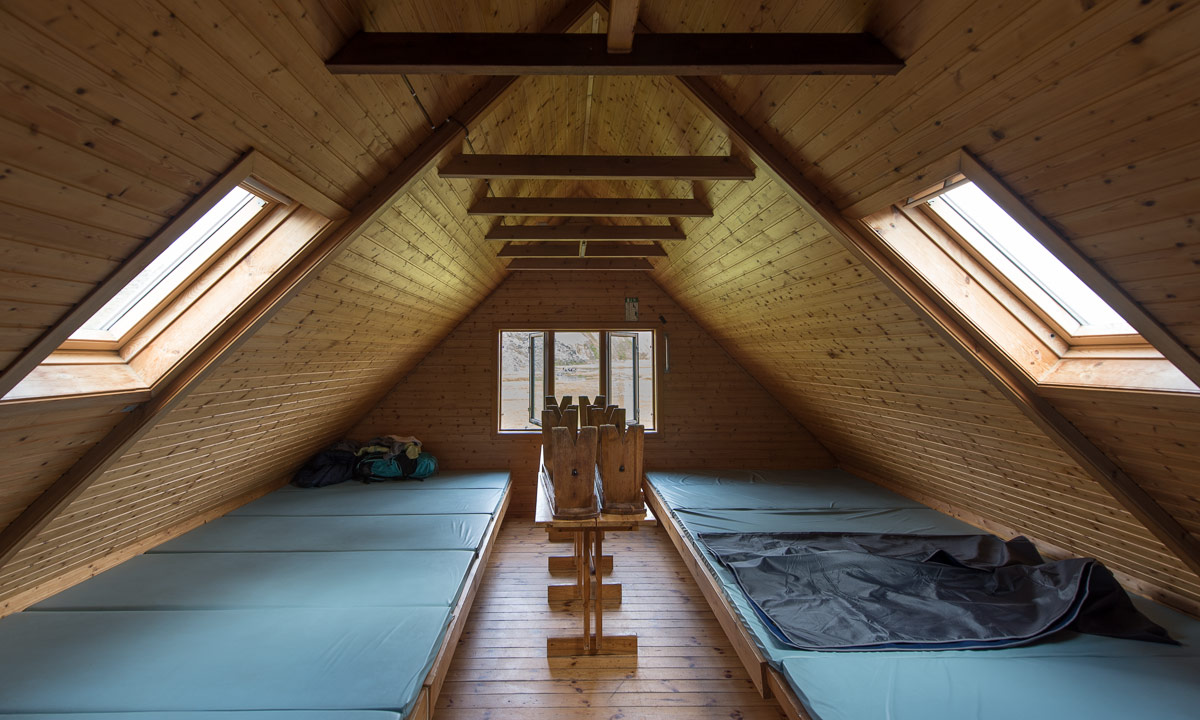
After we unpacked our sleeping bags and put them on two of the narrow mattresses we put on our jackets and boots and started a hike through the amazing landscape. Annika has been in Iceland before several times and told me about the almost unbelievable colours and shades of the mountains and she was true. Some of the mountains were orange, some brown or yellow, some green and one of them red. The lava rocks were black, partly covered with white-green moss and the higher mountains had white snow fields on their colourful slopes. Take a look by yourself:


Iceland has a lot of tourists, last year more than 2 millions. To protect the sensitive environment and avoid destroying the flora you mustn’t leave the trail. There’s another reason for sticking to the trails: Iceland has many geothermal areas where you could break through the thin crust into bubbling mud or boiling sulphuric acid. Some of these spots are visible, they smoke and you smell the sulphur compounds.
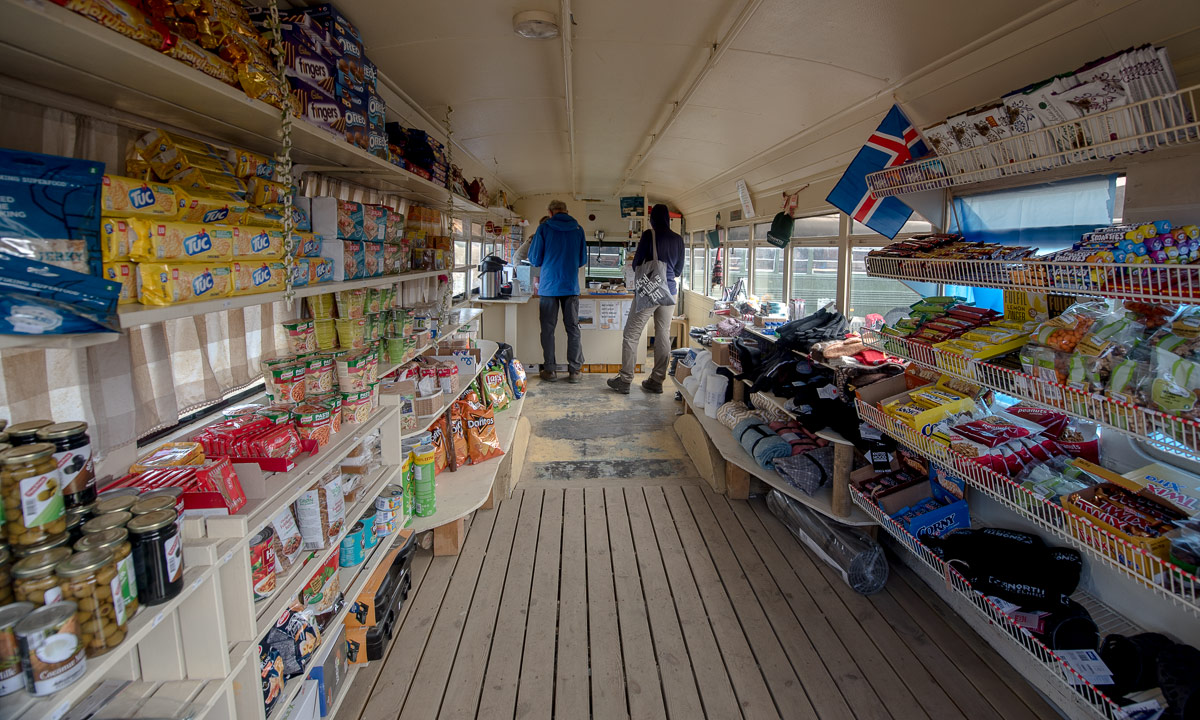
After some hours hiking (including an ascent of a mountain) we returned to Landmannalaugar. There’s not only the mountain hut providing 75 beds and a camp ground with place for at least hundred tents, there’s also the Mountain Mall, an old bus where you can buy food.

We enjoyed a rest with two cokes before we headed to the next attraction: A warm bath in the river. Because of the geothermal activity the ground is partly hot and heats up the water to temperatures between round 30 °C and 42 °C. We were not the only ones bathing, but there was enough place for all. You could even decide how warm you wanted your bath by just moving another metre. Great!


After a saturating dinner with spaghetti and pasta I took another walk and some more photos. Then I went to our room and got to bed.


Amazing! Although more than 15 people had slept in the room and the mattresses were so narrow that we could hardly turn around Annika and I slept very well. It was very quiet, hardly any snoring, no talking, no rustling with plastic bags. I experienced much worse when I had spent nights in alpine mountain huts in Germany or Austria.
After breakfast we took another bath and then another hiking tour. I hardly made any photos due to the drizzle and the strong winds. At least I could take some pictures of the sheep grassing on the plain.


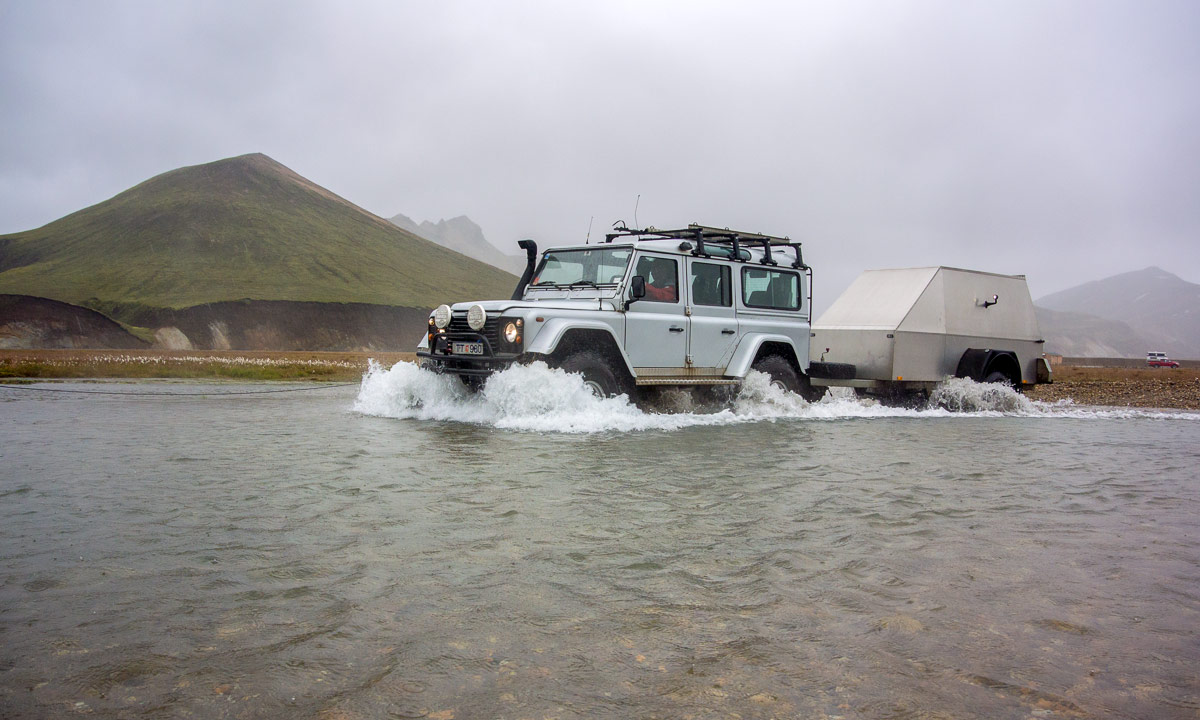
Drizzle became stronger and turned into rain. We went to the ford and looked at the cars crossing. This time I had my waterproof camera with me. Look at the snorkel of the white jeep, I guess this car could almost dive!


The rain got stronger and stronger and when we entered the bus our rain clothes were soaking wet. I looked through the rain-wept window for a while, tried to make same photos, but the autofocus couldn’t handle the situation. After a while I fell asleep.

Conclusion: A great experience! Yes, Landmannalaugar is touristic and crowed, but for good reasons. It’s absolutely worth a visit. Here you can even start a four-day hiking trip but you have to reserve the mountain huts years before. I’m quite eager to do this trail, perhaps in 2020 …?
There are so many wonderful and special locations to stay overnight in Northern Scandinavia. Many of them are quite far away as e.g. Låktatjåkko (590 km) or Kjølnes Fyr (970 km). Others are quite near.
Two days ago Annika and I started a two-day journey to such a place, unknown to both of us. Already the journey was interesting, since you cannot reach the destination by land. We started in Umeå and drove to Norrfjärden, where we parked the car and waited for the 8 o’clock ferry to the island Holmön. This ferry is operated by the Trafikverket (Swedish Transport Administration) and free of charge.


We had four hours to explore this island, part of the island group Holmöarna, that have 75 year-round inhabitants. The small village Byviken, where we arrived has a boat museum and a small shop, that is open all year. We went for a walk and discovered a nice place: Bergudden. There’s a lighthouse and you can rent rooms, on request even in wintertime.


We arrived back in time to wait for the departure of our next vehicle: Holmöslupen.


Holmöslupen is a chalupa, an old cutter-like sail boat which is a reconstruction of an old boat type as commonly used 100 years ago. It takes up to 12 passengers and you are allowed (and asked) to help with e.g. hoisting the sails. Life vests available, sailing experience not needed. This boat would bring us to our final destination.


The wind was so weak, that we sailed only a part and mostly used the motor. Otherwise the trip (planned to take 40 to 60 minutes) would have taken several hours. We passed the islands Trappskär and Lill-Fjäderägg before we arrived at our travel destination Stora Fjäderägg, an island of 1.8 km × 1.3 km. Here’s a hostel driven by the STF (Swedish Tourist Association). The story of this hostel is worth to tell:
After people of the boat museum were done with the building the Holmöslupen they asked themselves what to do with such a fine and seaworthy ship. It was them who had the idea to install a hostel on the uninhabited island Stora Fjäderägg just to give the chalupa a purpose. That’s why there is a hostel on a desert island in the Northern Baltic Sea and a wooden boat that transport the guests.
Some images of the island:


There is electricity on the island, there is mobile internet and there is drinking water. The latter comes from a well and especially this year you have to be economical with it due to the long period of dryness. Luckily it rained some days ago and the rain barrels were filled to the brim. The rain water is used for washing oneself and for the dishes. The hostel has a fully equipped kitchen, but you have to bring all food with you.
Annika and I had decided for one of the all-time travel dinners: spaghetti with pesto and parmesan cheese. It was very warm but not too hot to sit outside. We enjoyed our meal and watched the barn swallow feeding its six children that begged for food with open beaks. They seemed to be almost grown-up and hardly fitted into the small nest any more.

We were told, that there are many seals round Stora Fjäderägg and where to find them. Together with Annika I doubtfully followed the tiny path through the heath – I’ve never seen a single seal in the Swedish Baltic Sea since I moved here eight years ago. The ground became rocky and we had a view of the sea. First I saw a black spot on top of a grey spot. A seal on a rock? Then we saw round black spots floating back and forth – definitely seals, I never heard of swimming rocks … . I used a small tree for cover and creeped nearer. The back spot was a seal too and other seals were lying along a headland a bit farther away.
I took the camera, ducked and tried to creep nearer to a large boulder to hide behind. The seal however saw me and *splash* jumped into the water and dived away. I waited behind the rock and I was lucky. After some minutes a seal approached the same rock and crawled onto it. I was so near that I could hear the flippers splashing.


After having taken these photos I returned to Annika and the seal – seeing me – dived again. This rock kept empty for the next time but along the headland more and more seals appeared and seemed to cover the rocks completely. Next time I’ll definitely will take my huge tele photo lens with me.

We both sat there for a while – on a big rock, both listening and watching. The sun had already set, zillions of small insects hummed and buzzed around and we watched the many grey seals, at least 40 of them. Finally we decided to walk back as long it was light. Some of the small paths are not easy to walk on. On our way back I stopped because I saw something moving. It was a young hare. No, it was two of them. No, even more.
Three young hares were hopping around, eating a bit of grass and completely ignoring us. I was able to get close to three meters and still they didn’t seem to be frightened at all. I increased the ISO of my camera to 3200 and took some photos of these cute furry animals. (Don’t ask me what they do in photo 3 and 4, I’m not a hare expert.)


When we arrived at the hostel nightfall had intensified. Frog hopped around everywhere and the blue hour invited for taking more pictures. I however was tired and only took a photo of the old lighthouse before going to bed.

The next day: After a nice outside breakfast Annika and I took another walk over the island. Stora Fjäderägg has a lot of historical places, anything between the not-so-old lighthouse and ancient heaps of stones only readable for archeologists. Here are some of them:


Again it was warm or even hot at midday. Passing the lighthouse we returned to the hostel longing for water to drink.

Apropos lighthouse: We were ten people on the island that had stayed overnight: The host family (3), Annika and I (2), a family from Örnsköldsvik (4) and a man that had bought that old lighthouse. He showed Annika and me around and told us about his plans to renovate the lighthouse and to build a flat into it. A great project that probably will take some years, because it’s just a summer project.


We already had packed our backpacks and cleaned our rooms, now we were ready to go back to the small harbour waiting for the Holmöslupen. This time we were lucky, we could use both mainsail and foresail to sail back to Holmön.


Step by step we came back to civilisation: Holmön – the grocery shop (ice cream!) – the ferry to the mainland – the parked car – driving the E4 to Umeå – a Thai restaurant – home at Annika.
Conclusion: Absolutely worth it! I’m sure it wasn’t the last time, that Annika and I travelled to this very special place.
More info:
Yesterday I used my new car to drive to Vittjåkk, a small skiing area near Arvidsjaur, two hours away from home. Annika and I were there in wintertime and made a showshoe tour up the hills. I lived in Munich for six years and do not call these hills real mountains, but at least they reach above the treeline.
I parked again at the same parking lot and ascended the first hill that seems to be nameless. The sky was free of clouds, it was quite warm and I was completely alone.

Soon I was on top of the first hill. I wasn’t alone anymore. Some horseflies tried to make friends with me or at least with my blood. I descended the first hill and went up the Vittjåkk.


From the top I had a wide view over large forests, lakes and a higher mountain range.

Beside of taking pictures I didn’t rest because the horseflies really loved me. So I continued downhill again and was a bit flabbergasted that the whole hike took hardly more than 90 minutes. The hut village was completely abandoned, only a snowmobile showed that this place is only used in wintertime. And other signs showed that too …


One: construction sites. Almost all major roads are under constant repair each summer. It takes a lot of time to travel. Sometimes you have to wait for a traffic light becoming green or a follow-me car. Sometimes you follow an expencive camper whose driver doesn’t dare to drive more than 20 km/h on the gravelly sections. And this may go on for miles. Swedish miles! (A Swedish mile is 10 km.)


Two: lupins. Many roadsides are overgrown with lupins. They are beautiful, but they are invasive and threaten biodiversity. The Swedish Transport Agency has started to fight theses flowers.

Three: reindeers. Most reindeers are in the mountains but there are always reindeers left in the inland. Keep attention when driving! When you see one reindeer you can be quite sure that others are around, too.


Four: bilingual town signs. On many place in Northern Sweden you are in two countries at the same time. Sweden, the official nation and Sápmi, the region traditionally inhabited by the Sami people. Therefore many places have (at least) two names, a Swedish and a Sami one.

I drove a lot yesterday: 535 km in total. But as a result I know the new Subaru Outback much better and got used both to the automatic gearbox as the electronic systems. I’m very satisfied with the car that is much more comfortable than the old one. The only drawback, it might be the white colour: The horseflies just love the car. When I return to the car it is mostly surrounded by some dozens of this pests and they will even try to follow when I set off. (They manage round 25 km/h.)
Today it was the first day where I used the bicycle from home to Skellefteå. That’s about 19 km per direction and I want to use the bicycle at least twice a week on my way to the job. Let’s see if I can do it. At least a first beginning is made.
Skelleftehamn – Skellefteå:


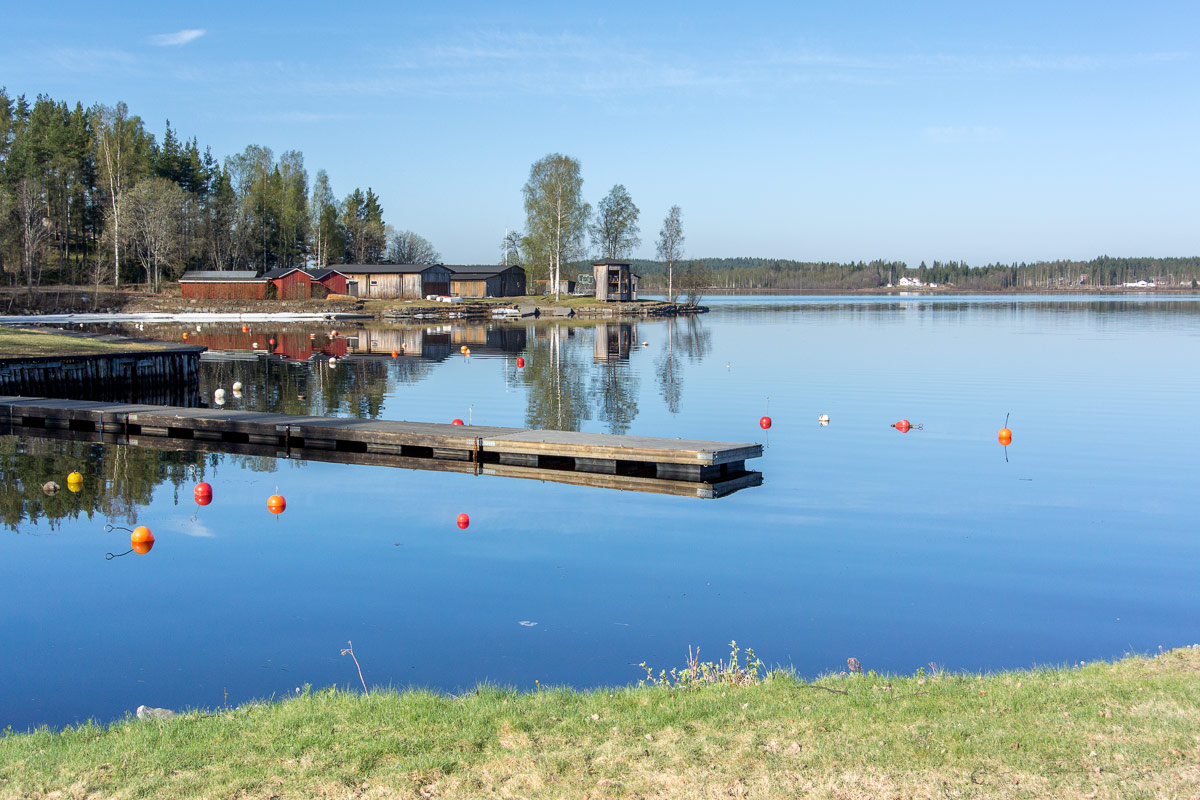


Skellefteå – Skelleftehamn:


Tour rules: Use a complete different way back to Skelleftehamn.
Photo rules: Take only photos from the bike, cycling or standing. Do not crop any photo. Use only basic corrections.
Valborgsmässoafton is the last day of April. On this days many people set fire to big bonfires, partly as an event being celebrated with friends, partly for burning last years gardening rubbish (and more …).
This year I was invited by A. and M. who I’d got to know exactly eight years ago on another valborgsmässoafton. They are among my oldest friends in Sweden and I’m very happy that they exist. Their stuga – or summer cottage – is located in Bygdeträsk south of Skellefteå.
This time I come from Umeå, where I spent the weekend. I try to avoid the larger roads and prefer the small gravel roads. Mostly they are in good conditions, only some parts are quite muddy and have deep ruts in the clayey ground. Less and less snow can be seem, but there’s still snow left.


There is still ice on the lakes as well, but it looks soft and grey and near the shore there are more and more open patches. You can still see the snowmobile tracks, a vague reminder of the winter.
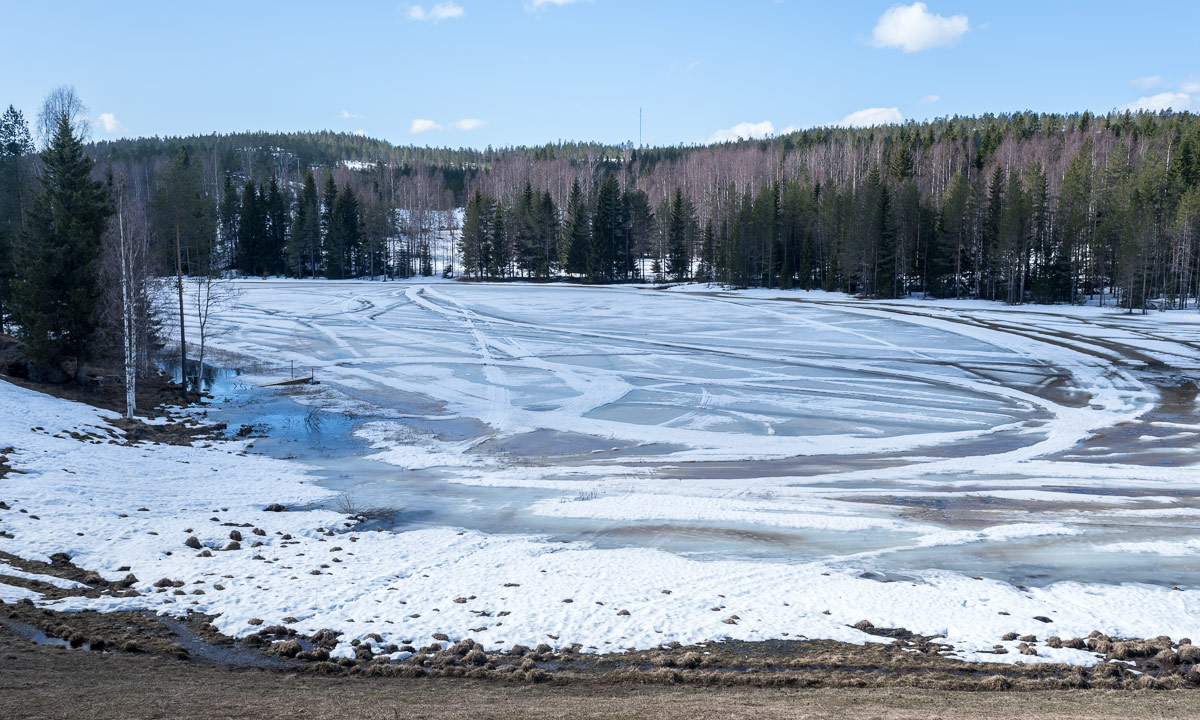
Some hours later: I’ve arrived in Bygdeträsk and with the help of A. I manage to park my car without getting stuck in the soft clay of the property (which happened to a craftsman recently). The other guests have arrived, too and – of course – the bonfire is burning!

But what about the hot tub? Wouldn’t it be nice to take a hot bath outside later in the evening? That of course needs some preparations. While M. cautiously tries to split the thick ice block in the hot tub with an axe I put on chest waders to wade a bit into the lake with a long hose attached to the water pump. First I thought I had to chop away ice, but near the shore the lake is just filled with knee-deep slush. Soon the pump starts to fill the hot tub with ice cold water heated by the wood stove.


To make a long story short: it will take eight hours until the water is hot enough for a relaxing bath and I will have fallen fast asleep when the only two people still being awake will start their bath.
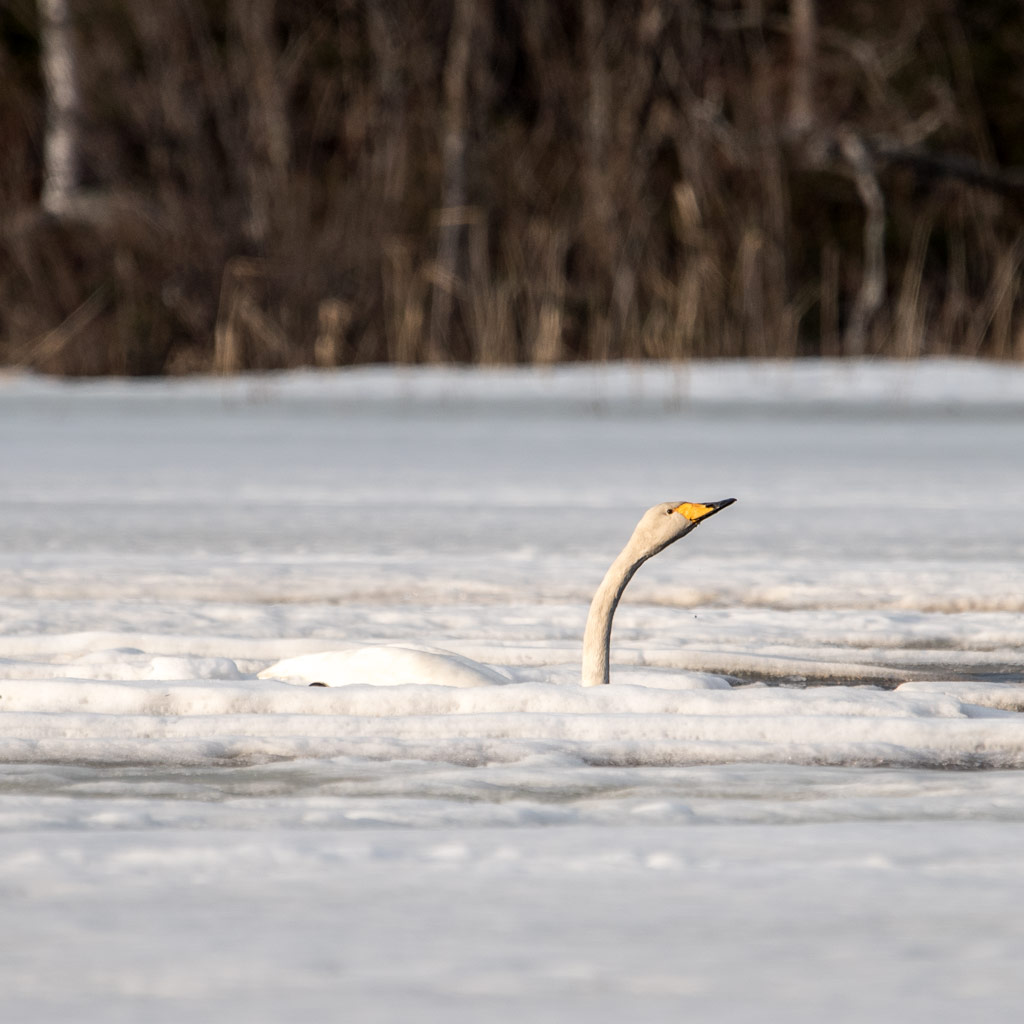
Anyway, there are other things to do as e.g. watching the whooper swans on the ice and in the water.




Then there is a lot of eating (M. is a great cook and grandmaster of barbecuing) and talking and playing games. Every half an hour someone goes out, adds wood to the oven and checks the water temperature, that sloooowly increases. I become more and more tired but I want to have a bath. At 1 o’clock in the night however I give up. I’m just too tired! I pump up my camping mat in the workshop, unroll the sleeping bag and soon I’m fast asleep.
After a late breakfast I say thank you and goodbye to the others, jump into the car and head home, again with many detours. I see some cranes, some reindeers and a black grouse (called orre in Swedish) that flies away before I can slow down the car for taking a picture.

Many gravel paths lead through forests. Left and right are old walls of snow that the sun has not melted yet. Leftovers from last winter’s snow clearing.

Again some patches are rutted, some are wet and muddy but no problem, until …


Luckily I see this obstacle in time and manage to drive around this hole in the street. (My car is the red one in the background.) One of the rare opportunities where I’m glad to have a car with all wheel drive.
One hour later I’m home again and I hardly can believe my eyes. Five days ago my backyard was still covered with 30 centimetres of snow, now the snow on the lawn is almost gone and beside of some small white patches brown grass is everywhere! Even though I’ve been living in Sweden for eight years I’m astonished again how fast snow melts in springtime.
Two hours later heavy raining is pouring down. Hej då, vinter!
Still a lot of snow in Skelleftehamn, still freezing temperatures every single night, still no rain since last year (if I’m right), but …


… spring comes nearer. According to smhi spring has already come to the town Skellefteå some days ago. Seems to fit, because I saw the first coltsfoots in bloom in Skellefteå yesterday. Unlike Skellefteå, Skelleftehamn is located by the Baltic Sea and the Baltic Sea is still covered with ice that cools down the air and causes the beginning of spring to delay by several weeks.
The snow piles on the first two images are remnants of the continuous snow clearing the whole winter. When walking around while taking these photos I experienced snow depths between 0 and 60 cm. Round 60 cm of snow lie in my backyard, too. At least all fences look out of the snow again.
| English | German | Swedish |
|---|---|---|
| coltfoot | Huflattich | tussilago |


When the sea ice is safe + the weather is calm and sunny + it’s Easter holidays you can bet that many, many people are outside. A zillion times more than in January or February when the locals think it’s too cold.
Some people walk, some even ski but most people use their snowmobiles. And that’s how the snow covered ice on the Baltic Sea looks like: covered with snowmobile tracks. Sometimes only one or two of them, but often it’s many tracks making the ice look like a German autobahn.


What a contrast compared to my hike less than two weeks ago where I was almost alone on the ice.
It has been snowing 5 cm since last night, the day temperatures are round -6 °C and the ski track in Skelleftehamn was prepared hours ago. Although I’ve been in quite a lazy mood today I took my cross-country skis (hardly used the last weeks) and skied for an hour.

Ah, that felt good!
Note to myself: be more outdoors, be it skiing, hiking, kayaking, cycling, tenting, that doesn’t matter. Just be more outdoors!