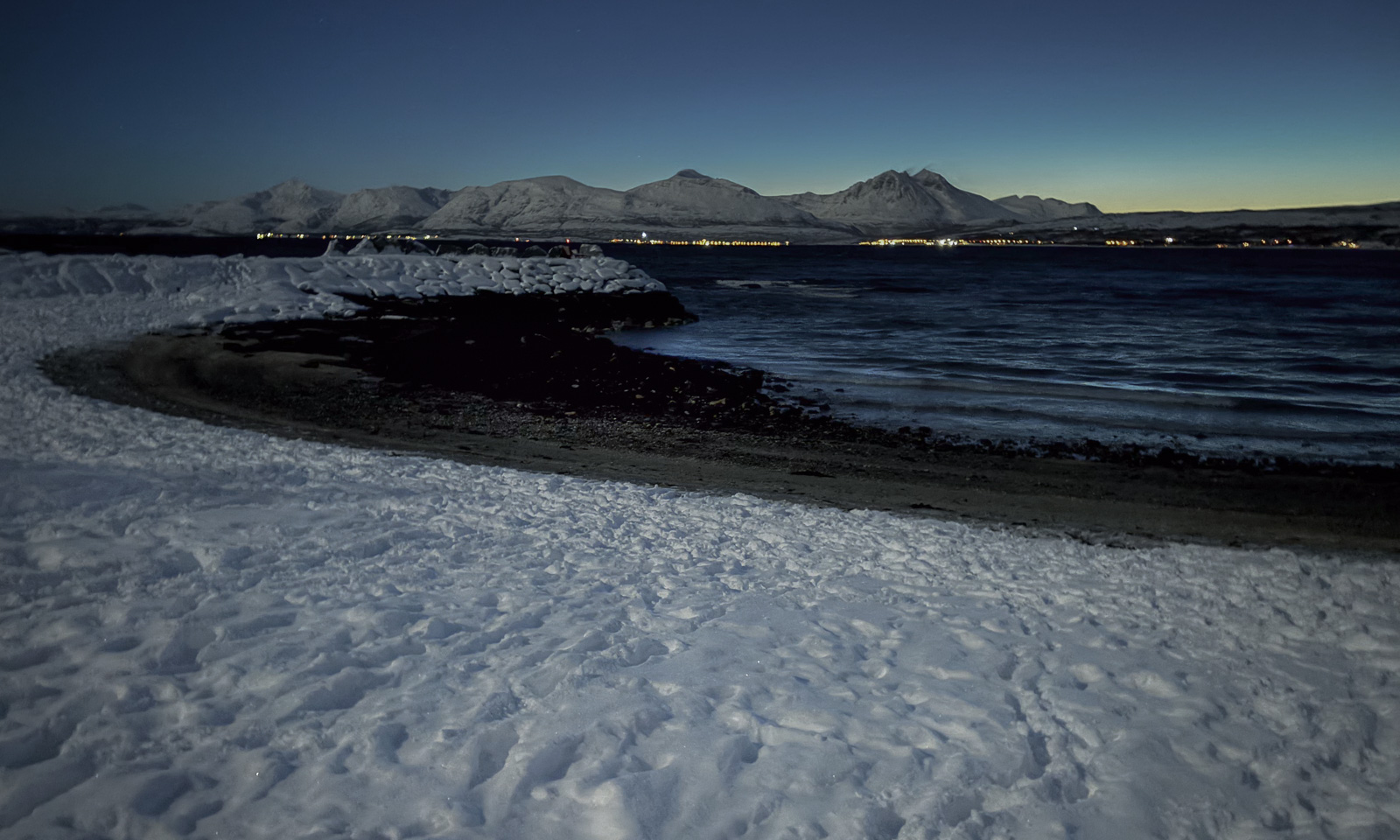
Winter walk on Tromsøya

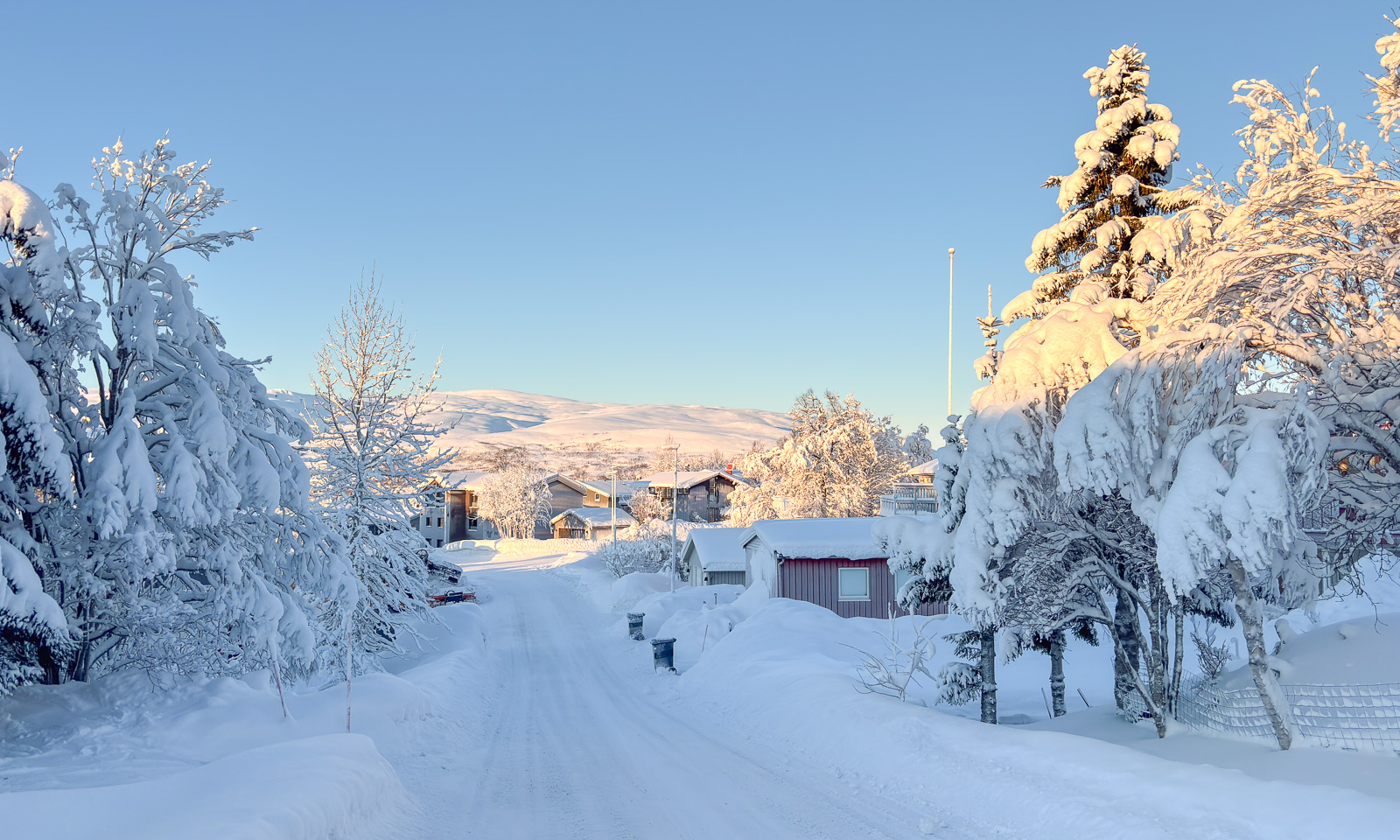
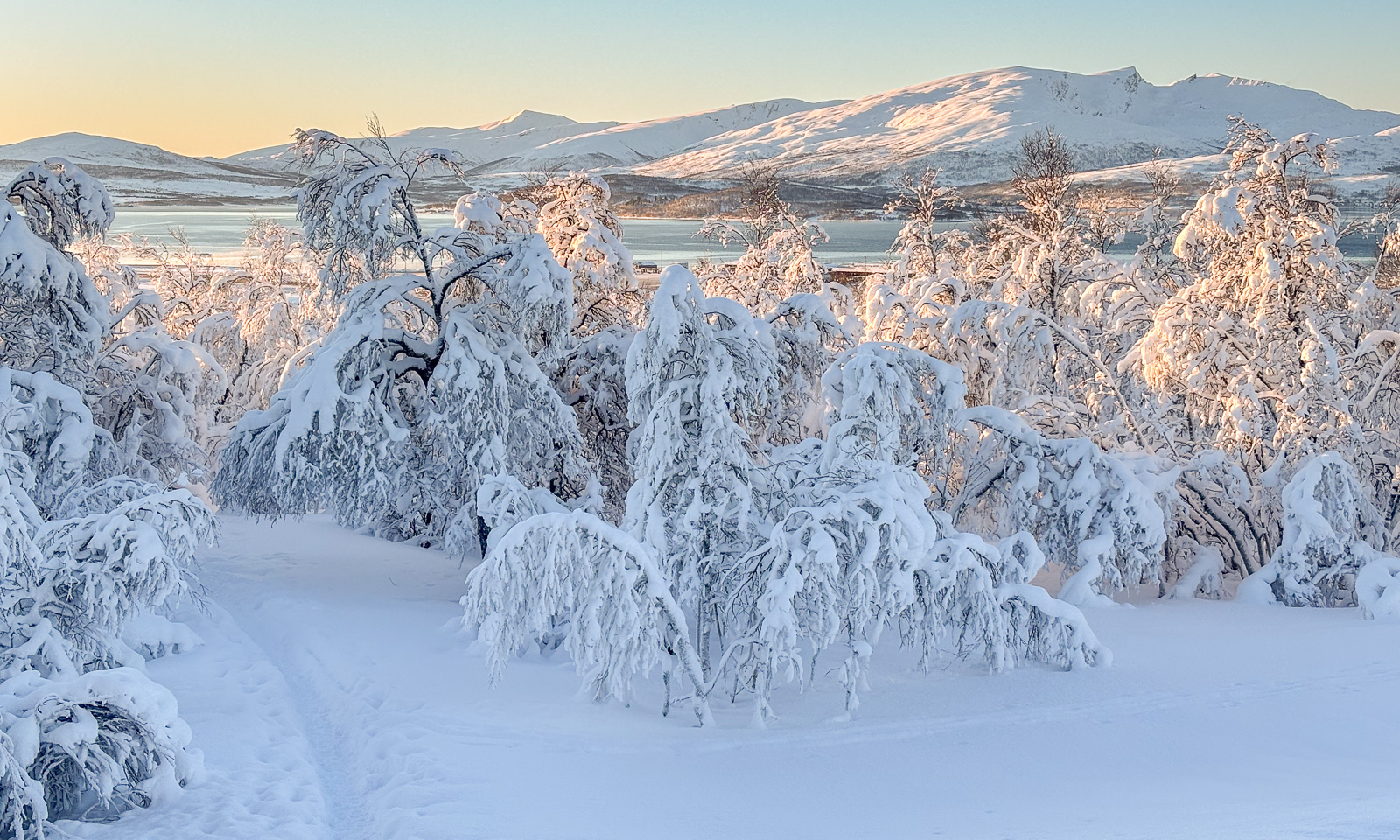
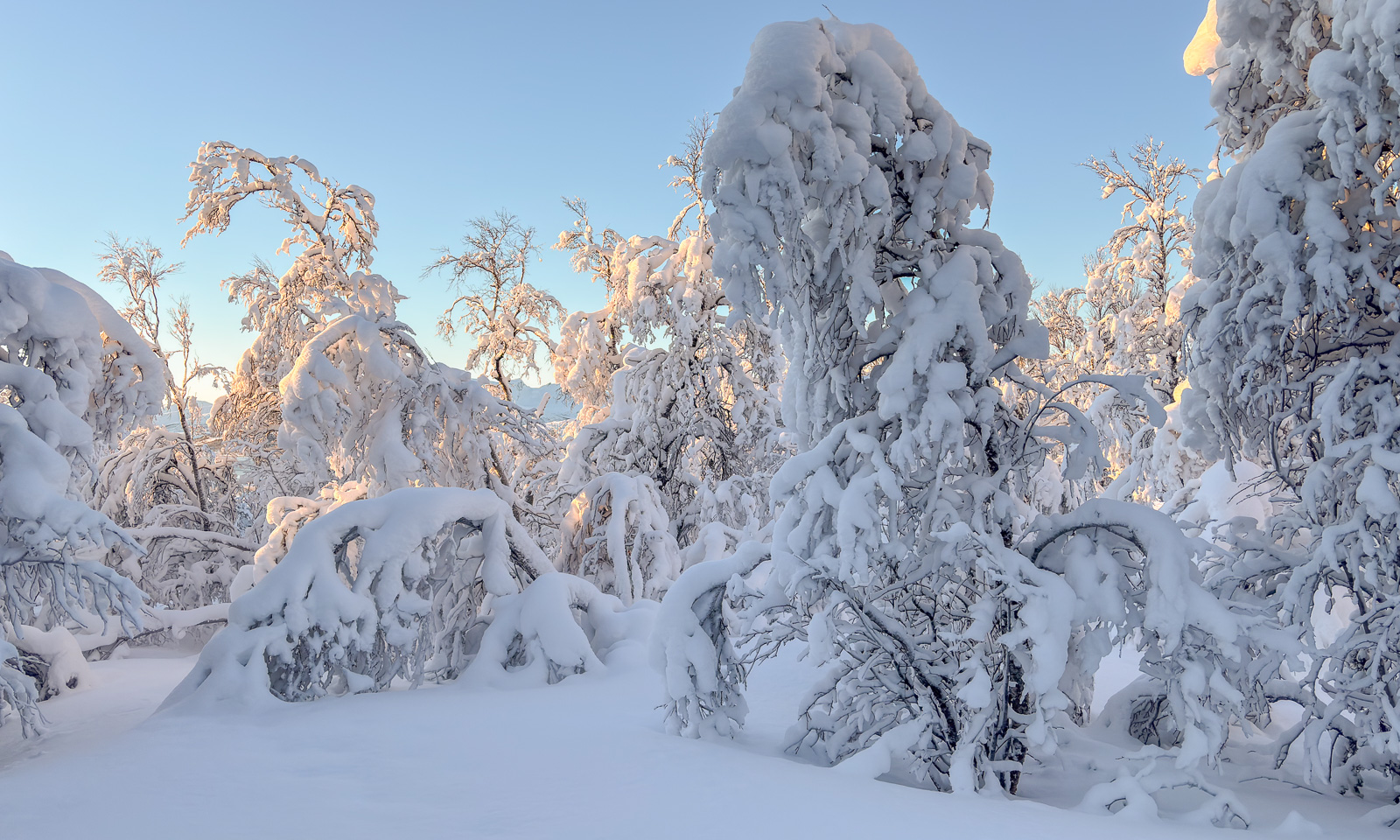
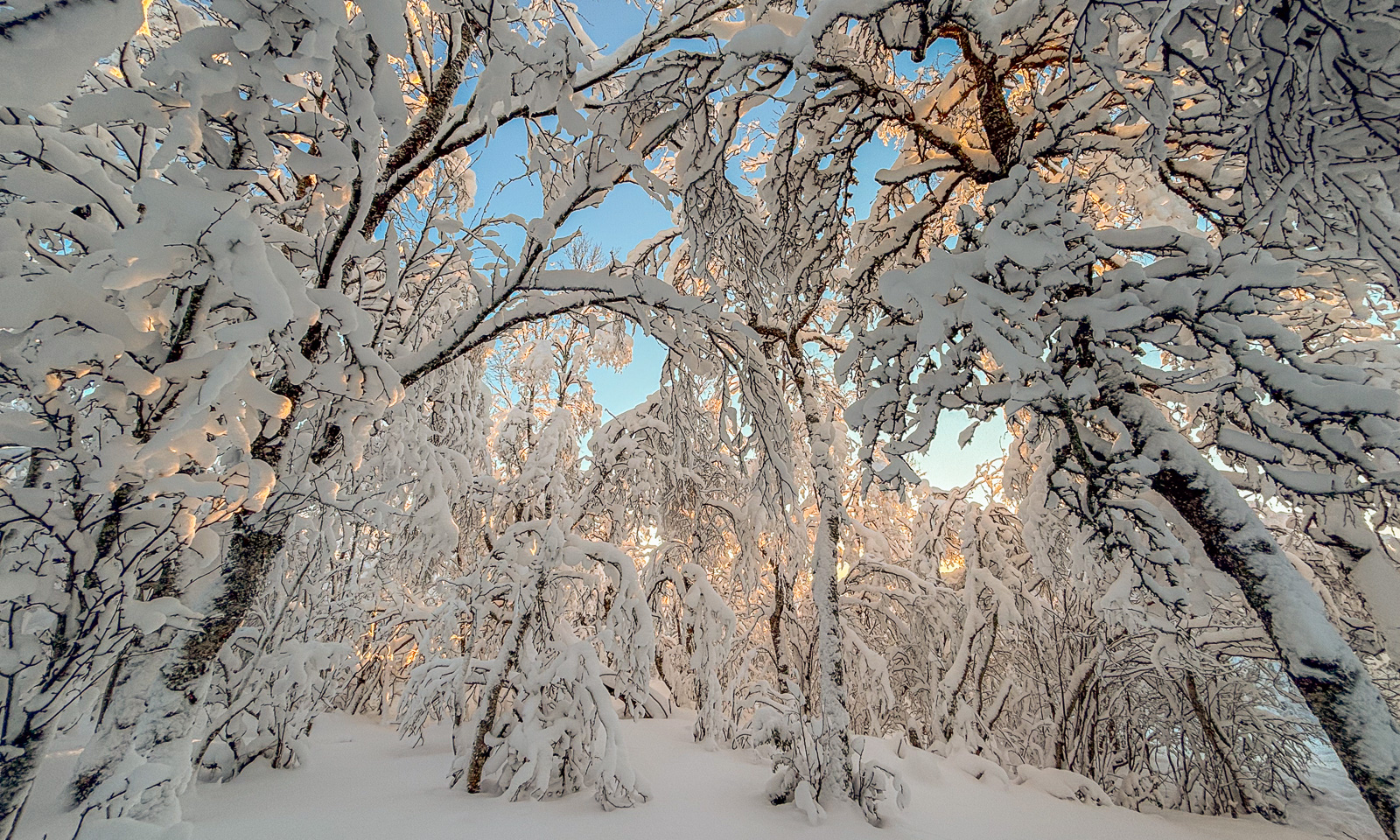
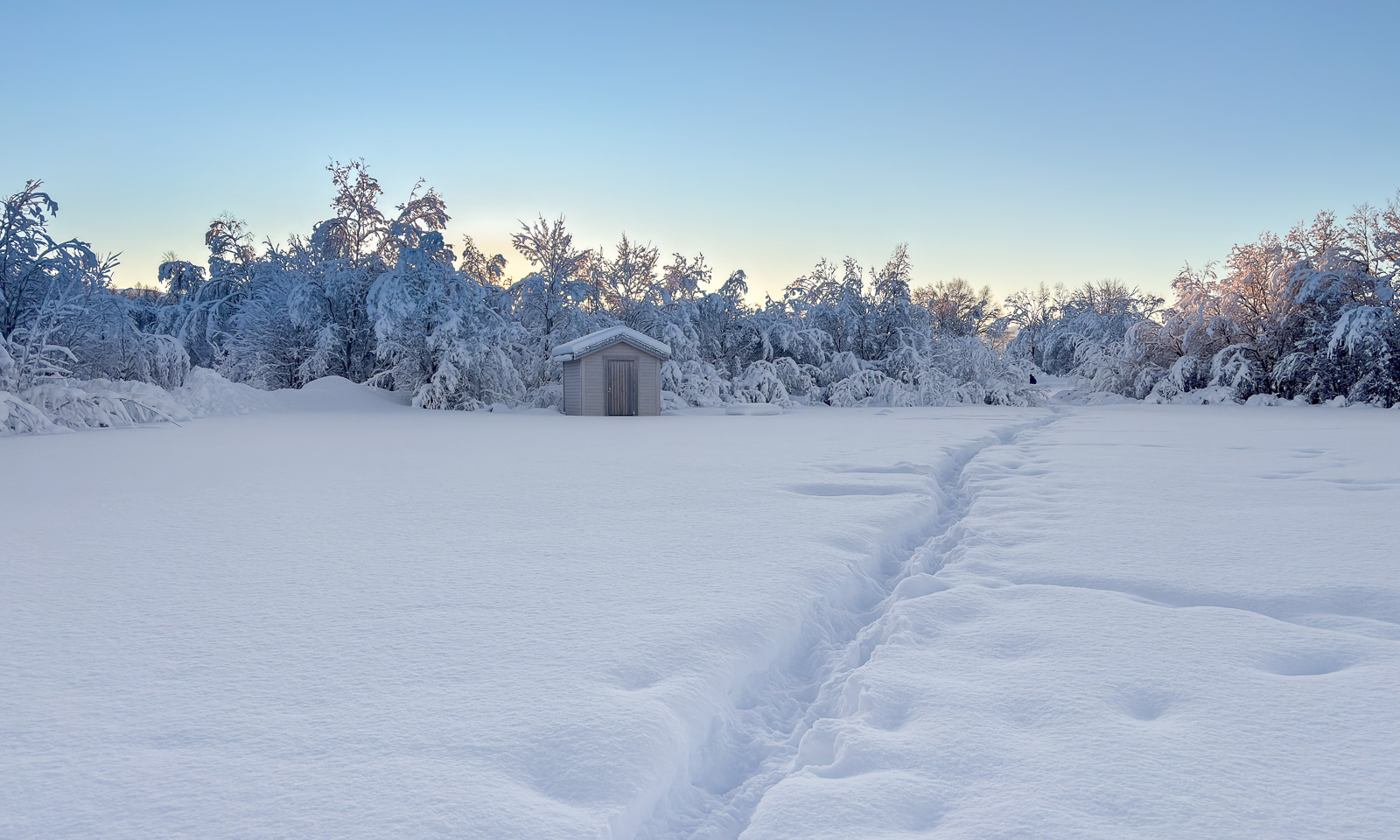
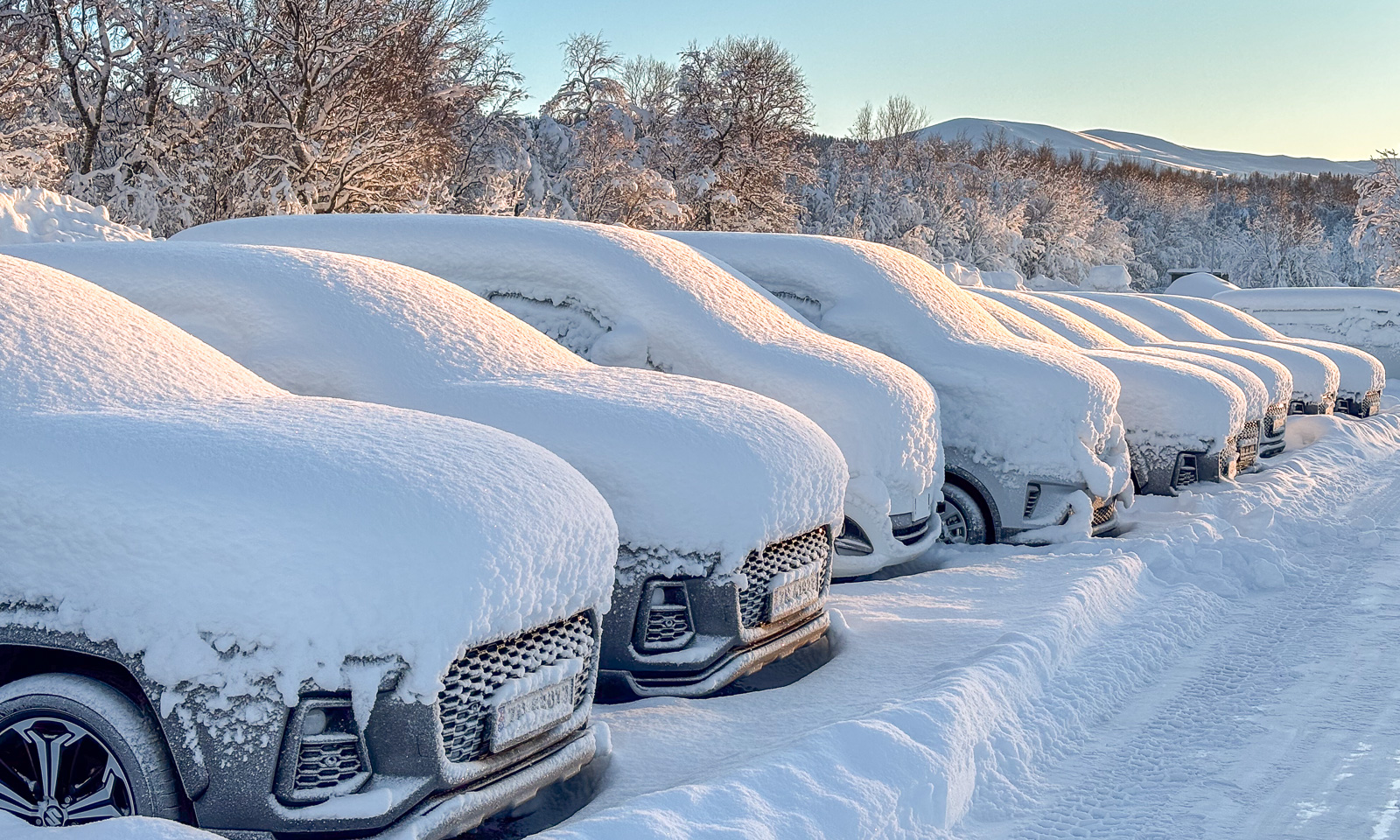
This morning I went for a winter walk in Tromsømarka. That’s not an official name, but it describes the hilly terrain with forests, lakes, and bogs on the island of Tromsøya. I’ve walked there countless times because it is only minutes away from my flat – on foot. And I walked there on foot today. Maybe a stupid idea, when we have 60 cm of snow …

We are still in mørketid, the time where the sun will be below the horizon the whole day, but as you can see it is not dark at all. At least not around lunch time. The colours of the sky are incredibly delicate and vary a lot depending on the hour of the day and the direction you are looking. The photos were taken between 10:38 and 11:28.

I’m not happy with the photos. I used my small Sony RX100 that was accidentally to some strange mode using JPG, not raw format. That caused me some trouble editing them in Lightroom. Next time I will take my Nikon again, although the camera body plus two lenses is far heavier.

30 days – 30 photos

19 November – Obbola, Sweden

The morning is cold. -14 °C. The sea has been freezing over. At the horizon lies a layer of clouds. Will they bring snow? Ice fog indicates open water. Later this morning I walk Spåret, the local circular hiking trail. There is hardly any snow, but the ice on the ponds is covered with frost patterns.

27–29 November – Obbola, Sweden

The weather has changed back from winter to autumn. Rain and storm dominate. The crushed sea ice gathers in our bay and big waves roll up the beach of Vitskärsudden. Even the last tiny bit of snow has gone.

1–2 December – Obbola and Umeå, Sweden

We got some centimetres of snow and Vitskärsudden looks completely different. Our plan to take the car to the inland with our German guests however was stopped by the weather. Too slippery the wet and icy roads. At least we make it to Umeå, where parts of the river Umeälven are frozen over.

3–4 December – Obbola, Sweden

The snow is gone. On 4 December my wife Annika and I leave our house behind …

4–5 December — Obbola, Gagsmark, and Pajala, Sweden / Palojoensuu, Finland

… and we are on our way to Tromsø. First stop is the village Gagsmark in Sweden, where we visit friends and stay over night. Next morning we continue our journey. We pass Piteå and Luleå, leave the E4 in Töre and take lunch in Vippabacken, a small restaurant with a back-room museum. We buy food in Pajala and cross the border to Finland. We stay the night in the village Palojoensuu.

6–7 December – Skibotn, Tromsø, Norway

The road between Palojoensuu (FIN) to Kilpisjärvi (FIN) is lonely. Beside of the village Karesuvanto (population: 140) hardly anyone seems to live here and only a few other cars pass. As soon as we cross the border to Norway snowy mountain ranges come into view. Near Skibotn we see the first fjord and at a quarter past two we arrive in Tromsø.

Next day is the second Sunday of advent but I only have a single candle. I have to cheat with a mirror.

7–13 December – Tromsø, Norway

I am member of two choirs and Christmas is near. That results in a pretty busy week, where I have three rehearsals and three concerts beside of my regular work. The first concert is in the hospital, which is in walking distance. While Obbola was free of snow 60 cm lie in Tromsø.

After the second concert, this time with the Sami choir Romssa Rástát we got Northern lights. Annika and I watch them from the balcony. I try to make photos with my Nikon and a tripod as well, but the aurora has weakened and I had some camera issues.

On Saturday we open the skiing season. It is polar night, so we ski round noon, when it isn’t dark. In the evening I am singing the last concert, this time with the choir Ultima Thule in the Tromsø Cathedral, a wooden church in the very centre of Tromsø.

15–18 December – Tromsø, Norway

On Sunday Annika travels back to Obbola. I will take bus and train a week later (that’s tomorrow) and spend the rest of the year there, too. Will we get a white Christmas? Probably not. It is plus degrees and rainy weather both in Tromsø and in Obbola. While the Christmas decoration in the office building looks cozy, the streets in the centre of Tromsø don’t. Brown ice and sleet and water puddles dominate and it is extremely slippery.

On Thursday I have a special workplace: The research ice breaking vessel Kronprins Haakon lies in the port of Tromsø for two days. I walk down with my spiked Icebug shoes. On board of the ship I test some of my software components that read from the ship’s systems. It is always a relief to see your software to work in real life, not only with simulations. And I get a free lunch :-) . I get a bit nostalgic. I joined three scientific cruises on board of this ship. Will I ever join a cruise again, standing on the helicopter deck while we break through the ice? I hope so.

A photo of another Northern light in the evening ends this photo series.

November snowfall in Tromsø

When I came back from Scotland about three weeks ago snow had fallen in Tromsø. But temperatures went up again and more or less all the snow melted away, at least on Tromsøya. These photos I took on my way home five days ago.

It started snowing in the weekend and so it looked like, when I waited for the bus yesterday morning:

During the day another twenty centimetres of snow fell down and at 0:00 we had 29.7 cm of snow at the weather station. I however think, we have even more snow, where I live. Weather can be quite local in Tromsø.

This morning it had cleared up and temperatures were round -2 °C, when I went out for a walk. It takes only a couple of minutes, and you are in the nature of Tromsøya with its forests, bogs, lakes, and hiking paths.  This way will soon become a ski trail, if the weather stays wintery.


Šlobboten

Yesterday evening I had the honour and pleasure of joining the musical performance Šlobboten by Sondre Närva Pettersen. As a member of the Tromsø-based Sámi choir Romssa Rástát, I stood on the stage of the Hålogaland Teater, where this extraordinary performance took place last night.

Since I do not manage to find the right words to describe it better, this is the translation of the information I found on the website of the Jazz club:

A magical exploration of Sámi culture and identity.


In this groundbreaking production, Sámi singer and composer Sondre Närva Pettersen—whose roots lie in Ullsfjord—has created a truly unique concept. The performance takes the audience on a journey that blends Sámi culture, Nordic jazz, Sámi hymns, and electronic textures, brought to life by a large ensemble of some of our finest musicians. It also features personal interviews and captivating video art.

On the dress rehearsal I took the freedom to take some snapshots with my mobile, while we waited to go on the stage.

Some of Sondre’s beautiful melodies are still echoing in my mind the day after the concert. If we are lucky, the programme might be staged again. Perhaps next year?

Walking home between the seasons

After a three-week break, I did my usual after-work hike from Prestvannet to my flat today. Back then it was full autumn, now the weather bas become more wintry despite of the warmer temperatures the last days.

For those who wonder whether I’ll show photos from Scotland. Yes I’ll do but not before next weekend. See you then …

Tromsø departure – Tromsø arrival

On 11 October I took the plane from Tromsø to Bergen and then to Aberdeen for a holiday in Scotland with my wife Annika. In Tromsø it has rained the night before but in higher altitudes the rain had come as snow. I could see the mountain Tromsdalstinden (1238 m) after departure and before we were swallowed by the thick layer of clouds. It was covered with a thin layer of snow.

Then we had a great time in Scotland. And we didn’t had any snow at all. (More to be told later.)

Yesterday I flew back and arrived in Tromsø at 10 o’clock in the evening. Round the airport there was some snow and slush but where I live there was more snow. More than I expected.

Today I measured 28 cm of snow on the roof of the car (or 11 Scottish inches), but now it is warmer and the snow has started to melt. While the birch trees are leafless, other trees are still leafy and now let their colourful leaves fall onto the snow.

Today I took a day off and will use some of the time to browse through the Scotland photos. But before that I will clear the snow on my parking place to avoid afternoon’s rain.

October on Tromsøya

This is the season where the golden October starts to loose its colours. The first ground frosts occur and many birch trees have lost their leaves. Now it is the rowan and willow trees and the grass and moss that shows autumnal colours.

Four pics I took on an after-work hike two days ago and four I took today.

It won’t be long before the afternoons are so dark that the light posts make sense — and maybe I’ll be able to ski there as early as next month.

1st October

The 1st day of this year’s October delivers! First I got a clear, blue sky on my after-work hike through the autumnal forests on top of Tromsøya. Then I got beautiful Northern lights tonight, I just came in and developed the photos a bit.

What you don’t see here – as usual – is the movements of the Aurora. The live act is still better.

Steindalsbreen 2025

It is the third year, that I hiked to the glacier Steindalsbreen in the Lyngen Alps. This time I had the pleasure to do the tour with my wife Annika. To make it a holiday we have decided to try to book the cabin Steindalshytta over the weekend. This cabin lies some kilometres from the parking place on the way to the glacier.

Saturday morning we manage to book two beds but we have to hurry to fetch the key in Steindalen, which is 100 km away. There we meet H. that gives us the keys and some info. She tells us we can use the gas driven hotplates to cook. We also learn that there’s hardly any firewood left, but it’s not cold and we have sleeping bags, so no worries. We pay using Vipps, the leading mobile payment system in Norway, then we take the car to Lyngseidet – 25 km away – to buy food.

When we pack our backpacks to start the tour it is already afternoon, but the cabin is not far away.

In the beginning a forest path winds up through a narrow valley. The colours are autumnal – yellow the birches, red the cornel and the blueberries. To the left down from the bottom of a ravine we can hear the river Gievdanjohka.

The path is rising and so is the river. After two kilometres we are almost level.

From there it is not far to the cabin. We go round a moraine and there it is: Steindalshytta. I unlock the door and we peek inside. Looks cosy!

Now we want to cook. This will take the rest for the evening because the gas canister is empty. No cooking on the hotplates, we have to use the wood-burning stove. We gather all the leftover wood from inside and outside of the cabin. There is no axe. Luckily Annika has a knife that is sturdy enough to make some smaller peaces of firewood. The wind is calm, the oven isn’t drawing and it takes almost three hours until the water for the spaghetti is boiling. At least we get a starter: warm shrimps with parmesan that we eat from the huge plastic plates we found in the kitchen. And I found chocolate cookies in the kitchen.

Meanwhile it has become dark outside and soon we get to sleep. We don’t have to freeze. After having powered the stove for hours we have 24 °C in the living room and hardly less in our sleeping room. Good night!

When I wake up the next morning it is raining, but it stops soon and the sun starts to light the mountains in the east.

After breakfast we pack our backpacks and start our hike to the glacier Steindalsbreen. Many things like our sleeping bags we leave behind, because we will go the same way back.

Again we follow the river to the east, then the landscape opens to a broader U-shaped valley. The terrain flattens and hiking is easy.

But we can already see the ascent we have to take. After two steeper passages we stand between two landscapes. In our back lies the mellow valley with its gentle slopes, everything in autumnal colours. Ahead lies a rough and rugged mountain landscape, where grey rocks and stones are the predominant element.

And there it is. The glacier. (Photo Annika Kramer.)

We continue the gravel path. Soon we pass the first of the signs that marks the glacier front some decennials ago. Due to global warming the glacier is melting and retreating every year. It is fantastic to see the glacier and we feel excited, but sad at the same time. First we hike to the glacial lake in front. Will we manage to go round the lake the glacier itself? Yes – and it is quite easy this year.

I have my big camera backpack with me and the Nikon with three lenses. That was made possible by Annika who took all the food. Although the weather is a bit dull it is photo time!

As often I’m not content with my photos and yes, I should have carried my tripod with me. But I’m happy about being there together with Annika. (Next photo: Annika Kramer.)

It is time to go back. This time we follow the river and pass two fields with scientific instruments, part of the project iC3. I have to ask a colleague from the Norwegian Polar Institute what is measured there.

Now the trail leads mostly downwards. We descend the hill, cross the broad valley, enter the forest and then reach the bridge by the cabin again. Here we take a rest and then fetch the rest of our stuff from inside the cabin.

I take a tiny detour that leads on a hill. Here I can see everything together: The huge mountains with their snow fields, the river Gievdanjohka, the autumnal birch forests. Only the glacier is hidden from view.

What a terrific tour we had! The glacier Steindalsbreen is worth a visit, especially in autumn. We drive back to Tromsø and I copy the photos to my computer. Then I check the tracker I used on the tour. As I was afraid I have walked on rock, sand, and mud this year, where last year the glacier covered the ground.