No whales today

To the left the Brim Explorer, a boat located in Tromsø for amongst other whale watching. To the right the tourists waiting to be boarded. The boat is fully booked, I am not alone.

Before leaving an announcement: The crew will try its best but it’s not granted that we reach the waters where the whales are. Anyone is free to leave and given a full refund. Most people stay and so do I. First of all I’m not surprised, as another tour operator already cancelled today’s tour. And then I just want to be a day on the water. Whales of course would be a nice extra.

To the left Tromsøbrua, the bridge that connects Tromsø with the mainland. To the right the safety on board drill, that everyone had to join.

And then we’re off.

To make it short: What we didn’t get today was whale sightings. What we got today was rough weather in the open parts. The boat was rolling and pitching like a cork in the waves. More than one passenger got sea sick. The unpredictable movements of the boat and the dim light under the grey sky made photographing a bit adventurous. Several times I was forced in and one passage even the doors were locked. The rest I was outside, partly taking photos, partly just looking around and letting the wind blow around my nose.

Conclusion: an awesome tour even without whales. If you want to participate as well: take your warmest clothes with you. And those of you that just want to stay home and look at some whale photos may read my article about Whale watching in Andenes. Enjoy.

Note to myself: TromsøyaRingvassøya/ReinøyaVannøyaNordfugløyaArnøya/LaukøyaSkervøya/KågenLyngenReinøyaTromsøya

Not reaching the top of the Nordtinden

Today I hiked the last daylight tour this season. Next Saturday sunrise is 11:25 and sunset is 11:38. The following day a seven week period of polar night will begin.

I wanted to hike onto the top of the Nordtinden (640 m), which I assumed to have a lot of snow after last Sunday’s experience. But it turned out different than planned.

Let’s start with a funny selfie:

What’s that? Winter jacket and no snow? Aren’t you overdressed, Olaf? Well, first I was glad about the fur-rimmed hood, because it was quite stormy already in the lowlands and then I wanted to gain 600 metres in altitude. It would be colder and windier on the top of the mountain.

Part 1 – hiking the icy gravel road

At 9 o’clock – round one hour before sunrise – I parked my car in Skulsfjord on the island Kvaløya. There was enough light to start the tour. First I followed a gravel road for 2.4 km. Easy peasy when not the whole road had been covered with ice. I had snow shoes with me for later use, but no spikes for the shoes. Mistake.

Part 2 – following the trail up

After 2.4 km I turned left to follow the hiking trail up to the mountain Nordtinden. Well, mostly I avoided following it because it was very icy and slippery. I considered cancelling the tour but often I could walk on the bouncy patches of heather beside the trail and so continue the tour.

Part 3 – gaining height

A steep passage made me doubt again. Shall I return? Continue? Well, let’s go a tiny bit further, just ten other metres up. I was lucky. Now the terrain was less steep. First only a bit of snow covered the stones and the heather but soon more and more snow covered the ground.

Part 4 – coming to a dead end

I knew that I lost the regular way. The way itself was not visible anymore, but I could see on my interactive map that I was a bit lower than the trail. Maybe I could go up somewhere else.

It was stormy and gusty and the wind tried to blow me down several times. The snow was not fluffy but wind pressed and hard and therefore slippery. When I had to traverse a slope I mounted my snowshoes. It took a while because I had some issues with the bindings. Now it dared to traverse the snow field, but since I didn’t take my walking sticks with me (mistake) it was a bit hard to walk up in the wind and gain balance.

And then I came to a dead end. A quite beautiful dead end, but still a dead end. I had to return.

Part 5 – returning, retrying and finally returning

So I walked back until I finally met the trail again, at least according my iPhone map. The way itself was hidden under the snow. Beside of that Norwegian hiking trails can be marked quite poorly, you have to navigate by yourself.

OK, I can navigate. I even had paper map and compass with me. But where the trail supposed to be there were only snow and rocks. And it was quite steep. And the snowshoes were a bit bitchy. And sun would set at 13 o’clock. Therefore I made the decision to not to try to reach the summit but abandon the tour and return. And so I did.

First I walked on snow but then I had to put off my snowshoes. In the lower part I ignored the icy trail and walked down on the heather. Much easier! Three and a half hours later I arrived at my parked car.

Résumé

It was a pity that I didn’t reach the top, but it was a fine though rough tour anyhow. From next week I have to find alternatives that are doable in twilight and darkness using a head torch.

For the records: 9.6 km, ca. 600 metres in altitude.

April weather by the sea

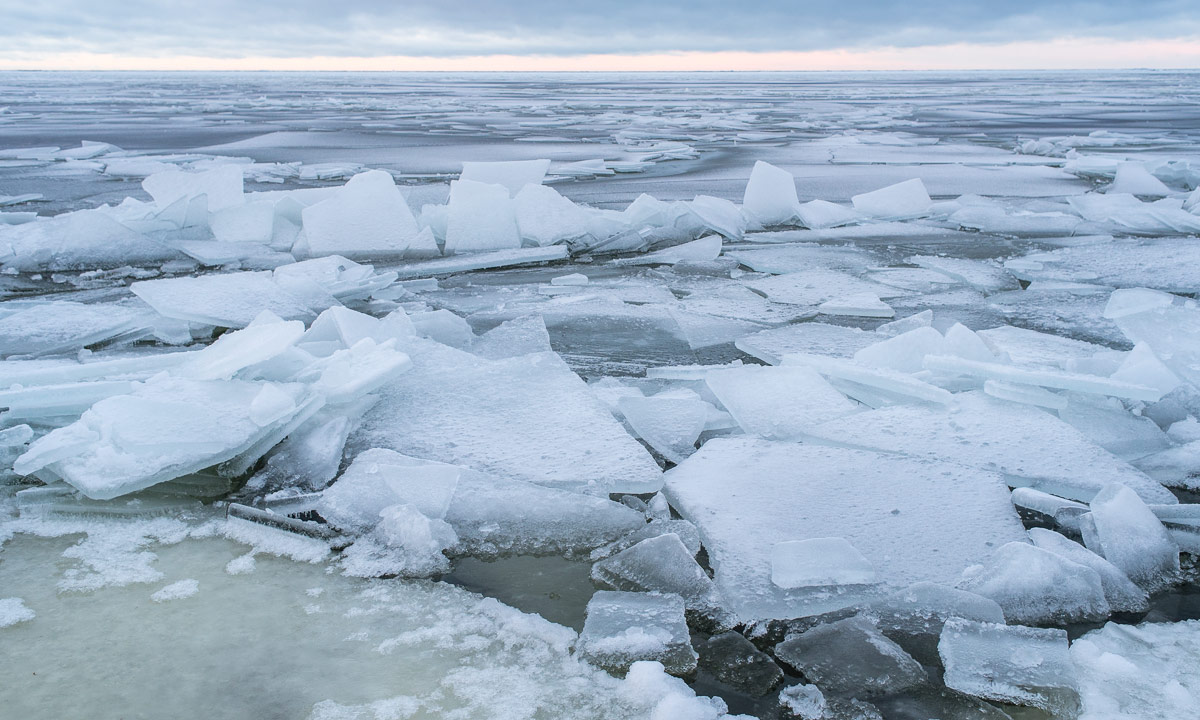
Yesterday at lunch break: The sky is blue and the sun illuminates our little bay. After last nights frost it is still covered with fragile, transparent ice. I stand ashore and take a photo of some ice floes. The inner part of the bay behind me is still covered with thick, old winter ice you can walk on.

Today at lunch break: The weather forecast of SMHI was right: a hard and gusty wind drives wet snow from the sea. The water level is more than 60 cm over normal. (Remember: no tides in the Baltic Sea). The breaking waves have broken all the ice that yesterday still covered the bay and wash the ice floes ashore.

Impossible to make a photo without spray on the lens! Therefore you can see some pale bubbles on the photos.

I stepped from one large ice floe to the other. They float and move under my feet, they raise and fall with the waves but they are still stable enough to bear my weight.

And so looks our house from the middle of our bay Grundviken:

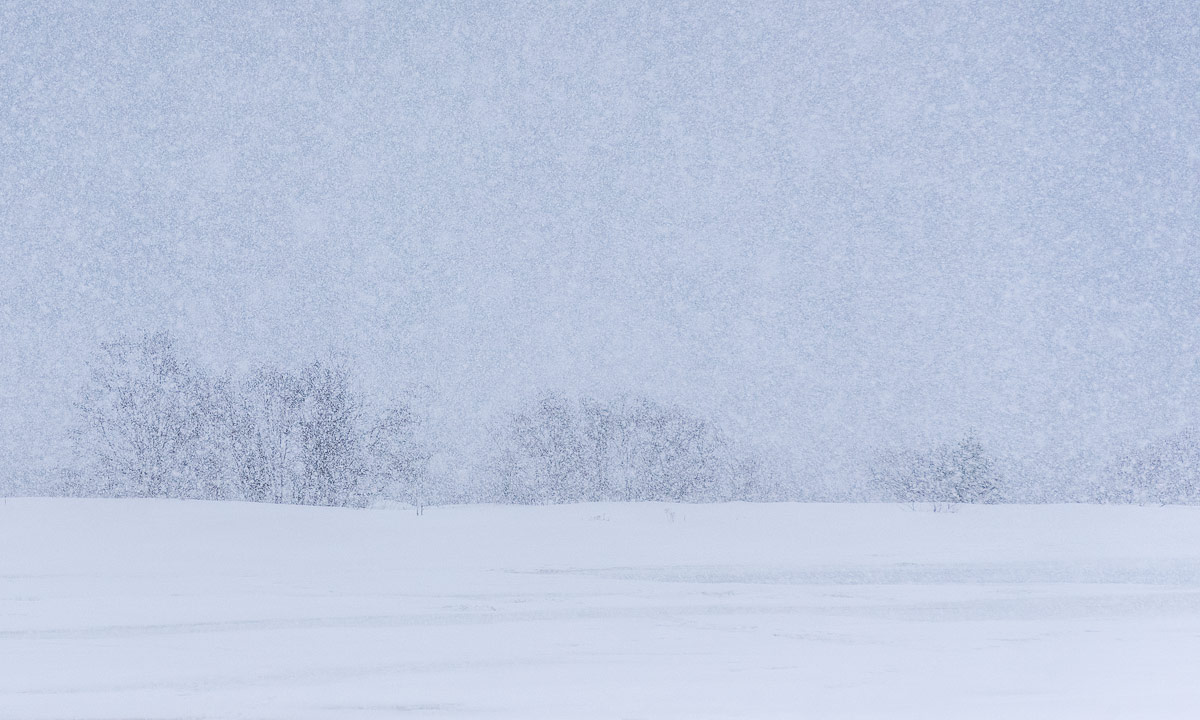
Time to show some more abstract black and white images that I made today. One of the wooden barrel (or whatever it is), almost covered by the sea. Another one of the snow bucketing down from the low hanging clouds.

A shower of soft hail and snow

Out of nothing a black cloud front was approaching. Within a minute or two it went darker, windier and colder and the sky opened its locks. First it was a heavy amount of soft hail …

… that fell, then snow, that drove vertically from land to sea.

After twenty minutes or such the sun came out, and the sky was blue again as nothing had happened. Only the strong wind remained.

It seems, that winter is not over yet.

Technique sea kayaking course

This article is part of the series “2020-10: New in Tromsø”.

I was really in doubt about writing this blog article and showing photos of the last weekend, where I participated the course Teknikkurs Hav (Technique sea kayaking).

Why? Because my photos lie. They show sea kayaks lying on nice beaches and us paddling in calm waters. All these photos are true but they tell only a fraction of the experiences I made when I kayaked in Northern Norway in the beginning of November.

Saturday – day 1

The paddling course was supposed to take place on Sommarøya. A beautiful place, but quite exposed to wind and weather. Due to the wind forecast (average wind 15 m/s) the instructors chose a more sheltered place for the first course day: Eidjordneset, just 12 km away from the boat house of the sea kayak club Trulle.

We gathered round 7 o’clock in the morning: We are the instructors Tim and Pål and four participants. Kind of luxury! We put the kayaks on the trailer and started driving: Past the airport, over the bridge crossing the Sandnessundet strait, to the left and then taking the turn to the island Håkøya where we parked and changed clothes for the tour. In my case: woollen underwear, two pairs of socks, a thick woollen sweater, drysuit, neoprene boots, gloves and hood. In addition to that the sprayskirt, life vest, towline system and helmet. We do not only dress for the chilly air but for being in the water as well. Tim wrote in the email: “We will be doing a lot of swimming”

We started to dress in darkness but when we were ready it had got light.

We put the kayaks into the sea and started paddling east along the Håkøya. After getting our paddle strokes improved we started to practise partner rescue. One kayaker capsizes, opens the sprayskirt and swims. Then there are different techniques of emptying the capsized kayak and support the swimmer to enter the kayak again. While we were training this several time. As Tim said: a lot of swimming. While practising the wind blew us more and more to the east. Time to turn back.

Now we had to paddle against the wind. First it went quite well but we already could see the huge shower cell coming towards us. Round 2–3 °C in the air. Would it be rain, sleet or snow? No – it was a grown up hail storm approaching. Within minutes we had wind speeds of round 20 m/s howling around us, blowing spray from each wave and throwing hail right into our faces (ouch, my lips!). The instructors decided to guide us to land where we waited for the hail to stop.

Soon the weather was calmer but still very windy. It took a while until we reached the bridge, where we started the tour. On the way back I had one of the rare opportunities to take some photos with my iPhone while paddling. Mostly I was too occupied with practising or catching up.

When we arrived at the bridge we crossed under it, because on the other side the sea was a bit more sheltered. Here we practised a lot of different paddle strokes as edging or low and high brace. This was quite intense – only interrupted by a short and frugal lunch break – and I’ll have to train a lot until my body has understood the movements. We ended with a rescue case: One of the participants had to pretend having an injured shoulder and we had to both give support balancing her kayak and tow her on land. Well, there was a lot of discussion but finally we managed it. Ok, it was only 20 metres or such to tow.

To make it short: changing into warm clothes · putting the kayaks onto the trailer · heading back to the boat house · I got a lift home · hot shower · great!

Sunday – day 2

Two of us met Tim at the boathouse, where we got a lift to a petrol station, our meeting point. As you can see it had been snowing and it was quite slippery.

Now on day two we would drive to Sommarøya and take the second course day there. Great, because the area round Sommarøya is wonderfully beautiful. Sommarøya is more than 50 km from Tromsø and the shorter way is leading through the mountains, so due to the weather conditions it took a longer time to travel there. And that’s how it looked like from the bay Steinsvika on Store Sommarøya.

We paddled to a flat rock covered by breaking waves and tried out some paddle strokes from the day before. That gave us opportunities for more buddy rescues, because of three capsizings. We made a short break on one of shallow beaches.

After that we started to round the island Storholmen where the Sommarøy lighthouse is located. First we tried to stick near the rocks to play with the waves. The further we came to the open sea, the higher the waves became and we increased distance.

Especially at the northwest tip we had waves up to 150 cm coming from several directions so that it took all my concentration just to paddle on while feeling quite stressed and a bit helpless. A bit further the waves coming from the open sea behind us built up to huge rollers and breakers on the shallow bay. I was too scared to join the others that played in these waves (with several capsizings and rescue manoeuvres). Therefore I paddled a bit further to reach a more sheltered part of the bay and wait there not to split the group. One other paddler joined my shortly after. Then all of a sudden a really huge wave came, broke just where we were and knocked us both over. There was nothing I could do. I immediately lost my kayak in the wave and it took a bit of time and help from the others to fetch my kayak and get us in again. I know that I have to learn to paddle under such rough conditions as well, but I’m not sure if I’ll ever enjoy it.

I really was glad about the lunch break. Here Tim and Pål told us about the star rating system for waves. It goes from 1 (lowest) to 5 (highest), and mostly we had 3-star conditions out there, with one two-metre-wave probably being a 4 star.

Even after lunch I was mentally quite exhausted. But at least we had started heading back and were soon in calm waters again. The others learned some more rescue manoeuvres and such but I kept aside for a while because I couldn’t focus any more.

Finally we made another towing manoeuvre, where two of us towed another kayak while the fourth paddler supported balance. While I was mentally tired I still had physical energy so I tried to drag a bit harder the last part to come up onto the sandy beach as long as possible. And that’s where Tim took this photo of us. I’m in the front – watch the nice violet helmet!

(Photo: Tim Vanhoutteghem – True North Adventures)

Conclusion: This course was too difficult for me. I was too scared and overchallenged. But I had skilled instructors, great fellow paddlers and learned a lot – though the hard way. I’m really glad that I had the opportunity to join this course and already decided to take the same course again as a fresh-up next spring.

The day before tomorrow

Don't take it too seriously …

Like yesterday, it rained a lot today. It was also very windy with squalls between 20 and 25 m/s.

Tomorrow the weather looks quite alike. There maybe a bit less wind and probably less rain, since it will mix with wet snow due to falling temperatures during the day.

What a lovely day to go kayaking the whole day.

This weekend I’m participating the Teknikkurs Hav (Technique sea kayaking course). I’m a bit scared that the level could be too advanced, especially in this rough weather. Tim, the course leader who gave me some private lessons last week promised however that we would mostly paddle in sheltered areas. I hope so.

Anyhow, come rain or come snow – I’m prepared ;-)

upper left: the webcam some hours ago – lower left: wind stats of today – right: dressing proposal, when the weather becomes too bad …

I try to make some photos tomorrow but probably I won’t have too many opportunities for that while being on the water.

Links:


Kayaking to the Obbolstenarna

It’s the last weeks in Obbola in Västerbotten/Sweden before I start working in Tromsø. Annika has started working again on Monday while I’m idle.

2020, what a year! Two ski tours just before Corona – cancelled projects because of Corona – Annika and I buy our beautiful house in Obbola – I get the job at the Norsk Polarinstitutt in Tromsø – I start selling my house in Skelleftehamn – I “park” my Swedish company – Annika and I get engaged – I find a room in a shared flat in Tromsø, hardly 500 m away from the beach – Annika and I marry in our own garden on 21 August ⚭ (yes – we’ve been married for three weeks now!) – we drive to Tromsø to move some of my stuff to the flat.

It was a lot of things to organise the whole year through. Now most organisation is either done or out of my control and I have to lean back and relax a bit. Sometimes so much, that I spend half the day watching more or less silly YouTube videos. A state quite untypical for me.

Today after lunch I was in the danger of becoming a couch potato again, but I managed to stand up, put my drysuit on, stuff the camera into a waterproof bag and go paddling. Destination Obbolstenarna, a group of islands nearby. Obbolstenarna is hardly more than a kilometre away but a headwind of round 10 m/s and rolling waves from the front slowed me down. Normally I love taking photos from the kayak, today I dared it only when I started to get into the lee of the islands where at least the waves were less high.

To my delight the center island has a small and sheltered bay, where it was very easy to moor the kayak.

I left the kayak and started looking around. Small birds fluttered around, summer and autumn flowers were blooming and some of the leaves of the rowans had turned orange and red.

I could constantly hear the waves breaking at the rocks of the southern shore. I went there and was impressed by the force of wind and waves. I looked where the rocks were still dry to safely make some photos of the breaking waves without getting wet. It all went quite well until a huge wave came … *KERSPLASH*!

I managed to turn away to protect the camera at least a bit but I myself would have been completely soaked without my drysuit. This wave came at least five metres further than all others before.

Since the camera lens got wet anyway I looked for saver motives. Rocks, for example or the large anchor partly rusted to pieces.

Then I climbed on some of the small rocky tops to get some wider views. I could see the open Baltic Sea in the south and the Wasaline ferry to Finland docking in Holmsund in the northeast.

After strolling around a bit more I got into my kayak again and paddled home. I didn’t measure time or speed but I guess it took less than half of the time paddling back with the wind behind me and the waves pushing me forward.

The whole tour took less than two hours including the preparations. And – as always – I deeply enjoyed it. Learning today (again): Olaf, be more outdoors!

And you? Where have you been outdoors the last time? What did you do? What did you enjoy the most?

A skitour from cabin to cabin – part 3

This article is part of the series “2020-03: Ski tour Jämtland II”.

8 March – Vålåstugan

The weather forecast was right. After a calm and sunny day yesterday it looks very different outside. It is grey and the wind has become stormy and gusty.

All people consider their plans. Among others a group of four decides to remain. They wanted to continue to Helags, round 22 km in the southwest. They would have got the stormy wind straight from the front.

Other skiers plan to return to Vålådalen. It’s Sunday, their last holiday. They ask each other to team up and they exchange phone numbers with Olle, one of the wardens. I do not envy them being out in rough weather with increasing wind speeds with squalls up to 27 m/s in the afternoon. While they equip themselves with balaclavas and ski goggles Annika and I keep inside, peeking through the window that starts to be covered with wet snow.

After all skiers have left Vålåstugan it’s very quiet inside with 10 people remaining. Most of them are on their rooms, only one man seems to love cooking. Until noon he has baked fresh bread, made popcorn and fried pancakes. We are invited to popcorn and get part of the pancake powder so that we can make our own ones. If I’m inside the whole day my interest in eating dramatically increases.

While we spend most of our time reading and being lazy the benches on the sun terrace start to snow in. That’s however nothing compared to the other side of the cabin. A metre high snowdrift has started covering the marked way to the outdoor toilet until Olle relocates the waymarks to a less snowed area. At the same time it has became quite warm, slightly above zero.

In the afternoon the other skiers start to ring. At the end of the day it is clear: All of them reached Vålådalen without any harm. We are quite relieved because we read and heard stories about serious (and even deadly) incidents in the mountains in winter time.

We are equipped with a metal shovel, with warm down bags and bivy bags, but even good equipment is only of limited help when the weather is too severe or there is no snow to dig in.

Tomorrow we want to ski to the mountain cabin Lunndörren. According to the forecast it will be slightly colder, sunny and less windy. Good to know, then we dare to continue our tour.

9 March – Vålåstugan – Lunndörren

The next day the skis in front of the house are wrapped in wet snow, now frozen again. I’m glad that my skis are inside. Yesterday evening I glued the long climbing skins under them because we may have to climb many snow drifts today. The weather is fine and it promises to be a sunny day.

At 8 o’clock we say hejdå to the stugvärdarna – the wardens – Olle and Amie. We shall greet the stugvärdarna at Lunndörren. We put on our backpacks, mount the skis, I put on the belt that is connected with the pulka and then we depart.

The first part is easy to ski and extremely beautiful. At every branch tip of the birch trees small pieces of ice are hanging and sparkling in the sun.

We spot a reindeer. When you see one, there are probably others around, too. And so it is. Five reindeers that carefully look at us. They gather in a small group until we come nearer and they walk away.

The first 4 km the snow is perfect. There’s grip for the skis and even with the climbing skins we can glide effortlessly other the snow.

Then it gets more difficult. The plains are so exposed to the wind that they are almost snow-free. Sometimes there’s a visible path, sometimes we have to ski around.

Then the snow gets so hard and slippery that everything starts to slide and it’s near impossible to break. Yesterday’s warm weather and today’s frost have created an icy crust on top of the snow. Sometimes the pulka runs more beside than behind me. When it goes downhills I take large detours to flatten the slope avoiding becoming too fast. Beside of my problems skiing this snow can look very beautiful, especially against the sun.

Later the snow at the surface is as icy as before but the underlying snow doesn’t bare the weight any longer so that we break through. Several times I am run over by my pulka while my skis are stuck. My left wrist still hurts a bit from one fall, one of the less nice memories of this fantastic ski tour.

At last it was snowmobiles that have improved the situation for us. The tracks they have left have broken the icy crust and here we can ski quite well even though I have to unmount the skis for some of the steeper parts. We want to arrive anyway. It’s Annika, who spots the flag of the STF, the Swedish Tourist Association. And there it is: The mountain cabin Lunndörren!

Here Jonas, Arne and I seeked shelter from the storm 17 days ago.  Now we are first welcomed by the friendly cabins in the sunshine and then the friendly wardens.

Lunndörren has a highlight we have been looking to for days: A sauna! Already at 17:00 Annika and will sit there enjoying the heat. But before taking a sauna we take another opportunity. Former guests asked for permission to cut a hole into the ice of the small lake by the sauna some days before. Therefore Lunndörren has an ice hole this season. Of course we have to take an ice bath before the sauna. (Taking it after sauna is considered cheating by winter bathers.)

If you ever want to take pictures of a person making faces: Throw her or him into icy water. Four examples (Photos: Annika Kramer):

After 95 °C in the sauna we took a shower. No, not a normal shower with shower head and and chrome valve, just a bucket full of hot water. But it’s enough to wash your hair and yourself. We feel so fresh again afterwards!

Later that evening I stroll around in the full moon. This will be the last night of the ski tour. Tomorrow we will ski back to Vålådalen, where I parked my car only seven days ago.

10 March – Lunndörren – Vålådalen

It’s always a bit strange, the last tour day. Car keys get more important than the pocket knife and mobile internet becomes normal again. Fortunately it’s much easier to ski today than the day before and comfortably we follow the red crosses marking the winter path. After a while we see the first cross country ski-runs and more people around. At the end we have to navigate, because there are so many possible ways. I decide to take the bridge over the river Vålån, the very same bridge I used on the other ski tour three and a half weeks ago. And almost suddenly we are standing on the parking place next to my car. We unmount the skis, load the skis and pulka into the roof box and fill the car with leftover food, sleeping bags, snow shovel and other equipment. And since we were quite fast today we even make it to lunch.

Tack för turen, Annika. Thanks for the tour. Where do we ski next winter?