Short sign of life

This article is part of the series “2022-02: Winter cruise KPH”.

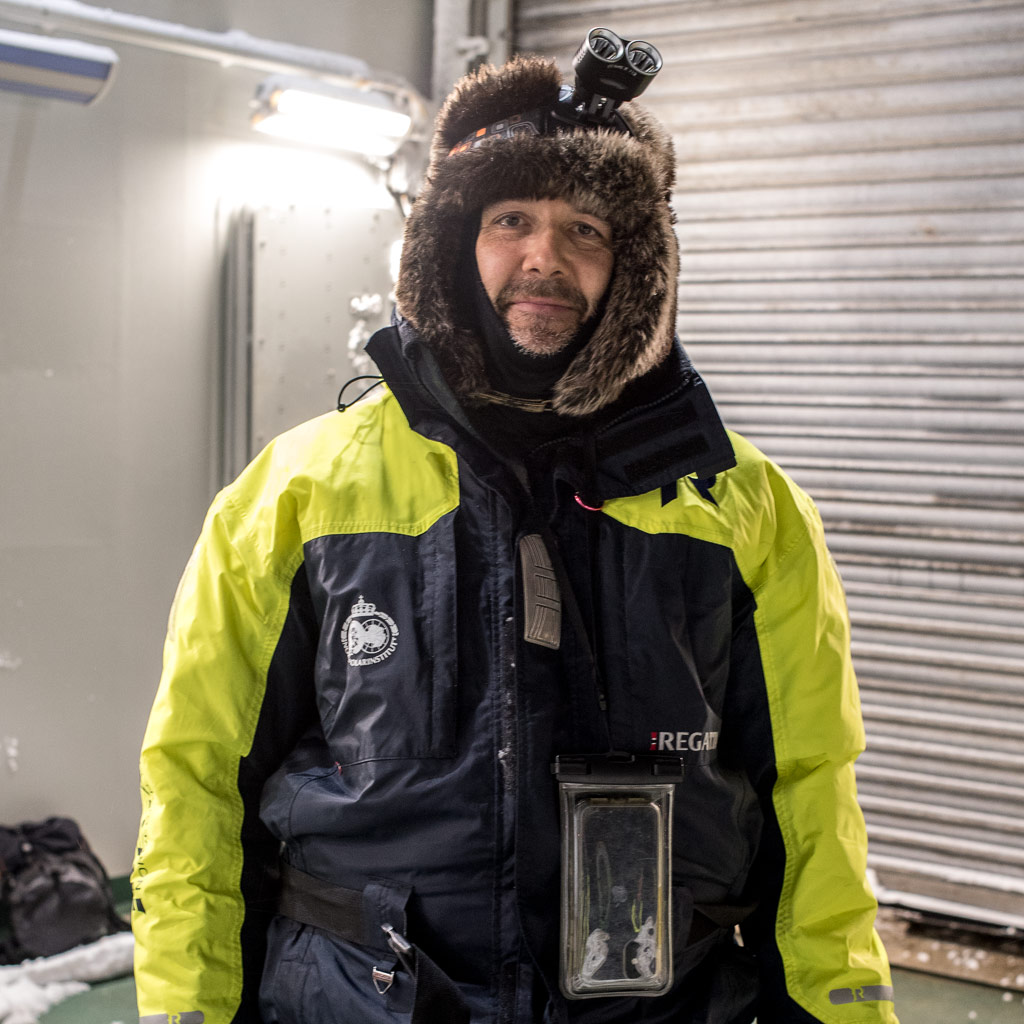
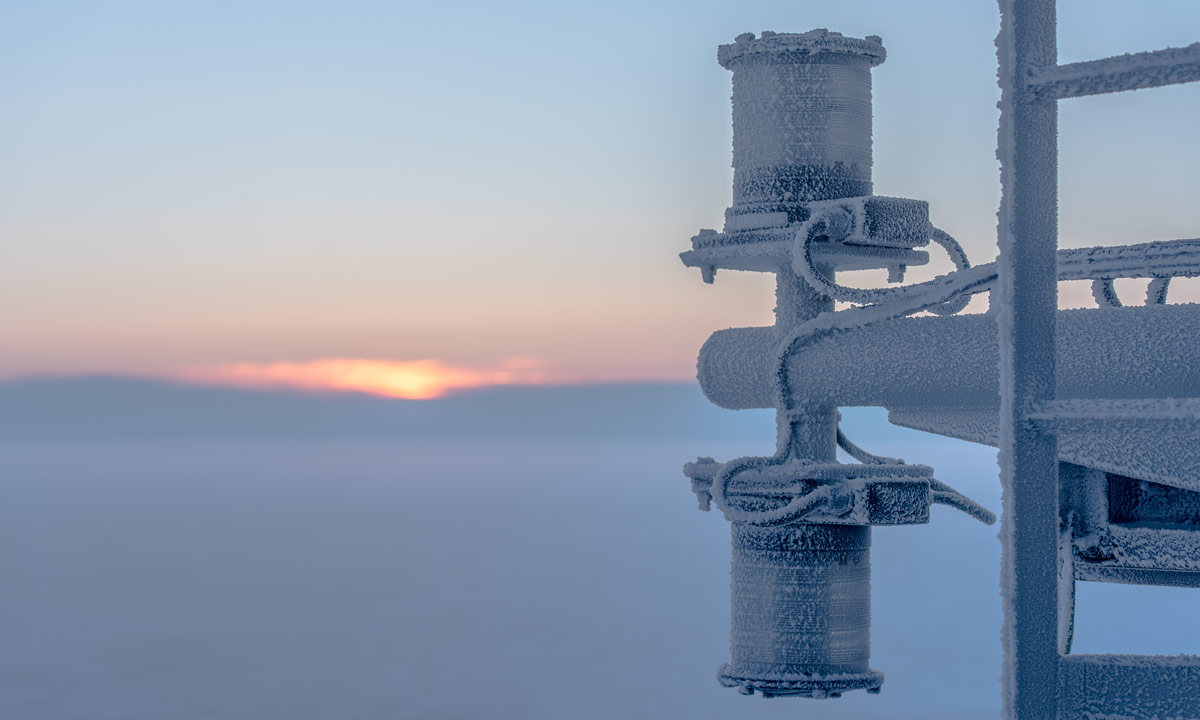
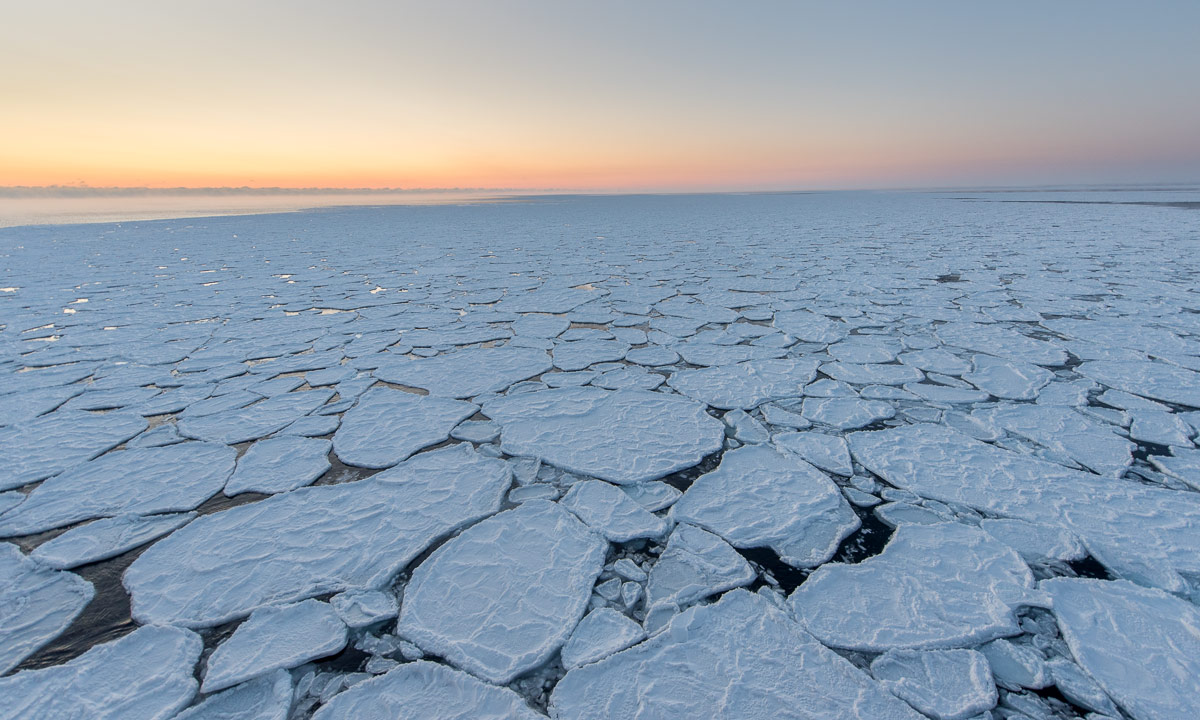
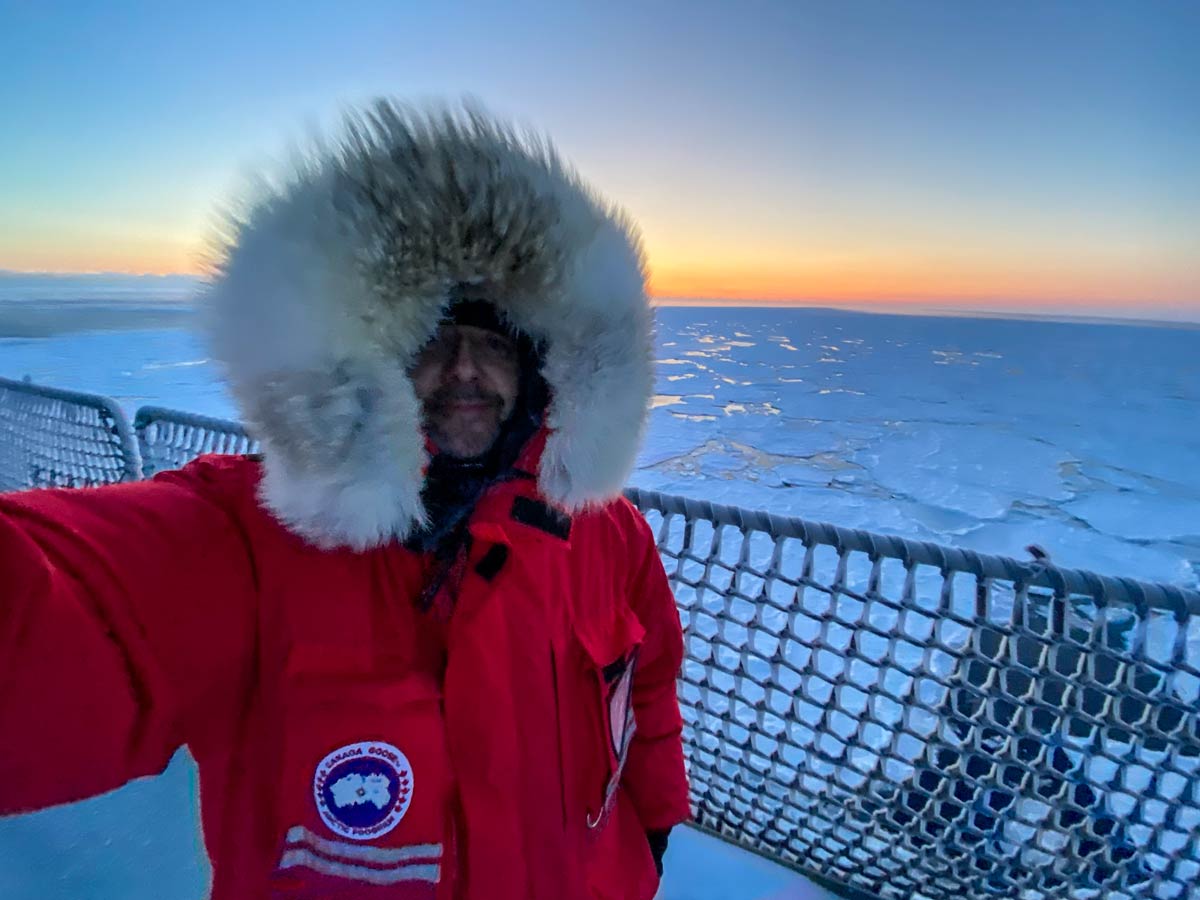
We are at 76°45′ N, 31°08′ E and still have internet. Today we entered the sea ice and the ship is jerking when it cuts through.

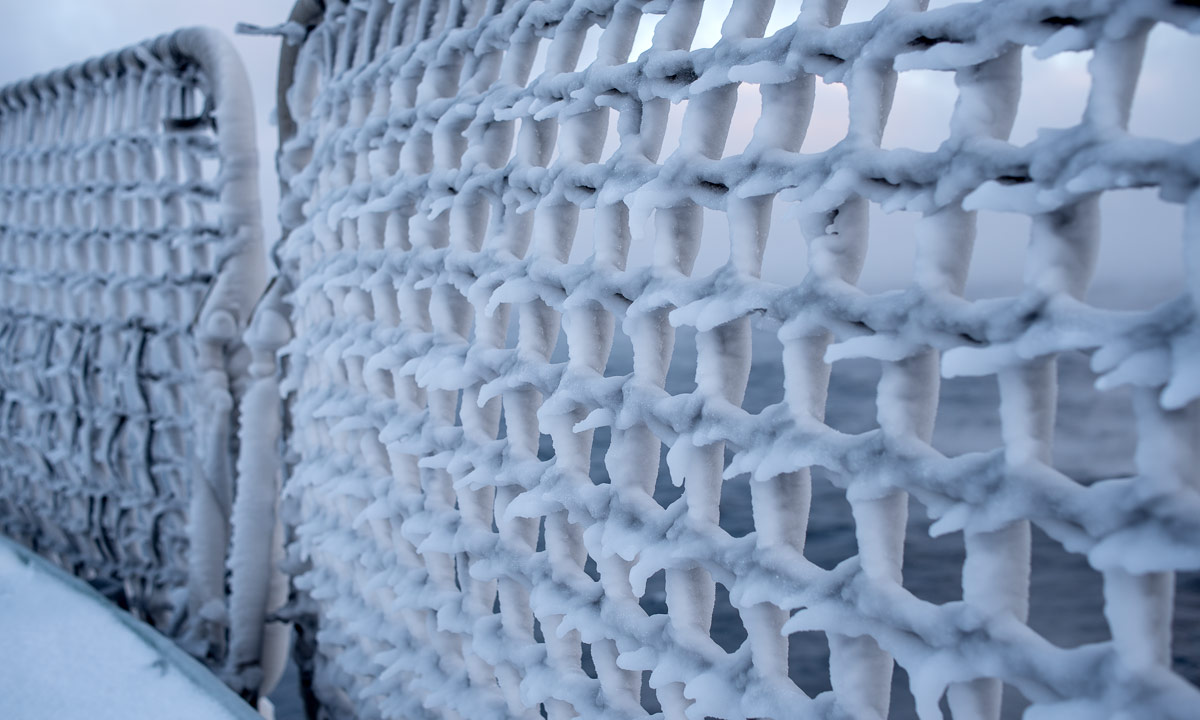
After days with open sea and moderate temperatures between -5 °C and -8 °C it got significantly colder today. At time we have -24.9 °C (falling) with a relative wind speed of 8.2 m/s. That makes a wind chill of round about -39° C.

So, why am I alone out at the helicopter deck?

Otherwise: too much interesting stuff going on. This arctic research cruise is definitely one of the most gorgeous things I’ve ever experienced in my life!

I hardly manage to be up to date with my notes and I don’t have time to write more. And it’s dinner time, too. See you …

Arctic research expedition with the Norwegian Polar Institute

This article is part of the series “2022-02: Winter cruise KPH”.

Kronprins Haakon is a Norwegian icebreaking polar research vessel. It was build 2018, can cut through one metre of solid ice, has 15 different laboratories on board and place for 35 scientists or other staff in addition to the crew.

Four days ago Kronprins Haakon had arrived in Tromsø. It was travelling 26 days since it left Cape Town, the only stopover on its return trip from Antarctica.

This morning I went on board of Kronsprins Haakon. Not as a visitor to look around but with a suitcase, an enormous bag full of warm clothes, a heavy camera backpack and my Canada Goose down parka. I will stay on board for three weeks to participate the winter cruise “Arven etter Nansen JC3” that will lead us to the Barents Sea east of Svalbard and a bit beyond.

What happened?

Some of you may know that I’ve been working as a data engineer at the Norwegian Polar Institute in Tromsø since autumn 2020. In this position I’m not only a software developer but a data manager of polar research data.

Three and a half weeks ago my colleague M. told me she would join the winter cruise and mentioned that there might still be an available place.

Of course I was very eager to participate. Beside of my private passion for the Arctic I wanted to get a deeper and hands-on understanding of the research data. Where does it come from? How is it measured? And how is it transferred to the digital world? And nothing would teach me better than joining this very winter cruise, where conditions could be quite rough.

I mentioned it to M., another colleague and he introduced me to the expedition leader. There I was told that there was indeed a vacancy on board and that I was welcome to join if my boss would agree.

Since then it had been crazy times with some organisation, a lot of worries and little sleep.

  • 1 Feb: My boss had to check the budget for my participation.
  • 4 Feb: A seafarer’s doctor examined me and gave me my helseerklæring – a medical certificate that proves me “seaworthy”.
  • 16 Feb: I had to take a PCR test and wait for the result for two days. Then I had to take another PCR test, but that’s a whole story in itself.
  • 18 Feb: I had to do a survival suit training in the Tromsøsundet.
  • 18 Feb: I had to pack clothes and equipment I will need on the cruise. Everything beside of two pairs of boots, a helmet, a floating suit and a survival suit. These are provided by the Norwegian Polar Institute.
  • 19 Feb (today): I took a taxi to the port of Tromsø. I was driven directly to Kai 25, took some photos and then went on board.
  • Still today: passport control through the police, a security briefing, lunch and dinner, carrying boxes to the labs, entering the rescue boat and some more …

The next weeks

When Kronprins Haakon will leave Tromsø tomorrow morning we will sail north. First destination is a point referred as P1. It is approx. 500 km east of Svalbard’s southern tip. From there we will continue heading north to the other stations, if weather and sea ice conditions allow it.

The northernmost position is planned to be approx. 82° N, somewhere in the Arctic Ocean. That’s more than 10 degrees of altitude further north than I’ve ever been and less than 900 km to the North Pole.

I’m so excited, that’s really way up north!

We will work both on the sea ice and on the ship using various measurement and sampling methods. Some of them I learned a bit last week but most of them I do not know yet. I’m a newbie. I’m here to learn. And hopefully I’ll learn a lot on this cruise.

After three weeks of tokt (Norwegian for “cruise”) we are supposed to arrive in Longyearbyen on 11 Mars. There I’ll take a flight back to Tromsø the same day.

I will not blog on this cruise because there will be a lot of work and hardly any reliable internet connection. But I’ll definitely take photos, both for the Norwegian Polar Institute and in private for this blog.

So, my dear readers, cross your fingers that I do not get seasick, we can reach our planned destinations and most of all that no one has Covid on board.

You can check the live position of the Kronprins Haakon on the map below. And you are welcome to leave a comment. See you again in mid-March when I’ll answer your comments and start posting articles.

23. Feb, 13:03: Just a short note: This map does not seem to work in polar regions. At time we have internet. Outside temperature -17.4 °C. Position round about 76°29′ N 31°11′ E.


Sea ice field work training on the Sørbotn

Peacefully I wake up this morning. It is already light outside. WHAT? LIGHT? WHY? AND WHEN?

I check my mobile phone – the clock shows 8:01. SH**!!! At 7:45 we were supposed to meet at the Norwegian Polar Institute, at 8:00 we were supposed to leave there for a field work training on the sea ice. But not me. I have overslept!

We – that’s 5 instructors and round 20 participants of the Sea ice field work training arranged by the Norwegian Polar Institute and the Arctic University of Norway in Tromsø. I realise that my colleague M. already tried to reach me and ring back. I tell her that I will take my own car and hopefully make it to our destination with only a small delay.

Our destination – that’s Sørbotn, the southern tipp of the fjord Ramfjorden where the training will take place on the sea ice of the frozen fjord.

I manage to dress, make tea and pack in 20 minutes thanks to previous day’s preparation and a fondness for packing lists. Although I take it easy while driving (safety first!) I arrive less than 10 minutes late while the preparations are still in progress.

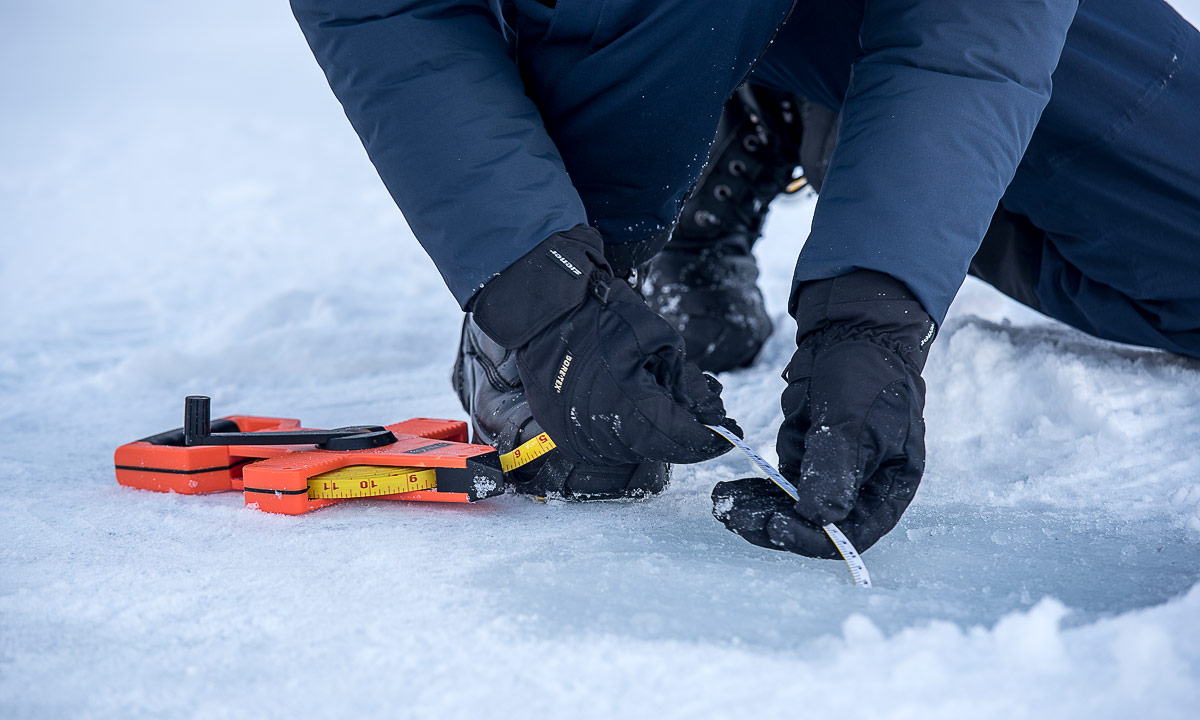
We are split in two groups. Our group will do measurements of ice and snow depths first and take ice core samples after lunch break. I won’t go here into details too much, because I’m a newbie to all this and I do not want to write half-understood nonsense. I’ll have to look up some details of today’s stuff later.

Although I drill holes in the ice, help calibrating the GEM2 device, measure temperatures in a freshly taken ice core and use a MagnaProbe to measure a transect of snow depths I have a lot of time to take photos, too. So, let’s just start with this.

Being on the ice with a bunch of nice people is not only a lot of fun but it will help me in doing my job at the polar institute. Part of it is to manage scientific data. The deeper my understanding on collecting data the better I can do my work. The most interesting thing today was observing the coexistence of advanced sensor technology paired with GPS tracking and the usage of rulers, pencils and paper as in the early days of polar research.


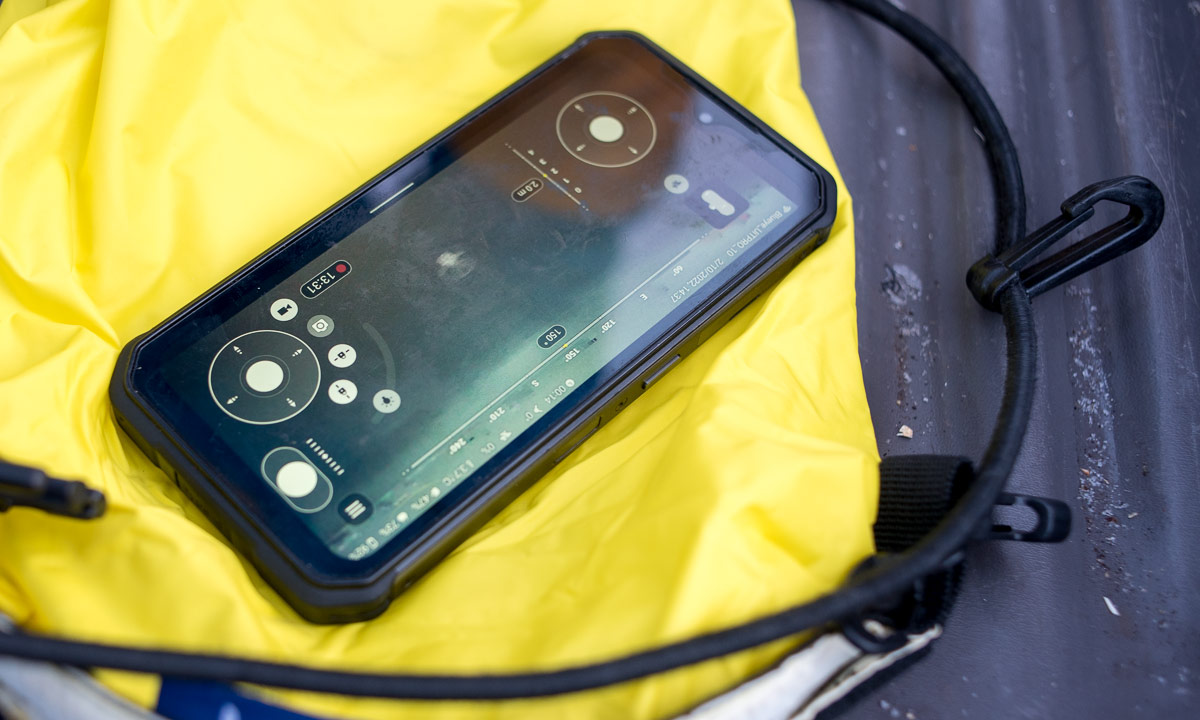
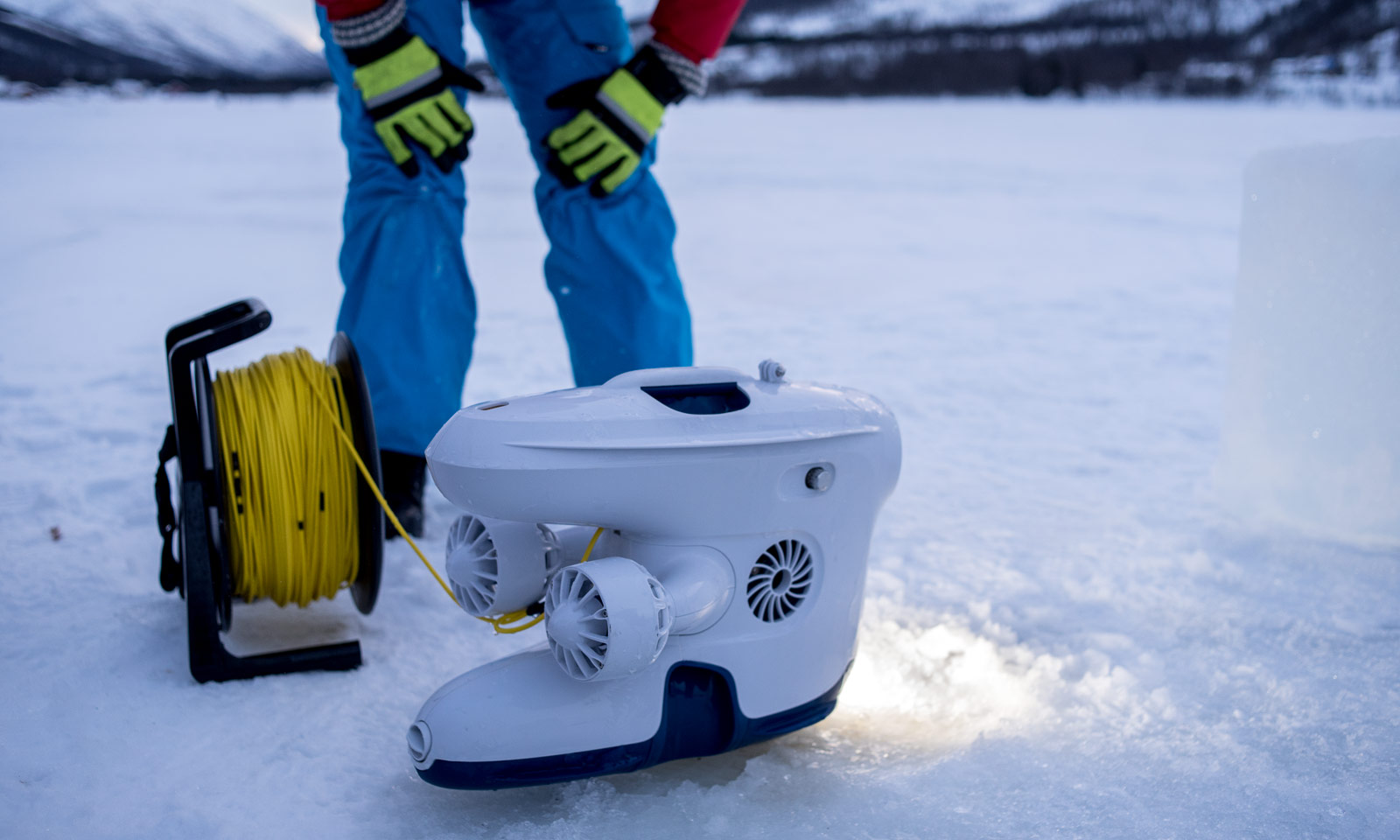
There was one thing I wasn’t involved in: The usage of a remote-controlled underwater drone. We clearly could see some fishes and jellyfish (do you spot it on the 1st image below?) on the live display. I know that it’s used for research, but I would love to have it just as a toy.

Hopefully this was not the last time that I was involved in field work this year. And perhaps we’ll be lucky with the weather again next time. For while we had calm conditions and even sunshine, wind drove heavy snow squalls over Tromsø just some hours after we called it a day.

Sea ice field work training – preparations

My job at the Norwegian Polar Institute is both to write applications and to manage scientific data. Since I’m not a scientist it’s hard to understand sometimes, how data is collected and digitalised.

To learn more about this I’ll participate a sea ice field work training tomorrow. It is organised by the polar institute and UiT, the Arctic University of Norway. We’ll be on the sea ice of Sørbotn – part of the fjord Ramfjorden the whole day and learn different measurement methods as coring and magna probe. (Don’t ask me any questions today. I hope I’ll know a bit more tomorrow.)

The instructors measured the ice depth yesterday. It is round 50 cm and absolutely safe to walk and work on. We had two preparative meetings where we discussed possible risks and how to dress properly. Although it is forecasted to be only -5 °C and hardly any wind it’s always good to have enough stuff to stay warm when being outside on the ice. I started packing today.

Some of the items I’ll take with me:

  • Thick Kamik rubber boots with inner shoe – really warm!
  • Red hard shell jacket and matching bibs. Not warm, but absolutely wind proof.
  • Grey down parka. For resting and having lunch outside.
  • The brown fur hat. 100% polyester, H&M, EUR 9.90. I used it once in -37 °C and although cheap it’s warm and works well.
  • Ski goggles – just in case.

The hard shell jacket and bibs are not mine. Yet. They belong to the polar institute and I got them recently. After five work years they are mine. The attached fur is my private one.

Maybe some of us will get a Regatta floatation suit, a warm, water- and windproof coverall, but I’m not sure yet so I’ll take all the private stuff with me. I love winter. I do not love freezing.

More to come after the training …

The ice did not last long

The morning of 10 January is my the coldest this winter: -20.5 °C. A longer period of frost has frozen over the Baltic Sea earlier than usual. I stand at the shore by our house. Ice as long as I can see.

I follow the coastal line to take photos. Ice fog draws in.

When I return from my pre-work photo trip the temperature has risen to -15 °C and it gets warmer hour by hour. In the evening it’s only -3 °C and it has become stormy.

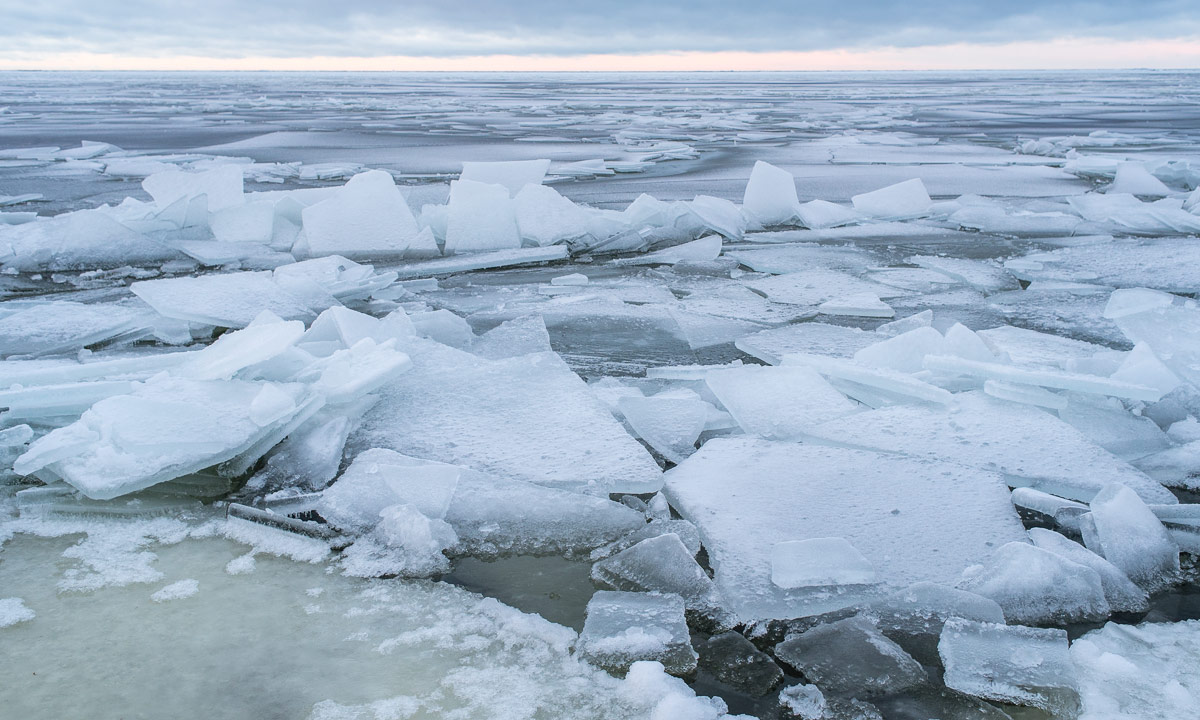
Two days later I’m out again. It thaws. The effects of the storm are visible: The wind pushed the ice shield ashore where the ice broke into countless pieces.

Movements at the horizon. Large waves roll along the sea and build an ice wall by the rocks south from the island Bredskärssten, 1300 metres from our house. I would love to take photos there but there’s no way for me to get there. It’s too windy for a hovercraft and I don’t own one. So I take mobile phone photos through my spotting scope.

The next day. Similar situation but now with the sun illuminating the splash that the waves throw at the ice walls. The thaw has melted the snow on the ice and made it wet. It twinkles and glistens in the sun. Beautiful to watch.

In the night it is stormy und gusty again.

14 January – the next day. As every day it is too dark in the morning to spot the sea. A small line of red at the horizon signalises the approaching sun. And there it is: 09:03 – sunrise.

Now I can see that beside of some leftovers by the shore all the sea ice has gone. Crushed by the waves and the storm and floated away. Now there’s open water from shore to horizon. Probably it will take some time until the Baltic Sea freezes over again.

And what can you do in open water? Correct – you can kayak!

It was just a very small tour round Lillskär. First it was just a lunch break again and then it was still very windy. Wind came from west and I didn’t want to drift to Finland ;-)

Kayaking however wasn’t dangerous. It’s easy to paddle against the wind – easier than side winds – if the distance is not too big. Probably more dangerous is the large, wet patch of blank ice in front of our house. Slippery as hell! Hopefully it gets colder and snowier soon.

Link to a Swedish article of the SMHI: Bottenviken snabbt avtäckt igen.

Four winter days in and round Obbola

OK guys, it’s Sunday afternoon and I’m too lazy to write long texts. I just show some photos of the last days where our German friend Medi joined Annika and me on various excursions with some notes.

Thursday, 6 January – skiing in Västermarks naturreservat

+++ Västermarks naturreservat, 50 km north from Umeå +++ a non-commercial forest made us climb over and under fallen trees that lay across the marked loop trail +++ by the trail a wooden cabin +++ time was too short to fire the oven but lighting candles is cozy, too +++

Friday, 7. January – lunch break skiing

+++ right next to our postbox (500 metres from our house) starts Spåret, a 3600 metre long forest trail +++ we use back-country skis to ski Spåret in my prolonged lunch break +++ we, that’s Dirk – guest for two nights – Medi and I +++ -12 °C, but my Anorak is too warm +++ I tie it round my hip +++ on the photo it looks like a skirt +++

Photo: Dirk Thomas

Me sking “Spåret” – Photo: Dirk Thomas

Saturday, 8 January — cross-country skiing on Olle’s Spår

+++ grey weather, -14 °C +++ the trees are covered with snow +++ black-and-white imagery +++ after some days of back-country skiing it’s nice to use cross-country skis on a real trail +++

Sunday, 9 January – Northern lights and sunrise

+++ 1 o’clock in the night +++ I check for Northern lights +++ we are lucky +++ Medi and Annika watch the aurora beside of the garage +++ I take some photos from our garden +++
+++ 8:20 in the morning +++ the Baltic Sea freezes over more and more +++ sunrise colours by the sea  +++ and then in our garden +++ watching sunrise while taking breakfast +++

Still Sunday, 9 January – Strömbäck-Kont

+++ just a short walk at one of Annika’s and my favourite places: Strömbäck-Kont +++ looking at the ice ridge by the sea +++

Still Sunday, 9 January – halo effects

+++ after lunch we are taking Medi to the airport +++ strong and colourful parhelion or sun dogs halos +++ the photo is taken at the airport +++ I am questioned by the security and show the taken photos to prove I’m not a spy +++

Kayak and ice on the Baltic Sea

Does it work? Can I paddle kayak on the Baltic Sea when it is covered with up to 20 cm thick ice floes?

Well, let’s try …

Looks like it worked, doesn’t it?

Well, to be honest, no it didn’t.

I did not use the paddle at all but just pushed myself forward with my arms and so pushed the kayak over the ice floes. Since this was slow and exhausting and I only had my lunch break I did not come far and did not reach the open sea that always was in view.

And the way back? The same but backwards. I don’t think it would have been possible to turn around the kayak in the ice while sitting in it. But it was fun anyhow.

Sun salutation

While the polar night in Tromsø started in the end of November and continues for two more weeks there is no polar light home in Obbola which is 6 degrees south of Tromsø. So if there is clear sky, then there is sun.

After Christmas in Norway Annika and I arrived in Obbola some days ago. First the weather was cloudy and stormy but today  sky was quite clear. Therefore I could witness the sun today for the first time in more than a month. I only had to go 200 metres to the edge of our little bay Grundviken where I waited for the sunrise.

I love sunrises and sometimes I can stand up quite early to witness it. But today it was really special to watch the sun rise higher and higher up the sky while in Tromsø polar night still continues.

After breakfast we took the car to Byviken in Obbola to join the winter bath. Round 40 cars were parked there and a queue of winter bathers waited at the ice hole. Winter bathing has really become a popular sport within the last years. We decided to avoid the queue and continued to our favourite beach at Vitskärsudden where we had to climb over a wall of ice but then we were the only winter bathers. Air: -10 °C, no wind – perfect conditions. Great!

(Photos: Annika Kramer)

We may take another outdoor bath today, but then in the hot water of our friend’s hot tub. I guess this bath could take slightly longer than the previous one.

Thaw and cloudbursts

Why, oh why was the forecast of Yr right? Already a week ago it forecasted a period of thaw and heavy rainfall. And Wednesday it started to rain. Just now I’m listening to another cloudburst bucketing down on the roof.

The snow is gone and the ways and small streets are very icy. When it continues raining like this even the ice may have thawed and washed away soon.

It looks almost like autumn but with a huge difference: It’s dark. The photos above I made at lunch break on my last working day this year.

It’s a pity! Just today my wife Annika will arrive so that we can spend Christmas time together. It would have been lovely with a lot of snow but even though it shall be colder again soon it does not look like we get some.

Tromsøya crossing in winter

An almost true story to be read out loud with a deep and rough voice.

I survived one of mankind’s largest expeditions of our times – the crossing of the arctic island Tromsøya from south to north! Probably I’m the first one, who dared to face this extraordinary challenge.

The arctic ice breaker could not approach the harsh coastal line of Tromsøya’s southern tip. Too mighty the storm, too sharp the rocky cliffs, too high the enormous waves! I was forced to row the last mile in a wooden dinghy. When I approached land I realised that despite of months of planning I was without food! Would I survive? Well, the tour must start, with or without provisions. One has to go on in live.

The land was wild and it was hard to find the entry point of my expedition. Where is Sydspissen, the Southern tipp? With my extraordinary orientation skills I finally managed to find this unexplored promontory which would be the starting point for my crossing.

I followed the coastal line through a field of invincible rocks. The storm howled and the surge of waves covered everything in spray. I decided to leave the exposed coast and seek shelter in the inland. To my surprise I found some ancient dwellings.

It seemed that this hostile island had been inhabited earlier. What a discovery! I continued my way and realised that I was not alone. People still seemed to live here. While most of the indigenes hid inside some dared to be outside, guarded by their dogs. The houses were shocking. While the people seemed to have some basic skills in woodcraft, they still lacked the knowledge of constructing right angles.

I continued my way through the forbidding terrain. After a while it opened and gave view to an extent of ice. Could it be a lake? Probably it had been frozen for centuries. Here I spotted more locals. As the others before they ignored me. Didn’t they dare to seek contact? I do not know. First I though they would hunt seal or walrus but they just seemed to wander around without any goal.

Soon I was alone again in the rough mountain scape of this arctic island. Orientation was extremely difficult. Without my compass and sextant I probably would have been lost forever in this pathless country. I was completely on my own.

The terrain descended and gave view to a strange installation. Scaffoldings pointing up to the sky were erected randomly on that slope. Was is temples or other places of worship? Who build them? When? And why? Probably one never will find out.

Since I lost my food I was forced to continue my expedition. Time was precious. The land was bleak and barren. No trees, no bushes, nothing. Maybe some moss seeking shelter between the stone could survive under the eternal snow. For other plants this place is too hostile. 

The mountains became even higher and I got view on a small coastal village, probably abandoned ages ago. One wooden house lay nearby but it lacked a door and most of the walls.

I looked for walkable paths that would lead me further north. The more north I came the more glaciers covered the land.

It started to get dark but without food I did not dare to seek shelter. I was forced to go on and on without any rest. Amidst the mountains I spotted two indigenes. They sat on some kind of toboggan well clad in furs to keep them warm in the harsh sub-zero climate. I did not dare to disturb them and only managed to get a blurred photo as a proof of my observations.

According to my positional measurements the northern tipp of Tromsøya could not be far. I had survived until now. Would I make it to Nordspissen, the northern tip?

Alas – after more efforts and privations I managed to reach Nordspissen. I was grateful that fate allowed me to be the first human who reached this remote spot on foot. To my big surprise the legend was true: There is a mystic monument at Tromsøya’s northern tip and I can prove it:

But my efforts were in vain. I was too late! The last ship of the season just had passed by. Now I was forced to live here on this remote and solitary polar island for another year. But that’s daily routine for tough explorers like me.