Where is the snow? – part II

While parts of Bavaria and Austria have been buried in snow masses – partly there’s more than 250 cm of snow in the valleys and 350 cm in the mountains – we got plus degrees and storm squalls yesterday evening.

Yesterday the bay Kallholmsfjärden was still covered with a solid layer of ice. Today the wind and high water broke this sheet of ice and blew it away. At lunchtime the bay was covered with drifting ice floes. Some hours later the ice was gone, probably drifting to Finland …

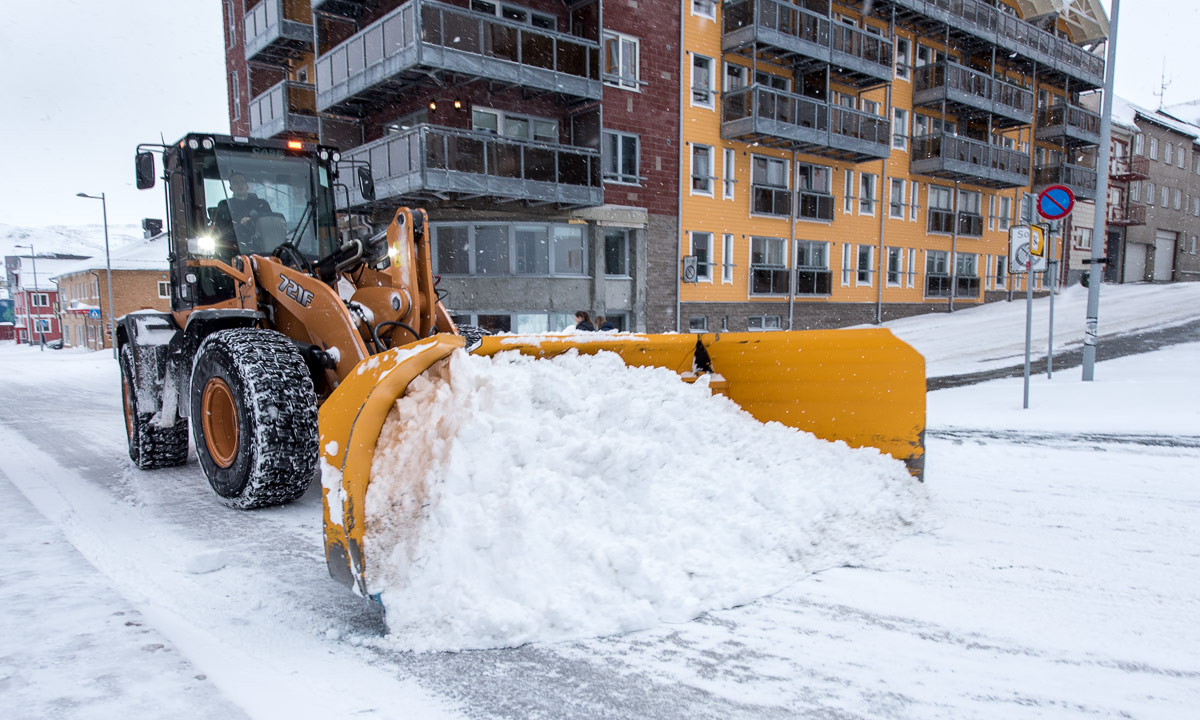
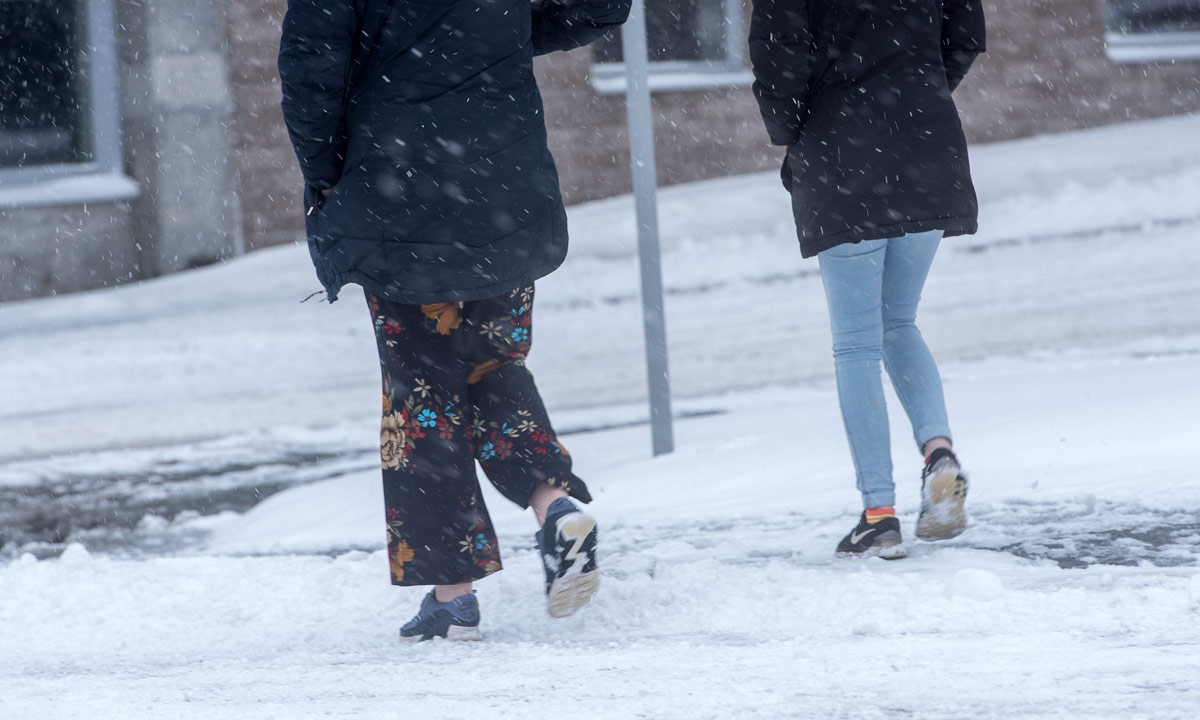
I want this (left image) but I got that (right image):

I have to admit that I’m frustrated. I moved to Northern Sweden for real winter experiences, not for this kind of roller coaster weather, that makes the snow dirty and the streets slippery. The photo motives are ugly, I cannot ski, I cannot even walk onto the ice anymore. I just want to snip my fingers and be in Filzmoos or Reit im Winkl or somewhere else where it’s really snowy.

There’s only one realistic way to solve this: I need a teleporter. Or a time machine. For this I need a crazy scientist, that will build one for me. To pay him/her and all that crazy scientist equipment I need money.  There is a way to get a lot of money without work: a Trisslott, the most famous scratchcard in Sweden. The same amount three times and you win it. OK, let’s see …

Well, that didn’t work. Four amounts only twice. As usual. I guess, I have to deal without a teleport.

Where is the snow?

Where is the snow? That’s of course a rhetorical question. It’s in Bavaria, in Austria (masses of snow in the Northern Alps). It’s in Italy and in Romania. It is in Greece, in Russia, in Portugal and in Poland. It’s in Turkey and even in Libya.

But not in Skelleftehamn. It is still white from last year’s snow, but when it snows a centimetre it gets warm and it melts again. And no precipitation is sight.

Due to the stormy wind some days ago the Baltic Sea is still open and a lot of ice floes – up to 20 cm thick – lie at the shore. Despite of yesterdays rain there is still a bit of snowy powder left on some of the stranded ice blocks. Yes, I am longing for snow, but that’s beautiful, too.


Where is the pack ice?

Today I wanted to take more photos of the pack ice covering the Baltic Sea, this time in sunlight. Unfortunately the weather didn’t follow the forecast. (Yes, this happens!) Instead of the predicted sun and clear sky it was cloudy.

When I was brushing by teeth I noticed a light in the west. A huge honey yellow full moon hung in the western sky and shone into my bathroom. Apparently western winds had started to blow the cloud layer eastward.

I took my camera equipment and my winter parka and drove to the beach to take pictures from the full moon. Here’s one of those pictures:

To be honest, I think this is a boring picture. It says more about the pros and cons of my telephoto lens than showing an interesting scenery. The photo could have been taken anywhere. Everywhere where there are power lines and a bit of sky.

I took the car and headed for another place. Hopefully I would find a better motive. To make a long story short: I didn’t. Even the photo with the three islands (two of them are seen above the horizon) looks pale and featureless.

Suddenly I heard birdcalls. Three white whooper swans flew along the coast, heading south. Looks like a good idea, because when the Baltic Sea is frozen they will have hard times finding food. I was lucky: camera at hand, telephoto lens mounted, time to increase ISO and activate the VR. Click!

I continued to Näsgrundet, the place where I photoed the pack ice two nights ago. The ice however was gone! Probably the very same wind that pushed the clouds to the east blew also the ice floes into the open sea. Beside of some grounded ice floes the sea was open again. I decided to continue using my telephoto lens, both for motives farther away and quite near.

I got attracted by a rock covered with a humpback ice pattern. Looking at the results I’m quite content with the lens for this type of motive. I cannot decide which of the two photos I prefer, the first one showing the whole rock or the second one that focuses more on the icy details. What do you think?

When I was home, the temperature had dropped from -9.5 °C to -14 °C.

Some hours later: The sun is setting. The air is chilly but the colours are warm. The Baltic Sea is steaming with cold. One wide-angle photo, taken at 13:07 at the same place.

Home again the sun has set but it’s still light. I decide to go for a jog. It’s fun to hear the snow crunching under the studded soles of my new running shoes. And I do not need my headlights because the sunset is so slow. The air is cold, round -15 °C. My fitness it not the best and I have to breath a lot to keep my pace. Good to have a buff for warming up the cold air a bit.

Two photos from today: (1) me photographing, (2) me jogging. Keep in mind, that it was warmer on the first photo.

P.S.: When I look at the whole blog article I’m more content with the photo of the full moon. The isolated photo may be pointless but in the article it has its place.

Pack ice at the dead of night

It’s a quarter to one in the dead of night. And this is a special night. It’s the longest night of the winter, the night of the winter solstice. Yesterday the sun went down at 13:27, today the sun will rise at 9:39. That makes the night last more than 20 hours.

When I came home from lunch today, the sun was already below the horizon. It was however still bright enough to make me realise, that the bay Kallholmsfjärden was covered with pack ice. At 22:45 I took the car to make some pictures of the ice but first I drove to the peninsula Näsudden to check the ice conditions there. Probably the open Baltic Sea would be free of ice beside of some sheltered bays. I was really surprised to see a belt of packed ice even here, probably half a kilometre wide.

After my eyes got used to the darkness I realised, that the pack ice was slightly moving. The drifting ice floes hadn’t frozen together yet and were moved by the waves. Now I could even hear the cracking and creaking sounds of the ice floes. Extremely fascinating and almost inviting to try to jump from ice floe to ice floe …

… no, I didn’t try that. I stayed at the ice rim, that parts land from sea, felt the wind, looked at some snowflakes drifting by and watched the vibrating sea ice. And I took some photos. That’s my tonight’s favourite:

After an hour I started to feel cold. I didn’t plan to be outdoors so long. Learnings: Always take an even warmer jacket and windproof pants with you. But freezing was no big issue: Driving home was a matter of minutes and the first thing I did was taking a really hot shower.

Tomorrow I will take another look. It’s not only weekend but also the first day of my Christmas holidays!

Ice between mainland and the island Norrskär

The first colder days with temperatures between -15 °C and -20 °C. Colder in the inland with temperatures around -30 °C. Tomorrow clouds will approach and it will get 10 °C warmer. Unfortunately still no large amounts of snow in sight.

Mirages, vintervägg and sea smoke

After the warm but chilly weather on Holmön it’s nice to have colder weather at home. The sky has been clear all night and day and the morning temperatur was -14 °C.

The whole open sea was smoking. A common view when the sea is free of ice but the air is cold.

At the horizon I could see the vintervägg, a local meteorological phenomenon that is typical for this season. Vintervägg means “vinter wall” and names a cloud layer on sea. Sometimes it’s quite near, sometimes it’s far away. Today it was far away and a third meteorological effect came into view: A mirage, also called Fata Morgana. It has the same origin as the sea smoke: abrupt temperature differences. This is why these mirages mostly are found in deserts and polar regions.

Skelleftehamn is not really part of the polar region but shares at least some of the meteorological phenomenons.

Early winter Holmön IV

This article is part of the series “2018-12: Holmön”.

It is Monday. It has rained the whole night and it still rains. Most of the snow is history and everything is wet. After breakfast we decide to give the road to the southern tip of Ängesön another try. Indeed, it is almost free of snow and soon we are at the southern tip of the island where we walk along the coast. The clouds are grey and so is the sea. Some water areas are still covered with wet, brownish ice but the sea itself is open.

There are some marked hiking paths on Ängesön that we want to give a try. The guide book recommended “tåliga skor” – that means tough, durable shoes – due to the wet ground. The first path to the east has many deep water puddles and flooded parts. Partly the path is supported by wooden planks, but mostly not. The path leads through a quite old forest as we can see by the many lichens that cover the pine, spruce and birch trees. Snowless and wet as it is, it looks more like mid-October than December.

We try the other trail that leads to a shelter at the western coast of Ängesön. This trail is less wet and easier to follow than the other one. It is however not too easy to reach the rocky coast because of the marshland between forest and coast. It still drizzles and rains and everything is damp.

The hiking paths are nice but I would strongly recommend high rubber boots if you want to keep your feet dry.

After our “three course hiking” we return to our accommodation at Berguddens fyr. We’re still the only people, the place – as beautiful it is – seems less popular in winter time as the guest book tells us. While Annika prepares a warm lunch it starts to get dark outside. Grey clouds still cover the sky and it continues drizzling. The lighthouse starts sending its light beams over the Västra Kvarken, part of the Baltic Sea between Holmön and mainland.

Today day we leave Berguddens fyr. We were lucky to be change the booking for the ferry from 19 o’clock to 9 o’clock to avoid another rainy day – partly in darkness. At 8:20 we sit in the small waiting room, because it’s very windy outside. Waves break at the quay wall and after some the small ferry arrives and wobbles into the small harbour.

I have to admit that I get a bit nervous when I learned I have to back the car onto the ferry. The man however that pilots me onto the ship is fantastic and guides me much better than every rear camera. I am relieved, but get nervous again when I watch the man securing the car with belts. Is it so stormy? Will the belts hold?

First the boat trip is quiet but soon the ferry starts to roll and pitch more and more. I stay in the inside of the boat where I feel safer. While Annika and I are hoping the best for the car, the other two passengers do not pay any attention to the rough weather. Probably they live on the island Holmön and they are used to something like that.

45 Minutes later we arrive in Norrfjärden. My car has survived this unsteady trip without any problems.The ferry needs several attempts to dock, but finally I can leave the ferry with the car. Annika, who already went ashore gets into the car and we drive to her home in Umeå. This drive takes only 30 minutes – less than the ferry passage.

It’s fantastic to have such an interesting and special place nearby. We’ll come again, hopefully with better weather.


Early winter Holmön II

This article is part of the series “2018-12: Holmön”.

Saturday, 8 December – 0 °C – it’s snowing and two centimetres of new, wet snow cover the ground. Annika and I made a hiking trip to Vedaögern in the south.

Now it’s pitch black outside and still snowing. Nevertheless we will leave our comfortable accommodation soon for good reasons: we attend the julbord – the traditional Swedish Christmas dinner – today.