Meanwhile in Tromsø

While I am writing a lot of blog articles about my time in the Arctic live in Tromsø goes on.

When I arrived Friday a week ago Tromsø was as un-wintry as possible. It was several degrees plus and it rained.

But to be honest, it didn’t affect me a lot. Mentally I was still in the Arctic.

Despite to the torrential downpours that Yr forecasted for this weekend the weather was ok yesterday and nice today. But as the whole week it was really warm: +7 °C. Time for a morning walk. _(Sunny, but much windier than expected.)_

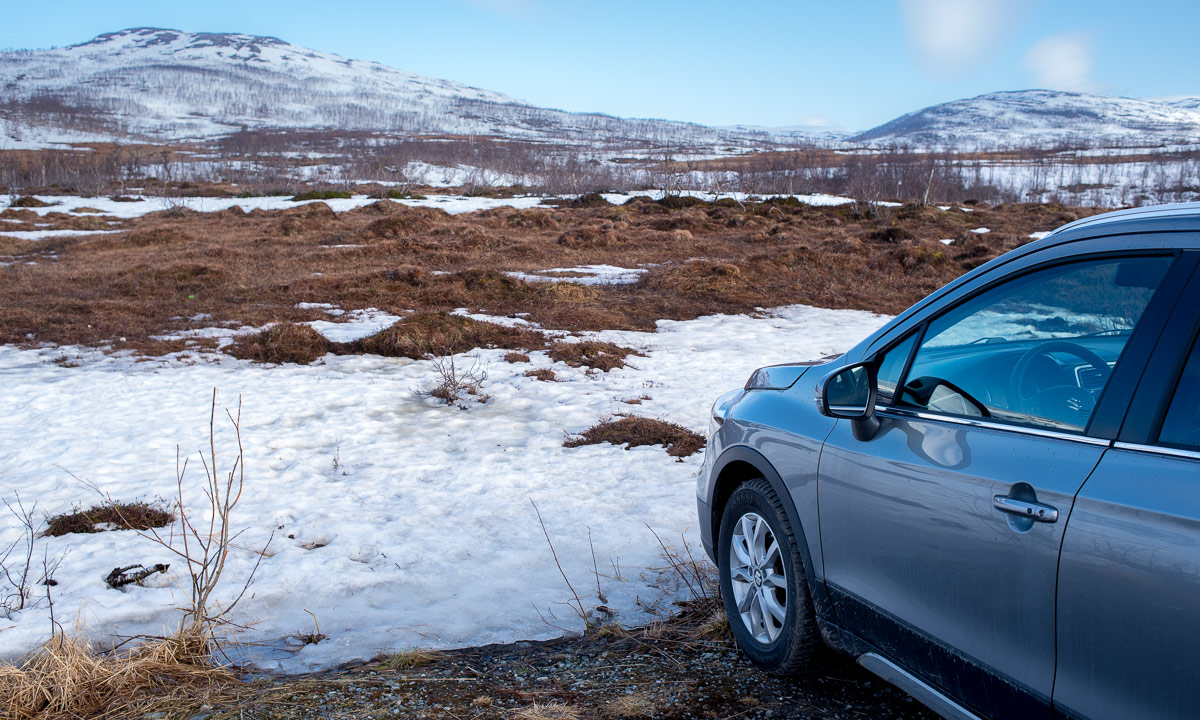
In the afternoon I wondered if it was possible to take a small promenade on Kvaløya. I headed to the parking place from which I started a ski tour seven weeks ago. A lot of other cars were there and snow and ski tracks. I did not have any skis with me today. I tried to walk on the snow just with boots but the snow was at least knee deep. And then I came to the bridge that crossed a rapid meltwater flow. Maybe nice for experienced skiers but I didn’t have any interest in falling into the water. Time for me to return to the parking place.

The good thing: the parking place is just 200 metres away from the coast. So I took a short afternoon promenade there enjoying the colours, the sun, the fresh air and the wind. Yes it was windy – the display at the bridge to Kvaløya showed 20 m/s.

Back again at my car skiers arrived. My skis where home but then I remembered, that I always have snowshoes in my car. I attached them to my rubber boots and so I could make at least a tiny promenade to the next hill some hundred metres away.

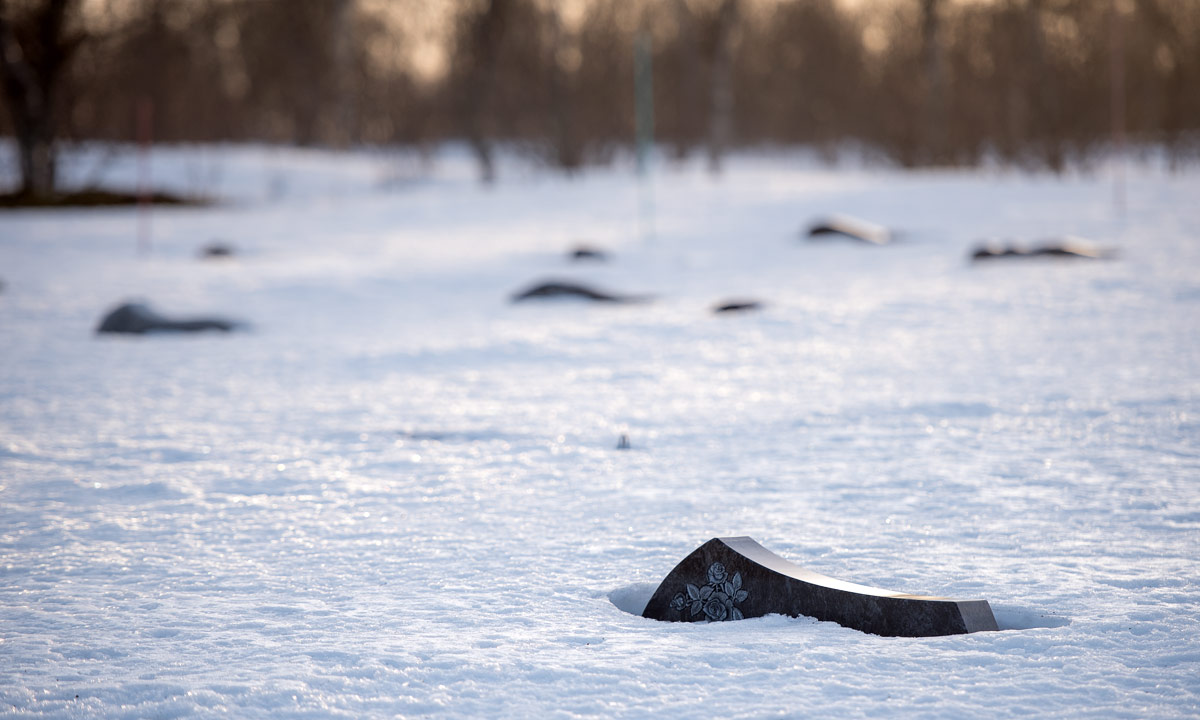
Back in my car. Next stop: Sandnessund Cemetery. Never been there before. Even there a lot of snow.

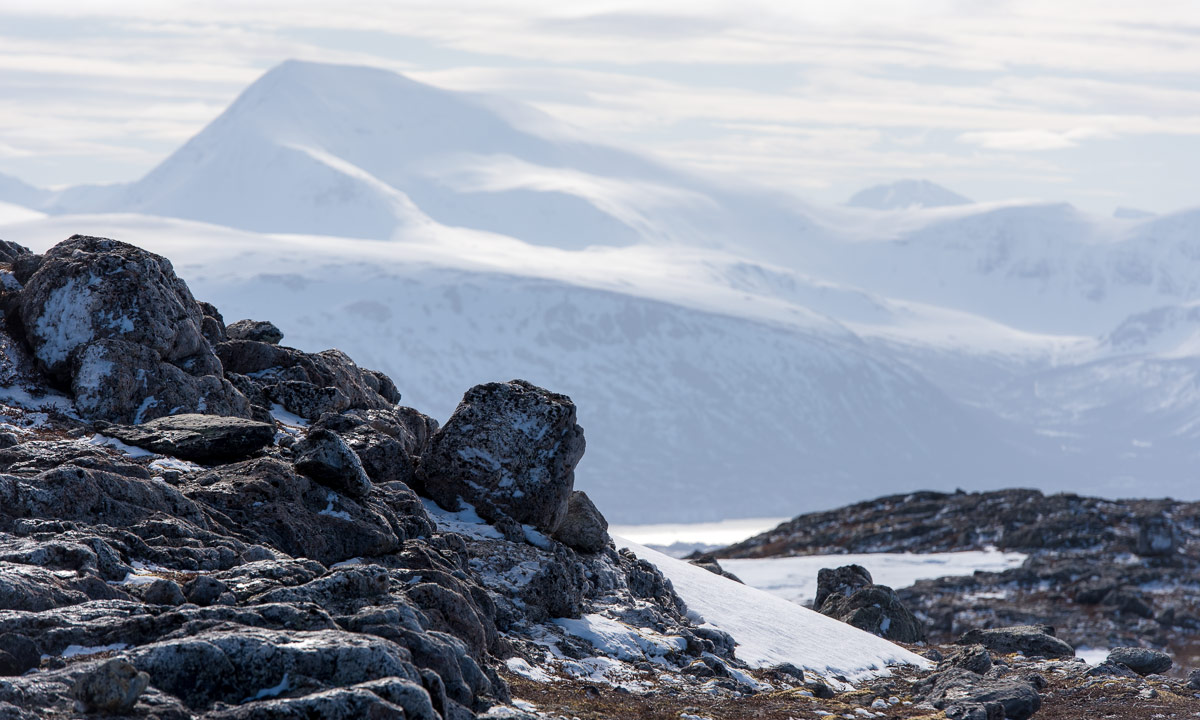
Next stop was unplanned. I just had to take a photo of the vessel and the mountains of Kvitøya. Luckily the parking place of the Tromsø Havpadleklubb was near.

The Arctic has its own extraordinary beauty and I feel a special connection to it. Tromsø and surroundings however are beautiful too, even when weather has been much too warm for mid-March.

For the records: The first „hestehov“ or Tussilago I (17 March on my way to work).

Polar expedition AeN JC3 – day 10: twice on the ice and a sudden end

This article is part of the series “2022-02: Winter cruise KPH”.

Day 10 · 28 February 2022

Today we continue with ice station at P5 – short for “Process study station” at approx. 80.5° N 34° E.

To my delight I can join the scientists A. and B. on the ice this morning. Great! First they will do a transect measuring ice and snow depths along a path, then A. will examine snow. I will join them but without a specific task.

Right after breakfast the preparations start. We all have to dress up and equipment as well as snowmobiles have to be lifted from deck onto the ice. And then I stand on the Arctic sea ice a second time.

It’s -12½ °C, wind 8 m/s– good conditions for taking a walk. But before we start instruments have to be set up and activated.

While B. sets up the GEM-2 device, a multi-frequency broadband electromagnetic sensor to measure ice thickness, something happens. Our polar bear guard J. breaks through the ice. First up to the thighs, a second later to the hips. Exactly on the very snow mobile track that all use to walk to the different places. It could have happened to any of us. J. is lucky, he pushes himself out of the hole way within seconds. After this incident the ice hole is examined and the weak parts are removed. Now it is 2 m long but hardly 50 cm wide. Later it will be marked with flags to prevent others falling in.

J. stays almost completely dry and does not need to change clothes. So our small transect caravan is ready to depart.

  • A. comes first. With each steps he pushes the long staff of the Magnaprobe into the snow to measure and track the snow depths.
  • B. comes second. She pulls the pulka with the GEM-2 that continuously measures ice thickness as well as position and time.
  • J. comes third. As our bear guard he has a rifle on his pulka and safety equipment. He has to keep two metres distance to B’s pulka, the GEM-2 is sensitive.
  • I come fourth. I just follow in the same slow pace – slow enough to take some photos. I do not dare to leave the track after J’s involuntary “bath”.

Our destination is that black flag tied to the bamboo pole over there. How far it is? On the sea ice I do not have any clue. It could be 100 metres, it could be a kilometre. Distances are hard to guess.

Our walk takes only 45 minutes but is extremely impressive. We leave the ship behind, therefore I only see the others, the sea ice, clouds and the low hanging sun that illuminated this Arctic scenery in the warmest colours. The next image is one of my favourites, but it cannot reproduce the „North Pole“ feeling I experienced on our triangle formed walk.

When I wrote „North Pole“ I started to smile. Yes, I would love to visit the North Pole someday. I doubt however that it looks different there than here. Being part of this quite inaccessible Arctic landscape  touches me deeply and I’ll never forget this impression. I envy A. and B. who will walk a lot on this expedition, mostly by foot, sometimes by skis. I cannot imagine a better job than doing this.

Are we on the ice the whole day? No. There’s breakfast 7:30–8:00, lunch 11:30–12:30 and dinner 17:30–18:30. At meal times there is no polar bear watches and so no people on the ice neither.

After lunch I am allowed to be on the ice a 3rd time, helping. I am in doubt if we are actually able to step on it because it became windier and the visibility was mediocre. And visibility is needed by the polar bear watches.

Visibility doesn’t seem an issue and soon I stand on the sea ice again. I am sent to another scientist that may need my help. Well, not yet– so let’s take a few short snapshots.

While I try to figure out how I can help someone is coming to us and says: „Grab your stuff and leave the ice immediately!“. I want to fetch my backpack but cannot find it. Probably someone else already took it. So I head back to the icebreaker – it’s near – where equipment is already loaded back to the ship. And there’s the backpack.

Soon I am on board again and learn what happened. It was not a polar bear as I suspected but a crack in the ice. It came from the distance and started to split our ice floe fast. The crack was not threatening us directly but a clear signal, that the ice is not safe anymore. Here a photo from one of the upper decks:

Later this day a small team in survival suits takes down the tents and fetches the rest of the equipment.

For me that feels like an extraordinary incident but the affected scientists take it easy. Seems to happen frequently. Some admit that they were surprised that this ice floe held so long. I do not say it loud but think for myself that I would have preferred wearing a survival suit to the Regatta suit to keep dry in the case of breaking through, but that’s not up to me to decide. And still – I do not have any experience on Arctic sea ice.

What shall I say. Two days ago I was afraid that I was not let on the sea ice and now I already have been there three times. I am very grateful to the cruise leader that gave me these opportunities while handling a zillion other things – many of them really important – at the same time! Thank you, G.!

Polar expedition AeN JC3 – day 3 and 4: transit to P1

This article is part of the series “2022-02: Winter cruise KPH”.

Day 3 and 4 · 21 – 22 February 2022

Monday, 21 February

Yesterday afternoon we left Tromsø behind for the transit to P1. The program Arven etter Nansen has seven so called process study stations called P1 to P7. P1 is the southernmost station with the approx. coordinates 76° N 31°13′ E. That’s almost five degree more north then I’ve ever been in my live. And it is planned to reach P7 at 82° N later on this cruise. Will we make it?

ETA (estimated time of arrival) is set to tomorrow 8:00. So today is travel day.

After I woke up I take a short lookout on the helicopter deck before breakfast. This starts to be a personal tradition on this cruise. With -11 °C it is colder than the days before but wind is calm and the temperature feels still very moderate.

I expected that we had left the mainland far behind and would cruise through open sea. To my surprise I can see mountains and lights. Where are we!?

Internet reveals that we are just passing the island Melkøya near Hammerfest. Melkøya is illuminated by the lights of the processing plant Hammerfest LNG. Interesting!

After a rich breakfast I stand on the same deck again. Today I feel more like a cruise tourist then a data manager on a work trip. Even the photos look like beautiful but quite random pictures taken from a Hurtigruten ship.

And indeed the icebreaker Kronprins Haakon follows the very same route as the Hurtigruten ships. Aside from that we do not call any ports. (Spoiler: next port is Longyearbyen on Svalbard 18 days from now.)

What do you do on a transit day on sea? Participating the mandatory sea ice training for example. It’s from 9:00 to 14:00 with a lunch break and we are told a lot about the different risks we might be confronted with on this cruise.

What I know is cold weather. Hypothermia, frost bite. I tented at -35 °C, I skied in blizzard-like conditions. I guess I have a bit of experience.

What I hardly know is arctic sea ice. I’ve been on the ice of the northern Baltic Sea countless times, but that water has only the tenth of the salinity compared to the water of the Barents Sea. The sea ice is softer and the conditions are quite different.

I  definitely know nothing about polar bears and a lot of the training is learning the procedures to avoid contacts.  I’ll talk more about this in another blog article.

At 13:30 we meet at the quarterdeck and train the handling of throw bags. Inside the bag there is a rope attached to a hip belt. When someone breaks through the ice the rescuer can throw this bag. The person to be rescued catches the rope and can be pulled back to safety. By having a long rope it is possible to keep distance. This minimises the risk that the rescuer breaks through as well. I know this from kayak courses but I’m glad to give it some tries again. Yes, it’s me on the next photo.

Photo: Adam Steer, Norwegian Polar Institute

At 16:00 I go on deck 3 again. It has got dark and started snowing.

Later that day the arrival time for P1 has been postponed to 19:00, eleven hours later than the ETA before. So much to the letter E in ETA ;-) It is almost impossible to plan with conditions as unsure as in the Arctic.

Tuesday, 22 February

My sis has birthday today. Hooray! Will we still have internet that I can wish her a Happy Birthday? Don’t ask me why, but we have internet in this remote place and I can send her a message.

Again I am on the helicopter deck before breakfast. Three differences to the day before: The deck is covered with snow, it is slightly warmer and no land is in sight. Finally we have left mainland Norway behind. And more and more I’m able to realise that I am really on a scientific polar expedition!

Still it will take another 11½ hours until we reach P1. I use the time to finally start working. My goal on this cruise is to understand the flow of scientific data. Where do the unique IDs come from? Where location and time? How are physical samples tied to the digital data? And can I improve these processes? I ask many stupid question to scientists to get a basic understanding.

And since I cannot ask questions for 11½ hours – I don’t want to be thrown overboard by my “victims” – I use more time to stand outside and take pictures.

Dinner 17:30. I forgot what I ate but it was delicious! For sure, because every single meal has been delicious on Kronprins Haakon.

But after dinner it is time to recover a glider. This is the first scientific activity on this cruise. Finally!


Night promenade at Telegrafbukta

Clear sky, almost full moon, no wind. The snow is crisp and glitters in the moonshine. -10 °C. I take a promenade and enjoy the calmness of the night. The aurora is weak, more a bonus than the main act. Snow and moon win tonight.

Sea ice field work training on the Sørbotn

Peacefully I wake up this morning. It is already light outside. WHAT? LIGHT? WHY? AND WHEN?

I check my mobile phone – the clock shows 8:01. SH**!!! At 7:45 we were supposed to meet at the Norwegian Polar Institute, at 8:00 we were supposed to leave there for a field work training on the sea ice. But not me. I have overslept!

We – that’s 5 instructors and round 20 participants of the Sea ice field work training arranged by the Norwegian Polar Institute and the Arctic University of Norway in Tromsø. I realise that my colleague M. already tried to reach me and ring back. I tell her that I will take my own car and hopefully make it to our destination with only a small delay.

Our destination – that’s Sørbotn, the southern tipp of the fjord Ramfjorden where the training will take place on the sea ice of the frozen fjord.

I manage to dress, make tea and pack in 20 minutes thanks to previous day’s preparation and a fondness for packing lists. Although I take it easy while driving (safety first!) I arrive less than 10 minutes late while the preparations are still in progress.

We are split in two groups. Our group will do measurements of ice and snow depths first and take ice core samples after lunch break. I won’t go here into details too much, because I’m a newbie to all this and I do not want to write half-understood nonsense. I’ll have to look up some details of today’s stuff later.

Although I drill holes in the ice, help calibrating the GEM2 device, measure temperatures in a freshly taken ice core and use a MagnaProbe to measure a transect of snow depths I have a lot of time to take photos, too. So, let’s just start with this.

Being on the ice with a bunch of nice people is not only a lot of fun but it will help me in doing my job at the polar institute. Part of it is to manage scientific data. The deeper my understanding on collecting data the better I can do my work. The most interesting thing today was observing the coexistence of advanced sensor technology paired with GPS tracking and the usage of rulers, pencils and paper as in the early days of polar research.


There was one thing I wasn’t involved in: The usage of a remote-controlled underwater drone. We clearly could see some fishes and jellyfish (do you spot it on the 1st image below?) on the live display. I know that it’s used for research, but I would love to have it just as a toy.

Hopefully this was not the last time that I was involved in field work this year. And perhaps we’ll be lucky with the weather again next time. For while we had calm conditions and even sunshine, wind drove heavy snow squalls over Tromsø just some hours after we called it a day.

Oh, what a beautiful sunrise!

Mountains on Kvaløya photographed from Sydspissen, Tromsøya.

While the first images are made with a strong (though non-professional) telephoto lens (500–600 mm, ƒ/6.3), this gives a bit more impression of the mountains this morning:

My first “topptur“

Just 14 km by car to the parking place on Kvaløya and I’m at the southern end of the two valleys Finnvikdalen and Krabbelvdalen. I put on the skis, put on the backpack, up with the hood and I’m ready to ski. -14 °C, hardly any wind.

First I follow an old track, perhaps two skiers and two with snowshoes went there. But soon I leave it to follow the Krabbelvdalen. Further plans: none yet.

Slowly the terrain rises. I do not have climbing skins with me but mostly I can ski just straight ahead. I’m alone and leave a track in yesterday’s freshly fallen snow.

I spot a cabin by a mountain slope and realise that the mountains may be not as steep as they looked first. Could it be possible for me to ski over the saddle between the two summits of the Mellaskarfjellet (301 m and 325 m) to make a round trip? Well, at least I can try. To gain height I have to go zigzag a lot and some of the snow is hard and icy. I’m a lousy skier and wonder if I ever will be able to ski downhills and leave this place. Well, I reach the saddle and it’s only 40 more metres in altitude to the southern top. Let’s go and make the round trip a topptur – a summit tour.

To make a long zig-zag story short: I reach it! I put on my down jacket and take a rest with a bit of chocolate and half frozen water.

The descent to the Finnvikdalen takes some time. I do not dare to ski straight downhills because parts of the snow are icy and other parts is crusted powder snow where you break though. So I take it slow and easy.

I see two other skiers with a dog approaching. While I slowly ski downhills they catch up and thank me for the track I made while passing.

Two reindeer nibble at the birch trees, I’ll never will understand how they can survive cold winters with this nutrition. The dog is quite interested. “Will is run? Is it fun?”. But alas it is on a leash and the reindeer calmly trots through the snow to find another birch to nibble at.

Now it is me who is the lucky one. The dog owners leave a fresh ski track on which I at least double my tempo. They head to something that looks like a broader ski track and so it it. It leads to a mountain hut.

Tracking map from my iPhone appA lot of skiers are on this trail. After I have passed the hut I’m on a broad trail prepared by a snow mobile. Now I can ski even faster (still slow ;-) ) but I’m unsure where this trail leads me. I continue following it constantly checking my map app until it signals that I’m on my old track again. What? Where? Here? I do not recognise this place!

Some hours ago I was alone, now a broad track cuts through the landscape. I pass the very same tree that I photographed this morning.  Ok, the app is right. The parking place comes into sight, it is full of cars. Just a bit more to go and I arrive at my car. While I stop my tracking app and change my clothes other people pass me on both sides.

I guess many Norwegians would just laugh about me calling my today’s tour a topptur, since the summit is a hill, not a serious mountain. Many Norwegians are excellent skiers and topptur is used for alpine style tour skiing often in steep terrain, not necessarily for cross-country skiing . Anyhow I liked this tour and give it the name I think it deserves from my perspective.

On the map you can both see my zigzagging near the summit and that I was significantly faster on the trail back ( slow | fast).

To my big surprise it has become colder. -16 °C the car thermometer shows now. At home it is only -7 °C. I wonder why because both places are located quite near the sea.

I couldn’t sleep

I couldn’t sleep. Not at all! At 1:30 I gave up and went out for a walk. And took some photos. Black and white. By the coast. Snow showers.

Now I try to catch some sleep. Good night!

____

Not I see, that the 2nd JPEG has quite strong colour artefacts. I may correct that. Later.

I walk to work

Back in Tromsø I decided to walk to work this week. 2½ km to the Norwegian Polar Institute in the Framsenteret and 2½ km back home. So I get at least a bit of motion each day. And a bit of outdoor feeling, too.

Monday, 17 January

It has snowed quite a bit the night and is still snowing. It’s -4 °C and the wind is calm. It’s fun to trudge through the powder snow.

Lunch time. We get the table by the panoramic window. Some boat owners clear the landing of the marina from snow.

Tuesday, 18 January

-3 °C and snow fall again but now the wind is stronger and squally. Luckily I have it in the back.

It gets warmer the whole day and it starts to rain. Wet ice and deep puddles on my way back.

Wednesday, 19 January

+2 °C, a bit of rain. Rubber boots, slush, ice, water puddles.

Thursday, 20 January

-1 °C and fresh snow.

I don’t trust the snow. I know that ice and slush lurk beneath the surface. Therefore I wear rubber boots again with attached spikes to avoid slipping on the wet ice. The gloves protect against the wind, the reflective wristbands with the blinking LEDs and the high visibility vest against not being seen by car drivers. No cyclists the last days.

Friday, 21 January

-6 °C, almost like winter. The canteen invites to “sun buns” and cacao because it is “soldagen”, the day where the sun is finally visible in Tromsø again after 8 weeks. Unfortunately clouds block the low hanging sun.

This weekend I won’t see the sun neither. We got warm weather and storm and unfortunately a lot of rain. So I’ll probably keep myself mostly inside.


A winter journey from home to work

Last Saturday I travelled to work. ObbolaTromsø, that’s round 1000 km – the reason why I do not commute weekly.  This time it is a bit suspenseful, because there are two obstacles on my way.

One obstacle is easy: taking a covid test at the test center. The other is much bigger: The road over the Bjørnfjell – the only road – has been closed for many hours due to stow storm conditions. Well, I start my journey anyhow. We’ll see.

At 5:30 in the morning Annika takes me to the train station in Umeå. The first 9½ hours were just a “normal” train journey beside of the train being mostly ahead of time. One change in Boden – nothing special, just long and a bit boring.

I leave the train in Abisko Turiststation where I parked my car. My car – will I find it or is it submerged under a pile of snow? To my relief hardly any snow covers my car. I already hoped so, because Abisko is known for its low precipitation because mountains in the west protect it from bad weather. Much more snow and rain fall on the other side of the mountain range and that’s exactly where I have to go through. Some minutes after leaving Abisko behind it starts snowing. Snowfall increased more and more but isn’t severe and the Swedish mountain road is open. Soon I cross the Norwegian border and …

… have to stop because of a lowered tollgate with a red blinking light. Beside of two trucks I am alone. I am relaxed because I know that the road has been opened for driving in convoy one hour ago (thanks internet!). I just have to wait for the large snowplough to fetch us.

After twenty minutes the tollgate went up and the red light goes out. That’s all that happens. I hesitate. And now? Do I have to wait? Or may I drive? I don’t dare and ask one of the Norwegian truck drivers. He answers I should just go ahead and so I do. The drive is snowy but not bad and soon I arrive at Bjørnfjell brøytestasjonen where the snowploughs are located and now also the Covid19 registration. I register myself, get a covid test and start taking photos while waiting for the result.

I take an image of a snowed in car. The snow plough driver goes to me and asks for what purposes I take photos. “Just for my blog.” “Ah ok, just curious.” Good to talk to him, because so I learn that beside of the mountain passage behind Bjerkvik road conditions are good. Here they got a lot of snow the last 24 hours and one of the cars looks like this:

After round 20 minutes I get a ping ♪. It’s an SMS with a link to my test result. Negative :-). 260 km to go, that’s four hours when conditions were good.

The first 100 km the road conditions are good and weather is ok. The next photo shows how driving looks like.

The next hour it snows a lot. Sight is still good. To my left and right everything is covered with snow, from the largest church to the smallest branch of a tree. Winter wonderland.

Then it starts to get nasty. Snowfall intensifies more and more and the snow has the consistence of superglue. My windscreen wipers hardly manage to push away the gluey snow and finally I have to turn into a side road and de-ice the wipers. Scratch, scratch … . I’m not alone. In front of me a car with a driver doing the same. Behind me another car stops. Am I in the way? No, just another scratch, scratch. On the other side of the side road another one.

I still have some holes to peek through but it is extremely tiring to drive car through the night like that. Alas, after two hours I drive over the large concrete bridge Tromsøbrua and am on the island Tromsøya. Apparently Tromsø’s snow removal has given up. The minor roads are covered with 20 cm of snow with deep tyre tracks. I understand more and more why most Norwegians have cars with all-wheel drive (and so have I).

22:45. I make a last stop at the supermarket nearby that is open until 23:00. I’m lucky because Norwegian supermarkets close on Sundays. By the way: the supermarket’s parking place is in much better condition than the roads.

One other minute driving and I arrive at my flat in Tromsø after 17½ hours travelling. I’m tired but it takes another hour until I’m relaxed enough to sleep. Next week I’ll walk …