Two days on the Hurtigruten

This article is part of the series “2017-02: Northern Norway”.

On Wednesday we left Kirkenes and started our journey to the next destination: Stokmarknes on the Vesterålen where we planned to visit good friends of mine.

KirkenesStokmarknes would be 1000 km by car and take at least 14 hours, if you take the faster way through Finland and Sweden. Anyway there’s an alternative: The Hurtigruten express route, which connects many coastal towns, among others Kirkenes and Stokmarknes. That’s why we took the Hurtigruten ship instead of driving for at least two days. In Vardø we entered the vessel Trollfjord and 16:45 we started our two day long tour.

The first night we went to bed quite early and I only took some pictures in Berlevåg. Since the ship already was moving again I decided to make a longer exposure with the camera on a tripod. That’s Berlevåg by night seen from the Hurtigruten:

We missed Mehamn, Kjøllefjord, Honningsvåg. The first place with a landing stage I saw was Havøysund, were we anchored from 7:45 to 8:00. Shortly after we met the Lofoten, the oldest and smallest ship of the Hurtigruten fleet today. It was tiny compared to the much bigger Trollfjord (which is tiny compared to modern cruise ships).

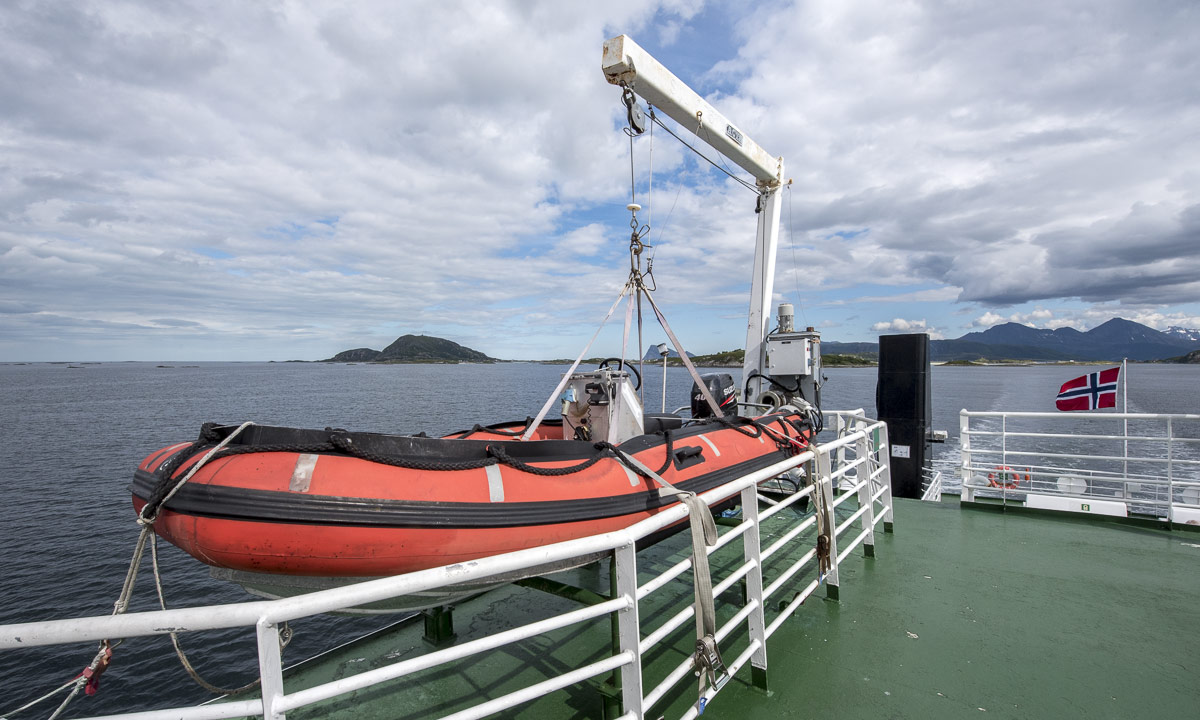
I tried to be as much outside as possible. It was cold and quite windy, not only because of the airflow, but the gusty wind, too. First I thought, that I would be extremely overdressed in my Canada Goose expedition parka, but soon I found it quite comfortable to wear it in the chilly weather.

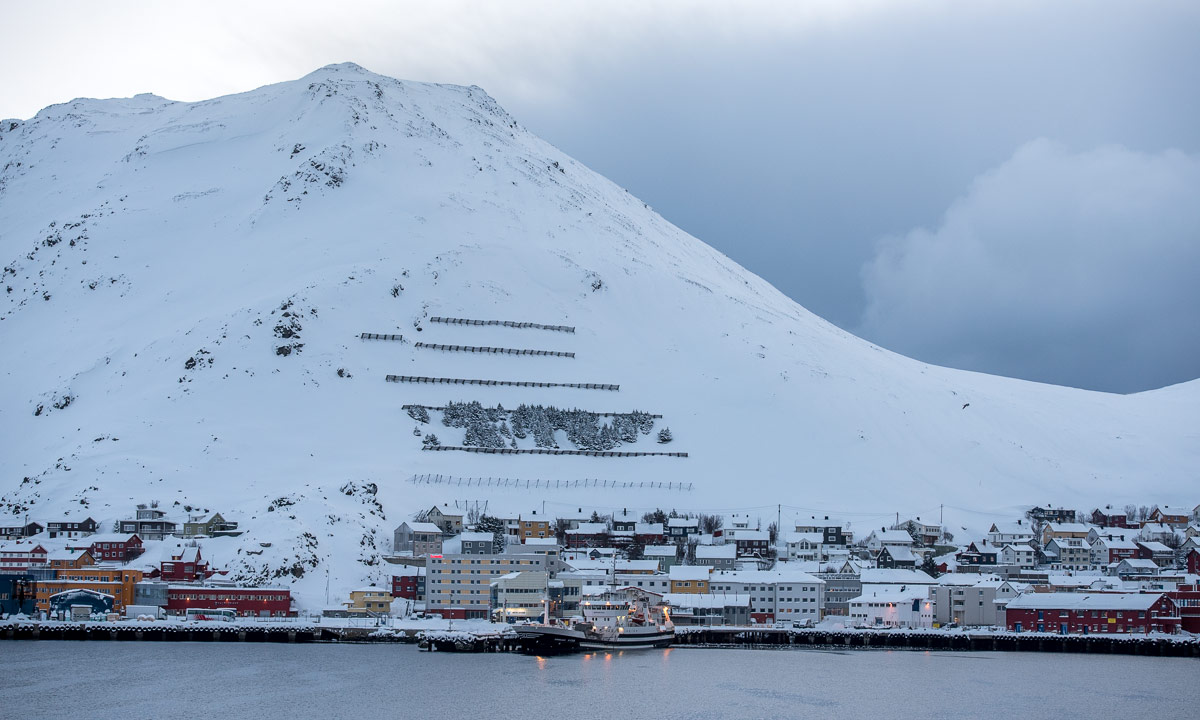
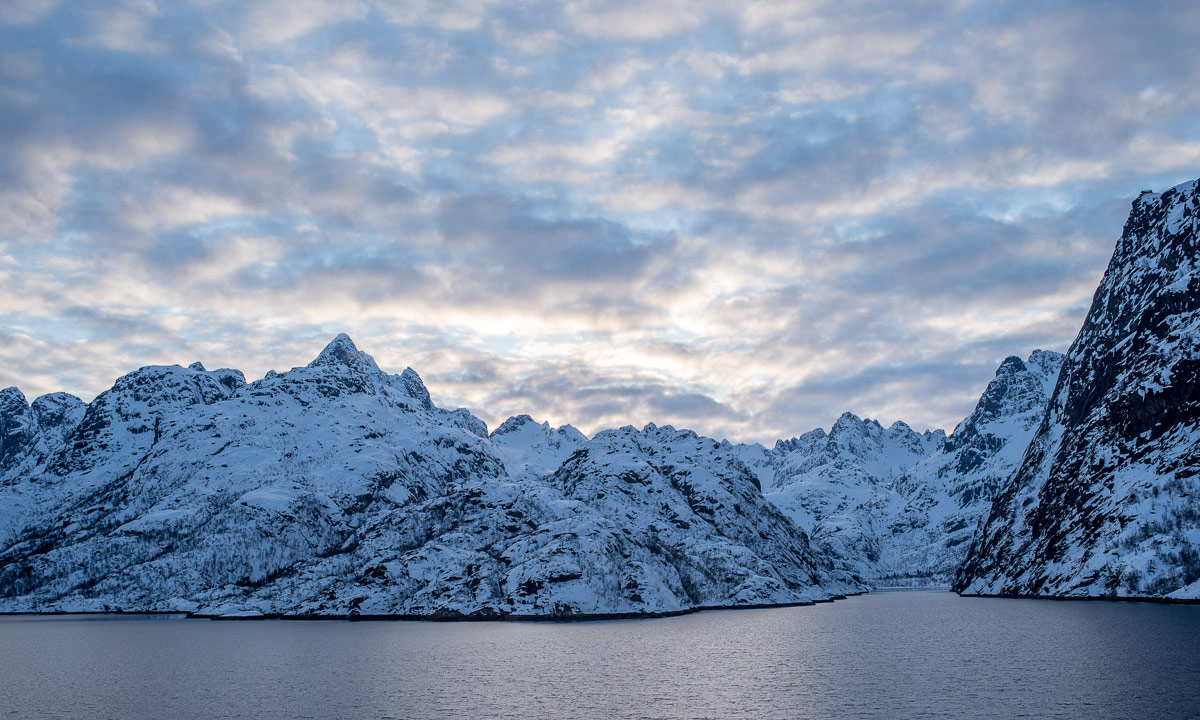
In Hammerfest we left the Hurtigruten, looked round in town and bought food. In Øksfjord it started to get dark and the black-white mountain ranges became blue.

… and blurred if you wanted to …

… and it got darker …

Then it started to snow. Sometimes the snowfall was quite heavy especially with the wind and I was even more glad about my warm parka.

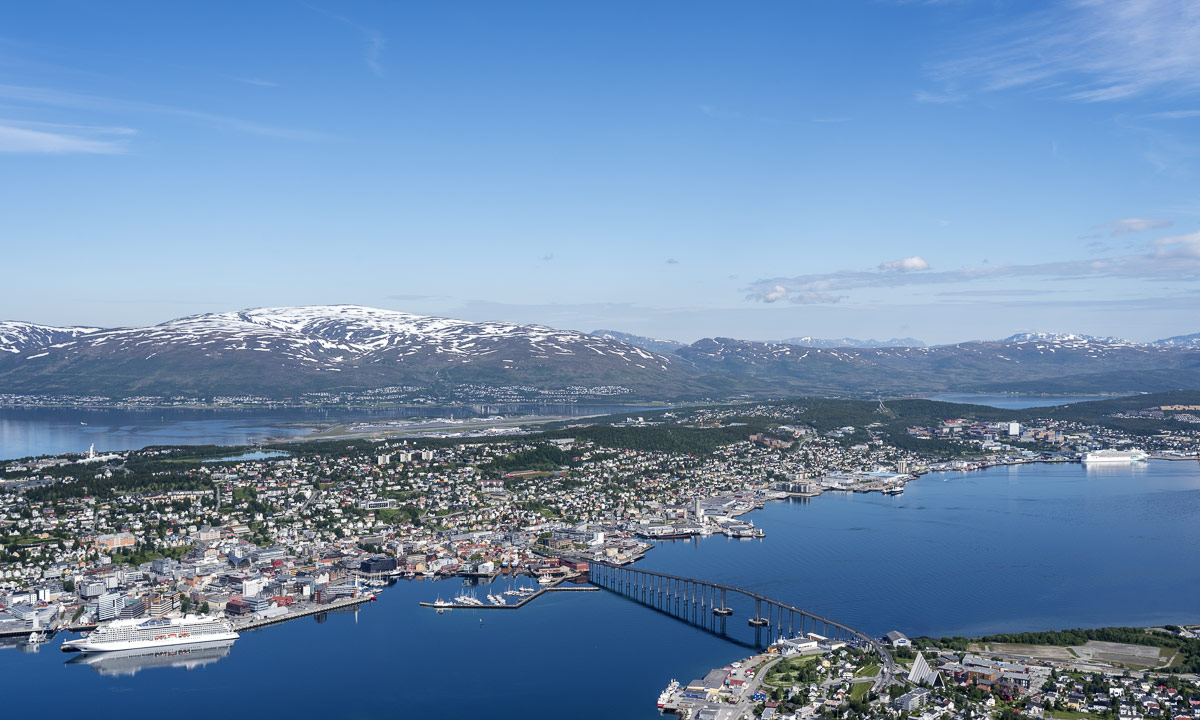
In Tromsø we arrived at 23:35 and I made some night shots of this favourite town of me.

We could have left the ship for a visit of Tromsø but we preferred sleeping. We’ll probably visit Tromsø this summer.

The next morning came and the last day aboard began. Good for me, because even if I was glad to slip the car ride it’s not my world to be on a large ship looking at the landscape rolling by. Last night snow fall has brought much snow on the top deck. I never waded through snow drifts on a ship before.

At the same time the Trollfjord anchored in Harstad, a town on the island Hinnøya.

On our way to the next destination Risøyhamn it got extremely windy, the stabilised ship started to roll and to pitch and heavy snow showers appeared, reducing the view to some hundred metres.

Suddenly the wind calmed down, the snow showers were left behind and for the first time of the whole cruise patches of blue sky and finally the sun came out. We approached Sortland, the last stop before our destination Stokmarknes where I gazed at the beautiful mountains of the Lofoten archipelago in the south.

I generally dislike the last 30 minutes of transportation, if it’s by train or by plane. I just want to arrive, and so it was on the Hurtigruten. Impatiently I waited in the inside of the Trollfjorden for its arrival in Stokmarknes, then another fifteen minutes for the allowance to enter the car deck and another ten until I was allowed to drive the car onto the very same car elevator which I used to enter the ship almost 46 hours ago.

I could write a lot more about the Hurtigruten and its passengers, but that’s another story. Short résumé: I love those ships for transportation, but cruising is not my cup of tea. (Anyway, the outside jacuzzi on the top deck is really great!)

Jämtland hike part II: hejdå Sweden, hei Norge!

This article is part of the series “2016-09: Jämtland and Norway”.

Annika and I are in the mountains in Jämtland and have just reached our first destination: Blåhammaren, where we slept in a 14-bed room.

Tuesday, 13. September

Sleeping in a 14-bed room can be quite demanding, especially if you have this kind of snorers in your room, that could awake a frozen mammoth. However Annika and I were really lucky, no snorers at all! After our breakfast we had to decide where to continue our tour. From Blåhammaren you can hike back to civilisation or continue to two other destinations. Most of the hikers continue to Sylarna which is very central and part of the Jämtland Triangle, a very popular three-day-tour, that connects Storulvån, Blåhammaren and just Sylarna. We were keener to cross the border and hike to the Norwegian lodge Storerikvollen and so we did.

With an altitude of 1086 m Blåhammaren is the highest tourist station of the STF – the Swedish Tourist Association – so first the trail ran over the treeless mountain plateau, over rocks and moss, crossing some swamps and brooks. After a while we descended and the first yellow coloured birch trees came into view again.

Swedish summer trails are marked with red coloured dots on rock or tree, while winter trails are marked with poles bearing red crosses. You really shouldn’t follow the winter trails in summer unless you want to stand in front of a lake or find yourself deep in a bog – both are easy to cross only in wintertime. But quite often there’s a year round trail which makes navigation extremely easy even on less walked routes.

One kilometre behind Endalen, an emergency shelter, where we rested for a short while, the Sweden-Norwegian border came into view. It’s hard to mark a border less spectacularly than this one: A sign amidst of a pile of yellow painted stones, that’s it. The large bridge that crosses the river Enan (Sami: Äjnänjohke) directly after the border offers far more spectacularity.

We detected a real nice resting place on the other side of the river, where we planned to enjoy the warm summerly weather, but two other hikers – by the way the first ones we met that day – coming from the other side chose exactly the same slab of rock to rest. Luckily we found another place, at least as nice as the first one. We unmounted our backpacks, took of our boots and dangled our feet into the ice-cold water.
(I like the photo with the drifting yellow birch leave and the dead mosquito. It illustrates, why I prefer the autumn to summer: Beautiful colours and no biting insects left!)

In Norway the summer trail marks change, now the trail was marked with big bright red T-s. The red T is also the logo of the DNT, the Norwegian Trekking Association.

Do you see the dark piece of something on the top of the stone? It’s animal droppings, but I’m not sure of which species. I asked for help on Facebook and the favourite answers are reindeer and (arctic) fox.

We continued our tour until we came to another swing bridge, this time crossing the river Djupholma. On the other side of that river lies a nice sandy beach where I took a refreshing bath (the only one of the whole tour). It was only two other kilometres to walk to our destination, the cabin Storerikvollen, where we arrived round six o’clock.

Oh, so nice these Norwegian lodges are. They seem less “funkis” (the Swedish functional style) and more “hyggelig” (the Norwegian word for cozy, snug, or homelike). Just gemütlich! And we got a two-bed-room for a good price. The only thing you should know, when you visit the Norwegian side: These cabins hardly sell any food and there is no public kitchen as in the Swedish cabins. So you have three options: (1) take a camp stove with you and cook outside. (2) cold dishes! Hopefully you have all with you. (3) eat the dinner and breakfast provided by the lodges (and pay the Norwegian price).

We chose (2) and had a nice dinner with salami, crisp bread and fresh water outside in the evening sun, enjoying both our simple meal, the warm air and the beautiful view. Later the almost full moon rose above the reddish mountain chain – what a beautiful evening!

Wednesday, 14. September

The next day would lead us to the Nedalshytta, which is between 20 and 24 km away, depending on which map or sign post you rely on. So we got up quite early.

We had to go back yesterdays route 2 or 3 km where the trail divided. Now we turned south and had to ascent. Soon again we were above the treeline. When we looked back, we could see parts of the big lake Essandsjøen and even spotted – beside of some reindeers – the now tiny Storerikvollen, that we left some ours ago.

After a while we came to the river Fiskåa, where we had to ford. My rubber boots were high enough and I just splashed through the water, whereas Annika changed boots with trekking sandals and waded through the river.

Since rivers use to flow through valleys we had to ascend again and walked up along a reindeer fence. The weather was still warm and sunny, but you could see a cloud layer approaching afar. Would it rain in the evening as the forecast told us?

Only the map showed us the progress of our longest tour so far. We went a bit up, a bit down, a bit to the left, a bit to the right, down a small valley and up again. But finally trees came into view once more and soon we stood on an exposed plateau not far away from the yet invisible Nedalshytta.

Come on, just less than a kilometre to go … . Final spurt! A short while later we arrived at the beautiful lodge. Again we got a nice two-bed room, this time right below the grass roof. And we got: pizza! Perhaps not the best I ate in my life, but walk 20 – 24 kilometres with a backpack by yourself and you’ll know, how delicious a warm pizza slice can be!

The tour so far:

Continue with part three …

Jämtland hike part I: Storulvån—Blåhammaren

This article is part of the series “2016-09: Jämtland and Norway”.

After three weeks of travelling I’m back in Skelleftehamn. The first week I was in Germany, then I travelled back to Umeå, where Annika lives. Let’s start there:

Sunday after breakfast Annika and I started our tour through the autumnal Jämtland. However the first day’s focus was on getting there by car. It takes round six and a half hours to get from Umeå to Storulvån. We made a stopover in Åsele to look in on some friends and so it took a bit longer until we reached the STF Storulvån Fjällstation where we parked our car. But anyway, we have semester – holiday – and plenty of time. It was even still daylight left, when we crossed the creek Stor-Ulvån (sami: Stoere Vïerejällanjohke) to get to our cabin.

Monday, 12. September

I awoke quite early the next morning and went out to make some photos of the beautiful morning mood and the autumnal colours of nature.

After our breakfast we shouldered our backpacks and started the tour. My backpack could have been quite lightweight if I hadn’t taken my camera, four lenses and a tripod with me. Nevertheless the weight was less than 15 kilos since we were able to buy food in almost all cabins and mountain lodges.

First it was a bit cloudy but soon the sky cleared up more and more and we got a warm autumn day with temperatures up to 20 °C, which is quite warm for the season. The summer trail led us first through autumnal birch forests but after some kilometres we were already on the kalfjäll – the bare mountains above the tree line.

In the middle of the trail between Storulvån and Blåhammaren lies the cot Ulvåtjärn, one of the “emergency cots”. You’re welcome to have a break here, but not to stay overnight beside of emergency situations. Right before this cot you have to cross the Stor-Ulvån again, this time by fording it. When Annika crossed the river three years ago, the water was knee deep, now the water level was much lower and I could just cross it in my rubber boots, while Annika went barefooted.

After a break we continued our tour to Blåhammaren. There were many reindeers on the fjäll. No big herds, but many small groups here and there. They are quite shy and cautious, but on the kalfäll it’s quite obvious, that they are the real residents of the mountains, not we human beings.

We continued our tour on the treeless mountain terrain until the Blåhammaren fjällstation came into view. Here we got two beds in a 14-bed-room and entered the sauna, that has a gorgeous view. After that Annika invited my to a three-course dinner (Blåhammaren is famous for its cuisine) where I got the most delicious reindeer meat I ate in my whole live. Thanks for the invitation, Annika!

While we enjoyed our dinner it started to get dark outside and after a while the beacon in front of the main house was lighted and the first stars came out. Later in the night we got a fantastic crystal clear starry sky, but no Northern lights. I considered about taking some pictures of the milky way, but I was too lazy and too tired.

The tour so far:

Continue with part two …

757.5 – from Mosvik to Skelleftehamn by car

Last week I’ve been in Mosvik (Norway) to visit friends. Yesterday I drove back home, not directly but with a detour via Nordli and Røyrvik (Norway) and Stekenjokk, (Sweden).

According to google maps the direct way is 671 km, taking 8 h 38 min. With the detour it is only 67 km, but 1 h 46 min longer. That says a lot about the small and steep gravel roads near the Swedish–Norwegian border …

For me the journey didn’t take 10.5 hours, but more than 15. For one thing I don’t drive fast, especially in Norway and for another thing I took many smaller rests for taking pictures as well as a lunch and a dinner break. I left at 9 o’clock; at quarter past midnight I finally was home again. Total distance by car: 757.5 km.

See my travelogue of the journey by clicking the first image and navigating through the images. Swipe on touch devices and click or use arrow keys on other computers.

By the way: After nineteen articles without any photo with snow, this is the first article showing at least some patches of snow again.

Second kayak tour 2016

What a contrast to the first kayak tour six weeks ago: Last time dry suit, today t-shirt. Last time between ice floes, today birches with fresh leaves. Last time Baltic Sea, today the river Skellefteälven.

I put my kayak onto the new two-wheeled dolly (the old one broke down) and dragged it to the small bay Killingörviken, where I started my today’s tour. First I paddled along the harbour, then I turned right into the channel Kejsar Ludvigs Kanal. It always reminds me a bit of the “Ruhrgebiet” in Western Germany, where I lived for eleven years. After the last tunnel waited the Sörfjärden.

There I left harbour and industry behind and considered, where to go. The tour into the Nördfjärden wan, since it was windier than expected and I didn’t want to cross the Sörfjärden. So I paddeled upstream.

After a while the peninsula Örviken to my left ended. That’s where the Nördfjärden starts. I knew the first part and paddled to one of the rotten wooden piers. Luckily I realised that there were also under water parts – there were almost everywhere. I slowed down to avoid a collision with one of the big rusty underwater-nails. Finally I came to one of the four old platforms that probably formed an old pier, too – many, many years ago.

Now it was not far to the small island Gustavsgrönnan, where I made a short break. The whole shore is wet and covered with reeds, that lay flat on the ground.

I continued my tour by surrounding the island and paddled to the islands Stensgrönnan and Björnsholmen. To these islands you can drive by car and I was curious, if there would be a bridge or a tunnel to allow me continuing my trip.

First try Stensgrönnan: No chance! A solid dam connects the island to the main land.

Second try Björnsholmen: A small chance … . This island is connected to Stensgrönnan by bridge, but it looked really low. I didn’t believe I could manage to squeeze me underneath it until the end, but it worked. I had to bend my upper body onto the kayak and drag myself forward slowly by hand.

(Reminder to myself: This tour works only when water level is ±0. 20 cm more water and I wouldn’t fit under the bridge. 20 cm less and paddling could be hard due to the shallow water round the islands.)

Now I paddled downstream, which was not as much help as expected since the wind increased and came right from the front. But soon the bridge of the Sundgrundsleden was in view, the tiny cabins ashore and the dry dock with the read ship that I already saw on the way there.

I was a bit exhausted when I turned left to enter the bay Kurjoviken on the other side of Kallholmen. Now I was almost home, I just have to take the tiny tunnel “Lappstrupen” and I’m …

… well, that didn’t work. Due to roadworks this tunnel was completely blocked. Can I traverse the tunnel anyway? No. Do I want to walk and get the jetty? Neither. So I returned to the open water again and had another two kilometres against the wind until I entered the Kejsar Ludvigs Kanal again.

Now I headed back to my starting point. Another kilometer to go and I was onshore again. Phew – the last part was exhausting!

Today’s tour: Round 19 km total. (3.2 km extra because of the blocked tunnel Lappstrupen.)

A wet walk west from Ersmark

At this time of the year it can be quite interesting to go for a walk through the woods. A lot of snow melted in the warmth of the last week and every river, stream or brook is in flood. The heavy rain some days before provided an additional amount of water.

Annika and I started our walk west from Ersmark, seven kilometres north from Umeå. The whole area is a shooting range for the military, but a sign clearly shows, when shooting exercises take place and when it’s safe to hike. Today we were lucky – no military exercises this weekend.

We went along the gravel road. The road was clear of snow, but due to the night frost all mud puddles were covered with a thin layer of ice. We went ahead until we came to a minor path. This path was completely covered with snow. We continued this snowy path until we approached the brook Tavelån. This part of the path was covered with a splintered crust of ice that clearly showed, that this part of the path was flooded a short time ago. More and more water flooded our path and we had to wade to reach the wooden bridge, that crosses the water. The brook was so flooded that the water partly flowed over the planks of the bridge.

After the bridge there was much more water on the way. Parts of the flooded brook flowed over our hiking path, too. I tested the depth, but soon had to give up. The water was too deep for us to continue, although we both wore high rubber boots.

We turned and took the same way back, until we reached the car. Annika, who took care of navigation today, realised, that we could take the car to another starting point to experience the other side of the brook.

A short time later I parked the car on a muddy ground near a small nature reserve with the witty name “Natur 2000” – still the same military shooting range. Larger parts of our new hiking path were covered with ice, but at least the way wasn’t muddy. After a while we headed north trying to cross the Tavelån again, this time at another place. When we came to that place were we expected the bridge, all I could see was some kind of old concrete base – the bridge was gone. I laughed out aloud – another blind end again!?

But we were lucky: Ten metres away some railway sleepers lay across the Tavelån. After some wading again we could safely cross the flooded brook. Anyway, the continuation of the path was a bit challenging again. The snowy path was partly flooded and we had to wade several times, carefully balancing on the wet ground ice. But we succeeded: None of us slipped and we continued our tour – dry and warm, since the spring sun had a lot of power and warmed us gently.

The path ascended and soon we walked on a dry gravel way. The rest of our hiking tour was a bit boring: Broad and straight gravel roads through forest and heather. After a while we reached the car.

We tried to take the minor gravel roads to head back to Umeå but when we almost reached the big road, the last part of our way was prohibited for cars and we had to return.

When we arrived home at Annika’s flat, the thermometer of the car showed +10 °C. Another day in spring with remains of winter.

Kungsleden ski tour: Tjäktja

This article is part of the series “2016-02: Ski tour on the Kungsleden”.

From the Sälkastugorna to Tjäktjastugan

25 February · 12 km · Link to map

This day could be a more demanding day. It’s only 12 km to Tjäktja, but first of all i goes up 300 meters and then there’s Tjäktjapasset – the mountain pass, which I remember as being quite steep. In 2005 I skied down the slope, now I have to go up, dragging the pulka behind.

That’s why I started quite early this day. In my pulka: a parcel with food from the shop that stugvärd Z. gave me for stugvärd P. – one kilo more or less doesn’t count so much if you doesn’t have to carry it on your back.

When I started the tour the sky was still cloudy, but soon the clouds disappeared, sun was shining and the sky was blue. I was happy, since according to the weather forecast I expected the whole week being grey and cloudy. Far away in the early sun I could see a chain of mountain – there’s the Tjäktjapass, still far away, and it looked high and steep.

This was the first time that I had skins under my skis that help going up, especially if you carry a pulka that always wants to slide down. The trail led through a hilly landscape and I had to climb many small hills just to go down on the other side of the hill. I asked myself how I should gain altitude going just up and down. Anyway, the landscape was gorgeous, just as the weather, and when I looked back after some time I could see, that I gained more height than I thought. First I could see small brown boxes laying behind – the Sälkastugorna – but after some time they disappeared behind the hilly landscape.

I continued my tour and saw a black bird ahead. It cawed and landed on a dark spot beside another bird. Crows. I remembered, that one of the skiers that I met in Sälka, told me, that he saw a dead reindeer on his way from Tjäktja. This reindeer was killed by a wolverine, one of the biggest carnivores in Scandinavia. I approached the dark spot, the craws cawed again and flew away. There was a heap of something and beside of some patches of reindeer skin it was hardly recognisable. The sight of a frozen hump of meat is neither nice nor beautiful, but it is part of a country, where predators as wolves, bears, lynxes or wolverines still exist.

After taking some photos for this blog I continued my tour. Two other skiers approached from the other side – they just slided down in long, relaxed steps. I however had to climb up. Now, where the pass was near, it was visible that it was neither as steep nor as high as expected. After a bit of effort (I’m not well trained …) I stood on a plateau just below the highest point of the pass. And the view back into the huge valley Tjäktjajåkka (sami: Čeakčajohka) was incredible. The sun shone from a bright blue sky, a rainbow coloured sundog nearby. Ice dust fell from the blue sky that glittered and sparkled against the sun. The broad valley seemed to be endless, the further away mountains looked hazy and I had the impression, that you could walk through this valley forever.

It’s not the first time, that I stood here and gazed in amazement. I’ve been here on my first ski tour in april 2005, too, when I went from Abisko to Kvikkjokk. And now I was just as amazed as at the first time.

I could have stayed for ages, but after I while I broke away from this special place and ascended the last meters of the pass until the small hut Tjäktjatjattja came into sight. I took a break, but instead of seeking shelter in the hut I sat outside in the sun with chocolate and hot tea. It started to snow a bit – always a bit strange if you cannot see a single cloud.

After this sunny break I continued the trail to Tjäktja. The skiers I met left a nice track and the only think I had to do was sliding downwards effortlessly until I arrived in Tjäktja, the smallest mountain hut on my journey. Stugvärd P. got my parcel with food and goodies and I got a room in the stuga.

The sky was clear the whole day and it started to become a bit colder. -15 °C, when I arrived, -19 °C short time later. Time to fire the oven and to eat something warm. But later I went outside again to look at the starlit sky that arched above the Lappish mountainscape.

A day in Tjäktja

The next morning the weather was perfect for skiing: -22 °C, hardly any wind and again an almost cloudless, blue sky.

I stayed a day in Tjäktja and went up the mountain Tjäktjatjåkka, but only half the way. First of all I’m not the most experience skier, and then I was afraid of avalanches. But even going up halfway in this outstanding weather was great.

Going downhill was much faster than uphills. When I arrived in Tjäktja, the thermometer show -18.5 °C, exactly the same temperature as when I started my short day trip and the sun shone from a cloudless sky over the ravine of the stream Čeavččanjira. The next day I will continue to the next mountain hut: Alesjaure.

The next article: returning to civilisation >>

Translation:

EnglishGermanSwedish
wolverineVielfraßjärv

Kungsleden ski tour: From Nikkaluokta to Singi

This article is part of the series “2016-02: Ski tour on the Kungsleden”.

It was 2005 when I was asked by C. from Switzerland, if I wanted to join him on a ski tour on the Kungsleden – the King’s trail. That’s how I came to my first ski tour in the mountains of Swedish Lapland. More tours followed, but sometimes it was hard to find a tour mate. Same thing this year; that’s why I decided to do my first ski tour on my own.

Kungsleden would be ideal for that, since there’s infrastructure as mountain huts and I won’t be alone. Good to know, since even twisting an ankle could be a serious problem in winter if no one’s around. I wanted to start 19 February, the day, when the huts open.

After a long trip I reached Nikkaluokta (many thanks to A. for the lift from Kiruna!) on the evening of the 17th I had one spare day in one of the cosy cabins of family Sarri. This place can be very cold and I had a look at the digital thermometer in the cabin: -44.8 °C minimum since the last reset – brr, that had been a cold day!

I climbed the small church hill and looked west. That’s were I’ll go the next day.

From Nikkaluokta to Kebnekaise Fjällstation

19 February · 19 km · Link to map

Time: 7:40, temperature -17 °C, weather: cloudy. Time to start the tour. I mount my skis, put the belt of the pulka (a sled for transportation) round my hips and after some gliding steps I see the first mark of the winter way to Kebnekaise.

It’s the only mark for a long time, the winter way to the Kebnekaise Fjällstation is not marked, neither on the map nor in real. But it’s easy to find the way, since many snowmobiles take this way and you only have to follow their tracks. Soon I’m at the place where the trail crosses the stream Čievrragorsa. In summer I used the chain bridge, In winter the snowmobile goes right over the frozen and snow covered stream. I can hear the sound of water running underneath the ice – a strange feeling.

After some kilometers I come to the lake Láddjujávri. Here you can eat waffles with cloudberries or burgers at “Lap Dånalds” and even take the boat over the lake to shorten your trip a bit. Well – in summer …

Hardly imaginable that I took a bath here six month ago on a hot summer day, when I was here with Annika. Not it’s winter, all is closed down, the boats lie on land and are covered with snow and I’m completely alone. Anyway it’s not too cold and I take a first rest on my tour. Without waffles, without a refreshing bath, but with the same beautiful view as in summer, since the sky starts to clear up and one mountain top after the other starts to get free from clouds, fogs and haze.

When I continue my tour over the ice of the frozen lake I soon can see the same mountain range as I did in summer. And it’s as beautiful as in summer, too.

After some kilometres the trail leaves the lake and continues through scattered birch forests and over frozen swamps, some of them covered with ice. The weather is fine and sky is of a clear blue with some clouds.

Another rest, this time on top of a rock, with hot tea, chocolate, and a bit of salami. What a beautiful day! I could sit here for hours, but I shouldn’t. I have to reach the huts of the Kebnekaise Fjällstation. I do reach them, but before that I have to work. The trail ascends and I have to make wide V-steps with my skis to be able to pull the pulka uphills. Finally I arrive. This mountain resort is quite huge, since Kebnekaise is the highest mountain in Sweden and very popular among hikers, skiers, and climbers. Anyway it is not opened yet beside of the cabin Jägarn (“the hunter”). Here I’ll stay overnight before I’ll continue to the Singistugorna the next day. Twice I climb on the small hill with the radio mast, first after sundown, then at half past six – where I see the first polar light of the tour.

From Kebnekaise Fjällstation to the Singistugorna

20 February · 14 km · Link to map

When I wake up sky is blue again and -17 °C. I take a short breakfast with muesli and prepare for leaving. That means: packing all things – doing the dishes – cleaning the kitchen and my bed room – checking that I have everything with me – putting on skis and pulka belt. Meanwhile the sky is overcast and it has started snowing. Weather can change quickly in the mountains.

After I have walked some kilometres it clears up a bit, just so much, that you can see some mountain tops shining through the hazy fog.

When I enter the narrow passage of the valley the mountain tops hide again, which is a pity. The mountains here are so beautiful.

There is not much snow in the mountains this winter. Parts of the marked winter way lead over stony passages with no snow at all. I have to go round these passages to avoid ruining my skis and pulka. Mostly I follow the snowmobile tracks, hoping that the locals know the best way.

This way leads over the frozen river, but sometimes it’s hard to see, since the snow under the overcast whitish-grey sky don’t show any contours. Wind increases, snow falls as well and the snow starts to drift in the increasing wind. In the narrow valley between the mountains Siŋŋičohhka and Liddubákti more snow lies on the ground which makes it easier to ski but worse to see.

That’s when you are really glad about the winter way marks: Red crosses set on long poles. Sadly plastic crosses are used nowadays. They are ugly, in my opinion harder to see and many of them are broken. But I’m glad to have them anyway. They do not only show you the way, they help you even in guessing whether it’s going up or down, which you cannot see, if visibility and sight are poor.

I always have compass and a good map with me on such tours. Anyway, if you cannot see any landmark these tools are of limited help if you do not count steps or know how fast you are on your skis. That’s when a GPS can be very handy. When I make another rest, longing for the mountain huts Singistugorna, the GPS revealed, that it’s only 970 meter to go. Easy!

Well, not really. The valley opens, wind increases and there are many rocks and snow-free parts on my way. I decide to circumnavigate a steeper passage and ski a bit to the right. To my big amazement I don’t go down but keep on level. Suddenly I feel part of the ground collapsing a bit and realise that I stand on the rim of a soft snow drift, about two meter high. It was absolutely impossible to see it. I’m lucky, that I didn’t fell down! I go back and circumnavigate my circumnavigation until I’m on the marked trail again. There I can see the cabins shining through the drifting and blowing snow. It takes some time to find a good way down to Singi but finally I arrive. Here the wind seems to be even stronger and the snow falls even more intense.

Stugvärd J. shows me my room, light fires in the ovens of the kitchen and my bed room and allows me to take my pulka inside since I’m the only guest. After doing some work he leaves and heads to his own cabin against hard wind and snow.

According to the forecast wind will increase even more and snow fall round 20 cm are expected. I’m glad, that I have time and plan to stay at least one other day in the Singistugorna, perhaps two.

The next article: Singi – from blizzard to clear sky >>

Flood along the Skellefteälven

The river Skellefteälven had much water today. Water level was 87 cm above normal according to a hiker I met at the river today. The hiker had to turn because parts of the way were still under water just as the ground besides.

It was funny walking on this “way” – the ground was frozen, 15 cm water above, slightly frozen over, too. I even saw a fish fleeing my rubber boots under the thin ice cover. And I was so glad about my crampon-like spikes, that I had with me, since the ground was almost frictionless.

After a grey morning the weather was nice with blue sky and sun, but still much too warm for the season. I really wonder how the river succeeds in freezing over when it’s hardly frosty. I also wonder why the river ice can rise almost 90 centimetres without getting any visible cracks. Probably it’s quite soft.

Ten, fifteen centimeters above water level you could see ice round the branches and twigs of the smaller trees and bushes, marking the high water peak of last night. I had to crouch and lie down to make the next picture.

It was easier to make pictures of the beautiful frost patterns that covered the ground. By the way: These are colour photographs.