Midnight sun on the Stor-Kjølen – part II

To part I >

I slept better than expected in the shelter on top of the mountain Stor–Kjølen (790 masl) that I hiked up the previous day. At 7 o’clock I get up and enjoy strolling around the plateau under a deep blue sky. Thank you, DNT, for maintaining this shelter.

At half past seven I start my way back. The sun is high in the sky.

The plateau summit resembles a desert of stones with hardly any plant beside of lichens and some tufts of grass. The first plant that catches my eye when descending the summit is a flowering ground cover. If the AI is correct, it is silene acaulis, also known as moss campion or cushion pink.

Again I cross the huge snow field. I see footprints but no ski tracks. Skiing season seams finally to be over.

Navigation is easy. Sometimes I go astray, since there are so many parallel paths – this hike is quite popular. But with the help of the painted red dots it is easy to find back to the main track. The cairns – Scottish  Gaelic for a man-made pile of stones – can be used for navigation as well. Great in fog! However, use them with caution. Tourists love to build these all over the mountains on random places.

While coming down the mountain the landscape slowly changes. The ground is more and more overgrown and to the right there are several lakes.

As the day before I pass a small valley. Now it lies in the sun. It looks very idyllic with its lakes, streams and its birch trees. One day I have to check how to go there.

Another stream to cross, another lake to view …

… and I’m on the home stretch. Soon I can see the gravel car park. One of the grey cars is mine. But still the terrain is hilly and in no time the car park disappears from view again.

By 9:45 I am back at the car. I was incredibly slow — a luxury you can afford when you’re hiking alone and stopping to take photos.

Later that day I stand on my balcony. The view is mostly blocked by large trees. Birches, willows, rowans. Through the gaps I can spot the mountains. And if you look carefully on the next photo, you may spot a tiny white dot on the top of a snowy mountain. That’s the radar station of Stor-Kjølen. I’ve been there last night.

Midnight sun on the Stor-Kjølen

Yes, I was tired Saturday evening after travelling back from Obbola to Tromsø. But the weather was so nice and I already had started thinking about going up the mountain Stor-Kjølen for experiencing the midnight sun up there. Finally I made a decision. Let’s go. I packed water, a camping mat, a sleeping back, but most of all my camera equipment and went off. It is only a twenty minute drive to the lake Finnvikvatnet on the island Kvaløya where I parked my car. From there it is round 5½ km to the top and a good 500 metres of elevation gain.

When I start my tour at around 10 o’clock the sun is low. The sun is low, but it won’t set tonight – and not for the next twenty days either. The landscape glows in warm colours. The ground is dry, but soon I cross the first tiny snowfield.

The path winds its way through grassy terrain scattered with stones and rocks. Stray snowfields lie on both sides of the path and the radar station on top of Stor-Kjølen has come into view.

The first lake flanks the trail. Slowly, the terrain is becoming rockier.

I look back and already now the hiking tour was a success. Lakes, hills – some grassy, some rocky – and at the horizon a mountain range. So beautiful in the warm light of the low sun.

For a while, grassy patches and rocky ground alternate …

… then the altitude takes command. Only snow and rocks are present and the vegetation is reduced mostly to mosses and lichens. I have to cross a large snow field but the ground is not slippery.

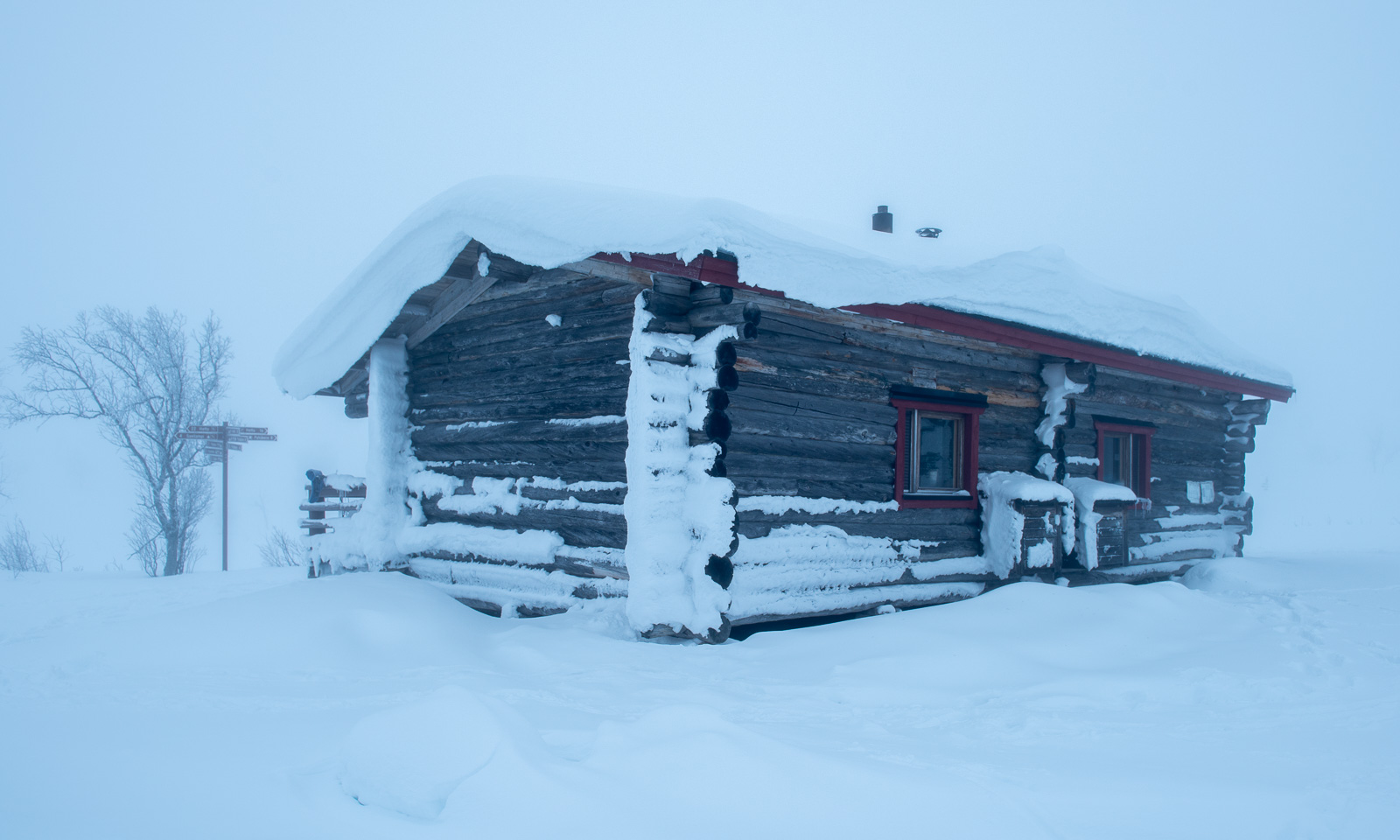
But then I arrive on the stone-covered plateau of Stor-Kjølen, where I can see a small cairn in front of me, a tall cairn marking the summit and the radar station. And if you look closely you can see a small cabin in front of the station. It’s a shelter for hikers. I’m alone, so I can use it for the night.

I want to take photos of the midnight sun, so I start experimenting with some sun-facing shots. These photos are much darker than reality. While the light is warm, it is still bright daylight.

The mountains and the sea all glow in hazy orange hues when I look against the sun.

But I have a mission – taking a photo of the midnight sun. Here it is. Unfortunately there is a small, transparent cloud in front of the sun that makes it look like a white splotch instead of a circle. Bad luck!

Bad luck? Not really. We have summer time, so the lowest position of the sun is one hour later – or a bit more accurate 0:48 due to local solar time. So I had some spare time to take more photo from the stone-covered flat top.

Then it was time: The sun as its lowest position. Ok – I was three minutes late, but the solar path is so flat that it doesn’t matter when taking photos. The light is the same. And eventually the little cloud was vanished.

Just a selfie with my mobile phone, then it is time for bed, at last. (A down hoodie? Yes – it is windy and only +5 °C.)

I enter the shelter, roll out my sleeping mat on the floor and lie down, using my sleeping bag as a blanket. Cluck-cluck, cackle-cackle! What’s that? I peek out of the door and see that the hour of the ptarmigans has started. All around, these galliforms dart about, filling the air with their typical clucking. I am too tired to start another photo hunt so I just take some snapshots. (These photos are heavily cropped.)

But then it is finally time to sleep. The shelter is filled with light, the camping mats (I found another one in the shelter) are thin and the ground is hard. But then I doze off and …

… sleep. At least for a couple of hours.

To part II >

Dundret

It rained a lot in Gällivare when Annika and I were there some days ago. On Wednesday however the weather forecast said there’d be a bit of sun in the afternoon, so we planned to hike on the Dundret. Dundret is just around the corner and a solitary mountain, a so-called inselberg. I skied up there in Winter 2012. In summer you can take your car and drive up almost all the way.

Indeed it had stopped raining and we had some sun and blue sky when we started our hike.

As in many Scandinavian hiking areas there are summer and winter trails. The winter trails are marked with red crosses that lead over the “kalfjäll”.

Kalfjäll is the Swedish word for the alpine tundra above the tree line. The dwarf  birch growing here is technically a tree, but you wouldn’t think so at first glance. It has no visible trunk, and its branches sprawl low across the ground.

We splotted some flowers in bloom such as the mountain-Heath, the alpine azalea or the lapland lousewort.

It got cloudy on our hike, but at least it didn’t rain.

After some hours of hiking (and some mosquito contacts) we arrived at the car and drove down again. On some of the slopes there was still a bit of snow.

For me Dundret is a mountain for hiking and back-country skiing, but it is also a ski resort.

Near the station at the bottom we were sitting for a while enjoying our waffle with jam and cream before we drove back to the Gällivare camping ground. When we arrived there it started to rain heavily. Good timing I would say.

And here two winter photos from Dundret when I was there in February 2012. Seems like ages ago.

A short summer journey in Northern Sweden

Annika and I are on holiday and spent this week to travel around northern Sweden by car, mainly to visit friends. Some stopps: Kusfors, Arvidsjaur, Nattavaara, and Gällivare.

Jar museum Rolig & Rusk

We took a short stop at the jar museum in Burträsk. Not to visit the museum, but the small flea market. If you travel in Sweden and love browsing at flea markets, look for the sign “Loppis”.

Smörgåstårta

In Kusfors we visited friends and got Smörgåstårta for lunch. This dish is very Swedish. While its “architecture” resembles a layered cream cake, the taste is savoury and contains ingredients like ham or cheese.

Summer flowers

When there are meadows or pastures in Northern Sweden there are full of flowers in summer. Here you can see for examples dandelions, butter cups, campions, and cow parsley. This patch is by our friend’s house.

A reindeer in the grocery?

Reindeers are typical for Northern Sweden and you have to watch out for them when driving a car. This fellow however is stuffed and stands in the display window of a grocery in Arvidsjaur.

Zzzzzzzzzzzzz…

There are many lakes in Sweden and in summer these lakes always come with mosquitoes, especially in the evening. Luckily they are late this year and I could take this photo without being eaten alive.

Old log cabin

We are spending the night at Renvallen Camping near Arvidsjaur. The camping ground is an old farm and some buildings such as this log cabin are pretty old.

Gravel roads

If you think, your car is too clean, use a Swedish gravel road in rain. The back of you car will be plastered with brownish-grey mud that even the strongest rain cannot wash away.

Sandviken beach

Yes, I wanted to take a bath at Sandviken in Gällivare, but my motivation went near zero, when I stood there in the steady rain looking at the shallow water with its gravelly ground.

Fat Tony’s

If you like burgers, you should give Fat Tony’s in Gällivare a try. Both atmosphere and food are great. And if you are there, do visit the bathroom.

Dundret

Just around the corner from Gällivare lies Dundret, a solitary mountain. When the rain stopped Annika and I took a hike there together with our friend Sascha and his malamute Roxy.

Tyre dealer

Stuff standing around in car garages has always its own aesthetics. The reason, why we needed a tyre dealer on our trip will be told another time (although you already may guess it).

Summer Café in Nattavaara

On Monday we passed Nattavaara. Alas, the summer café is closed on Mondays. On our way back it was open and we stopped to ate cake. Different volunteers come up for short stays to run the café and bake cakes. Most of them are from Switzerland or Germany which strongly increases the cake variety in the region.

Fremdriftstak

Monday 19 May

On Monday I joined a kayak training on fremdriftstak. That’s Norwegian for forward stroke, the most basic kayak stroke. We had two experienced trainers, one for the euro paddle, one for the Greenland paddle. I joined the euro paddle group and learned some new details that hopefully will help me kayaking a bit more effortlessly in the future. The weather was a mixture of sun and clouds and the last hour it rained. Doesn’t matter, we are fully waterproofed when on the sea anyhow.

Thursday 22 May

Yesterday was the regular Thursday paddling with eighteen eager kayakers and fantastic spring weather. I joined the group kayaking to the island Grindøya as the week before. While the tour leaders told us about their plans and checked, that we all know the basic communication signs, the colourful kayaks had already been brought to the shore.

My own kayak is in Sweden so I always rent a kayak from the kayak club. A good opportunity to finally test another model. I had used the same on Monday, now I checked it a bit again while waiting for the others to join.

We paddled to “Monsterbygget” – a large cuboid building that is one of the favourite orientation marks for kayakers. There we split and our group of eleven headed west to the island Grindøya.

It is round 2.5 kilometres to the southern tip of the island. A good opportunity to recap my learning from the Monday training. It went well but it will take time until it is in the muscle memory. At the small bay with the sandy beach we parked our kayaks. This is one of the two locations where you may enter the island during the bird breeding season. Time for a break, enjoying the sun, drinking water and eating chocolate.

On our way back we paddled along the western shore of the island. We saw a lot of eider ducks and other sea birds that I cannot name. After two kilometres we had passed the northern tip and were heading back to Tromsøya crossing the strait Sandnessundet.

This is a great season for paddling, especially on such a sunny day. The coast is green, the sea is blue (and very cold) and the mountains are still covered with snow.

In the south we could spot a ship. Where will it go? We decided to wait. The ship was sailing along the strait and since ships are not only much bigger than us but also much faster we decided to paddle back a bit and then to a sea mark north to wait for the ship to pass.

First the ship’s movements were hardly visible but when it approached it seemed to become faster and faster. While it was passing we spotted another ship in the distance, this time in the south and decided to cross the strait instantly. I took two photos, then I had to keep up and since we wanted to cross the strait quickly I didn’t make any further photos.

At half past nine we were back at the boat houses. Takk for turen – thanks for the tour!

Today

I’m proud. I paddled 11.3 km yesterday and I don’t have any pain in my right arm as occasionally after other tours. Just for that the training on fremdriftstak this Monday was a full success. Thanks, B. for your tipps and advice.

These are the two recorded tracks from kayaking to Grindøya. The first one from last week, the second one from yesterday.

Three countries in sixteen snapshots

This article is part of the series “2025-02: Finnmark”.

While Annika and I have been travelling through Northern Norway, Finnish Lapland and Northern Sweden I take photos not only with my cameras, but also snapshots with my mobile phone. Here is a small non-landscape selection.

Norway

23 February – Solhov

Solhov, built in 1912–24 as a school provides accommodation today. The wooden building is huge and has a large hall with a piano that is surprisingly in tune.

24 February – Alta

As in Tromsø it is too warm in Alta. Temperatures round +7 °C lead to snowmelt and giant puddles in town.

25 February – Suolovuopmi Fjellstue

In the middle of nowhere there is a café by the road E45 from Alta to Kautokeino. To our delight it is open and we get reindeer burger and omelette with smoked rein for lunch. Delicious!

25 February – Karasjok

We stay two nights in Karasjok, where the Samí parliament is located. Our cabin is cozy. Min Ája, the camping site has a billiards room.

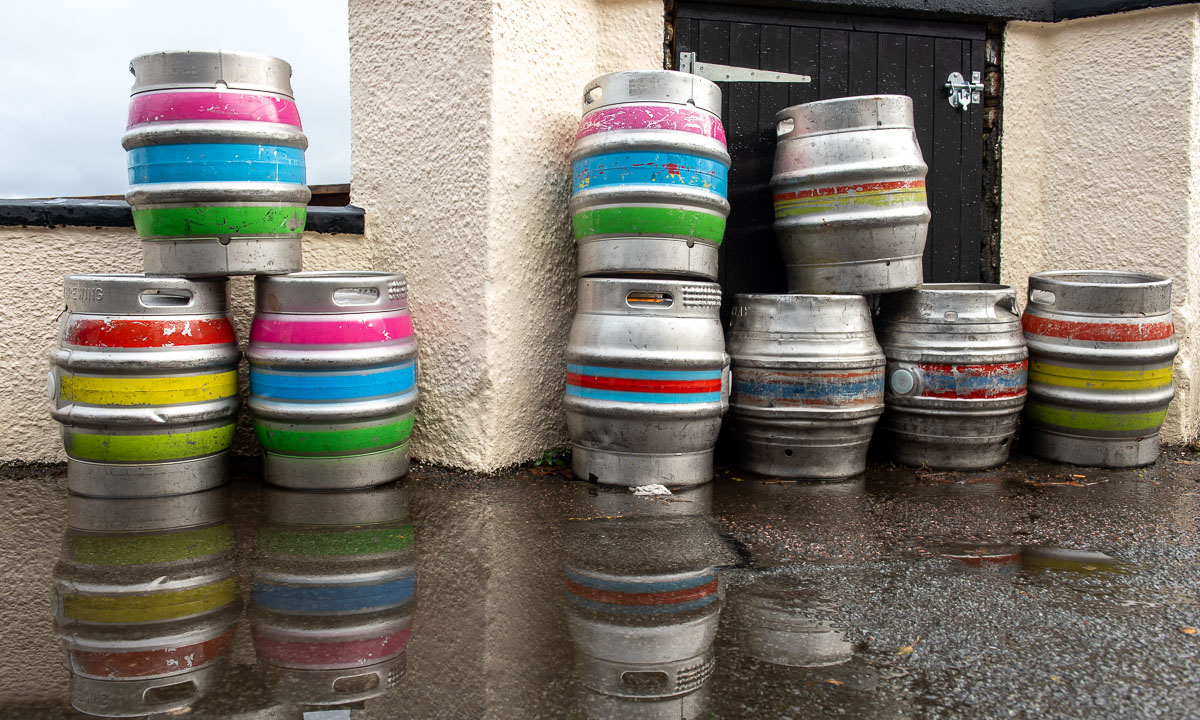
The design of some of the beer cans looks arctic. While most alcohol has to bought in the specialist shop “Vinmonopolet”, beer up to 4.7 % can be bought in supermarkets, too.

26 February – Karasjok

In the tourist shops you can buy a lot of genuine Sámi handicraft. And thick fabrics in wonderful colours. Many traditional Sámi garments use the same colours: blue, yellow, red, and green.

27 February – Finnish-Norwegian borderland

A small shop. A cupboard with lockers. On each locker attached photos, all of them with fishing motives.

Finland

28 February – Utsjoki

As many hotel rooms our room has a wardrobe with hangers. But it has something more: two umbrellas. Could be a useful device here in the warmer months.

28 February – Saariselkä

Saariselkä has many cross-country ski trails. No wonder, that the hotel has an own waxing hut, where you can prepare your skis.

1 March – Saariselkä

It’s not a rumour, there are definitely a lot of Ä-s in the Finnish language.

3 March – Sodankylä

No town without a pizzeria and/or a burger bar. Although the name “Riviera” may not completely match the actual winter weather in Sodankylä.

3 March – Vuostimo

If temperatures are hardly below zero and it is snowing the snow is sometimes like glue and covers your car everywhere.

4 March – Vuostimo

Snow, a birch, a fence, a road in the background. Leaning against the fence: a bicycle. Clearly unused for a while, since it is deeply stuck in the snow. A Northern winter short story.

Sweden

4 March – Tornio/Haparanda

Two countries, two time zones, two languages. At the border two towns: Tornio on the Finnish side, Haparanda on the Swedish. They share a lot of infrastructure such as the bus station. The border itself is not visible, but the two clocks showing Finnish and Swedish time or the cabinet with Finnish and Swedish food.

A border that connects people. A border I like.


Backcountry skiing in Finish Lapland

This article is part of the series “2025-02: Finnmark”.

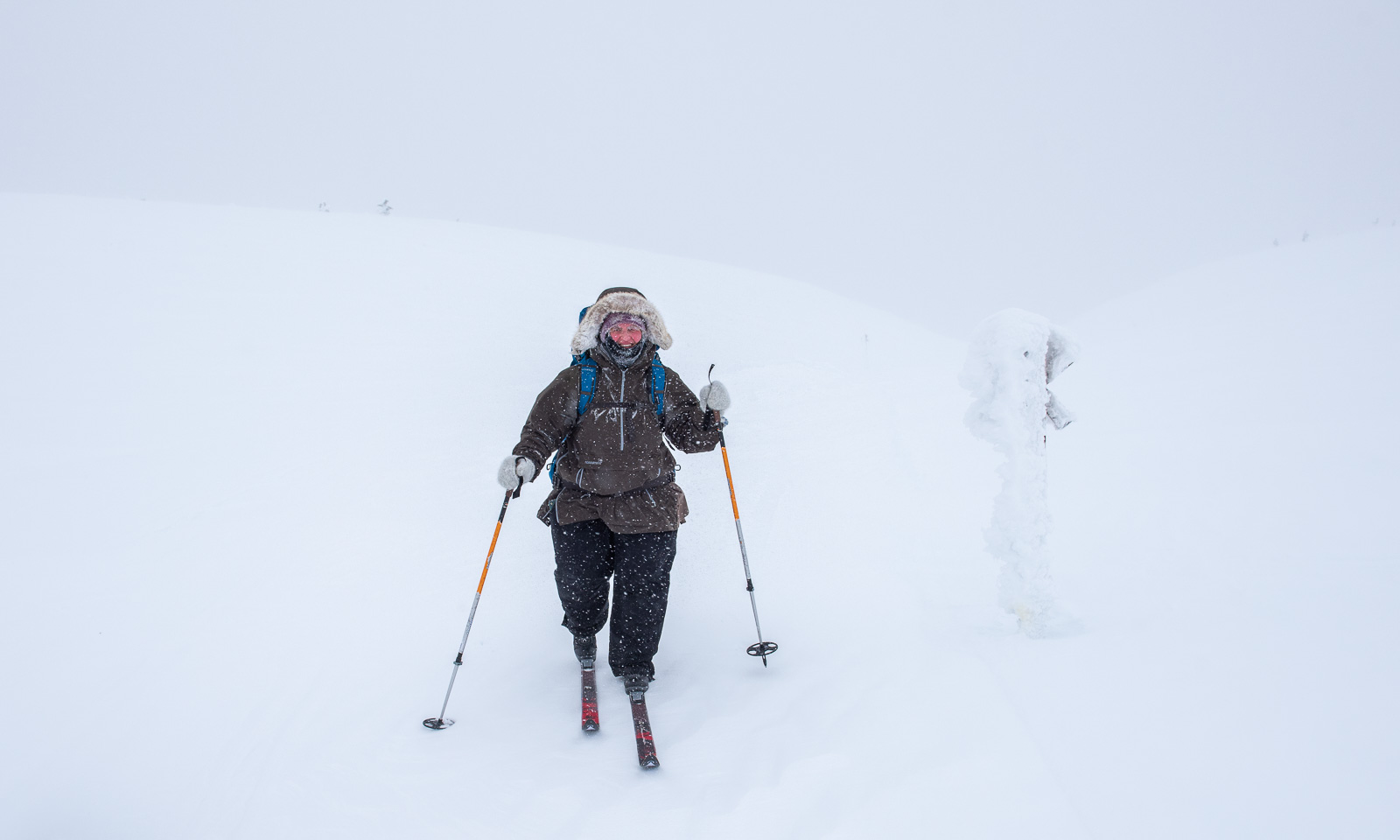
After the gorgeous cross-country ski tour in Saariselkä yesterday Annika and I want to use our backcountry skis today. We take the car a bit south to a place called Kiilopää. Here there are not only cross-country ski trails but also “Nature skiing tracks” suitable for backcountry skiing (though you do not need any prepared track at all for this type of skis). We follow the cross-country ski trail a bit and then turn left, where a path marked with blue crosses leads through the forest.

Slowly we gain altitude and the forest becomes less dense.

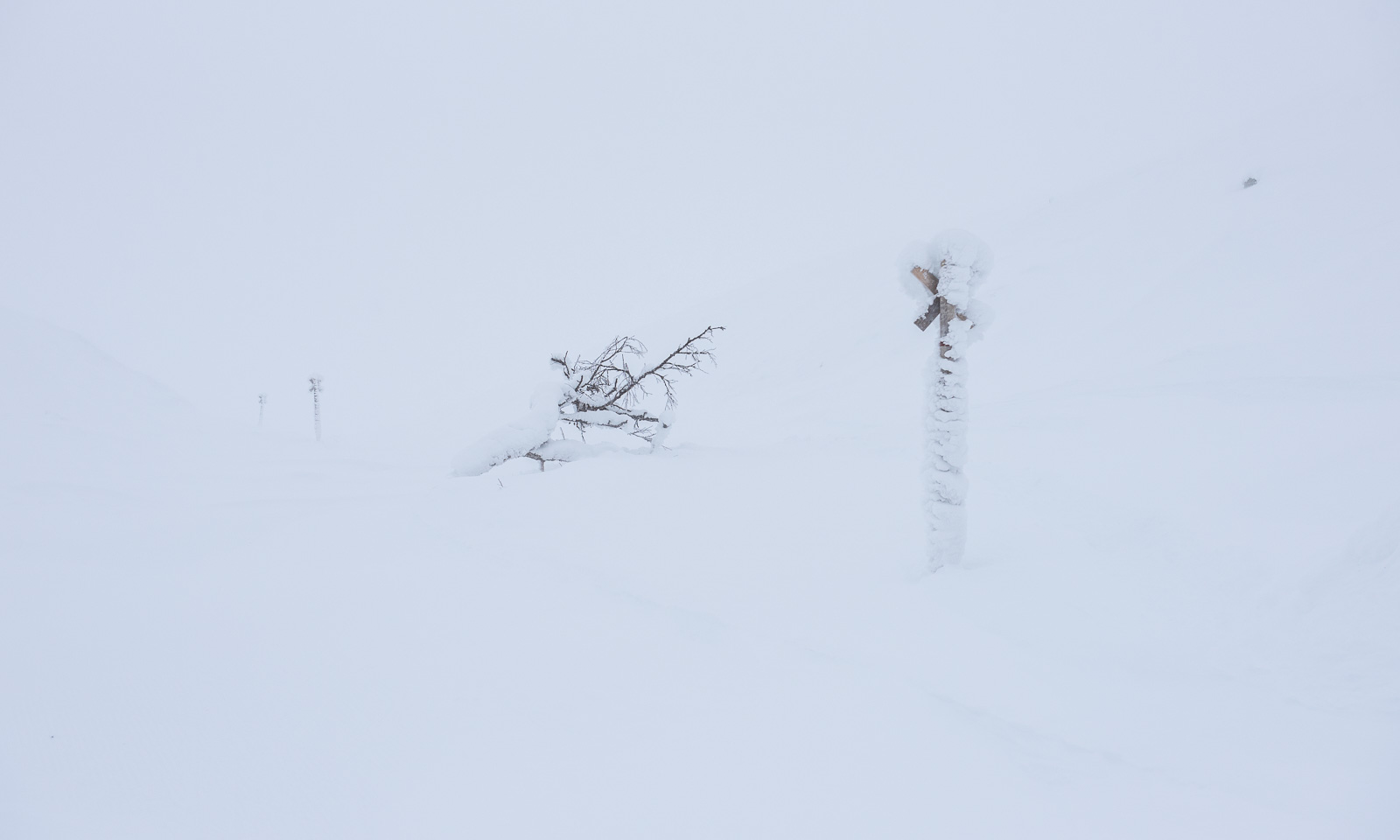
You can see the almost barren, rounded mountain peaks of the Lappish tunturi. Twice I take a detour to take some pictures of the solitary snow covered trees.

We reach the mountain shelter Niilanpää and we are not alone. Small and larger groups of skiers, many of them with pulka sleds are on the track, around or in the hut.

Since the small shelter hut is occupied we continue our tour, that now slowly descends to the forest again.

This ski tour was a recommendation of our friends C. and M., who know this region well. As they supposed we use a shortcut through the forest. This old forest is beautiful. It is not very dense but has a lot of beautiful, large trees that make the forest a nature exhibition. After round 1.5 km we reach another cross-country skiing trail where we turn left to reach the shelter and grill place Sivakkaoja.

We could grill sausages, everything is there, but we decide to only take a short break and then finish our ski tour. One of the reasons: at the parking place there is also a hotel with a café that serves sweet pastries :-) .

We follow the prepared trail eastwards. The grooves made for cross-country skis are too small for our broader skis so we use the skating track (without skating) in the middle. After some kilometres through the forest we are back at our starting point again. Distance today 12.8 km. Time for a pastry and something to drink!

I’ve never been in the region of Saariselkä before and really like it. The nature is beautiful, it is not too crowded and there are many possibilities for different types of winter sports. Today – the day after this tour – we will leave Saariselkä, but I can imagine that it was not the last time being here.

Today we take the car to Kuuriuru, Finland. Tomorrow we plan to continue to Råneå in Sweden. From there it is “only” another 300 km to our home in Obbola in Sweden.

A gorgeous cross-country ski tour in Saariselkä

This article is part of the series “2025-02: Finnmark”.

After days of car driving through the Norwegian Finnmark we crossed borders to Finland two days ago. Yesterday we arrived in Saariselkä in the northernmost Finnish region “Lapland”. Saariselkä is a popular tourist destination, especially for cross-country skiers. So we decided to make a cross-country ski tour today despite of the grey and dull weather that the weather forecast showed us for the region.

After breakfast we took our skies, walked to the tent-like starting point and started skiing. Oh my – after using the broader “fjellski” a lot the thin cross-country skis felt like skiing on matches! I had some difficulties and blamed myself but then realised, that beside of my stiffness one of the skins – permanently glued to the ski – started to peel off. We abandoned the tour in hope to find someone that can fix this. So the first ski tour was just 1.17 km – yay!

We were extremely lucky. We soon found a ski rental and got the problem fixed within a minute. The employee even refused getting paid. Kiitos paljon! So – back to the starting point.

Meanwhile the weather that had been ignoring the forecast as usual started clearing up. Temperatures were around -8 to -9 °C and it was calm. Perfect skiing conditions, if you ask me. This time I felt a bit more comfortable.

We unmounted our skis at a short but uncomfortably steep passage, where the trail crossed a stream in a small valley. Last night’s fog had added rime to the snowy trees.

After this short obstacle the trail got easier and was extremely pleasant to ski on. Plus, the trail was perfectly prepared and the sky cleared up more and more. But let the photos speak for themselves:

Was it as empty as on the photos? Almost. There were a few other skiers, but not many.

After about 7 km we reached the first cabin – Rumakuru Päivätupa. We took just a short break and decided to continue to the next cabin – Luulampi, taking a break there. We passed Rumakuru Vanhatupa and after 4 km we arrived at the large cabin Luulampi.

My dreams of eating cake in the cabin were destroyed. The café was closed. So we skied to the small hut nearby were we took a lunch break. Annika grilled sausages in the fire, while I ate two Karelian pirogs. Then we shared some biscuits.

And then? Taking the more advanced ski trail that climbs at least 150 other metres, leading to the road and then hoping for a bus or a lift? Or just taking the same way back? We chose the latter.

As usual I took much less photos on the way back. One of the reasons: it had become cloudy and the sun had vanished. Now the landscape was more monochrome, but still very beautiful.

We passed the other cabins again, and again we unmounted our skis at the steep descend and ascend. And then, after some more descends we were back in town. Here there are a lot of people, that do not ski and you have to remind them, that ski tracks are – well – ski tracks and not open for pedestrians, cyclists or snowshoers. Mostly it helps …

I tracked today’s tour. The second and real tour was 21.95 km, which adds up to a total of a bit more than 23 km on cross-country skis. I guess, Annika and I will feel our muscles tomorrow. I feel them already now.

This was one of the finest cross-country ski tours I’ve made in the last years. Thank you, Annika for the tour!

Fram Strait 2024 – returning to Svalbard

This article is part of the series “2024-08: Fram Strait cruise KPH”.

26 August 2024

It is the 14th day of our Fram Strait cruise. We are on our way back to Longyearbyen on Svalbard. After many grey and foggy days we finally have got nicer weather since yesterday and so I am standing on the “heli deck” looking for animals to take pictures of. I cannot see any whales and the few puffins that I spot are too fast and too far away. So I take photos of the seagulls that effortlessly accompany the ship.

Since today it is possible to see land again in the distance. Not Greenland like a week ago but Prins Karls Forland, an elongated island which is the westernmost island of  the Svalbard archipelago.

I have gone inside again until I see a message popping on our WhatsApp group:

Dolphins just in front of the ship now

I grab my photo bag, hurry to the heli deck again and see a school of dolphins on the starboard side. Most of them swim underwater but again and again a group of these beautiful sea mammals come out of the water. With my big telephoto lens I try to take pictures of the dolphins. The result: a lot of pictures of sea water. They are just too fast for me and my lens. But I’m lucky. Once I manage to guess correctly and get a photo of two dolphins (and a third one immersed).

27 August 2024

Originally we wanted to reach Svalbard one day later but a lot of things have been done faster without the presence of sea ice. Mooring recoveries are simpler, CTD casts are easier and so is the ship’s navigation – no search for leads needed. Therefore we will arrive one day earlier, which is today. While I’m having breakfast we are already in the fjord Isfjorden. At 9 o’clock we have arrived in the city port of Longyearbyen.

After lunch I leave the ship and stand on land again. I walk into town and go to Svalbardbutikken, the local supermarket. We still live on board and get our meals there, but I want to have chocolate! And I get it.

28 August 2024

We all have stayed on board overnight as well. The cabins are free (and paid) and so there is no need to find some expensive last-minute accommodation in Longyearbyen.

My plane to Tromsø will depart at 14:40. I interrupt my work and leave the ship once more to take some pictures. It is sunny again but Svalbard looks pretty brown and dirty in summer.

Then it was time to say good bye to the crew and the other participants. Car to the airport – checking in the baggage – security. And some hours later I sat in the airplane to Tromsø now leaving also Svalbard and the research ice breaker Kronprins Haakon behind.
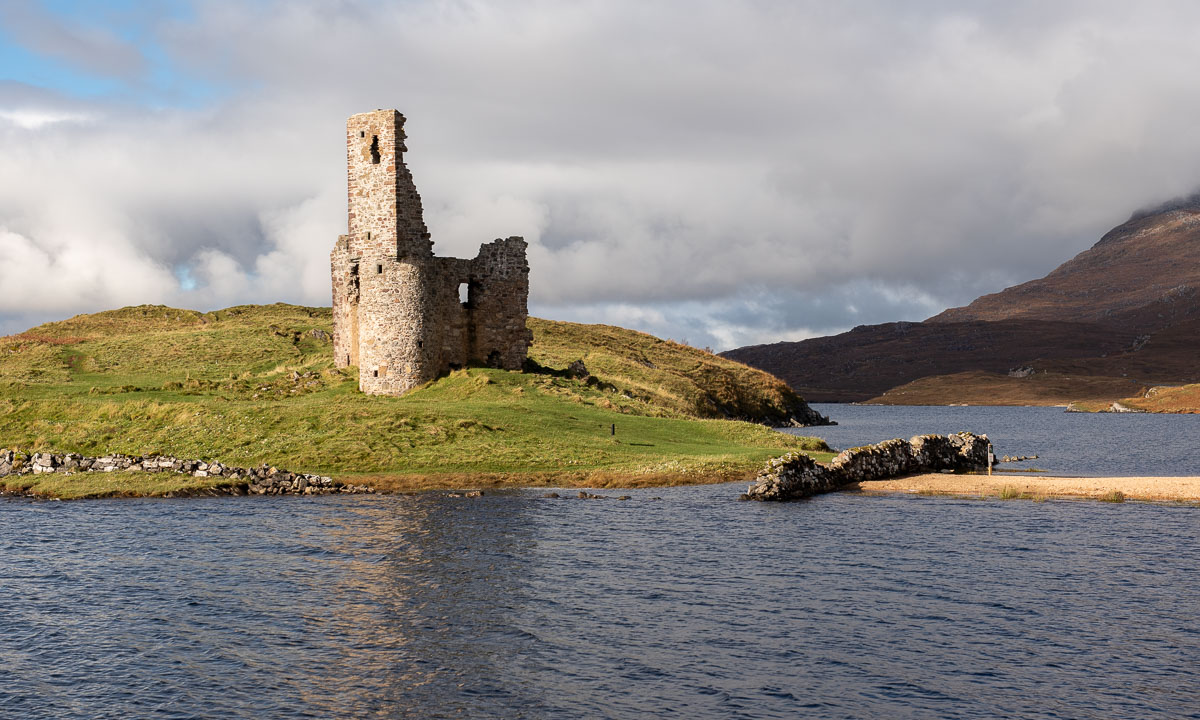
When shall we three meet again?
In thunder, lightning, or in rain?
When the data work is done,
When the budget’s lost or won …

Three weeks in Sweden – some photos

14. June

I am sitting in the airplane. Soon I’ll be back “home home” in Obbola for three weeks. Here we are crossing the river Umeälven.

20. June

A low rainbow has appeared above the trees. In the inside it shows supernumerary bands.

21. June

Midsummer in Sweden has several traditions. Probably the most famous one is the dancing round the midsummer pole. Annika and I are in Gammlia, a park with outdoor museum in Umeå. Here we are doing “raketen” – the rocket.

In the evening Annika and I are watching a roe passing by with her two young fawns. They are crossing the shallow bay. Since the water level is higher than normal the water is quite deep for the fawns.

22. June

Excursion to a coast we do not know yet – Järnäsklubb. There are several trails you can follow, only the bathing place we do not find.

24. June

While I pluck lupins (an invasive species) I realise how many beautiful flowers we have in the small patch of wilderness between our house and the sea. Here: a Siberian iris.

27. June

Annika and I are in Gammlia again, this time for the Mullin Mallin Band that plays folk music from Balkan to Sápmi.

29. June

We are in Åsele in the Swedish inland where we visit friends of us together with their farm animals. (Photo: Annika Kramer)

3. Juli

For lunch break I paddle to the beach at Byviken where I eat Ćevapčići. Total distance – round 6.7 km both ways. After that I have to continue working. Home office.

6. Juli (yesterday)

I am sitting in the train to Narvik. I read, I eat, I play with my mobile, I doze and I look out of the window.

The train was in time in Umeå and in Narvik as well. From there the bus 100 brings me to Tromsø where I will work for the more or less next five weeks. Hej då Sverige – hei Norge!