Tromsø—Obbola by car

You may know that I have two places to live. My “work home” in Tromsø, where I work at the Norwegian Polar Institute and my “home home” in Obbola near Umeå, where my wife Annika works and we have a house together. Mostly we use the train and the bus to travel, sometimes the plane and occasionally even the car, although it’s a long way.

It is early Friday morning, I’m in Tromsø. My car is packed and I’ve cleared last night’s snow. It is mid-November and the conditions are wintry.

Norway

I start the trip at 6:50. In Tromsø the weather is fair, but then I experience some heavy snow showers. When it’s dark the snowflakes seem to form a tunnel that looks a bit as if a spaceship in a science fiction film were going to warp drive. Some short passages have streetlights. That makes seeing the road much easier.
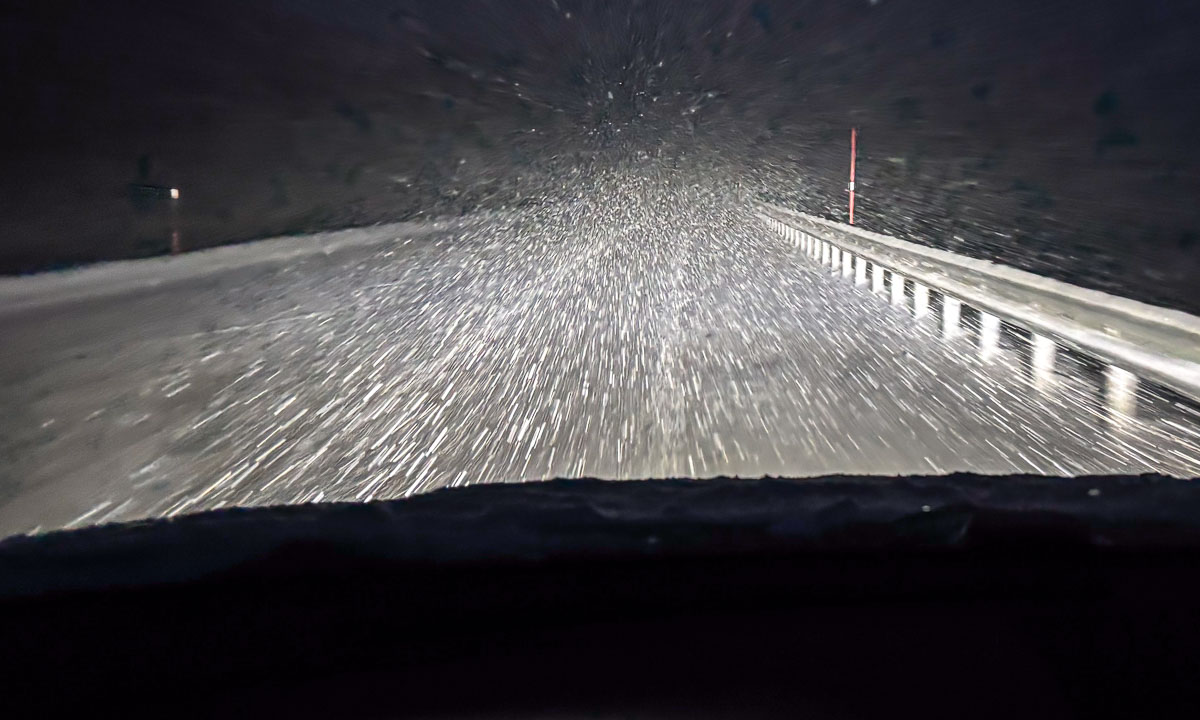
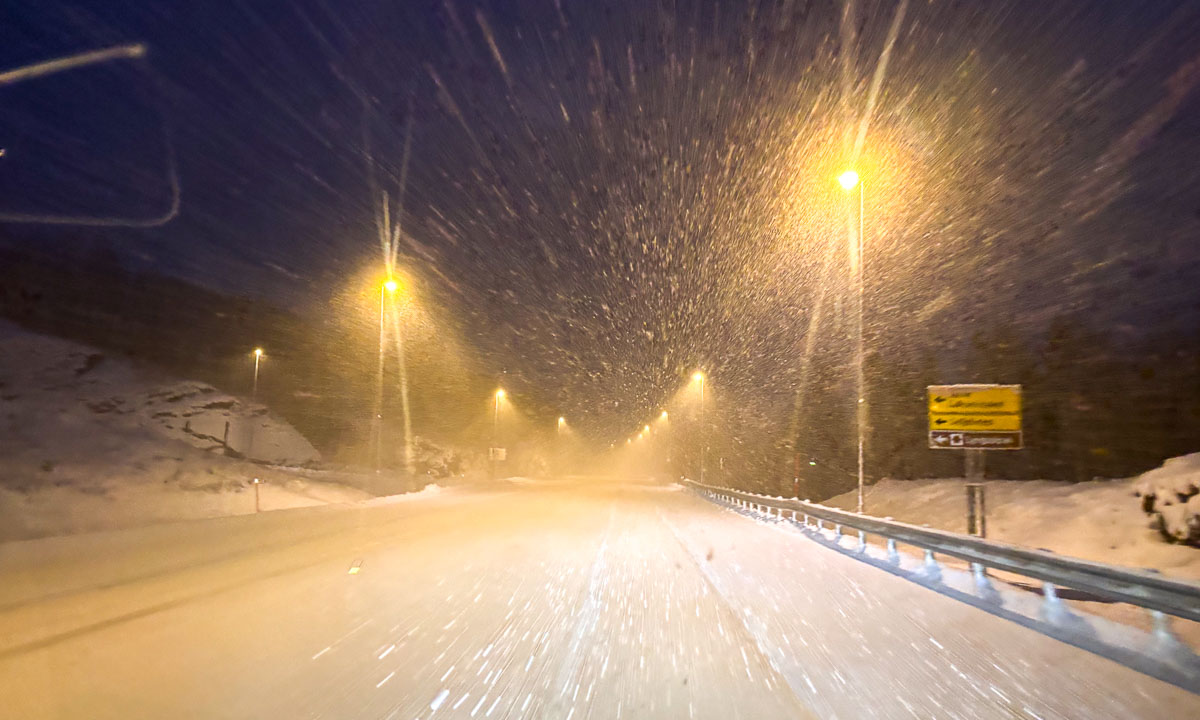
Around half past eight it is bright enough outside to see the landscape, not only a fraction of the road. It is still snowing, but driving is easy. Around 9:20 I reach the border to …

Finland

The snowfall has stopped but a lot of snow lies on the road. I guess up to 15 cm with some deep tracks of a few cars. After a while a snowplough approaches, but it is clearing the opposite lane. In Kilpisjärvi I make a stop at the supermarket and buy some breakfast. The rear of my car is plastered with snow.

I continue south and it is clearing up. Even the road is in much better shape now. Easy driving.
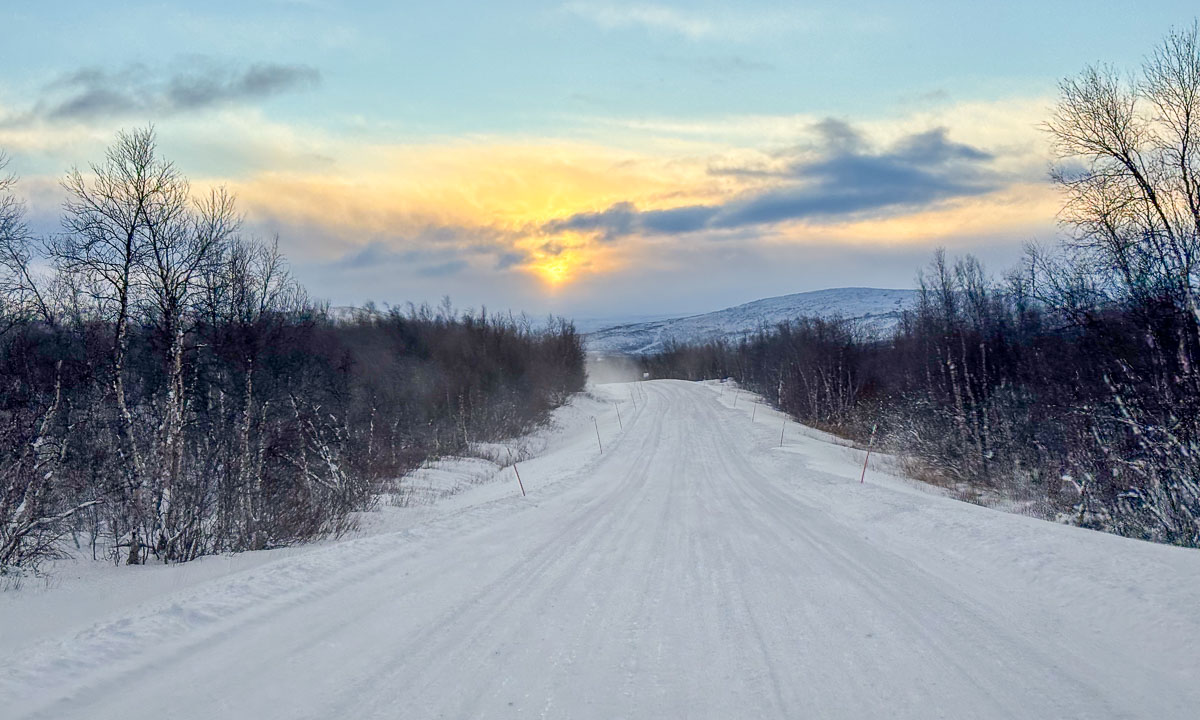
In the Finnish village Karesuvanto I turn right, cross the Muonio River and thus the border to …

Sweden

… where I arrive in Karesuando. I turn right again and join the E45 which ends in Gela, Italy. The sky is clear and the outside temperature dropped more and more. In Övre Soppero the display in the car shows -13 °C. It also shows a lot of warnings because the packed snow in front of the car is confusing the sensors for the cruise control. I feel tired and find a parking bay where I take a nap.

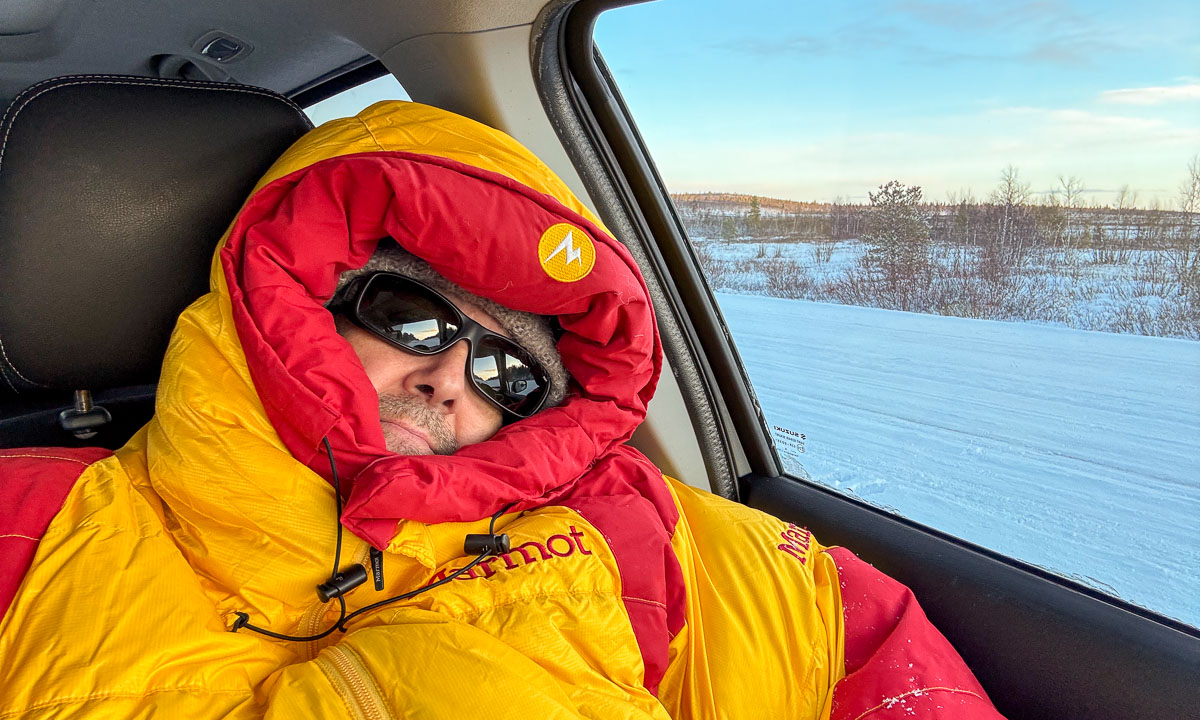
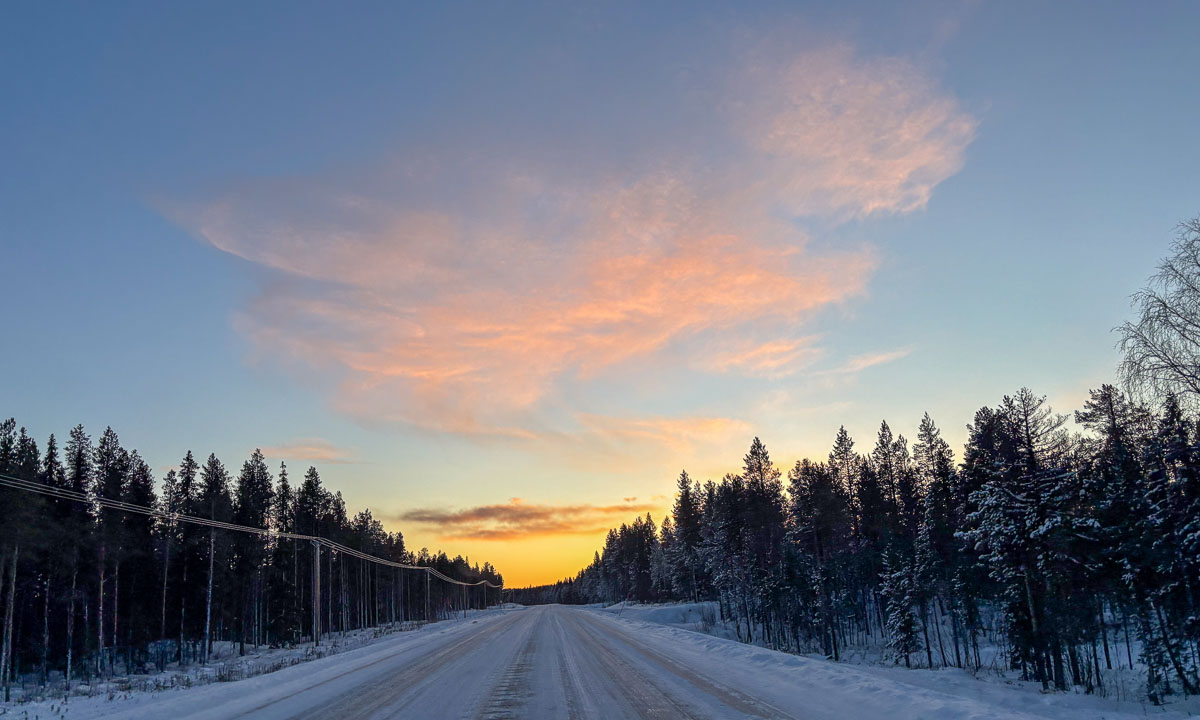
I sleep less than half an hour but I feel refreshed again. I continue my car trip to Vittangi and while I’m following the road see the slowest sunset I can remember. Perhaps, because I’m driving southwards?

In Töre, where I reach the E4 I fill up the car with fuel. From there it is not far to Råneå, where I visit friends and stay overnight. I’m asleep before 9 o’clock.

Still Sweden

After ten hours of sleep and breakfast I feel fit again to continue my car trip. The day before I made already two thirds of the distance and today I’m more or less only on the E4, so driving will be easy. To be honest, it’s a bit boring. That’s also because I’m leaving winter behind. There is less and less snow and it gets warmer. The good thing – the snow on the car has melted and the cruise control is working again.

Around 14:15 I pass Obbola and drive southwards to “home home”. No snow.
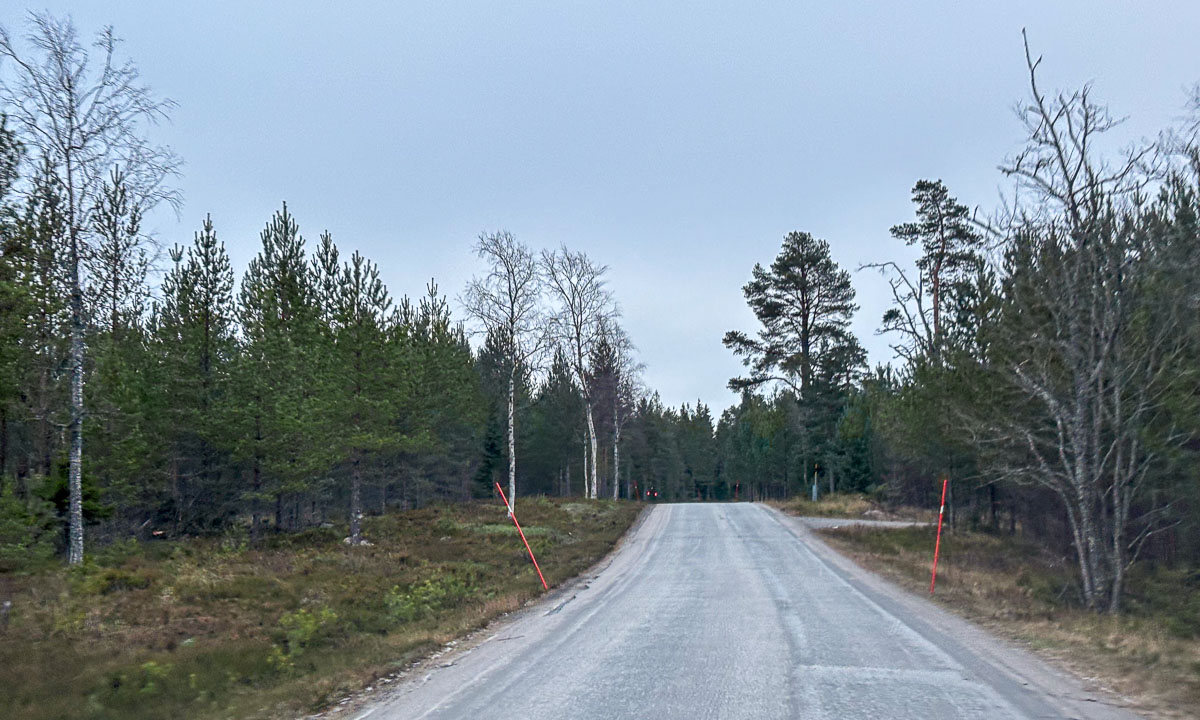
And then, after driving 966.8 km I am finally home home again. Here I’ll stay for about three weeks, then Annika and I will make the return trip to Tromsø together.

The route

Tromsø—Nordkjosbotn—Kilpisjärvi—Karesuvanto—Karesuando—Övre Soppero—Nedre Soppero—Vittangi—Tärendö—Överkalix—Töre—Råneå—Skellefteå—Umeå—Obbola
Scotland NC500 – day 8 – a hidden pass, palm trees, and a famous castle

This article is part of the series “2025-10: Northern Scotland”.

October 20

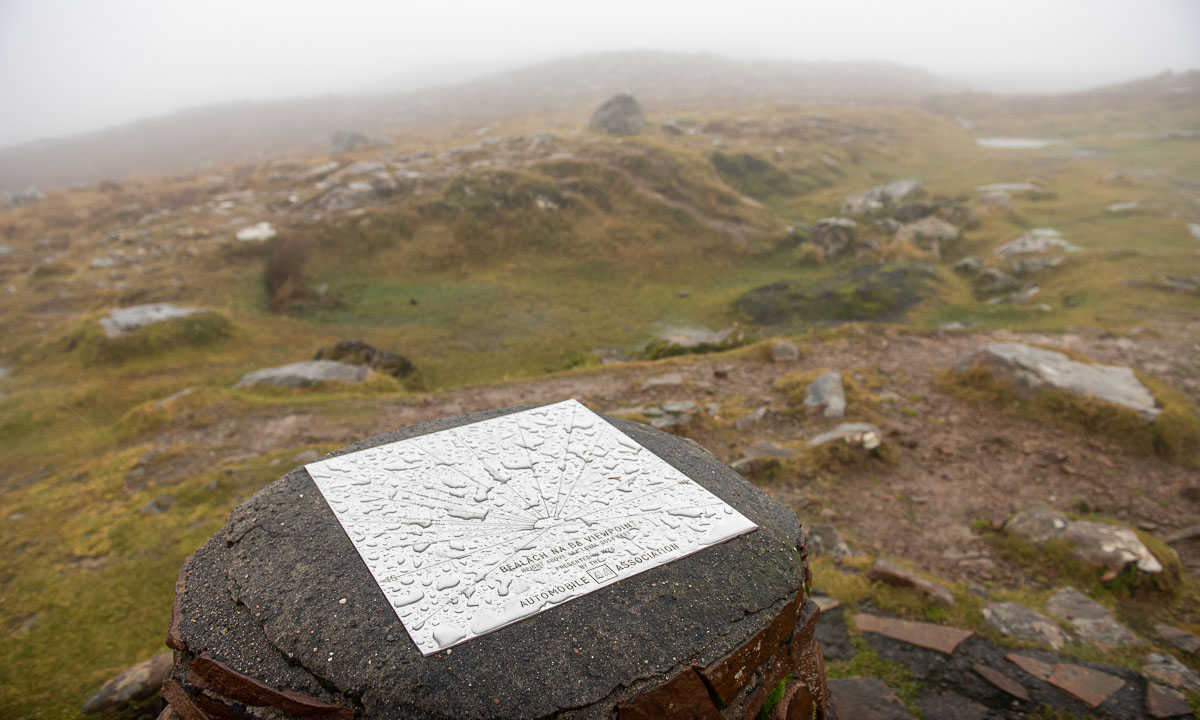
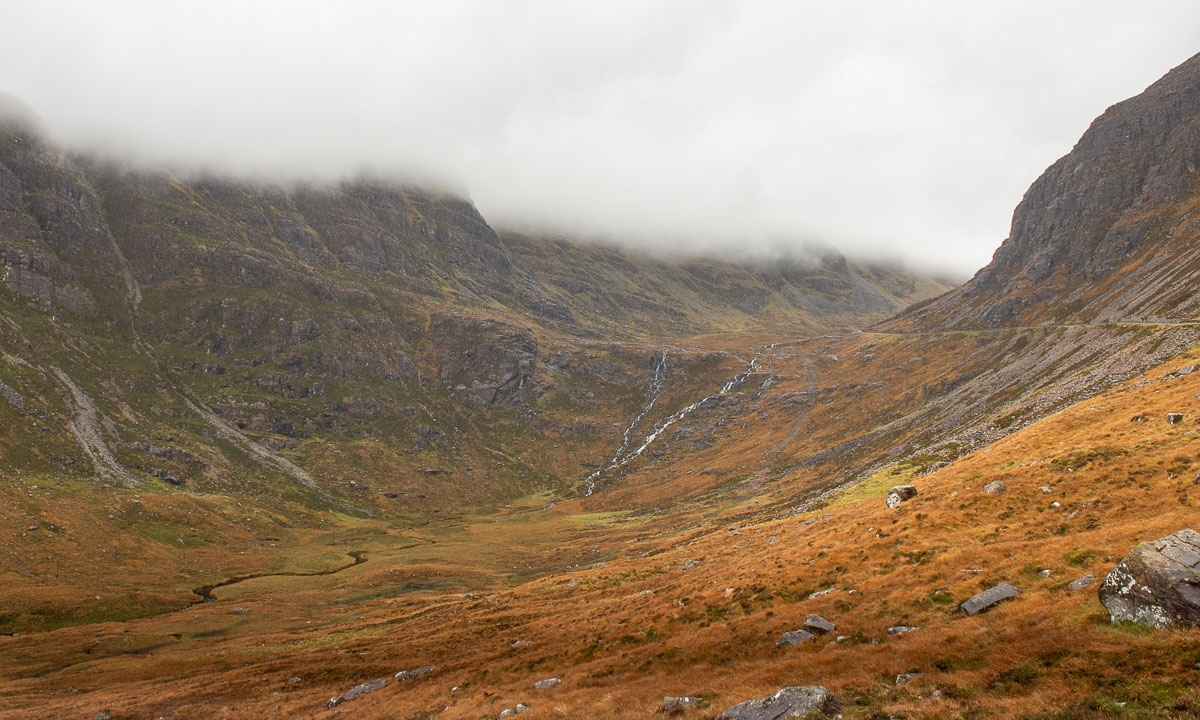
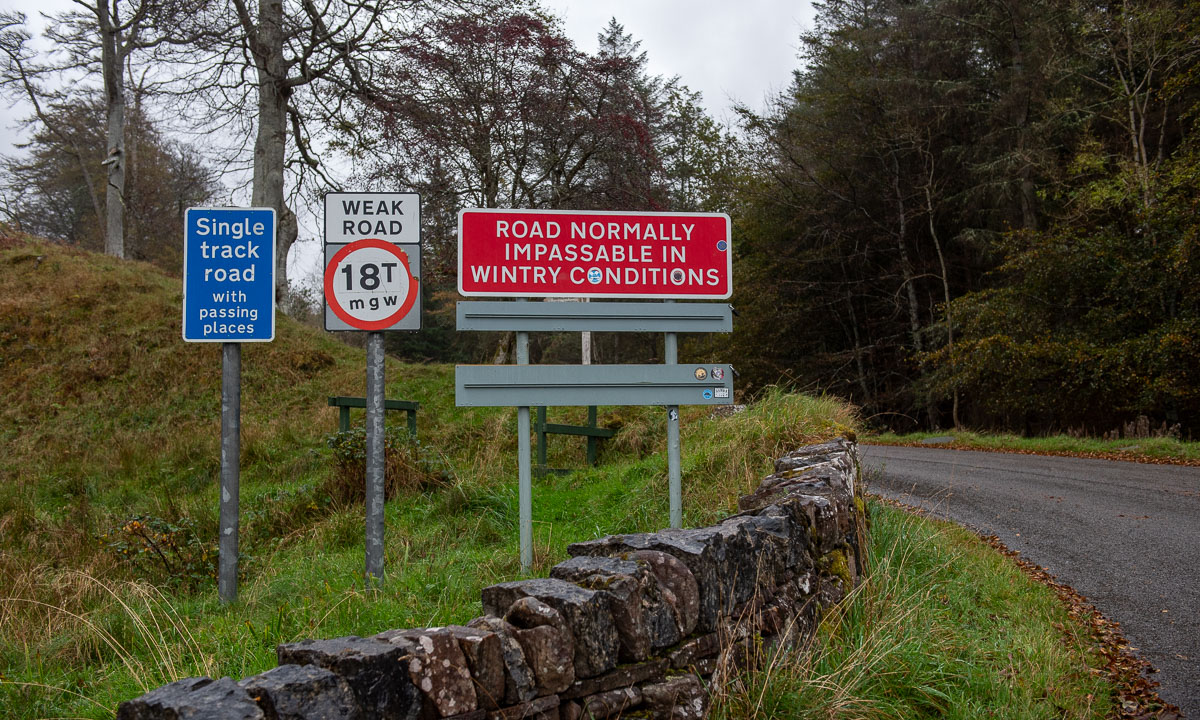
Today is the eighth day of our road trip in Northern Scotland, which my wife and I are taking together. Last night we slept in a hostel near Applecross. Now we want to take the road over Bealach na Bà pass, that is known for its hairpin bends and scenic views. Unfortunately it is still raining and the clouds are low. The beginning of the road is marked with several warning signs, but Annika can drive single track roads and we do not have wintry conditions, so we can take the road. But clouds we have. Soon we are in the middle of them. It is raining and the visibility is pretty bad. And so is the view of the hairpin turns from the top of the pass. Well, you cannot have everything.

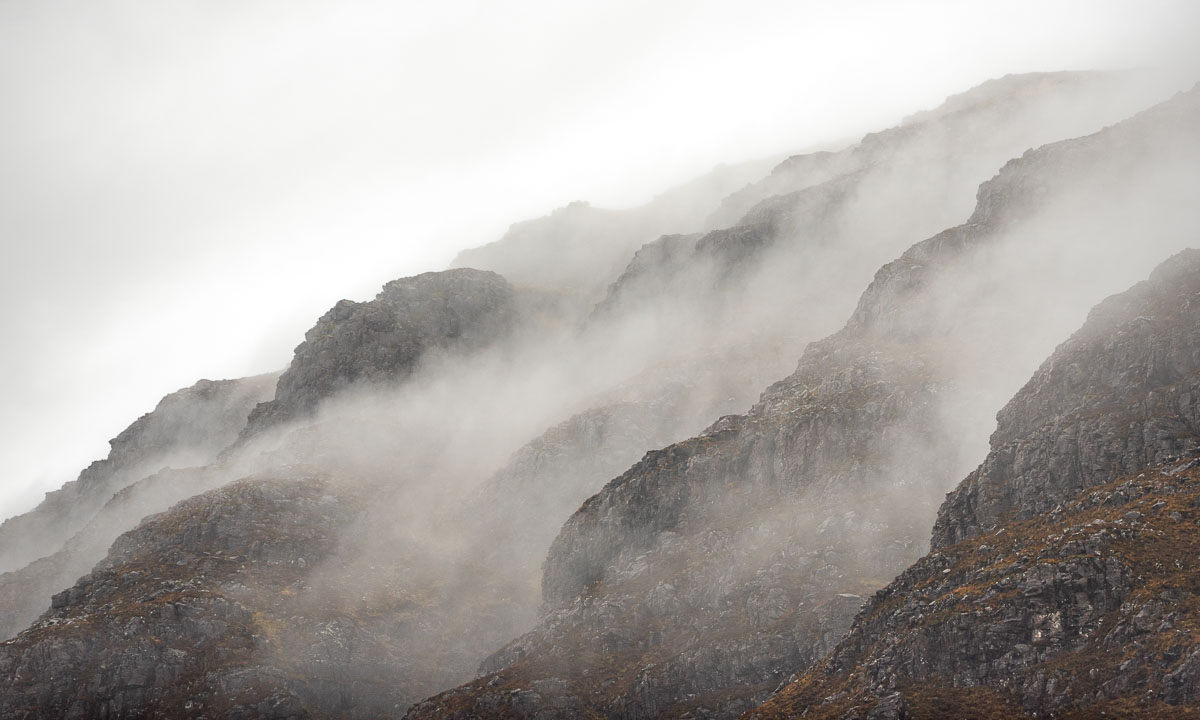
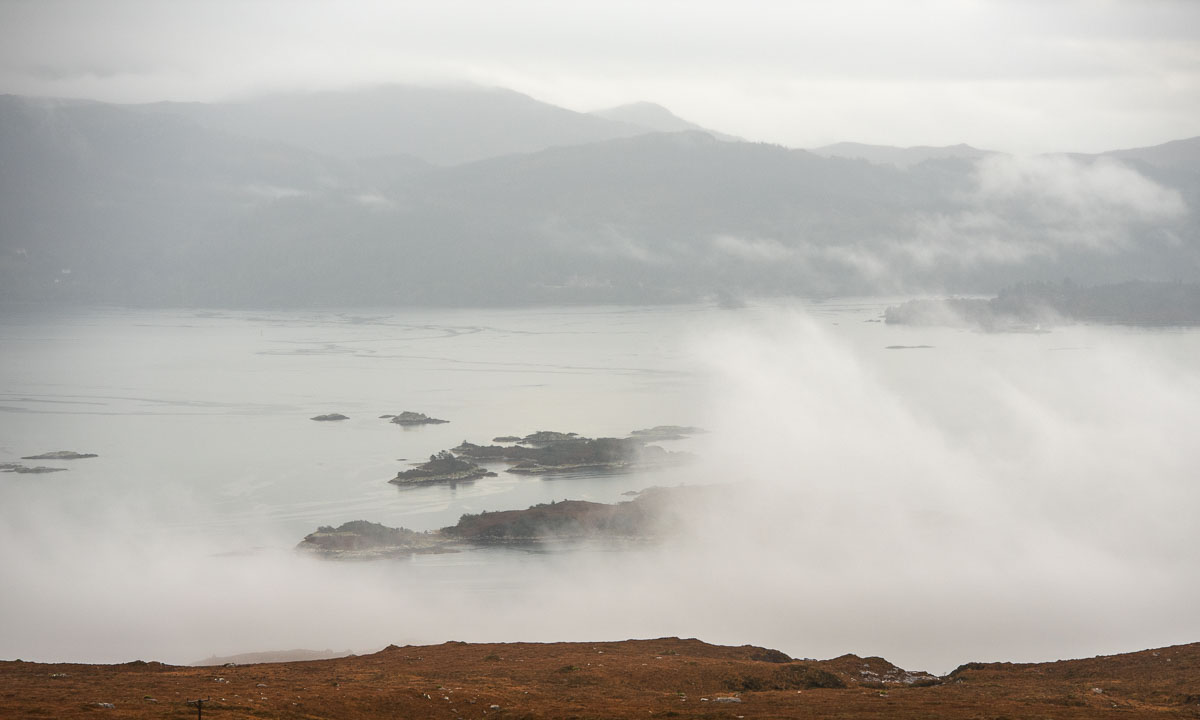
We descend and slowly visibility improves. When we look back we can see the colourful mountain scenery with the summits in the clouds. In front of us we see the other clouds floating down to the sea loch Loch Kishorn, where they start hiding the coastal islands.

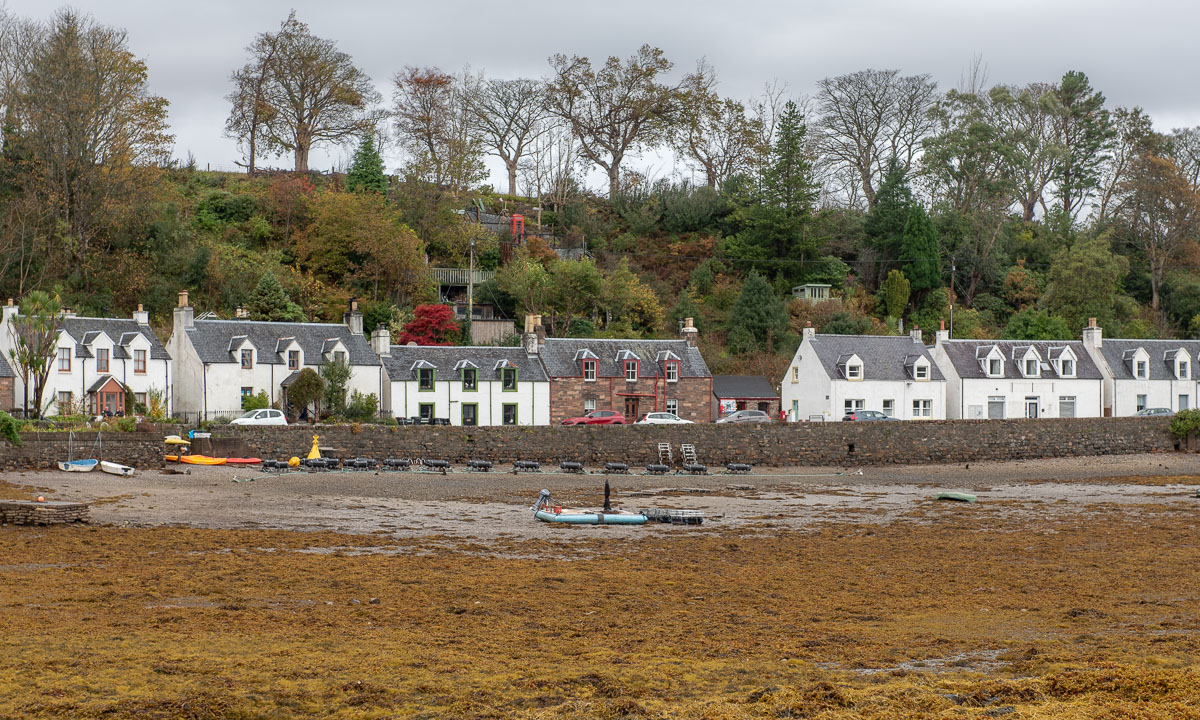
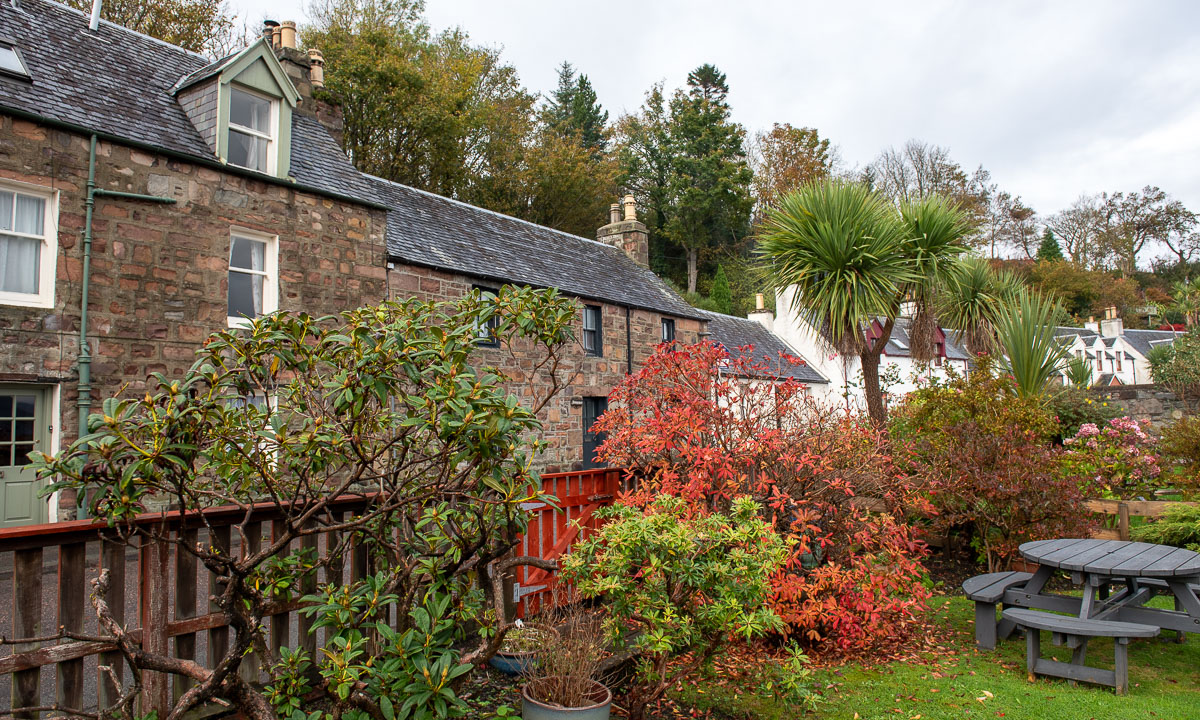
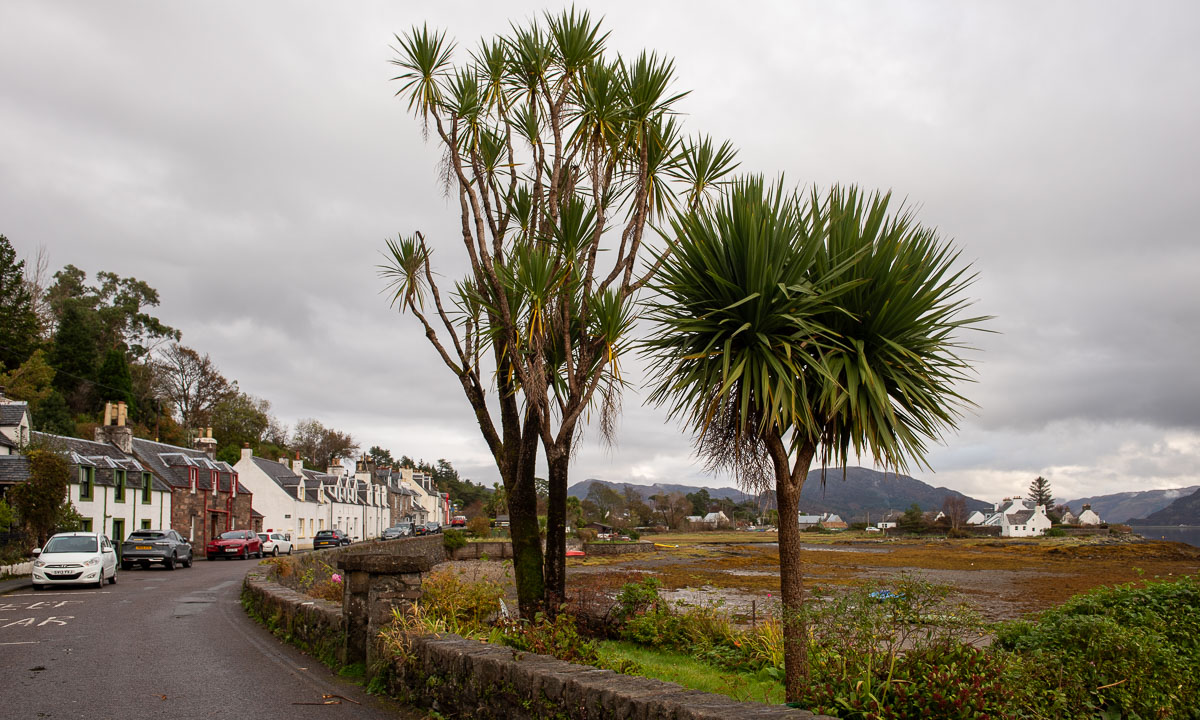
Two hours later we arrive in Plockton, a beautiful village by the sea. The climate is particularly mild, so that palm trees can grow here. An older chap I meet in the street tells me that he has different sorts of palms, a eucalyptus tree and other trees I never heard of in his garden.

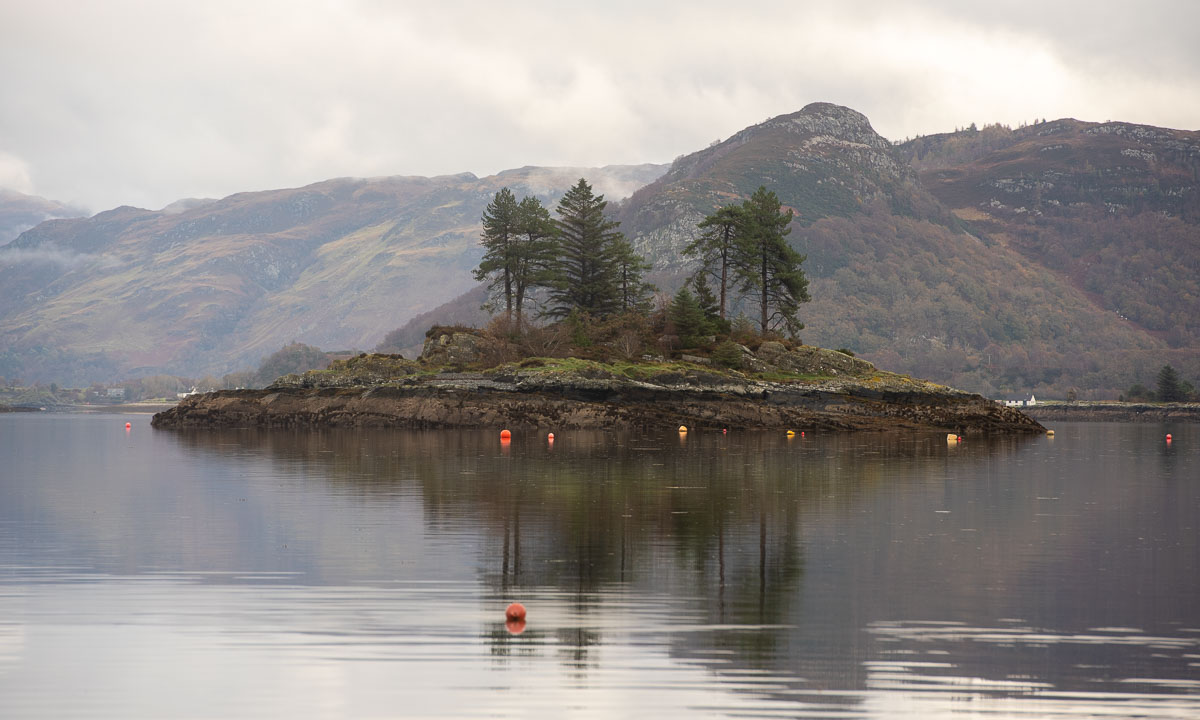
It is low tide. Some fisher boats lie in the mud and it is possible to go to an island nearby. From the sandy tidal flat you can see the long row of houses by the seaside – sea view for everyone. We spend an hour and a half here to visit the craft fair, to go to the island, to pet a cat, to take photos and to find a geocache. A charming place with views of the sea, an island called Sgeir Bhuidhe, Duncraig Castle, hills, and steep mountains.

Finally we continue our tour. Next stop: Eilean Donan Castle. This castle is regarded one of the most photographed landmarks in Scotland, and it’s very popular with tourists. Visiting the interior costs money, and there’s even a charge to cross the bridge, so I take photos from the outside. It is not easy to take photos without too many tourists in the shot.

From Eilean Donan Castle it is not far to the An Spiris Accommodation at Dundreggan Rewilding Centre, our last overnight stay on our road trip. My highlight of the evening is the toddler in the large common room singing “Do-Re-Mi” from the Sound of Music.


The sun is back in Tromsø

Today I saw the sun for the first time this year. Polar night in Tromsø has already ended one week ago but it always takes some days until it rises over the mountains. Yesterday it was cloudy but today was the day. Welcome back, sun.

This is a shot by mobile phone. I may have taken better photos with my small Sony camera but I forgot it in the office.

Short days in Obbola II

Just some photos from Obbola in the last days.

A flock of fieldfares in our rowan tree ❦ an icy morning by the coast ❦ sunlit ice fog hovering above the bay Vitskärsudden ❦ three roe deers eating rowan berries, leftovers of the fieldfares’ meal.

Translation:

EnglishGermanSwedishNorwegian
FieldfareWacholderdrosselBjörktraskGråtrost

Short days in Obbola

17 December

Clouds are moving eastwards where they block the low hanging sun, but here and there the sun peeks through holes giving the whole thing a dramatic touch.

18 December

It is chilly and ice fog hovers over the sea. I take a promenade by the icy coast.

20 December

It is quite clear and not too windy at temperatures round -12 °C. Yesterday I dug out the kayak from the snow, today it is time to take a tour. It’s a short but a beautiful one.

After the tour the line for the kayak rudder was frozen. The kayak is a bit too large for taking it in so I had to improvise a bit. Well, it worked.

21 December (a.k.a. today)

Today is the day of winter solstice. We could see the sun rise at 09:25 while having a comfortable Sunday morning breakfast. Today’s motive: the rowan tree under which Annika and I got married in 2020, taken through the windows of our living room.

Advent season home in Obbola

It was four days ago that I arrived in my “home home”, Annika’s and my house in Obbola. And we got some winter weather. First we got twenty centimetres of snow. We took a Saturday promenade to our favourite beach Vitskärsudden which looked like this:

It continued snowing and blowing the whole Saturday but then it cleared up in the night and Sunday morning the sky was clear at temperatures round -12 °C. I waited until 9:20 to watch the sun rise over the sea.

Later that day Annika and I took the very same promenade to Vitskärsudden again but it looked so differently in the sun.

In the night it became stormy. We have experienced some storms here before, but this was the very first time that I couldn’t open the front door at all. It was completely blocked by snow. I had to climb out of the snow-plastered kitchen window and shovel away the compact snow drift that blocked the door.

And this is how our house looked like some hours ago. Now it is clear and calm weather and -14 °C.


Back in Tromsø and it’s winter

When I worked in Tromsø on 20 November I took a snapshot through the window panes of the 5th floor. You could guess the sun between the mountains. It would be the last time I’d see the sun in Tromsø this year.

The next day I travelled to Germany to visit friends. I returned yesterday, 30 November and could see the sunset a bit north of Bergen from the airplane back to Tromsø.

In Tromsø we have polar night from 27 November until 14 January next year and it looks like this:

No, it doesn’t! Just kidding.

Polar night (the English term) does not mean, that it is dark all day. Only, that the sun won’t rise or set. The Norwegians – more affected than other countries – have two words. They call the polar night mørketid (darkness time) and reserve the term polarnatt (polar night) for the time where the sun is at more than six degrees below the horizon for the whole day. This applies only to places north of 72°33′ such as Bjørnøya or Svalbard.

Since it is not pitch-black I took a small ski promenade in the forests nearby. And so it looks like on a cloudy 1 December (-4 °C) on Tromsøya:


Bjuröklubb over night

Annika and I have been in Bjuröklubb a lot, especially when I lived in Skelleftehamn, but never we stayed overnight. Anyhow, there is a cabin called Spanarstugan and that we booked for a night last weekend. The cabin is modern and quite large but still cosy. It has electricity, and running water as well as toilet are not far away.

After a short lunch in the shadow of the large yellow lighthouse building we took a promenade to the beacon Bjuroklubb NÖ. The way there involved some climbing over rock fields but the view was worth it.

At 7 o’clock in the evening we went down the gravel road to the small marina where we sat for a while and watched the sky, the sea and a lonely sea bird.

Then we went up again – the ways are short – to the lighthouse building. The sun was partially hidden behind clouds and the light was warm and beautiful.

Round 11 o’clock in the evening I took another stroll up to the wooden view platform. I wanted to watch the sunset. First the sun was round and red then it resembled more and more a huge glowing jellyfish until it morphed into a small dash and disappeared behind the horizon.

Annika and I were in doubt if the lighthouse would be active in summer, when it doesn’t get dark. But round sunset I could see the light go on, blinking in a steady rhythm.

I sat there for a moment but then I became tired. So I walked down and went to bed where after slaughtering some mosquitoes I fast fell asleep.

In the night it rained, in the morning it was foggy but after breakfast and cleaning up the cabin the weather was sunny again. We enjoyed our stay there very much and started wondering, if this place is accessible in wintertime as well.


5 × 5 images from a Hurtigruten cruise

Two weeks ago I took the plane from Tromsø to Bergen. From there I would travel back to Tromsø by Hurtigruten together with my sister, my brother-in-law and my mother. My wife Annika would join us in Trondheim two days later.

22 May

There is still a lot of snow in the mountains on Tromsøya, Kvaløya, Senja and other islands I do not recognise from the plane. But in the lowland it is springtime.

I travelled with the Hurtigruten several times, but never south from Trondheim. We were not the only one’s boarding in Bergen. A lot of people use the Hurtigruten as a cruise ship, not as a possibility to travel from A to B. And there it lies, the vessel Kong Harald.

We have boarded round 18:00. At 20:30 we are departing and leave the town Bergen behind.

We are in sheltered waters and you hardly notice the ship moving beside of the motor’s vibrations. Even though Bergen is nine degrees south from Tromsø it does not get dark anymore.

The weather is cloudy but when the sun peeks through a holes in the clouds it looks beautiful.

23 May

One breakfast later: We arrive in Ålesund where the Hurtigruten will stay for ten hours. Time to explore this town which looks so different from the towns in the north. Ålesund has many Art Nouveau houses and “exotic” plants like azaleas are blooming everywhere. Together with my sister I climb the four hundred and something steps up the Aksla where we have an awesome view on the town.

We have also a view on the cruise ship AIDA prima. And beside of that – our Hurtigruten ship Kong Harald. It looks so tiny in comparison. I definitely prefer the small one.

I take a short stroll through town before I meet the others. First I admire all the small Art Nouveau details on the houses, then I almost get a culture shock when I find this tunnel:

In the evening we circumnavigate the island Hessa, because the ship is “reparked” on the other side of Ålesund. After a very warm and sunny day clouds have been gathering. But the sun manages to send beams through the clouds.

Is this one of the life boats? I mean – a photo of one of the life boats? No, it is a photo of a reflection of one of the life boats. It is reflected in the glass facade of an office building by the port.

24 May

Where are we? In Trondheim. Yay! I was so looking forward to meet Annika there. She checks in, then we take a short stroll in town along the channel with the groundbreaking name Kanalen – the channel.

As in Tromsø there are Kittiwakes in Trondheim. They use to screech a lot – often to each other – but these two fellows seem to be a bit shy, at least in the minute where I took the photo.

At lunchtime we leave Trondheim behind. The shimmering sunlight is reflected by zillions of tiny waves. We meet commercial ships, fishing boats, two kayaks and sometimes a sailing boat.

On the port side there is the open sea. Blue sky, blue sea, a small skerry and a house. Wait, a house? Yes, it is erected on a floating raft. What you cannot see – it is part of one of the countless salmon farms located in coastal Norway.

I have moved into Annika’s cabin. It has no regular window but two portholes. It is five to eleven in the evening and the sun peeks into our small but practical cabin.

And that’s the night where I get sick. That really wouldn’t have been necessary at all.

25 May

I am feeling ill and I sleep, I sleep and I sleep. I do not leave the cabin before 17:45 to take some photos while we are approaching the Lofoten islands. They look like mirages at the hazy horizon.

Round half past seven we are approaching Stamsund, passing rocky skerries and rocky mountains. Northern Norway, here we come!

At the harbour a graffito was sprayed or painted on the outer wall of the waiting room. Free high fives! For me however it was time to continue sleeping …

… but I got up at 23:15 again to see more from the Lofoten islands. Some of the mountains look like not being from this world.

The light got dim but it didn’t get dark. It’s the first day of midnight sun on the Lofoten. And it is almost midnight.

26 May

The reason for being up so late is that Kong Harald sails into the quite famous and very narrow fjord Trollfjorden. The landscape is impressive because the Hurtigruten is so near to land. – especially the mighty dark rock face in the north.

On our way back I spot a beautiful wave pattern. I really wonder how it was created.

Then it is time for me to sleep. And I sleep long. At lunch time I take some more photos. Now the landscape looks very familiar. No wonder, in an hour we will be in Tromsø, where I’ve been working for three years now. To my relief there is still snow on the mountain tops. It looks so nice.

The sky is still blue and the sea has been calm more or less the whole journey. There is hardly any wind but the flag is flattering in the airstream.

Round two o’clock we pass the southern tip of the island Tromsøya and then the new buildings on the eastern sea side.

After round 93 hours we are leaving the ship. My family checks into their hotel, Annika and I take the bus to my apartment which has become one of my two homes.

Ski tour in Sweden – Tjäktja—Alesjaure—Vistas

This article is part of the series “2024-02: Ski tour Sweden”.

Day 7 – 4 March – Tjäktja—Alesjaure

I may repeat myself but again we have sunny weather and blue sky at -6 °C. The only difference, it is windy today. It started last night when we were out to watch the Northern Lights and now the wind is blowing snow over the mountains and through the valley. While we are starting our tour we are having an impressive parhelion and a piece of halo right of the sun. I’m pretty sure that it isn’t created by stratospheric clouds but by the blowing snow.

We descend into the valley Alisvággi and leave the blowing wind behind us. Now sun feels warm but on the ice of the river system Aliseatnu the cold air still wins.

It takes some time until we can spot some of the cabins of Alesjaure. I can see them behind the rocky hill. No, they are on the rocky hill. I remember having tried to climb this turtle shell-like hill with skis and pulka years ago. I have learned my lesson, we walk up. And then we are welcomed by the warden with a hot and very sweet juice. We chat for a while (we have met once years before) and then Annika and I sit on the reindeer skin lying on the bench by the table and take an outdoor picnic. We may choose a room because we are first. We enjoy the weather, inside and outside. Later, after dinner we will head for the sauna.

I thought it would be extremely crowded here but we arrived on the right day. Yesterday: 40 guests. Tomorrow: 50 pre-booked guests. Today: 11 :-)

Day 8 – 5 March – Alesjaure—Vistas

Today is a special day. We do not take a break day, we continue to Vistas where our friend Dirk is currently warden. With 18 kilometres it is the longest distance on our ski tour this year and I was a bit afraid that it could get tough. Is there a track? How is the snow? Therefore I have urged Annika into raising up ridiculously early. We have the large kitchen for us while ptarmigans are hopping and clucking outside of the windows.

The sun starts to illuminate the highest mountain peaks, soon we will have sun as well. 7:05 (sic!) we start our tour.

… and get a little lost. We navigate by eye and sync the stones marked in red with the summer trail on our map. Anyhow it doesn’t fit. The GPS helps and now we know where we are. While finding a good route to get more north were we assume the correct route to be we realise that the summer markers are all over the place. Not helpful! Our assumption was correct, there is the unmarked winter trail. It is obvious, because now we see snow mobile tracks, ski tracks, pulka tracks, boot tracks, snowshoe tracks. I guess we won’t have any navigation challenges anymore today.

We cross the first lake Bajip Čazajávri and the second lake Vuolip Čazajávri, then we stand at the “abyss”. The steepest part of this declining slope falls 50 metres on 200 metres and we both decide to unmount the skis. Beside of a patch of soft snow the snow is good to walk on.

Now we are in the beginning of the valley Visttasvággi which will gently descend for the rest of today’s tour. And since it descend we leave the barren kalfjäll and meet the first birch trees, the first ones since a week.

The next hours we will ski in the sun. The hot sun. First I take off my jacket, then cap and gloves, then I roll up my sleeves. Finally I put on the shirt’s hood again, not for cold but for sun protection. Some photos from the tour:

Moose droppings are not the only animal tracks we see. There are the typical deep moose tracks, the smaller reindeer tracks, countless ptarmigan tracks (both feet and feathers) and a special track – like a fox on snow shoes. This was the description of the Sami on Sälka when he described wolverine tracks. The wolverine track follows the trail for a long time and watching it is pretty exciting.

The wolverine tracks are special, since these animals are rare. Only round about a thousand wolverines live in Scandinavia. But I love the ptarmigan prints as well. They often seem to tell stories.

My titles: 1. Zen garden / 2. Hieroglyphs / 3. Salsa party

After some hours of sun we finally come into the shadow. Almost a relief. Now it is not far anymore to the Vistas cabin, which is not part of the famous Kungsleden trail since it lies in a side valley. Skiing there was much easier then I expected and we had a faster pace then on the preceding shorter distances.

Dirk has seen us already and welcomes us outside with two cups of hot juice. Later we get an incredible five star afternoon snack. It consists of two surprises. First surprise: We found cookies in the leftover food in the kitchen cupboard! Two sorts, one of them with chocolate. That has never ever happened to me before and I hardly can imagine why people should leave cookies behind. I won’t! Anyhow I’m grateful. Second surprise: Dirk does not only invites us to coffee but also to Christmas stollen, a traditional German Christmas cake. It is never too late to eat stollen. Thanks, Dirk, for sharing it with us!

After dinner – Dirk invited us again – I just walk around to take photos. A faint polar light can be seen but it is nothing compared with the last days, especially the night in Tjäktja.

Day 9 – 6 March – Vistas

Today is the fourth and last break day we take on this tour. Are we lazy? Yes and no. Annika is sawing logs, I am chopping the wood (not my best day though). I fetch water from the river by lowering a bucket from the bridge into a patch of open water. The ice on the river is not save. But we also sit outside reading and I am using the short period where the sun shines on the cabins (yes, another fine day) to take some photos.

Tomorrow we will ski to Nallo and stay there over night, then we will come back to Vistas.