From Singi to Sälka and Nallo

This article is part of the series “2015-08: Kungsleden hike”.

August 26 – 29: Day four to seven of the summer hike through the mountains of Swedish Lapland

Singi – Sälka

After three very warm and sunny days clouds came in over night and the sky was quite overcast that morning. Only at the northern sky a larger patch of blue was visible. That fits, we’re going north! The first two kilometres were very well known to us, we went them there and back the day before. The day’s walk was short – just 12 kilometres.

Soon the huts of Sälka came into view. It was funny to see the ads for the shop and the bastu – the sauna – amidst the extend mountain landscape. Only 300 meters left and we entered the reception to check in.

It’s a nice look from Sälka but we had another interest that afternoon: Overall on the ground the ptarmigans were running and there were even sitting on the huge pile of birch wood, so that me, the photographer and them, the models, were on eye level. They let me advance quite near – in fact so near that the tele lens couldn’t focus anymore. The first two images are younger ptarmigans, the last is a grown up – look at these fantastic white feathered feet.

Sälka – Nallo

The next morning there were so many ptarmigans around that you really had to watch yourself not stepping on one of them. I never saw so many and never saw them so near. Our plan was not to continue the King’s Trail but to go northeast to Nallo, a smaller cabin a bit higher up in the mountains. After the common breakfast (muesli with some milkish liquid made from dry milk – yuck!) we started our tour. Even shorter than yesterday: only 9 km but perhaps a bit more demanding since there’re streams to ford, while the whole King’s trail is equipped with Bridges.

We had to look for planks to cross the small rivers behind the cabins but soon we were on our trail.

One hour later we were on the moon …

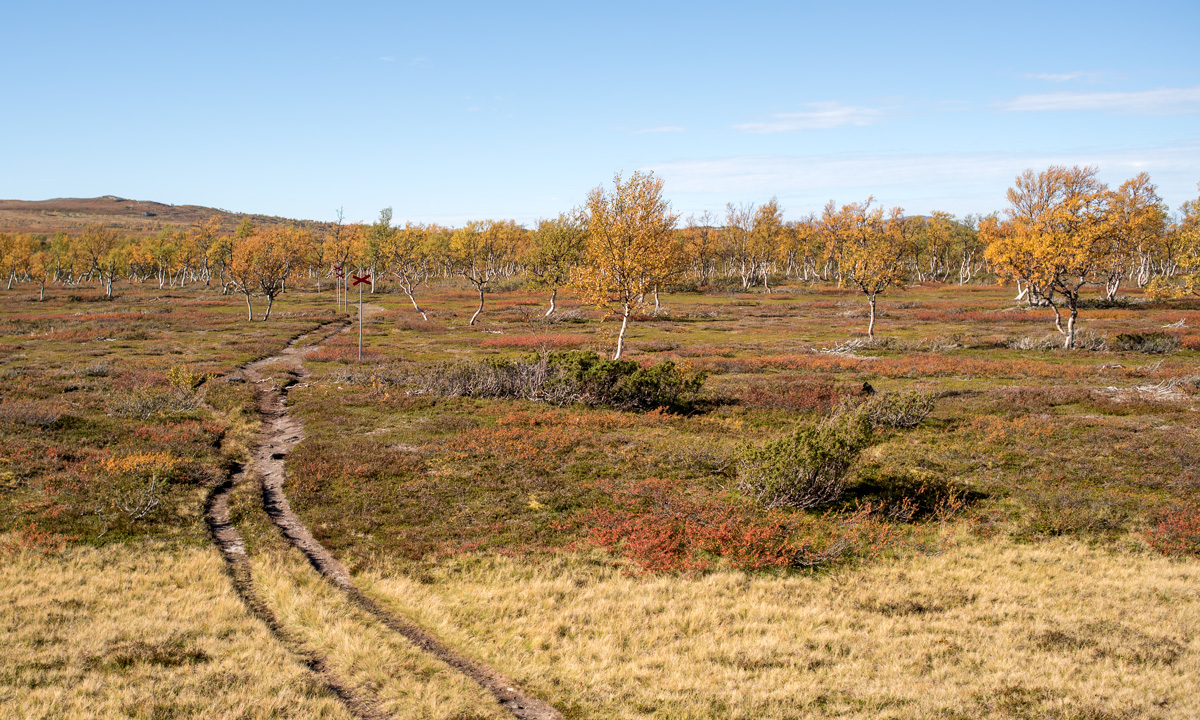
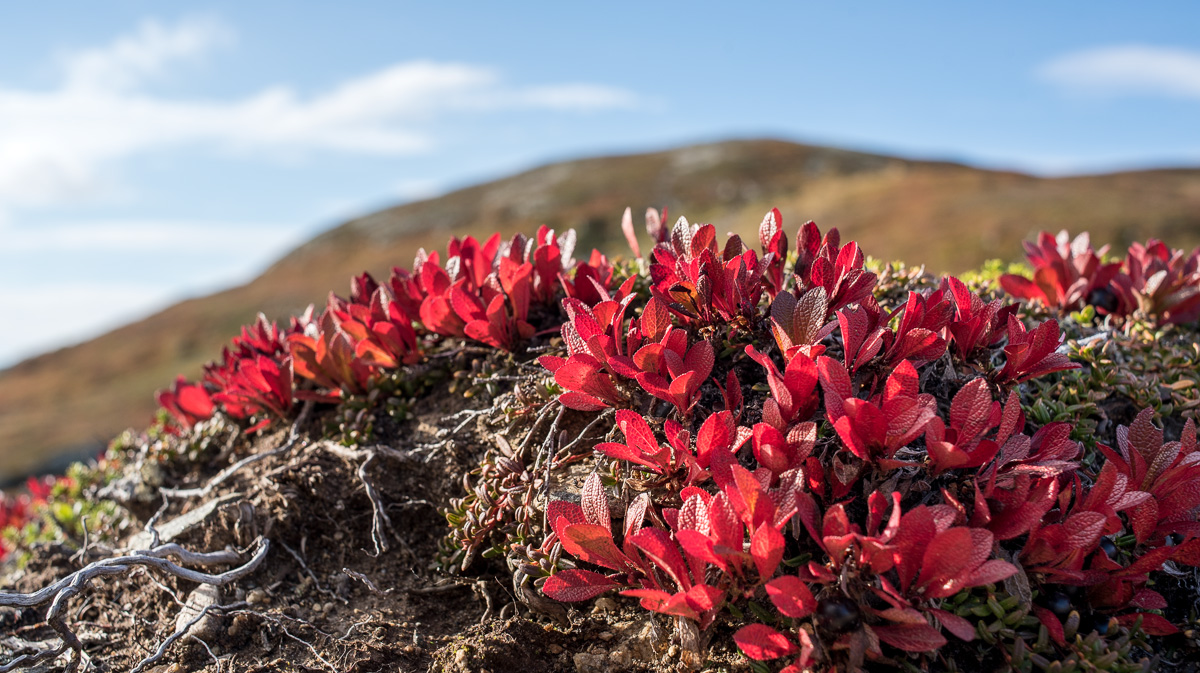
… well, not exactly, but it was such a sharp contrast to the sweet and lovely landscape of the last days. We could hardly see any vegetation. Only moss, grass and some scattered flowers were left. And some reindeers on some of the tabular slopes. There were many small streams and brooks to cross and it was the first day where I was glad, that I walked in rubber boots.

After a while the lake Reaiddájávri that lies on 1056 meter came into view and we went along it. More and more clouds came towards us and swirled around as if they wanted to surround us.

We had to cross the stream that enters the lake at the northern shore. Annika had to switch to sandals and ford the stream, for the water was to high for her hiking boots. It started to drizzle, than to rain and it got windy. Navigation was less easy now since it started to get foggy, there were less marks and some streams and snow patches to cross. Mostly I navigated with the compass, but twice I took the GPS to ensure my navigation. Since wind and rain increased more and more and I was busy with the navigation I packed the camera into the waterproof bag and didn’t make any photo on the last two kilometres. In the end the small Nallostuga came into view and even the huge mountain Nállu in the back lingered through the floating clouds. We got a warm welcome of the stugvärd – the warden of the Nallostuga. And warm was the wood fired oven, too. A good opportunity to dry our wet clothes.

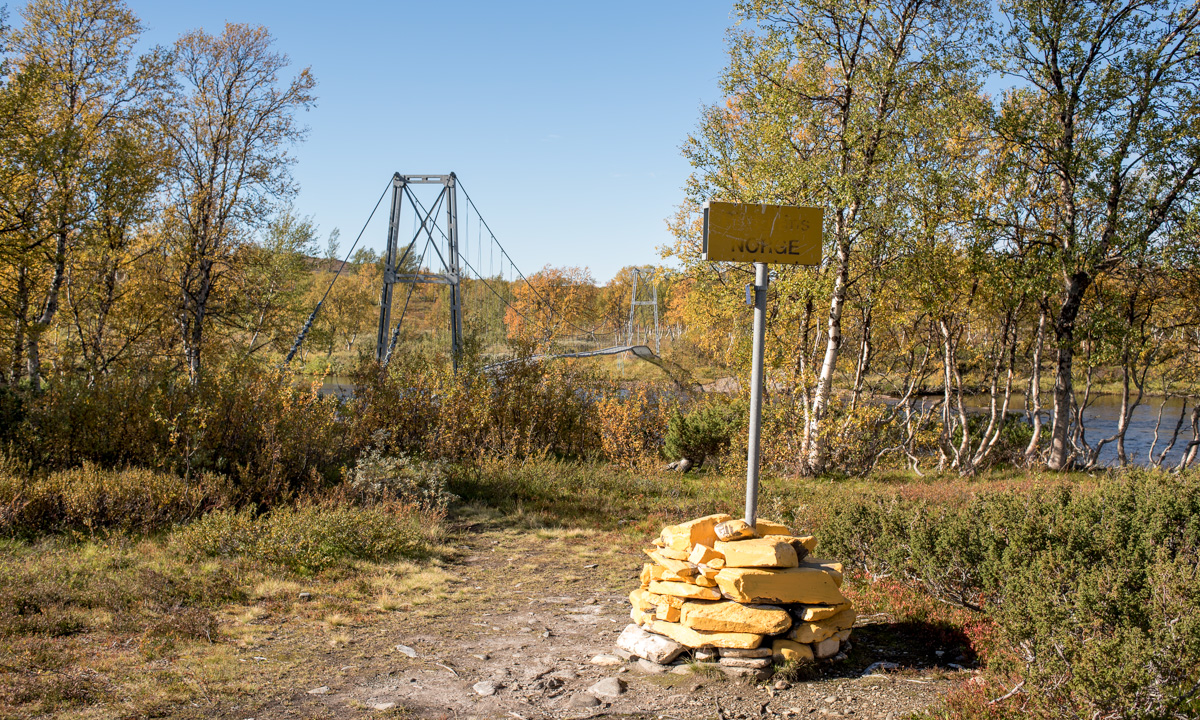
I only went out later that day to take a photo of the wooden signpost and the hut itself. The rest of the day was just gemütlich – the pouring rain outside and we ourselves warm and cozy inside.

Two days of at Nallo

One

We planned to stay a day in Nallo already two days ago. It looked like a good idea since the rain just poured down the whole day and it was very windy. All people out there looked very wet, whether they just crossed the stream – now twice as large and probably twice as deep – or if they just fetched a bucket full of water.

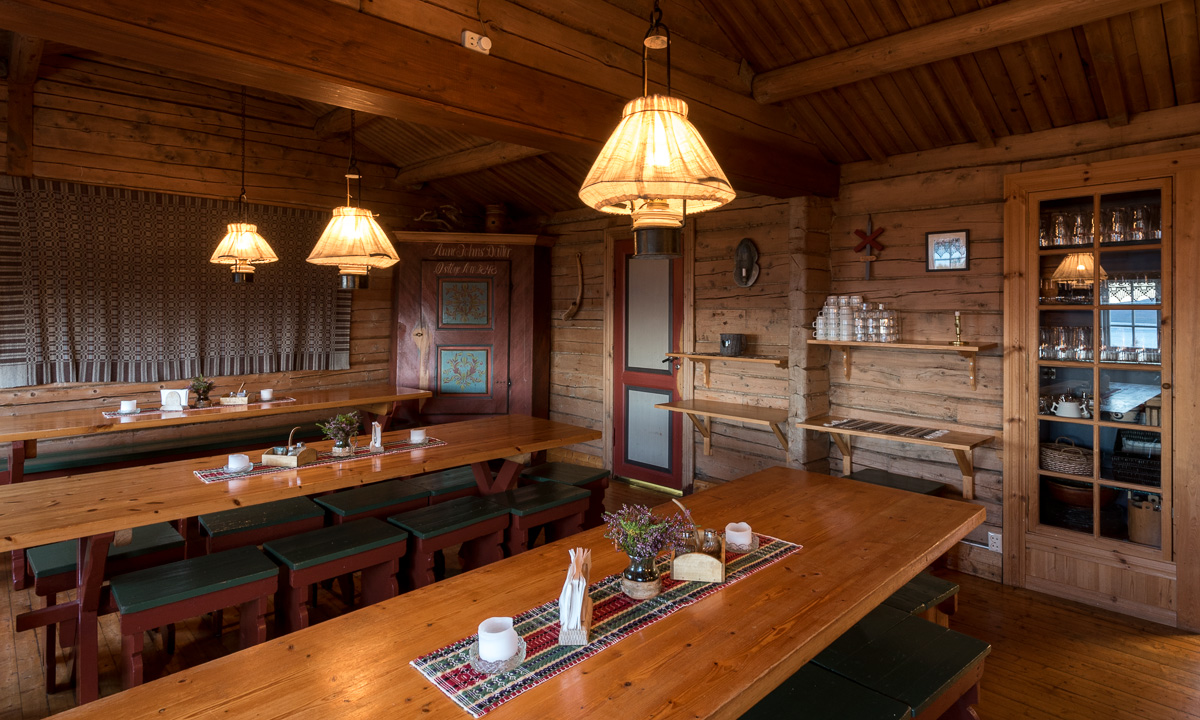
Time to make some photos within the house. Two typical views in Swedish mountain huts: Many of them have two rooms, each has a kitchen and two flanking bedrooms, only separated by a curtain. That make 20 beds in total. Plus one for the stugvärd who has his own little room. The Primus 2388 is a gas cooker, easy to handle and is found in almost each Swedish mountain hut.

Two solo hikers planned to continue their tour that day but after a while they decided to stay. Perhaps not the worst idea when you looked at the young hikers, that came in. They were completely soaked. They poured the water out of their hiking shoes and hang up the dripping-wet sleeping bags for drying. All was just soaking wet! We we’re quite glad to be inside. But finally I took my camera and went out for some photos. Brr, it was really cold (7 °C) and so windy that the spray of the brooks was blown upwards again. Some photos:

I was glad, when I came into the inside of our cozy hut again. Only Simba, the warden’s dog endured the weather stoically.

Later that day: The sleeping bag already has dried, but other clothes were still hanging on the clothes line.

Two

Next day we wanted to continue our trip but I changed plans. Unintentionally. I got ill. I got fever that night and problems with my stomach and intestines, that I definitely don’t want to describe in detail. Otherwise there’s nothing much to report. I didn’t make a single photo (a certain proof that I was really ill) and slept almost the whole day.

Later in the evening, when I felt a bit better I was able to communicate again. I heard about others that went Singi–Sälka, the very same way we went three days before. The trail has been so flooded that the water poured over the wooden planks of the minor bridges making them very slippery and it was so windy that the hikers were really frightened to be blown from the bridge right into one of the swollen rivers. Illness never fits, bit I guess I chose a quite good day for being sick.

I slept the night before, I slept almost the whole day and I slept the next night. That sums up to round about 30 hours of sleep without any larger interruption. That probably was the best medicine and the next day I felt sound and healthy again. The plan for the coming day: Hiking to Vistas.

From Kebnekaise Fjällstation to Singi

This article is part of the series “2015-08: Kungsleden hike”.

August 24 and 25: Day two and three of the summer hike through the mountains of Swedish Lapland

Kebnekaise Fjällstation – Singi

After the crowded Kebnekaise Fjällstation I really longed to continue our hike. Soon after breakfast (with real German bread!) we left and continued westwards. Soon a first wooden bridge over a small creek came into view followed by a larger bridge over the ravine that the stream Láddjujohka has cut into the rock. In the back: The mighty mountain Siŋŋičohkka.

It was as warm as the day before and the sky was incredibly blue. We continued westwards and went round the steep southern slope of the Siŋŋičohkka. Parts of the narrow valley lay in the shadow of the mountains Skárttoaivi and Liddubákti, but soon we came to a sunny place covered with soft heather beside of a small creek – the ideal resting place. It was hard to prevent dozing off and to pull ourselves together to continue after a long while of resting and being lazy.

This daily stage was quite relaxed: only 14 kilometres. Soon the Singistugorna – The Singi cabins – came into view.

We hardly saw any animals yet but round the cabins we saw two quite typical species commonly found in Lapland: The lämmel or lemming and the ripa or ptarmigan (sometimes called snow chicken). They came quite near but gave me a hard time photoing them. I only had a small 100mm-lens with manual focus instead of my great but huge and heavy 70-200mm-lens, so I’m not really content with the results. However, the experience to have these animals so near was more important.

(Later on the journey I got a much better opportunity to take pictures of ptarmigans …)

Singi – Hukejaure – Singi

This day was planned to be a long one! Instead of following the Kungsleden – the King’s trail we planned to go to Hukejaure in the west and then to cross the Swedish-Norwegian border. From Singi to Hukejaure it’s 20 km and it’s just a path, only partly marked.

We started quite early, went north along the stream Tjäktjajåkka and crossed it after two kilometres on another chain bridge.

We had to “climb” over some rocky parts until we came to a beautiful alpine pasture. Do you know the film The Sound of Music? It almost looked alike – without the dancing and singing. Instead of that we got some snow fields and some shallow bogs and ponds. Beautiful anyway:

After a while the path was gone and we had to go up some hundred meters. It was as warm as the other days plus we were on a treeless southern slope – a matter that makes one sweat. We made a rest after 7 or 8 kilometres. It was later than expected and we just made the easy part of our way today. Will we come to Hukejaure in time? Or will it get dark? Is it safe and reasonable to continue? We both didn’t like the decision but since we weren’t sure to reach Hukejaure in time we decided to go back. Next time we have either to start even earlier or take a tent with us. We’ll see …

After 5 kilometres we came to the Tjäktjajåkka again but the light was completely different.

The last two kilometres felt a bit boring and we were glad when we arrived at the Singistugorna that we left the same morning. Other people walk there dogs, we walked our backpacks. After a two-course dinner (noodle soup and tortellini) I went around in the dusk and took pictures of the landscape reflecting in the oxbow lakes of the Tjäktjajåkka.

I was glad that I had my mosquito jacket with me, they were many of them seeking my blood that evening. And when I came back I was glad that all windows are equipped with fly screens to keep out those little bloodsucking vampires.

On the one hand it was a disappointment that we had to change plans, on the other side the tour itself through this side valley was awesome. We probably would never have thought about it without our Hukejaure-plans. Next stop tomorrow: Sälka, only 12 kilometres.

For the longhorn beetle enthusiasts …

Both longhorn beetles found in Bygdeträsk. The Leptura quadrifasciata on Friday, the Lepturobosca virens today.

Translations:

EnglishGermanSwedish
Longhorn beetleBockkäferLånghorningar
Leptura quadrifasciataVierbindiger SchmalbockFyrbandad blombock
Lepturobosca virensDichtbehaarter HalsbockGrön blombock

Continuing to the Vesterålen

This article is part of the series “2015-07: Lofoten and Vesterålen”.

Our third day started with a lot of rain. We put the wet tent into the car and continued our tour to Kabelvåg where we visited a friend of mine. We took a small mountain hike but it was cloudy and wet. Only far away in the east you could see some sunny patches on the top of the snowy mountains.

After the hike Delle and I looked for a camp ground. But first I had to take a picture of the beautiful rainbow near Sildpollen.

This time we tented on a bigger campsite in Sandsletta. When I woke up quite early the next day I could see another rainbow over the Vatnfjorden, but later it started to rain and pour down again. And again we put the soaked tent into the car. We continued on the road 888 to Fiskebøl. The clouds were hanging low and you could hardly see any mountain, just some white and light grey schemes.

Soon we arrived in Fiskebøl where we waited for the ferry. Again we were lucky – we waited hardly half an hour until we entered the ferry for the short crossing to Melbu, the southernmost city of the Vesterålen. We visited friends of mine, this time in Haukenes were we tented near the friend’s house. The cocks tried to wake me up ridiculously early, but in vain. I continued sleeping until 8 o’clock.

Alas it was the first morning without rain (and the only one, too) and we could dry the tent. After a long and lazy breakfast with my friends we said farewell and continued our car trip. We got a tip to visit Stø at the northern end of the Vesterålen island Langøya. What a good tip and what a beautiful landscape – especially after the weather was nice and sunny. We made a short photo stop between Strengelvåg and Klo before we continued to Stø.

In Stø we parked our car and took a short hike over the mountains to a beautiful white sanded beach were we made a rest and I took a short bath. There’s a 15 km hiking trail as well; next time I’ll definitely will go it.

After our rest we slowly walked back and continued by car. First we had to head south to Sortland were we crossed the Sortlandsundet and headed north on the other side. The sky became more and more cloudy and we looked for a nice campground. Finally we found one in Bleik, quite near Andenes, a town at the northern end of the Vesterålen. We put up the tent and – guess what – it started to rain.

It had been raining the whole night and it continued raining. Again a soaking wet bunch of a tent lay in the back of the car. After a while of driving through the greyness we decided to head back to Skelleftehamn. It’s more than 900 kilometres and it took the whole day. Rain became less near Abisko and after we passed Jokkmokk the sky cleared up and we could see the full moon slowly rising. The next photo, which is the last of our car trip through the Lofoten and Vesterålen is taken near Storforsen, one of Europe’s biggest rapids. At 23:50 we were in Skelleftehamn again – and I was home.

  • 2296 kilometres in six days
  • a lot of clouds and rain, but two nice and sunny days, too
  • one night in the car, four in the tent (three of them on campgrounds)
  • two bathes and at least four rainbows
  • – a nice trip!


From Å to Rystad

This article is part of the series “2015-07: Lofoten and Vesterålen”.

Day 2

Next morning when we woke up in Å we could see blue sky through the fogged car windows. The rain has stopped. We made a walk through the little fishing village and had breakfast on the cliff with a fantastic view on the mountains and the sea.

After that we continued our trip through the incredible landscape of the Lofoten. We had to stop several times to take pictures, for example of this small mountain lake near the road to Nusfjord:

Later we came to a place that became quite famous over the years: Uttakleiv – a beautiful sandy beach that just invites you to jump into the turquoise-coloured water. It almost looks Caribbean but as soon as you enter the ice cold water you’re reminded of being in Northern Norway, not in the south. The bath was fun, anyway.

Here we stayed for a while and enjoyed the sun. But after a while we continued our road trip to Brenna on the island Austvågøy. We didn’t find a camping ground at the end of the road and turned, but soon we stopped the car again. Actually because I wanted to take pictures of the sheep that lay at the sandy beach, but some children nearby discovered something much more interesting: A fox cub. I changed to the telephoto lens and I came quite near. Probably the fox hadn’t made any bad experiences with humans yet.

After that we stopped at a camping ground near Rystad that we already saw on the way to Brenna and decided to stay overnight. Soon the tent was put up on the grassy ground. Slowly the sun went round the mountains and sank down. The next hours were incredible – the light was so wonderful, both the sunlit main land in the south and the sea in the north glowed in the most fantastic colours. But have a look by yourself:

Round one o’clock we lay down in our tent, but only because clouds came and it started to rain a bit. What a wonderful first day on the Lofoten!

A curious squirrel

I love to take pictures from animals. Most animals doesn’t share this pleasure and flee – either from me or the camera with the big telephoto lens. Today I was lucky. A squirrel sitting in the tree stared curiously at me giving me time to change lens and make some pictures. It’s only after I went directly to the tree to come nearer, the squirrel scurried up the tree. But I got my portrait.

Umiak I

It started like many kayak trips: I put out to sea at the tiny beach Storgrundet without any plans at all. Unlike yesterdays weather forecast it was a nice and sunny day, although not very warm. Since the sea was calm I paddeled along the seaward sides of the islands Storgrundet and Brottören, crossed the Bredskärsviken to the islands Norrskär and Bredskär, continued at the east side of Flottgrundet and headed to Gåsören, probably my favourite island nearby. Some photos:

But much more fascinating than nature, birds and islands was the moment when I looked at the horizon and saw the faint but large silhouette of a big ship. The blurred outline looked more like a fata morgana than a real object. But I wasn’t the only one watching the ship. Two tugboats came from the port to bring the ship into port.

T., whom I met on the Island Gåsören knew the ship. It’s Umiak I, an ice breaker, that can break 1.5 meter ice and still going 6 knots (ca. 11 km/h). Impressing! I do like summer, but I really adore winter and started dreaming of travelling with the Umiak I in winter and cutting through solid ice.

Later today I made a better image of the ship in port.

It’s at least so famous, that it has its own Wikipedia page! I looked at Shorelink as well, to get some more information:

  • Cargo: 9257 tons copper concentrate
  • Coming from: Edwards Cove via Brunsbuttel

Of course I had to look up Edwards Cove, too. Never heard the name before. If the internet is right, Edwards Cove is a harbour west-northwest from Nain in Labrador, Arctic Canada. If the ship would go back the same way, I guess I would ask for a lift.

Links:

Travelling back in time

Believe it or not, it is possible to travel back in time, at least some weeks.

Here in Skelleftehamn near the coast the ice on the Baltic Sea, the river Skellefteälven and all lakes is gone and all birch trees are bedecked with green leaves.

Yesterday I had a gig in the Skidstugan Stenabäck – a small ski hut between Norsjö and Lycksele. On the way there I could see the birch trees being less and less green until they were leafless again. As I said – like travelling back in time. But I was even more fascinated by the fact, that parts of the lake Stor kvammarn were still covered with ice.

Just at the driveway to the ski hut some reindeers were hanging around. I saw them again several times this weekend. The group was easy to recognise because of the white reindeer with the pale pink horns.

I stayed over night and so I got the opportunity to make a picture of the incredible evening sky. It looked like clouds burning in slow motion.

Today I took a short tour by car with R. who drove along some forest roads nearby. We saw a young moose standing in the forest and just beside the road a Western capercaillie probably looking for a hen.

Then I took my own car and drove home, not the fast and boring main roads but the smaller ones. I saw four more moose on three different  places. Five moose total – a new record, but there all were quite camera-shy, trotted away and hid in the dense forest – one even crossed a small river and even if I couldn’t see her anymore I could still hear her feet splashing through the water.

One photo through the windscreen – just for the records.

Translation:

EnglishGermanSwedish
western capercaillie, wood grouse, heather cockAuerhuhn/Auerhahntjäder

Some images of a short kayak tour

Today I took a short tour from the small boat harbour Killingören, just 650 meters away from my house. After taking the Kejsar Ludvigs kanal – a small channel, that splits the peninsula Rönnskär – I headed to the small island Kalkgrundet, where I landed my kayak. In the shadow of the trees there’re still some patches of snow left – up to 30 centimetres. I guess it’s the leftovers of a huge snowdrift.

I walked round the island and saw a Canada goose swimming nearby. One more step and I saw another one fleeing from land to sea. It was really near but I didn’t see it before it fled. I took some photos and continued my walk. Then I saw the reason why the geese didn’t just swim away: They were nesting. Sorry, my geese, I didn’t know this. I took a very quick photo of the nest and continued walking round the small island. When I was round the corner I peeked back and could see the geese going on land again.

I continued my kayak tour to an old pier at the shore of Örviken. From the distance it looked quite stable, but when I came closer I could see that it was ruinous and many of the wooden logs wobbled in the tiny waves.

I crossed the Sörfjärden and entered the bay Kurjoviken.  I could see the bright coloured blossoms of the marsh-marigold (Caltha palustris). I love these flowers and when I was home again two hours later I visited the place from land to make some photos. Here they are: