A new camera

Next week Annika, my sister, brother in law a nephew and I will start a hiking tour in Sweden and Norway. We will not use a tent but hike from cabin to cabin. Last time I had 6 kilo of camera equipment with me. This year I decided to scale down weight and so I bought a point-and-shoot camera this week: the Sony RX100 VII. It has some disadvantages, but a huuuge advantage: It’s small and weights hardly more than 300 grams. That’s why I even can take a smaller backpack (also bought this week) and save another 1300 grams of weight.

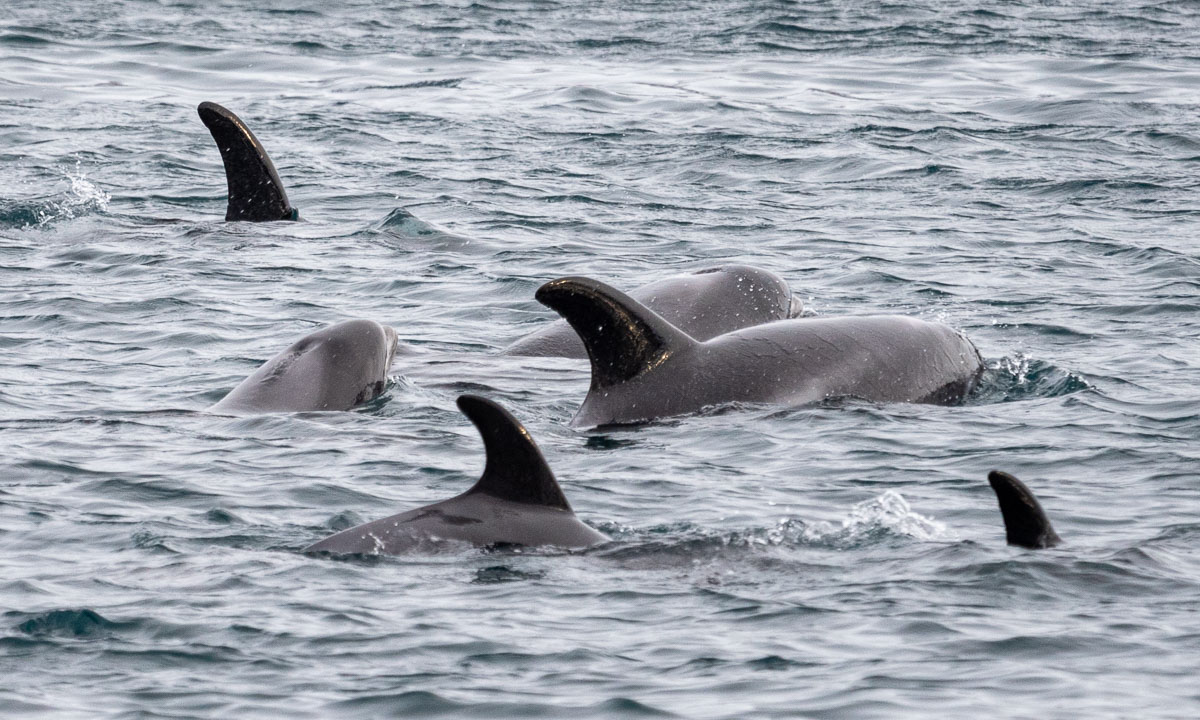
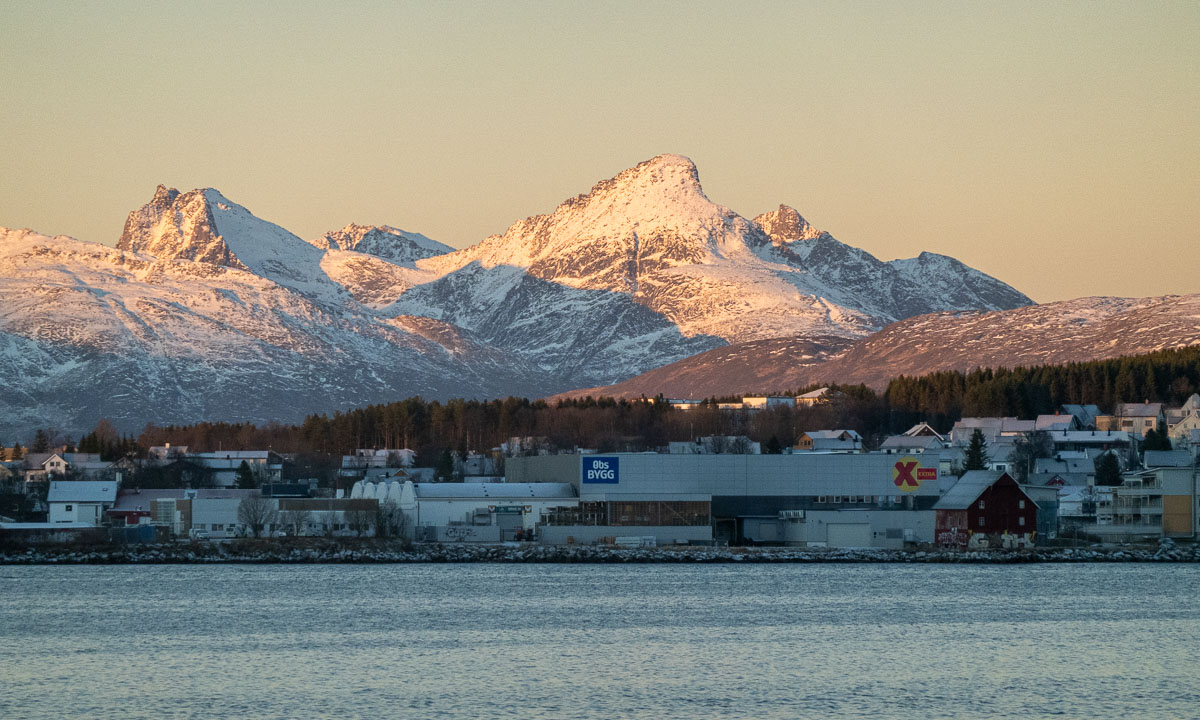
Today I tested the camera, first on my way to work and then on random places, from the center to Telegrafbukta. I know, that the camera has its limitations (being not weatherproof for example) but I’m quite glad that I finally bought it. And here come some test shots from today. All photos are edited in Lightroom.


Hiking up the Nordtinden

After I failed reaching the summit of the Nordtinden (640 m) last November I gave it a second try today. It’s so much easier to navigate when there is no snow covering the path and the sparse way marks.

I start to follow the gravel road, which I leave after 2.7 km.

The small trail leads up steadily. It’s not so steep, that I have to climb but steep enough to raise my pulse to hummingbird level. I could blame it on my Covid infection two weeks ago but I guess it’s just a lack of fitness.

A movement to the left wakes me up. It’s a flock of ptarmigan fledglings with an adult. Some flutter away, some stay. I use the confusion to take some photos with my telephoto lens. The photos are heavily cropped, I want to keep distance.

I am above the tree line now and the views are impressive.

Most impressive is a chasm at the side of the trail. The gradient down? Perhaps 400%. Enough to keep safety distance while photographing.

The last part is rocky and pathless but the huge cairns marking the tops of Nordtinden (there seem to be two) are in view so I can navigate just by eye. I take it easy on the boulder fields. I reach summit number one and add myself to the summit register that lies sheltered in an aluminium box.

I continue a bit more west to get a better view to the sea. And there it is – the island Vengsøya with the smaller island Vågøya in the front.

I walk around to take some more pictures. I watch the ferry leaving Vengsøya and climb a bit down the slope to have a closer look to the nameless lake below the mountain Laukviktinden.

Then I walk back in a small circle, pass the other summit cairn and start to descend.

It’s always interesting how not only the view changes but the terrain as well. Round the summits it’s mostly rocks and boulder fields, then more and more grass is present and the path consists also of gravel and then earth, too. On the way back the lake Skulsfjordvatnet lies in the sun.

As most day trips the way back is the same as the way there. So I pass the sign to Nordtinden a second time and am on the gravel road again.

The change from forest to farmland shows that my car is not far away. After four hours and about 12 km I’m back from a lovely mountain hike.

Two more photos showing small things. The first one a beetle from the genus Carabus. The first one a berry from the genus Rubus. I was glad about both discoveries. The difference: The beetle stayed unharmed, the berry was eaten right after taking the picture.


Some summer days in Sweden

I was home in Sweden for only three weeks but the time feels long and rich. Annika and I had guests most of the time but some days in between just the two of us.

A short kayak trip in the sun

On 1 July I used my lunch break to paddle to the beach. I took a bath and lunch there and then paddled back to work. Ah, I love this type of lunch breaks!

A day trip to Norrbyskär

On 3 July Annika and I took the car to Norrbyn and from there the ferry to the island Norrbyskär. Always worth visiting, especially when the warm weather invites to a bath.

A wavy kayak trip

On 4 July Annika and I made a kayak trip to and round the island Tarv. Normally this would be a quite relaxing tour of 10–11 km. But due to the windy weather the sea was pretty choppy and we had to focus a lot on the waves and the rocks.

No one of us took any photos there, but in the more sheltered waters beside and behind the island it was possible to take some photos again. And another bath.

Finally rain

On 7 July it finally rained in Obbola. The rain came too late for the dried up lawn but probably saved a lot of flowers and bushes in our garden.

Hiking twice

On 8 July Annika and hiked twice. First round Grössjön together with guests from Germany, then just we two at the Kronören naturreservat. Grössjön is mostly forest and bogs (and a lot of mosquitoes) while Kronören is also open landscape by the sea.

Back to Tromsø

Ten days ago an 10 July I travelled back to Tromsø. Train Departure in Umeå 2:15 in the night, bus arrival in Tromsø was 17:30.

I felt cold and made a Covid test the next day. Bang – positive! Therefore I couldn’t take advantage of the beautiful summer weather in Tromsø but stayed home in bed the week.

I made some short hikes on the weekend but the weather was dull, foggy and rainy.


Summer paddling to lunch

Since last Friday we have summer home in Obbola, Sweden. Temperatures are round 25 °C (and higher in town) and the sky is mostly blue.

Today it was sunny again. Although working I finally managed to paddle to the beach Bredviks havsbad and eat lunch there. Tour–retour it is about 7 km and since the weather was very calm it was easy to paddle there.  I paddled in shorts and t-shirt but it was still almost too warm. At the beach I took a bath to cool down while waiting for Nouri’s tasty Pinchos.


After work promenade to the Keiptuva

38.5 km by car, 5.5 km by foot. Some hundred metres in altitude. Warm and windy weather. Forests, slopes, shallow bogs, mountain paths, water to ford, flowers, snow fields, lakes, tundra, rocks, views to the mountains of Kvaløya, the fjord, the open sea and Greenland. OK, cross out the last point. Anyhow, quite much for a short after work promenade.

Mountains, sea and midnight sun

Yesterday at 18:00 I took the car to Elvenes on Kvaløya to start a small mountain tour. Well, mountain or hill – the summit of Grønnlibruna is only 401 metres above sea level. I chose this destination in the hope that it was not completely snowed over as the higher mountains still are.

I parked the car, walked the gravel path and stood before the first obstacle, the stream Finnelva. I did the same tour last November, where it was easy to cross. Now in the thawing period the water was at least 50 cm deep and quite fast . Too deep to cross here, even with rubber boots. Luckily I found a better place to ford a bit upstream. Soon I was in the forest. A very wet and muddy forest where I was not always sure whether I followed the way, crossed a swamp or waded in a brook. But this stopped when I gained a bit of altitude where old snow covered the forest floor.

As soon as was above the tree line the landscape changed again. There were some large snow fields but most of the ground was bare of snow and easy to walk on.

After 4 km of hike and some hundred metres in altitude I stood on the summit enjoying the circular view while the weather cleared up more and more.

I did not take a break but hiked down again. I enjoyed the weather and the fact that the birch trees start to turn green, at least in the lowlands. I crossed Finnelva a second time, now with a sturdy stick that I had found on my way. It’s much easier to keep balance with such a “third leg”. From there it was not far to my parked car that I reached round 21:30.

When I left the supermarket in Eidkjosen it was 22:00 and the sky was blue. It won’t get dark because the last sunset in Tromsø was more than a week ago. Since then we have polar days with 24 hours of daylight. I could drive home or …

I turned left. Left to the road 862 that leads to Sommarøya. Maybe I catch the midnight sun. Sometimes I had to drive slow because of the reindeers, sometimes I had to stop to take a photo …

… but round 23:00 I had crossed the bridge to the island Sommarøya and shortly after I parked at the sandy beach Steinsvika. I was not alone. People stood at the beaches, some lit a fire, some paddled kayak, some camped in the hills.

I checked an app when sun would be lowest. What? 0:45!? I forgot, that we had daylight saving time, so clocks were one hour ahead. I took my camera bag, some water and an old jacket, that I use to have in the car and walked to the northern tip of Kvalneset. Now I had a lot of time to just observe the sun hardly going down. After one and a half hour it was time: 0:45 – the sun was at its lowest position: 1.55°. The photo is completely unspectacular because it only shows a low sun, not the fact that the sun would not get lower than that this night.

I was glad about my jacket because it got a bit colder, I was tired and I sat there for almost two hours in total. At least I had chocolate! I waited for the sun to disappear behind the prominent silhouette of the island Håja.

Then I went back to the car and had about an hour drive back home. I wasn’t in bed before 3:30 but it was completely worth it. For a very good reason: I never ever saw the midnight sun in my life before! Although I have lived in Northern Scandinavia for more than 12 years I hardly was above the arctic circle in summer and then it was cloudy.

But it was more than just checking another item of my bucket list. It was just gorgeous to sit there and enjoy nature. I should do that more often and put the old sleeping bag back into my car. Just in case …

Spring day in Tromsø

After weeks of snowfall and cold rain some kind of spring came to Tromsø. Main feature: several hours of sunshine and two-digit temperatures. I take a promenade and see tussilago and primroses  blooming almost everywhere.

When you however do not crouch on the ground for taking photos of flowers but go to the beach and look west you see that winter is still remaining in the mountains. At least from the distance their peaks look as white and pure as weeks ago.

This article should have been published on Saturday, two days ago, but I was sick and slept a lot the whole weekend.

Now cloudy weather and temperatures round 3 °C have returned to Tromsø. Business as usual?


April snow in Tromsø

On Monday evening, the 25 April it started to snow.

Tuesday, 26 April 2022

On Tuesday it was snowing and temperatures were below zero.

Still some flowers peeked through the snow.

Wednesday, 27 April 2022

On Wednesday it was snowing and temperatures were below zero.

Some heavy snow squalls covered everything with snow.

In the evening I took a winter bath at the beach of Telegrafbukta and then took a photo of the snow figure by the stairs.

Thursday, 28 April 2022

Yesterday on Thursday it was snowing and temperatures were below zero.

It was fun to kayak through the snow after work.

Friday, 29 April 2022

Today on Friday it has been snowing and temperatures have been (mostly) below zero.

The snowflakes have become thicker.

This afternoon snow depth was 25–30 cm. The snow figure was snowed in to the neck and the stairs have disappeared in the snow.

Thursday, 19 Mai 2022 …

In 20 days there will be the first polar day. Then the sun does not set for more than seven weeks. Midnight sun!

Summer is near but incredibly well hidden.


White swans in Obbola

After two weeks in Tromsø i travelled home to Obbola last weekend, where I will work from home for two weeks.

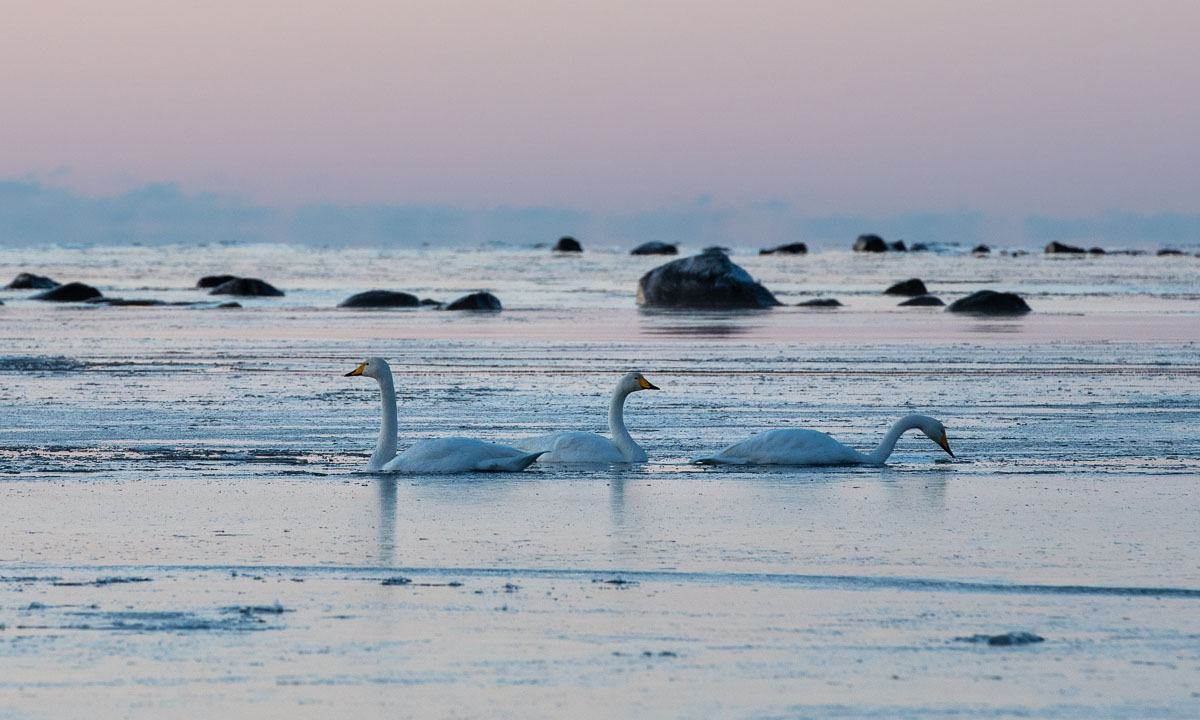
When Annika and I looked out of the window yesterday we could see 3 swans swimming in the water between the small islet Lillskär and us. Oh, another 3 nearby, that’s 6 swans. And another one, and two more.

After some snowfall it had cleared up yesterday and it got colder in the night. This morning the temperature was below -12 °C. When I walked to the coast the water before Lillskär was covered with ice. The swans lay on the ice sleeping. They discovered and watched me but since I was slow and did not come too near they soon tucked their beaks under their feathers again and continued dozing.


Polar expedition AeN JC3 – day 17 and 18: An incredibly beautiful day on the ice

This article is part of the series “2022-02: Winter cruise KPH”.

Day 17 and a bit of 18 · 7 and 8 March 2022

7 March

We have arrived at a place somewhere between Svalbard’s second largest island Nordaustlandet (14.443 km²) and the easternmost island Kvitøya (682 km²). No one lives permanently on these islands.

The ice experts have found an ice flow and examined it. The ice near the ship has some holes so the dress code is survival suits for the first time. In opposite to the formerly used Regatta suits they have attached boots and neoprene arm and neck cuffs. They shall keep you warm and dry in case you fall into cold water – or in our case break through the ice.

I am very interested to join and observe ice coring, a missing link on this expedition. I wasamhowever quite doubtful whether I will be allowed to enter the unreliable ice on this station. But I am lucky again, I may follow M. and L. onto the ice.

Earlier I was told that I may join the scientists taking ice cores but won’t get the opportunity to take ice cores by myself. That’s understandable. To my huge surprise – and delight! – plans were changed: L. shows me how to do it once and then it’s up to me to take five more ice cores. Give me snow or ice and something to play with and I’m happy ;-).

No, I’m no experiences ice corer after five cores. But at least I get an idea and a bit of a routine. In measuring snow depths, ice depths, the freeboard and writing down the values with a pencil. In mounting the large ice core attachment onto the electric drill and removing it after coring. In putting the ice core onto the gutter-shaped cutting board without flooding the electric drill or touching the snow (happened once – sorry!). While M. is cutting the core into slices and putting them into wide-necked plastic bottles I continue with my work. And I have to continue, because I’m still slow and M. shall not wait too long. I think, I could do that for weeks. Standing on the ice and drill cores out of the sea ice.

I have asked Pernille to take some photos from me while coring. These are probably the only photos that prove that I actually did something on the expedition beside of taking photos.

Photo credit: Pernille Amdahl, Nansen Legacy –tusen takk!

And the afternoon? I am allowed just to go onto the ice once more as long as I find some team lead to join. I find one and so get my 7th opportunity on this cruise. Two and a half more hours on the ice. I overhear a radio message. No polar bear warning but the information that our ice flow drifts with more than 2 km/h and the water depth is decreasing. This could damage instruments when they are too deep in the water.

Just some more photos:

And later, when we are on the ship again another polar bear approaches. This time it is a curious one that is very interested in the scientist’s equipment. And since it could harm the bear when it eats cables or plastic it is shooed away with a flare gun. **BANG**. It gallops some metres and then walks away. No polar bears were harmed and as far as I know no cables.

By the way – it was a good decision to use the survival suits. One of the scientists went through the ice today. All of a sudden and quite near the ship. It did not take long to pull the scientist out of the water but without the survival suit this would have been a very wet, cold and unpleasant experience.

8 March

The next day some additional measurements are done on the ice and then we leave last ice station of Arven etter Nansen JC3.

Ha det bra, Arctic sea ice. Farewell! It was a great pleasure to meet you and I definitely will miss you!