Farewell winter 2022?

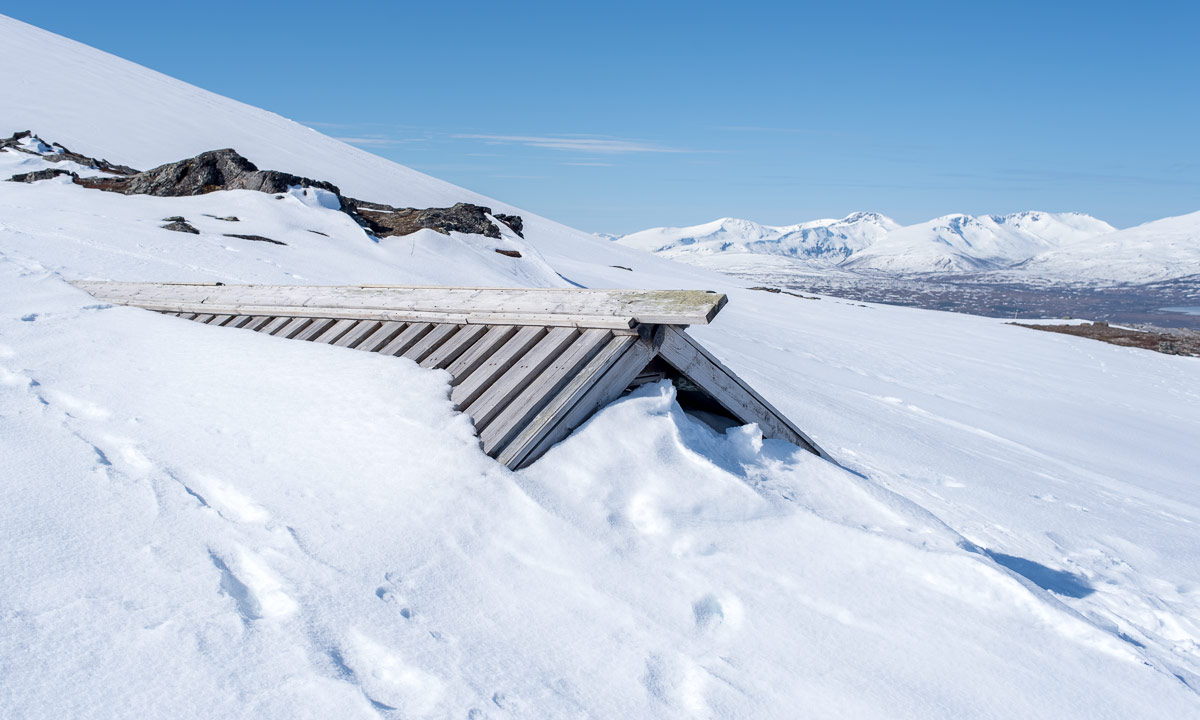
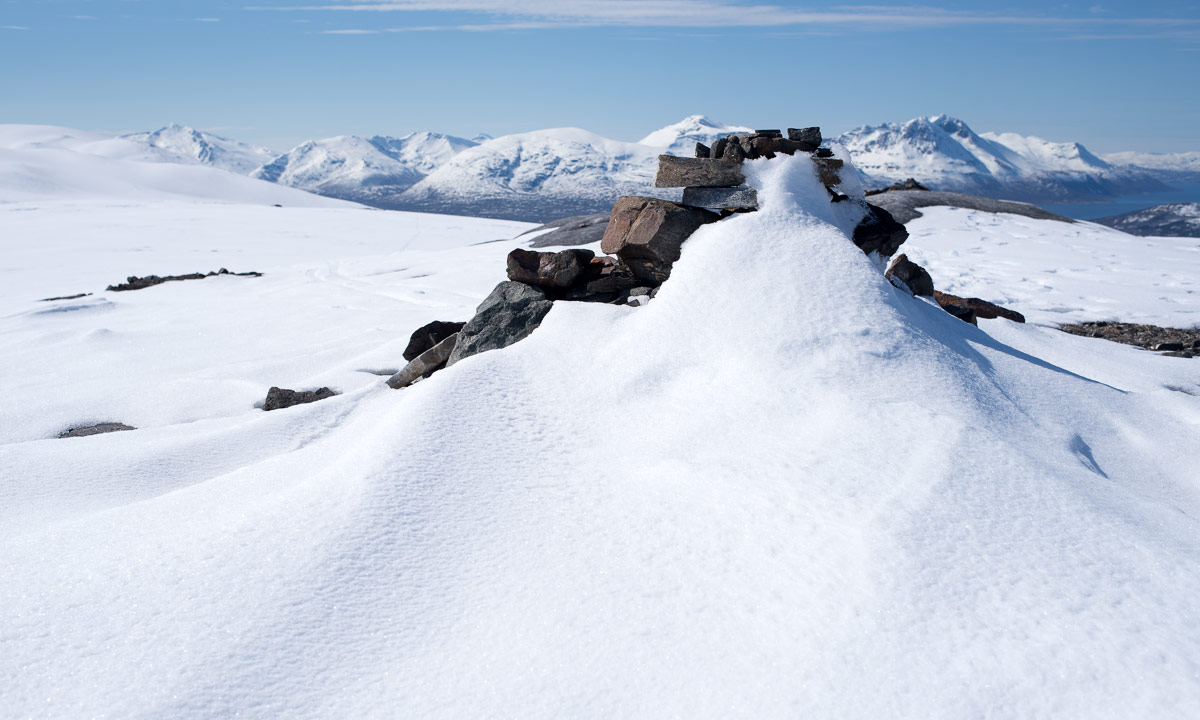
This evening Annika and I will take the night train to Göteborg. We will meet close friends and spend the Easter week in Southern Sweden where we probably will meet spring. So it’s probably time for me to say farewell to winter.

I was honoured. Winter dropped by personally to say farewell today. The gifts: Strong winds and at least twenty centimetres of snow. First I worked a bit but then Annika and I took a winter promenade to our Vitskärsudden, our favourite beach.

Some hours later I dug out the car. We’ll need it later. It had already become warmer and the snow was wet and heavy. So winter didn’t come to stay but I was glad about its farewell.


Two small winter paddling tours

Two small morning kayak tours I did this week. One two days ago, one today. Weather was just too great to sit inside the whole day: sunny with temperatures between -10 and -6 °C and a calm wind.

Here is a photo of each tour start:

As you can see it had snowed a bit between these two tours.

The day before yesterday I just wanted to circumnavigate the small islet Lillskär, but there was too much ice to cross and crossing ice with a kayak takes time. And since I work full time, time is limited. So I just paddled around a bit and then back.

Due to the frosty temperatures the ice was thicker today though hardly more extended. I started at the same place but then continued to the island Bredskär. From there I wanted to circumnavigate the island Bredskärssten, but the same story as two days before: At the northern shore of the island there was an ice field. Crossing it would have taken too much time so I changed my plans and made a smaller tour. Nice to be outdoors anyhow!

How do you cross ice with a kayak? If the ice is safe, just walk. You wear a drysuit and have your safety equipment with you, don’t you!? If the ice is very thin, just paddle through (use your cheapest paddle). But if the ice is between 1–2 cm, the ice may not bear you and you cannot use the blades of the paddle neither.

Then you can use isdubbar – part of the ice safety equipment. With these ice claws it is possible to pull yourself forward while sitting in the kayak.

If you are lucky the ice is thick enough to let the kayak glide over it quite fast. If you are less lucky the kayak will constantly break though and then it can be pretty exhausting, especially when the ice claws break the ice as well. Then it is sometimes simpler to pull yourself forward by grabbing the ice with your hands. Waterproof gloves or mittens strongly recommended!

Meanwhile in Tromsø

While I am writing a lot of blog articles about my time in the Arctic live in Tromsø goes on.

When I arrived Friday a week ago Tromsø was as un-wintry as possible. It was several degrees plus and it rained.

But to be honest, it didn’t affect me a lot. Mentally I was still in the Arctic.

Despite to the torrential downpours that Yr forecasted for this weekend the weather was ok yesterday and nice today. But as the whole week it was really warm: +7 °C. Time for a morning walk. _(Sunny, but much windier than expected.)_

In the afternoon I wondered if it was possible to take a small promenade on Kvaløya. I headed to the parking place from which I started a ski tour seven weeks ago. A lot of other cars were there and snow and ski tracks. I did not have any skis with me today. I tried to walk on the snow just with boots but the snow was at least knee deep. And then I came to the bridge that crossed a rapid meltwater flow. Maybe nice for experienced skiers but I didn’t have any interest in falling into the water. Time for me to return to the parking place.

The good thing: the parking place is just 200 metres away from the coast. So I took a short afternoon promenade there enjoying the colours, the sun, the fresh air and the wind. Yes it was windy – the display at the bridge to Kvaløya showed 20 m/s.

Back again at my car skiers arrived. My skis where home but then I remembered, that I always have snowshoes in my car. I attached them to my rubber boots and so I could make at least a tiny promenade to the next hill some hundred metres away.

Back in my car. Next stop: Sandnessund Cemetery. Never been there before. Even there a lot of snow.

Next stop was unplanned. I just had to take a photo of the vessel and the mountains of Kvitøya. Luckily the parking place of the Tromsø Havpadleklubb was near.

The Arctic has its own extraordinary beauty and I feel a special connection to it. Tromsø and surroundings however are beautiful too, even when weather has been much too warm for mid-March.

For the records: The first „hestehov“ or Tussilago I (17 March on my way to work).

Sea ice field work training on the Sørbotn

Peacefully I wake up this morning. It is already light outside. WHAT? LIGHT? WHY? AND WHEN?

I check my mobile phone – the clock shows 8:01. SH**!!! At 7:45 we were supposed to meet at the Norwegian Polar Institute, at 8:00 we were supposed to leave there for a field work training on the sea ice. But not me. I have overslept!

We – that’s 5 instructors and round 20 participants of the Sea ice field work training arranged by the Norwegian Polar Institute and the Arctic University of Norway in Tromsø. I realise that my colleague M. already tried to reach me and ring back. I tell her that I will take my own car and hopefully make it to our destination with only a small delay.

Our destination – that’s Sørbotn, the southern tipp of the fjord Ramfjorden where the training will take place on the sea ice of the frozen fjord.

I manage to dress, make tea and pack in 20 minutes thanks to previous day’s preparation and a fondness for packing lists. Although I take it easy while driving (safety first!) I arrive less than 10 minutes late while the preparations are still in progress.

We are split in two groups. Our group will do measurements of ice and snow depths first and take ice core samples after lunch break. I won’t go here into details too much, because I’m a newbie to all this and I do not want to write half-understood nonsense. I’ll have to look up some details of today’s stuff later.

Although I drill holes in the ice, help calibrating the GEM2 device, measure temperatures in a freshly taken ice core and use a MagnaProbe to measure a transect of snow depths I have a lot of time to take photos, too. So, let’s just start with this.

Being on the ice with a bunch of nice people is not only a lot of fun but it will help me in doing my job at the polar institute. Part of it is to manage scientific data. The deeper my understanding on collecting data the better I can do my work. The most interesting thing today was observing the coexistence of advanced sensor technology paired with GPS tracking and the usage of rulers, pencils and paper as in the early days of polar research.


There was one thing I wasn’t involved in: The usage of a remote-controlled underwater drone. We clearly could see some fishes and jellyfish (do you spot it on the 1st image below?) on the live display. I know that it’s used for research, but I would love to have it just as a toy.

Hopefully this was not the last time that I was involved in field work this year. And perhaps we’ll be lucky with the weather again next time. For while we had calm conditions and even sunshine, wind drove heavy snow squalls over Tromsø just some hours after we called it a day.

My first “topptur“

Just 14 km by car to the parking place on Kvaløya and I’m at the southern end of the two valleys Finnvikdalen and Krabbelvdalen. I put on the skis, put on the backpack, up with the hood and I’m ready to ski. -14 °C, hardly any wind.

First I follow an old track, perhaps two skiers and two with snowshoes went there. But soon I leave it to follow the Krabbelvdalen. Further plans: none yet.

Slowly the terrain rises. I do not have climbing skins with me but mostly I can ski just straight ahead. I’m alone and leave a track in yesterday’s freshly fallen snow.

I spot a cabin by a mountain slope and realise that the mountains may be not as steep as they looked first. Could it be possible for me to ski over the saddle between the two summits of the Mellaskarfjellet (301 m and 325 m) to make a round trip? Well, at least I can try. To gain height I have to go zigzag a lot and some of the snow is hard and icy. I’m a lousy skier and wonder if I ever will be able to ski downhills and leave this place. Well, I reach the saddle and it’s only 40 more metres in altitude to the southern top. Let’s go and make the round trip a topptur – a summit tour.

To make a long zig-zag story short: I reach it! I put on my down jacket and take a rest with a bit of chocolate and half frozen water.

The descent to the Finnvikdalen takes some time. I do not dare to ski straight downhills because parts of the snow are icy and other parts is crusted powder snow where you break though. So I take it slow and easy.

I see two other skiers with a dog approaching. While I slowly ski downhills they catch up and thank me for the track I made while passing.

Two reindeer nibble at the birch trees, I’ll never will understand how they can survive cold winters with this nutrition. The dog is quite interested. “Will is run? Is it fun?”. But alas it is on a leash and the reindeer calmly trots through the snow to find another birch to nibble at.

Now it is me who is the lucky one. The dog owners leave a fresh ski track on which I at least double my tempo. They head to something that looks like a broader ski track and so it it. It leads to a mountain hut.

Tracking map from my iPhone appA lot of skiers are on this trail. After I have passed the hut I’m on a broad trail prepared by a snow mobile. Now I can ski even faster (still slow ;-) ) but I’m unsure where this trail leads me. I continue following it constantly checking my map app until it signals that I’m on my old track again. What? Where? Here? I do not recognise this place!

Some hours ago I was alone, now a broad track cuts through the landscape. I pass the very same tree that I photographed this morning.  Ok, the app is right. The parking place comes into sight, it is full of cars. Just a bit more to go and I arrive at my car. While I stop my tracking app and change my clothes other people pass me on both sides.

I guess many Norwegians would just laugh about me calling my today’s tour a topptur, since the summit is a hill, not a serious mountain. Many Norwegians are excellent skiers and topptur is used for alpine style tour skiing often in steep terrain, not necessarily for cross-country skiing . Anyhow I liked this tour and give it the name I think it deserves from my perspective.

On the map you can both see my zigzagging near the summit and that I was significantly faster on the trail back ( slow | fast).

To my big surprise it has become colder. -16 °C the car thermometer shows now. At home it is only -7 °C. I wonder why because both places are located quite near the sea.

The ice did not last long

The morning of 10 January is my the coldest this winter: -20.5 °C. A longer period of frost has frozen over the Baltic Sea earlier than usual. I stand at the shore by our house. Ice as long as I can see.

I follow the coastal line to take photos. Ice fog draws in.

When I return from my pre-work photo trip the temperature has risen to -15 °C and it gets warmer hour by hour. In the evening it’s only -3 °C and it has become stormy.

Two days later I’m out again. It thaws. The effects of the storm are visible: The wind pushed the ice shield ashore where the ice broke into countless pieces.

Movements at the horizon. Large waves roll along the sea and build an ice wall by the rocks south from the island Bredskärssten, 1300 metres from our house. I would love to take photos there but there’s no way for me to get there. It’s too windy for a hovercraft and I don’t own one. So I take mobile phone photos through my spotting scope.

The next day. Similar situation but now with the sun illuminating the splash that the waves throw at the ice walls. The thaw has melted the snow on the ice and made it wet. It twinkles and glistens in the sun. Beautiful to watch.

In the night it is stormy und gusty again.

14 January – the next day. As every day it is too dark in the morning to spot the sea. A small line of red at the horizon signalises the approaching sun. And there it is: 09:03 – sunrise.

Now I can see that beside of some leftovers by the shore all the sea ice has gone. Crushed by the waves and the storm and floated away. Now there’s open water from shore to horizon. Probably it will take some time until the Baltic Sea freezes over again.

And what can you do in open water? Correct – you can kayak!

It was just a very small tour round Lillskär. First it was just a lunch break again and then it was still very windy. Wind came from west and I didn’t want to drift to Finland ;-)

Kayaking however wasn’t dangerous. It’s easy to paddle against the wind – easier than side winds – if the distance is not too big. Probably more dangerous is the large, wet patch of blank ice in front of our house. Slippery as hell! Hopefully it gets colder and snowier soon.

Link to a Swedish article of the SMHI: Bottenviken snabbt avtäckt igen.

Four winter days in and round Obbola

OK guys, it’s Sunday afternoon and I’m too lazy to write long texts. I just show some photos of the last days where our German friend Medi joined Annika and me on various excursions with some notes.

Thursday, 6 January – skiing in Västermarks naturreservat

+++ Västermarks naturreservat, 50 km north from Umeå +++ a non-commercial forest made us climb over and under fallen trees that lay across the marked loop trail +++ by the trail a wooden cabin +++ time was too short to fire the oven but lighting candles is cozy, too +++

Friday, 7. January – lunch break skiing

+++ right next to our postbox (500 metres from our house) starts Spåret, a 3600 metre long forest trail +++ we use back-country skis to ski Spåret in my prolonged lunch break +++ we, that’s Dirk – guest for two nights – Medi and I +++ -12 °C, but my Anorak is too warm +++ I tie it round my hip +++ on the photo it looks like a skirt +++

Photo: Dirk Thomas

Me sking “Spåret” – Photo: Dirk Thomas

Saturday, 8 January — cross-country skiing on Olle’s Spår

+++ grey weather, -14 °C +++ the trees are covered with snow +++ black-and-white imagery +++ after some days of back-country skiing it’s nice to use cross-country skis on a real trail +++

Sunday, 9 January – Northern lights and sunrise

+++ 1 o’clock in the night +++ I check for Northern lights +++ we are lucky +++ Medi and Annika watch the aurora beside of the garage +++ I take some photos from our garden +++
+++ 8:20 in the morning +++ the Baltic Sea freezes over more and more +++ sunrise colours by the sea  +++ and then in our garden +++ watching sunrise while taking breakfast +++

Still Sunday, 9 January – Strömbäck-Kont

+++ just a short walk at one of Annika’s and my favourite places: Strömbäck-Kont +++ looking at the ice ridge by the sea +++

Still Sunday, 9 January – halo effects

+++ after lunch we are taking Medi to the airport +++ strong and colourful parhelion or sun dogs halos +++ the photo is taken at the airport +++ I am questioned by the security and show the taken photos to prove I’m not a spy +++

Kayak and ice on the Baltic Sea

Does it work? Can I paddle kayak on the Baltic Sea when it is covered with up to 20 cm thick ice floes?

Well, let’s try …

Looks like it worked, doesn’t it?

Well, to be honest, no it didn’t.

I did not use the paddle at all but just pushed myself forward with my arms and so pushed the kayak over the ice floes. Since this was slow and exhausting and I only had my lunch break I did not come far and did not reach the open sea that always was in view.

And the way back? The same but backwards. I don’t think it would have been possible to turn around the kayak in the ice while sitting in it. But it was fun anyhow.

Happy New Year 2022

Some photos from New Year’s ski promenade with friends. We were lucky – clear sky and -12 °C gave perfect conditions for some outdoor BBQ at Stora Stenen. And when the wind increased we went inside the wooden cabin of this public recreation area and fired the oven.

Have a Happy New Year 2022 all together!