Magnitude 4.3

Things you can experience in Skelleftehamn:

Ice fishing · heavy snowfall · northern lights · moose · frozen Baltic Sea · earthquakes · cold …

“Wait a moment, did you say “earthquakes”?”

“Yes.”

“In Skelleftehamn?!”

“Yup.”

Yesterday evening, when I stood in the bathroom, I heard a noise and felt a shaking like the biggest truck ever would speed through the streets. But it was a short event, I forgot it quite soon and lay down to sleep.

Today, when I browsed through my Facebook timeline, I realised that so many people from different places wondered, if this could have been an earthquake, that it really had to be one. And it was!:

GEOFON Program

According to GEOFON, Potsdam, the earthquake had the magnitude 4.3 and the epicentre was in the Baltic Sea, 19 km deep, round 60 kilometres from where I live.

Fortunately 4.3 is a quite weak earthquake and I don’t believe, that it had any impact at all.

By the way, this was not the first earthquake I experienced in Skelleftehamn, there was another one in June 2010, two months after I arrived here.

First day of spring

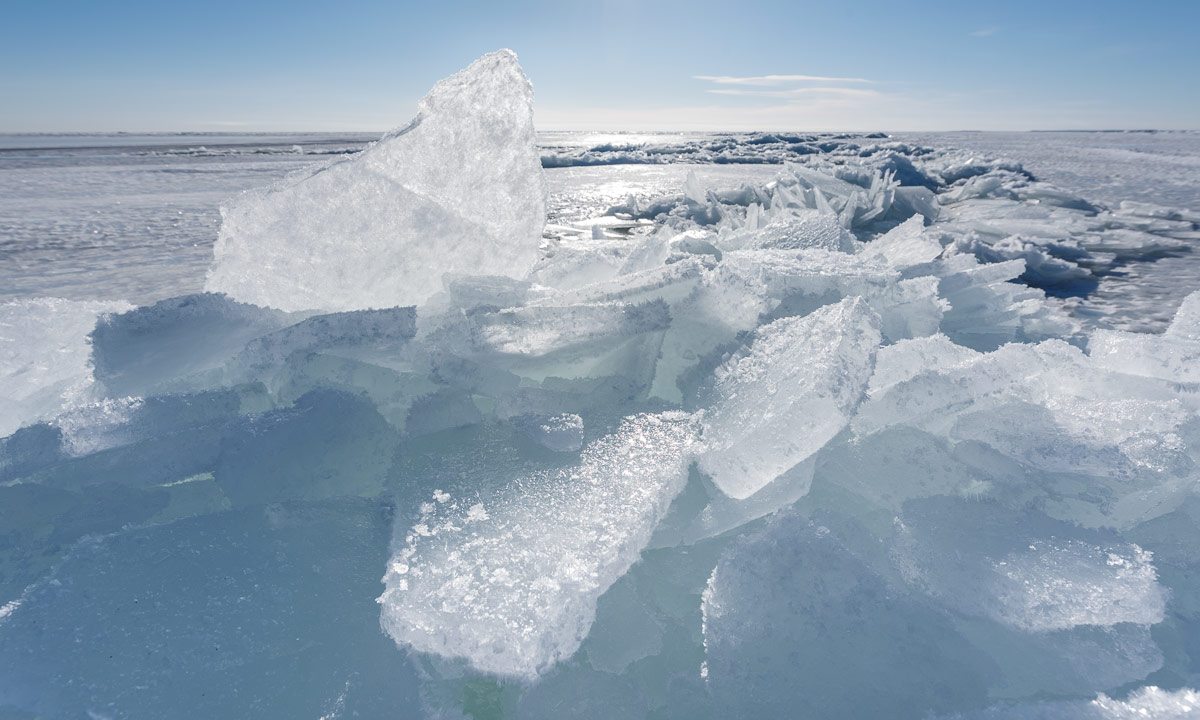
Today it’s the first day of spring. In the forest you could see the first snowless patches of soil covered with blueberry plants and the first birds sang their spring songs. But if you continued your walk through the woods until you reached the shore and had a look over the Baltic Sea, it looked like winter would be endless and continue forever:

But if you went on the ice and looked closer you could see, that the frozen surface only covered parts of the Baltic Sea. There was open water ahead. Blue open water. Blue open water with tiny little waves.

Oh, what I longed for my kayak – I would have loved to paddle on the crystal clear sea to the icebergs that you could see near the horizon.

The first day of spring in Skelleftehamn – still wintry but with a promise of spring coming soon.

Långhällan again

Two days ago Annika and I walked on the sea ice outside of Långhällan and had a view on large patches of open water.

Today I visited this place once more, but the whole area was covered with ice again. Some areas were covered with dark solid ice, some with ice floes that have frozen together. You could see walls of broken ice and dark channels between the different parts.

When I entered the terra incognita I half expected to fall through the ice and was equipped with the following:

  • my immersion suit, which is completely waterproof (and warm due to the thick neoprene)
  • isdubbar – handles with sharp peaks for pulling oneself out of an ice hole
  • my Nikon AW1 – a waterproof camera

To my big surprise all ice was thick and stable enough to bear my weight.

I couldn’t see any open water, but I could hear the sounds of ice and water below me. The cracking and clicking, the low, sonor pulsing drones echoing under the icy surface and sometimes even rhythmical beeping noises – like the Baltic Sea sending Morse code. An experience both fascinating and frightening.

Some impressions of today:

Torneträsk and Port of Narvik

On thursday – three days ago – Annika and I drove to Abisko to enjoy some winter days in the Swedish mountains. Skelleftehamn is in Northern Sweden, Abisko is in Northern Sweden, but it’s still 570 km to go by car.

Yesterday I stood up quite early, because the sun was shining and I wanted to go onto the lake Torneträsk (one of Sweden’s biggest lakes – 70 km long) to make some photos. The whole lake is covered by a thick layer of ice and a thin layer of snow.

In the front you can see stacked up ice that builds along the fissures in the sheet of ice, in the background you can see Lapporten – the landmark of the region.

After a while fog came down and when you looked against the sun you only could see vague shades and pale colours. It looked more like standing in a sandy desert, not on the icy surface of the Torneträsk.

Some hours later: Annika and I had planned to do a ski tour near the Swedish-Norwegian border. We packed the car with our skis, cameras and hot tea and set off. It’s 38 km to the border. Behind that border – on the Norwegian side – there’re a lot of cottages and since it’s Easter and probably every single Norwegian is in his cottage there were a lot of parked cars, too.

We looked for a parking place as well. The most parking places were stuffed with cars and were furthermore only for private use. I continued driving and we looked for a public parking place. Well, we found one but the surrounded mountains were too steep for skiing. We stopped anyway to check our position on the map. After that we helped some Norwegians to dig out their car that was completely stuck in the packed snow – on the very same parking place! There’s a reason, that most of the locals have all-terrain vehicles or at least cars with all-wheel drive.

My Saab doesn’t have such and from now on I was even more cautious in choosing a potential place to park. To make a long story short: We didn’t found a single parking place that was (a) available, (b) public, and (c) not too snowy. That’s why we changed plans and continued to Narvik, which is 46 km behind the border.

There’re (at least) three signs for leaving the mountain plateau and approaching Narvik:

  • The road is narrower
  • The road has much more curves and bends
  • It gets much warmer. (down to -9 °C in Sweden, +5 °C near Narvik)

Soon we saw the first fjord, the Rombaken:

We continued to Narvik that seemed to be completely closed due to the Easter Saturday. Therefore we headed to the Port of Narvik and looked around there. Most ports I know are locked and fenced off. Not in Narvik. Here it’s possible to walk around, enter the piers and have a closer look to the ships. And we were completely alone.

Narvik is a huge contrast compared to Abisko! Even if I prefer landscape and nature to towns, I like this place.

But anyway we drove back to the wintry mountains of Swedish Lapland quite soon and round an hour later we arrived again at our fine and cozy room at Abisko Cabin.

Wintry Scandinavia in a nutshell (without the skiing).

A day trip in direction Lapporten

Start at 10:00 – up through birch forests – against the sun – looking through sun glasses at the multicoloured clouds – gaining height – over the treeline – less and less snow and more and more stones and rocks – fantastic views over the lake Torneträsk and the Swedish and Norwegian mountains – too rocky (and too late) to continue – skiing down – birch trees again, first some solitary, then denser and denser woods – back at 17:15 – too lazy to write more …

The ice weakens

The Baltic Sea is still covered with ice. The warmth of the last days however has not only melted away a lot of snow on land but also warmed up the ice on the Baltic Sea. The layer of snow has vanished and you can see the first open water round the stones.

Parts of the sheet of ice look soft and unstable. Probably it’s still thick and solid and probably it’s still possible to walk the two kilometres to the island Gåsören, but I wouldn’t dare to do it anymore.

I’m waiting for open water and the first opportunity for a kayak trip instead.

Almost spring …

Farewell, winter

Yesterday it started to rain.

Today it rained, rained and it rained. It poured down the whole time and didn’t stop for a single second.

Probably it’s time to say farewell to winter.

I’m looking forward to spring, but I’ve started to miss winter already.

Ice floes at Strömbäck-Kont

Most of the Baltic Sea at Umeå’s latitudes is free of ice, only some shallow parts and sheltered bays are still covered with an old yet thick layer of ice.

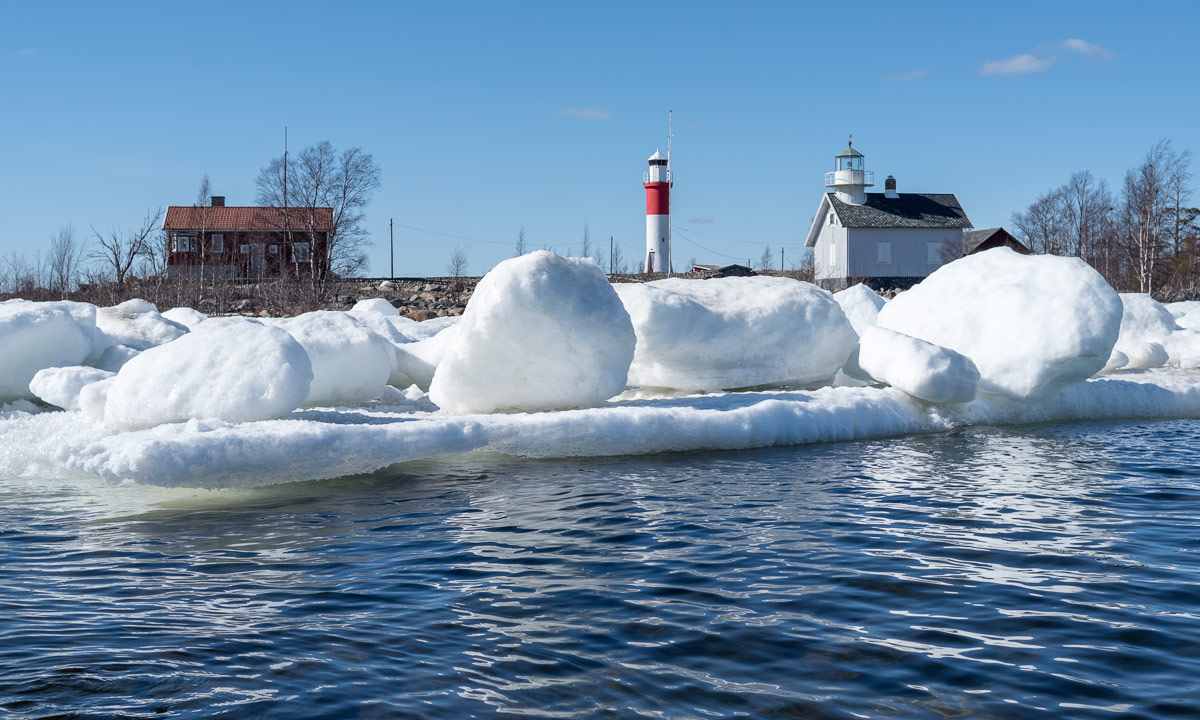
At Strömbäck-Kont – a nature reserve 20 km south from Umeå – the Baltic Sea was open, too, but ice floes still floated near the shore at Flakaskär and the small boat harbour Simphamn.

A wet walk west from Ersmark

At this time of the year it can be quite interesting to go for a walk through the woods. A lot of snow melted in the warmth of the last week and every river, stream or brook is in flood. The heavy rain some days before provided an additional amount of water.

Annika and I started our walk west from Ersmark, seven kilometres north from Umeå. The whole area is a shooting range for the military, but a sign clearly shows, when shooting exercises take place and when it’s safe to hike. Today we were lucky – no military exercises this weekend.

We went along the gravel road. The road was clear of snow, but due to the night frost all mud puddles were covered with a thin layer of ice. We went ahead until we came to a minor path. This path was completely covered with snow. We continued this snowy path until we approached the brook Tavelån. This part of the path was covered with a splintered crust of ice that clearly showed, that this part of the path was flooded a short time ago. More and more water flooded our path and we had to wade to reach the wooden bridge, that crosses the water. The brook was so flooded that the water partly flowed over the planks of the bridge.

After the bridge there was much more water on the way. Parts of the flooded brook flowed over our hiking path, too. I tested the depth, but soon had to give up. The water was too deep for us to continue, although we both wore high rubber boots.

We turned and took the same way back, until we reached the car. Annika, who took care of navigation today, realised, that we could take the car to another starting point to experience the other side of the brook.

A short time later I parked the car on a muddy ground near a small nature reserve with the witty name “Natur 2000” – still the same military shooting range. Larger parts of our new hiking path were covered with ice, but at least the way wasn’t muddy. After a while we headed north trying to cross the Tavelån again, this time at another place. When we came to that place were we expected the bridge, all I could see was some kind of old concrete base – the bridge was gone. I laughed out aloud – another blind end again!?

But we were lucky: Ten metres away some railway sleepers lay across the Tavelån. After some wading again we could safely cross the flooded brook. Anyway, the continuation of the path was a bit challenging again. The snowy path was partly flooded and we had to wade several times, carefully balancing on the wet ground ice. But we succeeded: None of us slipped and we continued our tour – dry and warm, since the spring sun had a lot of power and warmed us gently.

The path ascended and soon we walked on a dry gravel way. The rest of our hiking tour was a bit boring: Broad and straight gravel roads through forest and heather. After a while we reached the car.

We tried to take the minor gravel roads to head back to Umeå but when we almost reached the big road, the last part of our way was prohibited for cars and we had to return.

When we arrived home at Annika’s flat, the thermometer of the car showed +10 °C. Another day in spring with remains of winter.

Blue sky, blue sea – opening the kayak season

Finally the Baltic Sea round the peninsula Näsgrundet has been open and free of ice. Time to open the kayak season!

To Näsgrundet it’s just a 2.8 km walk from home. The kayak is tied onto a small two-wheeled dolly. I wear the same waistbelt, that I use for my pulka. Hereby I can walk and drag the kayak behind me without using my arms.

Soon I reached the peninsula and dragged the kayak onto the surrounding ice shield. After putting on my dry suit, lifejacket, neoprene boots, gloves and balaclava I was dressed for the first paddling. Perhaps I looked a bit overdressed, but despite of the springlike air temperatures it’s still winter paddling – the water is as cold as it can be.

I paddled along the ice shelf, that still connects the islands BredskärKlubben and Flottgrundet with the main land. The ice is soft and starts to get transparent, but it’s still quite thick.

Soon I reached Klubben and paddled along the icy coast.

From Klubben it’s just 200 metres to Flottgrundet and from that it’s only 500 or 600 meters to Gåsören

… at least, if you take the direct way. I preferred a detour to paddle between the ice floes. It’s a great experience. Some ice floes are quite big and welcome resting spots for ducks, geese and seagulls. Others are so tiny, that they are hardly visible, especially if they are completely transparent and clear. They sparkle and glitter like huge diamonds.

After some detours I headed to Gåsören, circuited it to look for a good anchorage and went on land (or better said, on ice) to make a small rest.

After I stilled my hunger and thirst I entered my kayak again and returned to the Näsgrundet, this time on the direct way, which is round about two kilometres. When I got out from my kayak and stepped onto the ice that surrounds the peninsula, I heard a noise: A snow mobile crossed the same ice shield I paddled along some hours ago – in same distance to the open water. Spring, meet winter!

After taking of the lifejacket and dry suit I went home, dragging the kayak behind again and enjoying the springlike temperatures. No warm jacket anymore, no woollen cap – no gloves and no warm boots. Round 40 °C warmer than 12 weeks ago – glorious!

Cold, clear and crisp

It’s mid-April and the civil twilight already starts round 4 o’clock. A quite stupid time to wake up, but it happened to me today. Normally I would roll over in my bed and continue sleeping, but the sky was so incredibly clear, that I just had to stand up and take the car to the coast.

As clear the sky was, as cold was the air: -8 °C. Time for gloves and down parka again. East from the peninsula Näsgrundet the Baltic Sea was still open – just as on Monday, when I opened the kayak season.

West from Näsgrundet however, the frost has frozen together the drifting ice floes and put a thin layer of fresh sea ice on the bay Kallholmsfjärden.

Now I have to get some more sleep, it’s still quite early.

Old ice and new ice on the lake Snesviken

All ice is melting. The Baltic Sea is almost completely free of ice, while the sheltered lakes in the wood are still frozen up. But even there the ice has started to thin down and melt, especially near the shore and around the rocks.

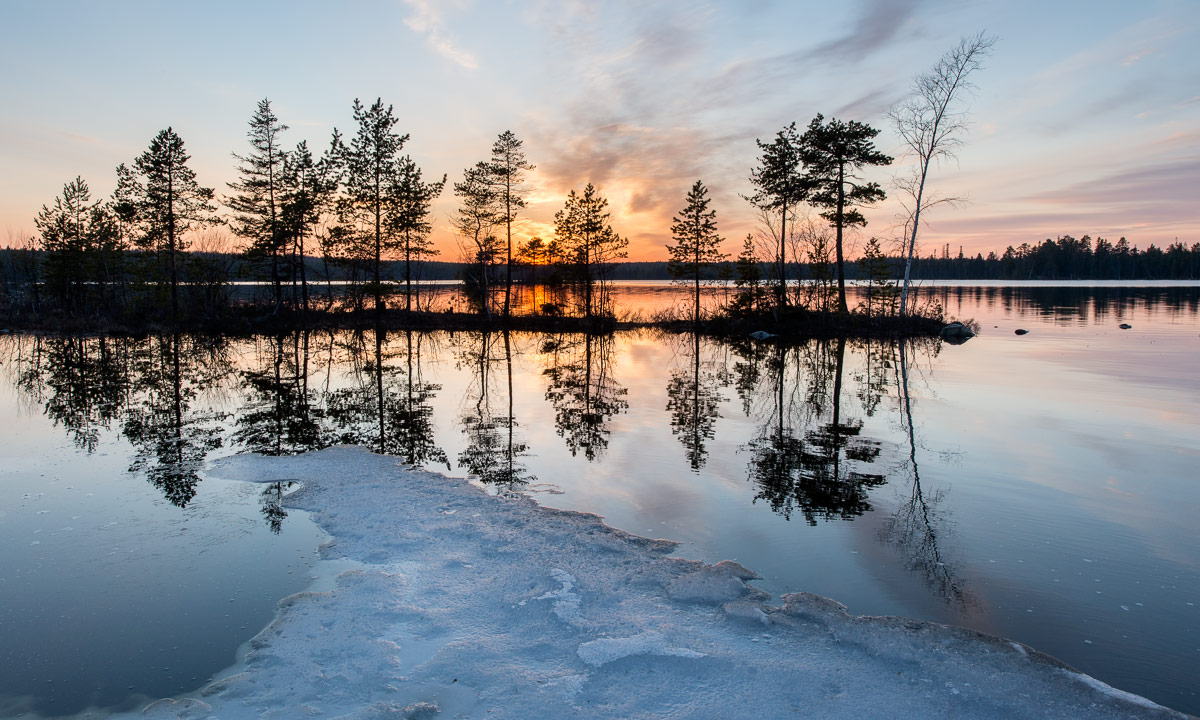
On the other side we have still frost temperatures on clear nights. Then the air is still cold enough to make the water freeze over again with a fine layer of new ice. The photo above is made at 20:15 and the process of freezing has already begun.

“A spring day in Skelleftehamn”

Yesterday smhi – the “Swedish Meteorological and Hydrological Institute” – issued a snow warning level 1 for Northern Sweden’s coast. Yesterday evening it changed the warning to level 2: 5-10, locally 15-20 cm of snow in a short time.

Well, Skelleftehamn didn’t get that much snow this time, only 5 – 10 cm, but it snowed crazy between 11 and 16 o’clock. That’s what it looked like directly at the seaside:

In Skelleftehamn it was a bit less windy but still a lot of very wet snow poured down. It wasn’t easy to take pictures, because not only the outside of my clothes, but also my cameras and lenses were soaking wet almost instantly.

Now it’s + 1°C and the snow starts to melt. But still my backyard, that was free of snow this morning shows just a plain white surface of snow.

Two images of the lake Snesviken

The heavy snowfall some days ago is history. Heavy rain melted the snow away. More and more ice on the lakes and the Baltic Sea disappears, too and only rests of snow and ice remind of the last winter.

Two images of the lake Snesviken – the first one shot yesterday, the second one made some hours ago.

Furuögrund

Today Annika and I took the road E4 to Byske to visit Byske Havsbad, one of the largest sandy beaches nearby. But I was curious about the other side of the river Byskeälven and took another departure. That’s how we came to Furuögrund, which is a small coastal village north from Skelleftehamn. 39 kilometres by car; 20 kilometres if you can fly. Outside of Furuögrund there’s a peninsula with a small boat harbour and a café (that unfortunately won’t open before next weekend). The peninsula is surrounded by two bays – one with a sandy beach (and still some old leftover ice).

On the northeastern side there’s an old dock for timber, build in 1874 together with the sawmill. The dock has or had three different names: Massahusdockan, Norrdockan or “Nööl-dockan”. As you can see on the images, there’s hardly anything left beside of a mikado-like stack of old timber.

After strolling along the shore we took the car again and turned into a small side road to Svartnäsudden. I just had to stop when I saw the smooth granit rocks with the clear water puddle. In front of the rocks there was some boggy ground, partly covered with ice, surrounded by pine trees. And behind that a beautiful view over the blue Baltic Sea – that’s Coastal Northern Sweden in spring in a pocket.


A weekend in Söråsele – rich in variety

Both Annika and I had some days off round last weekend and so we could visit friends of her, who live in Söråsele. That’s in Åsele municipality, 260 kilometres west-southwest from Skelleftehamn. We started our three-day trip on Friday. While all lakes in Skelleftehamn are completely free of ice, many of the lakes in the inland are still covered with soft ice, as for example the southern part of the lake Bjurselet between Bastuträsk and Norsjö. You can still see the numerous snowmobile tracks.

The ground, where I parked my car was quite soft. I left up to 10 cm deep tracks in the muddy ground. But luckily we didn’t get stuck and could continue out tour to Lycksele, where we had a dagens lunch – the lunch of the day. With some other detours and rests – here we met the first mosquitoes of the year, but they didn’t bite us – we proceeded and headed to Åsele. From this town it’s just five other minutes to Söråsele, where M. and F. – Annika’s friends – live.

After saying hello to M. and F. and their dog we said hello to the sheep: six cute adults and three even cuter lambs. I never experienced sheep, that were so cuddly as those little flock – they all came to us, not for begging for food but for being petted and tickled. One of the males bumped the head against my leg every time, when I dared to stop stroking and cuddling him.

Finally I could break free from the sheep to get the camera. I was lucky, none of the sheep licked my wide angle lens, although I came quite near  as you can guess from the pictures:

The next day we moved the fence and the wooden shelter for the sheep. We – that’s four people, a smaller farm tractor and a trailer. Moving the shelter took some hours of thinking and doing, but we succeeded. Anyway, that’s another story …

After a fika – the swedish coffee break, we took the car and drove to Sörnoret to go up the the mountain Bergvattenberget (“the mountain water mountain”). At the northeastern side there’s a 120 meter high steep cliff called Offerhällan where according to old legends Sámi people where pushed down when they were too old to follow the reindeers. Hopefully just a myth.

When you want to hike in May, it’s always a good idea to wear rubber boots, since the ground is still very wet after the snow melt.

The evening we ate home made Lasagne. A lot of home made Lasagne! Especially I was quite stuffed and so we took a small evening promenade along the coast of the lake Söråselesjön which lays right behind M.’s and F.’s beautiful house. The air still was quite warm and the sunset coloured the feathery clouds.

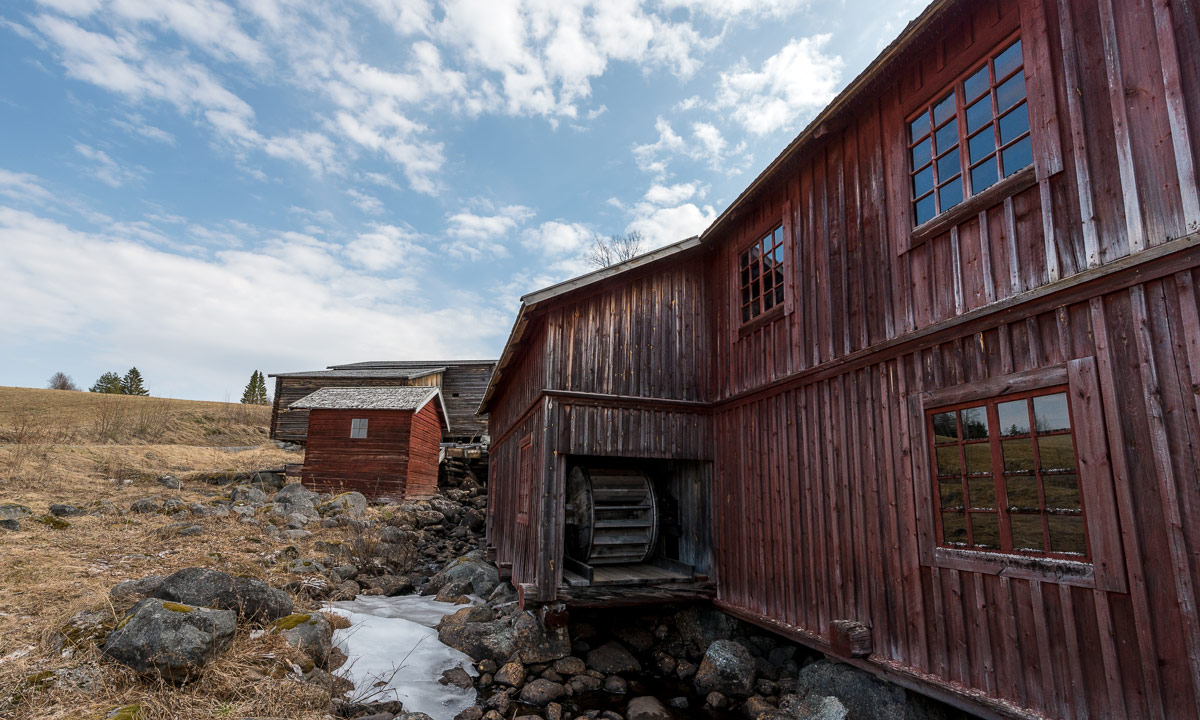
The next day we made another trip, this time to different places. First stop: Torvsjökvarnar, a group of old water mills that form an open-air museum today.

Annika and I already saw some frogs or toads crossing the streets the day before, but here I saw the first frogs from close up. Another spring sign.

Other stops followed but – sorry folks – no photos.

At half past five Annika and I said goodbye and started the way back. We decided to choose another route and took the 92 to Fredrika. A good choice. Here’s one of the artworks of the Konstvägen Sju Älvar (“Art way seven rivers”). It’s called Poem för en imaginär älv  (“poem for an imaginary river”) and is erected on a big rock in the midst of an archaic landscape build of rocks, mud flats and tiny lakes. beside of the road the area looks like ice age would have ended just some hundred years ago.

Just some kilometres later there’s a thing you wouldn’t expect in Northern Sweden: A Thai Buddhist temple called Buddharama Temple. The giant statues of the sitting and standing Buddha and the live size elephants made of stone really look a bit strange in the middle of the Lappish woods. In Thailand 95% of the people are buddhists, but in Norra Norrland …?

(Sorry for the bad photos – the sun was definitely at the wrong place when we visited this temple.)

After that we continued our trip back to Skelleftehamn. I drove the car and Annika guided me along the small roads: BaksjölidenVargträskÖrträskOttonträskVindelnBubergetBotsmarkÅkullsjönBygdsiljumFlarkenÅnäset and than the E4 northwards until the turnout to Skelleftehamn, where we arrived at 22:54.

Thank you, M. and F. for your kind hospitality. We’ll looking forward to come back some other time. Perhaps there are other things left to be moved ;-)

Appendix

i. Animals on the journey:

Among others: Reindeers, four moose, a fox, cute sheep, cranes, Canada geese, swans, some western curlews and a short-eared owl.

ii. Northern lights:

Yesterday the aurora was really strong with a Kp index between 5 and 6, which says it is visible even in Denmark and Scotland. Now it’s a disadvantage to live as up north as I do. The sky is just too bright even in the dead of night to watch the Northern Lights. I guess, we’ll have to wait until August.