Kayak – crisp morning – roe deer – crushed ice

The week in five chapters – including photographers comments

Tuesday, 16. March, 7:45 – a short kayak tour

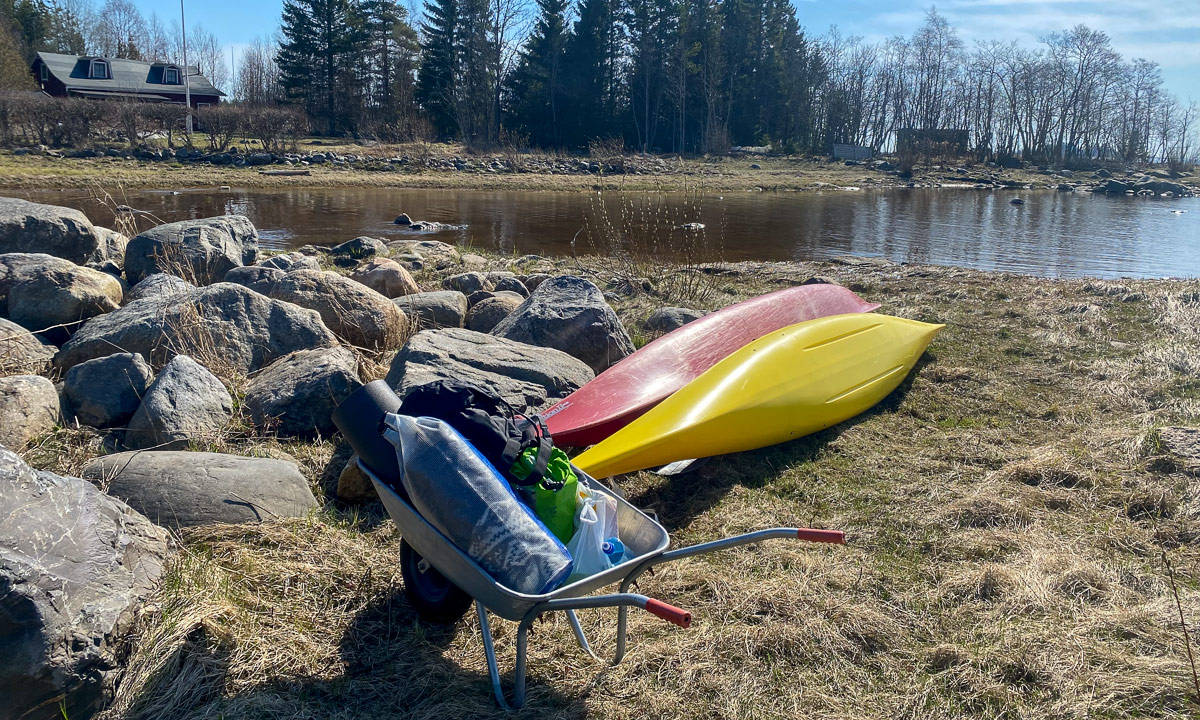
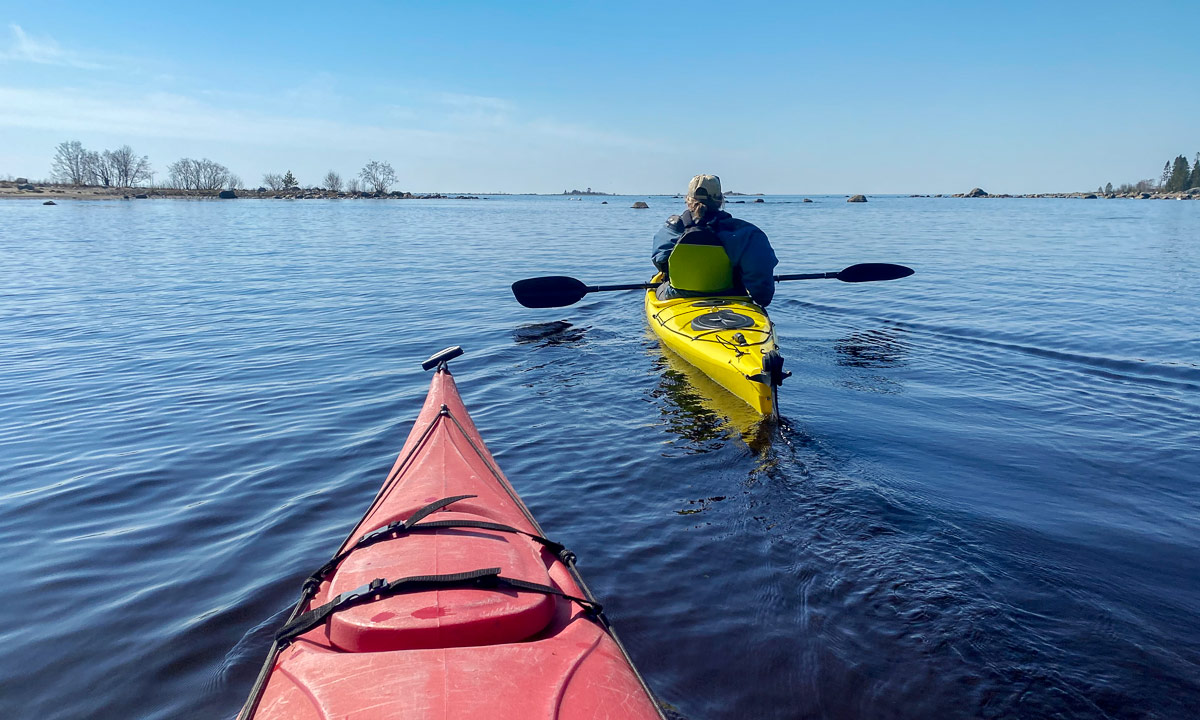
The blue sky invited to interrupt work and take a short kayak tour. It hardly needs preparation: Putting on the waterproof coverall, put the iPhone in a waterproof bag and drag the kayak over the ice to the islet Lillskär. Then it gets a bit harder to find a good place to set the kayak into the water. I found a place and some minutes later I paddled to the island Bredskär. The tour however turned out to be shorter than planned because between the islands Bredskär and Bredskärsten the Baltic Sea had frozen over in the night. I wasn’t eager to hack myself through the ice, so I turned and realised, that – as so often – the wind came from land and was fresher than expected. At time I do not have a real drysuit for paddling and moving in the thick neoprene survival suit is exhausting. But it’s great to be outdoors, even when the tour is only a tiny one.

Photographers comment:

It’s always like spinning a wheel of fortune, when you try to photo with an iPhone in a waterproof bag and your fingers are in rubber gloves. Sometimes nothing happens, sometimes you have waterdrops on the bag, sometimes the camera triggers too late and sometimes you’re taking pictures of your own gloves as in image #3.

Photoing like this is about visual storytelling, not about high quality photos you want to put on the wall of your living room. But on the other side, why actually not?

Yesterday, 6:30 –a crisp morning

-10 °C, could be the last cold morning before the warm air will arrive. I walked to the coast quite early and took some photos. One from the packed ice, that has frozen together, one of a funny ice sculpture that I discovered a bit further out.

Photographers comment:

Alas – a DSLR camera. Not waterproof and much heavier but much more fun to handle. The quality of the photos is of course superior but something is missing a bit: The beautiful warm light of the sunrise. The sun rises however already at 5:43, so I was almost an hour too late.

You have to decide: Do you want to sleep or to take better photos? It’s up to you.

Today, 8:30 – cautious visitors

When I went to the living room this morning I saw a movement outside. Right under the kitchen window two roe deer were eating leftovers of the bird food that was lying in the snow. Annika and I hold distance to the window and even though they were extremely cautious they didn’t seem to be able to see us through the glass. They continued eating for a short while and then went on. I slowly opened the kitchen window to give them carrots, but as expected they didn’t dare to come back. Now the carrots stuck in the snow and we’re curious if they’ll find them there the next days.

Photographers comment:

Luckily the roe deer stood on a metre of solid snow, so they could peek in and we could peek out and see them. The first photo gives a good impression of how near they were, even though it is taken with a focal length of 200mm.

Today, 12:00 – no winter bath

The whole day it has been above zero and at 11 o’clock it started to rain. In the need of fresh air Annika and I walked to Vitskärsudden. We weren’t prepared for a winter bath and it would have been quite useless since the whole bay was filled with ice floes and crushed ice and slush that lazily followed the slow waves of the sea.

Photographers comment:

Well, while the motive is quite ok, the grey overcast weather made the light so dull and poor in contrast, that the photo looks pale and boring. Should you photograph under such conditions? Well, of course! But don’t expect the best results.

Today, 15:45 – crushed ice

Where I started my Tuesday morning paddle tour now a large area of the sea was covered with the very same mixture of ice floes, smaller pieces of ice and slush. I went to Lillskär again – equally prepared as for paddling – and watched the ice floes. It’s mostly the trees of the neighbouring islands that prevent the scenery looking completely arctic, but it’s still impressive.

Finally I took my ice bath but since I didn’t get wet in my coverall it probably doesn’t count.

Photographers comment:

The conditions: bad. Again iPhone in a bag and rubber gloves plus the grey sky. Taking the selfie however was fun.

That makes me realise that I’m quite result-orientated when I make photos. Sometimes I just forget, that the process of photographing itself can be fun, last not least because it gives you reasons to do silly thinks like standing outside the whole night, wade through a mud bog or like today – just jump into the ice pool.

What was your last “crazy” photo action?

The last cold morning?

A clear blue sky, -20 °C – this may be the last cold morning here in Obbola. I was up early and went to the coast to catch the sunrise. The sea, where I paddled yesterday afternoon was completely frozen over again. Patches of ice fog drifted by – a clear sign that other parts of the sea are open (and that it’s cold). The fog partly hid the island Bredskärssten.

When did you watch your last sunrise? Do it again! It’s always fascinating to see the sky and the clouds change colours– from soft pink to deep purple, from crimson red to bright orange. The sunrise position has moved more and more westwards. Now it’s behind the larger island Bredskär. The sun illuminated the drifting fog in spots of orange.

Now in mid-March the sun rises much faster than in midwinter and soon the colours went pale. Time to go back and to warm up. The parka and mittens kept me warm, but the ski pants were a bit too thin when sitting on the ice.

Opening the kayak season 2021

The last time I sat in a kayak was on the technique sea kayaking course in Tromsø almost four months ago. After a cold February home in Obbola that made the Baltic Sea freeze over the sea has now been open again for a few days.

Today we had calm weather – blue sky and temperatures round -10 °C. I woke up at 6 o’clock and took the opportunity to open the kayak season with a pre-breakfast paddling. I had to drag the kayak to the islet Lillskär because there is still thick, solid ice. At Lillskär’s northern tip I got into the kayak.

I decided for paddling to the group of islands called Obbolstenarna – the Obbola stones – about a kilometre in the south. I tried to use my woollen mittens but then the partly ice covered paddle was so slippery, that I lost control over it. So I had to be content with the rubber gloves, that are attached to the waterproof floating suit, that I was wearing for security.

First I paddled over open water, then through thin ice, easy to break through with paddle and kayak, then through slightly thicker ice where I had to back several times to find a better way.

But even when your slow you’ll reach your destination and so I arrived at the northeastern edge of the ice covered rocks of Obbolstenarna. I can see this place from my home office window but now I was glad to take a small “promenade” through another ice expedition – this time not by ski but kayak.

No, I didn’t dare to paddle under the ice tunnel. I guess it was several tons of ice arching above the small passage. A weight I don’t want to fall on my head.

It looked like I could continue for hours along the ice coast of the islands, but I already had realised that I would have headwind on my way back and the wind was stronger than expected. The way back was actually exhausting – both for the condition and my finger tips that started to get very cold in the chilly wind. I had to stop from time to time and rub the gloves to get my fingers warm again and in these seconds my kayak was blown halfway back again. Alas, it’s only a kilometre (a bit more when you zigzag through the ice fields) and finally I reached Lillskär again.

I heaved the kayak on land and walked it back home, first over the islet, then over the solid ice between islet and mainland.

Now I had to cross a hundred metres of snow, leave my kayak beside our still snowed-in barbecue place, walk another twenty steps and I was home again. First action: taking a hot shower! Next action: buy a new drysuit, the survival suit sucks for paddling.

Changing plans

Last Sunday in Kont, 30 minutes by car from home:

Annika and I skied around on the sea ice and reached places we’ve never been before. We were not the only ones. A lot of other people skied, skated or walked and some of them just sat there in down jackets on the ice or used the barbecue areas on land. All of them seemed to enjoyed the wonderful winter weather.

We saw a lot of reindeer tracks, caused by the very same herd that I saw yesterday. And we realised, how near the island Tarv is from there, that’s the island I skied to two weeks ago. So a plan was made: next weekend we shall ski to Kont and back again. That’s about 10 to 12 km.

Now it’s “next weekend”. It has become grey, foggy and snowy with much warmer temperatures round -1 to -2 °C. Not the exiting weather that we hoped for. So we cancelled the tour for today. Instead I skied alone heading for Obbolstenarna , a group of small skerries that we visited with friends last Sunday, also on skis.

When I should turn to Obbolstenarna I hesitated. I looked like the open water had come nearer and that last Sunday’s way over the ice wouldn’t exist any longer. So instead of turning left I followed the coastal line straight ahead.

A good idea.

The open water reached to the southern tip of Obbolaö and it wasn’t longer anymore to go round on the ice. So I stepped up the ice covered rocks. From there I could spot a large rock, that I had skied around several times. Now it had become impossible without taking a cold bath. So our plans were not only crossed by the dull weather (our decision) but more from the wind, that blew from the sea and crushed large areas of last weekends sea ice (Nature’s decision). We wouldn’t have come long.

After taking these photos I didn’t dare to explore further and skied back the same way. I could hear the foghorn of a large ship but I couldn’t see it. When I almost was home again I spotted it in the harbour of Holmsund. It was the Wasaline ferry that goes between Holmsund and the Finnish town Vaasa.

I met some ice fishers, who told me, that this winter has been extraordinary for Obbola. Both the amount of snow and the large area of solid sea ice is not usual for here. I’m glad and grateful that I was able to experience such in my first winter in Annika’s and my new home.

From dawn till dusk

After some cloudy days the sky cleared yesterday afternoon so that Annika and I could do cross-country skiing under the full moon. Beautiful!

This morning was crisp (-17 °C) and sunny. I took a short break from work and skied a bit along the icy coast, just in time to see the sun rise behind the layer of clouds at the horizon.

I stopped working already at 14:30 and directly put on the skis again. I managed to follow more or less the icy edge to the bay Vitskärsudden, our favourite bathing place. The sun was going down already and lit the ice in warm sunset colours. The scenery looked really arctic. And it felt arctic, too. I felt quite cold and was glad, that I had a down jacket with me to put over the touring jacket.

It was mostly the forests that revealed the fact, that it’s not the Arctic Ocean but the Baltic Sea that I ski along. And of course the houses, hardly 200 meter away from the icy shore.

When I arrived at Vitskärsudden I realised that – unless another storm would break all the ice – bathing season is finally over. I posted a picture on Facebook in the Umeå winter bathing group and then returned home, still on skis but mostly following the roads.

Even with taking the photos the tour took less than two hours. But it felt like having holiday. It’s really a privilege to be able to live here!


Ice fog and hard rime

When it’s cold – -17 °C yesterday morning – and large parts of the Baltic Sea is still open ice fog forms over the sea. When this fog turns to the land hard rime will cover the bare trees making them look like fragile snow sculptures. A wonderful view.

Finally winter

December was an odd month regarding the weather. It was quite warm and extremely cloudy. There was hardly any sun and when it snowed it turned into sleet and rain. But at the turn of the year the weather finally changed. We got 10–15 cm of snow before New Year’s Eve, a short warmer period and then finally permanent frost. Right now, at the morning of 3 January the thermometer shows -12 °C.

Yesterday Annika and I made a short excursion to Strömbäck-Kont by the sea, where we took a promenade by the mostly open sea. It is 4 km linear distance to Strömbäck-Kont, but 30 km by car due to a long bay that separates the island Obbolaön where we live from the mainland in the west.

Some photos from our tour. The first 5 are made at Strömback-Kont, the other three in Degernäs on the way back.

I’ll be home for Christmas ♫

This article is part of the series “2020-10: New in Tromsø”.

Like last Saturday I had a handover meeting at the Norwegian Polar Institute yesterday. And like last Saturday I walked there, taking a longer detour. In contrary to last time 15–20 cm of fresh, fluffy snow had fallen making the landscape look quite different than one week ago. Some photos:

This meeting was a bit special. We should actually have been working from home the last two weeks due to the new corona regulations. I however have just a tiny room with shaky internet in Tromsø and therefore was allowed to work in the office. The handover meeting was in the office, too. And that by the way was the last time for me being there this year.

No, I didn’t quit my job. I will just work from “home home” and that’s Obbola/Umeå. With the approval of my manager I’ll work from Obbola for the rest of the year.

Today is travel day. Since there are no trains from Narvik in Norway to Umeå (guess, why) I was forced to take the airplane. Right now I’m already at Oslo Airport, the first stopover.

Flight 1: Tromsø airport, Langnes – Oslo Airport, Gardermoen

At half past eight I stood at the bus station Sydspissen (southern tip) waiting for the bus. I felt quite warm, because I wore a huge down parka for my six-week stay home. Today I definitely won’t need it – it’s 0 °C in Tromsø – but you never know how winter is like at home.

I don’t write anything about airports. Most of them are equally boring and it’s a lot about waiting, buying high-priced snacks and such. You know that. The only airport photo I show is of the departure schedule in Tromsø. Two flights to Oslo, one to Bodø (via Andenes) and the next to Longyearbyen, the largest settlement of Svalbard. Oh, I have to fly there one time! And from Tromsø it’s nearer to Longyearbyen (960 km) than to Oslo Gardermoen (1110 km).

We got into the air late, because we had to wait for the de-icing of our plane. I sat in row 30 in the back. It was quite cold and I was freezing. That reminded me on my down parka, that I definitely wouldn’t need today. Well …

But soon we were in the air and there was an incredible view about the blue fjords and snow covers mountains surrounding Tromsø. When we were above the clouds I took a nap. The parka made a good sleeping bag, too. Shortly before Oslo the landscape was still white and most of the minor lakes were frozen. Some of the lower lands however were brown and free of snow.

This part I wrote in Gardermoen, where I’ve had a four hour stopover.

Flight 2: Oslo Airport, Gardermoen – Stockholm Arlanda Airport

When I went to the gate I spotted it: a grand piano. May I play it? I first saw the tape that taped the piano shut, then the paper: “Do not play the piano!”. Of course – corona. But I have to keep it in mind that if I’ll be really bored in Gardermoen in the future I maybe can play piano. Would be nice.

I went to the international departure. Here all restaurants and a lot of stores were closed as well as the waiting room for our gate.

But finally I sat in the airplane that connected Norway and Sweden. The crew talked Swedish, the pilot one of the zillion Norwegian dialects. The airplane was almost empty with round about 20–25 passengers.

Annika messaged me: “… kp 5”, which means a faint chance of polar lights even in Oslo or Stockholm. I saw the lights of the airport, when we started. I saw the colours of the sundown. I saw the illuminated towns, villages and streets below and some stars above. Finally even the half moon. But I didn’t see any polar lights.

But maybe my iPhone camera did. You see this cloud-like thing above the horizon on the last photo? It is slightly greenish. Of course it could be a reflection or a malfunction of the iPhone that is not made for available light photography. But maybe it was really a northern light. Well. I hope for more in the next weeks.

This part in I wrote in Arlanda where I’ve had another three and a half hour stopover. Two more hours to wait, one hour to fly, then I’m finally home.

Flight 3: Stockholm Arlanda Airport – Umeå Airport

Now it’s Monday and I sit home in my computer room. Two laptops are placed on the table and it smells burned dust, because I switched on the radiator. I have a look at the bay – sea level is 50 cm above normal and it’s 30 minutes before sunrise (which is two hours earlier than in Tromsø).

The last flight to Umeå was as eventless as the other flights. Anything went well and according to plan.

The only thing to mention: this time we definitely had polar lights. I could see them from my window. I tried to take pictures with my camera which was a bit tricky because I had to use anything I had to cover the rest of the window to avoid reflections. Here is the result where it worked best:

It’s an awful photo, but part of my journey. Now I’m home. Over and out.

Technique sea kayaking course

This article is part of the series “2020-10: New in Tromsø”.

I was really in doubt about writing this blog article and showing photos of the last weekend, where I participated the course Teknikkurs Hav (Technique sea kayaking).

Why? Because my photos lie. They show sea kayaks lying on nice beaches and us paddling in calm waters. All these photos are true but they tell only a fraction of the experiences I made when I kayaked in Northern Norway in the beginning of November.

Saturday – day 1

The paddling course was supposed to take place on Sommarøya. A beautiful place, but quite exposed to wind and weather. Due to the wind forecast (average wind 15 m/s) the instructors chose a more sheltered place for the first course day: Eidjordneset, just 12 km away from the boat house of the sea kayak club Trulle.

We gathered round 7 o’clock in the morning: We are the instructors Tim and Pål and four participants. Kind of luxury! We put the kayaks on the trailer and started driving: Past the airport, over the bridge crossing the Sandnessundet strait, to the left and then taking the turn to the island Håkøya where we parked and changed clothes for the tour. In my case: woollen underwear, two pairs of socks, a thick woollen sweater, drysuit, neoprene boots, gloves and hood. In addition to that the sprayskirt, life vest, towline system and helmet. We do not only dress for the chilly air but for being in the water as well. Tim wrote in the email: “We will be doing a lot of swimming”

We started to dress in darkness but when we were ready it had got light.

We put the kayaks into the sea and started paddling east along the Håkøya. After getting our paddle strokes improved we started to practise partner rescue. One kayaker capsizes, opens the sprayskirt and swims. Then there are different techniques of emptying the capsized kayak and support the swimmer to enter the kayak again. While we were training this several time. As Tim said: a lot of swimming. While practising the wind blew us more and more to the east. Time to turn back.

Now we had to paddle against the wind. First it went quite well but we already could see the huge shower cell coming towards us. Round 2–3 °C in the air. Would it be rain, sleet or snow? No – it was a grown up hail storm approaching. Within minutes we had wind speeds of round 20 m/s howling around us, blowing spray from each wave and throwing hail right into our faces (ouch, my lips!). The instructors decided to guide us to land where we waited for the hail to stop.

Soon the weather was calmer but still very windy. It took a while until we reached the bridge, where we started the tour. On the way back I had one of the rare opportunities to take some photos with my iPhone while paddling. Mostly I was too occupied with practising or catching up.

When we arrived at the bridge we crossed under it, because on the other side the sea was a bit more sheltered. Here we practised a lot of different paddle strokes as edging or low and high brace. This was quite intense – only interrupted by a short and frugal lunch break – and I’ll have to train a lot until my body has understood the movements. We ended with a rescue case: One of the participants had to pretend having an injured shoulder and we had to both give support balancing her kayak and tow her on land. Well, there was a lot of discussion but finally we managed it. Ok, it was only 20 metres or such to tow.

To make it short: changing into warm clothes · putting the kayaks onto the trailer · heading back to the boat house · I got a lift home · hot shower · great!

Sunday – day 2

Two of us met Tim at the boathouse, where we got a lift to a petrol station, our meeting point. As you can see it had been snowing and it was quite slippery.

Now on day two we would drive to Sommarøya and take the second course day there. Great, because the area round Sommarøya is wonderfully beautiful. Sommarøya is more than 50 km from Tromsø and the shorter way is leading through the mountains, so due to the weather conditions it took a longer time to travel there. And that’s how it looked like from the bay Steinsvika on Store Sommarøya.

We paddled to a flat rock covered by breaking waves and tried out some paddle strokes from the day before. That gave us opportunities for more buddy rescues, because of three capsizings. We made a short break on one of shallow beaches.

After that we started to round the island Storholmen where the Sommarøy lighthouse is located. First we tried to stick near the rocks to play with the waves. The further we came to the open sea, the higher the waves became and we increased distance.

Especially at the northwest tip we had waves up to 150 cm coming from several directions so that it took all my concentration just to paddle on while feeling quite stressed and a bit helpless. A bit further the waves coming from the open sea behind us built up to huge rollers and breakers on the shallow bay. I was too scared to join the others that played in these waves (with several capsizings and rescue manoeuvres). Therefore I paddled a bit further to reach a more sheltered part of the bay and wait there not to split the group. One other paddler joined my shortly after. Then all of a sudden a really huge wave came, broke just where we were and knocked us both over. There was nothing I could do. I immediately lost my kayak in the wave and it took a bit of time and help from the others to fetch my kayak and get us in again. I know that I have to learn to paddle under such rough conditions as well, but I’m not sure if I’ll ever enjoy it.

I really was glad about the lunch break. Here Tim and Pål told us about the star rating system for waves. It goes from 1 (lowest) to 5 (highest), and mostly we had 3-star conditions out there, with one two-metre-wave probably being a 4 star.

Even after lunch I was mentally quite exhausted. But at least we had started heading back and were soon in calm waters again. The others learned some more rescue manoeuvres and such but I kept aside for a while because I couldn’t focus any more.

Finally we made another towing manoeuvre, where two of us towed another kayak while the fourth paddler supported balance. While I was mentally tired I still had physical energy so I tried to drag a bit harder the last part to come up onto the sandy beach as long as possible. And that’s where Tim took this photo of us. I’m in the front – watch the nice violet helmet!

(Photo: Tim Vanhoutteghem – True North Adventures)

Conclusion: This course was too difficult for me. I was too scared and overchallenged. But I had skilled instructors, great fellow paddlers and learned a lot – though the hard way. I’m really glad that I had the opportunity to join this course and already decided to take the same course again as a fresh-up next spring.