Svalbard – arrival

This article is part of the series “2023-03: Svalbard”.

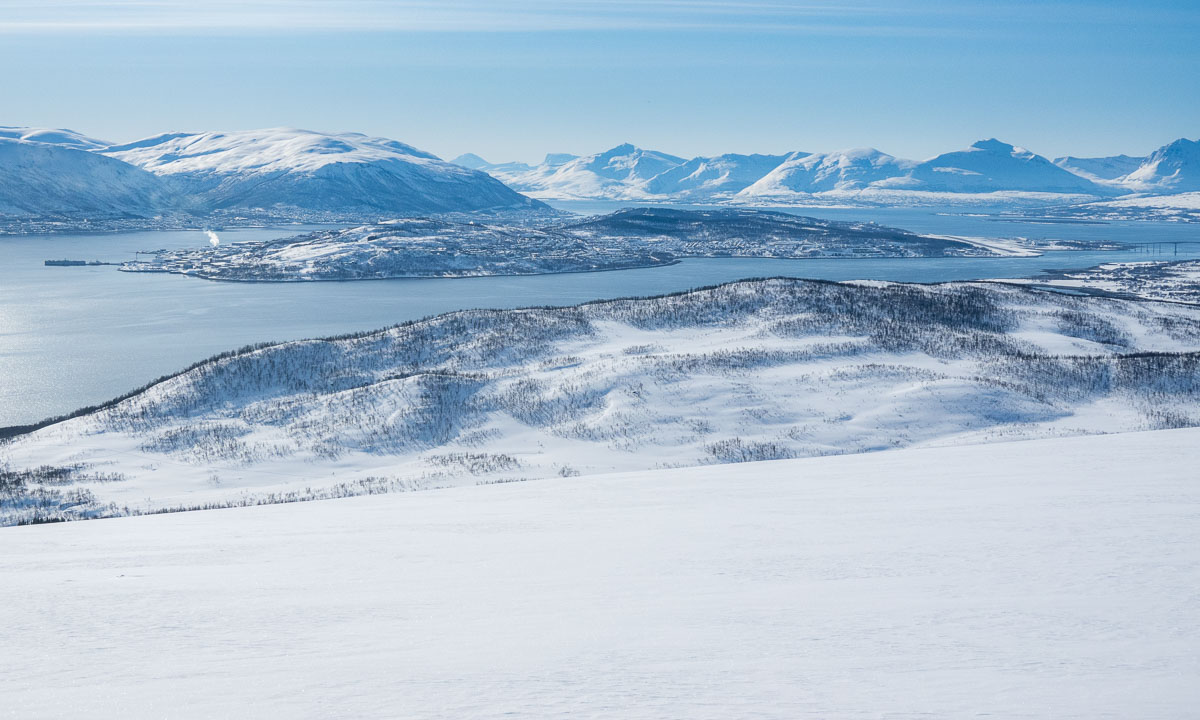
Today Annika and I took the plane from Tromsø to Longyearbyen, Spitsbergen, Svalbard. We’ll be here together for a week, then Annika is leaving and I’ll work here for another week.

We arrived at 13:45 and were lucky. I met the colleague with whom I will work later and he gave us a lift to our first accommodation, the Coal Miners’ Cabins. Here we’ll stay the first two days before we change housing.

Just some photos from today’s walk to the centre of Longyearbyen. -12 °C and quite windy. More blog articles will come, but I don’t know when. Stay tuned …


#escapism – microvacation

Two days ago Annika took the train from Umeå to Narvik to visit me in Tromsø. But what do you do when there is no bus connection to Tromsø the same day? Normally you’d take a hotel and continue the next day.

This time we made it slightly different. I took the car to Narvik as well – a very stormy ride – and fetched Annika from the train station.

Then we took the car to Harstad and stayed over night there. The next day we went up early and waited for our transportation to arrive. The Hurtigruten ship MS Nordnorge.

We left Harstad round 7:45 and passed the ship Havila Castor. Havila Kystruten serves the same route as Hurtigruten.

Then we took an extensive breakfast that we had booked with our 6½ hour cruise back to Tromsø. After that we listened to a lecture about the Arctic and the Antarctic. Then one of the main attractions followed: the hot tubs at the stern of the ship.

To my delight the weather forecast was wrong. It didn’t rain the whole journey, it snowed. That’s much nicer when you travel in February – even in the hot tub. Sometimes snow fall was intense enough to hide most of the scenic mountains we passed. A pity for the tourists.

At the Norwegian Polar Institute I often hear the tooting of the arriving Hurtigruten ship in the early afternoon. Now we heard it while we were standing on the top deck, passing the southern part of Tromsøya, where I live and then the Framsenteret, the building where I work. When we arrived I went to the car deck and fetched my car.

After arriving in my small apartment we were quite tired but decided not to take a nap but a walk to the bay Telegrafbukta. The reason: 15–20 cm fresh snow had fallen in Tromsø and it was still snowing. Just beautiful. The forecast however predicted warmer weather and a lot of rain for the next day.

This time the weather forecast unfortunately was correct. Today it really has been raining most of the day and the snow transformed into large puddles of ice and brown slush. Well, we will have snow and cold temperatures the day after tomorrow, when we travel to Svalbard for a week.


A short ski tour to the cabin Trollvassbu

Prelude

What do you need to go skiing? (A) snow? Or (B) a shopping cart?

This week started warm, rainy and very windy. On the Norwegian sea a full storm was raging. Boat traffic was cancelled, bridges and schools closed. Here’s a Norwegian article: Uværet stopper fergetrafikk og skoler stengt – NRK Nordland.

Tromsø however is quite protected by the surrounding mountains. I saw this shopping card was thrown on the empty parking lot, nothing more. The ice was probably more dangerous but I have good spikes for my boots.

Two days ago the temperatures had dropped and snow was falling gently when I went to work. Yesterday it was still snowing, but less gently as you can see on the second image.

Skiing

Since then round 30 cm of snow had fallen. I packed ski and other stuff into my car and drove to a parking place on the mainland. It took a while to go there. First it’s 40 km and then there were some heavy snow showers. Sometimes it was hard to follow the road and I almost went through a red traffic light because it was snowed in.

Then I reached the parking place. Is it cleared? Well, I don’t know, I only see white. Let’s try …

I tried to back but it was obvious, that the car got stuck in a snow drift. The problem was not only the packed snow under the car, but also a layer of ice under the snow. The tyres just were spinning. So I had to dig out my car and decided to do it before skiing. 15 minutes warm-up with my snow spade, then the car was free.

There was another car, otherwise I was alone. I dressed for the tour and started. Plan for today: the cabin Trollvassbo, just 4 km away. It started snowing and wind increased. Mountains and other features were invisible. The snow was loose and my skis sank 15 cm with each step. But I was lucky. The pale spot in the distance turned out to be three women, that had stayed overnight in Trollvassbu. Following their ski track was of course not much less exhausting and I hadn’t to care much about navigation. Nice!

After two kilometres the track was lost in nothing. Snow and wind had filled the track. Sometimes it cleared up a bit and I could see the mountains, sometimes a new snow shower approached.

But then, after 3½ km I spotted it – the cabin. Somewhere behind the drifting snow.

Another 800 metres and I arrived. The cabins of the Norwegian tourist association DNT are locked, but luckily all with the same key – which I had with me today. So I could take a rest inside.

Oh, lovely! The cabin was cosy and still warm. I took a frugal lunch – water and crisp bread. I regretted, that I didn’t took some real lunch with me, here where I could use the gas stove. Anyhow I stayed there for almost an hour.

I took a photo of the snow drift behind the cabin and then started my way back to the car. Just while I took out the camera to take a picture of a mountain a snow cloud approached. Half a minute later the mountains was gone. Another half a minute later I skied through a heavy snow shower.

I put off my backpack to firmly tie up my snow spade and continued. Anyhow this was last stormy shower. Then it cleared up a bit and I could see the mountains again. I was more easterly than on the way there. Here the terrain was more sheltered from the wind. This means less wind but also deeper snow. Since there was no track left I skied through 20 cm of loose snow. So although I skied down a bit I was hardly any faster than on the way there. But that doesn’t matter, it’s not a competition.

The whole ski tour took less than 3½ hours including the break. Plus 15 minutes of shovelling. Plus 1½ hours of car driving. It’s near to impossible to reach all these great places round Tromsø by public transport, especially on weekends.

Warmly recommended if you have a car and want to have an easy tour without steep slopes. Perhaps you’ll get more friendly weather.


Tromsø – waiting for the sun

This winter polar night in Tromsø was from 26/27 November till 15 January. While the sun has been above the horizon at noon since 16 January it took some additional days until it could rise above the mountains to be seen in Tromsø. That day was last Saturday, the 21 January. It is called soldagen (the sun day). On this day it is tradition to eat “Berliner” doughnuts called solbolle (sun bun). When I went shopping in the afternoon only a few were left in the shop. But I already ate one in the cantina in advance the day before.

Saturday, 21 January

It is soldagen today. I walk to the bay Telegrafbukta at noon. Other people have gathered waiting for the sun. Some of them are barbecuing. But it is too cloudy to see the low sun itself. So: no sun.

Sunday, 22 January

Weather has changed. It has been raining at temperatures up to +7.6 °C. All the ways are icy. A misery!

I take a walk in the afternoon. Sunset has been one hour ago but through the thick rain clouds still comes a purple-violet shade of light. It looks very dramatic. But no sun.

Tuesday, 24 January

While I’m working some heavy snow showers move over the city. The large cruise ship that moored in the centre is almost hidden from my view through the windows of Framsenteret. Definitively no sun today.

Thursday, 26 January

It has become slightly colder and 15-20 cm of snow have fallen since last night. I walk home early, the first time not in darkness. It’s bright, but – no sun.

27 January

Warmer again. And today it really rains a lot. While I’m out at 15:00 it just pours down and large and deep puddles are everywhere. And wet ice. A real misery! And of course: no sun even today.

28 January

I take a long walk by the coast of Kvaløya. Temperature has dropped to +1 °C and it snows a lot. The snow is wet and sticky. Later it clears a bit but still no sun.

29 January – today

Will the sun ever come out? Even today it snows and it is quite cloudy. Since I can see some small blue patches between the clouds and want to get some fresh air anyhow I again walk to Telegrafbukta as eight days ago. There are a lot of clouds and there’s a ship in the distance.

A ship? If I have time I always check which ship it is using the app VesselFinder. OK, let’s see … . What!? I’m really surprised: It is the Kronprins Haakon, the very ship I’ve been on at my polar expedition last year. I didn’t know that it arrives in Tromsø today. I directly get a strong longing to be on that ship cruising to the high Arctic again. (Spoiler alert: I may, later this year.)

But I can see something else. While I take photos of the bright spots between the dark clouds I spot a bright orb through my telephoto lens. The sun, the sun! Can it be true?

I check the photos at home. Although the orb is not visible on the photos (too bright) the altitude fits. So now I’m sure I saw the sun today, at least for some seconds through my camera.

This year will be a bit special. If everything works out Annika and I will see the sun coming back again in five, six weeks. In March work in Longyearbyen on Svalbard for a week and before that Annika and I stay there as tourists for about a week. One of the events I’m looking forward to is the 8 March: A quote from visitsvalbard.com:

[…] Marking the sun’s return is a long-standing traditional for the residents of Svalbard. When the sun returns on 8 March, we gather on the old hospital steps to celebrate the ‘sun’s return’. The saying here goes that ‘the sun is declared back in Longyearbyen when its rays reach the steps’. […]

Addendum: 30 January at lunchtime

Coastal walk through the snow

Yesterday it was warm in Tromsø and it rained a lot. Last night it got slightly colder and today it snowed at +1 °C. I decided not to ski but to take a coastal walk by the shore of Kvaløya.

Especially the first half was a wet experience with some heavy snow showers coming from the front. The clouds seemed to start just above my head and I couldn’t see Tromsøya nor any mountains.

Although I have become pretty wet the way back was more comfortable. The wind was in the back, the snowfall decreased and finally I even could see the mountains again.

Round three hours later I arrived at the car. The luv side was plastered with wet snow. And I was glad that a had spare clothes in the car I could change into.

An almost outdoor barbecue on Kvaløya

Some days ago I got a message from Elisabeth. She already had organised several events with friends and acquaintances – always outdoors – and in this message she asked me:

Lyst å bli med på grilling på fredag etter jobb?

(Would you) like to join (us) for a barbecue on Friday after work?”  That sounded like fun and I gladly accepted the invitation.

Friday evening was calm and clear and with -12 °C pretty cold for Tromsø – the coldest day this season. So I put some food and a lot of warm clothes with me. I met Elisabeth and two of her friends at the parking place and we went down to the barbecue hut by the sea. It looked like just a normal wooden house. Only without door, without window panes and without any floor. Instead of this a huge fire place in the middle.

More people dropped by until we were eleven people in total. Some of them had reindeer skins with them but they were hardly used. You know these parties where all people gather in the kitchen? It was a bit alike, all of us stood round the fireplace in the middle of the hut. Some to make stick bread or sausages, some to grill marshmallows or prepare waffles and some just to stay warm.

It’s always great to meet interesting, nice people. It gets however a bit harder when most of them are native speakers, because my Norwegian is still not so well. But it gets better and better. While I couldn’t take photos from the conversations I could take photos from the beautiful surroundings, even from within the hut. Remember, no window panes.

After three hours people started to leave. I was the last one left, just to take some more photos, then I took the car home as well.

Thank you Elisabeth for the organisation and for inviting me. Or more Norwegian: takk for i går – thanks for yesterday!


And suddenly it’s winter

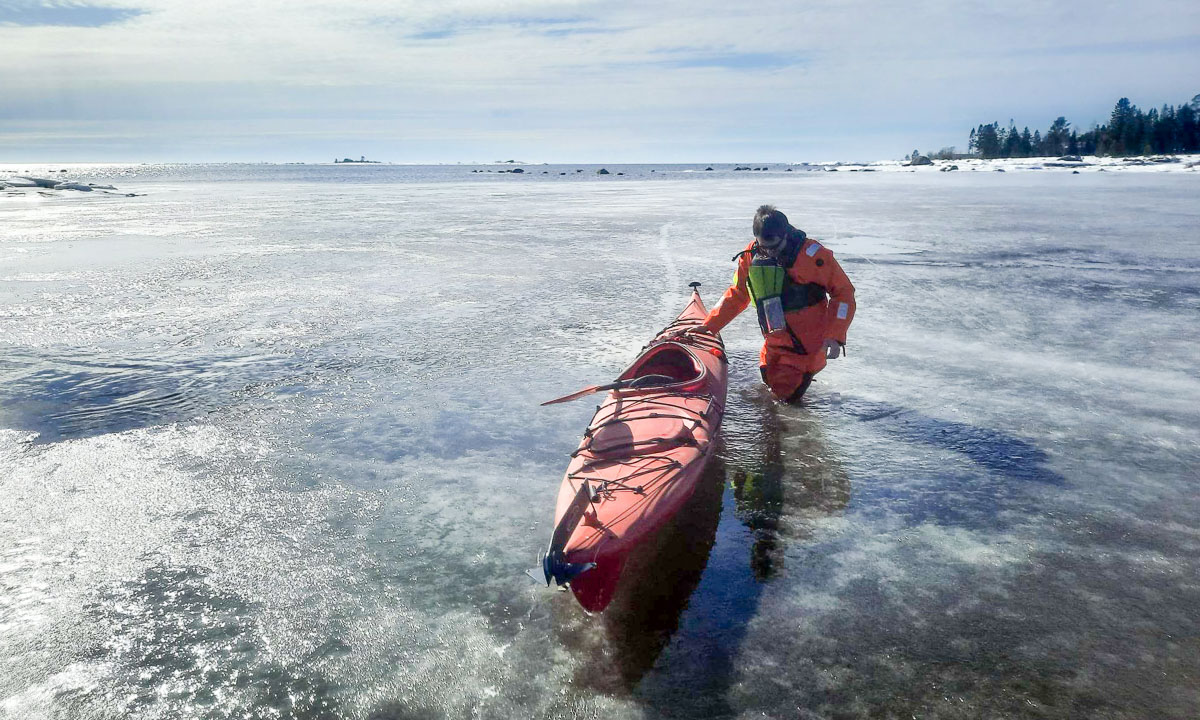
Last Tuesday it got sunny and I paddled kayak.  On Wednesday it got cold and the small sound between island Lillskär and mainland was covered with ice.

Although it’s mid-December and despite temperatures between -10 °C and -14 °C there were still whooper swans around. Don’t they migrate south? In the morning they managed to paddle through last night’s fresh and thin sea ice. In the afternoon the swans had left. Perhaps they finally decided to fly south.

On Thursday it snowed. In the afternoon 10 cm of fresh snow had fallen and everything was white and bright, even in the night.

On Friday Annika and I had a day off and visited friends in for a long weekend. They live in Kusfors in the inland, round 180 km north. On the way there and there we found more winter. It was not very cold but it snowed quite a lot. I took some images from the car while Annika was driving.

Yesterday on Sunday we came back to our house in Obbola round 20:00. Our property was covered with 45 of fresh snow. Since it had been sub-zero all the days the snow was pretty fluffy. We had to do quite a bit of snow shovelling – but after taking a photo.

Today it’s Monday and a new working week has begun. I had a lot of meetings today and therefore no time to paddle kayak. Oh yes, the kayaks … where are they? I know they lie beside the wooden terrace. Here they are, well hidden under a thick blanket of snow, right beside the window of the winter garden.

But there are other things to do as well. For example opening the afterwork ski season in Olles Spår near Umeå together with Annika. The snow is still soft and the cross-country skiing trail still slow but the first time of skiing is always special and we are happy and grateful that we live in a place where winter is around us.

Now it’s half past nine in the evening and I’m blogging. Snow is falling and the thermometer shows -9.5 °C, the same temperature as the last hours.

And you? What kind of winter do you like? Or do you prefer other seasons?

From Tromsø to Obbola

Friday, 18 November – walking back from work

It’s weekend. Today I stopped working already at 14:15. Sunset was 40 minutes ago and the light is beautiful while I’m walking home.

In Tromsø there’s hardly any snow, but a lot of rime. In the evening there’s polar light, but I only take a smartphone snapshot – tomorrow is a long day.

Saturday, 19 November – taking the bus to Narvik

Today is travel day. Round 16–17 hours it will take me from home to home.

Yes, I have two homes. One “work home” in Tromsø where I work and one “Home home” in Obbola where my wife Annika and I have a house by the Baltic Sea.

The weather is gorgeous and I take many photos through the window of the bus. Therefore some of the motives are blurred. The last one – the large bridge Hålogalandsbron is jittery because it has become dusky.

Saturday, 19 November – taking the train to Umeå

It’s a long ride from Narvik to Umeå. Departure 15:10, arrival 1:40 in the night. But it is a though train. I don’t have anything more to do but being awake on the arrival in Umeå. While I eat my take-away sushi outside of the train station it gets dark and so there is not much to see from the landscape in the train unless it stops.

In the frosty inland where it is quite cold I witness a special phenomenon. The whole forest we are passing is lit in green light. Another aurora? No, it’s cloudy. There are passages where the power lines for the train are coated with rime ice. The layer is so thick, that the current collector of the train looses contact and the electricity jumps over emitting bright green light that illuminates the dark forest.

The train arrives in Umeå in time and Annika already waits at the station. Another half an hour and I’m home home. Bed is waiting!

Sunday, 20 November – winter feelings

Oh, what a blessing it is to be home home. Normally we are supposed to work at the offices of the Norwegian Polar Institute but my boss knows about our long-distance relationship (or is it called long-distance marriage?) and allowed me to do home office until Christmas. Tusen takk! And it is even wintry and a bit sunny and a bit snowy.

From now on I can enjoy the view from my home office.

Monday, 21 November – the first home office day

Enjoying the view from my home office is a pleasure but when all of the sudden the morning sun peeks through the clouds I just have to go outside and make some photos!

And what do I do at lunchtime? This:


Scotland: the west coast of Isle of Lewis

This article is part of the series “2022-10: Autumn in Scotland”.

It is 10 October.

Yesterday evening we arrived on the Isle of Lewis, took the reserved rental car (Annika driving) and stayed in the Ravenspoint Community Hostel. Today we want to go by car to explore the west coast of the island.

We do not meet a single person while taking breakfast. We succeed in not raising fire alarm while frying eggs, we pack our backpacks, revert our personal rearrangement of the beds in our twin room and get in our small car – a Kia Picanto. While Annika has been in Scotland much more often than me it is our joint premiere in exploring this country by car.

After taking a detour to a small beach at Tobson we continue to Callanish Stones, one of several arrangements of menhirs. Although yesterdays gale has subsided it is still very windy with some showers of rain. My challenge as a photographer is not only to keep my small Sony dry (first photo is an iPhone photo) but also to take pictures while a large family uses the standing stones for playing hide and seek.

We make a stopover at Doune Braes Hotel for lunch. There we spot the standing stones again – as a colourful leaded window, animals included.

Next stop: the Gearrannan Blackhouses, a village of thatched cottages that was inhabited until 1974. Now it is not only a museum but one of the cottage is a hostel, where we check in and reserve a bunk bed. We have a look at the museum, where a local shows his expert knowledge regarding weaving looms. The view of the coast from the village is quite impressive. The waves are high and smash surf and spray against the rocky cliff.

Now we continue the road north to the headland with the catchy name Butt of Lewis. When we arrive there I’m really flabbergasted. Neither Annika nor I have ever seen waves breaking so high as here at the northern tip of the Isle of Lewis. Extremely impressive, a bit daunting and also a bit wet because sea spray seems to be everywhere. Keep in mind, that the rocks in the next photos are round 10 metres high. Thanks, Google Earth for your elevation data.

It takes some time until I can tear myself away. Next we head for Port of Ness, a harbour village nearby. The sandy beach is broad and shallow. Huge waves roll ashore. While they are breaking the wind gusts blow the spray away – a fascinating view. I decide that today is just not the day to take a relaxing bath in the Atlantic ocean.

We return to our parked car and drive back to our hostel – part of the Gearrannan Blackhouses. The museum is closed and it looks like we are completely alone in our cottage, that can host 13 guests. While we boil water to cook pasta we still can hear the waves splashing ashore at the rocky coast round 100 metres away. After dinner we fall fast asleep . Stormy weather is exhausting, and so is left-hand driving. So, thank you, Annika, my luv, for driving us.


Thursday paddling – from dusk to darkness

It is 29 September and it is Thursday. Time for torsdagspaddlingen – Thursday paddling – with the Tromsø Sea Kayakers Club.

As usual we meet between 5 and 6 o’clock pm to prepare the kayaks, put on our drysuits and life vests and listen to the tour leaders about the plans for today. For several weeks there has been another thing to think of: attach lights to the kayaks and the life vests to be seen. September equinox has been one week ago and it starts getting dark quite soon. Today we are lucky: It is high tide and we don’t have to carry the kayaks more than a few metres.

We are 23 people. 7 will follow the shore to the beach of Telegrafbukta, the others including me want to paddle to Lilje Grindøya that lies behind Grindøya. I’ve never been there. Round 18:00 we sit in our kayaks. As soon as all are on the water we start our tour.

Before we reach the island Grindøya one of the tour leaders lifts the paddle vertically in to the air. That’s the sign for gathering.

Plans are changed. Lilje Grindøya is quite far away and the waves on the sound we crossed were a bit higher than expected. So we head for Grindøya instead.

It it warm and calm. 16 kayaks lie by the beach. We sit our stand around. One paddler passes around homemade cake, another one lights a cosy fire on the sandy beach. Hyggelig!

While we are eating, chatting or taking pictures it is getting darker and darker. The kayaks are hardly visible anymore and in the distance there are the lights of Tromsøya and Kvaløya.

After half an hour it is time to set off and paddle back to shore.

While crossing the sea again I didn’t take photos for three reasons. All of them were related to the darkness.

First:  we want to stick together to be seen and to know we are all there. There may be ships crossing and then you do not want to have a stray paddler around. So I cannot just let the others go to take photos.

Then: my waterproof camera is – well – waterproof but it hardly can take photos in the dark. Even with a better camera it is difficult. Did you ever try to make long exposure photos while sitting in a kayak?

Finally: the waves! The kayak I use is stable as a truck and on our way to Grindøya I didn’t care about the waves a lot. Now it is quite different. I can see the waves because of the reflections of the city lights. But I cannot see how broad, how steep or how high they are. So I have to react by instinct which I don’t yet have. It’s a first time experience and a slightly weird one.

While we are approaching main land the other paddlers come into view. Or better said, their lights. Two of the other kayaks are not illuminated and completely invisible. We take a long turn to the left and follow them. Some of us almost collide with one of the jetties. Everything that isn’t illuminated comes into view at the last moment.

I’m a bit sad because this is the last Thursday paddling this year. Probably we won’t start with it again before end of April. Hopefully there will more kayak opportunities in daytime over the winter.

At 20:15 I  come ashore. Again I want to say to all fellow paddlers: takk for turen! Thanks for the tour!