After work visit of Kvaløya
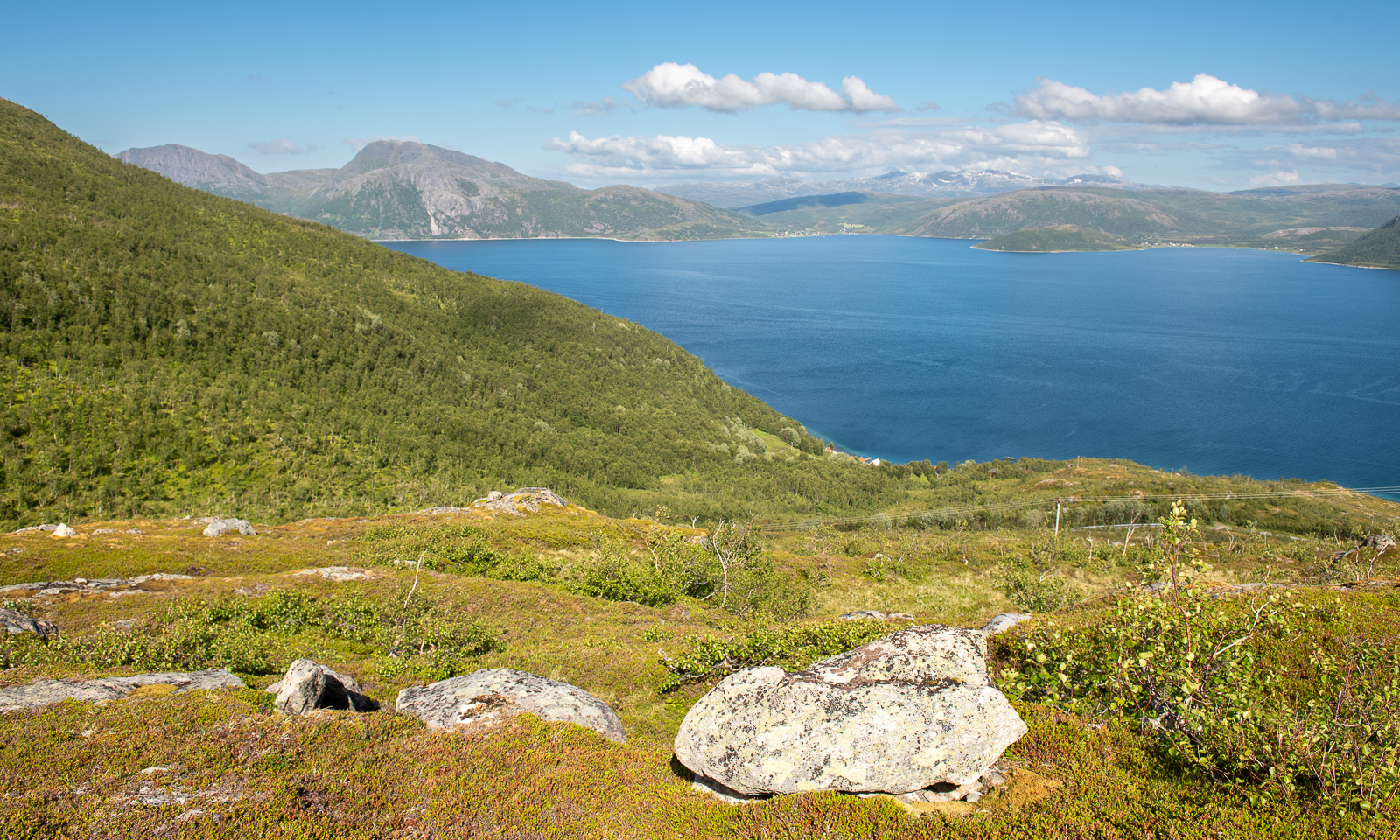
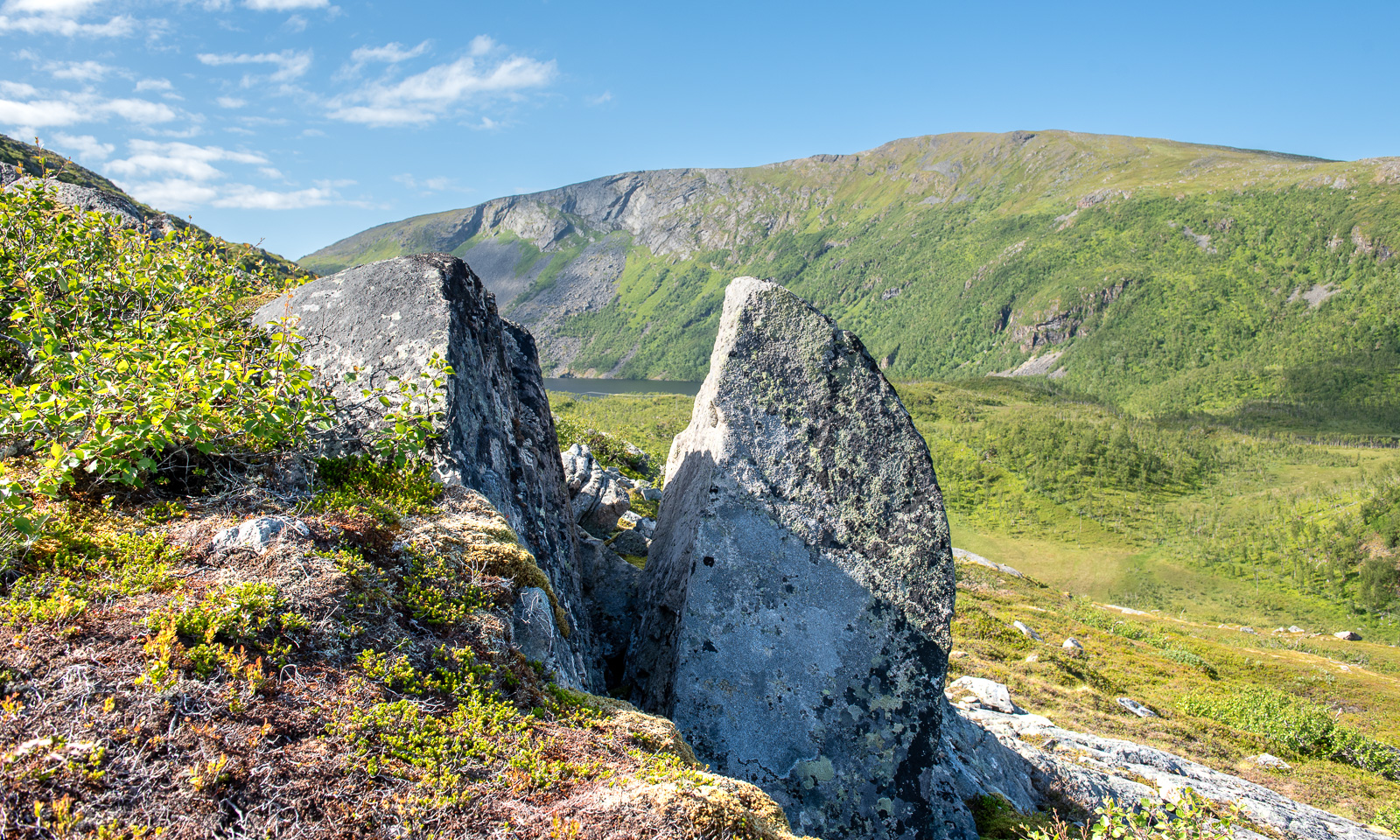
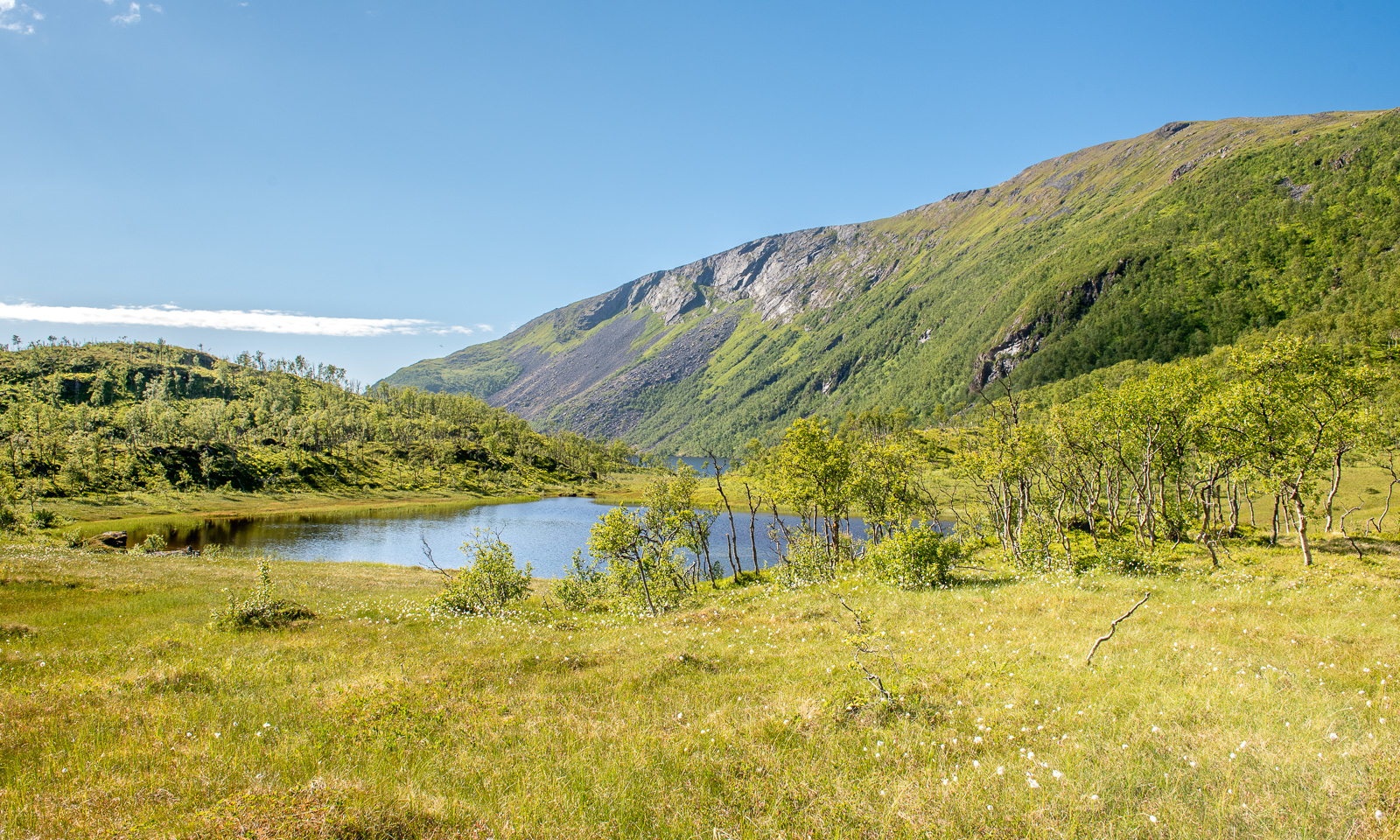
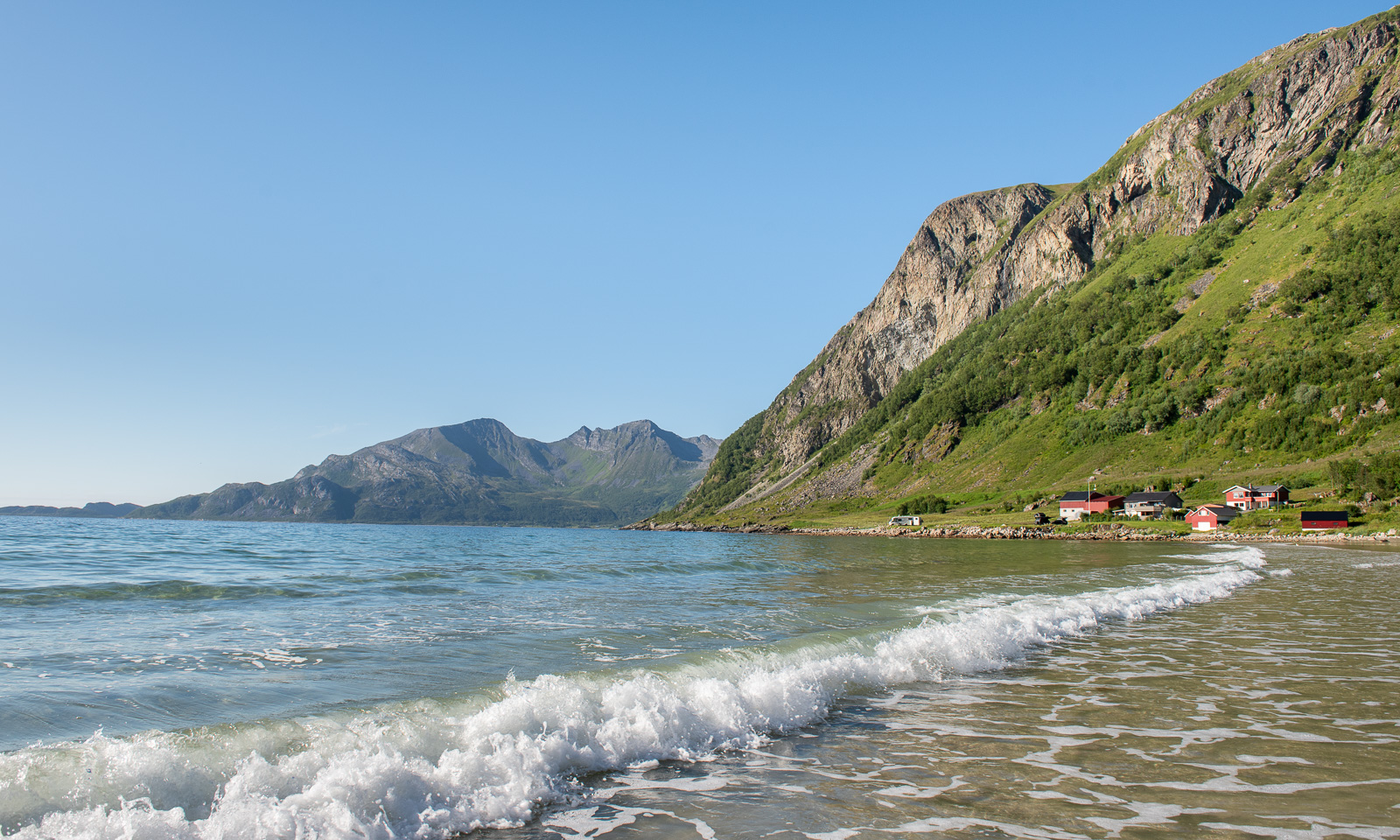
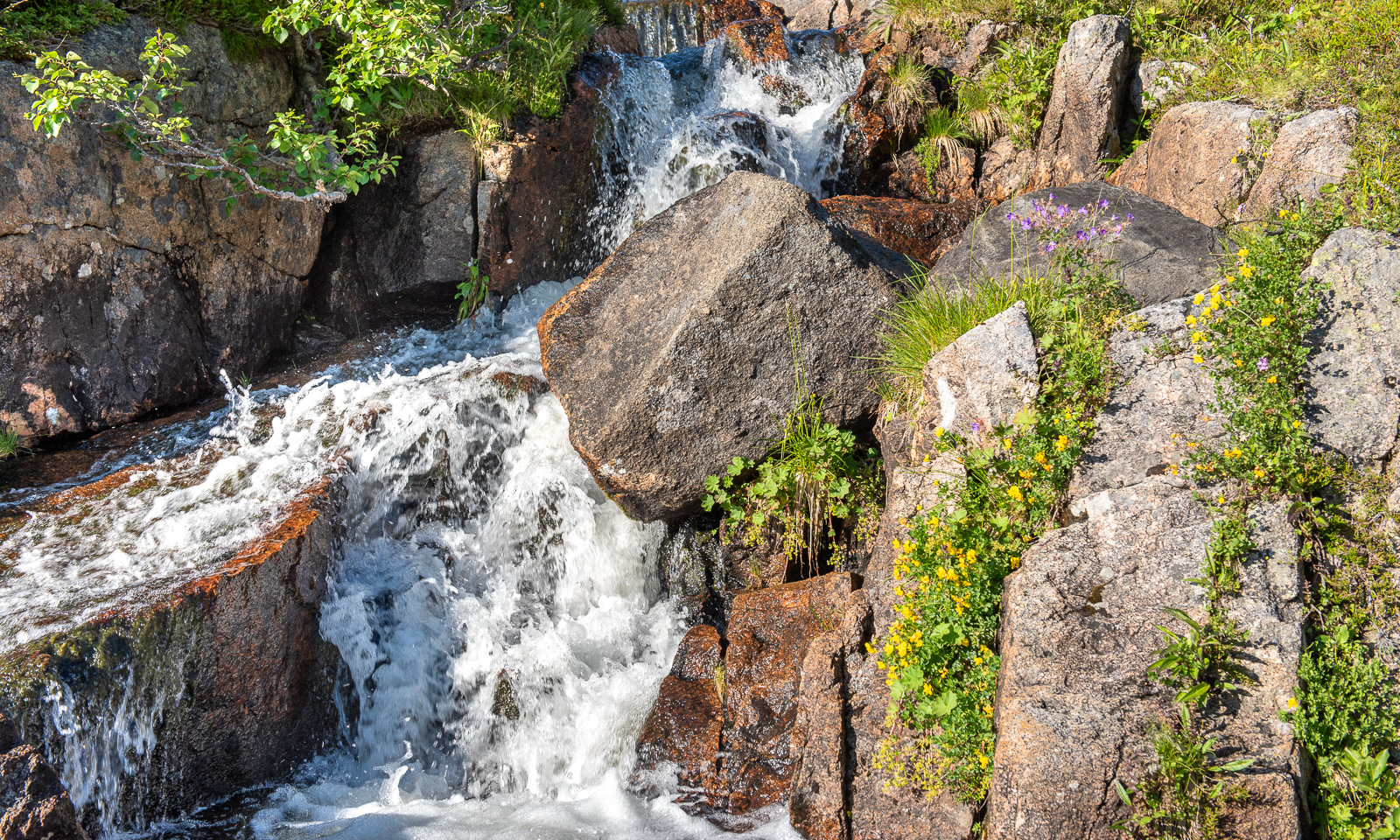
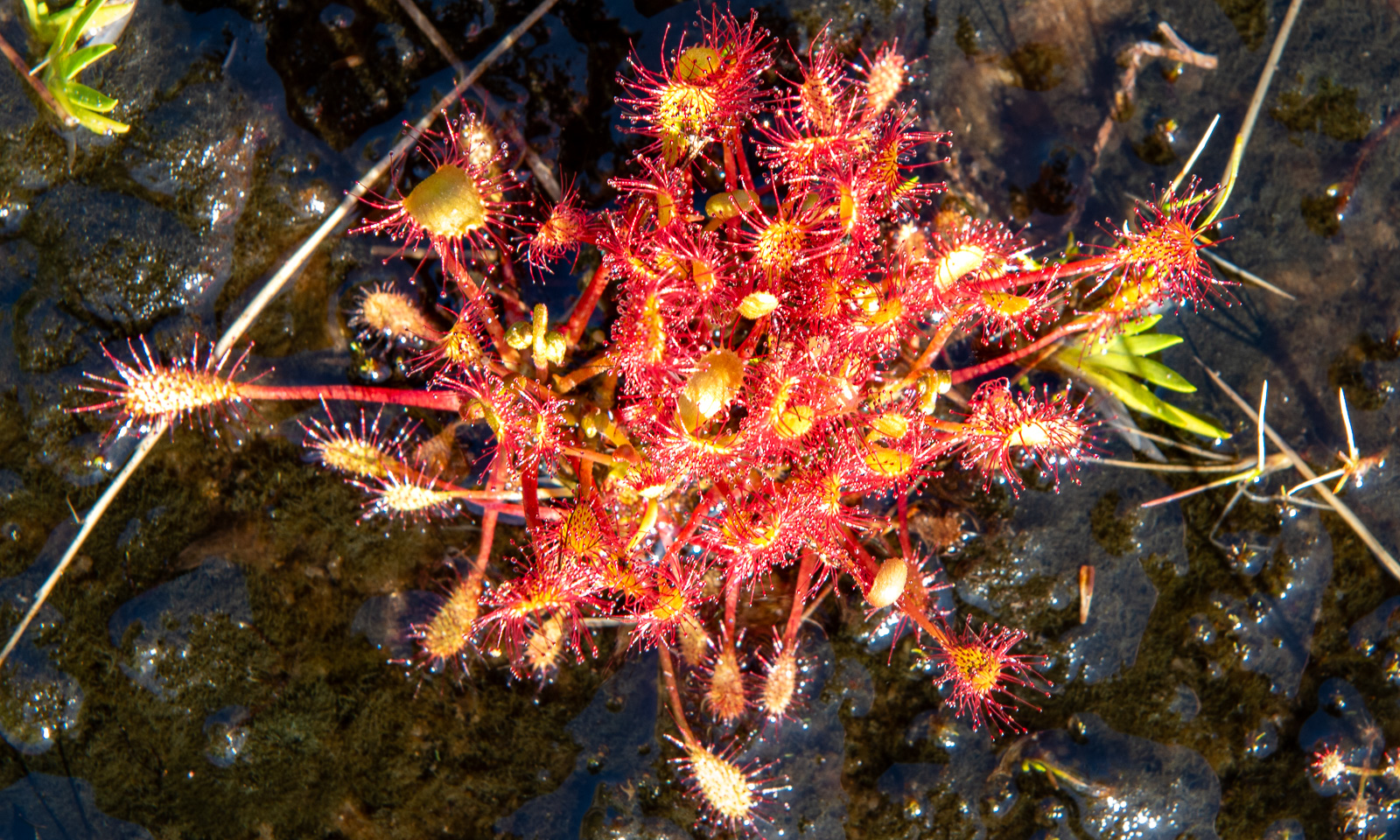
A bit of hiking – a bit of dining – a bit of bathing – a bit of geocaching – a lot of sun.
All after a regular work day, together with Annika.
A bit of hiking – a bit of dining – a bit of bathing – a bit of geocaching – a lot of sun.
All after a regular work day, together with Annika.
The weather in Tromsø for the weekend didn’t look promising, but for Friday it did. I leave work just after lunch so that Annika and I can hike up to Blåkollkoia cabin together. At half past one I park the car in Tønsvik. From there, it is an 8 km walk up to the cabin. The first 2½ km we follow a gravel road that leads to some private cabins.


Then the road turns into a marked hiking trail. It leads through fern thickets and birch forests; it crosses grassy plateaus and bogs with cotton grass.

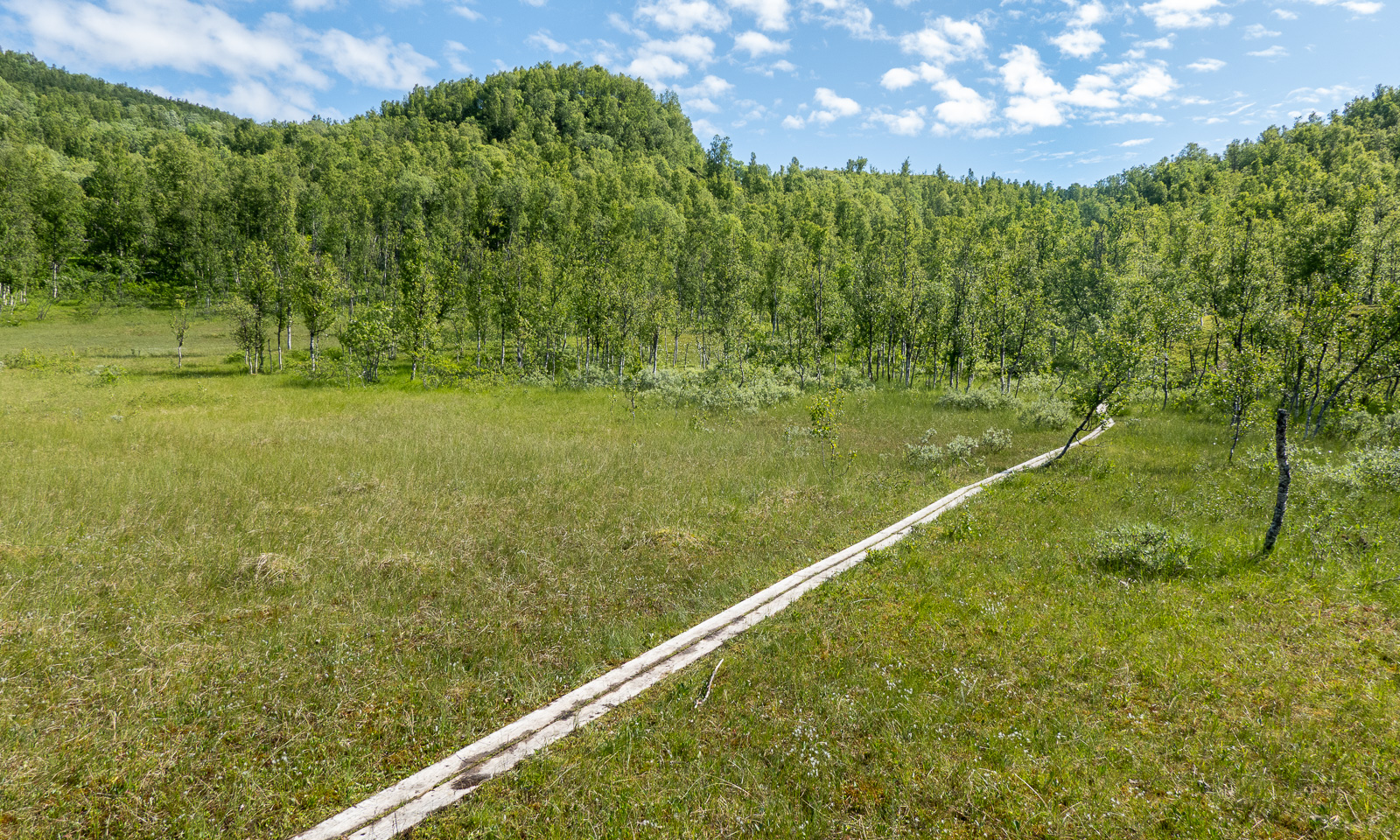
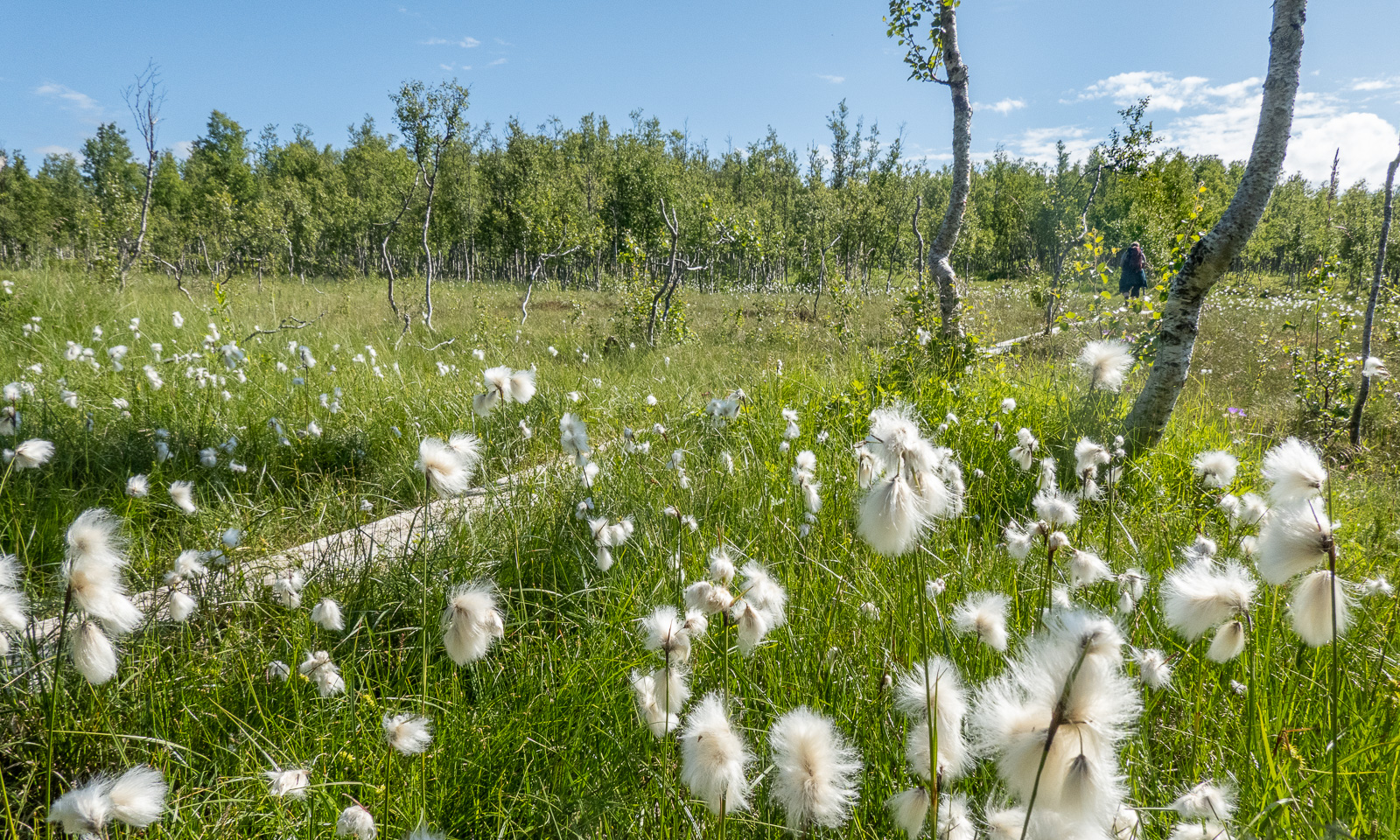


It is perfect hiking weather. The air is not too warm, but the sun is quite strong and we are glad about the occasional wind cooling us down. There are hardly any mosquitoes, but plenty of flies seem to fall in love with us and follow us everywhere.
Below the cabin we use the bridge to cross the river Goahtevuomieatnu/Tønsvikelva. We were here in August 2024 and took a bath; now the river carries a lot more water.

Then we arrive at the cabin. It is locked and we use the key provided by DNT (Den Norske Turistforening) to enter. We have booked two beds in Room 2.


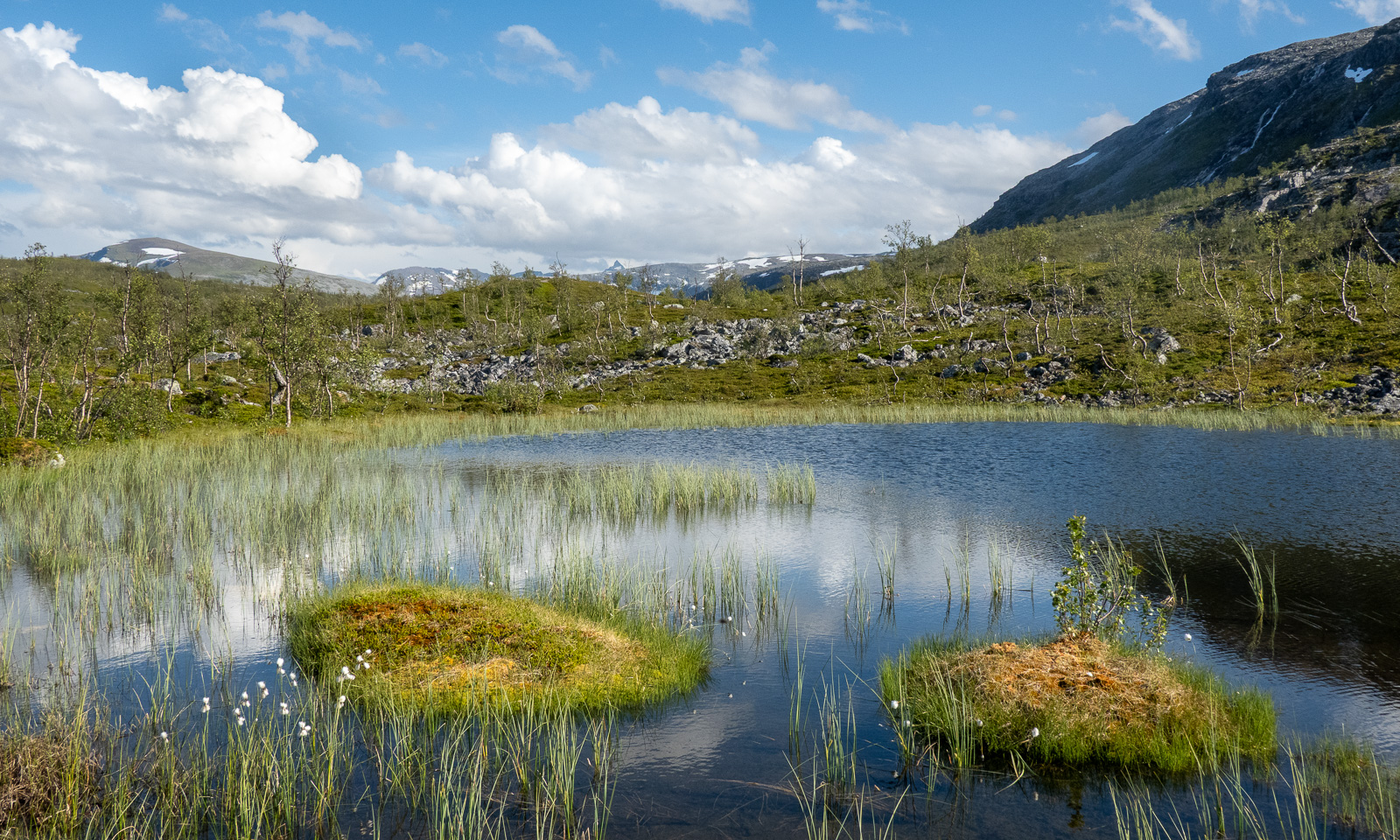
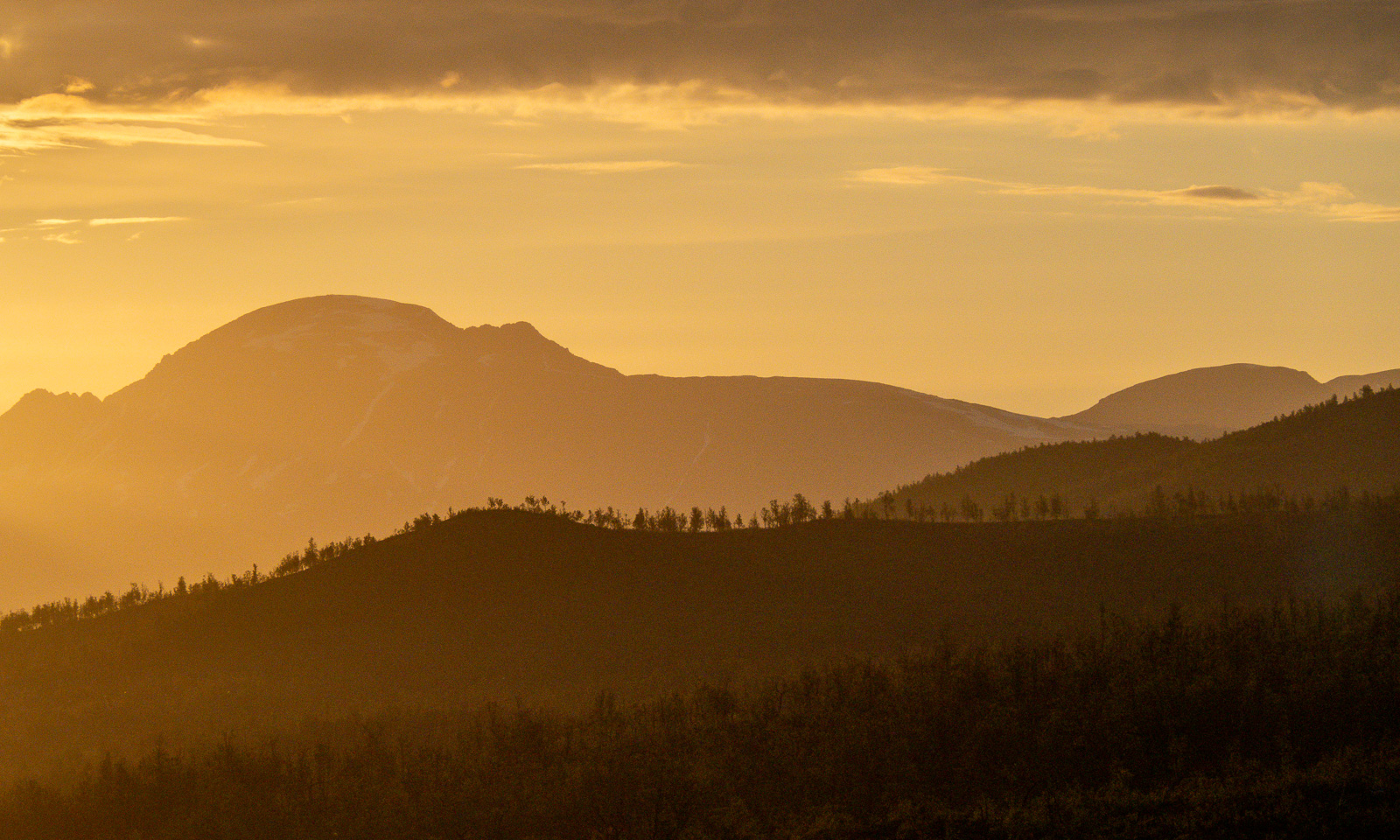
I go outside several times to take photos, while the sun is slowly sinking lower and lower. It is still polar day in Tromsø, so the sun won’t set. I sleep a bit but after midnight I am out again enjoying the beautiful scenery that is illuminated by the low sun in warm colours.



The next morning the scenery is quite different. The sky is overcast, some mountains hang in the clouds and it has started drizzling a bit.
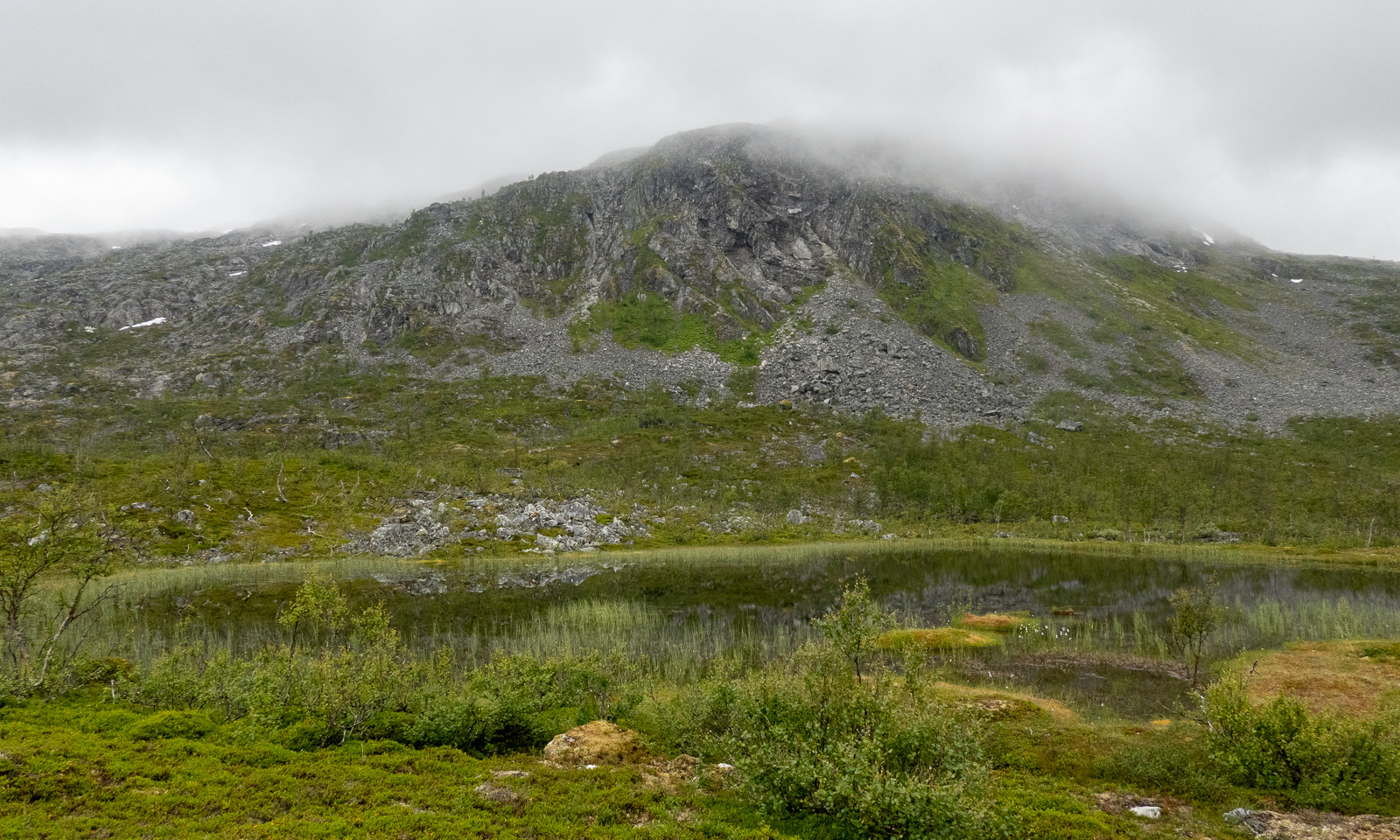
After a two-course breakfast (fried spaghetti and muesli), Annika and I pack our things, clean the cabin with the other guests and start our tour back to the parked car.

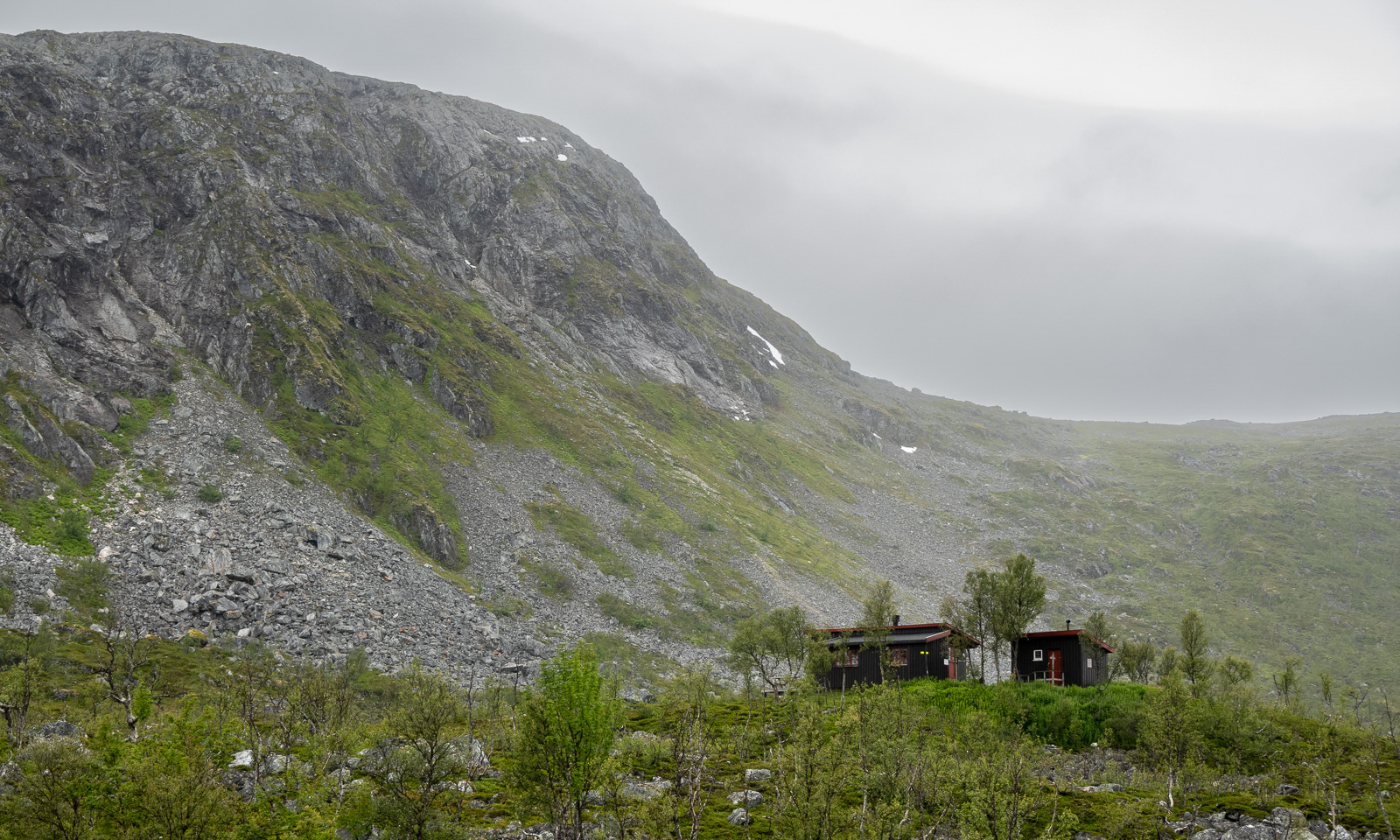
First it is just overcast, then it becomes foggy and in the end, when we are on the gravel road again, it starts to rain.
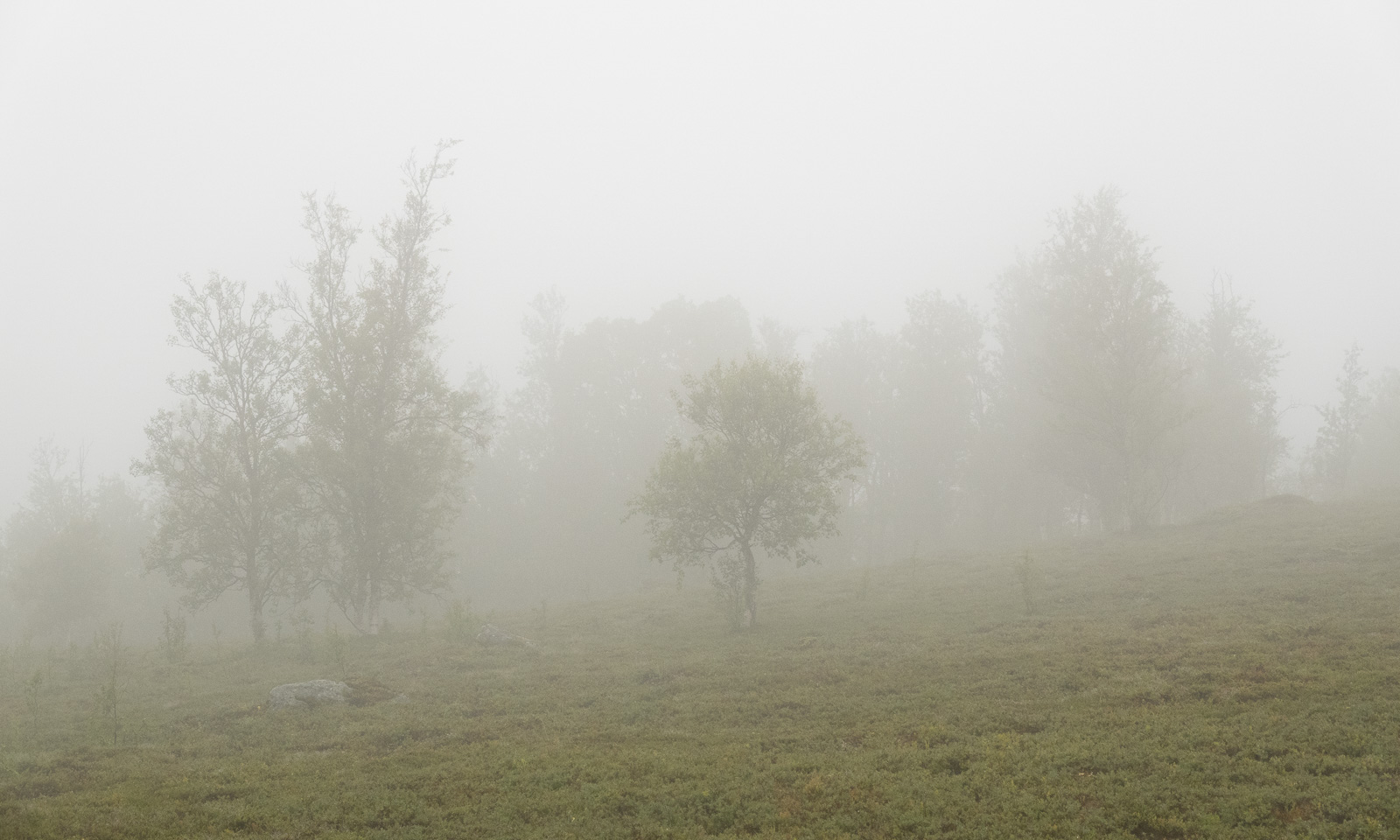


Luckily, a friend of ours lives nearby. Here we can change into dry clothes and we get hot soup and coffee. Thank you, C. for the food and good company! A perfect ending for a great hiking tour that took less than 24 hours.
It has become a tradition for me to hike to the glacier Steindalsbreen on the Lyngen Peninsula once a year. I was there on 24 September 2023, on 28 September 2024, and on 14 September 2025. This year I’ll be away most of September, so I hiked there already yesterday with my friend Christine.
We know the way – the ascending forest path by the river Gievdanjohka (Steindalselva) …
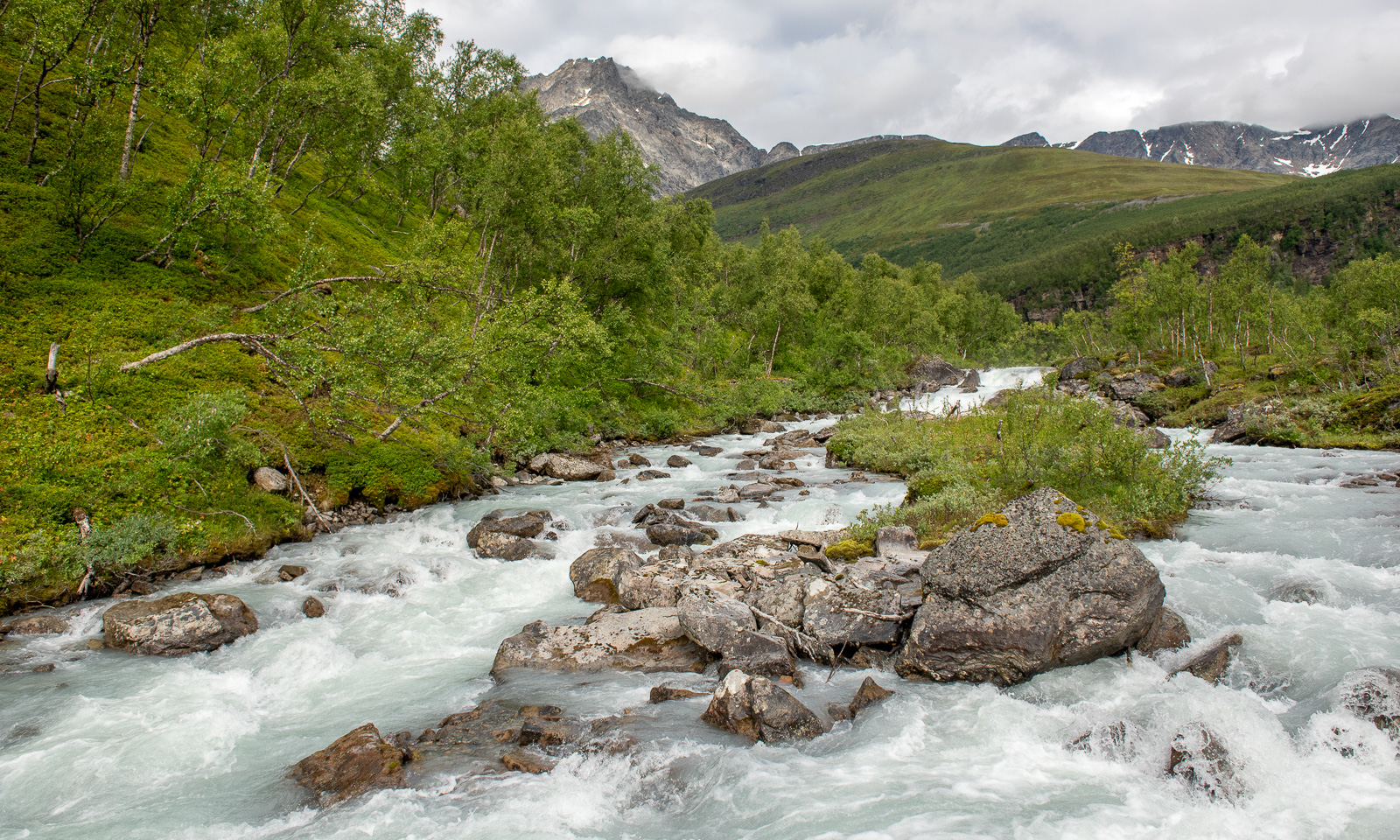
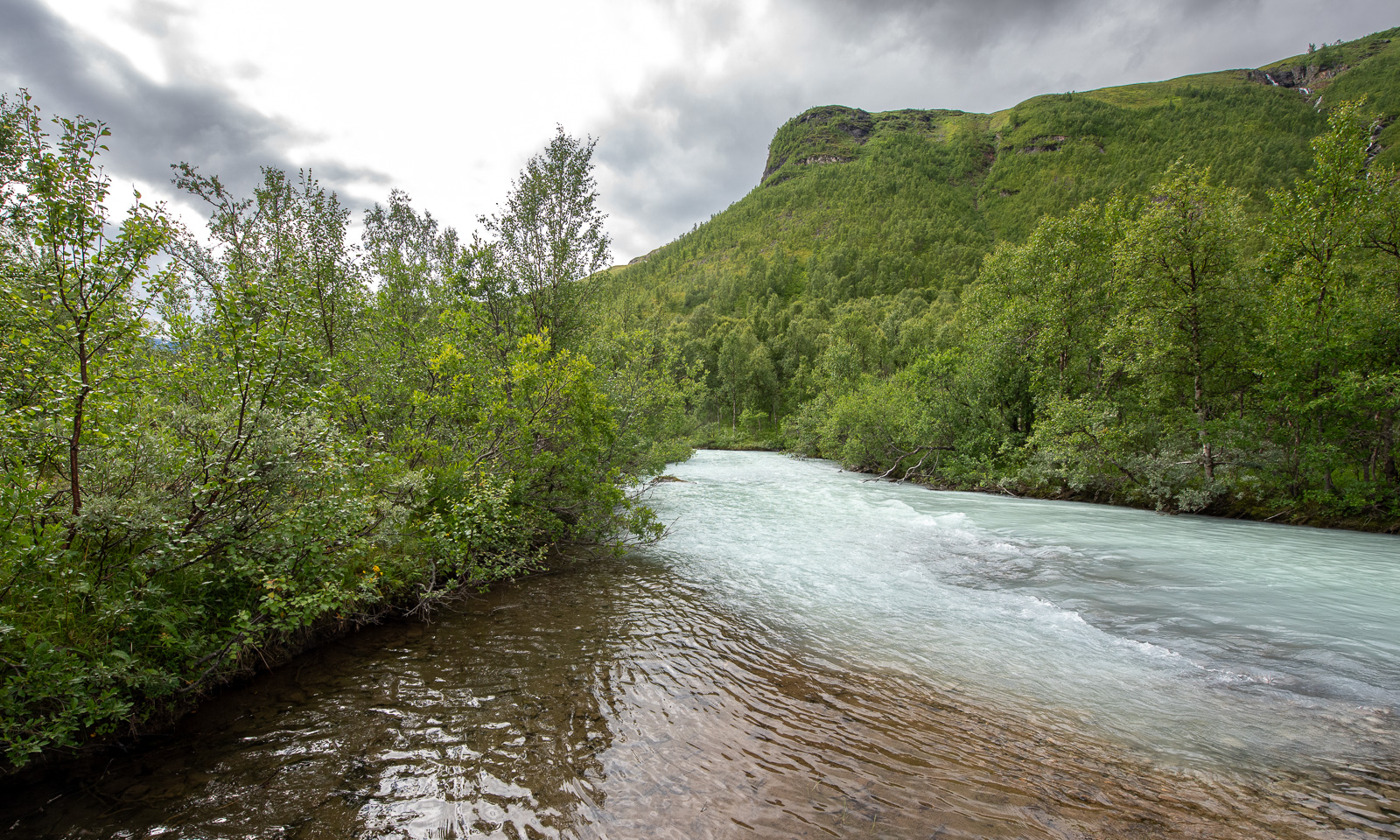
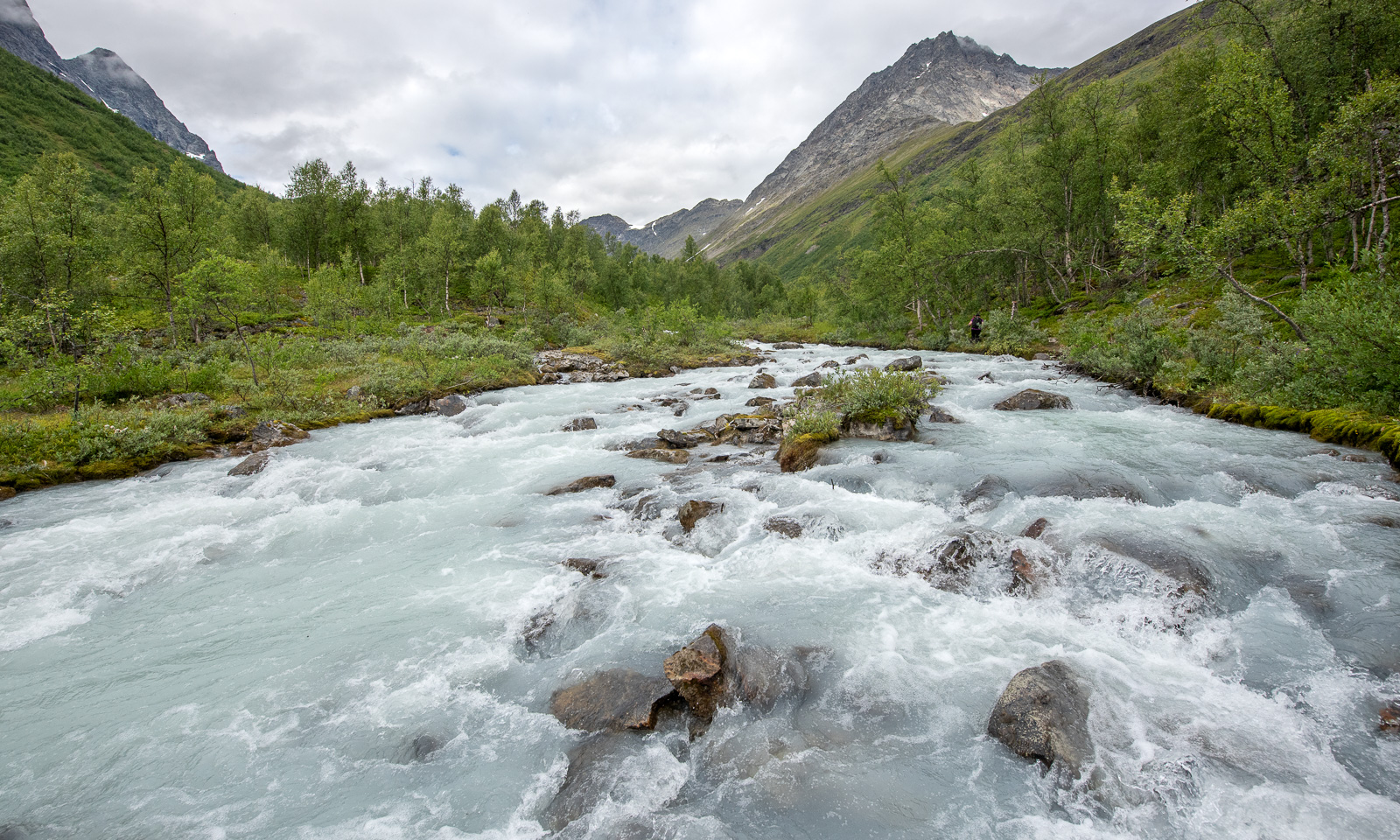
… the Steindalshytta cabin, where my wife Annika and I stayed overnight last year, the bridge over the river Doaresjohka (Tverrelva) and the small hilltop from which you can see the glacier for the first time. Then the U-shaped valley, broad and easy to walk before the ascent where the landscape looks high alpine between 1500-metre-high mountains.
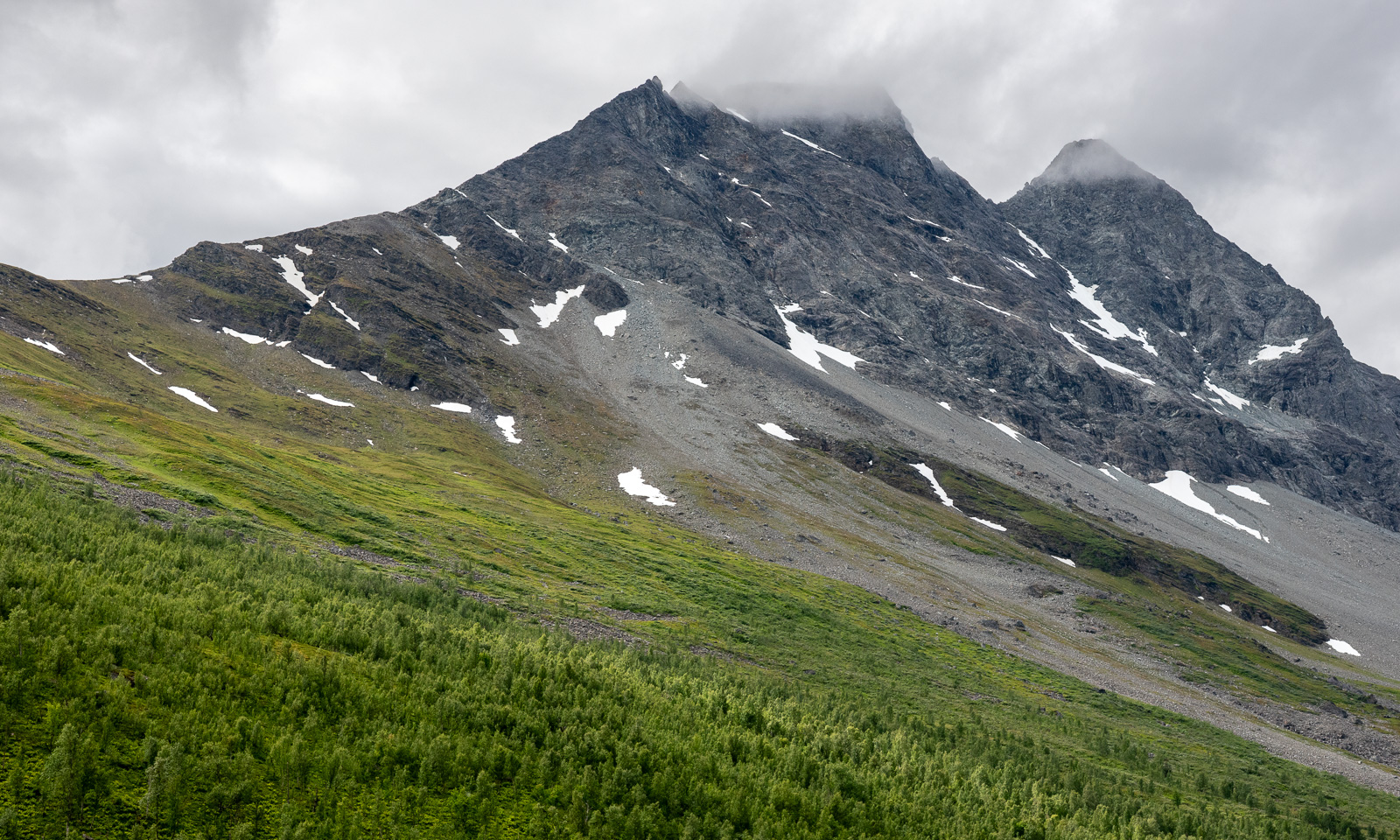
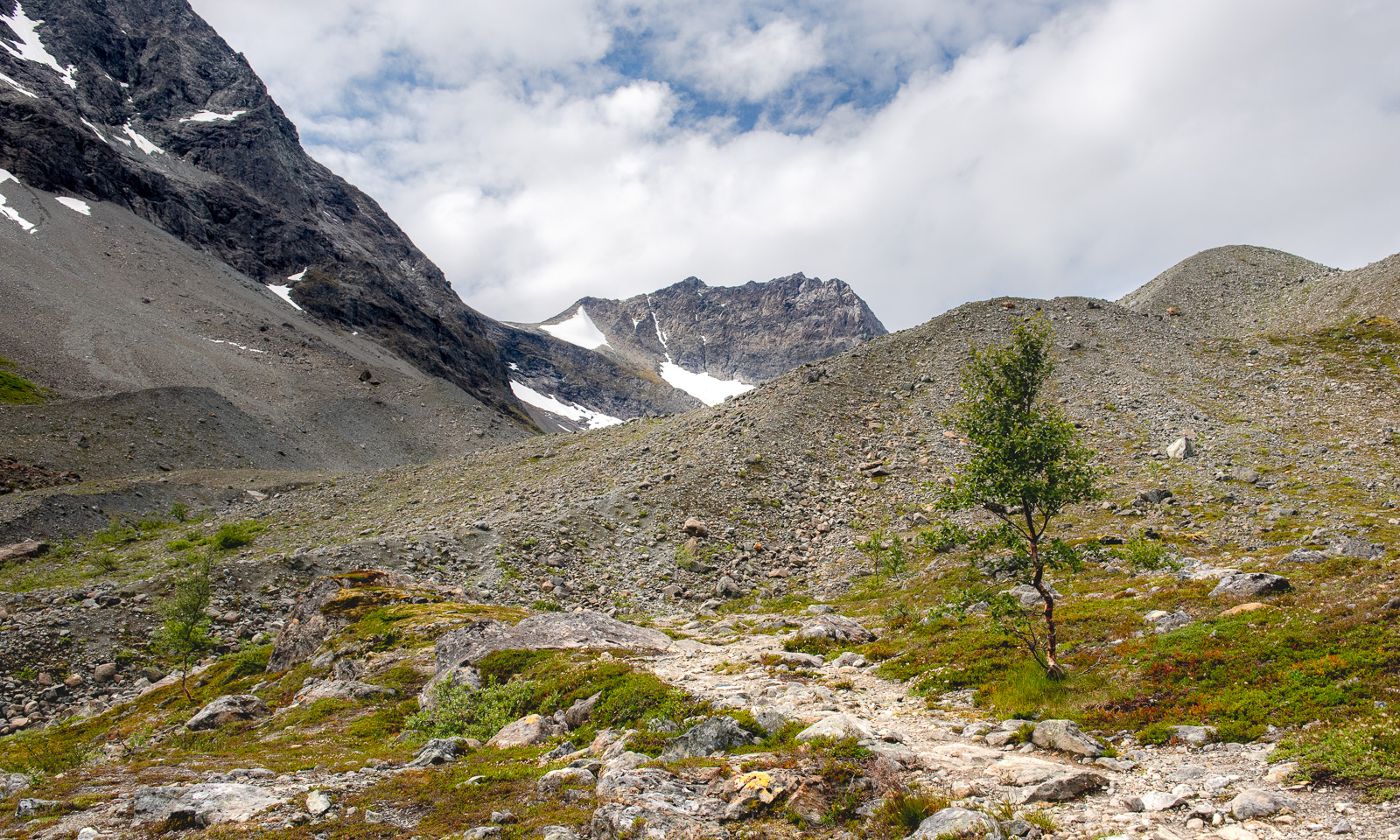
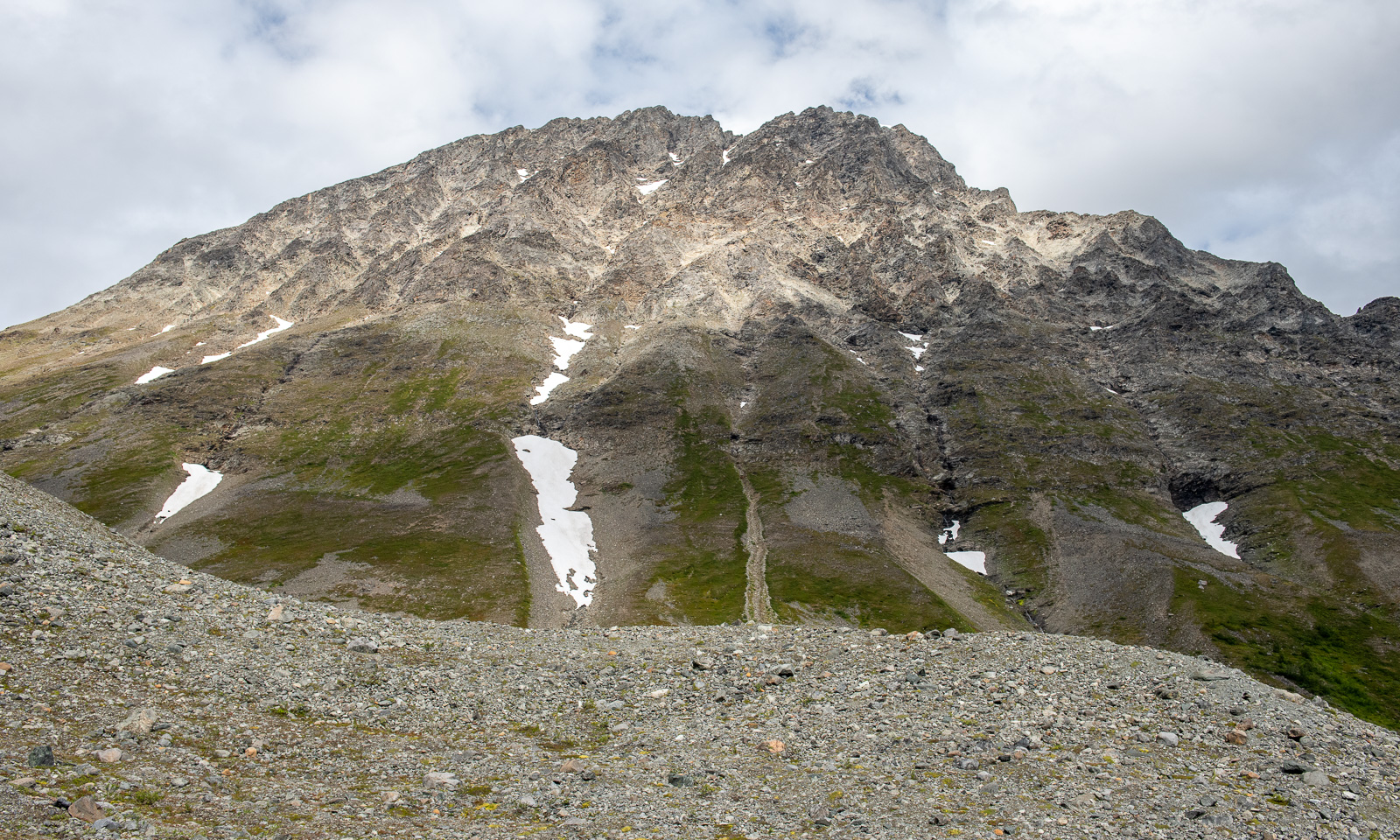
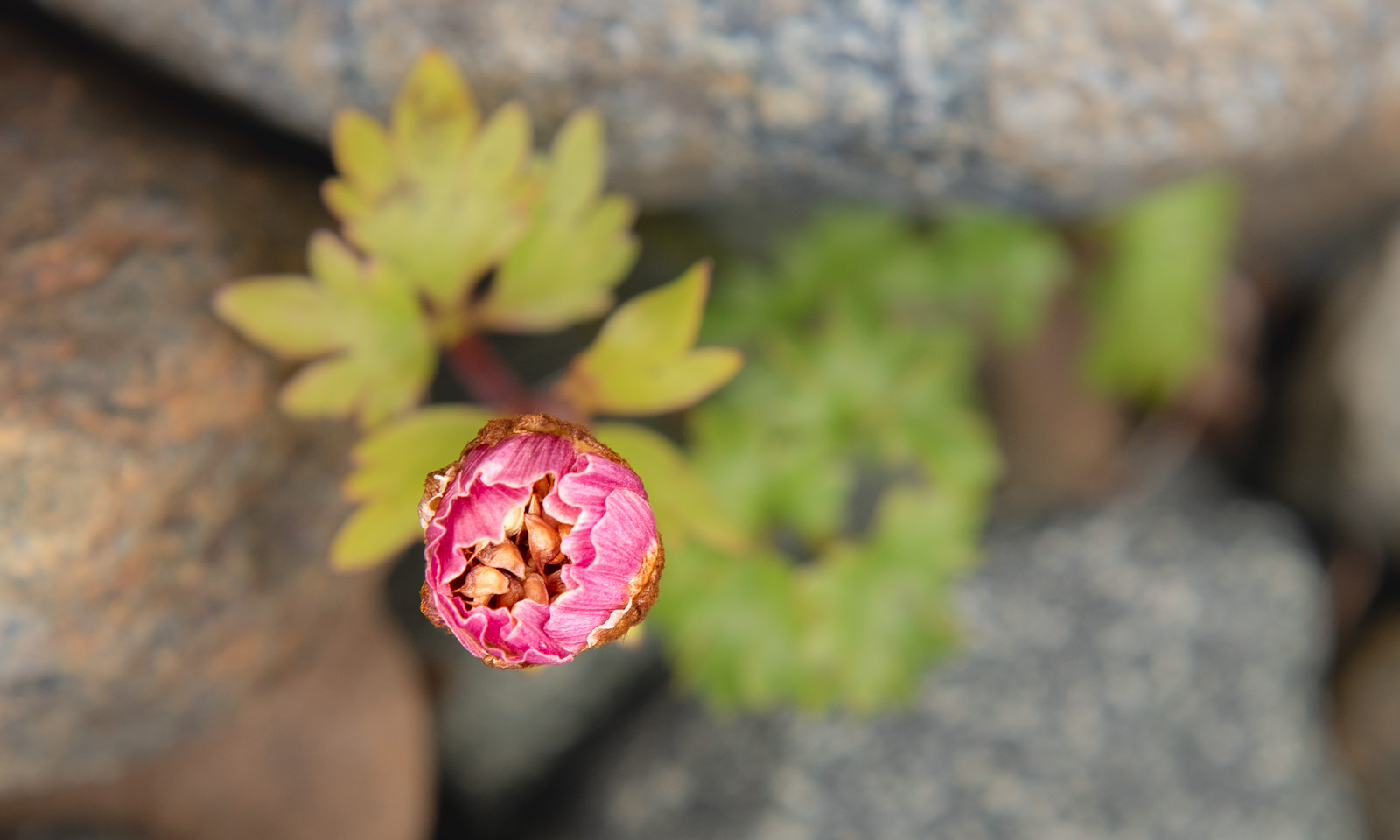
Now the landscape is dominated of rocks and the vegetation is sparse and low. Here a favourite flower of mine grows: Ranunculus glacialis – also known as glacier buttercup or glacier crowfoot.
The landscape rises in several waves and then we can see the glacier lake. The water level looks higher than usual. I don’t know if it’s due to the wet summer or the time of the season. This time the lake has some small icebergs in it.
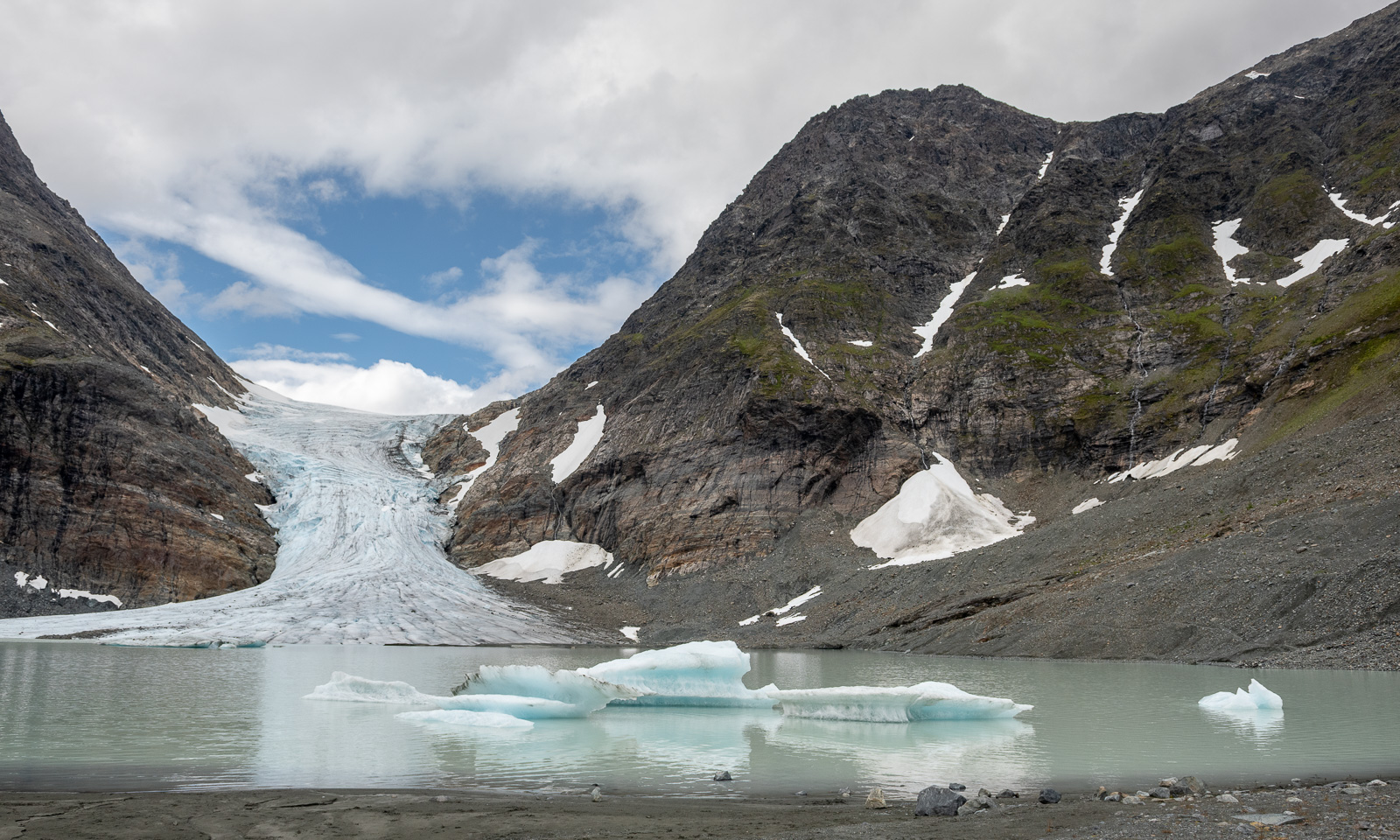
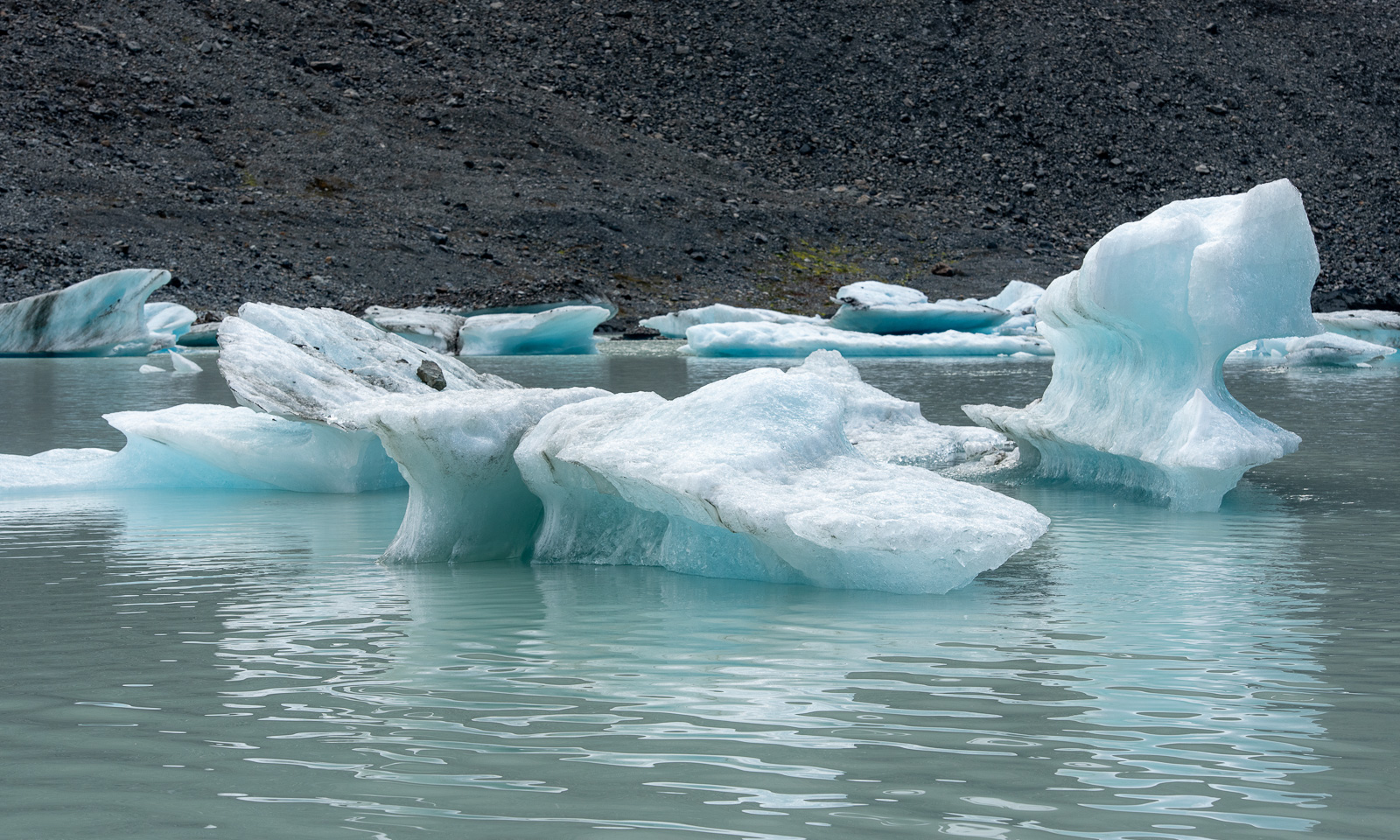
I’m not sure if it is possible to reach the glacier without taking an icy swim but it is surprisingly easy to follow the small path on the scree slopes. The other years it was possible to walk along the glacier front on banks of sand and mud. This year I am limited to the tiny reachable edge of the glacier. This makes the photography part much shorter this year.
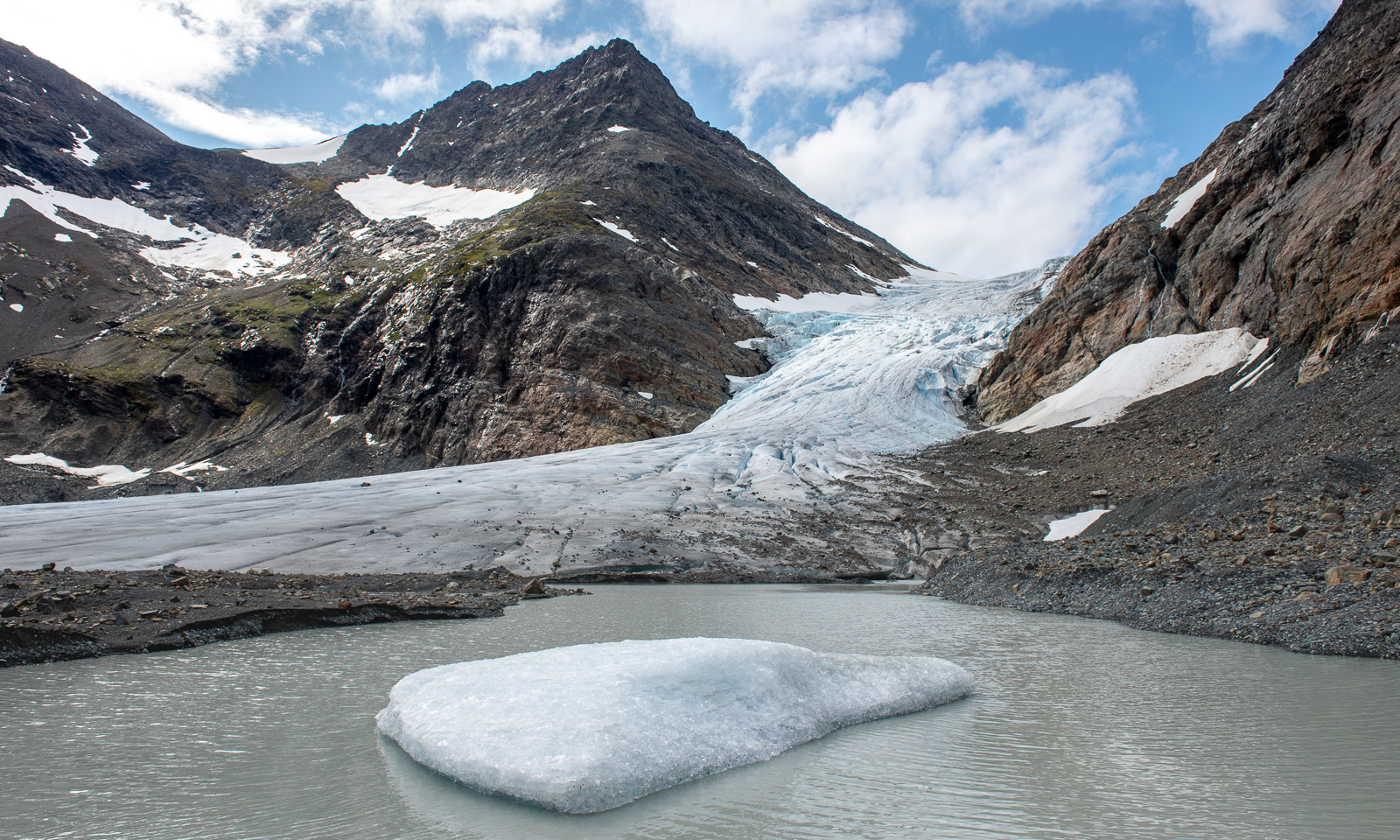
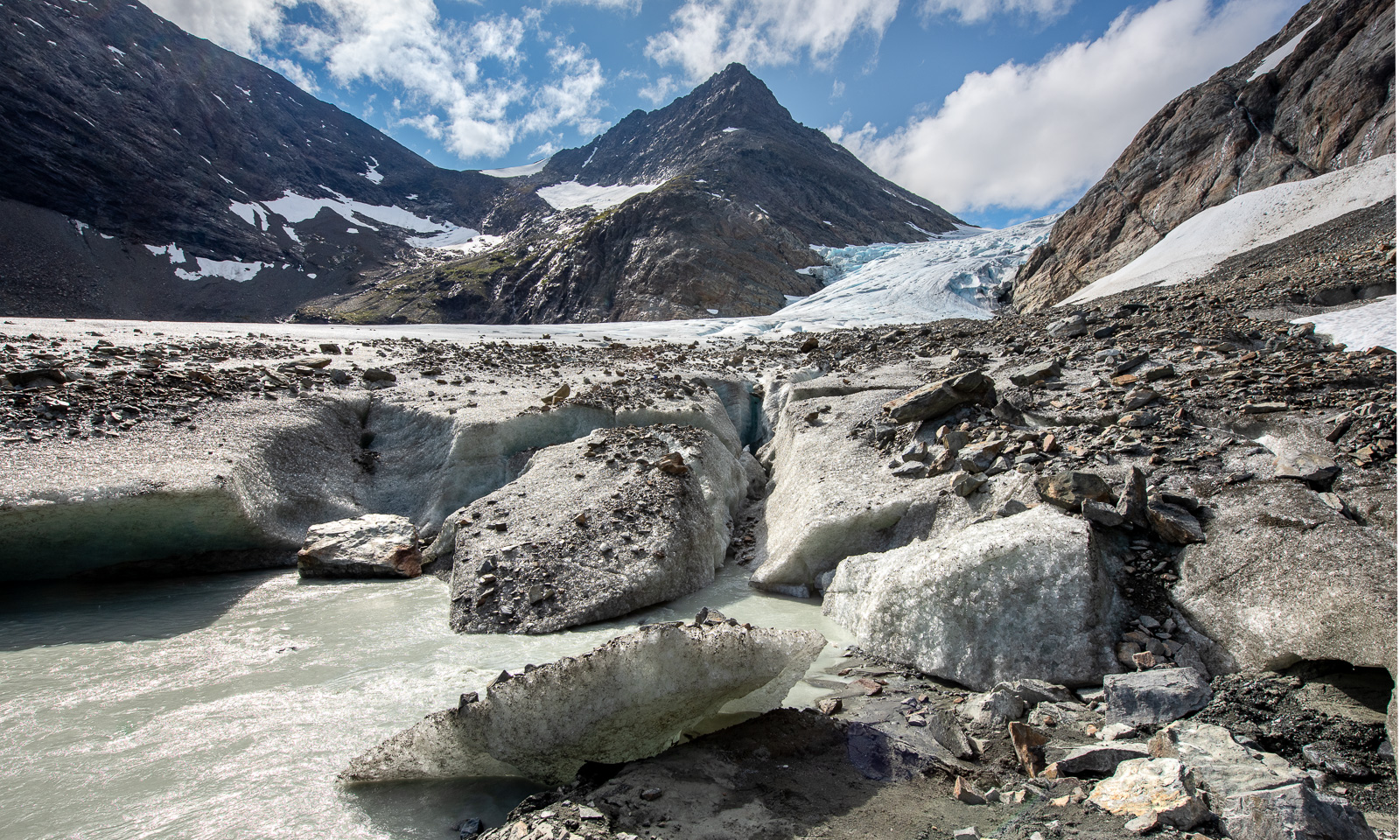
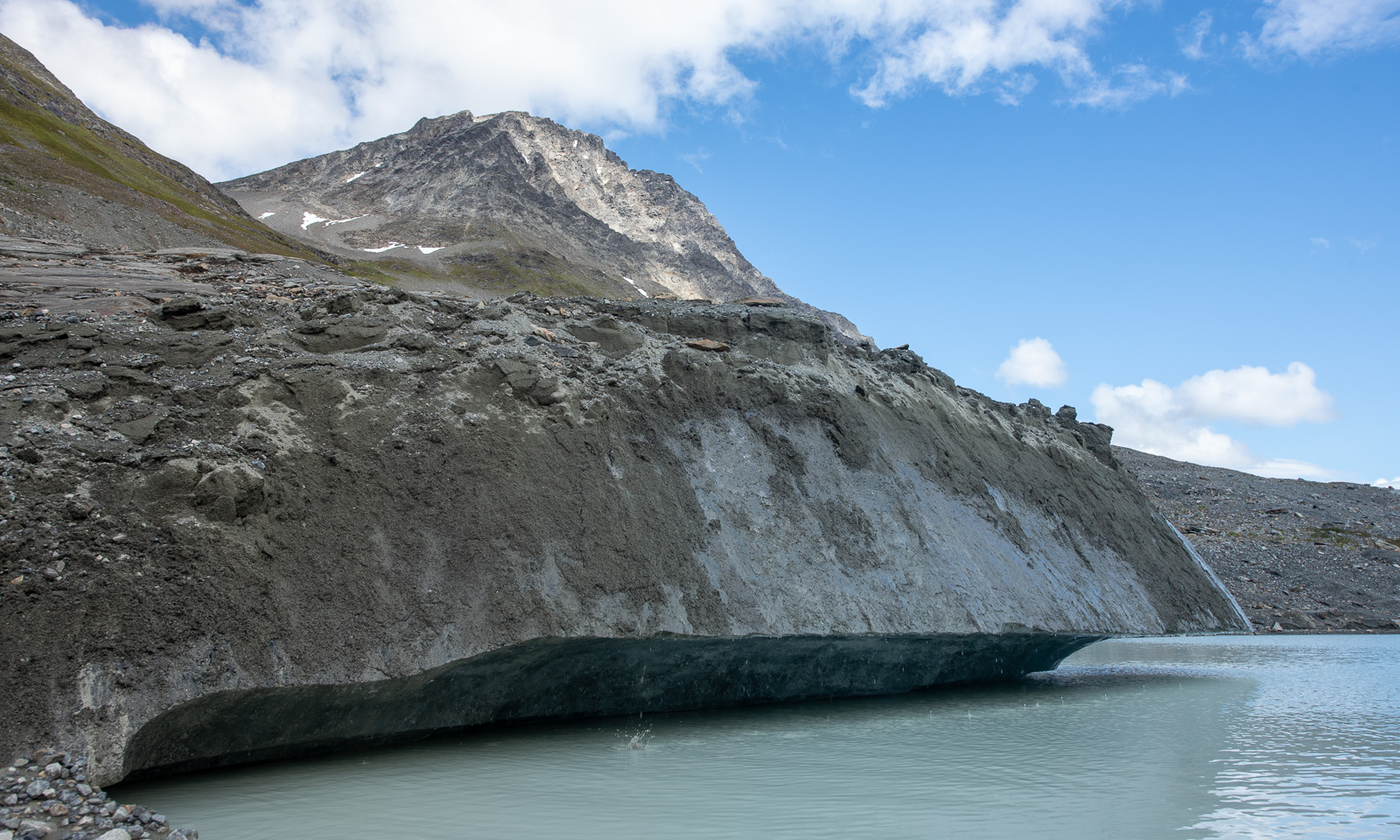
The lake looks murky and so do some of the huge ice blocks by the lake. They are covered with rocks, pebbles, and clay and only the smooth side reveals that under the debris there is solid glacial ice.
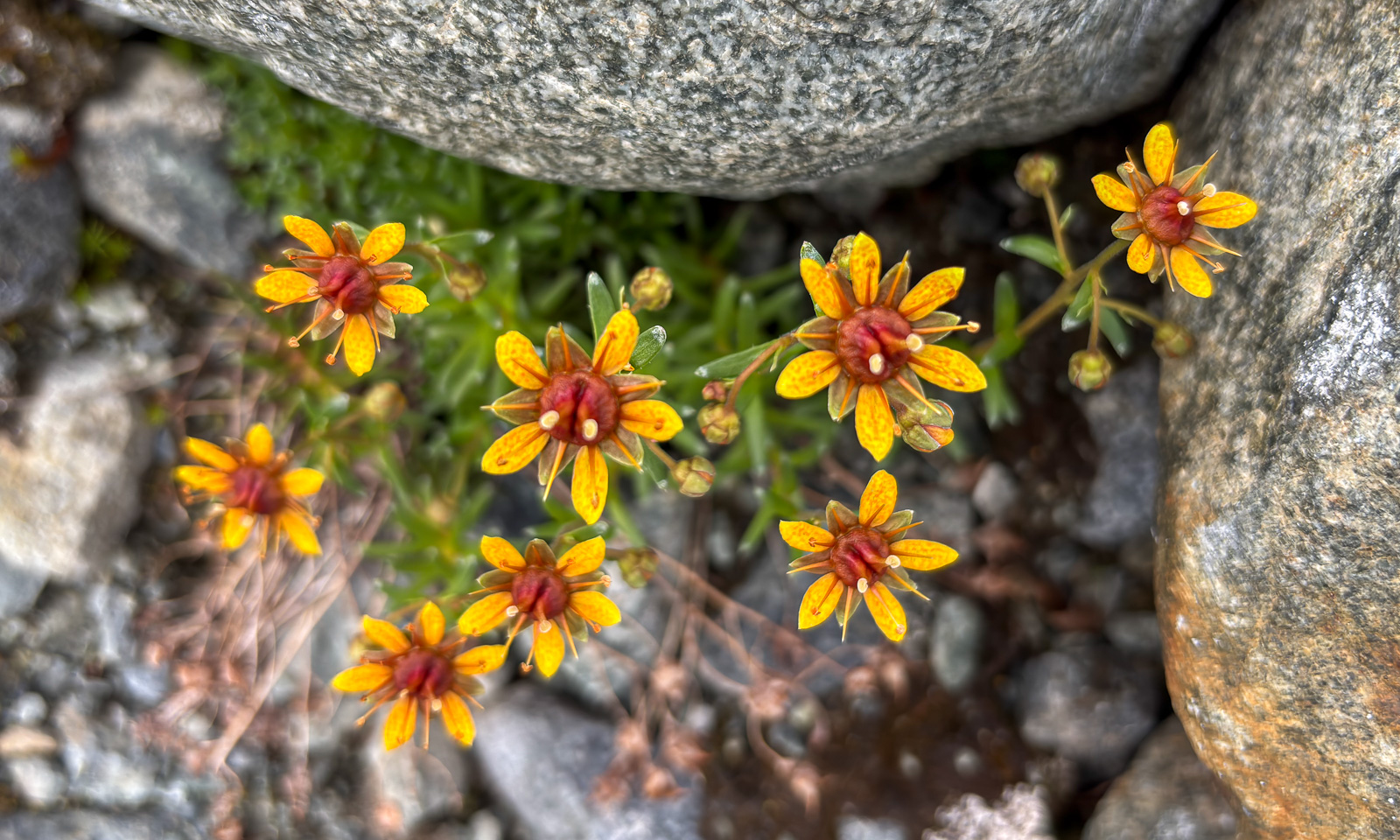
On our way back I hardly took any photos, just an snapshot of this flower with my mobile phone to look up what it is. According to my app “Flora Incognita”, it is Saxifraga aizoides – also known as yellow mountain saxifrage.
Thanks for the trip, Christine, and for driving all the way.