28 August: Kungsleden day 9 – Vistas—Alesjaure (18 km)

This article is part of the series “2017-08: Kungsleden hike”.

Today Katrin, Annika, Andi and I would continue to Alesjaure, the longest distance to walk so far.

The morning was frosty with -2 °C and the petals of the flowers called rallarros (rosebay willowherb or fireweed) were covered with ice.

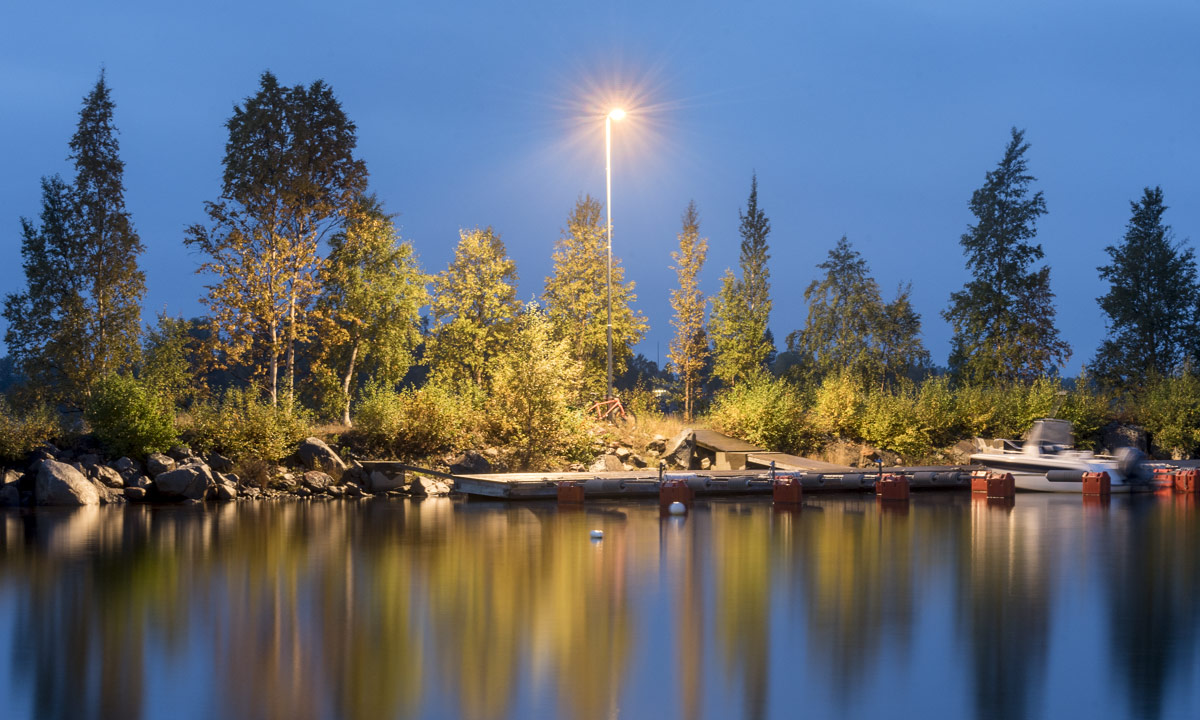
The sky was blue, the sun was shining, we had picture-book weather. As a photographer I would have preferred to hike two weeks later when leaf coloration would be in progress, but you can’t have everything. Anyway, the photo of the bridge over the Visttasjohka right at the Vistasstugan looks like a postcard motif:

This spot looked quite Canadian or Alaskan to me. I almost expected to spot some huge grizzly bears catching salmon in the river. But we’re still in Sweden where bears are brown bears and (luckily) very shy.

The first kilometres of the trail to Alesjaure lead through dense birch forest. Then gradually the forest got less and less dense and the snow covered mountains that frame the valley Visttasvággi were revealed.

The first kilometres were said to be muddy and they were, but not more than many other passages that we walked the days before. Unfortunately the trail continued to be both rocky and muddy and therefore wasn’t easy to walk.

After we left the birch forest the landscape became more rocky again. We found the resting place I remembered from two years ago. Someone had used a plank and some stones to build a bench in front of a huge block of stone. Still the sun was shining but gradually the sky become cloudy. Will we manage to arrive before the rain comes? We still hadn’t walked half of the distance.

We continued our tour until we reached the bridge over the stream Moarhmmájohka. Andi and I went down to refill out water bottles, then we took only a short rest since we were eager to arrive not too late.

After having crossed the bridge we had to go uphills quite steeply and we all slowed down more or less. Then we arrived at the plateau and looked back a last time into the beautiful valley Visttasvággi.

The clouds became denser, the wind increased but still it was dry. We passed the lakes Vuolip Čazajávri and Bajip Čazajávri. We went on and the sami village Alisjávri, located by the lake of the same name came into view. Now it was only 1.5 km left to the Alesjaurestugorna, our destination. As the day before we spotted the sauna first.

At 4 o’clock we arrived at Alesjaure and we stayed dry. Alesjaure is the largest mountain hut that we would stay at. It has as much as 86 regular beds (and more place if needed.)

I already found out, that stugvärd J. would be here, he whom Annika and I met in Nallo two years before and I again on my winter tour in Singi for some days. And really, he indeed was there and I was very glad to meet him again.

To meet J. means also to meet Simba, his kingsize dog. Simba dosed in the outside, stoically ignoring the mosquitoes in her eyes and on her nose. I said hello and started to pet her, which she apparently liked: she sighed and slumped onto her side. The photos I made before and afterwards:

Alesjaure has several houses, which appear more like a youth hostel than a mountain hut. That may look less cozy but we all enjoyed our big beds in our own four-bed-room. Katrin and Annika went to the sauna and after that we cooked one kilo (!) of pasta with goulash soup as a sauce. No, we didn’t manage to eat it all, the rest would follow us to Abiskojaure the next day.

Alesjaure would the last place in the kalfjäll above the treeline on this tour. Tomorrow we would continue to Abiskojaure, which is round 22 km away. This could be the longest day’s march, but we took a shortcut …


27 August: Kungsleden day 8 – Nallo—Vistas (9 km)

This article is part of the series “2017-08: Kungsleden hike”.

Going to bed early, getting up early – the second morning in Nallo we beat a record. We woke up at six and started our tour already at half past seven. The snow has melted away the day before but the night had been cold and some smaller puddles were covered with ice needles.

This year it was easy to cross the watercourse behind the hut Nallostugan. Later on we would have to cross a bigger stream where Annika had to put on her sandals to cross that stream two years ago while I barely managed to cross it in rubber boots.

The first part of the way was still quite arctic and alpine with many rocks and frozen ponds …

… but with each meter in height we descended to Vistas, our next destination, the variety of plants grew. Soon Salix lapponum (downy willow), Empetrum nigrum (crowberry) and Betula nana (dwarf birch) were found again and finally birch trees as well, the first ones for days.

Downy willows like wet places. If you see a long line of them you can be sure that they grow along an alpine brook and if they cover a whole area it certainly will be very wet. Apropos wet – we all managed to cross the river by stepping from stone to stone. Wading was unnecessary. Even if many parts of the trail have been quite muddy this year the water level had been generally low.

This tour was the shortest and easiest of the whole Kungsleden and we used the sunny weather to make a longer rest with lots of chocolate. We would buy new chocolate in Vistas.

The first building we could see was the new Sauna, which is sponsored of a gentlemen’s club called “Fjällrävarna”. Shortly after that the other buildings of Vistasstugan came into sight. We already arrived at 12 o’clock and would have been there even earlier, if we hadn’t been hold up by blueberries …

When we arrived we were alone. D., the German stugvärd left a note that he was hiking and would come back round 4 o’clock. Guests should just choose a bed. So did we. Then we took some items from the self-service shop, put ourselves on the outside stairs of the hut and enjoyed sun. After that we made pancakes with bluebe …

Oh well, the blueberries! I almost forgot them. We hadn’t found many eatable blueberries yet. Many of them were still small and green, probably due to the cold winter, and most blue ones we found turned out to be tasteless or sour. Until today, when we found another field of blueberries on our way to Vistas. This time they were ripe and aromatic. First we ate one or two, then some more. Then we dropped our backpacks and ate some more. Then we dropped ourselves on the ground to collect these tasty berries (and eat some more). It didn’t take long to fill a whole box and some hours later we got a delicious dinner:

Pancakes with fresh blueberries, sugar and cinnamon. They tasted extremely well and it was hardly imaginable, that the pancake dough had been just a powder in Annika’s backpack. Did I mention, that the blueberry garnished pancakes were delicious? I did? Well, you think a lot about food when hiking …

Our dinner was less special: Swedish meatballs in cream with mashed potatoes. It was tasty anyway but not very photogenic. I prefer to show the cans instead of the meal:

Stugvärd D. asked us if he should wake us for polar lights and we accepted gladly. He woke us round 22:30, when it was still dusky. Indeed there were polar lights on the sky, but they were quite weak and hardly spottable. I stayed up another two hours, glad to have a down vest with me, since the temperature already had reached freezing point. The aurora however continued to be weak most of the time. Anyway it was a pleasure to watch. And the stars, the many stars! It was months ago, that it was dark enough to experience such a starry night. At one o’clock I fell into my bed. Another great tour day and the sunniest one yet.

26 August: Kungsleden day 7 – a resting day in Nallo

This article is part of the series “2017-08: Kungsleden hike”.

The whole night the gusty wind howled in the chimney and heavy blows seemed to shake the whole hut again and again. Already in the evening before the temperature had dropped to 1 °C and when we woke up it looked like that:

To continue our hike under these conditions would be difficult and troublesome. What a lucky coincidence that we planned a day off in Nallo. But what should we do, if the wintry weather would continue or even intensify and we would get snowed in?

A notice pinned to the wall informed about helicopter prices. A flight to Nikkaluokta for up to four people costs 4600 SEK (approx. 480 Euros). That’s quite affordable and could be a possibility to reach civilisation if we were forced to abandon our Kungsleden tour because of the weather. Anyway, the day just had begone – just wait and see … .

G., the stugvärd asked Andi and me if we could fix the door of her stugvärd toilet. She had used the toilet in the night and a wind gust had snatched the door out of her fingers so violently, that one of the metal hinges had been torn off. Luckily the door jammed and was save for the moment. Andi and I could help her and fixed the door. (As a matter of fact it was mostly Andi who fixed it as the photo below reveals.)

Katrin and Annika were also not idle. Katrin sawed logs of wood into 30 cm long pieces, so that they would fit into the oven. Annika chopped them into pieces. All the more we valued the oven that held our rooms warm and cozy.

Annika surprised us with pancakes for lunch, she had pulverised pancake dough with her. She used half of her supply and we got 2½ pancakes each – delicious!

Meanwhile the weather changed for the better. It got a bit warmer and the snow in the valley Stuor Reaiddávággi started to melt. The wind fell off and breaks in the clouds appeared. Good news for us who wanted to continue our tour on the next day, even if we all enjoyed the relaxed atmosphere at Nallo and the beauty of the landscape around.

We took a midday nap, solved a puzzle, played Yahtzee and finally we prepared dinner, this time tortellini with dried feta cheese and chanterelle mushrooms. We were eating inside while the reindeers, who had been around the hut all the time were grazing outside.

Again it was worth to have a day off in Nallo.

Recommendation for nice people:

Nallo is worth a visit! The hut is cosy and the landscape is of a special beauty. You can enjoy the much more familiar atmosphere compared to the larger huts on the Kungsleden and the arctic scenery around.

Recommendation for not so nice people:

Nallo sucks! The hut is small and has neither sauna or shop. All ways from and to Nallo are difficult to go and as you can see, the weather is always awful. Stay away!

25 August: Kungsleden day 6 – Sälka—Nallo (10 km)

This article is part of the series “2017-08: Kungsleden hike”.

Today we would leave the Kungsleden. Instead of the route SälkaTjäktjaAlesjaure (25 km) we would go SälkaNalloVistasAlesjaure (37 km). Annika and I have been in Nallo two years before and fell in love with that place.

Again we woke up early, again it was cold with temperatures round +2 °C and again snow had covered the mountains over night, this time not only the highest peaks. After our breakfast—cleaning—packing routine we left the crowded Singistugorna hoping for less people in Nallo.

We went up a bit, but were on the wrong side of some alpine brooks. Katrin and Andi returned to use the small bridges, Annika crossed the brooks by balancing over some stones, I just waded through – one of the advantages of using rubber boots.

First the landscape didn’t seem to change but gradually the flowers and other plants lessened and the terrain became stony and harsh.

The mountains that framed the valley Stuor Reaiddávággi were rugged and rocky and powdered with snow. The lack of plants let them appear colourless.

More and more we had to cross boulder fields and some smaller streams. Water ran everywhere and we had to look for the path that was marked with piles of stone. Not easy to find in a landscapes made of rocks and boulders, even if some of the top stones were of white quartz.

It was cold, windy and then it started to snow.

We went along the lake Reaiddájávri. We would have to cross the river right behind the lake before it cuts down into a deep uncrossable ravine. Two years before Annika had to wade through in sandals, because the water was to deep for her boots. There are nicer things than wading through ice cold water while it’s snowing …

We were lucky. The water level was low and someone obviously had build a fort of stones that were quite easy to cross. We were cautious anyway, because no one wants to fall into icecold water with a backpack and fully clothed.

We succeeded and took a short rest to eat some chocolate (crucial food on hiking tours!) but we continued soon because of the chilly weather. We followed the Stuor Reaiddávággi and crossed some side valleys with old snow fields – reminders of last winter.

The precipitation got stronger, more rain than snow. While the others continued through the alpine and arctic landscape I went to the ravine to take pictures of the waterfall, but I soon gave up, since the rain fall grew too strong. The last photo after catching up with the others is blurred from the rain on my lens.

Finally we arrived at Nallo 12:30 and were delighted, that only few others had come there as well. We cooked an instant noodle soup and took a midday nap.

In the afternoon it had started to snow stronger and the wind speed increased while the temperature dropped to +1.5 °C.

The ground was still bare of snow – a good thing for the reindeers, that grazed in the valley.

Snowfall however continued the whole day and evening and slowly started to cover the ground. How good that we planned to take a day of in Nallo the next day.

21 August: Kungsleden day 2 – Teusajaure—Kaitumjaure (9 km)

This article is part of the series “2017-08: Kungsleden hike”.

One of the less adorable things when you’re hiking from hut to hut is going to the toilet. You have to go to the utedass, the outdoor earth toilet, which is always a bit away. You need to slip in your boots or sandals, put on a jacket to stay warm and dry and in the night you even need a flashlight to find the right way. At least the toilet seats are made of styrofoam which isolates quite well. And there’re always some nice outdoor photos pinned to the wooden walls.

After I already took the camera to my early morning loo visit I stayed outside and took some more photos. It was chilly and cloudy but at least yesterday’s rain had stopped.

After a breakfast (Wasa bread with cheese and muesli with milk made from milk powder) we started our day’s march. It was much easier than the day before since it’s only 9 km to the next hut. We had to climb up round about 250 meters through forest until we reached the kalfjäll above the tree line. And finally the sun managed to find some holes in the clouds and illuminated parts of the alpine landscape.

It didn’t take very long until we crossed the river Kaitumjåkka (sami: Gáidumjohka) using the large chain bridge.

Leaving the river behind us we descended again through green birch forests …

… and arrived at the Kaitumjaure huts at 14:45. I cut up some logs and chipped wood for the sauna but it happened to be so crowded, that Annika and I left it soon. Katrin and Andi didn’t even managed to enter the sauna and the water for cleaning was still cold.

But even without a hot water “shower” day two felt much better than the day before. Now we looked forward to the next day that finally would lead us to the treeless kalfjäll for several days.

Back to the toilets: If you think that using the utedass is quite uncomfortable to use in summer, you won’t like it in winter either. Then you sometimes have to dress like for an arctic expedition just to reach it without hypothermia. Check the second photo in the article Kungsleden ski tour: Singi – from blizzard to clear sky to get an impression.


20 August: Kungsleden day 1 – Vakkotavare—Teusajaure (16 km)

This article is part of the series “2017-08: Kungsleden hike”.

The idea to walk the Kungsleden with my sister Katrin and my brother-in-law Andi had been existing several years. This year we put our plan into action and went this famous Swedish long-distance trail from Vakkotavare to Abisko, which is round about 110 kilometres. Fortunately Annika had time to join us.

We started our tour on 20 August, exactly two weeks ago. As many hikes our tour started with public transport: The bus 93 from Gällivare to Ritsem. The last 130 km of that route are famous for being Sweden’s longest dead-end road.

We however left the bus at Vakkotavare where we immediately started the tour. We had no time to loose since our destination – the Teusajaure hut – is located on the other side of the lake Teusajaure and we hoped for a lift with the motor boat at 19:15 to avoid rowing cross the lake.

The first part of the trail is quite steep and leads along a mountain brook with some waterfalls. 500 metres in altitude can be exhausting, when it’s the first day and the backpacks are still packed with some extra food.

Finally we were on the plateau on the “kalfjäll”, the alpine region above the tree line. I really love that bleak but wide landscape where you can look so far.

Until then we were quite lucky with the weather. It wasn’t sunny but at least it didn’t rain. But the weather worsened. The clouds became darker and it started to rain, first lightly then gradually intensifying. We could see some patches of old snow far away but soon all mountain peaks vanished in the thick layer of clouds.

The last part of the trail descends again. This was probably the most dreadful stage of our whole hike: it rained more and more and the steep stony path downwards was muddy and slippery. Despite of the rain there was not a single wisp of wind. So every second we stopped we were immediately surrounded by clouds of mosquitoes that landed in our eyes and nostrils or tried to get into our ears to suck our blood. Anyway we hardly rested anyhow since we tried to reach the boat.

We managed to reach the landing stage at the lake Teusajaure in time, wound up the signal for the boat (a white plastic jerry can) and waited. At least we were glad that the hut Teusajaure was in sight.

I felt disappointed and frustrated. It was the first hiking tour in Sweden for Katrin and Andi. What would happen if the weather would stay like that? And the muddy trails? And the mosquito clouds? Would we continue or abandon the tour? What would they think about hiking in Lapland? Would they ever come again …?

Soon we could see the boat leaving the other side of the lake. Minutes later it arrived. We put the backpacks onboard, jumped in, put on live wests and soon brought across the lake.

On the other side we unpacked the wet trunks and the stugvärd – the mountain-lodge keeper – gave us four beds to sleep. While Annika and I had hiked in Sweden many times it was brand new to Katrin and Andi and felt like a culture shock:

No electricity, no water tap and no water toilet neither! Instead of that: candles, a wood fired oven, two gas cookers and some buckets with water – partly fresh, partly used. And the earth closet somewhere out in the dusk. Again I felt a bit guilty that I persuaded Katrin and Andi into that Kungsleden hike.

Anyway the first tour day that was long away from being ideal came to a nice end: We had pasta, fresh chanterelle mushrooms and sour cream with us for the first day and therefore could enjoy a dinner far above standard. Now we only hoped for the rain to stop. It didn’t take long until we went to bed and soon we all slept.

What do you do if you don’t want to get a motor boat lift? You row by yourself. That’s round 1 km one way.

There are three rowing boats total. If you have two boats on your side, you’re lucky: Just take the boat and row across the lake.

If you have only one boat on your side, you have to row three times: First you take the boat and cross the lake. Then you row back with the same boat and a second boat in tow. Then you leave that second boat and row again a third time. So it’s ensured that there’s always at least one boat on each side.

Three trips round Tromsø

This article is part of the series “2017-07: Tromsø”.

It’s me who is thrilled by the North, who loves to travel to places like Tromsø or Kirkenes. It’s my mother however who has been much northerly than I was. She was in Spitsbergen/Svalbard with a cruise ship many years ago. But on the way back the route had to be changed due to fields of drifting ice and therefore the travellers couldn’t leave the ship in Tromsø. So my mother missed Tromsø on that cruise.

This year we managed to close this gap: three weeks ago my mother took a plane to Munich, another plane to Oslo and a third plane to Tromsø, where Annika and I picked her up from the airport. That’s why we’d travelled to Tromsø by car two days before.

We had four days in Tromsø, I will write mostly about the first two:

Monday, 10 July

Weather was better than forecasted and so the first thing we did after breakfast was taking the car, crossing the Tromsøysundet on the Tromsø Bridge and taking the Fjellheisen on the other side of the town. Fjellheisen is a cable car up the mountain Storsteinen (approx. 420 m), where you have an incredible view over the town Tromsø, the island Tromsøya and the mountain ranges on the neighbouring islands.

We stayed there the whole morning, enjoying the view, walking around, eating ice cream and looking at the arctic flowers that grew everywhere.

Finally we went down with the cable car again driving back to Tromsø and since the weather was sunny and nice we just continued driving, leaving Tromsøya again, this time using the Sandnessund Bridge. We continued our trip on the island Kvaløya (Whale island), Norway’s fifth largest island. At the western end there’s a bridge leading to the island Sommarøya which sometimes looks like like a caribbean island with it’s turquoise blue bays.

Annika and I were very keen to take a bath, but we all were hungry too, so we took a lunch first. While we were eating our fried fish, clouds approached and soon it started to rain. So much to our summer bath plans …

After looking around on Hillesøya (another bridge, another island) we drove back, this time taking the coastal way in the south of Kvaløya. Finally even the sun came back and illuminated the bright yellow blossoms of Lotus corniculatus, or common bird’s-foot trefoil that covered the sides of the narrow road.

Have a look at the beach photo above. It’s not sand, it’s corals covering this beach, which makes them looking even more caribbean – at least as long it’s sunny.

Late in the afternoon we arrived at our hotel after our first day together.

Tuesday, 11 July

After the rainfalls of the night sun came out again. Time for another trip to the surroundings – this time the island Senja, Norway’s second largest island (beside of Svalbard).

The first part of the tour was the same as the trip to Sommarøya the day before, but instead of turning right the last T-junction we turned left to Brensholmen and waited for the ferry to Botnhamn/Senja. Annika downloaded an app to pay the passage, since it was much cheaper than paying cash. As in Sweden it has become quite unusual to pay cash. The idea to start early was a good one, we were one of the last cars to fit on the ferry. Some others were unlucky – they had to wait for many hours or change plans.

Hour plan was to take a round trip on Senja using the roads 862, 86 and 861. In addition to that we planned to take some side trips.

The first side trip was special, since it led through a dark tunnel cut into the rock, that much too narrow for two cars to pass. In addition to that it was curved and bent so that you couldn’t see other approaching cars in advance. There were lay-bys were you could try to squeeze in and let others pass and I was really glad that the regular bus had left the tunnel minutes ago.

But when we left the tunnel we got “Norway in a nutshell”: Wide bogs, birch and pine forests, clear blue lakes, green meadows and fields and most impressive: big snow covered mountains, some of them looking unreachable by foot, so steep and harsh they were.

But it wouldn’t be Norway without the fjords. Sometimes the coast is as rocky as the mountains, sometimes it provides sandy beaches in beautiful bays. And finally we came to our bath, all three of us. Of course the water was cold, but the air was warm and we stayed in the water quite a long time.

We continued our round trip, again some clouds approached and again some rain drops fell. I thought we’d have to wait an hour for the ferry back, the ferry arrived simultaneously. I realised that I looked wrong when I checked the timetable, but we were lucky and found a place on the ship anyway.

On the way back we didn’t stop for taking pictures any longer. First of all the weather had become grey and dull and then we were tired and hungry. So we stopped only at the supermarket to buy some food for the dinner.

The other days

We did it right, making the larger trips in the beginning, because the other two days it was cloudy and rainy. Time for some sight seeing and indoor activities in the city that we hardly touched the last two days.

We visited the Polarmuseet – we went shopping (kind of) – we tried to visit the Tromsø Cathedral (in vain, it was closed).  We visited a photo exhibition in the Universitetsmuseet – we were on board of the seal hunting ship Polstjerna (another museum) – we strolled around in the beautiful botanical garden (hard to find!). We ate lunch or dinner at the harbour – we visited the park Prestvannet – we visited the Hurtigruten ship Trollfjord, the very same ship Annika and I travelled with last winter. Did I forgot something? Certainly!

On friday we started our road trip back to Skelleftehamn were I live, but that’s another story.

Travelling to Tromsø

This article is part of the series “2017-07: Tromsø”.

Sometimes I’m just too lazy to blog and so was I the last weeks. Today however I finally want to write about a great trip to Tromsø, that Annika and I started on 7 July, almost three weeks ago.

Tromsø is in located in the North. Very far north. It lies 344 km north of the polar circle and is the northernmost town of the world with more than 50,000 inhabitants. It has the northernmost university, both the northernmost cathedral and mosque, the northernmost brewery and probably some more northernmost things of the world.

The shortest route by car from Skelleftehamn to Tromsø leads over Luleå, Pajala, Kilpisjärvi (Finland) and Nordkjosbotn (Norway) and that’s the route Annika and I took.  We had a lot of time and planned to stay overnight twice, but didn’t plan where.

The first part of the route, the E4 leading north, is kind of boring. At least you’re allowed to drive 110 km/h – the maximum allowed speed of the whole journey. In Töre we left the E4, took a break and ate in the Restaurang Roady – the first KRAV-certified sidewalk restaurant.

After lunch we continued northwards. After 50 km we reached Holgers Traktor Museum in Svartbyn, which is always worth a visit. Since it was late – we started our trip in the afternoon – we just made a short stop to take a picture and then continued our trip.

Where to stay? Perhaps we could stay with Katharina whom I met last winter. She lives in Miekojärvi between Överkalix and Övertorneå. We tried to ring her, but she didn’t answer the call. Anyway it’s just a detour of 30 kilometres so we just gave it a try. Katharina has round 20 huskies and someone has to feed them. When we arrived at her house, a man left the shed, looked at us and we were quite surprised to meet Sascha whom we met before in Solberget several times. What a lucky coincidence! So we found not only our first overnight stay but great company, too! Thank you, Katharina (abroad) and Sascha for your hospitality!

The next day we continued our tour after a nice and rich breakfast. We crossed the arctic circle and watched the reindeers.

First stop: Pajala, where a big market took place. Here you could buy a lot of things between tradition and modern age.

After two hours we left the hurly-burly and entered the car again. We crossed the Swedish–Finnish border and followed the E8 which was more construction site than main road. We passed Karesuvanto, where I was sure to meet a food store. All stores however are on the Swedish side, in Karesuando. Not a problem, if you have bread with you and then are given butter, cheese and salami as a present on the super-nice camping ground Lätäsenon Majat near Enontekiö, where we stayed overnight.

Next day we passed Kilpisjärvi near the border triangle, where Sweden, Finland, and Norway meet and soon we were in Norway. Norway is my favourite country in summer because the landscape is so varying and beautiful that even I make photos from within the car:

In Skibotn we saw the first fjord – the Lnygen – and made a break. Annika used it for jogging and I for looking around and taking pictures. I love to stand at the shore, the feet in the water, the view either on the shells or on the fjord and the still snow covered mountains. But the seagulls didn’t like me standing there and they flew some feint attacks, luckily in vain. They don’t dare to come really close.

In Nordkjosbotn we ate hamburgers for lunch. It’s not easy to get anything other than burgers and pizza in Northern Norway outside the cities, but sometimes I like fast food, especially when travelling. From Nordkjosbotn it’s only another hour to Tromsø, where we arrived in the afternoon.

Here we would stay for four whole days with … but that’s another story for another blog article. Stay tuned!


Vampires of the North

This article is part of the series “2017-07: Tromsø”.

It’s no secret, that blood-sucking vampires exist in Scandinavia. It’s another species then the half-human vampires known from countless fantasy novels and therefore there are some differences:

The bad part: They don’t dread the sunlight, they are countless and they can fly!

The good part: You won’t turn into a vampire yourself when they bite you, they are much smaller and they are easier to kill.

But sometimes you come too late to prevent the vampires attack …

This mosquito died in Miekojärvi between Överkalix and Övertorneå, where Annika and I stayed overnight on our tour to Tromsø.


It’s summer

When you look out of your window and see long green grass in the urgent need of being cut, where 4 weeks ago a snow shower covered the whole garden with white

When you go along the river Skellefteälven and finally other flowers started to bloom than only tussilago

When nights are no dark nights any longer and it will take many weeks until you can see the first stars again …

When you paddle on the river Skellefteälven, barefoot, just with t-shirt and shorts, not with a drysuit as three weeks ago and you even enjoy becoming wet by some breaking waves, because it’s so refreshing …

… then it’s summer in Northern Sweden.

And summer is more than welcome after the long winter. By the way, summer solstice is just 10 days away.