Kungsleden ski tour: Sälka

This article is part of the series “2016-02: Ski tour on the Kungsleden”.

From the Singistugorna to the Sälkastugorna

23 February · 12 km · Link to map

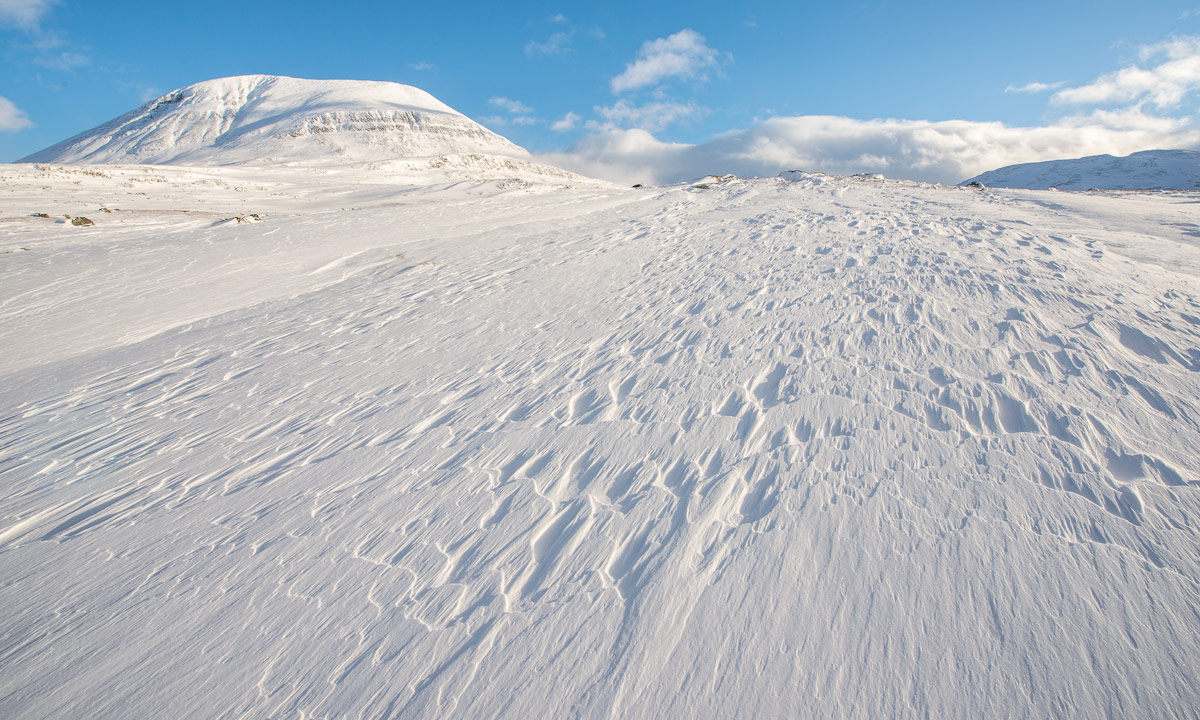
After I stayed in Singi for two days, I continued to Sälkastugorna (or short Sälka), the next mountain hut. The sky was overcast but the sight was good.

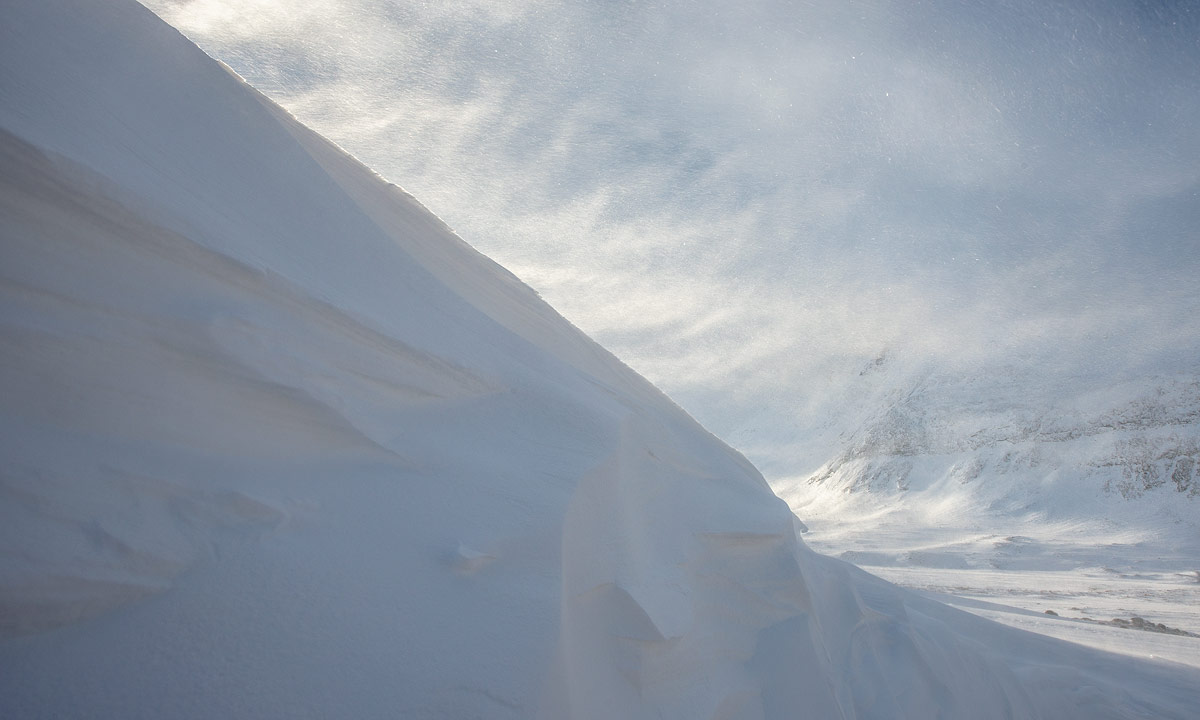
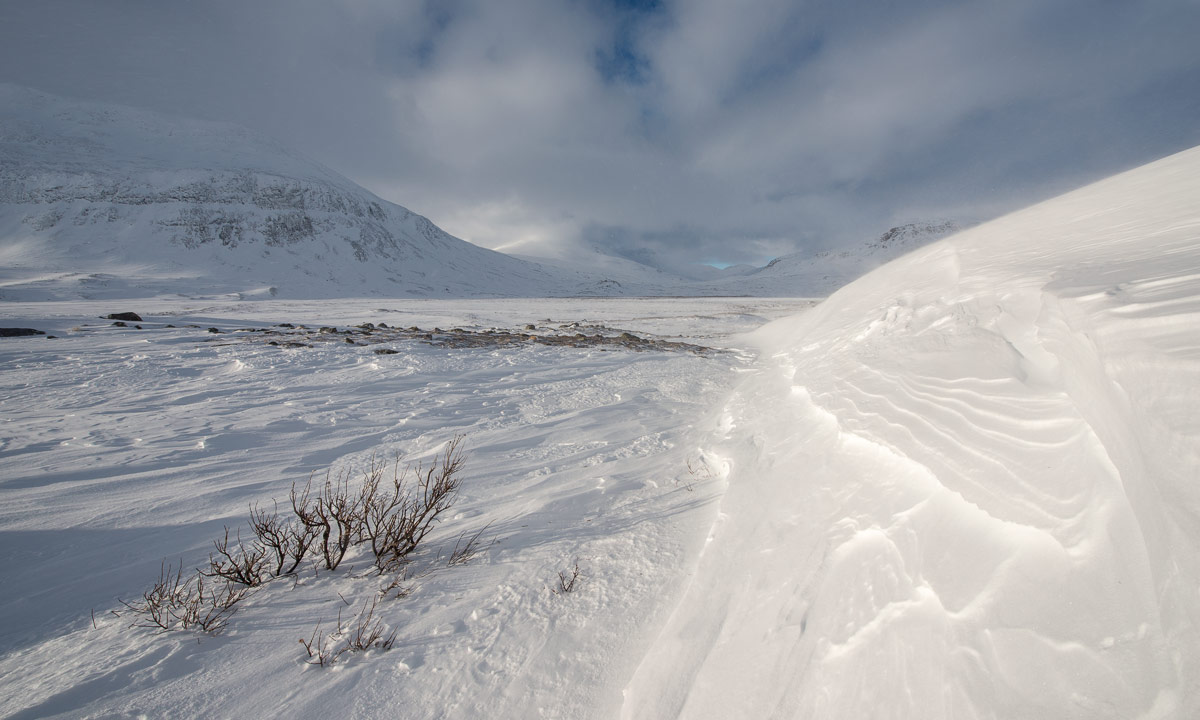
The first part took a bit of time, since there were some quite steep snowdrifts to cross, which is not so easy with the pulka always dragging down. After a while the clouds declined, it started to snow and the sight worsened a bit.

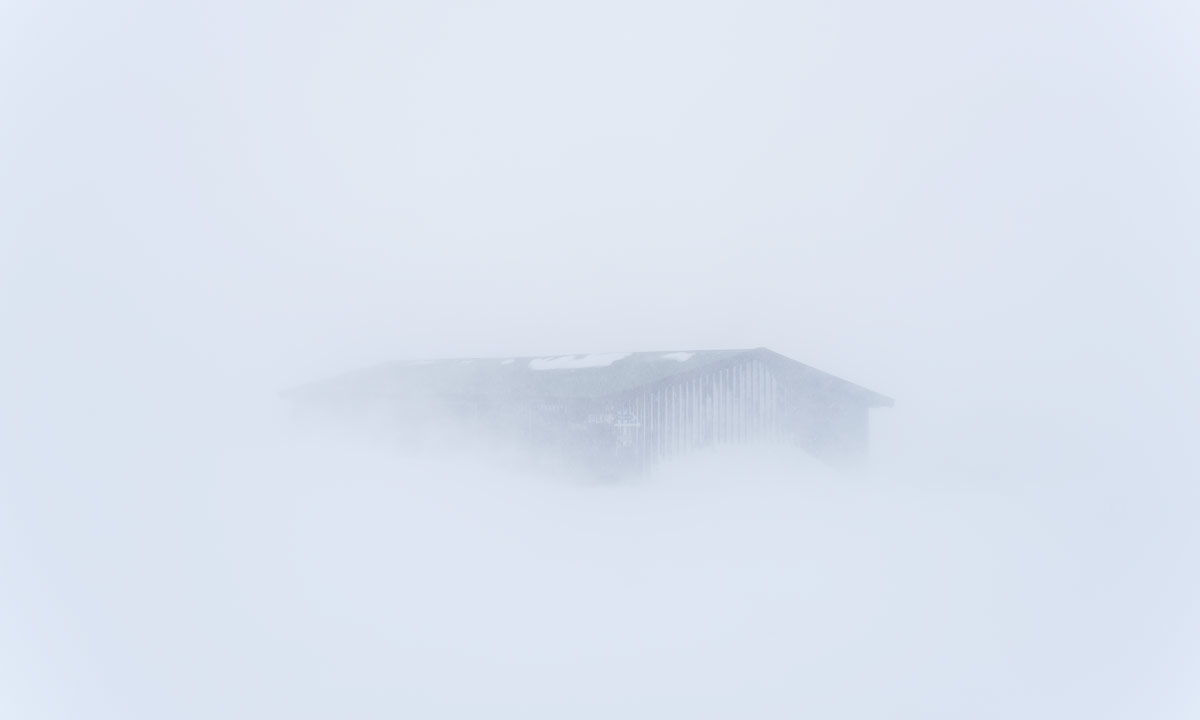
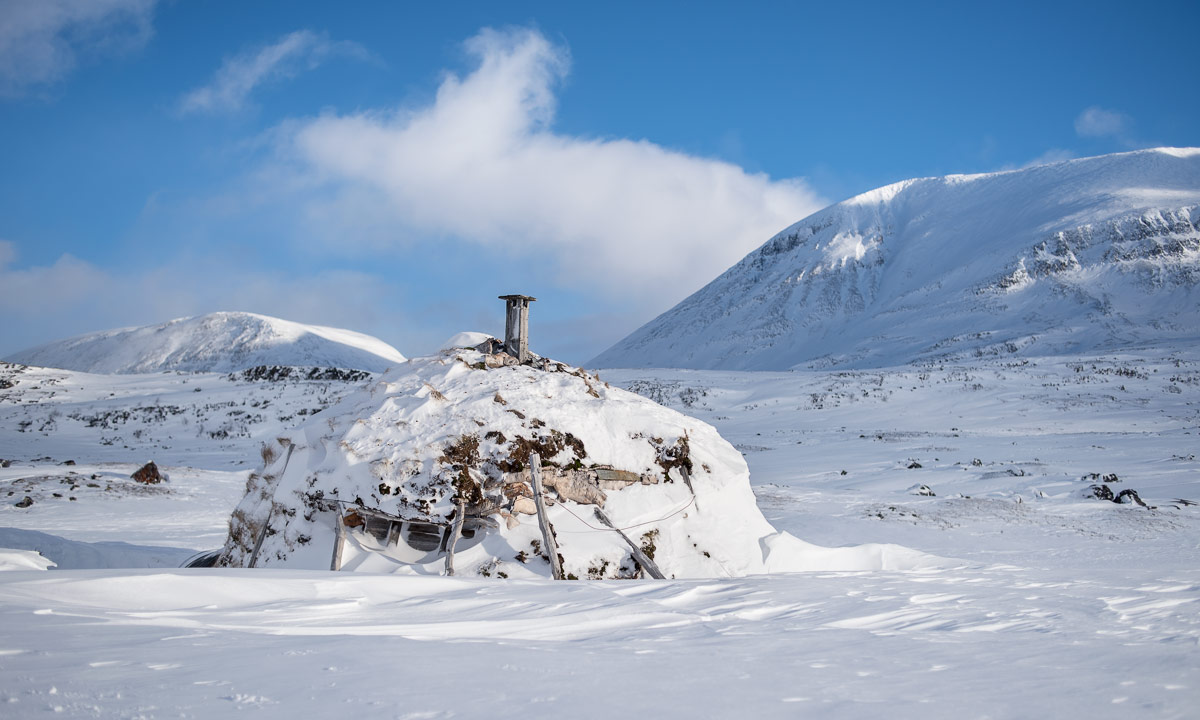
Soon the tiny hut Kuoperjåkka came into sight. You can rest in this hut and it even has a little oven, but only for emergency situations. I shovelled away the snow in front of the door, entered the hut and took a small break. Not that I already was tired after five kilometres, but it’s nice to sit there sheltered from snow and wind and look through the window – even if you hardly can see something. (Taking away the door of the toilet would take longer time as you can see on the second photo.)

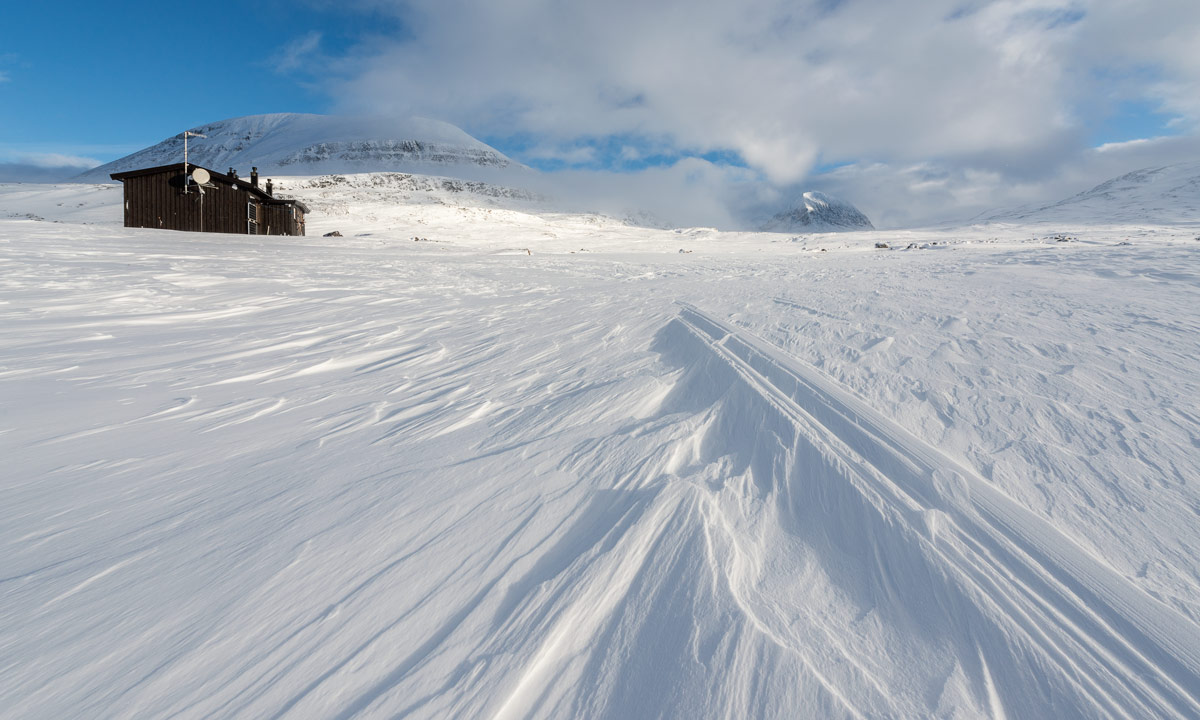
After the break I continued the tour. Wind increased and I put on the fur rimmed hood. There was not much to see. When I looked down I could see the blue tips of my skis, when I looked up I could see some waymarks, perhaps some rocks or a tuft of grass. Looking down – looking up – the movements are repetitive, even meditative. Looking down – looking up – what’s that? Sälka is already in view. It’s not a long way from Singi to Sälka, just twelve kilometres.

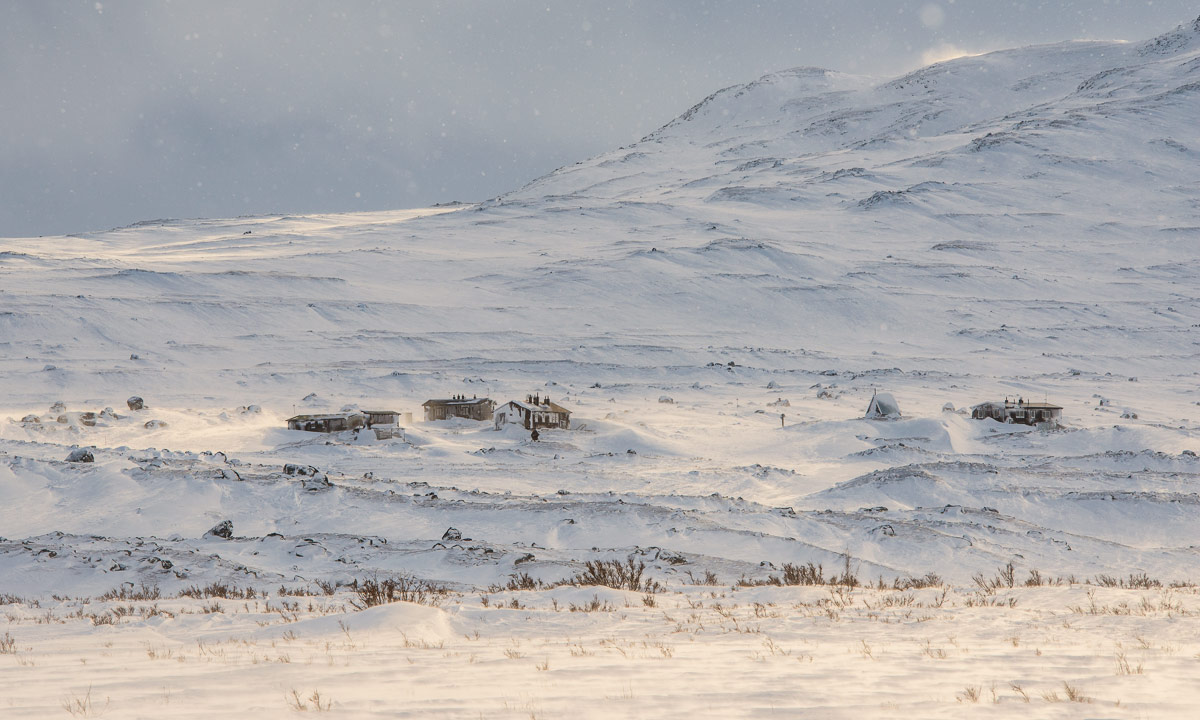
Arriving in Sälka was like a culture shock. In Singi I was the only guest, here I could see a bunch of pulkas standing outside and when I entered the kitchen of the open hut, it was stuffed with people! 18 people fit in this hut (plus two extra in a tiny locked room) and 18 people we were. 18 people firing the oven and drying their shoes … . Jungle climate! But I got my bed and a place to cook, that’s all you really need.

… and a sauna. It’s not essential to have a sauna, but it’s great, especially, when you can pour a bucket full with hot water over yourself feeling refreshed and clean again.

After the sauna I sat inside, prepared and ate my pasta and chatted with the other people, that came from Belgium, Germany and the US. The weather once again became bad. Wind became stormy and it started to snow more heavily. When people went to the utedass – the earth toilet, 200 meters away, they were clad like for an arctic expeditions: face masks, ski goggles, heavy mittens, headlamps – all for a walk to the toilet.

But as fast weather can worsen, it can improve as well. One hour later the snowfall stopped, the wind fell asleep, sky cleared up and the moon lightened the valley and the nearby mountains. It’s these contrasts I love!

A short day trip into the Stuor Reaiddavággi

24 February

The next day I made a short trip up into the Stuor Reaiddavággi. “vággi” is the sami name for valley and this valley leads to Nallo, another mountain hut that was still closed. You can sleep in closed huts, too, they always have an open emergency room, but you’re completely on your own. I didn’t plan to go to Nallo, even if it’s only 9 km.

(Today I think, I should have done it, since Nallo is one of the huts with the most beautiful location I know.)

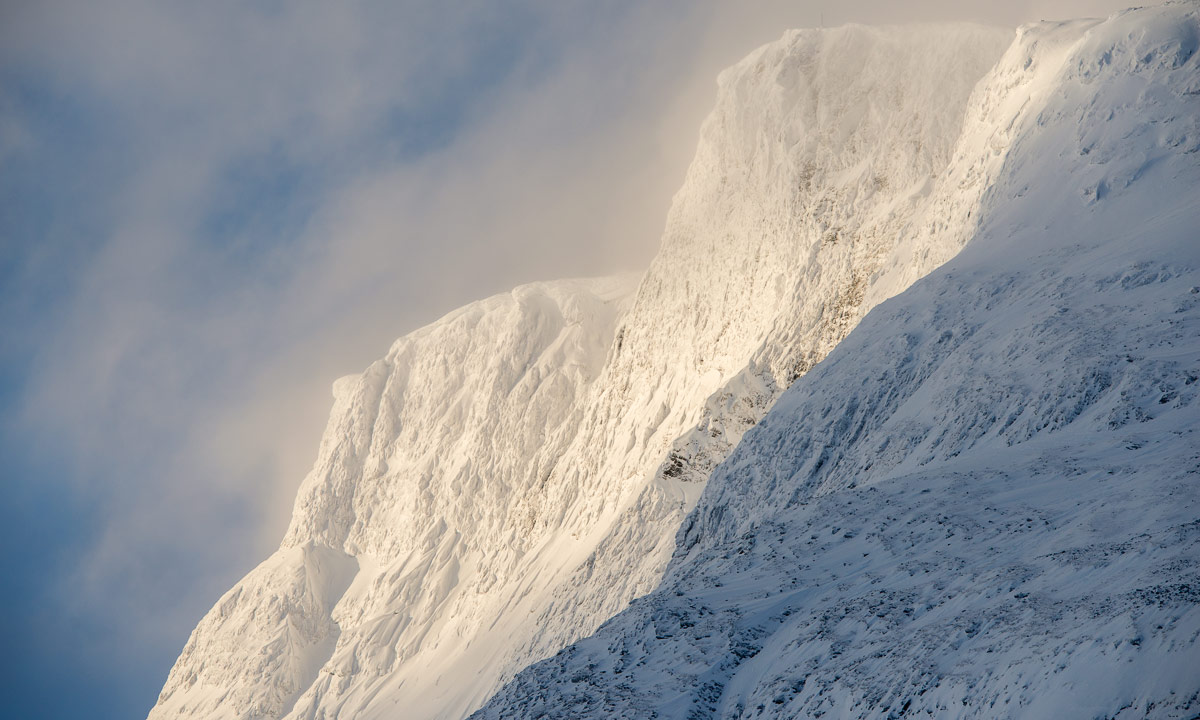
Anyway, I just went up – first to a ravine, then I climbed up the slope following the Stuor Reaiddavággi. The sky cleared up more and more and all mountain tops came into view. Sälka was miles away and I was alone by myself amid of this great mountainscape.

After a while and a short break with tea and raisins I returned “home” to the Sälkastugorna. The plan for the next day: Continuing my ski tour to Tjäktja.

The next article: Tjäktja >>

Kungsleden ski tour: Singi – from blizzard to clear sky

This article is part of the series “2016-02: Ski tour on the Kungsleden”.

Singi day #1 – 21. February

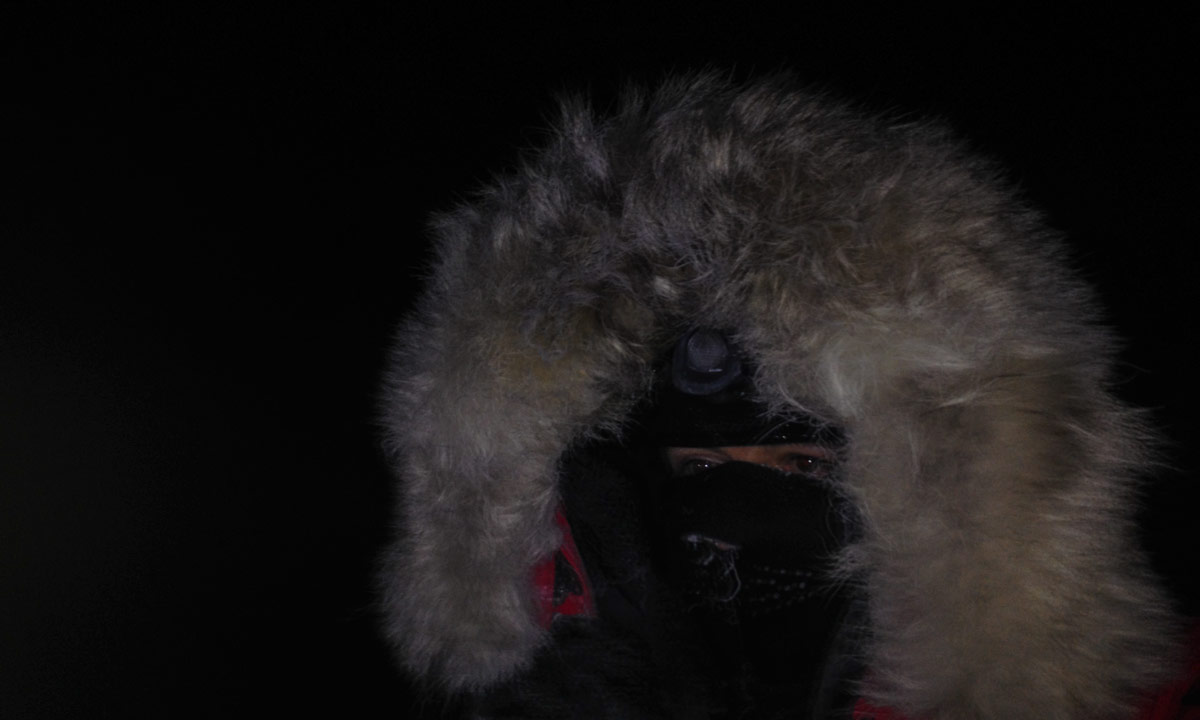
That’s me on the picture above. It’s 3:45 in the night. I can hear the storm shaking the cabin and howling in all chimneys. When I look out through another window (this one is completely covered with a layer of snow), I can see that it’s still snowing a lot. But it doesn’t help, I have to go to the loo. And since the toilet is a utedass – an earth closet round 50 meters away, I have to dress for it: The headlamp to find my way through the blizzard, the parka to stay warm and the ski goggles for more comfort when I go back against the snow storm.

Some hours later: The blizzard lasts the whole day. Sometimes you cannot see the other cabins standing 50 meters away – just whiteout. Most of the day I stay inside, either in “my” cabin, which I have completely for myself or I visit J., the stugvärd, in his cabin. But I got out to make some pictures (all made with a 35mm lens):

Singi day #2 – 22. February

Still the wind howled, still snowfall from the sky the next day, but I could see some stars shimmering through the clouds above. And after a short while the snowfall stopped and the overcast sky started to clear up. It’s really nice if you’re able to see something again:

I left the cabins for a short ski tour to the near sami village Goržževuoli. Still some snow crystals fell from the clouds above, still snow was drifting over the white ground, but when I looked back, I could see the sun illuminating this landscape with golden and almost magical colours.

After a while sky cleared up and the weather went “normal”. I took some pictures in the village, which is abandoned, at least in winter time. The buildings are a mixture of wooden houses and traditional sami buildings called kåta.

After I while I headed back over white and untouched snow. I love making the first tracks on fresh snow!

When I came back to Singi, wind increased again. The stugvärd told me, that Singi is quite exposed to wind. I crouched behind a two meter high snow drift to make a photo of the drifting snow. After that I had to dry my lens since the snow dust was everywhere.

The blizzard of the last day created snowdrifts up to three meter high and up to 60 meters long behind the lee side of the cabins.

If you are in a mountain hut, you’ll experience big contrasts: Storm or bright sky – inside or outside – day or night. The following two pictures show the same day:

I was quite busy with keeping the hut warm. It has wooden stoves, one for the kitchen, one for each sleeping room. It takes a lot of wood to keep such a cabin warm, especially when strong winds cool it down (and even accelerate the burning). In the morning I had temperatures round 0 °C and was glad about my warm down filled sleeping bag. The wood on the King’s trail comes in long logs. The stugvärd will cut it up to one meter long logs, the rest is up the the guests. The guests? That’s me! I guess I sawed and hacked wood four or five times to keep the fire running and – even more important – to leave enough wood for those that will come after me.

Later in the evening the full moon rose behind the snow covered mountain chain, surrounded by a halo. I just love standing out in the wintry mountains when the moon lights the scenery. Just beautiful.

The next article: Sälka >>

A little expedition to the island Gåsören

Disclaimer: Don’t try this at home. Unknown sea ice can be dangerous just as very cold temperatures.

Today I had the plan to cross the ice and go to the island Gåsören which is one of my favourite places nearby. The challenge: Parts of the Baltic Sea were open five days ago due to the low water. How thick would the ice be and would I be able to go to the island?

I started at the little boat harbour Tjuvkistan and planned to go to the island Bredskär where I’ve been with Annika two days ago. This time I chose snow shoes and pulka to transport all clothes and equipment. I changed plans and didn’t head to Bredskär, but followed the ski tracks to the island Klubben instead – a better direction. In the dim light of the daybreak I could see Gåsören ahead.

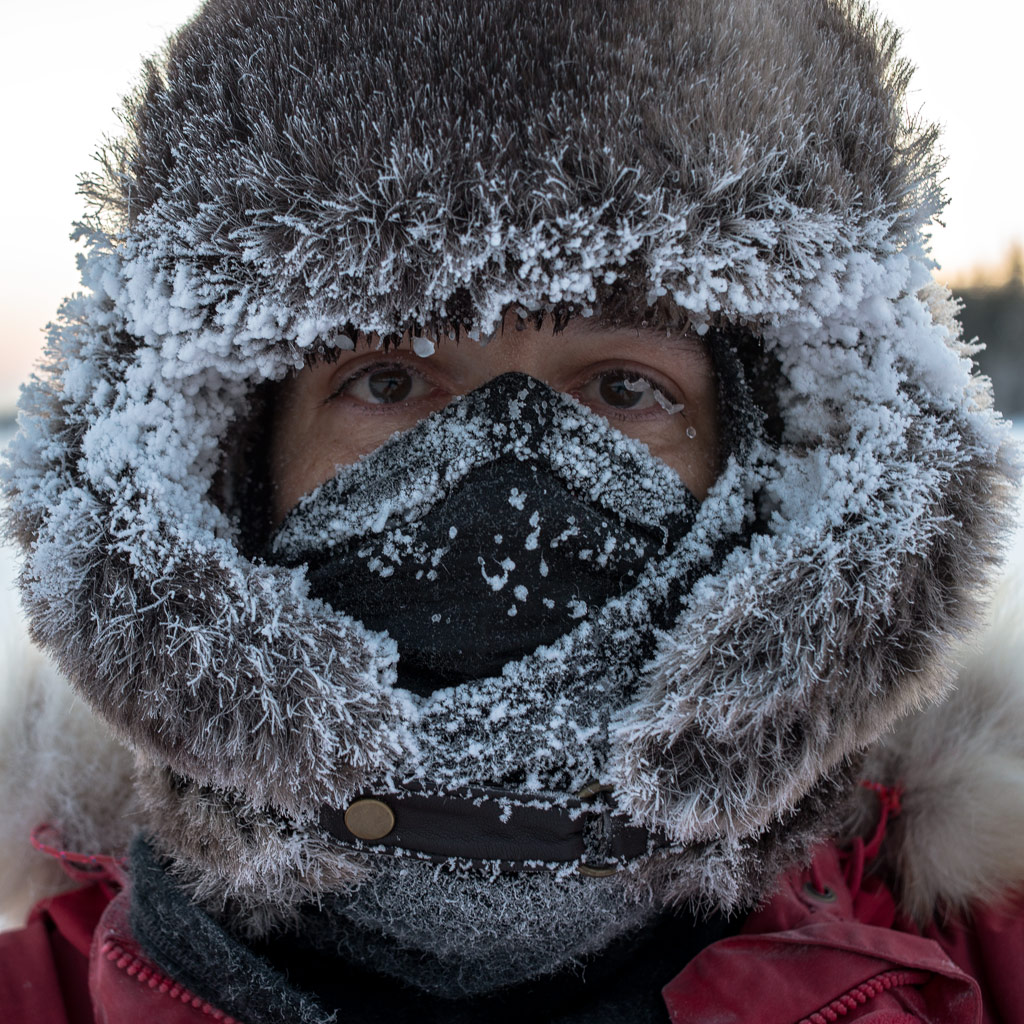
It was quite cold, round -27 °C and I was glad about my fur rimmed hood, that protects the face against wind and cold air.

I continued to the next island Flottgrundet, which is hardly 300 meters away. A tiny ice rim encircled the island and I took a small break. Normally I take breaks mainly for taking pictures, but this time I had another reason, too:

Beside of the tracks of a lonely hare I couldn’t see any track or trail to Gåsören. Is the ice safe and will it bear me? Since I already expected such, I brought along my survival suit, which is completely waterproof and has attached socks, gloves and hood, so that only the face would be exposed to the ice cold water in case of breaking through the ice. All other equipment such as camera, extra clothes and food was in waterproof bags.

I looked like a Teletubbie, (and probably moved like one too) but I felt safe. Round my head I had my camera bag and so-called isdubbar, that’s ice picks, that would help me to pull myself on land, if I had broken though. I put the snow shoes into the pulka and started crossing the ice.

Round 700 meters later I reached Gåsören. I went ashore and was quite glad that the ice bore me without any problem. I unmounted the pulka but continued wearing the survival suit. I wanted to discover the ice rim on the eastern side of Gåsören and didn’t dare to do that without it. First of all I climbed onto the two meter high ice to get an overview. The risen sun started to light parts of the landscape in warm colours, while the snow in the shadows still looked cold and bluish.

The next two hours I strolled around east from the island to take pictures from the amazing ice formations round the island. Some of them were up to three meters high. It’s interesting to see, how many different colours ice can have, both the ice itself and the sun light as the day progresses. While I walked round I could see the light houses of Gåsören, the new one (the red tower to the left) and the new one (the house to the right).

Meanwhile I protected even my nose that started to get cold. The danger is that you won’t realise, when the nose gets too cold and you really have to be careful to avoid frostbite. The neoprene survival suit is surprisingly warm, but not comfortable at all. Since it’s not breathable I started to sweat and become wet. I longed for warm tea and other clothes. I went back to the pulka, undressed the suit and slipped into the cold boots. Then I took tea, crackers, camera and a huge bin bag that wrapped my down coverall. I went to the other side of the island, this time on land and put on the coverall over the other jacket. Now I really looked like a polar explorer, but was just 5 kilometres away from home. It took a while, until I got warm again and another while to realise, that this suit is almost to warm for temperatures between -26 and -28 °C. But at least I got my hot tea, some cookies and I didn’t freeze at all.

Of course I continued making photos on land. I went round, took images of the big welcome-sign, the red-white light tower and even more ice. But after a while clouds came in and started to cover the sun.

So I undressed my down coverall, went back to the pulka, packed all stuff into it and started my walk back to main land. I chose almost the same way to be sure, that the ice is stable. The sun vanished behind a layer of clouds, only a bright orange light pillar was left.

When I looked left I got reminded, that this fantastic tour was not in the arctic wilderness, but near home. The smelting works on the peninsula Rönnskär was within sight. The chimneys gave off clouds of smoke that racked southwards below the inversion boundary, but northwards above. When I was almost back on the main land I could see the red solar disk setting behind Rönnskär.

When I entered the car, it was still -26 °C below – one of the coldest days that I experienced in Skelleftehamn until now.

Conclusion: a great tour with a touch of expedition due to the coldness and the unsafe ice. Should be repeated when ice is safer and weather is warmer.

Addendum (2016-01-20)

This tour was more dangerous than I suspected. Not because of the weak ice but because the rubber gloves of the survival suit didn’t isolate good enough. Today – two days after – I got small blisters on all fingers but the thumbs, a clear sign for a second degree frostbite. My nose is a bit reddish and itches, probably a first degree frostbite.

I have full tactile sense in all parts of the fingers and the nose, but it probably will take some time until the skin heals completely.

The danger was, that I didn’t feel any pain in the fingers while being out. I just felt the cold when I removed the wool mittens. I never will make such an extended photo tour in the survival suit when it’s so cold.

Take care, photographers. Don’t risk your health for just some nice photos. It’s not worth it.


Hunting the cold – day #2

This article is part of the series “2016-01: Hunting the cold”.

Yesterday I travelled to Pajala to search the cold. With a minimum of -39.6 °C i missed the -40 °C.

Day #2 I stood up quite early, took a short breakfast and drove again to Käymäjärvi, where I measured the coldest temperature yesterday. It seemed to be colder than last night and directly after I turned left into the small road to Käymäjärvi, the thermometer showed -40.3 °C. First time below -40 °C – yay! At 08:37, nine minutes later it showed -40.7 °C , which turned out to be the coldest temperature I measured this day.

I continued the road to the end. Here a couple of lonely wooden building stand beside the road, obviously uninhabited, at least in the winter.

But now it was time to pack the pulka – a transportation sledge – and mount the skis. I wanted to make a ski tour, at least a short one. I parked the car at the place where I saw the aurora the day before.

I filled the pulka with warm clothes, hot tea, a bit of food, the camera equipment and such. Then I dressed for skiing. Here it was -37 °C and I dressed carefully to stay warm and avoid frostbite.

One of the telescope tracking poles was not possible to fix. I tried a workaround with the result, that it broke after 5 meters. I’ll have to buy new ones.

First skiing was easy, even with only one ski pole. The snow on the frozen swamp was hard and it was easy to pull the pulka behind.

But then I entered the forest. Of course pulkas are not made for woodland and this forest was like a thicket of birches which sometimes bend down and build low hanging arcs.

I tried to turn left to find more open land (I was quite unprepared and hadn’t any map with me) and had to cross several small brooks. One of them was a bit larger, a bit deeper and I could here water floating under the ice. I had to unmount me skis and was quite nervous crossing the brook that I probably would jump over easily in summer but all went well.

I continued and wanted to make another photo, but not the camera. It didn’t work any longer. The D-800 just showed an ERR on the display, that was all. Now I was a bit of fed up: Only one ski pole in the midst of a thicket of birch trees and the camera not working. I turned and went back. This probably was one of the shortest ski tours ever.

That’s what I looked like. The first photo is taken 10 minutes after beginning, the second right after the end of the tour. That was not easy: The Nikon D-800 was out of order, the iPhone is not made for cold temperatures and the batteries of my auxiliary camera were left in the car and didn’t work neither. But at last I found a battery that worked for the moment.

You see the fur cap? Some equipment that I have is really expensive, for example by Canada Goose down parka (not on the photos above). The fur cap however is from H&M and costed only 10 Euros. You can hardly call this professional equipment but it worked extremely well.

When you exhale in this cold the air flickers as it does over open fire. No surprise, the temperature difference is round 75 °C. When you inhale you should wear a buff or a scarf to protect your lungs. Remember the temperature difference?

I was so glad that the car copes with the cold. It was -36.9 °C outside and -35.1 °C inside when I started the car after the tour. It took only two seconds and the motor was running. Only changing gears is heavy as long the system is so cold.

On the way back temperatures dropped again below -40 °C. Time to many another selfie – a ridiculous one: The camera inside, holden by a long arm, me outside in front of the car. To my big relief the Nikon camera worked again. The motive: The temperature at the left, me outside with my parka at the right. It didn’t work as excepted. Where’s my face?!

Back in Pajala I admired the fragile birch trees covered with frost beside of the river Torneälven. In the background the clear sky with colours from pink to azure. It seemed to be even colder on the bridge that led over the river back into the city. I could feel the wind through my gloves and mittens and even the nose started to freeze together with the camera when taking photos! I closed my hood completely which looks a bit ridiculous, but I stayed warm.

I took my anemometer (A birthday present to myself) and measured the wind: 20 km/h. The temperature: -36 °C. That makes a wind chill of -51 °C! That’s what I call coldness!

I took a lunch and headed home since weather in this region should worsen, while the forecast for Skelleftehamn looked quite good. It was hardly warmer than -25 °C on the whole journey back home.

At 7 o’clock I arrived home. -28 °C outside – time for a hot bath!

Hunting the cold – day #1

This article is part of the series “2016-01: Hunting the cold”.

Two days ago it looked like that it could by quite cold in Northern Sweden yesterday and today. I checked several places and their weather forecasts and Pajala with a forecasted temperature of -40.4 °C won. That’s good news, since Pajala is only 350 km away. Nikkaluokta for example is one of the coldest places in Sweden, is 537 km away and it will take more than 6 hours to travel to (when conditions are good).

Yesterday – 6 Jan, 2016 – I packed kamera, very warm clothes and all you need for ski tours into my Saab and started the trip. In Skelleftehamn it was -17 °C, but already 20 km away the temperature dropped to -20 °C.

I made a stop in Jävre. I’ve passed this place several times and every time I planned a future stop. Well, future was yesterday. Jävre -23.3 °C.

I continued the trip and the temperature continued dropping. Round half past ten I could see the sun – it was bright red (the camera couldn’t catch this) and because of the higher latitude it was even lower above the horizon. -27 °C.

Now I continued driving to avoid arriving too late. Right after Svartbyn (E10) the thermometer dropped below -30 °C the first time. Round 40 km later I turned right. Here temperatures dropped below -33 °C. Near Pentäsjärvi – 25 km before Pajala – it got even colder: -36.9 °C. I probably experienced colder temperatures, but never saw such low numbers on a thermometer.

I found a quite low-priced room in the Hotell Smedjan but I continued driving around looking for nice (and cold!) places.

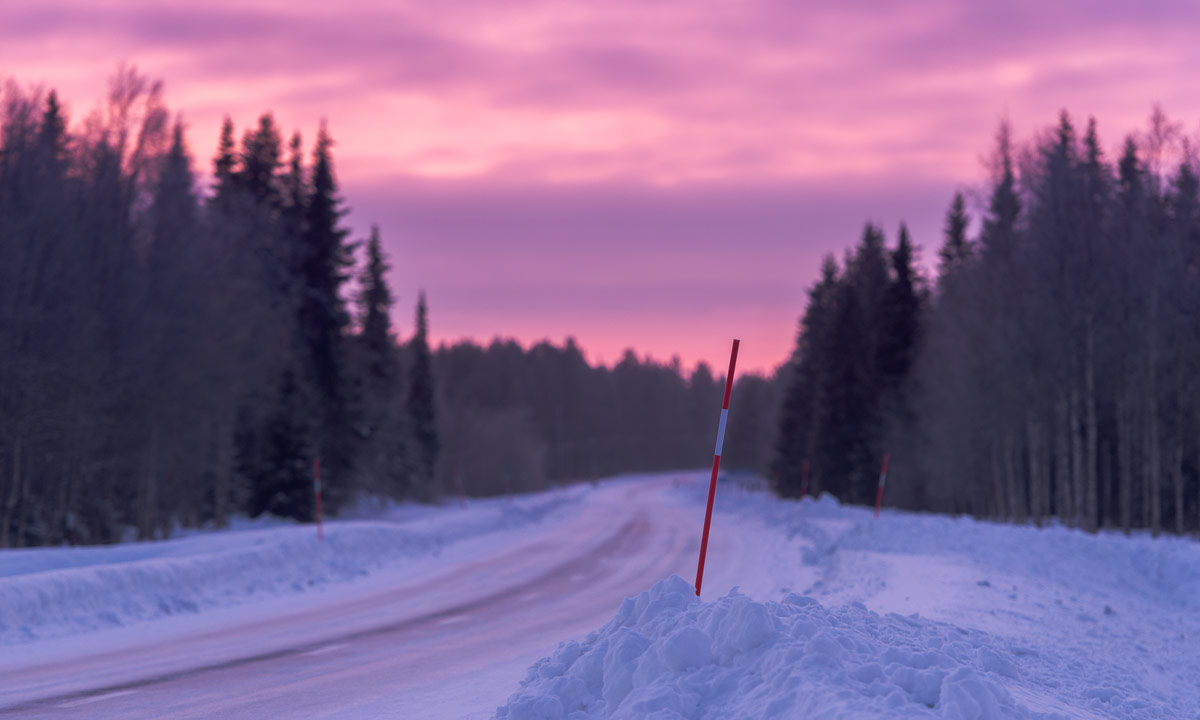
One of the most fascinating things in my opinion is the light in wintertime. Twilight may last hours or even the whole short morning, day, and evening and there are always soft pink colours in the sky. Just beautiful, but cold to take pictures of if you don’t have warm clothes. But when I have one thing, it’s cold weather equipment.

I looked for the airport, which is a bit out of town and quite tiny. It was closed. It’s the first airport I saw with an own parking place for reindeers. Good to know!

On my way back to Pajala I found a side road that headed to a small national park. I parked the car and walked the 700 meters to the cabin and the grill place in darkness. Of course it wasn’t pitch black, the snow and some thin clouds reflected the light of the city, giving enough light to see and walk. (The selfie is made with the iPhone which can take two photos until it will shut down because of the cold.

On the way back it was even colder: -38.8 °C. Now I got really hungry, drove back to the hotel and walked to the pizza restaurant. (Pizza and burger bars rule the Scandinavian north). Pajala by night:

Then I went home. I was glad that I have all I need for such a trip: A camera, food and a warm winter parka.

After a while I considered if I could catch the -40 °C now. It was warmer than expected, but let’s give it a try.

This time I took the road to Käymäjärvi (the name proofs, that Finland is not far away). Yes, here it was quite cold – below -39 °C. Between a swamp and the lake I stopped, since these low lands can be cold traps. I didn’t get lower temperatures but a view on the village and northern light (quite strong until I was ready to take pictures …)

On the way back to the main road I got my new personal cold record: -39.6 °C (sorry, no -40 °C)! When it’s really cold in Northern Sweden people take pictures of thermometers and show them in the internet. I will join this tradition. Voilà:

>>> read about day 2 of the journey >>>

Tour planning

One working day left until the next holidays: Two weeks hiking in the Swedish and Norwegian mountains together with Annika. I’m really looking forward to the tour!

  • Start: Nikkaluokta. End: Abisko. Or Riksgränsen. Or somewhere in Norway. We’ll see. It will depend a bit on the conditions …
  • Conditions: Probably quite wet and soggy ground, perhaps even some larger snow fields. Summer came late this year and especially the mountain regions got quite cold and wet weather …
  • Weather: But now the forecast looks great: Quite warm and sunny weather. Probably I’ll sweat a lot, since it was long ago that I hiked with a backpack …
  • Backpack: approx. 21 kilos including the backpack itself and food. And about 4 kilos photo equipment …
  • Photo equipment: Nikon D800 · Gitzo 1541 tripod · 20 mm f/2.8 · 35 mm f/2.0 · 100 mm f/2.8.

My packing list is complete. Most of the todos are finished, but there is one very serious question left:

Which headgear is appropriate for such a tour?

Can you help me? I’m awaiting your comments.

Paddling round Storgrundet

Two weeks ago the sea between the island Storgrundet and the mainland was still partly ice covered. Today I paddled round Storgrundet and couldn’t discover any ice left. The view of the blue sea almost looked like spring, but it didn’t felt like spring at all, it was very windy and chilly. When I left the protected bay I tried to make some photos but soon gave up since I was blown back ashore faster than I could take my camera out of its pocket. I only made a selfie on which it’s quite visible that – measured by temperature – spring hasn’t come far yet.

At the outside of the island I didn’t had a chance to release the paddle for a photo, too high were the waves. I regretted soon that I paddled without spray deck, because some of the bigger waves made it into my kayak. The next photo I made in a sheltered bay, where the water finally was calm enough and I could empty my kayak with a sponge (it wasn’t so much water, that came in).

Some hours later …

I had a look at “kanotudden” (literally: the canoe bay), a bay of the river Skellefteälven, where the ice is finally gone, too. Almost. There is some leftover ice, mostly crushed to small bits that were jingling and clanging with each arriving wave. But even the small bits were still solid enough to bear a wandering wagtail looking for food.

The canoe club, which is located at kanotudden still seems to be in hibernation, I’ll have to check later …


Yes, we can waves

Strange weather we had today. Sky was blue and the warm sun warmed up the air, but it was really stormy. Even if the wind came from west, we had a lot of waves on the Baltic Sea, that sprayed sea foam high up into the air, where storm gusts blew it ashore.

selfie-at-the-shoreThe last photo was shot against the sun, which was against the wind as well, so that a lot of foam landed on the lens of my camera. Not so ideal for photos, because each drop of water blurs parts of the image. I have to think about a method how I can avoid this. The camera itself is waterproof and so were my clothes and boots, that I used today, when I sat in the midst of the waves.

Why I called the article “Yes, we can waves”? Well, many people – sometimes including me – smile at the Baltic Sea and say, that it’s more like a big lake and no real sea at all. That it is shallow and never has big waves. Partly they may be right, because the Baltic sea is hardly affected by tides and the northern part – the Bothnian Bay – where I live, has a very low salinity. But at least we got some waves and sea foam today.


Winter wonderland

Day 21 – Deep, deep snow

Today I left Kurrovaara. The narrow street back to the main road is quite steep and covered with new snow. My friend and a teammate took the ATV to plough the snow away for me. After that I started the road up. First it went well but then came a steep passage with a bent. And there I stood and didn’t come any further. My friend had to help me. He, who is both much more experienced with car driving and knows the way by heart drove my car up to the main road. I was so grateful, without him I guess I would have been forced to wait until summer to climb this road. Yes – another argument for having a car with a four wheel drive …

The rest of the journey was quite relaxing: Kiruna – Gällivare – then not the Nattavaaravägen as usual, but via Purnu. I was curious how deep the snow was and stopped beside plain terrain – I guess a meadow or a field. I took some steps through real deep snow and stopped. I just moved my legs a bit and down I went. I was standing shoulder deep in snow until I hit firm ground. Unbelievable! I tried some other places to make sure that I didn’t hit a hole in the ground, but more or less it was all the same: Breast to shoulder deep and that means 140 cm snow in average!

So it wasn’t only the coast, that got a lot of snow (Luleå got 113 cm and broke the old snow record from 1966), but the inland as well, Many places in Northern Sweden have more than one metre snow now.

I continued the journey and made a short stop in the Wilderness Lodge Solberget, where I’ll stay a whole week later this month. Since last Thursday they have got huge amounts of snow  – a neighbour talked about 60 cm on a single day – and the wind created snowdrifts up to three metres height. So they had a lot of work to dig out doors, windows, cars and much more. Just some impressions from today (much snow is shovelled away already):

After having a fika (the Swedish coffee break) and making these photos I continued to the village Murjek where I’ll stay for some days, mostly for visiting the famous winter market in Jokkmokk but perhaps a ski tour as well if it works with so much snow.


Abisko: Where are the mountains?

Day 19

Where are the mountains? I guess they’re still there, they are hard to move. But I couldn’t see them the whole day. When I stood at the edge of the lake I could see the island Ábeskosuolu, 700 metres away, but the rest of the terrain was hidden in a greyish white. I guess it was less the falling snow but the blowing snow that hid the surroundings, because the wind was quite fresh and gusty. SMHI, the Swedish weather office published a level 1 warning for today: hård vind med snödrev/nederbörd (high wind with ground blizzard/precipitation).

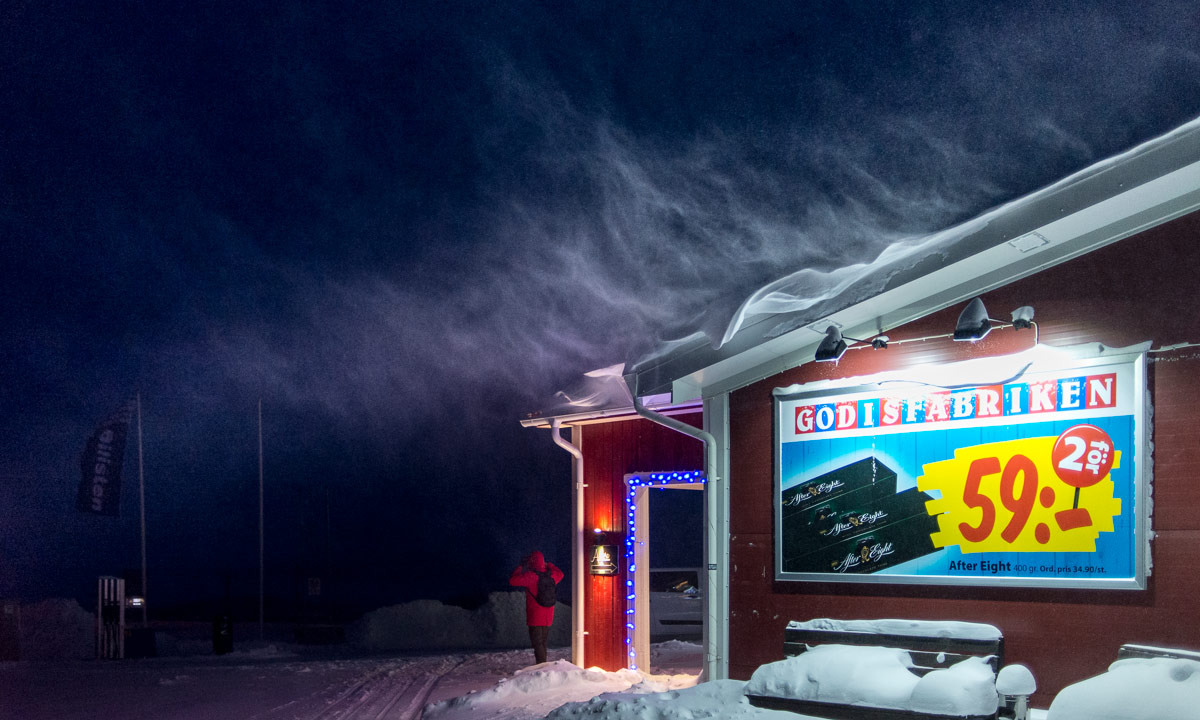
Two other images of today, the first showing one of huge snowbanks that were built up on the houses lee side. The other shows the restaurant and bar from the outside with blowing snow.

Photographers note: I like the last photo of the restaurant’s outside. And I took it without a tripod: ISO 3200 35mm f/2.0 1/320 sec