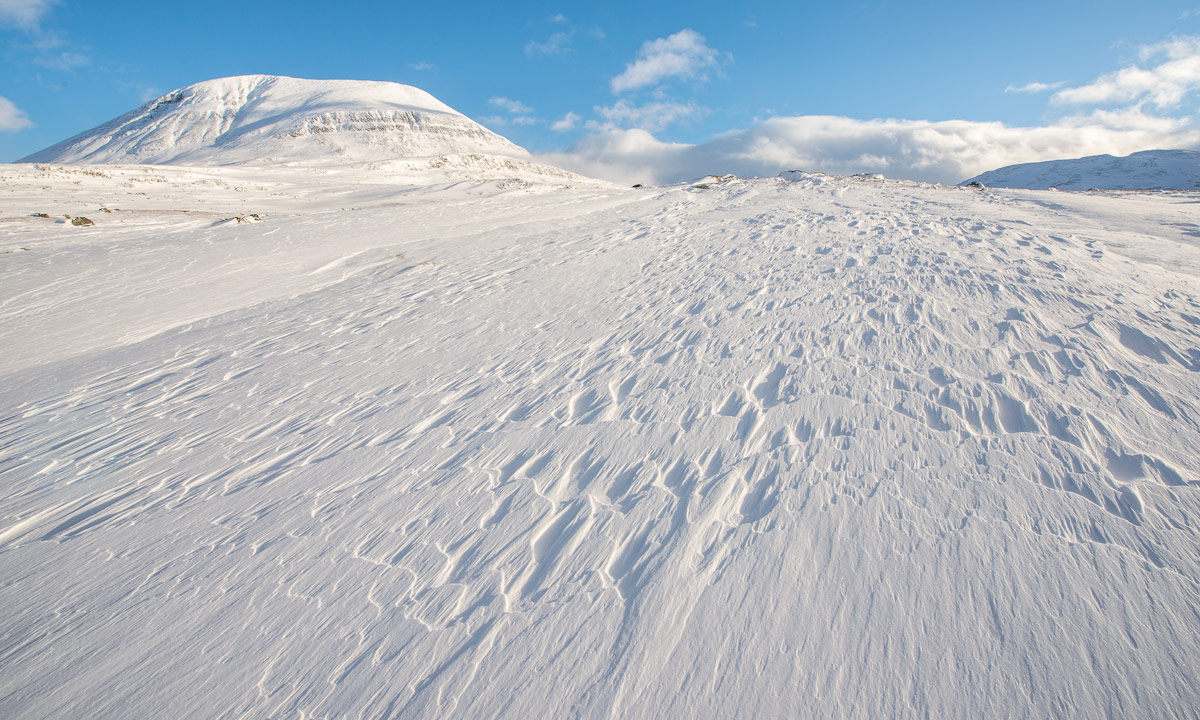
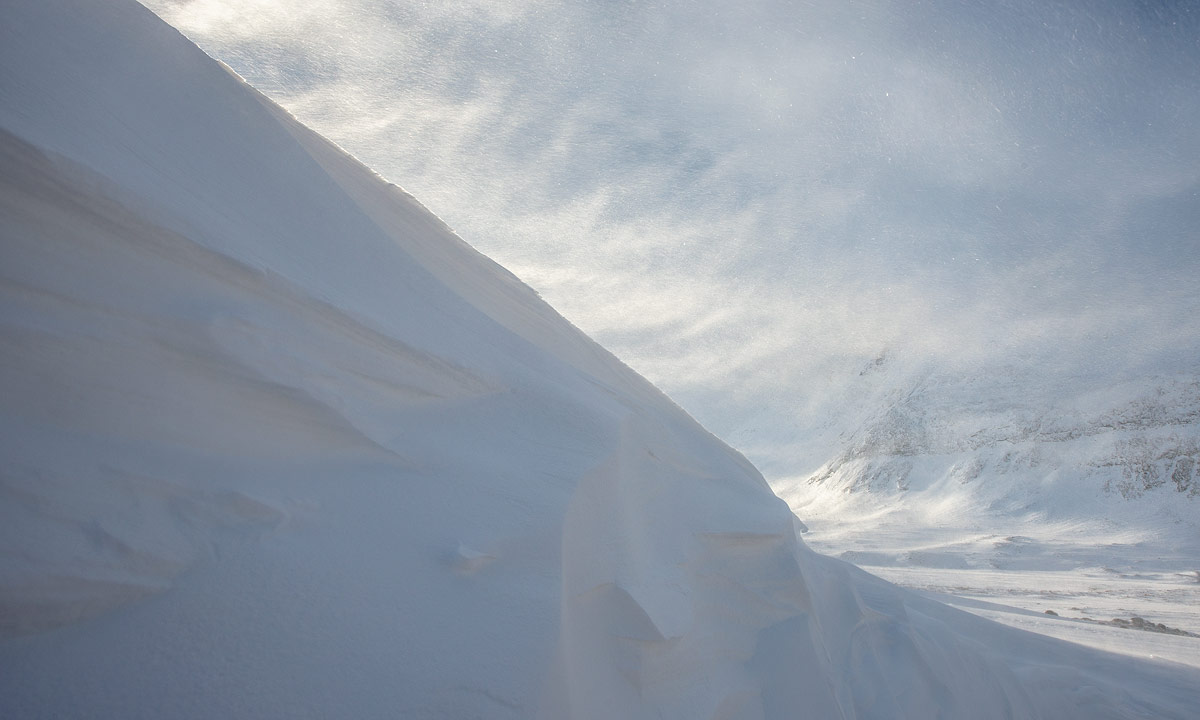
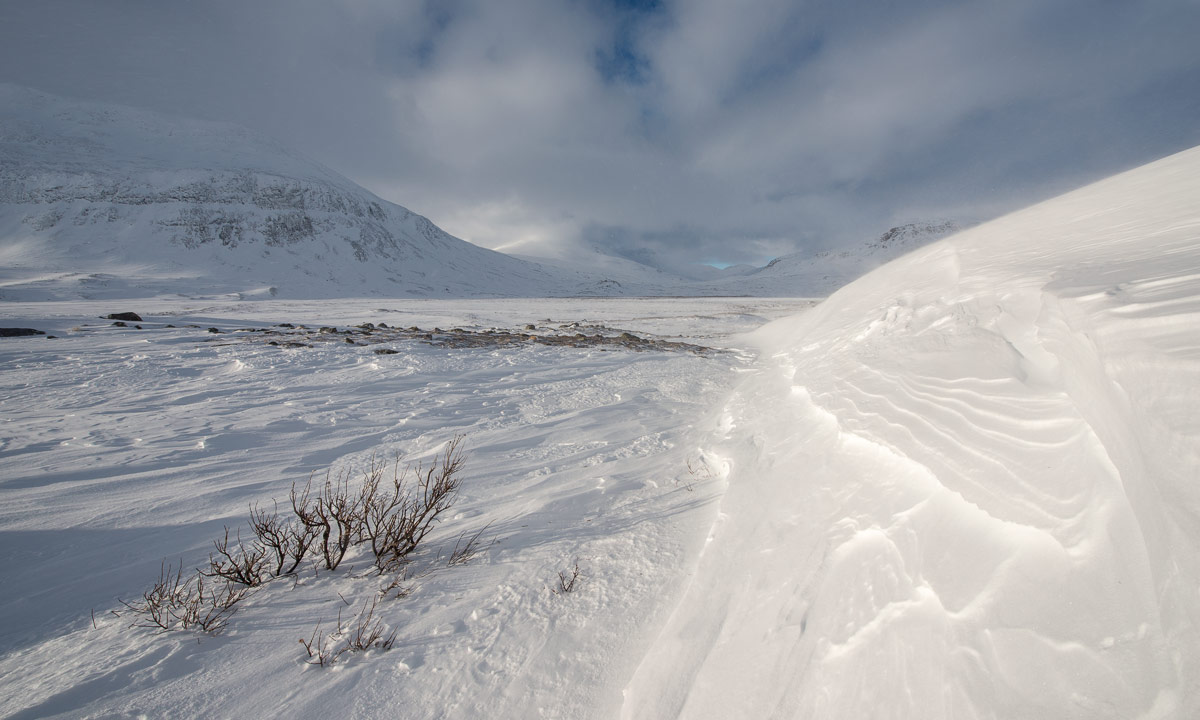
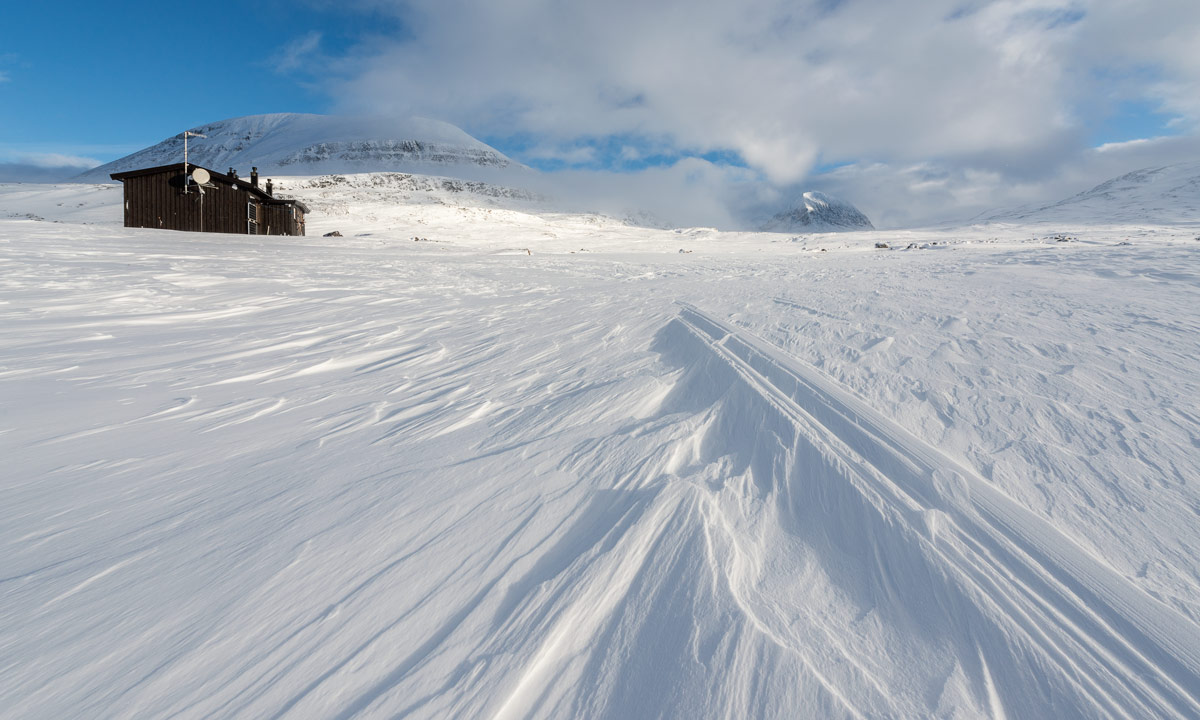
From Singi to Sälka and Nallo

This article is part of the series “2015-08: Kungsleden hike”.

August 26 – 29: Day four to seven of the summer hike through the mountains of Swedish Lapland

Singi – Sälka

After three very warm and sunny days clouds came in over night and the sky was quite overcast that morning. Only at the northern sky a larger patch of blue was visible. That fits, we’re going north! The first two kilometres were very well known to us, we went them there and back the day before. The day’s walk was short – just 12 kilometres.

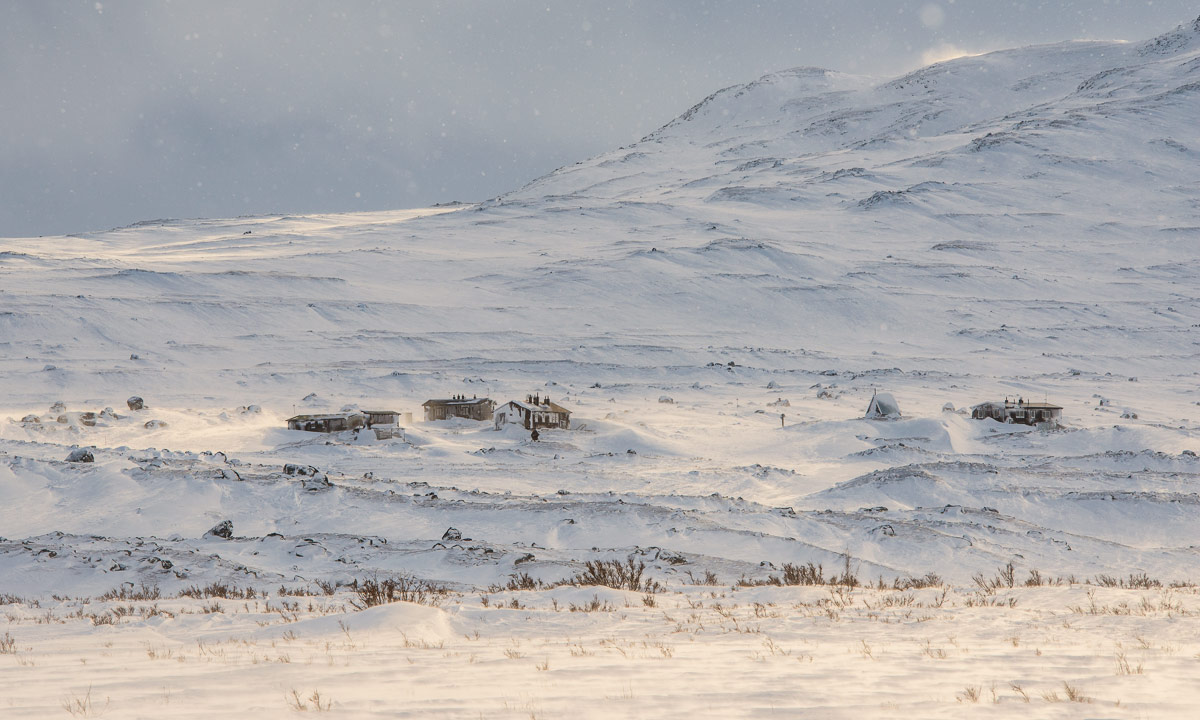
Soon the huts of Sälka came into view. It was funny to see the ads for the shop and the bastu – the sauna – amidst the extend mountain landscape. Only 300 meters left and we entered the reception to check in.

It’s a nice look from Sälka but we had another interest that afternoon: Overall on the ground the ptarmigans were running and there were even sitting on the huge pile of birch wood, so that me, the photographer and them, the models, were on eye level. They let me advance quite near – in fact so near that the tele lens couldn’t focus anymore. The first two images are younger ptarmigans, the last is a grown up – look at these fantastic white feathered feet.

Sälka – Nallo

The next morning there were so many ptarmigans around that you really had to watch yourself not stepping on one of them. I never saw so many and never saw them so near. Our plan was not to continue the King’s Trail but to go northeast to Nallo, a smaller cabin a bit higher up in the mountains. After the common breakfast (muesli with some milkish liquid made from dry milk – yuck!) we started our tour. Even shorter than yesterday: only 9 km but perhaps a bit more demanding since there’re streams to ford, while the whole King’s trail is equipped with Bridges.

We had to look for planks to cross the small rivers behind the cabins but soon we were on our trail.

One hour later we were on the moon …

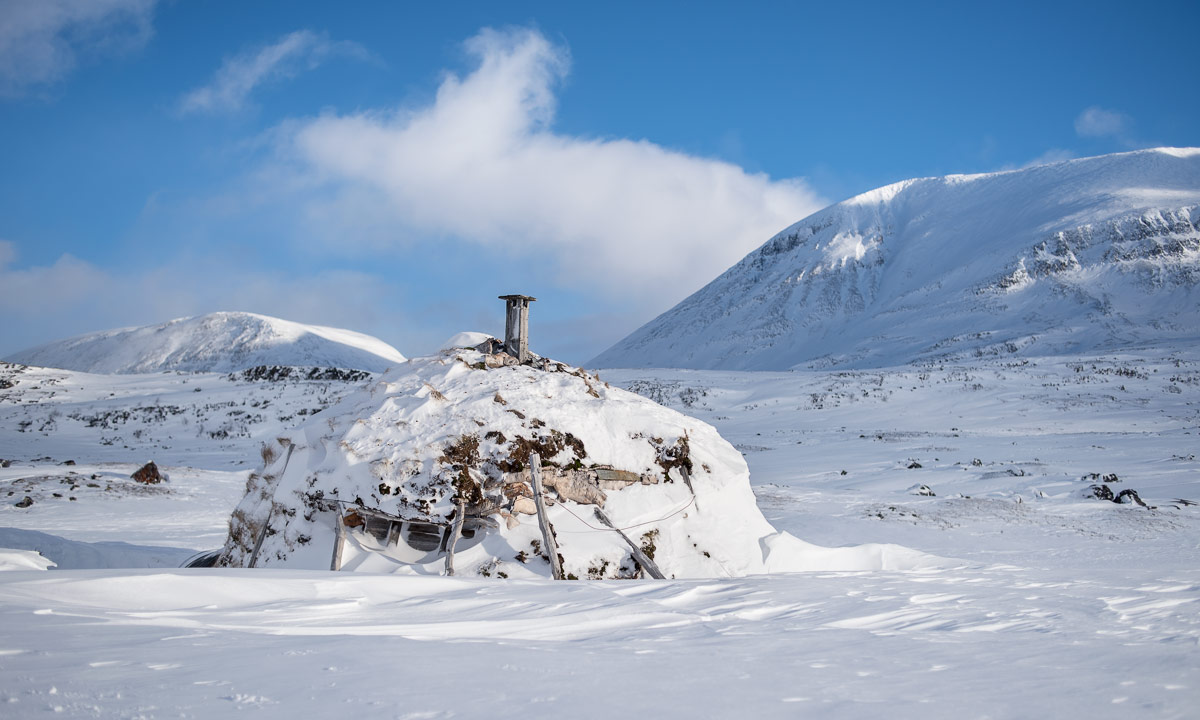
… well, not exactly, but it was such a sharp contrast to the sweet and lovely landscape of the last days. We could hardly see any vegetation. Only moss, grass and some scattered flowers were left. And some reindeers on some of the tabular slopes. There were many small streams and brooks to cross and it was the first day where I was glad, that I walked in rubber boots.

After a while the lake Reaiddájávri that lies on 1056 meter came into view and we went along it. More and more clouds came towards us and swirled around as if they wanted to surround us.

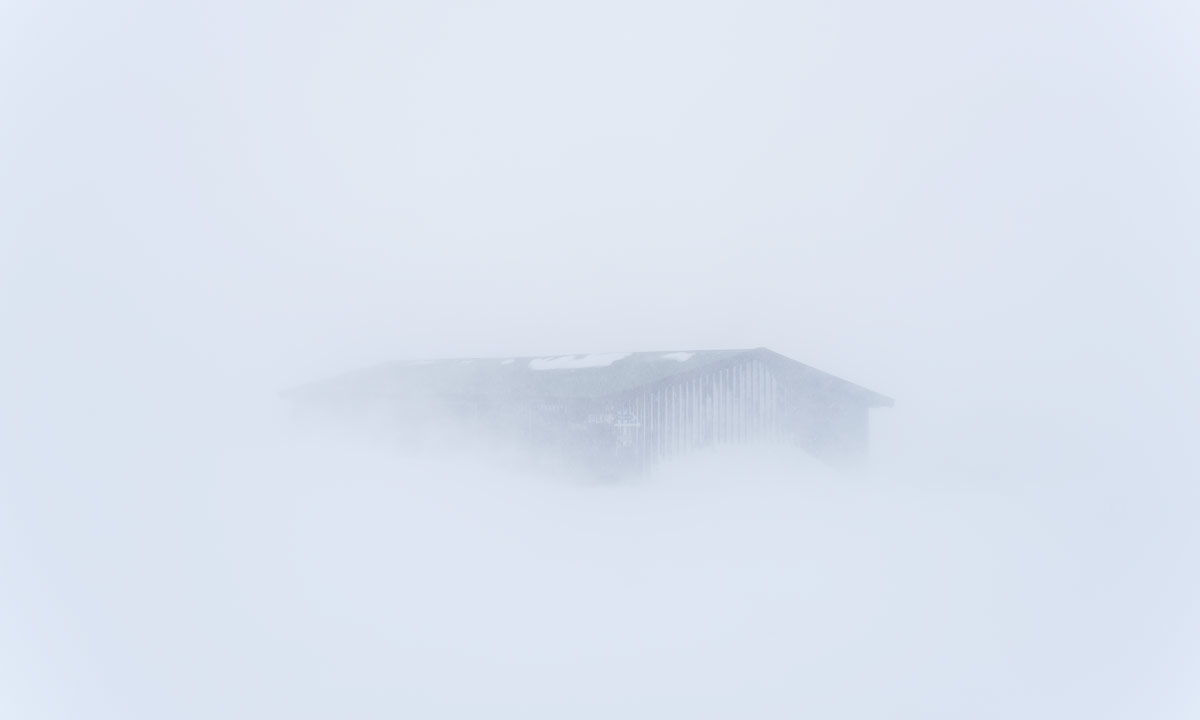
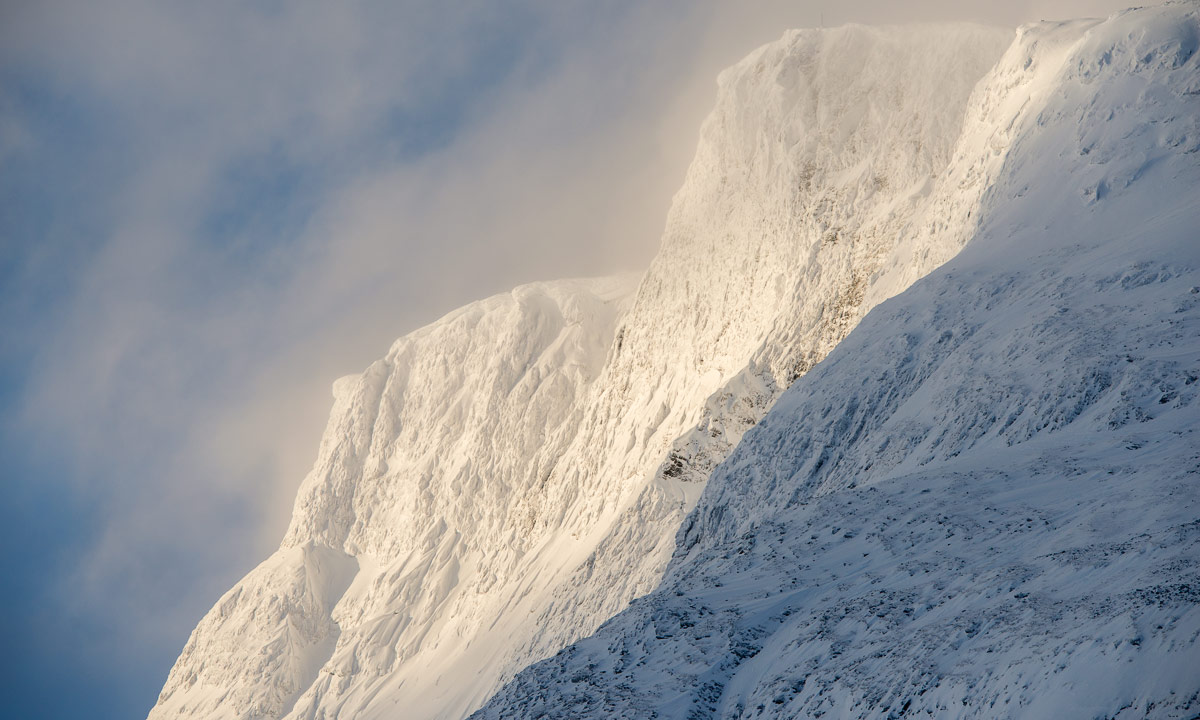
We had to cross the stream that enters the lake at the northern shore. Annika had to switch to sandals and ford the stream, for the water was to high for her hiking boots. It started to drizzle, than to rain and it got windy. Navigation was less easy now since it started to get foggy, there were less marks and some streams and snow patches to cross. Mostly I navigated with the compass, but twice I took the GPS to ensure my navigation. Since wind and rain increased more and more and I was busy with the navigation I packed the camera into the waterproof bag and didn’t make any photo on the last two kilometres. In the end the small Nallostuga came into view and even the huge mountain Nállu in the back lingered through the floating clouds. We got a warm welcome of the stugvärd – the warden of the Nallostuga. And warm was the wood fired oven, too. A good opportunity to dry our wet clothes.

I only went out later that day to take a photo of the wooden signpost and the hut itself. The rest of the day was just gemütlich – the pouring rain outside and we ourselves warm and cozy inside.

Two days of at Nallo

One

We planned to stay a day in Nallo already two days ago. It looked like a good idea since the rain just poured down the whole day and it was very windy. All people out there looked very wet, whether they just crossed the stream – now twice as large and probably twice as deep – or if they just fetched a bucket full of water.

Time to make some photos within the house. Two typical views in Swedish mountain huts: Many of them have two rooms, each has a kitchen and two flanking bedrooms, only separated by a curtain. That make 20 beds in total. Plus one for the stugvärd who has his own little room. The Primus 2388 is a gas cooker, easy to handle and is found in almost each Swedish mountain hut.

Two solo hikers planned to continue their tour that day but after a while they decided to stay. Perhaps not the worst idea when you looked at the young hikers, that came in. They were completely soaked. They poured the water out of their hiking shoes and hang up the dripping-wet sleeping bags for drying. All was just soaking wet! We we’re quite glad to be inside. But finally I took my camera and went out for some photos. Brr, it was really cold (7 °C) and so windy that the spray of the brooks was blown upwards again. Some photos:

I was glad, when I came into the inside of our cozy hut again. Only Simba, the warden’s dog endured the weather stoically.

Later that day: The sleeping bag already has dried, but other clothes were still hanging on the clothes line.

Two

Next day we wanted to continue our trip but I changed plans. Unintentionally. I got ill. I got fever that night and problems with my stomach and intestines, that I definitely don’t want to describe in detail. Otherwise there’s nothing much to report. I didn’t make a single photo (a certain proof that I was really ill) and slept almost the whole day.

Later in the evening, when I felt a bit better I was able to communicate again. I heard about others that went Singi–Sälka, the very same way we went three days before. The trail has been so flooded that the water poured over the wooden planks of the minor bridges making them very slippery and it was so windy that the hikers were really frightened to be blown from the bridge right into one of the swollen rivers. Illness never fits, bit I guess I chose a quite good day for being sick.

I slept the night before, I slept almost the whole day and I slept the next night. That sums up to round about 30 hours of sleep without any larger interruption. That probably was the best medicine and the next day I felt sound and healthy again. The plan for the coming day: Hiking to Vistas.

Yes, we can waves

Strange weather we had today. Sky was blue and the warm sun warmed up the air, but it was really stormy. Even if the wind came from west, we had a lot of waves on the Baltic Sea, that sprayed sea foam high up into the air, where storm gusts blew it ashore.

selfie-at-the-shoreThe last photo was shot against the sun, which was against the wind as well, so that a lot of foam landed on the lens of my camera. Not so ideal for photos, because each drop of water blurs parts of the image. I have to think about a method how I can avoid this. The camera itself is waterproof and so were my clothes and boots, that I used today, when I sat in the midst of the waves.

Why I called the article “Yes, we can waves”? Well, many people – sometimes including me – smile at the Baltic Sea and say, that it’s more like a big lake and no real sea at all. That it is shallow and never has big waves. Partly they may be right, because the Baltic sea is hardly affected by tides and the northern part – the Bothnian Bay – where I live, has a very low salinity. But at least we got some waves and sea foam today.


Nordkalotten 2015 – the weather

Let’s make it short: I feel betrayed by the winter this year! It was too windy and it was too warm! Much too warm. And when it snowed, I was far away.

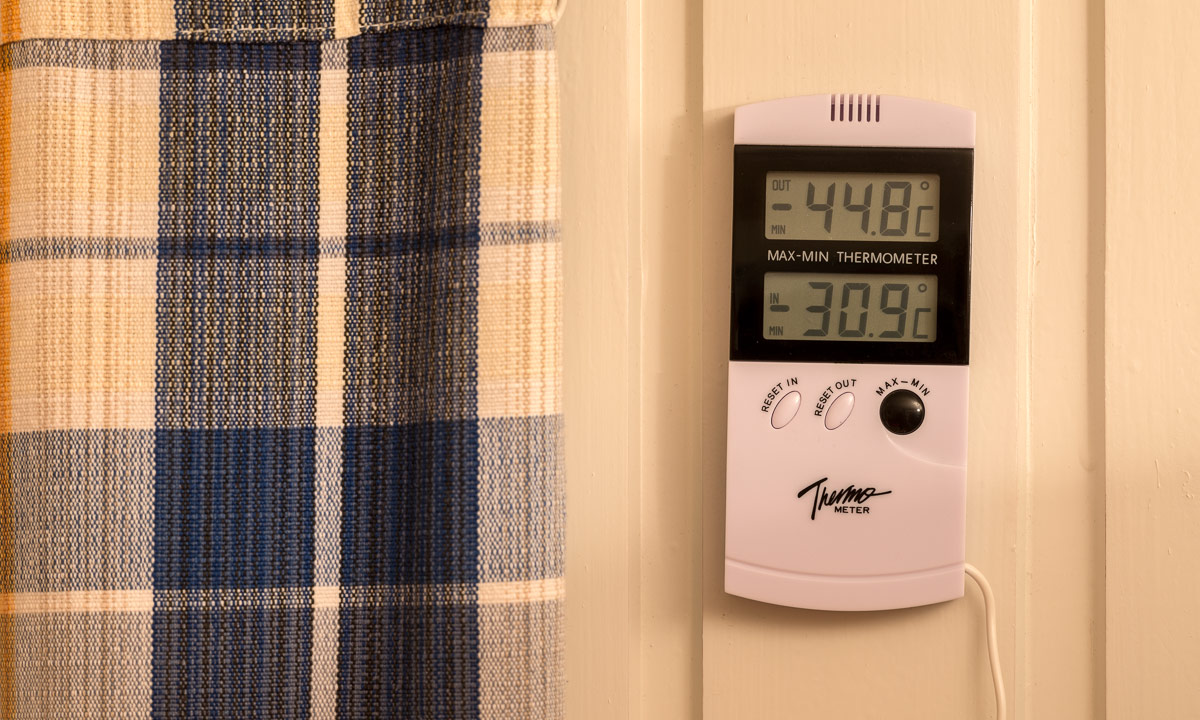
First of all it was too warm – the average temperature of the whole February was 8 °C too high in parts of central Swedish Lapland. That’s about the same difference as between Stockholm and Rome! The whole february! And March wasn’t better. The “all journey minimum temperature” I measured was only -24 °C, I expected temperatures near -40 °C, at least once.

And it was very windy – Norway got its hurricane Ole with average wind speeds up to 36 m/s (that’s level 12 on the Beaufort scale) and gusts up to 53 m/s (that’s level 16 on the extended Beaufort scale!). But many others days were windy and stormy, too, even if not so severe as hurricane Ole.

Most trees where free of snow. Either the snow was blown away or it just melted and dropped down. That made not only the pine forests looking quite boring, but also the snow looking quite dirty, since it was covered with leaves, needles, small branches, bark and much more.

That didn’t look like the untouched, virgin winter landscape in early February but more like city parks in late April, a minor catastrophe for photographers who want to show impressive winter images. Luckily there were exceptions and I got at least some wintry images with snow covered trees, even if only a few.

Yes, it has been cold in January. Some days. In Sweden, but not in coastal Norway where I was at this time. Yes, it snowed ridiculously much in the first days in February, both in the coast and in central Lapland, but not in Abisko in the western mountain region, where I was at this time. It was a bit like being in the wrong place at the wrong time. Later, when Ole arrived, big amounts of snow where forecasted in the mountains, but I considered the weather too dangerous to drive there. As in early February I only saw the results, never the snow fall itself.

And then came the warmth. Since the 24th of February I’ve measured temperatures above zero almost every single day. And this effect wasn’t local, it took place in the whole Northern Europe. In Norway, in Sweden, in Finland. Streets were icy, snow was crusty and I was just glad when it didn’t rain.

Yes, when it comes to weather I am really disappointed. It was the lousiest winter ever, that I experienced north from the polar circle, where I’ve been travelling round since January 2003 now.

Don’t get me wrong! The journey was great, but mostly it was great despite of the weather, not because of the weather.

Last winter was quite bad, too, this winter lousy, now I hope, that winter 2016 will be extraordinary cold and snowy and that I’ll find the time to travel around again.

Links

Låktatjåkko – between ski tour and luxury

Day 43 and 44

Yesterday it promised to be a fine day with great weather. The mountain valley Lapporten was gleaming and glowing in the early sun.

Annika und I planned to go to Låktatjåkko, the highest Swedish mountain lodge, where we planned to stay overnight and even to eat a three course dinner. It’s not far away from Björkliden where we started, but parts are quite steep. Therefore we decided to take the snow cat, that drives to Låktatjåkko every day. And I could sit in the front to take pictures.

After the first steep passage we left the snow cat, took our skis and backpacks and continued the way on our own. The view over the snowy mountains and the lake Torneträsk was just amazing.

But some steep passages waited for us and after the first longer part we made a longer rest enjoying the sun, food and our warm down jackets.

After a while we continued our tour, short in kilometres but still quite steep, at least without skins. But finally the Låktatjåkko Mountain Lodge came into view.

We were greeted by the two women running the Lodge. We asked how many people would stay over night. “Just you two”. And how many people will eat the three course dinner? “Just you two”. Now the pure luxury part began. We had a sauna, we sat in the fireplace room the fire already lit and at 7 p.m. we got a fantastic dinner, just the two of us! And we just did nothing for it. Almost a bit crazy!

After a snowy and quite windy night I went outside to take some pictures. The light was so diffuse, that it was hard to see where terrain went up or down. Therefore we took a quite relaxed morning waiting for the snow cat to come and bring us down into civilisation again.

Thank you, Ulrika and Yanina for the great service and the fantastic food. This is a place where we would love to be snowed in for a while.


A ski tour near Tornehamn

Day 40

After leaving Solberget together with Annika on Saturday, we drove to Abisko where we made a marvellous day trip on skis yesterday.

We started in Tornehamn north from Björkliden with quite cold weather (-17 °C) and deep blue sky. We were surrounded by the snow covered mountains and birch trees packed with hoar frost that sparkled in the sun. After some hundred meters on the lake Torneträsk we followed a winter path marked with red crosses. When we looked back into the sun we could see tiny ice flakes that gleamed goldenly in the sun.

Mostly the way was very easy to ski but some short parts were quite steep. No problem for the snow mobiles that left many tracks on and beside the trail but not so easy for us with skis.

After a couple of kilometres we followed the hiking trail Nordkalottruta northward. This trail isn’t marked in winter time but since all the tiny lakes were completely frozen we chose our own way northward to the bridge over the small river Niuoraeatnu. The terrain is hilly and mostly we want zigzag to avoid the steeper slopes. On a hill top after a quite steep ascent we made our first break and had a view over Lapporten.

We continued climbing small hills, skiing through birch forests along slopes with cornices until we finally came to a steeper slope down to the river Njuoraeatnu with the chain bridge overstretching the river.

While it was quite easy crossing the river that still was partly open it was quite difficult to continue our tour. We didn’t dare to go on the river, therefore we had to go up the hill. This part was so steep that we had to unmount our skis and go uphill without. Not too easy in metre deep snow …

Phew – that was exhausting but finally we were up on another hill ready for a lunch break. The wind increased and clouds gathered. Therefore we continued to a small bay of the Torneträsk where we found shelter from the wind for a longer break. We put on our down jackets, drank hot tea and ate sandwiches and chocolate. (Tip: Ham freezes, feta cheese works fine.)

Eventually we had to continue our ski trip; day light wouldn’t last forever. We went round the peninsula Stállobieskkenjárga against the wind. The wind increased and increased and slowed us down. I put on the fleece balaclava and tightened the fur rimmed hood to get as much wind protection as possible. The landscape lay grey in grey and all you could hear was the wind with its stormy gusts. It started to get dusky. What a contrast to the first part of our ski tour!

Slowly we continued to the southeast tip of the peninsula where we crossed the bay Njuoreanunjálbmi. Finally we reached Tornehamn again, entered the car and drove to the Abisko Mountain Lodge where we got our reward: A hot chocolate and a cool Coke.

Tack för turen, Annika – thanks for the tour.


Where to go? Undecided yet …

Day 27

On Sunday I left Murjek and continued my journey. To be honest: I would have loved to be in the Swedish-Norwegian mountains in the storm, and even another storm and masses of snow where forecasted. But …

  • … some roads were closed and other road were strongly discouraged to use
  • … beside of some expensive hotels no rooms were available in Riksgränsen
  • … and tenting would by suicidal (at least with my lack of experience)
  • … the avalanche risk could be extremely high
  • … I couldn’t make any photos in full snowstorm
  • … I couldn’t make any tours neither

So I had reluctantly decided not to drive to the mountains.

I left Murjek and went on to Nattavaara, where I turned right to Purnu (where I made the deep snow images some days before). I realized that I had not so much petrol left. Should I be forced to drive to Gällivare only to refuel the car? No, I was lucky – there was a small petrol station in Hakkas.

I continued a small road heading to Satter and Ullatti, and it felt nice to visit new places. I haven’t even heard the names. Sky was blue, with temperatures round -10 °C it was not so cold and you could see, that there’s much snow. But you could see the impact of the storm and quite warm weather, too: Almost all trees where bare of snow. As a matter of fact it looked like it was end of March – a typical vårvinter (spring-winter) day. As a photographer I dislike this weather. The snowless trees look a bit boring and there’s a lot of needles, bark, twigs and other things on the snow which doesn’t look nice on photos. But some pics anyway …

I continued to Tärendö, that has a town sign in three languages: Swedish, Samian and Finish. This shows that there are more languages spoken than Swedish in this area of Lapland. I liked the small petrol station that looked a bit “Wild West” in some way beside perhaps of the two completely snowed in cars.

I turned left and took the way to Saittarova. I thought about sleeping in the tent and looked for a parking place where I could go into nature a bit. But instead of finding a good place I found a moose. A moose that didn’t ran away when I backed the car to take a photo. But seconds after the photo the moose and another one paced with big, large steps into the forest.

After this nice incident I continued to the crossing and turned right into the 395 to Pajala. Shortly before Mäntykero I hit my place: A parking place and a flat swamp area with some pine trees.

I parked the car and left the comfort zone …

Appendix: Some words about Ole:

The storm Ole, that hit Norway and Sweden yesterday has been one of the strongest in the last ten years and had wind gusts over 50 m/s (that’s 180 km/h). For comparison: Beaufort number 12, “Hurrican Force” (orkan in germanic languages) starts already with 32.6 m/s.

Link: Så voldsom var «Ole» (yr.no, Norwegian)

The storm arrives

Day 26 – February 7

After the yesterdays ski tour I took it easy today and just made a minor car trip to Högträsk near Murjek. You could see that on some places snow mixed with wind has created huge snow banks.

And you could see as well drifting snow, because the wind started to increase.

In the afternoon the wind gusts became stronger and stronger. The roads in Norway and the Swedish mountains already were closed again due to a severe storm and even the Northern Swedish inland got a level 2 warning forecasting: Gusts up to 25-28 m/s. We almost waited for a power blackout and it came – but surprisingly only for a minute.

When I went out I was immediately covered with cold snow powder. Whether it fell from the clouds or was just whirled up from roofs and ground I cannot say. And I was still unsure where I should continue my journey the next day …

Planning for the next seven days.

In eight days I will be in Solberget again – that’s only 40 km away. What should I do in between? I’m still unsure.

Option 1: A ski tour in the Muddus nationalpark. A nice place – I’ve been there once. Disadvantage: There is much forest in the Muddus, wonderful and real old forest as a matter of fact. I don’t have a big backpack with me, only the pulka (a sled for drawing things behind) and I’m not quite sure if it is smart to use a pulka in forests. I’ll have to check it.

Option 2: Finding some nice spots nearby and sleep in my tent, making some day trips with skis. This may be the easiest option.

Option 3: Driving back to Riksgränsen via Kiruna and Abisko. I would love to do it for some reasons, mostly the weather. But the same weather may make this option impossible.

Today smhi (Swedish Meteorological and Hydrological Institute) published a warning class 2 (up to 25 m/s average winds in combination with dense snow showers). So I guess the roads will be closed again and I cannot get to Riksgränsen.

And the snow in Riksgränsen? According to the forecast of klart: Today 22 mm, tomorrow 19 mm, Sunday 5, Monday 21, Tuesday 35, Wednesday 19. That’s 120 cm in six days. In combination with the storms (more to come) probably neither weather for tenting or doing ski tours alone, not to mention taking photos showing something different than a greyish white.

Option 4: Driving to Kvikkjokk and doing ski day trips there. Hm, maybe …

Option 5: Driving northeast to Pajala near the Finnish border. Hm, maybe …

There are much more options than these five and I have to decide tomorrow. I would love option 3, since I love extreme winter weather. but it’s probably not realistic. I have to check the forecasts again tomorrow.

Addendum: Now the whole Northern Sweden got a weather warning class 1 for tomorrow: Wind gusts up to 24 m/s, that’s beaufort number 9.

Dear blog readers: Your comments? Ideas? Suggestions?

Abisko: Where are the mountains?

Day 19

Where are the mountains? I guess they’re still there, they are hard to move. But I couldn’t see them the whole day. When I stood at the edge of the lake I could see the island Ábeskosuolu, 700 metres away, but the rest of the terrain was hidden in a greyish white. I guess it was less the falling snow but the blowing snow that hid the surroundings, because the wind was quite fresh and gusty. SMHI, the Swedish weather office published a level 1 warning for today: hård vind med snödrev/nederbörd (high wind with ground blizzard/precipitation).

Two other images of today, the first showing one of huge snowbanks that were built up on the houses lee side. The other shows the restaurant and bar from the outside with blowing snow.

Photographers note: I like the last photo of the restaurant’s outside. And I took it without a tripod: ISO 3200 35mm f/2.0 1/320 sec


Over the storm-beaten Norwegian fjell

Day 16 – about storms, waiting long, a dead battery and Northern Lights

Today I left Tromsø and tried to reach Abisko. But I couldn’t say if I should reach it today since two parts of the mountain road were still closed.

The first part was extremely windy and I could feel the squalls shaking the car. Again the question – was it smart to drive a car in this weather? But soon when I came to Fagernes and started crossing the mountains – the fjell – it got much better. Then I arrived in Bjerkvik where one road goes to the Vesterålen and the other to Narvik and Sweden. Just after I left Bjerkvik, after a tiny bend the storm stroke again. I left the road to Narvik and turned left following the E10 to Sweden. The car climbed the steep passage up and than I saw a queue of cars. Stop.

I switched the car off (Bad idea, Olaf!) and waited. What’s happening? Are we waiting for a convoy? Is the road still closed? I waited. After half an hour it got cold in the car – outside it was stormy and -9 °C – and I turned the car key to start the car again. No reaction beside of half a second light on the dashboard and some disturbing noises. I tried again, and again. The car was dead! “Sh**!” was my thought.

I asked the car driver behind me. No, he doesn’t know anything about cars. The next one. Yes, I should check the contacts of the battery first. That’s what I did but they looked ok. While considering what to do next, the guy came to look as well. He checked the battery contacts once more and came to the same conclusion. Just seconds later a big red car approached from the back, stopped some centimetres beside of mine, a guy jumped out, two jumper cables in his hand, fixed them to the batteries of our cars, asked me to start and my Saab started like a charm! I just could say “tusen takk” – Thousand thanks and back in the queue vanished the red car. This guy is my hero today! I was both grateful and very relieved.

Now I focussed on not stalling the engine under any circumstances. As all other cars I continued waiting. After about two hours of waiting some really official looking cars came from the back and minutes later a guy picked all the “normal” cars to follow. We had to wait another fifteen minutes (“do not stall the engine!”) and then we could follow a snowplough.

Even now where the road was open and ploughed it was an adventure. You could see snowdrifts everywhere and the strong wind still blew loads of snow through the air. Sometimes you could hardly see the hazard lights of the car in front of you. Some new snowdrifts started to cover the road again. It took time until we crossed the Bjørnfjell – the Bear Mountains and came to the Norwegian border where another long car queue waited on the other side for their turn.

Now I was in Sweden and the other road segment was already ploughed and open so that we quite easily could continue driving, still minding the snowdrifts and the stormy wind. Finally I arrived in Abisko where I am in the same room like two weeks ago –it  seems like ages ago.

It really feels like home being in Sweden again – the Swedish language, the Swedish mobile internet without expensive data roaming and – last not least – the Swedish prices! After a short rest a went to a restaurant and ate and drank for 85 SEK, less than the half of what it would cost in Norway.

After that I took a photo tour. The sky had cleared up and a long band of Northern Light covered the sky over Abisko.

Translations:

EnglishGerman
squallSturmböe
dashboardArmaturenbrett
jumper cableStarthilfekabel
stall the engineden Motor abwürgen
ploughedgepflügt, freigeräumt
snowdriftSchneewehe
hazard lightsWarnblinker