First ice on the Baltic Sea

This morning: -6 °C · clear sky · 40 minutes before sunrise. The first thin ice has settled on the sea.
I know, it hadn’t been there the day before, when I had taken a short bath in the sea before work.
This morning: -6 °C · clear sky · 40 minutes before sunrise. The first thin ice has settled on the sea.
I know, it hadn’t been there the day before, when I had taken a short bath in the sea before work.
The weekend two weeks ago it was fog, that made my morning promenade along the river Umeälven special. Yesterday it was snowfall. As you can see on the three photos, the snowfall weakened more and more and most of the snow thawed away during the day. But it was a another beautiful reminder for the next winter to come.




This morning on the way to work – wet snow covers the minor roads and bicycle paths.

This afternoon on my way home I made a stopover – bright and colourful the forest, bleak and dull the bog.


What are your autumn colours?
21, 22 September – Annika and I are invited by Solveig and Tommy to their summer cottage on Gåsören. Tommy picks us up by boat and after a short cruise we arrive at the small harbour, where Solveig already waits for us.

We have a wonderful evening with delicious food (hand-picked porcini mushrooms!) and inspiring conversations. And the weather is just great – first a blue and sunny sky, then after sunset a starry night. After a short nightly walk to the lighthouse – built in 1912 and still active – we go to bed.
The next morning I wake up early and take photographs of the splashing waves at the eastern shore. It’s a bit windy and the temperatures are near freezing. A lot of trees still have green leaves but some of the birches and rowan trees have become colourful, especially when illuminated by the low morning sun.


After breakfast we take a stroll round the small island together before we get a lift back to the mainland. Tack så mycket, Solveig and Tommy. We are looking forward to meet again!
28, 29 September – I’m with Annika in Umeå. On Saturday we make a trip to Strömbäck-Kont, one of our favourite locations by the sea. Again the weather is sunny but due to the frost of last week’s nights a lot of more trees show coloured leaves. Especially the bright yellow birch leaves look wonderful.

On Sunday I wake up early as usual and take a promenade along the Umeåälven, one of Northern Swedens largest rivers. The morning air is damp and chilly and the landscape is fog-shrouded. The fog muffles all sounds and noises and gives me the impression of being completely alone. Half an hour later the fog goes away and the magic is gone.


Yesterday, 2 October – at 3:00 I’m awakened by storm squalls shaking the house. I almost expect that my house is lifted up and lands on the Wicked Witch of the East. But the gale is no tornado and my house resists the squalls.
The weather doesn’t come completely unexpected, both wind and enormous amounts of rain have been forecasted. But as usual the forecast was – ahem – imaginative but at least the wind speeds are quite accurate.


Today, 3 October – again I’m awakened at 3 o’clock, this time by a hail squall drumming on the window. It’s round 3 °C and even colder at 7 o’clock on my way to work. Between my home and the town another rain squall buckets down. It is mixed with wet snow. Beside the road I can see white patches. Is it snow or last night’s hail? When I arrived at the office at Solbacken outside of the town of Skellefteå I see, that it’s snow grains – tiny frozen white balls.


At 8:33 I look through the window of my current office room and it’s snowing. The first snow on 3 October – exactly the same date as last year. Now I’m longing for winter even more ❄︎ !


Some words about why was on the island Gåsören at sunrise will follow within the next days …

Finally – the first frost in the morning. The dew is frozen and frost covers the car windows. I took a short bath in the Baltic Sea before work and for the first time the water temperature was below 10 °C. Now it’s winter bathing. A bit chilly but refreshing and a good start in the new week. To be repeated soon.


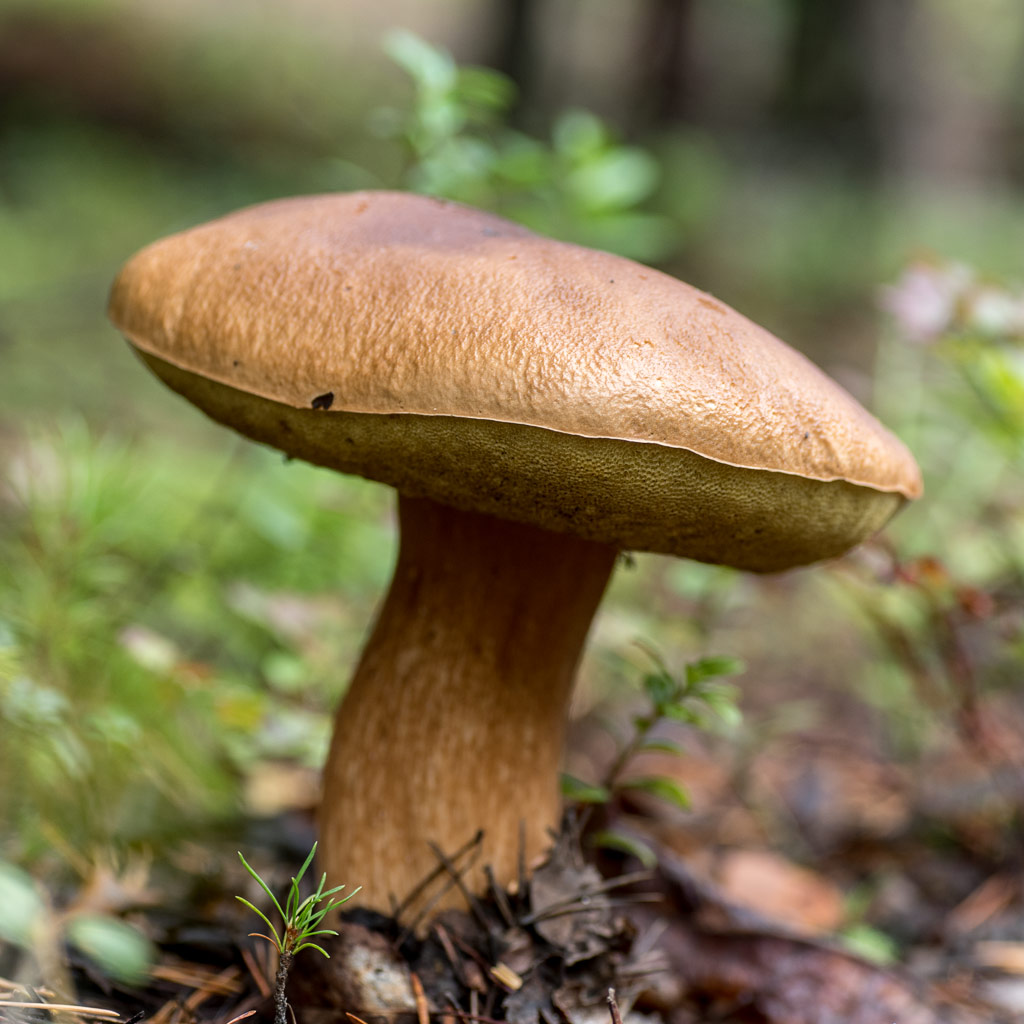


The weather has got colder and wetter and when you stroll through the forest you can smell earth and mushrooms. According to the calendar autumn already has started last Sunday and this weekend it even feels like autumn.


At time I have a project which is located at Solbacken, Skellefteå’s shopping centre outside the city. Normally I take the car because the public transport is quite poor. Yesterday however I took the bicycle. On the way there I chose the straight way. That’s 16.8 km, which took me 54 minutes.
On the way back I chose a longer and slower route. As forecasted the weather was warm and sunny, round 26 °C.
In short:
+++ unlock the bicycle +++ pass the recycling yard (Yuck, it stinks!) +++ follow the forest road +++ gaze at the first autumn colours +++ notice the crossing ski track +++ slow down on b-bum-bumpy passages +++ feel a bit lost +++ look at the map +++ realise that I’ve come longer than thought +++ pass the go-kart ground +++ follow the asphalt road leading away +++ know the sandy shortcut +++ approach the stugområde (area with summer cottages) +++ observe the largeness of some these cottages +++ spot a bathing place +++ take a bath in the Baltic Sea +++ drink +++ continue the gravel road +++ cycle along the small, winding forest path +++ pass Harrbäckssand +++ do not take a bath there (too shallow and too muddy) +++ follow my lengthening shadow +++ push the bike down the bumpy, sandy slope +++ follow the forest path +++ see the barbecue hut +++ realise that I’m in Skelleftehamn and almost home +++ taking a final “spurt” +++ home +++
This way was only 3 km longer, but took more than 30 extra minutes to cycle due to the bumpy roads. Beautiful anyway, but not the route I’ll choose regularly.


On Friday came a lot of rain, but yesterday on Saturday the weather was forecasted to be nice – and so it was. Time for a longer tour with my kayak, that I hardly used this year. A quarter past 9 I was on the water.

Soon after I passed the near-shore island Storgrundet the sea became quite wavy. Still no dangerously large waves but enough to keep me busy instead of photographing. Shortly before the island Medgrundet I came into the lee of the island and the water calmed down. There I could take photos again and it was easy to go ashore.


Do you see the brown stuff covering the stones? It guess it was some kind of algae washed ashore. Phew – the smell was awful! On the island I saw probably the last blooming circumpolar pea for this year. Other plants were already bearing bean pods. It was end of August and you could see autumn approaching.


In opposite to most other islands nearby, there are no summer cottages or other buildings on Medgrundet. I went through the forest to the other side of the island, which is hardly wider than 200 m at its widest point. There are some beautiful trees in the small forest, a nice contrast to the many commercial forests in Northern Sweden. From the other side I could spot my next two paddle destinations for today: Snusan and Kågnäshällan. On my way back I accidentally found a shelter amidst the forest. Maybe it’s new, I’ve never seen it before but probably it’s Medgrundet’s first building.


When I approached Snusan I scared away an eagle. It rose into the air to the big dislike of a seagull that tried to shoo the raptor away. The eagle hardly noticed the seabird but spiralled higher and higher into the air. I observed it only en passant, I had to focus on the waves.
Again I approached the island from the lee side. While Medgrundet is covered with a forest – mostly pines – Snusan is quite bleak and looks more like a huge flat rock. Probably it’s quite young, an old map from 1926 shows that it had been much smaller then.


On the north side of the island I could see the island Kågnäshällan, but also the breaking waves, that I already had heard a while before going ashore.


Parts of the island were very wet with a lot of water puddles, inhabited by small fishes and aquatic insects of the family Corixidae. Other parts of the island were very dry and many of the rowan looked dried up. Probably there’s hardly any soil that can store water for a longer time.


I continued paddling. First I had to cross some quite large waves then the sea was much calmer so that I could take a picture of the next island to visit: Kågnäshällan.
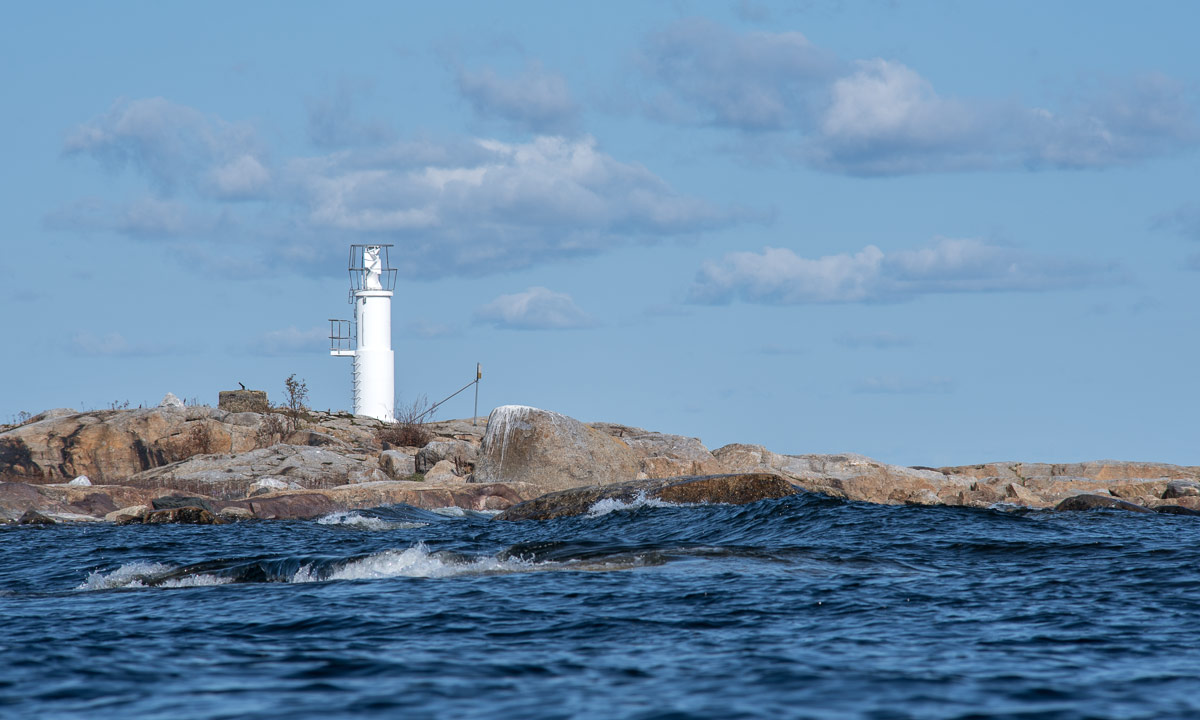
The calmness however was only temporary, because I kayaked along the outer coast of Kågnäshällan, where there are a lot of rocks and shallow areas – invitations for the waves to break. I went round the island, just focussing on the waves to come until I reached the sheltered bay on the land-facing side. On the outside I could hear the roar of a water scooter, at the horizon I could spot a white sail of a sailing boat – two very different ways to travel on water. My preference however is still the kayak.


After a yoghurt as a snack and remembering the last time I’ve been here six month ago I continued my kayak tour. To Kågnäshällan I had paddled quite directly over open sea, now I would follow the coast until I would be back again.
I passed Kågnäsudden, a fishing village, and a lot of summer cottages. Some people were working (mostly involving tools or vehicles with a motor), some were just sitting in front of their houses enjoying the warm and sunny weather. And warm it was, although some clouds were gathering. Since I left Kågnäshällan the sea was much calmer and I could take pictures from the kayak.


That made paddling much easier but also a bit more boring. It’s nice to have waves as long as you feel safe. Part of my safety was the drysuit that I put on when starting the tour. And a life vest of course, but that’s common sense and hardly mentionable.
Now I looked for the beach I use to bath sometimes but I just hopped over that very bay. What a pity! Anyway I found a nice replacement, a small and shallow sandy beach.
Lunchtime! The menu: Västerbotten cheese on crisp bread garnished with grapes. One of the ants liked the cheese, too and robbed a large piece. It dragged it over the beach that still was wet from last days rain until it got stuck.


After lunch break I continued paddling, passed the beach Harrbäckssand, the island Björkskär and then I could see on of the summer cottages, where my kayak uses to lie in summertime. One longer final spurt and I was back again, very glad that I could make this extraordinary fine summer kayak tour. Hopefully not the last for this season.


More and more I start to enjoy paddling in the waves. I guess I should learn how to use a kayak sometimes. Perhaps next year?
17.5 km / 3 hours 40 minutes plus a lot of breaks. That’s less than 5 km/h. It’s more leisure than sports.
According to my tracking app the elevation gain (and loss) was 287 meter. The waves?
I saw the eagle, I had a camera, but I didn’t take a photo. Why? Well, there’s a rule set for that, the Eagle’s legals:
(1) When you see me – the eagle – you will not have a camera with you (I had)
(2) But if you have, then you will not have the telephoto lens with you (I had)
(3) But if you have, then you will not have it mounted on the camera (that’s right)
(4) But if you have, then you will be busy with other things until I’m long away (true, I was struggling with the waves)

I found this shell of a cockle on the island Snusan. It lay on the rock. There are no cockles in the Bothnian Bay, this part of the Baltic Sea. The next place where you can find them is in Norway, 400 km away. How does this shell come to this place? I know that seagulls use to take shells in their beaks and let them fall down on rocks to crack the shell and get to the meat. But would a seagull transport it such a long distance? How? And why? A riddle that probably remains unsolved.