Ski tour in Sweden – from Vistas to Lisas Stuga to Civilisation

This article is part of the series “2024-02: Ski tour Sweden”.

Day 12 – 9 March – Vistas—Lisas Stuga

Today is the last day of Annika’s and my ski tour. From Vistas we will follow the valley Visttasvággi to Nikkaluokta, where I have parked my car eleven days ago. We will however only ski part of it because the distance is round about 35 km. Too long for us on a single day.

After breakfast and cleaning we say farewell to our friend Dirk who is warden at Vistas for a month and follow the snowmobile track that turns left right after we have crossed the river. I’m glad that we can follow it since it crosses the river Visttasjohka many times and I feel saver to follow the track than to find our own way.

At one place there are two tracks in parallel. One track leads into an open patch of water, we wisely choose the other one.

We head to a small, old hut called Lisas Stuga. We were told that it lies by the scooter track and so we do not really have so seek it but just continue following the snowmobile track. After 11.7 km of skiing we arrive there at 12:30. We are half an hour early and so is the snowmobile driver that is here to fetch us.

We have never been here before and we take a look into Lisas Stuga which is tiny. The beds are definitely not my size at all.

Then we pack pulka, skis and Annika’s backpack on the back and hop ourselves into the front of the snowmobile trailer. Off we go. Although it is quite warm – perhaps round zero – it is nice to have the down parka to warm us, because the trip takes a while.

It is more than 20 kilometres and even if we had the fitness to ski this on a single day we think it would be pretty boring. The mountains get rounder, the valley broader and then there is a large lake to cross. And another one. And another one. Annika recognises a cabin by one of lakes and she is right. It is the last lake and we are there. Nikkaluokta.

While Annika pays for the snowmobile transport I check that my car is still there (it is). And then we enjoy the features of civilisation. And it’s not only about ordering lunch in a restaurant. It is also about washing your hands under running water. Hot running water. With soap! And dry them with paper towels.

Thank you Annika for a wonderful ski tour – our longest so far. I enjoyed every single hour.

Some days later …

I am back in Tromsø for work. It is the Friday after our ski tour. In the night it started snowing and round about five cm of new powder snow cover the street, where I live. That’s round about twice as much snow fall as we had on our whole ski tour ;-)

Now it is the week before Easter holidays. What will it bring? Rain and the first flowers? Or more snow?

Ski tour in Sweden – Tjäktja—Alesjaure—Vistas

This article is part of the series “2024-02: Ski tour Sweden”.

Day 7 – 4 March – Tjäktja—Alesjaure

I may repeat myself but again we have sunny weather and blue sky at -6 °C. The only difference, it is windy today. It started last night when we were out to watch the Northern Lights and now the wind is blowing snow over the mountains and through the valley. While we are starting our tour we are having an impressive parhelion and a piece of halo right of the sun. I’m pretty sure that it isn’t created by stratospheric clouds but by the blowing snow.

We descend into the valley Alisvággi and leave the blowing wind behind us. Now sun feels warm but on the ice of the river system Aliseatnu the cold air still wins.

It takes some time until we can spot some of the cabins of Alesjaure. I can see them behind the rocky hill. No, they are on the rocky hill. I remember having tried to climb this turtle shell-like hill with skis and pulka years ago. I have learned my lesson, we walk up. And then we are welcomed by the warden with a hot and very sweet juice. We chat for a while (we have met once years before) and then Annika and I sit on the reindeer skin lying on the bench by the table and take an outdoor picnic. We may choose a room because we are first. We enjoy the weather, inside and outside. Later, after dinner we will head for the sauna.

I thought it would be extremely crowded here but we arrived on the right day. Yesterday: 40 guests. Tomorrow: 50 pre-booked guests. Today: 11 :-)

Day 8 – 5 March – Alesjaure—Vistas

Today is a special day. We do not take a break day, we continue to Vistas where our friend Dirk is currently warden. With 18 kilometres it is the longest distance on our ski tour this year and I was a bit afraid that it could get tough. Is there a track? How is the snow? Therefore I have urged Annika into raising up ridiculously early. We have the large kitchen for us while ptarmigans are hopping and clucking outside of the windows.

The sun starts to illuminate the highest mountain peaks, soon we will have sun as well. 7:05 (sic!) we start our tour.

… and get a little lost. We navigate by eye and sync the stones marked in red with the summer trail on our map. Anyhow it doesn’t fit. The GPS helps and now we know where we are. While finding a good route to get more north were we assume the correct route to be we realise that the summer markers are all over the place. Not helpful! Our assumption was correct, there is the unmarked winter trail. It is obvious, because now we see snow mobile tracks, ski tracks, pulka tracks, boot tracks, snowshoe tracks. I guess we won’t have any navigation challenges anymore today.

We cross the first lake Bajip Čazajávri and the second lake Vuolip Čazajávri, then we stand at the “abyss”. The steepest part of this declining slope falls 50 metres on 200 metres and we both decide to unmount the skis. Beside of a patch of soft snow the snow is good to walk on.

Now we are in the beginning of the valley Visttasvággi which will gently descend for the rest of today’s tour. And since it descend we leave the barren kalfjäll and meet the first birch trees, the first ones since a week.

The next hours we will ski in the sun. The hot sun. First I take off my jacket, then cap and gloves, then I roll up my sleeves. Finally I put on the shirt’s hood again, not for cold but for sun protection. Some photos from the tour:

Moose droppings are not the only animal tracks we see. There are the typical deep moose tracks, the smaller reindeer tracks, countless ptarmigan tracks (both feet and feathers) and a special track – like a fox on snow shoes. This was the description of the Sami on Sälka when he described wolverine tracks. The wolverine track follows the trail for a long time and watching it is pretty exciting.

The wolverine tracks are special, since these animals are rare. Only round about a thousand wolverines live in Scandinavia. But I love the ptarmigan prints as well. They often seem to tell stories.

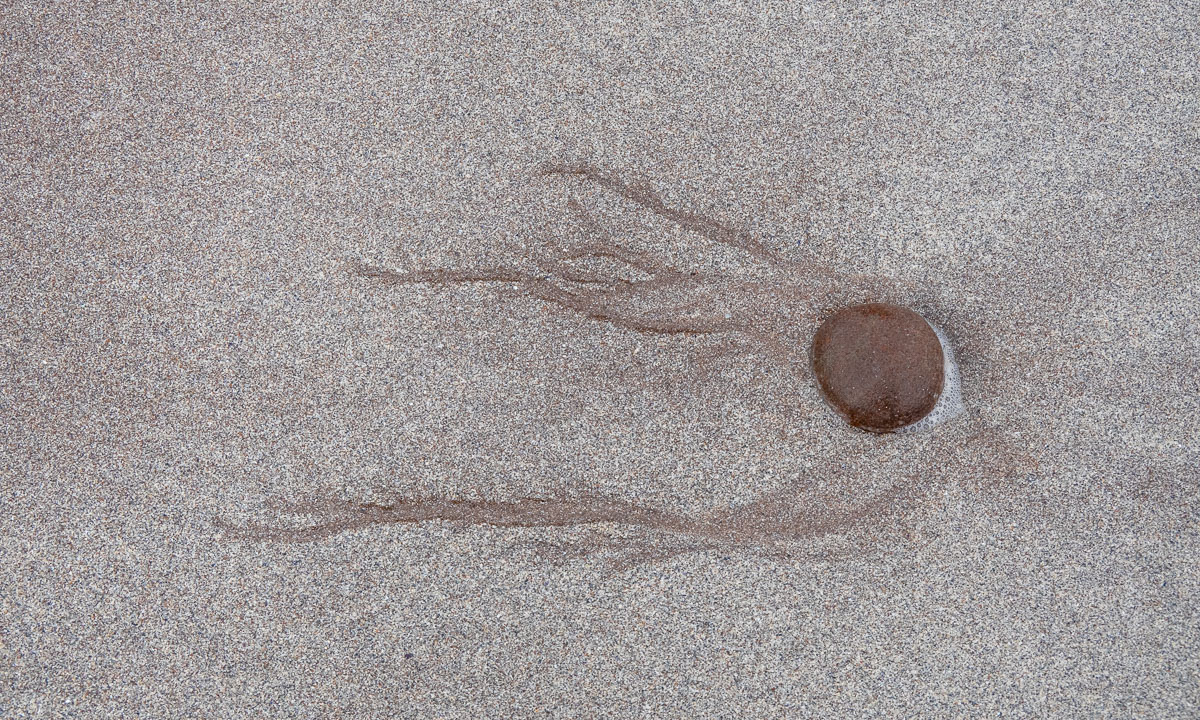
My titles: 1. Zen garden / 2. Hieroglyphs / 3. Salsa party

After some hours of sun we finally come into the shadow. Almost a relief. Now it is not far anymore to the Vistas cabin, which is not part of the famous Kungsleden trail since it lies in a side valley. Skiing there was much easier then I expected and we had a faster pace then on the preceding shorter distances.

Dirk has seen us already and welcomes us outside with two cups of hot juice. Later we get an incredible five star afternoon snack. It consists of two surprises. First surprise: We found cookies in the leftover food in the kitchen cupboard! Two sorts, one of them with chocolate. That has never ever happened to me before and I hardly can imagine why people should leave cookies behind. I won’t! Anyhow I’m grateful. Second surprise: Dirk does not only invites us to coffee but also to Christmas stollen, a traditional German Christmas cake. It is never too late to eat stollen. Thanks, Dirk, for sharing it with us!

After dinner – Dirk invited us again – I just walk around to take photos. A faint polar light can be seen but it is nothing compared with the last days, especially the night in Tjäktja.

Day 9 – 6 March – Vistas

Today is the fourth and last break day we take on this tour. Are we lazy? Yes and no. Annika is sawing logs, I am chopping the wood (not my best day though). I fetch water from the river by lowering a bucket from the bridge into a patch of open water. The ice on the river is not save. But we also sit outside reading and I am using the short period where the sun shines on the cabins (yes, another fine day) to take some photos.

Tomorrow we will ski to Nallo and stay there over night, then we will come back to Vistas.

Ski tour in Sweden – Sälka—Tjäktja

This article is part of the series “2024-02: Ski tour Sweden”.

Day 5 – 2 March – Sälka—Tjäktja

It is our second morning in Sälka. The night was quiet – no storm, no snow. That’s quite a bit of luck for the travel group that left pulkas and skis on the ground without even thinking about finding shelter for their equipment.

Today Annika and I will have a short distance to ski. It’s only twelve kilometres to Tjäktja but we have to cross the Tjäktjapasset which is pretty steep. 8:15 – we say goodbye to the warden and his friend and follow the undulating terrain north. We can already see the pass in the distance. It is still 8 km away.

The terrain is still undulating but it slowly changes. First we skied up and down, now we ski up or straight ahead, a sign that the terrain starts to rise.

Ah, I love my pulka. Most of the time I can pull it effortlessly over the hard snow, although there is a lot of food in it and a tripod and safety equipment and two down jackets and other clothes two sleeping backs and more. But when I have to climb steeper passages I realise that both my fitness and my strength could be better. So at the pass I have to take small breaks to catch my breath. The next photo is taken by Annika and long before the steep passage where we were too occupied to take any pictures.

Each of us climbs up in his/her own pace.

But then we are on the edge of a platform where I just must look back. 19 years ago on my very first ski tour I stood there and was completely flabbergasted when I looked into this valley Tjäktjavagge. And so it still is today. We stand there for a while before we continue skiing further up the pass.

Whew, that was exhausting, but now we are on 1100 m, the highest altitude on our tour. Time to take a rest at the shelter. No photos, just some tea and nuts before we continue. Now it only goes down, down, down and we remove our climbing skins. Soon Tjäktja comes into view. It is smaller then the other cabins on the Kungsleden. To our surprise we are the only guests tonight.

Day 6 – 3 March – Tjäktja

The weather on this tour has been extraordinary well and today we have another sunny day with blue sky. We are staying at Tjäktja and after breakfast we start our “duties”. The stugvärd (warden) is sawing logs, I am chopping wood. And then Annika and I take two empty canisters to fetch water. This means we have to go down to the frozen river where there is a hole and some tools to crush the ice. We have heard that the ice was very slippery and so we put on our spikes. Good choice.

The first container I pull up the snowy slope. Yes, it works but it is pretty exhausting. The other container Annika drags over the ice. I fetch the first container and we pull both back to the cabin. Well – pull … . It is a bit like walking puppy dogs. Twenty kilo puppy dogs. The containers stay behind, hurry ahead, bump into each other and then leave the path again. But finally we “walked” them home and have 40 litres of fresh and ice cold water from the river Čeavččanjira.

I go down to the river again to take some photos. I like the bridge and the icy area beneath.

But what I really love is the huge snow drift hanging there near the now frozen and invisible waterfall. I crawl in more and more until I can make the last of the three photos from my private “snow cave”.

Resting days are made for – well – resting. We are reading and taking a nap while other guests arrive. Slowly the sun is setting and the colours on the mountains go pink.

Time to cook and eat something. Right after dinner a beautiful polar lights have formed, although the sky is still kind of blue and not black yet. What a luxury to see it so early.

The northern lights are lasting for hours and are everywhere. Annika and I are standing there for a long time together with two people from Switzerland. Every now and then I leave to take photos. And more photos. It is an incredible experience to see the aurora far away from the light pollution of the cities. This is an extremely beautiful moment and this evening which marks the first half of our ski tour is a perfect end of the day.

Yes. The northern light continues, but the photographer has to catch some sleep. God natt. Good night.

Autumn tour to the glacier Steindalsbreen

After being abroad in Germany, “home home” in Sweden and on vacation in the Netherlands for almost a month I have returned to Tromsø, my “work home” one week ago. Time to work again for the Norwegian Polar Institute but not only that …

Some days ago my colleague Marika asked me if we should go out for a hike to the glacier Steindalsbreen in the weekend. I knew the place from hearsay but never have been there. I gladly accepted – I like hiking with good company. Yesterday on Sunday we met at 7 o’clock and off we went. First by car.

Car trip

Steindalen is on the Lyngen peninsula and round about 100 km away. According to Google it takes 100 minutes but we stopped several times, either to take pictures of the reflections in the fjord or the curious fox beside the road.

Through the forest

After the car was parked we started our tourat 9:25. The birch and alder trees were clad in autumnal colours. The path led westwards through the forest along a small mountain river.

To the cabin

After the path going up and down it led nearer to the river. We passed some moraines – witnessed from the ice age – and spotted a waterfall falling vertically down from a mountain. Then the cabin Steindalshytte came into view. There is a wooden bridge to cross one of the rivers.

Through the U-shaped valley

We followed an inflow of the stream and soon the valley opened more and more. And there it was – still in the distance – the glacier!

It gets rocky

The path went further up and the ground started go get rockier and we left the delta like wetlands behind. But still there were many crouching plants present, many of them in the brightest autumnal colours.

Approaching the glacier

A hill and the glacier Steindalsbreen came in full view, another hill also the glacial lake in the front. Quite depressing were the signs that marked the retreat of the glacier. Oh – so many hundred metres in so few years ;-(

Nearer and nearer …

The first photos Marika and I took from the edge of the glacial lake. Then we followed a path to the right that brought us nearer to the ice. Here we walked on gravel covered ice. I found a hole, perhaps 80 cm in diameter and 150 cm deep.

On the mud flats

As usual I hiked with rubber boots and so I could walk on the sandy mudflats right in front of the glacier. Oh, so beautiful the turquoise blocks of ice!

Mud, ice, and water

I also took some photos of the ground. Was it sand? Hard mud? Ice? Sometimes probably all the three.

Then I looked back to the lake. Hard to imagine that we hiked through autumnal forests some hours ago. This landscape looks eternal somehow although it is the opposite: very fragile and threatened by the global warming.

Heading back

After a meal break by a large rock it was time to head back. The times of midnight sun and bright nights are over and at 7 o’clock in the evening it would be dark. Just some more photos from our way back.

After round eight hours we were back at my car. What I great tour!

Takk for turen, Marika!

Everything will be fine

This summer vacation with Annika had a clear photographical focus: showing the bathing areas we or I hopped in. It was ponds, lakes and rivers where we enjoyed bathing and swimming on our one week trip through northern Sweden and Finland.

The places and bodies of waters were:

Bygdeträsk (Göksjön) — Mårdseleforsen (Vindelälven) — Harads (Luleälven) — Tolkibadet — Harriniva (Etuväylä/Torne älv) — Kittilä (Ounasjoki) — Aarniluosto (Aarnilampi) — 2× Ylitornio (Etuväylä/Torne älv) — Hovlösjön.

And the motto? Allt kommer att bli bra. Everything will be fine.

Taking orthophotos on Kvaløya

That’s me, nine days ago, near a parking place by the lake Finnvikvatnet on the island Kvaløya.

I just got a drone from the Norwegian Polar Institute, a DJI Mavic Pro 2. Since it is forbidden to fly a drone in Tromsø (too near to the airport) I chose a place on Kvaløya to check out the drone and practise a bit.

What you may expect from drone flying is photos like this:

What I actually did that day was taking a bunch of photos like these:

Back at home let the computer do some heavy work. That’s the result:

What I wanted to achieve is creating a so-called orthophoto. That is a stitched image that also contains geographical information. You need quite a lot of photos to get good results. In the map above it is only 9 photos and 11 photos in two distinct groups.

I used two softwares: First OpenDroneMap to create the orthophoto and then QGIS, an open source Geographic Information System, to present the orthophoto in a geographical context.

This afternoon I took a trip to Kvaløya again, this time to the way to Sommarøya and stopped by the lake Kattfjordvatnet. Here I pulled up the drone to an altitude of 80 metres and tried to navigate a rectangular zig-zag pattern with a lot of overlapping between the images. Beside of the fact, that the images are underexposed (and I was too lazy to correct them) I’m quite content with the result. The first image is an oblique shot, the second image is an orthophoto calculated from about 80 images and then placed into QGIS.

Plan for the next two weeks: getting more practise!

Jämtland tour 22 – the landscapes

This article is part of the series “2022-08: Jämtland and Trøndelag”.

I’m sitting in the train to Umeå. We have a longer stop in Kiruna where the train changes direction. The other trains standing here are cargo trains that transport iron ore from the mines around. Temperature is -10 °C or lower and there are some centimetres of snow covering the ground. Winter finally has arrived in the Swedish fjäll.

I’m so glad to arrive home in Obbola tonight. I haven’t been there since July. Now I’ll stay until Christmas working from home for the Norwegian Polar Institute.

I’ve been however in Sweden in August, too. Not home but for a hiking tour with my sister and family together with my wife Annika.

This reminds me that I almost forgot to publish the last blog article about our hiking trip in the Jämtland. It will take more than seven more hours until I arrive in Umeå, so there’s plenty of time to start blogging now, as long as the mobile net allows. Earlier I’ve written about the cabins, some day trips, the trail and way marks. Today I want to show some photos of the landscape. Let’s go back three months in time. It is late summer in Sweden.

What I love about the Swedish mountains – the fjäll – is its variety. Not only in weather but also in landscapes. In the lowlands there are forests – mostly birch forests – but all Swedish cabins we visited lie above the tree line and here you have a wide view of the mountains, small and large lakes, rivers and streams, bogs and stone deserts. Let’s have a look.

15 August, our first day. The landscape is rising and we have left the forest behind. The trail between Storlien and Blåhammaren leads over many swamps and bogs and is wet and muddy.

16 August. We leave Jämtland and cross the border to Norway. The cabin Storerikvollen lies quite low and we descend through forests of crooked birches.

18 August. Still in Norway we take a resting day at Nedalshytta. I talk a walk along the lake Nesjøen. The water level is extremely low and so I can cross some mud fields that normally are under water. This landscape looks a bit hostile and is not typical for this region.

19 August. Again the terrain is wet and has many small lakes and water puddles. The mountains are hidden behind low hanging clouds.

We start hiking up the Ekorrpasset. Looking back we witness one of the most unphotographable landscapes I know. In reality it is an impressive view of a hilly terrain with uncountable lakes, ponds, streams and puddles. The photos however always look pale, blurred and boring.

Let’s not look back but ahead. The peak of the pass is more than 1300 metres high. That may not be much in the alps, but in these latitudes only few plant can survive these altitudes and so we walk through a desert of stones and rocks. Hidden in between some moss and the flower Ranunculus glacialis.

And let’s look aside. We pass the mighty Sylarna massif (1574 m) with its glaciers and rugged rocks. Impressive.

The Sylarna cabins lie lower. Grass and heather cover the ground presenting the landscape much more mellow, especially in the soft colours of dusk.

20 August. We leave Sylarna and continue to Gåsen. For that we have to hike through the valley of the river Handölan. Here we meet birch forests again. And some quite impressive rapids.

22 August. After a resting day in Gåsen we continue to Helags. The landscape is wide and broad. And where it is not too wet there are surely some reindeer around.

24 August. We are on our way to Fältjägaren, the last cabin of our tour. The weather is sunny and we are accompanied by the mountain Predikstolen (the pulpit) which shows itself from some of its many beautiful sides.

In the evening we stand outside watching the sunset and the incoming night. Soon the lakes are the only part of the landscapes visible. The rest is almost black.

25 August. Our last hiking day. On the other side of the valley we can see the gaps in the forests covering the mountain slopes. These are the ski slopes of Ramundberget where we’ll take the bus to Östersund. Back to civilisation.

And back to the present. I’m still sitting in the train. Where am I? Ah – half an hour left to Gällivare. Now I’m longing for a cold and snowy winter. But then I want to change ski boots with rubber boots and go for a hike again.

10 days in Scotland

This article is part of the series “2022-10: Autumn in Scotland”.

It has been years, since Annika and I were on holiday outside of Fennoscandia. This October we enjoyed a ten day journey to Scotland from which I just arrived in Tromsø yesterday.

For this article I chose 2 photos for each day. Some more articles will follow later.

6 October – Edinburgh

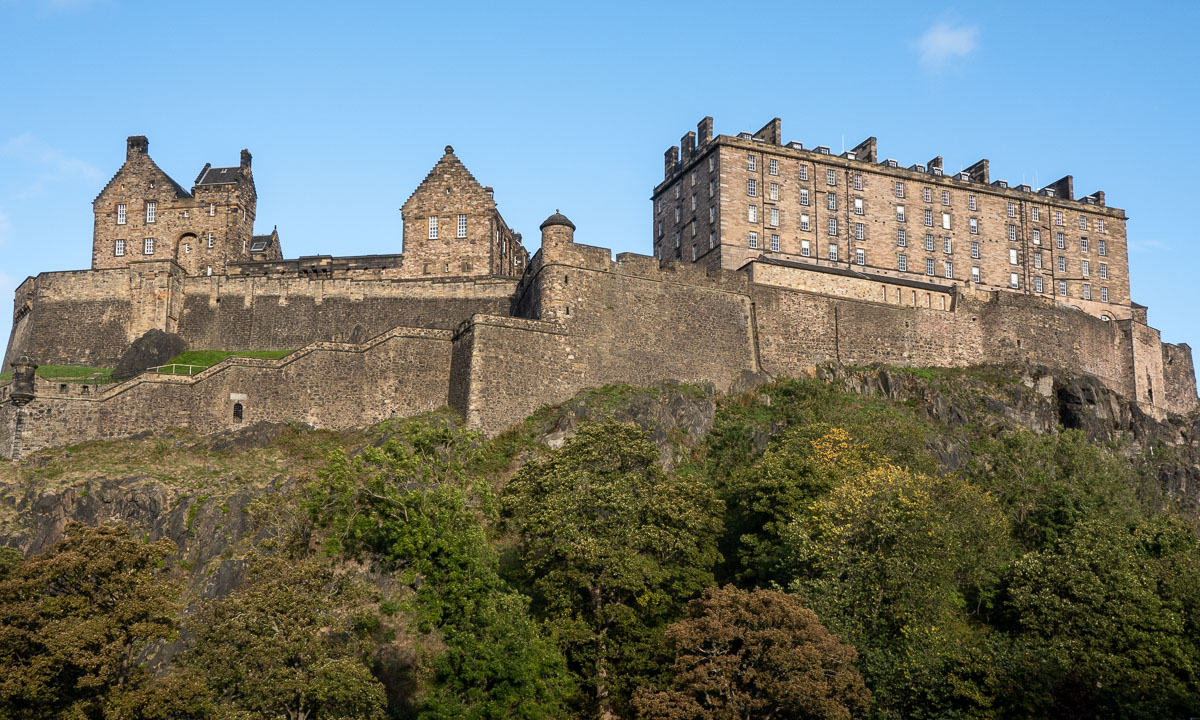
I landed in the late morning and have the rest of the day strolling through Edinburgh. Blue sky – so it can actual stop raining in  Edinburgh ;-). In the evening I wait for Annika who is taking the tram from the airport. Now it is raining. Finally we are together.

7 October – travelling to Ullapool

We have pre-booked train tickets to Inverness where we will spend three hours before taking the coach to Ullapool. Well, in theory. The trains do not go the whole way due to heavy rain flooding. The rest is operated by replacement buses. So much to rain in Scotland. In Inverness we catch the connecting coach to Ullapool and have even time for a pizza.

8 October – hiking in Ullapool

After two travel days we want to be outdoors and look for the hiking trail to the hill Meall Mor after a hand-drawn sketch. We find it. From the top we have a view to the town, the hills and mountains in sun, clouds and rain.

9 October – taking the ferry to Lewis

After breakfast we take our backpacks through rain and heavy winds to the ferry terminal just to learn that the ferry has been cancelled because of the gusts on the Minch – the straight between Ullapool and the Isle of Lewis. Luckily the afternoon ferry runs according schedule and we arrive in Stornoway at nine o’clock. Scotland premiere: We hire a car. Annika is driving. Left-hand traffic in darkness!

10 October – exploring Lewis

We explore Lewis by car. Great that Annika is brave enough to drive in Scotland (I’m not). Read the article The west coast of Isle of Lewis about this day.

11 October – Peat bogs and Northern Gannets

From Gearrannan Village we take a small way back to Stornoway. In the bogs you can see traces of peat mining. We give back the car, take the ferry back and are watching the elegant aerial manoeuvres of the Northern Gannets. In Ullapool we receive another car that we have hired for the next two days.

12 October – exploring Assynt

We start exploring Assynt, the region north of Ullapool. Read the article Stac Pollaidh about this day.

13 October – taking a bath

Finally – our first bath! At Achmelvich beach. I will write more about this day later …

14 October – travelling to Edinburgh

It is time to give back the rental car and travel back to Edinburgh. First by coach, then by train. This travel confirms my theory that Scottish coaches and trains are designed solely for transport, not for comfort.

15 October – flying back

Short ones, long ones – all holidays comes to their end. Annika takes me to the tram, again it’s me travelling first. What a wonderful holiday. Thank you, Annika!