From Obbola to Tromsø – home home and work home

Thursday, 20 March – Obbola

Annika and I are in Obbola, my “home home”. In the morning we get visitors. Three deer stand in our garden – always alert. Are they happy, that much of the snow is gone?

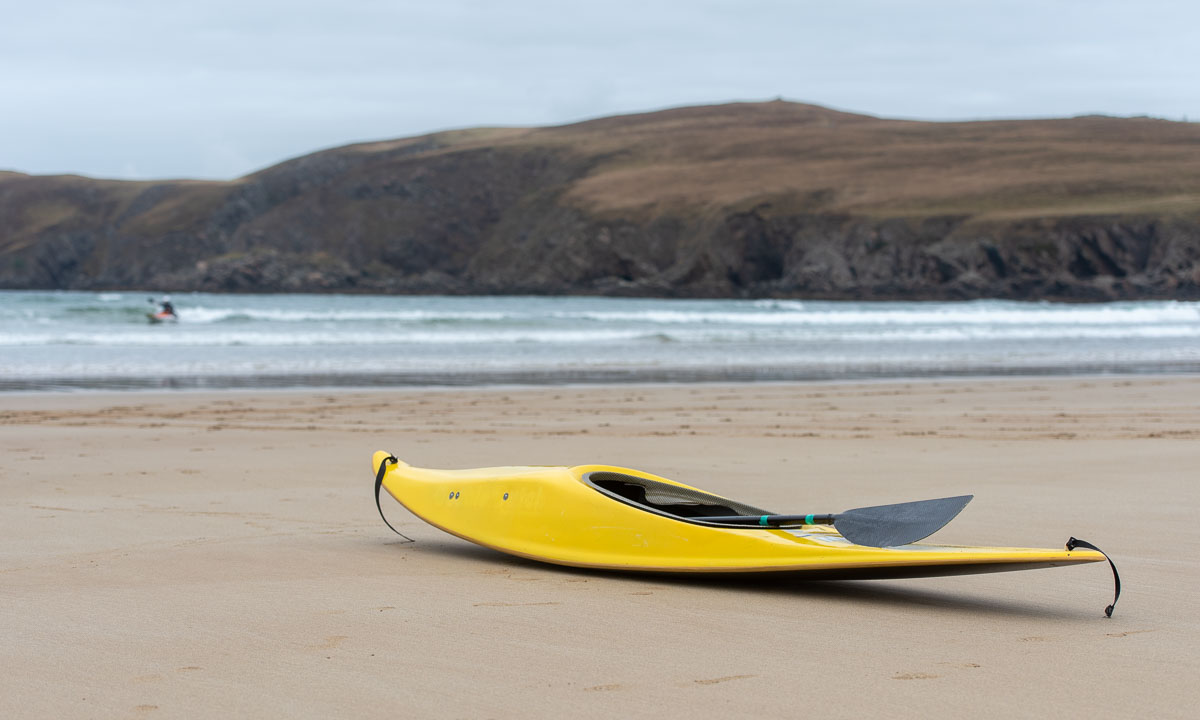
In my lunch break I am kayaking round the island Bredskär. That’s just 3 km. There is still some ice round the rocks at the shore, but much snow and ice has melted away the last weeks. What a warm winter.

Friday, 21 March

Annika and I take the car to Tromsø. We will make a stopover in Jokkmokk, because the total distance is almost 1000 km. Hejdå home home!

In warm and sunny weather we head northwards to Piteå and then northwest to Jokkmokk. Now we are north of the Polar Circle.

In Jokkmokk we meet a good friend and take a walk round the lake Talvatissjön. Around the sun a halo appears .

Saturday, 22 March

After a good sleep in the hostel Åsgård Annika and I continue our car trip. Gällivare, Kiruna, Abisko. Torneträsk – the 6th largest lake in Sweden – is still completely frozen. Good for recreation such as skiing.

Parts of the road were closed some days ago. You can still see some remains of the snow storm.

Some weeks ago it would have been impossible to drive from Jokkmokk to Tromsø in daylight. Anyhow two days ago astronomical spring has started and the days are as long as everywhere. After hours of driving the sun is low but visible. It illuminates the beautiful clouds. And then we arrive at our apartment in Tromsø, my “work home”.

Sunday, 23 March

On Sunday the weather gets nasty. Max temperature: +9 °C and wind gusts up to 23.5 m/s. Annika and I take a promenade anyhow. With spiked shoes because some of the ways are just bare, wet ice and the friction is next to zero. We arrive at home before the rain. Good luck.

Monday, 24 March

On my way to work I spot the first spring flowers in front of the Tromsø Cathedral. I could believe in spring …

Tuesday, 25 March

… but do know the forecast and it is correct: Snow, snow, snow on the next day. So it looks like in the morning outside of the apartment …

… and so in the afternoon, when I walked home.

So we did not solely travelled between countries but also between seasons. Anyhow I hope for some more winter days (or weeks), before my seasonal clock will jump to spring mode. Perhaps in mid-May?


Kayak – 3rd try and success

It’s less the temperature than the wind who makes the sea ice on the Baltic Sea vanish. Although we had -10 °C this morning the sea was more or less open. Time for a slightly longer kayak tour in the afternoon under a blue sky enjoying the calm weather.

But still there is some ice shield attached to the coast. As the days before I push myself forward using ice spikes.

First the ice holds then I crash through. It takes me 10 minutes to cross 100 metres of ice until I reach open water. Yay!

I decide to paddle round the islands Obbolstenarna. There is hardly any ice left on the way there but at the eastern shore it still looks pretty wintry.

The western part of  Obbolstenarna however looks like another season. Is winter over now? Anyhow, time to kayak home.

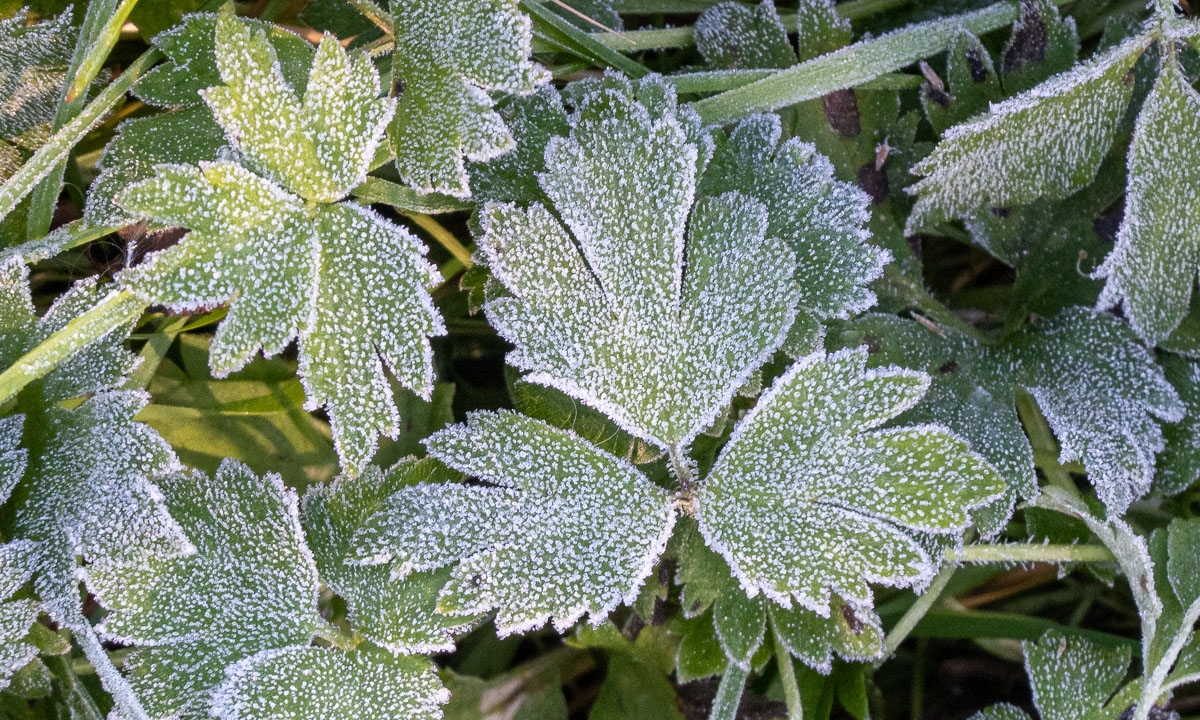
If you look carefully at the photo with the red bow of my kayak you see that the water is very smooth but with some crystal like structures. Let’s take a close look:

Despite of the sun air temperature is still below zero. Not only the sea water on the kayak freezes but new ice is also formed on the water surface. It is thin and fragile but so soft, that the smooth waves do not break it. An even closer photo (heavily edited):

Through this smooth though icy water I paddle back until I reach the ice edge again. I choose another place, take a run-up and paddle onto the ice. I’m lucky. This ice is more stable and I do not break through. I slide back to the shore. Meanwhile the sun is already low. I was slower than planned, because it took some time to take all these photos.


Back in Obbola – opening the kayak season

Friday

Two days ago Annika and I returned from our Finnmark and Finland journey. Just north of Umeå there was a low layer of strange clouds. Any of you who knows what kind of clouds this is?

Saturday

We are back home in Obbola in Sweden. The sky is clear and blue. In wintertime this often means that it can be pretty cold outside. Instead we had up to +8 or +9 °C. What a strange winter.

The wind is strong. The waves have already crushed the ice floes. In the afternoon the floating ice has been blown away into the open sea.

There is still some snow around but parts of the ground is free of snow. That‘s early for the season. And so is the arrival of the first whooper swans.

Sunday

The wind has calmed down and so have the waves. Time to fetch the kayak from the garage and open the kayak season. While there was not much of ice left at the shores of Obbola and the island Bredskär there was another highlight today: A 360°C halo round the sun.

Next week?

It looks like we expect colder temperatures, sun and calm weather. I hope, I have more opportunities to do some kayaking.

Short days in Obbola

17 December

Clouds are moving eastwards where they block the low hanging sun, but here and there the sun peeks through holes giving the whole thing a dramatic touch.

18 December

It is chilly and ice fog hovers over the sea. I take a promenade by the icy coast.

20 December

It is quite clear and not too windy at temperatures round -12 °C. Yesterday I dug out the kayak from the snow, today it is time to take a tour. It’s a short but a beautiful one.

After the tour the line for the kayak rudder was frozen. The kayak is a bit too large for taking it in so I had to improvise a bit. Well, it worked.

21 December (a.k.a. today)

Today is the day of winter solstice. We could see the sun rise at 09:25 while having a comfortable Sunday morning breakfast. Today’s motive: the rowan tree under which Annika and I got married in 2020, taken through the windows of our living room.

Home in Obbola – what to do outside

After quite some travelling in the last weeks I finally arrived in Obbola, Sweden, my “home home” yesterday night. Today it started snowing a bit and I wanted to go outside to take a break from home office.

I went to the coast by our house where parts of the bay were frozen.

I haven’t been running for four weeks, so let’s go …

… running!

I put on my running shoes from Icebug. They have so many spikes that you can run on bare ice. I start on the doorstep and turn to take the trail called Spåret. This will give me a lap of round 5 km. But it was not so easy as expected. A lot of trees lay across the trail. A reminder of the storm three weeks ago.

I can go round these obstacles but soon give up running for another reason. Some parts of Spåret are bare ice but the thin layer of fresh snow glues itself to the soles of my running shoes making the spikes useless. After I slid several times I decide to stop running and go home. Total running distance: 0.78 km :-D

When running does not work, let’s go …

… kayaking!

This takes a bit more preparation. But finally I have found the paddle and the waterproof bag for the mobile phone and am dressed in my survival suit – Teletubbie style.

I drag the kayak to the shore and then through the shallow water. Slushy ice is swimming on the sea surface. To my surprise another layer of ice is grounded.

Then I walk on the ice. Will it hold or break? I don’t know yet, but I do know, the water is shallow here.

The ice holds. When the icy layer gets thinner and softer I enter the kayak. Sometimes I use my hands to push myself forward, sometimes ice claws, sometimes the paddle. Anyhow it seems to take ages until I finally reach the open sea.

To my surprise I meet two other kayakers. That have never happened to my here before. They found a better place to set in their kayaks. Will winter paddling get popular here?

Anyhow, I haven’t planned a longer kayak tour and so I only round the small islet Lillskär and then head back to shore. First there are soft ice floes that I can paddle through.

Then I reach some fast ice. It is too thick for paddling and too thin to bear the weight of the kayak with me inside. I exit the kayak and “walk” it while breaking the ice with my knees. The ice gets thicker and I can kneel on it without breaking through. Now I crawl on my knees for a while until I can finally stand up and drag the kayak ashore. On the photo you can see the different stages.

Finally I’m ashore again. Total paddling distance: 0.91 km. :-D :-D

But it was fun!

Norddeich/Norden

Annika and I were in Norddeich, the coastal district of Norden (“north”) in East Friesland, Germany the last days. The word “Norden” definitely qualifies that place for getting an article in my blog way-up-north.

Many streets of Norddeich have the theme “north” in their names. Am Nordkap (At the North Cape), Nordlandstraße (Northland street), Nordlichtstraße (Northern Light Street). Guess what, I like the names! Partly from my Scandinavian point of view, partly because I am from Northern Germany and therefore a “Nordlicht” (a nickname for people from Northern Germany) by myself.

Some photos from Tuesday, 10 September, the day of our arrival:

Yesterday on Wednesday, 11 September Annika and I rented e-bikes and took a cycle tour to Greetsiel. The weather was quite nasty for early September: strong gusty winds, hailstorms, cloudbursts and even a thunderstorm. And all that at temperatures around 10–11 °C. Kudos for the e-bikes! Without electrical motor support we wouldn’t have managed it against the wind.

It’s a long way to travel to Norden from our places. Round about 2800 km from Tromsø, my “work home” and still 1900 km from Obbola, my “home home”. But I think, I’ll visit Norddeich again some other time.

Fram Strait 2024 – returning to Svalbard

This article is part of the series “2024-08: Fram Strait cruise KPH”.

26 August 2024

It is the 14th day of our Fram Strait cruise. We are on our way back to Longyearbyen on Svalbard. After many grey and foggy days we finally have got nicer weather since yesterday and so I am standing on the “heli deck” looking for animals to take pictures of. I cannot see any whales and the few puffins that I spot are too fast and too far away. So I take photos of the seagulls that effortlessly accompany the ship.

Since today it is possible to see land again in the distance. Not Greenland like a week ago but Prins Karls Forland, an elongated island which is the westernmost island of  the Svalbard archipelago.

I have gone inside again until I see a message popping on our WhatsApp group:

Dolphins just in front of the ship now

I grab my photo bag, hurry to the heli deck again and see a school of dolphins on the starboard side. Most of them swim underwater but again and again a group of these beautiful sea mammals come out of the water. With my big telephoto lens I try to take pictures of the dolphins. The result: a lot of pictures of sea water. They are just too fast for me and my lens. But I’m lucky. Once I manage to guess correctly and get a photo of two dolphins (and a third one immersed).

27 August 2024

Originally we wanted to reach Svalbard one day later but a lot of things have been done faster without the presence of sea ice. Mooring recoveries are simpler, CTD casts are easier and so is the ship’s navigation – no search for leads needed. Therefore we will arrive one day earlier, which is today. While I’m having breakfast we are already in the fjord Isfjorden. At 9 o’clock we have arrived in the city port of Longyearbyen.

After lunch I leave the ship and stand on land again. I walk into town and go to Svalbardbutikken, the local supermarket. We still live on board and get our meals there, but I want to have chocolate! And I get it.

28 August 2024

We all have stayed on board overnight as well. The cabins are free (and paid) and so there is no need to find some expensive last-minute accommodation in Longyearbyen.

My plane to Tromsø will depart at 14:40. I interrupt my work and leave the ship once more to take some pictures. It is sunny again but Svalbard looks pretty brown and dirty in summer.

Then it was time to say good bye to the crew and the other participants. Car to the airport – checking in the baggage – security. And some hours later I sat in the airplane to Tromsø now leaving also Svalbard and the research ice breaker Kronprins Haakon behind.

When shall we three meet again?
In thunder, lightning, or in rain?
When the data work is done,
When the budget’s lost or won …

Hydrographical measurements in the Fram Strait

This article is part of the series “2024-08: Fram Strait cruise KPH”.

You see the map with Greenland to the left and Svalbard to the right? And all these orange dots?

Each of the dots stands for a cast where an instrument or a set of instruments was lowered into the water. As you see it was quite a lot of casts that the researchers and the crew of the icebreaker Kronprins Haakon conducted in the Fram Strait between 14° W and 10° E within two weeks.

Let’s start with the most prominent hydrographical instrument, the CTD.

CTD stands for Conductivity, Temperature, and Depth. It is a group of instruments to measure these important water properties. The conductivity is directly related to salinity. While the CTD is lowered these three properties are measured continuously which results in so-called “profiles” that show the salinity and the temperature per depth. With these properties oceanographers get the first insight in what kind of sea water it may be. It is Atlantic? Or Arctic? But there are also other sensors mounted to the CTD to measure properties such as fluorescence or current velocities.

Also part of a CTD is the rosette of “Niskin bottles”. These bottles can be opened and closed remotely underwater to fetch sea water in defined depths on the way up. The large CTD has 24 of these bottles. When it is on board again and stands on the euro-pallet in the main hangar on deck 3 then it is time to fetch water samples from the Niskin bottles.

Some of the samples will be processed on land after the cruise but many samples are processed directly. Two examples:

Anne-Marie Wefing (NPI) uses the Winkler titration to measure the concentration of dissolved oxygen in the sea water. My chemical knowledge is too weak to explain this process. For the chemists amongst you I refer to the Wikipedia article for details.

Daniel Koestner (University of Bergen) leads water through different types of filters. The water can pass, particles exceeding a certain size will remain in the filter. While the deeper sea water is quite pure the samples from the upper water column contain more particles. The difference is visible by the naked eye but only land-bound lab work will give quantifiable results. Some of the filters can be transported at room temperature, those for chlorophyll have been frozen at -80 °C.

Daniel Koestner is also part of the team that measures particle concentrations directly in the water using a laser. This is how the instrument of the “optical cast” looks like:

The CTD is a heavy-duty instrument and could be used more or less all the time. Other instruments such as the laser or the MSS are much more fragile and the usage had to be skipped when the waves were to high. Too big the risk, that an expensive instrument would crash. But as far as I know everything has gone well!

Some cruise stats:

CTD casts 73
Optical casts 44
MSS casts 27
Total casts 144

While I have the luxury to work whenever I want the sheer amount of casts has led to a huge amount of lab work and some teams have been working in shifts, because casts have been conducted day and night.

Disclaimer: This is a private blog. I try to stick to the facts as best as I can. However, this article has not been proofread by anyone, so some facts may be slightly inaccurate or even plainly wrong. If you find an error, please let me know and I will correct it. Thank you!

Ice station two and icebergs

This article is part of the series “2024-08: Fram Strait cruise KPH”.

When I woke up in the morning of the 20th of August my first thought was: will there be another ice station? I peeked through the port hole and – yes – we were at least in the ice. From the helicopter deck it looked like this:

Round nine o’clock the ice station is started. Eleven people are involved – four scientists and students actually doing science, a polar bear guard on the ice and two times three bridge watches taking turns to observe everything from above. I take the morning shifts, the weather is not good for drone flying anyhow. Yesterday we had a lot of polar bears on the ice, today it is quiet. It is more the fog that could lead to problems, but even the visibility is ok. Good luck.

In the afternoon it has become too windy to fly the drone. I get onto the ice anyhow to take photos for outreach. Time to show people doing research on the ice. It is a lot of manual work. Carrying things down the gangway, pulling sledges, using drills with coring equipment, a saw to slice the ice cores, a digital thermometer and for a lot of data – paper and pencil. This may sound antiquated but writing down notes works often works better in harsh environments than using electronics.

Later, just before dinner people who never have stood on the sea ice before become an opportunity to do that. I was on the sea ice three times since yesterday, so I volunteer for bridge watch again. The weather has become more and more nasty. It is raining and wind is blowing with temperatures round +1 °C. So it looks from the bridge:

At 17:30 (dinner time) the second ice station is finished. Now we will head back more or less the same way we came from. I take some photos from the helicopter deck, especially from the turquoise coloured melt ponds that I have never seen before like that.

At 9 o’clock we reach the ice edge and sail through the open sea again. Time to say farewell. I do not know when I’ll may see my beloved sea ice again.

Anyhow one thing was different than on our way there some days ago: icebergs are drifting on the sea. We see a lot of them on this and the following day. Some of them are small or medium sized …

… one of them was huge. I am able to take a drone photo from above. I estimate that the cliff to the right has a height of 10-15 metres.

There was one difference between the two ice stations. It is visible on the map:

While the 2nd ice station started and ended at the same place, the 1st ice station didn’t. This is because the 1st station was on drift ice while the 2nd station was on fast ice. Fast ice is either grounded or it is connected to land, in this case Greenland.

Although Greenland with islands was more than 50 km away it was visible on the 19th of August. I was really surprised and also happy – I have never seen Greenland before. And I managed to take some blurred photos (cropped image, 600 mm focal length).

Feels like I should visit that place sometimes …

Ice station one and polar bears

This article is part of the series “2024-08: Fram Strait cruise KPH”.

For days we wondered, will we ever have an ice station on this Fram Strait cruise in open water? But then at 14° 21′ W, 79° 02′ N we found a large ice floe to work on. Shortly after nine o’clock I finally was on the ice again!

But I wasn’t here to take snapshots but to fly drone and to take a lot of photos from above.

I had issues with the drone from the Polar Institute, so I fetched my private one. First I had to calibrate some sensors, especially the compass and then I put the drone into the air and made some photos to check the image exposure. Ok, looks pretty good.

Now I flew the drone in a rectangular zig-zag pattern. That’s a bit tricky, because the drone is positioned by GPS while the ice flow is drifting. Since I wasn’t sure if I covered every part of the ice station I flew a second round. The single photos look like these:

Before going on board I took a couple of photos on the ice.

On board I uploaded the photos first into my laptop and then into the program OpenDroneMap that would stitch the photos together and add geographical information. And then it was 11:30, lunch time!

After lunch I went up on the bridge on deck 8. Together with two others I was observing my segment checking for polar bears, cracks in the ice and weather. There were several polar bears around but all were further away. I also had a VHF to keep track on the people on the ice. I had two shifts, 12:30–13:15 and 14:00–14:45.

After my second shift I got to know that we had a polar bear in front of the ship. So one of the bears that we had observed for hours had finally decided to pay us a visit. That meant of course that all people had to leave the ice.  On the helicopter deck many people were around to watch the bear.

And there it was – a surprisingly white curious fellow that examined our ship. Did it smell the cake?

In the meanwhile OpenDroneMap finally created a properly rendered orthophoto. I was relieved because I was not sure if my drone photos were sufficient. This is an excerpt:

In the afternoon I had fixed the issue with the other drone. At 19:00 I would have another opportunity to go onto the ice to re-calibrate and test it. Our ice visit was however postponed because another polar bear was paying a visit. It looked much thinner than the other one, but on the other side the fur was wet. So photo shooting again. It surrounded the ship and then stopped, laid down onto its stomach, pushed itself forward with its furry feet and  then rolled in the snow before it continued its walk.

We had to wait some time but then the ice was clear and I had time to test the drone on the ice. It worked. Hopefully I would be able to use it on the second ice station on the next day but the forecast does not look promising. Too much wind.

I shot a drone selfie and then I was ready to go on board. I just had to put my hand into one of the polar bear paw prints for size comparison.

The bear won!