Norrbyskär – Sweden in a nutshell

Prologue

It’s a bit funny. Although the internet weather forecast rarely correspondents with reality, I check it anyway. Then I at least try to ignore it.

Last sunday, when Annika and I considered what to do, the forecast promised sun for two or three hours, but rain showers for the rest of the day. We decided to take the car to Norrbyn 40 km south from Umeå and the 11:30-ferry to the island Norrbyskär. If it really rained, I could at least try out my brand new rain jacket.

Sweden in a nutshell

11:20 we were on board of the ferry Norrbyskär and soon the little ship put out to sea. The trip didn’t take long, it’s only 2 km to the island. I just love boat trips, it always feels like holidays when you stand on the ship’s bow, feel the airflow and look at the blue sea.

Norrbyskär consists of several islands connected with dams and as we experienced later even another possibility to cross the water. We went ashore with the other guests and headed left on the island Stuguskär. The way is framed by quite large brick houses. Most houses in Northern Sweden are made of wood and for us the brick houses looked more like a small coastal town in Germany, not a North Swedish island. The broad way ended soon, but a path continued through the forest and led us to a tiny bay. The single summer house standing on stilts brought us back to Sweden: it was wooden and painted red.

We continued to a place called Calmarn, another part of the island. The soil along the bay was brown and very bouncy. I had to look twice until I realised that the soil was neither sand nor mud. As many other places Norrbyskär had a huge sawmill in former times and this bay was completely covered with a thick layer of sawdust that gave you the feeling of crossing a huge trampoline when you walked on it.

We continued the path and entered the forest again. Soon we stood on the rocky north point of Calmarn, where we took the first rest. We sat down on a big rock, looked at the sea and enjoyed the blue sky and the warm sun. No rain in sight yet.

Now we went back the whole way until we almost were at the shipping pier again but continued the main road that connects the islands Stuguskär and Långgrundet. The street ends at a place surrounded by two white wooden houses and a bell tower. The entrance of the main building was labelled sommarkyrka – “summer church”. The ferries that connect the island with the mainland are going only between late april and early october – hardly more than 5 months, so probably this church is only active these months.

We went around the church where we found the Tannskärsstigen, a forest road on the peninsulas Tannskär and Truthållan. Sometimes the path was near the shore and you could see water lingering through the trees. Sometimes the path looked like leading through a huge and dense forest, even if Tannskär is hardly 500 meters in diameter.

It got warmer and warmer and we longed for a bath. The first beach was not actually crowded, but the nice places were occupied and so we continued our walk. The second bathing place wasn’t completely deserted neither, but big enough for us to find a place. A pair sitting on a wooden bench, some boats, some people on the pier, some kids in huge orange life jackets. We drank some water, ate some sweets and decided to take a bath.

Brr – the water was still really cold but so refreshing. So delightful! After the bath we laid down on the wooden pier and the sun dried us in a short time.

We continued the circular track and soon approached the summer church again. We went a bit back and crossed another dam to reach the island Stengrundet. Here’s a huge campground of the YMCA (in Swedish: KFUM). We had a look at the climbing crag where people with climbing harnesses and helmets climbed ladders and balanced on ropes, but soon we went to another shore were we had a look at the blue sea with its small and tiny islands.

We went back to the campsite, found another path through the forest and followed it, this time in direction north. The north peak of this island is extended by a quite long breakwater made of big rocks. Again a nice place to rest. In the east we could see the tiny island Burgrundet. It looked spooky. Some leafless dead trees and black birds. Crows? Dead man’s island? No, it weren’t crows, but cormorants sitting on the bare branches of the dead trees.

In the south we could see some wooden wrecks in the shallow water between Stengrundet and Långgrundet. On the satellite photos it looked like shipwrecks – almost like a ship graveyard. We went back – first along the shore then through the forest. It took a while but finally we found the path to the shore where we could see the wrecks of some twenty meter long wooden shipwrecks – an amazing view!

I already started to check the time because we wanted to reach the 18:15-ferry. The museum, which is not far away from ferry dock, was already in view and hardly hundred meters away, but on the other island. To reach the museum by foot we would have to go two kilometers to use the dam between the islands. But there happened to be an alternative:

When we looked at the shipwrecks we found a big wooden raft, tied to some cords that were fixed to the shore of both islands. Apparently it was possible to enter the raft and just pull oneself cross the water. After some considerations whether it would be (a) possible and (b) permitted we entered the raft, took the soaking wet cords and pulled ourselves over the water. It didn’t take long and we were able to hop on shore. We went into the museum, bought lemonade, strolled back to the ferry dock, sat in the warm sun (still no rain cloud in view) and waited for the ferry. A short boat trip to the mainland ended a wonderful day on the island(s) Norrbyskär.

Conclusion

This felt like an ideal day trip and – even though Annika and I both live in Sweden – a bit like Sweden in a nutshell: ferry trips and tiny islands, sailing boats and motor boats, a museum, a restaurant and a kiosk, stony and sandy beaches, huge rocks and forest paths, not to mention many flowers, ice cream and the first blueberries (still very sour!).

Conclusion: fully recommendable!

Official Site: visitnorrbyskar.se

Art, sound, and spring flowers

In contrast to the weather forecast yesterdays morning was sunny and sky was blue. I’ve been in Umeå the weekend and after the breakfast Annika and I decided to make just a small trip before weather would get worse.

We drove to Baggböle, 8 km west from Umeå. Here’s the “Arboretum Norr”, a tree collection (or arboretum) along the river Umeälven. We enjoyed the springlike temperatures and the many small flowers that started to blossom everywhere.

It was a bit too early for an extensive visit, since many trees just started to get their leaves, but we had another destination anyway.

In an abandoned turbine sump you can find an orange figure sitting cross-legged just as a statue of a meditating monk. The figure is reflected in the shallow water. This artwork is part of the Konstvägen sju älvar, a 350 km long tourist and sculpture route in Västerbotten. Sju älvar (seven rivers) sounds almost like sju elva (seven eleven), that’s how this artwork got its name: 8 11. Outside it was warm and sunny, inside it was dark and chilly. The ground was still frozen.

Probably the weather missed the forecast, because outside it continued being warm and sunny. So we continued our car trip, first toVännäs to visit another artwork: Eldsoffa (fire sofa) – a brick sofa that you can heat by fire (no picture).

After that we took a detour via Pengsjö and headed to another artwork between Vännäs and Bjurholm: Hägring (mirage).

A model of a church built of pieces of mirror glass seems to hover above a bog. It reflects it’s surroundings and if you go there over the wet boggy ground it reflects you yourself.

If you want to go to that artwork: Take rubber boots with you or you’ll get wet feet, at least in May.

After going round that artwork we continued our tour, had a brief look to Bjurholm and after that we started to return to Umeå again. We took the 353 southwards and would have been in Umeå one hour later if not my curiosity made me turn right into the road to Ågnasbacken, a local ski area. I love standing on hill and mountain tops and enjoy the views, but we discovered something better: The klangvägen (the sound path), a 1.5 km long path on two of the ski slopes with sound objects. Especially Sofie Weibull’s Klockspel – a wind driven installation of metal pieces sounding like bells – fascinated us very much. I did not make any photos because in my opinion it was sound that mattered, not the optical appearance of the installations themselves.

Anyway, I made a photo from one of the ski slopes and the view. And some leftover snow …

We came back to Annika’s flat eight our nine hours after start. Sometimes a short trip can get out of hand a bit …

A weekend in Söråsele – rich in variety

Both Annika and I had some days off round last weekend and so we could visit friends of her, who live in Söråsele. That’s in Åsele municipality, 260 kilometres west-southwest from Skelleftehamn. We started our three-day trip on Friday. While all lakes in Skelleftehamn are completely free of ice, many of the lakes in the inland are still covered with soft ice, as for example the southern part of the lake Bjurselet between Bastuträsk and Norsjö. You can still see the numerous snowmobile tracks.

The ground, where I parked my car was quite soft. I left up to 10 cm deep tracks in the muddy ground. But luckily we didn’t get stuck and could continue out tour to Lycksele, where we had a dagens lunch – the lunch of the day. With some other detours and rests – here we met the first mosquitoes of the year, but they didn’t bite us – we proceeded and headed to Åsele. From this town it’s just five other minutes to Söråsele, where M. and F. – Annika’s friends – live.

After saying hello to M. and F. and their dog we said hello to the sheep: six cute adults and three even cuter lambs. I never experienced sheep, that were so cuddly as those little flock – they all came to us, not for begging for food but for being petted and tickled. One of the males bumped the head against my leg every time, when I dared to stop stroking and cuddling him.

Finally I could break free from the sheep to get the camera. I was lucky, none of the sheep licked my wide angle lens, although I came quite near  as you can guess from the pictures:

The next day we moved the fence and the wooden shelter for the sheep. We – that’s four people, a smaller farm tractor and a trailer. Moving the shelter took some hours of thinking and doing, but we succeeded. Anyway, that’s another story …

After a fika – the swedish coffee break, we took the car and drove to Sörnoret to go up the the mountain Bergvattenberget (“the mountain water mountain”). At the northeastern side there’s a 120 meter high steep cliff called Offerhällan where according to old legends Sámi people where pushed down when they were too old to follow the reindeers. Hopefully just a myth.

When you want to hike in May, it’s always a good idea to wear rubber boots, since the ground is still very wet after the snow melt.

The evening we ate home made Lasagne. A lot of home made Lasagne! Especially I was quite stuffed and so we took a small evening promenade along the coast of the lake Söråselesjön which lays right behind M.’s and F.’s beautiful house. The air still was quite warm and the sunset coloured the feathery clouds.

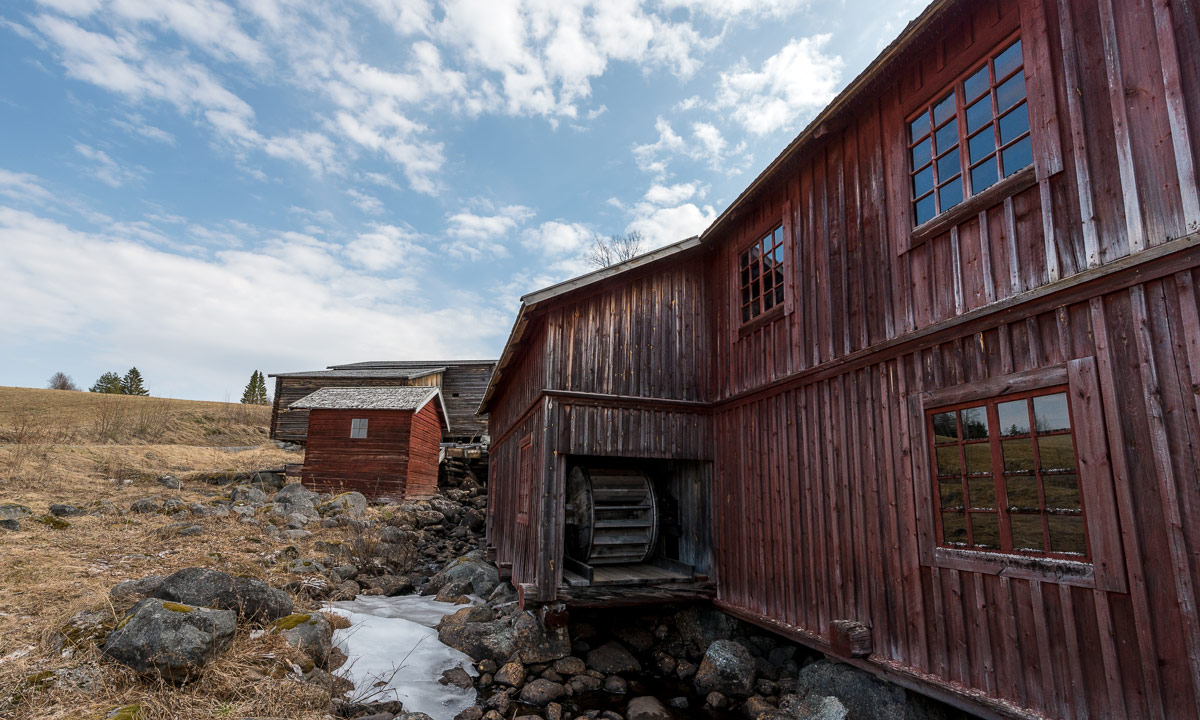
The next day we made another trip, this time to different places. First stop: Torvsjökvarnar, a group of old water mills that form an open-air museum today.

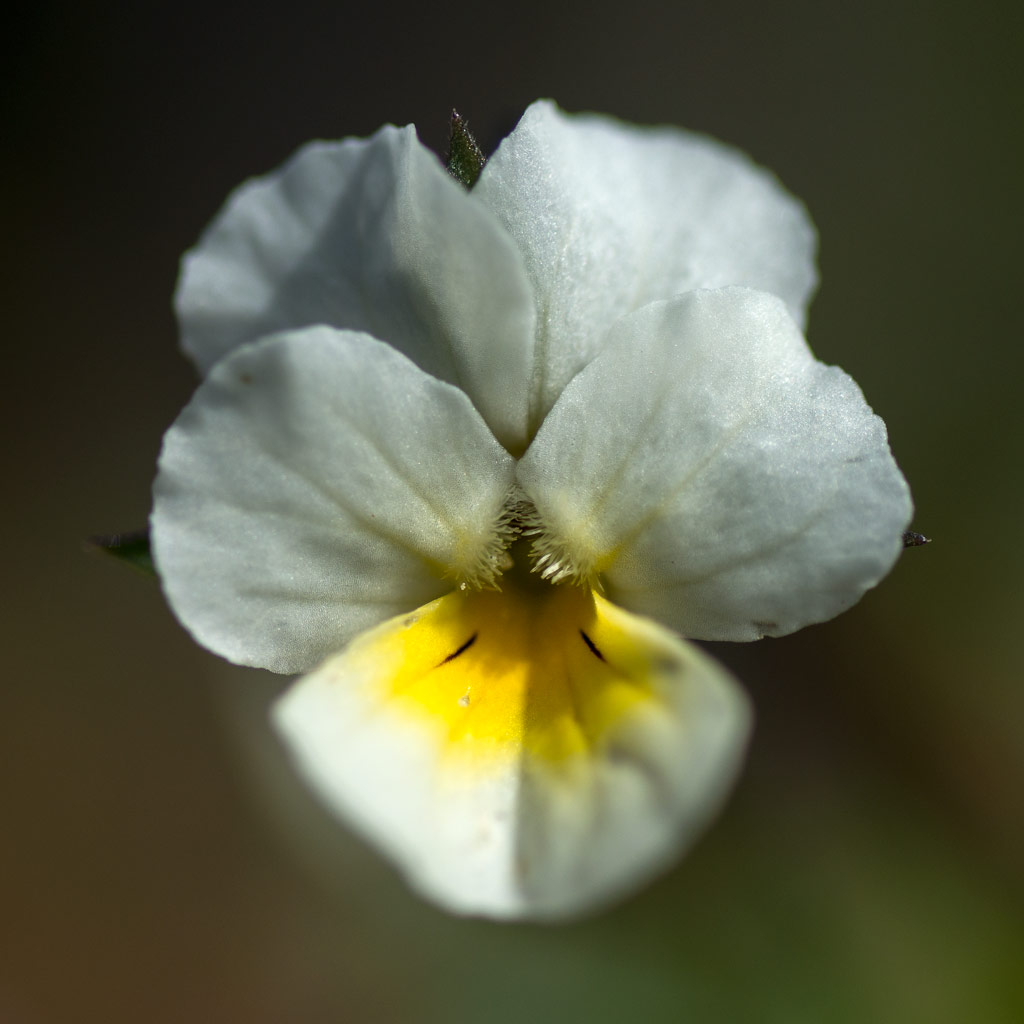
Annika and I already saw some frogs or toads crossing the streets the day before, but here I saw the first frogs from close up. Another spring sign.

Other stops followed but – sorry folks – no photos.

At half past five Annika and I said goodbye and started the way back. We decided to choose another route and took the 92 to Fredrika. A good choice. Here’s one of the artworks of the Konstvägen Sju Älvar (“Art way seven rivers”). It’s called Poem för en imaginär älv  (“poem for an imaginary river”) and is erected on a big rock in the midst of an archaic landscape build of rocks, mud flats and tiny lakes. beside of the road the area looks like ice age would have ended just some hundred years ago.

Just some kilometres later there’s a thing you wouldn’t expect in Northern Sweden: A Thai Buddhist temple called Buddharama Temple. The giant statues of the sitting and standing Buddha and the live size elephants made of stone really look a bit strange in the middle of the Lappish woods. In Thailand 95% of the people are buddhists, but in Norra Norrland …?

(Sorry for the bad photos – the sun was definitely at the wrong place when we visited this temple.)

After that we continued our trip back to Skelleftehamn. I drove the car and Annika guided me along the small roads: BaksjölidenVargträskÖrträskOttonträskVindelnBubergetBotsmarkÅkullsjönBygdsiljumFlarkenÅnäset and than the E4 northwards until the turnout to Skelleftehamn, where we arrived at 22:54.

Thank you, M. and F. for your kind hospitality. We’ll looking forward to come back some other time. Perhaps there are other things left to be moved ;-)

Appendix

i. Animals on the journey:

Among others: Reindeers, four moose, a fox, cute sheep, cranes, Canada geese, swans, some western curlews and a short-eared owl.

ii. Northern lights:

Yesterday the aurora was really strong with a Kp index between 5 and 6, which says it is visible even in Denmark and Scotland. Now it’s a disadvantage to live as up north as I do. The sky is just too bright even in the dead of night to watch the Northern Lights. I guess, we’ll have to wait until August.


Furuögrund

Today Annika and I took the road E4 to Byske to visit Byske Havsbad, one of the largest sandy beaches nearby. But I was curious about the other side of the river Byskeälven and took another departure. That’s how we came to Furuögrund, which is a small coastal village north from Skelleftehamn. 39 kilometres by car; 20 kilometres if you can fly. Outside of Furuögrund there’s a peninsula with a small boat harbour and a café (that unfortunately won’t open before next weekend). The peninsula is surrounded by two bays – one with a sandy beach (and still some old leftover ice).

On the northeastern side there’s an old dock for timber, build in 1874 together with the sawmill. The dock has or had three different names: Massahusdockan, Norrdockan or “Nööl-dockan”. As you can see on the images, there’s hardly anything left beside of a mikado-like stack of old timber.

After strolling along the shore we took the car again and turned into a small side road to Svartnäsudden. I just had to stop when I saw the smooth granit rocks with the clear water puddle. In front of the rocks there was some boggy ground, partly covered with ice, surrounded by pine trees. And behind that a beautiful view over the blue Baltic Sea – that’s Coastal Northern Sweden in spring in a pocket.


Magnitude 4.3

Things you can experience in Skelleftehamn:

Ice fishing · heavy snowfall · northern lights · moose · frozen Baltic Sea · earthquakes · cold …

“Wait a moment, did you say “earthquakes”?”

“Yes.”

“In Skelleftehamn?!”

“Yup.”

Yesterday evening, when I stood in the bathroom, I heard a noise and felt a shaking like the biggest truck ever would speed through the streets. But it was a short event, I forgot it quite soon and lay down to sleep.

Today, when I browsed through my Facebook timeline, I realised that so many people from different places wondered, if this could have been an earthquake, that it really had to be one. And it was!:

GEOFON Program

According to GEOFON, Potsdam, the earthquake had the magnitude 4.3 and the epicentre was in the Baltic Sea, 19 km deep, round 60 kilometres from where I live.

Fortunately 4.3 is a quite weak earthquake and I don’t believe, that it had any impact at all.

By the way, this was not the first earthquake I experienced in Skelleftehamn, there was another one in June 2010, two months after I arrived here.

About a tough women

Last year our association Mörkrets och Kylans Glada Vänner (Happy Friends of Cold and Darkness) got a special request. Josefine Steenari from Lindome nearby Göteborg had the wish to take a winter bath.

For most people it sounds really crazy to enter a pool with ice cold water with temperatures between +0.1 °C and +0.4 °C. But some people just want to try it anyway, and so did Josefine. While most people just could go or drive to the next ice hole, undress, take a deep breath and go into the icy water, Josefine needs some help, since she is almost totally paralysed. She communicate with her eyes but she has no control about her extremities and is sitting in a wheel chair.

Mörkrets och Kylans Glada Vänner was glad to help. Our first plan was to let her ice bath be part of the Winter Swimming Championship on last Saturday, but unfortunately the gangway down to the ice covered river Skellefteälven was too steep and we couldn’t guarantee Josefine’s safety.

Fortunately we found another possibility. The association has an ice hole for winter bathing in Kåge, not far away from Skellefteå. Here we met Josefine and her team on Sunday evening and after a bit of thinking and planning we all were ready for her first ice bath. Josefine sat in a special sling (I’m not sure if it’s the right word), that was attached to a log and Hans and Jarkko lowered her slowly, while I was behind her in my waterproof immersion suit to turn her a bit. Tiina counted the seconds and after round 12 seconds she was lifted up again.

I heard, that Josefine loved the experience and that the ice water didn’t felt as cold as expected. I was glad and even a bit proud to be part of the team, that could help her to fulfil her wish. One more crazy ice bather in Sweden!

1st photo: Annika Kramer, 2nd photo: Norran, Karin Israelsson

Links:

Winter Swimming World Cup and Scandinavian Championship 2016

Last Saturday the 5th winter swimming competition in Skellefteå took place, this time not only as a Scandinavian Championship but even part of the world cup. The Happy Friends of Cold and Darkness (or in Swedish: Mörkrets och kylans glada vänner, which I’m a member of, was the organiser of this event.

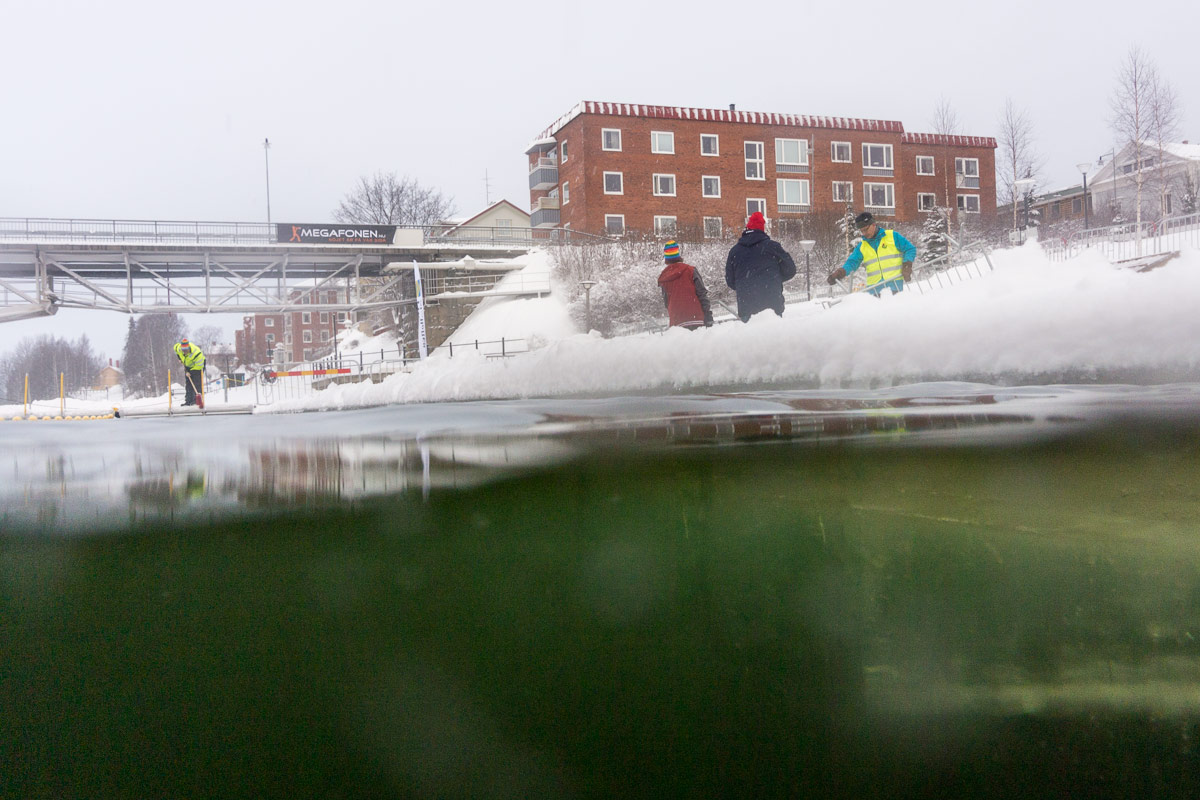
I wasn’t part of the organisation team this year, but I was on the ice round the swimming pool and took many photos, both for me and the media.

The first winter swimming in 2012 was the coldest with temperatures round -32 °C. This year it was much warmer with only -1 °C, but the wind and the snow showers made the event to a chilly experience, too.

Here are some impressions:

Links to blog articles about the other winter swim championships in Skellefteå:


2016-01-04 Filchos AB

Tomorrow is a special day.

After 5⅔ great years at Hello Future¹ it’s time for me to move on. That’s why I started my own company some weeks ago.

Well, sort of …

· I will continue developing web applications
· I will focus more on photography
· I will focus more on travelling and blogging
· I want to be more open for music, art, and creativity
· I want to work with more different people
· I want to be free for things that I’m not aware of yet²

That’s a lot for just one company, isn’t it? That’s even a lot for just one person (Yes, me). But well, I’ll give it a try.
_____

If you start an AB (aktiebolag) in Sweden you need a name for it. But how do you call an AB with so many fields of work?

I went for a name that means completely nothing to prevent being bound to any specific focus³. The official name of mine is “Filchos AB”⁴.
_____

Tomorrow⁵ I’ll start working for my company. What is the first thing I will do tomorrow? Probably considering about the first thing I should do tomorrow.

Stay tuned …

By the way: There are no plans at all to move away from Skelleftehamn, even if I’ll be abroad a bit more in the future⁶

_____
¹ Thank you, Hello Future for a good time!
² You’re allowed to make suggestions!
³ Change is my elixir vitae.
⁴ There’s a history about “filchos”, but that’s another story.
⁵ That’s 2016-01-04.
⁶ … but if you have a project in Greenland, Northern Canada or Svalbard, let me know.

_____

This text appeared first on my personal Facebook page. I decided to publish a copy even on this blog.

Scandinavian luxury – I

What is Scandinavian luxury?

When you drive home from a good rehearsal with the chamber choir and see a faint polar light through the front side window of your car.

When you arrive home and ignore the aurora, because you saw it already at least five times since August.

When you, just before going to bed, open the door and look outside.

When you sit on the wooden panel just in front of your front door and look at the intensifying Northern Lights, already wearing your pyjamas.

And make some photos – just half a meter from your front door. They won’t be the best, but you don’t care.

When you just slip into your boots and take another shot from the garden.

When you can experience this without being in a holiday – like it happened to me one and a half hours ago: That’s Scandinavian luxury!