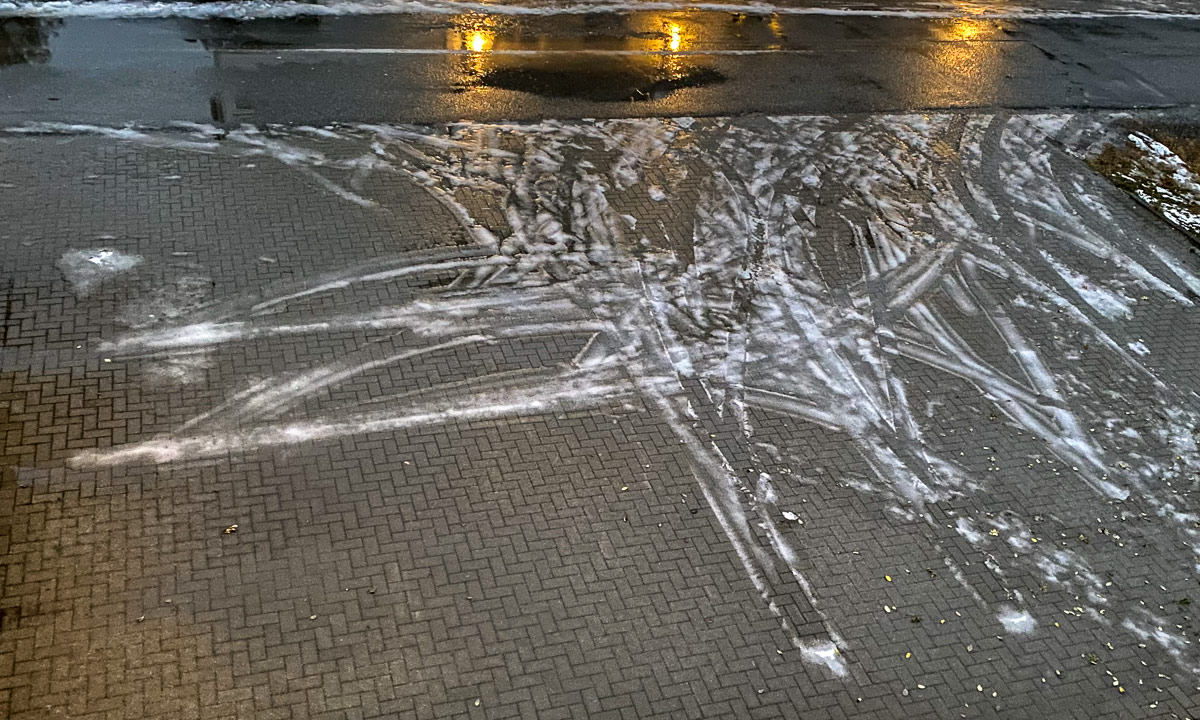
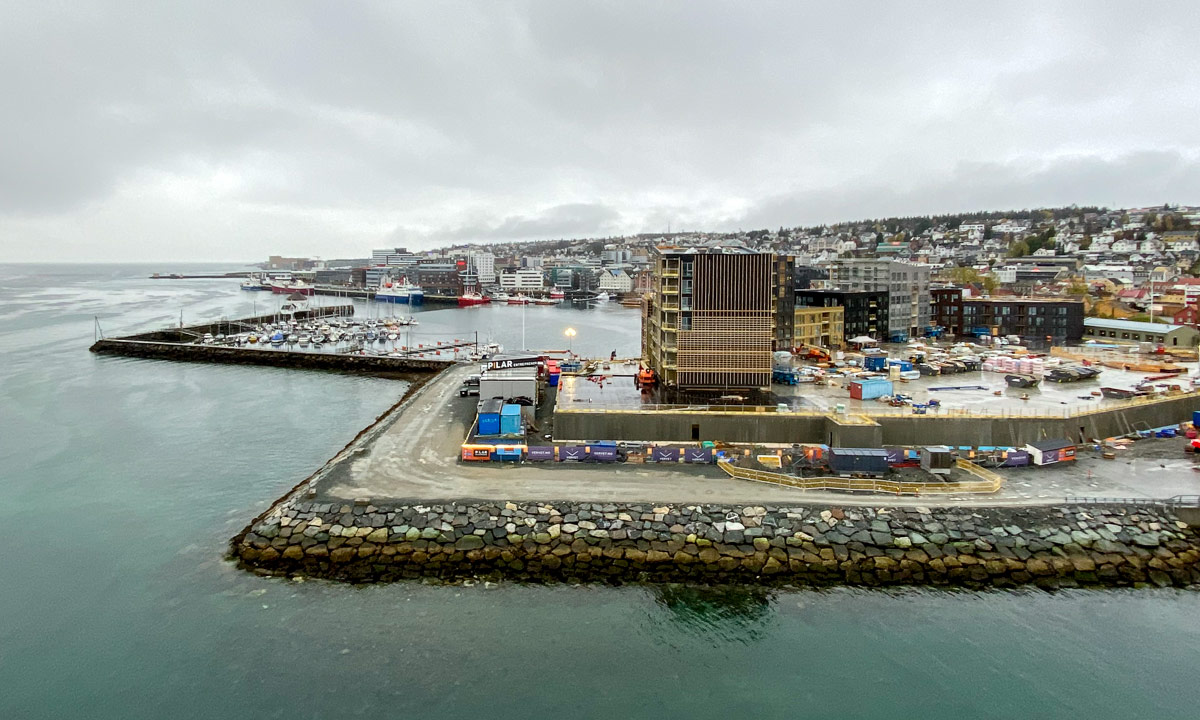
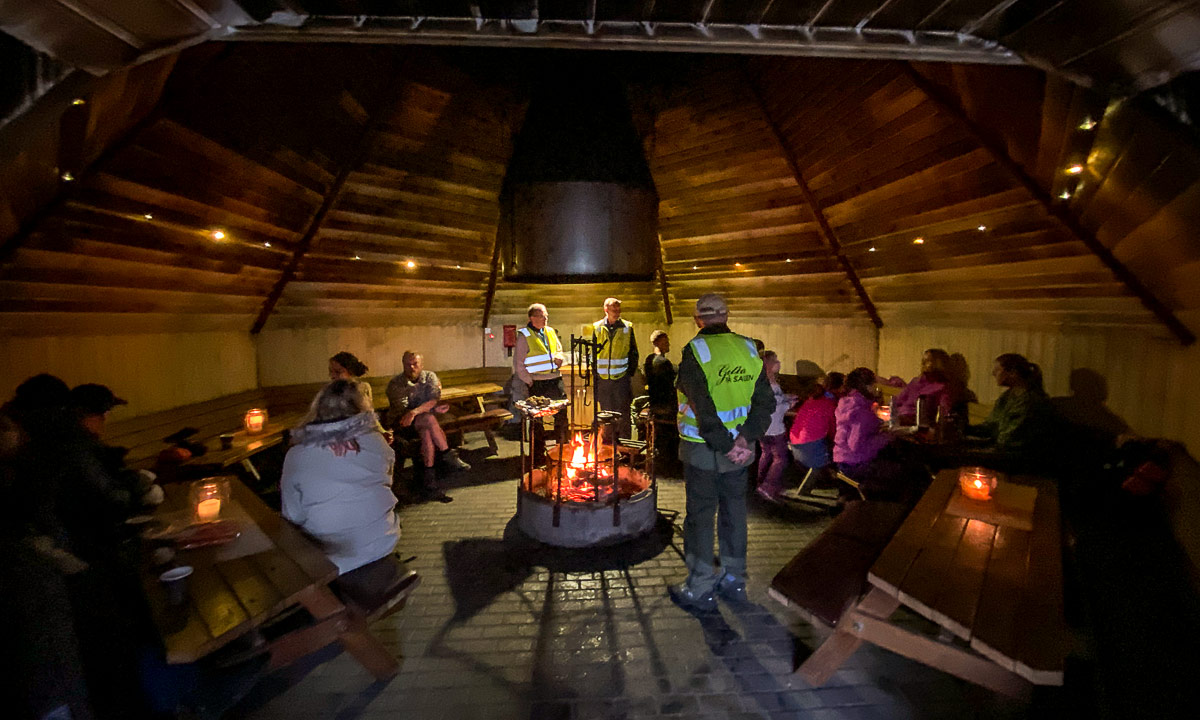
Tromsø black and white II – shipwreck on Kvaløya
This article is part of the series “2020-10: New in Tromsø”.
Annika googled it, then we visited it shortly last Saturday, yesterday I took the opportunity to visit this bog with more time: The Torsmyran Nature Reserve.
The parking place is right next to the E4, 45 km southwest from Umeå. You open a gate (and close it behind you to keep the moose away from the road). Then you walk to a small forest strip and follow a round 100 metres long wooden ramp leading into the bog. The platform at the end of the ramp is raised so you have a nice view over the 8.3 km² large bog.
That’s it.
As long as you don’t dare to enter the bog by foot. At first the bog looks flat, but if you take a closer look you see that there are slightly higher parts, mostly covered with heather. Even pine trees grow here and the ground is safe to walk. Beside of these parts there are large areas covered with peat moss, a sure sign that you will get wet walking onto. Even with rubber boots! And there are depressions. Some are covered with water, others with brown mud.
Is the mud deep? Well, have a look at the next photo:
You see the bit of a stick sticking in the mud? That’s my walking stick that I use when hiking through bogs. It’s two metres long. Without any effort I could stick it into the mud like that. Anyhow it was possible to avoid such treacherous places in this labyrinth of humps and pools, even though I came quite near to take same pictures.
After a while I come to a line of wooden planks. Old wooden planks. Old, half rotten planks with rusty nails looking out. I decide to follow the path. First it is quite easy, but then the planks go submarine. Since both my camera and I myself are packed waterproof I continue. Although the planks were slippery I succeed without taking a bath.
There is a signpost in the middle of the bog, leading to cities and places in the area. Who needs a signpost at such a remote place? Well, winter is coming and the bog will be frozen and covered with snow. Then the whole area is easily accessible by snowmobile. And that’s what the signpost is for: Helping the snowmobile drivers.
I leave the signpost behind and continue the path. Partly the planks lie directly on the mud. *Crack!*. One of the planks breaks under my right foot but still supports my weight. When I come to another watercourse to cross and see the the planks deeply sunken into the water I decide to turn back. This passage looks quite challenging and for a round trip I would have to cross the watercourse again at another place.
Slowly I walk back to the platform at the end of the ramp. I have to zigzag a lot to avoid open water or muddy patches but I arrive. I’m quite wet and muddy from taking some photos. I however already suspected that and have spare clothes in the car and a canister with water for cleaning. And something even more important: Chocolate and something to drink!
Disclaimer: It’s not the first time that I hiked on boggy ground. It needs some experience to avoid the soft patches and knowing how to free yourself when sinking in mud. That’s why I have a long and stable walking stick with me that could support my weight in case of sinking. Take care!
Actually my series #escapism tells about journeys shorter than 24 hours, but here I’ll make an exception. Too “escapy” in a positive way was the weekend stay of Annika and me on the island Holmön.
It’s the second time we stay at the hostel at Berguddens Fyr. We’ve been there exactly a year before, too. As last year the weather is a bit between seasons, partly autumnal, partly wintry. And as last year we have the large building completely for ourselves and we seem to be completely alone.
The only person I spotted nearby was a guy in hunting clothes yesterday morning. Hunter or hiker? Later, when we returned to our hostel from a hiking trip we met a car with a trailer with a freshly shot moose on it. Mystery solved.
Annika and I meet in Norrfjärden at the ferry terminal. Here we wait for the 18-o’clock ferry. The ferry to Holmön is part of Sweden’s road network and the usage is free. We only had to reserve a place for my car since there is only place for one vehicle.
The ferry arrives and perfectly I back the car onto the small ferry. But it’s cheating, I use the great rear-view camera of the car. Ten minutes later the ferry starts. There are some loud bumps when it rumbles over an ice floe but soon on the open sea the trip becomes calmer.
The morning is grey and a bit frosty.
After breakfast we drive a bit by car, then we take a hiking tour through the forest to the eastern shore of Holmön. It’s really fascinating, because the forests are green and autumnal, but everything in the more open landscape is covered with hoar frost. Actually I was too lazy to photograph but I took same photos anyway.
And another photo after sunset, just about 50 meters away from our sleeping room. It’s 15:50 and in reality it’s much darker than on the photo.
It has cleared up overnight. We take the car to the northeastern part of the island. The forest path is narrow and I’m not completely sure if I’m allowed to take it by car. I’m glad about my Subaru’s all wheel drive, because a smaller part of the way lays 10–15 cm underwater and is covered with thick ice.
Soon we arrive at a small harbour. This area is new to Annika and me and it’s especially beautiful. We take the short but interesting round trip by the sea to Trappudden, Holmön’s northern tip and back through the forest. Later I’ll try to make a fire at a barbecue place but the wood is so soaking wet, that I give up after a while.
Actually we planned to take the 17 o’clock ferry but another vehicle was already booked on that ferry. So we decided for the 19-o’clock ferry that only goes on demand. We are however not alone. Due to weather warnings for the night and Monday morning the 7 o’clock and 9 o’clock ferries have been cancelled. The last opportunity to leave the island before Monday, 17:00.
In Norrfjärden Annika and I drive home. Annika to Umeå, I to Skelleftehamn. My car ride back is a bit exhausting because of some heavy snow showers but safely I arrive home at 21:30.
Holmön is a fantastic place, both because it’s quite near, quite special and beautiful in kind of a harsh way, at least between the seasons. A perfect place for a weekend #escapism.
After almost four weeks of travelling in southern Scandinavia I’m back home in Skelleftehamn again. Yesterday afternoon Annika and I arrived in Umeå, Annika’s residence. Before I drove back to Skelleftehamn today we hiked round the lake Grössjön which is just some kilometres southeast from Umeå. The circular track is very beautiful and leads through pine forests and bogs. A wonderful place, that gives me a stronger “Sweden-feeling” and makes me much more home than many places we travelled the last weeks.
Today the Swedish proverb “borta bra men hemma bäst” feels right. It’s literal translation is: “(being) away good, but (being) home best.”
It’s still summer but some things have changed since I drove away from Skelleftehamn four weeks ago. It gets dark again in the night. Now – at 23:15 – I can go out, look up into the sky and see the star Vega in the constellation of Lyra. And it gets cool again in the night. Just now it’s 5 °C. So that the house can cool down. Good for a person like me who prefers temperatures below -25 °C to those above +25 °C.
This article is part of the series “2019-07: Southern Sweden”.
22–25 July – Sparsör, Öresjö and Borås
It’s already Friday, Annika and I have been in Sparsör near Borås since Sunday afternoon and I have been extraordinary lazy. Today it’s going to be the hottest day yet with temperatures round 30 °C or above, so my laziness will definitely continue and the most exhausting action will be going to the bath place nearby.
The weather is still cloudy and not so warm. Perfect hiking weather. When we have to climb the hill Örekullen we sweet anyway. The way is steep. We meet sheep in a forest by the lake and a sow with her two piglets. When we are at the south tip, we have some lunch and take a bath in the bay of Almenäs.
Later this day we drive to the city Borås and eat extremely delicious tapas and dessert in the fantastic restaurant La Copita.
-40 ° C I seek, +40 °C i flee. Luckily it’s not as hot as in Germany¹, but even temperatures round 30 °C are too warm for me to feel comfortable. Fortunately there are many bathing places around, one of them in walking distance. I am bathing and snorkelling. I see schools of fish and hundreds of river mussels underwater, but also a half meter long pike. Anyway the pike is much too fast to be photographed.
Later the evening we drive to Borås another time. A vivid town, especially when there’s a live concert on the town square and a dance band (far away from playing live …) playing in the city park. The air is cooler, but still round 25 °C and even the statues seem to seek refreshment in the water of the river Viskan.
¹ 42.6 °C were measured in Lingen yesterday, the hottest temperature in Germany ever measured. Even though a single hot day is no proof for the ongoing climate shift it is one of the many, many signs.
This article is part of the series “2019-02: Northern Norway”.
Some first impressions of Berg near Bjørnevatn near Kirkenes. Nice weather, -20 °C. I went up the hill through knee deep snow and took some pictures.
How and why I came to Kirkenes? I will tell you soon …
This article is part of the series “2018-12: Holmön”.
It is Monday. It has rained the whole night and it still rains. Most of the snow is history and everything is wet. After breakfast we decide to give the road to the southern tip of Ängesön another try. Indeed, it is almost free of snow and soon we are at the southern tip of the island where we walk along the coast. The clouds are grey and so is the sea. Some water areas are still covered with wet, brownish ice but the sea itself is open.
There are some marked hiking paths on Ängesön that we want to give a try. The guide book recommended “tåliga skor” – that means tough, durable shoes – due to the wet ground. The first path to the east has many deep water puddles and flooded parts. Partly the path is supported by wooden planks, but mostly not. The path leads through a quite old forest as we can see by the many lichens that cover the pine, spruce and birch trees. Snowless and wet as it is, it looks more like mid-October than December.
We try the other trail that leads to a shelter at the western coast of Ängesön. This trail is less wet and easier to follow than the other one. It is however not too easy to reach the rocky coast because of the marshland between forest and coast. It still drizzles and rains and everything is damp.
The hiking paths are nice but I would strongly recommend high rubber boots if you want to keep your feet dry.
After our “three course hiking” we return to our accommodation at Berguddens fyr. We’re still the only people, the place – as beautiful it is – seems less popular in winter time as the guest book tells us. While Annika prepares a warm lunch it starts to get dark outside. Grey clouds still cover the sky and it continues drizzling. The lighthouse starts sending its light beams over the Västra Kvarken, part of the Baltic Sea between Holmön and mainland.
Today day we leave Berguddens fyr. We were lucky to be change the booking for the ferry from 19 o’clock to 9 o’clock to avoid another rainy day – partly in darkness. At 8:20 we sit in the small waiting room, because it’s very windy outside. Waves break at the quay wall and after some the small ferry arrives and wobbles into the small harbour.
I have to admit that I get a bit nervous when I learned I have to back the car onto the ferry. The man however that pilots me onto the ship is fantastic and guides me much better than every rear camera. I am relieved, but get nervous again when I watch the man securing the car with belts. Is it so stormy? Will the belts hold?
First the boat trip is quiet but soon the ferry starts to roll and pitch more and more. I stay in the inside of the boat where I feel safer. While Annika and I are hoping the best for the car, the other two passengers do not pay any attention to the rough weather. Probably they live on the island Holmön and they are used to something like that.
45 Minutes later we arrive in Norrfjärden. My car has survived this unsteady trip without any problems.The ferry needs several attempts to dock, but finally I can leave the ferry with the car. Annika, who already went ashore gets into the car and we drive to her home in Umeå. This drive takes only 30 minutes – less than the ferry passage.
It’s fantastic to have such an interesting and special place nearby. We’ll come again, hopefully with better weather.
This article is part of the series “2018-08: Iceland”.
Wednesday, 29 August – Thursday, 30 August
After our long bus tour we arrived in Hveravellir in the Highlands of Iceland. Hveravellir lies 650 metres above sea-level and here you can find geothermal areas, where fumaroles emit hot gas, mostly water, carbon dioxide and hydrogen sulphide. The latter one is responsible for the smell of rotten eggs.
We went along the wooden path (don’t leave it, the crust is thin and boiling hot!) and looked at the fumaroles. Then we continued a path westwards.
The landscape scenery changed. The path led mostly through lava rock, only sparsely covered with soil, moss, grass and some flowers.
Some sheep were grassing here and there. They preferred the grassy parts of the desertlike surrounding.
The willows however had to cope with the soil that they had got and even more with the weather. There were flat and crouching on the ground to avoid exposure to the wind.
The way we chose is no circular track so after a time we had to return to Hveravellir, where we had booked an overnight stay. We used to wooden bridge to cross a small stream. You have to be careful, the water is hot!
“Home” again we cooked tortellini for dinner and bathed in the hot tub that was located right beside of our mountain hut. While Annika stayed in the hut after that I took another walk and enjoyed the evening light. The sky was clear and the sun was shining. (And I thought, it would only rain on Iceland!) The motives? Smoking fumaroles against the light · glaciers and snow covered mountains far away · sheep nearby.
I slept very well but woke up quite early. Time for another walk, this time enjoying the sunrise.
The night has been cold and ice crystals covered flowers and leaves. The wet parts of the ground were covered with hoarfrost that looked hairlike.
The fumaroles enveloped the geothermal areas in steam. I can do without the sulphuric smell, but the look is very impressing, especially with the warm sunrise colours.
After my early morning walk Annika and I had breakfast and then packed our stuff. The bus back to Reykjavík wouldn’t leave before 12, so we had time for a two-hour walk together, this time heading south. One of the things that make Iceland unique for me is the colours, not only the colourful mountains in Landmannalaugar, but even the moss and the grass looks special. And the volcanic lava rock is so sharp that the photos look oversharpened.
Round 11 o’clock we had returned to the parking place waiting for the bus. But we spontaneously changed plans when we met Matti whom we got to know in Reykjavík some days ago. He was here by car and invited us to join him and his friend. They wanted to drive to another place, hike around then return to Reykjavík. We happily agreed and had a great time, but that’s another story …