Small tortoiseshell

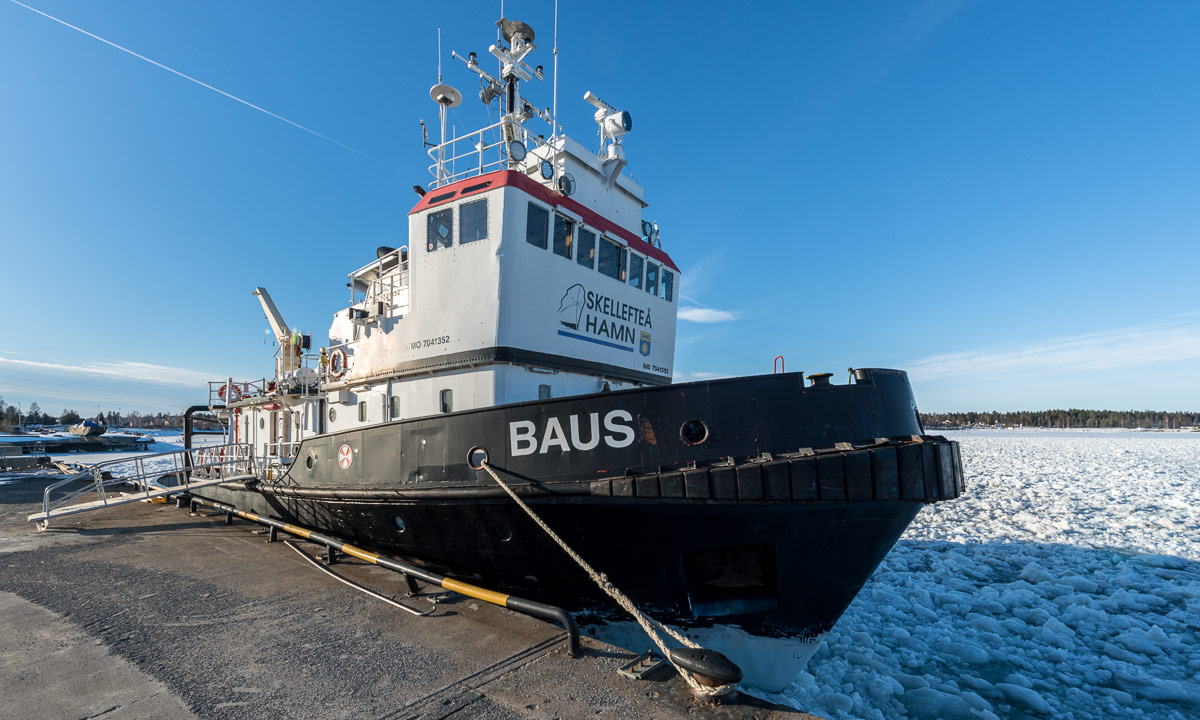
Yesterday I saw the first butterfly of the season on the icebreaker Baus. It was a small tortoiseshell. Today I saw another one fluttering in my sunny front yard. It rested on one of the wooden panels and I wondered if and how it can survive after such a long winter with no flowers around.

I sneaked into the house, fetched the camera (it still had the telephoto lens on) and made a shot for this blog. I made it from the street with a distance of 5 metres because I didn’t want to disturb this little fellow. The photo is a 100% crop of the original image, otherwise you would see only a small orange spot.

Small tortoiseshell · nässelfjäril · Kleiner Fuchs · Aglais urticae

Breaking the spring ice

This morning I saw not only the ice fishermen, but also the icebreaker Baus clearing the ice in the port of Skellefteå in Skelleftehamn. In the afternoon I remembered, that I had come into contact with K., one of the crew members on Facebook some weeks ago. I had asked if it was possible to go with the Baus to take photos sometime. K. had answered that I should just go there and ask the people. And so I did today.

I met a guy who works on the icebreaker and learned that it’s hard to make some kind of appointment. In winter no one knows exactly, when ships will arrive or depart due to the weather and the ice conditions and therefore neither when the Baus would start. But they would actually leave in twenty minutes to clear the ice for the ship Ice Star and I was allowed to join …

Sixteen minutes later I was at the dock again, this time with better clothes and my camera equipment that I got from home. How good that I live so close.

I was allowed to enter the Baus and say hello to the captain on the bridge.

He welcomed me, showed me some of the controls to steer the boat and allowed me just to go round everywhere to take photos. I didn’t want to disturb him, because he had to focus on his work and my plan was to make photos, not to interview the crew. At first I went up onto the top deck.

The water was completely covered with crushed ice. Some of the ice floes were at least half a metre thick. Slowly the Baus departed from the dock and I went down to the bottom deck to be closer to the icy sea.

While the Baus was slowly moving back and forth I went on every possible deck. I really enjoyed that freedom that you never can have on bigger ships as e.g. the Hurtigruten ships.

After some time of waiting and some time of moving around the way was clear for the Ice Star. Slowly it departed and followed the cleared channels between the solid ice where it with increasing speed left “Skellefteå Hamn”, the port of Skellefteå in Skelleftehamn.

While my eyes followed the Ice Star I spotted something blue at the horizon. Water! Somewhere behind the island Gåsören the ice had started to break and now open water covered the Baltic Sea behind Gåsören. Maybe the next paddle tour is closer than I think.

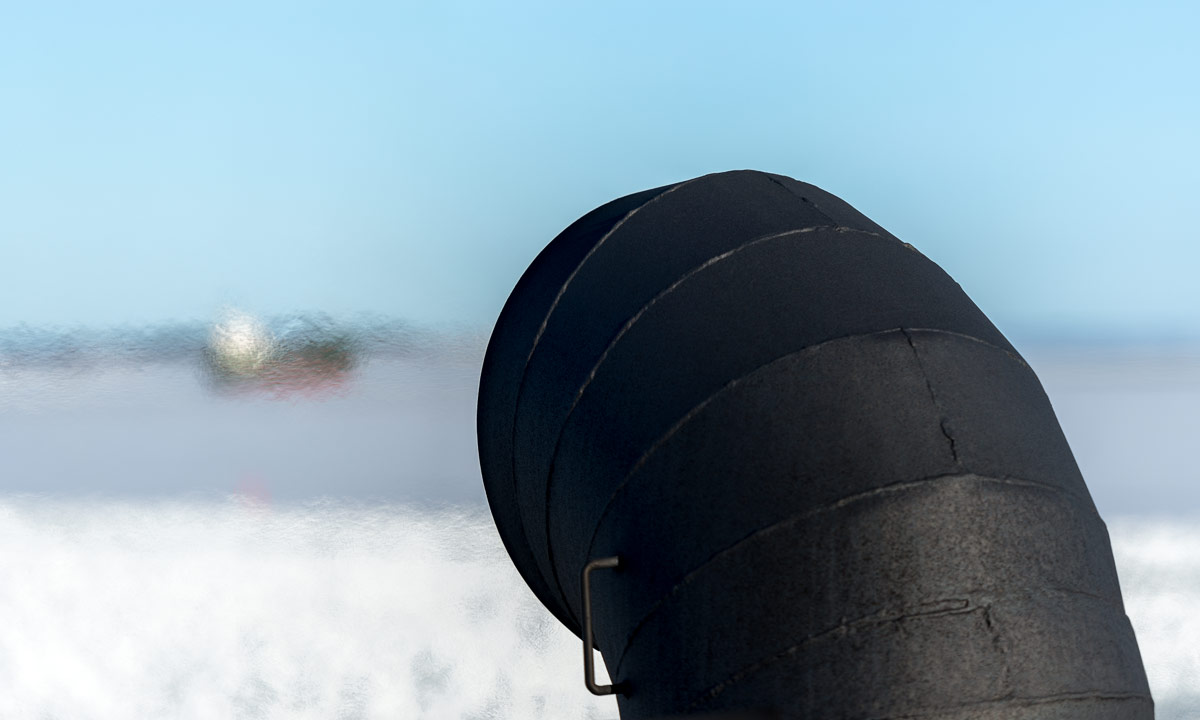
The Baus already had started to turn around (the previous photo shows the funnel at the rear) and return to the dock. I enjoyed watching the different types of ice.

Until now, the trip was extremely calm, now it started to get more rumbling, because Baus now went through packed ice – crushed ice that had frozen together and now was split into large irregular chunks. Great channel-like cracks developed in the ice, which soon closed again.

After some more minutes the Baus arrived and after thanking the captain for the opportunity to follow I left the icebreaker. The whole trip took less than 90 minutes, but felt much longer. I’ve been living in Skelleftehamn for almost eight years and it was a great experience to see my place of residence from a completely new perspective.

Thanks a lot, crew of icebreaker Baus!

Seeing the blue open water was a welcome spring sign. I saw two others today:

The first butterfly of the season, a small tortoiseshell that fluttered around the top deck of the Baus and (perhaps less romantic) the first teenager in shorts in front of ICA, the grocery store. I’m still waiting however for the first wild spring flower in Skelleftehamn.

Period of fine weather

I guess, this week has been the ice fisher’s delight. Nightly temperatures between round -8 °C (good for the ice), afternoon temperatures round +8 °C, hardly any wind and no clouds hiding the sun (good for oneself).

It’s really hard for me to focus on my work when weather is as nice as it has been the last weeks. I would prefer having holidays in the mountains enjoying the fabulous late winter weather. I guess however that there are times when I have to earn money, too …

Already at 8 o’clock I saw five ice fishers standing, sitting or lying on the ice with their tiny plastic fishing rods. Although it was -6 °C it was warm in the sun. In the background the icebreaker Baus circuited around to break the ice for the next ship to come.

I knelt on the ice to make the photos above and heard it cracking. Was it thin ice? Not at all, it is still thick and safe. I guess it was the waves caused by the Baus that made the ice swing and crack. A strange experience. Good to now however that the water is quite shallow where I went.

But now I have to continue my work …

Addendum

I didn’t work much more today, sometimes there are spontaneous opportunities to seize  …

Roof avalanches

Rumble! Roar!! Crash!!!

It’s three a clock in the night. A tremendous noise that shook the house had just waked me up. An earthquake?

No, it was a roof avalanche. It’s the time of the year when temperatures rise and vary between frost and thaw. This causes the snow to partly slide down the roof until all of a sudden large parts of the snow cover can fall down with an enormous crash. And since the snow layer had been frozen over the night this type of snow avalanche would not bury you, it would knock you out or even worse.

There are much larger roof avalanches than the small one on the photo. Yesterday a facebook friend experienced a roof avalanche home. We wrote about 20 to 30 m³ having slid down with blocks weighing between 40 and 150 kilos!

So if you see a sign in the street with the word snöras just give that place a wide berth to protect yourself.


Ongoing winter

It has been a long winter and it’s continuing. The fence behind my backyard is still mostly snowed under and this night it has started snowing again.

The temperatures however have been gradually rising. While the minimum temperatures have been mostly between -5 °C and -15 °C the last weeks the minimum of the last night was a mere -1.2 °C. And the permanent frost stopped. Day temperatures have been above zero the last ten days and despite the mean temperatures still being below zero the snow has started to melt, especially on and beside the streets.

And if the Swedish weather forecast is right we’re expecting a sunny week with temperatures up to 7 °C. This will cause more snow to melt making the streets especially in town extremely ugly and rubber boots the preferred footwear, but that’s a necessity for the spring to come.

The other years?

April 2017 – the Baltic Sea is mostly open, some snow showers. The first tussilago flowers on 8 April.
April 2016 – open Baltic Sea, some rain and small streams cause local flooding.
April 2015 – kayak tour on the Baltic Sea, whooper swans and again the first tussilago.

Snowmobile tracks

When the sea ice is safe + the weather is calm and sunny + it’s Easter holidays you can bet that many, many people are outside. A zillion times more than in January or February when the locals think it’s too cold.

Some people walk, some even ski but most people use their snowmobiles. And that’s how the snow covered ice on the Baltic Sea looks like: covered with snowmobile tracks. Sometimes only one or two of them, but often it’s many tracks making the ice look like a German autobahn.

What a contrast compared to my hike less than two weeks ago where I was almost alone on the ice.


The climate shift is there!

Now it happened!

According to the Emmerich Institute of Exoclimatical Research a new ice age is near. Already this year the snow in Northern Scandinavia will not melt anymore and glaciers will arise along the coast of the Baltic Sea. Authorities recommend to build a snow wall as a defence work round all buildings to protect them against the approaching glaciers. Today I started with the snow wall round my house in Skelleftehamn and I’m hoping for the best.

Wish me luck!