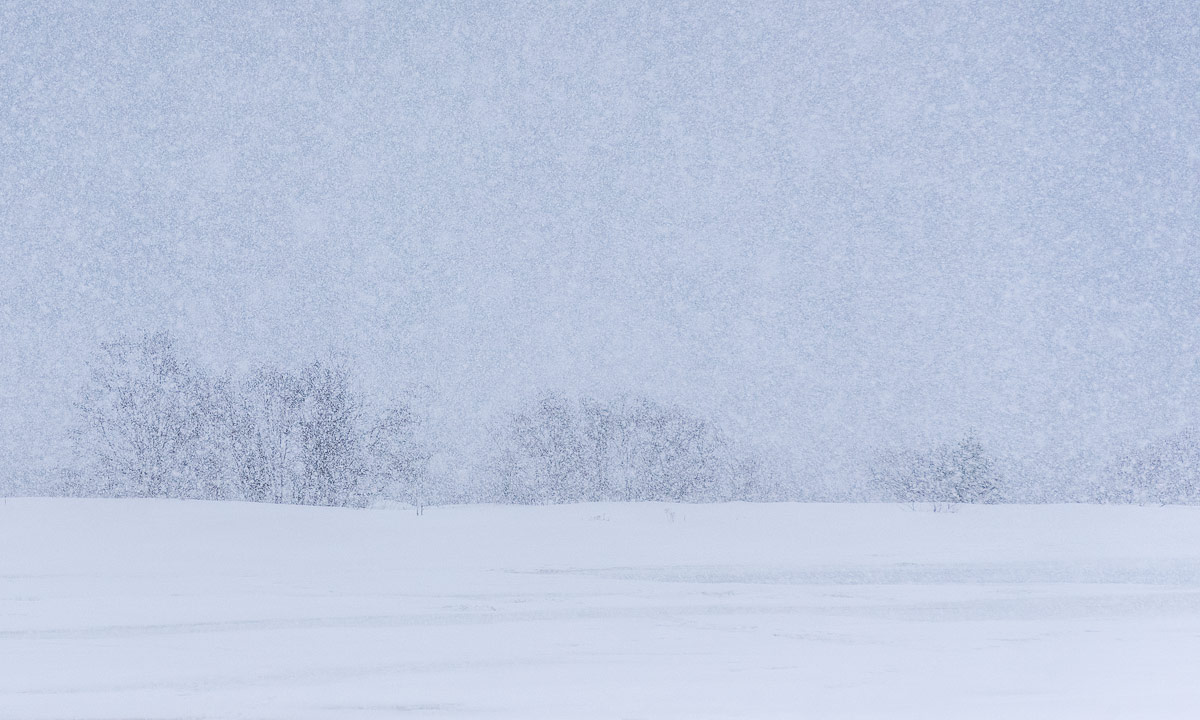
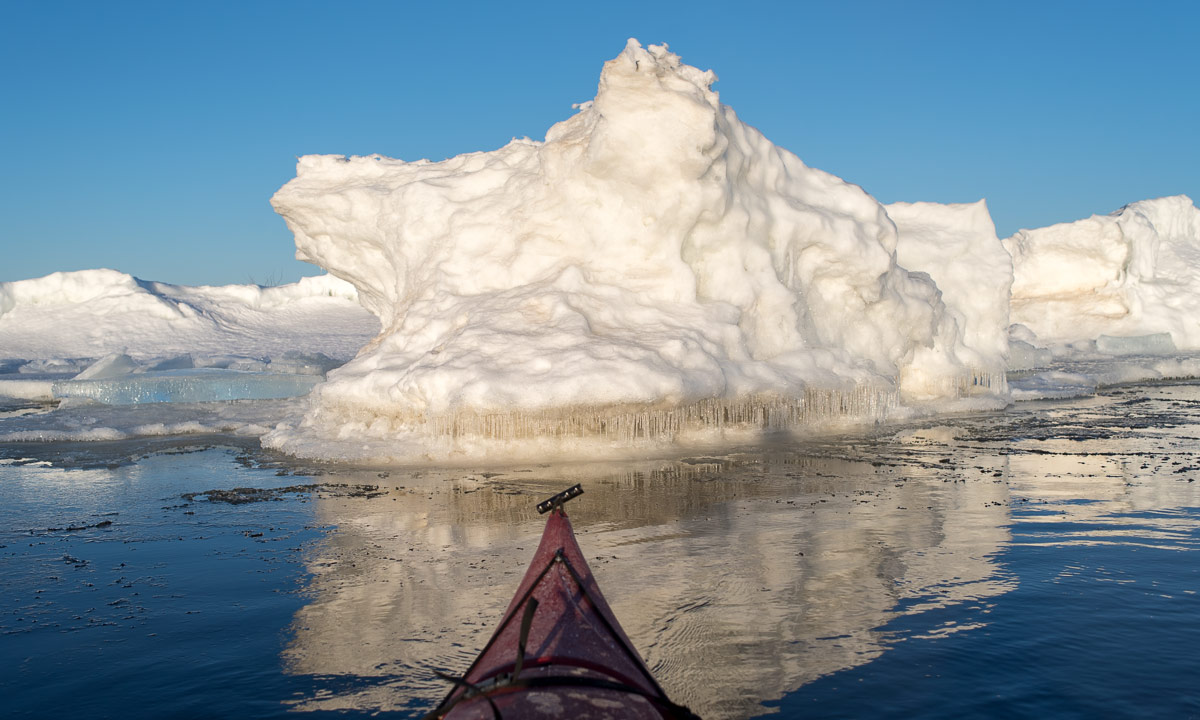
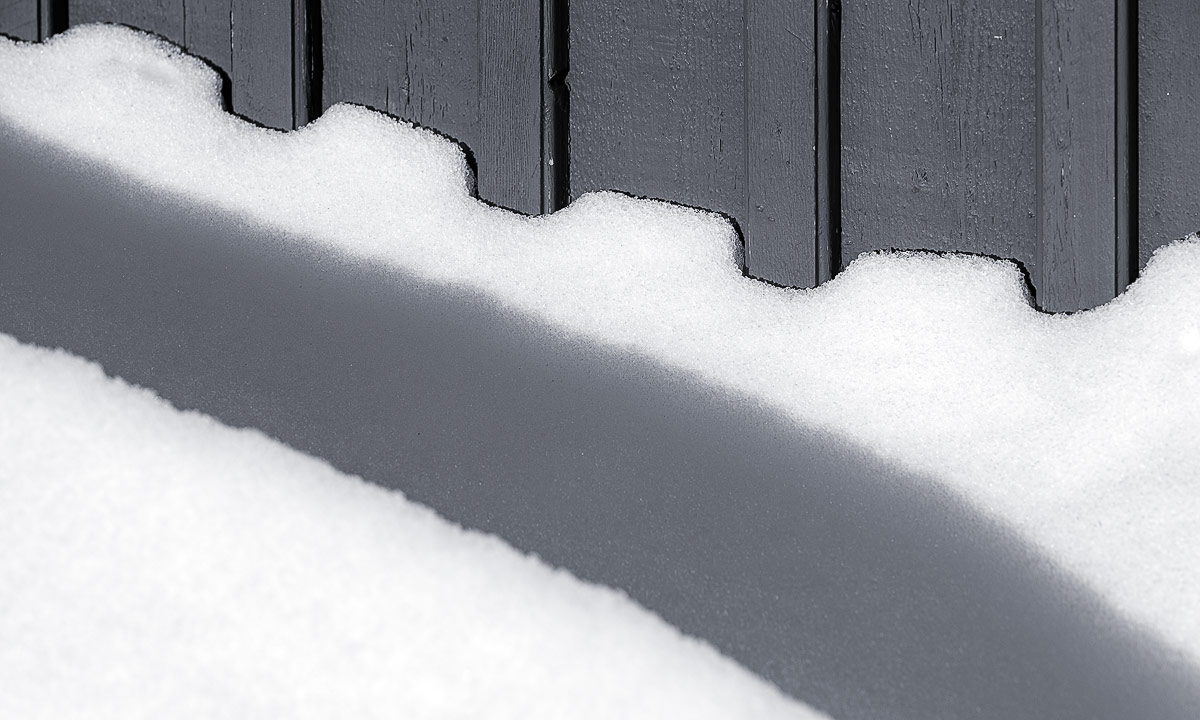
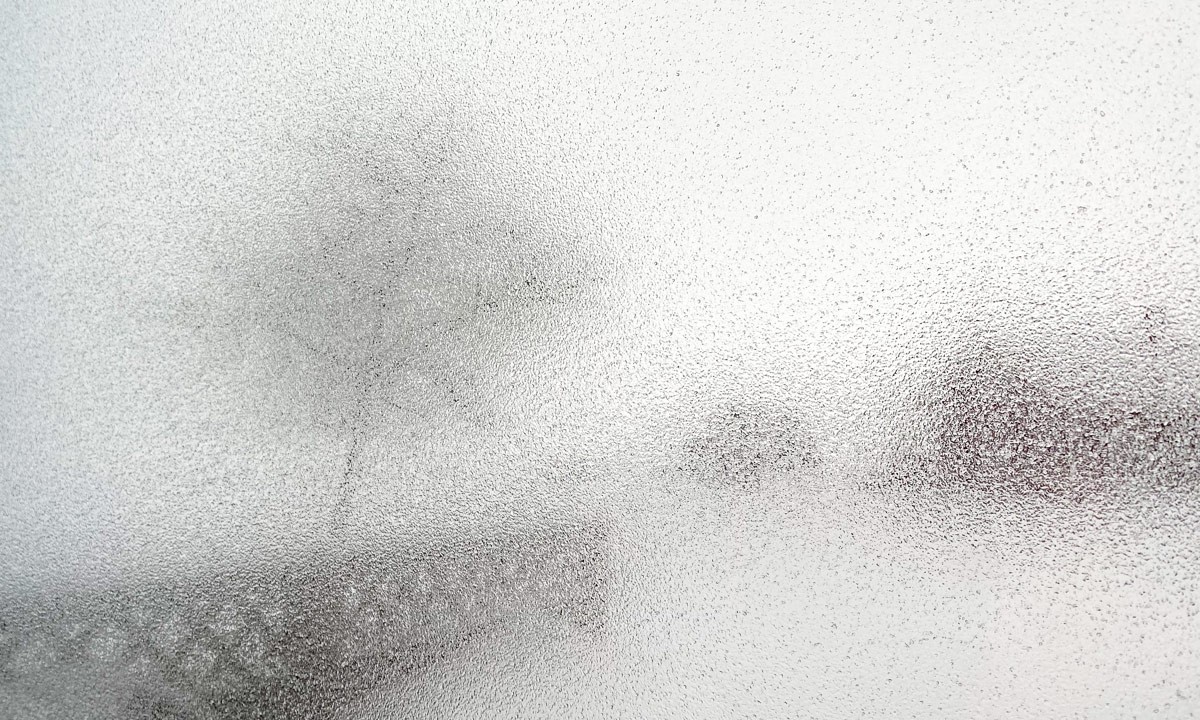
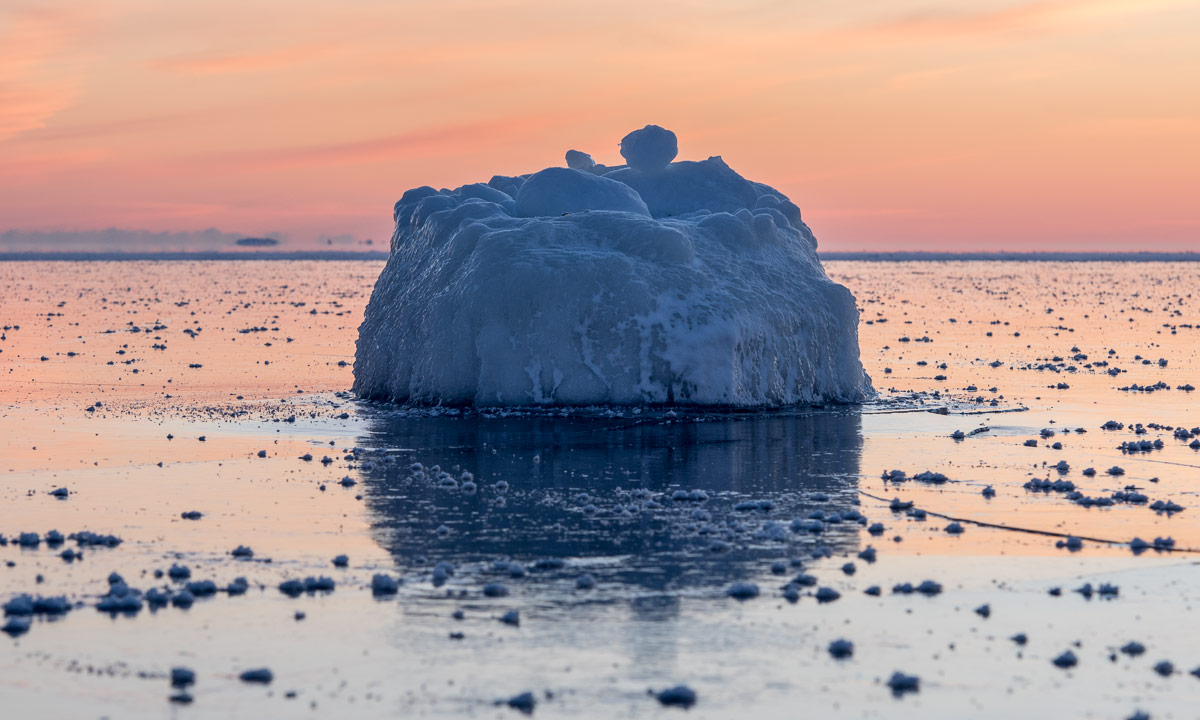
28. November – crisp and partly sunny
6. December – warm, grey and rainy
If the landscape is dull and grey – photograph in black and white!
This article is part of the series “2020-10: New in Tromsø”.
Days grow shorter and shorter in Tromsø so I took a small outside promenade in my lunch break to catch a bit of daylight. Tromsø is so beautiful with 10 cm of fresh snow that had fallen since yesterday.
I’m not sure if the snow will stay for longer or melt away soon but it doesn’t matter for me. That’s because on Sunday I’ll take the airplane home to Obbola in Sweden and will stay there the rest of the year.
But that’s another story that will be told on Sunday when I’ll spend many hours in Oslo Gardermoen and Stockholm Arlanda waiting for the connection flights.
This article is part of the series “2020-10: New in Tromsø”.
Though Saturday I went to the Norwegian Polar Institute yesterday to get a handover from a former colleague. I went however not the direct way (20 minutes) but a long detour (90 minutes) to catch some air and some light before being in the office until dark.
Just some photos taken with my mobile.
It’s nice to go lightweight and taking pictures with the iPhone. While the photos are impressive considering the size of the lens and sensor, the quality is of course long from that of my Nikon. So next time I’ll carry more weight but probably I’ll be more content with the image quality afterwards.
This article is part of the series “2020-10: New in Tromsø”.
I was really in doubt about writing this blog article and showing photos of the last weekend, where I participated the course Teknikkurs Hav (Technique sea kayaking).
Why? Because my photos lie. They show sea kayaks lying on nice beaches and us paddling in calm waters. All these photos are true but they tell only a fraction of the experiences I made when I kayaked in Northern Norway in the beginning of November.
The paddling course was supposed to take place on Sommarøya. A beautiful place, but quite exposed to wind and weather. Due to the wind forecast (average wind 15 m/s) the instructors chose a more sheltered place for the first course day: Eidjordneset, just 12 km away from the boat house of the sea kayak club Trulle.
We gathered round 7 o’clock in the morning: We are the instructors Tim and Pål and four participants. Kind of luxury! We put the kayaks on the trailer and started driving: Past the airport, over the bridge crossing the Sandnessundet strait, to the left and then taking the turn to the island Håkøya where we parked and changed clothes for the tour. In my case: woollen underwear, two pairs of socks, a thick woollen sweater, drysuit, neoprene boots, gloves and hood. In addition to that the sprayskirt, life vest, towline system and helmet. We do not only dress for the chilly air but for being in the water as well. Tim wrote in the email: “We will be doing a lot of swimming”
We started to dress in darkness but when we were ready it had got light.
We put the kayaks into the sea and started paddling east along the Håkøya. After getting our paddle strokes improved we started to practise partner rescue. One kayaker capsizes, opens the sprayskirt and swims. Then there are different techniques of emptying the capsized kayak and support the swimmer to enter the kayak again. While we were training this several time. As Tim said: a lot of swimming. While practising the wind blew us more and more to the east. Time to turn back.
Now we had to paddle against the wind. First it went quite well but we already could see the huge shower cell coming towards us. Round 2–3 °C in the air. Would it be rain, sleet or snow? No – it was a grown up hail storm approaching. Within minutes we had wind speeds of round 20 m/s howling around us, blowing spray from each wave and throwing hail right into our faces (ouch, my lips!). The instructors decided to guide us to land where we waited for the hail to stop.
Soon the weather was calmer but still very windy. It took a while until we reached the bridge, where we started the tour. On the way back I had one of the rare opportunities to take some photos with my iPhone while paddling. Mostly I was too occupied with practising or catching up.
When we arrived at the bridge we crossed under it, because on the other side the sea was a bit more sheltered. Here we practised a lot of different paddle strokes as edging or low and high brace. This was quite intense – only interrupted by a short and frugal lunch break – and I’ll have to train a lot until my body has understood the movements. We ended with a rescue case: One of the participants had to pretend having an injured shoulder and we had to both give support balancing her kayak and tow her on land. Well, there was a lot of discussion but finally we managed it. Ok, it was only 20 metres or such to tow.
To make it short: changing into warm clothes · putting the kayaks onto the trailer · heading back to the boat house · I got a lift home · hot shower · great!
Two of us met Tim at the boathouse, where we got a lift to a petrol station, our meeting point. As you can see it had been snowing and it was quite slippery.
Now on day two we would drive to Sommarøya and take the second course day there. Great, because the area round Sommarøya is wonderfully beautiful. Sommarøya is more than 50 km from Tromsø and the shorter way is leading through the mountains, so due to the weather conditions it took a longer time to travel there. And that’s how it looked like from the bay Steinsvika on Store Sommarøya.
We paddled to a flat rock covered by breaking waves and tried out some paddle strokes from the day before. That gave us opportunities for more buddy rescues, because of three capsizings. We made a short break on one of shallow beaches.
After that we started to round the island Storholmen where the Sommarøy lighthouse is located. First we tried to stick near the rocks to play with the waves. The further we came to the open sea, the higher the waves became and we increased distance.
Especially at the northwest tip we had waves up to 150 cm coming from several directions so that it took all my concentration just to paddle on while feeling quite stressed and a bit helpless. A bit further the waves coming from the open sea behind us built up to huge rollers and breakers on the shallow bay. I was too scared to join the others that played in these waves (with several capsizings and rescue manoeuvres). Therefore I paddled a bit further to reach a more sheltered part of the bay and wait there not to split the group. One other paddler joined my shortly after. Then all of a sudden a really huge wave came, broke just where we were and knocked us both over. There was nothing I could do. I immediately lost my kayak in the wave and it took a bit of time and help from the others to fetch my kayak and get us in again. I know that I have to learn to paddle under such rough conditions as well, but I’m not sure if I’ll ever enjoy it.
I really was glad about the lunch break. Here Tim and Pål told us about the star rating system for waves. It goes from 1 (lowest) to 5 (highest), and mostly we had 3-star conditions out there, with one two-metre-wave probably being a 4 star.
Even after lunch I was mentally quite exhausted. But at least we had started heading back and were soon in calm waters again. The others learned some more rescue manoeuvres and such but I kept aside for a while because I couldn’t focus any more.
Finally we made another towing manoeuvre, where two of us towed another kayak while the fourth paddler supported balance. While I was mentally tired I still had physical energy so I tried to drag a bit harder the last part to come up onto the sandy beach as long as possible. And that’s where Tim took this photo of us. I’m in the front – watch the nice violet helmet!
(Photo: Tim Vanhoutteghem – True North Adventures)
Conclusion: This course was too difficult for me. I was too scared and overchallenged. But I had skilled instructors, great fellow paddlers and learned a lot – though the hard way. I’m really glad that I had the opportunity to join this course and already decided to take the same course again as a fresh-up next spring.
Don't take it too seriously …
Like yesterday, it rained a lot today. It was also very windy with squalls between 20 and 25 m/s.
Tomorrow the weather looks quite alike. There maybe a bit less wind and probably less rain, since it will mix with wet snow due to falling temperatures during the day.
What a lovely day to go kayaking the whole day.
This weekend I’m participating the Teknikkurs Hav (Technique sea kayaking course). I’m a bit scared that the level could be too advanced, especially in this rough weather. Tim, the course leader who gave me some private lessons last week promised however that we would mostly paddle in sheltered areas. I hope so.
Anyhow, come rain or come snow – I’m prepared ;-)
upper left: the webcam some hours ago – lower left: wind stats of today – right: dressing proposal, when the weather becomes too bad …
I try to make some photos tomorrow but probably I won’t have too many opportunities for that while being on the water.
This article is part of the series “2020-10: New in Tromsø”.
Perhaps you saw the photos that I took on my way to work five weeks ago. The sky was blue, it was quite warm and the sun was shining.
Today it was completely different. For the first it was dark. Dark on my way to work and dark again on my way back. Sunrise was at 8:33 and sunset already at 14:21.
Then it was quite windy and very rainy the whole day. Sometimes it just rained a bit, sometime it was bucketing down huge amounts.
Here are some photos from my way to work. Taken with my iPhone and black-and-white again.
The way back was more exciting. When I went round the Framsenteret – the marina to my left – I first thought I was totally lost in the dark. I didn’t know that there was a huge artificial lake to the right. I never saw it before. Carefully I tested with my rubber boot, it was 25 cm deep. Then I realised that this was no lake but the parking place. It was completely flooded. Did it really rain so much? Apparently.
I continued stomping through huge water puddles. My outfit: rubber boots – rain pants — waterproof parka – reflective vest to be seen by others – headlamp (in one of the parka pockets)
Then I realised that even the sea water level was exceptionally high. Would I be able to go back the very same gravel path you can see on the second photo? That path lies quite low and in the morning I could see a chain of seaweed lying on the side facing land. When I arrived, the way was completely gone. I could only see the water of the sea up to the site fence.
To make a long story short: I continued the path. Mostly it was 30 cm of sea water covering the gravel. That still worked with my rubber boots, but it shouldn’t have been more. I was really glad to have a bright LED lamp. Probably I wouldn’t have dared without it. And not it beacme clear that there will come a day where this part of my favourite way to work will be impassable without offshore survival equipment.
Tromsø is located at the latitude of 69° 39′ N, almost 350 km north from the polar circle. That means, that the days not only get shorter and shorter but that there’ll be a time where the sun doesn’t rise and set at all. This time is quite near: In three weeks it will be the last time you’ll be able to see the sun and then again in January.
To illustrate this I made some charts. The y axis of each chart shows the dates from 1 January (top) to 31 December (bottom). Each row shows the solar altitude for that day by color.
From left to right: München, Germany – Obbola, Sweden (my home) – Tromsø, Norway (my current workplace)
Sun | Sun (golden hour) | civil twilight | nautical twilight | astronomical twilight | deep night
These are the main differences:
München has sun each day, but a real dark night, too.
In Obbola in Northern Sweden there’s always at least 4 hours of sun (if the clouds allow it) but it hardly gets dark in summer.
Tromsø has the most extreme changes of sun altitude during the year: Round seven weeks of polar night in winter and almost ten weeks of polar days with midnight sun between May and July.
So there’s much to experience here. The next experience will be the technique sea kayak course this weekend. Probably with a lot of rain at 3 °C and on Saturday even gusty winds round 14 m/s.
This article is part of the series “2020-10: New in Tromsø”.
Yesterday evening it started to snow and this morning it still has been snowing. 10 cm of snow cover the streets, cars, houses, trees – it’s the first noteworthy snowfall in Tromsø, since I’ve been here.
The beauty of the snow won’t last long because already on Saturday it will be warmer again and it will thaw away. But hey, it’s only late October. Winter hasn’t even started yet.
And now I’ll take a short breakfast and walk to work.
This article is part of the series “2020-10: New in Tromsø”.
It’s 2 °C air temperature, a cloudless sky and sunset at 3 o’clock in the afternoon. A good day to end working at 14:30 and do some kayaking.
The reason for that I kayaked today is that I want to join a kayak course the weekend after next but I do not have all the required skills. So Tim, the course leader I’ve been in contact with gave me private lessons today.
I came to the meeting place right before sunset, where I met Tim. We changed clothes in the club house of the “Trulle” sea kayaking association, put on our dry suits, sprayskirts and life jackets and finally chose two kayaks from a large selection.
Then I stopped making photos. First of all I had to focus on everything that Tim showed and taught me. I learned a lot because Tim is an excellent teacher. The first half was mostly about paddle techniques, the second half more about rescue manoeuvres, which literally means capsizing by purpose. Into quite cold water in the dark.
Was it dark? Not really. Although the moon was too low to illuminate the sea there were street lights nearby, some light of the near airport, the lights attached to the stern of the kayaks and our head lights. What a wonderful atmosphere! And as the icing on the cake we got a stunning aurora, that covered half the sky – swirling and moving in green, red, and violet colours.
Tim managed to take pictures from the scenery. So I’m not the photographer of the next photo, I’m the motive.
(Photo: Tim Vanhoutteghem – True North Adventures)
I have to admit that I was quite nervous before the private lessons today but now I’m really looking forward to the technique seakayaking course.
Thank you Tim for giving me private lessons today. I can warmly recommend his company True North Adventures.
This article is part of the series “2020-10: New in Tromsø”.
Ok everyone, let’s talk about making photos. I say “making” instead of “taking” on purpose. Photos are not lying around just waiting for you to pick up some of them. It’s you yourself that has to create a photo – or as I use to write to “make” it. It’s about two things: Your camera and your choices.
The better your camera equipment the more choices you have. Each piece gives you additional possibilities whether it is a telephoto lens, a flashlight or a sturdy tripod. Sometimes the choices can be overwhelming. Which photos do I want to make today? Landscape? Architecture? Sea birds? Night shots? People waiting at bus stops? Some of them? All of them? Phew!
I want to become a better photographer. To get better you have to practise. For me practising mostly means focussing on a certain aspect of the whole. This weekend I drastically reduced my possibilities. Instead of using my Nikon DSLR (digital single lens reflex camera) I used my new iPhone. Instead of the normal camera app I used an app called Lenka which only takes black and white photos with a fixed focal length (which means you cannot zoom). The only freedom I took was to post-process the photos by changing the contrast and the aspect ratio (and a bit more).
Here are the results. I’ll show the photos without any detailed comments.
I’m not content with the last photo. Maybe it’s because the house lacks three-dimensionality but I’m not sure. Beside from that it was real fun to use my self-set restrictions to get another kind of view on the motives around.
But no practising without a goal! My goal is to use the black-and-white photo app to train finding good motives and even when using my DSLR making full-color photos to be able to imagine how it will look black and white.
And you? What do you think about these photos? Criticism is welcome.