Polar expedition AeN JC3 – day 21: Longyearbyen · time to say farewell

This article is part of the series “2022-02: Winter cruise KPH”.

Day 21 · 11 March 2022

It’s the night before 11 March, the last day of the polar expedition JC3 in the program Arven etter Nansen that I have been allowed to take part the last three weeks.

As often before I stand on the helicopter deck of the icebreaking research vessel Kronprins Haakon. It’s dark but I can see pale mountain schemes on both sides of Isfjorden. Mountains and fjords, that feels almost unreal after two and a half weeks with hardly any land in sight.

The first lights, the first other ships, the first mobile connection for weeks – we are definitely approaching civilisation. The airport is already in sight and soon the illuminated settlement Longyearbyen, the largest inhabited area of Svalbard is visible.

At 1:30 in the night we arrive at the harbour of Longyearbyen and the ship is moored. Time to catch some sleep.

After some hours of sleep the alarm clock wakes me up – time for breakfast. We have to leave our cabins at 8:00, the first farewell. Goodbye cabin 385 at the port side of the ship’s bow. After breakfast I stand again on the helicopter deck to welcome the sun and the blue sky.

Some of us leave the ship to visit town. Is it possible to go there without the threat of polar bears? Apparently, although we are at the coast and polar bears can swim. For two hours I stroll through the town, first with others than alone. Many of the others have lived here for a while – a normal place for people who are involved in polar research.

I head to the University Centre in Svalbard (UNIS). It’s not only the university that is located there, my employer the Norwegian Polar Institute has offices there as well. Hopefully I may work here for some weeks someday. I want to spend more time in Longyearbyen.

Together with J. who works there we had back to the ship. Here we will meet the taxis to the airport but before that we get lunch – the last meal on board.

Some hours later. Seven of our team sit in the waiting hall of the airport. Others already left with the earlier flight. And then we enter the airplane. It’s surprisingly cold in row 3 near to the open front door and after some minutes I put on my down parka. It may look ridiculous but soon I’m getting warm again. And then the plane starts.

The plane is rapidly gaining altitude and more and more the whole wintry beauty of the island Spitsbergen is revealed. I’m so touched by the view of mountain chains, glaciers and ice covered fjords.

And then we leave Spitsbergen’s southern tip behind and a layer of clouds slide between airplane and sea. A journey far beyond the ordinary comes to its end. Time to say farewell.

On the arctic sea iceFarewell

I stand on the Arctic sea ice
far in the north. The sun hangs low
over the horizon and there lies
an ice ridge lit by the morning glow.

The silence feels as infinite
as the extent of the frozen sea
and with every subsequent minute
my heart grows with boundless glee.

I stood on the Arctic Ocean
It’s past now and I should say good bye.
But an overwhelming sad emotion
shades my soul. And I cry, and I cry.


Olaf Schneider – 24 March 2022

My heartfelt thanks to all people that made this journey possible.


Polar expedition AeN JC3 – day 17 and 18: An incredibly beautiful day on the ice

This article is part of the series “2022-02: Winter cruise KPH”.

Day 17 and a bit of 18 · 7 and 8 March 2022

7 March

We have arrived at a place somewhere between Svalbard’s second largest island Nordaustlandet (14.443 km²) and the easternmost island Kvitøya (682 km²). No one lives permanently on these islands.

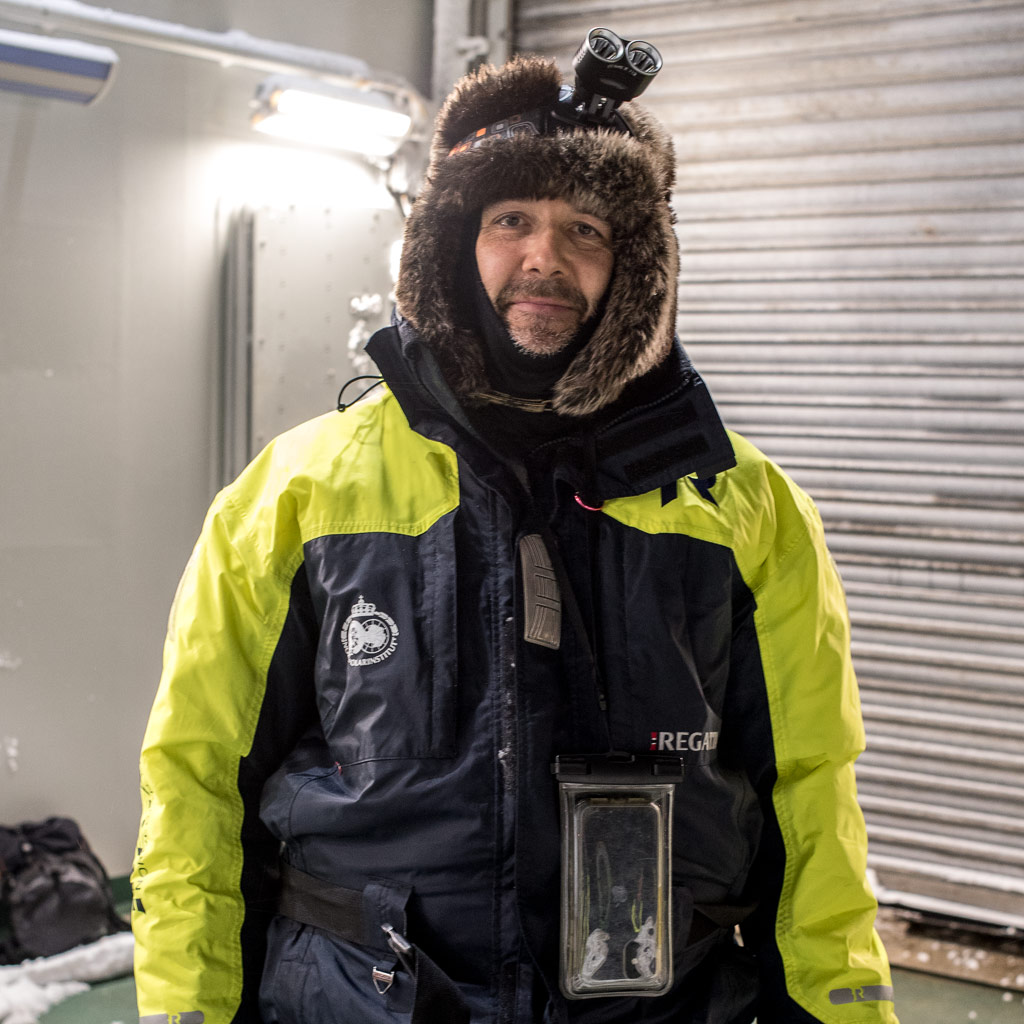
The ice experts have found an ice flow and examined it. The ice near the ship has some holes so the dress code is survival suits for the first time. In opposite to the formerly used Regatta suits they have attached boots and neoprene arm and neck cuffs. They shall keep you warm and dry in case you fall into cold water – or in our case break through the ice.

I am very interested to join and observe ice coring, a missing link on this expedition. I wasamhowever quite doubtful whether I will be allowed to enter the unreliable ice on this station. But I am lucky again, I may follow M. and L. onto the ice.

Earlier I was told that I may join the scientists taking ice cores but won’t get the opportunity to take ice cores by myself. That’s understandable. To my huge surprise – and delight! – plans were changed: L. shows me how to do it once and then it’s up to me to take five more ice cores. Give me snow or ice and something to play with and I’m happy ;-).

No, I’m no experiences ice corer after five cores. But at least I get an idea and a bit of a routine. In measuring snow depths, ice depths, the freeboard and writing down the values with a pencil. In mounting the large ice core attachment onto the electric drill and removing it after coring. In putting the ice core onto the gutter-shaped cutting board without flooding the electric drill or touching the snow (happened once – sorry!). While M. is cutting the core into slices and putting them into wide-necked plastic bottles I continue with my work. And I have to continue, because I’m still slow and M. shall not wait too long. I think, I could do that for weeks. Standing on the ice and drill cores out of the sea ice.

I have asked Pernille to take some photos from me while coring. These are probably the only photos that prove that I actually did something on the expedition beside of taking photos.

Photo credit: Pernille Amdahl, Nansen Legacy –tusen takk!

And the afternoon? I am allowed just to go onto the ice once more as long as I find some team lead to join. I find one and so get my 7th opportunity on this cruise. Two and a half more hours on the ice. I overhear a radio message. No polar bear warning but the information that our ice flow drifts with more than 2 km/h and the water depth is decreasing. This could damage instruments when they are too deep in the water.

Just some more photos:

And later, when we are on the ship again another polar bear approaches. This time it is a curious one that is very interested in the scientist’s equipment. And since it could harm the bear when it eats cables or plastic it is shooed away with a flare gun. **BANG**. It gallops some metres and then walks away. No polar bears were harmed and as far as I know no cables.

By the way – it was a good decision to use the survival suits. One of the scientists went through the ice today. All of a sudden and quite near the ship. It did not take long to pull the scientist out of the water but without the survival suit this would have been a very wet, cold and unpleasant experience.

8 March

The next day some additional measurements are done on the ice and then we leave last ice station of Arven etter Nansen JC3.

Ha det bra, Arctic sea ice. Farewell! It was a great pleasure to meet you and I definitely will miss you!

Polar expedition AeN JC3 – day 13 and 14: Polar bear ahead!

This article is part of the series “2022-02: Winter cruise KPH”.

Day 13 and 14 · 3 and 4 March 2022

3. March 2022, the second ice day at P7. I have polar bear watch on the bridge at 9:30 +2h so there is some time to relax after breakfast. While I am writing my diary there is a loudspeaker announcement, the first one on this journey:

Polar bear at the front of the ship.

I grab my camera equipment including the large telephoto lens and slip into my Canada Goose clothes. The best deck at the front of the ship is the helicopter deck and there I go.

I am not alone. Ice station was about to begin so some scientists were already clad in Regatta suits. Now they stand at the rail watching. But where’s the polar bear? I cannot see it. Until I go to the rail as well and look straight down. Whoa!

It is hard to believe, but this is my very first photo of a polar bear taken in the wild. Not some blurry spot far in the distance but a polar bear less than 10 metres away – vertically. It is quite interested in the icebreaker with all these funny colourful beings that has appeared in his world.

We are only guests in the Arctic world of the Polar Bears. We are not allowed to chase them off just to do our work. We are not allowed to chase them off to prevent them from destroying scientific equipments. We humans do not matter. Only the polar bears do. But we are allowed to chase them off for two reasons:

  • The polar bear should not eat plastic, rubber or other materials that could harm it.
  • The polar bear should not learn, that it is a nice experience to visit humans and teach this to its cubs. This could result into dangerous encounters in the future.

The polar bear realises that the ship’s bow is boring and continues to Z’s tent, sniffing and licking around ther…

**BANG** – a loud noise alarms me. **BANG** again. K. has used a flare gun to shoo the polar bear away before it starts eating the equipment. The flare gun is not used to hit a target but to make a loud noise. The noise however does not frighten the bear at all and K. gives some more shots. The bear decides that this sucks and slowly continues its way over the sea ice. Even when I have started my polar bear watch on the bridge I can see it in the far distance.

When I am on the sea ice again the afternoon to help K. with the Blueye ROV I see the armed polar bear guards with other eyes. It comforts me even more, that a whole team protects us – three watches on the bridge and several guards on the ice. Polar research works only in a team.

By the way: I am allowed to steer and control the underwater vehicle. It is not easy because the ROV lags a lot and the tension in the cable doesn’t make things easier. But in the end I manage to navigate it back to the ice hole again and we get it out of the water. It has some technical issues, probably because of the cold.

In the evening I stand on the deck and look over the ice.  It was become slightly colder, -26 °C and the air is crisp. Snow and ice look as if carved from marble in the sharp spotlights of the ship.

Later this night a female polar bear with a cub is spotted. And another single bear. I miss them, exactly as I missed the walrus encounters and that of the rare bowhead whale. What this ship misses is some kind of messaging system that informs you in these cases. You cannot be everywhere and you have to sleep sometimes.

The next day I help A. and B. in the benthos lab again. When I go to the locker room to get rid of my boots for lunch I meet E., who is putting on the Regatta suit. Why that? E. tells my another polar bear has been spotted, a kilometre away.

Shortly later we stand on the helicopter deck again and watch the other polar bear approaching. This time I see it when it is still pretty far away, but it discovers our ship and comes nearer and nearer and nearer.

This bear however is less interested in us and just passes by. Good for him and less noisy for us, no flare gun involved this time.

Polar expedition AeN JC3 – day 12: ice station on the Arctic Ocean

This article is part of the series “2022-02: Winter cruise KPH”.

Day 12 · 2 March 2022

Yesterday we arrived at P7, the northernmost transect station on this cruise. Here, a bit north of the 82th degree of latitude and round about 3400 metres above the seabed of the Arctic Ocean we will start our second ice station today.

The morning I start with two polar bear watches. It snows and the visibility is not the best but still good enough to watch out for polar bears.

This is my workplace for 2×1 hour this morning:

And this is the workspace for some of the scientists:

After lunch I get another opportunity to join researchers on the sea ice.

I join Z. again and help her erecting the tent over the already existing ice hole. Then A. uses the hole – now in the tent – to test his ROV (short for remotely operated underwater vehicle). After that Z. continues with MMS measurements. I want to help her but J. who joined our team as well will do that. Z. says that I shall take photos, she never has time for that. Well, when I get a carte blanche to take pictures I use it!

Taking photos in the tent however is not easy. It is quite dark and there is a lot of moisture that my Nikon does not like at all. But here it’s not the technical quality but the motives that matter. (Says Olaf, the perfectionist who is still angry with himself that he did not made bigger efforts to get better photos.)

K., our polar bear guide looks quite impressive standing upright on the nearby ice ridge in front of a purple sky. And the sky is purple. In the Arctic winter it is the sun that colorises the landscape and blends purple and orange of clouds and sky with blue and turquoise of the ice to always new colour palettes.

K. gives my clearance to walk around a bit. To the ice ridge and 30 metres on the snowmobile track to the ship. I enjoy my gained freedom and take some photos of the ship, the sun, the ice, of K. driving snowmobile. And it is such a beautiful day!

More than two hours I am on the ice before we return to the ship. But before that I have to bore you with another selfie ;-)

This selfie is for you, my friend Chris. It was Chris that surprised Annika and me with a generous gift a few years ago: A balaclava for each of us knitted by her. One of these balaclavas now has been in the high Arctic. It is one of the garments I definitely will pick again when I should have another opportunity to travel way up north! Thank you, Chris!

Will I be on the sea ice the next day again? Yes, but first there’s another story to tell. Bear that in mind ;-)

Meanwhile in Tromsø

While I am writing a lot of blog articles about my time in the Arctic live in Tromsø goes on.

When I arrived Friday a week ago Tromsø was as un-wintry as possible. It was several degrees plus and it rained.

But to be honest, it didn’t affect me a lot. Mentally I was still in the Arctic.

Despite to the torrential downpours that Yr forecasted for this weekend the weather was ok yesterday and nice today. But as the whole week it was really warm: +7 °C. Time for a morning walk. _(Sunny, but much windier than expected.)_

In the afternoon I wondered if it was possible to take a small promenade on Kvaløya. I headed to the parking place from which I started a ski tour seven weeks ago. A lot of other cars were there and snow and ski tracks. I did not have any skis with me today. I tried to walk on the snow just with boots but the snow was at least knee deep. And then I came to the bridge that crossed a rapid meltwater flow. Maybe nice for experienced skiers but I didn’t have any interest in falling into the water. Time for me to return to the parking place.

The good thing: the parking place is just 200 metres away from the coast. So I took a short afternoon promenade there enjoying the colours, the sun, the fresh air and the wind. Yes it was windy – the display at the bridge to Kvaløya showed 20 m/s.

Back again at my car skiers arrived. My skis where home but then I remembered, that I always have snowshoes in my car. I attached them to my rubber boots and so I could make at least a tiny promenade to the next hill some hundred metres away.

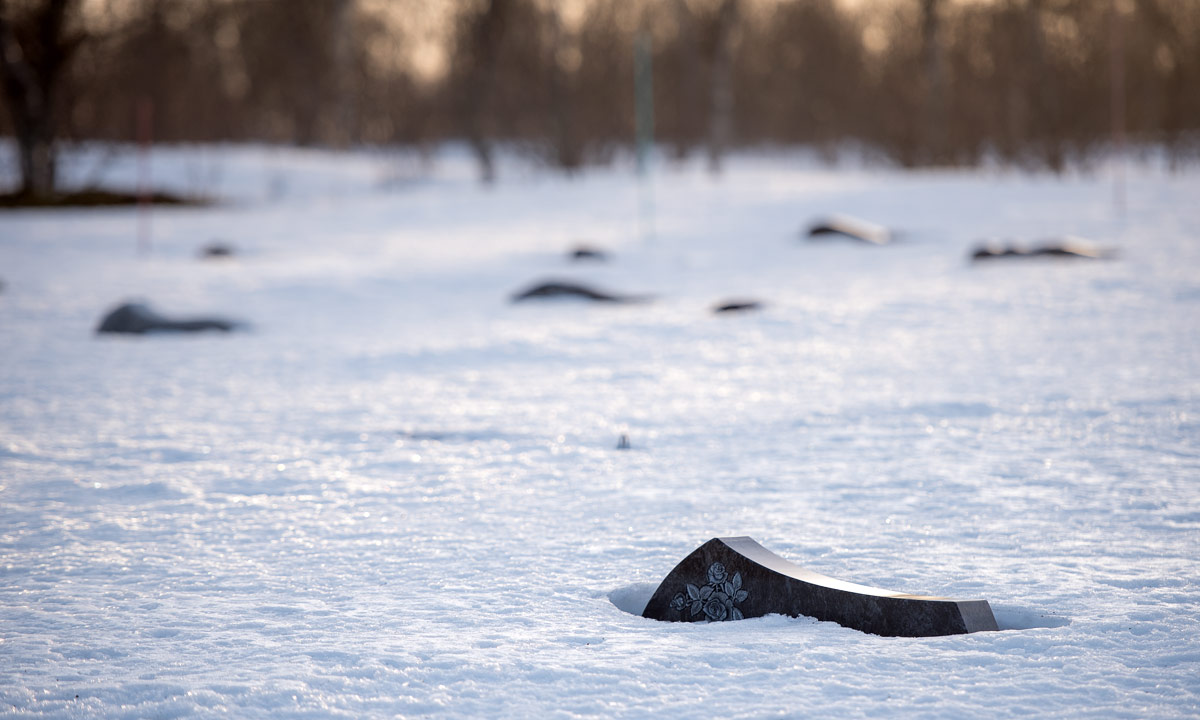
Back in my car. Next stop: Sandnessund Cemetery. Never been there before. Even there a lot of snow.

Next stop was unplanned. I just had to take a photo of the vessel and the mountains of Kvitøya. Luckily the parking place of the Tromsø Havpadleklubb was near.

The Arctic has its own extraordinary beauty and I feel a special connection to it. Tromsø and surroundings however are beautiful too, even when weather has been much too warm for mid-March.

For the records: The first „hestehov“ or Tussilago I (17 March on my way to work).

Polar expedition AeN JC3 – day 11 · transit to P7

This article is part of the series “2022-02: Winter cruise KPH”.

Day 11 · 1 March 2022

Today is travel day. Our destination is station P7 (82° N, 30 °E), further north than Svalbard and even Franz Josef Land.

From the documentation of Nansen Legacy (Arven etter Nansen):

P7 – Located in the deeper Arctic Ocean. P7 is suitable for comparing the shallow Barents Sea with the deeper Arctic Ocean. P7 will have extensive sea ice coverage during winter, and varying sea ice cover during summer. P7 might be suitable for geological coring.

When we arrive there the sea ice is a bit thin. Therefore we continue a bit further north where we find a suitable ice floe. So, tomorrow: the second ice station of this cruise.

Some ice photos from this day:

(Photo 5 and 6 are switched for layout reasons)


Polar expedition AeN JC3 – day 10: twice on the ice and a sudden end

This article is part of the series “2022-02: Winter cruise KPH”.

Day 10 · 28 February 2022

Today we continue with ice station at P5 – short for “Process study station” at approx. 80.5° N 34° E.

To my delight I can join the scientists A. and B. on the ice this morning. Great! First they will do a transect measuring ice and snow depths along a path, then A. will examine snow. I will join them but without a specific task.

Right after breakfast the preparations start. We all have to dress up and equipment as well as snowmobiles have to be lifted from deck onto the ice. And then I stand on the Arctic sea ice a second time.

It’s -12½ °C, wind 8 m/s– good conditions for taking a walk. But before we start instruments have to be set up and activated.

While B. sets up the GEM-2 device, a multi-frequency broadband electromagnetic sensor to measure ice thickness, something happens. Our polar bear guard J. breaks through the ice. First up to the thighs, a second later to the hips. Exactly on the very snow mobile track that all use to walk to the different places. It could have happened to any of us. J. is lucky, he pushes himself out of the hole way within seconds. After this incident the ice hole is examined and the weak parts are removed. Now it is 2 m long but hardly 50 cm wide. Later it will be marked with flags to prevent others falling in.

J. stays almost completely dry and does not need to change clothes. So our small transect caravan is ready to depart.

  • A. comes first. With each steps he pushes the long staff of the Magnaprobe into the snow to measure and track the snow depths.
  • B. comes second. She pulls the pulka with the GEM-2 that continuously measures ice thickness as well as position and time.
  • J. comes third. As our bear guard he has a rifle on his pulka and safety equipment. He has to keep two metres distance to B’s pulka, the GEM-2 is sensitive.
  • I come fourth. I just follow in the same slow pace – slow enough to take some photos. I do not dare to leave the track after J’s involuntary “bath”.

Our destination is that black flag tied to the bamboo pole over there. How far it is? On the sea ice I do not have any clue. It could be 100 metres, it could be a kilometre. Distances are hard to guess.

Our walk takes only 45 minutes but is extremely impressive. We leave the ship behind, therefore I only see the others, the sea ice, clouds and the low hanging sun that illuminated this Arctic scenery in the warmest colours. The next image is one of my favourites, but it cannot reproduce the „North Pole“ feeling I experienced on our triangle formed walk.

When I wrote „North Pole“ I started to smile. Yes, I would love to visit the North Pole someday. I doubt however that it looks different there than here. Being part of this quite inaccessible Arctic landscape  touches me deeply and I’ll never forget this impression. I envy A. and B. who will walk a lot on this expedition, mostly by foot, sometimes by skis. I cannot imagine a better job than doing this.

Are we on the ice the whole day? No. There’s breakfast 7:30–8:00, lunch 11:30–12:30 and dinner 17:30–18:30. At meal times there is no polar bear watches and so no people on the ice neither.

After lunch I am allowed to be on the ice a 3rd time, helping. I am in doubt if we are actually able to step on it because it became windier and the visibility was mediocre. And visibility is needed by the polar bear watches.

Visibility doesn’t seem an issue and soon I stand on the sea ice again. I am sent to another scientist that may need my help. Well, not yet– so let’s take a few short snapshots.

While I try to figure out how I can help someone is coming to us and says: „Grab your stuff and leave the ice immediately!“. I want to fetch my backpack but cannot find it. Probably someone else already took it. So I head back to the icebreaker – it’s near – where equipment is already loaded back to the ship. And there’s the backpack.

Soon I am on board again and learn what happened. It was not a polar bear as I suspected but a crack in the ice. It came from the distance and started to split our ice floe fast. The crack was not threatening us directly but a clear signal, that the ice is not safe anymore. Here a photo from one of the upper decks:

Later this day a small team in survival suits takes down the tents and fetches the rest of the equipment.

For me that feels like an extraordinary incident but the affected scientists take it easy. Seems to happen frequently. Some admit that they were surprised that this ice floe held so long. I do not say it loud but think for myself that I would have preferred wearing a survival suit to the Regatta suit to keep dry in the case of breaking through, but that’s not up to me to decide. And still – I do not have any experience on Arctic sea ice.

What shall I say. Two days ago I was afraid that I was not let on the sea ice and now I already have been there three times. I am very grateful to the cruise leader that gave me these opportunities while handling a zillion other things – many of them really important – at the same time! Thank you, G.!

Polar expedition AeN JC3 – day 9: P5, the first ice station

This article is part of the series “2022-02: Winter cruise KPH”.

Day 9 · 27 February 2022

Yesterday we have arrived at P5, our first ice station. In the night the ship left the ice for some plankton nets and trawl. Today morning it carefully moves back to the chosen ice floe. After breakfast the activities on the ice will start. A station with a tent quite near the ship, another one some hundred metres away and A. and B. who do transects of ice and snow depths will wander around somewhere. (A transect is a path along which a series of measurements of the same type is performed.)

A lot of people will be on the ice but not me. The meeting of the previous evening revealed that I will not the enter it today and my status for the next day (tomorrow) is “additional”. Although I understood that the cruise leader did not want to send all people directly onto the ice – especially since it is not very thick – I was disappointed.

After the meeting I tried to ask the cruise leader for the reasons but I communicated quite demanding and stressed her unnecessarily. Today I apologised to her. Even while I write this article I am ashamed for my behaviour. That was not my best hour.

Today I will be involved in the ice station anyhow, but from the ship.

Polar bear watch

Here in the northern part of the Barents Sea we are in the habitat of ursus maritimus – the polar bear. These animal are threatened and need our protection. At the same time they are dangerous and we have to protect ourselves. So the most important thing – both for humans and polar bears – is to avoid encounters on the ice.

That’s where the polar bear watches come in.

Before anyone may enter the ice already three polar bear watches stand on the bridge on deck 8. Each watch has a segment of ca. 150° to watch so that the segments overlap. Than the polar bear watch will have a single task for one hour: constantly watching the segment – with and without binoculars. As soon as a polar bear watch discovers a polar bear on the ice he/she uses the handheld VHF, a two way radio to make a radio call, for example “Polar bear at 10 o’clock, 1000 metres, moving to the ship”. All team leaders and ice bear guards and the cruise leader have a VHF as well and can discuss plans that mostly will result in leaving the ice.

Today I will have three polar watches. 9:30, 12:30, 14:30 +2h. Since I know that this task is very important I am quite nervous while I walk up the staircase to the bridge.

At least the windows that still were salt-encrusted from the storm two nights ago are cleaned. Good for the visibility.

The VHFs are also used to sign in and out people on the ice. As soon as someone enters it a call is emitted: “Bridge, bridge, this is A. B and C on the ice”. The same procedure when people are back on the ship. The person in charge is also on the bridge and will move magnets on a chart to keep track. A bit like a non-magic version of the Weasley Clock in Harry Potter. (Thanks Annika for this metaphor!)

At 9:30 I start my first watch at the port side of the ship. It is a good beginner place because it is farthest away from the ice stations. For one hour I constantly scan the ice from the open water at the stern to the ice at the bow. Sometimes I use the binocular and scan the horizon, sometimes I use my naked eyes to get a better overview. Sometimes I look down to the ship. Some of the ice floes look like polar bears but first they do not move (and soon I know them by heart) and then polar bears are not of this cold blueish white but more a yellowish, creamy colour.

These photos I made after my watch. My job is to watch the ice, not to take selfies for this blog or mobile photos through my binoculars. Yes, I use my own, because I love them more than those on the bridge. I realise that I own these binoculars for almost 40 years. The oldest piece of equipment I brought on this polar cruise.

The biggest challenge: Do not think! Don’t follow your thoughts. Because then you may still look through the binoculars but without paying attention. The 59th minute you do the same as in the 1st minute. Watch the ice. Watch the ice. And again, watch the ice!

So that’s my day. Watch the ice. Take a nap. Eat lunch. Watch the ice. Relax. Watch the ice. Fight tiredness. Eat dinner. Until …

MSS casts on the sea ice

… the cruise leader comes to my chair while I am eating fish, potato gratin and beetroot. She asks me if I was ready to go on the ice at seven. Tomorrow? No, today. What? I mean, of course! I shall follow Z. who will do three MSS casts to measure CTD (conductivity, temperature, depth) and turbulence in an ice hole. I shall dress very warmly. The first opportunity to be on the ice and see how this measuring works. Wow!

At 19:00 I stand outside on the deck waiting for the others. I have to stand outside because I’m dressed in two layers of wool and this non-breathing Regatta suit and I already started sweating while changing clothes.

Half an hour later the snowmobile has left me at the green tent. Officially I only got 30 seconds for taking photos – every extra minute will extend the observation time of the three polar watches – but since Z. has to do some preparations I have some minutes to take snapshots in the dark. And to feel very happy.

Then it’s my turn to help. While letting down the MSS needs some experience pulling up is just some mechanical work. Z. did the first one, I do the two others. Z. observes the computer display and signals me when I shall slow down. All I have to do is winding up. Easy work and time for a chat.

After the three measurements Z. is content and calls K. to fetch us with the snowmobile.

This activity from ship to sea ice and back to ship took less than an hour but I will never forget it. Standing in the dark on the ice of the Barents Sea on a place nearer to the North Pole than to my work town Tromsø is just impressive and I feel that I have a strong relation to it.

Next time however I will dress less warmly. It was only -15 °C outside and I had too much clothes on. Alone the Regatta suit is warm and the tent was heated to protect the sensitive electronics.

And you? If you had such an opportunity would you take it or do you prefer warmer locations?

And to those of you who have such an opportunity for me: contact me asap.

Polar expedition AeN JC3 – day 7 and 8: a stormy intermezzo

This article is part of the series “2022-02: Winter cruise KPH”.

Day 7 and 8 · 25 – 26 February 2022

25. Feb 07:00 – testing clothing concepts for extreme cold weather

Another Arctic morning. It has become slightly warmer with temperatures round -24 °C but at the same time a lot of windier. The average wind speeds of 20 m/s and above. So windchill is still -45 °C and I wonder how to dress just in case I will be on the sea ice the first time this night. No, I do not count on being allowed to enter it under such conditions but you never know. Be prepared and wait …

For safety reasons we always have to wear a special suit on the ice in case of someone breaks through. That’s either the Regatta suit, a floatation suit. This acts as a full body life vest giving you buoyancy in the water. However you will get wet instantly. No big issue because we will always be quite near the ship and conditions are ok. If the circumstances are more extreme or the ice is not trusted a survival suit with attached rubber boots is used. It will keep you completely dry as long as the arm and neck cuffs are tight. It is said however that it is uncomfortable to wear and you easily get very cold feet.

So, let’s get dressed. For the first time I put on the Regatta suit. It is as breathable as a rubber dinghy so you should not sweat too much. Over that, more for the fur hood than the warmth the Canada Goose parka. Yes, I can still move ;-)

Dressed like never before I open the thick door to the helicopter deck and stagger outside. Whoa! That’s some rough weather. I instantly feel every single square millimetre of skin that is still exposed to the wind and even that the zipper of the down pants are not completely closed at the bottom although I wear high rubber boots. In my opinion the hood of the Snow Mantra is ingenious but the gusty storm just pushes it aside in all directions and I can hardly see anything. So I do not check if the selfies taken with the Nikon and three pairs of gloves and mittens are in focus. They are not.

Being in again I understand the first time, why the parka hood is not only fur-trimmed but have this thick fleece rim inside. It keeps away the ice dust that the storm blows in.

The combination of Regatta suit is too warm and too bulky. I test another combination with the shell jacket of the Norwegian Polar Institute and ski goggles. Insight 1: if the hood does not fit perfectly it is completely useless in the storm. Insight 2: my old ski goggles freeze over so fast that within a minute I am functionally blind. I have to remove them to find back to the helicopter hangar. While checking this the storm pushes me around on the deck slippery deck. I really doubt if anyone wants to work on the ice in these extreme conditions. On the other side I do not know anything about polar research. Neither about polar researchers. It’s me who is the newbie.

25. Feb 11:00 +2h – planning for the storm

Aside: The day before we changed the ship’s time to take better advantage of the daylight. When I write +2h it means our privately shifted time. Otherwise it means „normal“ CET time zone.  If you don’t care, just ignore it.

We have a meeting before lunch. A storm approaches. We will seek shelter between Nordaustlandet, Svalbard’s second-largest island and the island Kvitøya. Conditions are too rough for an ice station. Although all four ship engines are running we hardly make progress. There is no time schedule anymore. We just have to sit it out.

25. Feb 16:20 – the swell wracks the ice

At 15:20 I take a long afternoon nap while Kronprins Haakon struggles through the ice. I have on of the frontmost cabins on deck 3 –the noisiest ones. The icebreaker is rumbling, rattling, grinding, squeaking and doing many more noises that I do not have words for. I lie in my bed and feel the mattress vibrating, shaking, bouncing. And I love it. For me it is like an Arctic lullaby and as mostly I fall fast asleep.

z – z – z – z – z

After an hour I wake up all of a sudden. Something has changed. The ship is slowly and strongly pitching. At the same time noises and vibrations are absent. Are we in open water? What happened!?

I have to compensate the ship’s movements while I walk to the dayroom. I peek through the ice crusted windows. Yes, we are in open water. J. sitting there tells me that 10 minutes ago swell waves. They broke up the ice within minutes and now the ice has disappeared. Impressive and a bit frightening, too.

Now we are amidst the storm with an hourly average of 24.2 m/s, that’s round 87 km/h. The highest wind speed measured in this hour is 32.7 m/s, that’s the exactly beginning of Hurricane force or level 12 on the Beaufort scale.

Although the ship is stabilised it is pitching, rolling, yawing, heaving and a lot of people have started to get seasick. I feel quite ok, but a bit stressed and tired. After a while I decide to lie down for a quarter. Good idea! I feel better again after that.

I’m in the day room again, watching the dark waves through the ice encrusted windows . Sometimes the spray splashes up many metres. No, I won’t enter any outside deck today any longer!

25. Feb 19:24 – crossing the 80th degree of latitude

I wanted to see on the digital nautical chart how we cross the 80th degree of latitude but I miss it by some minutes in time. Soon I go to bed quite curious how the next day may look like.

26. Feb morning – Kvitøya

06:10 – The wind has calmed down and I stand on the helicopter deck (on level 6) again. Open water, a bit of ice and in the distance a pale scheme. The island Kvitøya. It looks like the spray has reached the deck because everything is coated in ice and the ice on the floor is slippery and feels like soap powder.

After the breakfast I try to catch Kvitøya on the Nikon sensor.

The last photos are crap from a technical view (taken at 600 mm ƒ/6.3 in twilight on a moving ship and a travel tripod). Anyhow they show the glacial coast of this Arctic island which I think is very impressive. A pity that the weather was so cloudy.

26. Feb morning – we reach ice again

While I take these photos another thing happens: we reach ice again. First fields of beautifully rounded pancake ice floes, then a few hours later we are in ¹⁰/₁₀ of thick ice again. There Kronprins Haakon can show again that it is an icebreaker.

We have another meeting at 09:00 +2h. We learn that it is more than unsure whether station P4 will have any reliable sea ice to work on. The cruise leader asks: shall we try P5 instead? Yes, all scientists agree. So today we will head to P5 at 80.5 °N 34 °E. That’s only an estimated position. First of all a suitable ice floe has to be found and then this floe will drift on the sea and so change position while ice work is ongoing.

26. Feb 16:00 – checking the ice

Eight hours later. Together with the cruise leader and the captain the ice experts had looked for a suitable ice floe. When they were satisfied the ship stopped and a derrick lowered the ice gangway. Now four people are on the ice. All equipped with survival suits. Two of them carry rifles. We are in the home of the polar bears.

Will I be allowed to enter the sea ice? Perhaps already tomorrow? I doubt it but I’m really longing. I don’t know where this strong relation for the Arctic comes from but it’s definitely there and it grew the last days. And I want to be part of it as much as possible.

Polar expedition AeN JC3 – day 6: sailing through the ice

This article is part of the series “2022-02: Winter cruise KPH”.

Day 6 · 24 February 2022

We are on our way to P4, our first ice station. P4 lies at 79.75 °N 34.00 °N, round 50 km southeast of the island Kvitøya (white island) that belongs to the Svalbard archipelago. This station is more north than Ny-Ålesund on Svalbard. The estimated time of arrival is tomorrow round lunch time.

However it is not granted that the ice will be safe enough to work on. In addition to that it will become stormy tonight and maybe the whole next day according to windy.com . So even when the ice is safe the weather conditions could be too harsh. So there are several uncertainties. We plan for the station but more we cannot do yet.

Today is a cold day with temperatures maximum of -25.0 °C and minimum of -30.5 °C. I’ve experienced colder temperatures many times in my live in different parts of Lapland, but then the wind was always calm. With the ongoing wind the resulting windchill lies between -36 °C and -49 °C. And windy is right: it starts getting windier in the evening.

temperate in °C | wind speed relative to the ship in m/s | resulting windchill in °C.

I take photos of marine animals, I learn the basics of ice observation but I stand outside quite often today. Watching the icebreaking polar research vessel Kronprins Haakon breaking through the ice. It is a great experience and I’m happy that I may participate.

But now, let the photos speak. The first I made at 3:50 in the night, the last ones at 19:10.