Seljalandsfoss and Glúfurárfoss

This article is part of the series “2018-08: Iceland”.

Friday, 31 August

Yesterday Annika and I went into phase 2 of our Iceland holiday. We hired a car for a week. We had booked a VW Polo but we were lucky and got a brand new VW Golf as an update. That’s a great car to drive the 1332 km long Route 1 round the island (and probably some detours). We got our car at 12:30, went shopping and left Reykjavík as fast as possible to follow the Route 1 counterclockwise.

The first stop was at a huge parking place, where you could see the Seljalandsfoss, a 65 metre high waterfall. It is special in the way, that you can go round watch it from all directions. We were not the only ones, hundreds of other tourists went round as well, many of them without proper rain clothes and soaking wet.

A gravel path led to another waterfall, the Glúfurárfoss. It is not easy to reach, because you have to enter a hollow and wade through a stream to get to it. This waterfall may be less impressive in height and amount of water, but the scenery is more special, almost enchanted than the Seljalandsfoss. I was very glad to have not only rubber boots but also my waterproof camera with me, but half of the time I was busy with keeping the lens dry.

A special place in the Highlands of Iceland

This article is part of the series “2018-08: Iceland”.

Thursday, 30 August

When Annika and I were in Hveravellir waiting for the bus back to Reykjavík, we met Matti whom we got to know some days ago. We gladly accepted his invitation not to take the bus but to follow him and his friend by car.

First Matti followed the very same way that the bus would have taken, but soon he turned in another gravel road that led us up a slope. The path got worse and worse and I was glad that Matti has an old Nissan Patrol and knows how to handle it when crossing a ford or driving through deep clay mud. The gravel track ended in a parking place with a tiny toilet. From this point we had to walk.

I stood at the rim of the parking place and was stunned by the iconic view.

I could see coloured mountains everywhere as in the Landmannalaugar, many of them covered with old snow fields or small glaciers. The scenery was partly covered with steam that emerged from fumaroles as in Hveravellir, but here were hundreds of them.

We followed the path and descended the clayey slope on some ridiculously steep looking steps. This geothermic area is very active and constantly changing. Sometimes a fumarole is less than a footstep away. We crossed a bridge, partly hidden in the steam emitted by boiling water pools, were Matti cooked some eggs.

We continued our hike and ascended another clay hill. From here we could see many other hills and stairs leading up and down.

We came nearer and nearer to an old snow field. Here the normal path came to it’s end.

One path led up the slope over the snow. We continued another path that led to the top of a slope. From here we could see huge snow blocks that had slid down the clayey slope. Matti, his friend and I went down that slope. The ground was extremely slippery and when I arrived down in the valley my rain pants were completely covered with wet clay. The weather worsened: First it drizzled, then it even snowed a bit and in addition of that the steam of the fumaroles was everywhere. The following photos of the snowy ice blocks were the last ones before I gave up making pictures, because camera and lenses became too wet and muddy.

It took I while until I managed to crawl up the slippery clay slope again. We started heading back. The wind had increased and on the last crest-like hilltops it was really stormy. Luckily the storm was not strong enough to blow us over. Anyway I was glad to be in the shelter of the car again.

This place is really special. Not too easy to hike when it’s wet, but both interesting, varying and extremely beautiful. Of course other people know this place as well but at least there are no commercially guided tours yet. To keep it that way, I promised not to reveal the location of that place although Iceland experts probably have recognised it already.

Thank you, Matti for this experience, the long drive back to Reykjavík and the lift to our guesthouse!

Hveravellir

This article is part of the series “2018-08: Iceland”.

Wednesday, 29 August – Thursday, 30 August

After our long bus tour we arrived in Hveravellir in the Highlands of Iceland. Hveravellir lies 650 metres above sea-level and here you can find geothermal areas, where fumaroles emit hot gas, mostly water, carbon dioxide and hydrogen sulphide. The latter one is responsible for the smell of rotten eggs.

We went along the wooden path (don’t leave it, the crust is thin and boiling hot!) and looked at the fumaroles. Then we continued a path westwards.

The landscape scenery changed. The path led mostly through lava rock, only sparsely covered with soil, moss, grass and some flowers.

Some sheep were grassing here and there. They preferred the grassy parts of the desertlike surrounding.

The willows however had to cope with the soil that they had got and even more with the weather. There were flat and crouching on the ground to avoid exposure to the wind.

The way we chose is no circular track so after a time we had to return to Hveravellir, where we had booked an overnight stay. We used to wooden bridge to cross a small stream. You have to be careful, the water is hot!

“Home” again we cooked tortellini for dinner and bathed in the hot tub that was located right beside of our mountain hut. While Annika stayed in the hut after that I took another walk and enjoyed the evening light. The sky was clear and the sun was shining. (And I thought, it would only rain on Iceland!) The motives? Smoking fumaroles against the light · glaciers and snow covered mountains far away · sheep nearby.

I slept very well but woke up quite early. Time for another walk, this time enjoying the sunrise.

The night has been cold and ice crystals covered flowers and leaves. The wet parts of the ground were covered with hoarfrost that looked hairlike.

The fumaroles enveloped the geothermal areas in steam. I can do without the sulphuric smell, but the look is very impressing, especially with the warm sunrise colours.

After my early morning walk Annika and I had breakfast and then packed our stuff. The bus back to Reykjavík wouldn’t leave before 12, so we had time for a two-hour walk together, this time heading south. One of the things that make Iceland unique for me is the colours, not only the colourful mountains in Landmannalaugar, but even the moss and the grass looks special. And the volcanic lava rock is so sharp that the photos look oversharpened.

Round 11 o’clock we had returned to the parking place waiting for the bus. But we spontaneously changed plans when we met Matti whom we got to know in Reykjavík some days ago. He was here by car and invited us to join him and his friend. They wanted to drive to another place, hike around then return to Reykjavík. We happily agreed and had a great time, but that’s another story …


Landmannalaugar

This article is part of the series “2018-08: Iceland”.

Sunday, 26 August – Monday, 27 August

There are only a few roads leading across the Highlands of Iceland. Most of them are only open for cars with four-wheel drive because it is necessary to ford rivers. Even though the road to the Landmannalaugar, our destination for Sunday, is not the toughest, we decided not to hire such a car. They are expensive, we don’t have any experience in fording and there are busses making such trips as well.

Sunday morning we entered the bus to the Landmannalaugar. The whole trip takes round about four hours and goes mostly on normal asphalt roads: through Reykjavík, along the Ring Road that runs around the island, then along a minor road. Finally we reached the junction where the gravel road starts and the bus ride became a bit jumpy. We met some other cars, some of them huge jeeps, some of them small SUVs. After a while we approached the first ford, where a small Dacia Duster crossed the water, followed by our bus.

The other two fords are within sight of the Landmannalaugar mountain hut. There were deeper and many of the drivers with smaller cars decided to use the parking place nearby instead of fording. The bus however splashed through the water and brought us to the mountain hut, where we had booked two places to sleep.

After we unpacked our sleeping bags and put them on two of the narrow mattresses we put on our jackets and boots and started a hike through the amazing landscape. Annika has been in Iceland before several times and told me about the almost unbelievable colours and shades of the mountains and she was true. Some of the mountains were orange, some brown or yellow, some green and one of them red. The lava rocks were black, partly covered with white-green moss and the higher mountains had white snow fields on their colourful slopes. Take a look by yourself:

Iceland has a lot of tourists, last year more than 2 millions. To protect the sensitive environment and avoid destroying the flora you mustn’t leave the trail. There’s another reason for sticking to the trails: Iceland has many geothermal areas where you could break through the thin crust into bubbling mud or boiling sulphuric acid. Some of these spots are visible, they smoke and you smell the sulphur compounds.

After some hours hiking (including an ascent of a mountain) we returned to Landmannalaugar. There’s not only the mountain hut providing 75 beds and a camp ground with place for at least hundred tents, there’s also the Mountain Mall, an old bus where you can buy food.

We enjoyed a rest with two cokes before we headed to the next attraction: A warm bath in the river. Because of the geothermal activity the ground is partly hot and heats up the water to temperatures between round 30 °C and 42 °C. We were not the only ones bathing, but there was enough place for all. You could even decide how warm you wanted your bath by just moving another metre. Great!

After a saturating dinner with spaghetti and pasta I took another walk and some more photos. Then I went to our room and got to bed.

Amazing! Although more than 15 people had slept in the room and the mattresses were so narrow that we could hardly turn around Annika and I slept very well. It was very quiet, hardly any snoring, no talking, no rustling with plastic bags. I experienced much worse when I had spent nights  in alpine mountain huts in Germany or Austria.

After breakfast we took another bath and then another hiking tour. I hardly made any photos due to the drizzle and the strong winds. At least I could take some pictures of the sheep grassing on the plain.

Drizzle became stronger and turned into rain. We went to the ford and looked at the cars crossing. This time I had my waterproof camera with me. Look at the snorkel of the white jeep, I guess this car could almost dive!

The rain got stronger and stronger and when we entered the bus our rain clothes were soaking wet. I looked through the rain-wept window for a while, tried to make same photos, but the autofocus couldn’t handle the situation. After a while I fell asleep.

Conclusion: A great experience! Yes, Landmannalaugar is touristic and crowed, but for good reasons. It’s absolutely worth a visit. Here you can even start a four-day hiking trip but you have to reserve the mountain huts years before. I’m quite eager to do this trail, perhaps in 2020 …?

A mountain tour in Arvidsjaur

Yesterday I used my new car to drive to Vittjåkk, a small skiing area near Arvidsjaur, two hours away from home. Annika and I were there in wintertime and made a showshoe tour up the hills. I lived in Munich for six years and do not call these hills real mountains, but at least they reach above the treeline.

I parked again at the same parking lot and ascended the first hill that seems to be nameless. The sky was free of clouds, it was quite warm and I was completely alone.

Soon I was on top of the first hill. I wasn’t alone anymore. Some horseflies tried to make friends with me or at least with my blood. I descended the first hill and went up the Vittjåkk.

From the top I had a wide view over large forests, lakes and a higher mountain range.

Beside of taking pictures I didn’t rest because the horseflies really loved me. So I continued downhill again and was a bit flabbergasted that the whole hike took hardly more than 90 minutes. The hut village was completely abandoned, only a snowmobile showed that this place is only used in wintertime. And other signs showed that too …

Four typical observations in Northern Sweden’s inland in summer, when you go by car

One: construction sites. Almost all major roads are under constant repair each summer. It takes a lot of time to travel. Sometimes you have to wait for a traffic light becoming green or a follow-me car. Sometimes you follow an expencive camper whose driver doesn’t dare to drive more than 20 km/h on the gravelly sections. And this may go on for miles. Swedish miles! (A Swedish mile is 10 km.)

Two: lupins. Many roadsides are overgrown with lupins. They are beautiful, but they are invasive and threaten biodiversity. The Swedish Transport Agency has started to fight theses flowers.

Three: reindeers. Most reindeers are in the mountains but there are always reindeers left in the inland. Keep attention when driving! When you see one reindeer you can be quite sure that others are around, too.

Four: bilingual town signs. On many place in Northern Sweden you are in two countries at the same time. Sweden, the official nation and Sápmi, the region traditionally inhabited by the Sami people. Therefore many places have (at least) two names, a Swedish and a Sami one.

I drove a lot yesterday: 535 km in total. But as a result I know the new Subaru Outback much better and got used both to the automatic gearbox as the electronic systems. I’m very satisfied with the car that is much more comfortable than the old one. The only drawback, it might be the white colour: The horseflies just love the car. When I return to the car it is mostly surrounded by some dozens of this pests and they will even try to follow when I set off. (They manage round 25 km/h.)


Travel remainders

This article is part of the series “2018-03: Varanger peninsula”.

Some unpublished photos from my winter journey. I want to show them as long it is still wintry here.

2 February – Jokkmokk

While the grown-up huskies are doing their job the puppies have to wait in the trailer. I guess it is very boring for them. There are curious and seek contact.

21 February – Kirkenes

While Chris, Annika, Ørjan and I are enjoying the gorgeous breakfast in the hotel Thon an asian tourist is waiting outside. She seems to be well protected against the elements but why has the fur to be pink …?

1 Mars – Ekkerøy

On the way to Kiberg Annika and I make a stopover in Ekkerøy where we enjoy a beach walk. Here we meet H. who invites us to visit her. We will make that true some days later. I take a photo of Annika’s and H.’s footwear. Tradition, meet modern world.

1 Mars – Ytre Kiberg

Cape East Arctic Adventure, our stay lies directly at the beach. I could spend weeks with only watching the tides and the changing weather.

4 Mars – Ytre Kiberg

There’s hardly any commercial fishing left in the small former fisher villages and the large drying racks for drying cod remain empty. Some people however still dry cod for personal usage.

5 Mars – Ytre Kiberg

A view through the window of Cape East Arctic Adventure. Today we will continue our journey.

10 Mars – Berlevåg

We hardly have the time to explore Berlevåg, we only buy food. Two images of Berlevåg anyway. Just for the records …

11 Mars – Kjølnes Fyr

This snowstorm shaken rocky shore appears more arctic than many other places of this journey.

14 Mars – Hurtigruten, near Øksfjord

A woman has found a wind protected place and watches the Norwegian winter landscape.

16 Mars – Saltstraumen

On our long car trip back from Ørnes to Skelleftehamn we pass Saltstraumen, a small strait with one of the strongest tidal currents in the world. We are too early to see the strongest maelstroms and I’m too eager to continue home. It’s still 500 km to drive.

Now I finally can erase my “later” folder on the computer.


A ski tour in the Kvikkjokk mountains – day 7 to 9

This article is part of the series “2018-02: Ski tour near Kvikkjokk”.

Day 13 to 15 of my winter journey 2018

(finally the last part about Jonas’ and my ski tour five weeks ago)

Tuesday, 13 February

I woke up in the cabin Tarrekaisestuga at 7:20. Some more centimetres of fluffy snow had fallen over night and it was still snowing slightly.

While Jonas and I had breakfast the snowfall intensified so that the mountains and the opposite shore of the lake Darrávrre were hidden by the falling snowflakes. Even the deep tracks of our pulkas from the day before had been snowed over and we couldn’t spot them anymore. We planned to gradually walk back on the other side of the lake and find a tenting place there. After breakfast we packed our equipment into the pulkas, cleaned up the cabin and started our tour by crossing the lake. It was still snowing quite heavily and on the lake it was quite windy, too.

It was not easy to find a path on the other side of the lake. The snow was soft and deep, some parts were forested quite densely and some passages were quite steep. At least for me, who lacked both power and general fitness for dragging a heavy pulka uphill through this sort of powdery snow where you sink in 20 to 40 cm with every step – with skis on!

Slowly and with many small detours we managed to ascent the southern hills until we reached the treeline where the terrain is more open and less hilly. We found a boulder where we found shelter against the wind. Here we took a snack: Chocolate, trail mix and hot tea.

We continue skiing slowly going uphill heading east. It stopped snowing and the wind dropped but the weather was still grey and dull. At least we could see the mountains again.

Suddenly we came to an abrupt stop. We stood at the edge of a deep, steep ravine impossible to cross. Such can happen if you do not make a detailed tour planning but just have a general idea of where to go.

After a while we started to look for a place to tent. First we followed the ravine that the river Áhkalmgårttje had cut into the landscape then we descended a bit to find a sheltered place between some birch trees. The snow was really deep and without skiers I sank up to my stomach into the fluffy snow.

Fortunately the snow was stable enough to build up the tent after we had trampling down it thoroughly with our skis.

Later in the evening: I wonder, why it is never completely dark. Is it still lights of civilisation reflected by the clouds? Suddenly something was flickering between the clouds. Is it a strong aurora? No, it’s just too vivid. But what is it? It was two snow mobiles that illuminated half the mountain landscape with their strong full beams. Slowly they passed on the lake below us.

Temperatures were round -10 °C, quite warm for a February night in the Kvikkjokk mountains. Soon I fell asleep.

Wednesday, 14 February

As usual I was awake quite early and I had a challenge: going on the loo. I just slipped into my warm mukluk boots, put on the down jacket and took toilet paper plus snow shovel with me. I went back on our track from our day before thinking it would bear my weight. It went well a few steps then I just fell through the snow and stood there, again up to my stomach in powder snow. This plan didn’t went so well. I climbed out of the hole, brushed off the snow of my long johns and looked for a better place. (I found it.)

This morning was even warmer with only -8 °C and quite foggy. Both wide angle lenses were completely fogged and it would take most of the day until I could make clear photos again. That’s what the morning  looked like:

As usual we took it easy and started only at 11 o’clock. We descended through the hilly open woodland until we met the winter trail. Snowmobiles had used this trail not long ago and now it was quite easy – even if a bit boring – to get ahead. And after some time even the sun tried to twinkle between the clouds. The first time after many cloudy days we casted shadows again. And it was snowing at the same time.

I skied fast on the snowmobile trail where I could use cross country skiing techniques. Too fast for Jonas and too fast for myself, too. I couldn’t hold the tempo and after some time I was really exhausted – not for the first time on this tour. On the other side it was already afternoon and we were already quite near Kvikkjokk, where I had parked the car. Jonas found a nice clearing in the forest were we tented the last time on this tour. And even the sky cleared up a bit.

Thursday, 15 February

We do not know if we missed northern lights while we slept. The morning however the sky was grey and overcast again and half a centimetre of dust-like snow covered the tent. (And my green anorak that I had forgot to put into the pulka.) Today we would have it easy. Just some kilometres skiing on the winter trail that means, following the snowmobile tracks, mostly on the river.

We passed the place where we had left the very same river the very first afternoon to find our tenting place. Here, in the “valley” much less snow had fallen and our deep tracks climbing up the steep riverside were still visible. Now it wasn’t long to the private shortcut that we had used on our tour start. When we came to this place, a snowmobile approached from that very shortcut, a man waved at us and made a turn to talk to us. It was Björn, the very same local that we met when we started our tour! He was quite eager to hear about our experiences even though he was a bit in a hurry. He also told us about two other Germans that he just had met at the very same parking place where I had parked my car.

The last kilometres, crossing a small frozen river …

… following the shortcut (which is quite long for being a shortcut) and finally we arrived at the parking place. We hadn’t much luck with the weather, we didn’t ski long distances, but it was an awesome tour anyway. Thank you, Jonas!

Plans for the next ski tour:

  • be better trained and exercised (!!!)
  • have less equipment (!!)
  • have (partly) better equipment (!)

Photo #6 and #9 in this blog article are made by Jonas Balbasus.

At the parking place we met Dan and Helen, also from Germany, who just were on the point of starting a much longer tour within less than two weeks: Following the Padjelanta, crossing the Sarek, returning on the Kungsleden. A very ambitious tour in my opinion. But they made it as you can read in Helen’s blog:
Winter ski tour through Sarek National Park – Sápmi / Swedish Lapland


Båtsfjord – Ørnes by Hurtigruten

This article is part of the series “2018-03: Varanger peninsula”.

Days 41 to 44 of my winter journey 2018

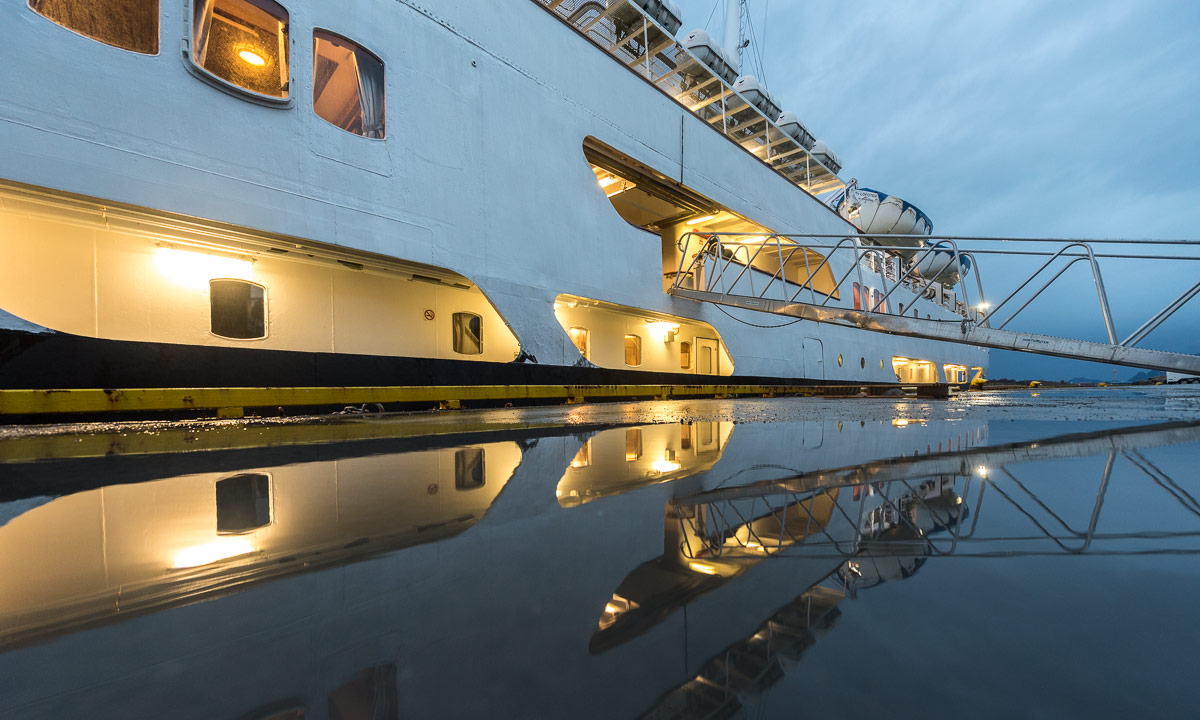
13 March at 19:45 the Hurtigruten ship MS Nordnorge docked in Båtsfjord. Annika went on board with all our luggage that we would need the next days, while I drove the car into the elevator. The next 59 hours we would travel many miles but stay in the same cabin. Cabin number 305. Kind of luxury. We would even get breakfast because of a campaign. On 16 March round 7:00 we would leave the ship in Ørnes and drive home.

I will not write much about this part of the winter journey but showing photos from the Hurtigruten trip with some comments.

13 March 20:30 – finally on the Hurtigruten. Shop, reception, restaurant and people cruising.

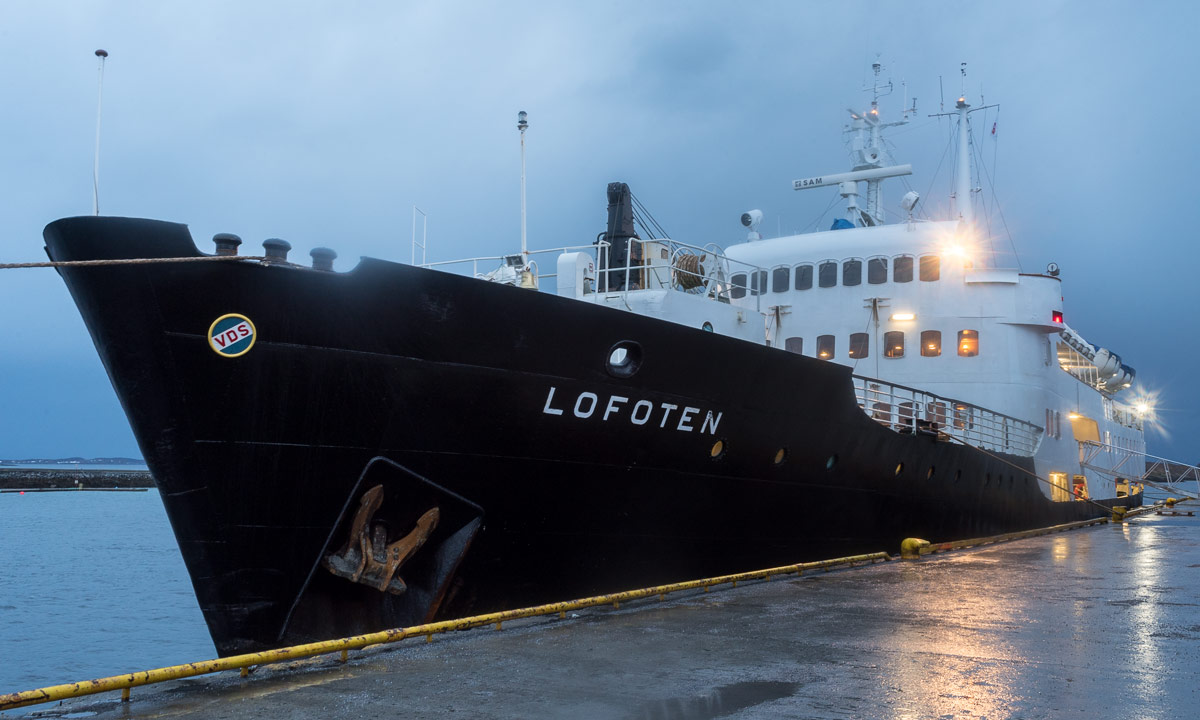
13 March 22:00 Berlevåg – the westernmost of the four Hurtigruten stops Vadsø, Vardø, Båtsfjord and Berlevåg. Some days ago we stood on the breakwater to see the ships coming in, now I stand outside on the bow of the ship to see the very same breakwater passing as we approached the peer.

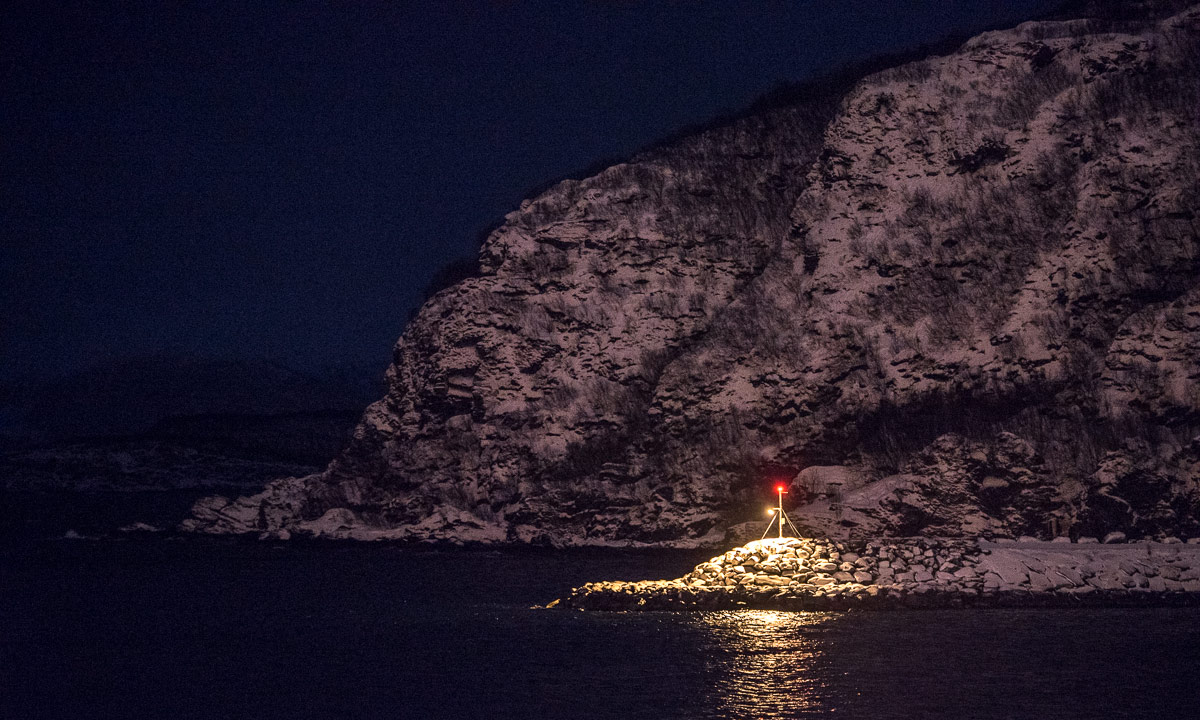
14 March 05:25 – very early and quite cold in the wind. I’m the only one outside beside of people working.

14 March 05:40 – approaching Honningsvåg on the island Magerøya. Main attraction of that island: the North Cape.

14 March 06:35 – I stay outside and look at the constantly changing weather.

14 March 08:25 – two ships pass. First a smaller boat, twenty minutes later the Hurtigruten ship Kong Harald. It’s snowing.

14 March 11:15 – we approach Hammerfest. Normally the ship will lie there for two hours, but today the ship is late.

14 March 15:45 – I’m outside for some hours and enjoy the view at the landscape. Everything is constantly changing: The mountains, the perspective, the light.

14 March 20:15 – strong polar lights cover the sky. Many people are outside and so are we. I already showed some photos in the article Aurora on the Hurtigruten.

14 March 23:45 – we approach Tromsø. Annika and I are already in our cabin and ready for sleep, but I can see the Tromsø Cathedral through our porthole. (We booked a cabin with limited view to save money and our porthole is more like a tube.)

15 March 07:30 – it’s not cold but very windy on the bow of the ship. My advise for such a winter journey: take the warmest jacket you have.

15 March 07:35 – we approach Harstad.

15 March 10:20 – we reach Risøyrenna – the Risøy Channel, build between 1911 and 1922 to enable bigger ships pass between the islands Andøya and Hinnøya. Only seven meters deep.

15 March 17:00 – we approach the quite famous Trollfjord. In winter however the Hurtigruten ships do not enter it.

15 March 18:30 – we arrive in Svolvær, largest town on the Lofoten. It’s a longer stop and Annika and I leave the boat for looking around.

16 March 06:00 – the alarm clock rings. At 7 o’clock we will arrive in Ørnes, leave the ferry and drive to Skelleftehamn. 583 km by car then I’ll be home again after more than six weeks of travelling.

A day in Båtsfjord

This article is part of the series “2018-03: Varanger peninsula”.

Day 41 of my winter journey 2018

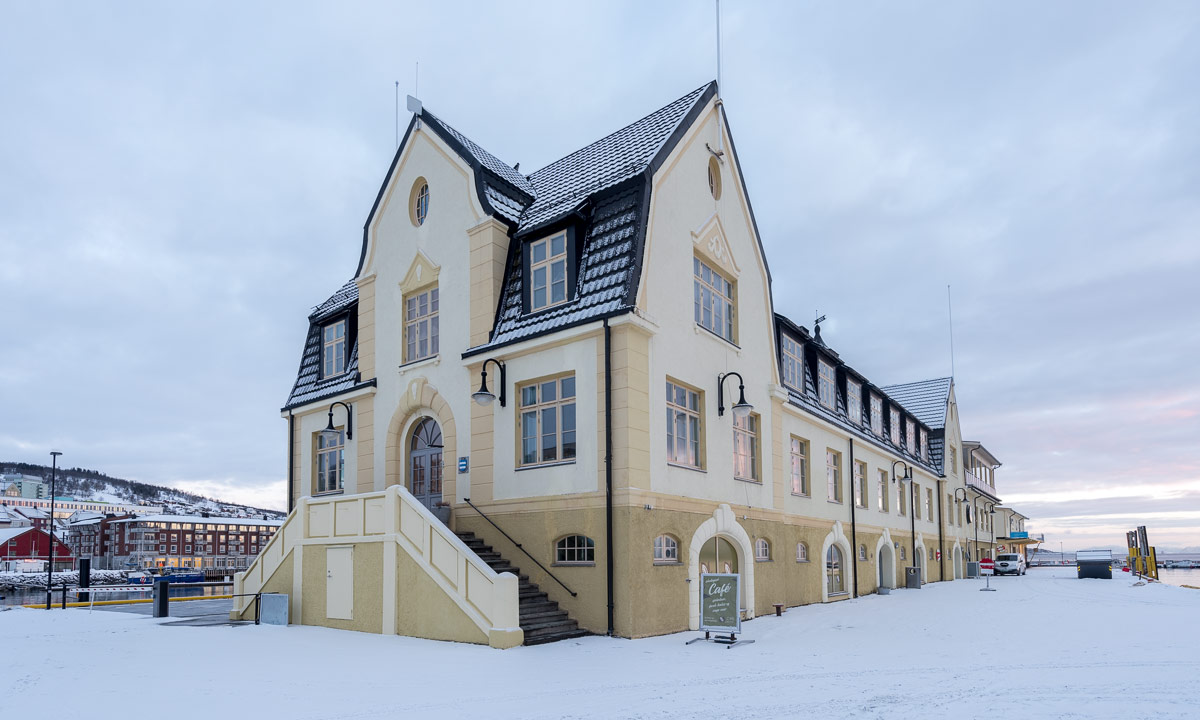
After a difficult car ride over through gale and snow Annika and I arrived in Båtsfjord, where we stayed overnight.

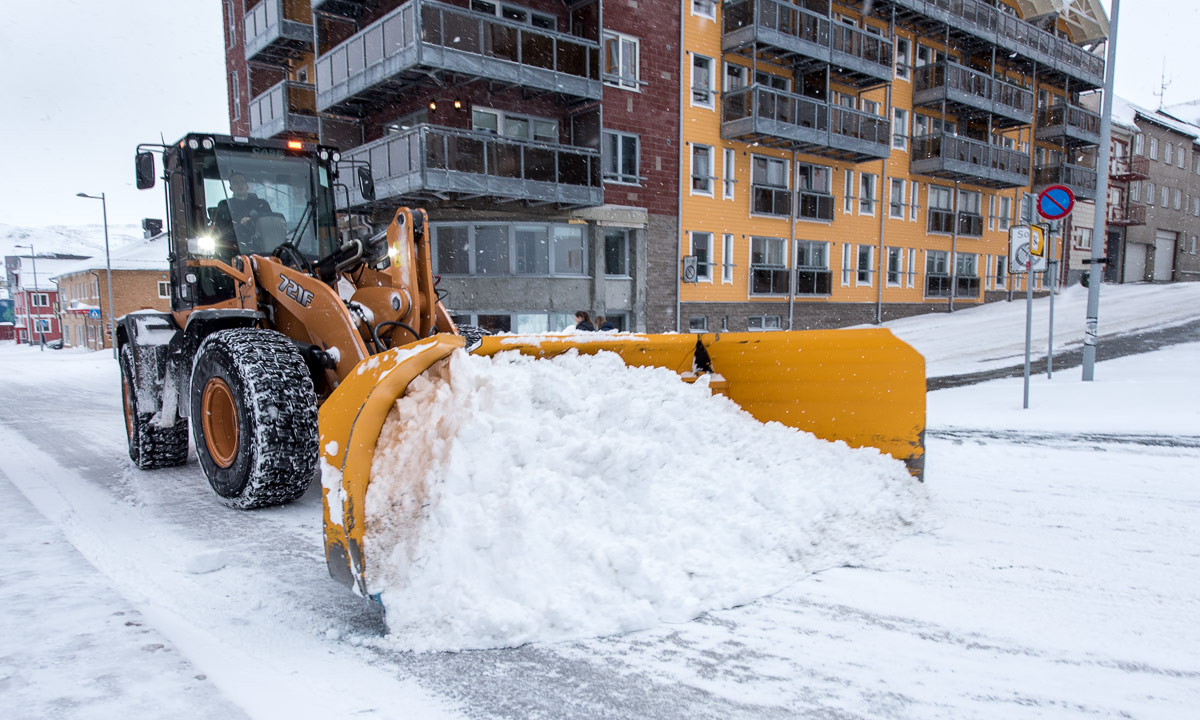
As usual I woke up early. I got out of bed and took a first look at this town. Although a lot of snow had come the day before all roads and streets were already cleared. Some houses and fences however were still snowed in. Perhaps the houses were not in use or the owner was travelling, too.

And here a look at one of the harbours.

After breakfast Annika and I got a guided tour through Båtsfjord by our landlord. He comes from Finland and came to this town in 1999. He showed us round and told us a lot about this town whose main economical sector still is fishing. The fishing port is one of the biggest in the Finnmark with around 10000 boat arrivals per year.

He drove us to a place at the harbour where you can watch two species: (1) the king eider, a large sea duck and (2) the bird-watcher, a subspecies of the human being. Four of these bird-watchers lay in a huge box in the water and were spotting the king eiders. Mostly you couldn’t see the bird-watchers themselves but only their huge tele lenses.

Thank you, landlord from Finland whose name I forgot for this interesting guided tour!

Some other images of Båtsfjord I made over the day:

Later that day we sat in the waiting room and waited for the Hurtigruten to come. Our two-week stay on the Varanger Peninsula would end today and we slowly would travel home again. But instead of directly heading home by car (943 km) we would take the Hurtigruten ship to Ørnes and drive home there. Well, that spares us only 360 km and takes almost 60 hours, but it’s nice to travel by Hurtigruten, especially after visiting so many different places by car.

At 19:45 the Hurtigruten ship MS Nordnorge arrived and the next stage of the journey began.