Why travelling in Northern Norway can take time

This article is part of the series “2018-03: Varanger peninsula”.

Day 40 of my winter journey 2018

At 11 o’clock we left Kjølnes Fyr and started our car trip to Båtsfjord. First we had to take the road 890 to Kongsfjord and over the Kongsfjordfjellet, then we had to continue on road 891 over the Båtsfjordfjellet to Båtsfjord.

I wasn’t sure if we would manage it due to the severe stormy and snowy weather. Another guest staying at Kjølnes Fyr had a hard time driving the 5 km from Berlevåg with very bad visibility. The roads however were still open though marked with a warning “difficult driving conditions because of snowstorm”.

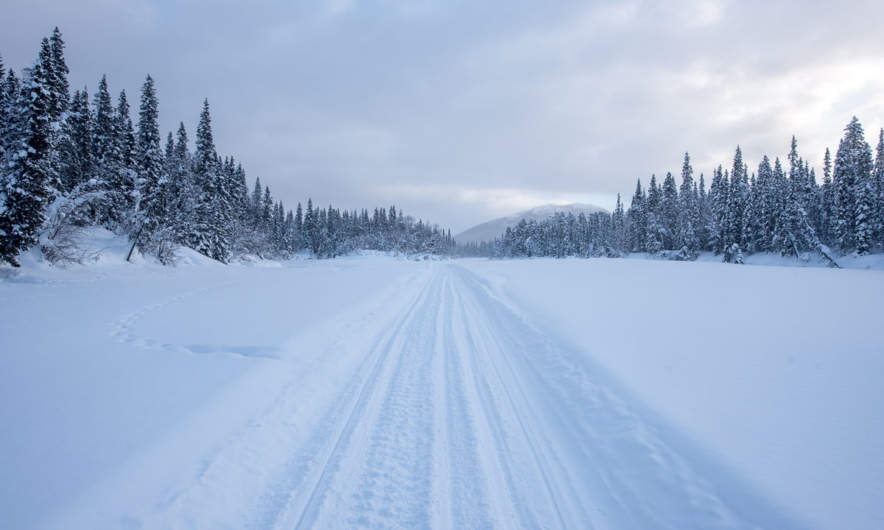
And yes, it was stormy and it snowed a lot. The sight on the road however was still quite good. While I focussed on the road Annika took some photos of the coast beside of the road:

Some parts however were very hard to drive, since the visibility was extremely bad. It was hard to see whether there were snowdrifts on the road and how deep they were and several times I had to stop completely to find out, where the road continued.

I started to doubt if it was possible to cross the mountain passages but we would make it at least to Kongsfjord where we could stay overnight if continuing became impossible. Annika tried to check the traffic information of Vegvesen – the Norwegian Public Roads Administration – but there was no mobile internet available.

I continued driving along the E 890 and the only other vehicle we met was a snow plough. The street behind it however seemed as snowy as before.

Shortly before Kongsfjord Annika’s smartphone was online again and she informed me about the updated traffic information: The mountain sections of both the 890 and the 891 where restricted to kolonnekjøring which means that you cannot drive alone but have to follow a convoy guided by a snowplough. The kolonnekjøring was scheduled to 14:30. The good thing: Driving in a convoy would be much easier than driving alone.

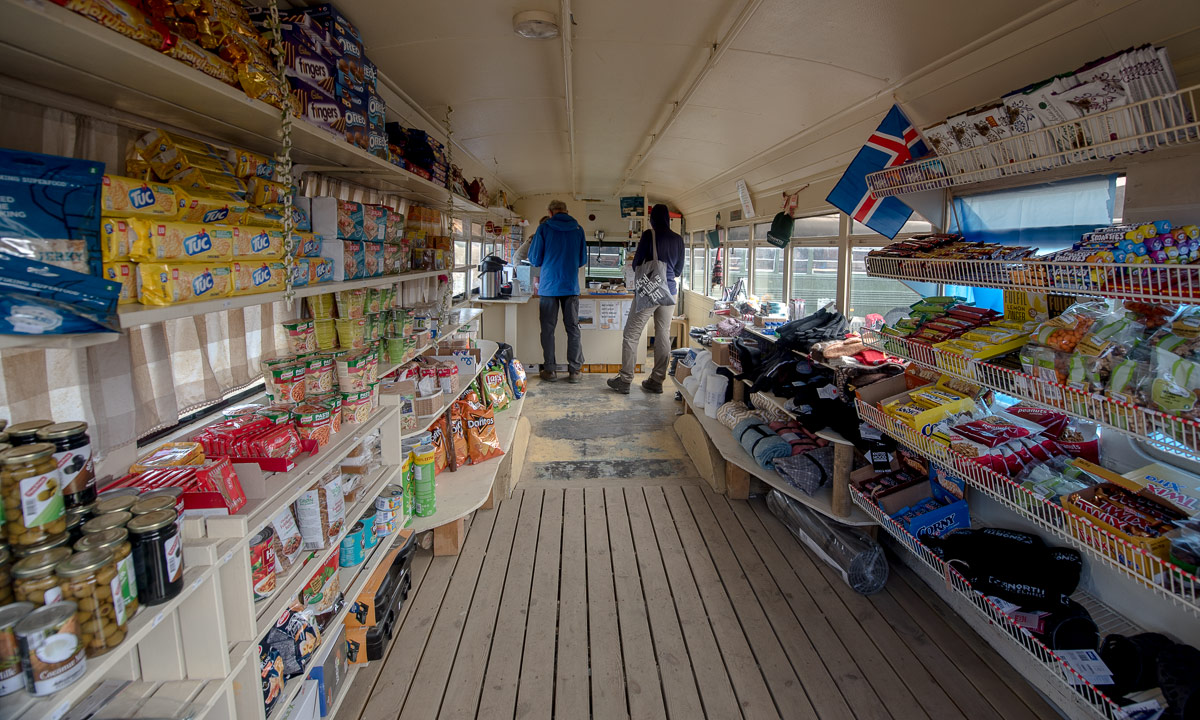
When we arrived in Kongsfjord it was 12:10, so the 28 km drive from Kjølnes Fyr had taken more than an hour. We were lucky that there is a landhandel – a grocery – in Kungsfjord that is open all year. We entered the landhandel, told about the kolonnekjøring and were invited to coffee and cookies straightaway. A big thank you to the owner for the warm welcome!

While we sipped our coffee and waited we constantly checked the traffic informations. After a short while we learned that the start of the kolonnekjøring was postponed to 17:00. That meant more waiting, but we were not the only ones. Other men in work clothes – mostly fishermen – waited as well. They told stories, laughed out loudly while drinking coffee or eating fast food. Anyway we all were still lucky. While we only had to wait some more hours many other roads were completely closed due to the weather, among others the way to Mehamn, the passage between Kiberg and Vardø and the only way to the North Cape.

Hours later: We said goodbye, cleared the car of snow and drove the short way to the boom gate. Here some other vehicles, mostly trucks waited for the convoy to start. One of the truck drivers attached snow chains to his truck.

Dusk had already been falling when our convoy started some minutes after 5 o’clock. My job for the next time was following the rear lights of the car in front.

Some passages were quite easy to drive, some passages were hard to follow due to the blowing and driving snow. (Sorry, no photos.) After 35 minutes we arrived at the T-junction, where the 890 from Kongsfjord, the 890 from Tana Bru in the south and the 891 from Båtsfjord meet. A long queue of cars coming from Tana Bru already waited. Some minutes later the convoy from Båtsfjord arrived as well. The snowplough leading the convoy to Kongsfjord passed and seconds later our queue of cars started to approach the intersection were we turned left to follow the convoy to Båtsfjord.

This part of the trip was extremely exhausting. It was dark, the convoy was slow and mostly the visibility was really bad. I just tried to follow the red lights in front and it felt like hours and hours until the snowplough turned right and we suddenly arrived in Båtsfjord. Here it seemed to snow as much as in the mountains and I was very relieved when I finally parked the car at our overnight stay. Phew – that was no easy ride and I’m really grateful that convoys led us over the mountains under the snowstorm conditions.

The rest of the day? Buying foodstuff at REMA 1000, eating fast food, falling asleep quite fast while the snow squalls over Båtsfjord continued. According to our host 30 cm of snow already had fallen that day and more was expected.

At least we arrived in Båtsfjord, probably our last overnight stay on land. The next evening we would take the Hurtigruten to Ørnes, were we would drive home to Skelleftehamn and Umeå.

(The first five photos were shot by Annika. I did the editing.)

Kjølnes Fyr

This article is part of the series “2018-03: Varanger peninsula”.

Days 38 to 40 of my winter journey 2018

Saturday

After our stopover in Kongsfjord we continued the road 890 in direction Berlevåg. The road follows the coastal line of first the fjord Kongsfjorden and then the open Barents Sea. Our destination for today is Kjølnes Fyr where we planned to stay over for one or two nights.

Kjølnes Fyr is located on a small headland called Kjølneset 5 km east from Berlevåg. We had booked a two-bed room at this place because it looked more interesting than the “large” city Berlevåg with its round thousand inhabitants. At half past one we arrived.

I directly fell in love with this place. The lighthouse – some other houses around – a rugged rocky coast, partly covered with snow, partly with seaweed – to the west bare mountains and to all other sides the open Barents Sea.

If you started a boat trip from Kjølnes Fyr heading north, the next land you would approach would be Kongsøya, part of Svalbard.

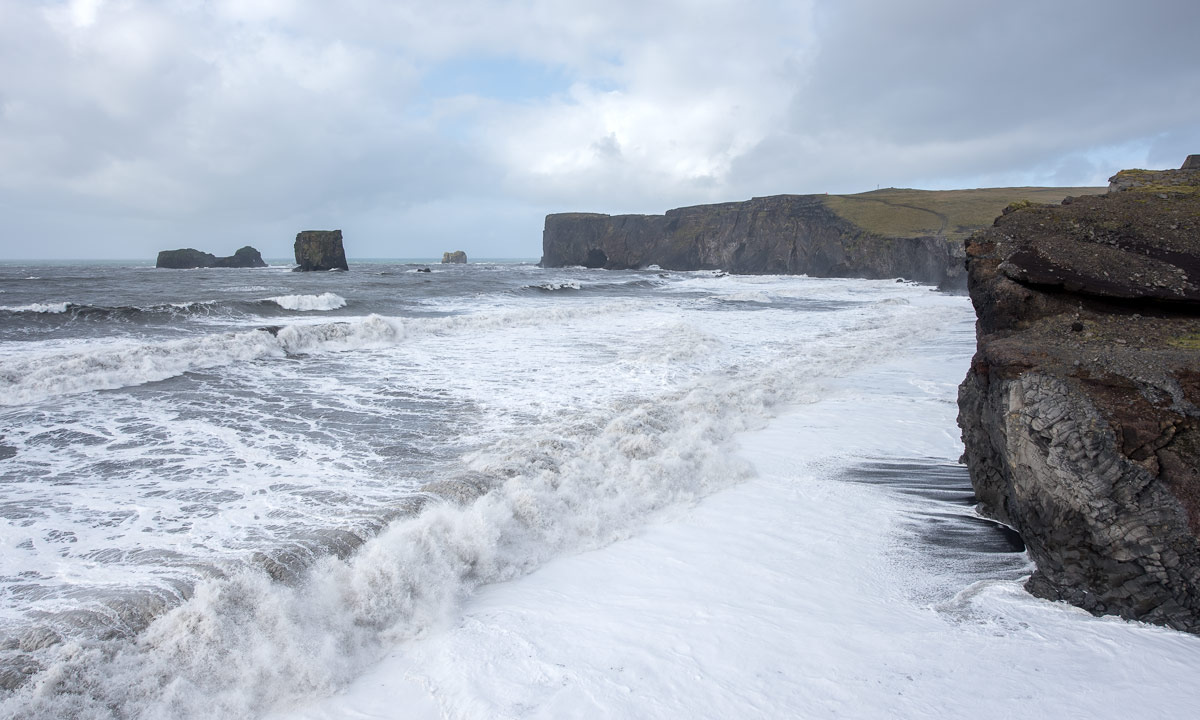
Viggo who operates the lodging gave us the key to the lighthouse and we took a closer look. The original lighthouse from 1916 was destroyed in World War II, the new lighthouse was built in 1949 and has a very functional and sober appearance. We went up and looked over the Barents Sea watching the high waves breaking at the rocky shore.

Viggo and his wife moved to Kjølnes Fyr in last autumn. He has rented the houses, that are protected as a historic monument. He told us from a winter storm that he experienced in January. Wind speed was up to 70 m/s (~250 km/h) and the upper floor of their house was shaken so violently, that the vibrations moved around the furnitures inside. Compared to that experience we had it quite calm.

The only thing we made over daytime was driving to Berlevåg to buy food. In Norway almost all shops are closed on Sundays and there were things we needed (spaghetti …) and things we wanted (chocolate …).

Later that evening we drove to Berlevåg again to see the Hurtigruten ships coming in.

Sunday

Under the night the wind got a bit stronger and the waves approaching from the north had become higher. Annika and I took a really lazy day. I was outside several times, but only for taking photos of waves. They never broke at the same place twice and gave me a hard time making pictures.

Weather became worse the whole day: The wind increased more and more and it started to snow, which means that snow was thrown into my face vertically when I dared to look into the wind. When it started to get dark, the ice and snow covered rocks in the cold light of the blue hour made the landscape look as what is actually is: arctic.

Already in the afternoon the Norwegian Meteorologisk institute had issued a class one wind warning for the whole area. I started to get a bit nervous. The next day we wanted to continue to Båtsfjord, our last stay on our Varanger trip but I was not sure whether the weather would allow it. Anyway, all roads were still open.

Monday

It had snowed a lot in the night and still was snowing heavily. Due to the stormy wind parts of the ground were completely bare of snow while other parts were covered with knee deep snow. At the same time it was quite warm, hardly below zero. The weather warning was extended to the afternoon but wind should decrease a bit over the day, so we planned to start round 12 o’clock. I was out and took some more photos, but it was really rough weather, especially for the camera.

Right after breakfast Viggo got a call of another guest approaching from Berlevåg by car. She couldn’t find the departure to Kjølnes Fyr due to severe weather conditions and asked for help. He took the car and drove to the main road just to mark the departure visually. When she came in she looked quite exhausted from the short car trip. She advised us not to continue the trip that day and told us, that visibility was partly only 10 meters which would make it impossible to see the next way mark.

We waited some time but despite of the stormy wind the visibility looked really good. Therefore we decided to give it a try and drive at least to Kongsfjord, that we passed two days ago. Here we could either continue our trip or take a room and stay in Kongsfjord overnight.

So we packed the car, said goodbye, removed the snow from the car and started our car trip to Båtsfjord at 11 o’clock.


Over the kalfjell to Berlevåg

This article is part of the series “2018-03: Varanger peninsula”.

Day 38 of my winter journey 2018

The Varanger Peninsula has many inhabited places at the coast, but you cannot take the car and drive around the whole island, not even in summer. There are three roads:

  • The E 75 to Vardø via Vadsø. In summer you can continue to Hamningberg, but this place has been depopulated since 1964 though some houses are used as summer cottages.
  • The 890 to Berlevåg via Kongsfjord. In summer you can continue to Store Molvik, but there are only summer cottages.
  • The 890 and 891 to Båtsfjord.

We explored the towns connected by the E 75 so far. Yesterday however we left the Varanger Peninsula, visited the Sea Sami Collections in Byluft and spent the night in Seida near Tana. Today we continued our trip and entered the Varanger Peninsula again, this time using the 890 to Berlevåg.

A local in Ekkerøy had warned us about this road, which leads about the kalfjell – the bare mountains above the treeline. The weather conditions can be severe and the road can be closed anytime due to bad weather or only accessible by kolonnekjøring, which means that you drive in a guided convoy led by a snowplough. Mostly it’s not snow that is the problem, but strong winds, that can create impassable snowdrifts within minutes.

The weather today however was fine and we didn’t have any difficulties in crossing the kalfjell. The road is really exposed to the elements and I can imagine that the very same road will be completely impassable in stormy conditions.

There is however another possibility to travel from one place to another: using the Hurtigruten ships, that connect Berlevåg, Båtsfjord, Vardø and Vadsø on their way from Bergen to Kirkenes.

A skitour near Ekkerøy

This article is part of the series “2018-03: Varanger peninsula”.

Day 36 of my winter journey 2018

locking the rented house in Ekkerøy – taking by car to the main road – looking for a parking place – mounting the skis – following the snowmobile trail – leaving that trail – slowly ascending the hill – leaving the last willow bushes behind – skiing – breathing – viewing – enjoying Varanger’s “kalfjell” above the treeline.

A tour to the easternmost point of mainland Norway

This article is part of the series “2018-03: Varanger peninsula”.

Day 29 and 30 of my winter journey 2018

Yesterday we continued our journey to Ytre Kiberg which is 13 south of Vardø, one of the Hurtigruten stops. We started in Vadsø – another Hurtigruten stop – after a breakfast with our host Nils, bought a basis of food for the next days and took the E75 northwards. We made a stopover in Ekkerøy, a village on a peninsula near Vadsø. We like this place and will try to stay there for some nights next week.

At lunchtime we reached Cape East Arctic Adventure, our stay for four nights. We were welcomed by Trond, the owner and operator of Cape East Arctic Adventure and were shown our cozy bedroom, the kitchen and the homely living room. After making ourselves at home we went along the beach to the village and the harbour.

In the evening we were invited to a three course dinner based on freshly caught cod: Fish soup – cod with potatoes and carrots and finally cod roe. Everything was extremely tasty and it was Annika’s and my first time where we tasted cod roe. Yummy!

In Kiberg you are as east as you can be in the Central European Timezone, therefore sun is rising already at 6:24. I was awake very early and took a morning walk round 6 o’clock. Some snow drifts had been created by snow and wind over night but now the weather was less windy and quite sunny. At least for a short time. While I went the way to Indre Kiberg clouds approached, wind increased and it started to snow. It was hardly imaginable that it was sunny just a short time before. Weather changes here quite often as Annika and I should find out later.

After breakfast Annika and I took the car to the other side of the village, put on our snow shoes and started a hike to Kibergsneset, easternmost point of mainland Norway. This place is more east than e.g. St. Petersburg, Kairo or Istanbul! It was windy but quite sunny, when we started our tour but weather changes fast on the Varanger Peninsula:

Actually this hike is just a promenade but the weather may transform it into a small expedition. We were exposed to wind and snow and grateful, that we didn’t experienced a full storm. The weather was rough anyway and I was glad about my windproof jacket and two pairs of mittens.

We continued on a small hiking trail, first with, then without snowshoes because the thin snow layer was hardened by the wind and easy to walk onto. There’s a coastal fortress build by Germans in WW2 on Kibergsneset but we couldn’t see it in the snow weather. Instead of looking for it we continued to the small lighthouse at Kibergsneset that marks the easternmost point of mainland Norway (and most of Europe). Shortly before we reached it the sun came out and we continued the last metres in full sun. While I made some photos a small snow shower approached with the sun still shining.

From the lighthouse there was an amazing view over the arctic coast of the Barents Sea, but only for some moments. Soon the next snow shower came by and hid most of the view onto both the coast and the sea.

The way back was much shorter because we knew the way and went downwards. Even though the view was limited by the snow showers Ytre Kiberg came into view again soon and surprisingly the weather was nice and sunny again.

After this very windy promenade we were glad to find shelter in my car. We took the car to Vardø to eat something and after that we tried the road to Hamningberg. We knew that the road was closed in winter but we curious how long we would come.

Well, not very long. We managed to get to Smelror, some kilometres north from Vardø.

The main road however was definitely closed as you can see. There are no people living in Hamningberg permanently and the only motorised way to reach it in wintertime is by snowmobile. For car it is open less than half the year.

We took the car back to Kiberg, enjoyed the incredible and unbelievable colours of the sky and were surprised by a strange weather phenomenon: -6 °C and rain (including a faint rainbow!)

The rest of the day? -10 °C and wind outside, no more photos, no more excursions.

Fun fact: We took the E75 northwards. If you would take it southwards you could travel more than 4000 km and finally would arrive on Crete, Greece.

A snowshoe promenade

Day 27 of my winter journey 2018

Today our current host Chris took half a day off and we (Chris, Annika, I and two dogs) made a trip into the valley Pasvikdalen. There’s a small place called Strand where we parked our cars at the former boarding school, nowadays a museum. Here we started a small small snowshoe tour up the Brattberget.

Brattberget means the “steep mountain” but first of all the mountain is more like a hill and then the way up is not steep as all. First we went through denser forest, then then forest and the view opened a bit. Soon we were up on the top of the hill.

There’s a toilet and two benches on the Brattberget. While the benches were covered with snow, the toilet was still visible.

The weather was nice and we had a great view. To the north and west of the lake LangfjordvatnetUhcavuonjávri, to the south, remote in the distance of Russia.

After a short rest in the sun and some photos we descended the same way we went up and soon were at our parked cars again. A short and nice snowshoe tour through the hilly and wintry Pasvikdalen.

A ski tour in the Kvikkjokk mountains – day 5 and 6

This article is part of the series “2018-02: Ski tour near Kvikkjokk”.

Day 11 and 12 of my winter journey 2018

After our second night in the tent (it was 20 °C warmer than the first night) I woke up at 7 o’clock. My thick isolated sleeping bag was much too warm and I was glad to get out of “bed”. Time for some photos of our tent and the surroundings.

Today we wanted to leave the trees behind and ascend to the kalfjäll – the treeless mountains region. Since we already were level with the treeline we soon came to the place where you hardly see anything more than snow, some rocks and the winter waymarks.

Jonas is interested in many things, among others bouldering. When we came to a nice large boulder after some hours of skiing, he took the opportunity for a (very) short bouldering session. Here’s the evidence photo:

After that short break we continued our tour over the kalfjäll. It snowed and it was quite windy. The boulder was quite near to the mountain shelter Kurajaure, where we arrived half an hour later.

The wind had grown stronger and stronger and we were glad to enter the shelter. We took the pulkas in, too. These mountain shelters aren’t made for overnight stays beside of emergency situations. We however decided to stay in this shelter anyway for some reasons I won’t reveal here.

Of course we didn’t use the woodstove and firewood. We took our own paraffin stove, prepared food and slept in our sleeping bags, since unheated the shelter was as cold outside as it was inside. But there was a big difference: We were protected against the strong snowfall and the rough winds. I went outside anyway to take some photos in the dusk.

This time we did something new: we set the alarm clock for the next day. We wanted to reach the mountain hut Tarrekaisestugan which we passed two days before and suspected that we had to ski through a lot of fresh snow against rough headwinds and strong snowfall. Since we didn’t know how much time it would take we had set the alarm clock to 7 o’clock. The plan was to leave 8:30, but it became 9:20 when we started our 6th tour day.

It was -12 °C and quite stormy. I guess the windchill was round -30 C. I closed my fur trimmed hood as much as possible and later I took even a buff over mouth and nose to protect against the icy snow that the wind threw into my face. I used three pairs of gloves and mittens – one over the others – to protect hands and fingers. Here’s a selfie of me (left) and Jonas (right) made on the kalfjäll.

There was a lot of new snow, probably 10 to 15 cm. All snowmobile tracks (and our own from the day before) had disappeared. We returned the very same way that we went the day before. Although weather was rough, skiing was easier than expected, because we went more down- than uphills. The steep part however was a real disappointment. This stage had costed a lot of efforts to climb the day before, now it took less than ten minutes to ski down. After a passage over the frozen lake Tarrekaisestugan came into view.

It took more time than expected to cross the lake, but the most exhausting part was the slope by the lake that we had to climb up to reach the mountain hut. Here at least 30 cm of fresh snow had been falling and even the deepest snowmobile tracks were hardly visible. After we arrived and removed our skis I removed ice from the outside of the window. I had to plunge through hip deep snow to reach it. The snow depth behind the hut was at least two meters.

After two cold nights we were glad to dry both sleeping bags and clothes and hung up mittens, jackets, boots, caps and much more and to heat the woodstove.

Our dinner: couscous with roasted salami, dried tomatoes and ready-made champignon sauce. Tasty!

The two photos showing me on skis are made of Jonas Balbasus.


A ski tour in the Kvikkjokk mountains – day 4

This article is part of the series “2018-02: Ski tour near Kvikkjokk”.

Day 10 of my winter journey 2018

After two days in the Njunjesstugan Jonas and I continued our tour in the mountains west from Kvikkjokk, The weather continued to be grey and dull with temperatures round -11 °C and last night’s snowfall brought five to six centimetres of downy snow.

The winter trail led through forests and hills – one of them so steep, that we hardly managed to ascent it by foot. I guess, that some of the people marking the way prefer the snowmobile before the skis and adapt the trail to that …

Soon we reached the lake Darrávrre which we followed to the mountain hut Tarrekaisestugan. We made a rest, not to stay there but to simplify the continuation of our ski tour. The next tour would lead uphills and we wanted to reduce weight. Therefore we left food, paraffin oil and some spare clothes in the wood shed and took only food for two days with us. After two days in the higher mountains we would return to the hut.

We carried on. By crossing the lake Darrávrre to the west we left the hiking trail Padjelantaleden. On the other side of the lake the trail climbed up the hill. It was not as steep as feared and even if the ascent was quite exhausting for me we managed to get up to the tree line.

We reached an altitude of approx. 680 meter. Here we left the trail and erected the tent in the twilight between some birch trees. This time the snow was stable after tramping it down with the skis and we hadn’t to dig down as three nights before. It had become even warmer: -7 °C and it snowed. Both of us were longing for clear, crips and sunny winter days but it didn’t look like we would get better weather. At least it wasn’t as stormy as forecasted.


A ski tour in the Kvikkjokk mountains – day 2 and 3

This article is part of the series “2018-02: Ski tour near Kvikkjokk”.

Day 8 and 9 of my winter journey 2018

After the first night in the tent (it was a cold one!) we were eager to continue the tour. The tent was packed and so were the pulkas. We started by skiing through powder snow – a slow movement. I guess I hardly reached 2 km/h in average and I definitely was much slower when I had to go uphills. We looked for a good place to access the river again since it was much easier to follow the stable snow on the snowmobile tracks. After a while we found a good place to enter the river bed. Mostly the winter trail followed the river, only twice it continued on land where the river is narrow and had open water.

After some kilometres the river bent southwards and our trail left the river to continue more westwards. We continued the snowmobile tracks that led through forests and over smaller bogs.

We started to think about reaching the mountain hut Njunjes but weren’t at all sure if we would reach it before darkness. Anyhow, we didn’t had any pressure, since we had anything with us which we need for tenting:

  • a tent (of course)
  • down filled camping mats
  • very warm sleeping bags and vapour barrier lines
  • warm clothes from head to foot
  • a lot of food
  • a paraffin oil driven cooker
  • … and much more …

The way was easy but the pulkas were heavy loaded and after hours of walking I started to get tired and exhausted. That’s one of the reasons why I hardly made any photos. Another reason was that both my cameras refused to work in the morning with temperatures round -30 °C. It became warmer, but it was still round -25 °C, although it had become cloudy and overcast that day quite early.

Beside of a longer and a shorter rest we continued skiing, now with the defined goal to reach the hut. It started to get dark but we knew that we only had to go another hour or a bit more to make it.

After a while it went so dark that we skied with headlights. The buildings of Njunjes had come into view but they were on the other side of the river. When we were on a level with Njunjes we realised that the river became a quite deep ravine, probably with open water and quite impossible to cross …

… but we were really lucky: there was a metal chain bridge that led over that very ravine. It was quite a fight to climb up the slope after crossing the bridge, but with a lot of pulling (and without our skis) we managed it.

Soon Jonas found the open winter room with was made for people like us who like to travel off-season. A stove, wood, a bunk bed for two people, hooks for drying clothes, a table and two stools – anything to stay here for a night or two.

Day three was a day off. It was warmer than the day before and mostly dim and cloudy. I took pictures of the chain bridge, the mountain hut and the landscape (as far as it was visible)


After breakfast we attached new climbing skins to my skis and took a ski tour. First cross the river again and right to the sun. Then up some minor hills through sparse birch forests and eastwards to meet the branch to the hut that we had missed the day before. The skins worked well but it was almost a pity to have them attached to my skis since they slowed me down when skiing downhills through the loose powder snow. The sun was hardly visible through the clouds and the landscape almost looked sepia – like an old black and white photo.

First it only snowed a bit but when we finished our tour and arrived at “our” mountain hut snowfall increased. While Jonas was busy sawing and chopping wood I took a small nap.

In the evening we planned to continue to Tarrekaisestugan the next day – the next mountain hut in the west – and probably to continue and tent again in the wintry forests.

Photo #2 in this blog article is made by Jonas Balbasus.

A ski tour in the Kvikkjokk mountains – day 1

This article is part of the series “2018-02: Ski tour near Kvikkjokk”.

Day 7 of the winter journey 2018

I’m really glad, that my friend Jonas and I managed to realise a ski tour this year. It’s our 3rd ski tour together, but the last one was five years ago. A long time. Actually we had planned for eleven days, but due to severe snow falls between Gävle and Sundsvall two weeks ago the whole train traffic was cancelled and Jonas arrived more than two days later than planned.

On Wednesday, 7 February we left Solberget and took my car to Jokkmokk, where we bought food for nine days. Anything from muesli (with powdered milk), tea and chocolate to pasta with pesto, salami, potato mash and much more. Have a look:

After taking a lunch we continued to Kvikkjokk. The weather was sunny and the temperatures sank below -20 °C. In Kvikkjokk we packed our pulkas, transport sledges you carry behind, locked the car, put on the skies and started our tour. First along a road, then on a snow mobile track. We didn’t come long when we met a local with a snow shovel who asked for our plans. He looked at our heavy loaded pulkas and mentioned that we would have a hard time in pathless terrain. He said, that it was 100 cm of snow in Kvikkjokk and 150 in the mountains.

I reparked my car – another tip of the local – and we started our tour again. With his permission we used his private snowmobile track that led us to the river where it joined a larger snowmobile track. It already had been starting to get dark and our plan was to find a place for our tent quite soon. We weren’t alone on the river – two moose (mother and calf) stood on the river some hundred metres away. We waited until they left and continued. The river slopes were quite steep and after we had decided to leave the river we had to put off our skis and drag the heavy pulkas up through hip deep snow. Exhausting! At least we found a nice little clearing in the forest for our first night in the tent.

As usual we started to tramp down the snow with our skis to make it stable enough to bear the weight of tent and ourselves after some time. This snow however was so loose that it seemed impossible to us to erect the tent on top of it. Therefore we digged down half a meter (making round 6 cubic meters of snow to dig) and erected the tent in the hole. The temperature had continued to fall, now down to -25 °C. Finally the tent was “ready for occupation” and we were eager to eat something warm.

After Chinese noodles with some asian ready-made sauce we left the tent and watched the amazing clear starry night. The milky way gleamed over half the sky and Sirius had just started to rise on the eastern horizon. What a wonderful first night!

… and a cold one. When we started to sleep the temperature had fallen to -30 °C. Jonas and I have huge down sleeping bags and we had it warm and cozy anyway. I just had problems to sleep because I don’t like sleeping on my back and always have trouble to fall into sleep the first two, three nights when tenting.

Next morning: Clear blue sky, some feathery clouds that just started to colour purple. Jonas’ thermometer at the pulka showed -34 °C. It was completely calm and we decided to cook outside. Cooking in the morning mainly means boiling water for tea and for making milk for the muesli. I was glad about my warm mukluk boots, down pants and my puffy down parka. And finally the sun rose over horizon and trees.

Today we would continue westward to the mountain lodge Njunjes and probably sleep there.

Photo #1 and #6 in this blog article are made by Jonas Balbasus.