No kayaking today

Yesterday the Baltic Sea was open. Some ice floes drifted in the waves, the rest between mainland and the island Gåsören was open water. Just the photo from yesterday afternoon one more time:

When I saw the open see yesterday I thought about kayaking today. Temperatures below -15 °C were expected. What to wear beside of a dry suit? How many layers?

I started to dig out the door and gate of my garage to be able to get my kayak. That was hard work. The upper layer of the frozen snow that had slid from the roof was as hard as concrete. Even the avalanche shovel with the metal blade could be hug into the snow centimetre by centimetre. But finally I made it, my kayak was free.

Today at 7 o’clock the outdoor thermometer showed -18 °C. Again – what to wear on a kayak winter tour? Two layers of underwear? The winter anorak? The earflap cap made of thick polyester fur? Well, first let’s check the situation by the sea.

Oops …

The sea had been frozen overnight. A stripe of at least several hundred metres was covered with soft and thin ice, exactly that type of ice hardest to handle when sitting in a kayak.

Kayaking plans cancelled! Time for another photo.

Meanwhile in Skelleftehamn – snow and sea ice

Arrival home in SkelleftehamnI expected the worst in Skelleftehamn. The worst regarding winter. I wanted to have a real one – it’s mid-February – but had heard about the warm temperatures last week. Three days with temperatures round 7 °C, at least in town. But I was lucky, it hadn’t rained these days. The snow had fallen together but was still there. All minor streets where still white with some fresh snowdrifts from today’s strong and gusty wind and in my backyard lie still round 55 cm of snow.

Of course I had to shovel away the snow before I could use my car. Its a car with all-wheel drive but no snowcat. Although the snow was hard it was easier than expected.

The special thing about a trip with the Hurtigruten ship is that the Norwegian Sea is free of ice the whole year round and most parts of the Barents Sea, too. The Bothnian Bay – the northernmost part of the Baltic Sea – however is covered with a thick solid layer of ice. That’s what I thought until I read a Facebook post today:

Öppet vatten runt Gåsören. – Open water round [the island] Gåsören.

I could hardly believe it and took the car to the coast. And yes – large parts of the sea were free of ice, even the ice floes had gone beside of some remains. I guess there won’t be a ski tour to Gåsören this winter.

Two weeks ago I had made ski tours on the Baltic Sea with Chris. Although there’s solid ice left between the other islands I doubt that we could do the same tours today.

Here’s a comparison of the ice situation today and two weeks ago:

Legend:  fast ice |  very close or compact ice |  open ice | open water
Source: SMHI Sea Ice – Archived charts and reports

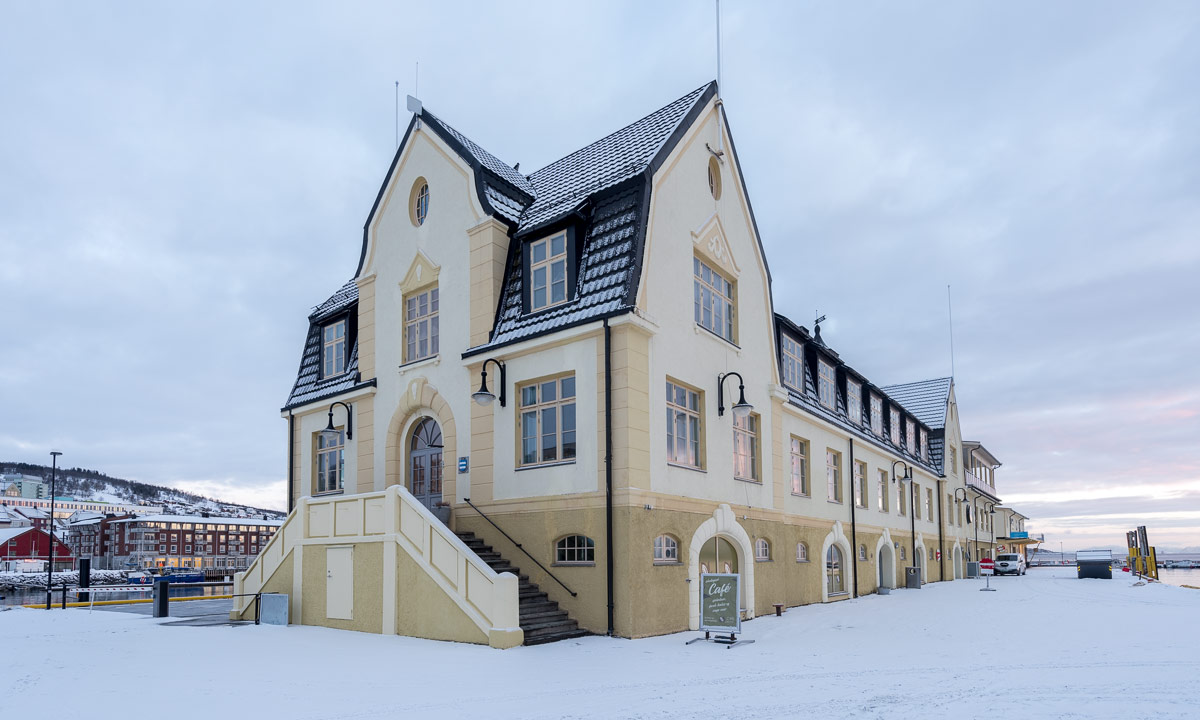
Travelling with the MS Lofoten: Øksfjord – Stamsund

This article is part of the series “2019-02: Northern Norway”.

Disclaimer: Many, many photos, some of them pretty mediocre but all part of the journey.

Still Saturday, 16 February

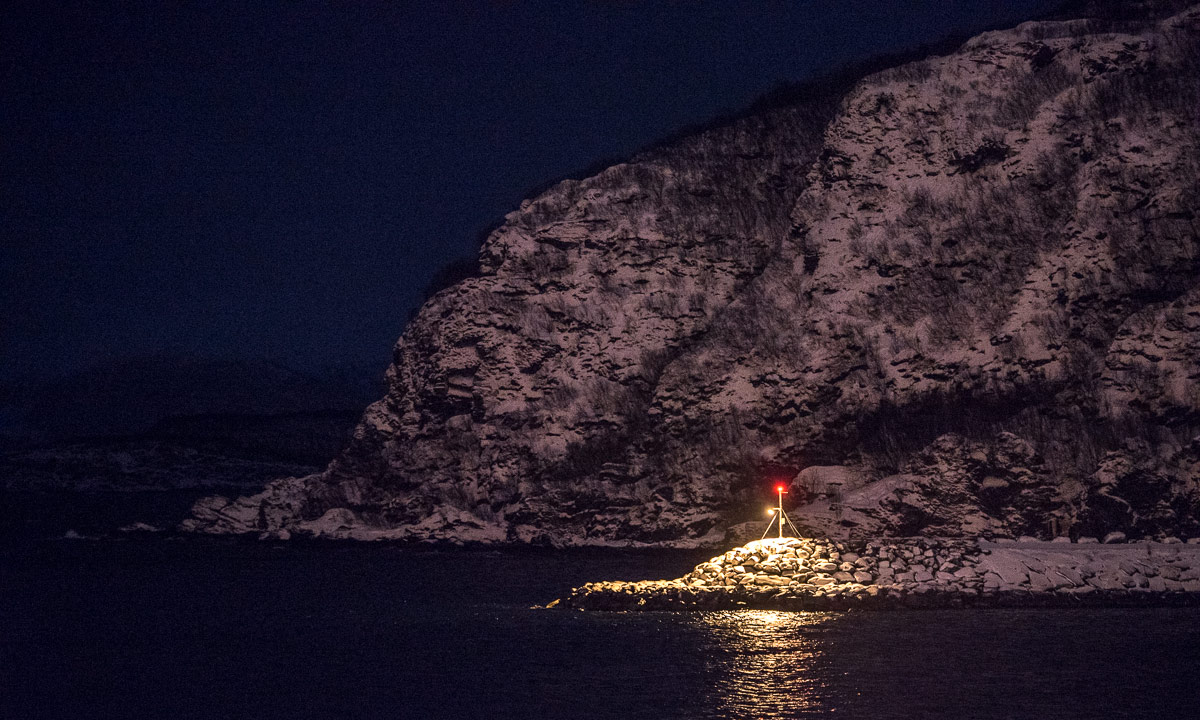
After we left Øksfjord we continued our journey through the darkness. The people on board were idle, they chatted, read a book, look through the window and of course most of them used their computers, tablets or smartphones.

Three hours later we were in Skervøy, stop #9 of my Hurtigruten journey.

After a short stay we continued to Tromsø, Norway’s largest town north of Trondheim. I took a night image of the passing Hurtigruten ship MS Trollfjord then I went to sleep.

Our stays in Tromsø and Finnsnes I overslept completely.

Sunday, 17 February

At 7 o’clock I woke up, half an hour later I stood outside and took the first pictures in the blue hour. The weather was much better than the other days and the temperatures had dropped below zero in the night. We were on our way to Harstad, with 25000 inhabitants the third largest town in Northern Norway. Stop #12.

While we were stopped in Harstad the sun was rising and was bathing the landscape in purplish light. Harstad started to glitter. It was the many windows reflecting the warm sunlight.

The sun rose higher and after a while the sky was blue. I stood outside with my large telephoto lens and tried to catch the impressive snowy mountain ranges by the fjords and sea.

Risøyrennan, a deepened part of Risøysundet came into view.

After a short stay in Risøyhamn, part of the Vesterålen and stop #13 of my journey we continued south. The sheltered  was covered with a closed layer of thin pancake ice. You could hear it crack when it met the bow wave of the ship.

Some more images taken between Risøyhamn and Sortland:

I left the MS Lofoten in Sortland, stop #14, but only for a short time. In Norway all shops are closed on Sundays and then the towns may be a bit boring. Partly the ways still covered with a bit of frozen snow, but mostly it was slippery ice and some deep water puddles. Home in Skelleftehamn it had been very warm the last days and I expect the same road conditions when I’ll come home in a couple of days.

After 30 minutes the MS Lofoten continued its tour. At the horizon the steep mountains of the Lofoten islands came into view.

The backlit Lofoten mountain ranges looked amazing as if they were from another world. I’ll show you two photos but I’m not at all happy with them. In reality the landscape looked more aerial or as if made of light.

These mountains were in the far. The nearer mountains to the left or right looked more normal when it comes to light but still unreal because they were so steep and snowy.

The large island Hinnøya on the port side, the island Langøya on starboard side of the ship I stood at the starboard and peeked through my telephoto lens. I have friends near Stokmarknes on the Vesterålen and was I looking for their house. I found it ;-). Unfortunately R. was ill but J. visited be on the ship with the children. They went on board while the ship lay at the port of Stokmarknes, stop #15. Shortly before departure my friends left the ship. Thank you very much for your visit!

Oh, I forgot the photo of the islet (or holm) Gjæva. I already knew it from earlier stays with my friends.

Now we headed for the impressive sound Raftsundet where we would even take a small detour to the entrance of the Trollfjorden. Due to the narrowness of the fjord and the risk of avalanches it’s not possible to drive into it in wintertime.

We left the blue sky behind us, the weather worsened.

First the weather still was quite fair but then it started to snow. The snowfall was so strong and the cloud layer was so thick and low that it was decided not to visit the Trollfjorden. You hardly would have seen anything.

The camera was wet, I was wet, too and it was so dark that it was near to impossible to take any pictures. It was twenty to five and I went into my cabin and took a nap.

Just some photos “for the archives” of the next stays: Svolvær and Stamsund, stops #16 and #17, both on the Lofoten.

Inside the Snowhotel Kirkenes

This article is part of the series “2019-02: Northern Norway”.

After two great snowshoes tours I took it easy today. I went to the Snowhotel Kirkenes nearby, took some photos of the huskies, that didn’t have to work, visited an acquaintance who works in one of the restaurants and went inside the Snowhotel itself. I’ve been there before, but since the hotel is rebuild from scratch every year it looks always different.

Which photo of the lobby do you prefer? The first one, where the room is empty or the last one with the blurred people in it?

MS Spitsbergen

This article is part of the series “2019-02: Northern Norway”.

Today it was cloudy and much warmer in Bjørnevatn than yesterday day and evening. Chris and I took breakfast at the Thon Hotel Kirkenes. This breakfast is just superb! There is a wide variety of food and the quality is excellent. While we had breakfast it started snowing. I looked out of the window and watched a small icebreaker. Two years ago the Elvenesfjorden was completely free of ice. This year however it had been so cold the last weeks that the whole fjord is frozen. Or would be, if the icebreaker wasn’t going back and forth and crushed the ice.

Kirkenes is the endpoint of the Hurtigruten line, that connects many Norwegian coastal towns as e.g. Bergen, Trondheim, Bodø, Tromsø, Hammerfest and Kirkenes. As long as the weather allows the ship arrives at 9:00 and departs at 12:30 every day. Many tourist go ashore to discover the city or to go dog sledding in the Snow Hotel.

Today it was the MS Spitsbergen that was in the harbour. It is possible to visit the ships and so Chris and I took a small tour to explore the ship.

The MS Spitsbergen both operates the Hurtigruten line Bergen—Kirkenes but also makes cruises to places like Iceland (from 4373 EUR), Svalbard (from 7058 EUR) or even Franz Josef Land in Russia (from 7696 EUR). Great destinations but much too expensive for me.

P.S.: Don’t ask me why there is dried fish on the top deck of the MS Spitsbergen.

The ice road in Avan

Today I had a meeting in Norrbotten, Sweden’s northernmost län (county). It was the annual general meeting of Barents Press International, a joint network of journalists in the Barents Region. I joined this organisation a few weeks ago and took the meeting as an opportunity to meet members of Barents Press in real live.

The projects presented at the meeting were really impressing. In addition to that the people were both very friendly and extremely interesting.

The meeting was in Avan near Luleå, 150 km from here or as the Swedes say: 15 miles. The name Avan rang a bell, but it took a look on the map to remember that it’s the place where Annika and I had used the ferry to cross the river Luleälven in May 2015. And later that day we had been forced to wait before a bridge, where people tried to get out a ship with a crane. (It didn’t work.) After a long time of waiting we had been able to continue the tour.

But back to today. It’s 2 February, -18 °C and the Luleälven had been frozen for many weeks.

I had left the E4 and drove the road to Avan. It was picture-perfect weather. Everything was covered with soft snow. It was snowing gently and since it was quite early, the snow looked still a bit blueish.

Some hours later – we had finished the meeting and went upstairs to have fika. This Swedish coffee break took at least twice the time of the official meeting, but fika is anything between 15-30 minutes (most common) and open end …
While we were holding fika and it was still snowing the sun came out. The sunlight made the scenery look even more beautiful. What a gorgeous view the house owners have!

Half past twelve I thanked the hosts and left Avan. I had got an idea: I remembered that there was an ice road crossing the river in wintertime. I was not sure if it was open but it was not far away. I drove there and right, the ice road over the Luleälven was open.

It had stopped snowing and the sun was shining. I parked the car and took some pictures (and was annoyed with myself that I only took the small camera with me).

I saw other cars using the ice road, otherwise I wouldn’t have dared to cross the river, which still is a river with water under the ice. Flowing water. Ok, let’s go …

And so I have got my ice road premiere today. Check ✔︎. I took some photos on the other side and decided to drive back again because I prefer the southern road which I came from.

It was still sunny but clouds had started gathering in the south. While I drove back south it got more and more cloudy. When I made a stopover at my favourite Thai restaurant in Skellefteå it was quite windy and my mobile phone displayed a message:

Warning class 1 snowfall Västerbottens … Snowfall which from Sunday morning to night to Monday can give 20-30 cm. In coastal areas in combination with fresh northeast wind. Snowfall contin…

Later there were the first snow showers. Let’s see, what will happen tomorrow.

Welcome to my icy world

This morning I walked to the same spot on the island Storgrundet as four days ago. This time I arrived there already at 8 o’clock, one hour before sunrise. It was the coldest winter day yet with temperatures round -22 °C. This means two pairs of gloves: full-fingered stretch fleece gloves for handling the camera and warm woollen mittens for keeping the hands warm.

Four days ago the pancake ice had been still floating on the water. The ice floes had been bobbing up and down in the approaching tiny waves that had come from the open sea nearby.

Today the Baltic Sea was completely frozen as far as I could look. No movement, no sound, just a solid layer of ice to the horizon. The shore was coated with a thick layer of ice, too. The ice looked blueish because of the ambient light. No wonder that this time of the day is called “blue hour”.

I went along the shore. There were mainly two types of ice covering the Baltic Sea:

First there was pancake ice frozen together. The floes built a solid layer of ice but you could still see the patterns of the raised edges.

Then there was fresh ice. The ice itself was flat, clear and featureless, but it was completely covered with featherlike ice and therefore as white as the pancake ice.

While I was walking along the shore the colours had started to change. Opposite the sun the sky became lilac, purple, violet, pink.

Finally the sun rose and started to illuminate the ice.

The ice in the sun looked orange – the complementary colour of blue. The „golden hour“ had started.

Did you notice the round horizon of the last photo? Today’s the first time I tried out my new fish eye lens. Fish eyes make very special pictures due to their extreme distortion. The last photo shows the effect even more clearly. I call it „My icy world“.

Kayak season is over

Two days ago I considered to go kayaking a last time before the sea freezes over. Large parts of the inshore Baltic Sea were still open but it was hard to reach the open water without bearing the heavy kayak over the icy, rocky shore or walking on unstable ice. So I decided against paddling.

When I arrived at the seashore this morning it was clear that the kayak season would be over for a while.

Temperatures between -15°C and -20 °C have made the Baltic Sea freeze. It almost looks like one could walk to the island Gåsören, but that wouldn’t work. That, what looks like a solid surface of ice is actually a pattern of floating ice floes. It’s not visible to the naked eye, but comparing photos shows, that there are still tiny waves under the ice floes that make them go up and down.

Two winter activities

The morning

Finally there’s enough snow in Skelleftehamn for cross-country skiing. The great people from Frilufts­främjandet Skelleftehamn had prepared the ski track last night and I was one the first people that skied there this morning. The weather was sunny with temperatures round -16 °C. The sun however was still low and had hardly a chance to illuminate the forests round the ski track. There were some sunny spots where I made the photos below.

After 7 km I was covered with frost but I wasn’t cold at all.

The early afternoon

After lunch I decided to check out the shore at Kågnäsudden. I parked my car and trudged through the snow until I arrived at the coast. The Baltic Sea was mostly open but partly covered with pancake ice. I walked on the banks by the sea and enjoyed the bright sunlight and the crisp air.And I made some photos, too.

When I drove back the car thermometer showed temperatures between -19 °C and -23 °C. The next seven days temperatures between -10 °C and -20 °C are forecasted. I guess it will not take long until the shore areas of the Baltic Sea will finally freeze over.

Two sides of photography

B. lives by the sea. He has his own boat bridge and he loves fishing in all seasons. And – most important for me – he is an local expert for the sea ice. Today he said that the ice between mainland and the island Storgrundet was 30 cm thick. That’s more than enough for crossing the ice safely.

So today was the first time I crossed a bit of ice this season. I went to the Storgrundet and crossed it. On the outer side wind and waves had created ice walls and a mosaic of Pancake ice floated on the sea. This looked quite arctic. I’m glad that there are no polar bears in Sweden!

Even though the Baltic Sea is still mostly open it feels like “real” winter finally has arrived. A winter with a certain amount of snow and coldness. That’s much more my element than the rollercoaster weather we got the last weeks.

You see these metal thingies under my boots? That’s my Snowline spikes – great for walking on ice. You see the red thingies round my neck? That’s my ice claws – used for dragging yourself back onto the ice in the case of falling through it. Hopefully I’ll never need them.

And now to something completely different.

I have taken countless photos since I moved to Sweden. However, I never ever have printed my photos (beside of some private photo books). This afternoon I got a SMS from DHL  announcing the arrival of a parcel at the petrol station.

I was eager to fetch it, because it contained some of my photos printed in formats up to 70 cm × 50 cm. These prints are tests for my photo website photo.olafschneider.net where I want to sell printed images in the near future. I’m really content with the quality. Anyway, It will take some more weeks until it is possible to order prints on the web page.