26 August: Kungsleden day 7 – a resting day in Nallo

This article is part of the series “2017-08: Kungsleden hike”.

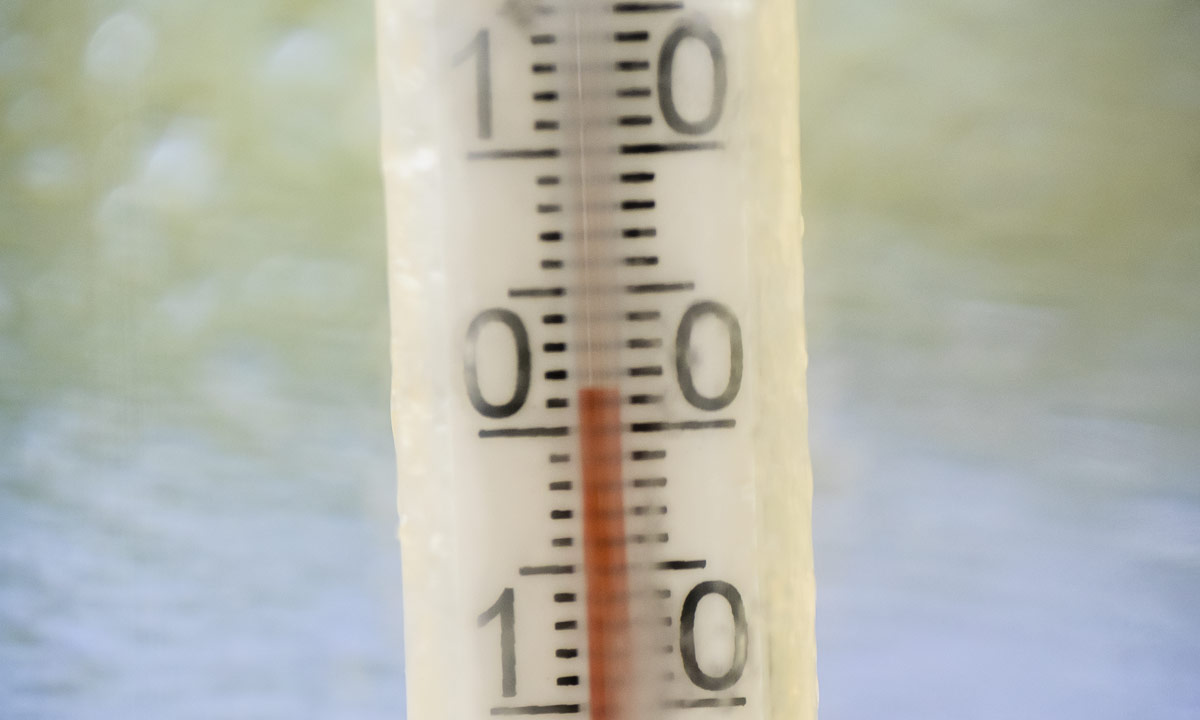
The whole night the gusty wind howled in the chimney and heavy blows seemed to shake the whole hut again and again. Already in the evening before the temperature had dropped to 1 °C and when we woke up it looked like that:

To continue our hike under these conditions would be difficult and troublesome. What a lucky coincidence that we planned a day off in Nallo. But what should we do, if the wintry weather would continue or even intensify and we would get snowed in?

A notice pinned to the wall informed about helicopter prices. A flight to Nikkaluokta for up to four people costs 4600 SEK (approx. 480 Euros). That’s quite affordable and could be a possibility to reach civilisation if we were forced to abandon our Kungsleden tour because of the weather. Anyway, the day just had begone – just wait and see … .

G., the stugvärd asked Andi and me if we could fix the door of her stugvärd toilet. She had used the toilet in the night and a wind gust had snatched the door out of her fingers so violently, that one of the metal hinges had been torn off. Luckily the door jammed and was save for the moment. Andi and I could help her and fixed the door. (As a matter of fact it was mostly Andi who fixed it as the photo below reveals.)

Katrin and Annika were also not idle. Katrin sawed logs of wood into 30 cm long pieces, so that they would fit into the oven. Annika chopped them into pieces. All the more we valued the oven that held our rooms warm and cozy.

Annika surprised us with pancakes for lunch, she had pulverised pancake dough with her. She used half of her supply and we got 2½ pancakes each – delicious!

Meanwhile the weather changed for the better. It got a bit warmer and the snow in the valley Stuor Reaiddávággi started to melt. The wind fell off and breaks in the clouds appeared. Good news for us who wanted to continue our tour on the next day, even if we all enjoyed the relaxed atmosphere at Nallo and the beauty of the landscape around.

We took a midday nap, solved a puzzle, played Yahtzee and finally we prepared dinner, this time tortellini with dried feta cheese and chanterelle mushrooms. We were eating inside while the reindeers, who had been around the hut all the time were grazing outside.

Again it was worth to have a day off in Nallo.

Recommendation for nice people:

Nallo is worth a visit! The hut is cosy and the landscape is of a special beauty. You can enjoy the much more familiar atmosphere compared to the larger huts on the Kungsleden and the arctic scenery around.

Recommendation for not so nice people:

Nallo sucks! The hut is small and has neither sauna or shop. All ways from and to Nallo are difficult to go and as you can see, the weather is always awful. Stay away!

25 August: Kungsleden day 6 – Sälka—Nallo (10 km)

This article is part of the series “2017-08: Kungsleden hike”.

Today we would leave the Kungsleden. Instead of the route SälkaTjäktjaAlesjaure (25 km) we would go SälkaNalloVistasAlesjaure (37 km). Annika and I have been in Nallo two years before and fell in love with that place.

Again we woke up early, again it was cold with temperatures round +2 °C and again snow had covered the mountains over night, this time not only the highest peaks. After our breakfast—cleaning—packing routine we left the crowded Singistugorna hoping for less people in Nallo.

We went up a bit, but were on the wrong side of some alpine brooks. Katrin and Andi returned to use the small bridges, Annika crossed the brooks by balancing over some stones, I just waded through – one of the advantages of using rubber boots.

First the landscape didn’t seem to change but gradually the flowers and other plants lessened and the terrain became stony and harsh.

The mountains that framed the valley Stuor Reaiddávággi were rugged and rocky and powdered with snow. The lack of plants let them appear colourless.

More and more we had to cross boulder fields and some smaller streams. Water ran everywhere and we had to look for the path that was marked with piles of stone. Not easy to find in a landscapes made of rocks and boulders, even if some of the top stones were of white quartz.

It was cold, windy and then it started to snow.

We went along the lake Reaiddájávri. We would have to cross the river right behind the lake before it cuts down into a deep uncrossable ravine. Two years before Annika had to wade through in sandals, because the water was to deep for her boots. There are nicer things than wading through ice cold water while it’s snowing …

We were lucky. The water level was low and someone obviously had build a fort of stones that were quite easy to cross. We were cautious anyway, because no one wants to fall into icecold water with a backpack and fully clothed.

We succeeded and took a short rest to eat some chocolate (crucial food on hiking tours!) but we continued soon because of the chilly weather. We followed the Stuor Reaiddávággi and crossed some side valleys with old snow fields – reminders of last winter.

The precipitation got stronger, more rain than snow. While the others continued through the alpine and arctic landscape I went to the ravine to take pictures of the waterfall, but I soon gave up, since the rain fall grew too strong. The last photo after catching up with the others is blurred from the rain on my lens.

Finally we arrived at Nallo 12:30 and were delighted, that only few others had come there as well. We cooked an instant noodle soup and took a midday nap.

In the afternoon it had started to snow stronger and the wind speed increased while the temperature dropped to +1.5 °C.

The ground was still bare of snow – a good thing for the reindeers, that grazed in the valley.

Snowfall however continued the whole day and evening and slowly started to cover the ground. How good that we planned to take a day of in Nallo the next day.

24 August: Kungsleden day 5 – Singi—Sälka (12 km)

This article is part of the series “2017-08: Kungsleden hike”.

The morning in Singi was cold. The temperature was just above freezing point and again it had snowed onto the higher mountain tops.

Good to have a stove to fire and a gas burner to prepare hot tea!

Each day we got out of our beds earlier and earlier. This day we stood up way before seven and started our hiking day already at half past eight. Hejdå, Singi!

It’s only twelve kilometres to the Sälkastugorna, so we could take it easy. We planned to take a rest in the small emergency shelter Kuoperjåkka which is 6 km away from Singi but it was already occupied. So we rested outside. Despite to the cold weather there were many mosquitoes that tried to bite us. Some succeeded, some died …

We continued our trail to the north and crossed many small mountain rivers and alpine brooks. All of them were bridged. The smaller ones with wooden planks, the larger ones with metal chain bridges.

First the sky was grey and the air chilly but little by little it was clearing up and the mountain tops that first were hidden by clouds and haze started to reappear.

At 13:30 we arrived in Sälka where one of the three stugvärdar – the mountain-lodge keepers – gave us four beds in a 10-bed-room. A lot of people stayed overnight and some of the latecomers had to sleep on mattresses on the floor or in the sauna.

I took an afternoon stroll and peeked into the Stuor Reaiddávággi, the valley that we would hike through the following day.

The kitchen was both too small and designed in the most impractical way. So we moved into our room after dinner and avoided that kitchen. Quite early we climbed in our beds (it’s always bunk beds with two or in some huts even three beds on top of each other), but we didn’t get much sleep that night. Eleven people were sleeping in that room and it was noisy and the air was hot and fuggy. Anyway I managed to fall asleep after a while.

In the night some of us were woken up by a bright flashing light. It held on for minutes without stopping and I realised, that it came from the outside. The light was attached on an antenna on top of a roof and illuminated the whole area. I put on some clothes, went outside and woke up a stugvärd by knocking at the window. He told me, that the police would call. (Every hut on the Kungsleden has a satellite telephone, but only the police can phone the huts from the outside.) I went into bed again, realising once more the bad air  in the room, but I didn’t dare to open a window since it was cold outside. Finally I managed to fall asleep again.

Next day the stugvärd thanked me for waking up him. The police was asked to look for a hiker, that indeed had been in Sälka the day before but already had continued his trip.

There are summer trails and winter trails. Partly they are united and partly they run differently. Summer trails mostly are marked with piles of stones. The upper stone is often painted red to increase the visibility of the waymark. Winter trails are marked with red crosses sitting on the top of long poles. Nowadays many of those crosses are made of plastic. That’s a shame since they are ugly, probably less ecological and quite fragile, too.

Don’t follow a winter trail in summer if you don’t want to swim through lakes or find yourself sinking deeply into the mud of a bog.

Three trips round Tromsø

This article is part of the series “2017-07: Tromsø”.

It’s me who is thrilled by the North, who loves to travel to places like Tromsø or Kirkenes. It’s my mother however who has been much northerly than I was. She was in Spitsbergen/Svalbard with a cruise ship many years ago. But on the way back the route had to be changed due to fields of drifting ice and therefore the travellers couldn’t leave the ship in Tromsø. So my mother missed Tromsø on that cruise.

This year we managed to close this gap: three weeks ago my mother took a plane to Munich, another plane to Oslo and a third plane to Tromsø, where Annika and I picked her up from the airport. That’s why we’d travelled to Tromsø by car two days before.

We had four days in Tromsø, I will write mostly about the first two:

Monday, 10 July

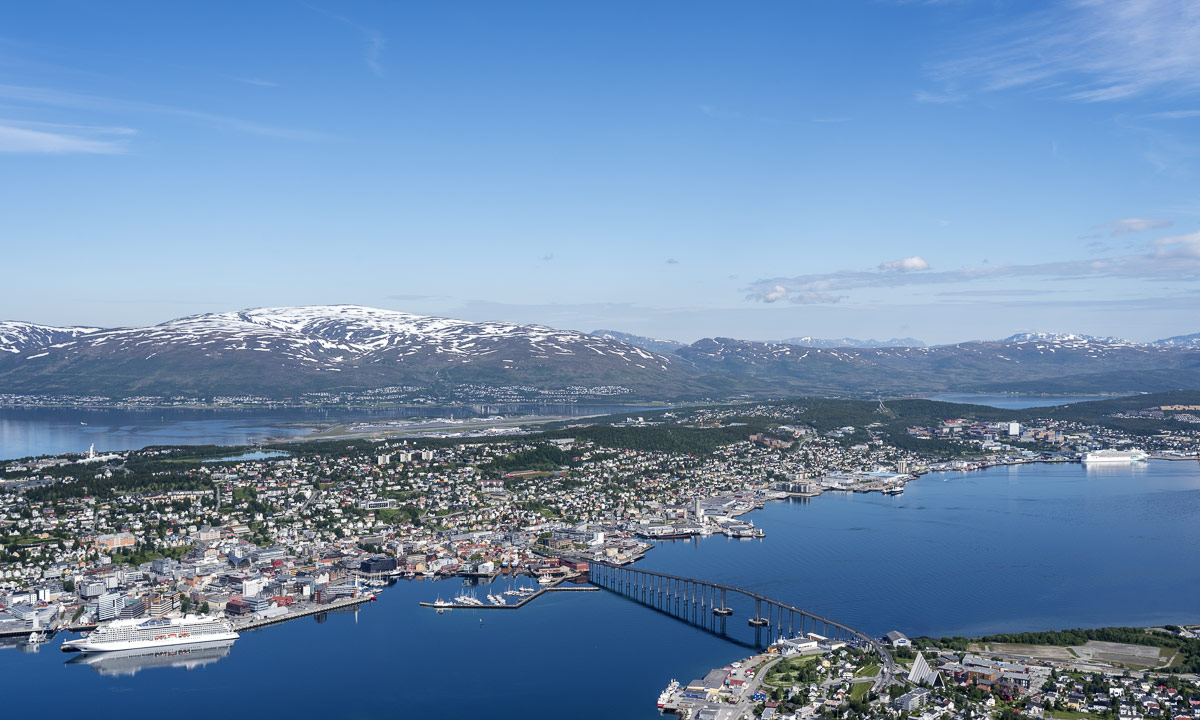
Weather was better than forecasted and so the first thing we did after breakfast was taking the car, crossing the Tromsøysundet on the Tromsø Bridge and taking the Fjellheisen on the other side of the town. Fjellheisen is a cable car up the mountain Storsteinen (approx. 420 m), where you have an incredible view over the town Tromsø, the island Tromsøya and the mountain ranges on the neighbouring islands.

We stayed there the whole morning, enjoying the view, walking around, eating ice cream and looking at the arctic flowers that grew everywhere.

Finally we went down with the cable car again driving back to Tromsø and since the weather was sunny and nice we just continued driving, leaving Tromsøya again, this time using the Sandnessund Bridge. We continued our trip on the island Kvaløya (Whale island), Norway’s fifth largest island. At the western end there’s a bridge leading to the island Sommarøya which sometimes looks like like a caribbean island with it’s turquoise blue bays.

Annika and I were very keen to take a bath, but we all were hungry too, so we took a lunch first. While we were eating our fried fish, clouds approached and soon it started to rain. So much to our summer bath plans …

After looking around on Hillesøya (another bridge, another island) we drove back, this time taking the coastal way in the south of Kvaløya. Finally even the sun came back and illuminated the bright yellow blossoms of Lotus corniculatus, or common bird’s-foot trefoil that covered the sides of the narrow road.

Have a look at the beach photo above. It’s not sand, it’s corals covering this beach, which makes them looking even more caribbean – at least as long it’s sunny.

Late in the afternoon we arrived at our hotel after our first day together.

Tuesday, 11 July

After the rainfalls of the night sun came out again. Time for another trip to the surroundings – this time the island Senja, Norway’s second largest island (beside of Svalbard).

The first part of the tour was the same as the trip to Sommarøya the day before, but instead of turning right the last T-junction we turned left to Brensholmen and waited for the ferry to Botnhamn/Senja. Annika downloaded an app to pay the passage, since it was much cheaper than paying cash. As in Sweden it has become quite unusual to pay cash. The idea to start early was a good one, we were one of the last cars to fit on the ferry. Some others were unlucky – they had to wait for many hours or change plans.

Hour plan was to take a round trip on Senja using the roads 862, 86 and 861. In addition to that we planned to take some side trips.

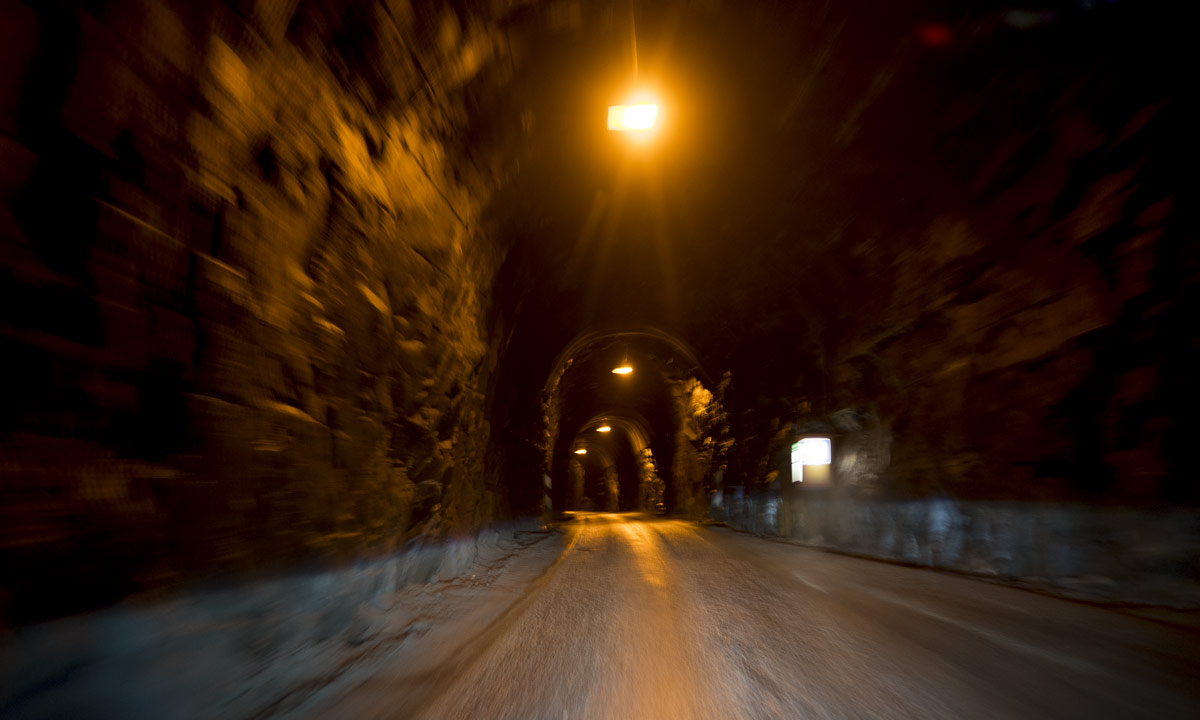
The first side trip was special, since it led through a dark tunnel cut into the rock, that much too narrow for two cars to pass. In addition to that it was curved and bent so that you couldn’t see other approaching cars in advance. There were lay-bys were you could try to squeeze in and let others pass and I was really glad that the regular bus had left the tunnel minutes ago.

But when we left the tunnel we got “Norway in a nutshell”: Wide bogs, birch and pine forests, clear blue lakes, green meadows and fields and most impressive: big snow covered mountains, some of them looking unreachable by foot, so steep and harsh they were.

But it wouldn’t be Norway without the fjords. Sometimes the coast is as rocky as the mountains, sometimes it provides sandy beaches in beautiful bays. And finally we came to our bath, all three of us. Of course the water was cold, but the air was warm and we stayed in the water quite a long time.

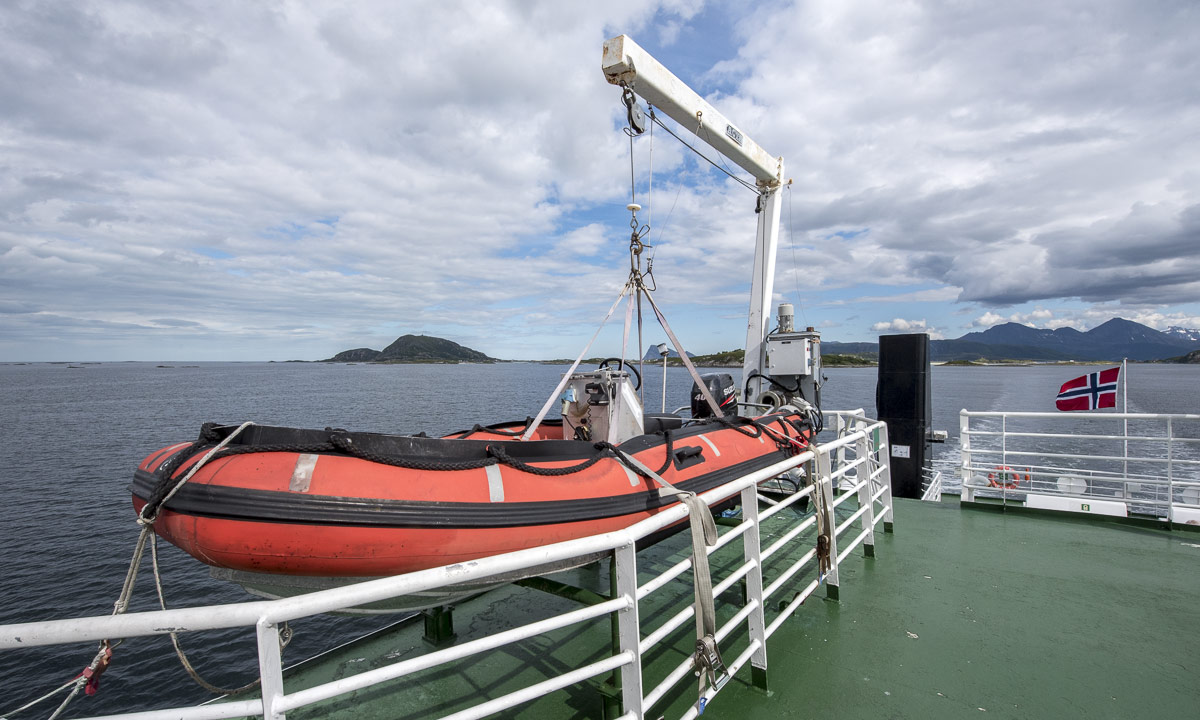
We continued our round trip, again some clouds approached and again some rain drops fell. I thought we’d have to wait an hour for the ferry back, the ferry arrived simultaneously. I realised that I looked wrong when I checked the timetable, but we were lucky and found a place on the ship anyway.

On the way back we didn’t stop for taking pictures any longer. First of all the weather had become grey and dull and then we were tired and hungry. So we stopped only at the supermarket to buy some food for the dinner.

The other days

We did it right, making the larger trips in the beginning, because the other two days it was cloudy and rainy. Time for some sight seeing and indoor activities in the city that we hardly touched the last two days.

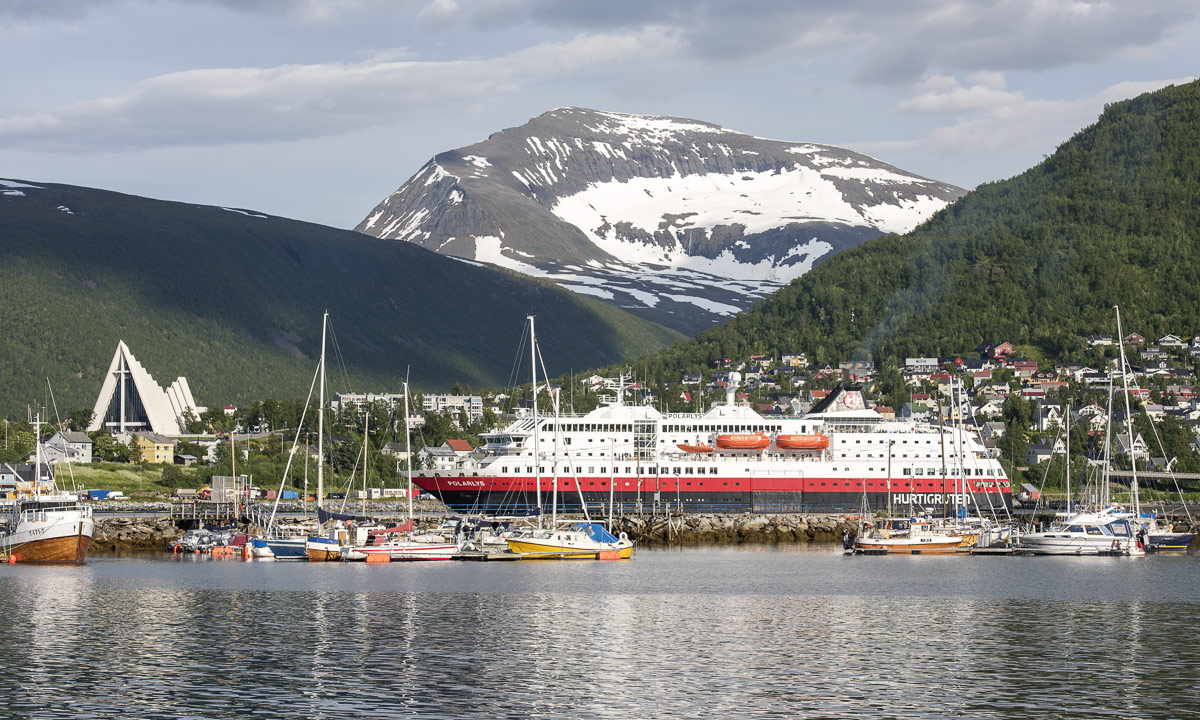
We visited the Polarmuseet – we went shopping (kind of) – we tried to visit the Tromsø Cathedral (in vain, it was closed).  We visited a photo exhibition in the Universitetsmuseet – we were on board of the seal hunting ship Polstjerna (another museum) – we strolled around in the beautiful botanical garden (hard to find!). We ate lunch or dinner at the harbour – we visited the park Prestvannet – we visited the Hurtigruten ship Trollfjord, the very same ship Annika and I travelled with last winter. Did I forgot something? Certainly!

On friday we started our road trip back to Skelleftehamn were I live, but that’s another story.

Travelling to Tromsø

This article is part of the series “2017-07: Tromsø”.

Sometimes I’m just too lazy to blog and so was I the last weeks. Today however I finally want to write about a great trip to Tromsø, that Annika and I started on 7 July, almost three weeks ago.

Tromsø is in located in the North. Very far north. It lies 344 km north of the polar circle and is the northernmost town of the world with more than 50,000 inhabitants. It has the northernmost university, both the northernmost cathedral and mosque, the northernmost brewery and probably some more northernmost things of the world.

The shortest route by car from Skelleftehamn to Tromsø leads over Luleå, Pajala, Kilpisjärvi (Finland) and Nordkjosbotn (Norway) and that’s the route Annika and I took.  We had a lot of time and planned to stay overnight twice, but didn’t plan where.

The first part of the route, the E4 leading north, is kind of boring. At least you’re allowed to drive 110 km/h – the maximum allowed speed of the whole journey. In Töre we left the E4, took a break and ate in the Restaurang Roady – the first KRAV-certified sidewalk restaurant.

After lunch we continued northwards. After 50 km we reached Holgers Traktor Museum in Svartbyn, which is always worth a visit. Since it was late – we started our trip in the afternoon – we just made a short stop to take a picture and then continued our trip.

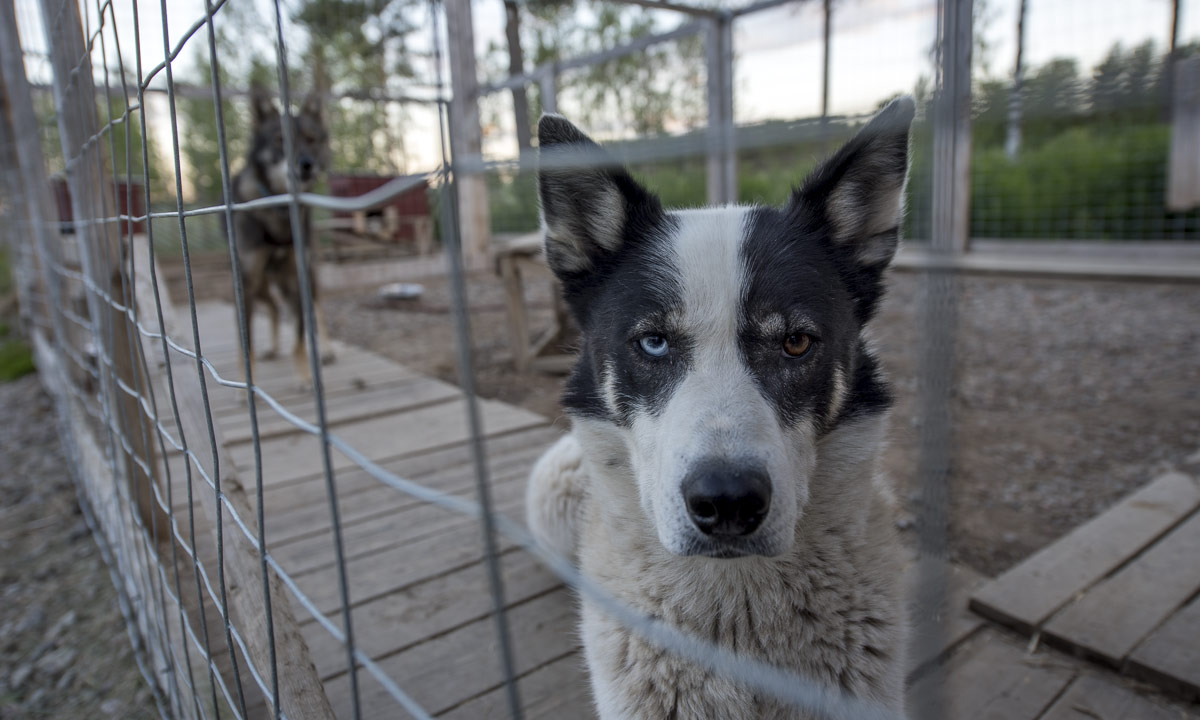
Where to stay? Perhaps we could stay with Katharina whom I met last winter. She lives in Miekojärvi between Överkalix and Övertorneå. We tried to ring her, but she didn’t answer the call. Anyway it’s just a detour of 30 kilometres so we just gave it a try. Katharina has round 20 huskies and someone has to feed them. When we arrived at her house, a man left the shed, looked at us and we were quite surprised to meet Sascha whom we met before in Solberget several times. What a lucky coincidence! So we found not only our first overnight stay but great company, too! Thank you, Katharina (abroad) and Sascha for your hospitality!

The next day we continued our tour after a nice and rich breakfast. We crossed the arctic circle and watched the reindeers.

First stop: Pajala, where a big market took place. Here you could buy a lot of things between tradition and modern age.

After two hours we left the hurly-burly and entered the car again. We crossed the Swedish–Finnish border and followed the E8 which was more construction site than main road. We passed Karesuvanto, where I was sure to meet a food store. All stores however are on the Swedish side, in Karesuando. Not a problem, if you have bread with you and then are given butter, cheese and salami as a present on the super-nice camping ground Lätäsenon Majat near Enontekiö, where we stayed overnight.

Next day we passed Kilpisjärvi near the border triangle, where Sweden, Finland, and Norway meet and soon we were in Norway. Norway is my favourite country in summer because the landscape is so varying and beautiful that even I make photos from within the car:

In Skibotn we saw the first fjord – the Lnygen – and made a break. Annika used it for jogging and I for looking around and taking pictures. I love to stand at the shore, the feet in the water, the view either on the shells or on the fjord and the still snow covered mountains. But the seagulls didn’t like me standing there and they flew some feint attacks, luckily in vain. They don’t dare to come really close.

In Nordkjosbotn we ate hamburgers for lunch. It’s not easy to get anything other than burgers and pizza in Northern Norway outside the cities, but sometimes I like fast food, especially when travelling. From Nordkjosbotn it’s only another hour to Tromsø, where we arrived in the afternoon.

Here we would stay for four whole days with … but that’s another story for another blog article. Stay tuned!


103rd February

Today morning was the 103rd February. It has been so cold and snowy the night and morning that I refused to call it 14th May.

Some random photos, taken between 6 and 7 o’clock where temperatures had started being above zero again:

It took the sun some time to melt away the late snow, but this evening most of the snow was gone and I was content to call today’s date 14th May again.

Winter is finally gone. Winter is gone? Well, if you’ll look at the photos below you see that most of the lake Rudtjärnen is still covered with ice and that due to the cold temperatures this evening even the open parts starts to freeze over again.

But hey, that’s part of Spring, too. So I just say: winter is finally gone! Am I right? We’ll see …


Well, Spring, we’re waiting …

Another snow shower in Skelleftehamn. On 102nd February 13th May! Winter is stubborn this year.

One and a half hours later … still snowing …

Next morning: In the night it was snowing strongly and the temperature was round 0°C. At 5 o’clock 8 cm of snow covered the car, the roof and the grass in the garden. But it already had been starting to get warmer and the snow had started to melt. That’s the ugly side of snow weather. I guess in the afternoon the snow will have melted away completely.

And then, Spring? It’s your turn. Show, what you can!

Late spring snow

When I came back from Germany on Sunday it snowed. On Monday and Tuesday some snow fell, too. And so it did today. In the morning a snow shower arrived that was so severe, that everything was white again after a short time. It was quite unbelievable that we have the 10th of May!

Anyway just like the last days today’s snow melted away quite soon and two hours later it was gone. Hardly believable that this short winter-intermezzo had taken place today.

But the conditions here are nothing compared to other places:

  • In Katterjåkk in the Swedish mountains there’s still 183 cm of snow.
  • On the mountain Mannen (1294 m) in Rauma, Norway it’s almost twice as much: 359 cm!
  • The German mountain Zugspitze (m) tops it with 410 cm today!
  • Oh yes – I almost forget – Fonna near Jondal in Norway is a sure bet for snow. 500 cm at 1200m, 800 cm at 1450 m!

So, compared to other places we already have Spring in Skelleftehamn despite of the snow showers and the low temperatures. Let’s see how it will be in six weeks. That’s midsummer!

Abroad north – climbing the mountain Roßkopf

I’m at Arlanda Airport, waiting for my flight to Skellefteå. I’m longing home to Skelleftehamn but my thoughts are still in Germany, where I visited C. and O. – two fantastic friends who live in Munich yesterday.

Since the weather promised to be good, we decided to make a tour near Spitzingsee in the German Alps. We soon realised that all lifts and cable cars were closed and so we decided to climb the mountain Roßkopf (1580 m). It won’t be so hard, it’s just 500 meters up and then down the other side to the Albert-Link-Hütte, which is famous for its Kaiserschmarrn!

There was not much snow round the lake Spitzingsee (1084 m) but you could see, that some slopes and mountain tops were still quite white. Anyway I thought that it wouldn’t be so much. The Roßkopf is hardly 100 meter higher than the Feldberg were I’d been the Sunday before.

I had to smile about the man that went down the grass covered ski slope with huge ski boots, shouldering a pair of skis. Did he find any snow to glide down more than ten metres, I wondered. Well, I might have been wrong …

We started going up the grassy slope, partly following the way, partly just going up. There were some leftover snow fields to cross, but mostly we went on bare ground, looking at the countless flowers. When we went up the first slope we turned left and soon the way was completely covered with snow.

We carefully avoided the places round the little brooks and stream to avoid getting wet feet. Anyway I  guessed that the snow was round 50 cm deep – more than expected.

Some skiers approached, effortlessly gliding downhills. We went up until we came to a place with another ski lift. It was closed too. Shall we take the longer but flatter snowy way through the forest or just go uphills? We decided for the latter knowing that we could take as many rests as we wanted. We saw some skiers, but no one on foot as we ourselves.

Well, we managed the slope, but it was hard work and we rested more than once, before we continued plodding through at least knee deep snow. But it was worth it. When we stood on the mountain saddle that leads to the Roßkopf we had a gorgeous view onto the much higher mountain tops in the South.

We went to the Roßkopf were we met some other hikers without skis or snowshoes. We learned that there would be no really easy way down but we soon made up our minds about our way down.

The first steps went well, then we landed in a large patch of much deeper snow. My legs disappeared completely in the wet snow several times. It was easier however to glide down there than on the lower parts of the slope, that were partly snowy, partly grassy and partly covered with slippery clay. None of us managed to go down the whole way without slipping.

I didn’t expect that so much snow would have been left even on the less high mountains in the beginning of May. So I took a picture of me myself being stuck in the snow. It might be a bit overexaggerated perhaps …:

Soon we arrived less steep terrain where we just could plod through the snow again. After another fifteen minutes we were in the land of Spring again.

But when we looked up we could see the land of Winter. That very land that we touch just half an hour before.

So – much snow left in the German mountains. But how about home? Will I still have snow in my backyard in Skelleftehamn? I don’t know. I’ll see it in some hours.


Valborgsmässoafton abroad

Valborgsmässoafton, the day before the Walpurgis Night is a quite important feast in Sweden and uses to be celebrated with a big bonfire.

Personally I connect the 30 April and the 1 May to last seasons snowfalls. It snowed on 1 May 2014, it snowed on 30 April 2015, so it didn’t surprised my that quite a lot of snow fell in Skelleftehamn today – round 5 – 10 cm.

But something was different this year.

I’m not in Skelleftehamn. Nor am I in Sweden. I’m about 2000 km south-southwest in Freiburg near the Black Forest.

I love mountains because you can look far and I love snow. After hesitating a bit – I can be quite lazy! – I picked myself up, packed some clothes, equipment and food, walked to the main station and took the train to High Black Forest to “climb” the Feldberg, Germany’s highest mountain outside of the Alps. The Feldberg has been already free of snow this spring, but the cold weather with high precipitation brought a lot of new snow to the mountain tops this week.

But today it promised to be warm and sunny.

Already from the train you could see some of these snow-covered tops and patches of snow everywhere, but the trees were green and many flowers were blooming. The same in Feldberg-Bärental, where I left the train and started my hike. The path itself was bare of snow, but the slopes beside the path were covered with wet snow.

Soon I arrived at the Feldsee, a lake formed by the last Ice Age. Here I made a short stop, drank some water, took some photos and continued up through the forests, where the path not only got much smaller, but much snowier as well.

I went up the snowy and slippery path through the forest and came first to a Hotel with a parking place. That’s exactly those things I don’t want to see, when I’m outdoors to enjoy nature. Anyway it was just a short interruption, now another way climbed uphills. I wasn’t alone at all and so many people had used the same way before me, that it was almost completely snowless.

Soon (but a bit out of puff; we don’t have mountains in Skelleftehamn) I approached the first top. Not the Feldberg but the Seebugg (1448 m). I guessed that the very top of the Feldberg itself would be quite crowded and took a rest between these two tops.

You see the rubber boots? Quite good for snow but too warm when not cooled by the snow. I put them off while resting right after having taken this photo.

But the Feldberg (1493 m) was near and I continued my tour on the broad snow-ploughed street-like way.

From the top I had several views.

First of all I saw many other people. Then the snow covered slopes other white mountains nearby. Behind them the green springlike lowlands.

And far away in the south I could recognise the faint snow covered mountains of Switzerland, some of them are almost three times as high as the Feldberg!

Many people had sneakers on or flat shoes, but down jackets that I considered much too warm. Since I had left the forest I only had a t-shirt on because I found it really warm, even on the top. On the other side I was probably the only one with rubber boots on today. They belong to my usual baggage, while mountain boots don’t. Anyway the rubber boots have one advantage when combined with a waterproof camera. You can make pictures like these:

You might have guessed it. This photo was taken at/in the Feldsee not on the Feldberg.

The descent was quite unspectacular and much shorter, since I took another way. A bus brought me back to the very same train station were I’d started the tour four hours ago.