March snow at the coast

Today I finally had to work with my it job again.

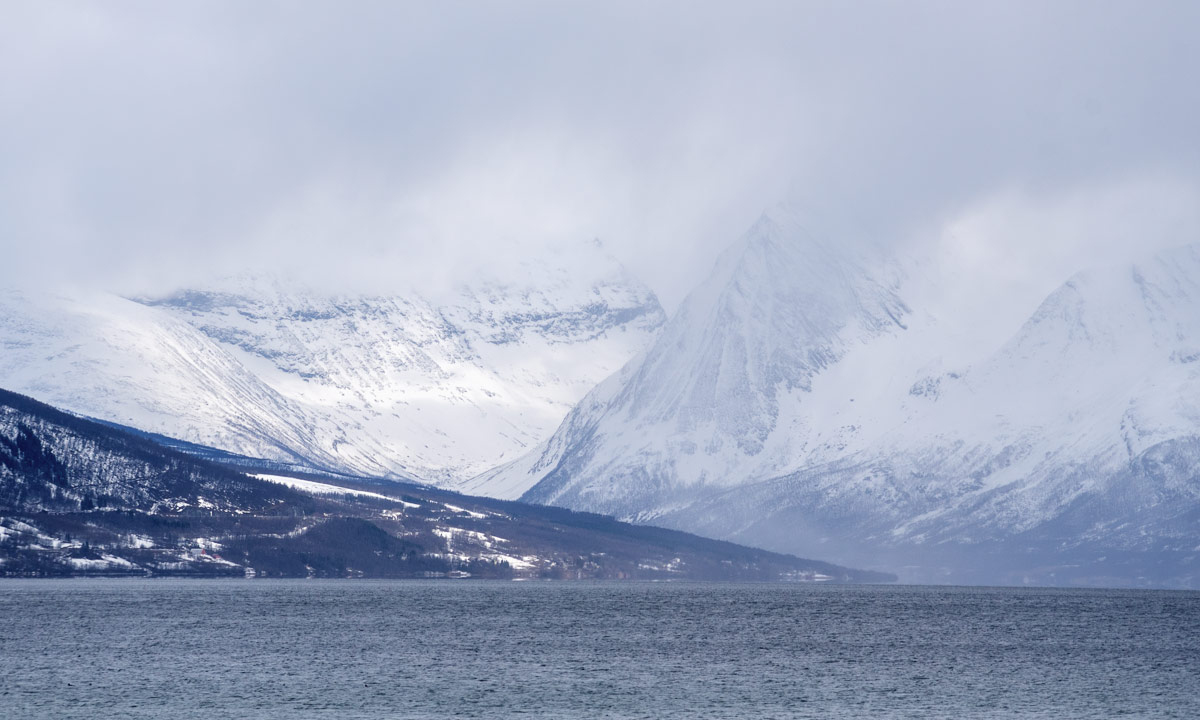
But before that I just had to take my camera and drive to different places by the sea. I was curious how it would look like after the snowfalls of the last days. This morning between 75 cm and 80 cm of snow in my backyard and we are talking about the average, not the snow drifts.

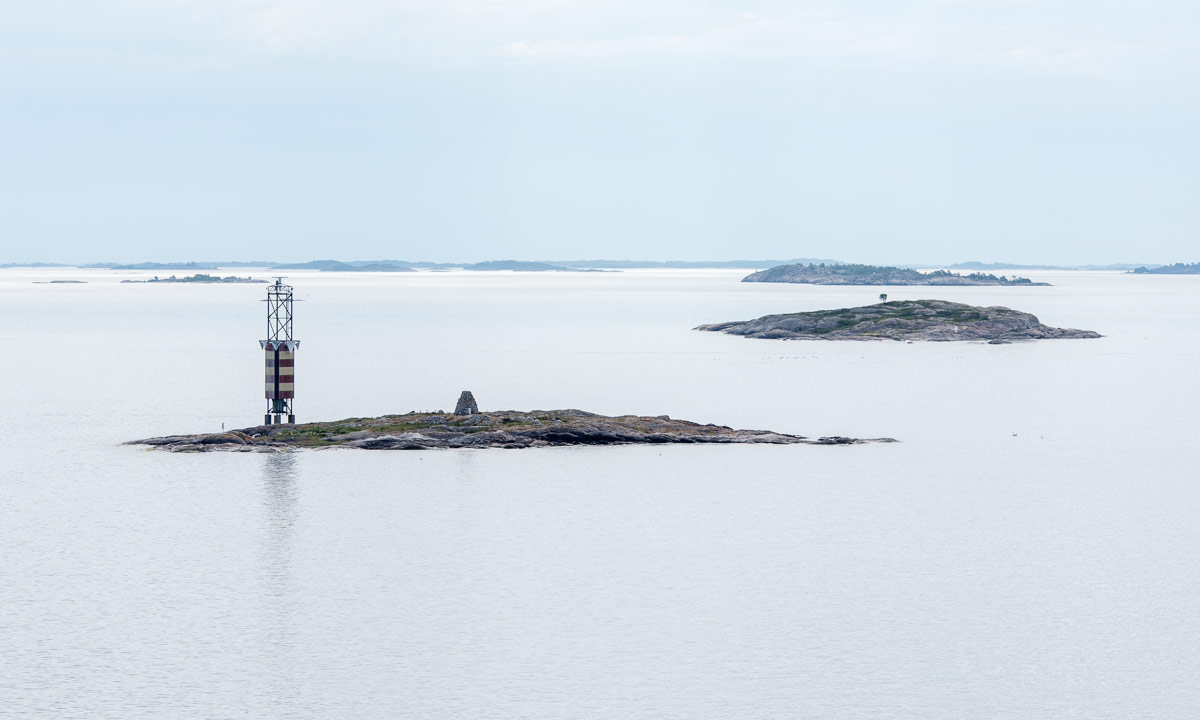
1. Peninsula Näsgrundet

Normally the coastal line is quite visible here. Either you see stones sticking out of the rocky coast or you can spot the raised ice edge. Today you mainly saw a white plain. Only some of the largest rock and some brown tufts of grass were sticking out of the snow. I really had to look for motives to avoid images with a plain-white bottom half.

I would not dare to enter the ice because you cannot see its thickness. Probably there are weak spots that wouldn’t bear my weight.

2. Boat harbour Kurjoviken

On the roofs protecting the two wooden boats there was hardly any snow. Probably it had been too windy. Parts of the outside furniture of the restaurant Sjökrog were buried deepely in the snow. There was also a completely buried table, but that would have given a very boring photo.

3. Nameless boat bridge, Rönnskär

The boat bridge normally shows nice contrasts between the wooden construction and the water, whether covered with ice or not. Even here the snow made it all the same today: snow everywhere reduced the contrasts radically.

Now I was satisfied enough to start working, but first I had to shovel snow. I had already cleared the garage driveway last Sunday, not I had to dig a bay into the snow so that the postman could approach the mailbox by car. Phew, that was work, round about 1.5 m³ of frozen snow had to be moved and thrown in my front yard.

Snow makes everything beautiful, it’s only a matter of the amount.


Last day of February – farewell sea ice

Yesterday I stood on the ice edge of Kågnäshällan. It was warm and felt like the end of April. And so it looked like, too, because large parts of the Bothnian Bay were free of ice. Only protected bays and shallow waters round the islands were still frozen.

It became colder and stormy in the night. It even snowed a millimetre.

When I got up this morning it was -4 °C and still quite gusty and stormy. At 8 o’clock I took the car to have a look at the ice conditions.

I passed the nearest bay Kallholmsfjärden, just 400 metres from my house. Some ice fishers were sitting on the ice, but only some hundred meters from open water. I however wanted to drive to Näsgrundet, one of my favourite places. Yesterday afternoon the sea east of this peninsula had been completely covered with a new ice shield that had been created one week ago. Today it was … well, different …

Gale-force wind gusts tugged at my hood. Waves splashed sea spray and tossed pieces of ice onto the ice walls in front of the coast. Ice floes floated to and fro, cracking, shaking, turning, breaking. Sometimes I could feel the vibration of another wave hitting the ice wall I was standing on. Some of the ice already had been squelched to slush. I cannot remember such an impressive view of the forces of the Baltic Sea in winter time. Farther away a ship was leaving the port, accompanied by a tug boat and the small icebreaker Baus.

I tried to make pictures of the say spray of the waves. Not easy …

Behind the curtains of spray waves came rolling and small and large ice floes pivoted and danced while going up and down.

After 45 minutes the Baus came back heading for the port.

Partly I was taking pictures, partly I was just enjoying the energy of the elements and listened to the different sounds. I tried to make some videos, but all you can hear is the swooshing wind at full volume.

After one and a half hours of photographing I left this scene and drove to the small boat harbour Tjuvkistan nearby. Here the ice uses to be safe to cross to the islands Norrskär and Bredskär until the end of March or even mid-April.

Well, not this year. Even here the ice layer was being destroyed by the waves. The northern wind blew the ice floes away, so they will not freeze together again, or perhaps in Finland.

When I returned home I passed the Kallholmsfjärden a second time. The ice fishers were gone – there was just no ice left to sit on and fish from.

So, the sea-ice-season is over, four to six weeks earlier than usual.

Travelling with the MS Lofoten: Stamsund – Trondheim

This article is part of the series “2019-02: Northern Norway”.

I’m writing this blog article from the train. We left Trondheim central station ten minutes ago at 7:50, at 9:22 I’ll be Storlien in Sweden where I’ll have to change train. But back to the day before yesterday evening. The Hurtigruten ship MS Lofoten had just left Stamsund

22:30 – we just had left Stamsund. The next stop would be Bodø at 2:30 in the night.

Monday, 18 February

As expected I overslept Bodø, stop #18 of my Hurtigruten journey to Trondheim. I was awakened by a loud, squeaky noise. It was our ship leaving Ørnes, stop #19. It scraped along the huge truck tires that are fixed to all piers to avoid damages and made an awful noise. One hour later I stood on deck and looked at the MS Spitsbergen, the ship that Chris and I visited eight days ago. It had been in Bergen and now was returning to Kirkenes.

At half past nine we passed Polarsirkelmonumentet, a monument marking the polar circle. It looks a bit alike as the more famous monument at the North Cape.

But – where’s the winter? We were not only going south, we also had unusually warm weather for mid-February. Beside of the higher mountains most snow had melted and the landscape looked more like a rainy September day than the middle of winter.

Later there was a little ceremony for having crossed the polar circle. I have crossed it many times but I participated too. Obediently, I took a spoonful of cod liver oil, because I wanted to have the spoon that you may keep.

I have to admit, that the journey started to become a bit boring. The winter was far up north, the weather was warm and rainy and I’ve been on the ship for three days already. I made some pictures anyway.

Next stop Nesna, stop #20.

Next stop Sandnessjøen, stop #21.

Here I even took some detail photos of the MS Lofoten from the pier.

We travelled along the Helgelandskysten, the coast of Helgeland. It’s a well-known scenic route which Annika and I took some years ago after having visiting friends in Norway. First it showed a funny combination of ancient mountains and modern functional houses.

De syv søstre (the seven sisters) came into view and seemed to follow us for half an hour. This is a quite impressive mountain range with seven summits. Some of the tops were in the clouds that made the view maybe less postcard compatible but in my opinion more impressive. The mountains looked higher with their summits hanging in the clouds.

Next stop Brønnøysund, stop #22. Here we had a stopover of an hour. When I left the ship rain was pouring down and I was glad about my Gore-Tex clothes that I actually didn’t plan to wear before April.

We left Brønnøysund at 17:00 and it was still quite light. Half an hour later it became so dark that you could hardly see anything but the lights of towns, villages, streets, cars and other ships.

Next stop Rørvik, stop #23 and the last stop before Trondheim. The weather was just as bad and Rørvik in a rainy winter evening is probably not the most beautiful place, especially when there’s a huge construction site in the middle of the village. Soon I returned to the ship that lay head-to-head with the Hurtigruten ship Nordlys. Some very last photos of the tour.

At half past nine we left Rørvik. I was already lying in my bed in cabin 121. The alarm clock was set to 6 o’clock in the next morning. The next day we would arrive in Trondheim where I would leave the Hurtigruten, take a taxi to the railway station and then the 7:50 train to Storlien. There I would take another train to Sundsvall and a third one to Umeå. In Umeå I would stay with Annika for a night and travel home by bus the next day.

Our train just stopped in Gudå. 20 more kilometres and I’ll be back in Sweden. Ha det bra, Norge. Takk for turen.


Travelling with the MS Lofoten: Øksfjord – Stamsund

This article is part of the series “2019-02: Northern Norway”.

Disclaimer: Many, many photos, some of them pretty mediocre but all part of the journey.

Still Saturday, 16 February

After we left Øksfjord we continued our journey through the darkness. The people on board were idle, they chatted, read a book, look through the window and of course most of them used their computers, tablets or smartphones.

Three hours later we were in Skervøy, stop #9 of my Hurtigruten journey.

After a short stay we continued to Tromsø, Norway’s largest town north of Trondheim. I took a night image of the passing Hurtigruten ship MS Trollfjord then I went to sleep.

Our stays in Tromsø and Finnsnes I overslept completely.

Sunday, 17 February

At 7 o’clock I woke up, half an hour later I stood outside and took the first pictures in the blue hour. The weather was much better than the other days and the temperatures had dropped below zero in the night. We were on our way to Harstad, with 25000 inhabitants the third largest town in Northern Norway. Stop #12.

While we were stopped in Harstad the sun was rising and was bathing the landscape in purplish light. Harstad started to glitter. It was the many windows reflecting the warm sunlight.

The sun rose higher and after a while the sky was blue. I stood outside with my large telephoto lens and tried to catch the impressive snowy mountain ranges by the fjords and sea.

Risøyrennan, a deepened part of Risøysundet came into view.

After a short stay in Risøyhamn, part of the Vesterålen and stop #13 of my journey we continued south. The sheltered  was covered with a closed layer of thin pancake ice. You could hear it crack when it met the bow wave of the ship.

Some more images taken between Risøyhamn and Sortland:

I left the MS Lofoten in Sortland, stop #14, but only for a short time. In Norway all shops are closed on Sundays and then the towns may be a bit boring. Partly the ways still covered with a bit of frozen snow, but mostly it was slippery ice and some deep water puddles. Home in Skelleftehamn it had been very warm the last days and I expect the same road conditions when I’ll come home in a couple of days.

After 30 minutes the MS Lofoten continued its tour. At the horizon the steep mountains of the Lofoten islands came into view.

The backlit Lofoten mountain ranges looked amazing as if they were from another world. I’ll show you two photos but I’m not at all happy with them. In reality the landscape looked more aerial or as if made of light.

These mountains were in the far. The nearer mountains to the left or right looked more normal when it comes to light but still unreal because they were so steep and snowy.

The large island Hinnøya on the port side, the island Langøya on starboard side of the ship I stood at the starboard and peeked through my telephoto lens. I have friends near Stokmarknes on the Vesterålen and was I looking for their house. I found it ;-). Unfortunately R. was ill but J. visited be on the ship with the children. They went on board while the ship lay at the port of Stokmarknes, stop #15. Shortly before departure my friends left the ship. Thank you very much for your visit!

Oh, I forgot the photo of the islet (or holm) Gjæva. I already knew it from earlier stays with my friends.

Now we headed for the impressive sound Raftsundet where we would even take a small detour to the entrance of the Trollfjorden. Due to the narrowness of the fjord and the risk of avalanches it’s not possible to drive into it in wintertime.

We left the blue sky behind us, the weather worsened.

First the weather still was quite fair but then it started to snow. The snowfall was so strong and the cloud layer was so thick and low that it was decided not to visit the Trollfjorden. You hardly would have seen anything.

The camera was wet, I was wet, too and it was so dark that it was near to impossible to take any pictures. It was twenty to five and I went into my cabin and took a nap.

Just some photos “for the archives” of the next stays: Svolvær and Stamsund, stops #16 and #17, both on the Lofoten.

Travelling with the MS Lofoten: Kirkenes – Øksfjord

This article is part of the series “2019-02: Northern Norway”.

Friday, 15 February

While I moved into my cabin the Hurtigruten ship MS Lofoten still anchored in the port of Kirkenes. I had a windowless 2-bed-cabin for myself and was able to spread out my belongings. But before that I took a photo with my fisheye lens. With the fisheye-like distortion the cabin look huge!

I used the Hurtigruten twice before, in 2017 from Vardø to Stokmarknes and last year from Båtsfjord to Ørnes. So the section KirkenesVardø was new to me. And it’s the first time without my car on board.

We were in the harbour till half past twelve.

Then we left Kirkenes and my 3rd and longest Hurtigruten journey had started. I stood at the stern of the ship and looked back.

Soon I changed place from stern to bow – at the MS Lofoten you can stand next to the bridge – and looked ahead. Far away, a bit to the port side I could spot a white plain – part of the Varanger peninsula.

[Live interruption: We have reached the open Lopphavet between Øksfjord and Skervøy. The ship has started to rock again. I am interrupted by the sound of a plate falling down from the table. Thanks to the soft carpet it survived]

Annika and I travelled a lot on the Varanger peninsula last winter. I stood on the port side of the ship and tried to spot all places we have been: There’s Vadsø, the largest town – there, far away is Ekkerøy with it’s beautiful beaches. And there is Kiberg, where we had a good time with Trond, our host of Cape East Arctic Adventure. And there’s his house! I found it! Let’s see, what about Kibergsneset, the easternmost point of mainland Norway where Annika and I had been last year? It was farther away from the village than I remembered, but finally I found it, too. Both photos are taken with 600 mm from a rocking ship with a vibrating motor, so the quality is bad, but it was nice to take these pictures.

Half an hour we arrived in Vardø, stop #1. (Vadsø is left out on the southbound direction.) We arrived late and I decided to stay aboard. I’ve been in Vardø before.

When we left Vardø behind, it was too dark to see the scenery. I have breakfast included but not the other meals, because I think they are quite expensive. I have my own food with me. This day however I didn’t have a proper breakfast so I bought a large bread with salmon and scrambled eggs.

The MS Lofoten went along the northern coast of Varanger. It was windy and the sea was a bit rough. The MS Lofoten was exposed to the elements. It is not only the smallest operating Hurtigruten ship but also the only one without stabilisers. It was rocking in every direction and the swell got stronger and stronger. Sometimes the bow of the ship was hovering in midair and then scended into the next trough. I’ve never been seasick before but I started to sweat and to feel quite uncomfortable. I tried to ignore it for a while, then I interrupted my photo edit session, went down to my cabin and went straight into bed. Whether it was my lying position or the fact, that the cabin was nearer to the center of the ship’s mass I don’t know, but I felt much better and fell soon asleep.

I woke up shortly before Båtsfjord, stop #2. Near the harbour the strong swell had subsided. Soon the ship lay calmly at the jetty. It had started snowing intensely. We were in Båtsfjord quite a long time due to a lot of freight being unloaded and loaded.

I went into my cabin and continued sleeping. I overslept Berlevåg, Mehamn and Kjøllefjord but was awake in …

Saturday, 16 February

Honningsvåg, stop #6. I was so sure that I would oversleep this stop as well, but we were an hour late. I was still dark, but I could take some photos with my tripod.

[Live interruption: We have left the Lopphavet, the sea was much calmer than expected]

We left Honningsvåg with an hour delay. I tried to make pictures but the sight was poor, mostly because of the snow showers and the low hanging clouds. At least I could take a picture of the MS Nordnorge.

An announcement came through the speakers: Due to the delay we would skip Havøysund, usually stop #7. This would spare us half an hour.

It got warmer. Temperatures were hardly below zero, much too warm for the season. It snowed more and more and all you could see was the ship and a circular patch of waves and snow.

Anyway the snow showers didn’t last for hours and after another snow shower Melkøya came into view.

Melkøya is just a few kilometres away from Hammerfest, second largest town of the Finnmark. It’s the endpoint of an undersea pipeline for natural gas. Here it is converted to liquefied natural gas that is exported to the world.

Right after Melkøya Hammerfest, stop #7 on this journey came into view.

Here we had a longer stopover. A young woman took ropes, rolled them up and threw them up onto the much higher foredeck of the MS Lofoten. She succeeded every time. Later I asked here if I might use the photo (I may) and she told me that she wasn’t sure if she would make it today because of the strong winds.

I left the MS Lofoten for looking around, taking pictures and buying a coke in the local supermarket. Some photos:

After an hour I went aboard again, placed myself into the salon and started editing images. The weather was too dull to take great pictures, a good reason to be lazy.

I even took a short nap in my cabin. Anyhow I was up again when we arrived in Øksfjord, stop #8. With a fisheye photo of the port Loppa Havn I will finish this blog article.

[Back to now: Soon we’ll arrive in Skjervøy, stop #9. If we make it we’ll even reach Tromsø today but perhaps I’ll sleep. I’ve been in Tromsø several times before and even twice last year.]


Boarding the MS Lofoten

This article is part of the series “2019-02: Northern Norway”.

After some days in Bjørnevatn near Kirkenes I start my journey home today. But I’ll take a long, long detour!

Some hours ago I boarded the Hurtigruten ship MS Lofoten. It’s both the oldest and the smallest of the ships that serve the coastal route BergenKirkenes. It was built 1964 and is therefore older than me. It can accommodate 153 passengers.

I will travel four days and leave the MS Lofoten in Trondheim where I hope to catch the train back to Sweden. I already bought WiFi access for the next four days and found a nice place for blogging.

Here are the stopovers of the next four days:

Kirkenes – Vardø – Båtsfjord – Berlevåg – Mehamn – Kjøllefjord – Honningsvåg – Havøysund – Hammerfest – Øksfjord – Skjervøy – Tromsø – Finnsnes – Harstad – Risøyhamn – Sortland – Stokmarknes – Svolvær – Stamsund – Bodø – Ørnes – Nesna – Sandnessjøen – Brønnøysund – Rørvik – Trondheim

MS Spitsbergen

This article is part of the series “2019-02: Northern Norway”.

Today it was cloudy and much warmer in Bjørnevatn than yesterday day and evening. Chris and I took breakfast at the Thon Hotel Kirkenes. This breakfast is just superb! There is a wide variety of food and the quality is excellent. While we had breakfast it started snowing. I looked out of the window and watched a small icebreaker. Two years ago the Elvenesfjorden was completely free of ice. This year however it had been so cold the last weeks that the whole fjord is frozen. Or would be, if the icebreaker wasn’t going back and forth and crushed the ice.

Kirkenes is the endpoint of the Hurtigruten line, that connects many Norwegian coastal towns as e.g. Bergen, Trondheim, Bodø, Tromsø, Hammerfest and Kirkenes. As long as the weather allows the ship arrives at 9:00 and departs at 12:30 every day. Many tourist go ashore to discover the city or to go dog sledding in the Snow Hotel.

Today it was the MS Spitsbergen that was in the harbour. It is possible to visit the ships and so Chris and I took a small tour to explore the ship.

The MS Spitsbergen both operates the Hurtigruten line Bergen—Kirkenes but also makes cruises to places like Iceland (from 4373 EUR), Svalbard (from 7058 EUR) or even Franz Josef Land in Russia (from 7696 EUR). Great destinations but much too expensive for me.

P.S.: Don’t ask me why there is dried fish on the top deck of the MS Spitsbergen.

The ice road in Avan

Today I had a meeting in Norrbotten, Sweden’s northernmost län (county). It was the annual general meeting of Barents Press International, a joint network of journalists in the Barents Region. I joined this organisation a few weeks ago and took the meeting as an opportunity to meet members of Barents Press in real live.

The projects presented at the meeting were really impressing. In addition to that the people were both very friendly and extremely interesting.

The meeting was in Avan near Luleå, 150 km from here or as the Swedes say: 15 miles. The name Avan rang a bell, but it took a look on the map to remember that it’s the place where Annika and I had used the ferry to cross the river Luleälven in May 2015. And later that day we had been forced to wait before a bridge, where people tried to get out a ship with a crane. (It didn’t work.) After a long time of waiting we had been able to continue the tour.

But back to today. It’s 2 February, -18 °C and the Luleälven had been frozen for many weeks.

I had left the E4 and drove the road to Avan. It was picture-perfect weather. Everything was covered with soft snow. It was snowing gently and since it was quite early, the snow looked still a bit blueish.

Some hours later – we had finished the meeting and went upstairs to have fika. This Swedish coffee break took at least twice the time of the official meeting, but fika is anything between 15-30 minutes (most common) and open end …

While we were holding fika and it was still snowing the sun came out. The sunlight made the scenery look even more beautiful. What a gorgeous view the house owners have!

Half past twelve I thanked the hosts and left Avan. I had got an idea: I remembered that there was an ice road crossing the river in wintertime. I was not sure if it was open but it was not far away. I drove there and right, the ice road over the Luleälven was open.

It had stopped snowing and the sun was shining. I parked the car and took some pictures (and was annoyed with myself that I only took the small camera with me).

I saw other cars using the ice road, otherwise I wouldn’t have dared to cross the river, which still is a river with water under the ice. Flowing water. Ok, let’s go …

And so I have got my ice road premiere today. Check ✔︎. I took some photos on the other side and decided to drive back again because I prefer the southern road which I came from.

It was still sunny but clouds had started gathering in the south. While I drove back south it got more and more cloudy. When I made a stopover at my favourite Thai restaurant in Skellefteå it was quite windy and my mobile phone displayed a message:

Warning class 1 snowfall Västerbottens … Snowfall which from Sunday morning to night to Monday can give 20-30 cm. In coastal areas in combination with fresh northeast wind. Snowfall contin…

Later there were the first snow showers. Let’s see, what will happen tomorrow.