Jämtland tour 22 – the trail

This article is part of the series “2022-08: Jämtland and Trøndelag”.

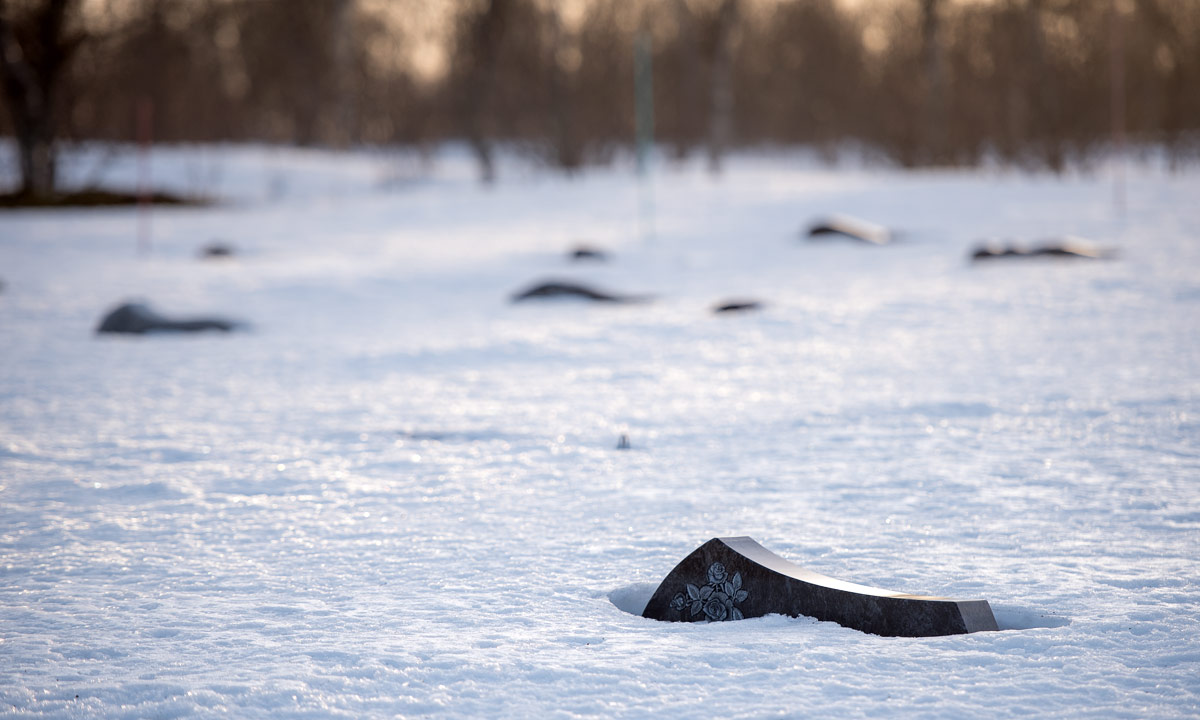
On the photo above you can see the trail from Blåhammaren to Storulvån. It is in fact two trails together: the winter trail that is marked with red crosses and the summer trail that mostly is marked with stones with a large dot of red paint on it. We didn’t follow this trail I only took the photo because of the beautiful evening colours.

Many parts of the trail are just like this. They lead through heather, grass, crowberries, and dwarf birches. Other parts of the trail lead over hills, across rock fields, through forests and sometimes over a reindeer fence.

This is when the trail is dry. But often it isn’t. The trail can just be very wet of last nights rain as we had it on our third day.

The trail can be boardwalks that lead over swampy area or bogs. Some of them may be under the water which makes them rather slippery.

And then there are rivers, streams and brooks. Some of them are crossed by a bridge. Some bridges are big, some are – well – small, simple, and pragmatic.

And then there are rivers that you have to ford. I ’m used to hiking in rubber boots and so I could splash through while my fellow hikers had to switch to sandals and wade through the ice cold water. Already Douglas Adams said: You have to know where your towel is.

And then there is mud. It can be slippery and sometimes quite deep, especially right before or after a plank. When you have a plank.

Especially the first day trail section StorvallenBlåhammaren was in an extremely poor shape. The others went around all these muddy patches while I – hey, I have rubber boots! – just continued straight ahead. But then at one point it happened. I made a step ahead and my right leg sank thigh deep into the mud. On the trail! Luckily Blåhammaren had a dry room.

But don’t be afraid, that’s not typical. Many sections of the trail look more like this:

How long the trail was? I don’t have the exact numbers but I think we hiked round about 135 km on 8 days, so round 17 km a day.

17 May aboard the ship Hermes II

Today it is 17 May, the Norwegian National Day. People say “Gratulerer med dagen!” (Happy Birthday!) to each other to celebrate Norway’s Birthday in the year 1814. The rest of the history I won’t tell here, you can read it better in the net, for example on Wikipedia.

While I was in Sweden last year I am in Tromsø today and so I was able to join the celebrations. Last week I got an ad for joining the boat parade on the wooden boat Hermes II, build 1917. That sounded fun and I directly bought one of the extraordinary cheap tickets. Would be nice to be outside on the water this day. And so it was, even in snowfall and sleet and temperatures round 1–2 °C.

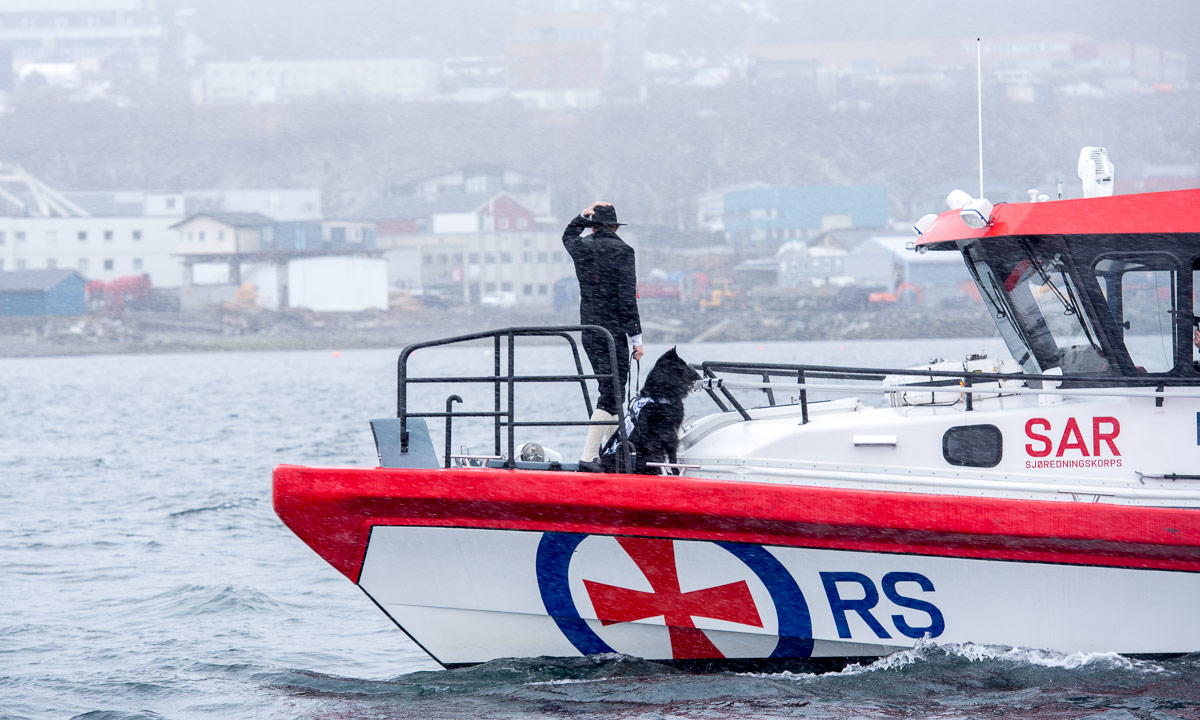
Hermes II lies in the very center of Tromsø. I’ve passed it many times, today I entered it at 10 o’clock. Slowly the boat filled up. Some women were clad in bunad. These traditional clothes are very beautiful but I doubt that they provide the best weather protection. Check the video linked below. Other people choose more pragmatic clothes to stay warm and dry. At 10:30 we departed, headed north and met other boats there. In a group of fifteen boats – Hermes II, some SAR boats, the rest private ones – we then headed back to the center. Nothing extreme, just a especially nice way to be outside.

Some photos from today:

Also on board was NRK, the Norwegian TV. I can recommend the video, even when you do not speak Norwegian.

Watch it here: 17. mai-feiring på båt i Tromsø (2:44, Norwegian).

Meanwhile in Tromsø

While I am writing a lot of blog articles about my time in the Arctic live in Tromsø goes on.

When I arrived Friday a week ago Tromsø was as un-wintry as possible. It was several degrees plus and it rained.

But to be honest, it didn’t affect me a lot. Mentally I was still in the Arctic.

Despite to the torrential downpours that Yr forecasted for this weekend the weather was ok yesterday and nice today. But as the whole week it was really warm: +7 °C. Time for a morning walk. _(Sunny, but much windier than expected.)_

In the afternoon I wondered if it was possible to take a small promenade on Kvaløya. I headed to the parking place from which I started a ski tour seven weeks ago. A lot of other cars were there and snow and ski tracks. I did not have any skis with me today. I tried to walk on the snow just with boots but the snow was at least knee deep. And then I came to the bridge that crossed a rapid meltwater flow. Maybe nice for experienced skiers but I didn’t have any interest in falling into the water. Time for me to return to the parking place.

The good thing: the parking place is just 200 metres away from the coast. So I took a short afternoon promenade there enjoying the colours, the sun, the fresh air and the wind. Yes it was windy – the display at the bridge to Kvaløya showed 20 m/s.

Back again at my car skiers arrived. My skis where home but then I remembered, that I always have snowshoes in my car. I attached them to my rubber boots and so I could make at least a tiny promenade to the next hill some hundred metres away.

Back in my car. Next stop: Sandnessund Cemetery. Never been there before. Even there a lot of snow.

Next stop was unplanned. I just had to take a photo of the vessel and the mountains of Kvitøya. Luckily the parking place of the Tromsø Havpadleklubb was near.

The Arctic has its own extraordinary beauty and I feel a special connection to it. Tromsø and surroundings however are beautiful too, even when weather has been much too warm for mid-March.

For the records: The first „hestehov“ or Tussilago I (17 March on my way to work).

Cabin days in Christmas time

Christmas eve – Sommarøya and Hillesøy

It’s only 15 km to Sommarøya, a beautiful island reachable by car via a curved bridge. Even in snow fall and twilight you can see the turquoise colour of the sea. Everything is closed, even the hotel.

From there it’s not far to the church Hillesøy kirke, that by the way does not lie on the island Hillesøya but on the mainland. We tried to prebook one of the limited seats for the Christmas service but they where all taken. We are there very early and allowed to have a look in. Eye catcher: the tall wood-burning stove.

We drive back to the cabin – time for lunch while it gets dark outside.

Christmas day – Skitour along the lake Kattfjordvatnet

This day was supposed to be crisp and clear and it was. No clouds, hardly any wind, -10 °C. Perfect conditions for a small ski tour along the lake Kattfjordvatnet. In coastal Sweden we just would have started the tour, in the Norwegian mountains you must check the avalanche risk first. We got round 30 cm of powder snow the last days and the risk was level 3 which is quite high. So a real mountain tour would have been too risky but the terrain by the lake is too flat for avalanches.

And in the early evening we are lucky and get some polar lights. We just have to step outside the door and avoid the motion sensor for the outdoor lighting.

Everything would have been accessible from my apartment in Tromsø as well. Anyhow it feels more like a real holiday to be on a Norwegian mountain cabin over Christmas, just Annika and I. Perhaps we are allowed to use it again sometime.

No whales today

To the left the Brim Explorer, a boat located in Tromsø for amongst other whale watching. To the right the tourists waiting to be boarded. The boat is fully booked, I am not alone.

Before leaving an announcement: The crew will try its best but it’s not granted that we reach the waters where the whales are. Anyone is free to leave and given a full refund. Most people stay and so do I. First of all I’m not surprised, as another tour operator already cancelled today’s tour. And then I just want to be a day on the water. Whales of course would be a nice extra.

To the left Tromsøbrua, the bridge that connects Tromsø with the mainland. To the right the safety on board drill, that everyone had to join.

And then we’re off.

To make it short: What we didn’t get today was whale sightings. What we got today was rough weather in the open parts. The boat was rolling and pitching like a cork in the waves. More than one passenger got sea sick. The unpredictable movements of the boat and the dim light under the grey sky made photographing a bit adventurous. Several times I was forced in and one passage even the doors were locked. The rest I was outside, partly taking photos, partly just looking around and letting the wind blow around my nose.

Conclusion: an awesome tour even without whales. If you want to participate as well: take your warmest clothes with you. And those of you that just want to stay home and look at some whale photos may read my article about Whale watching in Andenes. Enjoy.

Note to myself: TromsøyaRingvassøya/ReinøyaVannøyaNordfugløyaArnøya/LaukøyaSkervøya/KågenLyngenReinøyaTromsøya

A Saturday road trip

This article is part of the series “2021-07: Back in Tromsø”.

A new used car and a sunny Saturday – off I go for a road trip.

km 29.5 – Isaksens Kiosk

In Fagernes I leave the E8 and take the 91 through a valley between the mountains. Before that I stop at Isaksens Kiosk and buy something to drink. Some other cars park here, too. Mostly it’s families that stop to have some ice cream.

km 41.1 – road 91

The mountains in Northern Norway are impressively massive and sometimes you cannot imagine that the road continues somehow. But some do …

km 51.9 – view on the Lyngen Alps

… and so does the road 91. A small part of the rugged Lyngen Alps comes into view.

km 53.5 – Breivikeidet Fergekai

I continue the 91 but soon the road ends. Not because of the mountains, but the fjord Ullsfjorden. The weather is warm and sunny and I am waiting for the ferry to Svensby.

On the ferry

For me even a short boat trip makes a single day to a holiday. I just love standing outside (in every whether), look at the waves and watch the slowly changing landscape.

km 60.7 – Nyheim

Just a Norwegian house and a barn. And a pasture. And a fjord in the background. And mountains behind. Beautiful even without the sun, that has been covered by a layer of clouds.

Would I want to live here? No, it’s too far away from Tromsø and other towns.

km 75.3 – Lyngseidet

It already half past two – time for a late lunch break. When you travel through Northern Norway and want to eat something warm it will be pizza or burgers in most of the cases. It you are not Norwegian you will find it incredible expensive, but so is food, cars, housing and almost everything else.

The burger costed 189 NOK (18 Euro) and was really tasty.

Here the road 91 continues – as another ferry to Olderdalen. I however take the road 868 heading south.

km 83.5 – low tide

The Lyngen Alps are more impressive as seen from the west but I like the shallow waters of the fjord Lyngen, too, especially in low tide.

km 113.9 – Badjánanluokta

Another tidal flat, more reflections. There are few things that I consider as relaxing as strolling along the shore of the sea.

Anyhow, it’s already 5 o’clock in the afternoon and I have at least another 100 km to go until being back. So no more photos until …

km 203 (or so) – Extra Tromsdalen

At the Extra supermarket I buy some food for the evening and the next day. In opposite to Sweden the supermarkets in Norway are closed un Sundays. Then I cross the road E8 by foot and soon stand by the shore of the Tromsøysundet where I have a look on Tromsø (including my workplace) and the large bridge crossing the sound.

Round 15 minutes later I arrive at my temporary home in Tromsø.

In Norway it takes time to go by car. I should have learned that by now but still I underestimate how many hours it takes to travel when you want to take some stops. Next time I hopefully will start earlier – this day I didn’t start before 11 o’clock.


Lunch break

This article is part of the series “2020-10: New in Tromsø”.

Days grow shorter and shorter in Tromsø so I took a small outside promenade in my lunch break to catch a bit of daylight. Tromsø is so beautiful with 10 cm of fresh snow that had fallen since yesterday.

I’m not sure if the snow will stay for longer or melt away soon but it doesn’t matter for me. That’s because on Sunday I’ll take the airplane home to Obbola in Sweden and will stay there the rest of the year.

But that’s another story that will be told on Sunday when I’ll spend many hours in Oslo Gardermoen and Stockholm Arlanda waiting for the connection flights.

Just a detour to work

This article is part of the series “2020-10: New in Tromsø”.

Though Saturday I went to the Norwegian Polar Institute yesterday to get a handover from a former colleague. I went however not the direct way (20 minutes) but a long detour (90 minutes) to catch some air and some light before being in the office until dark.

Just some photos taken with my mobile.

It’s nice to go lightweight and taking pictures with the iPhone. While the photos are impressive considering the size of the lens and sensor, the quality is of course long from that of my Nikon. So next time I’ll carry more weight but probably I’ll be more content with the image quality afterwards.


Technique sea kayaking course

This article is part of the series “2020-10: New in Tromsø”.

I was really in doubt about writing this blog article and showing photos of the last weekend, where I participated the course Teknikkurs Hav (Technique sea kayaking).

Why? Because my photos lie. They show sea kayaks lying on nice beaches and us paddling in calm waters. All these photos are true but they tell only a fraction of the experiences I made when I kayaked in Northern Norway in the beginning of November.

Saturday – day 1

The paddling course was supposed to take place on Sommarøya. A beautiful place, but quite exposed to wind and weather. Due to the wind forecast (average wind 15 m/s) the instructors chose a more sheltered place for the first course day: Eidjordneset, just 12 km away from the boat house of the sea kayak club Trulle.

We gathered round 7 o’clock in the morning: We are the instructors Tim and Pål and four participants. Kind of luxury! We put the kayaks on the trailer and started driving: Past the airport, over the bridge crossing the Sandnessundet strait, to the left and then taking the turn to the island Håkøya where we parked and changed clothes for the tour. In my case: woollen underwear, two pairs of socks, a thick woollen sweater, drysuit, neoprene boots, gloves and hood. In addition to that the sprayskirt, life vest, towline system and helmet. We do not only dress for the chilly air but for being in the water as well. Tim wrote in the email: “We will be doing a lot of swimming”

We started to dress in darkness but when we were ready it had got light.

We put the kayaks into the sea and started paddling east along the Håkøya. After getting our paddle strokes improved we started to practise partner rescue. One kayaker capsizes, opens the sprayskirt and swims. Then there are different techniques of emptying the capsized kayak and support the swimmer to enter the kayak again. While we were training this several time. As Tim said: a lot of swimming. While practising the wind blew us more and more to the east. Time to turn back.

Now we had to paddle against the wind. First it went quite well but we already could see the huge shower cell coming towards us. Round 2–3 °C in the air. Would it be rain, sleet or snow? No – it was a grown up hail storm approaching. Within minutes we had wind speeds of round 20 m/s howling around us, blowing spray from each wave and throwing hail right into our faces (ouch, my lips!). The instructors decided to guide us to land where we waited for the hail to stop.

Soon the weather was calmer but still very windy. It took a while until we reached the bridge, where we started the tour. On the way back I had one of the rare opportunities to take some photos with my iPhone while paddling. Mostly I was too occupied with practising or catching up.

When we arrived at the bridge we crossed under it, because on the other side the sea was a bit more sheltered. Here we practised a lot of different paddle strokes as edging or low and high brace. This was quite intense – only interrupted by a short and frugal lunch break – and I’ll have to train a lot until my body has understood the movements. We ended with a rescue case: One of the participants had to pretend having an injured shoulder and we had to both give support balancing her kayak and tow her on land. Well, there was a lot of discussion but finally we managed it. Ok, it was only 20 metres or such to tow.

To make it short: changing into warm clothes · putting the kayaks onto the trailer · heading back to the boat house · I got a lift home · hot shower · great!

Sunday – day 2

Two of us met Tim at the boathouse, where we got a lift to a petrol station, our meeting point. As you can see it had been snowing and it was quite slippery.

Now on day two we would drive to Sommarøya and take the second course day there. Great, because the area round Sommarøya is wonderfully beautiful. Sommarøya is more than 50 km from Tromsø and the shorter way is leading through the mountains, so due to the weather conditions it took a longer time to travel there. And that’s how it looked like from the bay Steinsvika on Store Sommarøya.

We paddled to a flat rock covered by breaking waves and tried out some paddle strokes from the day before. That gave us opportunities for more buddy rescues, because of three capsizings. We made a short break on one of shallow beaches.

After that we started to round the island Storholmen where the Sommarøy lighthouse is located. First we tried to stick near the rocks to play with the waves. The further we came to the open sea, the higher the waves became and we increased distance.

Especially at the northwest tip we had waves up to 150 cm coming from several directions so that it took all my concentration just to paddle on while feeling quite stressed and a bit helpless. A bit further the waves coming from the open sea behind us built up to huge rollers and breakers on the shallow bay. I was too scared to join the others that played in these waves (with several capsizings and rescue manoeuvres). Therefore I paddled a bit further to reach a more sheltered part of the bay and wait there not to split the group. One other paddler joined my shortly after. Then all of a sudden a really huge wave came, broke just where we were and knocked us both over. There was nothing I could do. I immediately lost my kayak in the wave and it took a bit of time and help from the others to fetch my kayak and get us in again. I know that I have to learn to paddle under such rough conditions as well, but I’m not sure if I’ll ever enjoy it.

I really was glad about the lunch break. Here Tim and Pål told us about the star rating system for waves. It goes from 1 (lowest) to 5 (highest), and mostly we had 3-star conditions out there, with one two-metre-wave probably being a 4 star.

Even after lunch I was mentally quite exhausted. But at least we had started heading back and were soon in calm waters again. The others learned some more rescue manoeuvres and such but I kept aside for a while because I couldn’t focus any more.

Finally we made another towing manoeuvre, where two of us towed another kayak while the fourth paddler supported balance. While I was mentally tired I still had physical energy so I tried to drag a bit harder the last part to come up onto the sandy beach as long as possible. And that’s where Tim took this photo of us. I’m in the front – watch the nice violet helmet!

(Photo: Tim Vanhoutteghem – True North Adventures)

Conclusion: This course was too difficult for me. I was too scared and overchallenged. But I had skilled instructors, great fellow paddlers and learned a lot – though the hard way. I’m really glad that I had the opportunity to join this course and already decided to take the same course again as a fresh-up next spring.

A kayak course by the Umeå Kanotklubb

It’s the second week of Annika’s (and my) holiday and we are registered for a three-day paddle course which is carried out by the local association Umeå Kanotklubb. Two days we’ll be on the lake Nydalasjön in Umeå to learn the basic technique, the last day we’ll do a tour on the Baltic Sea starting in Holmsund. I’ve been paddling for almost ten years now but never learned any technique, so I was eager to join the course. Annika has paddled only a few times before and was interested in testing paddling before buying a kayak herself.

The first day. While the others sit in very short and agile whitewater kayaks, Annika and I have chosen sea kayaks, which are longer but much less agile. The others have it easier to make turns and bents, we have it easier to paddle straight ahead and are faster, too. In the beginning we learn the basic paddle strokes forward and backward. Part two is to capsize intentionally just to learn the feeling. Do we get wet? No – we are already completely soaked by the heavy rain, that is chattering down from black clouds above us.

The second day – same location as the first one. It’s not about learning something new but more about repeating and deepening the first day’s learnings. We do a short tour to the bridge Kinabron – hardly more than 700 metres away and then we train capsizing again.

Annika and I try kamraträddning – a rescue technique. We test on our own because the instructors are more into whitewater kayaking where you use completely different rescue techniques. While Annika succeeds in rescuing me I do a mistake and her kayak is flooded almost up to the rim within seconds. We do not have a pump with us but luckily we are only ten metres away from shore and can walk the kayak ashore.

Day three – for us the highlight because we want to make kayak tours on the sea and that’s what we do today. Using sea kayaks is quite different from using whitewater kayaks and so we have an additional instructor that tells us everything we need to join today’s tour. After the instruction we carry the boats into the water and start a tour to the island Lill-Haddingen which is 3–4 km away. There we make of course a fika – a break for eating, drinking, resting. The conditions are good. Hardly any waves, hardly any wind. It would have been a really easy tour for Annika and me if we hadn’t chosen a tandem kayak. It is quite challenging to steer together and to always paddle synchronously to avoid our paddle blades colliding. It is fun to test the tandem kayak but we prefer the single ones. After paddling back almost the whole way we are shown kamraträddning – the rescue technique Annika and I tried the day before but we do not train it by ourselves. It has become later than expected when we finish our tour but especially the third day was a fantastic experience. Thank you, Umeå Kanotklubb for the course! We come again when you offer a rescue course.