Travelling to Tromsø

This article is part of the series “2017-07: Tromsø”.

Sometimes I’m just too lazy to blog and so was I the last weeks. Today however I finally want to write about a great trip to Tromsø, that Annika and I started on 7 July, almost three weeks ago.

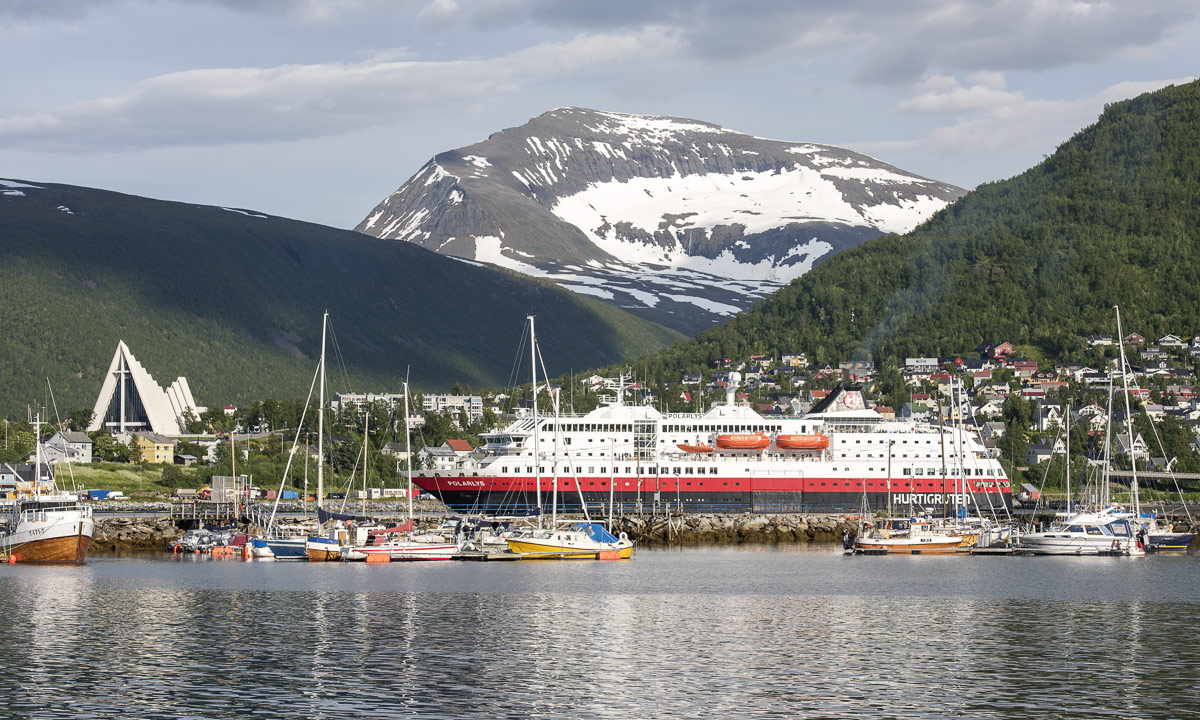
Tromsø is in located in the North. Very far north. It lies 344 km north of the polar circle and is the northernmost town of the world with more than 50,000 inhabitants. It has the northernmost university, both the northernmost cathedral and mosque, the northernmost brewery and probably some more northernmost things of the world.

The shortest route by car from Skelleftehamn to Tromsø leads over Luleå, Pajala, Kilpisjärvi (Finland) and Nordkjosbotn (Norway) and that’s the route Annika and I took.  We had a lot of time and planned to stay overnight twice, but didn’t plan where.

The first part of the route, the E4 leading north, is kind of boring. At least you’re allowed to drive 110 km/h – the maximum allowed speed of the whole journey. In Töre we left the E4, took a break and ate in the Restaurang Roady – the first KRAV-certified sidewalk restaurant.

After lunch we continued northwards. After 50 km we reached Holgers Traktor Museum in Svartbyn, which is always worth a visit. Since it was late – we started our trip in the afternoon – we just made a short stop to take a picture and then continued our trip.

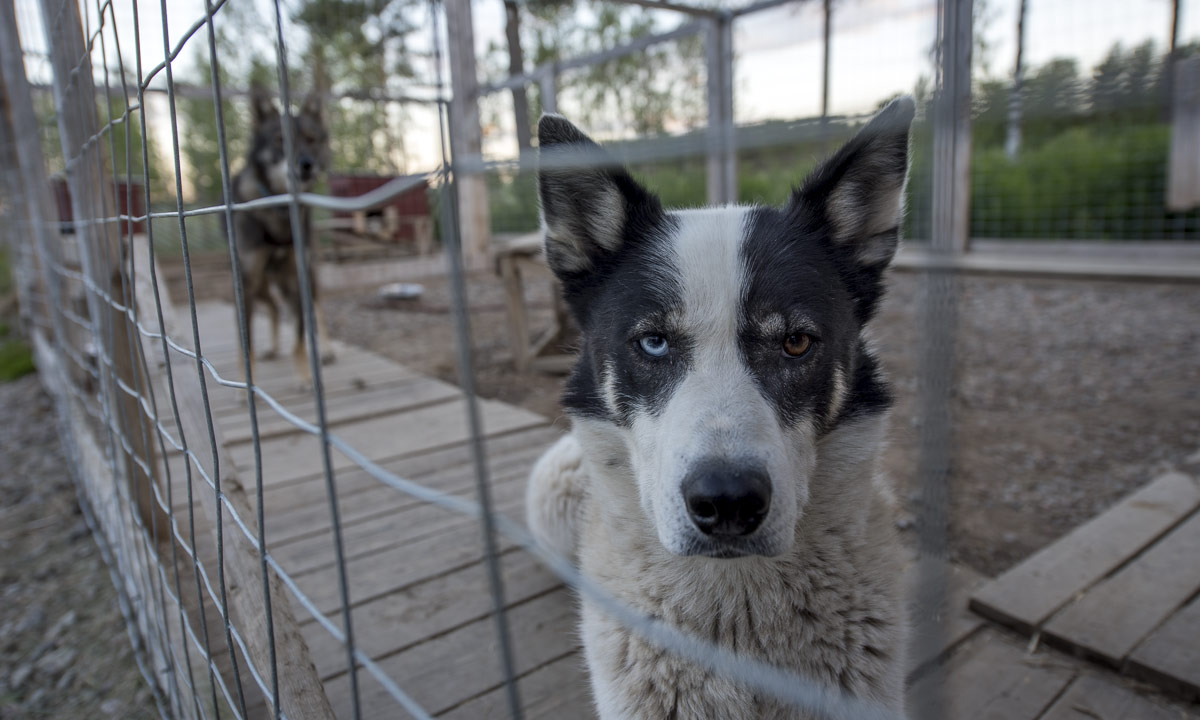
Where to stay? Perhaps we could stay with Katharina whom I met last winter. She lives in Miekojärvi between Överkalix and Övertorneå. We tried to ring her, but she didn’t answer the call. Anyway it’s just a detour of 30 kilometres so we just gave it a try. Katharina has round 20 huskies and someone has to feed them. When we arrived at her house, a man left the shed, looked at us and we were quite surprised to meet Sascha whom we met before in Solberget several times. What a lucky coincidence! So we found not only our first overnight stay but great company, too! Thank you, Katharina (abroad) and Sascha for your hospitality!

The next day we continued our tour after a nice and rich breakfast. We crossed the arctic circle and watched the reindeers.

First stop: Pajala, where a big market took place. Here you could buy a lot of things between tradition and modern age.

After two hours we left the hurly-burly and entered the car again. We crossed the Swedish–Finnish border and followed the E8 which was more construction site than main road. We passed Karesuvanto, where I was sure to meet a food store. All stores however are on the Swedish side, in Karesuando. Not a problem, if you have bread with you and then are given butter, cheese and salami as a present on the super-nice camping ground Lätäsenon Majat near Enontekiö, where we stayed overnight.

Next day we passed Kilpisjärvi near the border triangle, where Sweden, Finland, and Norway meet and soon we were in Norway. Norway is my favourite country in summer because the landscape is so varying and beautiful that even I make photos from within the car:

In Skibotn we saw the first fjord – the Lnygen – and made a break. Annika used it for jogging and I for looking around and taking pictures. I love to stand at the shore, the feet in the water, the view either on the shells or on the fjord and the still snow covered mountains. But the seagulls didn’t like me standing there and they flew some feint attacks, luckily in vain. They don’t dare to come really close.

In Nordkjosbotn we ate hamburgers for lunch. It’s not easy to get anything other than burgers and pizza in Northern Norway outside the cities, but sometimes I like fast food, especially when travelling. From Nordkjosbotn it’s only another hour to Tromsø, where we arrived in the afternoon.

Here we would stay for four whole days with … but that’s another story for another blog article. Stay tuned!


Winter on the Vesterålen

This article is part of the series “2017-02: Northern Norway”.

I’m sitting in a small mobile home in Nordnes near Røkland, Saltdalen, Norway. This morning Annika and I left Haukenes on the Vesterålen, where we had visited friends for some days. It had been gorgeous days, not only because it’s always fun to visit friends, but because of the fabulous winter weather we got those days.

Arrival

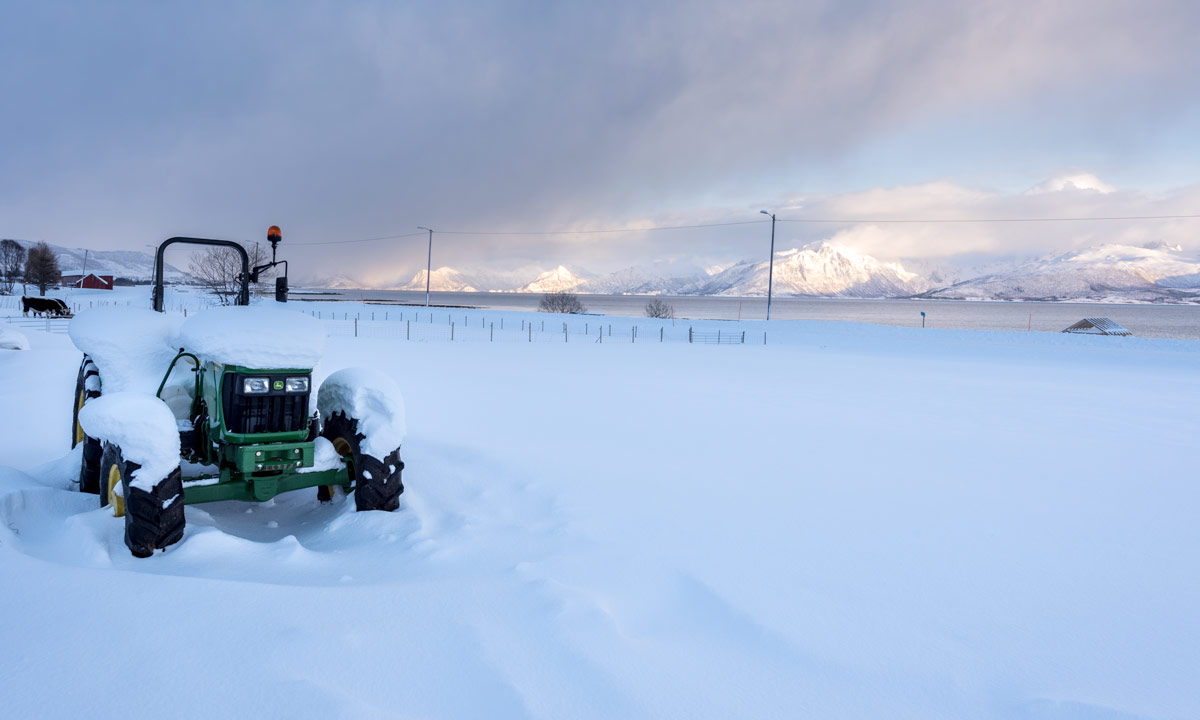
Last friday we left the Hurtigruten ship in Stokmarknes that we entered in Vardø two days before. My friends told us that there hadn’t been any snow one week before, but since then almost half a meter snow had fallen and snowfall hadn’t stopped yet.

Saturday

It snowed another ten centimetres the night and it continued snowing in the morning.

Sometimes the Norwegian weather forecast is right and so it was this day: As predicted it cleared up and promised to be a nice and sunny day later on. Annika and I took our skis and joined J. and B. together with Frits, the dog, on a ski promenade right behind their house . J. and B. returned after a while, we continued through the forest to the boggy valley Dalmyra over which we returned. Two small streams we had to cross with our skis but they were narrow enough to be crossable without problems.

Back again I looked at the snowy mountain range of the Lofoten that you can see from my friends house. The sinking sun changed colours of the snowy peaks every moment, from bright white to pale yellow, to “peach”, to orange, to colour shades I’m not able to name.

Sunday

Another sunny day awaited us. Annika and I planned to ascend the Hovden, a mountain, not high (285 – 323 m) but steep. So we left home our skis and took snowshoes, first to hike on snow covered ways and paths to Marka, were we went up the Hovden. Phew, that was quite exhausting.

Annika went back while I continued a bit, first along the waymarks, then using my GPS.

I just love being above the treeline in Norway, where the view is wide and includes snow covered mountains and solitary trees just as blue coloured open fjords.

I descended the top and came to the small lake, where I took a break with water and „Kvikk Lunsj“ chocolate.

The descend from the lake was far from being optimal, I chose a very steep passage and it took a while and some concentration until I was on sea level again, were I walked back to my friends house, first on a minor road, than across a snow covered bog.

Monday

I might bore you, but even this day the weather was fantastic. Annika and I followed a tip of J., took the car to Sandnes and skied to Årneset, a place by the bay Årnesbukta. Here’s a cosy cabin were you can seek shelter, when weather is bad and a row of beautiful sandy beaches. I never ever skied along sandy beaches and open water and I really enjoyed this ski premiere.

Tuesday

Our last day on the Vesterålen and guess what: Weather was great again! Anyway I was quite lazy, so Annika and I didn’t use skis or snow shoes but the car to drive round the southern part of the island Langøya on which my friends – now our friends – live. Some impressions:

That was our last day on the Vesterålen. Thank you, J. and R. for your hospitality. I hope, you’ll visit us in Sweden someday. You’re more than welcome!

Tomorrow we’ll continue our return journey, first 40 km to the Norwegian—Swedish border, than round 380 km home to Skelleftehamn.


Four images from the coast of Kågnäsudden

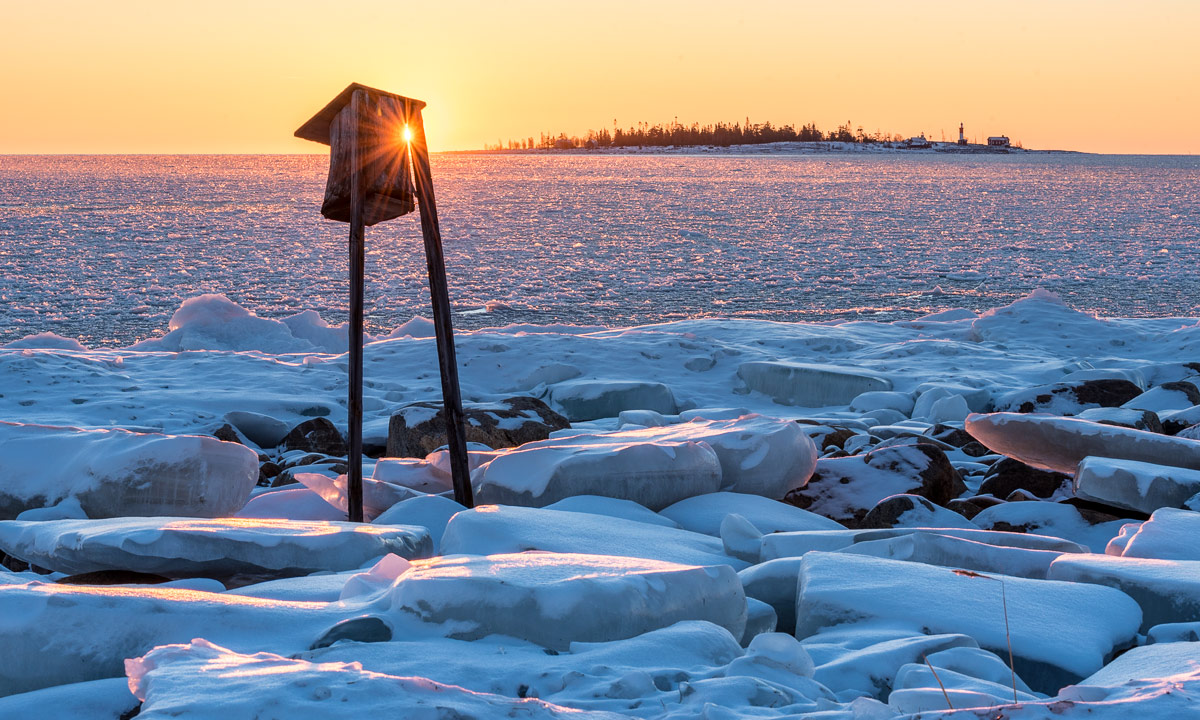
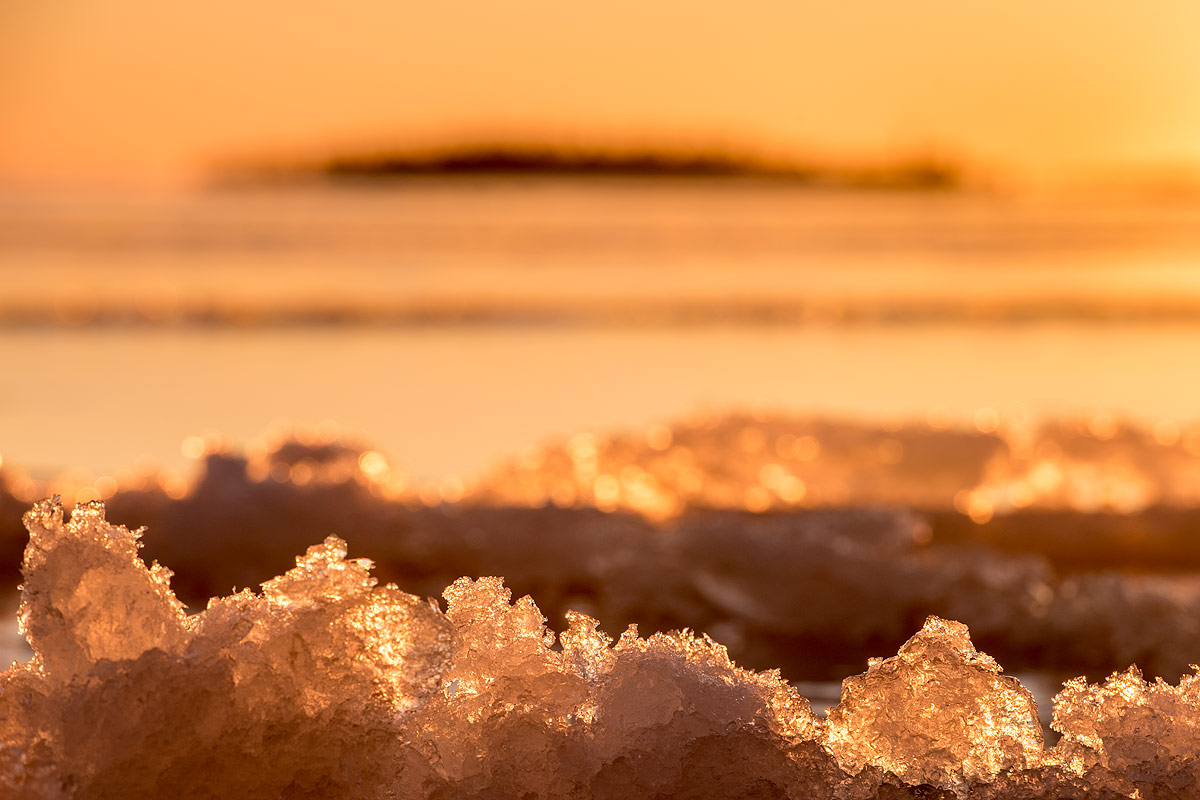
When I arrived at the former fishermen’s village at Kågnäsudden I realised that I almost came too late for the beautiful pre-sunrise colours. The sun had already risen above the horizon, only covered by some clouds lingering at the horizon far away. I just managed to take a picture of the big lumps of ice before it rose above the clouds.

The sun illuminated the Baltic Sea which was covered with rough drifting ice floes to a great extend.

While I continued my photographical promenade the sun rose higher – what a difference to six weeks ago, where it more rolled along the horizon and hardly rose at all.

Round some of the small rocky cliffs the sea was still partly open but the first heralds of frost were visible. Finally we got a bit colder weather and the temperatures next night expect to be round -15 °C. This could be enough to make the surface to freeze over.

Perhaps I’ll check the same location again tomorrow, but then I’ll have to leave earlier because sunrise is already before 8 o’clock.

Drifting ice on the bay Kallholmsfjärden

When I came back from Umeå this morning the sun was still below the horizon. I’m glad that the bridge over the river Skellefteälven has a parking bay. So I could take some image of today’s pre-sunrise landscape.

Much more interesting however was the view on the bay Kallholmsfjärden which is the part of the Baltic Sea that is nearest to my house. When I left Skellefteå some days before almost the whole bay was ice covered with a thin, white snow topping. Today the sheet of ice was broken and many ice floes drifted on the surface. It looks like some larger waves had broken the ice into several parallel stripes that then broke apart into smaller ice floes.

When I passed the same place two hours later to fetch a christmas parcel most of the ice was gone, probably it had drifted into open sea.


Morning at the wintry Baltic Sea

Some sunrises are more intense than others. Today I was lucky to witness a really intense and colourful sunrise in Skelleftehamn and even had the time to find a nice place.

Even the larger bays of the Baltic Sea have been frozen up within the last two days, but the open sea is still free of ice. Only at the shore the typical early-winter pancake ice floes drift on top of the tiny waves, turning and rotating. The ice seems to mirror the bright sunrise colours even more intense than the water and the snow glowed in an almost pink shade.

Orange is the colour of the sea

Another clear and frosty morning in Skelleftehamn. I stood by the Baltic Sea in good time before sunrise which was 9:24 today. The sky was orange, the sea was blue and the mirage of the coastline lingered at the horizon.

I changed place right after sundown. Here at a more sheltered part the sea had started to freeze over. I laid down onto the icy shore to get a picture of both the island Gåsören and the crisp structures of the newly built sea ice. Then I realised that the Baltic Sea is not blue, it’s of pure orange – almost amber – at least when it’s early morning and your chin is hardly above sea level.

Photographers hints: use a tele lens, try out extreme low angle shots, dress properly due to the weather, use the warm morning or evening light ;-)

The Sunmountain

I have stopped counting the times I was in Solberget, the beautiful wilderness retreat in Swedish Lapland. This time I was asked if I want to join a three day first aid course in Solberget. Since my last one was long ago I accepted gladly.

The course, arranged by the German Outdoorschule Süd, was both intense and fantastic and I’m glad that I was able to participate. I stayed another day after the course to make a ski tour. It has snowed quite a lot in Lapland in November and round about 60 cm of snow covered the forest soil. I started the tour at 8:30 – an hour before sun rise. The air was crisp and cold with temperatures round -15 °C. I borrowed a pair of wooden Tegsnäs skis. They are long and broad and fit to every boot which makes them ideal for the powdery snow in the Northern forests. I crossed the street and entered the narrow forest path that leads to the hill which bears the same name as the wilderness retreat: Solberget – the Sunmountain. I crossed the Solbergsvägen, which was covered with a half metre of snow and soon went slightly uphill through the old forest with its mighty spruce and pine trees.

Even though I didn’t take the smoothest way up it didn’t take long until I arrived at the top of the Solberget, which is 459 meters above sea level. I ignored the cozy mountain hut and went straight to the old fire lookout tower which provides a unique 360 degree view over the landscape.

As fastly as I arrived at the tower as slowly I climbed it, since the handrails and the steps of the three ladders were covered with a thick layer of hard and crusty snow. Finally I was on the top of the tower, just in time to see the sun rising above the hilly horizon.

I stayed on the tower for more than an hour, happy to see the snow covered trees in the warm and ever-changing light of the low hanging winter sun. First the sun got free of the clouds and started to illuminate more and more of the scenery. The colours changed from a pale pink to shades of orange and many other colours I don’t have any name for. After a while a cloud layer approached from the north changing the mood of the landscape again. At the end almost the whole landscape was shadowy beside of the fog that still hung above the swampy areas in the southwest.

Finally the sun vanished behind the cloud layer. I climbed down the three ladders of the tower and continued my ski tour. First I headed southeast, then I turned more and more to the right while I descended the hill. After a while (and a bit of squeezing through the pathless thickets) I reached the Solbergsvägen again, however more in the south. This part of the path was completely untouched beside of a track of a hare that you still could guess under the fresh snow of the last day.

After a while I came to the turn-off to the swamp Solmyran which I followed a bit. The sun was low again and illuminated the snow in bright orange colours, while the snow in the shadows looked more blueish. There are many colours in winter, you just have to go out to spot them.

The photographer and his studio:

Links

I can highly recommend both a stay at Solberget and the first aid courses of the Outdoorschule Süd. In February you can combine the two, if you can speak and understand German.

A bit of cold

Tomorrow I want to canoe. So I checked the potential starting points today. Where could I set in my kayak?

Näsgrundet

That’s where Skelleftehamn’s pilot station is. As expected the Baltic Sea is completely open. Here it would be possible to start the tour, but I had to go 2.5 km.

Killingörviken

The nearest place, only 600 metres away, but this small bay has been already ice-covered for some days.

Storgrundet

We’ll, this should rather be frozen over, too, but to my surprise there was a broad band of open water left. I guess that the water level, that changed several times the last days prevented parts of the water surface to freeze over. The distance to Storgrundet is 1.6 km and I think I’ll try out this place tomorrow.

Anyway I’m not completely sure, if there will be open water tomorrow in the morning, too. Today has been the first day, where the temperature dropped below -10 °C and maybe there will be ice on today’s open water tomorrow. Either a bit that cracks when you traverse it by kayak or a bit more making it impossible to squeeze through.

Seasons are a bit in between. The open sea is completely free of ice beside of some sheltered bays having a thin, but solid ice cover. When such an ice cover breaks in the waves, pancake ice is formed. Pancake ice are ice floes that move, twist and turn, scrubbing each other until they are round, like pancakes. I found some of them when I drove to the peninsula Rönnskär to have a look at the sundown. They floated in the sheltered boat harbour near the shore.

Jämtland hike part II: hejdå Sweden, hei Norge!

This article is part of the series “2016-09: Jämtland and Norway”.

Annika and I are in the mountains in Jämtland and have just reached our first destination: Blåhammaren, where we slept in a 14-bed room.

Tuesday, 13. September

Sleeping in a 14-bed room can be quite demanding, especially if you have this kind of snorers in your room, that could awake a frozen mammoth. However Annika and I were really lucky, no snorers at all! After our breakfast we had to decide where to continue our tour. From Blåhammaren you can hike back to civilisation or continue to two other destinations. Most of the hikers continue to Sylarna which is very central and part of the Jämtland Triangle, a very popular three-day-tour, that connects Storulvån, Blåhammaren and just Sylarna. We were keener to cross the border and hike to the Norwegian lodge Storerikvollen and so we did.

With an altitude of 1086 m Blåhammaren is the highest tourist station of the STF – the Swedish Tourist Association – so first the trail ran over the treeless mountain plateau, over rocks and moss, crossing some swamps and brooks. After a while we descended and the first yellow coloured birch trees came into view again.

Swedish summer trails are marked with red coloured dots on rock or tree, while winter trails are marked with poles bearing red crosses. You really shouldn’t follow the winter trails in summer unless you want to stand in front of a lake or find yourself deep in a bog – both are easy to cross only in wintertime. But quite often there’s a year round trail which makes navigation extremely easy even on less walked routes.

One kilometre behind Endalen, an emergency shelter, where we rested for a short while, the Sweden-Norwegian border came into view. It’s hard to mark a border less spectacularly than this one: A sign amidst of a pile of yellow painted stones, that’s it. The large bridge that crosses the river Enan (Sami: Äjnänjohke) directly after the border offers far more spectacularity.

We detected a real nice resting place on the other side of the river, where we planned to enjoy the warm summerly weather, but two other hikers – by the way the first ones we met that day – coming from the other side chose exactly the same slab of rock to rest. Luckily we found another place, at least as nice as the first one. We unmounted our backpacks, took of our boots and dangled our feet into the ice-cold water.

(I like the photo with the drifting yellow birch leave and the dead mosquito. It illustrates, why I prefer the autumn to summer: Beautiful colours and no biting insects left!)

In Norway the summer trail marks change, now the trail was marked with big bright red T-s. The red T is also the logo of the DNT, the Norwegian Trekking Association.

Do you see the dark piece of something on the top of the stone? It’s animal droppings, but I’m not sure of which species. I asked for help on Facebook and the favourite answers are reindeer and (arctic) fox.

We continued our tour until we came to another swing bridge, this time crossing the river Djupholma. On the other side of that river lies a nice sandy beach where I took a refreshing bath (the only one of the whole tour). It was only two other kilometres to walk to our destination, the cabin Storerikvollen, where we arrived round six o’clock.

Oh, so nice these Norwegian lodges are. They seem less “funkis” (the Swedish functional style) and more “hyggelig” (the Norwegian word for cozy, snug, or homelike). Just gemütlich! And we got a two-bed-room for a good price. The only thing you should know, when you visit the Norwegian side: These cabins hardly sell any food and there is no public kitchen as in the Swedish cabins. So you have three options: (1) take a camp stove with you and cook outside. (2) cold dishes! Hopefully you have all with you. (3) eat the dinner and breakfast provided by the lodges (and pay the Norwegian price).

We chose (2) and had a nice dinner with salami, crisp bread and fresh water outside in the evening sun, enjoying both our simple meal, the warm air and the beautiful view. Later the almost full moon rose above the reddish mountain chain – what a beautiful evening!

Wednesday, 14. September

The next day would lead us to the Nedalshytta, which is between 20 and 24 km away, depending on which map or sign post you rely on. So we got up quite early.

We had to go back yesterdays route 2 or 3 km where the trail divided. Now we turned south and had to ascent. Soon again we were above the treeline. When we looked back, we could see parts of the big lake Essandsjøen and even spotted – beside of some reindeers – the now tiny Storerikvollen, that we left some ours ago.

After a while we came to the river Fiskåa, where we had to ford. My rubber boots were high enough and I just splashed through the water, whereas Annika changed boots with trekking sandals and waded through the river.

Since rivers use to flow through valleys we had to ascend again and walked up along a reindeer fence. The weather was still warm and sunny, but you could see a cloud layer approaching afar. Would it rain in the evening as the forecast told us?

Only the map showed us the progress of our longest tour so far. We went a bit up, a bit down, a bit to the left, a bit to the right, down a small valley and up again. But finally trees came into view once more and soon we stood on an exposed plateau not far away from the yet invisible Nedalshytta.

Come on, just less than a kilometre to go … . Final spurt! A short while later we arrived at the beautiful lodge. Again we got a nice two-bed room, this time right below the grass roof. And we got: pizza! Perhaps not the best I ate in my life, but walk 20 – 24 kilometres with a backpack by yourself and you’ll know, how delicious a warm pizza slice can be!

The tour so far:

Continue with part three …