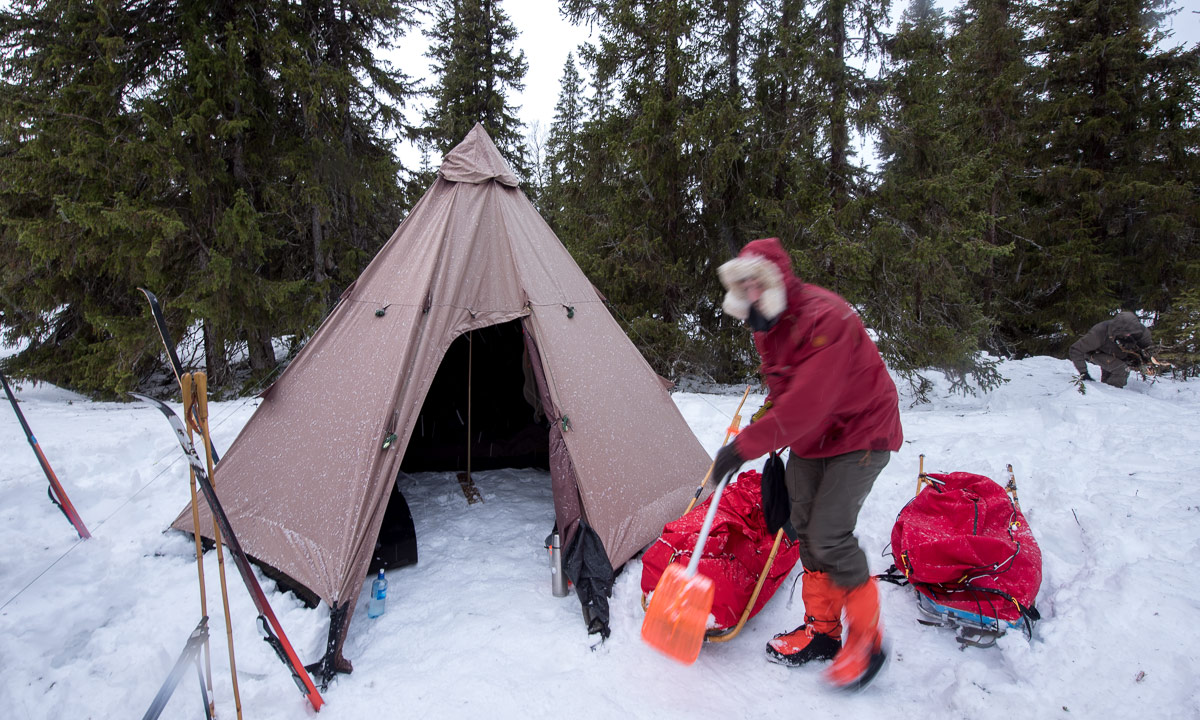
30 cm snow

This week finally it snows. There is 30 cm of snow in my backyard and if the forecasts are right, it’ll be 45–50 cm at the end of the week. At last it looks wintry, even though the open Baltic Sea is still free of ice.

After taking the photo above I took the car to Tjuvkiskan, another place by the sea. The gravel road was covered with snowdrifts that became higher when I approached the sea. I could easily drive through the first ones but finally I was stuck in a half-metre-high and several metre long snowdrift. My Subaru was grounded and even with the “X-Mode” program I could neither continue nor put back the car. Fortunately it took only some minutes to shovel away the snow round the tires and then I was able to back the car out of the snow drift. The last metres to Tjuvkistan I walked …

When I looked at the photo above I realised how big the tyres are. It’s really half a metre of snow around my car.

Enough about cars – I wanted to enjoy winter and be outdoors.

There’s a very nice cross-country ski run in Skelleftehamn. It hadn’t been prepared this year due to the warm and rainy weather. Now snow had come and the snow on the track will be compacted but not yet prepared for cross-country as long it continues snowing.

Yesterday I took my fjällski – my “mountain skis” and made a tour through 10-15 cm deep snow. I was really slow and it was quite exhausting.

Today I took my fjällski again and now the snow was packed. I was faster and although the tour was longer it was less exhausting. And the descents were more fun. The last kilometre the wind increased and it started snowing again.

Temperature -6 °C. Wind. Snow. Fur hood. Woollen mittens. Ski boots. Almost like winter.


Finally it’s snowing again

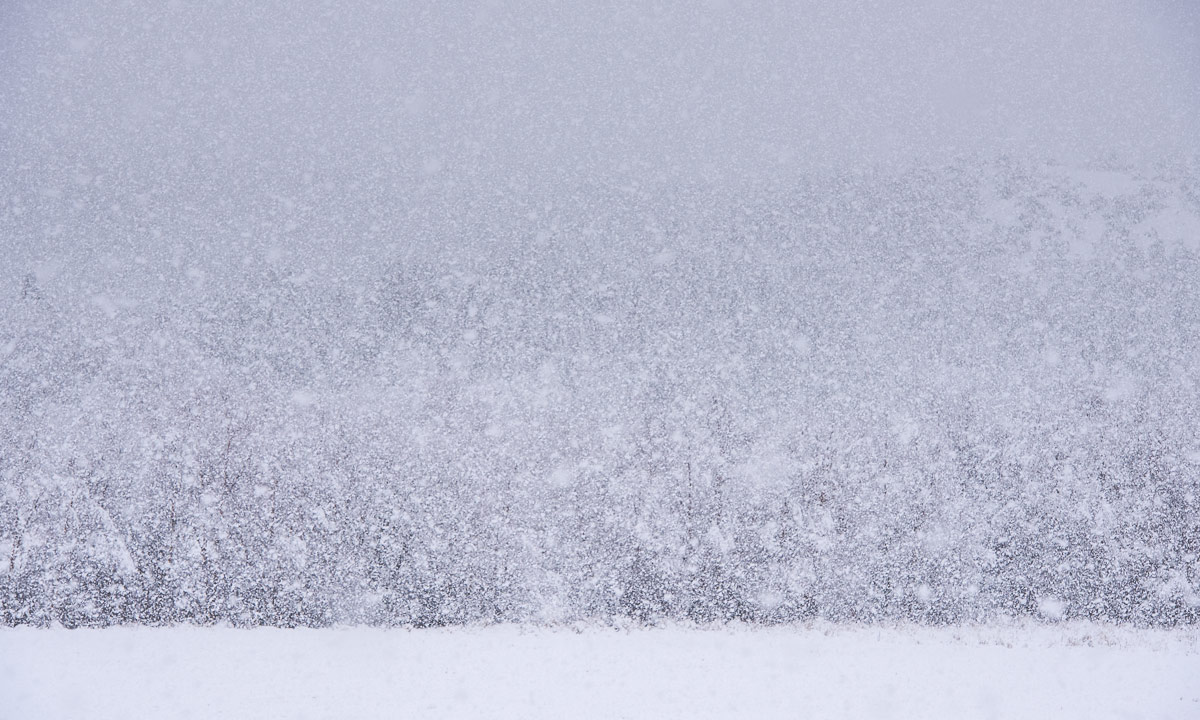
After two weeks with warmer temperatures, rain and a lot of fog it has become colder again and last night it started to snow. 15 cm fresh snow has already fallen.

Thursday, 16:55: -7.6 °C and it’s still snowing. Looks like I need gloves and a cap for jogging. And of course a headlamp, because sunset was already three hours ago.

Addendum

One hour later. 40 minutes of (slow) jogging through the wintry landscapein the dark. Exhausting, but beautiful!

My car tracks from this morning are mostly snowed over. The latest tracks are not from a car, but a snowmobile. Now I hope, that the great people of the Friluftsfrämjandet Skelleftehamn soon prepare the illuminated ski track. I’m longing for some afterwork cross-country skiing.

Welcome, winter 2019!

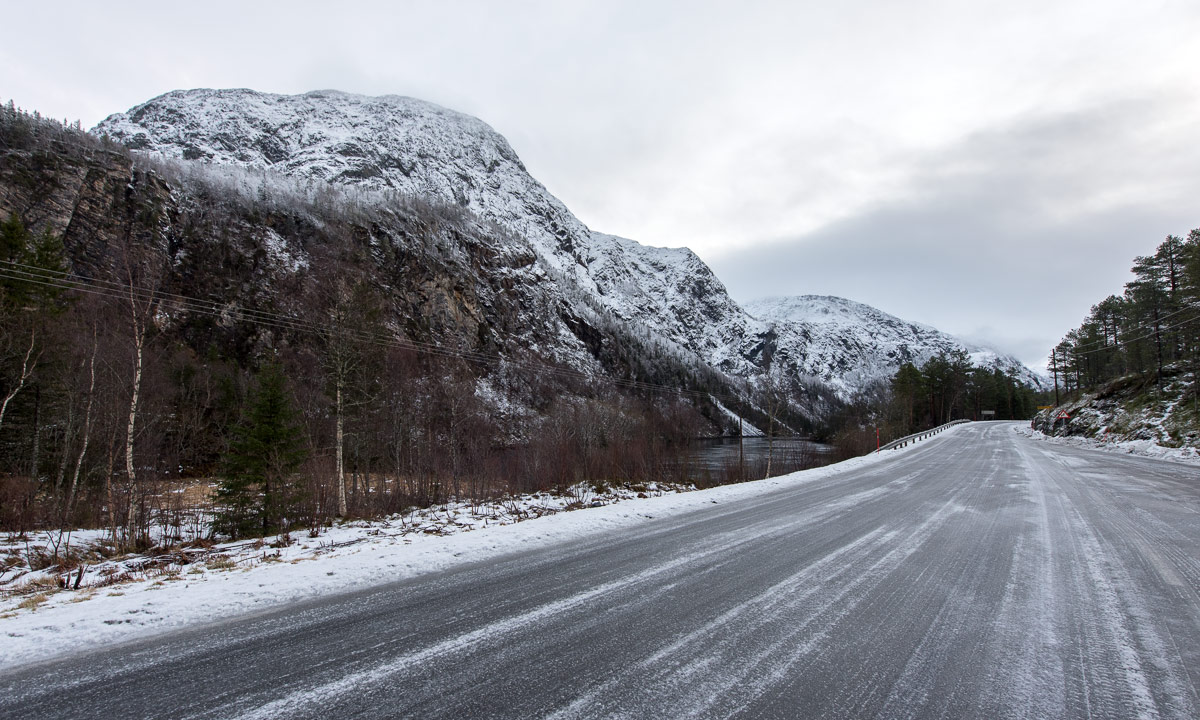
Today was the first “real” winter day. Some more snow fell last night and today it was subzero the whole day with temperatures round -5 °C and a lot of sun.

Now I’m longing for the start of the ski season.

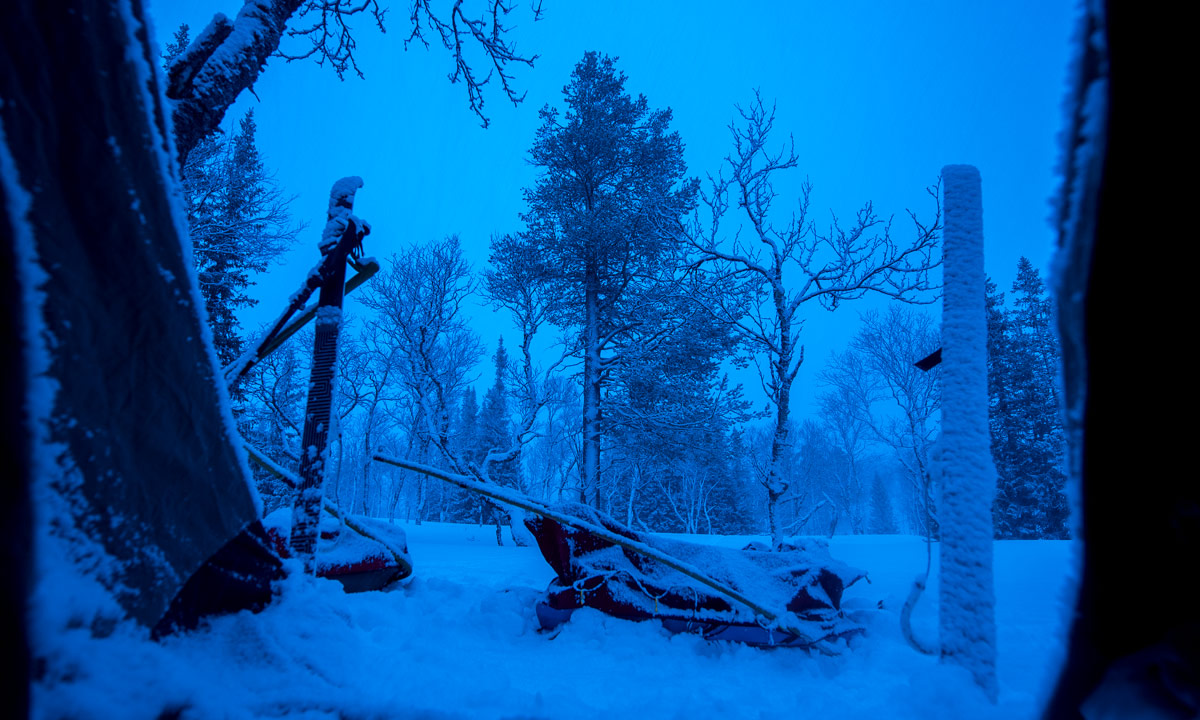
The second image with the blue sky and the snow covered trees is a bit special: it’s made through the window of my current office. What you cannot see: behind the trees is the European Route E4. But anyway,  there are worse views.

Three autumn colours of the ground

This morning on the way to work – wet snow covers the minor roads and bicycle paths.

This afternoon on my way home I made a stopover – bright and colourful the forest, bleak and dull the bog.

What are your autumn colours?

Cycling home

At time I have a project which is located at Solbacken, Skellefteå’s shopping centre outside the city. Normally I take the car because the public transport is quite poor. Yesterday however I took the bicycle. On the way there I chose the straight way. That’s 16.8 km, which took me 54 minutes.

On the way back I chose a longer and slower route. As forecasted the weather was warm and sunny, round 26 °C.

In short:

+++ unlock the bicycle +++ pass the recycling yard (Yuck, it stinks!) +++ follow the forest road +++ gaze at the first autumn colours +++ notice the crossing ski track +++ slow down on b-bum-bumpy passages +++ feel a bit lost +++ look at the map +++ realise that I’ve come longer than thought +++ pass the go-kart ground +++ follow the asphalt road leading away +++ know the sandy shortcut +++  approach the stugområde (area with summer cottages) +++ observe the largeness of some these cottages +++ spot a bathing place +++ take a bath in the Baltic Sea +++ drink +++ continue the gravel road +++ cycle along the small, winding forest path +++ pass Harrbäckssand +++ do not take a bath there (too shallow and too muddy) +++ follow my lengthening shadow +++ push the bike down the bumpy, sandy slope +++ follow the forest path +++ see the barbecue hut +++ realise that I’m in Skelleftehamn and almost home +++ taking a final “spurt” +++ home +++

This way was only 3 km longer, but took more than 30 extra minutes to cycle due to the bumpy roads. Beautiful anyway, but not the route I’ll choose regularly.


Back home

After almost four weeks of travelling in southern Scandinavia I’m back home in Skelleftehamn again. Yesterday afternoon Annika and I arrived in Umeå, Annika’s residence. Before I drove back to Skelleftehamn today we hiked round the lake Grössjön which is just some kilometres southeast from Umeå. The circular track is very beautiful and leads through pine forests and bogs. A wonderful place, that gives me a stronger “Sweden-feeling” and makes me much more home than many places we travelled the last weeks.

Today the Swedish proverb “borta bra men hemma bäst” feels right. It’s literal translation is: “(being) away good, but (being) home best.”

It’s still summer but some things have changed since I drove away from Skelleftehamn four weeks ago. It gets dark again in the night. Now – at 23:15 – I can go out, look up into the sky and see the star Vega in the constellation of Lyra. And it gets cool again in the night. Just now it’s 5 °C. So that the house can cool down. Good for a person like me who prefers temperatures below -25 °C to those above +25 °C.

Day 23 – travelling north again

This article is part of the series “2019-07: Southern Sweden”.

July 30 – Falun—Grövelsjön

Yesterday morning a guest room in Vetlanda in the forestal Småland – today evening a tenting place in Grövelsjön in Dalarna’s fells. We are travelling north again.

Yesterday we travelled from Vetlanda to Hosjö/Falun where we met Alex in real life the first time. It was just an overnight stay because we wanted to take a detour on our journey home that would take a bit of time.

Tuesday, seven o’clock. We say goodbye to Alex who has to leave for work. I take a bath in the lake Hösjön nearby. After breakfast Annika and I pack our things together and leave Alex’ cosy house behind.

As Alex recommended we follow tiny roads through Dalarna County – a county I’ve never visited before. As parts of Småland the scenery is extremely charming and looks a bit like “Sweden in a nutshell”.

In Leksand we reach the Siljan, Sweden’s seventh largest lake. We take the southern road to Mora via Sollerön, an island in the Siljan. Although the road is near to the lake it leads mostly through forest so that we can see the lake only from time to time. That’s quite typical for Swedish roads.

In Åsen we take a short stop to take pictures of the wooden chapel.

We follow the road 70 to Idre and turn right in the road to Grövelsjön. The trees become smaller and the mountains on the horizon higher. I’m glad to approach the fjäll, my favourite Swedish landscape. We make a last stopover at the church …

… then we arrive at our destination for today: Grövelsjön Fjällstation. This mountain station is operated by the STF – the Swedish Tourist Association. As we already have expected there are no rooms left, but we have a tent with us, that we set up in a sparse birch forest in the middle of other colourful tents. After dinner – pasta with pesto cooked in the common kitchen – Annika goes into the sauna while I take a short hike up the mountain. I do not reach the top of the Jakobshöjden, but at least the kalfjäll above the treeline.

There are no mountains home in Skelleftehamn, but after the sandy beaches of Österlen in Skåne and the mixed woodlands of Småland I feel home again when I see these landscapes. It’s still more than 630 km to Umeå and 750 to Skelleftehamn. But we do not plan to drive home yet – au contraire! Tomorrow we will travel to Norway.


Day 9 – Ystad and Österlen

This article is part of the series “2019-07: Southern Sweden”.

16 July – Bjärnum—Ystad—Mälarhusen

After some wonderful relaxing days in Bjärnum Annika and I continue our tour through Southern Sweden. Today we will reach Ystad, our southernmost destination on our journey. From Ystad to Kilpisjärvi in the north it’s almost 2000 km by car.

From Bjärnum to Ystad however it’s less than two hours. Ystad is a beautiful medieval town. We strolled through the streets and alleys and I only took some snapshots because we looked for a place for lunch.

We found a restaurant near the boat harbour where we ate fish and looked at the sea, the small sailing boats and the big ferries. From Ystad you can take the ferry to Bornholm (Denmark) and Świnoujście (Poland).

Next stop: Ales stenar (Ale’s Stones), a megalithic monument east of Ystad. It consists of 59 large boulders formed in a shape of a boat, probably 1400 years old.

Next stop: Sandhammaren. Dunes, a long sandy beach and the clear Baltic Sea invites us to take a bath. Or two. Summer holidays.

We decide to look for an overnight stay. We pass a small wooden sign by car. It says “Stuga for 2” – cabin for two. We are lucky. Although it’s main season the stuga is free and we can stay for a night. It’s in Mälarhusen in the corner of a garden, incredible cozy and the beach is not far away.

We take the car to the next ICA to buy food. After a dinner with pasta and salad we take another promenade along the beach. At the horizon we spot land – the Danish island Bornholm. Finally a reason to fetch the tripod and the huge 150-600mm telephoto lens from the car and make a photo of Bornholm, where I have been more than 40 years ago.

Fog in Skelleftehamn

Yesterday fog patches pulled up from the sea. At the coast was quite dense and hid anything further than 20 meters away.

But fog does not only hide things farther away, it also reveals other things nearby. For example the many spider nets in a small bog nearby.


Four days in Österbotten

Last Monday Annika and I travelled to one of Umeå’s nearest neighbouring cities: Vasa. Vasa is located in Finland and the fastest and easiest way to get there from Umeå is by ferry. Taking the car round Kvarken and the Bothnian Bay – the northernmost parts of the Baltic Sea – would be more than 800 km.

2. April – sunny Islands, cormorants and bad roads

The forecast promised sunny weather and I wanted to flee the town of Vasa (round 68000 inhabitants). Our plan was to explore some of the large islands of the Kvarken Archipelago which consists of several thousands of islands and islets.

We left Vasa municipality and entered Korsholm municipality. In Alskat we left the Finnish mainland, took a bridge to the island Fjärdskäret and then the large bridge Replot bron – more than a kilometre long – to the Björkö skärgård.

We made a short stop at the church in Björköby, the main village of Björkö. To our surprise the church wasn’t locked and we could enter. Probably it was only open for the handyman working there. I even went up to the organ but I didn’t dare to climb the clock tower without asking.

From Björköby it’s not far to Svedjehamn, a boat harbour. The coastal sea was still covered with ice and no boat could be seen. Probably many of the boats were in the red boathouses, that were everywhere.

We looked around, then we followed a path to the large observation tower, which is dark and almost 20 metres high. An eye-catching landmark. Beside of some ice fishers that parked their cars at the coast, we were completely alone. Only seabirds could be heard, mostly the typical honking call of the Whooper Swans.

From the tower we had a nice view both over land and sea. The land was framed with ice, but further out the sea was open. Birds flew around, mostly Whooper Swans and small flocks of ducks (being shooed away by other birds). Suddenly a group of dark birds passed our tower, it was a flock of cormorants.

After a while of amateur bird watching we descended the tower and went back to the parked car. We were hungry and took the way back to the Replot Bridge, where we got a delicious lunch at Berny’s Café and Restaurant.

After that we headed for another island in the north. This was quite challenging to drive because larger parts of the way were covered with ice with deep ruts. I had to drive quite slow to keep on the way. In Köklot I made the photo of the only boat in the fishing port, later I just had to photograph the small red hovercraft. I would love to have such a vehicle that can access the sea the whole year round.

I followed the bad road for a while but finally I had to turn because all turnouts were closed. It took a long time to drive back and when we arrived in Vasa we both were tired.

Later this day: A dinner with Asian food, a small coastal walk in Vasa and a bit of luxury: Our flat had a tiny sauna.

3. April – history lessons, old Vasa and Indian food

Already the day before we had decided that we wanted to stay two other nights in the region of Österbotten. We had given Couchsurfing another try. We contacted K.D. that lives in the Korsholm municipality but he didn’t have any place for us. He suggested however that we could meet in the city. So Annika and I went to the monument on the market square where we met K.D.

We got an extremely interesting history lesson about Finland in General und Vasa, while we slowly walked through the city. I didn’t make a single photo, I was too eager listening. After some hours K.D. had to leave but he invited us to the museum Stundars for the next day.

Later we took the car to Gamla Vasa, the old town that burned down in 1852. Some walls, among others of the old church from the 15th century are still there.

Later this day: Indian food and another sauna session.

4. April – a meteorite, two museums and welcoming hosts

Already before the journey we learned about Söderfjärden, a large plain which is an impact crater of a meteorite impact 520 million years ago. The plain lies south of Vasa and we took the car there.

The exhibition at the crate’s centre was closed but outside there’s a model of our solar system. I never walked from the sun to Mercury, Venus, Earth, Mars, Jupiter and Saturn – here it was possible.

We only had limited time, so we took the car to Uranus and Neptune – two small blue-green orbs. Then we changed our perspective back to here and now. We saw the first cranes of the year, more geese and more whooper swans.

From Söderfjärden we drove to the museum Stundars, which is quite nearby. We met K.D. again who had opened the “Smedens stuga” – the cabin of the smith – together with a colleague. We thanked for the day before and had an interesting talk about history and now.

We couldn’t stay for long because we had another appointment. When we had stood on the deck of the ferry three days ago we got in contact with S.. He gave us his phone number and this day we met him in Malax where he opened the Kvarkens Båtmuseum and gave us a private guided tour.

I was deeply impressed by the boat that was used for seal hunting. The hunters lived on the ice for several months with nothing but their boat to live in. We do not talk about the middle age, we talk about the 20th century. The last time this boat was used for seal hunting was in 1963, only five years before I was born!

Through Couchsurfing Annika got in contact with A. and M. who live in Västerhankmo, north from Vasa. We were welcome to live with them for two days, although they had other guests and one of the sons would return from Australia the very same day. We felt honoured that we could stay anyway. We drove to their house, where we were shown a huge couch to sleep over and got in contact with the residents – both human and feline.

Later this day: z-z-z-z

5. April – cloudy weather and a bilingual car trip

The weather was cloudy and we were quite lazy. We had seen a lot the last days and we learned a lot. We learned especially a lot about the Finland-Swedes, the Swedish speaking minority in Finland. Although their nationality is Finnish they have Swedish as a first language. Österbotten is one of the regions in Finland with a lot of Finland-Swedes. In Vasa 25% have Swedish as a first language, in the neighbour municipality Korsholm it is 72%. All people mentioned above are Finland-Swedes and have Swedish as a first language.

The children grow up with Swedish and go to Swedish schools, where they will learn Finnish as a secondary language.

Even the culture is different. When Annika asked for (Finnish) tango events she was told that this would be more a Finnish thing and therefore not easy to find in Österbotten.

It is said, that “the” Finns are much more direct then “the” Swedes who try to avoid any conflict, when possible. I experienced the Finland-Swedes as more to the point than the Swedes and I have to admit, that I enjoyed it because of my own quite direct personality.

Back to 5. April. We took the car and travelled around, first to some other islands.

In Isokyrö we stopped for the old stone church, built between 1513 and 1533.

Temperatures were above zero and everything looked grey and dull. The leftover snow was wet and the gravel roads were muddy. When we returned to our overnight place my car looked really dirty – but in their special way the dirt patterns were beautiful anyway.

Later this day: Having a good time with M., A., and family including a very tasty meat soup with homemade bread and petting the cute cat

6. April – with the Ferry to Umeå

6:40: the alarm rings – 7:05: we sneak out of the house (we said goodbye the evening before) – 7:45: we roll on board of the ferry – 9:00: the ferry starts its journey back to Sweden – 12:30 (Swedish time): we arrive in Holmsund, 20 km from Umeå.

Thank you, K.D, thank you S. “för trevlig sällskap” – for nice company!

Thank you, M., A. and family – for your hospitality and “för trevlig sällskap” as well!

Later this day: The first flowers of the year: