Thaw and cloudbursts

Why, oh why was the forecast of Yr right? Already a week ago it forecasted a period of thaw and heavy rainfall. And Wednesday it started to rain. Just now I’m listening to another cloudburst bucketing down on the roof.

The snow is gone and the ways and small streets are very icy. When it continues raining like this even the ice may have thawed and washed away soon.

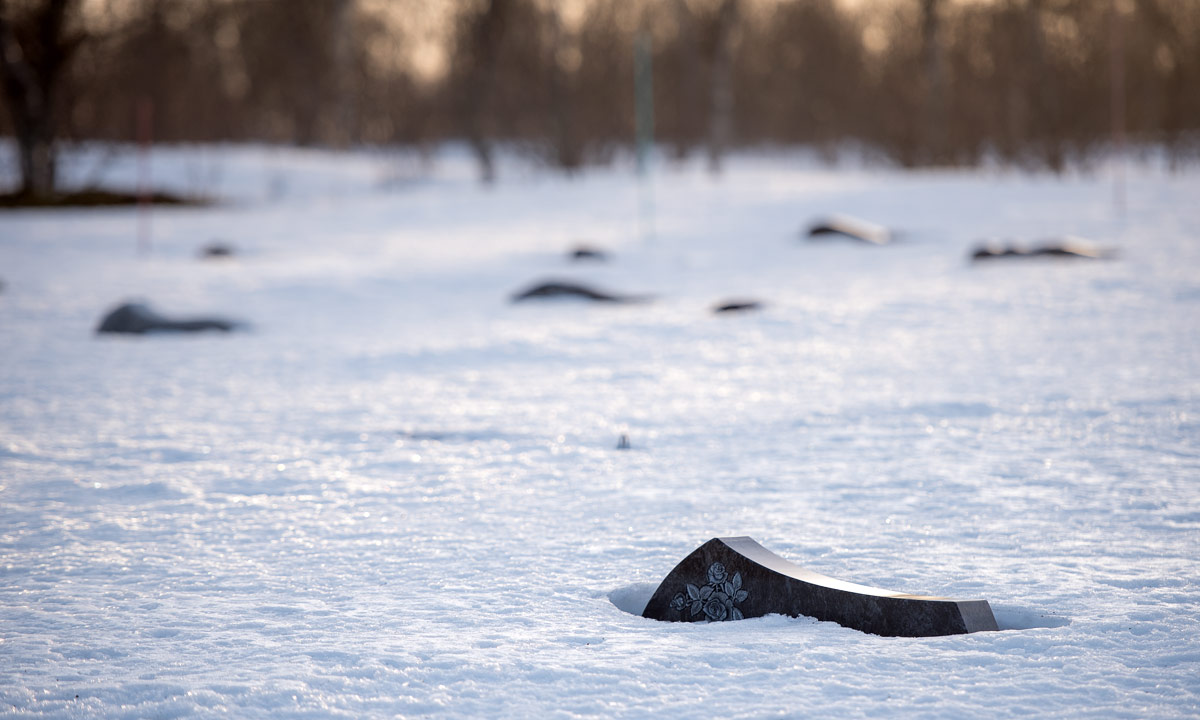
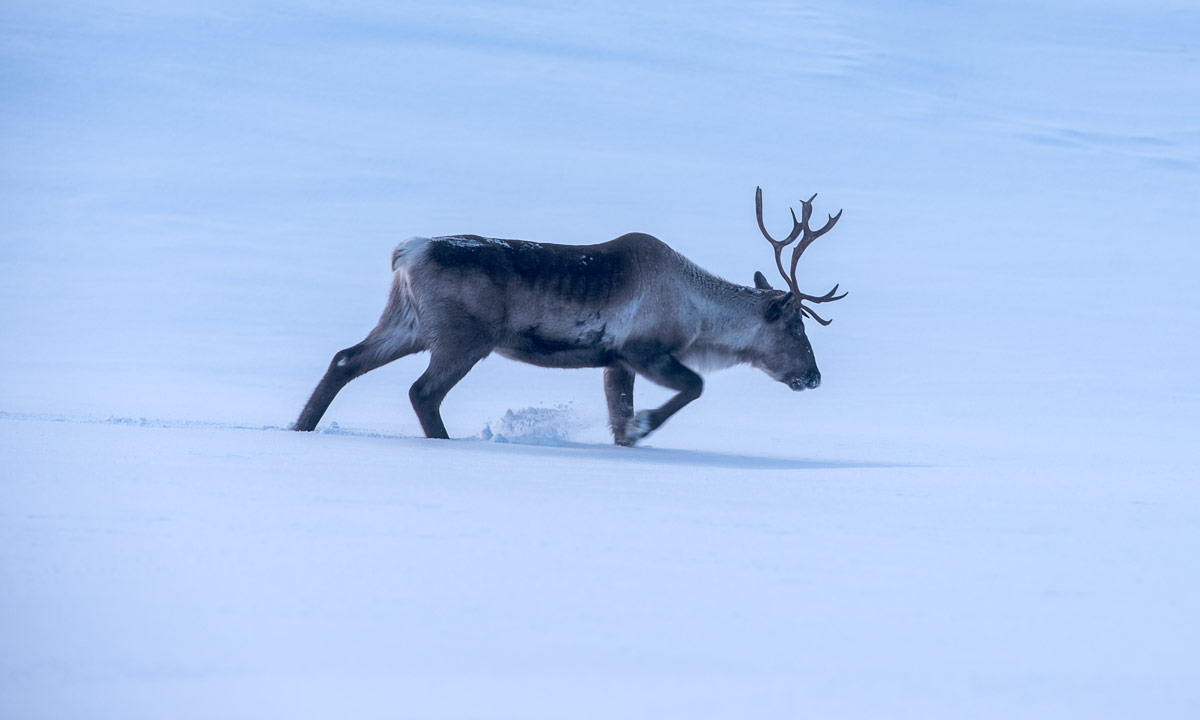
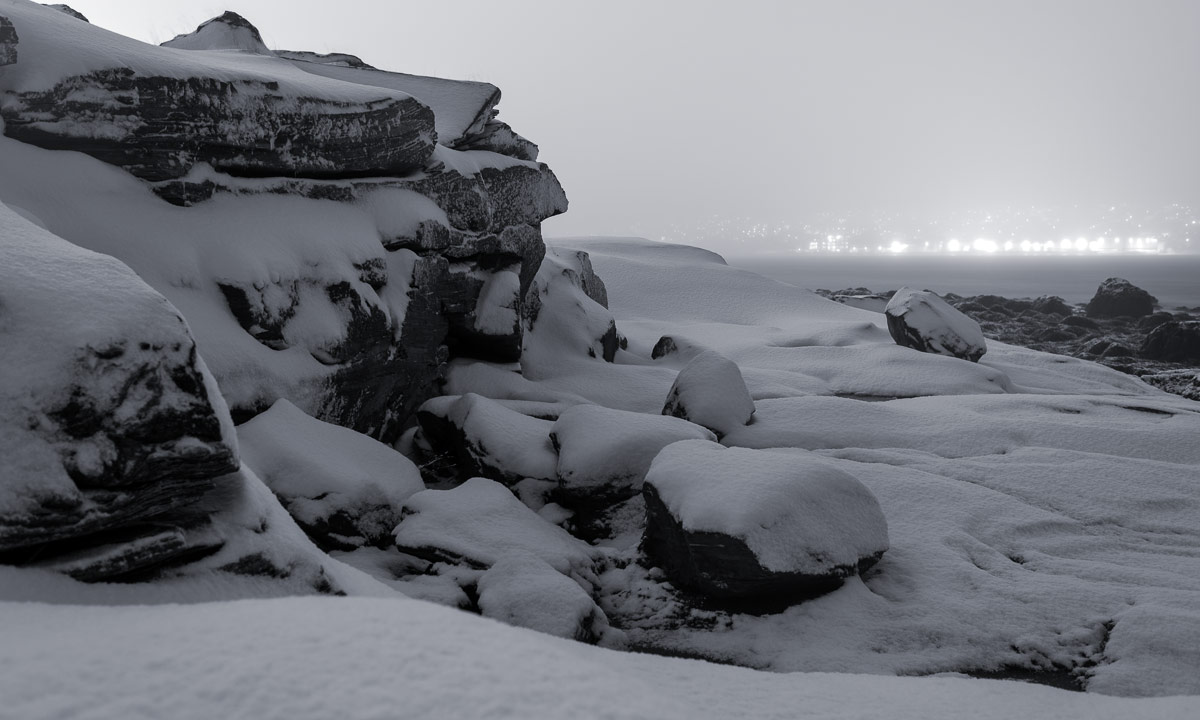
It looks almost like autumn but with a huge difference: It’s dark. The photos above I made at lunch break on my last working day this year.

It’s a pity! Just today my wife Annika will arrive so that we can spend Christmas time together. It would have been lovely with a lot of snow but even though it shall be colder again soon it does not look like we get some.

Tønsnesvarden

On Tuesday we got some snow in Tromsø. On Wednesday it already has melted away. But last night a bit of snow arrived.

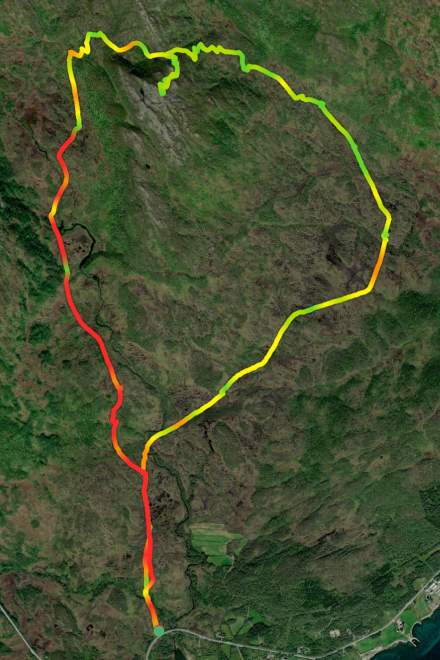
Today I chose a shorter tour from my book “På tur in Tromsø” (On tour in Tromsø) because I just wanted an easy hike, not a full-grown mountain tour. The weather agreed with me.

By the sea only a bit of wet snow and sleet covered the ground but already 50 meter higher the gravel path was covered with 10 cm of snow. Deep tyre tracks were carved in the snow. This part of the tour was very easy. Just follow the road up until you reach the radio unit on the Tønsnesvarden (281 m) and try not to slip, because under the snow there are some icy patches.

This summit has a big radio station on its top. Even in the increasing snow fall is was quite visible. Now I walked through 20 cm of snow. After an hour I arrived at the radio station, where I met the creator of the deep tyre tracks: A six-wheeled ATV.

It wasn’t cold but a windy. It snowed more and more and the wet snow glued itself to my jacket. On my way back I left the main road and followed a small path on my digital map on my iPhone. I stopped in a forest of birches with thin and long stems. I loved the motive, but my Nikon camera gave up in this wet weather. The lens was fogged up in the inside and in the dense and wet snowfall I didn’t dare to change lens. One photo worked out ok anyhow:

Soon I realised that some of the paths drawn on the map did not exist in reality (at least not in winter) while others that exist were not part of the map. So I went cross-county through pathless terrain, partly dens forest, partly wetlands with many small streams to cross. It took only 15 minutes until I reached the other gravel road leading down again. Now the iPhone was in charge for making pictures.

I followed the path down. With each metre altitude I lost there was less snow on the ground and the snow fall became more and more sleet. When I arrived at my car my anorak was soaking wet. Having seat warmers in a car is a great feature after such a tour.

For the records: 6.5 km, round 300 metres in altitude. Temperature round 0°C.

Appendix 1:

When I show pictures of mountain tours and hilly hikes it is easy to forgot, that Norway has not only mountains but the sea, too. This is an iPhone snapshot I took from some metres from my parked car. What you cannot see is the mountains of the island Kvaløya, 3.8 km away. They are hidden in the snow clouds.

Appendix 2:

What do you do with photos taken with a fogged up lens? You start to experiment. I mean, the photo is spoiled anyhow. But the result of today’s experimentation turned out nice in my opinion.

After autumn comes winter?

This article is part of the series “2021-07: Back in Tromsø”.

Two days ago I took a promenade to take some autumn photos. I soon broke of the walk because the asphalt was partly frozen and slippery as hell. It was a mistake to leave my spikes home.

On my mountain tour yesterday I both experienced autumnal and wintry conditions. And I had spikes for my boots with me. While I had been writing the blog article yesterday it had started snowing and that’s how it looked today.

My first snow in Tromsø this season. Yay! 8–10 cm had fallen and while I walked to work it started to snow again. Temperature was below zero and the snow was fluffy. It was fun to walk in the snow.

Looks like winter, doesn’t it? But if the forecast is right it will get warmer again already tomorrow afternoon and rain a lot in the night. A short pleasure.

Grense Jakobselv

This article is part of the series “2021-08: Northern Norway”.

This sign marks the only Russian–Norwegian border station. In February 2018 I crossed this border to Russia together with Annika and two friends. This time we stay in Norway and I take just a photo of the sign.

Our destination today (which is 30 August): Grense Jakobselv, a small border village. As the road to Hamningberg the road there is opened only in summertime and we never have been there before.

It starts like a typical car trip. The road goes along the Jarfjorden and a large lake. In Vintervollen the road turns right and we see the barrier that closes the road in winter. It is open. Now the road leads over the mountains. The rocks here are the oldest in Norway with an average age of 2.9 billion years. I’m not a rock expert and so I take a photo of a birch instead of a random rock whose type and age I cannot determine.

We reach the small river Jakobselva. This small and shallow river is special because here it marks the Norwegian–Russian border. The pink salmon (also called humpback salmon) do not care, they are busy to go upstreams and not all fish succeed.

We continue to the village Grense Jakobselv. For me the biggest surprise was the chapel. In my view every northern Norwegian church is made of wood and painted white. Not the King Oscar II Chapel (built 1869) that is made of stone.

While I wasn’t properly prepared about the church I knew something else: There is a sandy beach. It is at the very end of the road. Annika and I take a bath. Water temperature is about 11–12 °C. It feels quite strange to change clothes for a bath while you can hear the Norwegian army practising shooting.

As many minor roads in northern Norway the road to Grense Jakobselv is a dead-end road and so we have to drive the very same road back. After having been back we get something we have missed on the journey so far: an afternoon nap!

Afterwork car trip

This article is part of the series “2021-07: Back in Tromsø”.

Yesterday after work I started the weekend with a “scouting expedition” by car. I drove over the bridge Tromsøbrua and took the way to Oldervik. On the way I stopped several times to get to know Tromsø’s surroundings and to look for photo motives.

Some photos from yesterday: Common cotton grass and some mountains from the Lyngen Alps.

Three summer days in Råneå

(Oops, I’ve become lazy with blogging. This happened already a week ago!)

Last week Annika and I used our one-week holiday to visit friends in Råneå – 300 km from home, 100 from the Finnish border. Three days – three sections.

Thursday – getting wet

After a sunny morning a large cloud front approached Råneå, bringing thunderstorms, heavy rain and hail. It was short-lived and probably only some strawberries were harmed. (Or was it a snail that tasted them?). In the afternoon it cleared up and we spent some time by (and in) a bathing lake.

Friday – kayaking

We had booked the day before. Four kayaks (three single, one double) and a canoe. On tour: four children between 5 and 13 and five (more or less) grown-ups. We have booked for three hours and decided to paddle through a small creek and then take the Råneå river back to the boat rental by the sea. I have paddled quite a lot on the sea but hardly on rivers, streams or creeks. A great experience!

Saturday – open air concert

Annika and I had heard Daniel Wikslund before. On this day he played two open-air concerts in Överkalix – the first one on a large wooden raft on the river Råneälven. It was wonderful to listen to his folk-inspired music from the a small jetty, the water or even from the raft. It was his first concert since February 2020 due to the covid  restrictions. Hard times for musicians!

You see the wooden keyboard instrument? That’s a pump-organ (Swedish: tramporgel). We’re lucky to have such an instrument in our house soon. Today we’ll meet friends that will help us with the transport from the previous owner’s summer cottage by the sea up the hill to the gravel road and then to our house. Wish us look, that the transport succeeds.

A short promenade to a near swamp

Spåret is a fantastic motion trail just some 100 metres from here. It is 3.6 km long and good for skiing (if not too much snow), running and going for a walk. It leads through forests, over large granite rocks, over sandy bottoms and passes some small swamps. When I walked there with Annika last weekend I spotted some beautiful pond-lilies. Today I took a hike there to take some pictures.

The mosquitos and horse flies appreciated that.

From top to bottom, from left to right:

  • Sundew, a carnivorous plant. Can grow directly on mud.
  • Heath spotted orchid. Protected in Sweden and other countries.
  • Cloudberry, a berry growing on wet ground. Rich in vitamin C. Guarded by mosquitoes …
  • Sphagnum (or peat moss), the main building bog of peat bogs.
  • Cotton-Grass, a sedge that looks like wool. Loves wet ground.
  •  European white water lily, an aquatic plant with blossoms of great beauty.

The flower thread II – June 2021

This is post number  two of ny little hobby project: Looking for new flowers on bloom.

The most photos I made through a cheap magnifier because my macro lens is in Tromsø – out of reach for me here in Sweden. This explains the colour fringes, reflections and other artefacts on many of the photos.

I used the website Pl@ntNet identify for the most flowers for identification. Some classifications were done manually, so there is no guarantee that the names are correct.

The rules:

  • I check only flowers on our property and the marshland between our property and the sea.
  • I do not differentiate between wild and domestic flowers.
  • I do not wait for the most beautiful blossom. I just make a photo of the first occurrence.

The statistics:

New flowers in April: 1 — New flowers in May: 19 — New flowers in June: 39

The flowers in June

4. June: Globeflower | Trollblume | Smörbollar | Ballblom – small wildflower meadow by the house
4. June: Buttercup | Hahnenfuß | Ranunkel | Soleie – amidst the strawberry field
4. June: Iris (Dwarf iris?) | Schwertlilie | Iris | Sverdlilje – on top of the left stone wall

7. June: (Common) Sorrel | Sauerampfer | Ängssyra | Engsyre – by the house
7. June: Moss phlox¹ | Polster-Phlox | Mossflox | Vårfloks
7. June: Wood crane’s-bill | Wald-Storchschnabel | Midsommarblomster | Skogstorkenebb – behind right stone wall

8. June: White clover | Weißklee | Vitklöver | Hvitkløver – between the grass on the lawn
8. June: Garden strawberry | Gartenerdbeere | Jordgubbe | Hagejordbær – strawberry field
8. June: ? – behind the sauna

8. June: Small cow-wheat² |Wald-Wachtelweizen |Skogskovall | ? – behind the sauna
8. June: Cow parsley | Wiesen-Kerbel | Hundkäx | Hundekjeks – behind the left stone wall
8. June: Moss phlox¹ | Polster-Phlox | Mossflox | Vårfloks

8. June: Lesser spearwort(?) | Brennender Hahnenfuß | Ältranunkel | ? – small wildflower meadow by the house
9. June: Ashy cranesbill | Grauer Storchschnabel | Silkesnäva | ? – by the guest cottage
9. June: Field forget-me-not³ | Acker-Vergissmeinnicht | Åkerförgätmigej | ? – behind the sauna

11. June: ?
12. June: Alpine knotweed | Alpen-Knöterich | Alpslide | ? – by the stone/greenhouse
12. June: Lupin | Lupine | Lupin | Lupin – by the stone/greenhouse (destroyed, since it is an invasive weed)

12. June: Columbine | Akelei | Aklej | Akeleie – by the stone/greenhouse
13. June: Marsh Pea | Sumpf-Platterbse | Kärrvial | Myrflatbelg – behind stone wall
13. June: Germander speedwell |Gamander-Ehrenpreis | Teveronika | Tveskjeggveronika – in front of left stone wall

13. June: Red clover | Wiesenklee | Rödklöver | Rødkløver – by the bbq place
13. June: Thyme-leaved Speedwell | Quendel-Ehrenpreis | Majveronika | ? – in front of left stone wall
15. June: May lily | Zweiblättrige Schattenblume | Ekorrbär | Maiblom – behind the sauna

15. June: Lily of the valley | Maiglöckchen | Liljekonvalj | Liljekonvall – in front of left stone wall
15. June: Common yarrow | Gemeine Schafgarbe | Röllika | Ryllik – between the grass on the lawn
19. June: Bird vetch | Vogel-Wicke | Kråkvicke | Fuglevikke – by the bbq place

19. June: Bloody crane’s-bill | Blutroter Storchschnabel | Blodnäva | Blodstorkenebb – between the grass on the lawn
19. June: Hawkweed | Habichtskraut | Hökfibbla | Sveve – gravel by the garage
19. June: Norwegian cinquefoil⁴| Norwegisches Fingerkraut | Norsk fingerört | ? – behind the sauna

19. June: Grasslike Starwort | Gras-Sternmiere | Grässtjärnblomma | Gresstjerneblom – miscellaneous places
19. June:  Meadow vetchling | Wiesen-Platterbse | Gulvial | Gulflatbelg – behind stone wall
23. June: Common speedwell | Echter Ehrenpreis | Ärenpris | Legeveronika – between the grass by the house

24. June: Cuckoo flower | Kuckucks-Lichtnelke | Gökblomster | ? – wetland by the sea
24. June: Marsh-bedstraw | Sumpf-Labkraut | Vattenmåra | ? – wetland by the sea
24. June: Tufted Loosestrife | Straußblütiger Gilbweiderich | Topplösa | Gulldusk – wetland by the sea

24. June: Poppy | Mohn | Vallmo | Valmue – by the garage
24. June: Valerian | Baldrian | Vänderot | Vendelrot – by the bbq place
26. June: Biting stonecrop/Wallpepper | Scharfer Mauerpfeffer | Gul fetknopp | Bitterbergknapp – by the garage

___

Names are in English, German, Swedish, Norwegian. The name can be the species, family or genus. Especially in English there are many different names.

¹ or another phlox
² or common cow-wheat
³ or another forget-me-not
⁴ or another cinquefoil