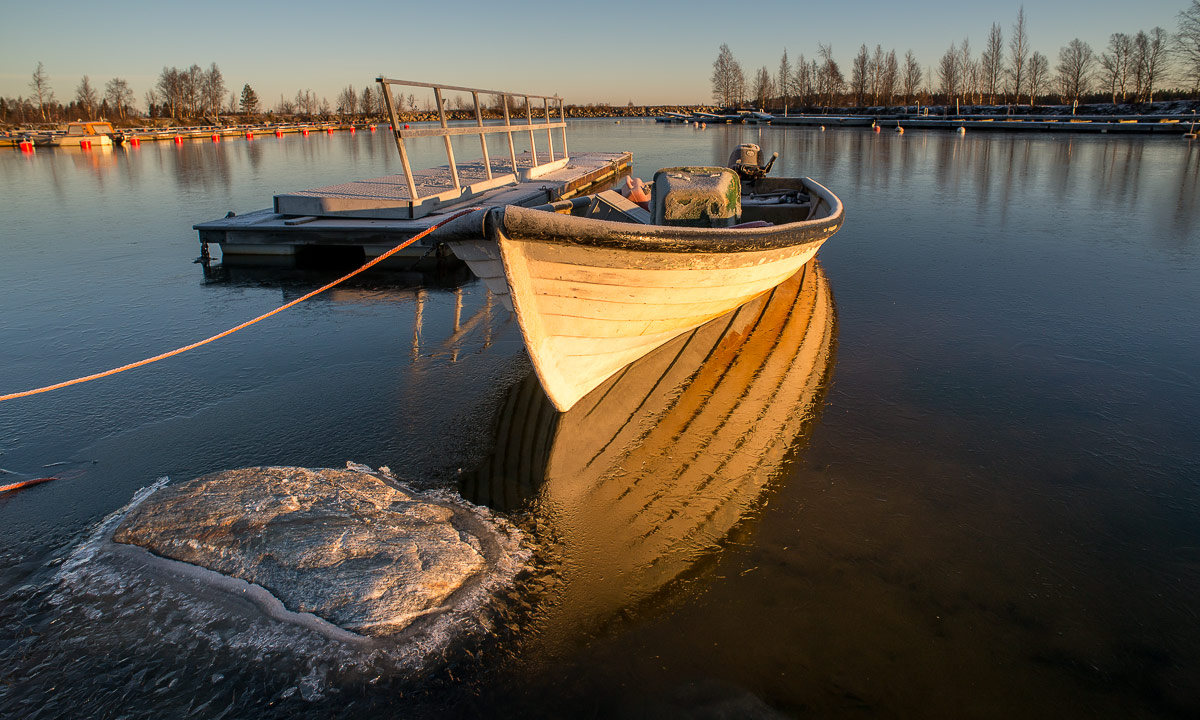
Closing the kayak season 2018
I was stuck. I couldn’t go straight ahead, I couldn’t go backwards, I couldn’t turn. And I definitely couldn’t go sidewards because I sat in a kayak on the Baltic Sea and was surrounded by ice.


Back to the beginning of the day: I took a day off today because of the nice weather and decided to make a kayak tour. My goal was to sea the sunrise from the open sea. When I came to the tiny beach were my kayak has been lying since June it was still dim. The sea between the island Storgrundet and the mainland was covered with a fresh layer of clear ice. Two days ago these parts had been free of ice.


I already changed into paddling clothes at home: Woollen underwear, a drysuit that would keep me dry when falling into the ice cold water, a waterproof face mask and neoprene boots. It just took some minutes to take of the warm anorak – it was about -7 °C – and put some stuff into the cargo hatches of the kayak. I put on my woollen mittens and the long, waterproof overmittens, then I was ready to start the tour.
The question was: How thick is the ice? Would the kayak slide onto it or break through?
I sat in the kayak and pushed myself backwards, first with the paddle, then with the hands. The ice didn’t break. Anyway I was still quite near the shore. I continued pushing myself backwards until I came to the area of new ice. The ice didn’t break.


It is both exhausting and very ineffective to sit in a kayak and push yourself over bare ice with waterproof mittens. You just don’t get a grip. I realised that I wouldn’t come long. I returned ashore, got out of the kayak, went to the car and drove home.
At home I got my isdubbar – my ice claws. They look like a jumping rope with nail attached to the handles and are used for self-rescue, if your break into the ice. I changed also into winter boot, because my feet were freezing. The neoprene boots are not the warmest. Ah, that feels better! I got into the car and drove back to my kayak. Second try!
It was still exhausting to move the kayak over the ice, but with an ice claw in each hand I could pull my kayak forward with a speed up to 5 – 6 km/h. The sun had not risen yet and the air was calm and chilly. The horizon started to turn pink.

I found a bit of open water at the narrow passage between island and mainland. Then I came to another sheltered bay that was frozen, too. First the ice was quite thick, then it started to become thinner.

Here my problems started. The kayak went through the ice and floated. The ice was too weak for using the ice claws, but too thick to use the paddle. After some metres I was stuck! Every time when I used the paddle to move forward another meter I was surrounded by ice and couldn’t use it anymore. During the seconds that it took for changing from paddle to ice claws the kayak drifted back and I was surrounded by open water again, making the ice claws completely useless. Finally I started some kind of dog paddling with hands and arms, still the ice claws at hand until I could reach ice again, pull me forward another meter and break through the ice again. The sun had already risen minutes ago. (Goal missed!)
These are the situations where I learn a lot about my lack of patience …

Anyhow the island Storgrundet was near and with some efforts I reached a spot where I could go ashore. I just wanted to check the water and ice conditions on the outer side of the island.


Beside of some pancake ice near the shore the Baltic Sea was completely clear of ice, exactly as excepted. I returned to my kayak and went along the stony shore pulling it nearer to the open water. The sea was still covered with ice but it was thinner and I could hack my paddle through it. Small patches of open water were enclosed in the icy surface and tiny waves vibrated in the rhythm of my paddling. Very funny to look at! And then, some curses later, I finally reached open water – almost two hours later than my first arrival at the beach this morning.


What a relief to put the paddle blades into normal water. Ice cold water, but just normal, liquid water. Delighting. Where should I go? To Finland …?

Soon I spotted a possible destination: Nordlundsstenarna a.k.a. Själagrundet, more a gravel bank than an island, 1.6 km from shore. When I arrived there I looked at the next island Medgrundet, which would be much more attractive for taking a break than this pile of stones. I continued paddling. The wind increased slightly and it got a bit chilly, but it’s only 1.1 km from Själagrundet to Medgrundet so I arrived there quite soon.
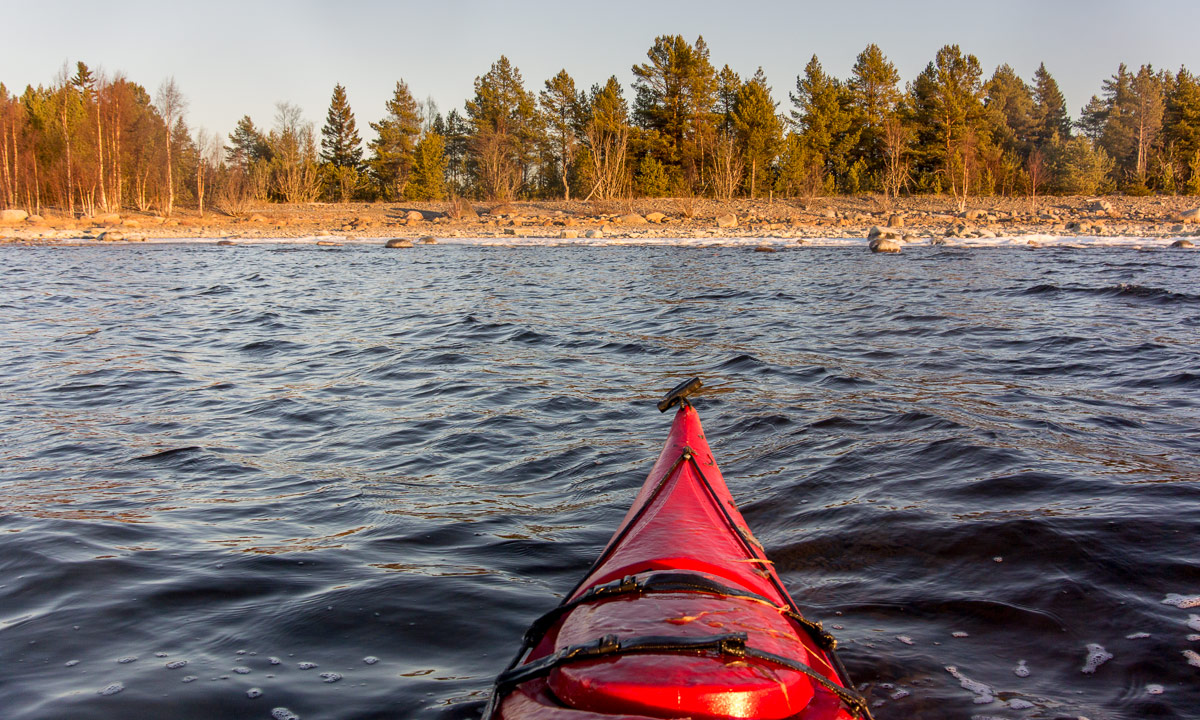

The first think I did when I was at land was to put on my winter anorak. Then I explored the island. Some photos:
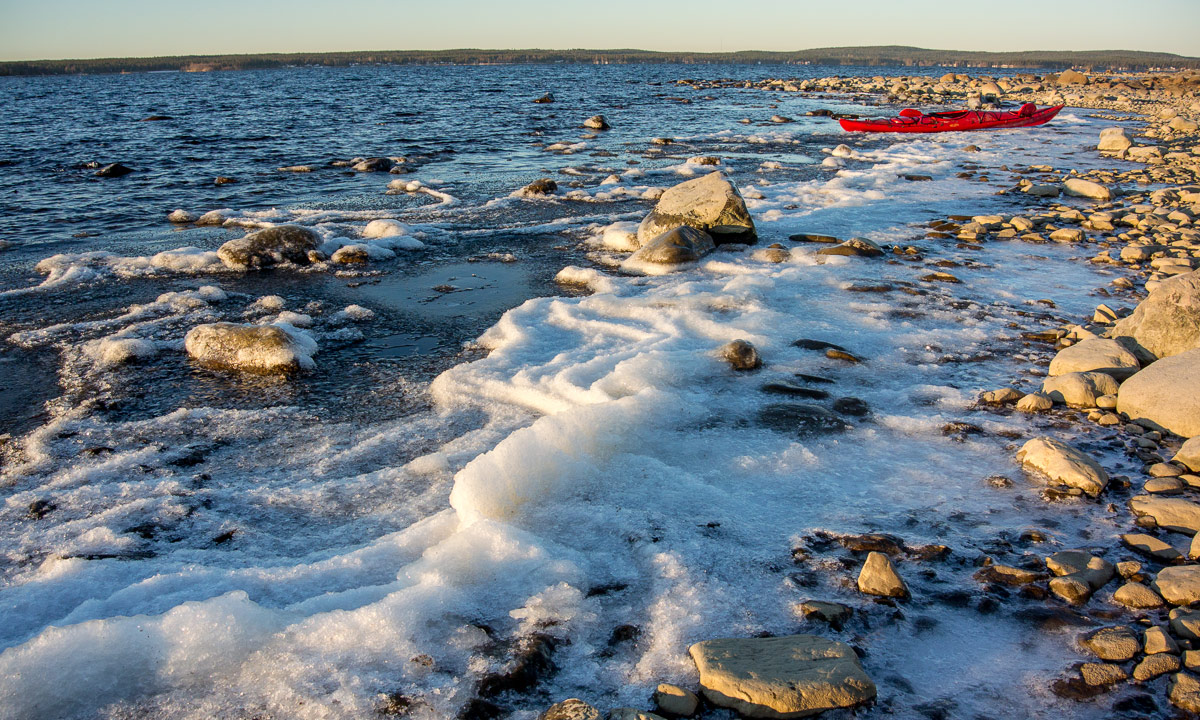


Actually I could have spend the whole day on this island, but I made a huge mistake: I didn’t bring any food with me. (Don’t try that at home, kids!) So after a stroll over the island I returned to my kayak that was as ice covered as the rock nearby.


What I did bring with me were my sunglasses. I was really glad having them because the trip back was straight against the sun. Ok, time for some selfies …


The way back was nice and beautiful and not very spectacular. I enjoyed the sun and the colours of the sea – it could be covered with ice and snow quite soon.

Since I hardly could recognise anything on land I went a bit wrong but the detour was small. After a while I reached Storgrundet and then the ice covered parts again. This time it was much easier because I could follow the ice-free channel that I had cut into the ice on the way there. But when I had to use the ice claws on the more solid ice again to pull myself forward I realised something: There are many things I lack, one of them is strong chest muscles. They will ache for certain tomorrow.