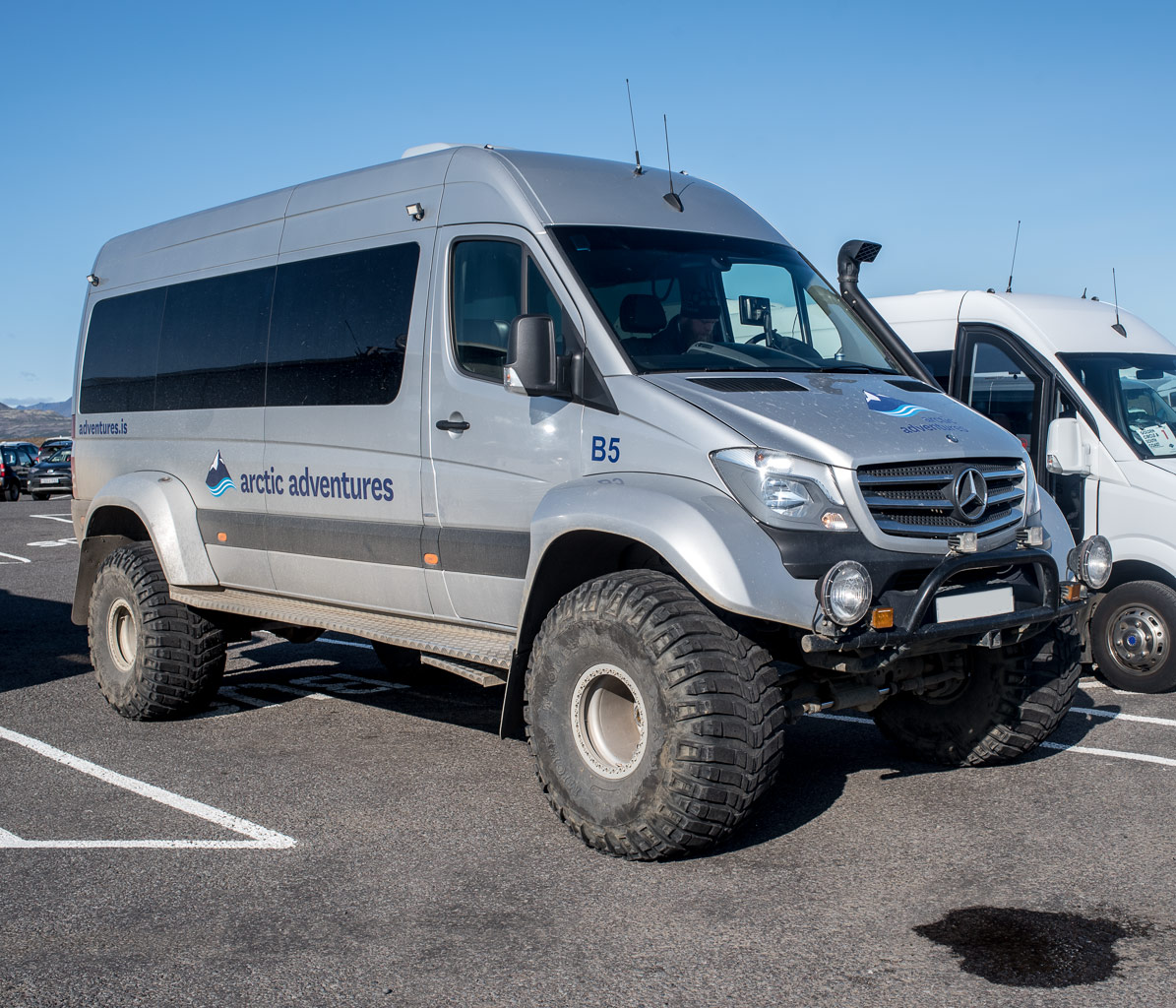
From Reykjavík to Hveravellir – 10 + 1 photos
This article is part of the series “2018-08: Iceland”.
Wednesday, 29 August
Ten plus one photos from today’s six hour bus tour from Reykjavík to Hveravellir in the Highlands of Iceland.
This article is part of the series “2018-08: Iceland”.
Wednesday, 29 August
Ten plus one photos from today’s six hour bus tour from Reykjavík to Hveravellir in the Highlands of Iceland.
Yesterday I used my new car to drive to Vittjåkk, a small skiing area near Arvidsjaur, two hours away from home. Annika and I were there in wintertime and made a showshoe tour up the hills. I lived in Munich for six years and do not call these hills real mountains, but at least they reach above the treeline.
I parked again at the same parking lot and ascended the first hill that seems to be nameless. The sky was free of clouds, it was quite warm and I was completely alone.
Soon I was on top of the first hill. I wasn’t alone anymore. Some horseflies tried to make friends with me or at least with my blood. I descended the first hill and went up the Vittjåkk.
From the top I had a wide view over large forests, lakes and a higher mountain range.
Beside of taking pictures I didn’t rest because the horseflies really loved me. So I continued downhill again and was a bit flabbergasted that the whole hike took hardly more than 90 minutes. The hut village was completely abandoned, only a snowmobile showed that this place is only used in wintertime. And other signs showed that too …
One: construction sites. Almost all major roads are under constant repair each summer. It takes a lot of time to travel. Sometimes you have to wait for a traffic light becoming green or a follow-me car. Sometimes you follow an expencive camper whose driver doesn’t dare to drive more than 20 km/h on the gravelly sections. And this may go on for miles. Swedish miles! (A Swedish mile is 10 km.)
Two: lupins. Many roadsides are overgrown with lupins. They are beautiful, but they are invasive and threaten biodiversity. The Swedish Transport Agency has started to fight theses flowers.
Three: reindeers. Most reindeers are in the mountains but there are always reindeers left in the inland. Keep attention when driving! When you see one reindeer you can be quite sure that others are around, too.
Four: bilingual town signs. On many place in Northern Sweden you are in two countries at the same time. Sweden, the official nation and Sápmi, the region traditionally inhabited by the Sami people. Therefore many places have (at least) two names, a Swedish and a Sami one.
I drove a lot yesterday: 535 km in total. But as a result I know the new Subaru Outback much better and got used both to the automatic gearbox as the electronic systems. I’m very satisfied with the car that is much more comfortable than the old one. The only drawback, it might be the white colour: The horseflies just love the car. When I return to the car it is mostly surrounded by some dozens of this pests and they will even try to follow when I set off. (They manage round 25 km/h.)
Today I sold my Subaru Outback 2008. Now I do not own a car any longer, at least privately.
My company Filchos AB however got its brand new Subaru Outback 2018 today. Luckily I’m both the owner of Filchos AB, the boss and the only employee. Olaf, the boss and Olaf, the employee are on friendly terms with each other and therefore Olaf, the employee may drive the car as often as desired.
My personal key features: permanent all-wheel drive, 20 cm ground clearance, automatic transmission and a lot of space inside. Now I’m longing for the first longer journey to get used to the zillion buttons and levers that modern cars use to have nowadays.
This article is part of the series “2018-05: Gotland”.
It’s Thursday, our 4th full day on Gotland. Today we want to hire a car, meet Ingrid again and explore Fårö, an island northeast from Gotland.
We return our e-bikes, that we used the last two days and walk to Mickes biluthyrning, where we rent a VW Passat from 1995. Annika drives. We fill up the car and drive to Lärbro, where we meet Ingrid. She has been living on Gotland for a year and will guide us around.
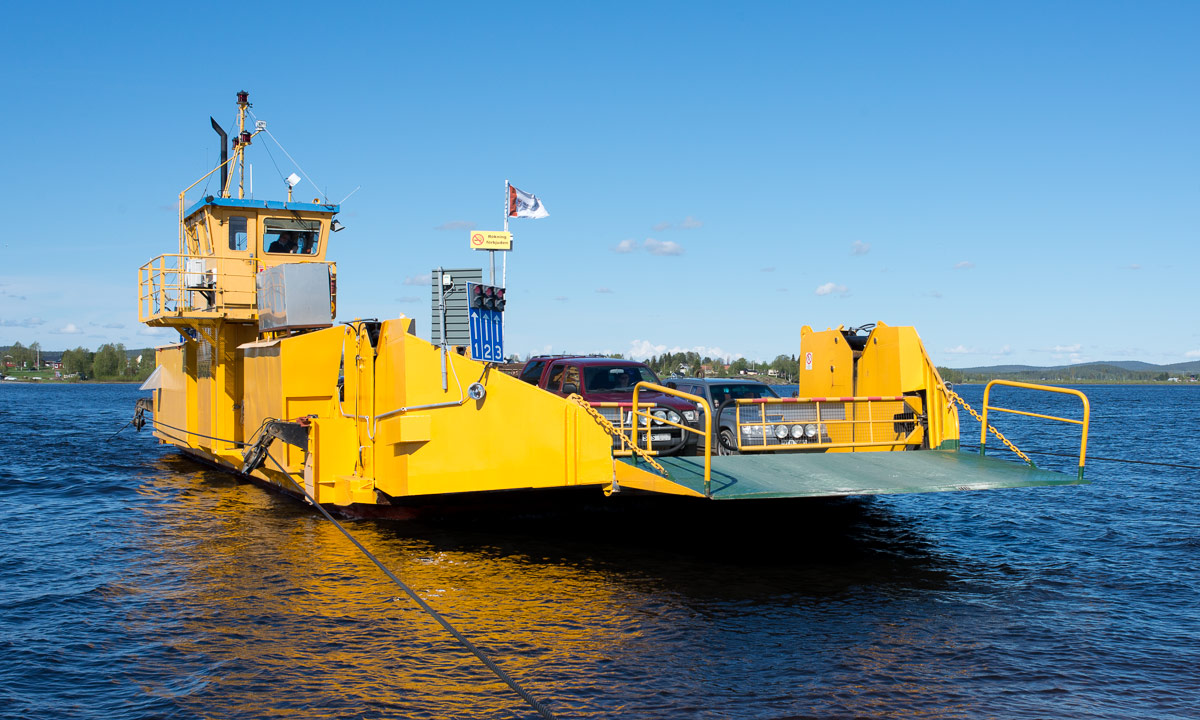
In Fårösund we drive on the free ferry; the ferry crossing takes only 8 minutes. Then we are on Fårö.
First stop: Fårö kyrka. Beside this church used to be a tourist information, but it doesn’t exist anymore. It’s not a big problem, since Ingrid knows all these places she wants to show us.
The next stop however is a request of Annika and me: a real bakery! With a few exceptions, there are no bakeries in Northern Sweden and we enjoy visiting this one. We buy bread and cake and take a break to eat the latter.
We drive through the landscapes of Fårö, which are as varied as Gotland’s landscapes. Sometimes you think, you are in Spain or Greece, sometimes you believe being in Northern Germany and (only) sometimes in Sweden. Now I understand the Swedish people better, who say that Gotland is not Sweden.
Next stop Fårö Fyr, the lighthouse of Fårö, located at the easternmost point of Fårö. There’s a beautiful rock coast, but we do not stay very long, there’s a lot to see.
Next stop Skärsändan, a beautiful sandy beach that is several kilometres long. Annika and I take a bath (the water is quite shallow) and then Ingrid, Annika and I walk barefooted along the beach.
After a longer promenade we continue our Fårö exploration trip. On the way to Langhammars Raukar we make a stopover. Here we find many things typical for Gotland and Fårö: grey sheep, windmills, thatched houses, braided fences and dry stone walls.
Next stop is Langhammars Raukar, one of the famous spots with rauks – steep limestone formations formed by the waves of the sea. On of them reminds me on the stone statues of the Easter Island.
We continue to another fascinating spot, three kilometres away: Helgumannen, an old abandoned fishing village. This group of tiny wooden houses located on a rocky beach that seems to be endless looks really remote and I ask myself what kind of live the inhabitants had.
The last stop on Fårö for today: Gamle Hamn, another spot well-known for raukar. The last photo shows the “coffee pot”. Personally it reminds me more of Buckbeak, the hippogriff in Harry Potter.
I has become late, we are hungry and a bit tired. Ingrid drives the way back to the ferry and soon we are on Gotland again. Here we take the first restaurant and get something to eat, before we drive back to Lärbro and say goodbye to Ingrid.
Tusen takk, Ingrid for a wonderful day!
When Annika and I arrive in Visby it’s so late that the sun sets and the ice cream shop is already closed.
This article is part of the series “2018-03: Varanger peninsula”.
Some unpublished photos from my winter journey. I want to show them as long it is still wintry here.
While the grown-up huskies are doing their job the puppies have to wait in the trailer. I guess it is very boring for them. There are curious and seek contact.
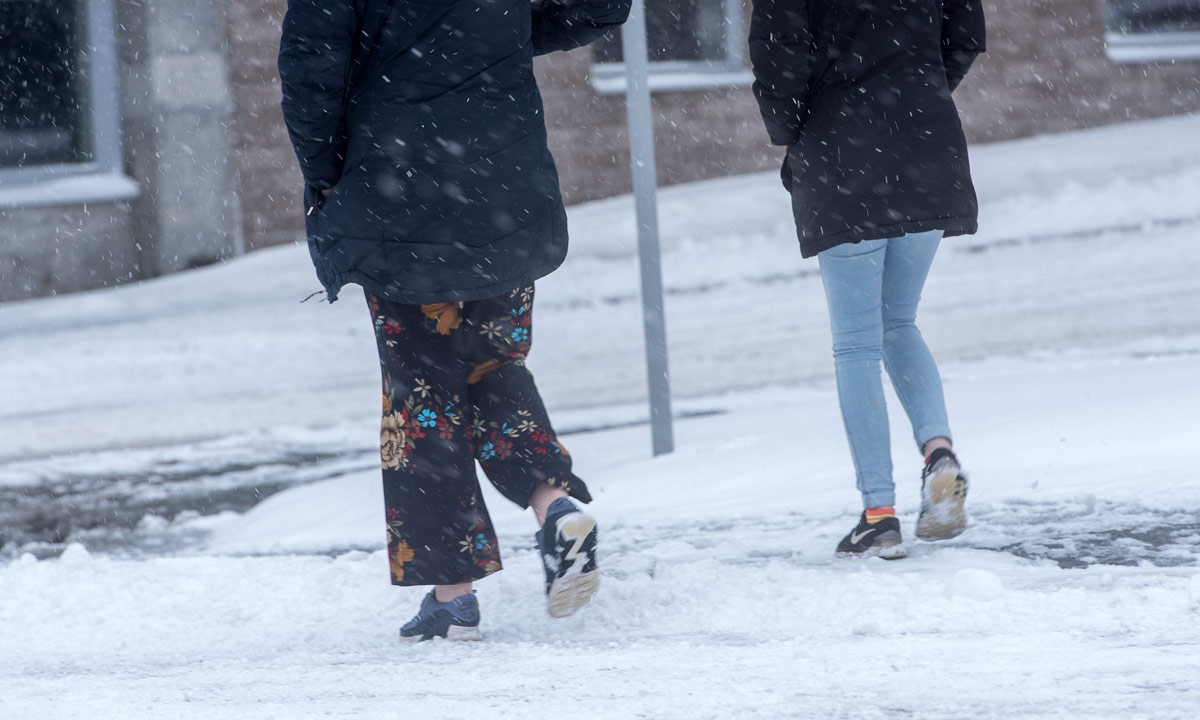
While Chris, Annika, Ørjan and I are enjoying the gorgeous breakfast in the hotel Thon an asian tourist is waiting outside. She seems to be well protected against the elements but why has the fur to be pink …?
On the way to Kiberg Annika and I make a stopover in Ekkerøy where we enjoy a beach walk. Here we meet H. who invites us to visit her. We will make that true some days later. I take a photo of Annika’s and H.’s footwear. Tradition, meet modern world.
Cape East Arctic Adventure, our stay lies directly at the beach. I could spend weeks with only watching the tides and the changing weather.
There’s hardly any commercial fishing left in the small former fisher villages and the large drying racks for drying cod remain empty. Some people however still dry cod for personal usage.
A view through the window of Cape East Arctic Adventure. Today we will continue our journey.
We hardly have the time to explore Berlevåg, we only buy food. Two images of Berlevåg anyway. Just for the records …
This snowstorm shaken rocky shore appears more arctic than many other places of this journey.
A woman has found a wind protected place and watches the Norwegian winter landscape.
On our long car trip back from Ørnes to Skelleftehamn we pass Saltstraumen, a small strait with one of the strongest tidal currents in the world. We are too early to see the strongest maelstroms and I’m too eager to continue home. It’s still 500 km to drive.
Now I finally can erase my “later” folder on the computer.
Day 44 of my winter journey 2018
Ok folks, I’m tired, let’s keep it short and simple:
After a long car ride starting in Ørnes Annika and I arrived in Skelleftehamn at 5 pm and I’m home again.
The part through Norway took a long time as usual because of the road bending and twisting left and right, up and down. The part through Sweden was much faster, but a bit of a bore, since there is not so much to see beside of snowy forests (ok, there is more to see, but not if you just want to come home).
We had blue sky the whole journey and temperatures between -5 °C and -20 °C.
In Skelleftehamn there’s still a lot of snow and the fence in the backyard is snowed under. Just now (19:57) the sky is clear in Skelleftehamn and the temperature is -13.6 °C. No polar lights (yet).
Some random useless facts about the journey:
Some missing blog articles that I’ll write the next days:
That’s all for today,
/Olaf
This article is part of the series “2018-03: Varanger peninsula”.
Day 40 of my winter journey 2018
At 11 o’clock we left Kjølnes Fyr and started our car trip to Båtsfjord. First we had to take the road 890 to Kongsfjord and over the Kongsfjordfjellet, then we had to continue on road 891 over the Båtsfjordfjellet to Båtsfjord.
I wasn’t sure if we would manage it due to the severe stormy and snowy weather. Another guest staying at Kjølnes Fyr had a hard time driving the 5 km from Berlevåg with very bad visibility. The roads however were still open though marked with a warning “difficult driving conditions because of snowstorm”.
And yes, it was stormy and it snowed a lot. The sight on the road however was still quite good. While I focussed on the road Annika took some photos of the coast beside of the road:
Some parts however were very hard to drive, since the visibility was extremely bad. It was hard to see whether there were snowdrifts on the road and how deep they were and several times I had to stop completely to find out, where the road continued.
I started to doubt if it was possible to cross the mountain passages but we would make it at least to Kongsfjord where we could stay overnight if continuing became impossible. Annika tried to check the traffic information of Vegvesen – the Norwegian Public Roads Administration – but there was no mobile internet available.
I continued driving along the E 890 and the only other vehicle we met was a snow plough. The street behind it however seemed as snowy as before.
Shortly before Kongsfjord Annika’s smartphone was online again and she informed me about the updated traffic information: The mountain sections of both the 890 and the 891 where restricted to kolonnekjøring which means that you cannot drive alone but have to follow a convoy guided by a snowplough. The kolonnekjøring was scheduled to 14:30. The good thing: Driving in a convoy would be much easier than driving alone.
When we arrived in Kongsfjord it was 12:10, so the 28 km drive from Kjølnes Fyr had taken more than an hour. We were lucky that there is a landhandel – a grocery – in Kungsfjord that is open all year. We entered the landhandel, told about the kolonnekjøring and were invited to coffee and cookies straightaway. A big thank you to the owner for the warm welcome!
While we sipped our coffee and waited we constantly checked the traffic informations. After a short while we learned that the start of the kolonnekjøring was postponed to 17:00. That meant more waiting, but we were not the only ones. Other men in work clothes – mostly fishermen – waited as well. They told stories, laughed out loudly while drinking coffee or eating fast food. Anyway we all were still lucky. While we only had to wait some more hours many other roads were completely closed due to the weather, among others the way to Mehamn, the passage between Kiberg and Vardø and the only way to the North Cape.
Hours later: We said goodbye, cleared the car of snow and drove the short way to the boom gate. Here some other vehicles, mostly trucks waited for the convoy to start. One of the truck drivers attached snow chains to his truck.
Dusk had already been falling when our convoy started some minutes after 5 o’clock. My job for the next time was following the rear lights of the car in front.
Some passages were quite easy to drive, some passages were hard to follow due to the blowing and driving snow. (Sorry, no photos.) After 35 minutes we arrived at the T-junction, where the 890 from Kongsfjord, the 890 from Tana Bru in the south and the 891 from Båtsfjord meet. A long queue of cars coming from Tana Bru already waited. Some minutes later the convoy from Båtsfjord arrived as well. The snowplough leading the convoy to Kongsfjord passed and seconds later our queue of cars started to approach the intersection were we turned left to follow the convoy to Båtsfjord.
This part of the trip was extremely exhausting. It was dark, the convoy was slow and mostly the visibility was really bad. I just tried to follow the red lights in front and it felt like hours and hours until the snowplough turned right and we suddenly arrived in Båtsfjord. Here it seemed to snow as much as in the mountains and I was very relieved when I finally parked the car at our overnight stay. Phew – that was no easy ride and I’m really grateful that convoys led us over the mountains under the snowstorm conditions.
The rest of the day? Buying foodstuff at REMA 1000, eating fast food, falling asleep quite fast while the snow squalls over Båtsfjord continued. According to our host 30 cm of snow already had fallen that day and more was expected.
At least we arrived in Båtsfjord, probably our last overnight stay on land. The next evening we would take the Hurtigruten to Ørnes, were we would drive home to Skelleftehamn and Umeå.
(The first five photos were shot by Annika. I did the editing.)
This article is part of the series “2018-03: Varanger peninsula”.
Day 38 of my winter journey 2018
The Varanger Peninsula has many inhabited places at the coast, but you cannot take the car and drive around the whole island, not even in summer. There are three roads:
We explored the towns connected by the E 75 so far. Yesterday however we left the Varanger Peninsula, visited the Sea Sami Collections in Byluft and spent the night in Seida near Tana. Today we continued our trip and entered the Varanger Peninsula again, this time using the 890 to Berlevåg.
A local in Ekkerøy had warned us about this road, which leads about the kalfjell – the bare mountains above the treeline. The weather conditions can be severe and the road can be closed anytime due to bad weather or only accessible by kolonnekjøring, which means that you drive in a guided convoy led by a snowplough. Mostly it’s not snow that is the problem, but strong winds, that can create impassable snowdrifts within minutes.
The weather today however was fine and we didn’t have any difficulties in crossing the kalfjell. The road is really exposed to the elements and I can imagine that the very same road will be completely impassable in stormy conditions.
There is however another possibility to travel from one place to another: using the Hurtigruten ships, that connect Berlevåg, Båtsfjord, Vardø and Vadsø on their way from Bergen to Kirkenes.
This article is part of the series “2018-03: Varanger peninsula”.
Day 28 of my winter journey 2018
Yesterday Annika and I said good-bye to our friends Chris and Ørjan who live near the Snowhotel in Kirkenes. We wanted to continue to Vadsø on the Varanger Peninsula for an overnight stay. After breakfast, packing and saying good-bye we left at 11 o’clock. We followed the road 885 coming from Bjørnevatn and turned left into the E6 in direction Alta/Narvik. Right before the turnout to the airport we came to a stop. Some cars before us had stopped, one driver talking to a policeman. The other cars turned and we stood in the front. There we spotted a huge road sign “Closed, info telephone 175”.
The policeman told us that the E6 had been closed for some hours due to an avalanche that had to be blasted away. That could take some other hours. The E6 is not only the main road through Norway, it’s also the only way from Kirkenes to the Varanger Peninsula. So we returned to Kirkenes.
We ate some lunch, visited some shops and the library and waited for the road to be opened again. After some time it looked like the road would be opened round 14:00 so we gave it another try, were stopped again and told that the snow removal could take some more hours. We returned again, this time to our friends house ready to stay.
We went to the Snowhotel and told Chris about the road closure. Just after we told her that we would stay for another night the website informed us, that the road was usable again. I took a picture of the beautiful entrance hall made of snow and ice by a Russian artist, …
… we said good-bye one more time and took the very same roads again a third time. This time we were lucky, the road was opened and completely free of snow. We followed the E6 to Varangerbotn where we took the E75 to Vardø. Some hours later we were in Vadsø where we had our first couchsurfing experience.
Couchsurfing is a platform where people can host other people for free. It’s both great for finding a place to sleep and interesting people to meet. Our host, Nils Õun from Estonia was a really great host. He’s a professional cook and he made us a creative and gorgeous dinner. We talked and talked many hours and Annika and I were really glad to had the opportunity to meet him. Just a snapshot of the best chicken I ate in the last years, part of his dinner:
As I mentioned before was Nils a great host. Aitäh, Nils!
(Sneak preview: today we continued to Kiberg where we’ll stay for some nights. One of the nice and special places on the Varanger peninsula.)
Day ½ of the winter journey 2018
Good morning.
This is how my sleeping room looked like yesterday:
As you may guess, I’m about to travel.
The journey had already started yesterday. After packing everything into the car (now equipped with a roof box) Annika and I travelled to Solberget where we arrived 23:50.
3 hours, 45 minutes drive. The first half: E4 and some trucks almost impossible to pass. Both boring and tiring. The second half: winter wonderland with a snowy road (we were the very only car), snow covered trees, some reindeers, at least five elks, full moon and polar light.
Today we’ll visit the market in Jokkmokk. The first event in my 6-7-week-journey.
A foretaste of what is to come: market in Jokkmokk — a bit of Solberget — a ski tour with a German friend – Kirkenes together with Annika and much more …
Sometimes I’ll be online and write articles and show photos in this blog, sometimes I won’t.
Anyway, stay tuned …
/Olaf