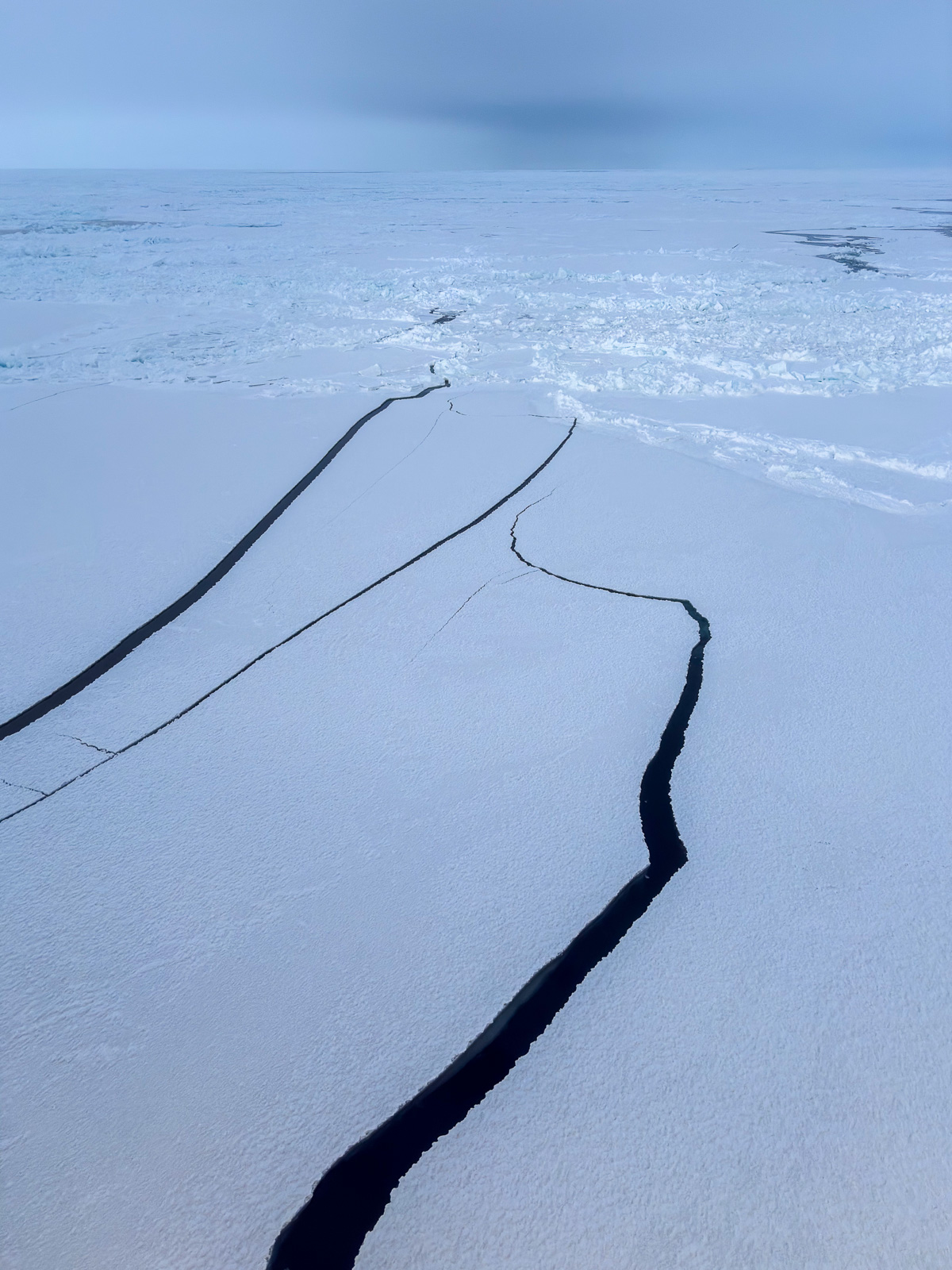
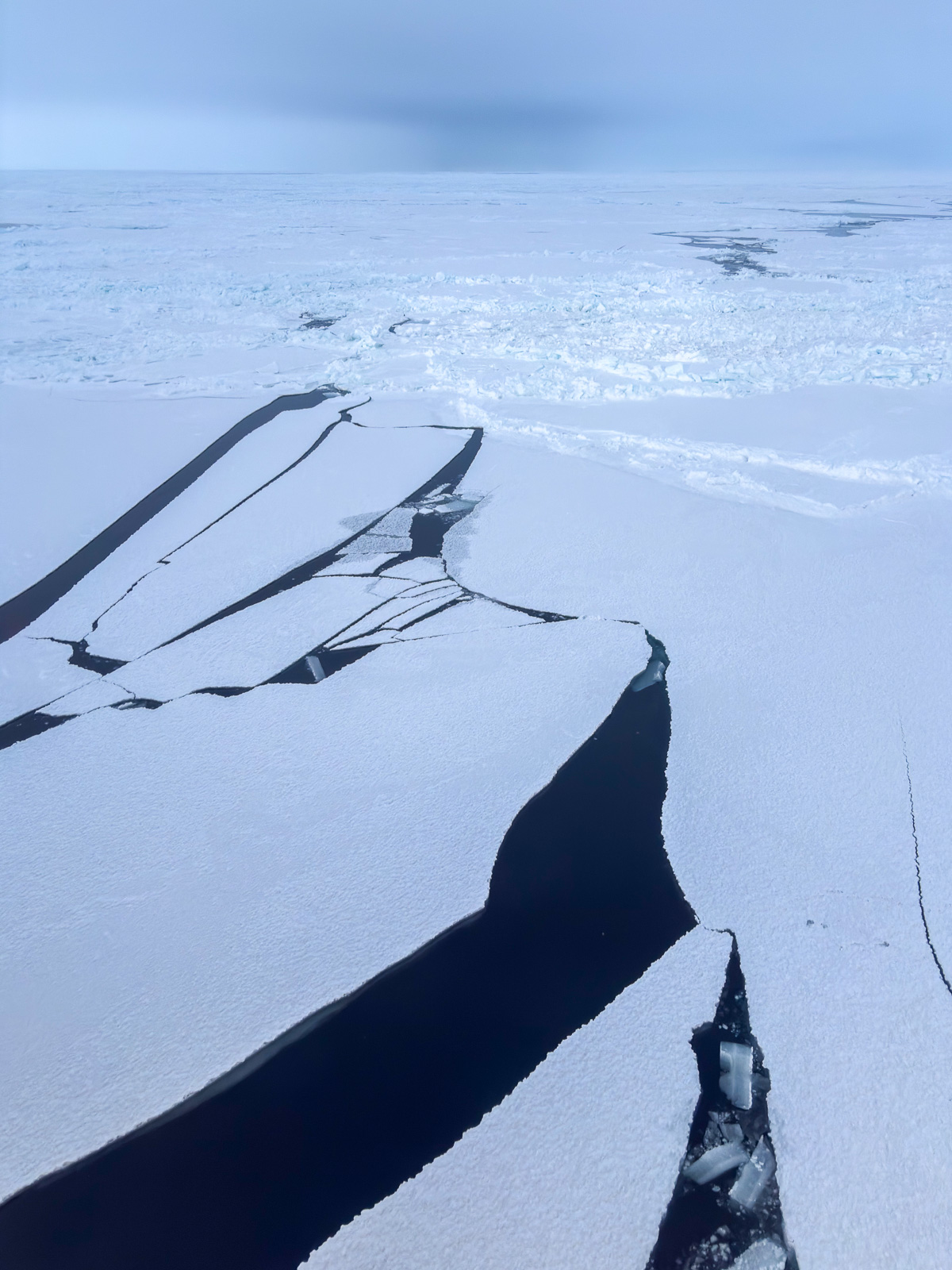
28 September – 1 October – the last days

This article is part of the series “2026-09: Canada”.

It was more than three weeks ago that our holiday in Canada began. We still have some days left, but we are on the home stretch. It has been a spectacular holiday with many more impressions than I had hoped for, and if I had to say what the best part was, I couldn’t give a single answer. Besides, I got to share it all with my wife Annika.

28 September

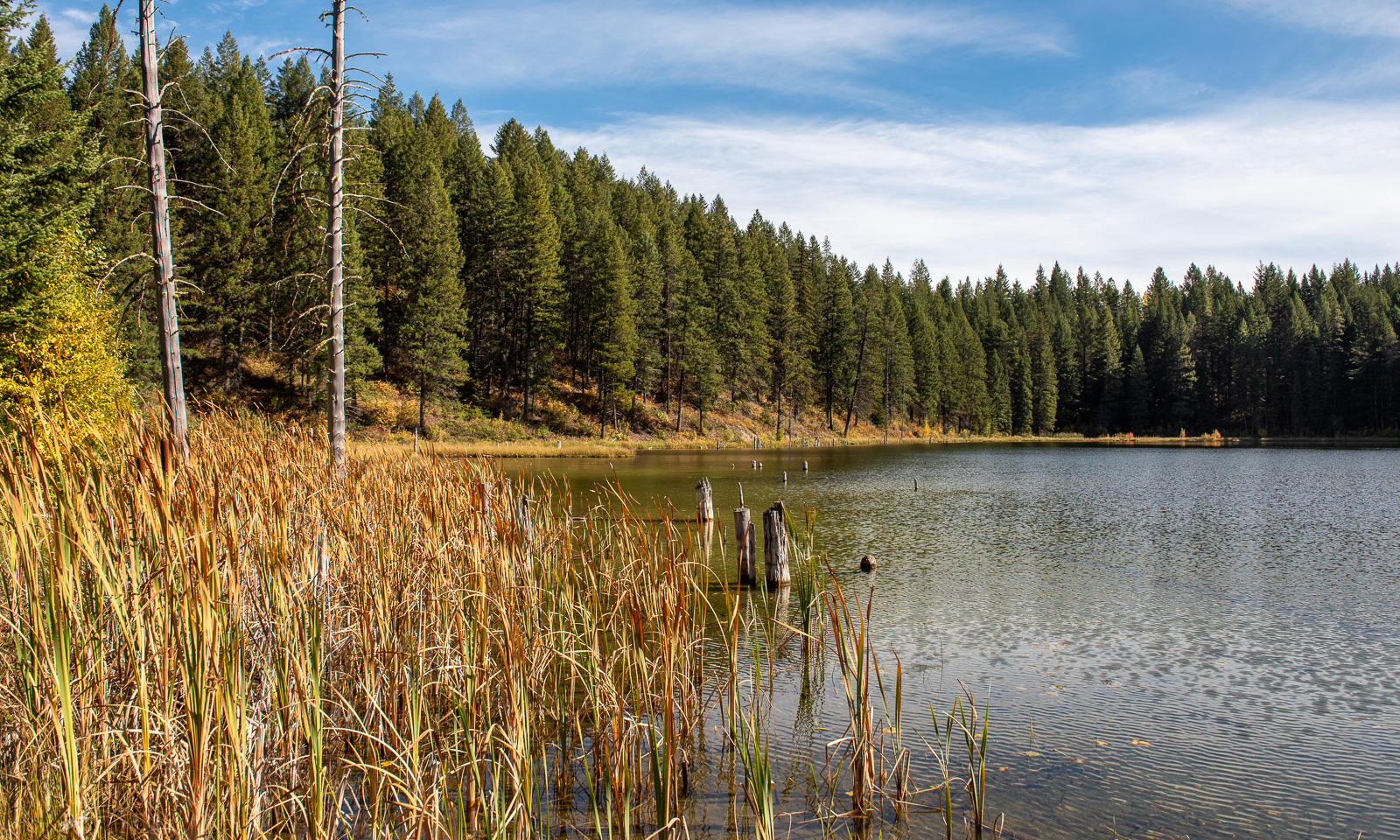
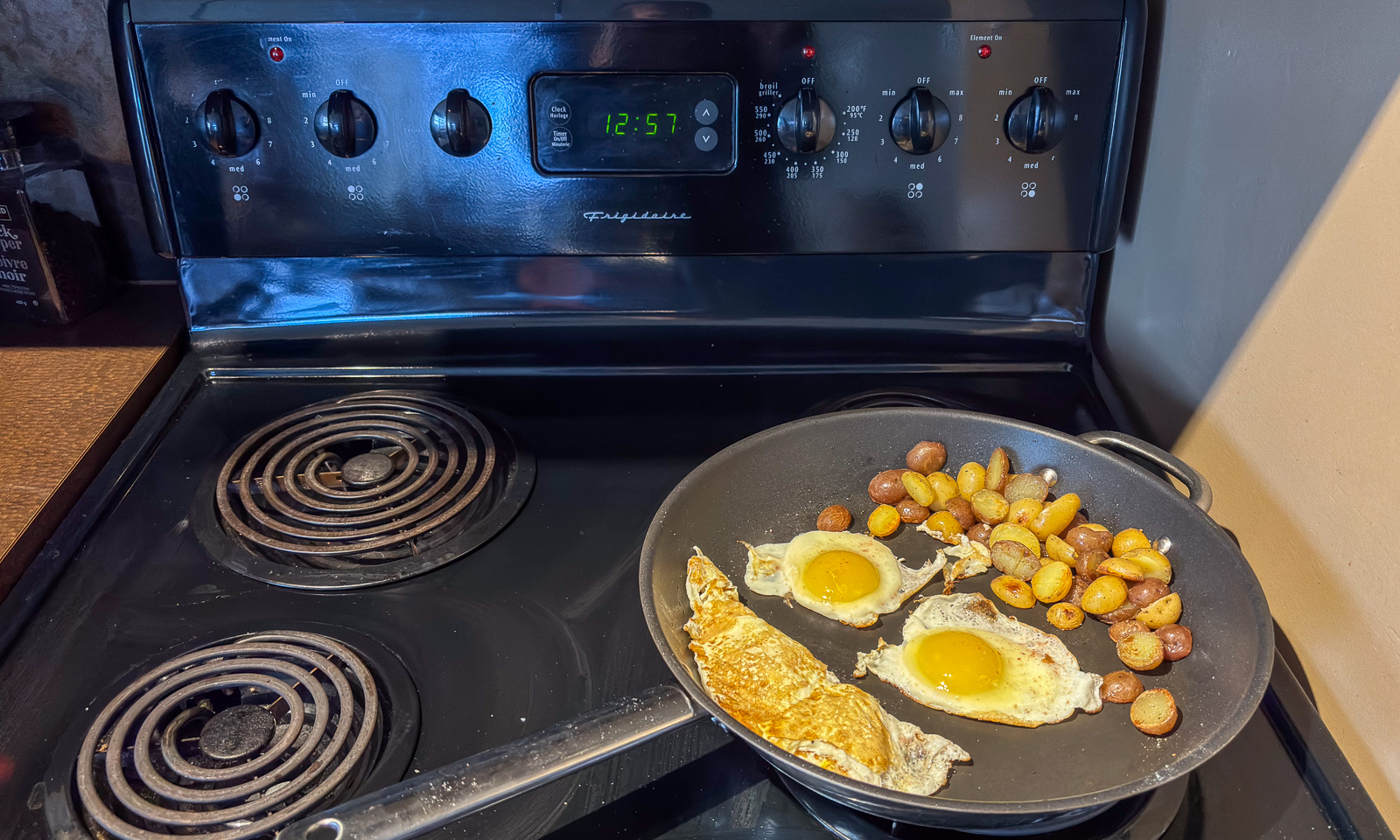
After the wonderful previous day, when we drove the Icefields Parkway we have another day at the Kicking Horse Mountain Resort, a ski resort 500 metres above the town of Golden, My plans for the day; a swim in a lake and an afternoon nap. But first: breakfast.
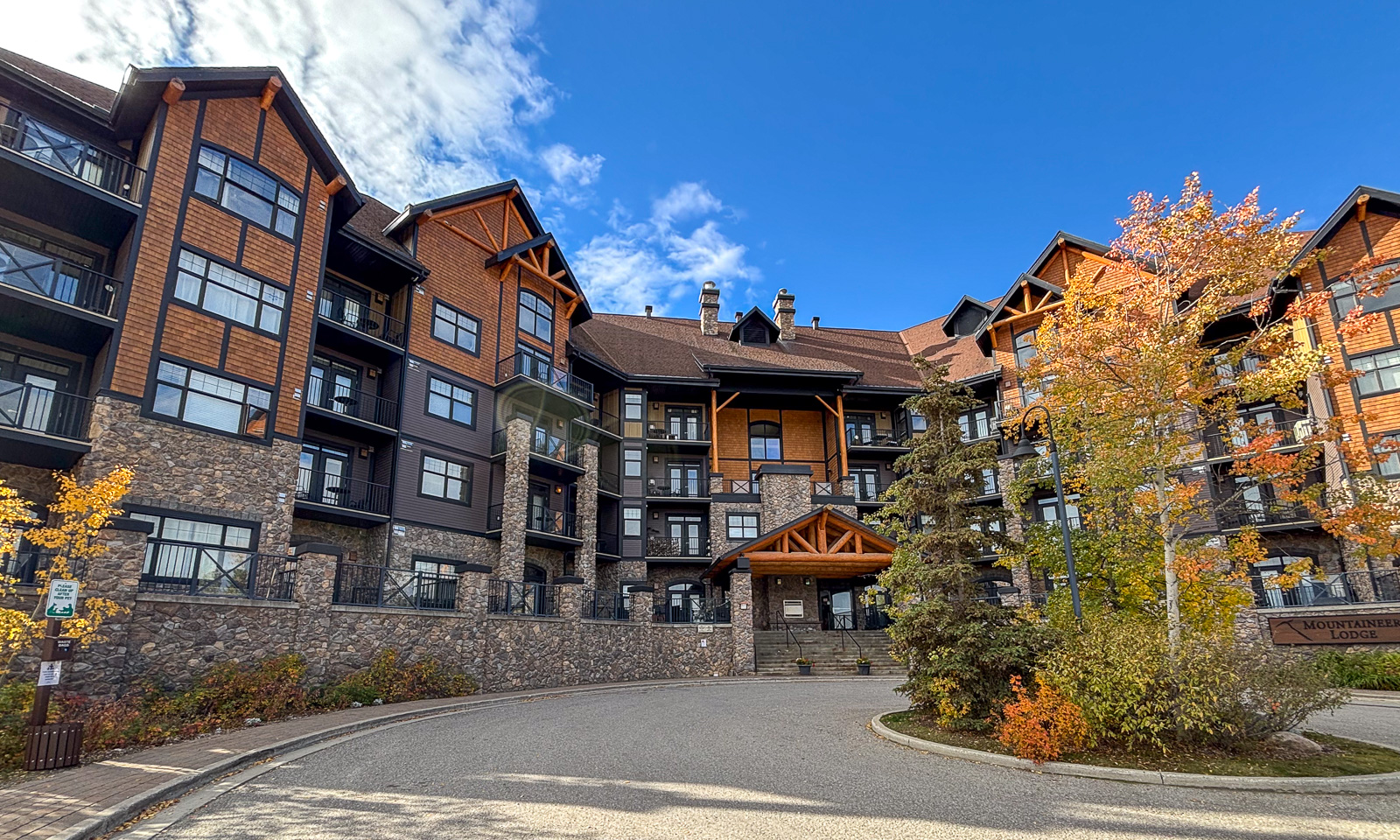
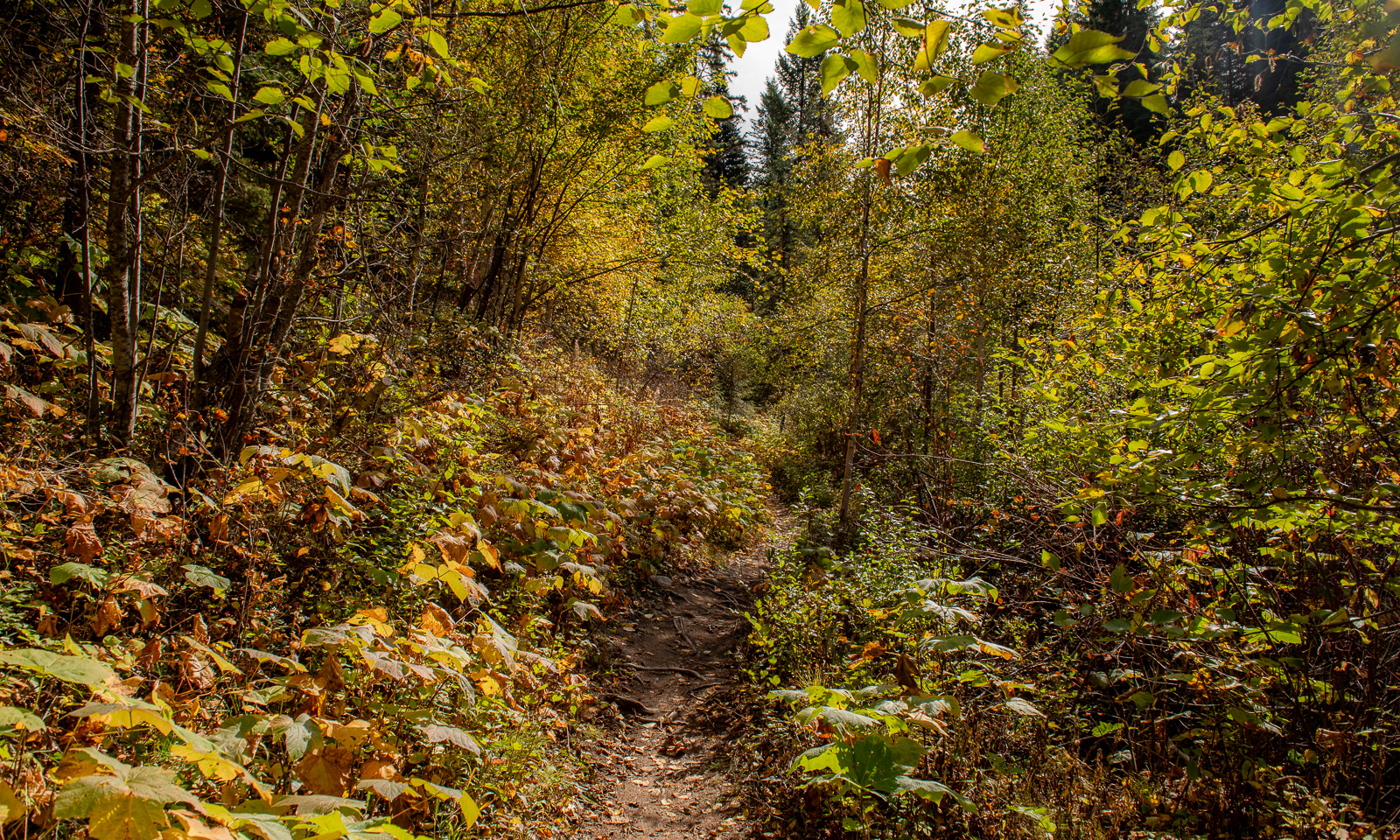
We take the car to the Cedar Lake, a nice bathing lake nearby. First we hike to Astro Lake through autumnal forests. The way back is a bit longer than expected, and a chance to cool down in Cedar Lake, which has its own bathing jetty is mostly welcome. I spend some time swimming in the cold water, and back at the apartment I am shivering. Luckily, our apartment has a bathtub, which gives me my second bath of the day.
29 September

Oh, this is an early morning. For three weeks we have been spreading out all our belongings in our rental car, now everything is properly packed again, because today we have to return the car. Not in Golden, but in Calgary – 300 km away – by 10 o’clock. When we start, it is pitch black and it is raining. It takes more than an hour until I can distinguish the mountains against the cloudy sky.

Returning the car works like a charm. There is a dedicated lane off the road and the friendly staff wave us into a parking bay. We take our belongings, return the key, and that’s it. We take the number 500 bus into town and another one to our Airbnb apartment, leave our luggage and look for a place where we can return our deposit bottles that we collected over the past few weeks. They are not accepted in the supermarkets but in special bottle depots.

30 September

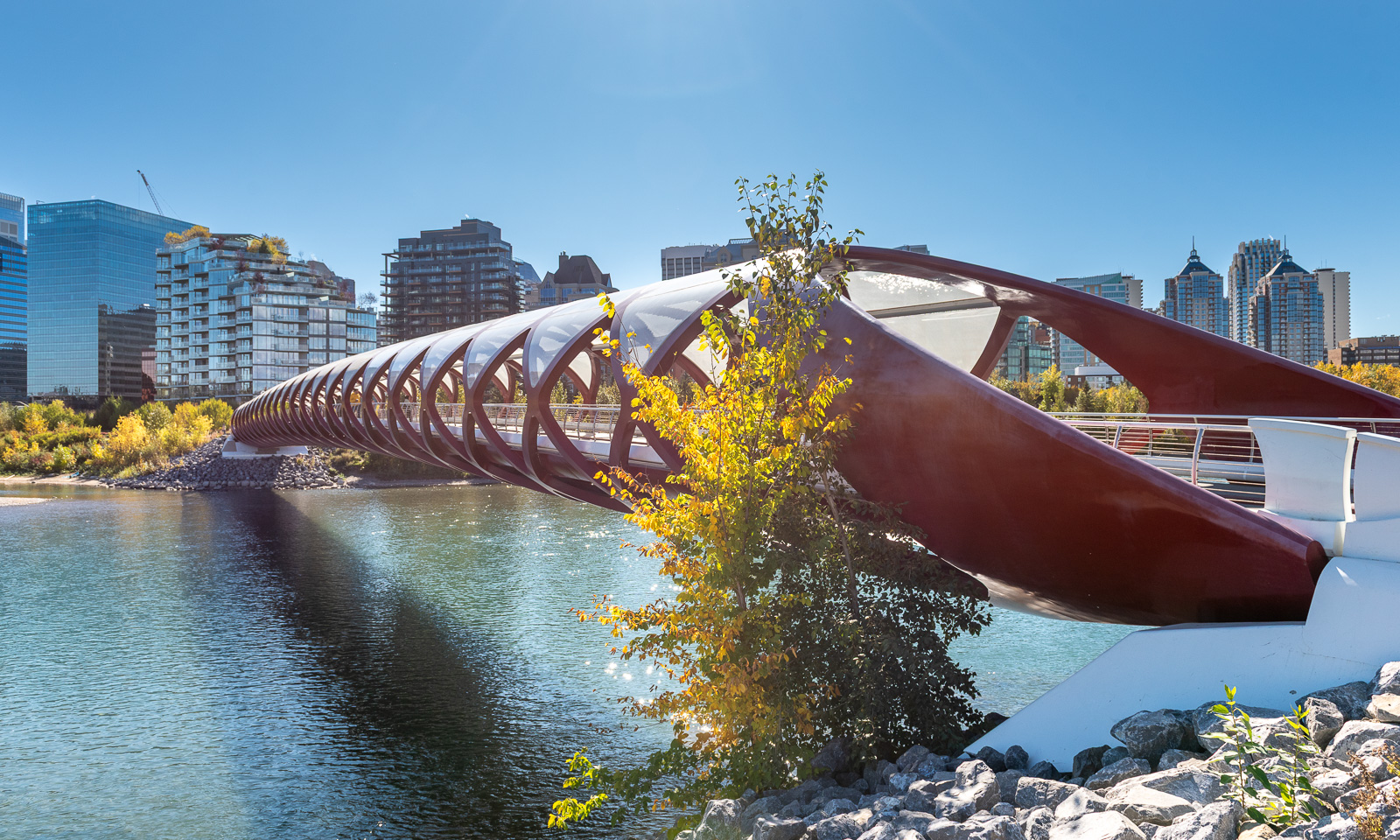
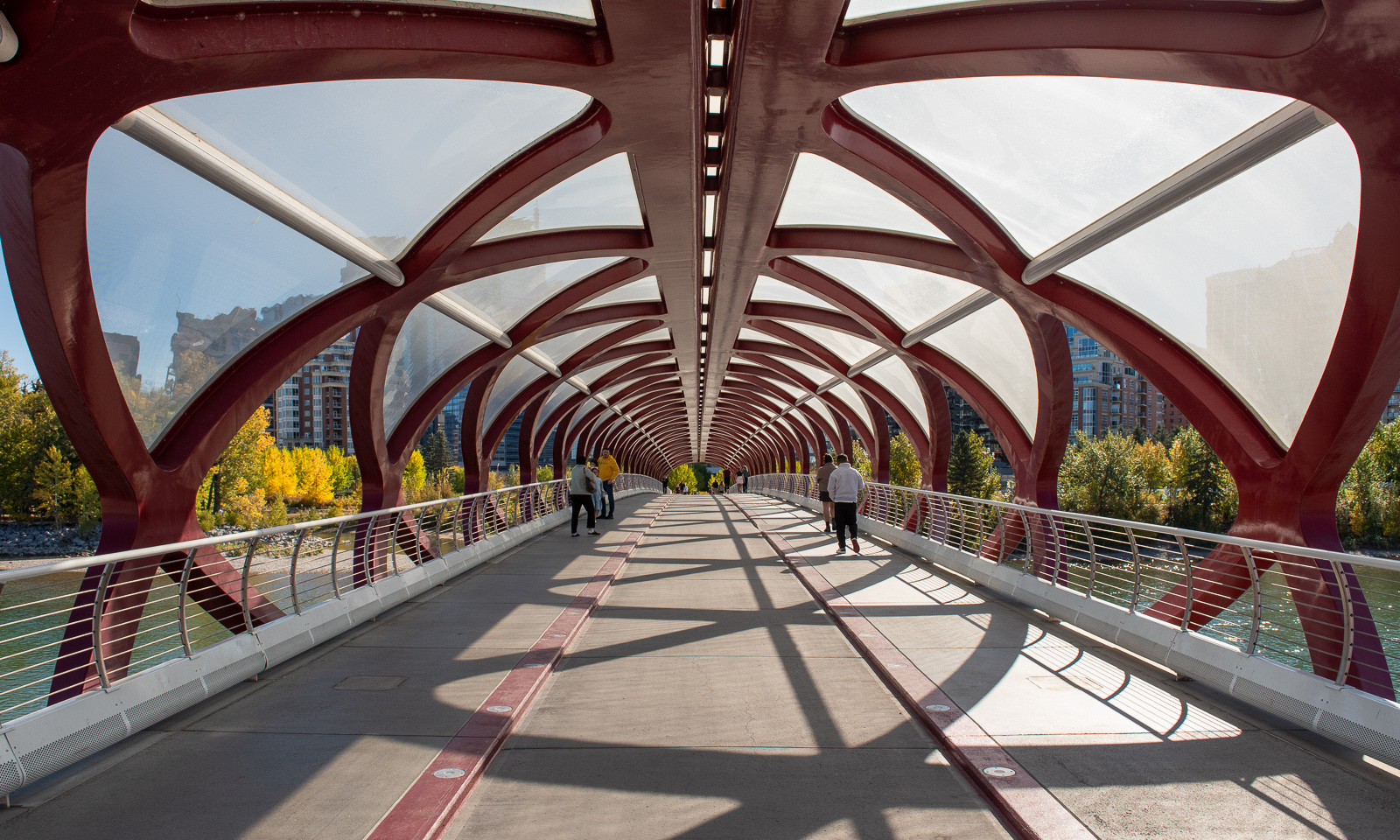
Today we want to discover Calgary. We take a bus to the centre and cross the Bow River, the very same river we saw in the Rockies three days ago. We return to the centre on the Peace Bridge and take a stroll through the Prince’s Island Park, located on a river isle. The combination of the skyscraper-dominated cityscape, the river and the autumnal trees has its appeal.
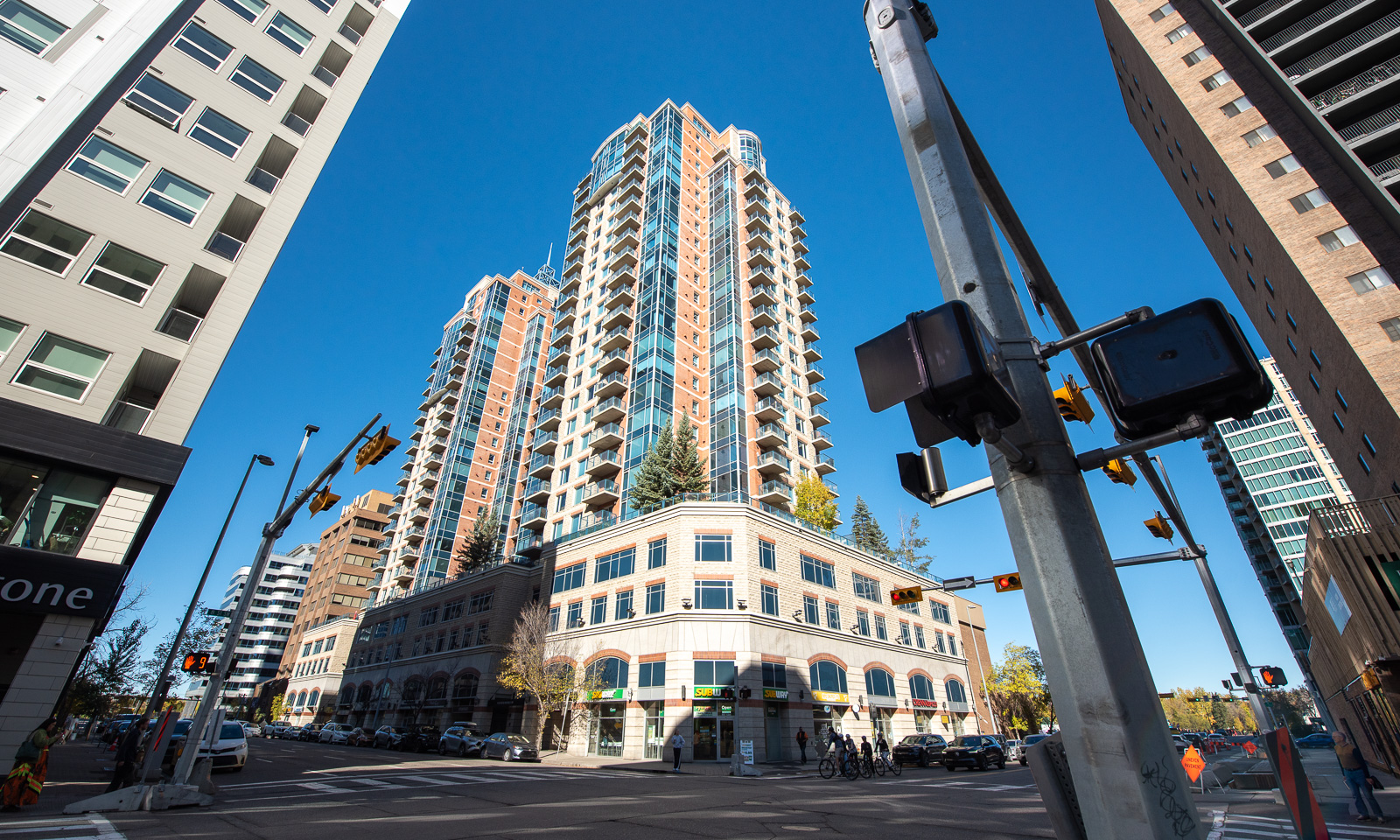
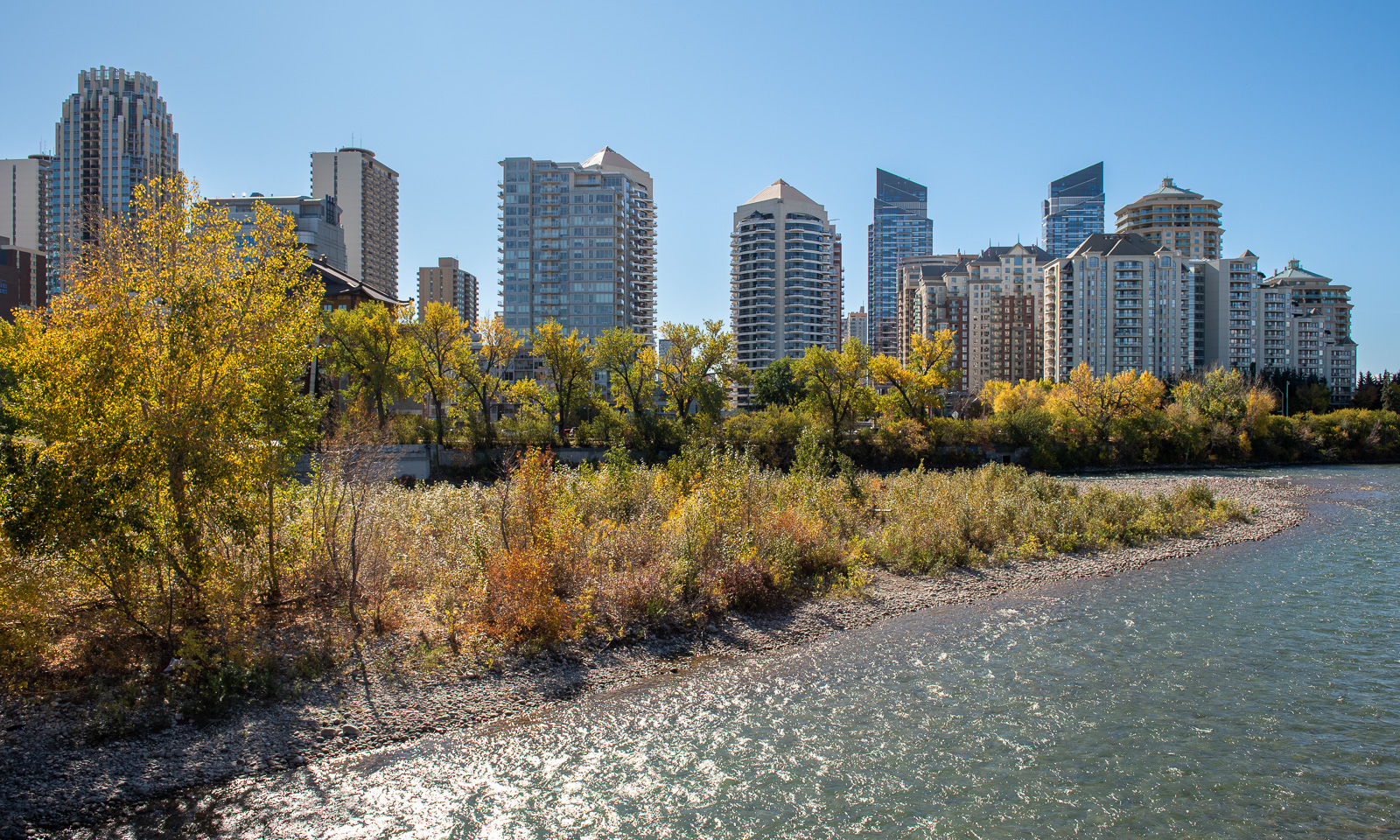
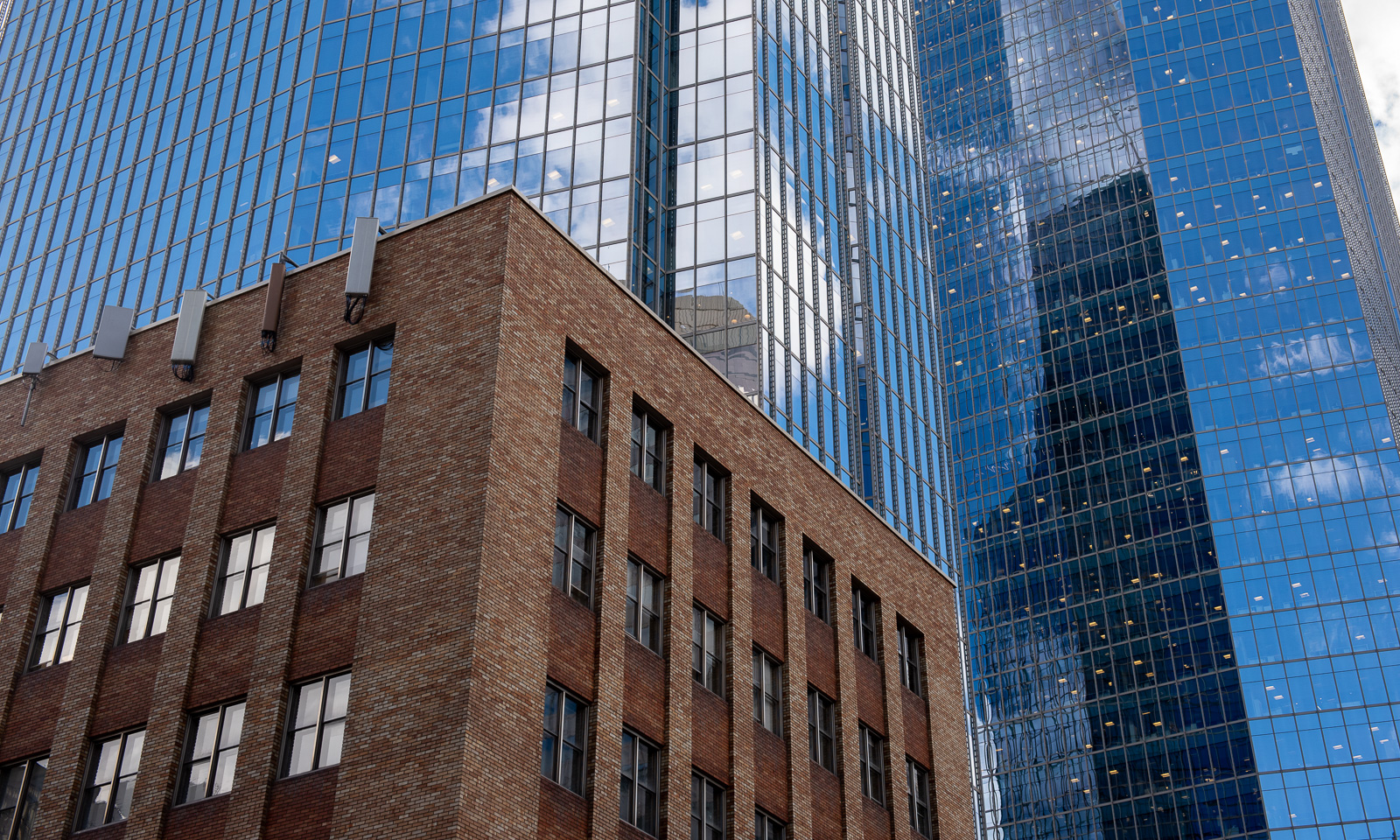
In town we drift through the streets, which are laid out in a grid with streets (St) and avenues (Ave). The number of skyscrapers is stunning. There are many with apartments, but it looks like the big ones with the mirrored façades seem to be mainly office buildings.
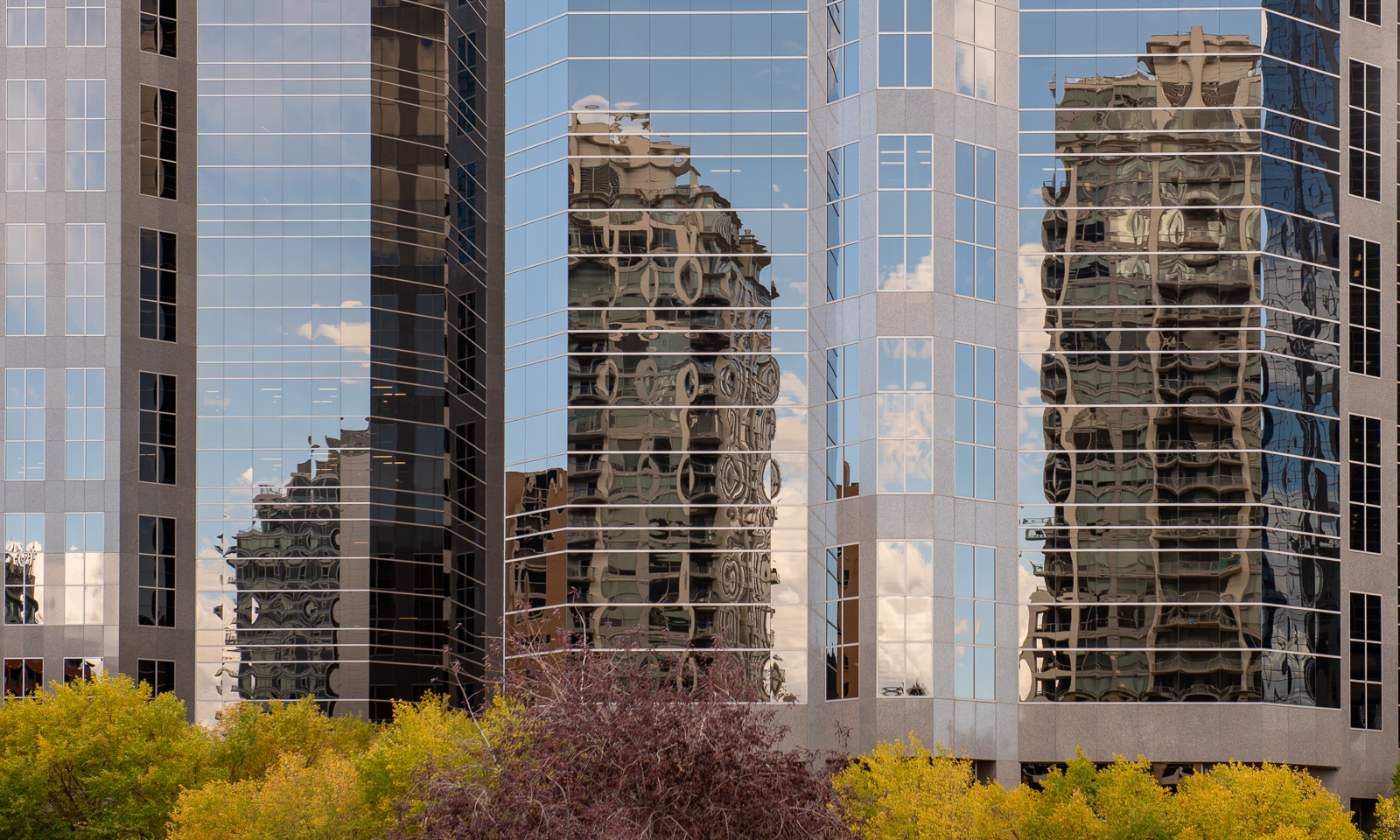
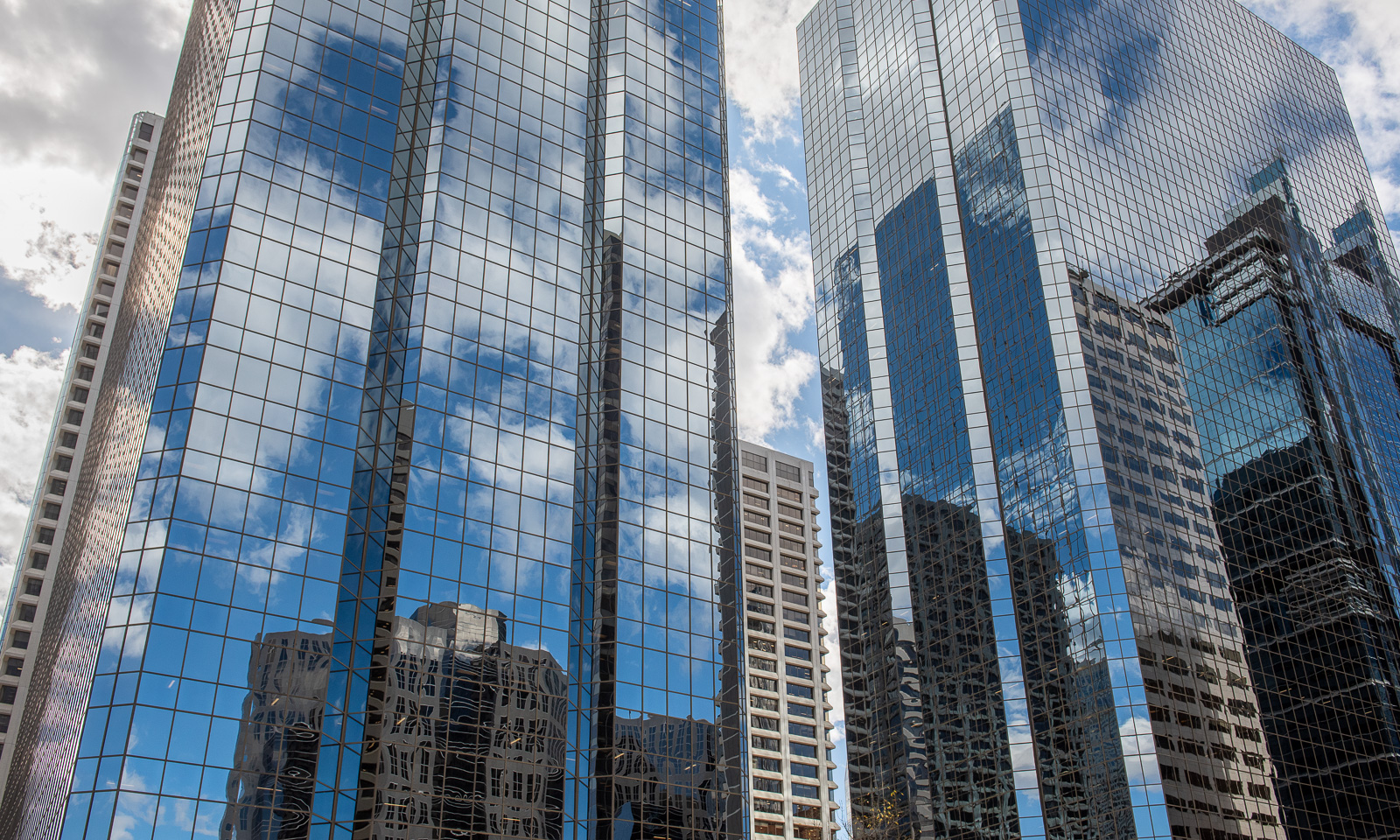
But of course there are other houses as well, sometimes contrasting with their modern siblings, sometimes just finding a small patch, where they stand like a dandelion on an asphalt road.

We enjoy our last dinner in the Taste of Yemen, where we get an incredible meal at more than reasonable prices. If I lived in Calgary, I would be a regular visitor there.

1 October

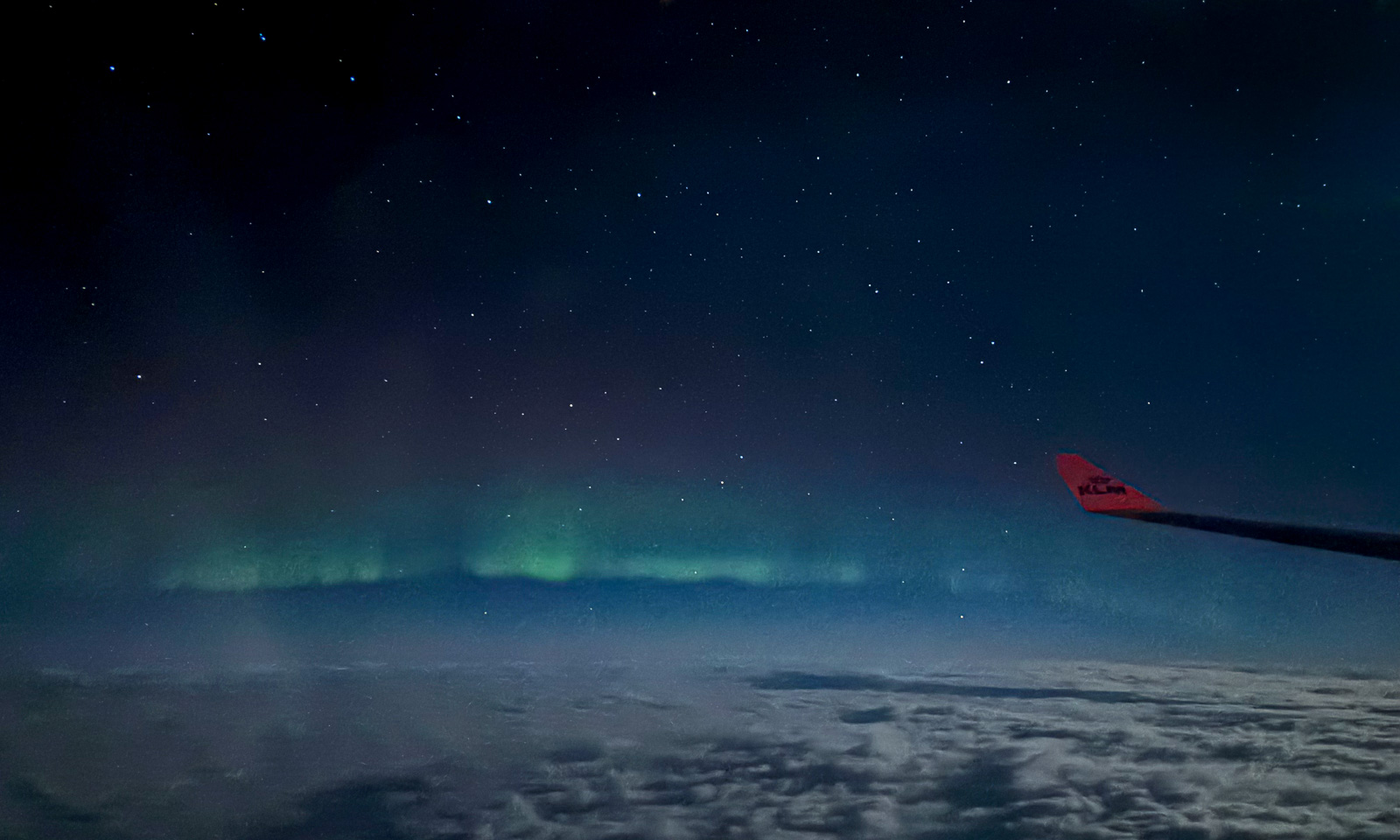
Time to fly home. After having the last breakfast, packing our belongings, taking the bus to the airport, leaving the baggage, waiting for the flight and then Annika and I leave Calgary, sitting side by side in the very last row of the aeroplane. I have set my clock forward eight hours to get back to Central European Summer Time again and try to sleep as much as possible. It is more than a series of naps. When I wake up for the umpteenth time, we are above the coast of Labrador. It is night and I cannot see any landscape, but I do see a faint green arc in the north. The first Northern Lights of the season.
 

Between seasons – between journeys

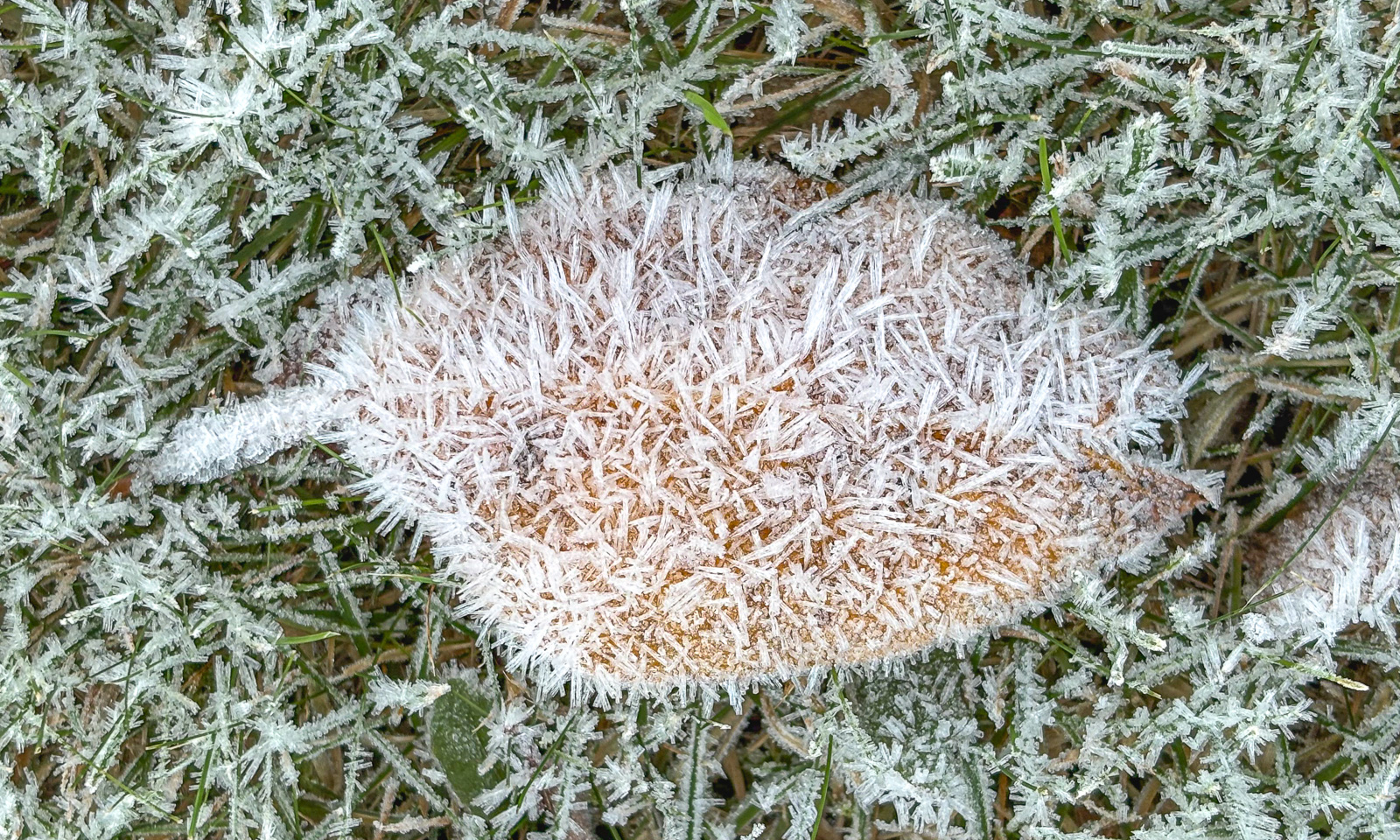
It is a frosty morning in Tromsø. Warm sunlight lies on the snow-covered tops of the mountains and the birch trees have shed their leaves. Other trees and bushes are still wearing their autumn garb but their leaves are falling, too. There, on the ground they become covered with morning frost, a clear sign that it is still autumn, but winter has already knocked on the door.

I am not only between seasons, but also between journeys. It was a week ago that I returned from the four-week holiday in Western Canada that Annika and I took. Now my suitcase is packed again, along with a huge bag containing my Canada Goose down parka and pants. In a few hours I will fly to Longyearbyen on Svalbard, and tomorrow I will embark on another expedition on the icebreaking research vessel Kronprins Haakon with the Norwegian Polar Institute. We will spend almost three weeks in the Fram Strait between Svalbard and Greenland, and I had a lot to organise over the past few days. Now I finally have time to look forward to the cruise. As always I am pretty curious. How will the sea ice situation be? Will I get my tasks solved? How will the weather be? Will I still remember Canada while being on the ship?

Probably I will have some spare time to blog from the ship, but I cannot promise. We’ll see …

Fram Strait cruise – departure

This article is part of the series “2026-10: Fram Strait cruise KPH”.

12 October

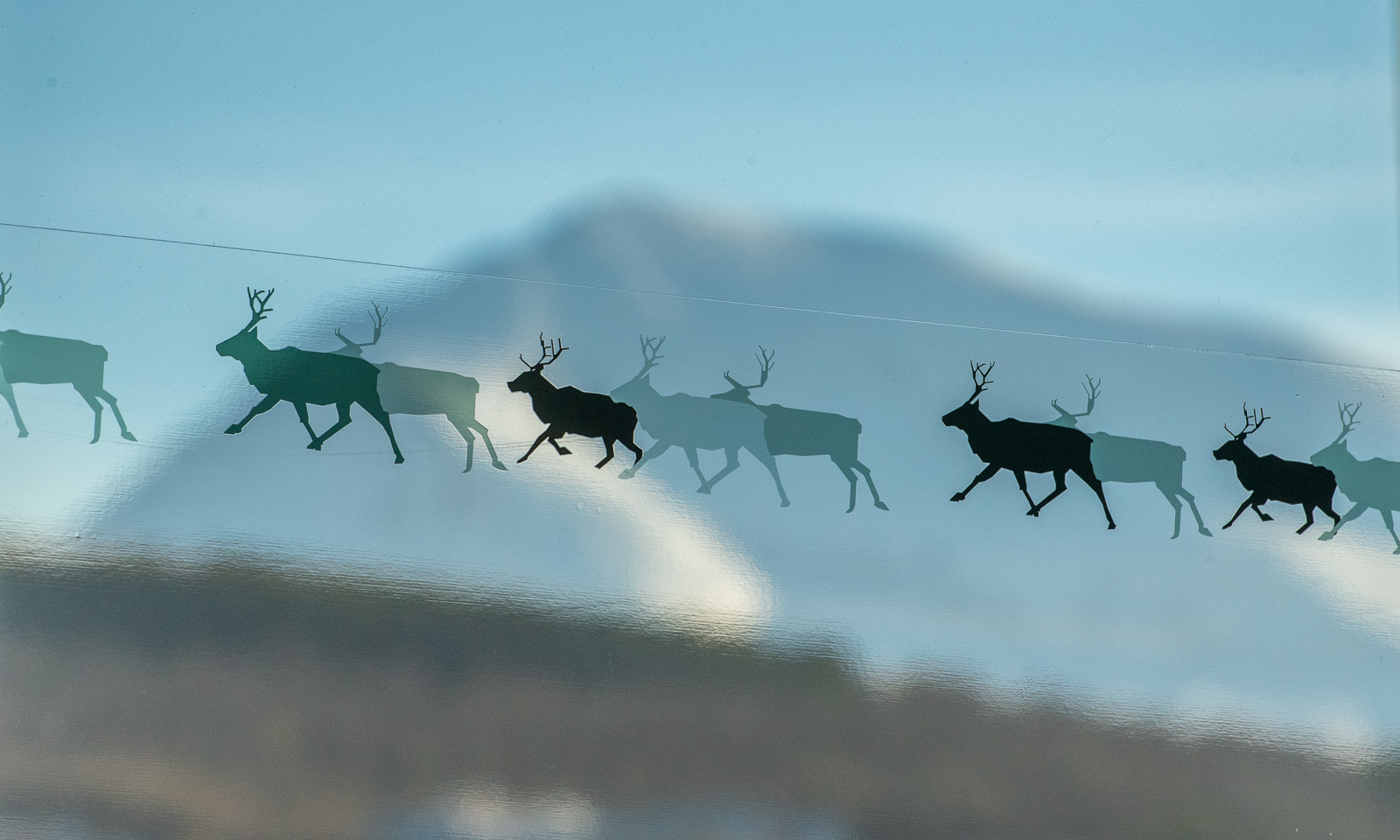
The weather in Tromsø is clear, the mountains are white, and the reindeer are flying.

At least, it looks like this, while I’m sitting at Gate F18 of Tromsø Lufthavn, waiting for my flight to Longyearbyen, Svalbard. Some of my colleagues from the Norwegian Polar Institute are here as well. We are all going on board the research icebreaker Kronprins Haakon (KPH) for a cruise in the Fram Strait between Svalbard and northern Greenland for almost three weeks the next day.

On arrival in Svalbard, we get a lift to our respective hotels, where we stay overnight.

13 October

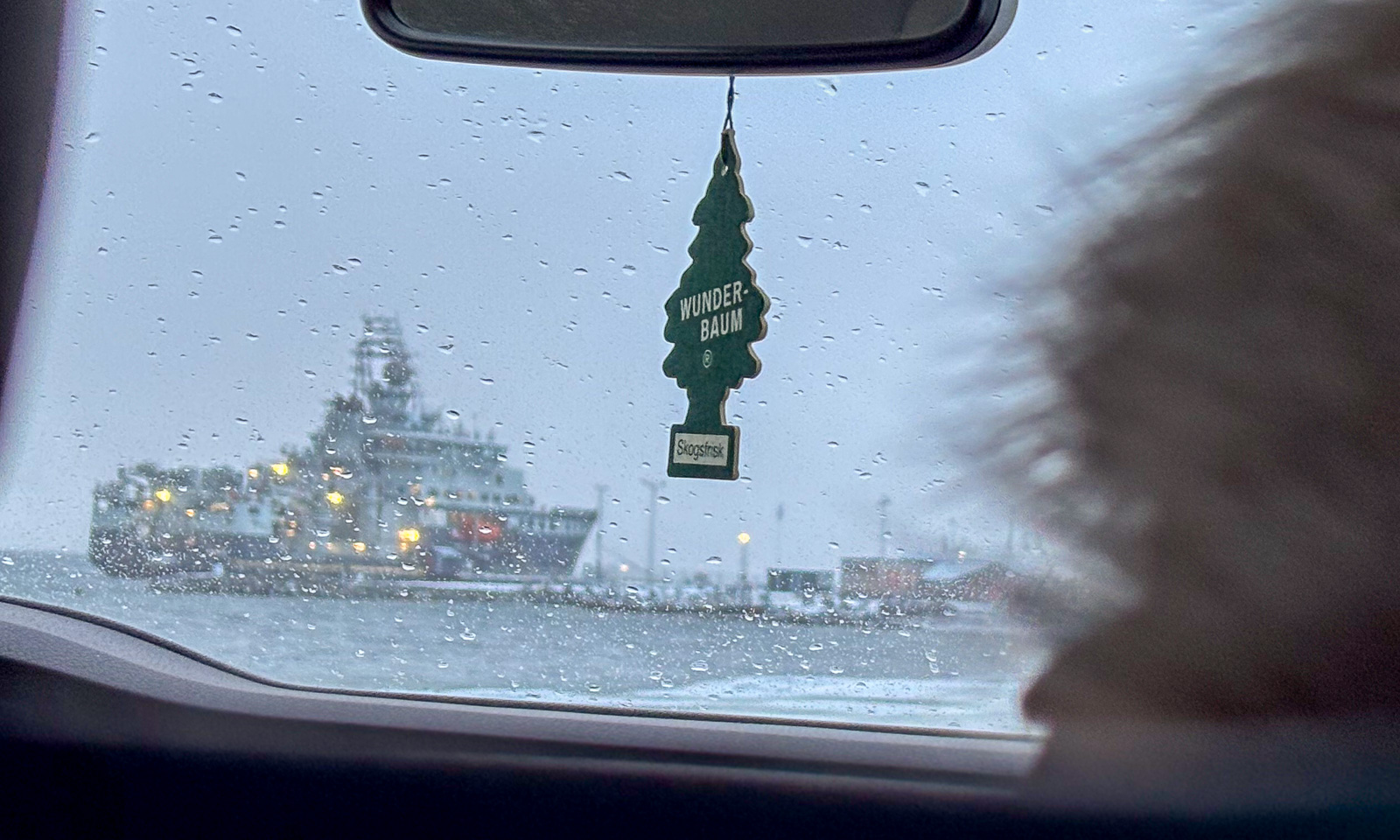
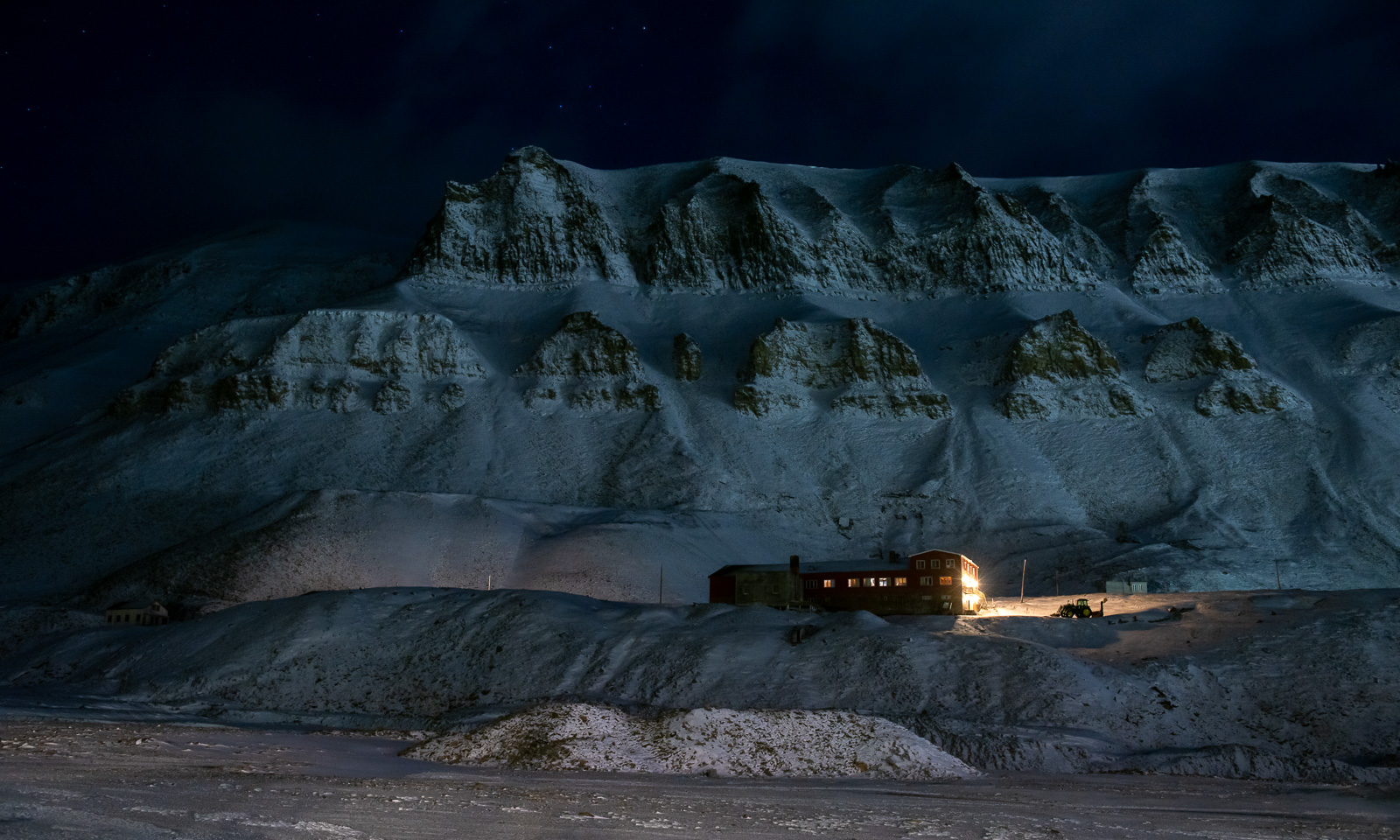
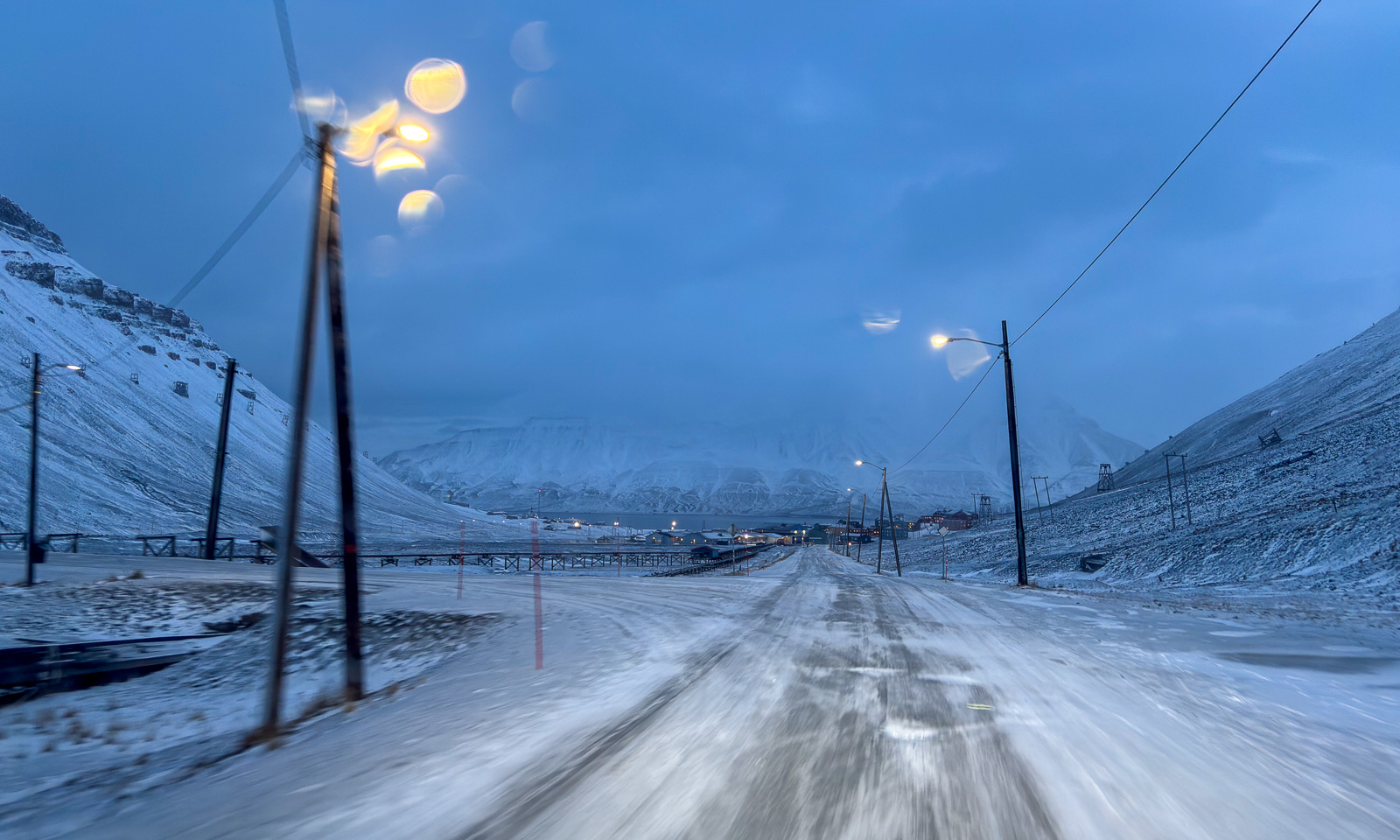
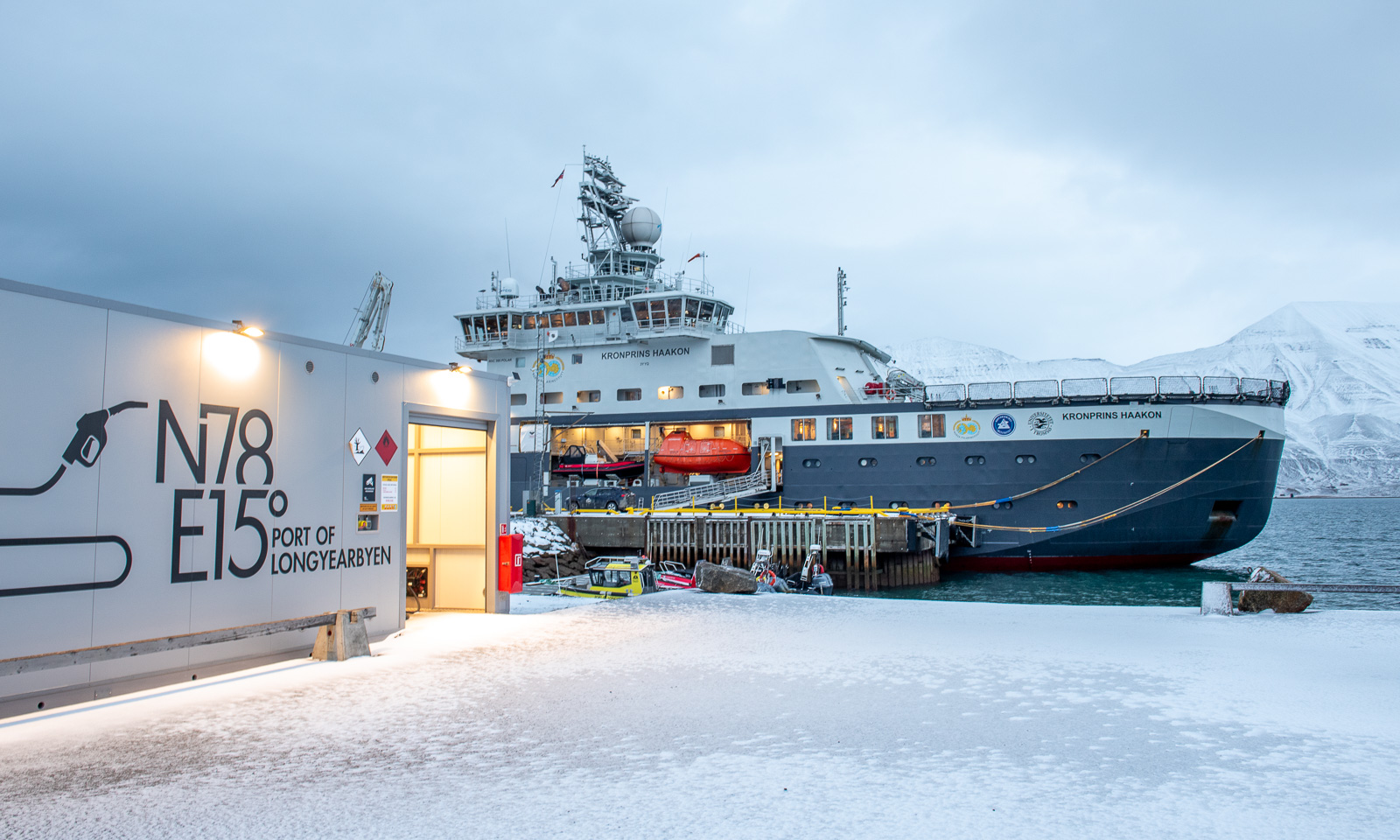
Three of us were staying in Coal Miner’s Cabin, which is south of the centre. We share a taxi to Bykaia, part of the Port of Longyearbyen, where KPH is berthed. It has got warmer and it’s raining.

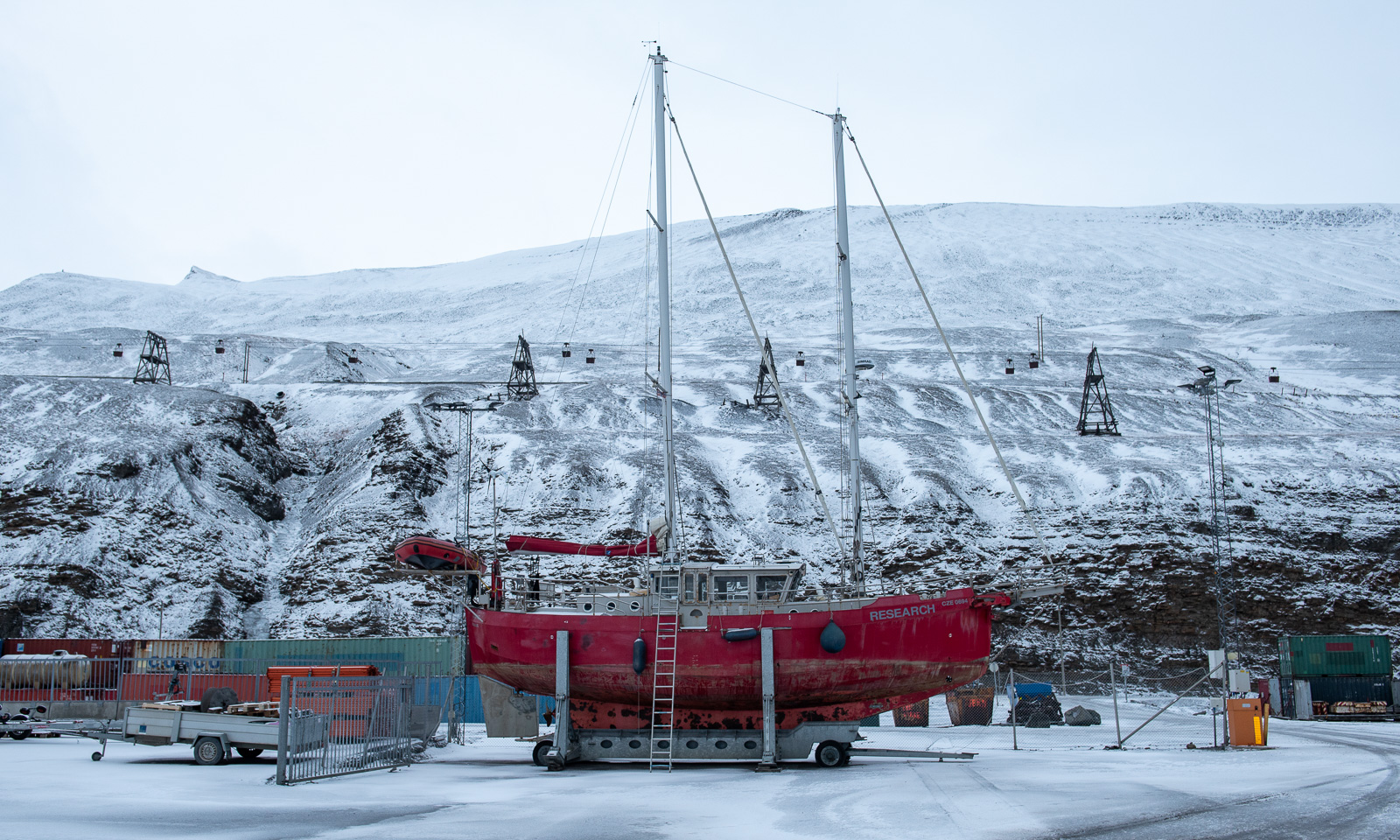
And here it is – the ship on which the 18 of us will spend the next three weeks together with the crew.

Just kidding! The RV Kronprins Haakon is actually lying in the other direction.
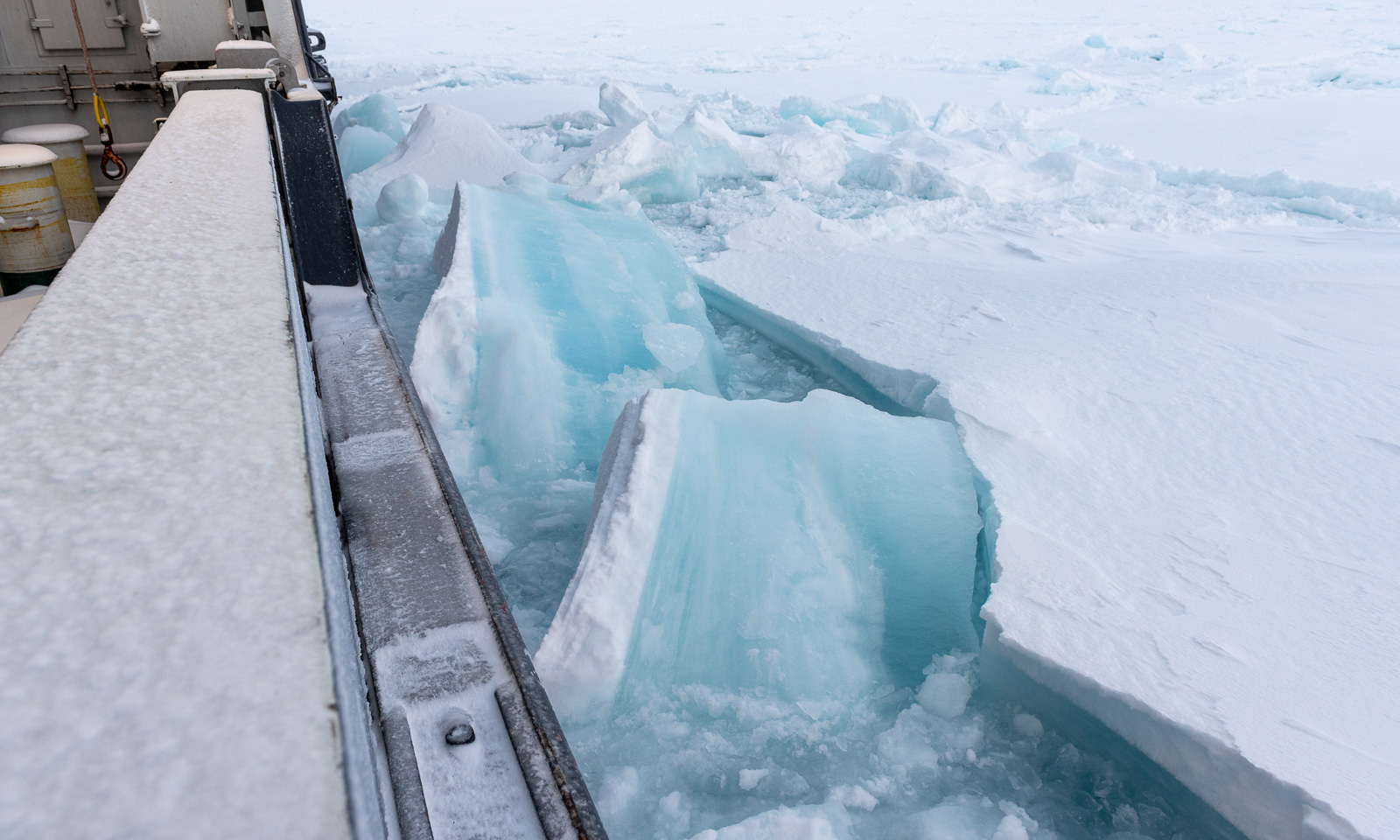
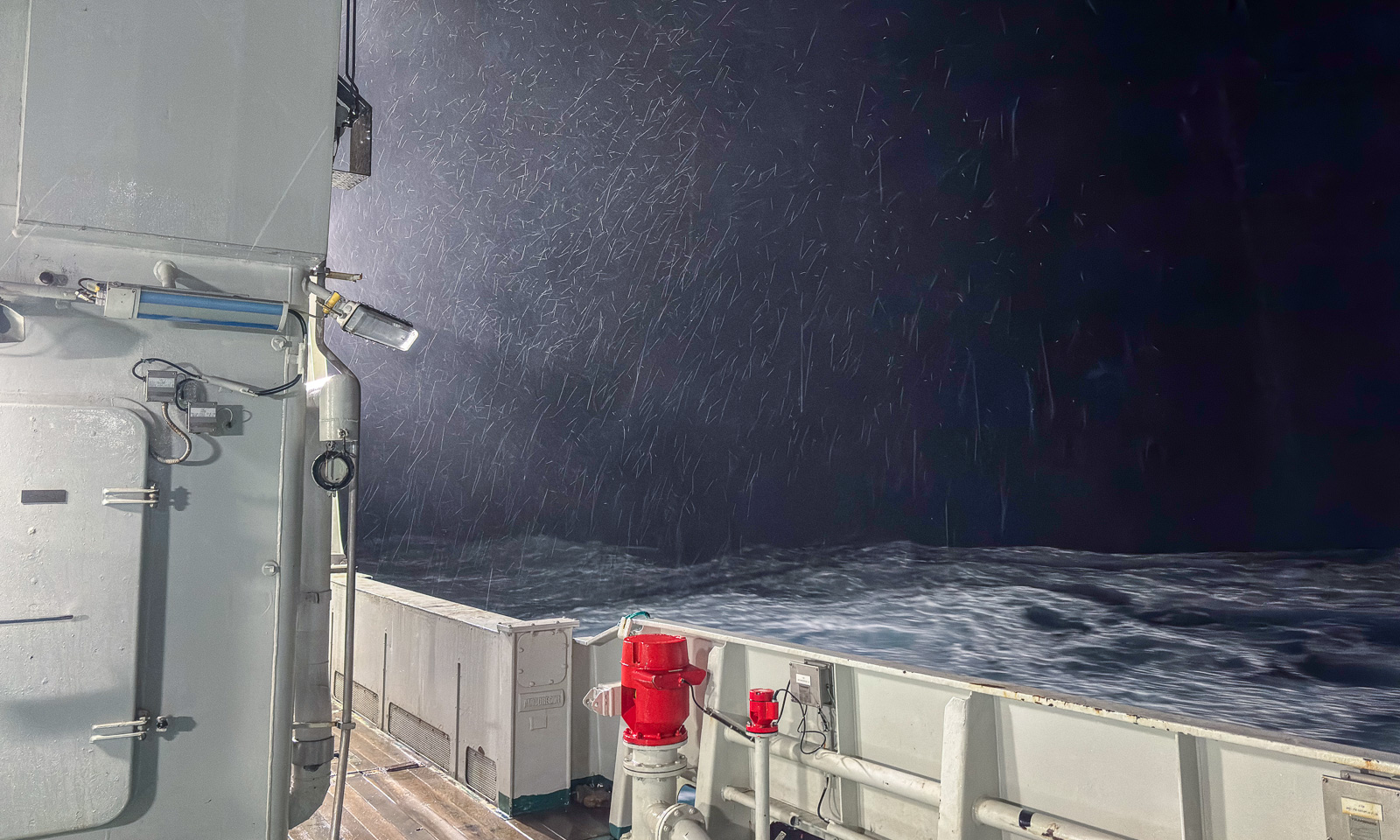
During the evening, the weather gets a bit ugly. It’s +5 °C, it’s raining and the wind speed is around 20 m/s. The sea state gets rougher and the waves grow higher.

14 October

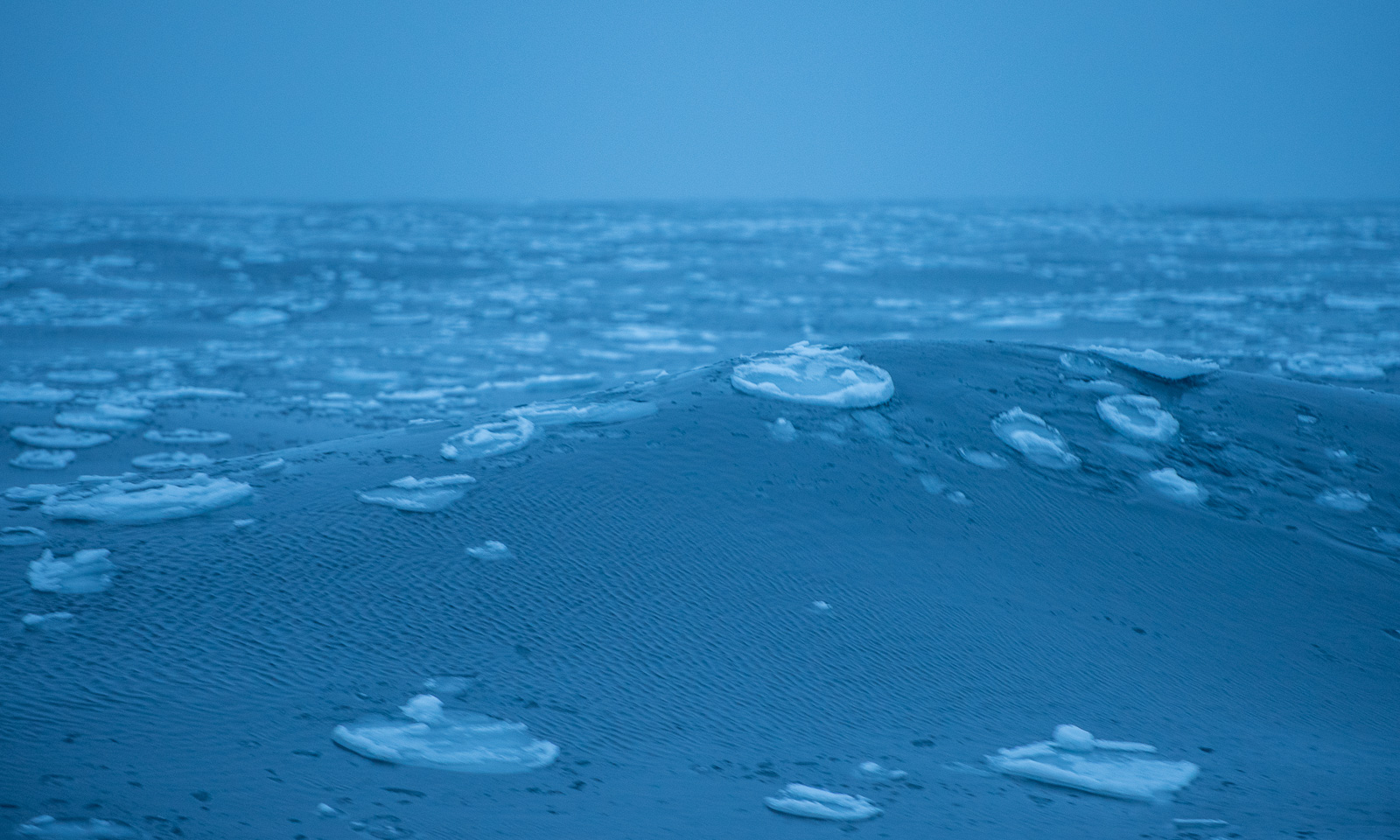
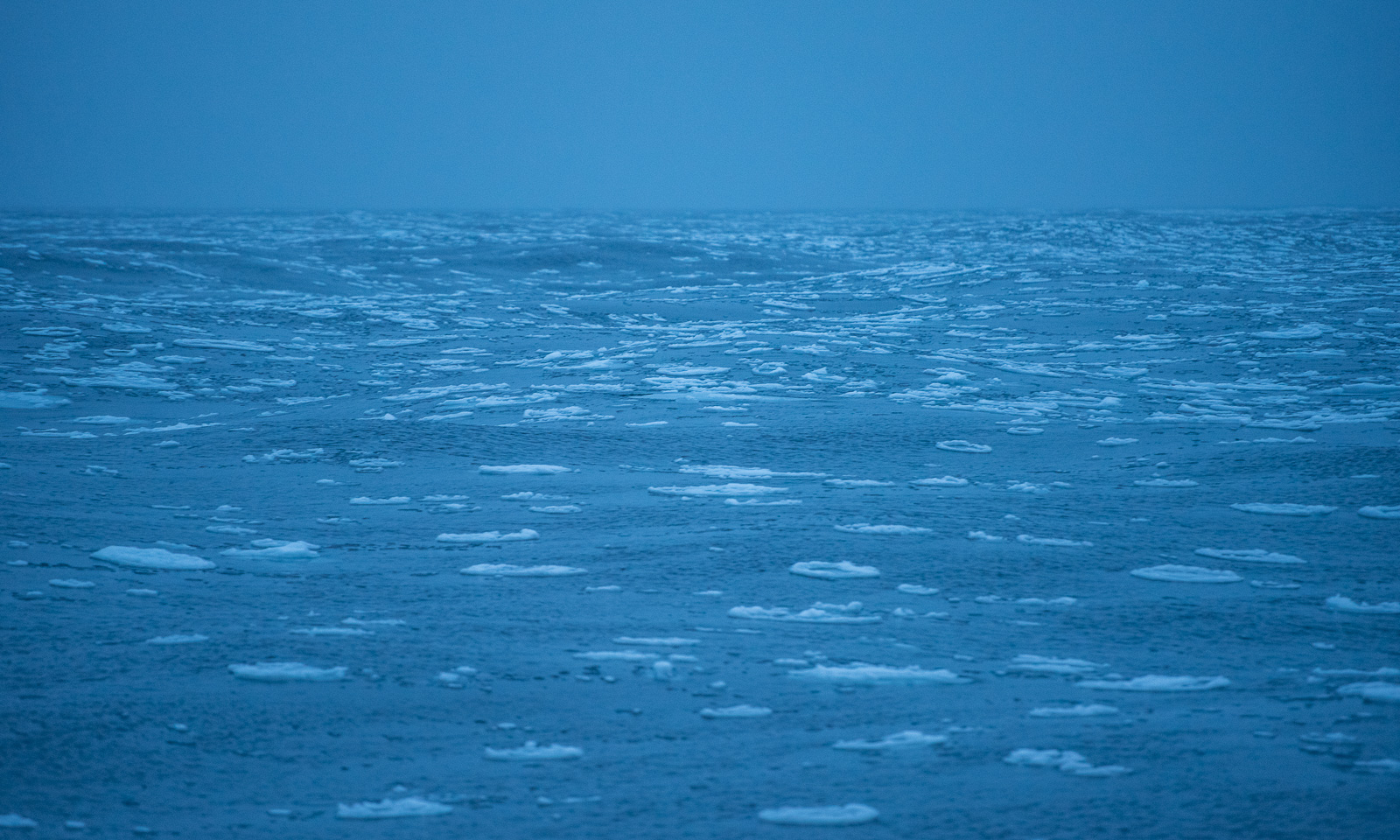
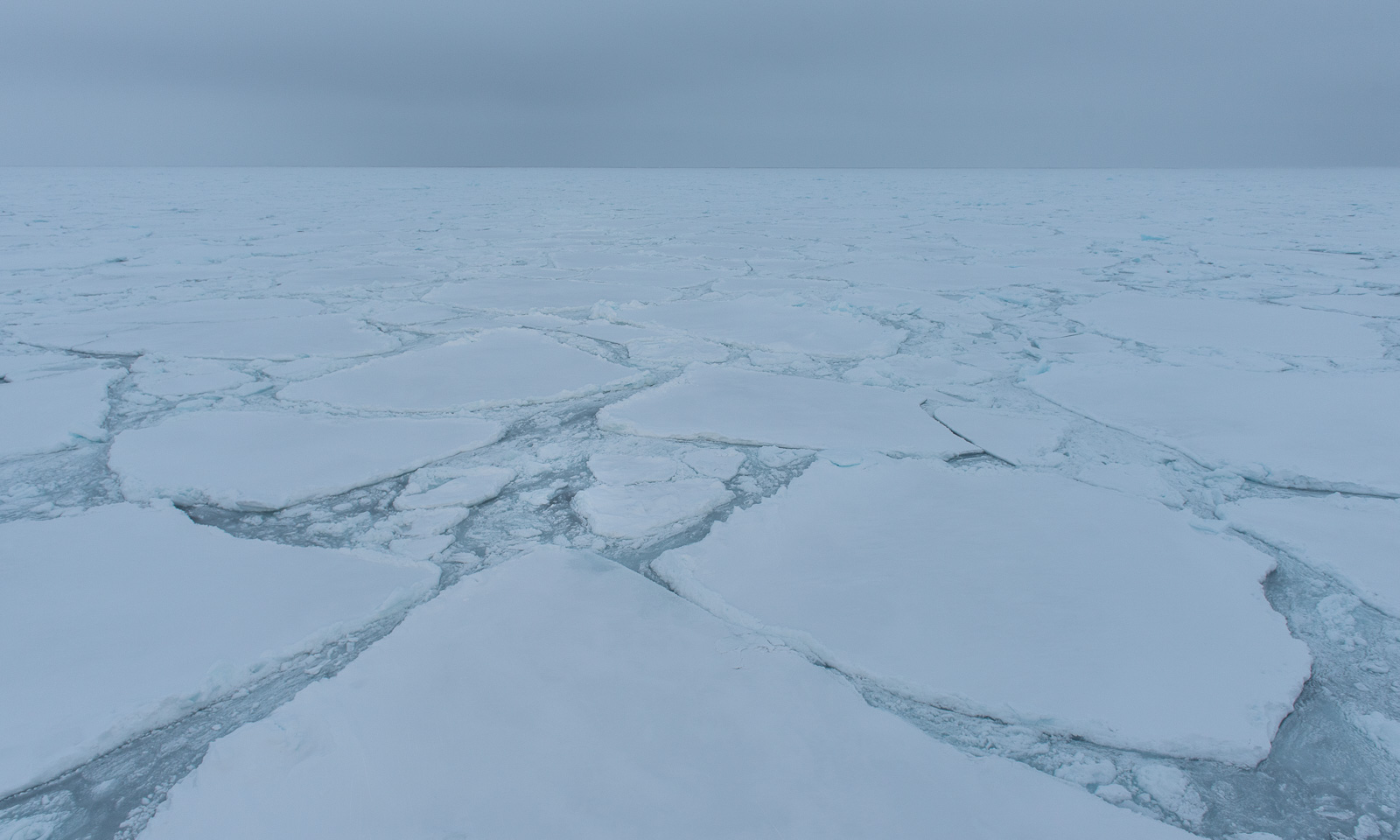
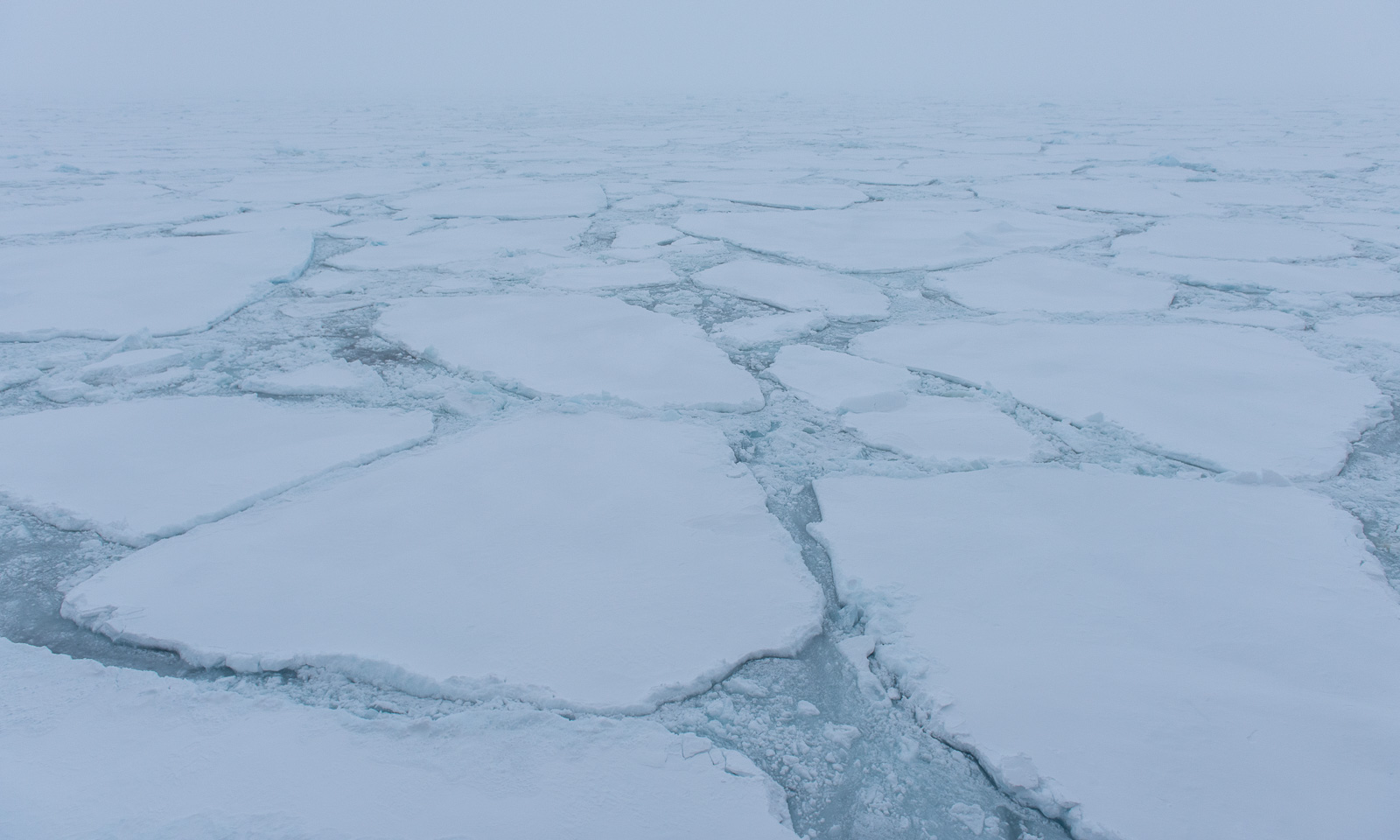
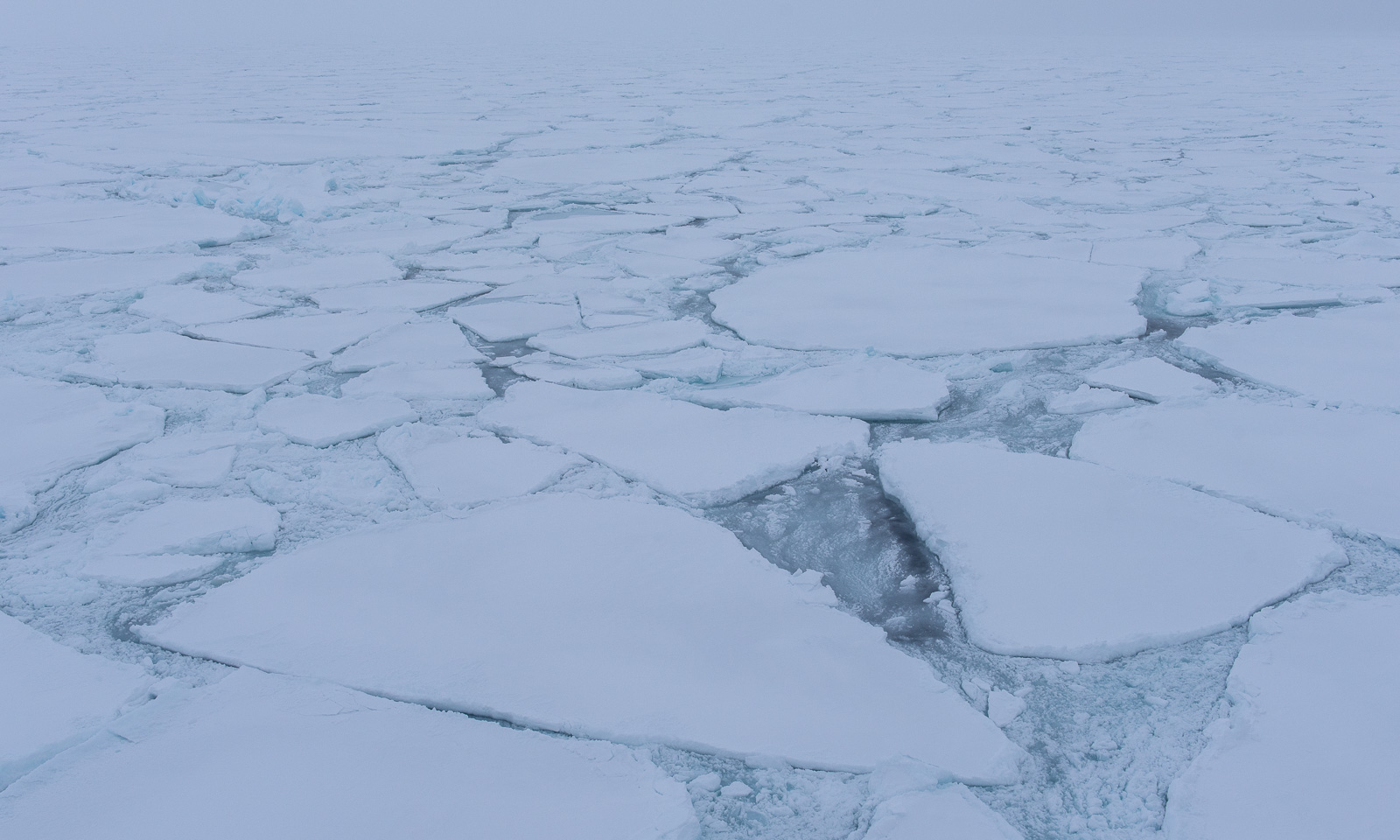
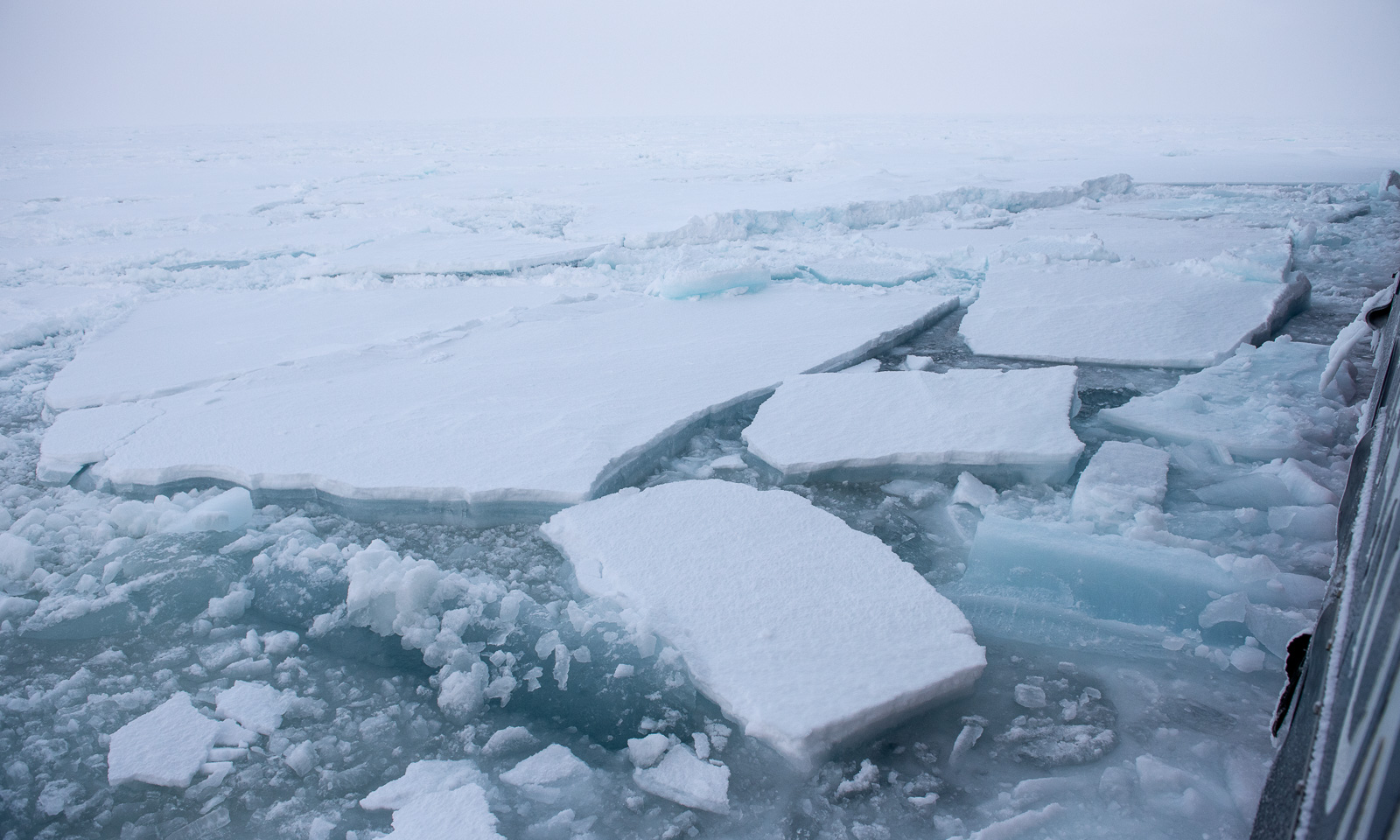
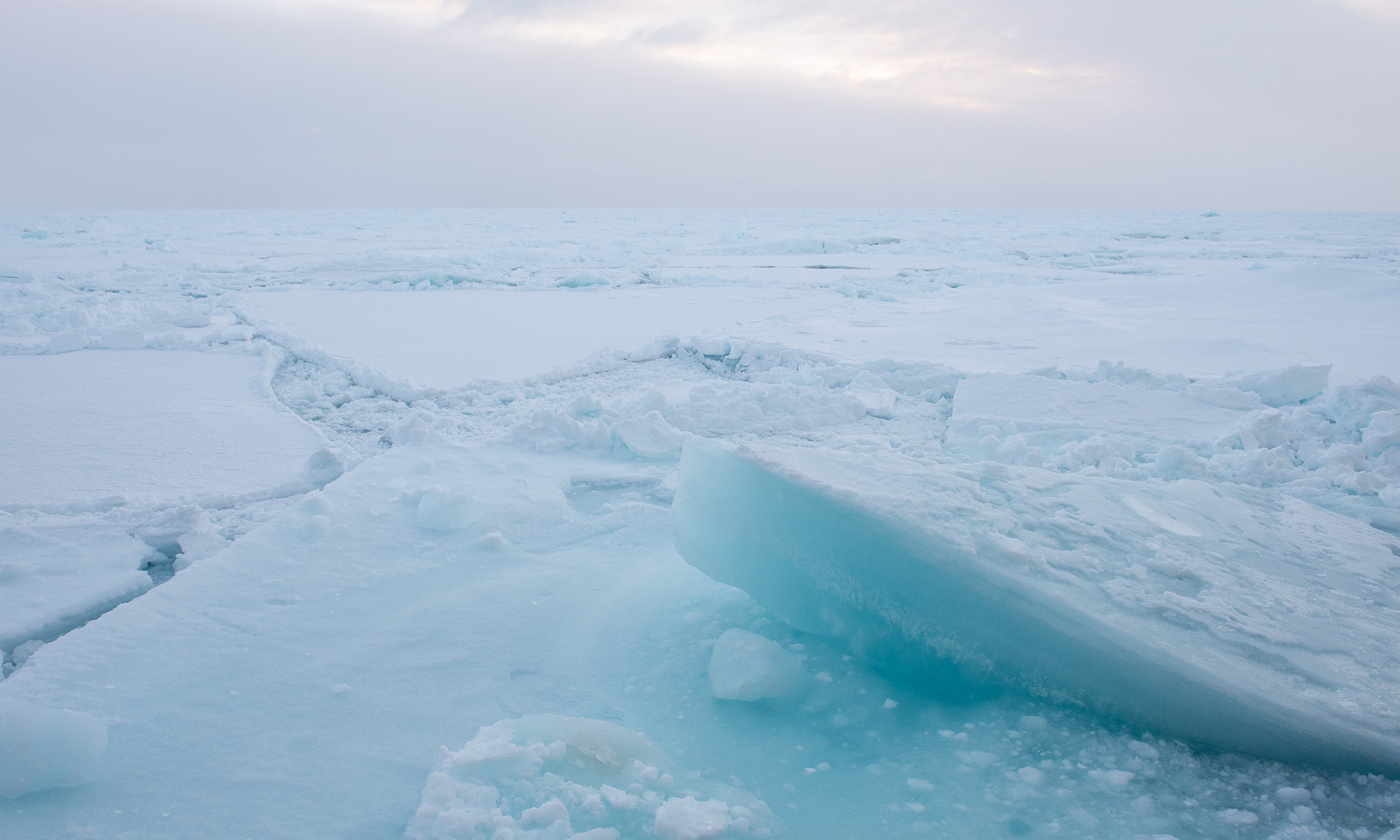
In the morning the sea has calmed down and at a quarter past nine I feel the first small bump as a small ice floe collides with our ship. We have entered a band of pancake ice.

Now we are in open water again and the conditions are calm. Anyway, if Windy is right, we will get pretty rough weather tomorrow with a wind speed of around 18 m/s and an air temperature of -17 °C – a drop of almost 20 degrees. That would result in a windchill of -33 °C and I am very glad that I took my Canada Goose parka and trousers with me.

Into the ice, into the storm

This article is part of the series “2026-10: Fram Strait cruise KPH”.

14 October

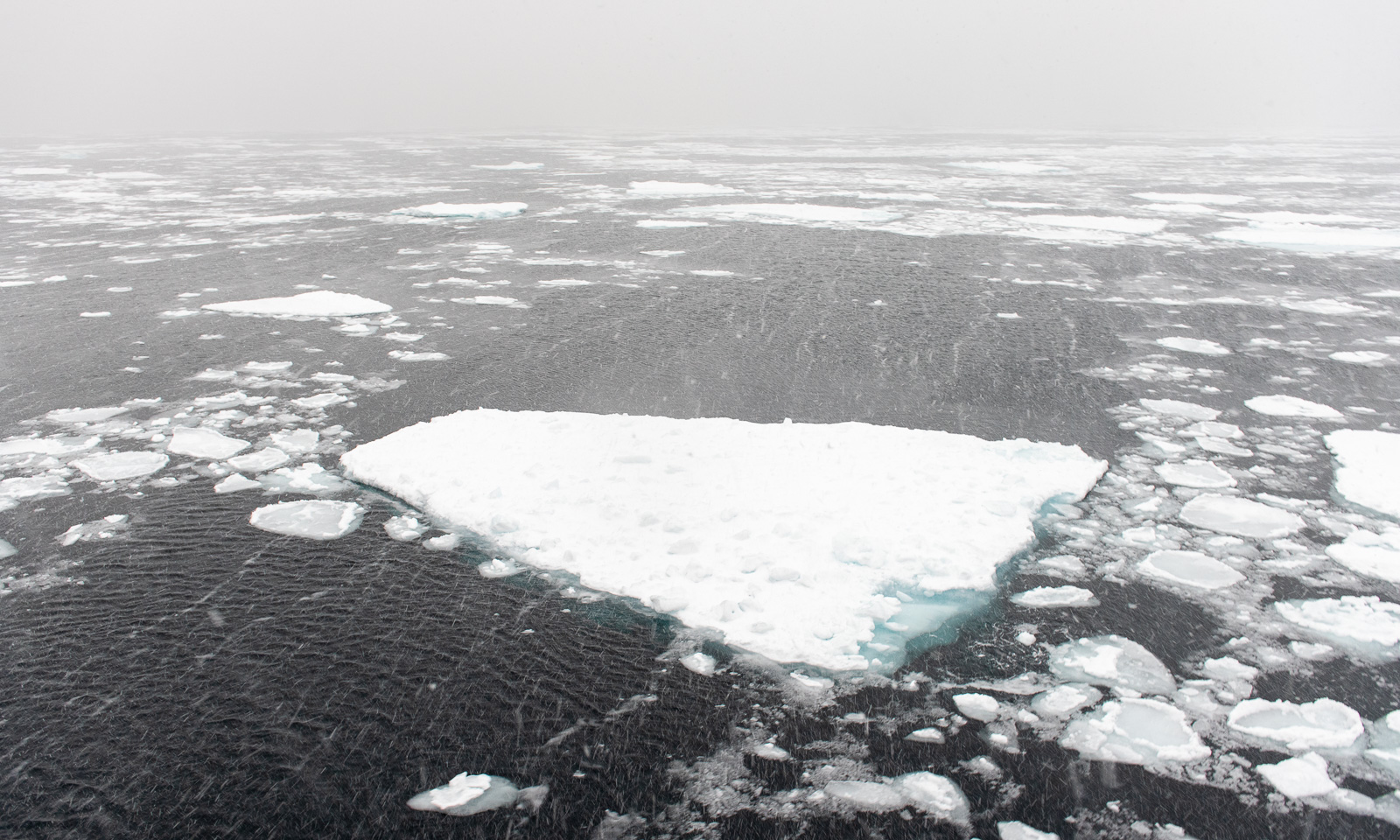
After encountering a small ice field in the morning, we reach the marginal ice zone. So it looks like round 16:00:

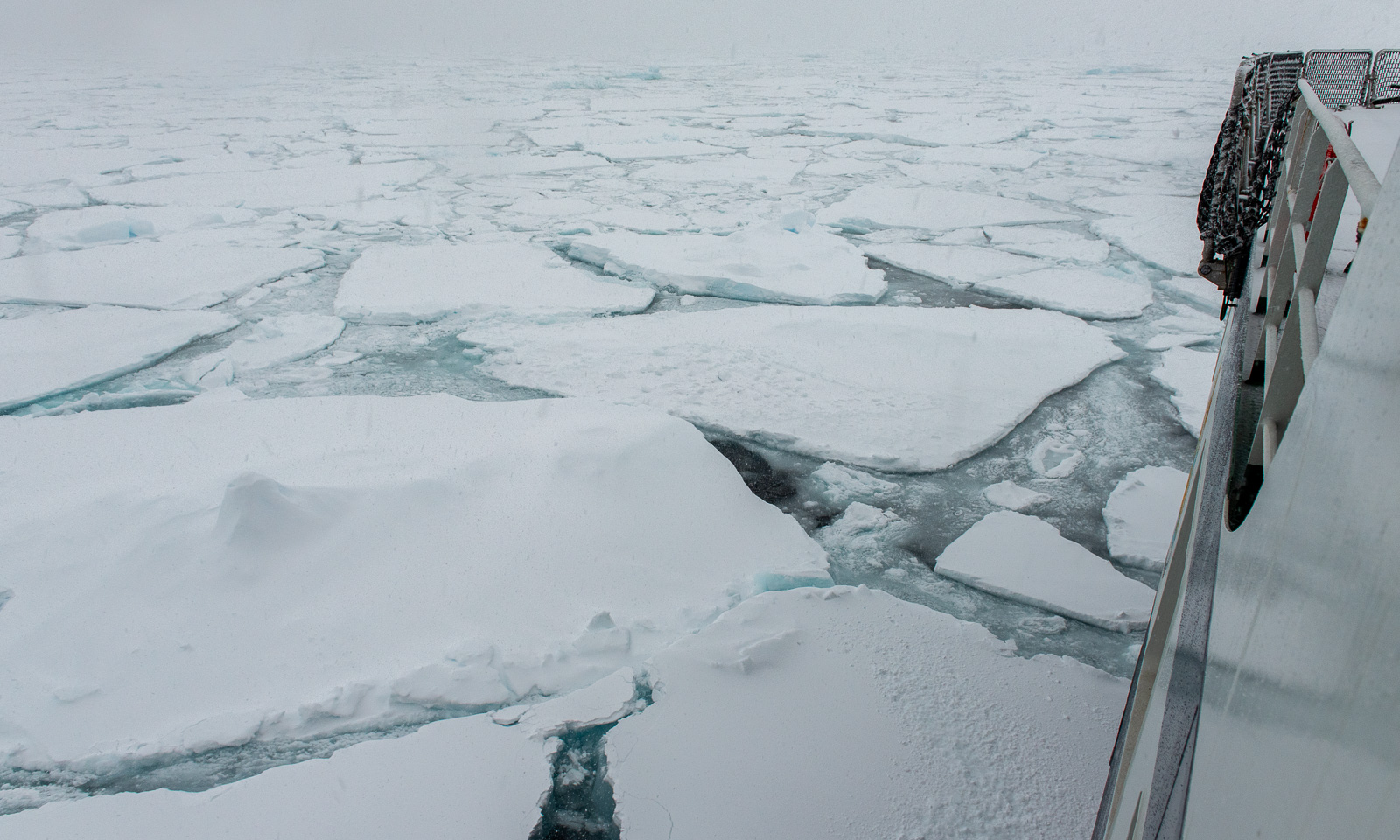
Less than an hour later, it looks like this:

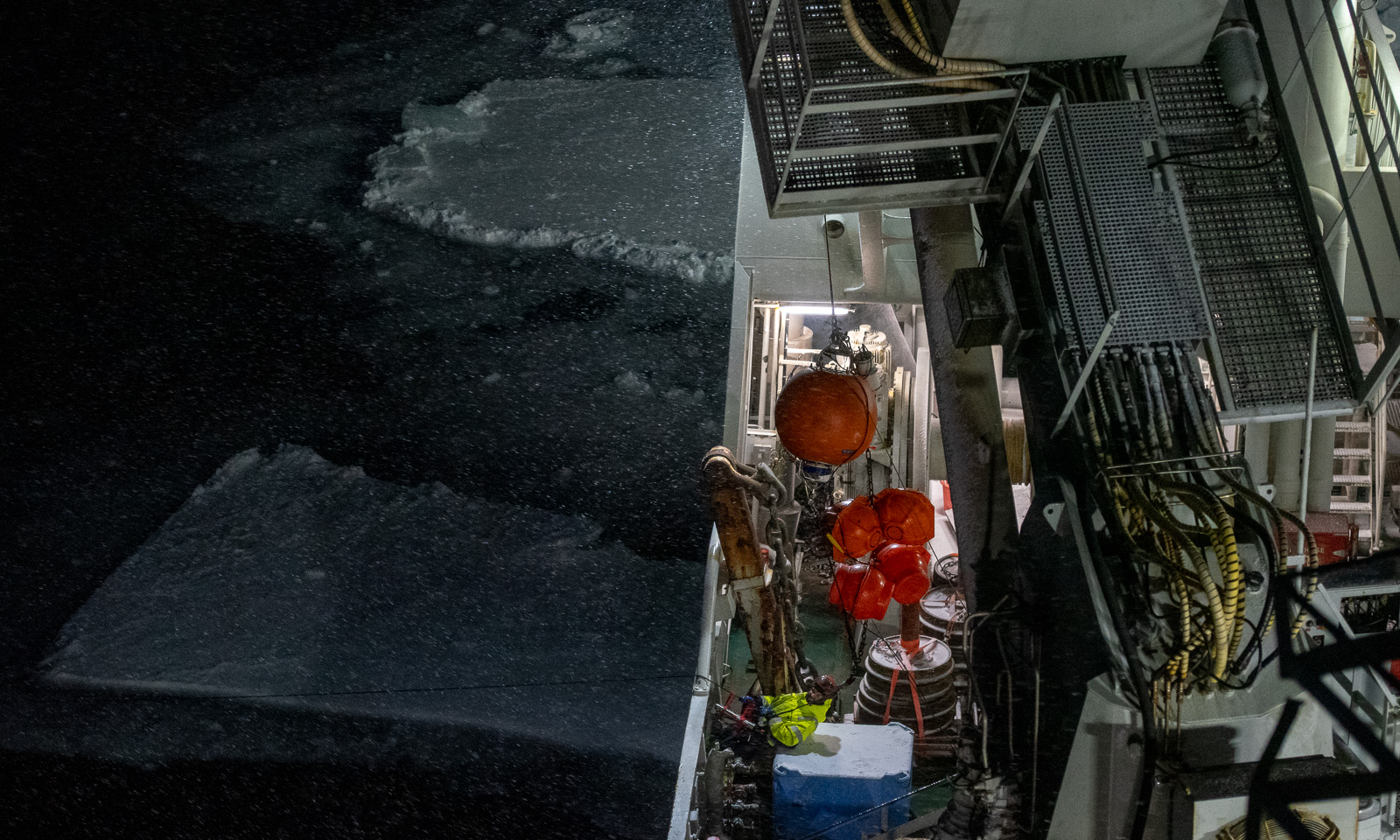
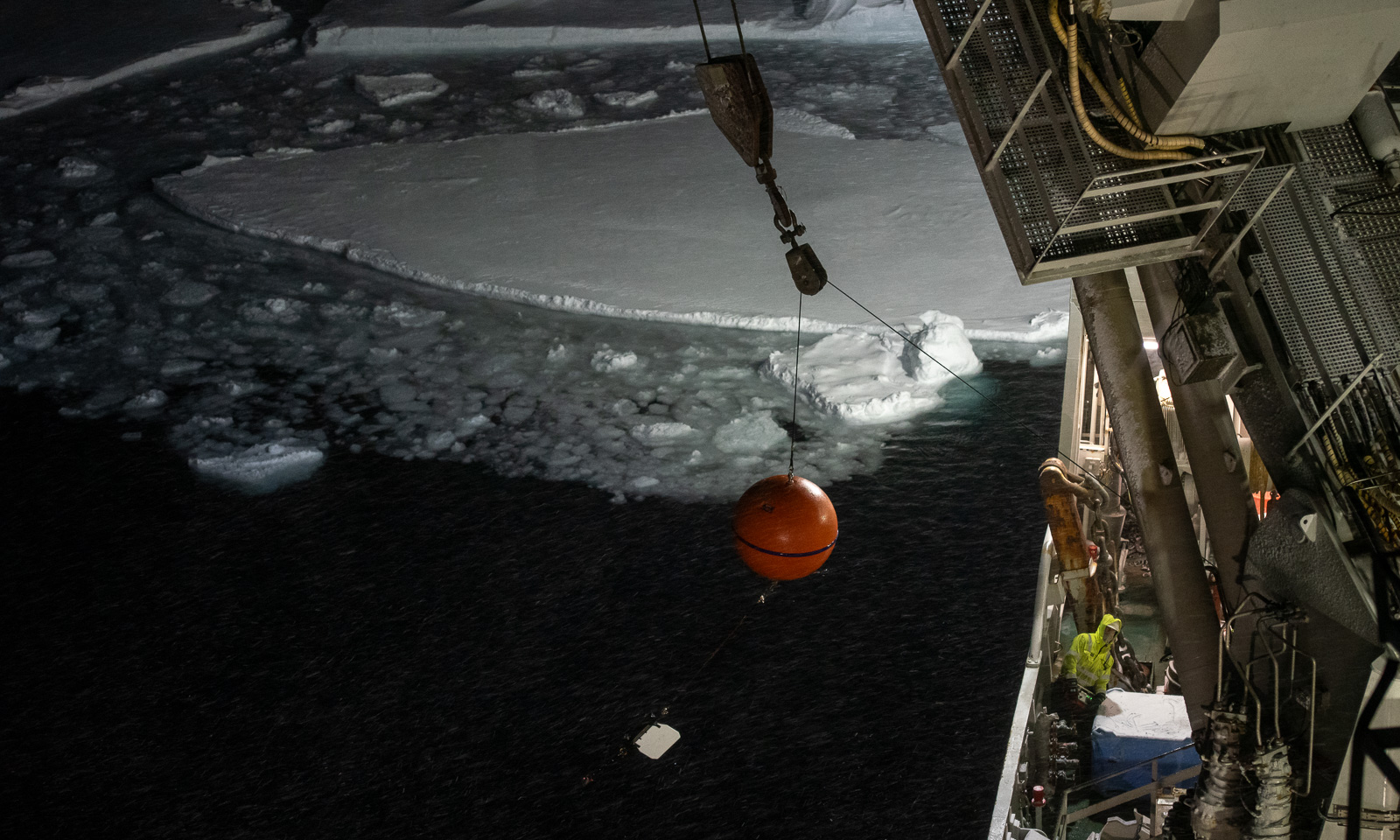
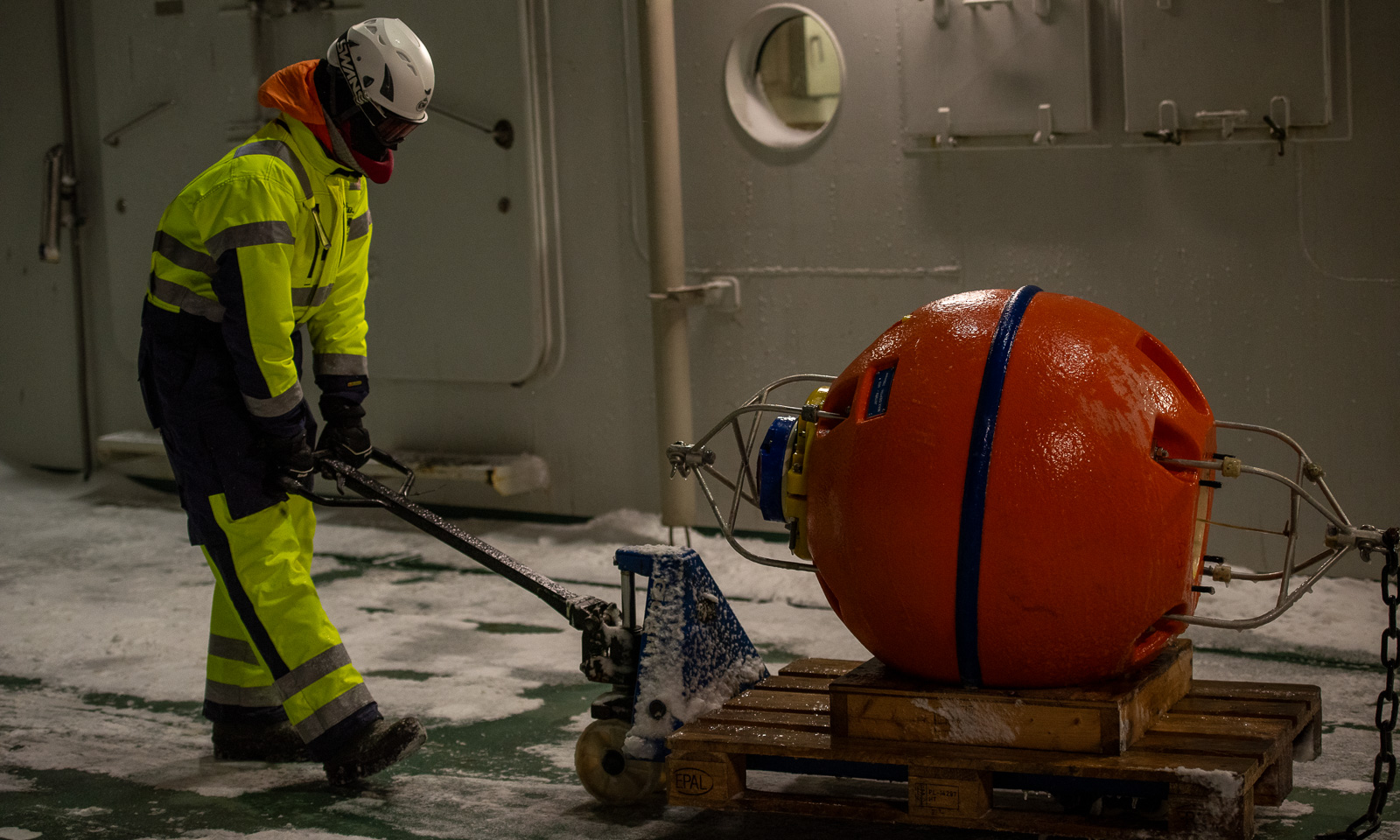
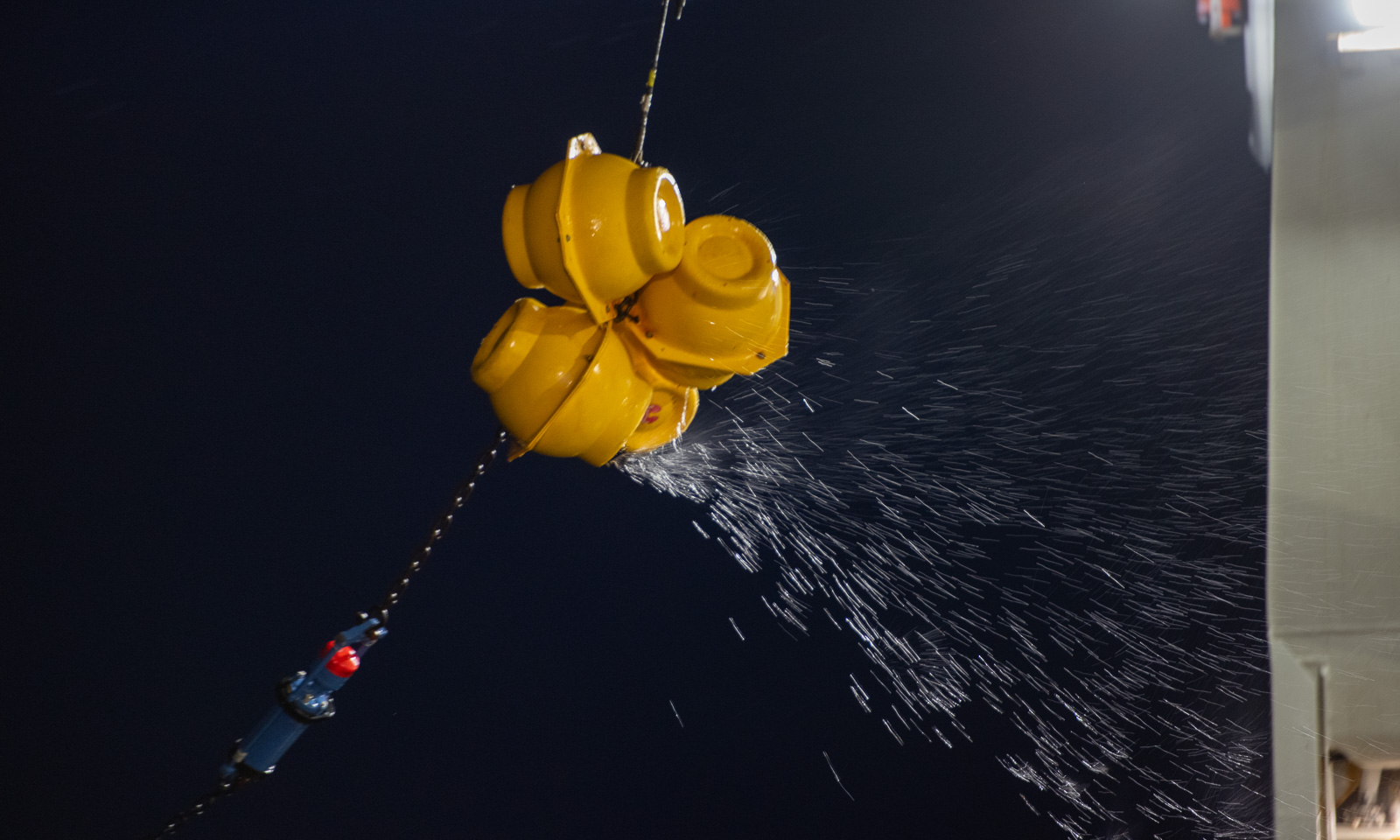
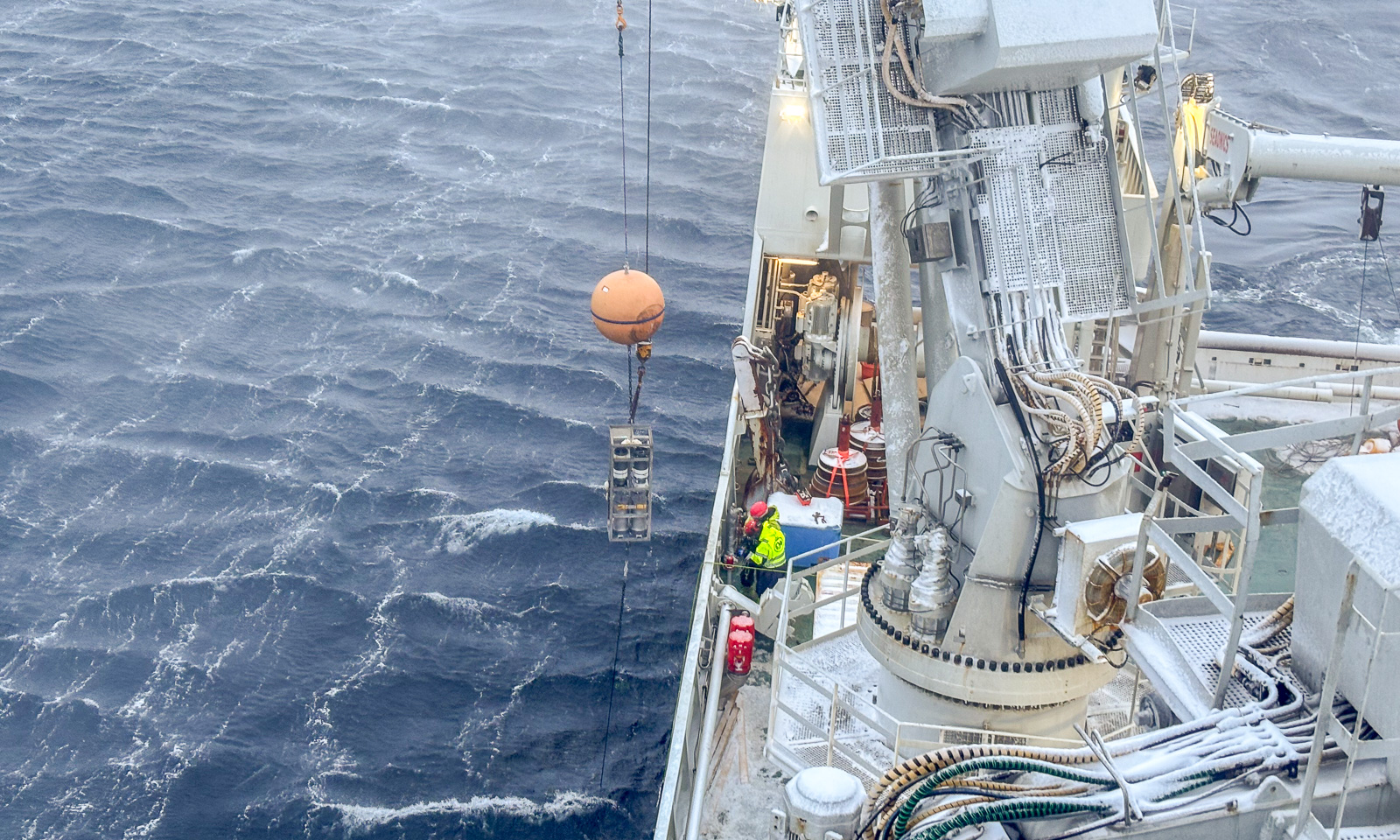
At six o’clock, people are standing on the bridge, peeking into the snowfall, driven by the increasing wind. A mooring is about to be recovered. It has been collecting data for more than a year, and now its release mechanism will be triggered by a so-called hydrophone, allowing the air-filled orange buoys to float to the surface and making the mooring visible. Then it has to be located visually so that it can be towed onto the ship. Not easy, when it looks like this.

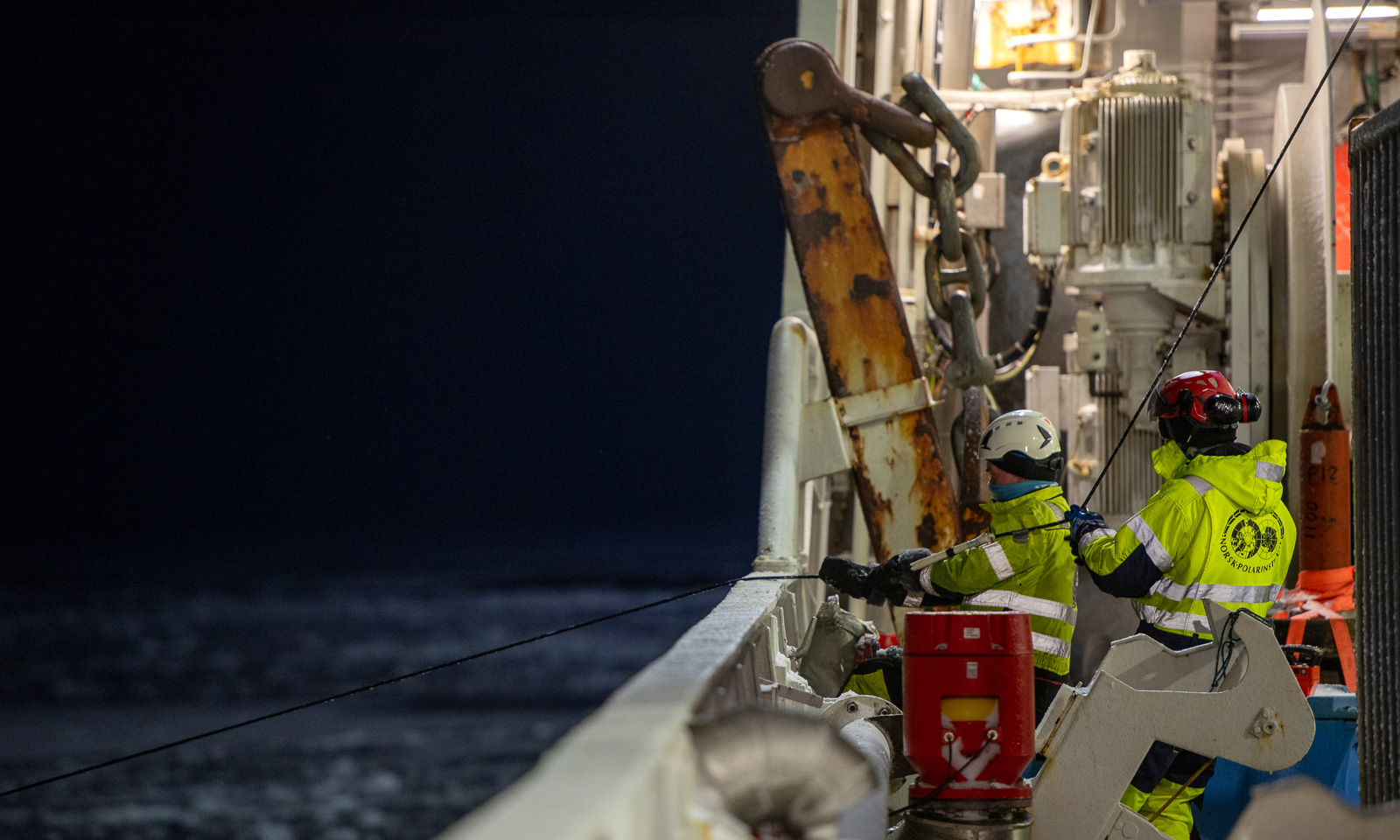
The buoy is spotted, and now the long cable, equipped with instruments at different depths, is pulled onto the ship. Not easy, because ice floes drift along and carry the cable with them, bringing them close to the ship, until the cable is released. A new version of ice fishing.

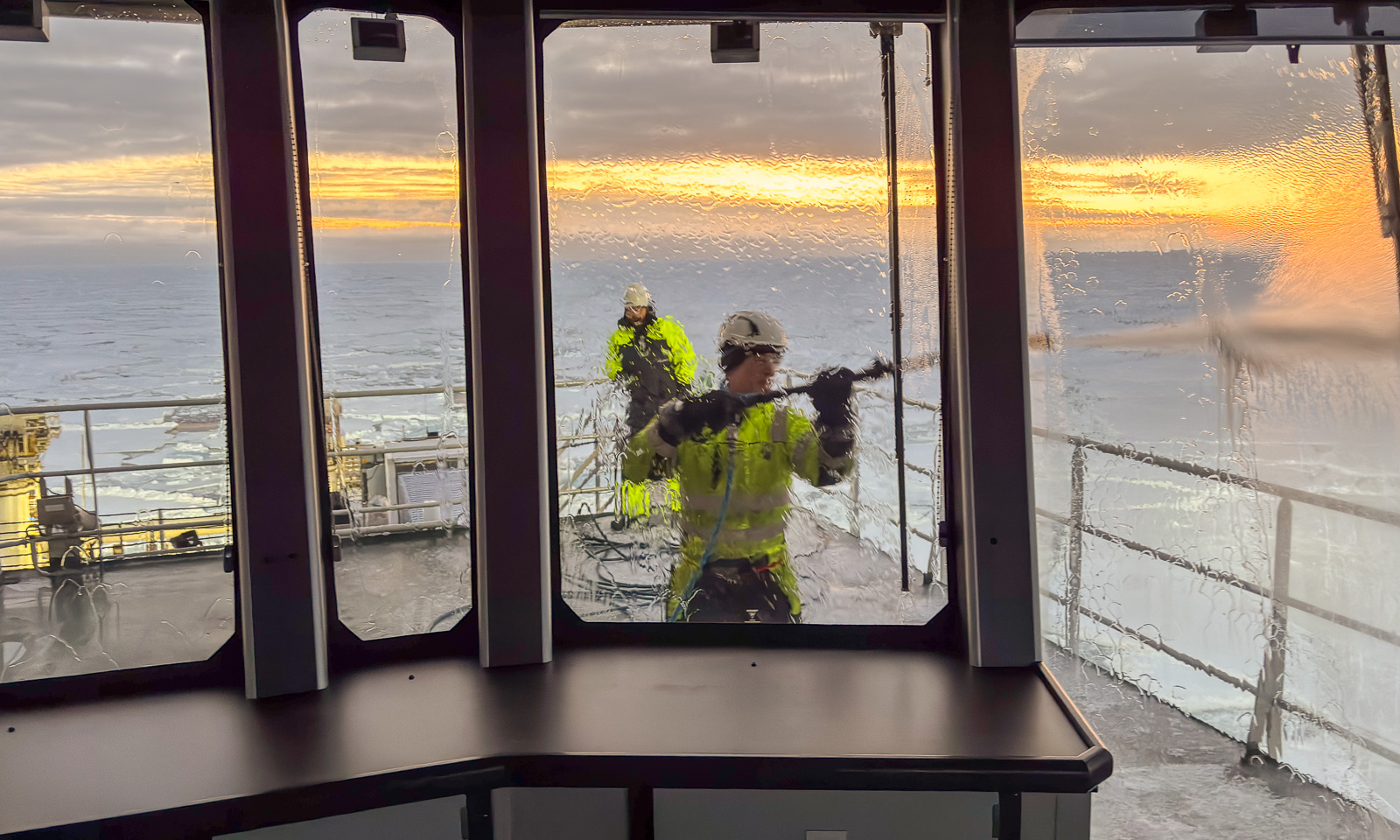
This is a good example of teamwork. You need experts on deck doing the manual work, a helmsman steering the ship with Fingerspitzengefühl, people on the bridge spotting the next buoy, and good communication between these groups. The first activity is successfully completed, with a wow-effect.

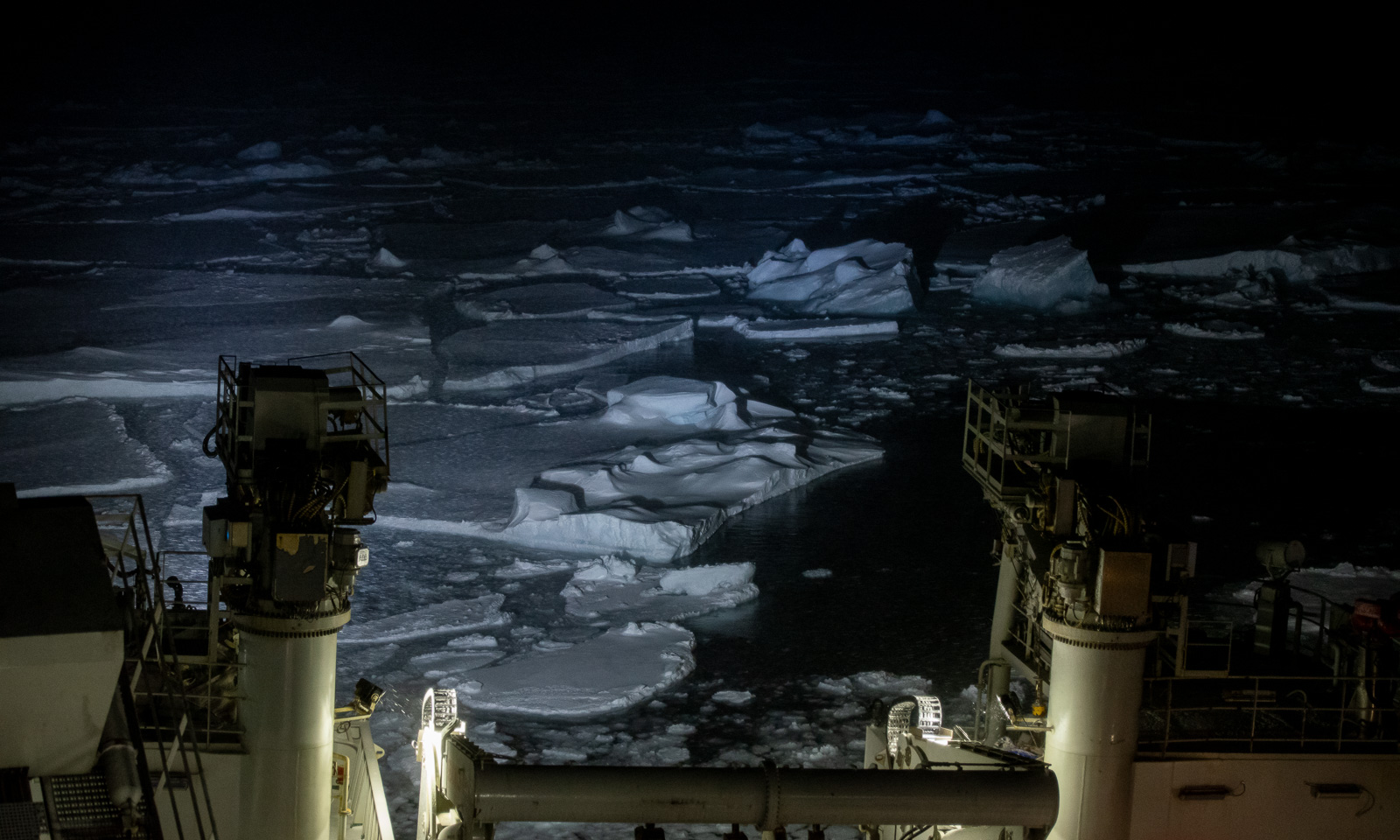
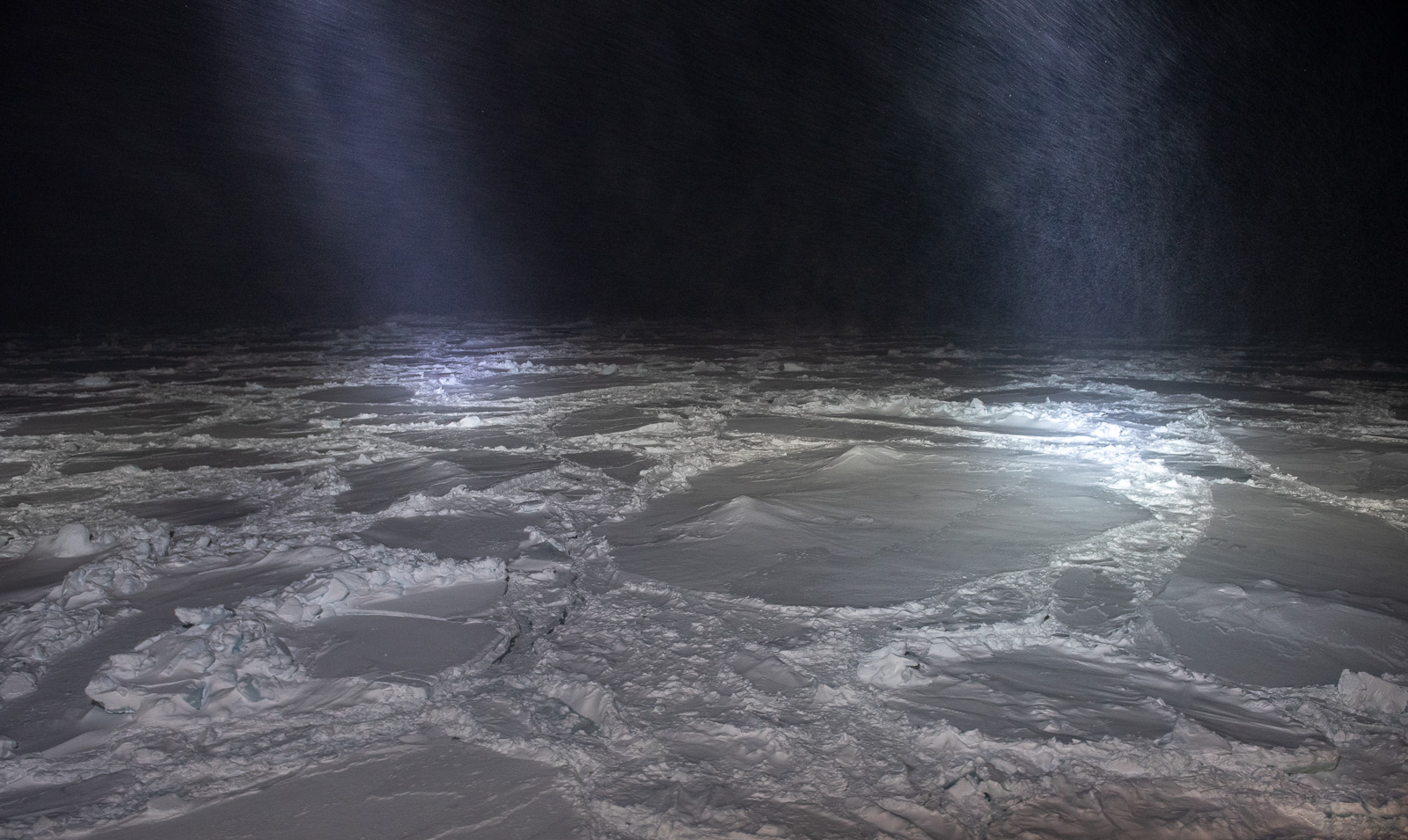
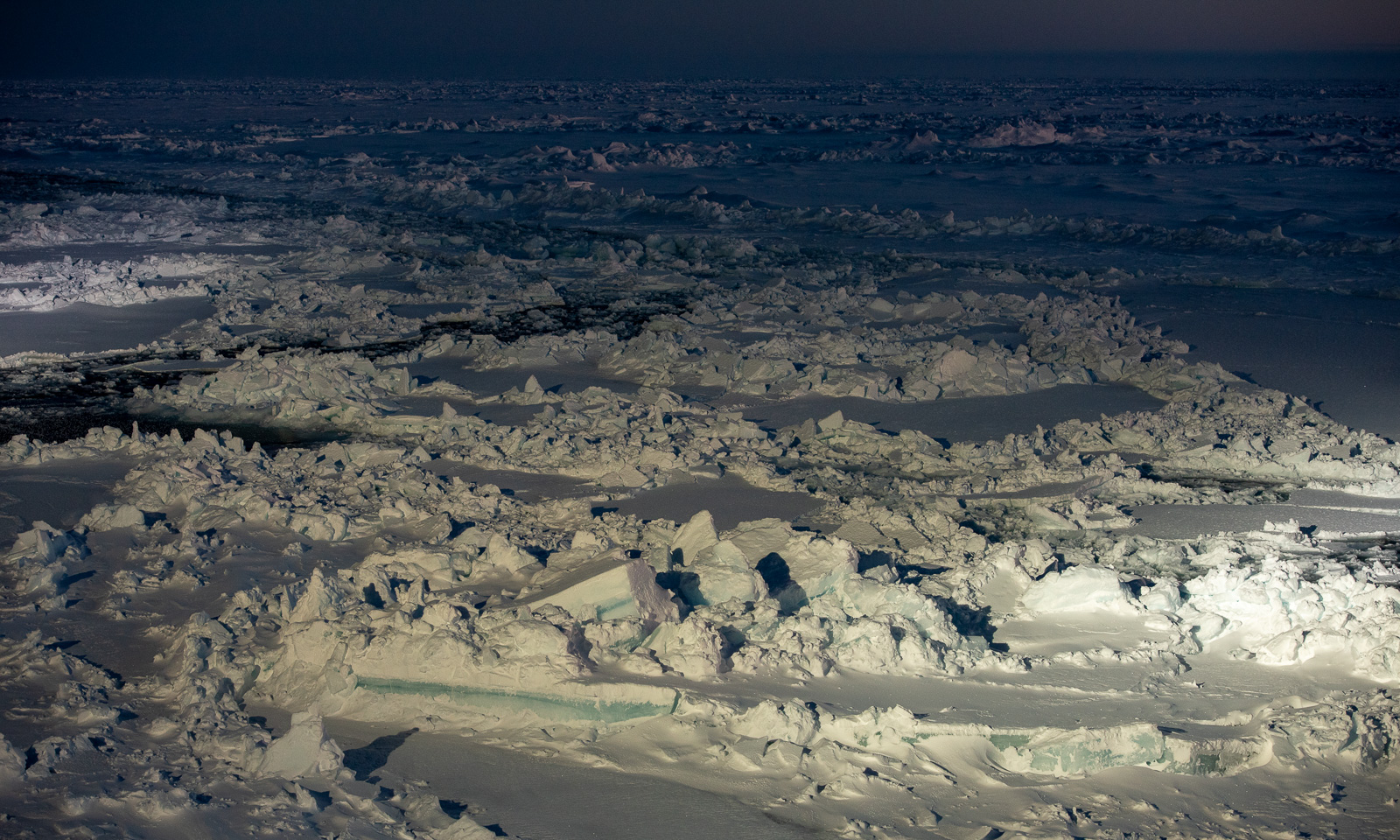
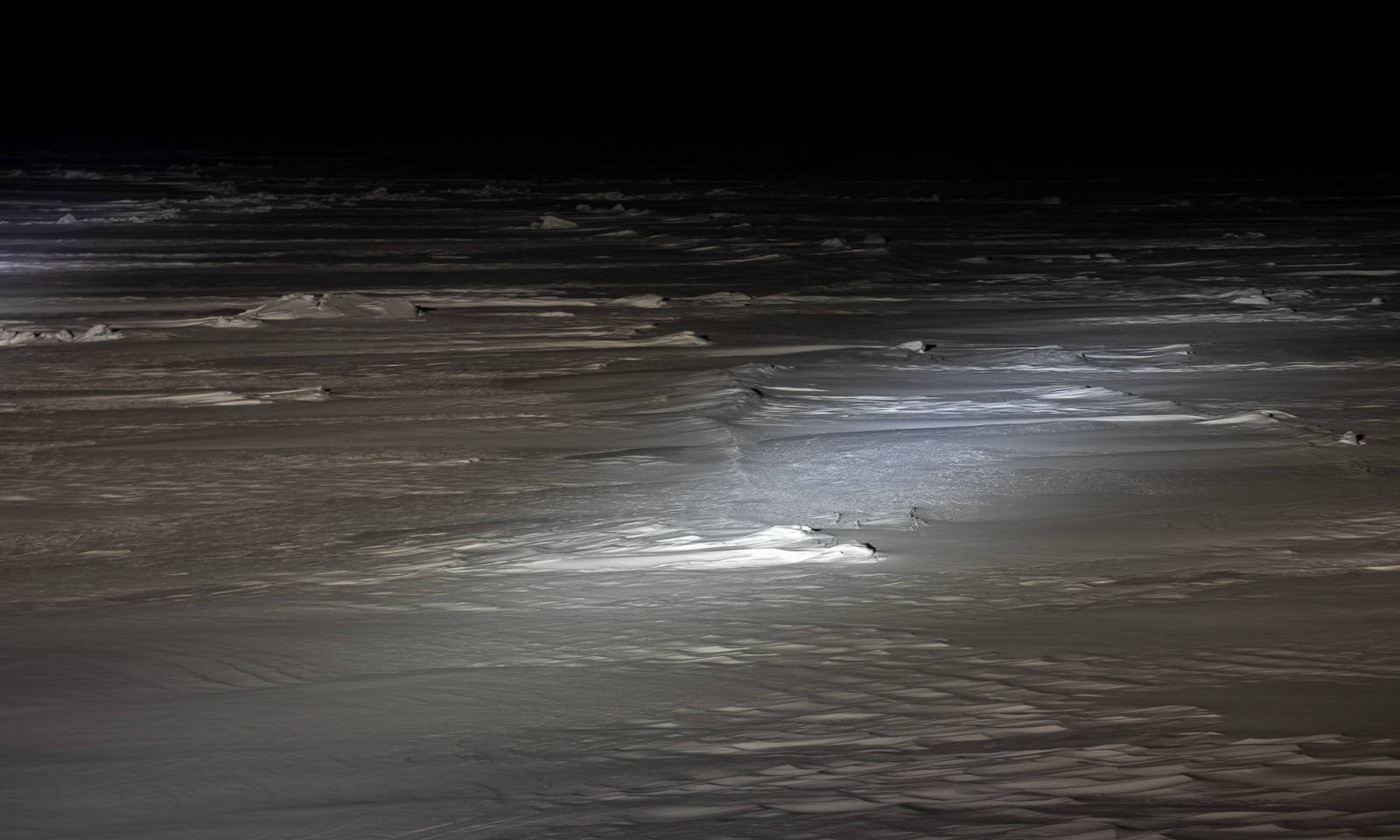
Watching the sea ice illuminated by the ships spotlights has its own beauty. I still cannot get enough from these views.

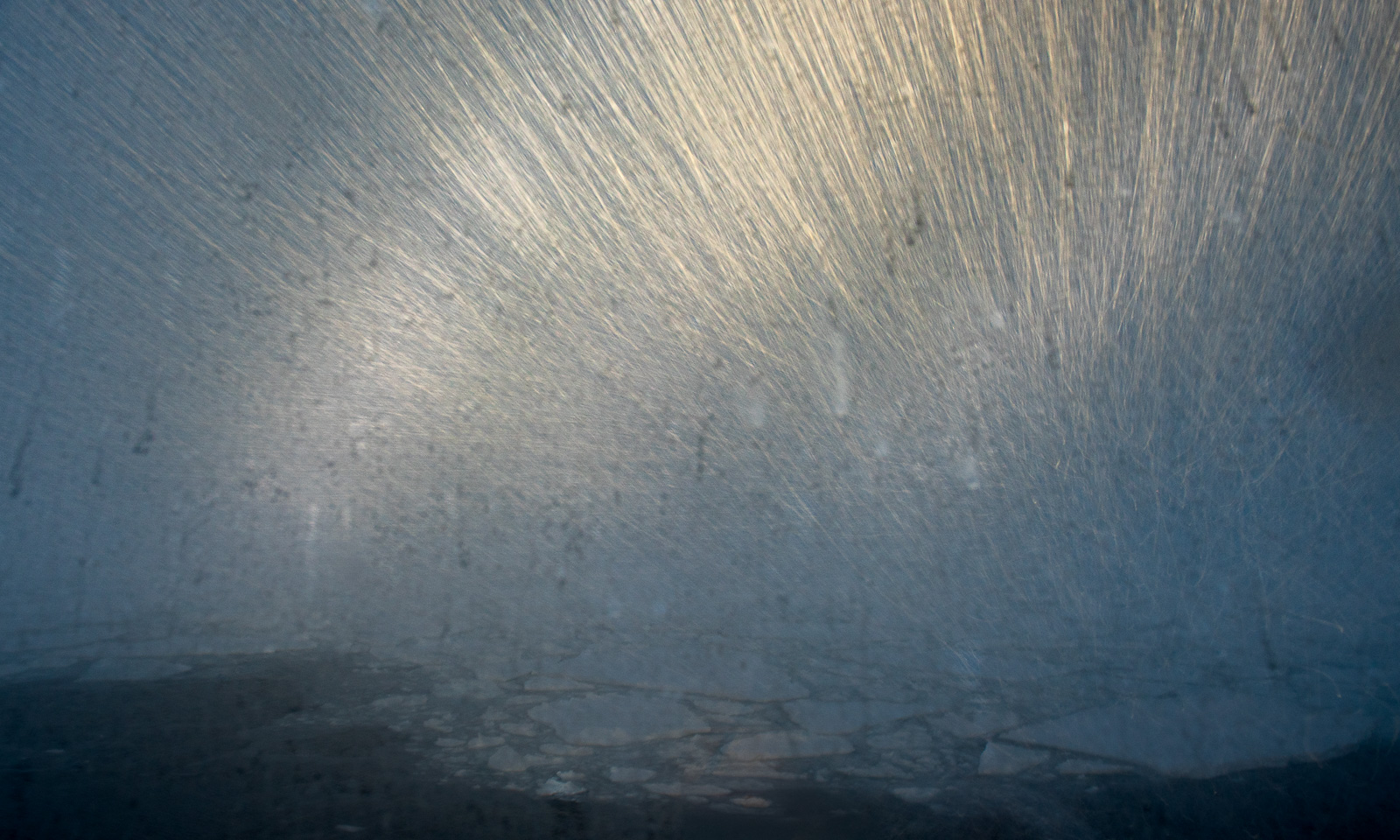
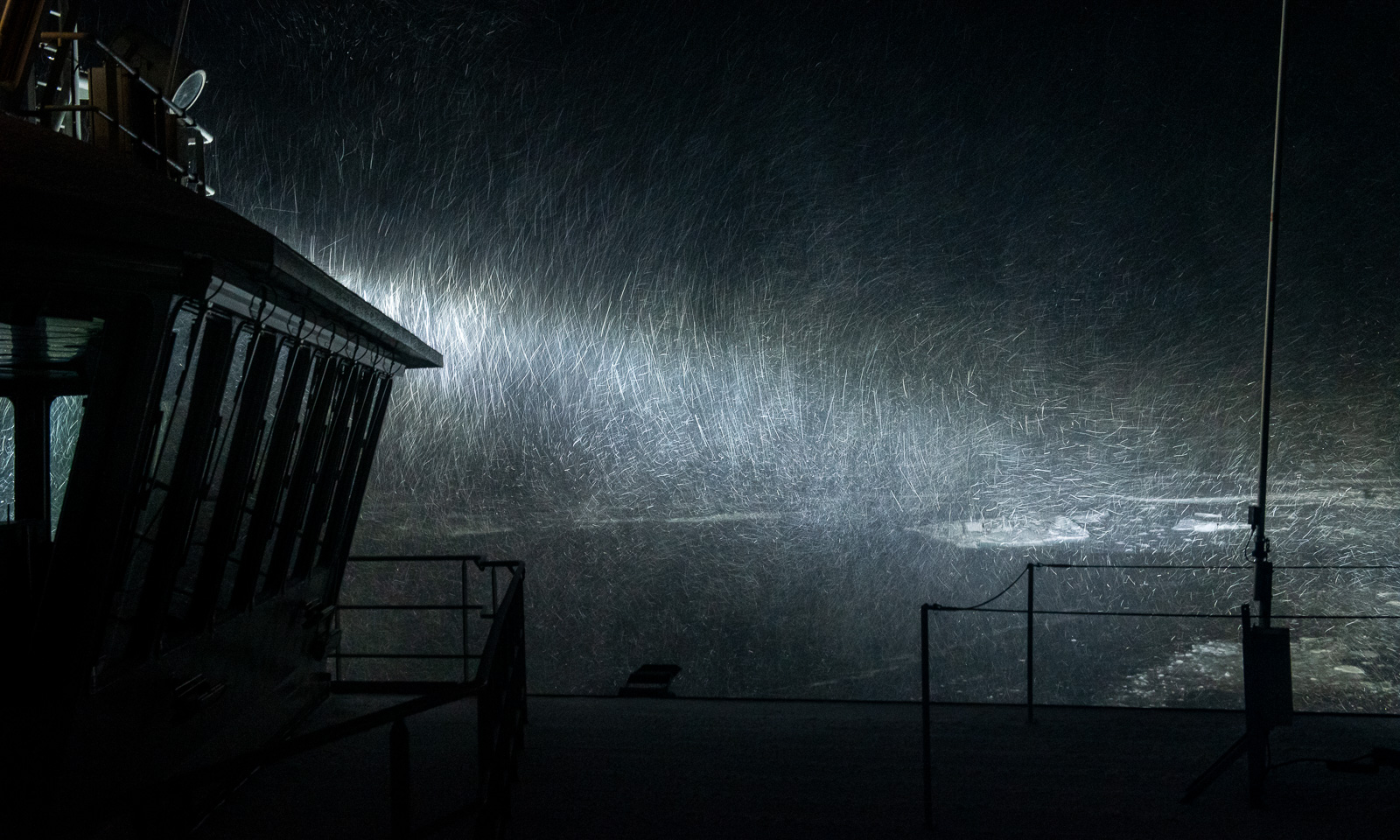
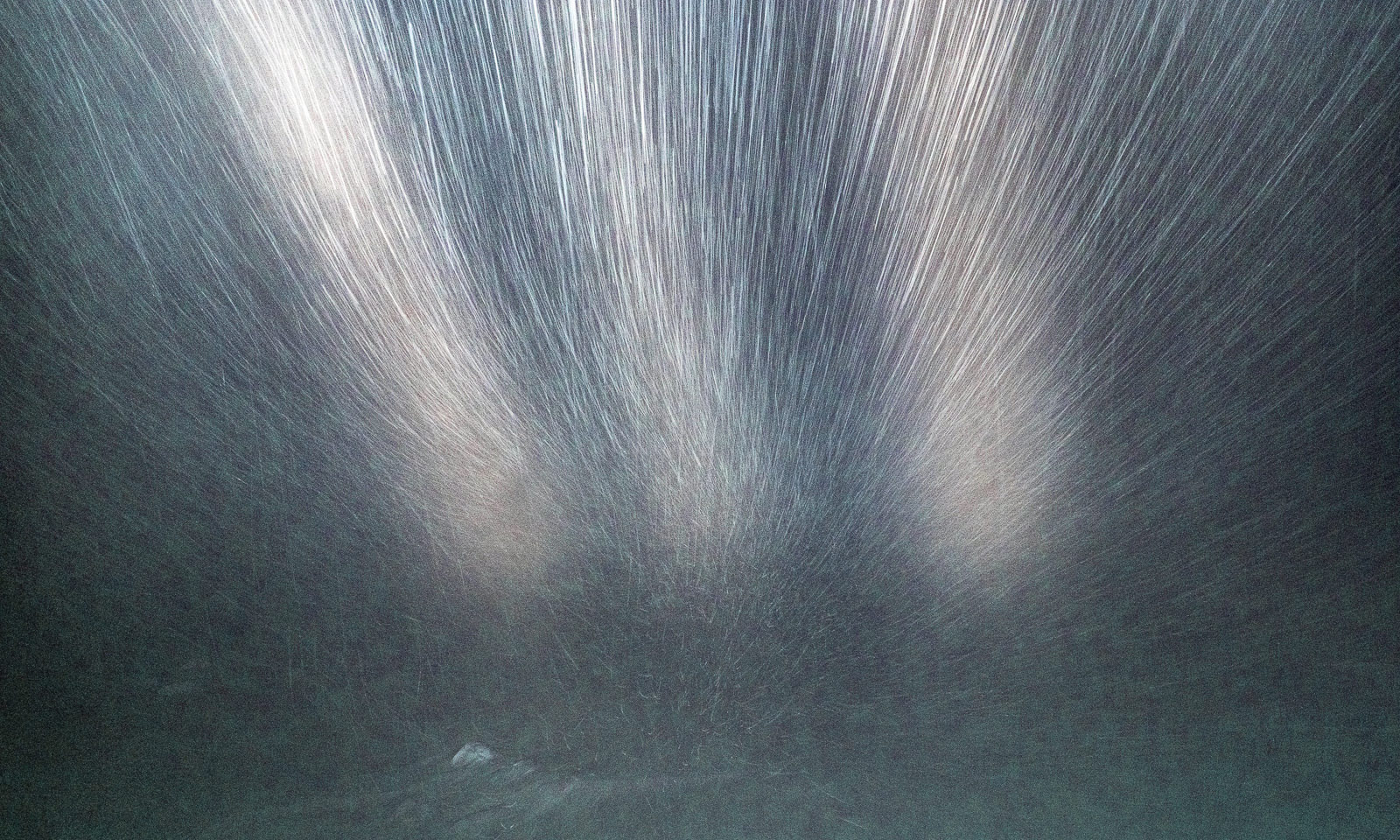
The weather, however, worsens. At 21:10, the wind speed reaches 20 m/s for the first time that day, and the temperature is dropping as well. It is snowing, and each snowflake leaves a bright trail, like a meteor. How will the weather be like tomorrow?

15 October

Over night, it has become even colder and windier. The temperature -10 °C and falling, and the wind speed is above 20 m/s and increasing. Ice floes cover the ocean. Now I’m glad, I brought my warmest down parka with me.
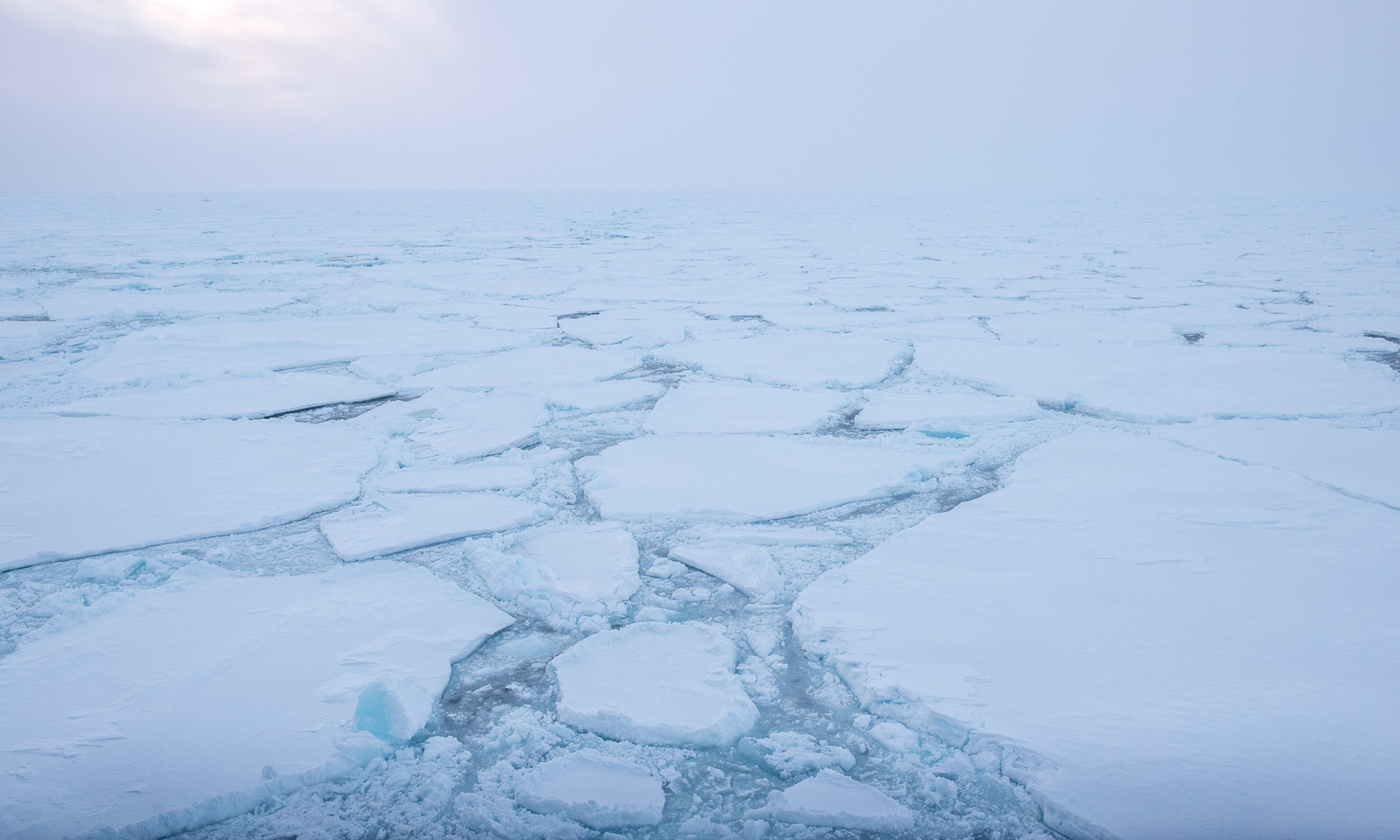
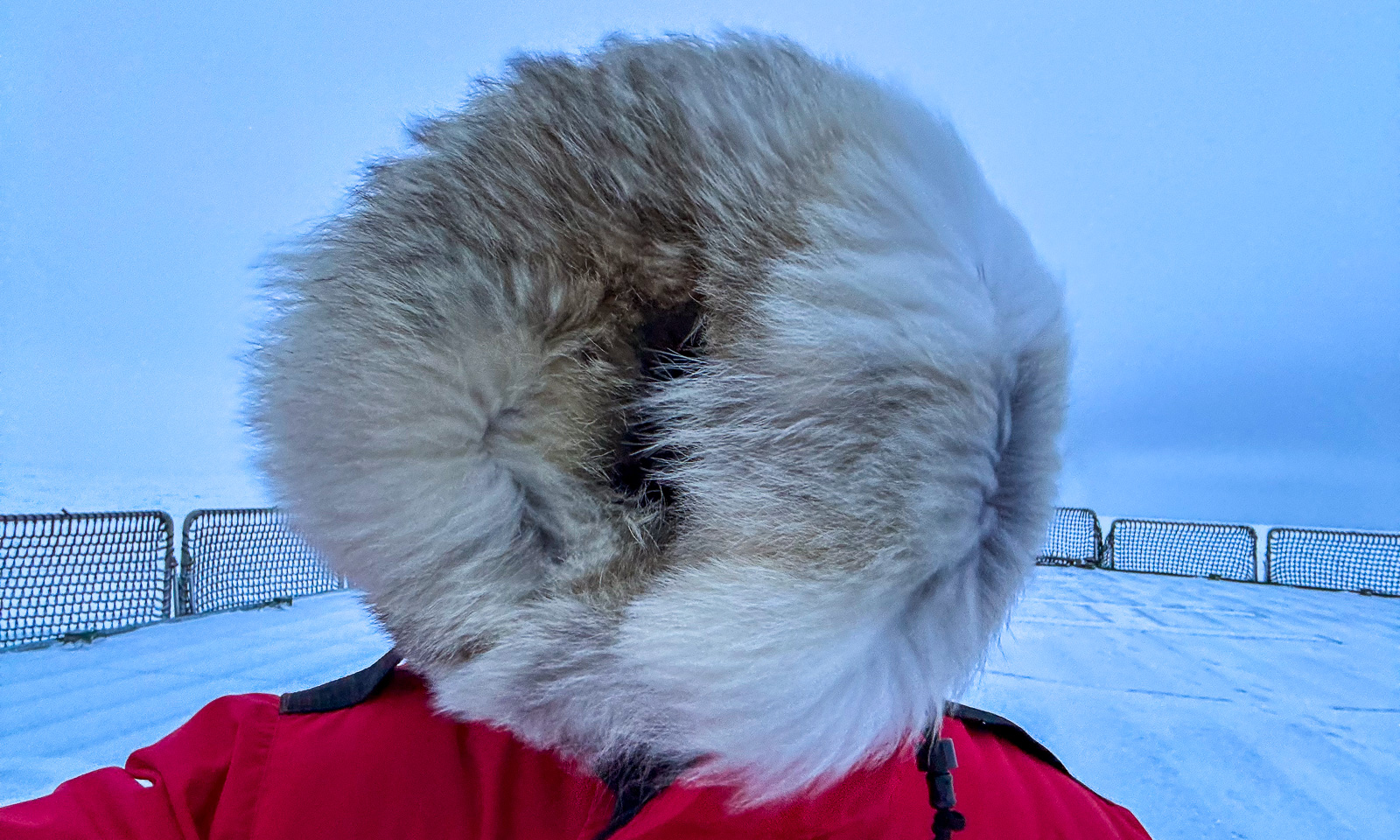
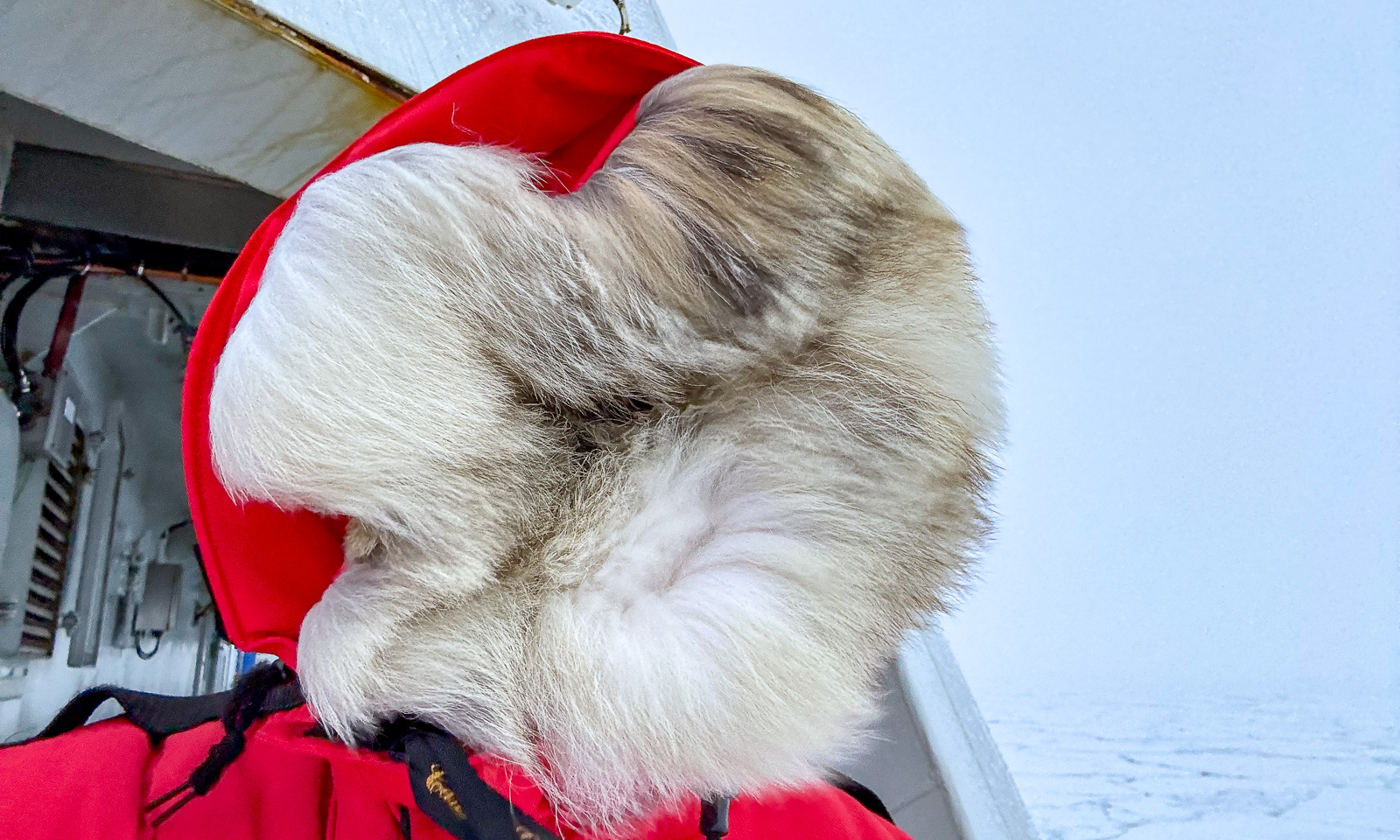
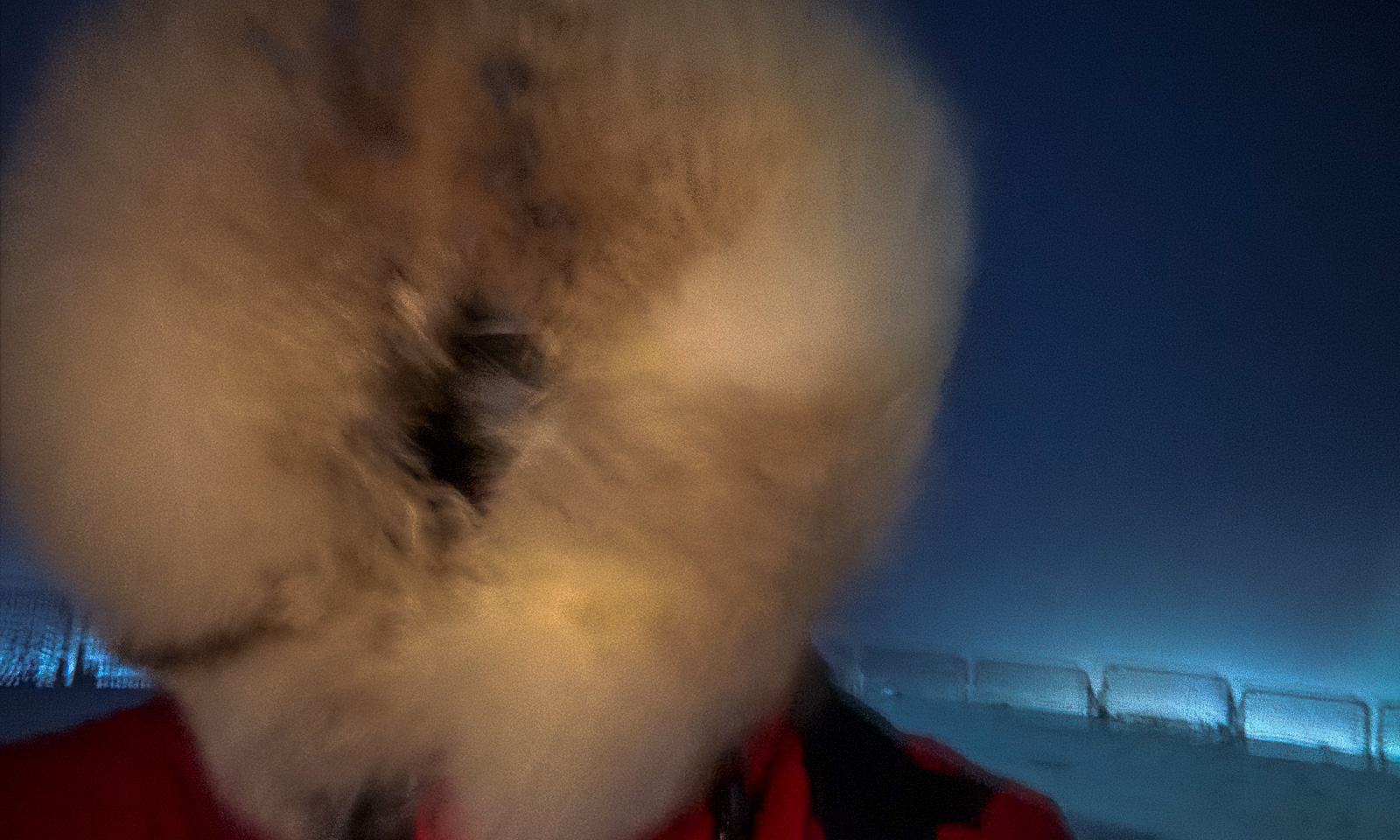
Two CTD casts have been completed today, but then it became too stormy to continue. I go onto the helicopter deck to take some photos, but the wind is so strong, that although I never thought it could actually happen, I’m afraid of being blown overboard. I can’t see much because I’ve pulled up the fur-trimmed hood of my parka to protect myself from the cold, and the wind blows the fur in all direction closing the hood even further.

In the evening – well, I managed to get a shot from the side of the ship, where I was slightly sheltered from the storm. When I went around the corner to the helicopter deck, I had to seek shelter because the storm was too strong. I took a selfie, but in a sheltered corner so that I could stand steadily and avoid getting frostbite on my hand while using my mobile phone.

16 October

At the risk of repeating myself, the weather looks even worse. I wake up at 5 o’clock, and the temperature is -15.4 °C with a wind speed of 26.2. That’s a wind chill of -32.6 °C. In mid-October!

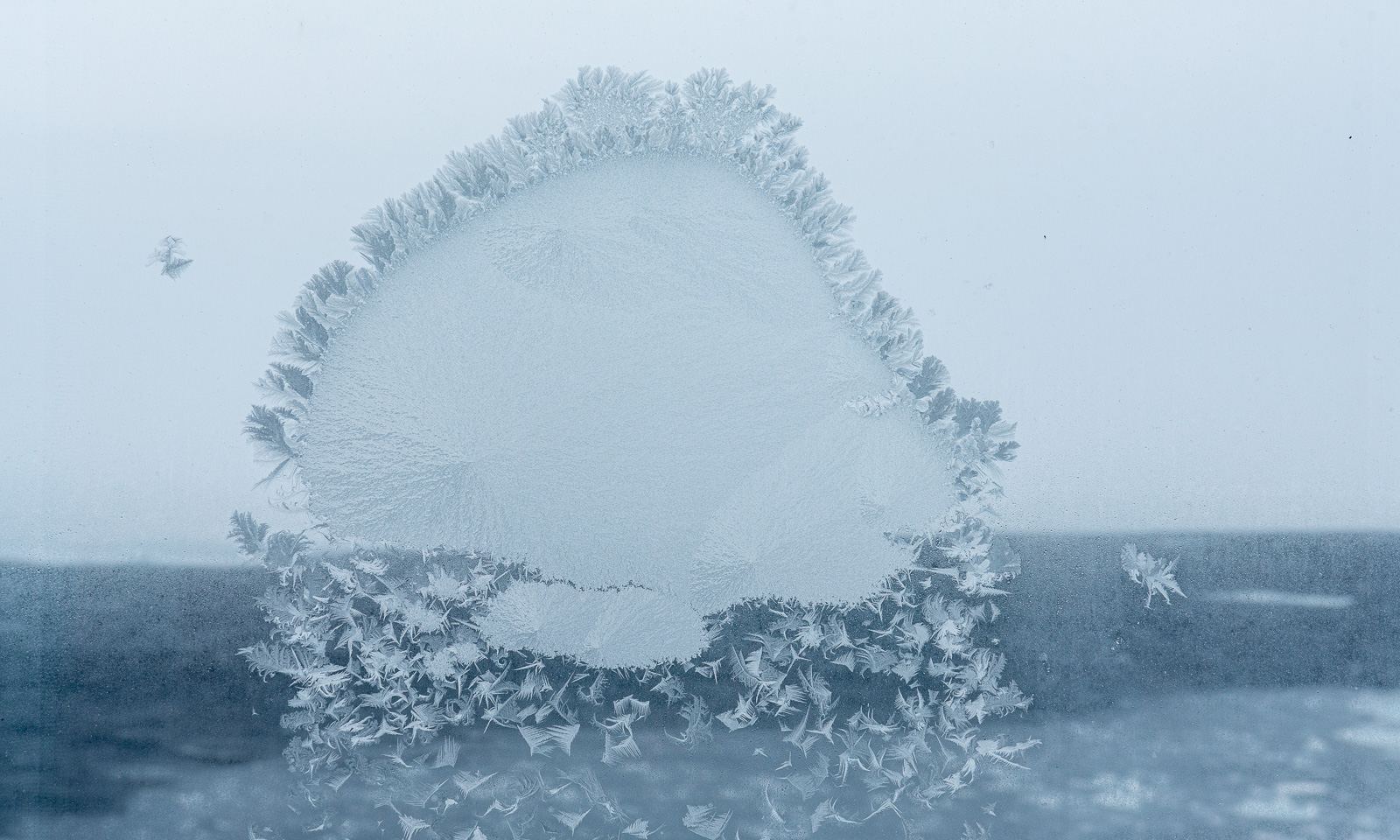
If you have read this article so far, you might get the impression that I am here as a photographer, but I’m actually here as a data manager, and I spend a lot of time at my computer in the Conference Work Room. I just don’t write too much about my computer work here. I am making good progress, but the distractions are there, for example, the frost patterns on the outer windows. This one looks like a jellyfish made of ice.

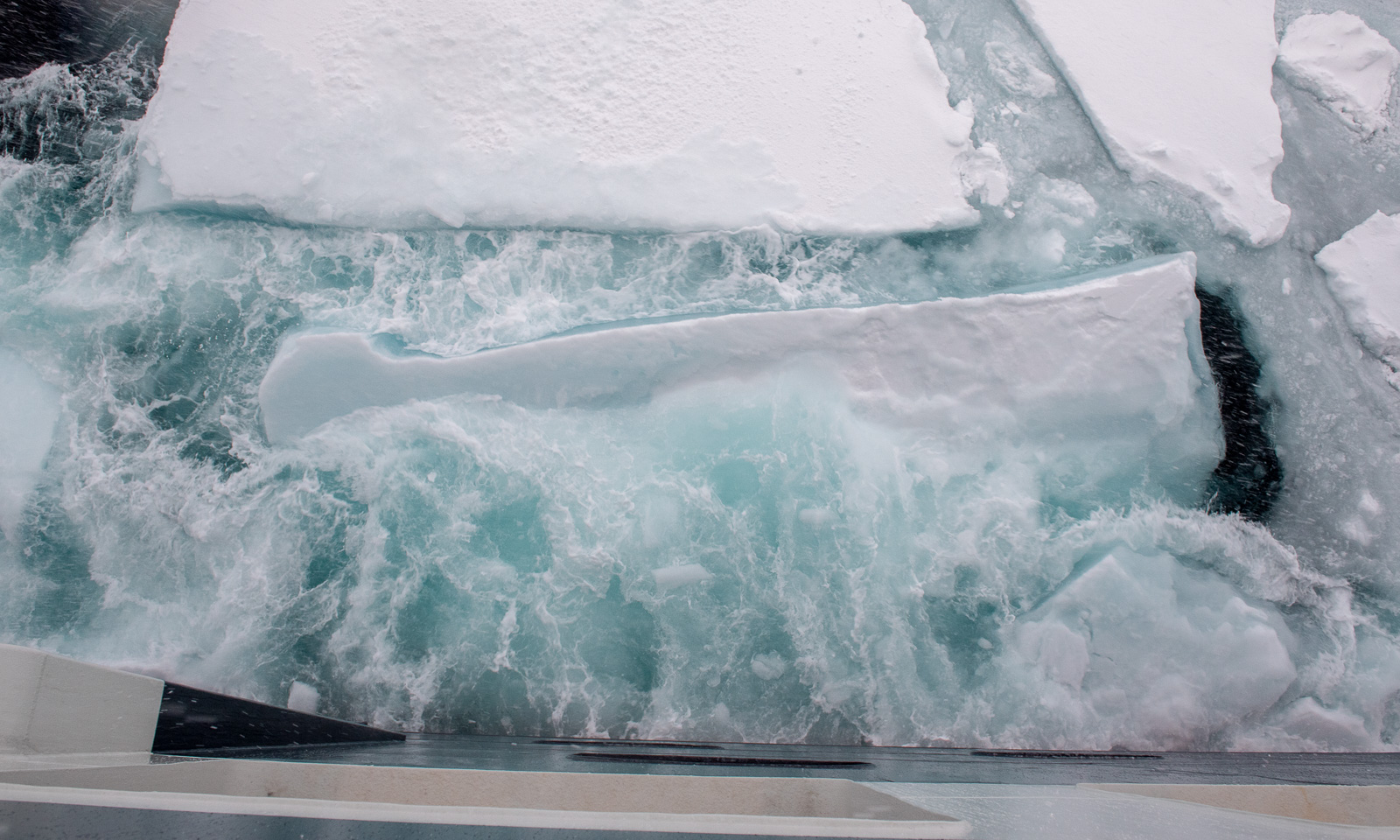
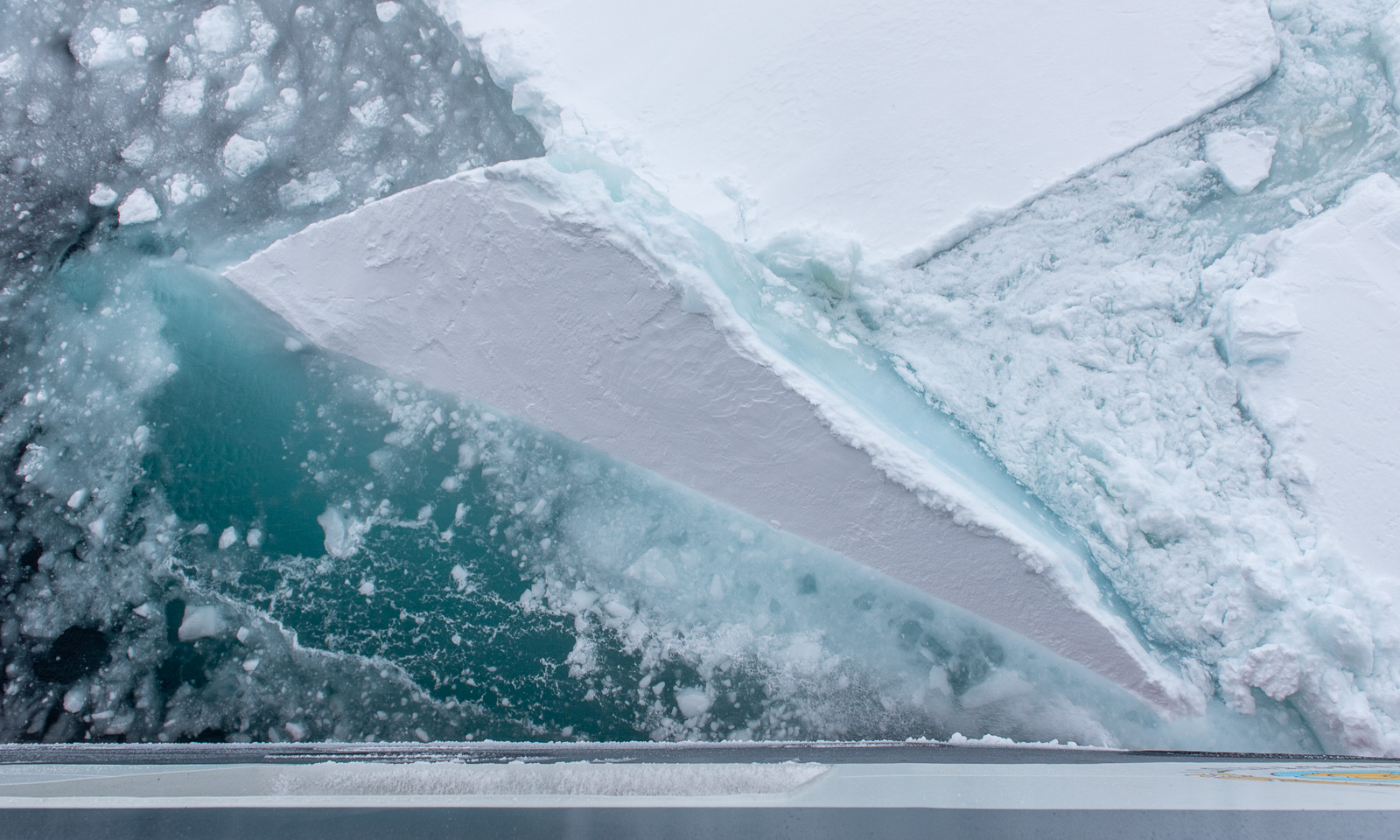
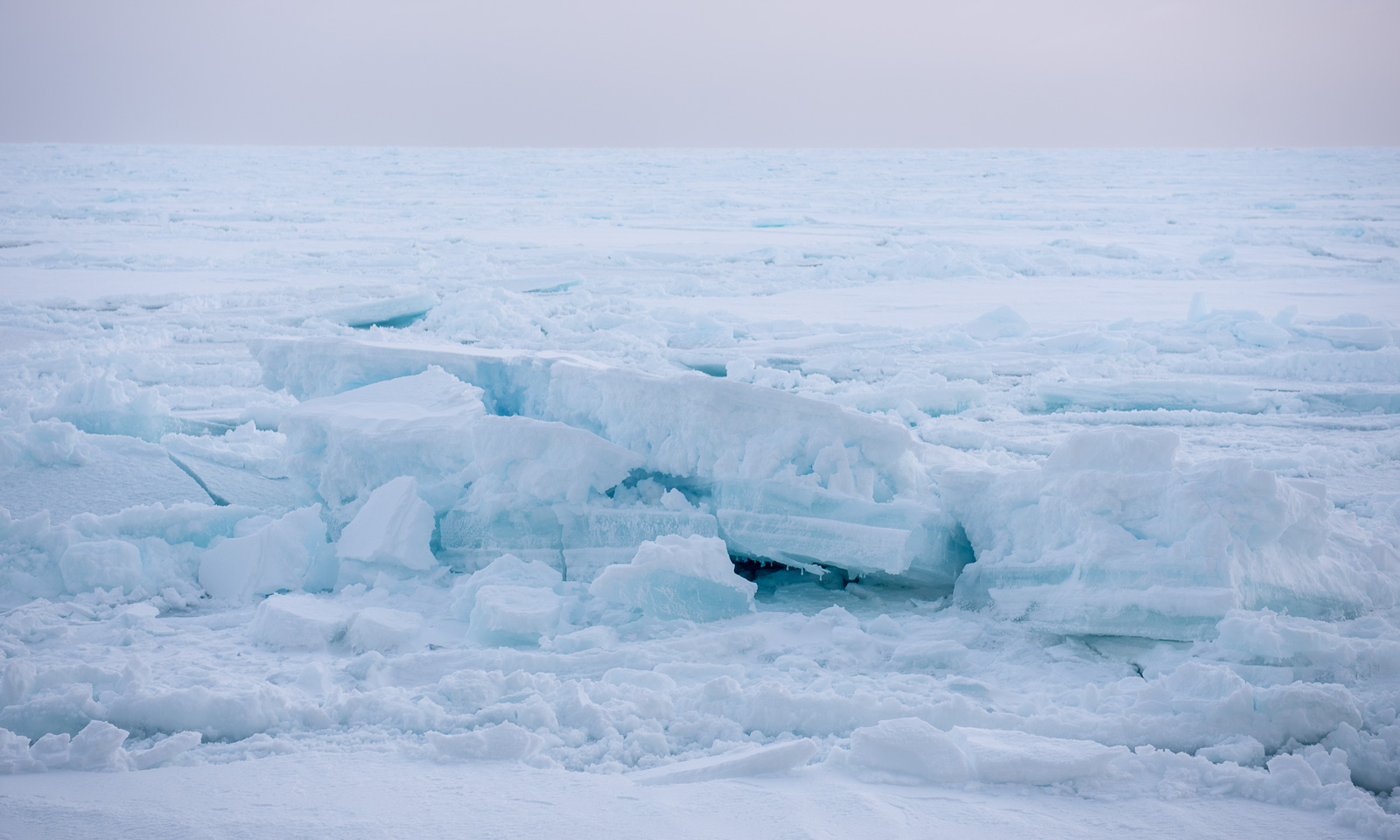
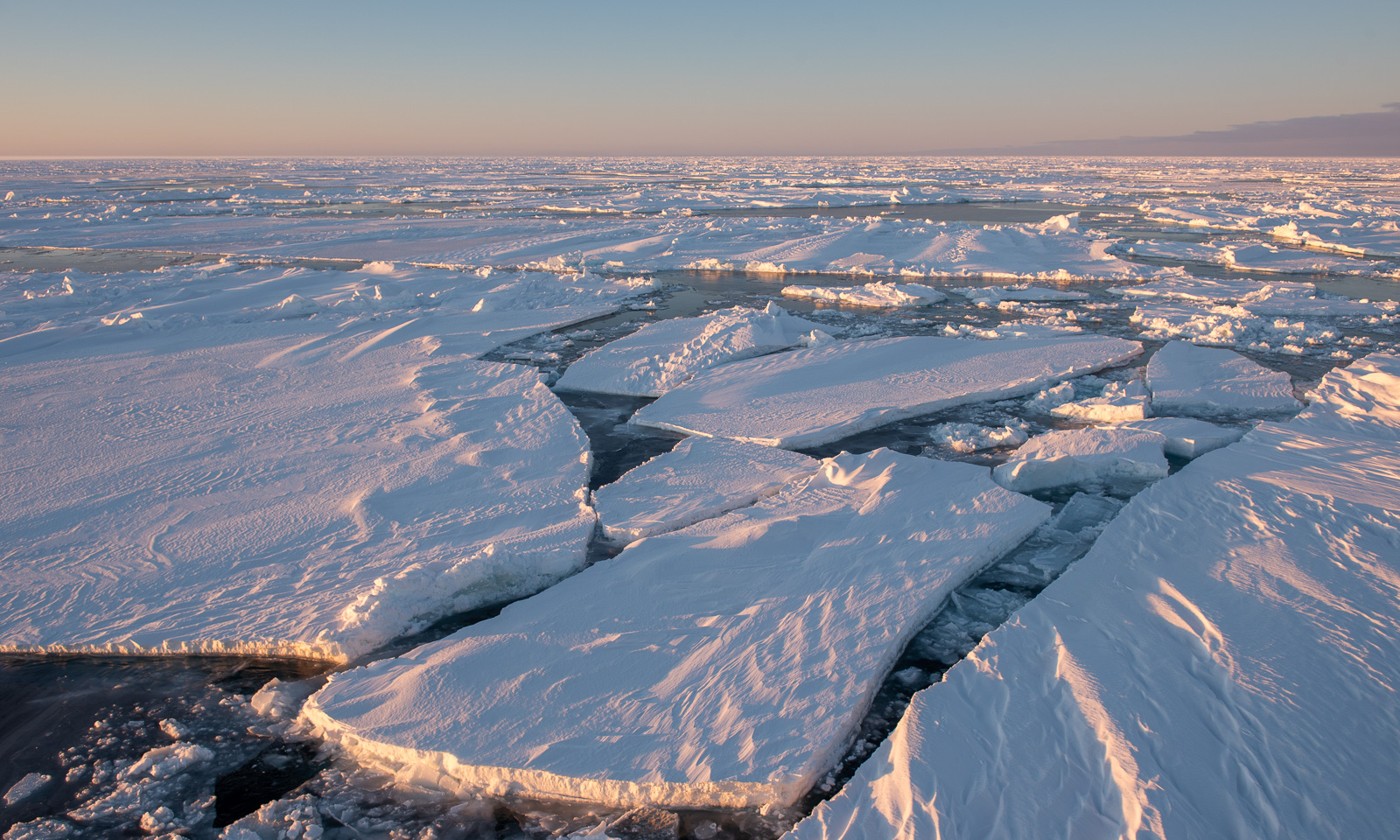
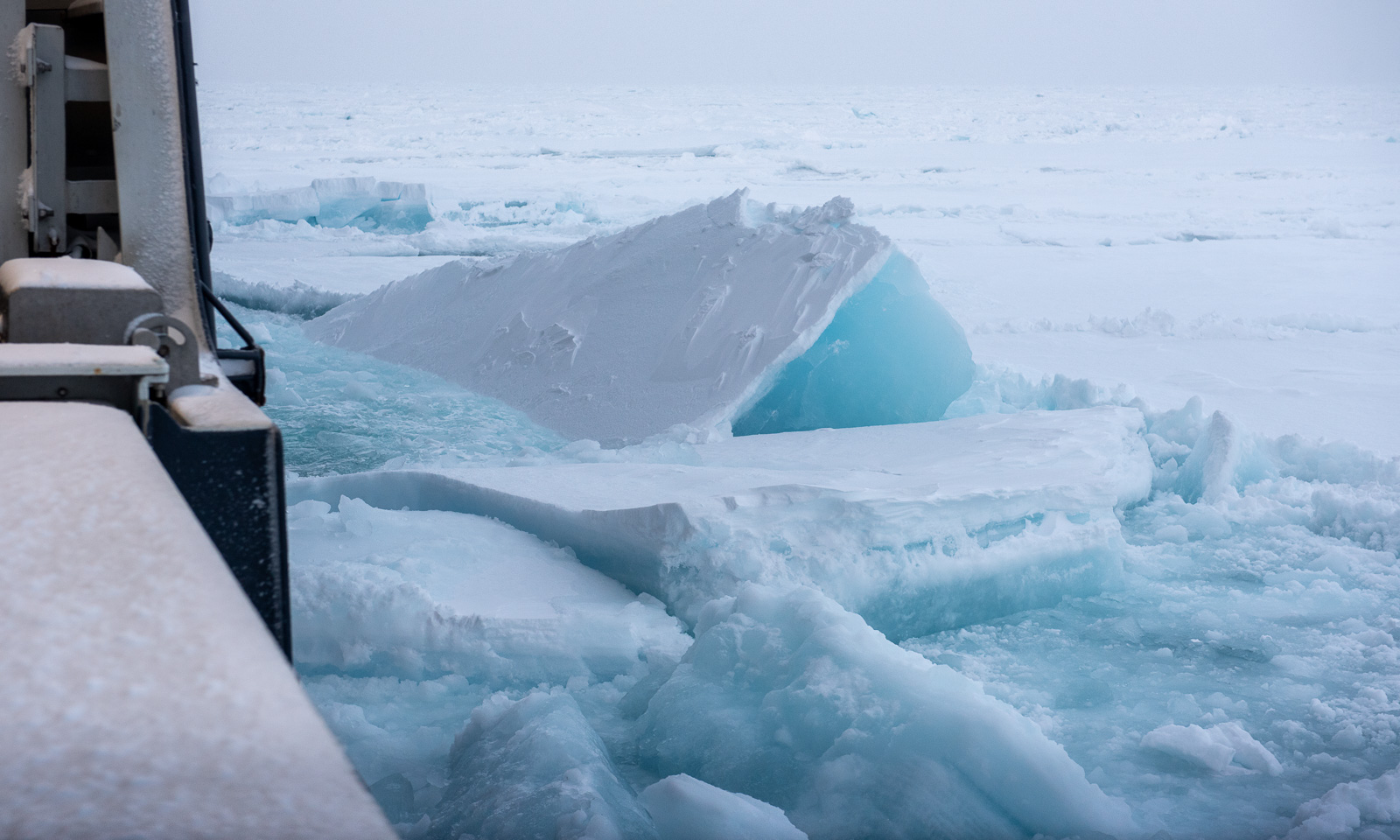
Right after lunch I go outside once more, this time to the ship’s stern, where I had a better protection from the wind. Oh, how I love watching the sea ice gently drifting by or being crushed forcefully by the ship.

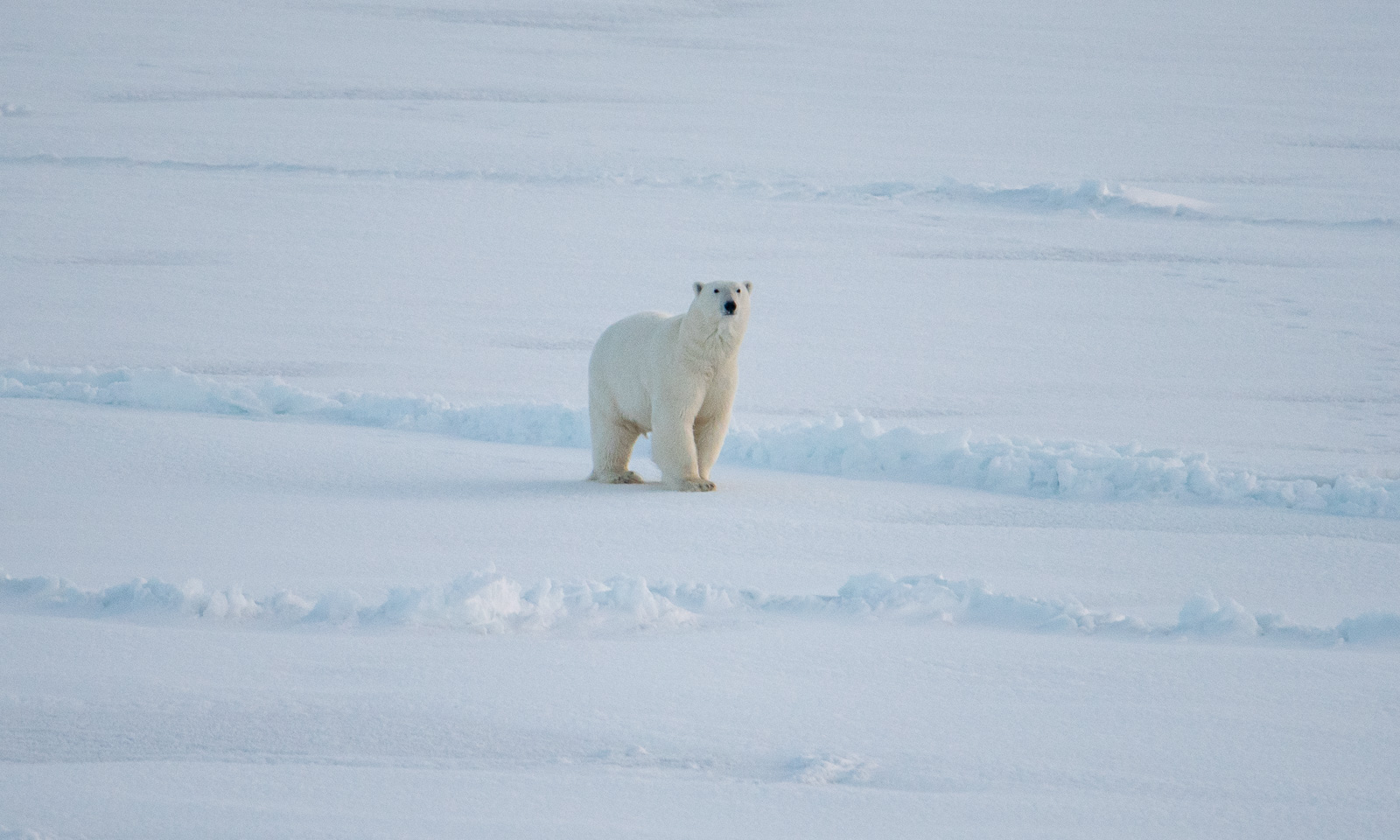
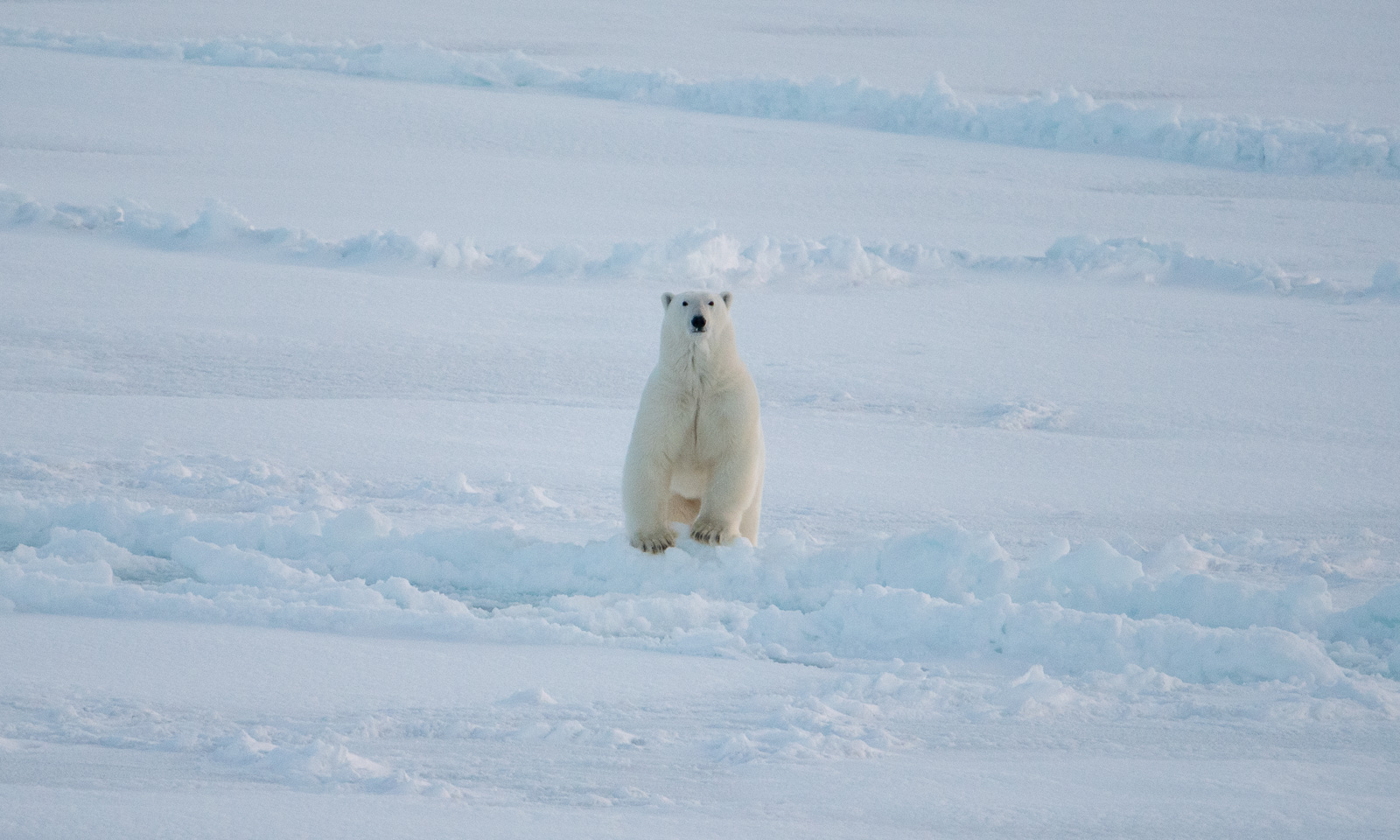
Ok, back to work. I’m almost finished with the day’s work when the others in the room suddenly jump up and disappear. A polar bear has been sighted in front of the ship. It takes me some time to put on my face mask, helmet, down parka, down pants, gloves, and boots, and to mount the big telephoto lens. Only then can I take some photos of the bear in the distance. It approaches at first, but then turns right and trots away.


A mooring, ice stations and the sun

This article is part of the series “2026-10: Fram Strait cruise KPH”.

16 October

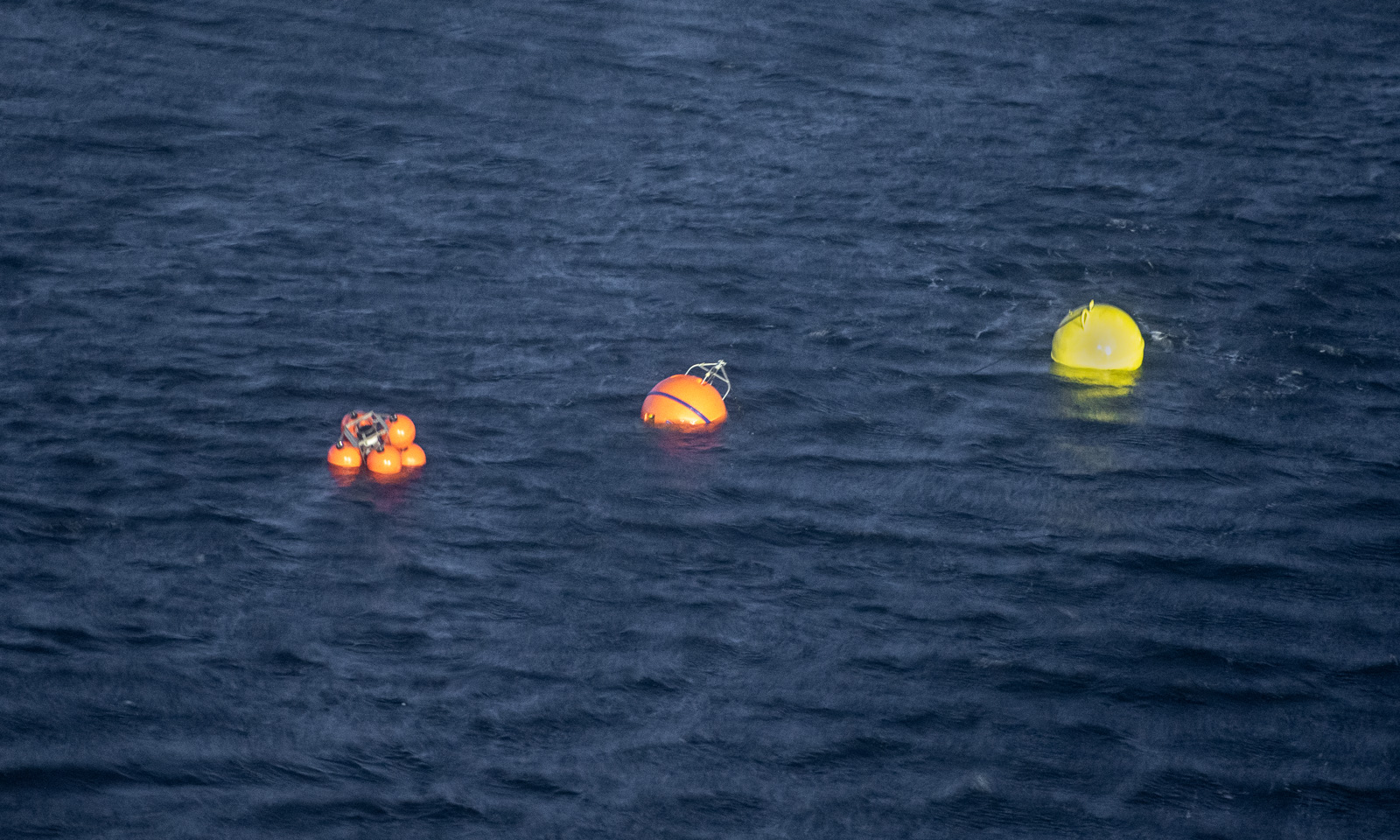
The polar bear is gone. The dinner has been eaten. Now it is time to recover F12, another mooring which is underwater and has measured a variety of values for 14 months. The ship’s echo sounder has already located it, so it has “only” to be released from the ground. There is only one issue – there is a lot of ice and to recover the mooring, open water is needed. The helmsman has already circled the icebreaker several times to create an ice-free area. When the mooring is finally released, the air-filled buoy pops up in the water, just two metres away from the searchlight. Chapeau! I mentioned in the last article the joint effort that is needed to get such a mooring with more than 1800 metres of Kevlar cable equipped with instruments from the sea onto the ship.

17 October

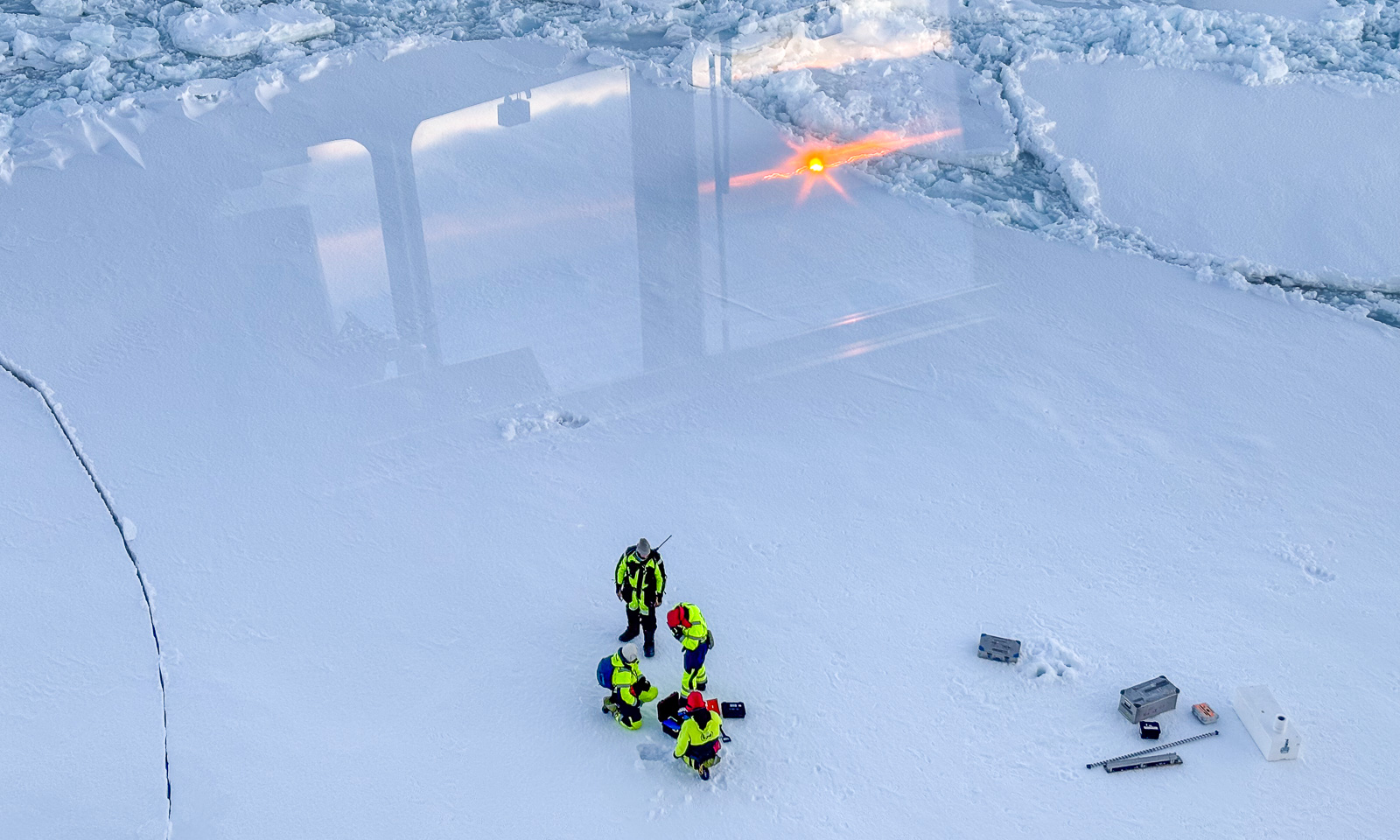
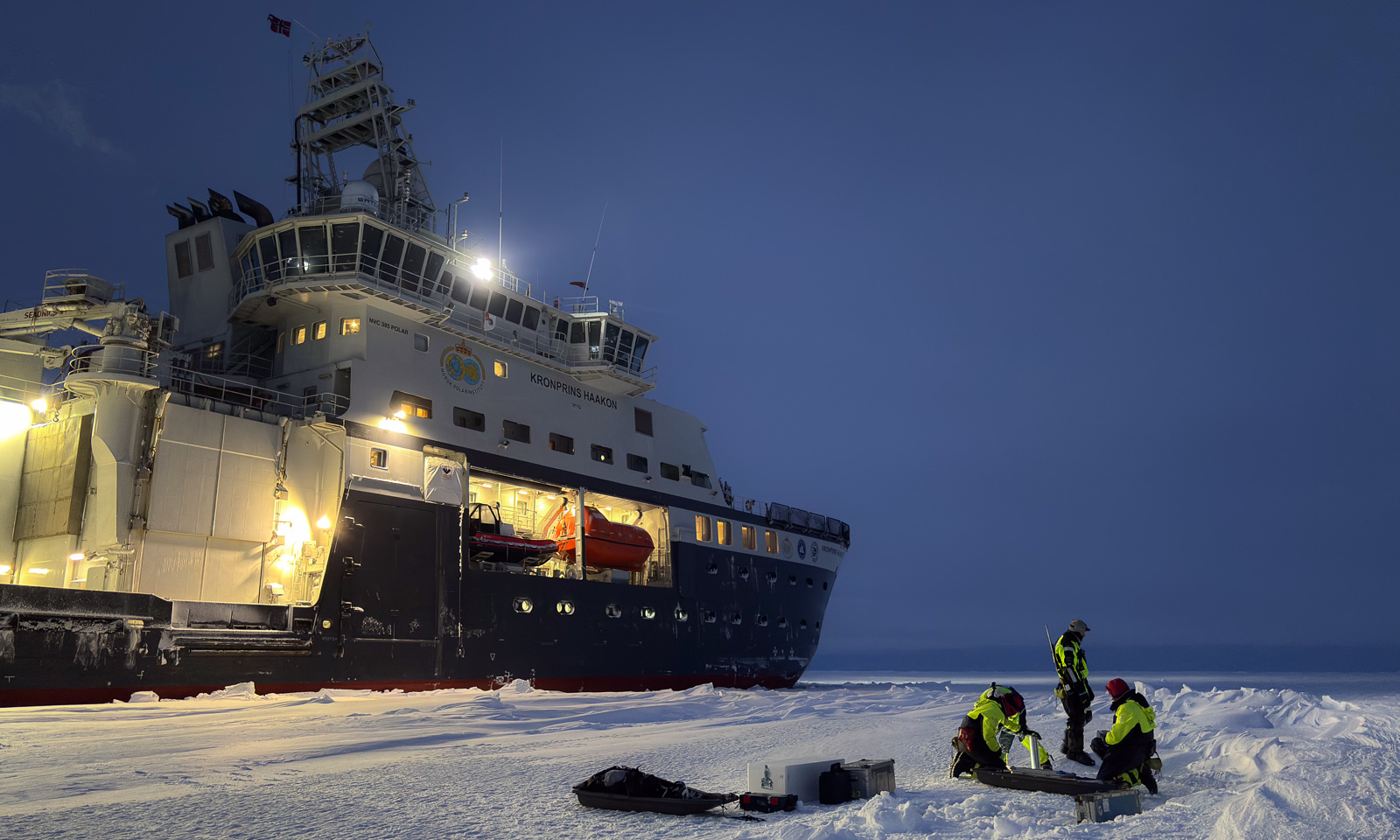
When there is ice, it’s an opportunity for an ice station. Again, this is teamwork. Besides the scientists on the ice, you need a polar bear guard with a rifle on the ice and three bridge watches on the bridge on deck 8 that are constantly observing the surroundings for polar bears, cracks in the ice, fog coming up, and other potential dangers. I handle the communication between the bridge and the team on the ice, and luckily nothing happens. The only thing I have to do is to keep track of the people who are on the ice.

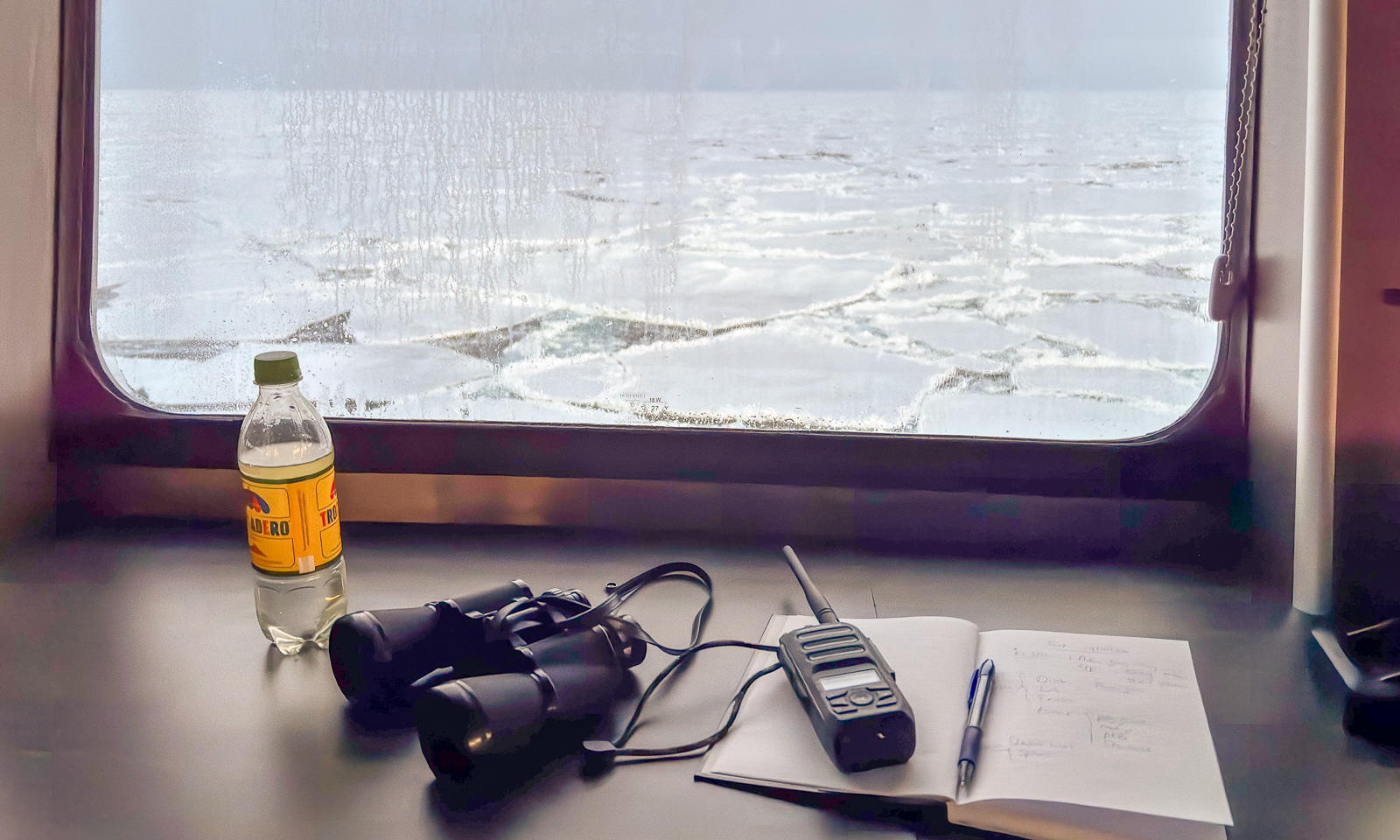
There are my things: A bottle of water, my own binoculars (I have had them for more than 40 years), a VHF radio for communication and a notebook with a ballpen for taking notes.

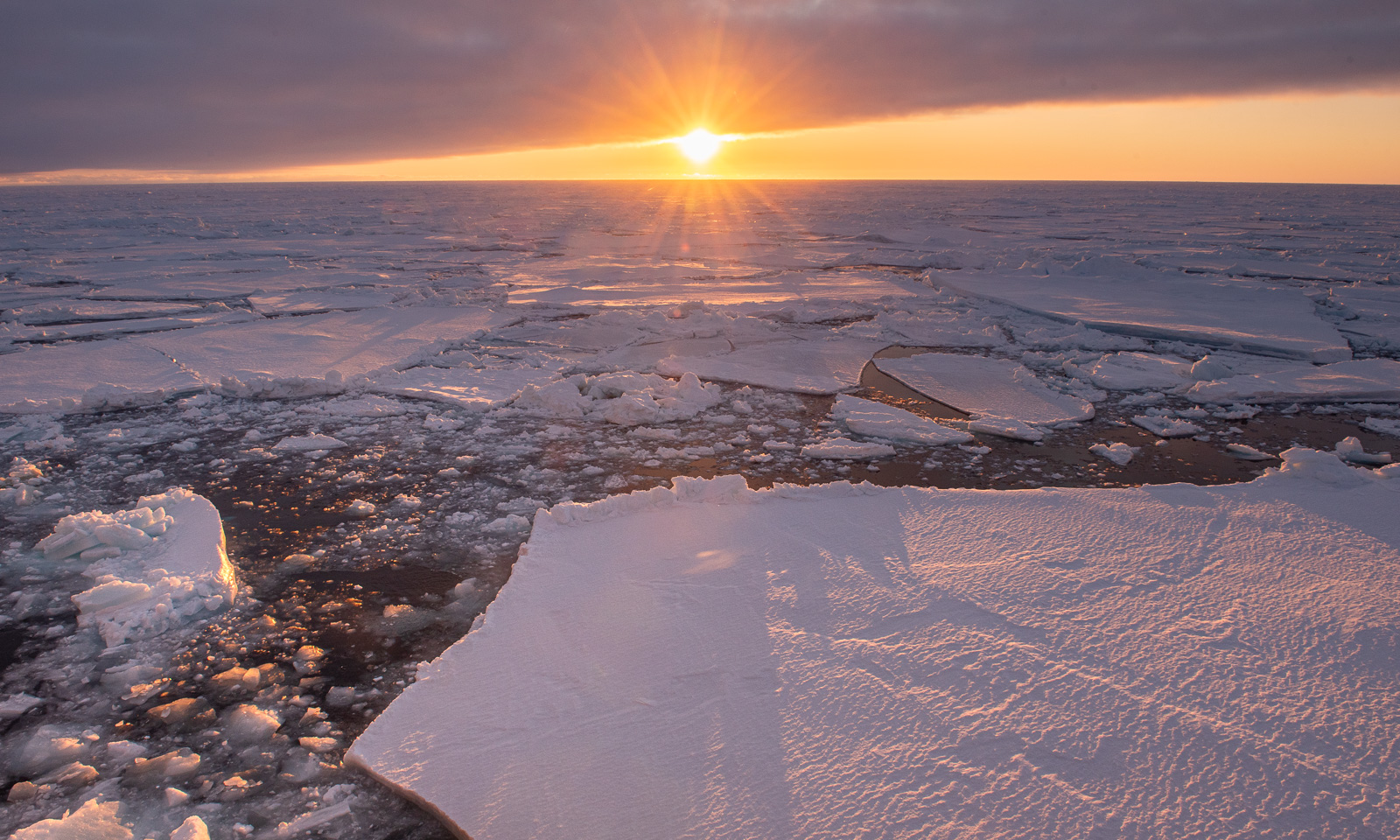
I haven’t seen the sun for days, but now, while I am taking the second shift, the sun is rising from a low layer of clouds on the horizon. I can see its reflections in the windows on the other side of the bridge while the ice team works in the ship’s shadow.

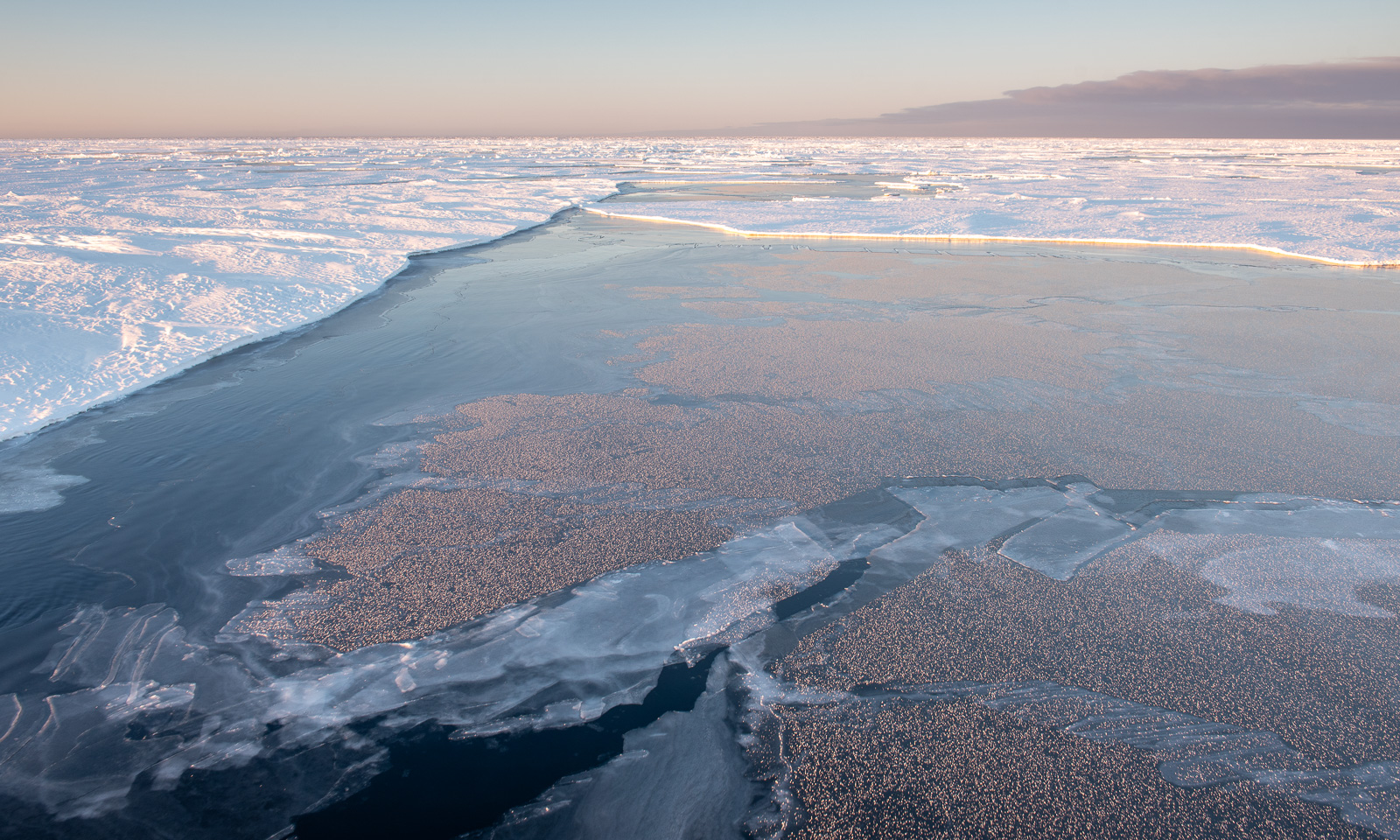
For the rest of the day, I do computer work but interrupt it several times just to go outside and take some photos from the helicopter deck, which is on deck 6 at the bow of the ship. You never know how long the good weather will last. I am there while the sun is shining, I am watching the sllloooowww sunset, and I am there in the evening, when it is the ship that is illuminating the ice.

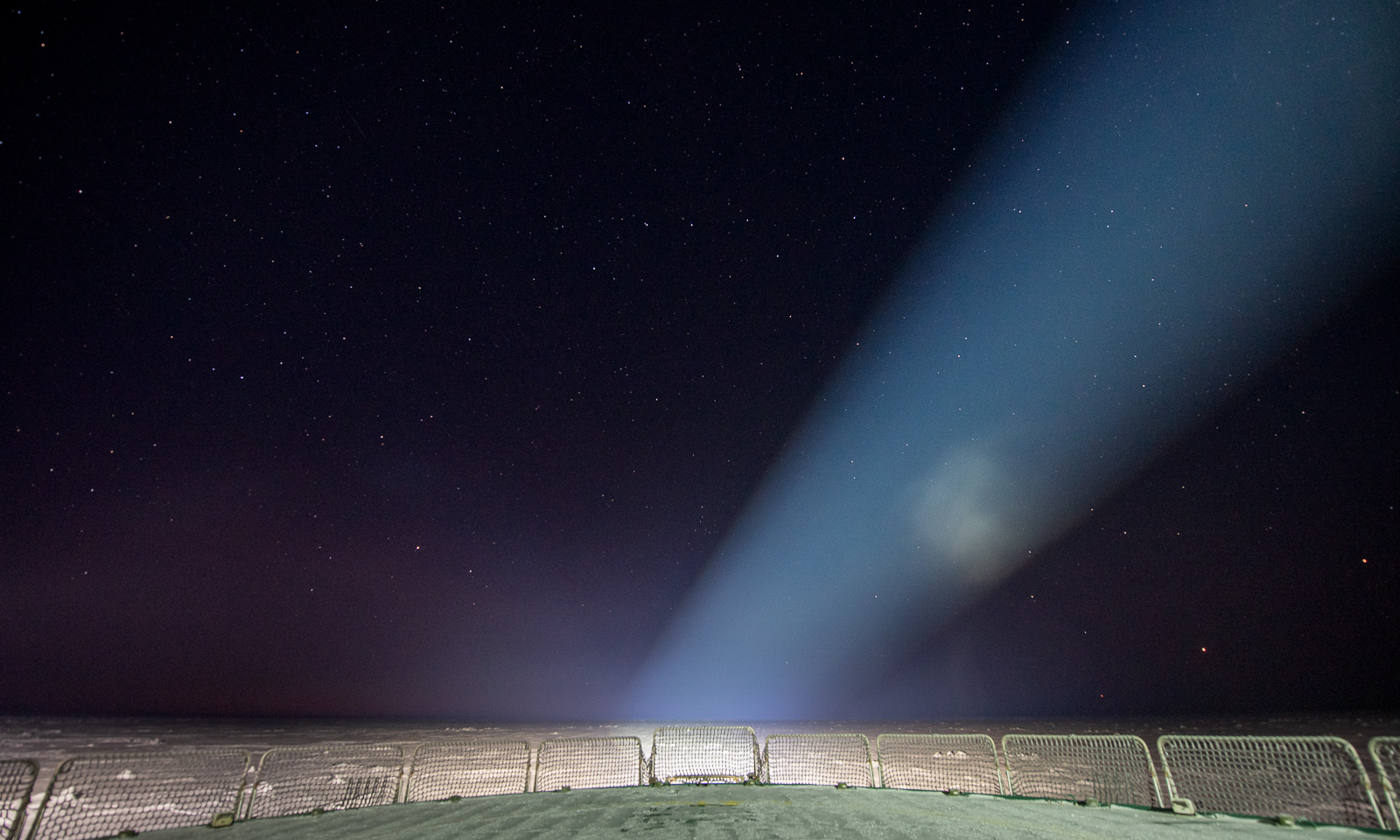
I am already in bed when I see a post in our group chat mentioning Jupiter and Mars. I put my down clothes over my pyjama, put the helmet on my head and go out onto the “helideck” one last time for the day. The night is starry and there they are: Both Jupiter and Mars near the horizon, accompanied by many stars. But there are also big spotlights, which make the view somehow special. The stars are slightly out of focus, but I am showing a photo nevertheless.

18 October

Another day – another ice station. I will do the first bridge watch and then go onto the ice myself to fly a drone. Around 10 o’clock, the team enters the ice.

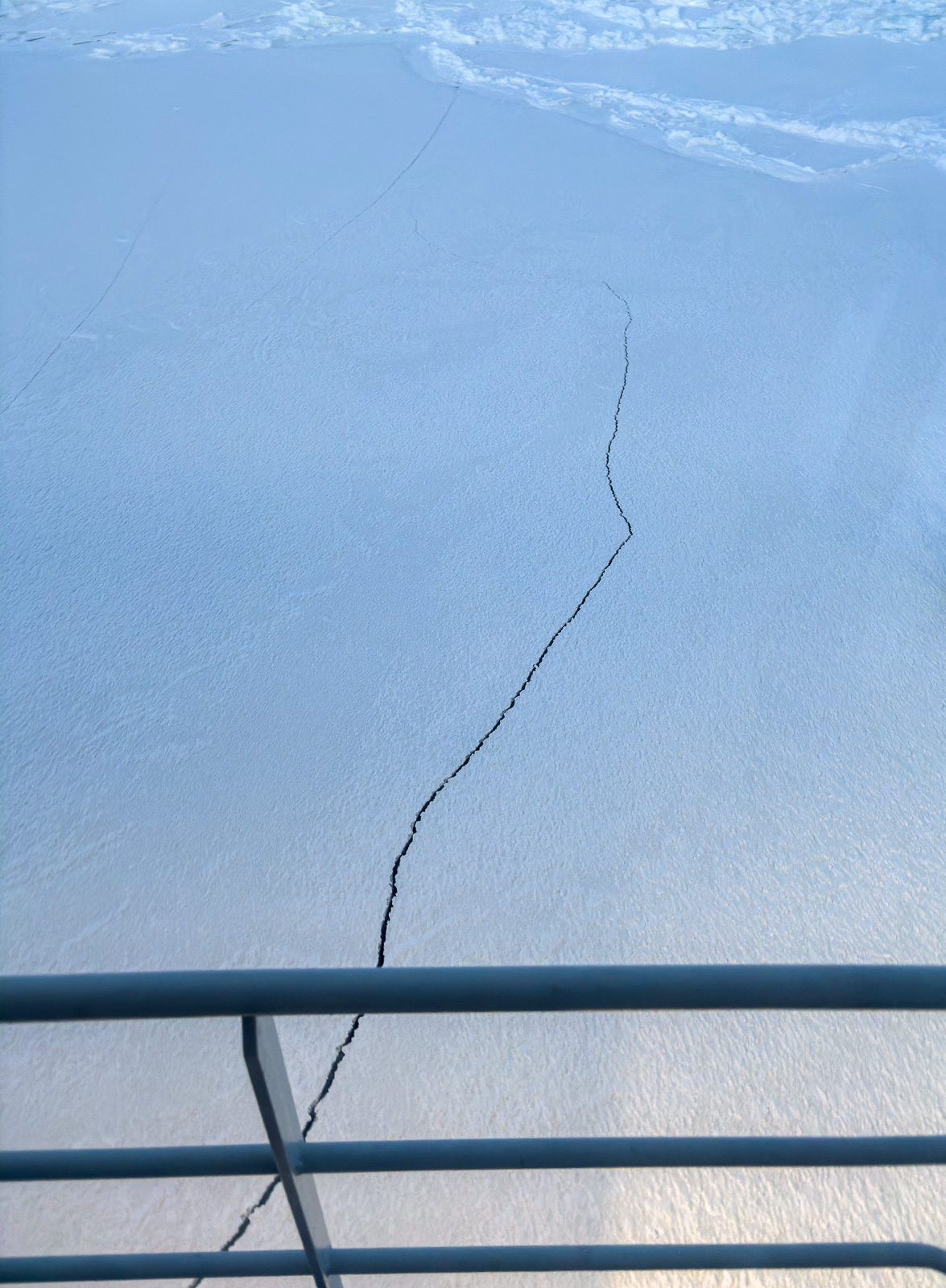
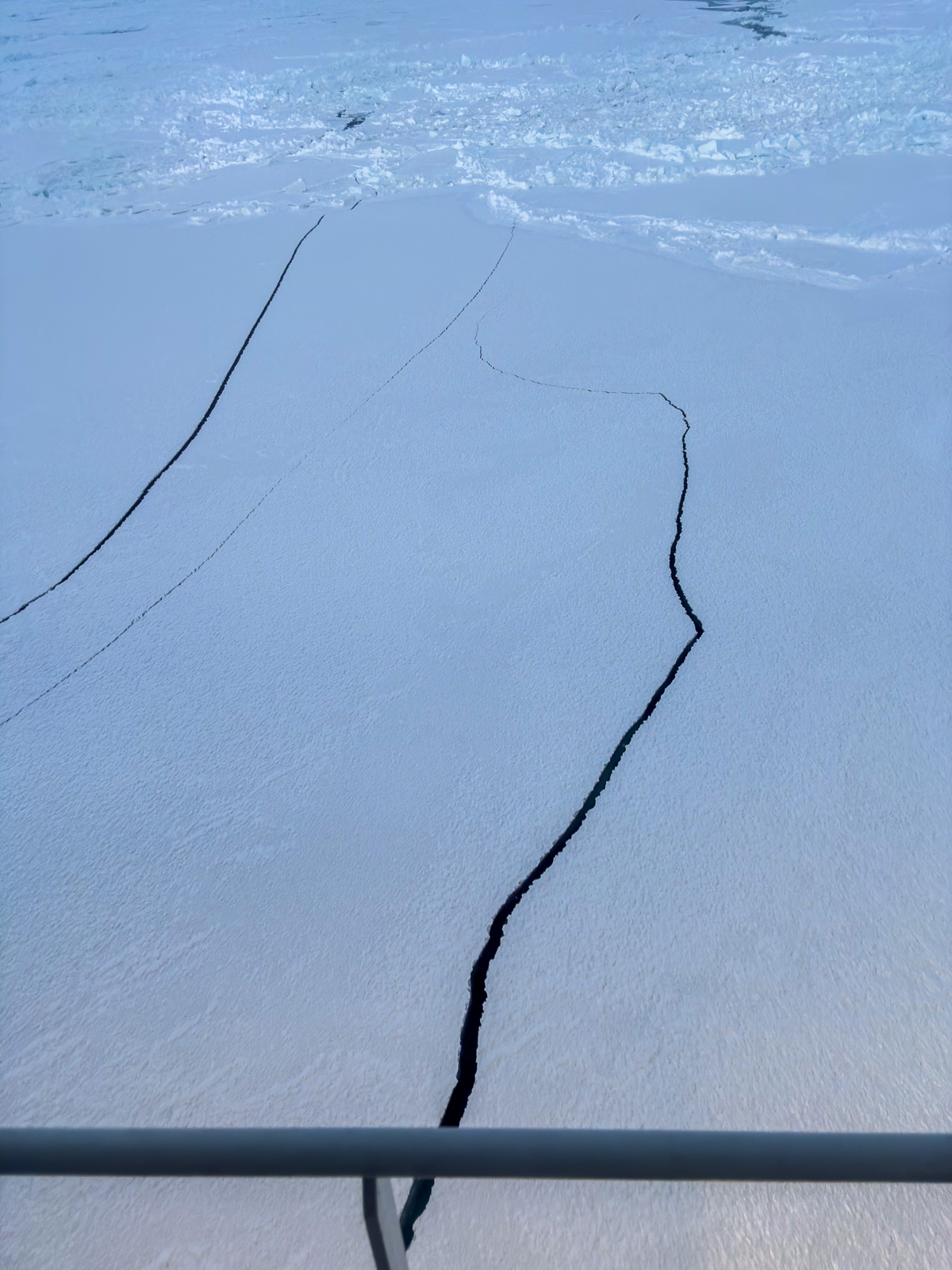
Two things are certain on an expedition with the icebreaker Kronprins Haakon. All meals are on time. Everything else may and will change. This time, it is a crack in the ice that I observe. I inform the team on the ice. I have to give several updates, because more and more cracks appear. After less than half an hour, both the team and their equipment are safely back on board, and the ice station is aborted. Between the first and the last of the following photos lie 18 minutes.

After lunch – the second try. I may join the team in the beginning, because, although the conditions for drone flying are not the best (mediocre visibility, low temperatures, high humidity), the winds will increase in the afternoon. It’s now, or never.

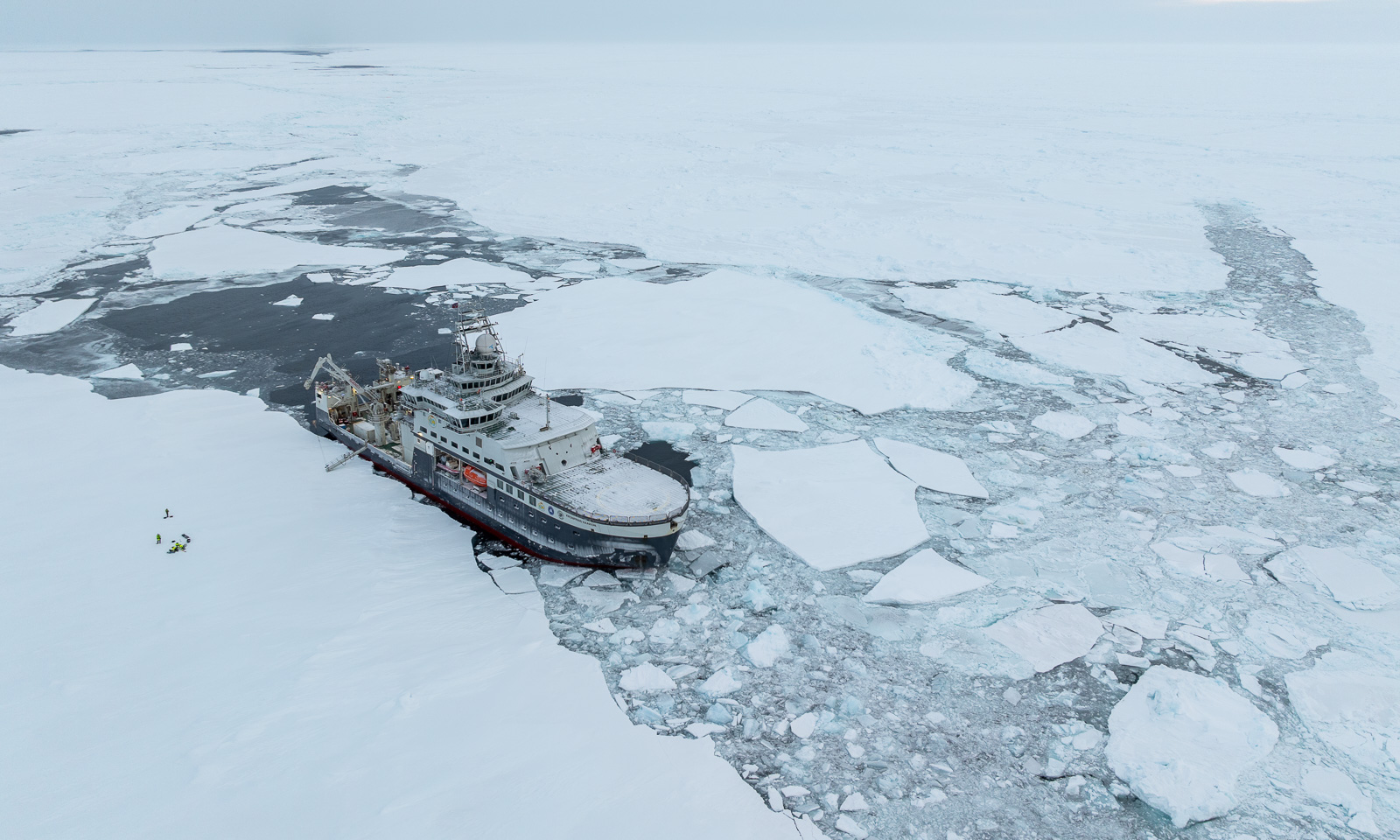
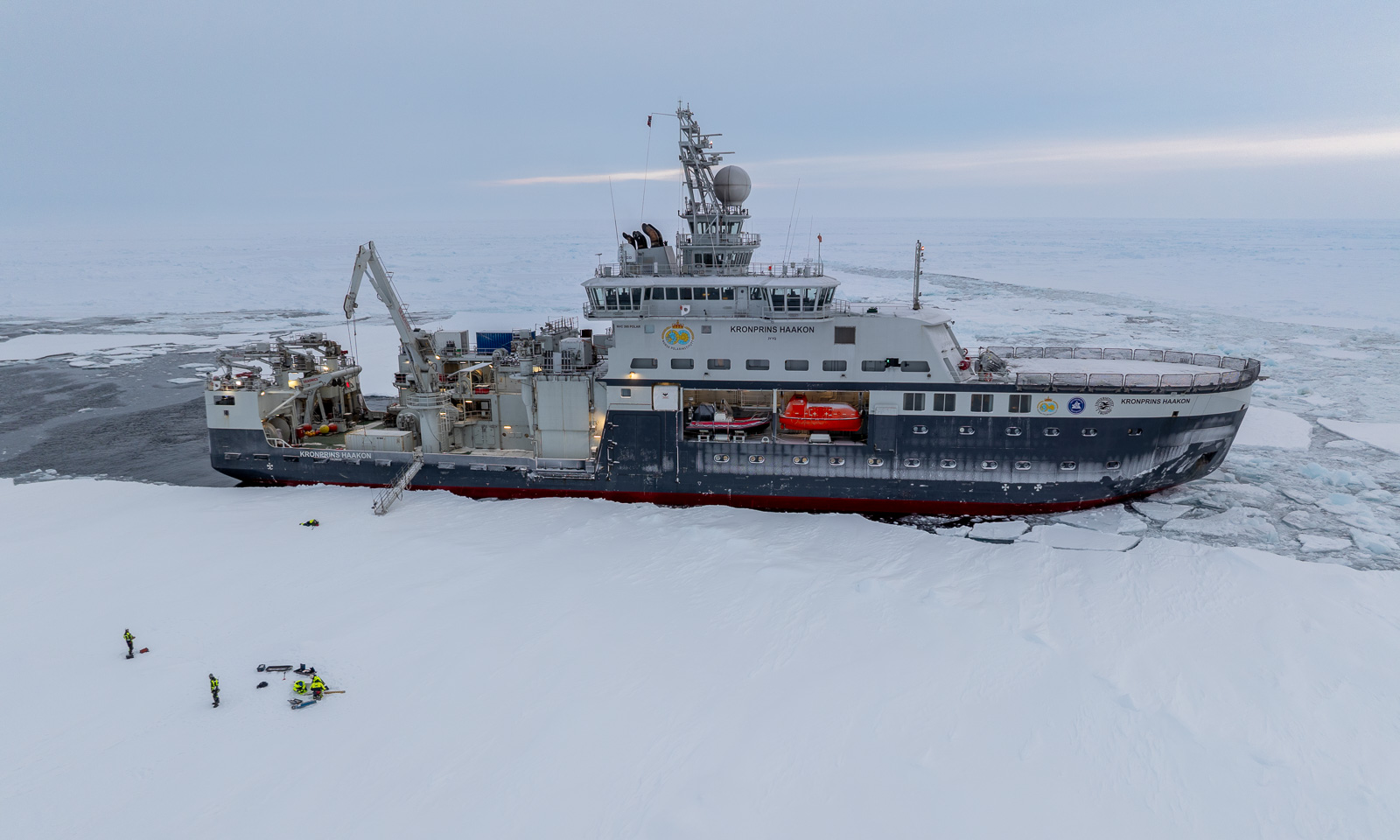
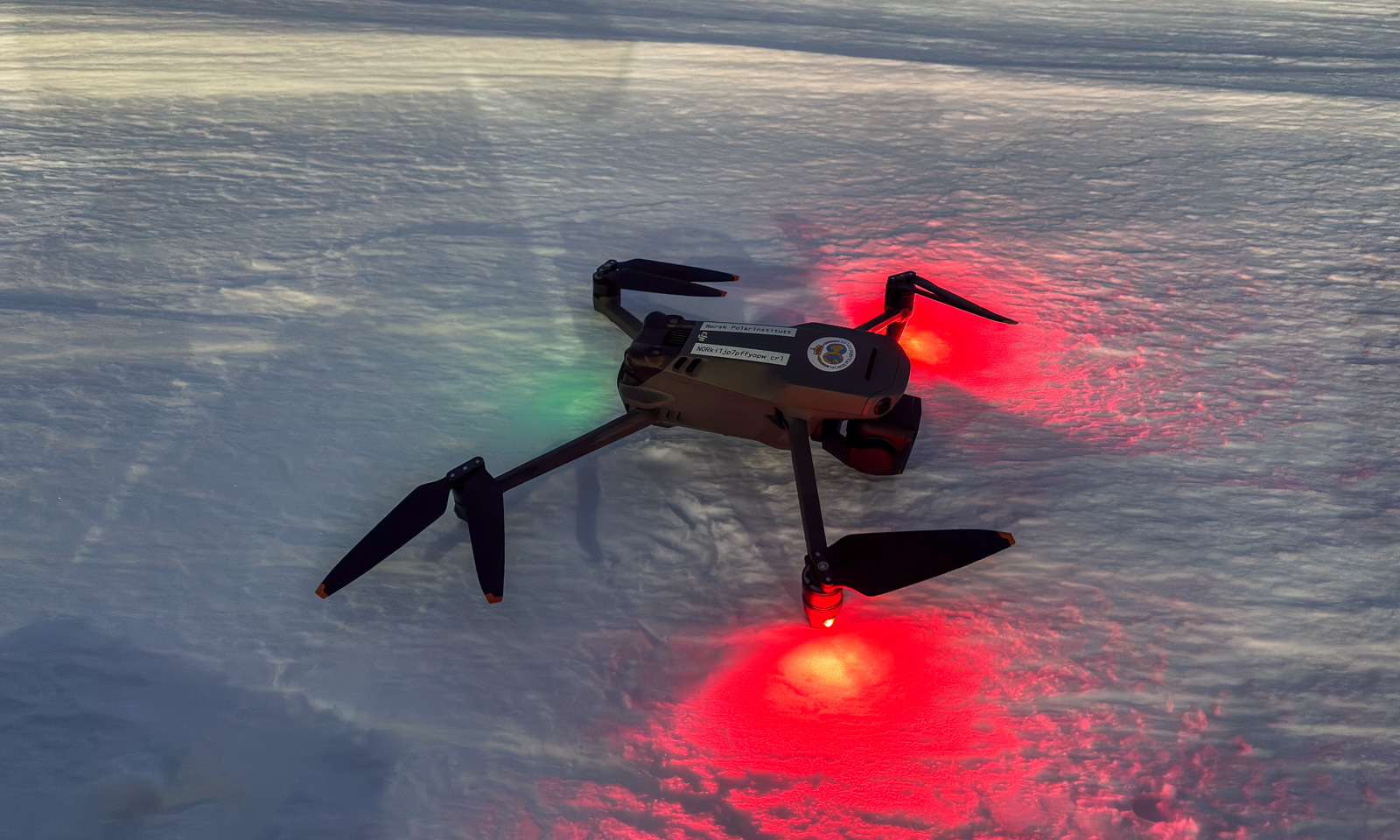
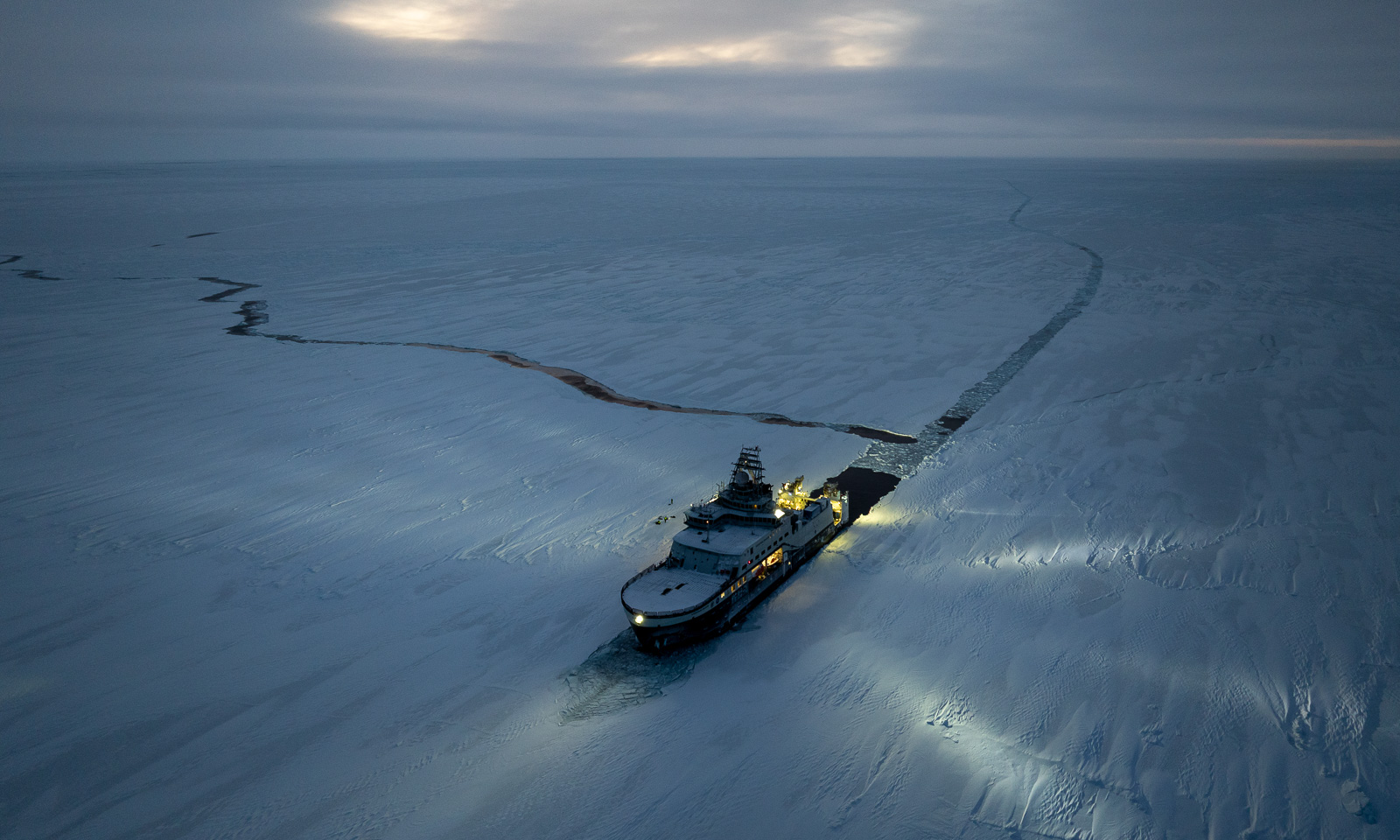
Fifteen minutes later, I am on the sea ice. At first, I let the drone fly at an altitude of only 2-3 metres for two minutes. I land it and check the propellers. Are they free and able to move? Is there visible icing? What about the battery? Luckily, everything looks fine. With a new battery I lift the drone up to 65 metres to fly a zigzag pattern to get a mosaic of photos to be stitched together later. The flying itself works pretty well, although I get some wind warnings on the display of my remote control. I have some minor issues with the camera gimbal and take another flight to get some backup photos. At the very end I take a snapshot of our icebreaker.

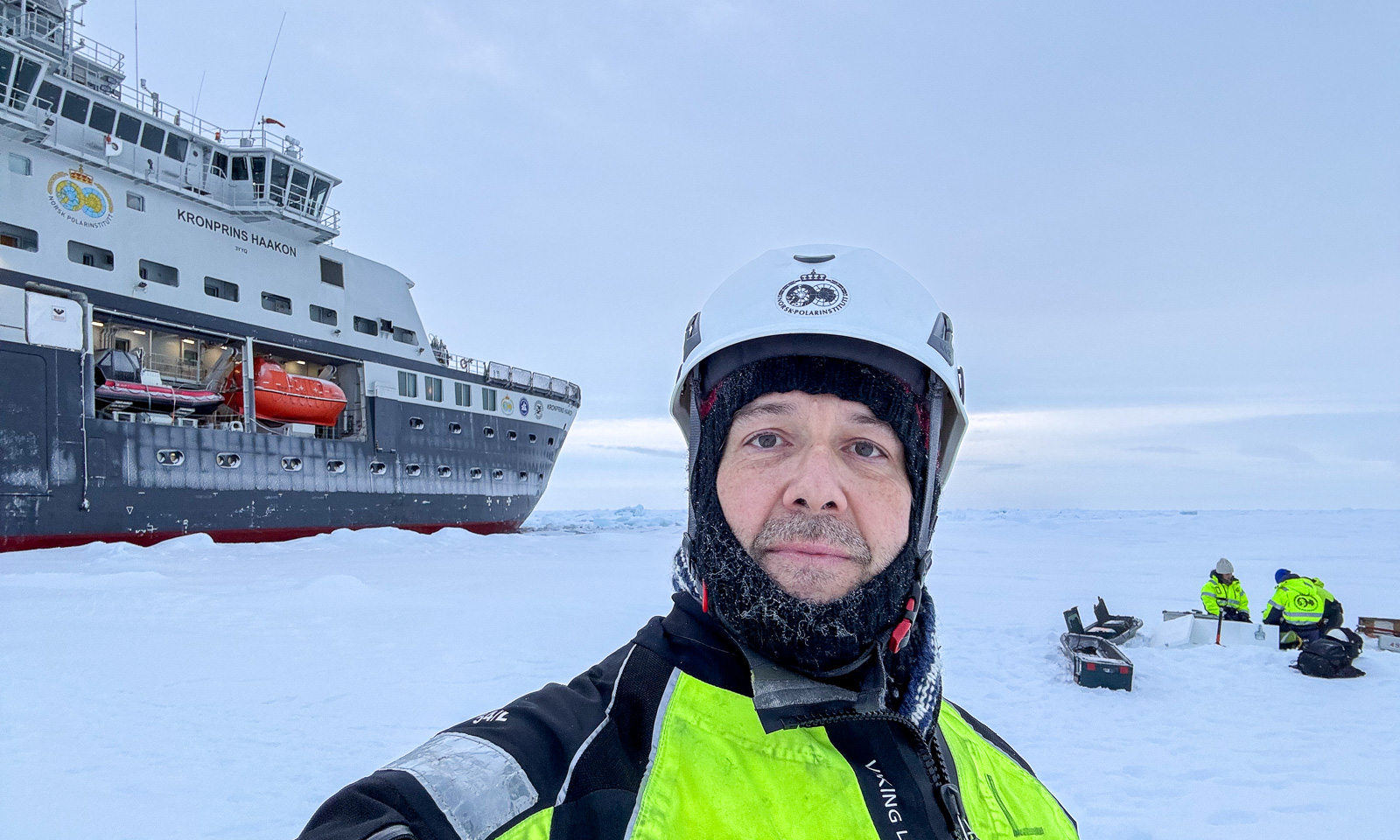
And a selfie or two. I am wearing a survival suit and a helmet from the Norwegian Polar Institute, a woollen sweater I bought in Longyearbyen two years ago and a balaclava knitted by my friend Christine.

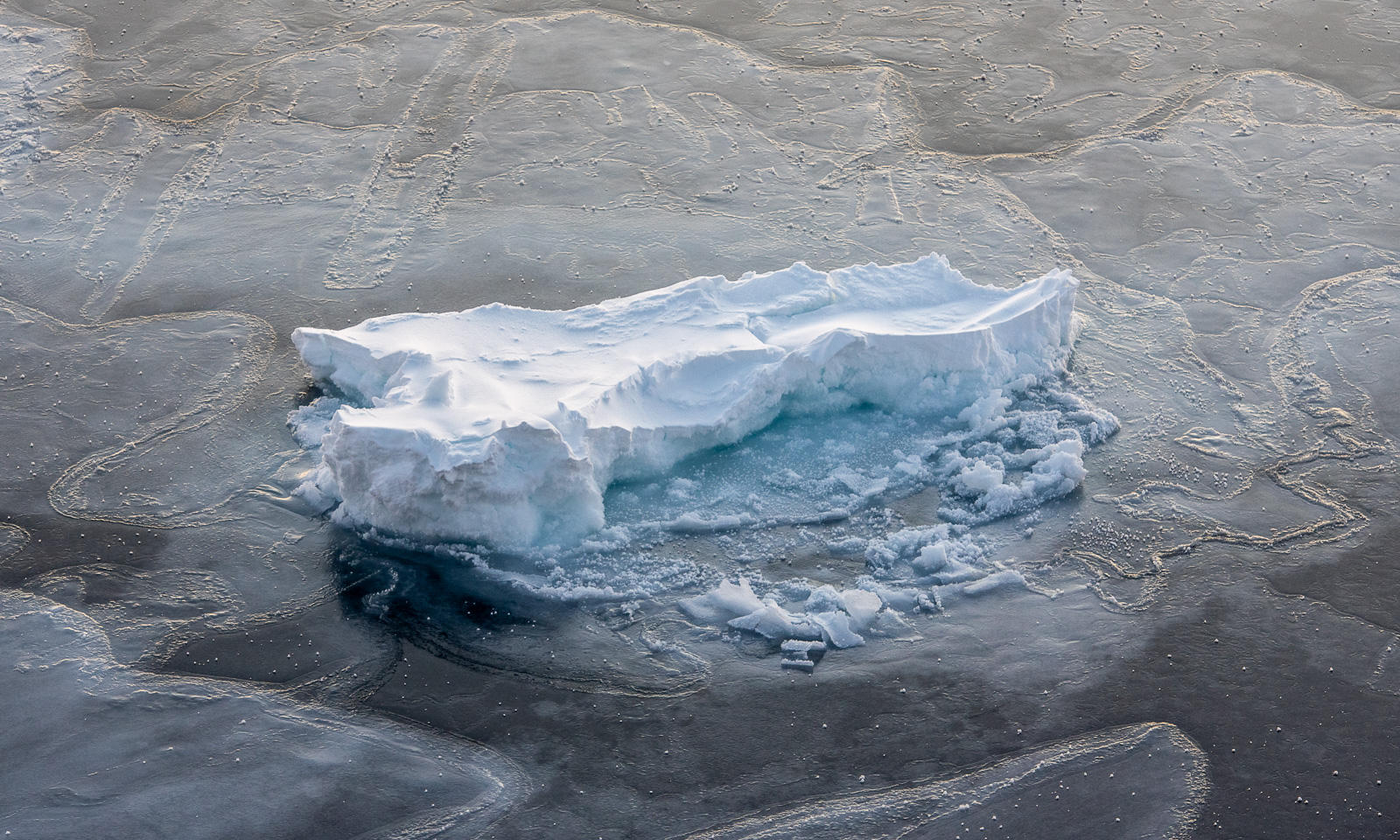
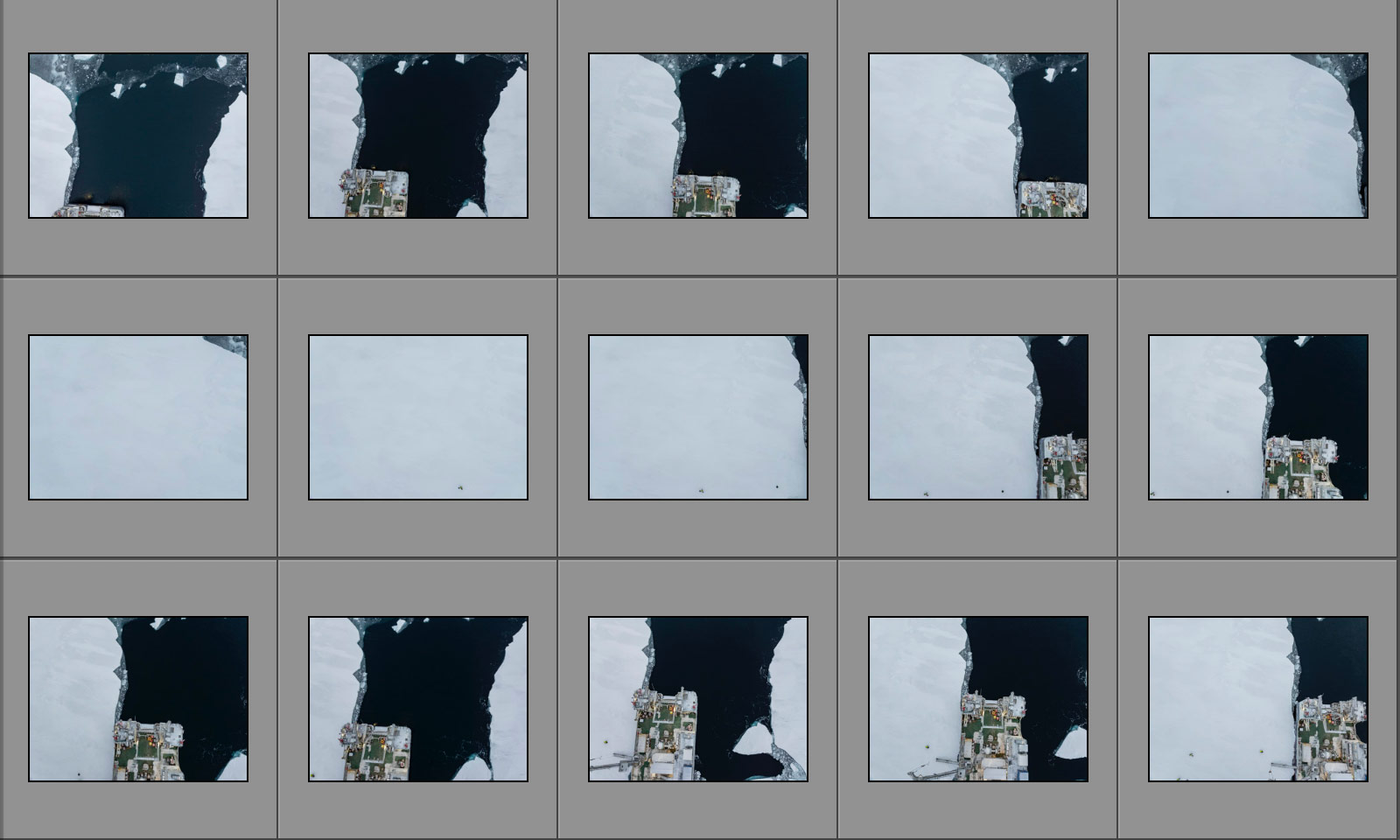
When I have finished, I leave the sea ice. After redressing and a small break I take another bridge watch. Nothing happens, and so it should be. The exciting part comes thereafter. Are the photos – 126 in total – suitable for an orthomosaic? I mean, the single shots look like this:

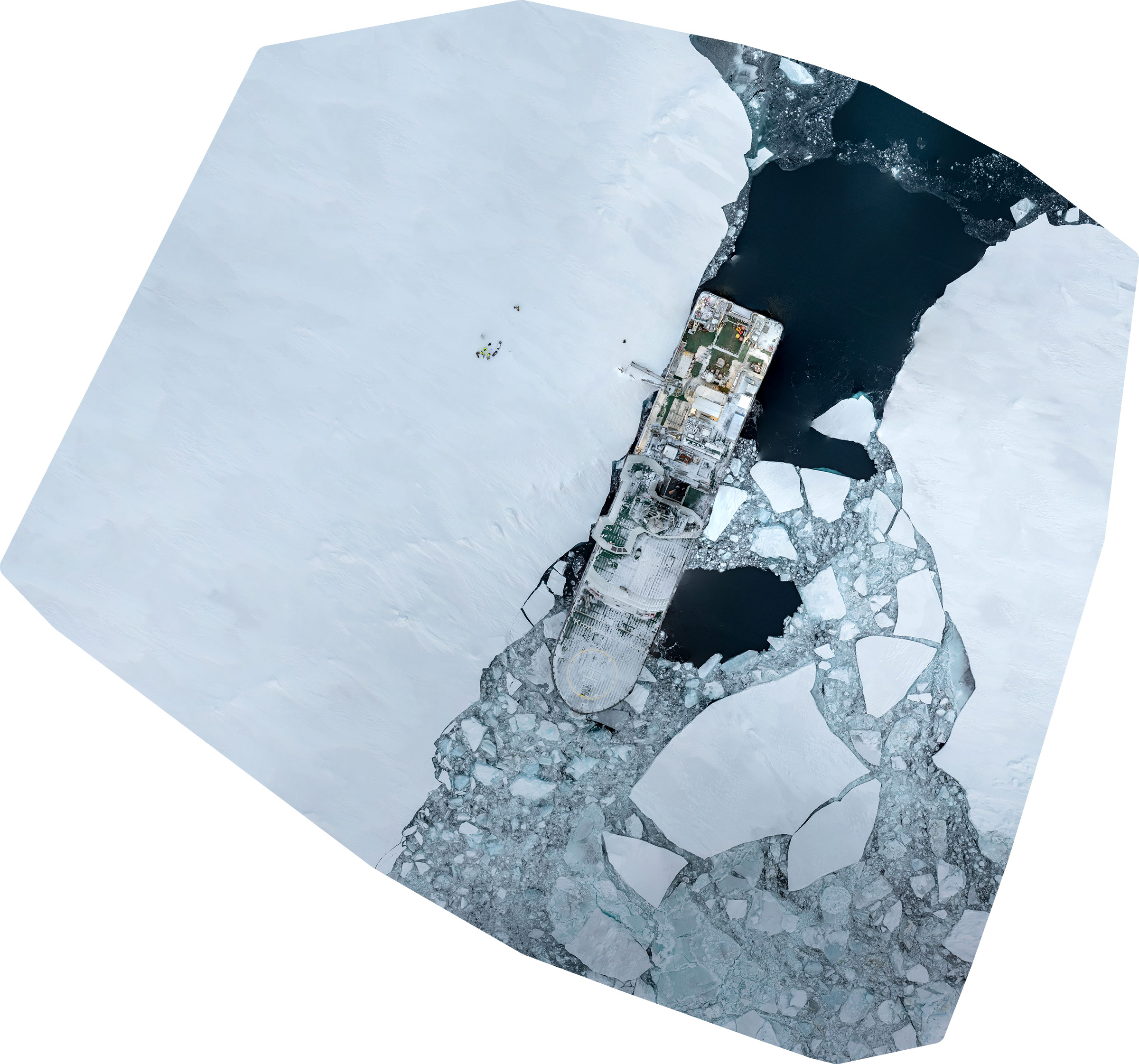
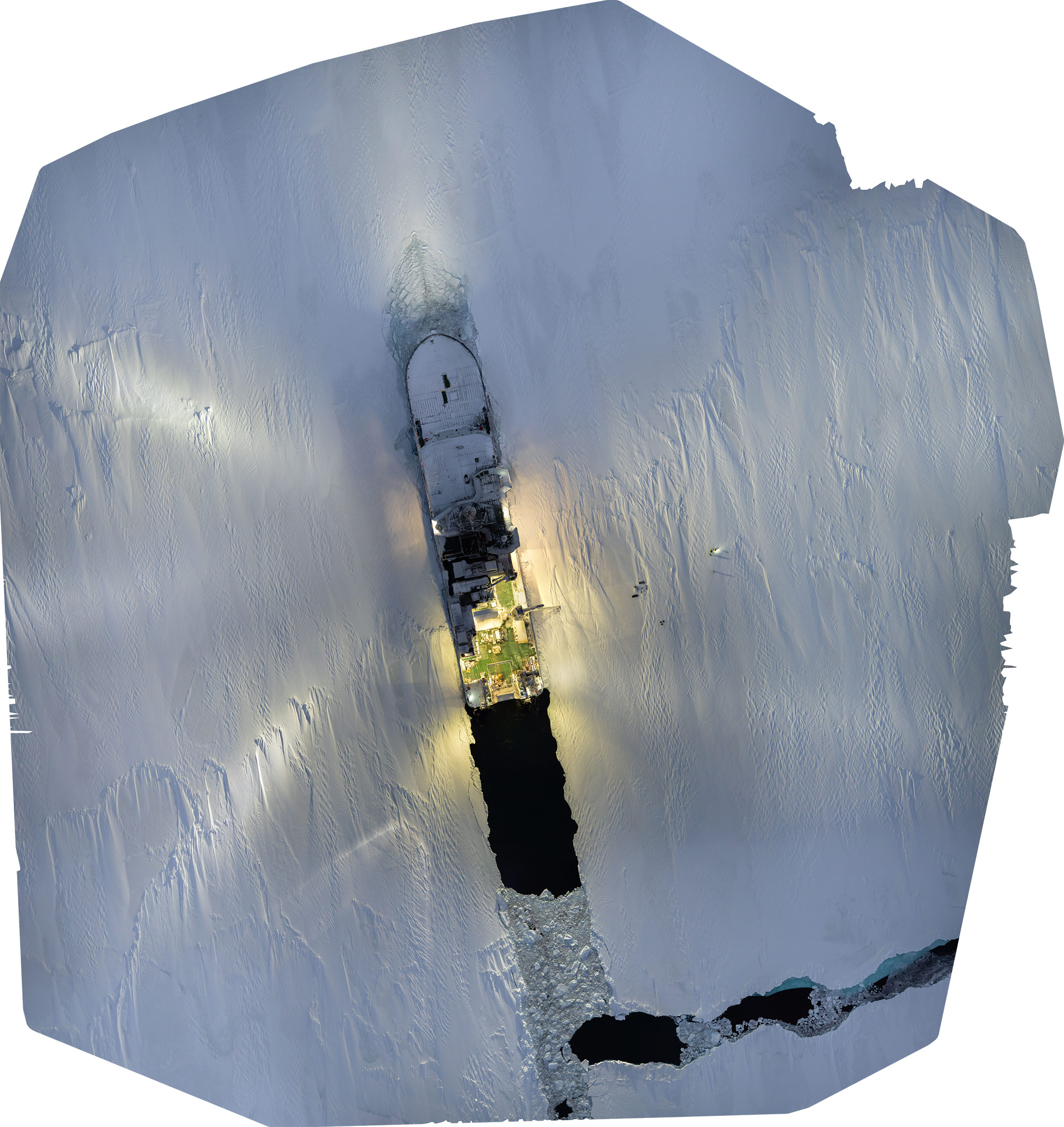
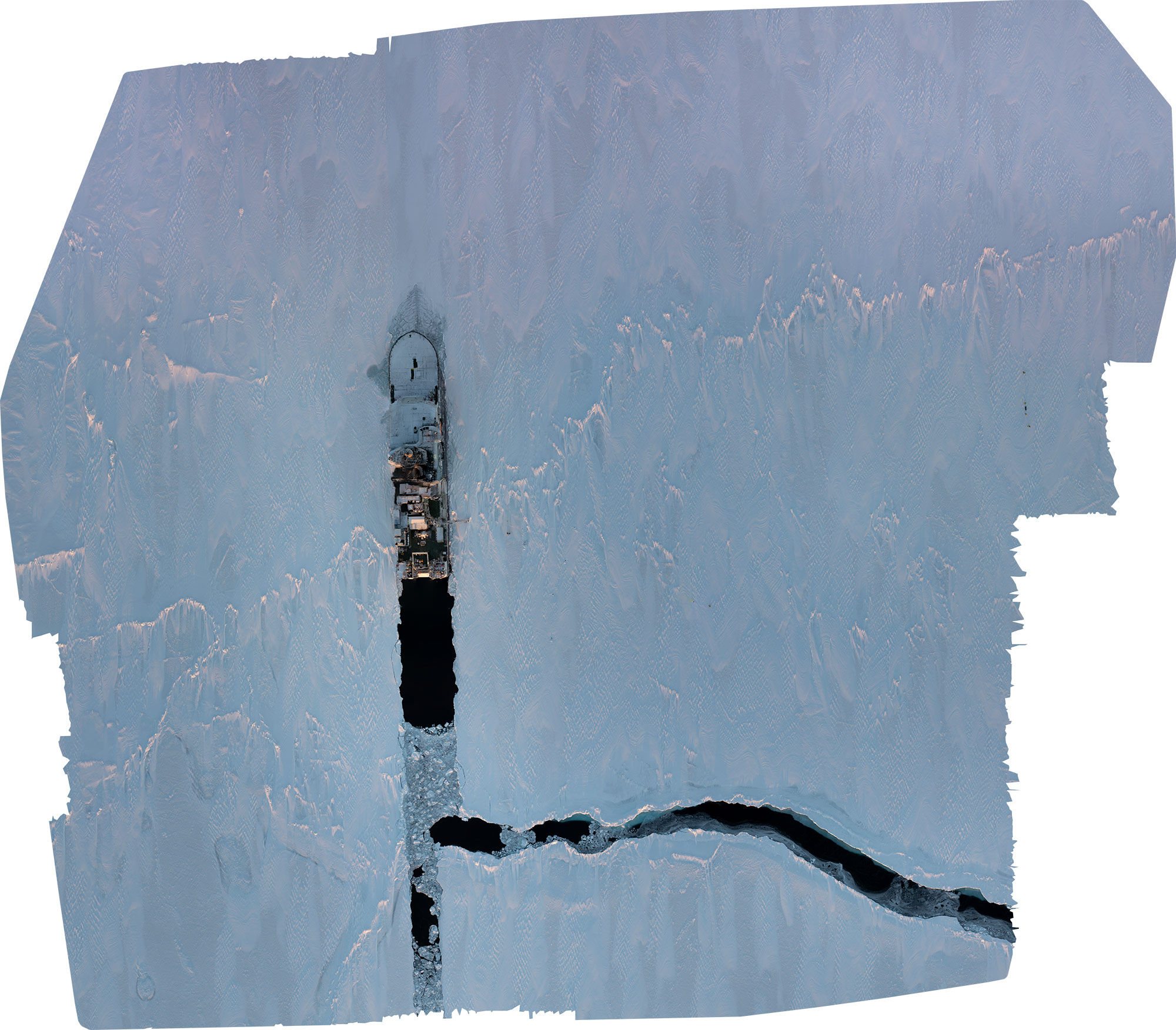
An then, the relief: WebODM, the software successfully stitches together the photos.

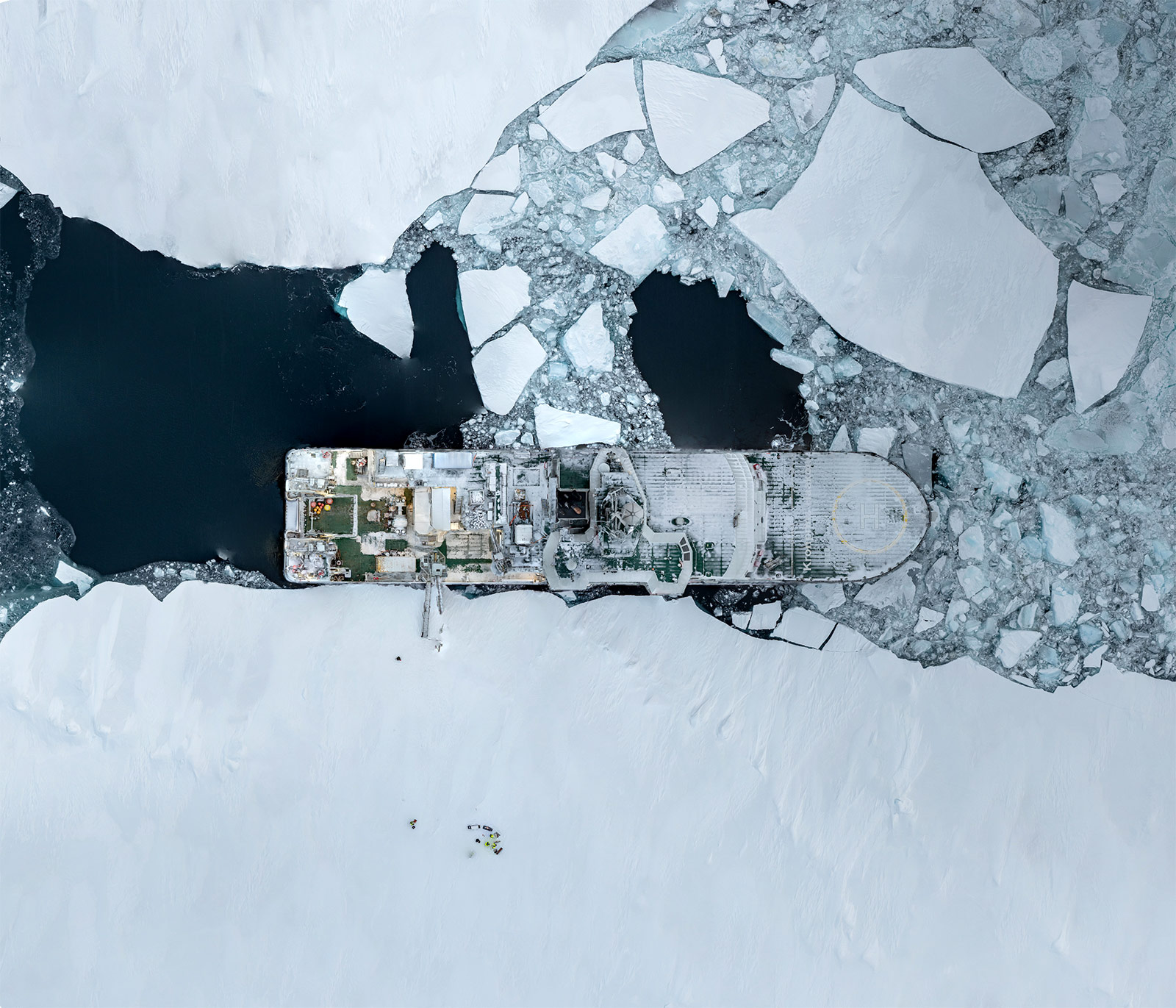
Why does the image has this odd angle? Because it contains spatial data, so that it can be used in GIS systems. It is therefore aligned north. Here is a cropped version aligned parallel to the ship:

Will there be another ice station? I’m pretty sure. Probably not tomorrow, when we expect another strong gale, with wind speeds above 20 m/s. So I don’t know what will happen tomorrow, apart from one thing: all meals will be on time.

Daily weather changes and another ice station

This article is part of the series “2026-10: Fram Strait cruise KPH”.

18 October

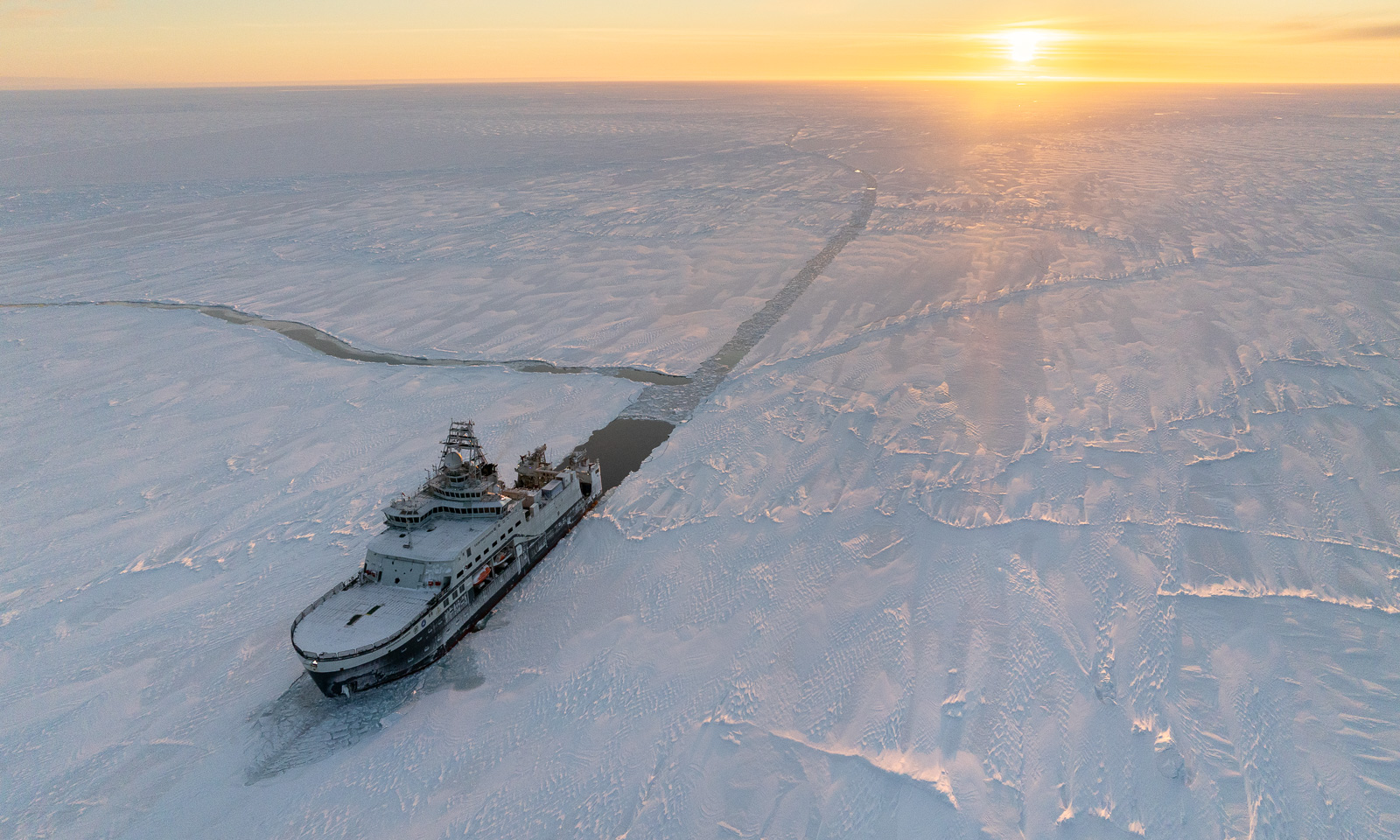
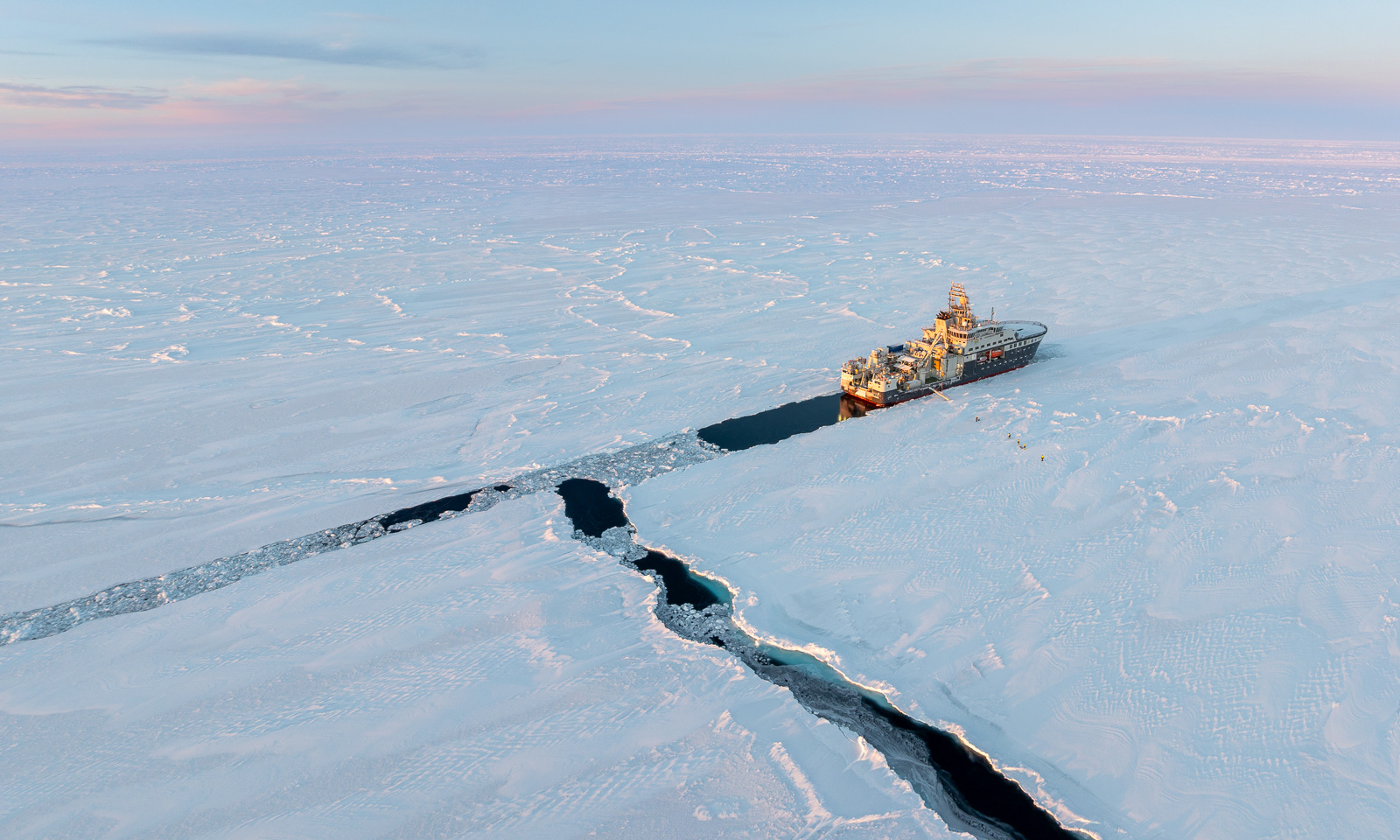
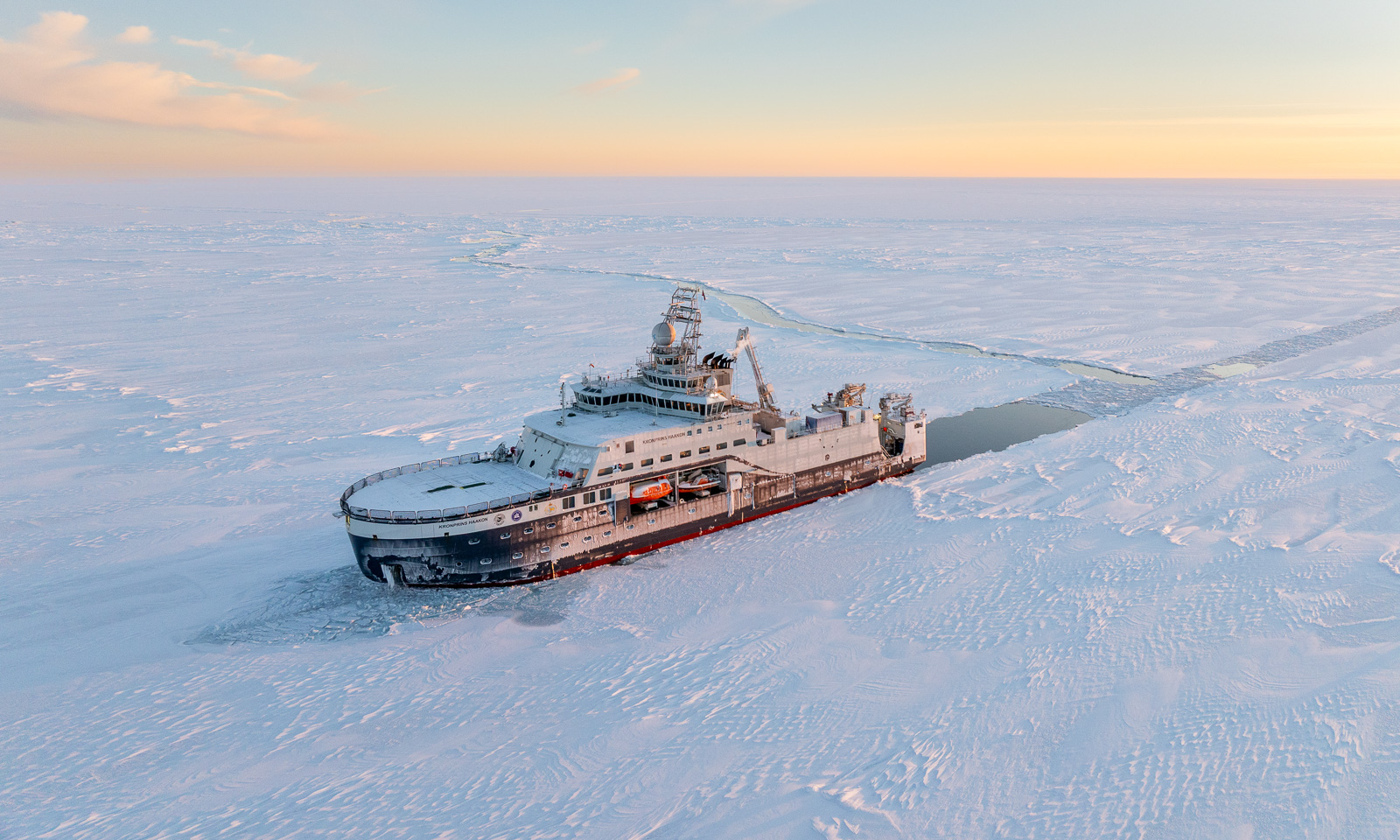
Oh, what lovely weather we have on the ice station. After I have done my job, I take the opportunity to take a photo from the icebreaker Kronprins Haakon by drone.

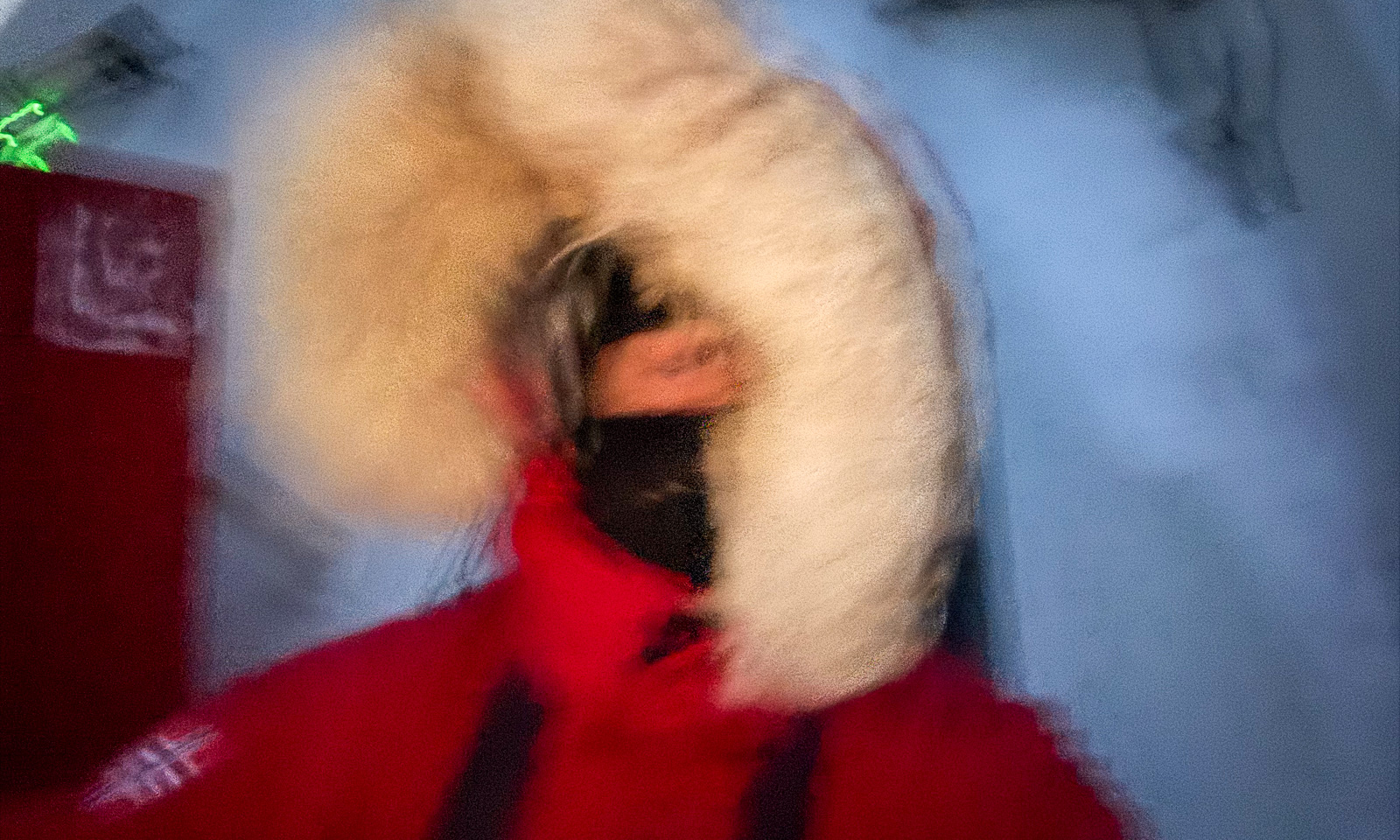
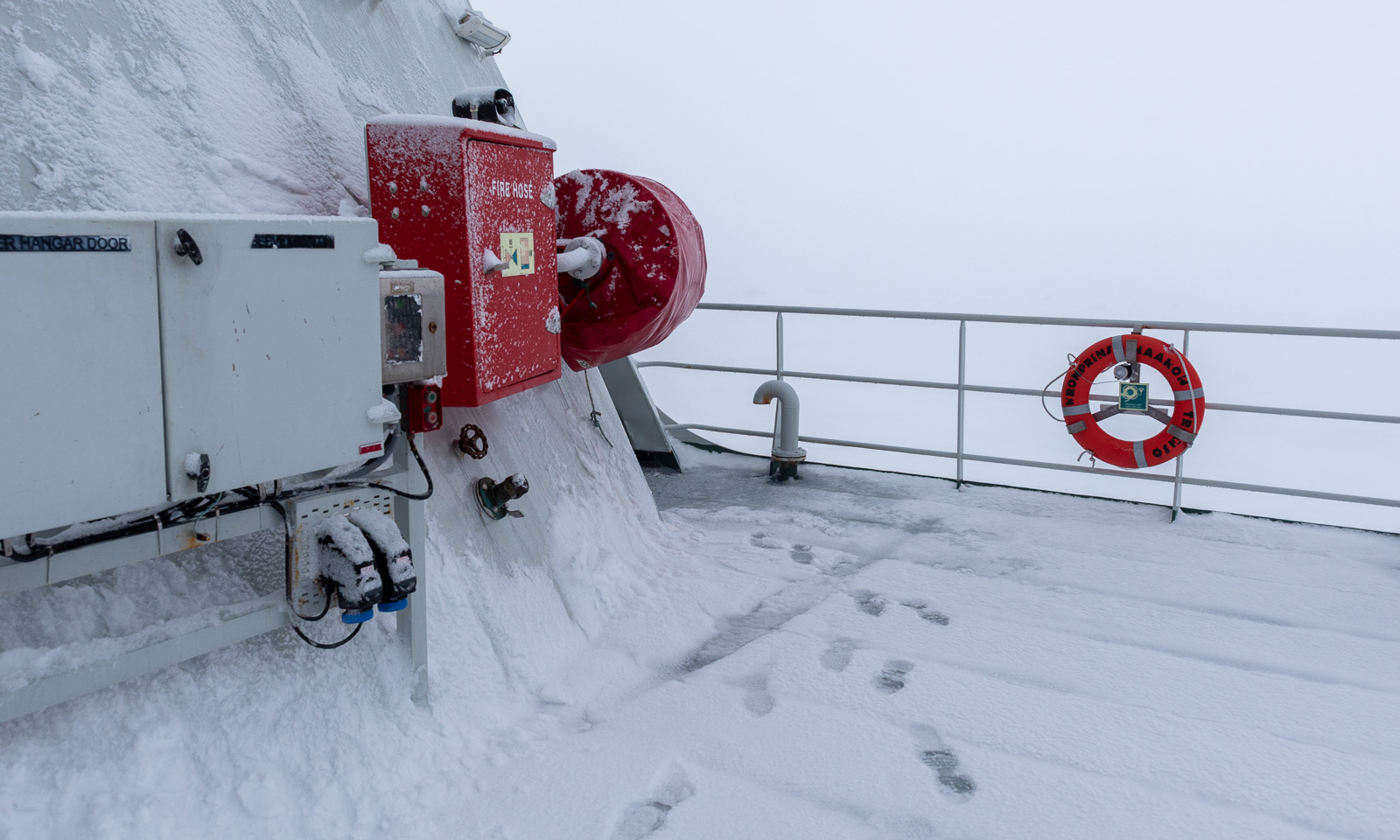
That was 13:00. Six hours later, the weather has changed. It is snowing and the crosswind on the helicopter deck is so massive that I do not dare to step out more than one metre. I take a shot to the front and a very blurred selfie and go inside again.

19 October

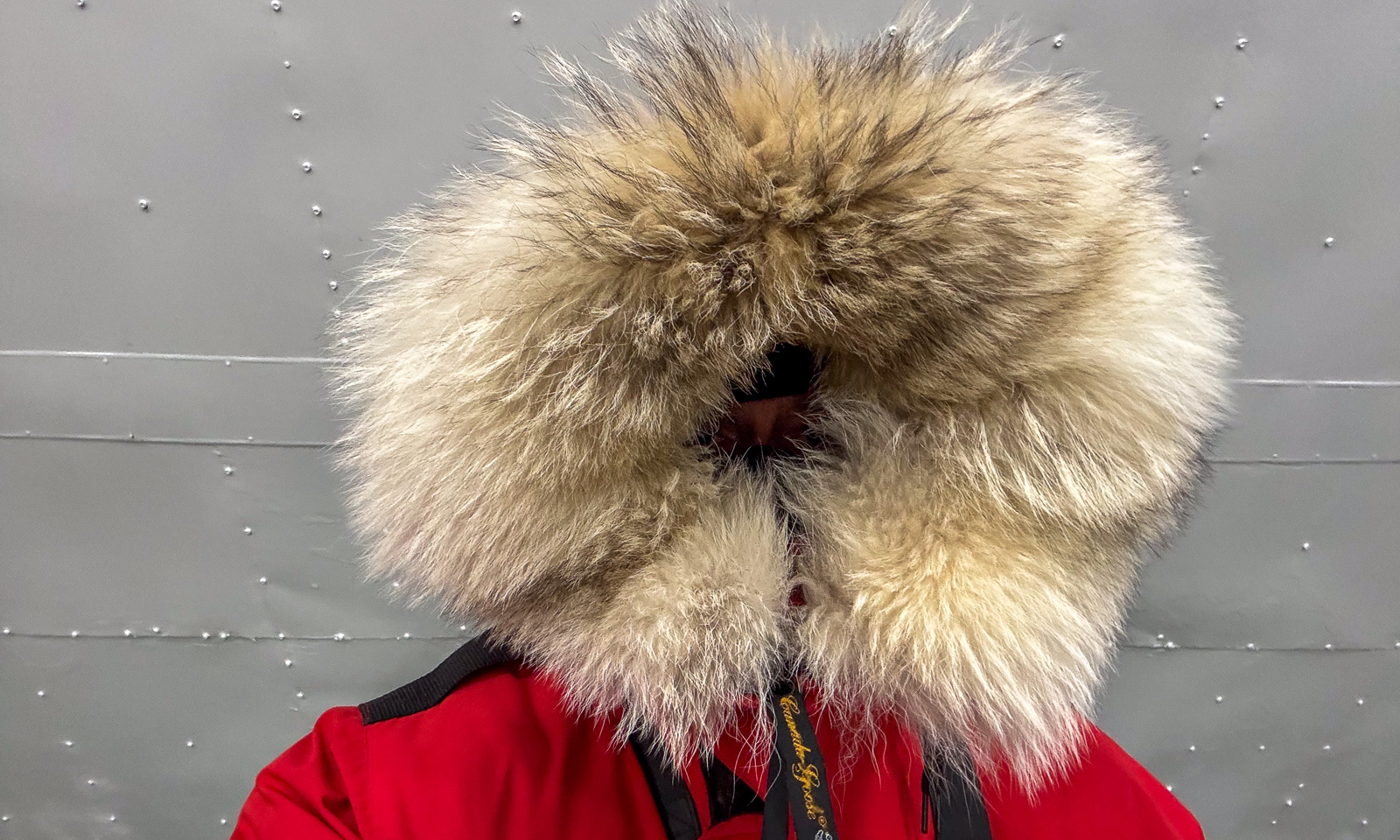
As predicted, the weather has become worse. When I am on the deck again after lunch, wind speeds have increased to something between 22 m/s and 28 m/s and the temperature has dropped to -8 °C. So I take the selfie in the wind-protected hangar.

But I am in a luxury position. Most of my work here is computer work, done in the heated Conference Work Room. Others have a much tougher job. They are recovering a mooring. Although the cable is one of the shorter ones, it takes around two hours until the mooring is recovered, because the elements keeps tangling up the cable. This is outside work on deck 3, with overalls, helmets, balaclavas and goggles in storm conditions and wind chills below -20 °C. So, it’s not me who should complain about the weather.

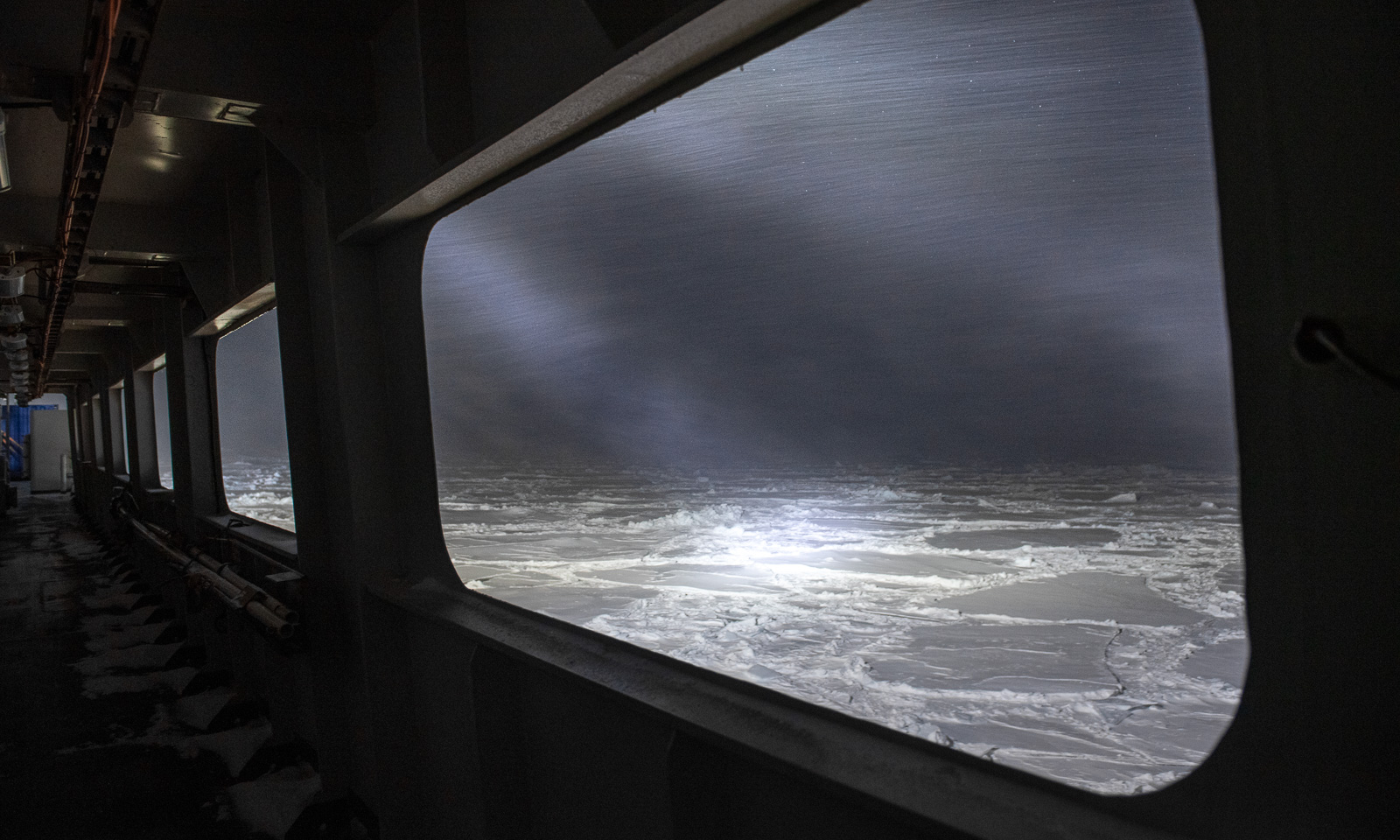
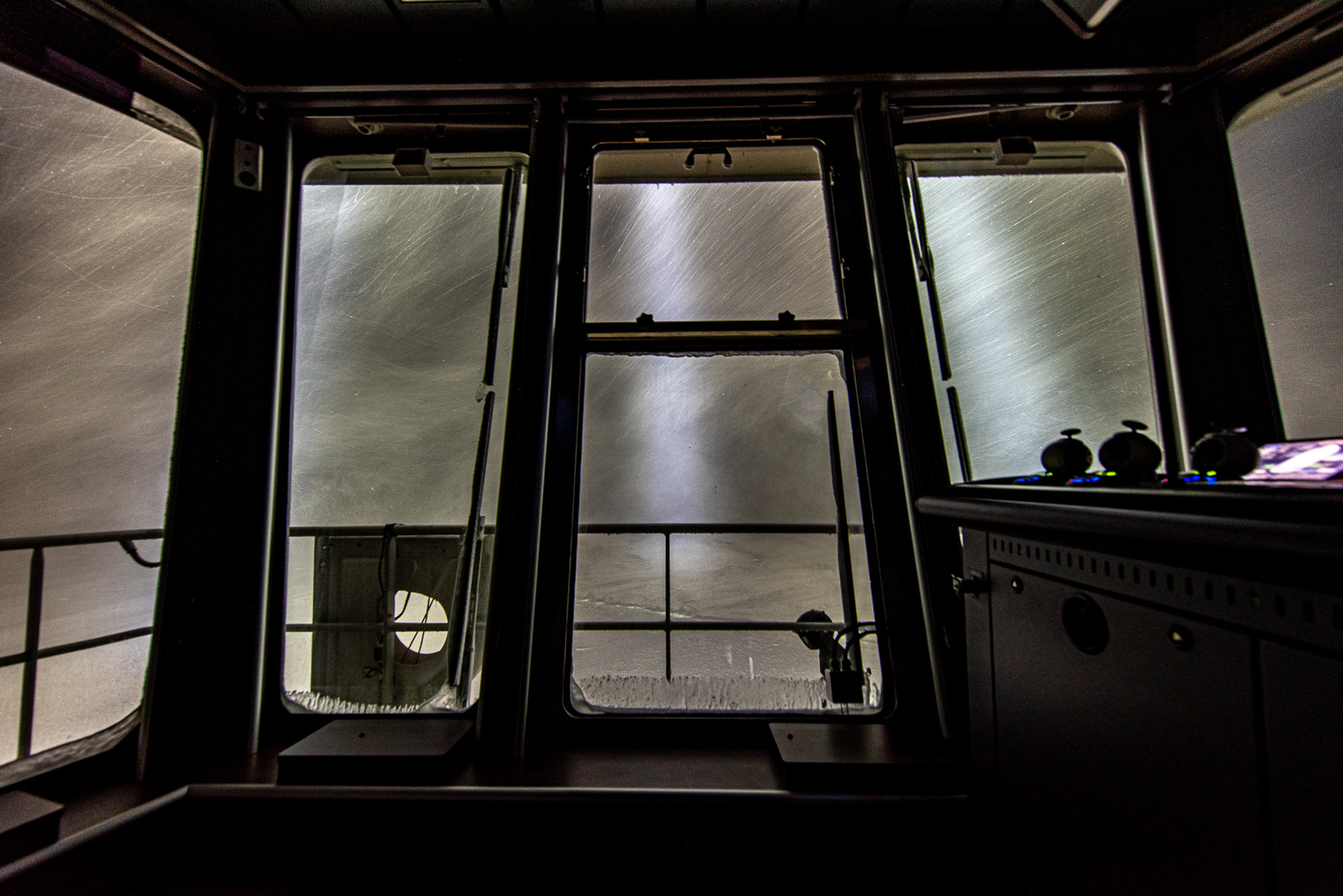
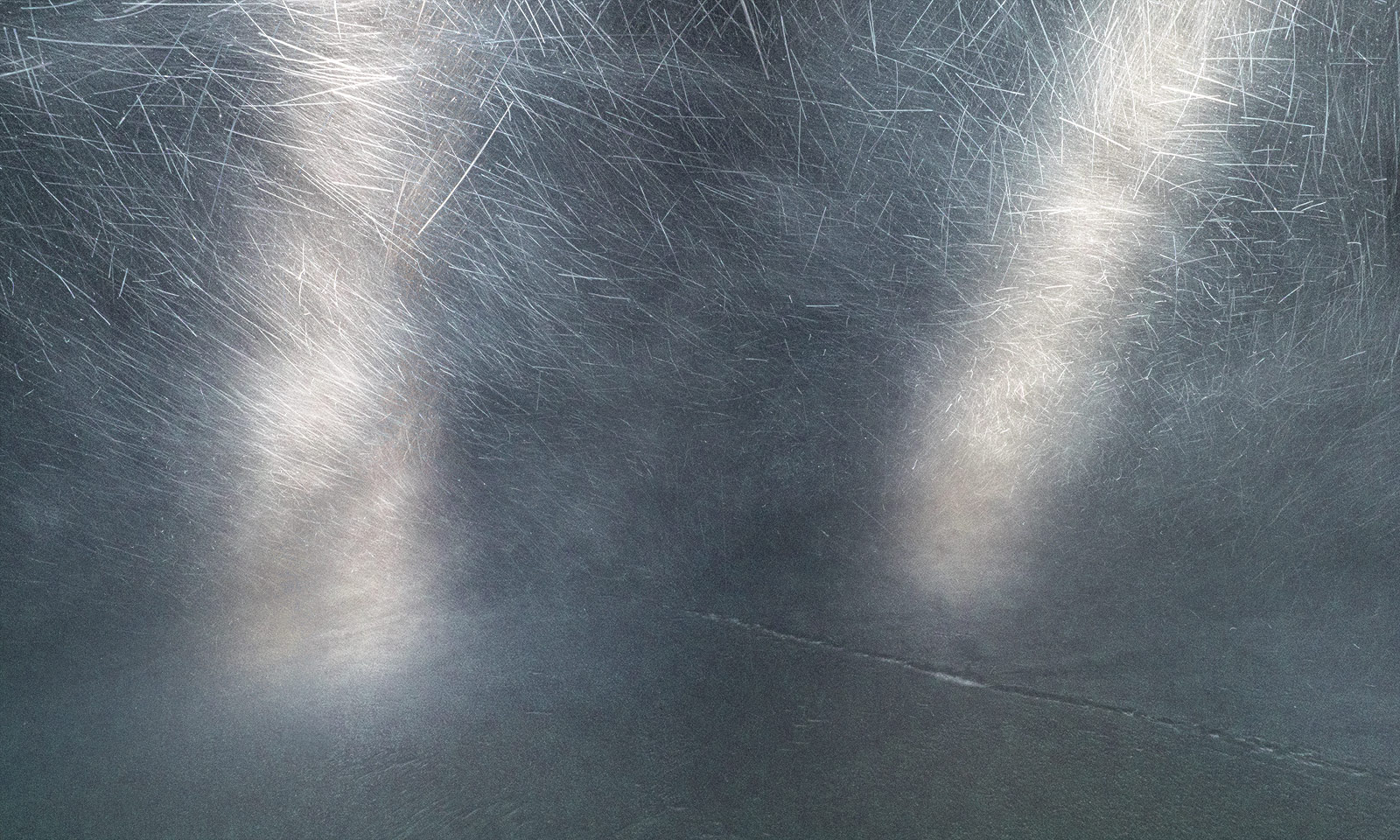
Later in the evening, the weather becomes even more severe, with wind gusts above 30 m/s and temperatures dropping below -10 °C. A very good time to stay inside even when taking photos. So I take photos through the windows from the bridge. On the starboard side, the storm batters the ship with snow. On the port side, the snow swirls in all possible directions.

20 October

The next morning, the weather has changed again, this time for the better. It has become colder, with temperatures of -13 °C, but the storm is gone and so has the snowfall.

An ice station is planned. I will join it later, when the wind has decreased even more and it is a bit brighter outside. Although our position is -9.5° W, our ship time is Norwegian time and so sunrise is around noon. Around 10 o’clock, I stand on the ice with the drone I intend to fly. Will it work when it is still dawn?

Yes – it works! The ship provides a lot of light that illuminates the ice. Not only for working but also for the team on the bridge that is looking for polar bears. While their job is harder at dawn, my drone flies well, although it detects obstacles in the air that are not there.

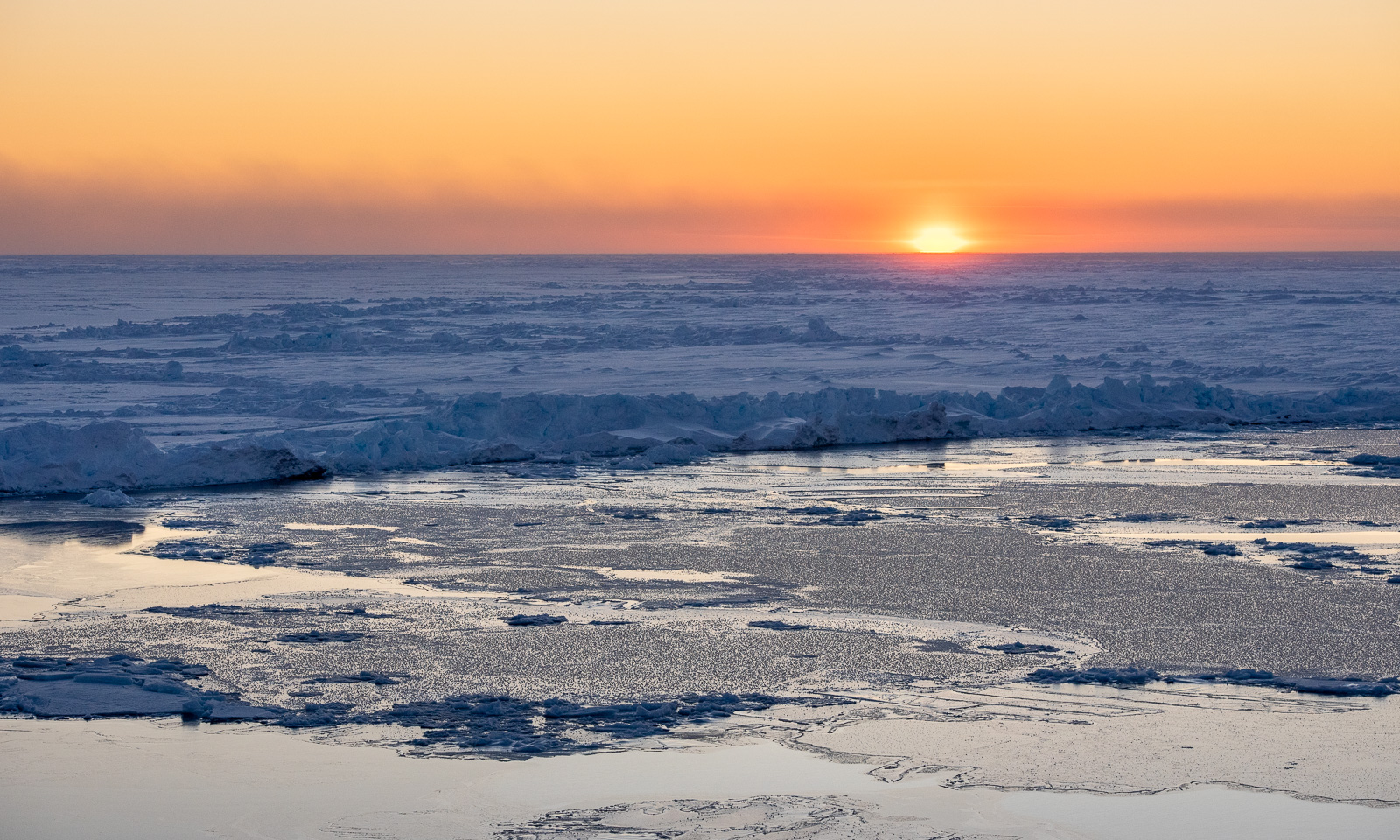
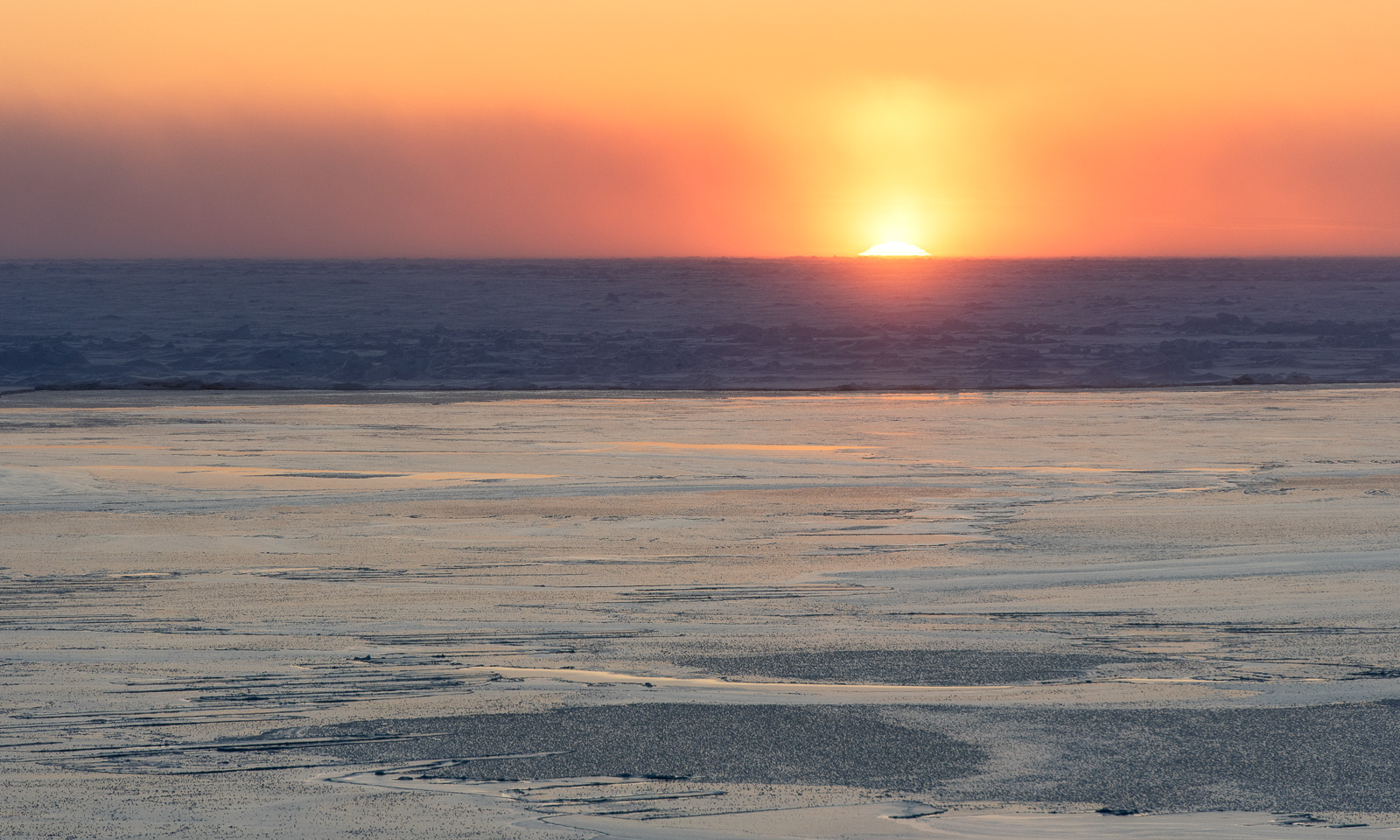
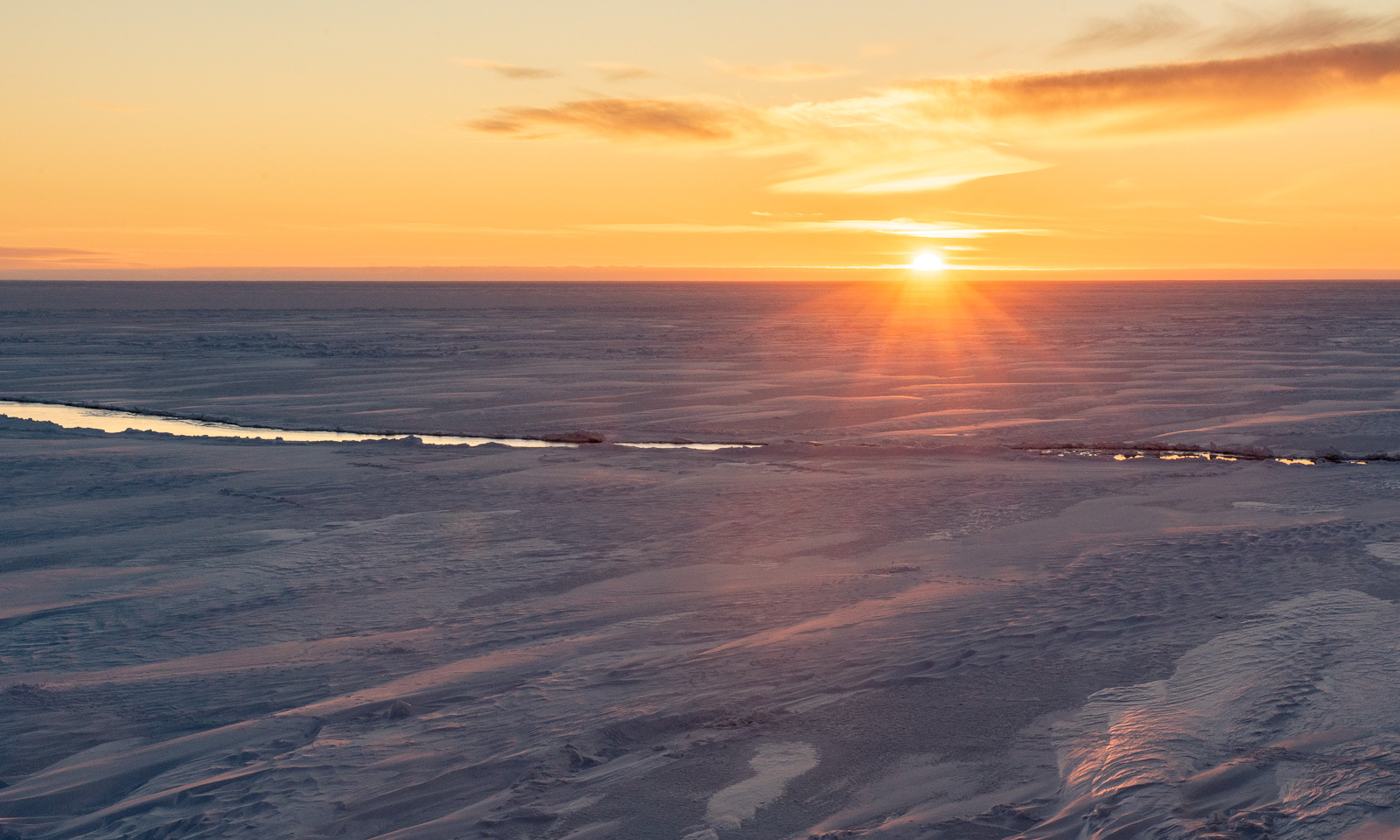
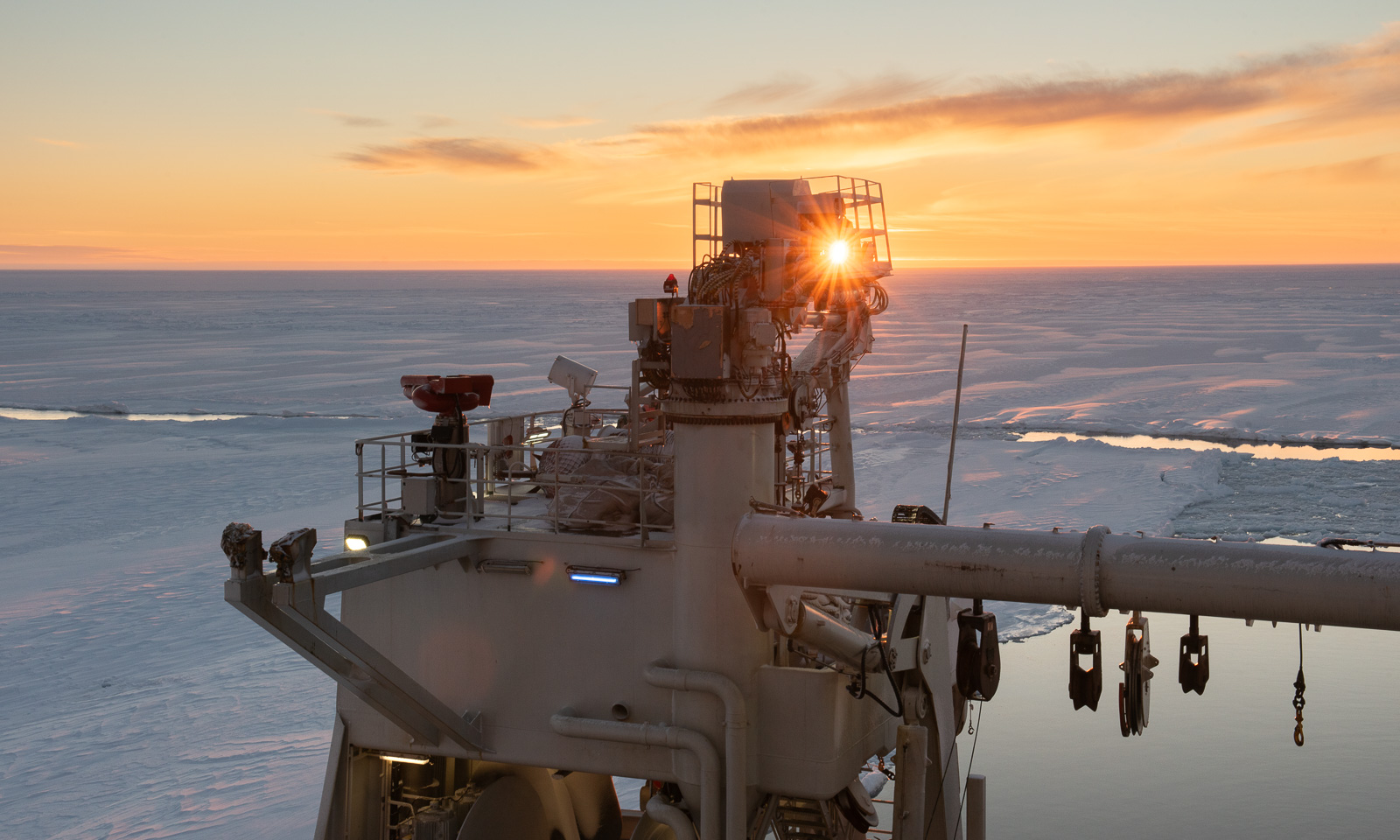
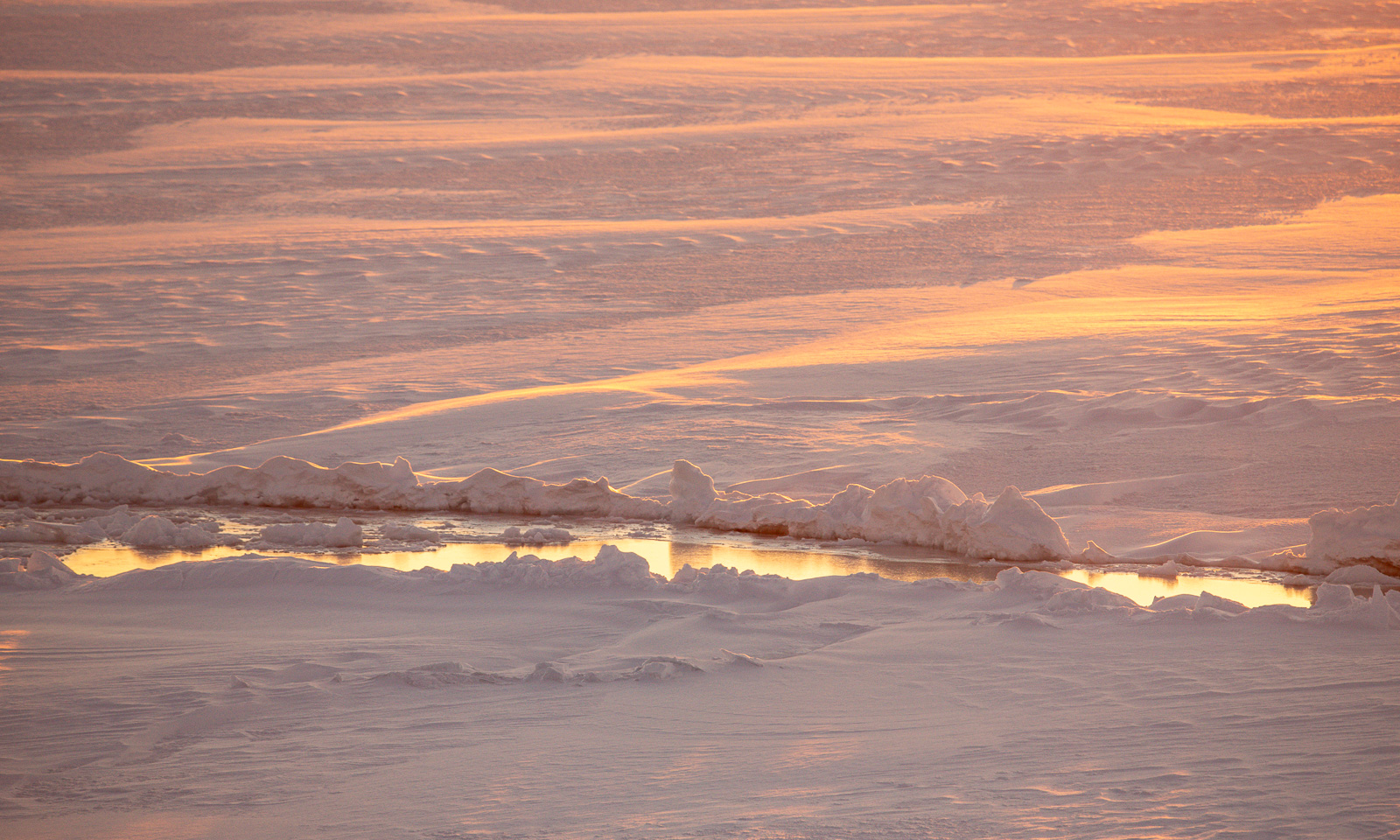
When the sun finally rises, it is pretty spectacular. In high latitudes, it seems more to roll over the horizon than to lift up.

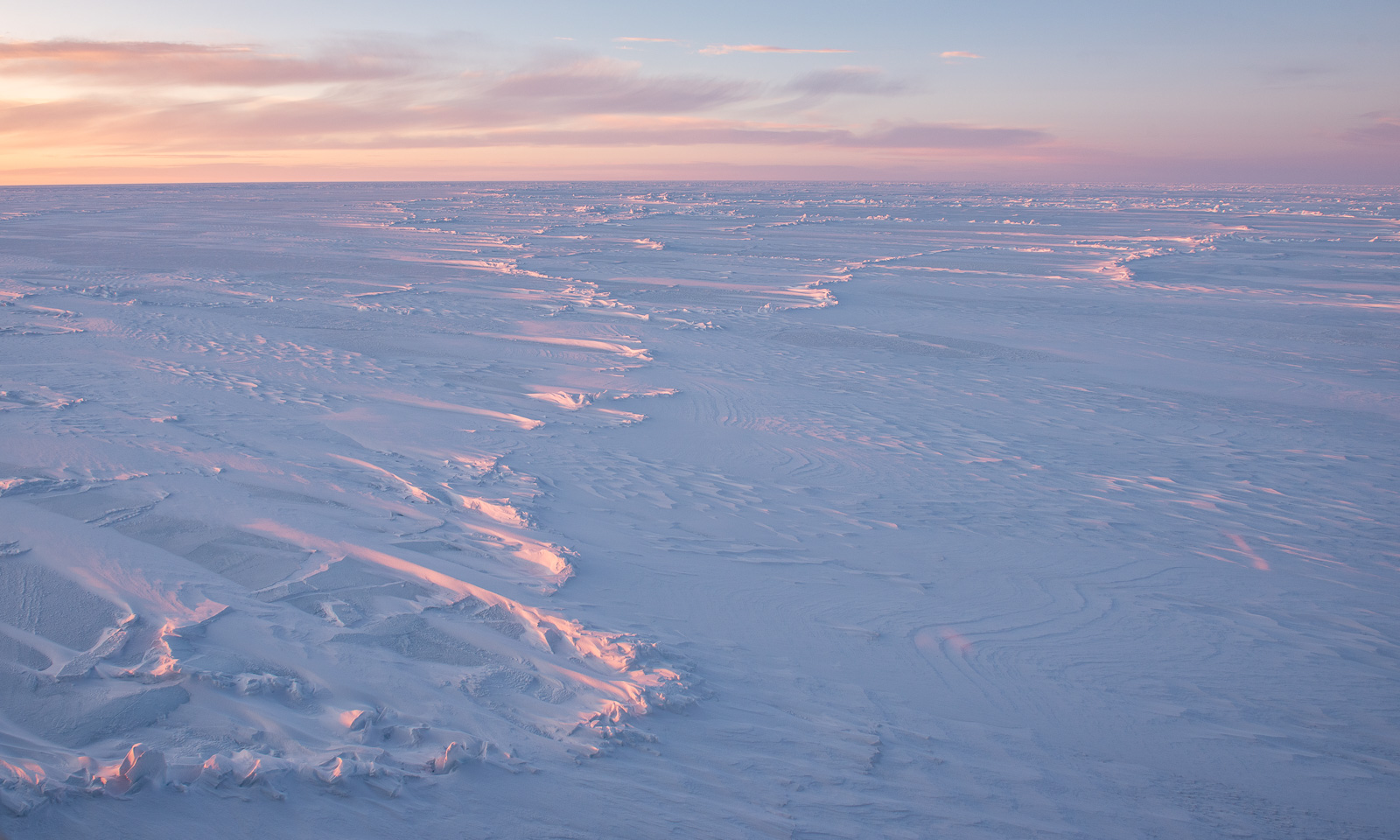
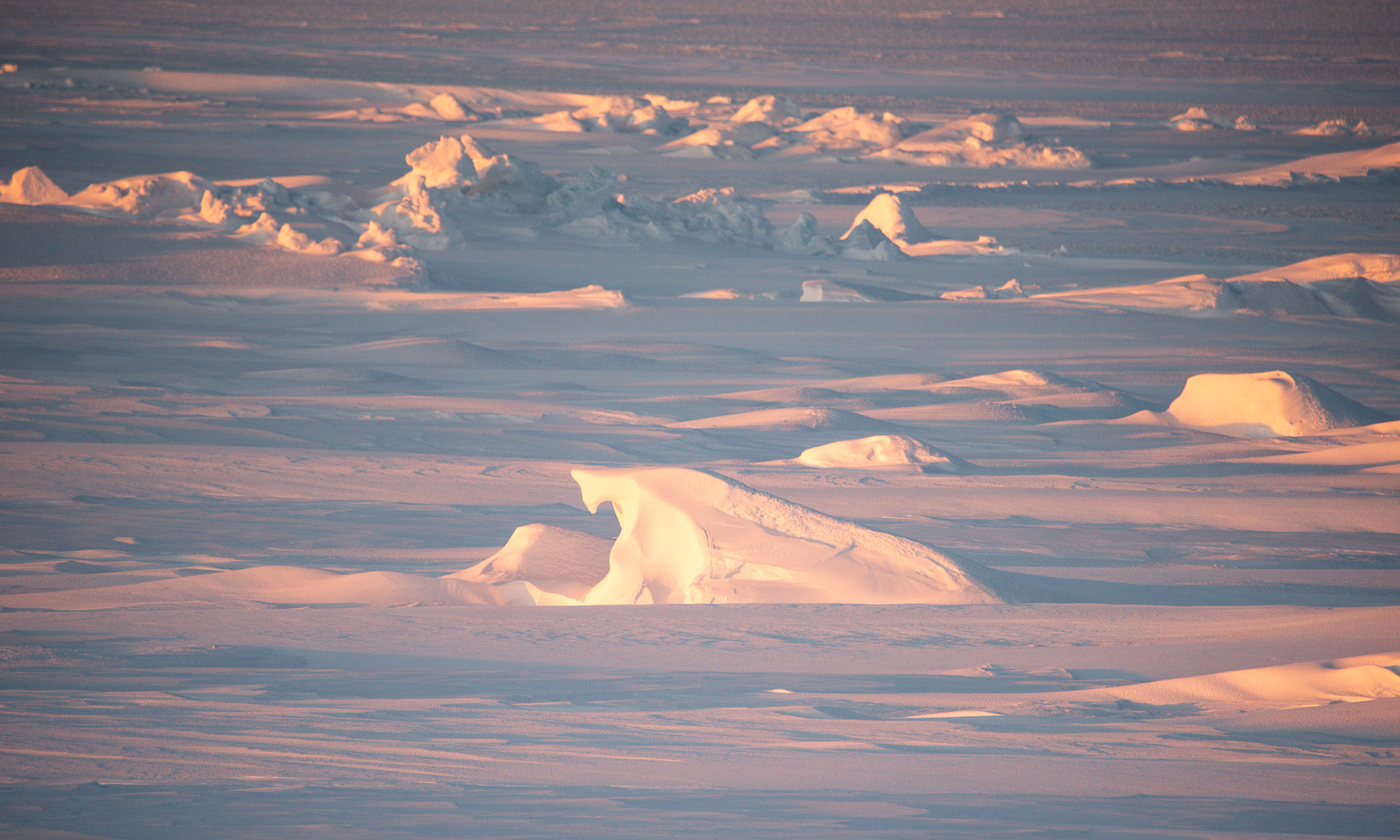
And the colours are incredible. The snow-covered ice floe we are in shows many colours but not white.

After lunch, the ice station is continued and have the opportunity for another flight. Some shots from the side:

Then I stayed outside to learn a bit about the calibration of the GEM2, an electromagnetic instrument that is used for measuring the thickness of snow and ice.

However, I do not fly the drone for leisure but to make orthophotos that show the ice situation from above. For that, I have to take many pictures and then – back on the ship – use both traditional image editing and special software to stitch the images together. The morning orthophoto was stitched together from 125 images, the afternoon one from 255 images. That took about an hour of processing on a fast computer.

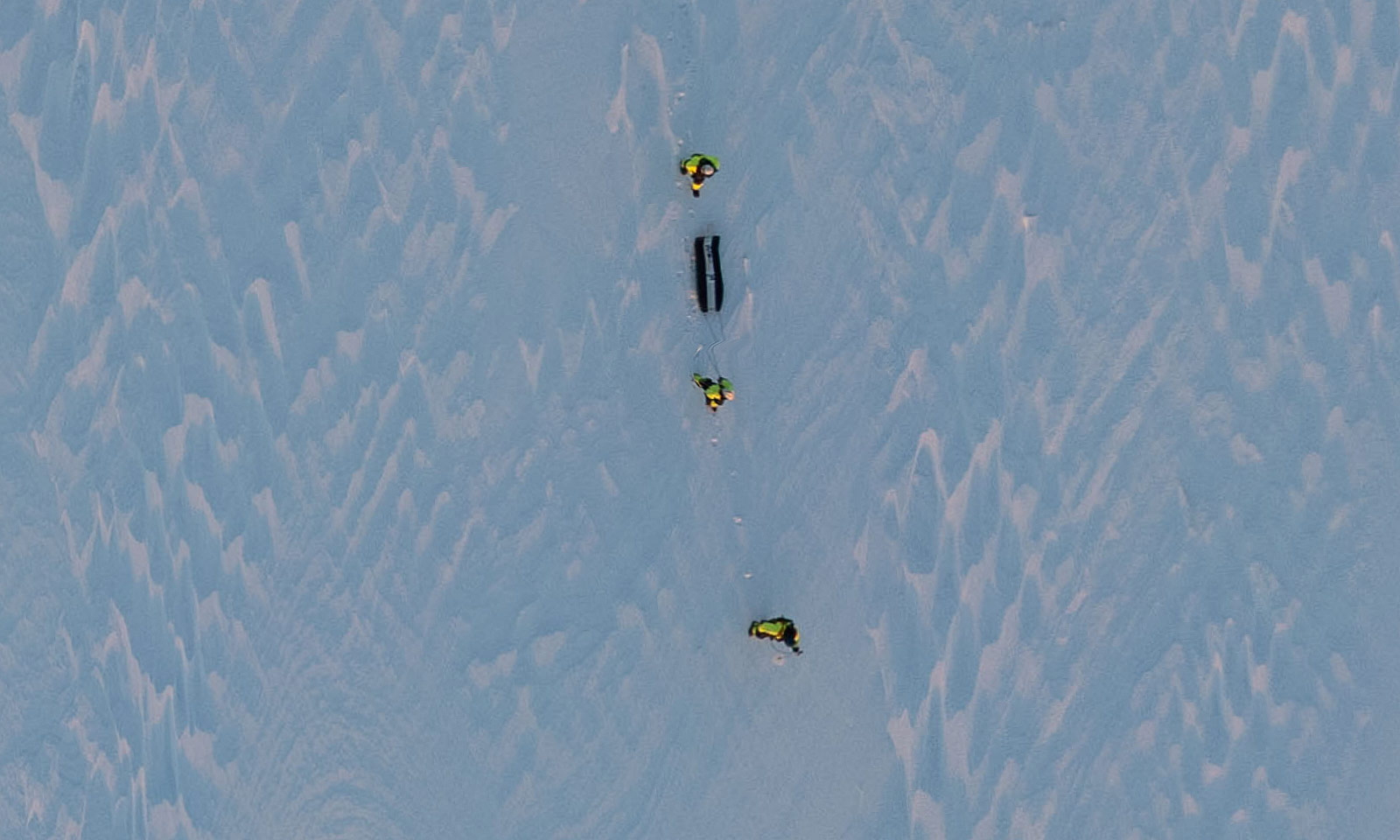
Especially the latter photo has a good image resolution. Do you see the scientists out there with the GEM2 on a pulka sled in the photo below? It is taken from the orthophoto above.

The next day another ice station is planned.

21 October

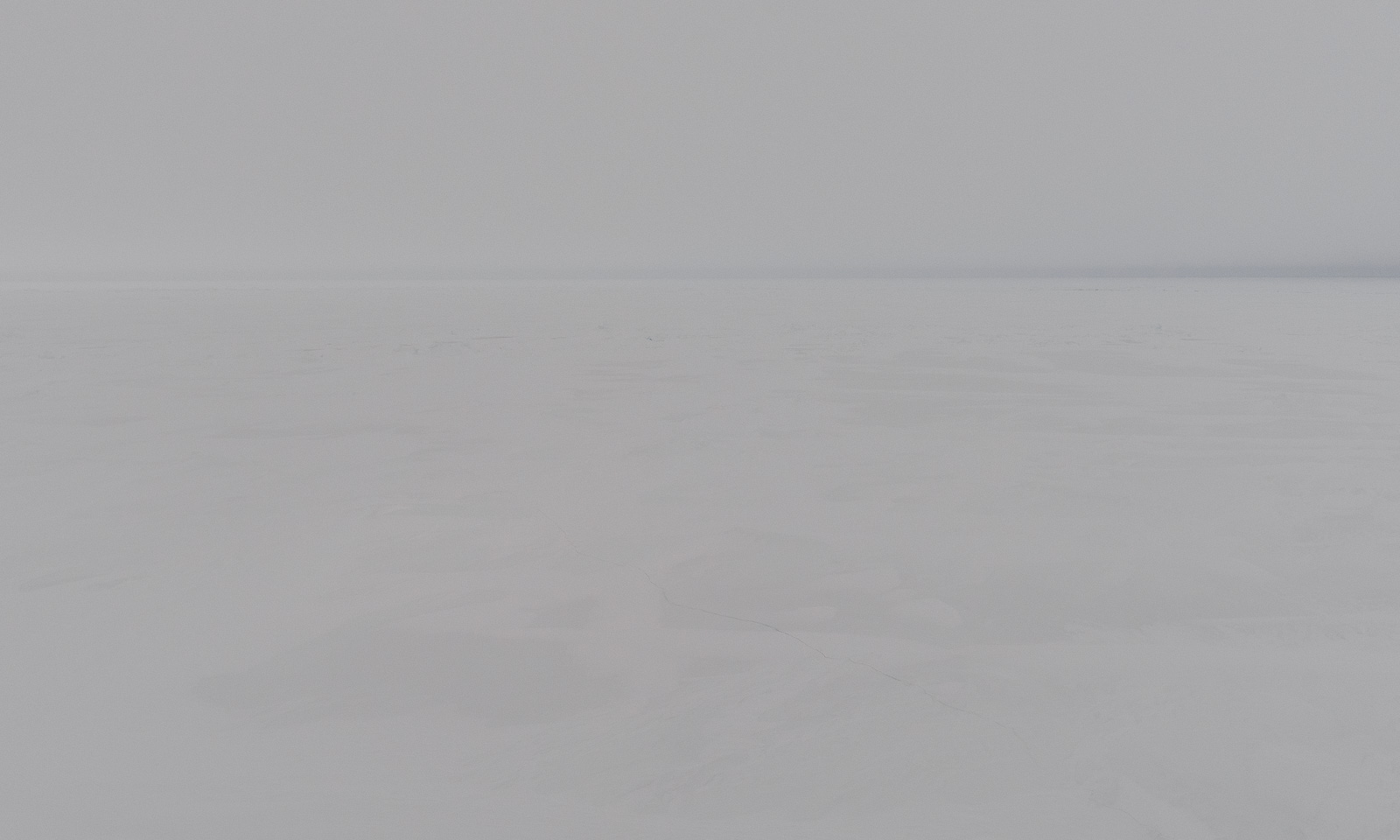
… but never set up. First the visibility was too poor and then it was too windy. I couldn’t have flown a drone anyhow because first it was snowing and then, with rising temperatures, it was raining. So a lot of other work was done instead.

So – another ice station tomorrow? Actually, that’s planned. Tomorrow I’ll know a bit more.