Arctic Ocean 2023 – prelude

This article is part of the series “2023-06: Arctic Ocean cruise KPH”.

When it looks like this on my table …

… then I’m going to travel. I love packing lists and I need them so that I do not forget too much.

At 9 o’clock everything is packed (ca. 50 kilos!). At 10 o’clock the taxi fetches me and takes me to the airport in Tromsø. Two and a half hours we are in the air heading north.

It’s very cloudy but shortly before landing I finally can see something different than sky and clouds: Svalbard’s main island Spitsbergen.

Soon we will land in Longyearbyen, where I landed three month before. But there are some differences.

Last time I travelled with Annika and we went on vacation before I worked in Longyearbyen for a week. Now I’m travelling with some colleagues from the Norwegian Polar Institute. Shortly before we land on the airport I take a snapshot:

There it is: the vessel Kronprins Haakon which is more or less the reason why some colleagues of mine and I travelled north: Tomorrow we will go on board on this ice breaker and start an expedition way up north into the sea ice. For three weeks we will live and work on Kronprins Haakon and I’m so excited that I may be part of this.

Today I had some hours in Longyearbyen. I was quite curious how it would look like in late spring. According to a researcher there is a lot of snow for the season this year. But on sea level the snow has melted away and everything looks soaking wet and muddy. While Svalbard reindeer are probably happy I definitely prefer winter.

If everything goes according plan we will leave Longyearbyen tomorrow at lunch time. I guess it won’t be long until we do not have any regular internet. So probably I will not blog anything about this scientific cruise before I’m back in civilisation.

Bye bye – ha det bra!

P.S.: On Facebook a friend wrote to me: “You must have the best job in the world!”. My answer – short but genuine: “Yes!”


A sunny car trip to Jøvik

As in many other countries 1. May is a rød dag, a red day which is an official holiday. The weather is beautiful and I decide to do something I haven’t done for a long time: a car trip.

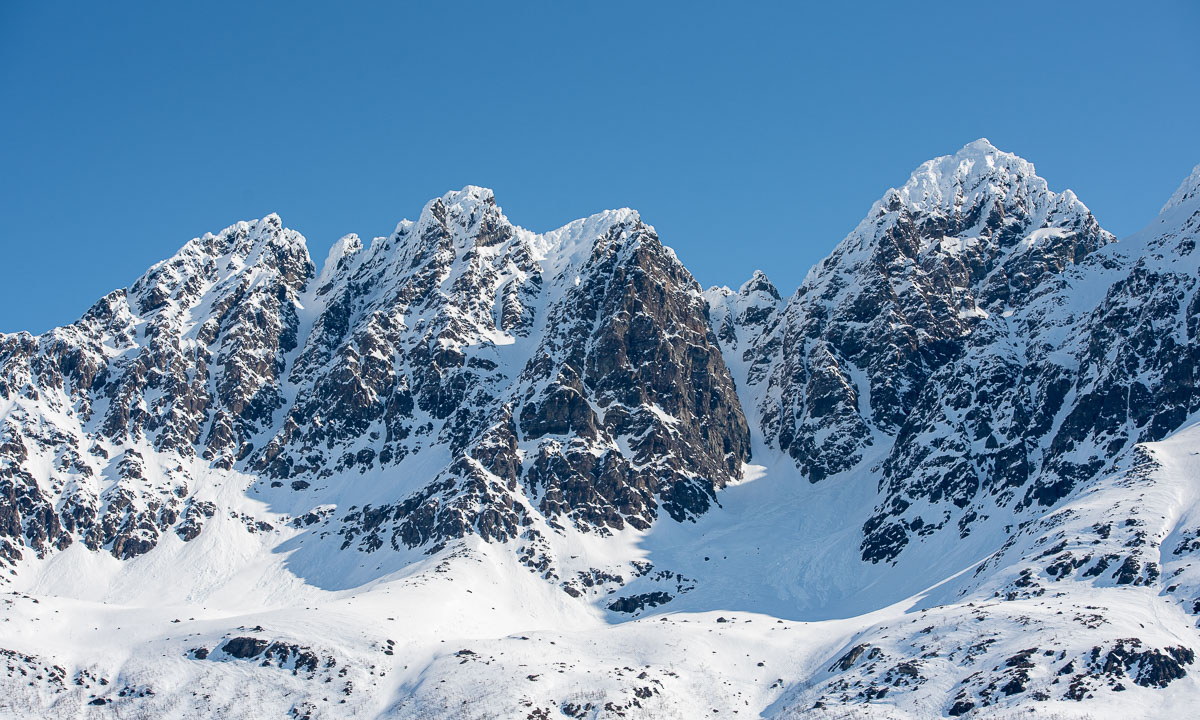
I take the car to Jøvik, a village in Tromsø municipality located on the peninsula Lyngenhalvøya, home of the impressive mountain range “Lyngen Alps”. As soon as I leave the E8 travelling is slow. On the one hand there’s a lot to see, on the other side the roads are in a pretty bad shape.

Just some photos I took on this wonderful day trip:


Arctic preparations

Have a look at these two images. They have something in common.

Both are related to my participation in the Arctic Ocean cruise in June. After the Nansen legacy cruise last year this will be my second scientific cruise to the Arctic with the Norwegian Polar Institute. And this time I’ve got extra tasks.

1. Drone flying

A scientist asked if I could fly a drone to map the ice stations. I didn’t have any experience in drone flying so I bought a private one to practise some weeks ago. In addition to that I made the Norwegian online course in drones (class A1 and A3) and the exam. Now I’m registered as a drone pilot in Norway, both in private and for the Norwegian Polar Institute. That was the easy part.

The interesting part starts when I shall take photos with latitude and longitude information from a drifting ice floe. But I’m not there yet (and quite happy that I have another month of preparation).

The drone photo above was taken in Norway. In Sweden it is a lot of paperwork to get permission for the publication of photos, especially when they show the sea as well. In Norway this is not the case, as long as you know the legal rules and restrictions.

2. Ice chart and weather info

To help both the cruise leader and the crew with planning it will be my job to provide them with current information. That’s ice charts coming from a SAR satellite and weather forecasts for e.g. wind, temperature and pressure. The data will be presented using the Open Source Geographic Information System QGIS. The screenshot above is just from a small learning session where I loaded in quite unrelated data as a topographical map of Svalbard, an ice chart from two days ago and current wind information.

The interesting thing will begin when we head north, leaving Svalbard behind. Then we do not have internet access anymore except sending and receiving emails through the slow and expensive Iridium network. So I cannot use all the cool QGIS plugins to gather data directly but I’ll have to send data requests per email and then receive the data later. This will be both interesting and challenging. I’m somewhere in the middle of being quite excited and pretty nervous.

Anyhow I wanted to have jobs and tasks and I’m glad I get the opportunity in a more active role than last year, were I was more like an observer. I guess, I’ll learn a lot.

Arctic Ocean, soon I’ll come!

12 more photos of Longyearbyen

This article is part of the series “2023-03: Svalbard”.

3 March

It is the first evening of Annika’s and my stay in Longyearbyen, Spitsbergen, Svalbard. We already strolled through the settlement after arrival. Now it is dark but the full moon illuminates the end of the road of Nybyen, one of Longyearbyen’s districts. What a special feeling to be in one of the world northernmost settlements on Earth. And a slightly tense one. It’s the edge of town, are there any polar bears around?

8 March

When you are in Svalbard you have to keep distance to animals to protect them. The animals do not follow this rule. This is a Svalbard reindeer, an own species of reindeer living here. It is looking for food in the middle of the city.

9 March

I didn’t expect to see ptarmigans on Svalbard but on our guided minibus tour we get to see a whole flock, again in Longyearbyen. Magnus is so kind to stop so that I could take a photo from the road.

10 March

This day is quite warm for Longyearbyen: Only -8 °C. When I took this photo however it was windy. Average wind wind 16 m/s, gusts 21 m/s and snow is blowing in the streets.

12 March

Annika is on her way home, I’ll stay for another week and today I enjoy the beautiful weather by the coast. The mountains on the other side of the fjord Isfjorden look quite near today – especially through the big telephoto lens.

15 March

I take an after work stroll along the coast and through town. It is cold and even with the modest wind of 6 m/s windchill is below -30 °C. It looks arctic, it smells arctic (the nose hairs freeze together immediately) and it feels arctic. No wonder – I am in the Arctic. Even the petrol prices show, that you are not in mainland Norway any longer. Petrol is cheap because Svalbard has reduced taxes.

18 March

Another walk in town. Up the hill to Taubanesentrale (the central of coal mining cableway), down to the center and up again to the elevated way in the east, part of the avalanche protection.

19 March

Sunday. Tomorrow I’ll fly back to Tromsø, today I’m quite lazy but finally I walk to the coast again because of the wonderful weather. Even with my hood on I can hear something above me. I look up and see the first two seagulls since I have arrived here. It is two glaucous gulls that draw large circles above the coastal line.

I try even to take pictures of the incredibly coloured mountains on the other side of the Isfjorden but the turbulences in the air make clear pictures impossible. I’ll keep it in my memory as I’ll do with my whole stay in Longyearbyen.


Colder days in Longyearbyen

This article is part of the series “2023-03: Svalbard”.

Two days ago on 14 March 2023 it started getting colder in Longyearbyen. Yesterday temperatures were around -19 °C, today around -21 °C.

Yesterday I took a walk after work and took some photos with my tiny Sony camera that worked surprisingly good in the cold when being kept warm.

While light was beautiful yesterday, today it was magic. After work I went to my apartment. Round about 15 minutes later I left it with all my camera gear and went to the shore. Due to the interface between the open water and the cold air ice fog covered large parts of the Adventfjorden. While I looked for good places to take photos the setting sun and the altering fog changed the mood every minute. Extraordinary beautiful!

Like the days before the sunset colours on the snow covered mountains became warmer and warmer until they reached a delicate but intense purple shade while the sunlit parts rose higher and higher until only the tops stayed in the sun.

Remember, these photos were not taken in the wilderness, I’m in the settlement Longyearbyen and my apartment lies just 500 metre from the nearest photo spot.

As already mentioned today’s temperatures were round -21 °C. With a moderate breeze of 6 m/s that felt like -32 °C. Pretty cold and the ice fog didn’t make it warmer.


Guided minibus tour with Magnus

This article is part of the series “2023-03: Svalbard”.

Thursday morning Annika and I joined a guided tour by minibus. Magnus, our guide and driver has moved to Svalbard in 1964 and has spent most of his life here. I’ll show you some pictures of the tour, but the real experience were the incredible stories Magnus told us. About the times, when there was no shop in Longyearbyen, when the island could be cut off from the mainland the whole winter, when it was a mining town hardly visited by any tourists. What makes the stories special is that they seem to tell from ancient times but some took place just one generation ago. I could listen to Magnus for ages.

And now some photos. From the road up to Gruve 7, the last active coal mine that will be closed in 2025. From the Svalbard Global Seed Vault, where more than one million seed samples are stored. From the cable car facility that was used to transport coal from the mines to the quay until the 80th and from a special guest, the ice breaker Kronprins Haakon, that I travelled with last year. And of course from the famous polar bear warning sign on the road to Gruve 7.

This tour is strongly recommended if you want to get first hand information about Longyearbyen’s history. Longyearbyen Guiding AS. The web site is only in Norwegian, but the guiding is in English.


A first day in Longyearbyen

This article is part of the series “2023-03: Svalbard”.

Today Annika and I have the first full day in Longyearbyen. There’s a lot to see, even for us, for whom Northern Norway in general is nothing new.

House on mountain slope

We have seen houses, we have seen mountains, we have seen houses by and in mountains. But the mountains in Svalbard are really special and quite recognisable.

Arctic town

It is not only the mountains, that give Longyearbyen a very special character. It is amongst others the traces of the coal mining that is still present although there is no active mining in town any longer.

Avalanche fences

In December 2015 an avalanche buried ten houses in Longyearbyen. Two people died. Today some houses in Longyearbyen are abandoned because they lie in critical areas and the mountain Sukkertoppen (the sugar peak) is covered with avalanche fences.

Snowmobiles

In Northern Sweden snow mobiles are very popular, for work, transportation and for leisure. In Northern Norway there are much more restrictions and you do not see them as often. In Svalbard there are more snow mobiles than people. No wonder in a place with very long winters and hardly any road network.

Chilly temperatures

In Northern Sweden temperatures of -19.7 °C are not seldom in winter, but then it is mostly calm weather. Today in Longyearbyen it was pretty gusty and windy which made the temperature appear significantly lower.

Fjords

Yes, there are fjords in Tromsø. But there are roads and settlements, too. On Svalbard there are not many settlements at all and the fjords do not only look much more icy and arctic, but also untouched. The small dots on the right of the first image however tell another story: There is a lot of snowmobile traffic.

Northernmost church?

There is a church in Longyearbyen lying on a small hill. It looks cosy and if you go in you realise, it is. It is the northernmost Lutheran church in the world, only topped by an Eastern Orthodox church in the Russian Franz Josef Land. (Source: wikipedia)

Mukluks

Of course people in Longyearbyen have warm clothes. When it comes to boots Mukluks are quite popular. The origin of these shoes lies in the Inuit culture of the North American Arctic and there are great for dry and cold weather. You hardly see them in mainland Scandinavia.

Impressive mountains

Did I mention the impressive mountains? I did? Well, anyhow – they are impressive!

Surprises

This solitary house goes by the name Huset – the house. The name is as pragmatic as the architecture. But it contains a surprise. The restaurant Huset does not only have quite high-priced dinner, but also a “Saturday beef” on Saturdays 15-18. By chance we passed the house at 14:45 and it is Saturday today. So we decided to eat there. A good choice because the food was very delicious and costed only 190 crowns – a bargain in Norway!

Polar bears

One of the very special things about Svalbard: there are more polar bears than human beings on this Archipelago. While the town Longyearbyen is protected the surroundings aren’t. If you leave town you have to carry a rifle and a flare gun and must know how to handle incidents with polar bears. Signs warn you when you leave the safe space.

Neither Annika nor I can and may handle a rifle so we stay within town beside of guided tours.

Treacherous weather

When we left the restaurant Huset, weather had changed. It was as windy as before but now it was snowing and the wind gusts blew snow everywhere. Into the face and into the pockets of my parka. It was however less than a kilometre walk until we reached our accommodation Coal Miner’s Cabin.


The first frost – hiking tour on the Laukviktinden

Today was the second day, where my car was covered with ice in the morning. I had to scrape ice after breakfast because I wanted to drive to Kvaløyvågen on the island Kvaløya to hike up the Laukviktinden (587 m) today. The weather was calm and the sky was blue and I enjoyed the views on sea and mountains from the car.

When I passed the shallow bay Finnvika I just had to stop and go there. Large areas were covered with a thin layer of ice that sparkled in the sun. Autumn in Tromsø is a fast season. Last weekend the trees were colourful, now many of them are bare.

20 km later: I just parked my car by the sea and read the tour description. I should follow the road for 80 metres, take the gravel road to the left and leave it when it turns left. The rest of the tour would be pathless but according to the book easy to find.

When I left the gravel road the terrain was a bit tricky. It was more or less overgrown boulders with hidden holes. The trees had shed their leaves and almost looked dead. I was glad when I had reached the mountain ridge where it was much easier to walk. The wet moss was covered with frost and so were the water puddles. Laukviktinden came into view, but I knew that there would be an acsent before. It looked pretty steep. Hopefully it’s just the perspective.

And indeed it was less steep than expected. A bit tricky however because some parts were wet and slippery. And that one of the countless moss pads hid a knee deep water puddle was not nice ;-) ! It is always a satisfying experience when you gain altitude, are above the tree line and can see more and more – both fjords and mountains.

Just straight ahead I spotted the lake Laukvikvatna and its neighbours. They lie 50 metres below. So I first had to climb down before hiking up again. Most of the lakes were covered with a thin layer of ice.

From the lake it is only 200 more metres in altitude to the top – according to the tour book. That meant that most of the the ascent lied behind me. It was easy to go up, only the very last part was a steep boulder field. Probably not the best routeI chose, but that was hard to see from below.

The terrain flattened out and then – all of the sudden – I could see the summit marker: A huge pile of stones with a metal box containing the summit book. And behind that: The open sea with the island Vengsøya.

What do you do on mountain summits beside of adding your name to the summit book? Yes – you take a selfie! After that I went a bit further to a place where the terrain drops off steeply. Here the view was really impressive because I could not only see the open sea and its islands but the bay Laukvika and even the boggy marshland that looked like it was directly under my feet. Here I took my iPhone as camera because it has a wide angle lens.

I took a break, ate some cookies and drank water. I even met another hiker that probably hiked up twice as fast as me. Then I started my way back. I found a better way because it is so much easier to find a good path when you look from above. Later my optimism was dampened when I landed in quite steep terrain and had to traverse it a bit until I was on my old trail.

Round 9½ km later I reached the gravel road again. In the shadow the ground was still frozen, but the car that waited in the sun was warm.

Just a hike up the Rødtinden

Today I joined a group of (much) younger people on a mountain hike up the Rødtinden (470 m). It was special in two ways: First of all it was nice to talk to a bunch of people from the USA, the Netherlands, Austria, Poland and Spain. An then – the weather! It was a real summer day with a cloudless sky and a lot of gorgeous views.

I didn’t take many pictures but some from a small pre-summit that we hiked to after reaching the main summit.

Hiking up the Nordtinden

After I failed reaching the summit of the Nordtinden (640 m) last November I gave it a second try today. It’s so much easier to navigate when there is no snow covering the path and the sparse way marks.

I start to follow the gravel road, which I leave after 2.7 km.

The small trail leads up steadily. It’s not so steep, that I have to climb but steep enough to raise my pulse to hummingbird level. I could blame it on my Covid infection two weeks ago but I guess it’s just a lack of fitness.

A movement to the left wakes me up. It’s a flock of ptarmigan fledglings with an adult. Some flutter away, some stay. I use the confusion to take some photos with my telephoto lens. The photos are heavily cropped, I want to keep distance.

I am above the tree line now and the views are impressive.

Most impressive is a chasm at the side of the trail. The gradient down? Perhaps 400%. Enough to keep safety distance while photographing.

The last part is rocky and pathless but the huge cairns marking the tops of Nordtinden (there seem to be two) are in view so I can navigate just by eye. I take it easy on the boulder fields. I reach summit number one and add myself to the summit register that lies sheltered in an aluminium box.

I continue a bit more west to get a better view to the sea. And there it is – the island Vengsøya with the smaller island Vågøya in the front.

I walk around to take some more pictures. I watch the ferry leaving Vengsøya and climb a bit down the slope to have a closer look to the nameless lake below the mountain Laukviktinden.

Then I walk back in a small circle, pass the other summit cairn and start to descend.

It’s always interesting how not only the view changes but the terrain as well. Round the summits it’s mostly rocks and boulder fields, then more and more grass is present and the path consists also of gravel and then earth, too. On the way back the lake Skulsfjordvatnet lies in the sun.

As most day trips the way back is the same as the way there. So I pass the sign to Nordtinden a second time and am on the gravel road again.

The change from forest to farmland shows that my car is not far away. After four hours and about 12 km I’m back from a lovely mountain hike.

Two more photos showing small things. The first one a beetle from the genus Carabus. The first one a berry from the genus Rubus. I was glad about both discoveries. The difference: The beetle stayed unharmed, the berry was eaten right after taking the picture.