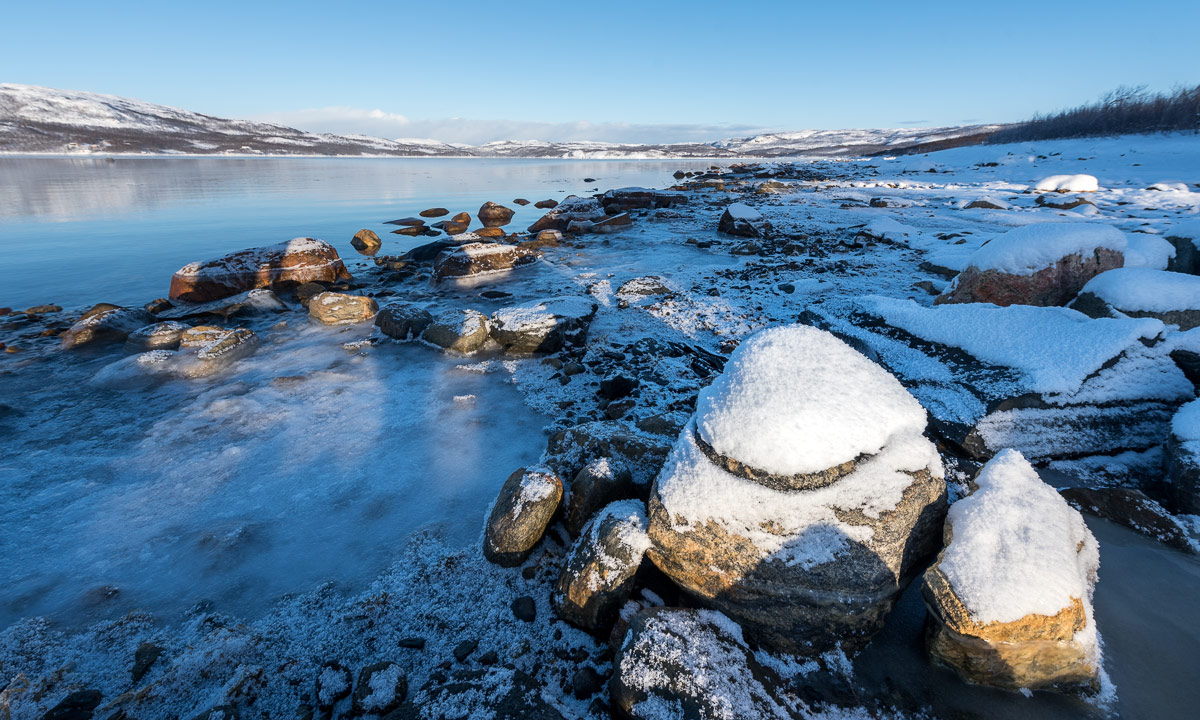
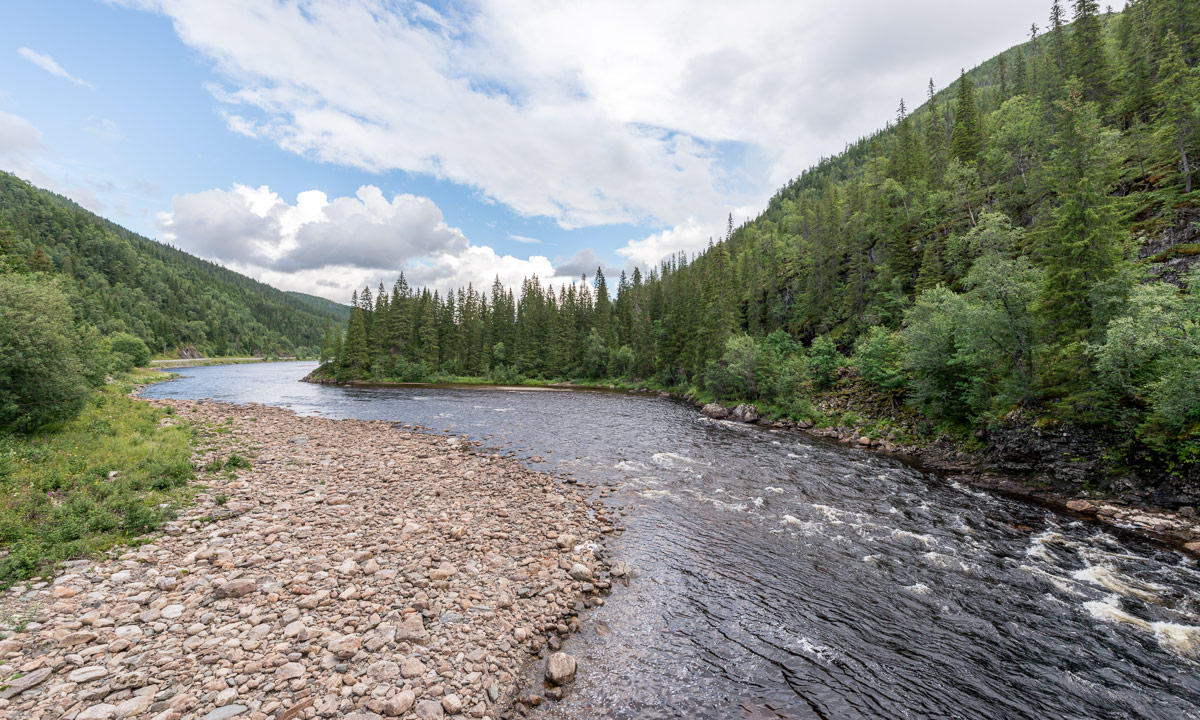
757.5 – from Mosvik to Skelleftehamn by car

Last week I’ve been in Mosvik (Norway) to visit friends. Yesterday I drove back home, not directly but with a detour via Nordli and Røyrvik (Norway) and Stekenjokk, (Sweden).

According to google maps the direct way is 671 km, taking 8 h 38 min. With the detour it is only 67 km, but 1 h 46 min longer. That says a lot about the small and steep gravel roads near the Swedish–Norwegian border …

For me the journey didn’t take 10.5 hours, but more than 15. For one thing I don’t drive fast, especially in Norway and for another thing I took many smaller rests for taking pictures as well as a lunch and a dinner break. I left at 9 o’clock; at quarter past midnight I finally was home again. Total distance by car: 757.5 km.

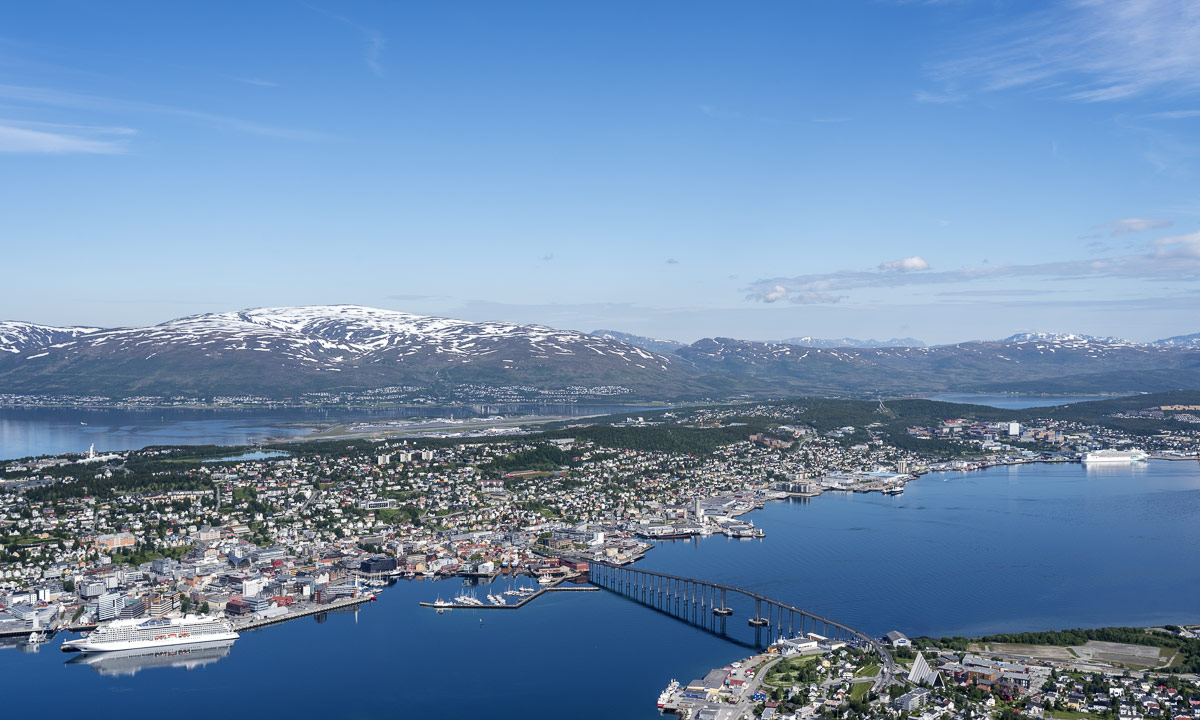
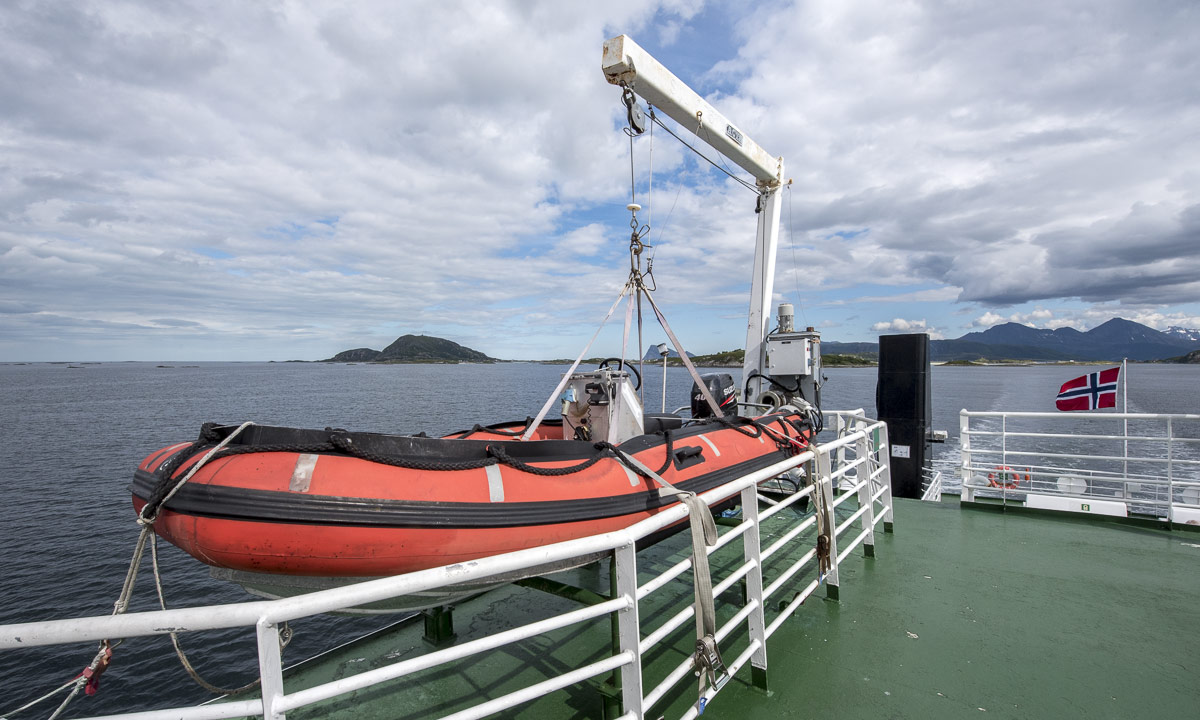
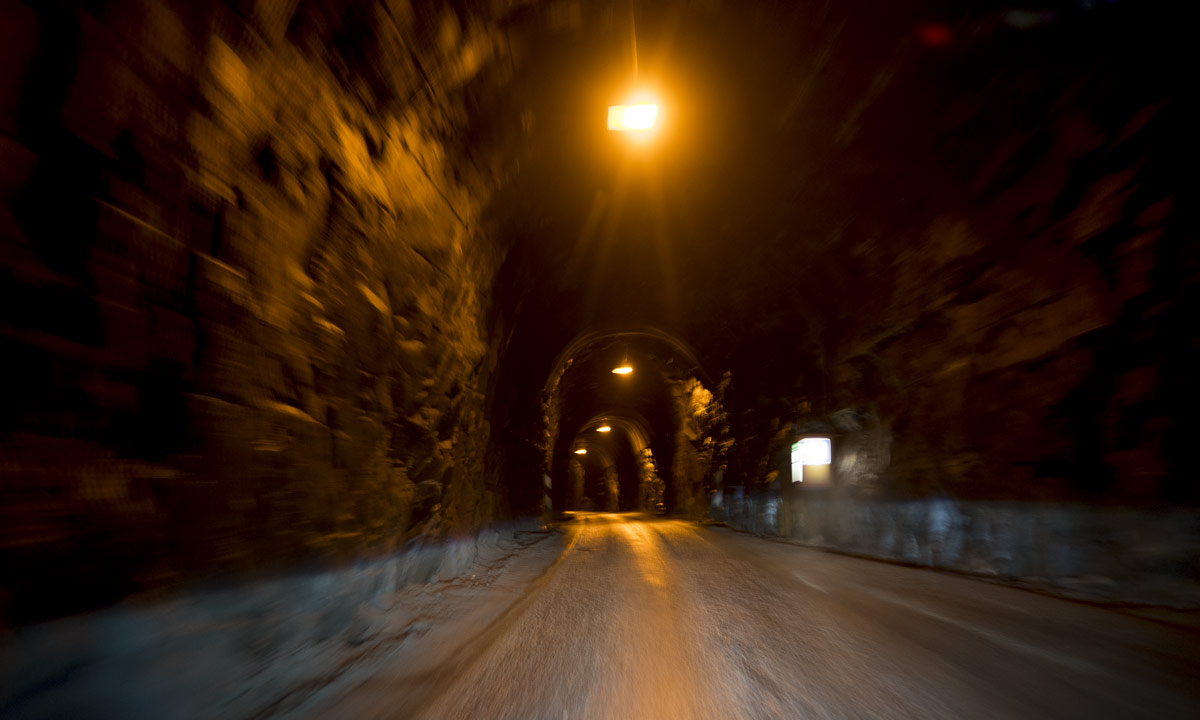
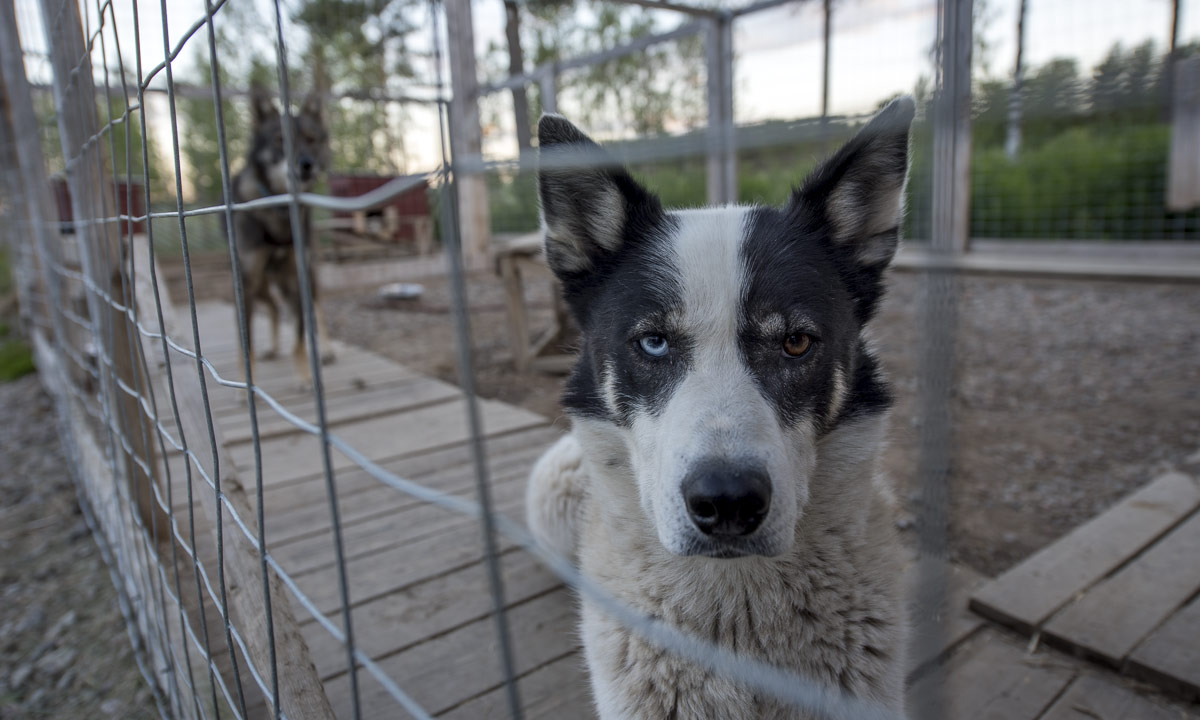
See my travelogue of the journey by clicking the first image and navigating through the images. Swipe on touch devices and click or use arrow keys on other computers.

By the way: After nineteen articles without any photo with snow, this is the first article showing at least some patches of snow again.

A trip above the treeline

Today the weather was really nice in Venneshamn in Norway. I took the car to drive to a mountain area not far away. At least, if you can fly … . If you take the car in Norway, there’s always at least one fjord you have to drive round, in this case the Verrasundet. So it took a bit longer than excepted taking the ways 191, 193 and 720 round the fjord. Finally I approached the street to the lake Ormsetvatnet. Street, well … it’s more like a steep gravel path, that you can drive up some kilometres to a parking place. The last kilometre to the lake is closed for cars and I had to walk it.

At Ormsetvatnet I crossed a dam wall, walked up a tree covered slope and soon was above the treeline. To be honest, I’m not too fond of forests, when it comes to taking pictures and I’m always glad, when I leave the trees behind when doing a mountain trip.

Now I was on a hilly plateau, the Vakkerheia. Some of the flat mountain tops were marked with piles of stones.

In the plain valley between the hilly tops the ground is soft and wet. Sometimes I had to go round shallow ponds and bogs, but mostly the ground was easy to go. In and round the swampy ponds the cotton grass was blooming. To my big delight there were many cloudberries plants growing in the lesser wet parts and the berries were ripe and ready to eat!

Picking cloudberries can be tedious, because of the many bloodthirsty horseflies that seem to guard them. I think, I slew most of them, but some bit me anyway.

After some hours of a really relaxed mountain hike I took another way back until I came to the gravel road again, where my parked car waited for me.

Half a day later

A thunderstorm approaches from the west. The center seems to be above the very same area that I wandered some hours earlier. The thunder and lightnings were as impressive as the intense colours, that I could see from the other side of the fjord. I was glad, that I haven’t been on that plateau – there would be hardly any place to seek shelter from the massive rain fall or to protect from the dangerous lightnings.

Addendum

And since we’re living in the age of selfies …

Torneträsk and Port of Narvik

On thursday – three days ago – Annika and I drove to Abisko to enjoy some winter days in the Swedish mountains. Skelleftehamn is in Northern Sweden, Abisko is in Northern Sweden, but it’s still 570 km to go by car.

Yesterday I stood up quite early, because the sun was shining and I wanted to go onto the lake Torneträsk (one of Sweden’s biggest lakes – 70 km long) to make some photos. The whole lake is covered by a thick layer of ice and a thin layer of snow.

In the front you can see stacked up ice that builds along the fissures in the sheet of ice, in the background you can see Lapporten – the landmark of the region.

After a while fog came down and when you looked against the sun you only could see vague shades and pale colours. It looked more like standing in a sandy desert, not on the icy surface of the Torneträsk.

Some hours later: Annika and I had planned to do a ski tour near the Swedish-Norwegian border. We packed the car with our skis, cameras and hot tea and set off. It’s 38 km to the border. Behind that border – on the Norwegian side – there’re a lot of cottages and since it’s Easter and probably every single Norwegian is in his cottage there were a lot of parked cars, too.

We looked for a parking place as well. The most parking places were stuffed with cars and were furthermore only for private use. I continued driving and we looked for a public parking place. Well, we found one but the surrounded mountains were too steep for skiing. We stopped anyway to check our position on the map. After that we helped some Norwegians to dig out their car that was completely stuck in the packed snow – on the very same parking place! There’s a reason, that most of the locals have all-terrain vehicles or at least cars with all-wheel drive.

My Saab doesn’t have such and from now on I was even more cautious in choosing a potential place to park. To make a long story short: We didn’t found a single parking place that was (a) available, (b) public, and (c) not too snowy. That’s why we changed plans and continued to Narvik, which is 46 km behind the border.

There’re (at least) three signs for leaving the mountain plateau and approaching Narvik:

  • The road is narrower
  • The road has much more curves and bends
  • It gets much warmer. (down to -9 °C in Sweden, +5 °C near Narvik)

Soon we saw the first fjord, the Rombaken:

We continued to Narvik that seemed to be completely closed due to the Easter Saturday. Therefore we headed to the Port of Narvik and looked around there. Most ports I know are locked and fenced off. Not in Narvik. Here it’s possible to walk around, enter the piers and have a closer look to the ships. And we were completely alone.

Narvik is a huge contrast compared to Abisko! Even if I prefer landscape and nature to towns, I like this place.

But anyway we drove back to the wintry mountains of Swedish Lapland quite soon and round an hour later we arrived again at our fine and cozy room at Abisko Cabin.

Wintry Scandinavia in a nutshell (without the skiing).

Continuing to the Vesterålen

This article is part of the series “2015-07: Lofoten and Vesterålen”.

Our third day started with a lot of rain. We put the wet tent into the car and continued our tour to Kabelvåg where we visited a friend of mine. We took a small mountain hike but it was cloudy and wet. Only far away in the east you could see some sunny patches on the top of the snowy mountains.

After the hike Delle and I looked for a camp ground. But first I had to take a picture of the beautiful rainbow near Sildpollen.

This time we tented on a bigger campsite in Sandsletta. When I woke up quite early the next day I could see another rainbow over the Vatnfjorden, but later it started to rain and pour down again. And again we put the soaked tent into the car. We continued on the road 888 to Fiskebøl. The clouds were hanging low and you could hardly see any mountain, just some white and light grey schemes.

Soon we arrived in Fiskebøl where we waited for the ferry. Again we were lucky – we waited hardly half an hour until we entered the ferry for the short crossing to Melbu, the southernmost city of the Vesterålen. We visited friends of mine, this time in Haukenes were we tented near the friend’s house. The cocks tried to wake me up ridiculously early, but in vain. I continued sleeping until 8 o’clock.

Alas it was the first morning without rain (and the only one, too) and we could dry the tent. After a long and lazy breakfast with my friends we said farewell and continued our car trip. We got a tip to visit Stø at the northern end of the Vesterålen island Langøya. What a good tip and what a beautiful landscape – especially after the weather was nice and sunny. We made a short photo stop between Strengelvåg and Klo before we continued to Stø.

In Stø we parked our car and took a short hike over the mountains to a beautiful white sanded beach were we made a rest and I took a short bath. There’s a 15 km hiking trail as well; next time I’ll definitely will go it.

After our rest we slowly walked back and continued by car. First we had to head south to Sortland were we crossed the Sortlandsundet and headed north on the other side. The sky became more and more cloudy and we looked for a nice campground. Finally we found one in Bleik, quite near Andenes, a town at the northern end of the Vesterålen. We put up the tent and – guess what – it started to rain.

It had been raining the whole night and it continued raining. Again a soaking wet bunch of a tent lay in the back of the car. After a while of driving through the greyness we decided to head back to Skelleftehamn. It’s more than 900 kilometres and it took the whole day. Rain became less near Abisko and after we passed Jokkmokk the sky cleared up and we could see the full moon slowly rising. The next photo, which is the last of our car trip through the Lofoten and Vesterålen is taken near Storforsen, one of Europe’s biggest rapids. At 23:50 we were in Skelleftehamn again – and I was home.

  • 2296 kilometres in six days
  • a lot of clouds and rain, but two nice and sunny days, too
  • one night in the car, four in the tent (three of them on campgrounds)
  • two bathes and at least four rainbows
  • – a nice trip!


From Å to Rystad

This article is part of the series “2015-07: Lofoten and Vesterålen”.

Day 2

Next morning when we woke up in Å we could see blue sky through the fogged car windows. The rain has stopped. We made a walk through the little fishing village and had breakfast on the cliff with a fantastic view on the mountains and the sea.

After that we continued our trip through the incredible landscape of the Lofoten. We had to stop several times to take pictures, for example of this small mountain lake near the road to Nusfjord:

Later we came to a place that became quite famous over the years: Uttakleiv – a beautiful sandy beach that just invites you to jump into the turquoise-coloured water. It almost looks Caribbean but as soon as you enter the ice cold water you’re reminded of being in Northern Norway, not in the south. The bath was fun, anyway.

Here we stayed for a while and enjoyed the sun. But after a while we continued our road trip to Brenna on the island Austvågøy. We didn’t find a camping ground at the end of the road and turned, but soon we stopped the car again. Actually because I wanted to take pictures of the sheep that lay at the sandy beach, but some children nearby discovered something much more interesting: A fox cub. I changed to the telephoto lens and I came quite near. Probably the fox hadn’t made any bad experiences with humans yet.

After that we stopped at a camping ground near Rystad that we already saw on the way to Brenna and decided to stay overnight. Soon the tent was put up on the grassy ground. Slowly the sun went round the mountains and sank down. The next hours were incredible – the light was so wonderful, both the sunlit main land in the south and the sea in the north glowed in the most fantastic colours. But have a look by yourself:

Round one o’clock we lay down in our tent, but only because clouds came and it started to rain a bit. What a wonderful first day on the Lofoten!

King crab fishing

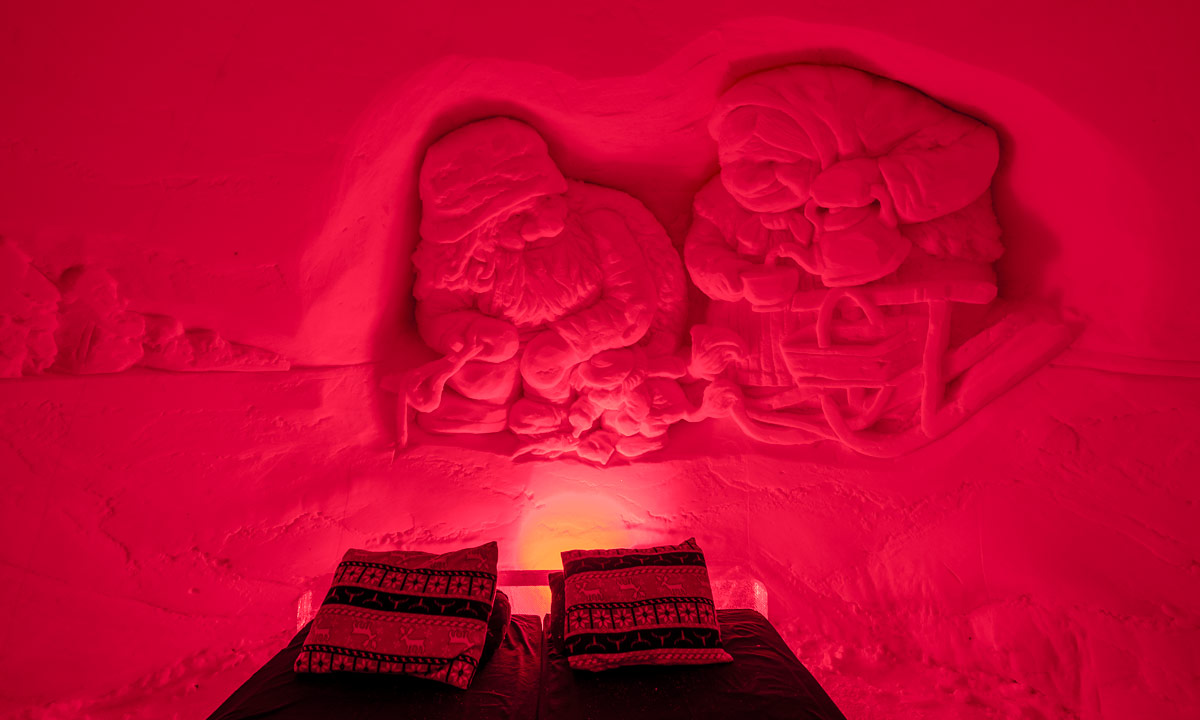
Yesterday I was on one of the tours, that the Kirkenes Snow Hotel has in its program: King crab fishing. These huge crabs are caught in big crab traps.

First we were provided with scooter overalls, big leather mittens and helmets, because we were driven to the place by snow mobile. The crab trap of the snow hotel is located at the end of the Langfjorden. Normally it would be necessary to free the hole from new ice but yesterday it was too warm and the trap, that looks like a big cage, could be pulled up directly. And yes – we were lucky – a lot of king crabs were in the trap. Bry, the guide, took four of them and showed them to us. There are fascinating animals and looking at them closer they look like aliens.

Gry killed them with a knife and they’re dead in a split of a second. Then she took the legs, that’s the eatable parts and threw back the rests that instantly were eaten by cods swimming around. We took the snow mobile to the restaurant, Gry driving, me sitting behind her and the other seven tourists in the trailer. There’s an outside kitchen where the crab lags are steamed for 16 minutes. They look red after steaming. They’re eaten with white bread, butter, lemon and mayonnaise and they taste extremely delicious. I ate lobster twice in my life and many other types of crabs and crayfish but I liked king crabs best. And there’s a lot of meat in the legs. Three legs were more than sufficient to be full, I ate four and really was stuffed. Delicious!


Finally: The North Cape

Day 50

To be honest: I never planned to visit the Nordkapp (The North Cape), but when I was in Alta I continued to Hammerfest and after that I travelled to Honningsvåg and from that place it’s only 29 kilometres. So I visited the North Cape yesterday.

The first part is a normal road showing some beautiful views. I also completed 5000 km on this road.

If you go to the North Cape in winter by bus or your own car, you have to drive the last part in convoy. Convoys are starting at 11 and 12 o’clock.

When I came to the convoy place I was an hour too early. Time to try to make a rest on a wooden bench (it was degrees above zero again), but the wood was too wet to stay.

11 o’clock we started. The snow plough came first, then two minibusses, then me and two other cars. The street seemed to be alike as the first part: Snow and mud, partly frozen and some steep passages. The weather changed every single minute and I looked into a rainbow while following the other cars.

When we arrived I parked my car, almost jumped into the building to get an entrance ticket and ran to the famous landmark to make a photo with the rainbow without any other tourists. Even although the rainbow started to vanish I was lucky and I got my pictures. Only my own shadow was unavoidable.

But more than of the landmark I was fascinated by the weather. You could see single rain showers wandering over the sea like extraterrestrial animals and I never saw the weather change so fast and so often than yesterday at the North Cape.

I wandered round and made some photos, both inside and outside. I saw fog and approaching and I saw the many tourists, that came in big busses with the second convoy. I had a look into the tiny chapel in the basement and I ate a waffle with Norwegian cheese, jam and whipped cream.

And of course I made a selfie.

I took the convoy back at 1 o’clock (the earlier one) and I was alone. But so I had time to take the car on another road and drive to Gjesvær, a little fishing village in the northwest part of the island Magerøya. I had to stop again, the light on the far mountains was just breathtaking and the photo is just a poor copy of reality.

There’s apparently no tourism in Gjesvær under the winter but I could see several fishing boats going out and coming in.

After a short strolling I returned back over the fjell until I was at my hostel in Honningsvåg again.

The North Cape – is it worth a visit?

Even if I’m usually not attract by touristic attractions I do like the place somehow.

Yes, it’s neither the northernmost point of mainland Europe (that’s Cape Nordkinn near Mehamn), nor even the northernmost point of the island Magerøya (that’s Knivskjellodden), but it’s a symbol! A symbol for being at the north peak of Europe and as long as you travel by car it is the northermost place you will reach.

I wouldn’t travel far just to reach the North Cape but when you are nearby I think it is worth both the travel and the entrance fee of NOK 255. If you have your own car, take the first convoy and you will get a chance of taking pictures without a zillion other tourists, at least as long it’s not too foggy.

For me this is kind of a peak of my journey Nordkalotten 2015 and now I’ll travel southward again. Probably Karasjok today and Kirkenes tomorrow. What I will do after this depends on the weather. If winter still is much too warm as most of the time I might return to my house in Skelleftehamn and take it easy for two weeks before I drive to Finnland again the last free week. But we’ll see. No plans yet …

Hammerfest and Honningsvåg

Day 49

Quite early I left Alta yesterday and continued the E6 in direction Kirkenes. To the left I could see the Altafjorden but soon the street turned right and went a bit up. Half of the Finnmark is above the tree line and so are parts of the E6. But it’s still amazing that you leave the coastal area with green pine trees and wet snow and after a bit of driving up you are in an area with snow covered mountains and just some downy birches here and there.

But after a while the road went down again and I turned left to visit Hammerfest. I made a short stop in Kvalsund before I drove over the bridge onto the island Kvaløya where Hammerfest is situated at the western coast.

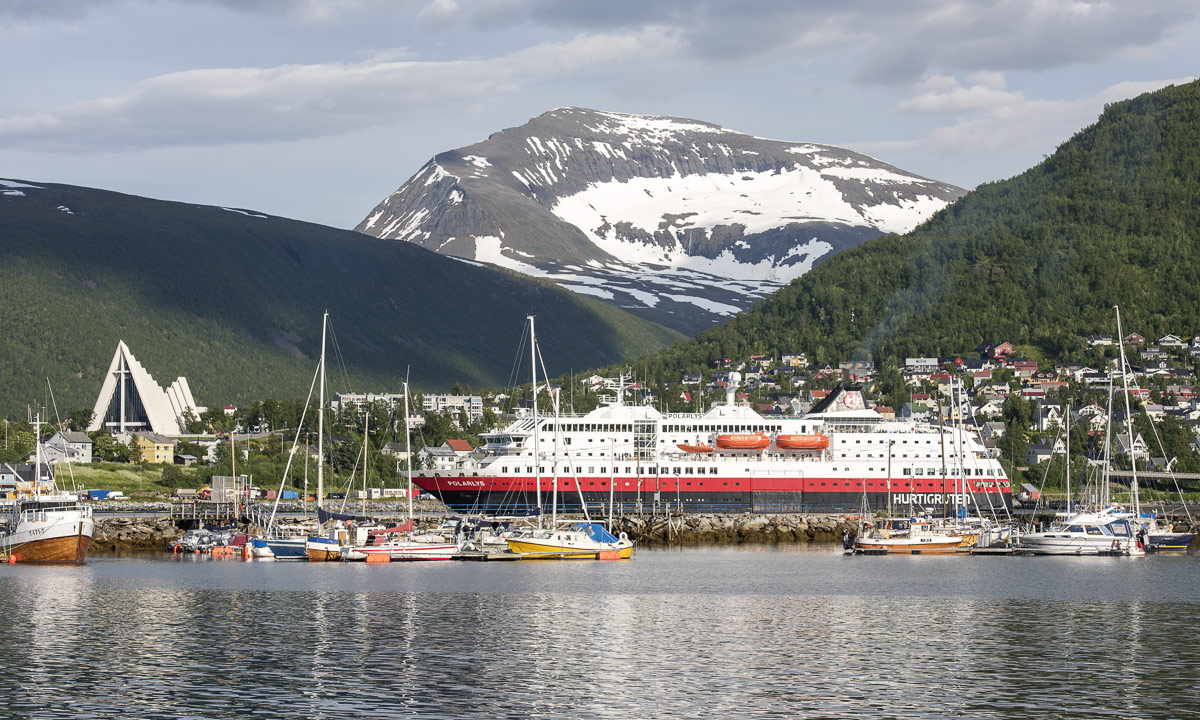
I know the name Hammerfest for ages, I guess it was mentioned in my children’s encyclopedia. As many other towns in Norway Hammerfest is a modern town, since it was destroyed almost completely in WW2. For me the name sounds quite German, both “Hammer” and “fest” are German words as well. When I had a look in the tourist information I thought, that Hammerfest is a German town, because all people talked German. But that’s probably only because the Hurtigruten was just in town and many tourists that make a cruise with one of these ships come from German speaking countries.

After a shorter strolling through town I continued the road to Forsøl in the north of Kvaløya. Again the road went through treeless, snow covered hills and mountains. But the rocks at the coast showed moss and other creeping plants due to the mild coastal climate.

I returned and planned to continue my journey to Honningsvåg, one of the northernmost towns in Europe. Driving back was not easy in the beginning because the streets where wet and it was hard to see something against the low standing sun, even with sun glasses and flapped down sun shields. But soon the road changed direction and driving became easier. Now I continued the E6 a bit and turned left into the E69 (that’s where I made the pictures of the Purple Sandpipers) that leads to the town Honningsvåg and to the Nordkapp. It started to dawn and even to snow a bit.

After a while it was dark. I could see grey snow, dark rocks and the dark sea. After a while I couldn’t see anything anymore, just the reflecting tape round the plastic marks and the tunnels. Meanwhile we had +3 °C and it rained. (I guess, it can be alike in summer …) Already from distance I could see the lights of Honningsvåg. The last tunnel went beneath the sea and came out again on the island Magerøya. Some minutes later I was in Honningsvåg.

Now I had three wishes: Food, internet and a room. It took a while to find the only open restaurant, a pizzeria. Check! There I was allowed to use the private WiFi to get internet. Thank you, guys! Check! And there, with the help of Annika who was online I found a room in a hostel. Expensive but hey, we’re in Norway. Check!

Now, the morning after, I will have breakfast and then I will pretend to be a real tourist and visit the Nordkapp, the northern most point in Europe you can reach by car.

Ascent of the Komsa

The second day in Alta. The afternoon I parked my car at the end of the street Tilfluktsveien. My plan was to go up to the top of the hill Komsa. The winter ways turned out to be ski trails and I since I went afoot, I went beside the trail. First I thought about getting my skis, but soon I found a trampled path that brought me to the top of the Komsa. Thank you, locals, for knowing the best way and tramping this path! On the top of the Komsa it was very windy and I sought shelter behind the radio station to change the camera lens. Nearby stood two sheds with parabolic antennas. The green camouflage pattern revealed the military usage. I have to admit that I was a bit nervous standing there with my camera and the long telephoto lens, especially when I aimed directly to the sheds to catch the mountain view above. I’m quite sure that it’s strictly forbidden to take pictures of military installations in Norway as in many other countries. After taking some images (landscape, no military installations!) three soldiers appeared and approached. They went into my direction and they seemed to be in a hurry. (Gulp!) But they just said “hoi”, passed by and entered the wooden house of the radio station. (Phew!) There were not at all interested in my photographing and probably just wanted to avoid the chilly wind. I was reliefed and wandered around a bit. The stormy wind was chilly but the views where so beautiful.

Two other photos of today.

One: The Nordlyskatedralen (The Northern Light Cathedral) in Alta, a remarkable building.

Two: Wakan, an Alaskan Malamute, that will participate the Finnmarksløpet, a 1000 kilometre dog sled race that starts in Alta in a few days. Good luck!

Through the Finnmark to Alta

Day 47

After a nice stay in Palojärvi i continued my trip. Just 10 km later I crossed the Finnish-Norwegian border and entered the Finnmark, the northernmost part of Norway. It was still very grey, very windy and quite warm with temperatures round zero. And that’s how the road looked like in the open, where the wind covered parts of the roads with snow drifts.

Soon I arrived in Kautokeino, where the Sami culture is quite big. Most signs have the Sami language first, in some of the front yards are fenced reindeers, women wear traditional Sami dresses and on the outside of many houses are reindeer skins hanging for drying.

I made a short break to make some photos of the church and the graveyard.

After a short rest I continued northwards. The landscape was first as flat as a pancake but gradually started to become hilly. Almost all I could see was grey birches and white snow, almost like a black-white painting. The yellow central dividing strip of the road and here and there a traffic sign were the only visible colours.

After an hour the hills got larger and finally a found a parking place, that wasn’t in the middle of a birch wood. Even if the thermometer showed 0 °C it was extremely chilly due to the strong winds that even shook my parked car and I had to protect face and hands against the coldness. Just one picture into the valley showing a small village.

The hills got steeper and sheer rocks appeared, some of them covered with turquoise blue ice that seemed to glow from its inside. The landscape started to get a bit colourful.

Now the most interesting part of the road began. I was a bit disappointed that I couldn’t make any photos, but the road had so many curves and bends and not a single parking bay, that I didn’t dare to stop. Suddenly the road was bordered by steep black-brown rock walls, it was almost like driving into a canyon. Then the road went down, the landscape opened again and suddenly I was surrounded by a green pine forest. After some hours of seeing only black-white it was amazing and felt like driving into another country with another climate. Minutes later the cloud layer broke and the sun lingered through the gap illuminating a snowy mountain at the horizon making all finally colourful again.

This looked so nice, that I decided to stay to nights in Alta. Now I only needed a cheap room. The employees at the  tourist information had some difficulties in understanding that their job is to help tourists, but that’s another story … . Finally I could convince one of them to find a room for me. I drove back to the camping place in Øvre Alta, where I stay in a nice, small cabin without water but with internet (that’s more important!) for two nights. But before it went dark I returned into town and took two images near a partly frozen bay.