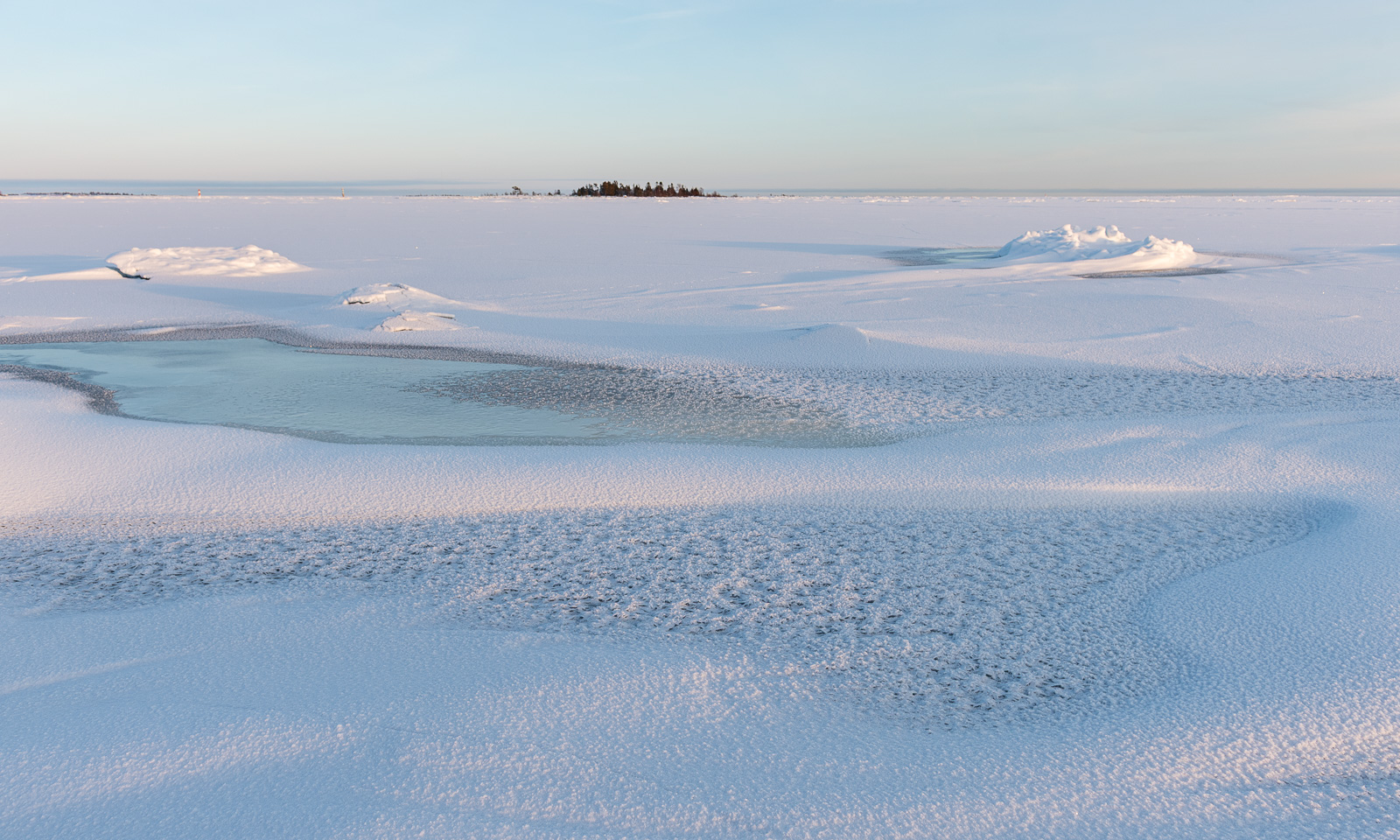
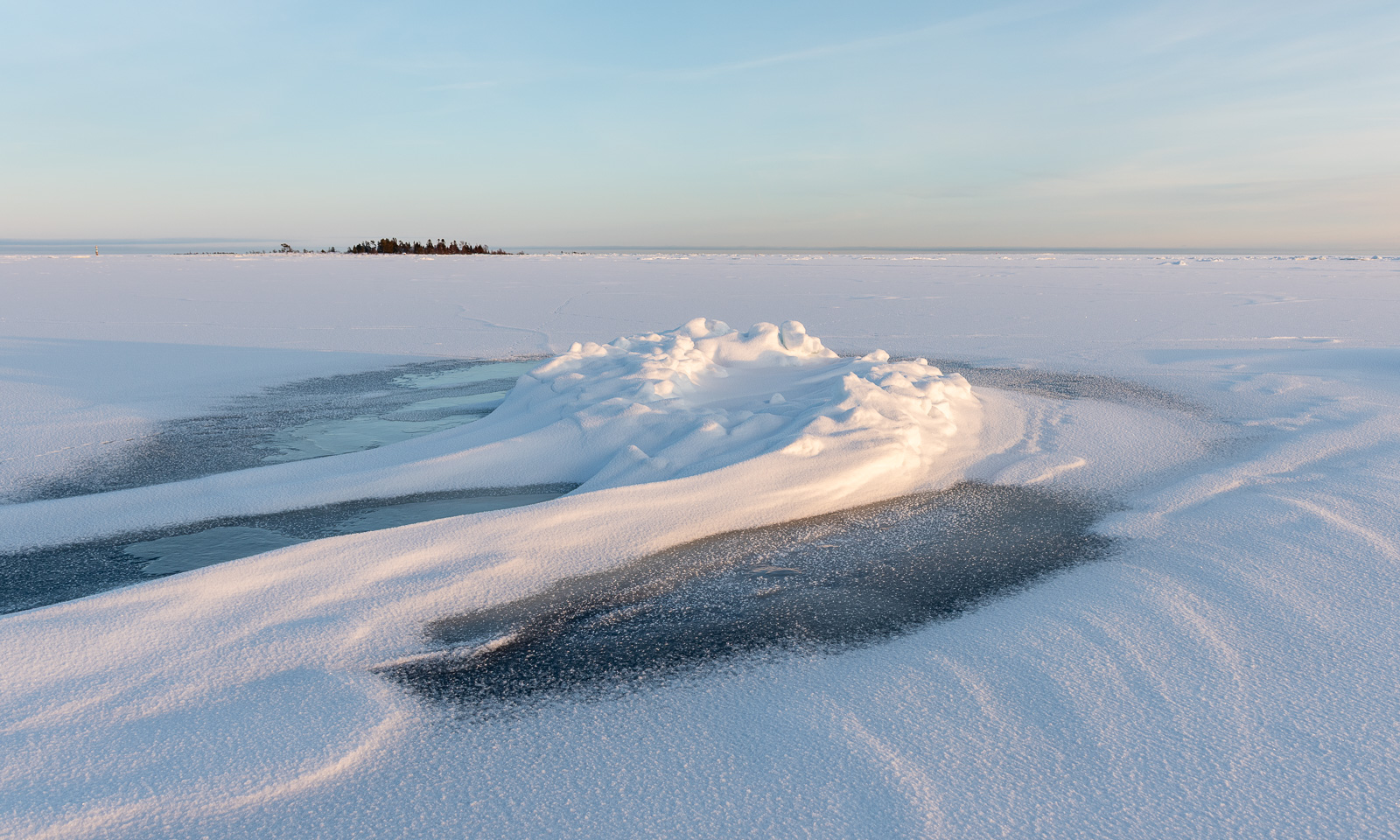
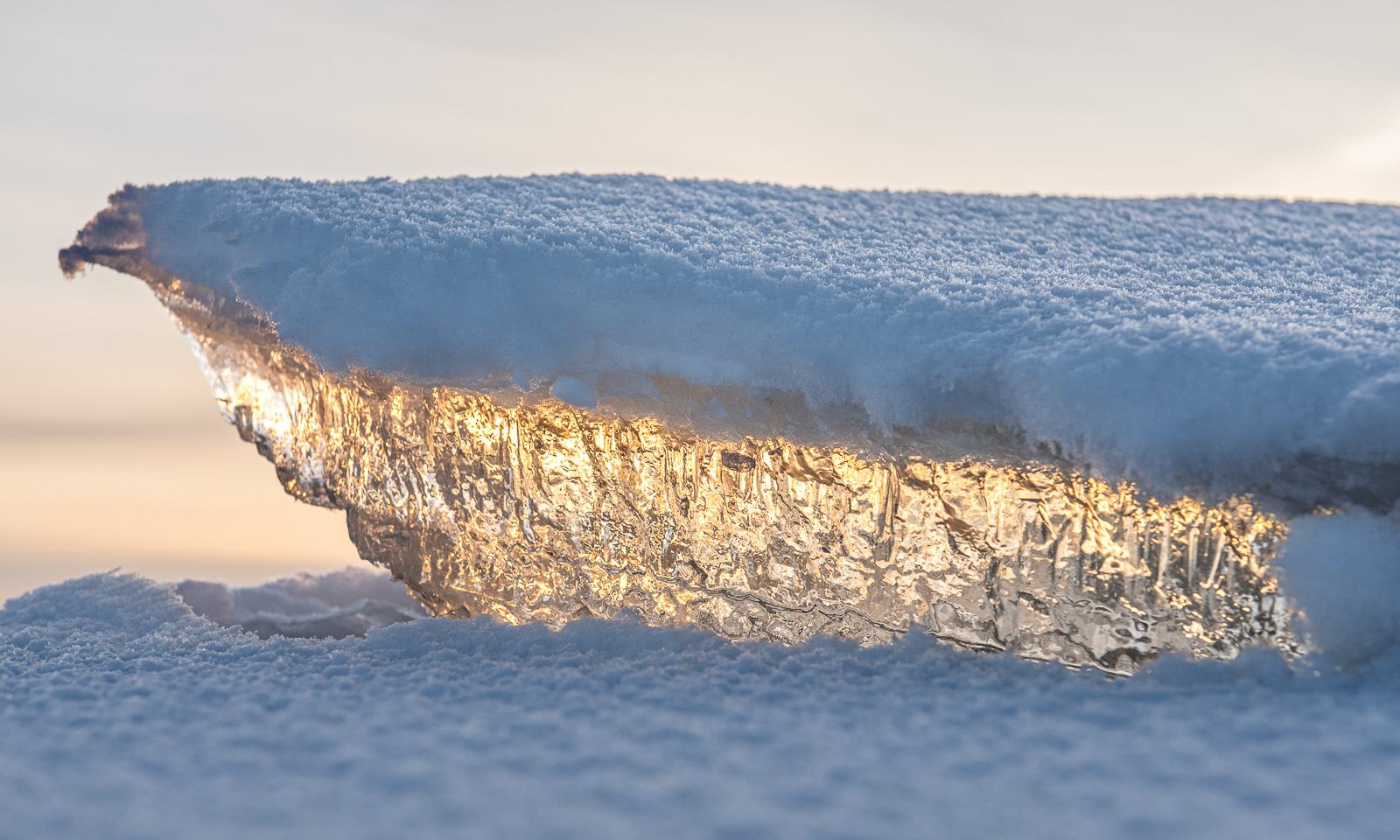
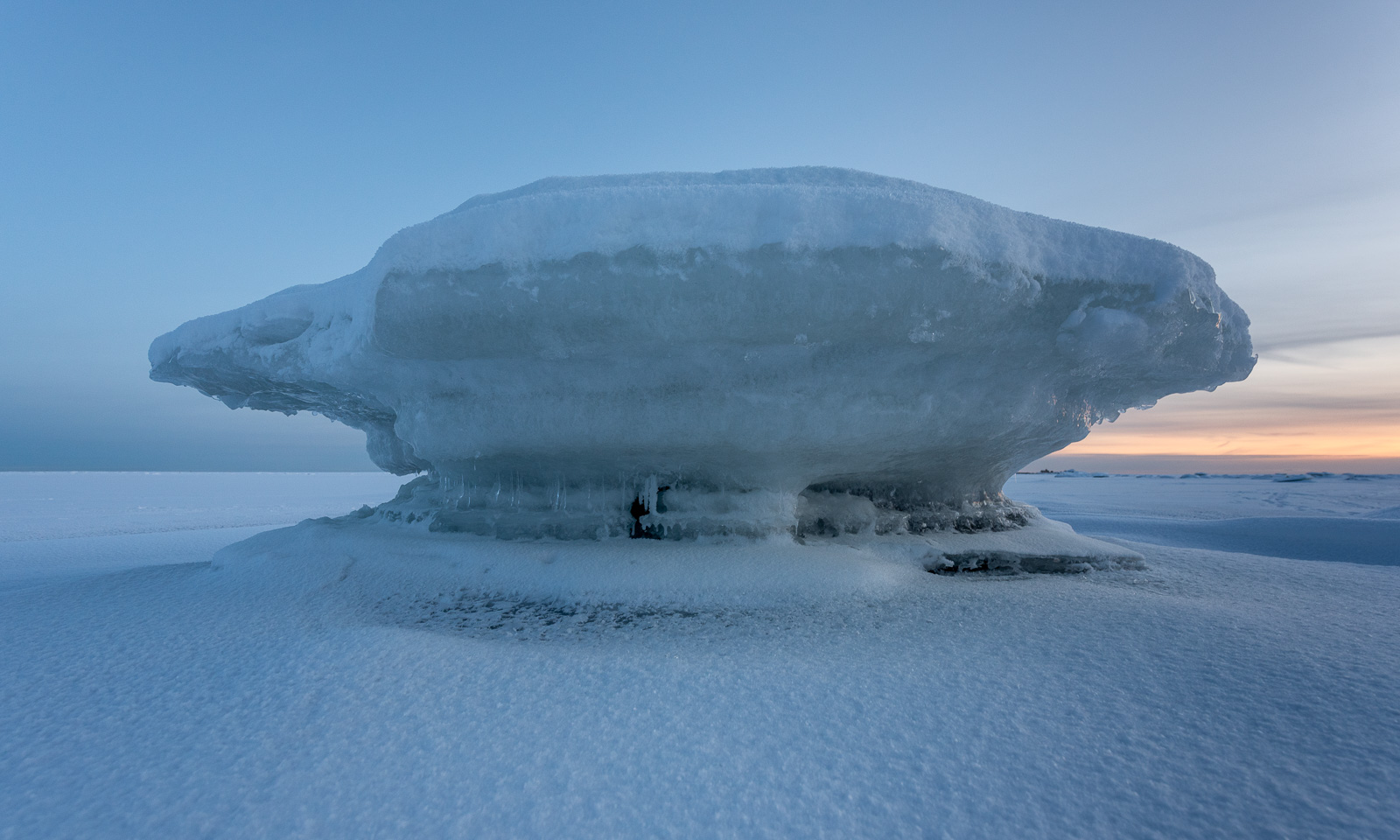
1st October

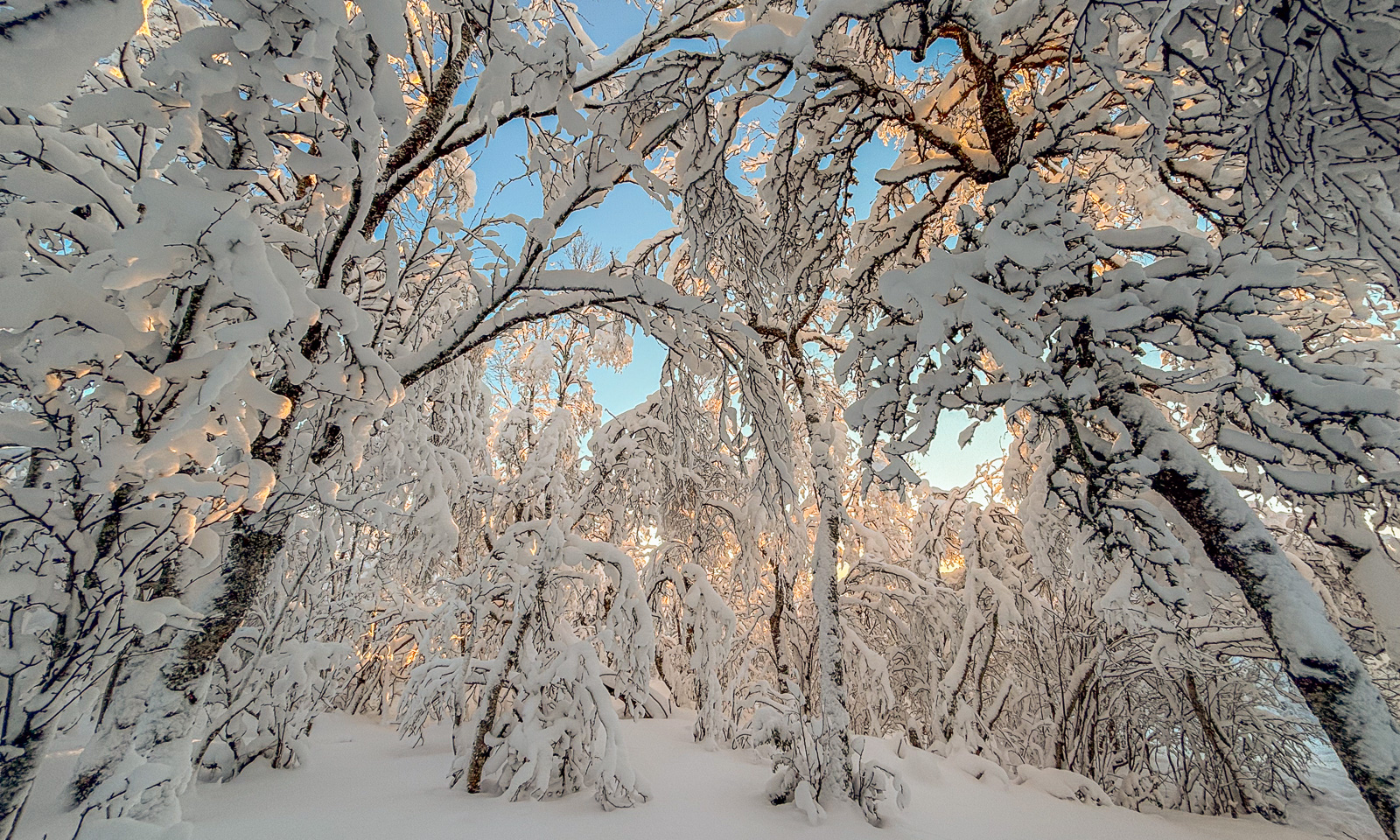
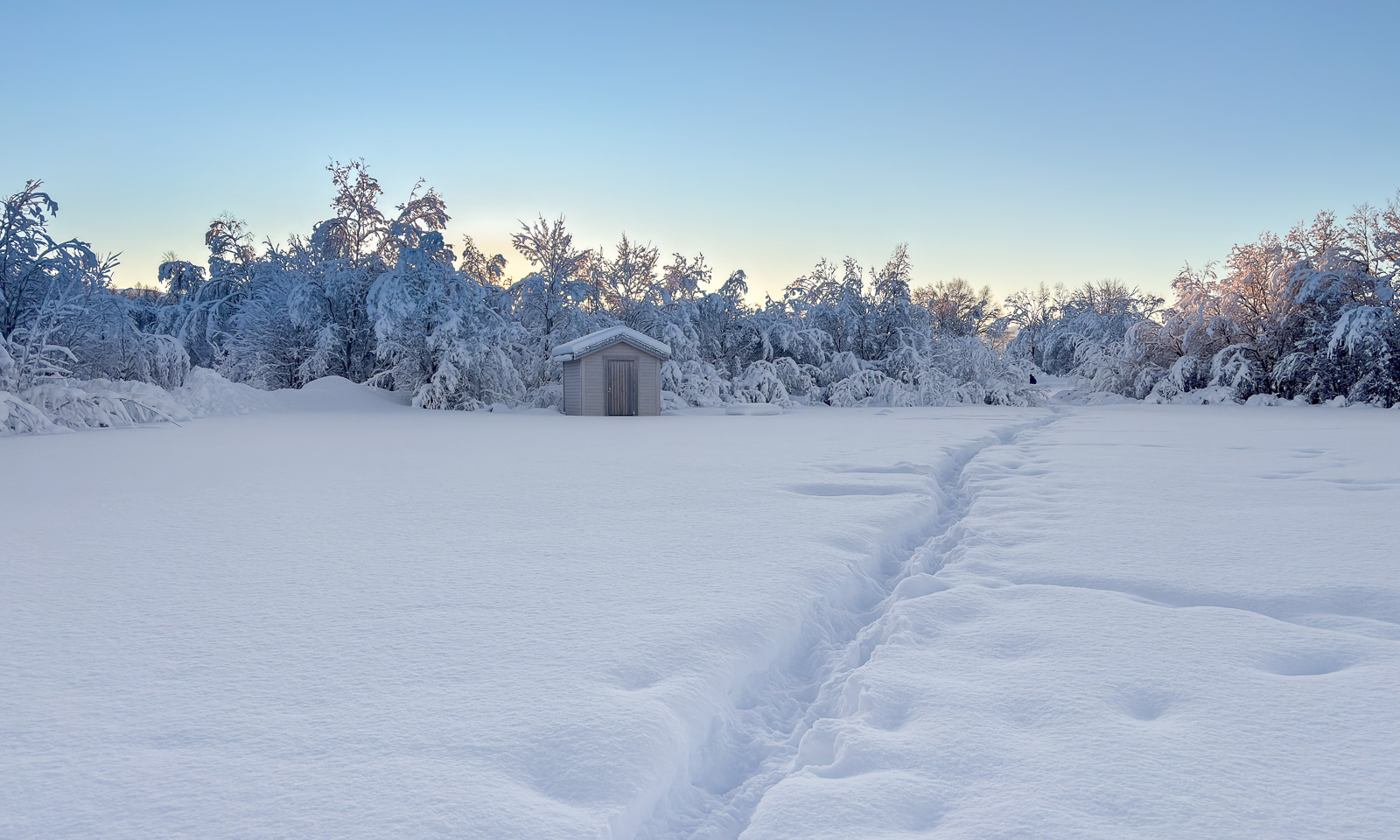
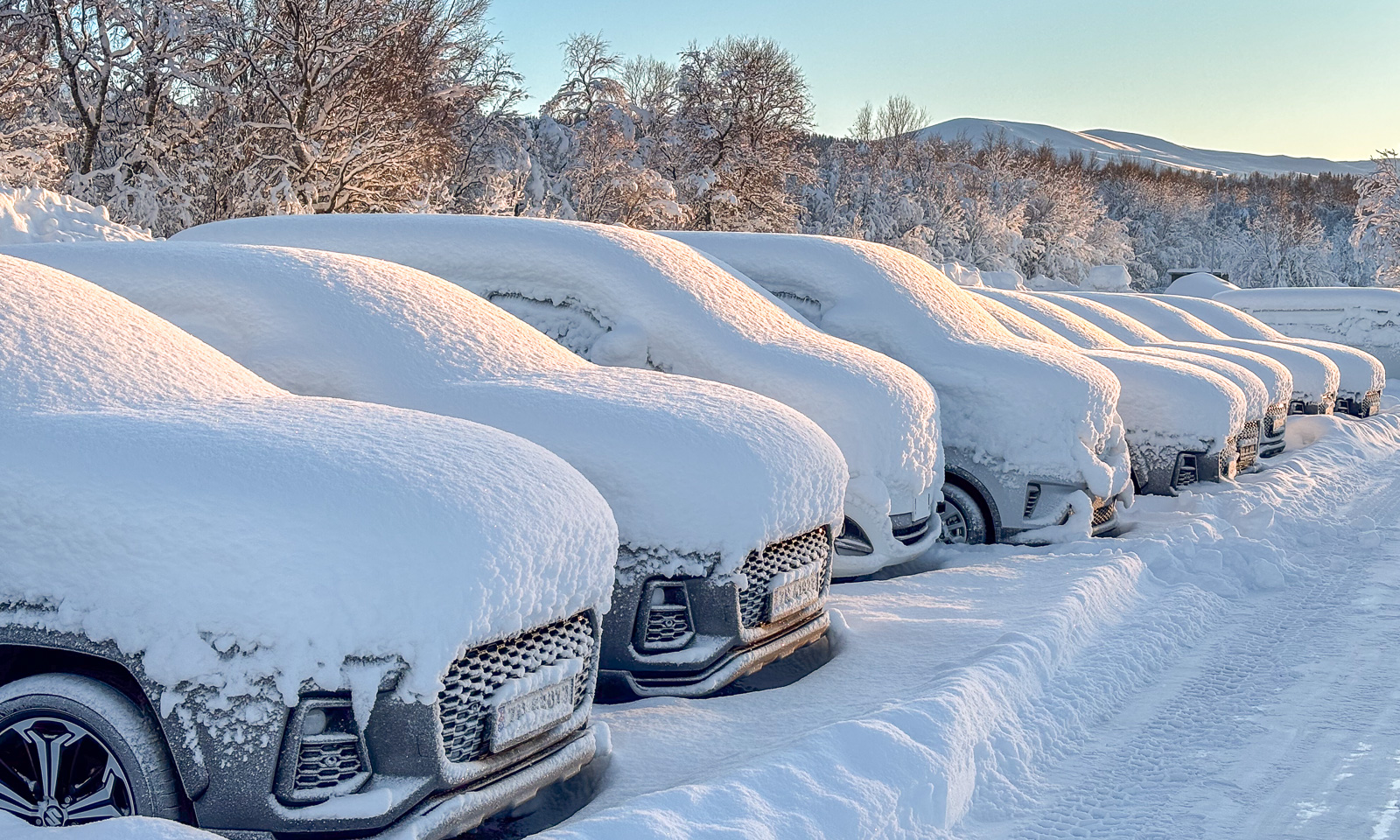
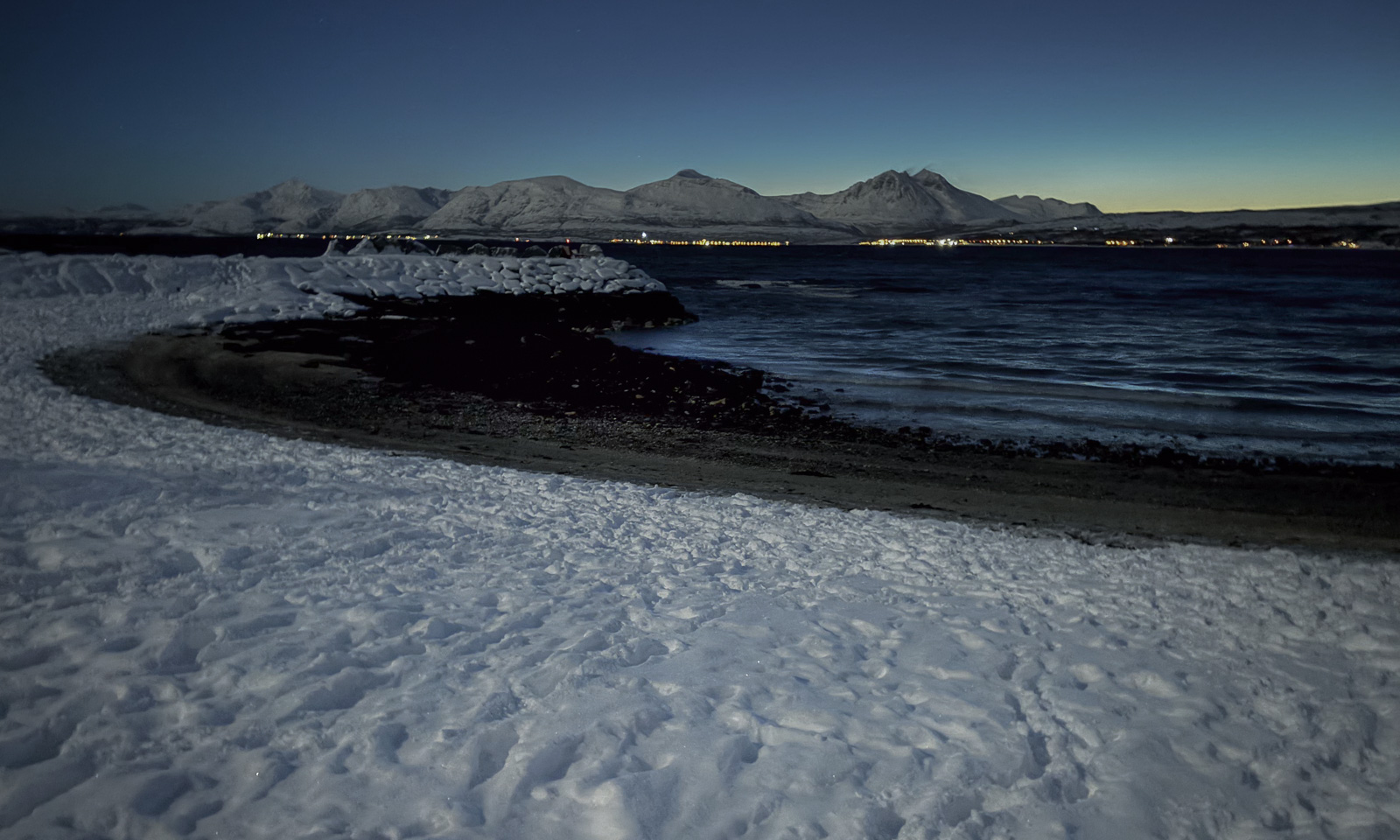
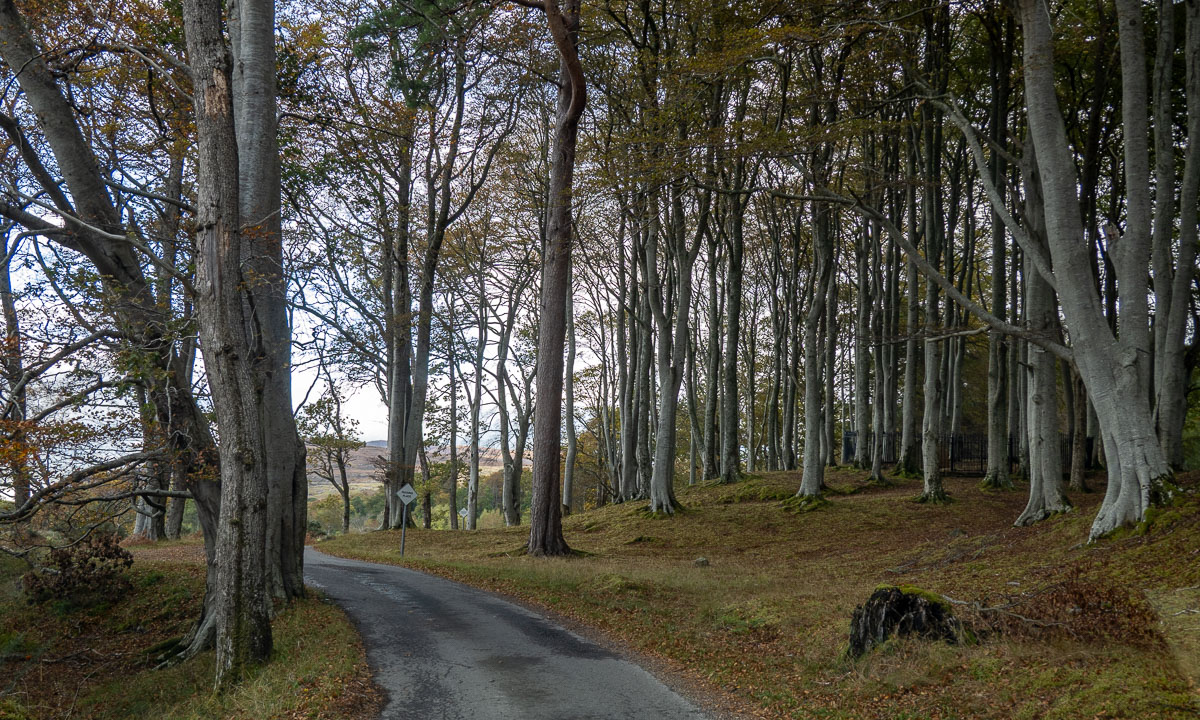
The 1st day of this year’s October delivers! First I got a clear, blue sky on my after-work hike through the autumnal forests on top of Tromsøya. Then I got beautiful Northern lights tonight, I just came in and developed the photos a bit.

What you don’t see here – as usual – is the movements of the Aurora. The live act is still better.

Steindalsbreen 2025

It is the third year, that I hiked to the glacier Steindalsbreen in the Lyngen Alps. This time I had the pleasure to do the tour with my wife Annika. To make it a holiday we have decided to try to book the cabin Steindalshytta over the weekend. This cabin lies some kilometres from the parking place on the way to the glacier.

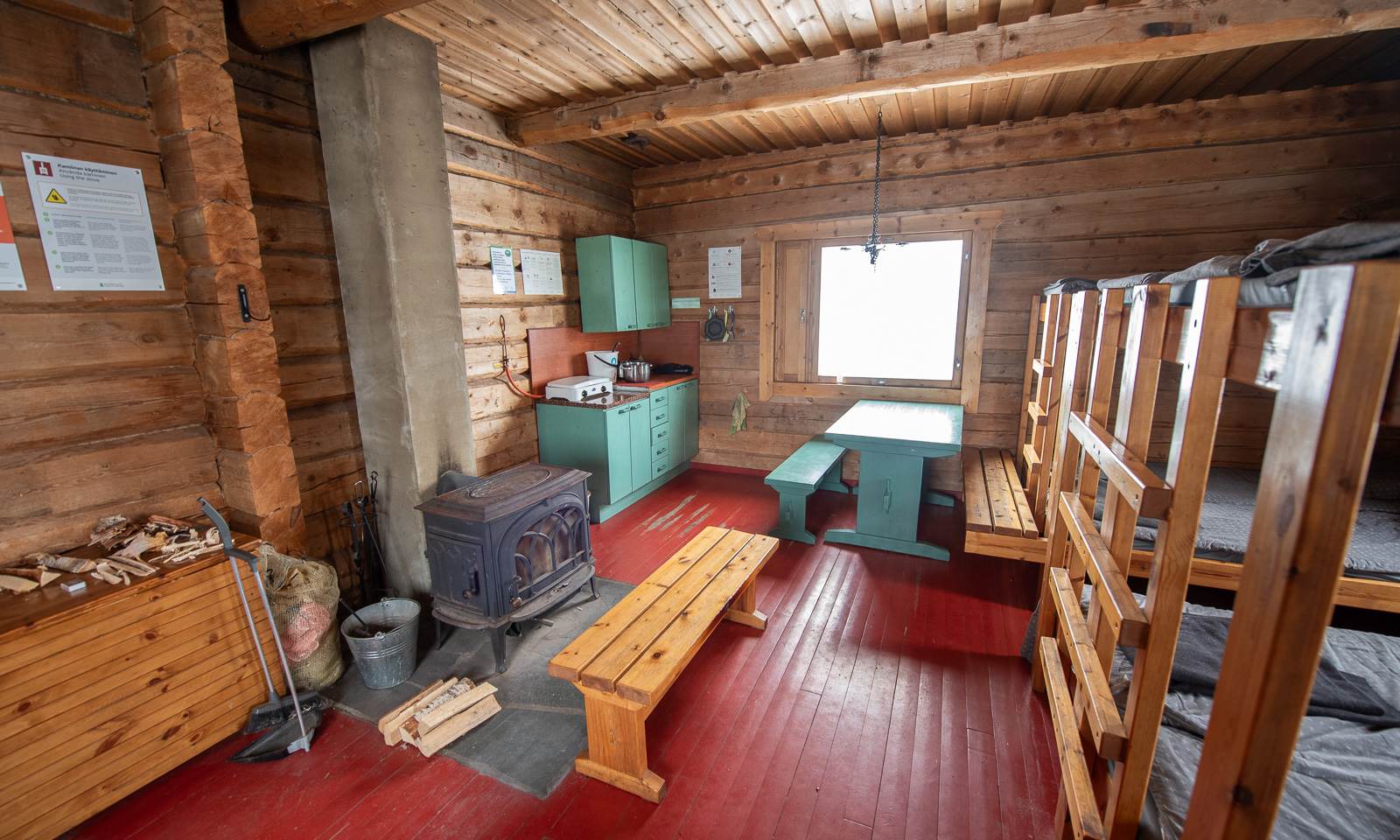
Saturday morning we manage to book two beds but we have to hurry to fetch the key in Steindalen, which is 100 km away. There we meet H. that gives us the keys and some info. She tells us we can use the gas driven hotplates to cook. We also learn that there’s hardly any firewood left, but it’s not cold and we have sleeping bags, so no worries. We pay using Vipps, the leading mobile payment system in Norway, then we take the car to Lyngseidet – 25 km away – to buy food.

When we pack our backpacks to start the tour it is already afternoon, but the cabin is not far away.

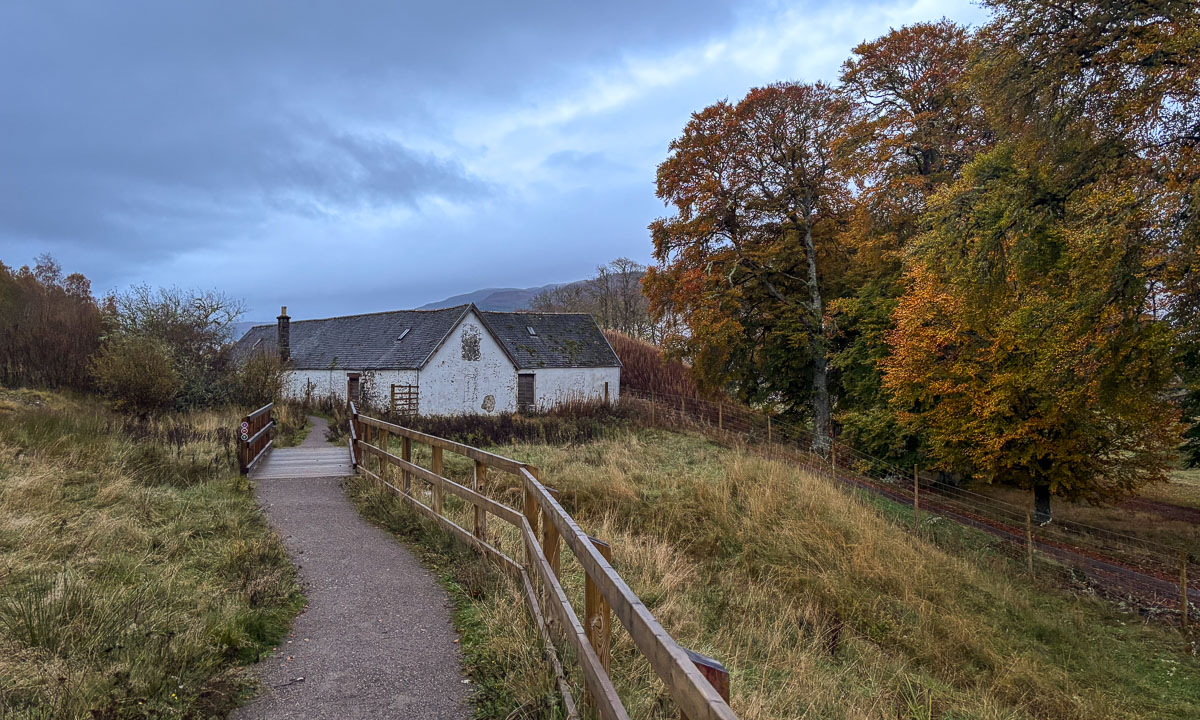
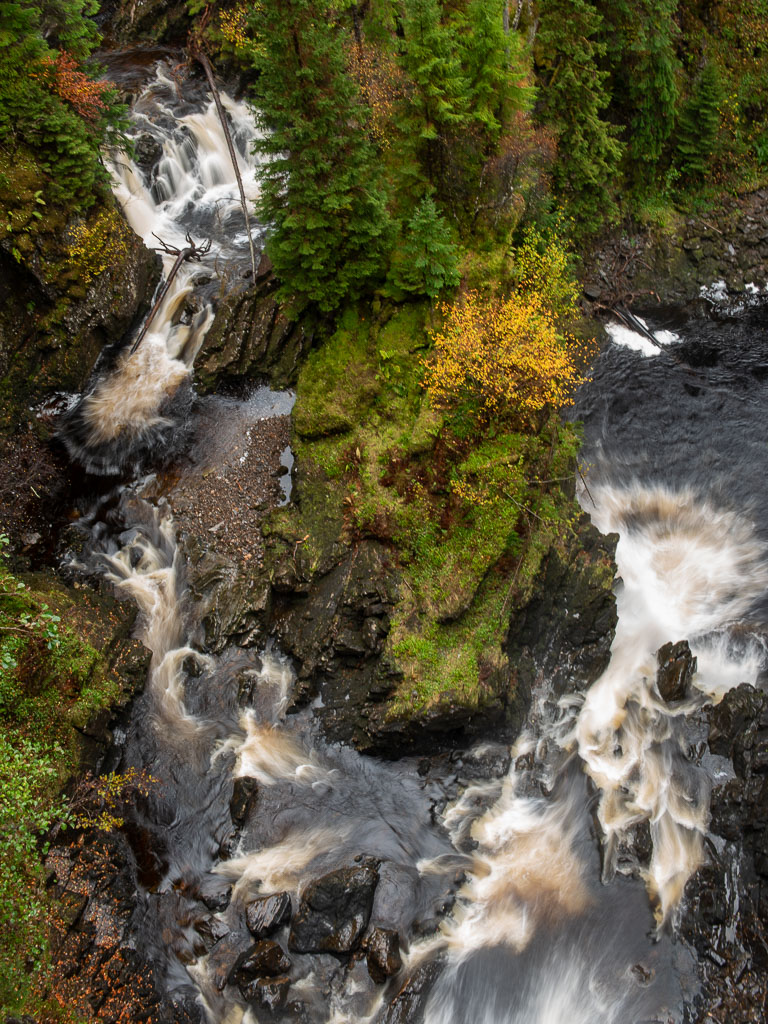
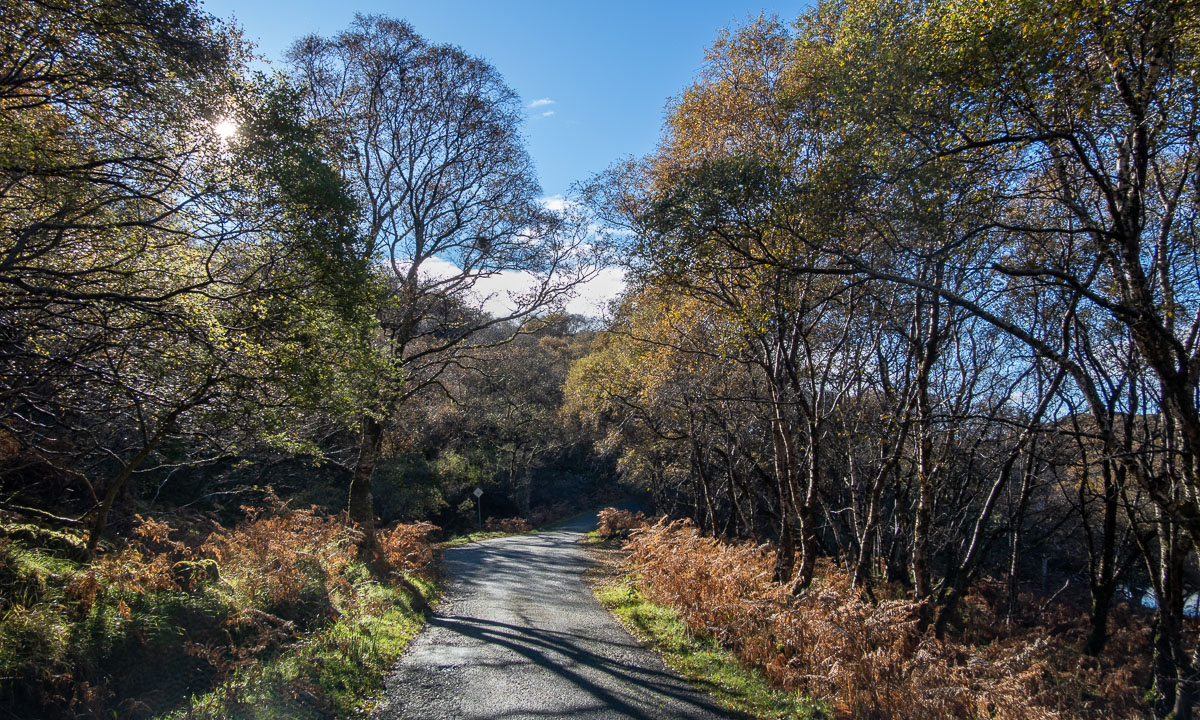
In the beginning a forest path winds up through a narrow valley. The colours are autumnal – yellow the birches, red the cornel and the blueberries. To the left down from the bottom of a ravine we can hear the river Gievdanjohka.

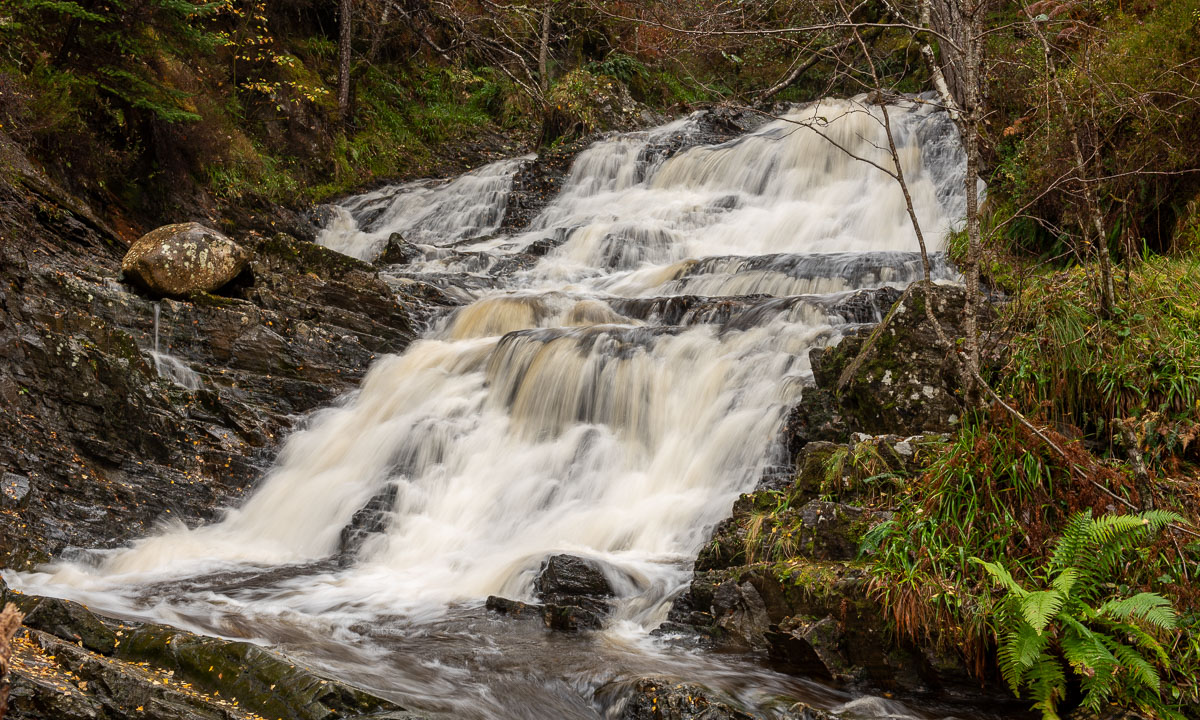
The path is rising and so is the river. After two kilometres we are almost level.

From there it is not far to the cabin. We go round a moraine and there it is: Steindalshytta. I unlock the door and we peek inside. Looks cosy!

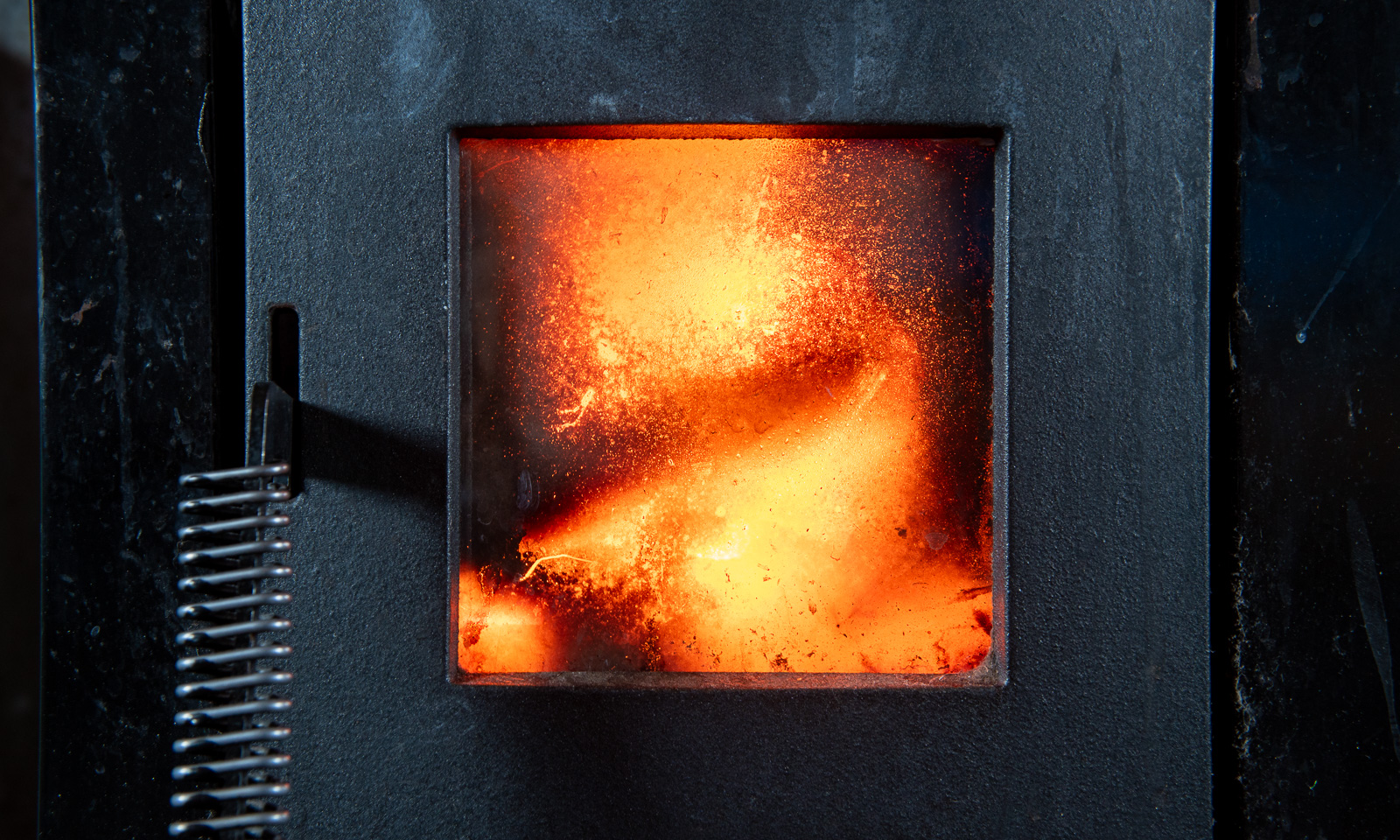
Now we want to cook. This will take the rest for the evening because the gas canister is empty. No cooking on the hotplates, we have to use the wood-burning stove. We gather all the leftover wood from inside and outside of the cabin. There is no axe. Luckily Annika has a knife that is sturdy enough to make some smaller peaces of firewood. The wind is calm, the oven isn’t drawing and it takes almost three hours until the water for the spaghetti is boiling. At least we get a starter: warm shrimps with parmesan that we eat from the huge plastic plates we found in the kitchen. And I found chocolate cookies in the kitchen.

Meanwhile it has become dark outside and soon we get to sleep. We don’t have to freeze. After having powered the stove for hours we have 24 °C in the living room and hardly less in our sleeping room. Good night!

When I wake up the next morning it is raining, but it stops soon and the sun starts to light the mountains in the east.

After breakfast we pack our backpacks and start our hike to the glacier Steindalsbreen. Many things like our sleeping bags we leave behind, because we will go the same way back.

Again we follow the river to the east, then the landscape opens to a broader U-shaped valley. The terrain flattens and hiking is easy.

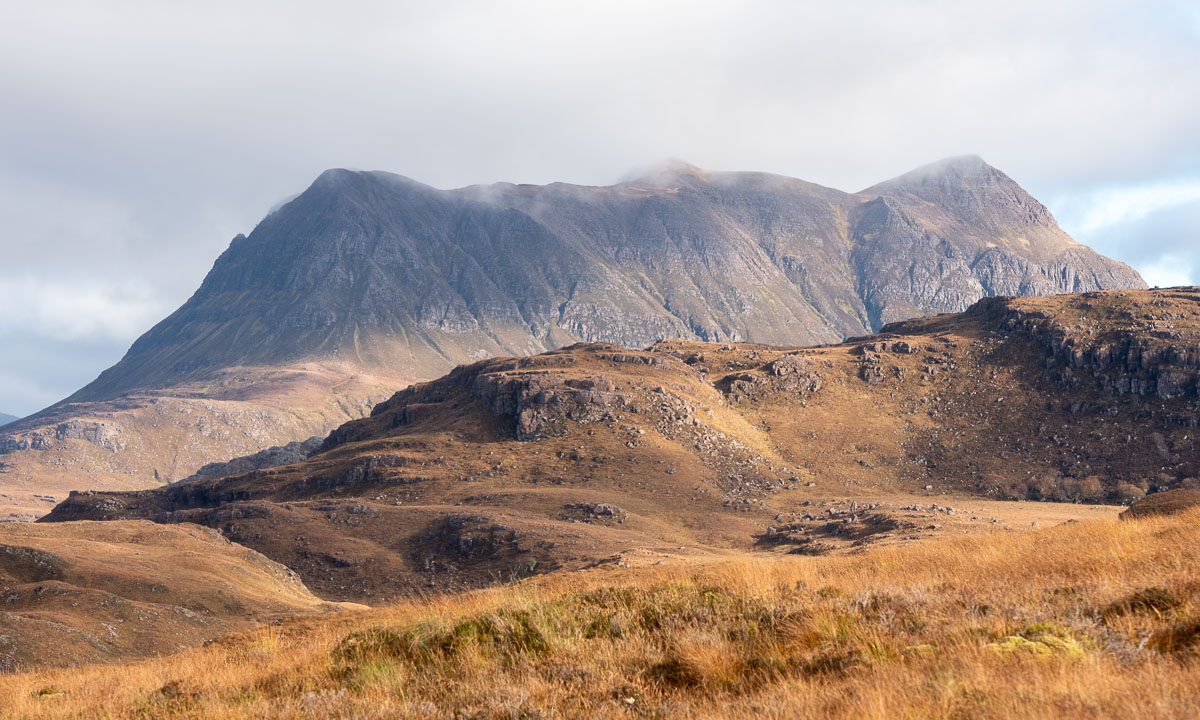
But we can already see the ascent we have to take. After two steeper passages we stand between two landscapes. In our back lies the mellow valley with its gentle slopes, everything in autumnal colours. Ahead lies a rough and rugged mountain landscape, where grey rocks and stones are the predominant element.

And there it is. The glacier. (Photo Annika Kramer.)

We continue the gravel path. Soon we pass the first of the signs that marks the glacier front some decennials ago. Due to global warming the glacier is melting and retreating every year. It is fantastic to see the glacier and we feel excited, but sad at the same time. First we hike to the glacial lake in front. Will we manage to go round the lake the glacier itself? Yes – and it is quite easy this year.

I have my big camera backpack with me and the Nikon with three lenses. That was made possible by Annika who took all the food. Although the weather is a bit dull it is photo time!

As often I’m not content with my photos and yes, I should have carried my tripod with me. But I’m happy about being there together with Annika. (Next photo: Annika Kramer.)

It is time to go back. This time we follow the river and pass two fields with scientific instruments, part of the project iC3. I have to ask a colleague from the Norwegian Polar Institute what is measured there.

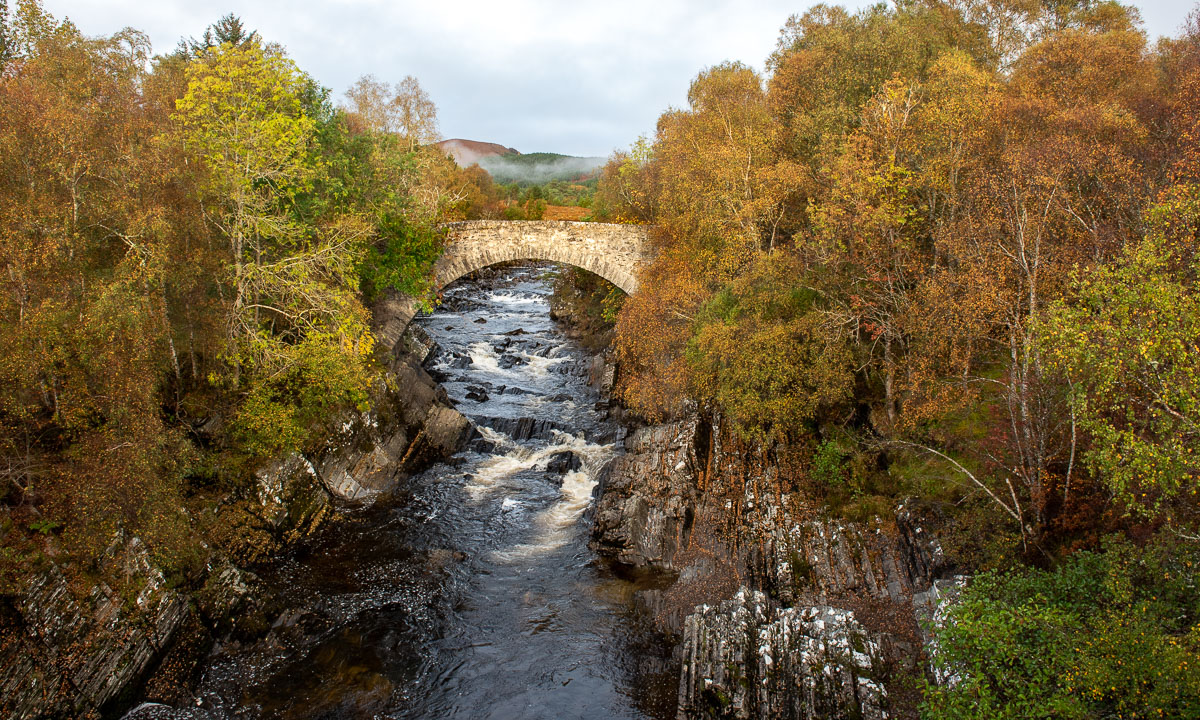
Now the trail leads mostly downwards. We descend the hill, cross the broad valley, enter the forest and then reach the bridge by the cabin again. Here we take a rest and then fetch the rest of our stuff from inside the cabin.

I take a tiny detour that leads on a hill. Here I can see everything together: The huge mountains with their snow fields, the river Gievdanjohka, the autumnal birch forests. Only the glacier is hidden from view.

What a terrific tour we had! The glacier Steindalsbreen is worth a visit, especially in autumn. We drive back to Tromsø and I copy the photos to my computer. Then I check the tracker I used on the tour. As I was afraid I have walked on rock, sand, and mud this year, where last year the glacier covered the ground.

The end of high summer in Tromsø

One month ago was the last polar day in Tromsø, where the sun did not set at all. Now it gets dark again in the night. Rain clouds may help as well to make it darker and I got a lot of help from them, when I made an evening stroll through the forests nearby yesterday evening.

It was still light when I set off and it was raining. The big leaves of the wood cranesbill (Geranium sylvaticum) beside the forest paths had started to turn yellow.

The small, grass-covered bogs always look like autumn. The vegetation is just yellower and browner. Because of the recent rain they were pretty wet and partly covered with water.

There were still flowers in bloom, like the pink fireweed and the thistle in the next photo, but more and more it was the leaves bringing the colour—like the wood cranesbill, whose leaves turn a vivid red in autumn.

Most of the forest paths were mostly dry but some of them had turned into deep water puddles. Rubber boots came in handy.

Half past nine – it was getting darker. Now and then I caught a glimpse of city lights through the trees, but most of the time I was away from town—sometimes going cross-country through the forest, sometimes staying on the paths.

Another sign of autumn was starting to show. Various mushrooms have popped up beside the path. I don’t pick them—I haven’t got a clue about mushrooms—but I do enjoy spotting them.

When I came home at 22:20 my rain clothes were so soaking wet, that I hung them into the shower. Today was the first day after months, where I put on the electrical heating in the living room.
Just a pick-up at the station…

When Annika travelled to me last weekend, her train from Boden to Narvik was cancelled and the next and last train was heavily delayed. Unfortunately train problems have become common in Northern Sweden over the years. I had to use the airplane several times because trains didn’t run at all for days or it was impossible to buy tickets.

To keep Annika from being stranded, I drive to Narvik to fetch her. From Tromsø it takes me about three and a half hours plus some breaks.

Meanwhile Annika has booked a hostel in Bogen where we stay overnight. Our plan is not to drive back the direct route, but to visit the islands Andøya and Senja.

Monday, 21 July

The next morning starts sunny.

However it soon gets foggy. After crossing the Tjeldsund we are on Hinnøya, the largest Norwegian island (when we ignore Svalbard). We decide against a swim in the sea due to the fog and continue to Refsnes. From here go ferries cross the Gullesfjorden to Flesnes. On my trip to Narvik yesterday it was often 28 °C, now in the fog it is hardly 15 °C.

We have missed the 10 o’clock ferry, but they run hourly and we don’t have to wait for long. The journey itself takes only 20 minutes.

From Flesnes we continue to Risøyhamn. Hurtigruten travellers may know this place not only because it is one of the stops but also because of Risøyrenna – a man-made underwater channel that allows larger vessels to pass between Andøya and Hinnøya. The Hurtigruten ships has to go quite slow there.

We take the bridge over the Risøysundet and drive through Risøyhamn. Twice. Because I didn’t know that it is so small. Only round 200 people live there.

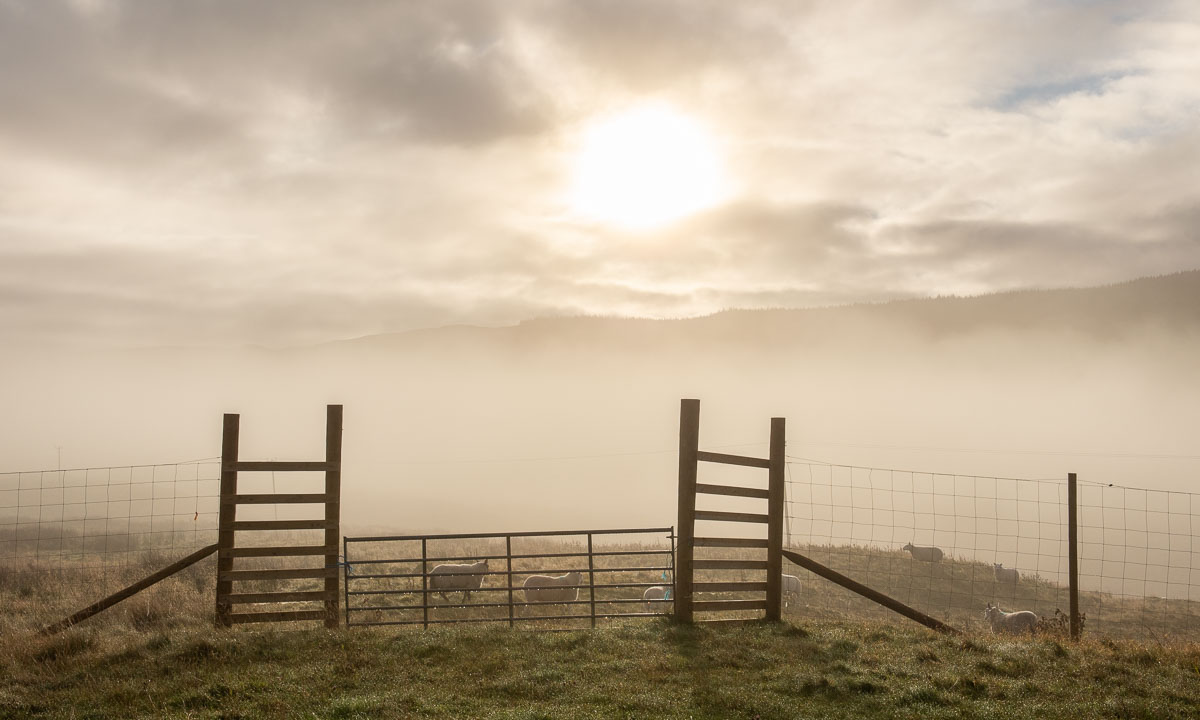
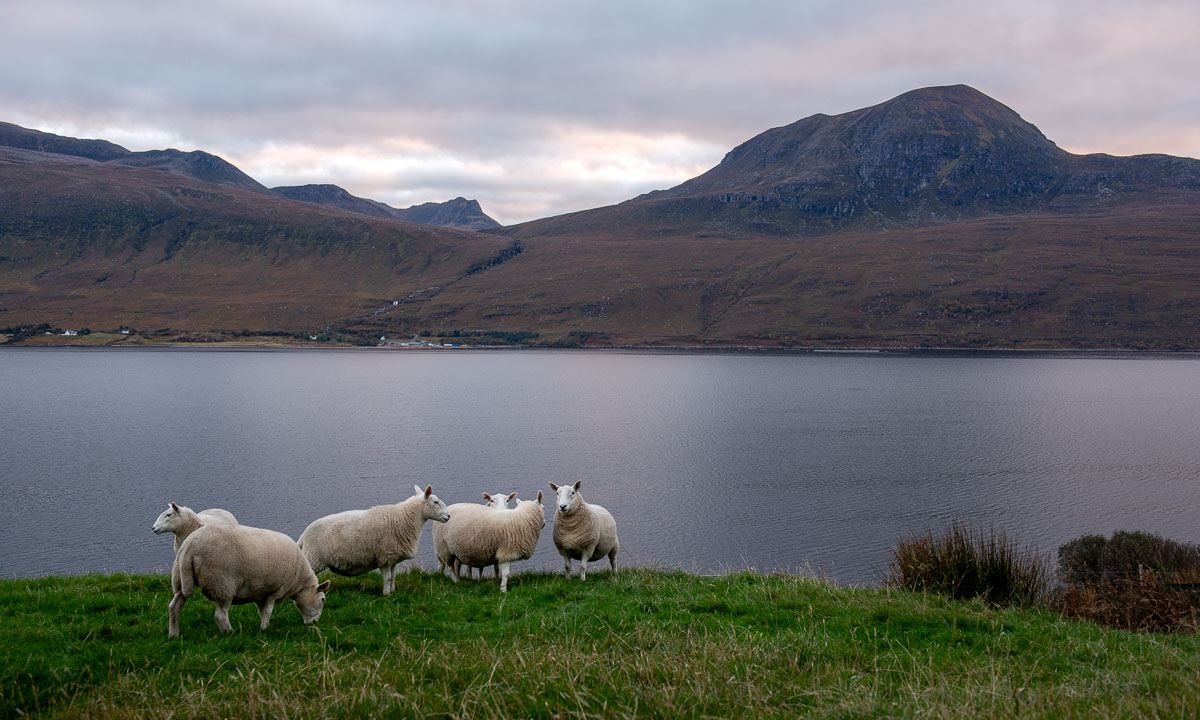
The weather is sunny again and we become more beach focussed. The first beach is for having lunch. We share it with a flock of sheep.

The second beach is for bathing. 16 °C in the water – surprisingly warm for the region.

We continue north. To the west the Norwegian Sea. Next shore westwards is Greenland, more than 1500 kilometres away. Our next stop is much closer: a public toilet at Bukkekjerka. But what a one! It is a designed block of concrete and mirrored glass. From the outside you cannot look in, but from the inside you can switch the huge glass windows between being transparent or opaque.

Around this place – a lighthouse on a peninsula, interesting looking rocks, a baaing sheep and of course the sea.

We follow the coastal road further north to Bleik. Here you can find beaches and turquoise water as well as ridiculously looking rock needles.

After refuelling my car in Andenes we drive south again to Marmelkroken, where we will stay overnight. With an additional photo stop.

To part 2 >

Travelling through worlds

Some of you may know, that I live in two places. In Tromsø in Norway, my “work home” and in Obbola in Sweden, my “home home”. Travelling is not so easy, since the distance is 940 km by car. Normally I take the bus TromsøNarvik and then the train NarvikUmeå, but I happens frequently, that the Swedish train does not operate this route. Yesterday for example I took the plane. It’s like travelling through different worlds.

Tromsø

Friday 11:00 – I am taking a promenade in the forests nearby. While the snow in the forests will soon be soon, the mountains will stay white much longer.

Airplane

Friday 17:00 – I am sitting in the airplane to Stockholm, now watching the snowy mountains from above until it gets cloudy below.

Airport Arlanda

Friday 21:00 – I am waiting for my plane to Umeå, one of the last planes for today. Less and less people are present and the shops are closing.

Obbola

Saturday 08:00 – I am home home. Compared to Tromsø everything is much greener . The weather is rainy and everything outside is soaking wet.

It’s June in Tromsø

After a week in my hometown Bremen in Germany I returned to Tromsø yesterday. This morning I took a tour through the nature of the northern island. The landscape is mostly wooded hills, with a few bogs and lakes dotted around. I was curious about two things: how much snow is left and have the birch trees got their leaves?

More and more snow is gone. However some of the forest floor is still covered with dirty snow, sometimes up to half a metre and more.

You can still see last winter’s cross-country ski trails. The pressure of many thousand skiers has squeezed the snow making it more compact. Like white ribbons, these paths wind their way through the forest.

Other paths give no hint that winter ever touched that place.

The moorland with its spongy ground is completely clear of snow. And so are the lakes.

However, although it is already 1st of June the colours look more like late October. But if you look a bit closer you see the signs of springs such as the blooming marsh-marigold and the birch leaves that finally start to grow and unfold on some of the trees.

The snow is melting

Fifteen days ago: 98 cm of snow in Tromsø, measured at an elevation of 100 metres. Yesterday – two weeks later – 31 cm of snow are left. And so my walk home also looked like. Somewhere between the winter still hesitating but spring approaching anyhow.

Tomorrow the summer working hours start and till September I’ll have to work only seven hours a day. Yay!

The following day my car will get summer tyres.

And on Sunday – four days from now – the time of the polar days start where the sun won’t set before 26 July.

End of April winter in Tromsø

When I woke up yesterday morning (28. April) and looked outside the window of my living room I was pretty surprised. I didn’t rain in the night, it had been snowing.

Round 15 cm of fresh snow had fallen within the last six hours and everything looked wintry again. In the centre of Tromsø however, 88 metres lower in elevation than my apartment only five cm of snow had fallen and the cars had smashed it to brown slush. What a difference!

Home again I watched a ptarmigan in the back yard. First it picked on a twig of a tree, then it dug itself into the snow and rested there for some hours. Couldn’t it see me behind the window pane or did it just ignore me? In the night it was gone.

Today I took my skis to work so that I could ski back home from the lake Prestvannet. This time the forecast was correct: we got a blue sky, the sun was shining at temperatures round +3 °C. At the harbour in the centre the view was quite spring-like.

Taking the bus from the center up to Prestvannet takes only 5 minutes, but there it is still winter season with snow depths round 90 cm. It’s astonishing what a difference in altitude of less than 100 metres can do.

Time to ski back, preferably not on the tracks but through the forests. After four kilometres on skis and 840 metres by foot I was home.

Two promenades on Tromsøya

Easter Monday – from Sydspissen to home

On Easter Monday we got surprisingly fine weather in Tromsø. The sun was shining and the sky was blue. I took the bus to Sydspissen – the southern tip of Tromsøya – because it has been ages since I’ve been there. A lot of snow has melted away and tussilago was blooming everywhere. I passed the beach at Telegrafbukta and the pier at Folkeparken came into view. I know the this area well, because I lived nearby for quite some time.

I went on, enjoying the sun and ignoring the chilly wind. Don’t let your eyes fool you, the max temperature was about +2 °C. I passed the old boat house Engenesnaustet, saw a lonely winter kayaker and passed the small lighthouse.

I was not alone. A lot of other people took the holiday to take a promenade, sit side by side or do some barbecuing. I took the liberty to remove some people from the photos.

I wondered if the old, abandoned boathouse was still open? It was. A bit away from the shore there was some leftover snow. The tussilago flowers didn’t care, they were blooming anyhow.

Now it was not far away to the boat houses of the two kayak clubs in Tromsø. TSI Trulle and Tromsø Havpadleklubb. Here I start all my kayak tours in Tromsø, because my own kayak is in Obbola in Swede, so I use to hire one here. Season has just started and I want to paddle a lot this year!

At the bus stop Giæverbukta I missed my bus. 28 minutes of waiting or two kilometres of walking? Easy decision: I walked.

It was fascinating that the coast was mostly free of snow, while MET, the meteorological institute inside the island measured a snow depth of about 80 cm that day. At an elevation of 100 metres. And so the walk became snowy in the end. But spring showed up here as well: some willows had started to bloom.

Intermezzo – more snow

Yesterday afternoon it started snowing. Some snow showers were pretty dense. And sometimes I got one of my favourite weathers: snow flurry and sun at the same time. So beautiful. I tried to take pictures but the result became quite ugly, because the snow against the camera looks dark.

This morning ten more centimetres of snow have fallen, even in the lowland areas. All Scilla flowers in the centre were covered in snow and for the photo I had to look to find some flowers not being completely buried.

Friday (today) – from Prestvannet to home

I use to walk home twice a week after work. Then I take the bus to the lake Prestvannet to skip the boring (and steep) parts. Today I do the same. Additional snow showers have increased the snow depth to 92 cm, but it has started clearing up, when I begin my way home at 15:00. The fresh snow gives the lake an untouched appearance and the first lifebuoy is snowed over almost completely. Could it be January? No, the light is different.

I follow the ski trail a bit then I follow the smaller paths. They have hardly been used today, mostly by a single skier or pedestrian.

But then I come to an area where the snowy paths are completely untouched. No one has used them today. Imagine that: You are on a island with 43000 inhabitants. Many of them are enthusiastic skiers and outdoor maniacs. It is Friday afternoon and the sun is shining. And I trudge through 15 cm of untouched fresh snow. This is absolutely brilliant; I’ve never experienced anything like this before!


Winterland is black’n’white

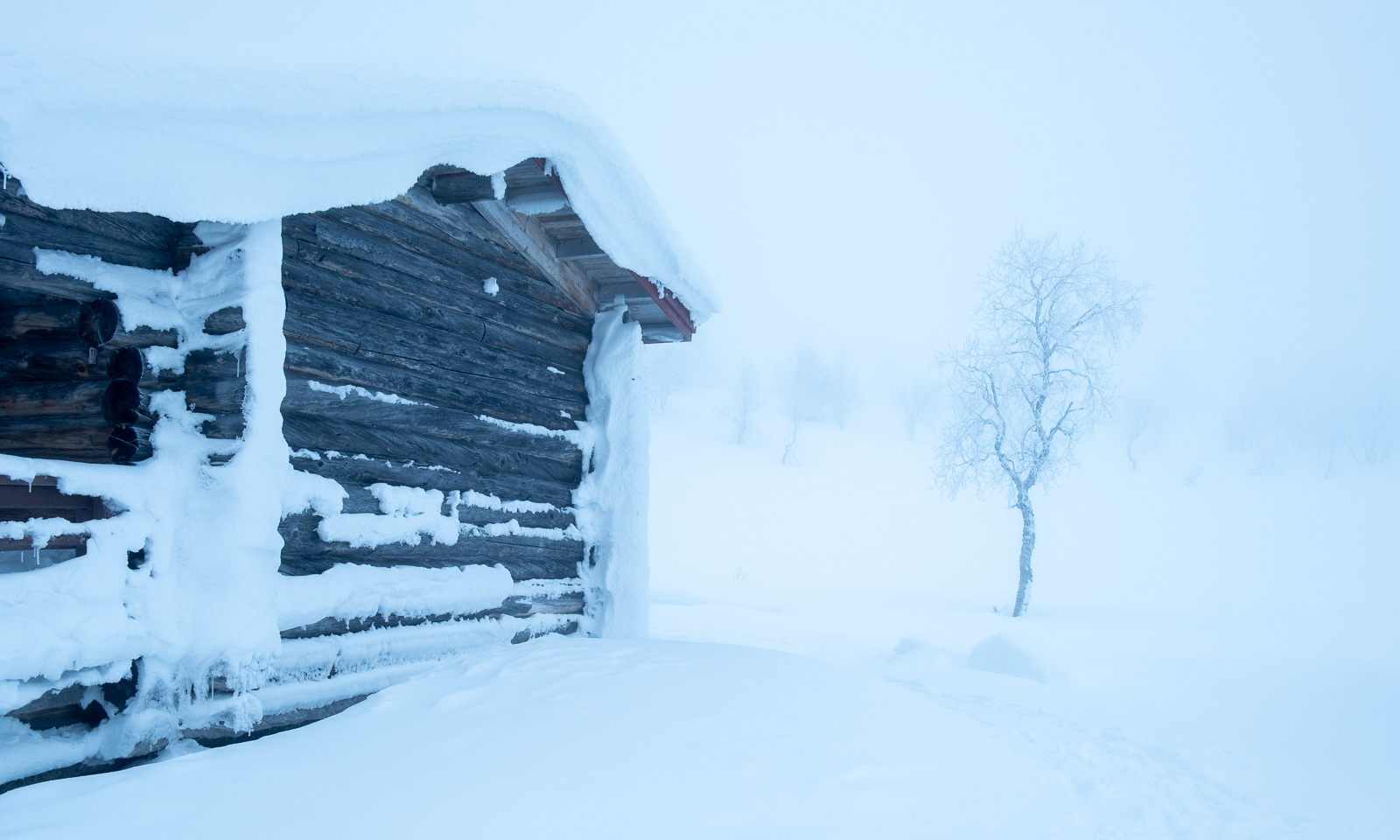
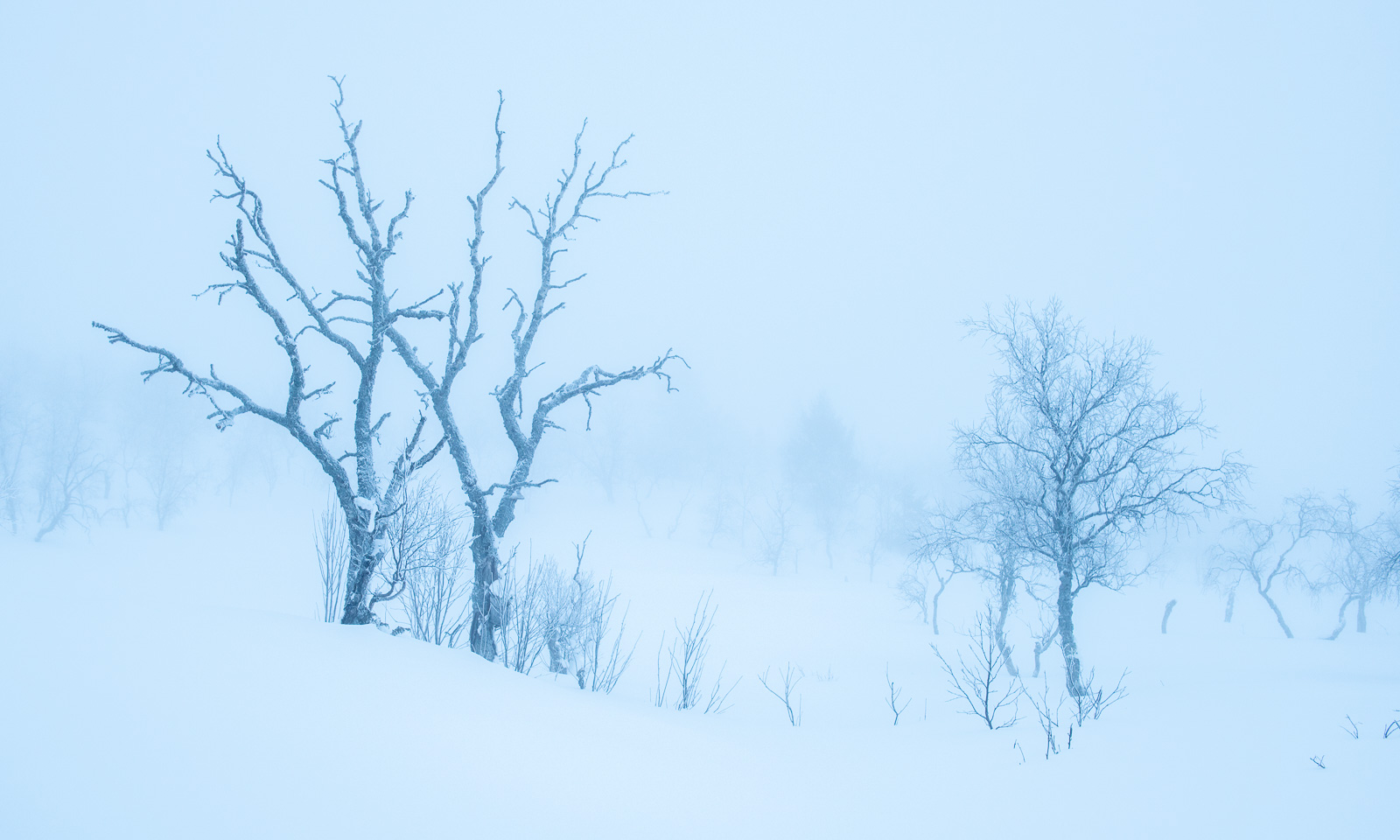
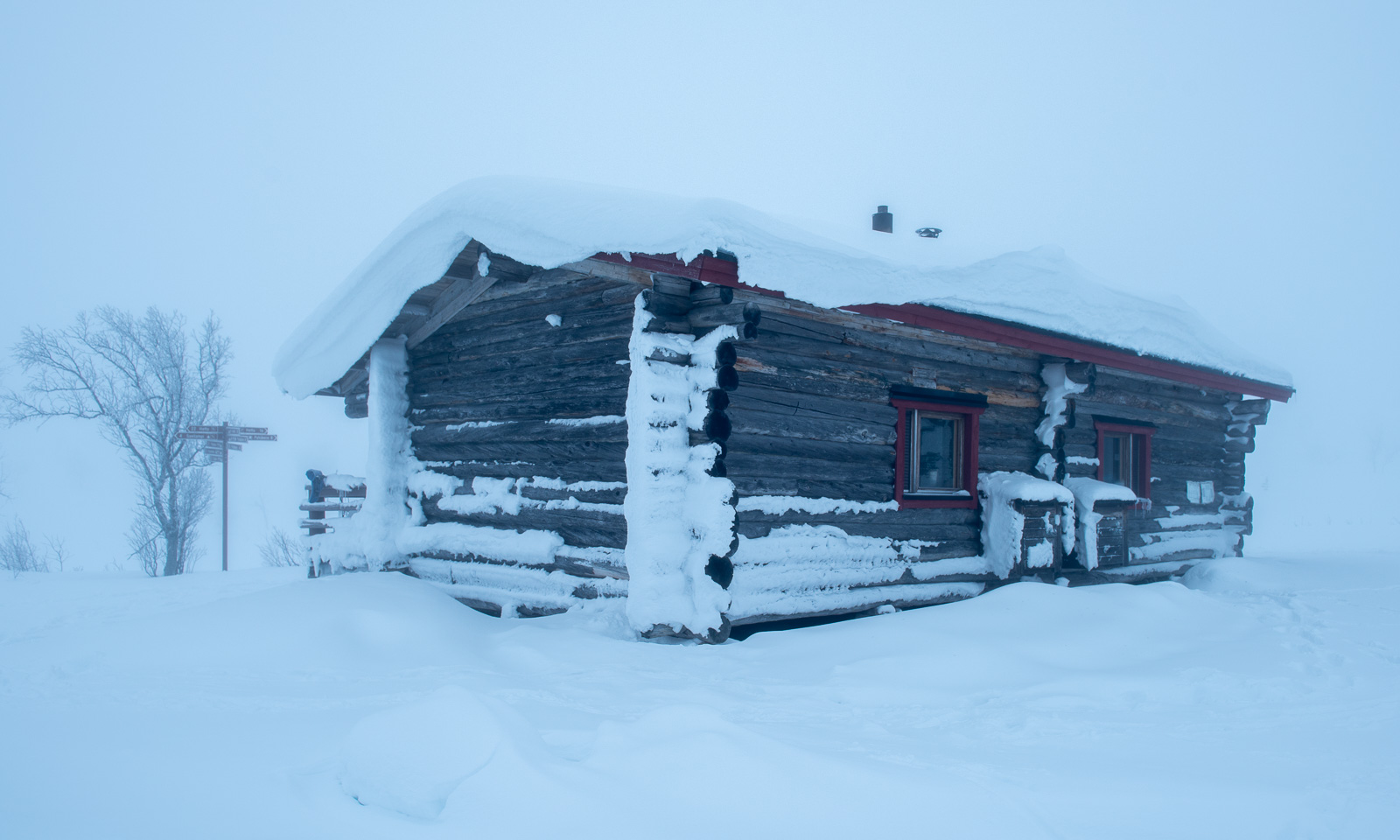
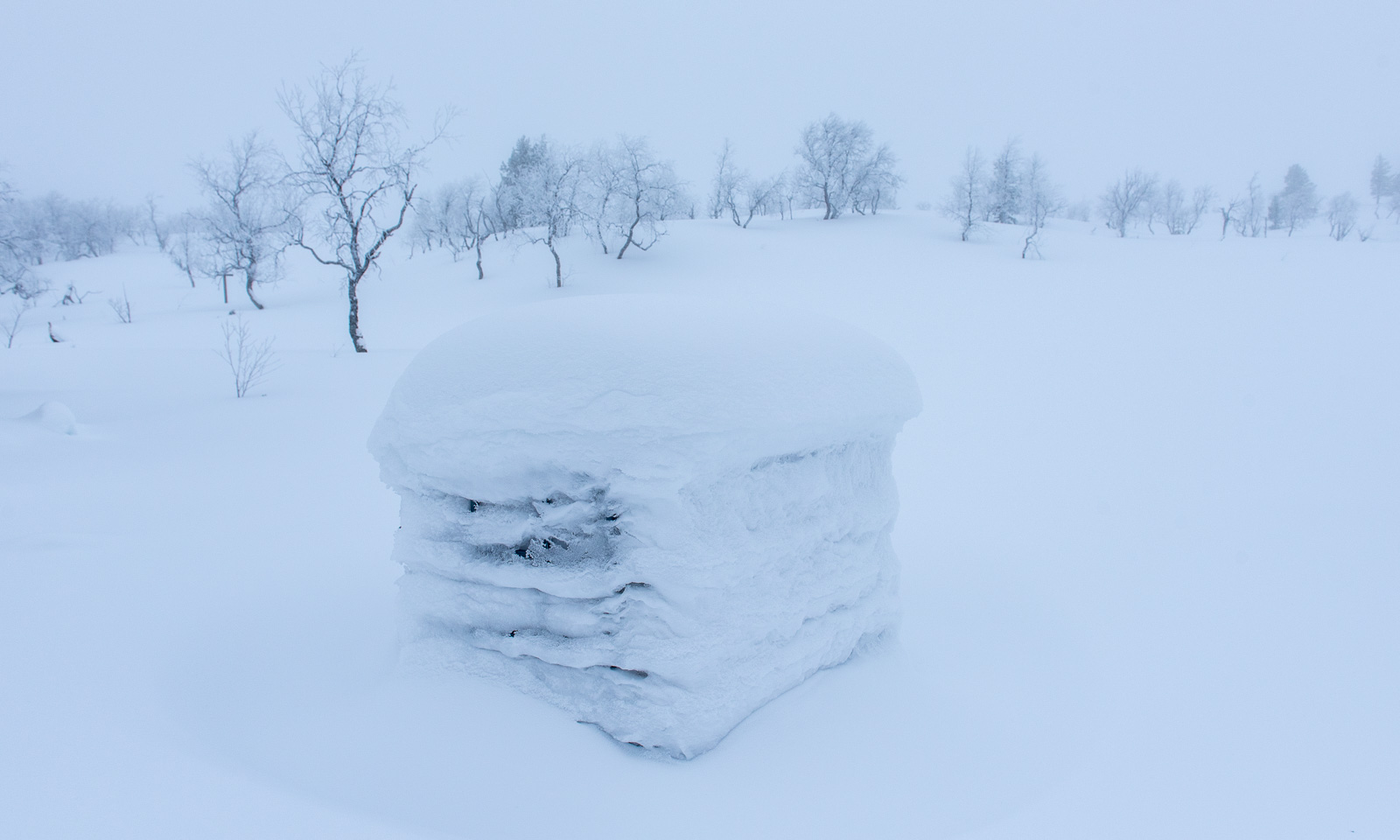
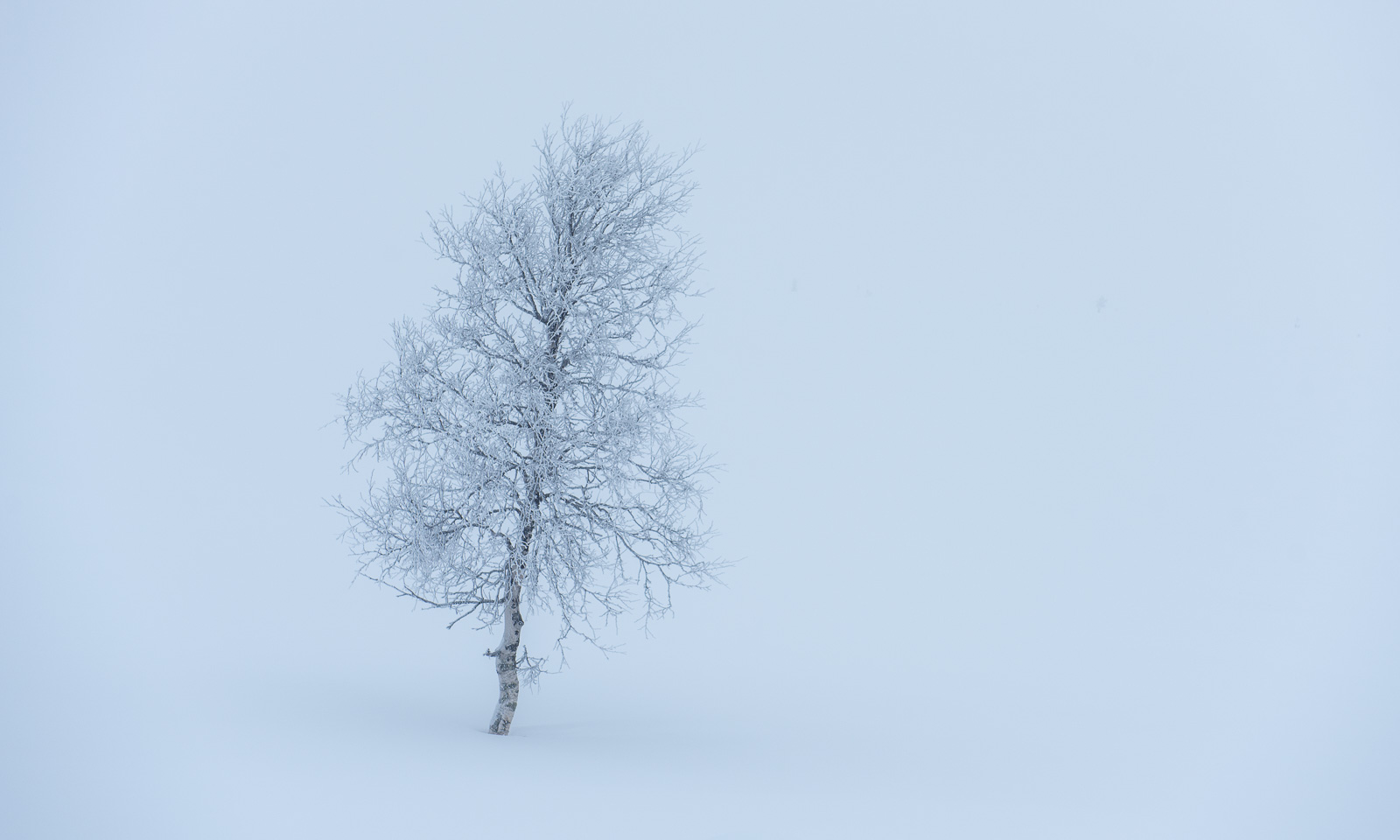
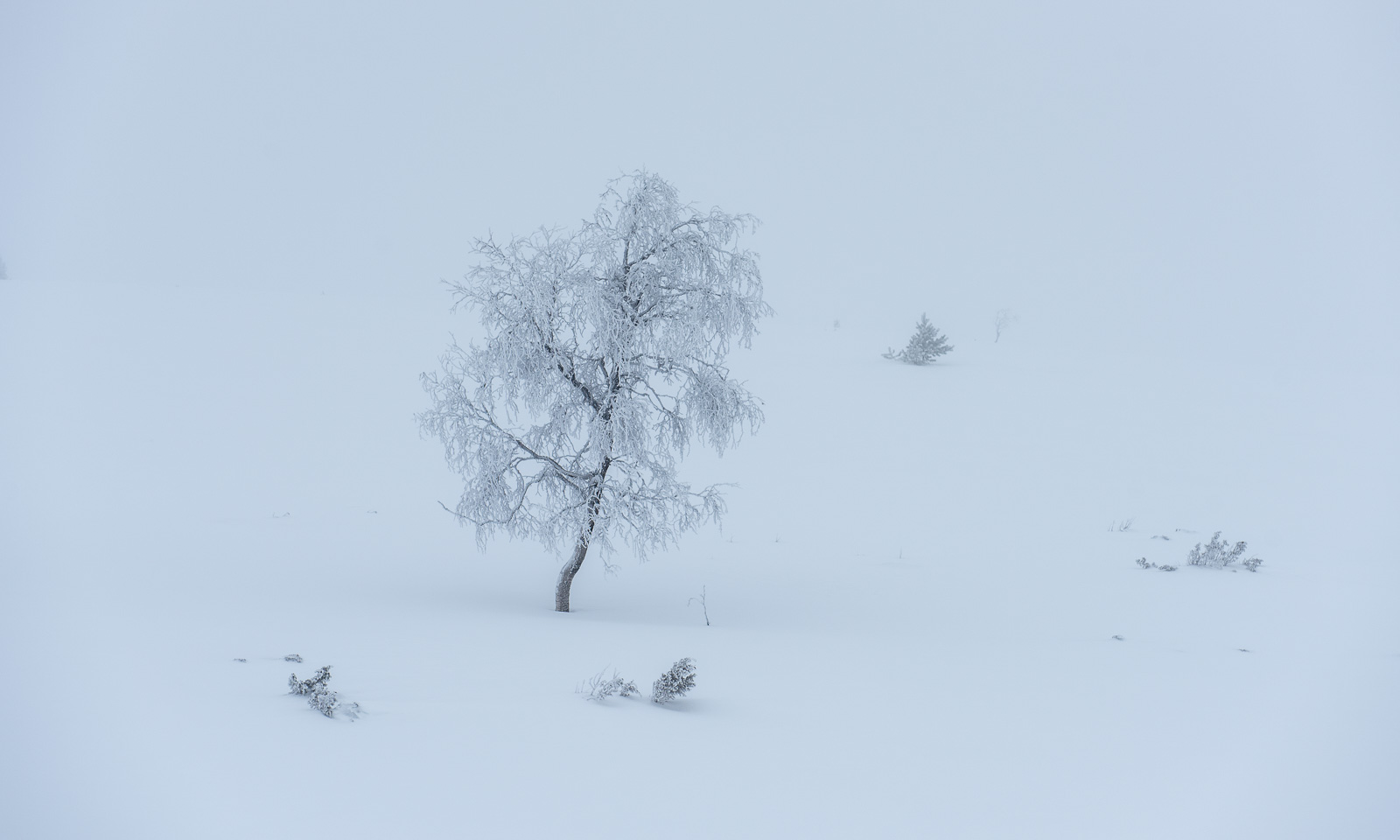
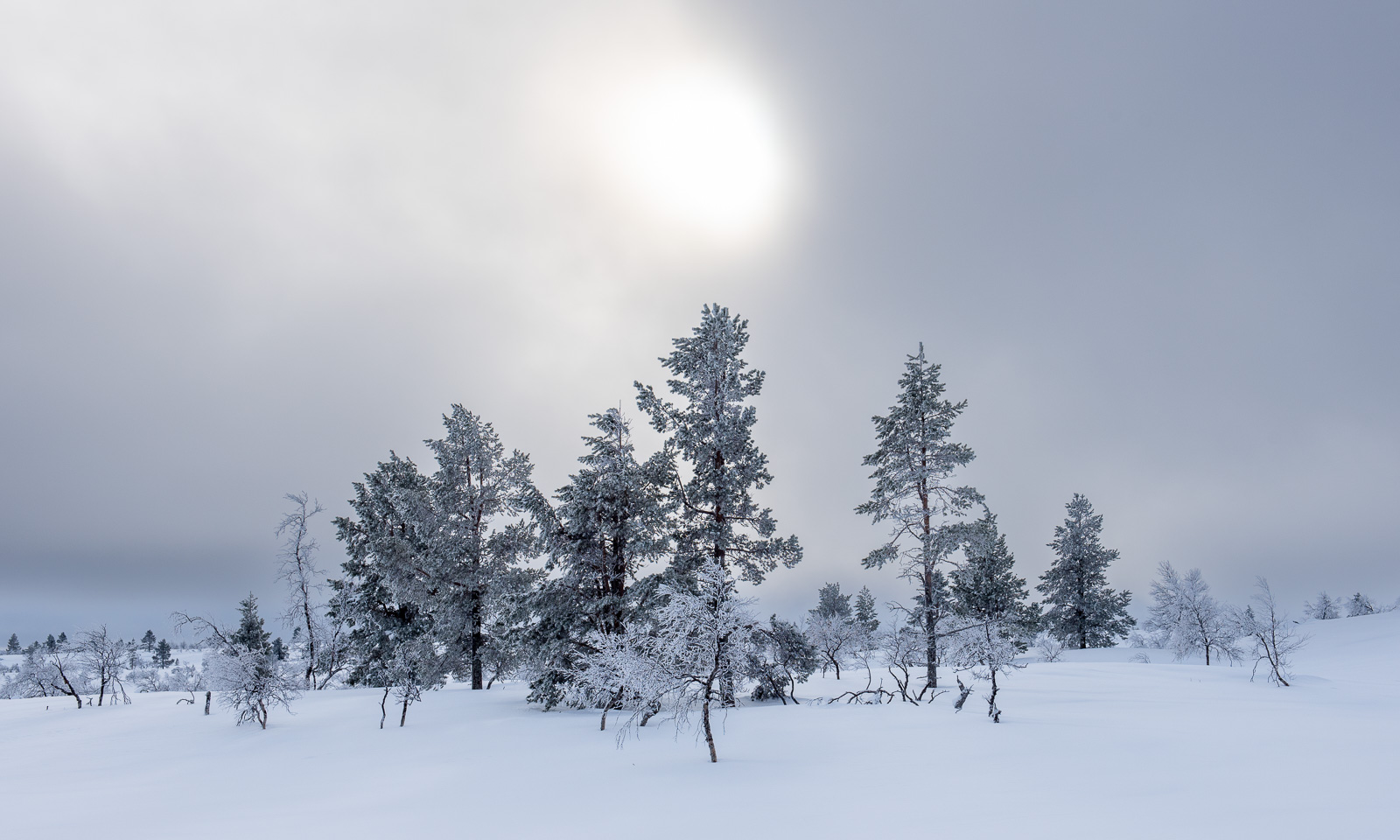
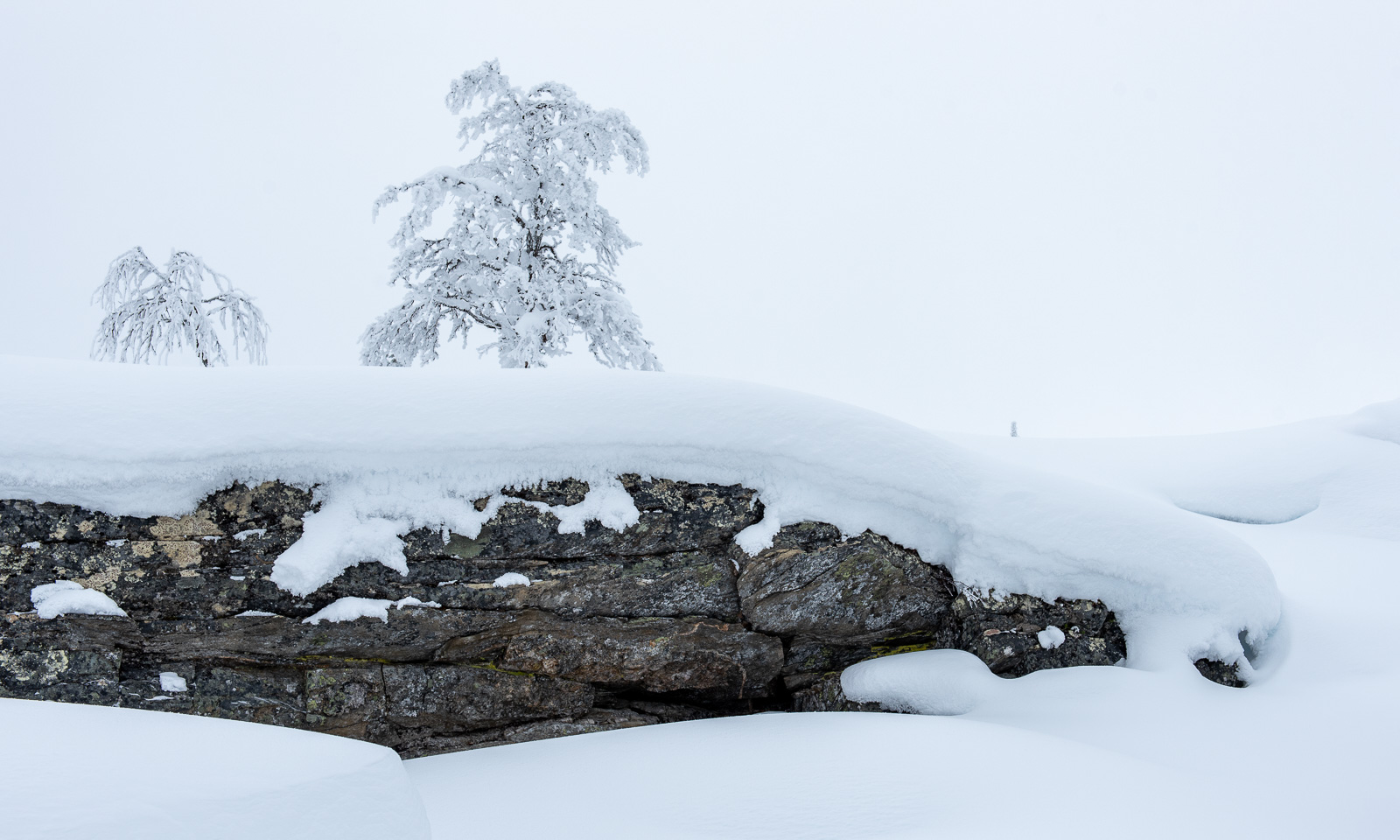
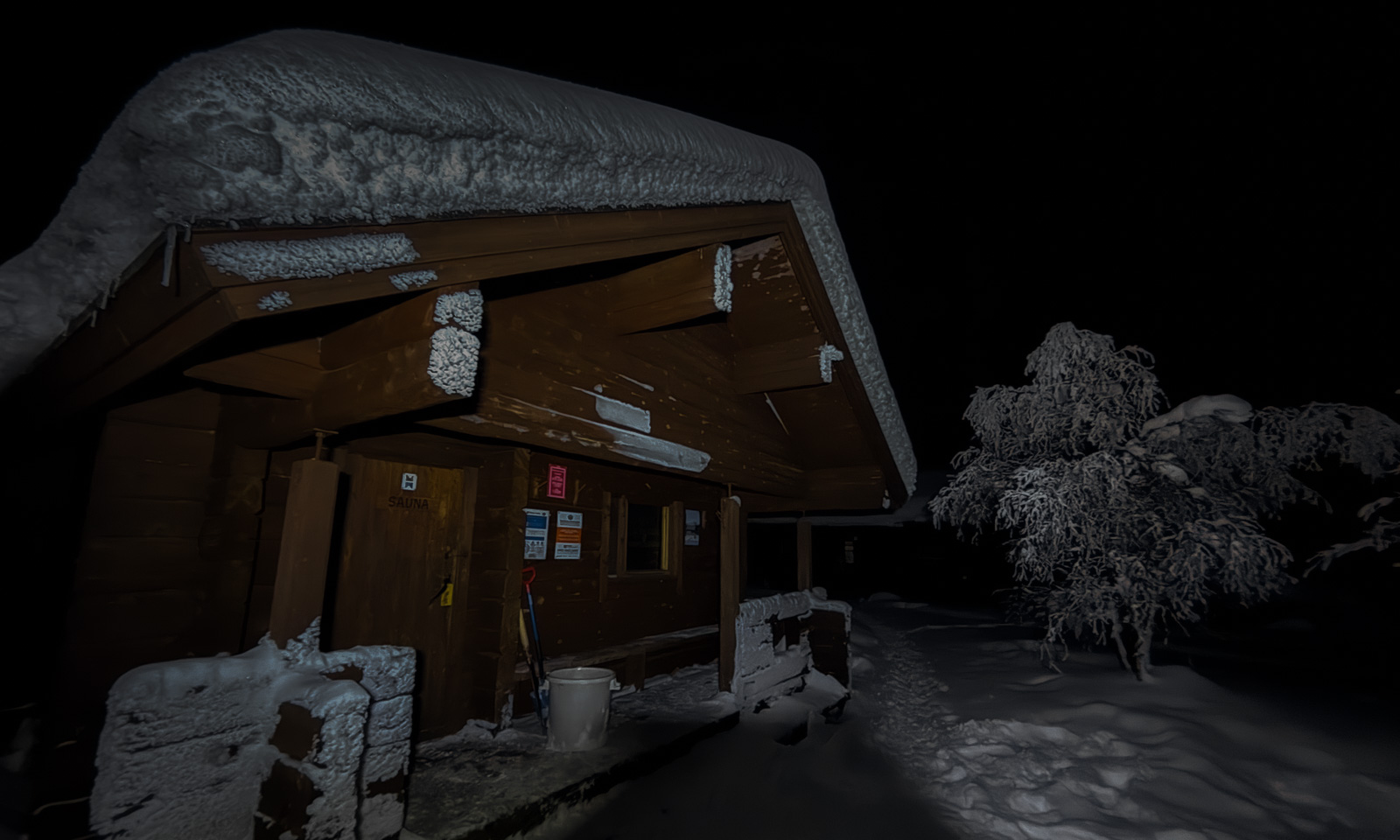
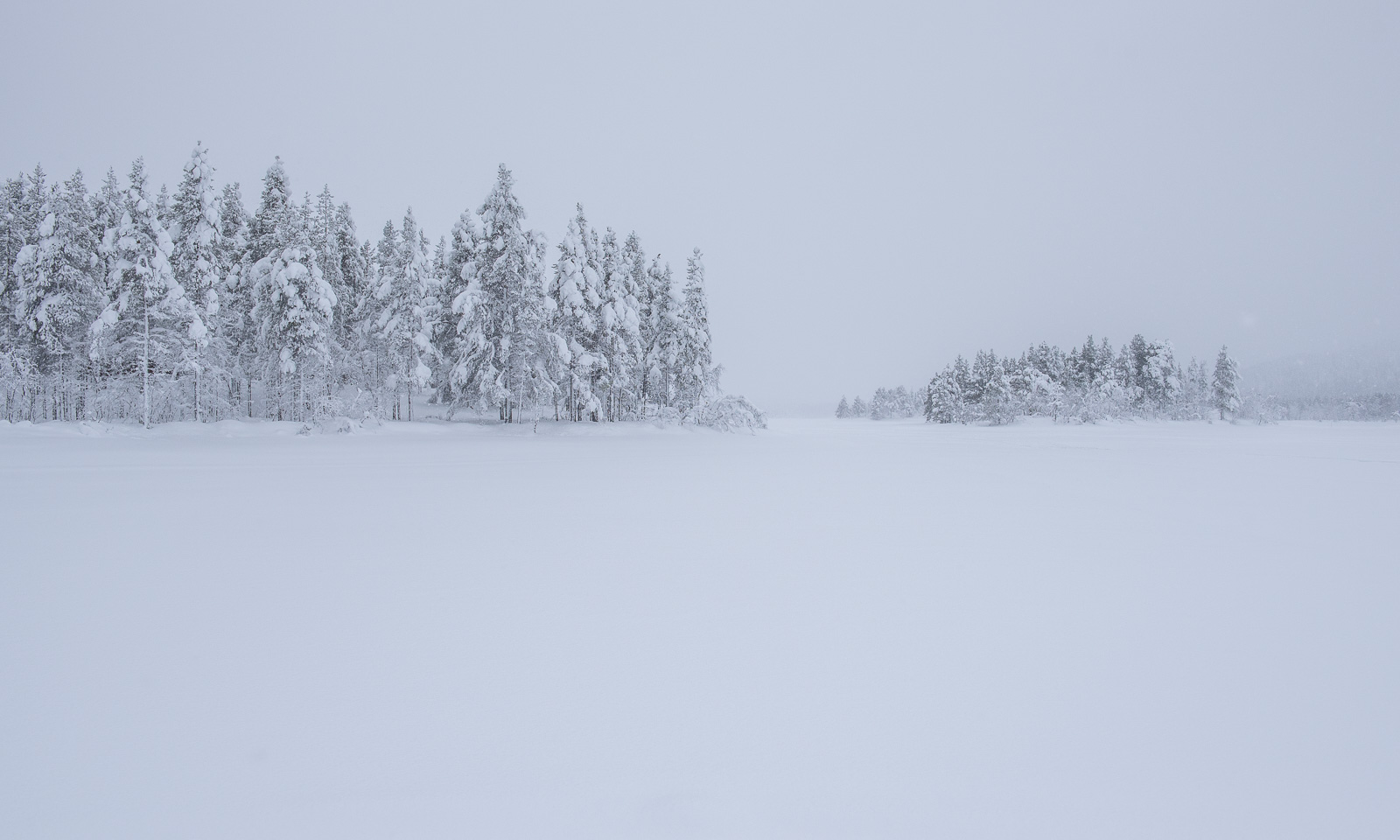
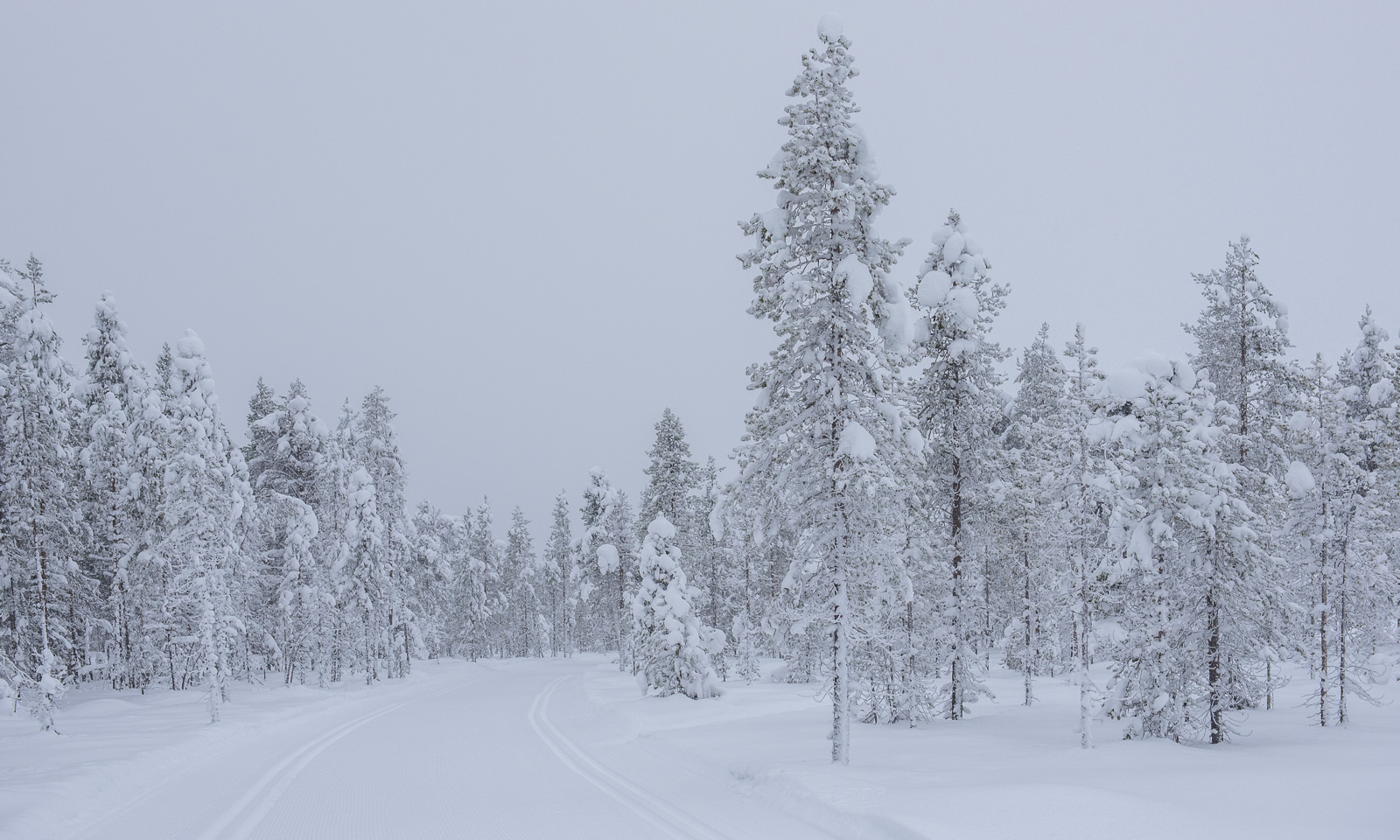
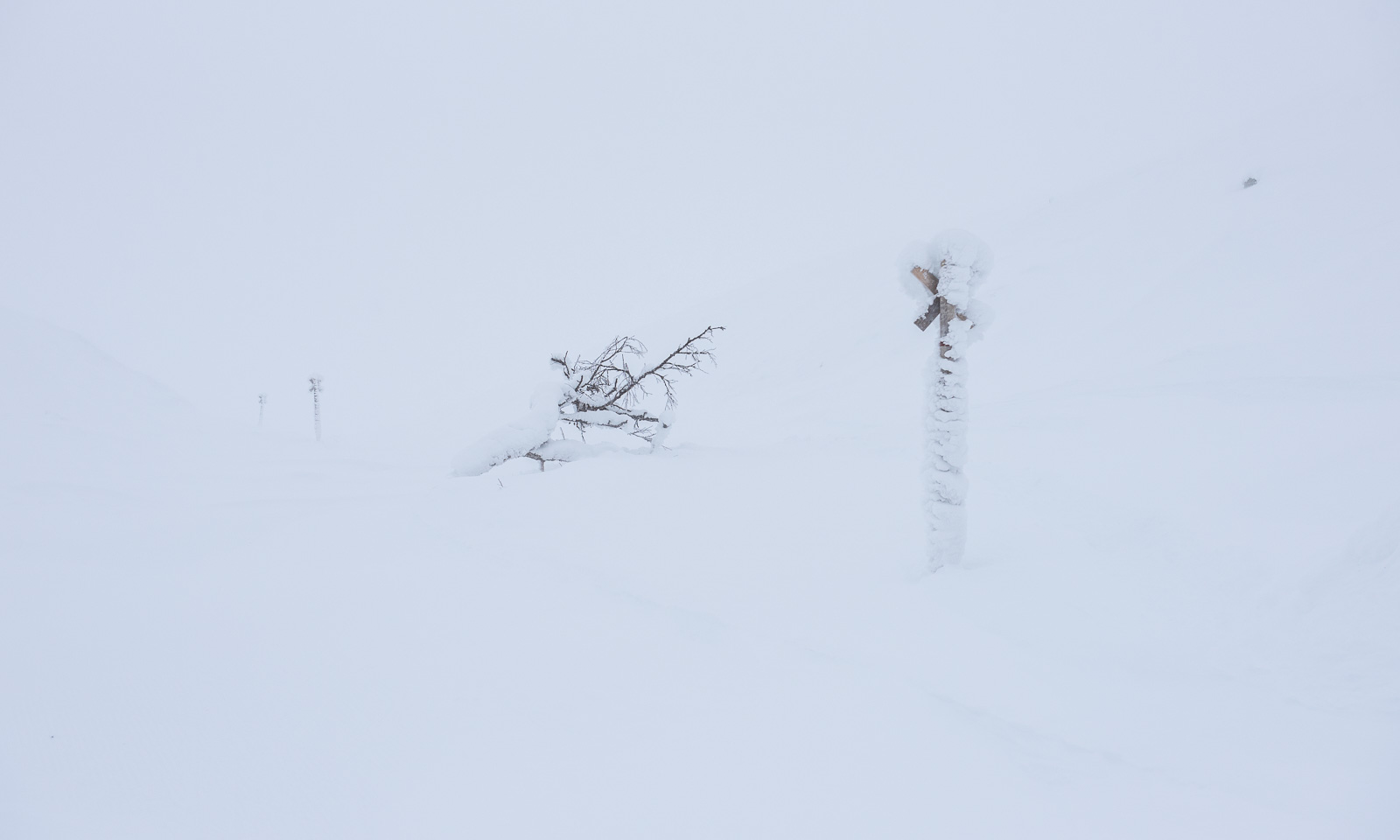
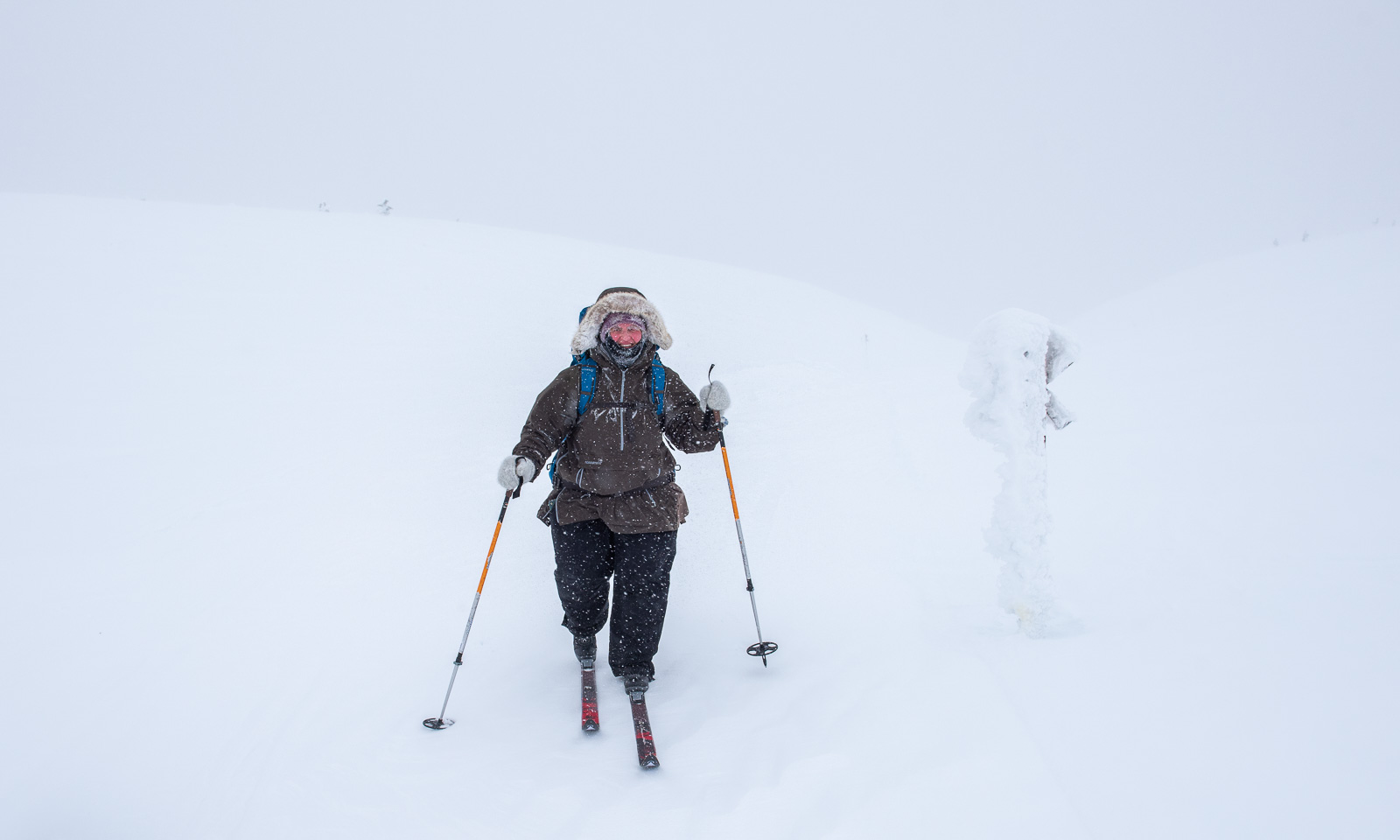
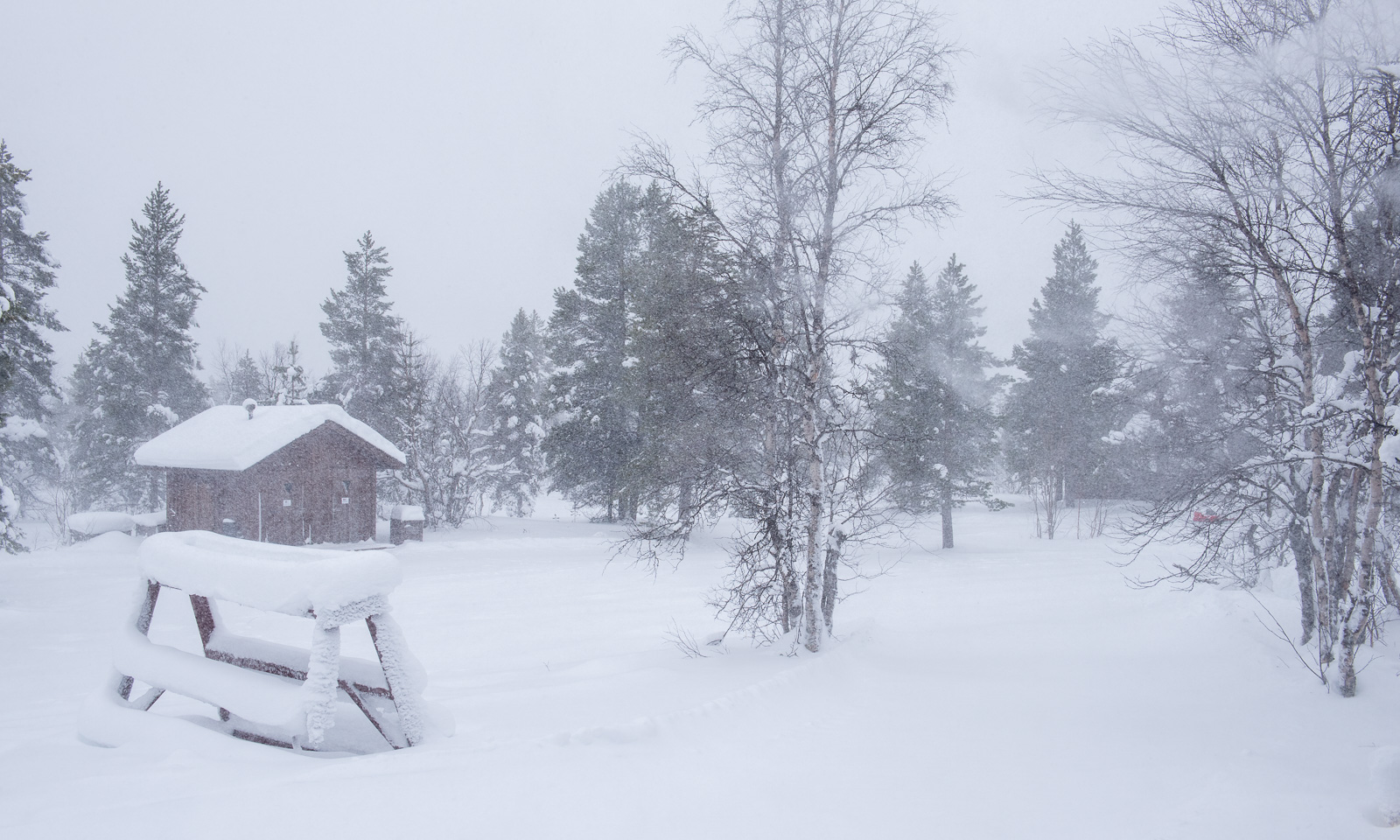
These are no black-and-white photos. It is normal colour photos in a wintry landscape of black and white. When it is as cloudy as on Annika’s and my ski tour on Friday and Saturday, then the bright colours seem to have vanished from the landscape. The snow seems to be white, the clouds seems to grey, the rocky mountain parts to be black and so do the many birch trees. But if you look closer, you see that snow hardly ever is of pure white. Here, it might have a green shade; over there, a blue tint; and in an hour, a hue of purple.